Pope Leo 'very much sent a message' with latest move in feud with Trump: NYT reporter
Bennito L. Kelty
May 1, 2026
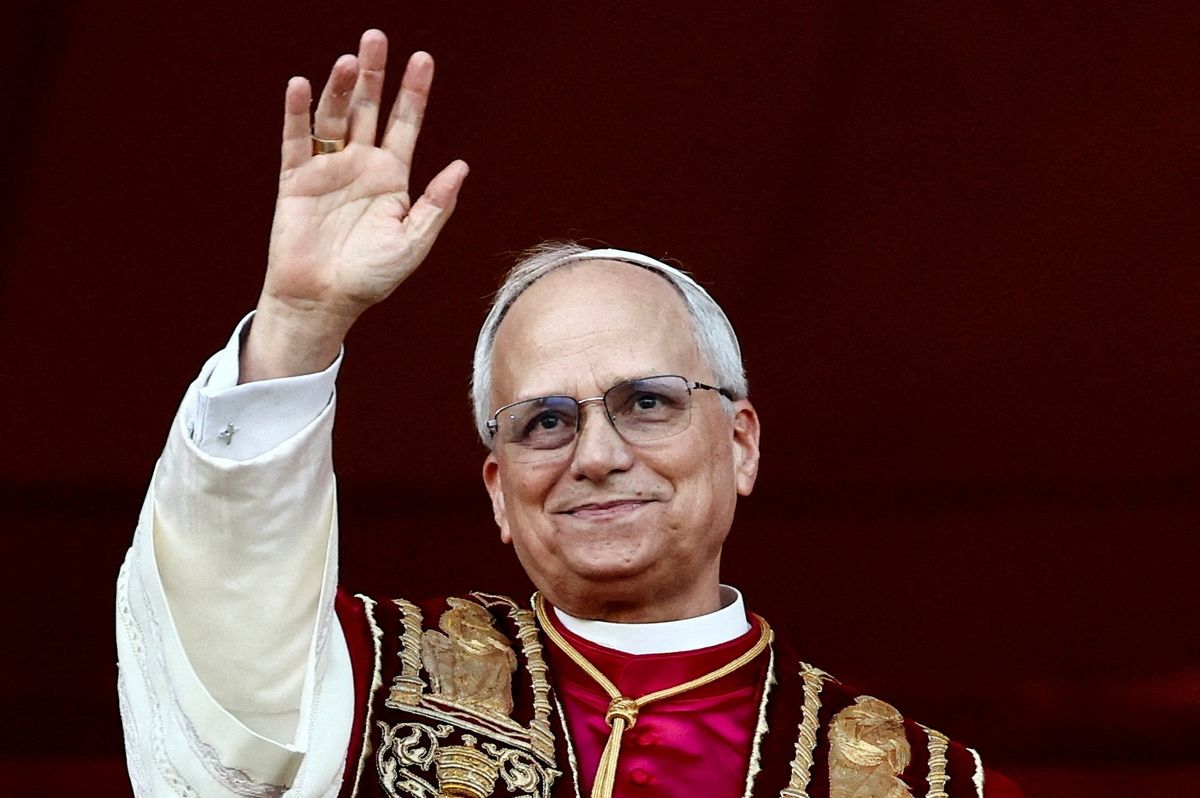
FILE PHOTO: Newly elected Pope Leo XIV, Cardinal Robert Prevost of the United States, appears on the balcony of St. Peter's Basilica, at the Vatican, May 8, 2025. REUTERS/Yara Nardi
Pope Leo wants President Donald Trump to embrace everyone and said so with his decision to send a one-time undocumented immigrant to serve as the bishop to lead Catholics in West Virginia, a journalist argued.
"The pope is very much sending a message," said New York Times journalist Lulu Garcia-Navarro during an appearance on CNN on Friday. "The message is of universality, right? That it doesn't matter your skin color. It doesn't matter your story. The church embraces all of that."
Pope Leo appointed Evelio Menjivar-Ayala, born in El Salvador, as the new bishop of a diocese that covers all of West Virginia on May 1. "By moving someone like this to a very white state, he is indeed sending a message," Garcia-Navarro argued.
She compared bishops to "a cabinet for the pope," and "immigration is an issue that the church feels very strongly about," she stressed.
"It is part of their canon," Garcia-Navarro said. "That is not a left or right issue. That is a Catholic church issue. Catholic charities have always been involved on immigration."
She also pointed out that at the southern border, many migrants trying to come into the United States are Catholic and rely on those charities.
"You go to the border, they're the people that are actually dealing with the migrants," Garcia-Navarro said. "Nuns and priests, et cetera. So this is part of, I think, a refocus that he is doing in the church."
Bennito L. Kelty
May 1, 2026
RAW STORY
FILE PHOTO: Newly elected Pope Leo XIV, Cardinal Robert Prevost of the United States, appears on the balcony of St. Peter's Basilica, at the Vatican, May 8, 2025. REUTERS/Yara Nardi
Pope Leo wants President Donald Trump to embrace everyone and said so with his decision to send a one-time undocumented immigrant to serve as the bishop to lead Catholics in West Virginia, a journalist argued.
"The pope is very much sending a message," said New York Times journalist Lulu Garcia-Navarro during an appearance on CNN on Friday. "The message is of universality, right? That it doesn't matter your skin color. It doesn't matter your story. The church embraces all of that."
Pope Leo appointed Evelio Menjivar-Ayala, born in El Salvador, as the new bishop of a diocese that covers all of West Virginia on May 1. "By moving someone like this to a very white state, he is indeed sending a message," Garcia-Navarro argued.
She compared bishops to "a cabinet for the pope," and "immigration is an issue that the church feels very strongly about," she stressed.
"It is part of their canon," Garcia-Navarro said. "That is not a left or right issue. That is a Catholic church issue. Catholic charities have always been involved on immigration."
She also pointed out that at the southern border, many migrants trying to come into the United States are Catholic and rely on those charities.
"You go to the border, they're the people that are actually dealing with the migrants," Garcia-Navarro said. "Nuns and priests, et cetera. So this is part of, I think, a refocus that he is doing in the church."
Matthew Chapman
May 1, 2026
RAW ST0RY
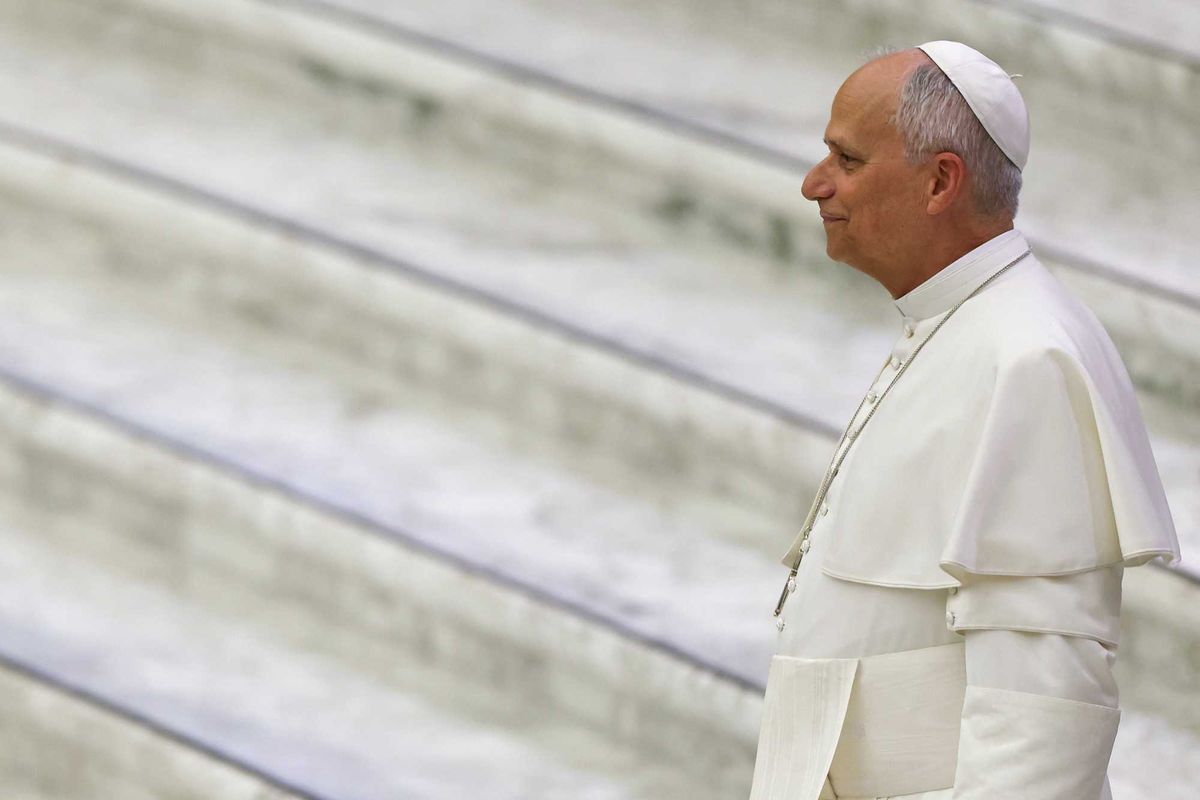
Pope Leo XIV looks on as he meets with Catholic religious education teachers attending a national meeting organised by the Italian Bishops’ Conference (CEI), in the Paul VI Hall at the Vatican, April 25, 2026. REUTERS/Yara Nardi
Pope Leo XIV's divide with President Donald Trump is about more than it seems at first, investigative reporter Gareth Gore told Sidney Blumenthal and Sean Wilentz on the latest episode of the Legal AF podcast.
Rather, he argued, it's about a broader push to reclaim Christianity from the far-right and improve the religion's inclusivity.
"He's involved in a controversy, is that the right word, with the president of the United States, who is probably not a member or even, you know, a fellow traveler of Opus Dei, yet is surrounded by people who are," said Wilentz. "And I'm wondering is there any kind of overlap here? Is there any kind of way in which you could imagine — this is pure speculation, I'm not asking you to talk about things you don't know, but nevertheless, you get a sense that he is aware of the larger implications of this as far as Trump is concerned? He's talking about the war for the most part. But it's not just about that, is it? I mean, it's something larger behind all of this, isn't there?"
Gore concurred there's a larger issue at play — and a bit later in the segment, elaborated on what he thinks that is.
"He named Trump by name ... He said, 'Look, I have no fear of the Trump administration,'" said Gore. "And he's made all kinds of speeches where he said things like, 'Woe to those who manipulate religion and the very name of God for their own military, economic, or political gain.' And he said that, you know, I do not think the message of the gospel should be abused, as some are doing. I mean, it's quite clear, you know, and that these are things that he said since this spat began."
"I think he's almost using the spat as an opportunity to speak out against the way that Catholicism in general has been co-opted by a number of politicians around Trump," said Gore. "I mean, I agree with you. I don't think Trump is religious in any way. And, you know, I don't profess to speak for Vance and others, but you know, their understanding and reading of Catholicism and of Christianity more generally is at odds with, you know, the previous pope, the current pope, and many other religious leaders around the world. And so, you might have to raise questions about their own understanding of their own faith."
Pope Leo XIV looks on as he meets with Catholic religious education teachers attending a national meeting organised by the Italian Bishops’ Conference (CEI), in the Paul VI Hall at the Vatican, April 25, 2026. REUTERS/Yara Nardi
Pope Leo XIV's divide with President Donald Trump is about more than it seems at first, investigative reporter Gareth Gore told Sidney Blumenthal and Sean Wilentz on the latest episode of the Legal AF podcast.
Rather, he argued, it's about a broader push to reclaim Christianity from the far-right and improve the religion's inclusivity.
"He's involved in a controversy, is that the right word, with the president of the United States, who is probably not a member or even, you know, a fellow traveler of Opus Dei, yet is surrounded by people who are," said Wilentz. "And I'm wondering is there any kind of overlap here? Is there any kind of way in which you could imagine — this is pure speculation, I'm not asking you to talk about things you don't know, but nevertheless, you get a sense that he is aware of the larger implications of this as far as Trump is concerned? He's talking about the war for the most part. But it's not just about that, is it? I mean, it's something larger behind all of this, isn't there?"
Gore concurred there's a larger issue at play — and a bit later in the segment, elaborated on what he thinks that is.
"He named Trump by name ... He said, 'Look, I have no fear of the Trump administration,'" said Gore. "And he's made all kinds of speeches where he said things like, 'Woe to those who manipulate religion and the very name of God for their own military, economic, or political gain.' And he said that, you know, I do not think the message of the gospel should be abused, as some are doing. I mean, it's quite clear, you know, and that these are things that he said since this spat began."
"I think he's almost using the spat as an opportunity to speak out against the way that Catholicism in general has been co-opted by a number of politicians around Trump," said Gore. "I mean, I agree with you. I don't think Trump is religious in any way. And, you know, I don't profess to speak for Vance and others, but you know, their understanding and reading of Catholicism and of Christianity more generally is at odds with, you know, the previous pope, the current pope, and many other religious leaders around the world. And so, you might have to raise questions about their own understanding of their own faith."

No comments:
Post a Comment