“In Iraq, it took more than three years to reach that high. In Vietnam, it took six years.”
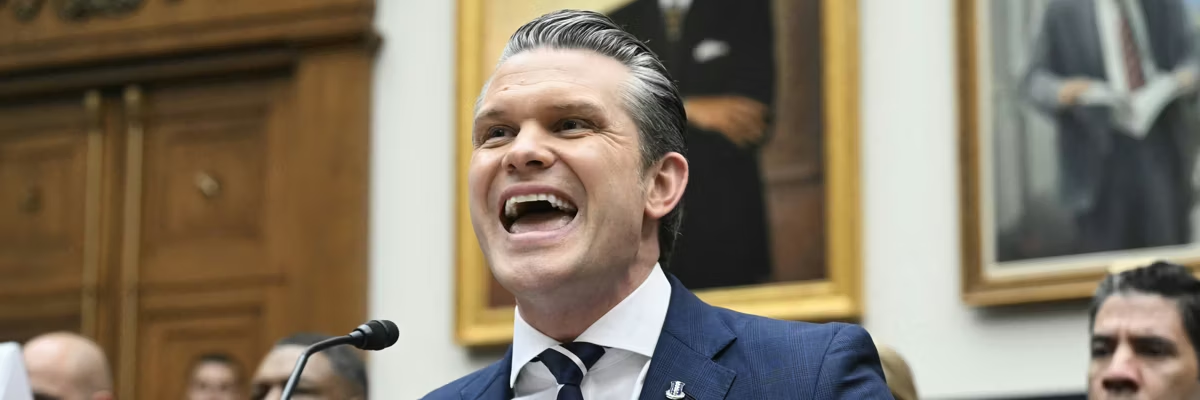
US Secretary of Defense Pete Hegseth testifies before a US House Armed Services Committee hearing on April 29, 2026.
(Photo by Saul Loeb/AFP via Getty Images)
Stephen Prager
May 01, 2026
COMMON DREAMS
More than 6 in 10 Americans now say President Donald Trump’s war in Iran was a “mistake,” according to a poll out Friday from the Washington Post/ABC News/Ipsos.
Within two months, the war—which has inflicted thousands of civilian deaths and caused gas prices to spike worldwide with little tangible gain—has reached levels of unpopularity that previous wars now seen as historic boondoggles took years to reach.
The Post has asked the “mistake” for other major wars. But CNN senior political reporter Aaron Blake explained: “In Iraq, it took more than three years to reach that high. In Vietnam, it took six years.”
Despite a massive protest movement, voters overwhelmingly supported President George W. Bush’s decision to invade Iraq, with 81% believing it was the “right thing” in April 2003 and just 16% believing it was a mistake.
But the occupation turned into a long, deadly, and costly disaster, and the administration’s pretexts for the war were revealed to be lies. Public opinion steadily eroded to the point where 64% viewed it as a mistake by January 2007.
Vietnam never had the overwhelming support of Iraq, but 60% of Americans still supported President Lyndon Johnson’s decision to begin direct US military involvement in 1965, while just 24% said it was a mistake.
While the protest movement against the war is as present in Americans’ memories today as the conflict itself, public opinion was still split until 1968 and only reached a high of 61% in May 1971, after more than 50,000 US soldiers had been killed in battle.
Trump’s war in Iran is unique in history in that it never enjoyed even a moment of consensus support. In a Reuters/Ipsos poll just days after the opening salvo of what the Trump administration dubbed “Operation Epic Fury,” just 27% said they approved of the strikes, which killed 555 Iranians, including Supreme Leader Ayatollah Ali Khamenei and several other top Iranian officials.
At this point, 43% of Americans already said they disapproved of the strikes, far eclipsing Iraq and Vietnam. But 30% still said they had not yet made up their minds.
In the coming months, they would. It was revealed that an airstrike on a school, which killed at least 155 people, including 120 children, was a double-tap attack by the United States. Iran retaliated by blocking oil shipments through the Strait of Hormuz, which sent US gas prices hurtling above $4 per gallon. And Trump took on an increasingly erratic and at times outright genocidal posture toward Iran that made any peaceful resolution appear increasingly impossible, even with the current fragile ceasefire.
Friday’s poll shows that while the war still maintains a core base of support—36% of Americans who say it was the right decision, nearly all of them Republicans—it is dwarfed by the 61% who say it was a mistake.
Majorities of respondents across all demographics show that they believe the war has increased the risks of “terrorism against Americans” (61%), “the US economy going into a recession” (60%), and “weakening relationships with US allies.” (56%)
Looking beneath the surface shows an even more worrying sign for Trump: The war has almost no constituency outside of his biggest fans. Self-identified Democrats (91%) overwhelmingly say the war was a mistake. But 71% of independents—many of whom were undecided at the war’s outset—now disapprove too, with just 24% in support.
Even within the GOP, there is a decisive split: 86% of those who self-identify as “MAGA Republicans” are still baying for blood. But “non-MAGA Republicans” have grown uncertain—50% still say war was the right decision, while 49% say it was a mistake.
They were particularly rattled by Trump’s threat last month that “a whole civilization will die tonight” if Iran did not negotiate a deal to his liking. The threat of genocide was too much even for the majority of Republicans, 53% of whom said they viewed it negatively.
What remains to be seen is whether even Trump’s most faithful backers will turn against the war as it drags on. If Defense Secretary Pete Hegseth’s appearance in Congress on Thursday is any guide, the country may soon find out.
On Thursday, when Sen. Kirsten Gillibrand (D-NY) pressed Hegseth about why he has “not sought the support of the American people” and added that “3 out of 5 Americans are against this war today,” he appeared in abject denial about the war’s unpopularity.
“I believe we do have the support of the American people,” he said. “I would remind you and this group that we’re two months in to an effort, and many congressional Democrats want to declare defeat two months in.”
He specifically invoked lengthy past conflicts, repeatedly emphasizing that this one had only lasted “two months,” as if to urge patience with a war Trump had previously said was intended to last only “four to five weeks.”
“Iraq took how many years? Afghanistan took how many years? And they were nebulous missions that people went along with,” he said.
“This is different,” he said of a war that has—depending on the day—been described as one aimed at regime change in Iran, defending protesters, destroying its nuclear program, eliminating its ballistic missile supply, taking its oil, defending Israel, and reopening the Strait of Hormuz, among other objectives.
Trump’s war exposed the military’s growing weakness: NYT
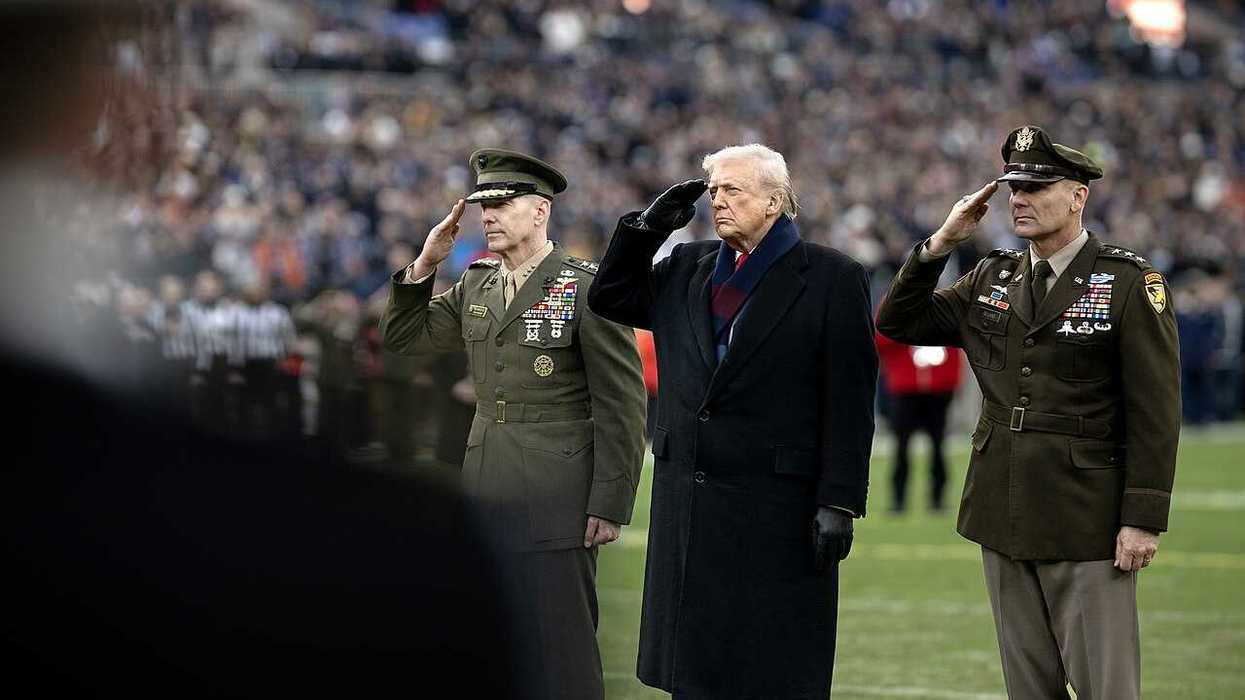
U.S. President Donald Trump on December 13, 2025.
U.S. President Donald Trump on December 13, 2025.
(Official White House Photo by Daniel Torok/Flickr)
April 30, 2026
ALTERNET
The harsh "reality" of President Donald Trump's war with Iran has exposed "the vulnerabilities" that have been growing within the U.S. military for the whole world to see, according to a new piece from the New York Times Editorial Board.
In the piece, published Thursday morning, the board observed that, "on paper," the U.S. military going to war in Iran should have resulted in an easy victory, given the substantial mismatch at play. While that expectation was largely met during the early days of the campaign, now, things are looking much different and much more dire for the U.S.
"Iran has taken control of the Strait of Hormuz of the Strait of Hormuz, and its missiles and drones still threaten America’s allies in the region," the NYT board explained. "While President Trump seems eager for a negotiated truce, Iran’s leaders do not. Somehow, the weaker nation is in the stronger negotiating position."
The board continued: "That reality exposes the vulnerabilities in the American way of war. Tactical success has not yielded victory. Mr. Trump’s recklessness in conducting the war is one reason. But the problem is bigger than any single commander in chief. The United States has left itself unprepared for modern war."
As the piece explained, the U.S. military "has spent hundreds of billions of dollars" on building state-of-the-art hardware that is designed to be competitive against similarly well-equipped adversary superpowers. Iran, meanwhile, is relying on "cheaper, mass-produced weapons," ones that the U.S. is "ineffective" at dealing with.
The U.S. is also short on the industrial capacity it would need to produce enough weapons and munitions to wage a war, and "the country has struggled to fix these problems because of a sclerotic government and a consolidated defense industry that resists change."
"Three months before Mr. Trump attacked Iran, we warned that the United States was at risk of being overmatched in the wars of the future. The last two months have shown that alarm was justified," the board wrote. "The war in Iran, unwise as it is, should serve as a warning about the rising threats to American security and an incentive to fix them."
It later concluded: "The good news is that Congress, the administration and the Pentagon can all now see our military shortcomings. The bad news is that our adversaries can see them too. Washington can no longer just talk about reforming the military. It has to do it, or risk making the disappointments in the Iran war become a preview of far worse."
The harsh "reality" of President Donald Trump's war with Iran has exposed "the vulnerabilities" that have been growing within the U.S. military for the whole world to see, according to a new piece from the New York Times Editorial Board.
In the piece, published Thursday morning, the board observed that, "on paper," the U.S. military going to war in Iran should have resulted in an easy victory, given the substantial mismatch at play. While that expectation was largely met during the early days of the campaign, now, things are looking much different and much more dire for the U.S.
"Iran has taken control of the Strait of Hormuz of the Strait of Hormuz, and its missiles and drones still threaten America’s allies in the region," the NYT board explained. "While President Trump seems eager for a negotiated truce, Iran’s leaders do not. Somehow, the weaker nation is in the stronger negotiating position."
The board continued: "That reality exposes the vulnerabilities in the American way of war. Tactical success has not yielded victory. Mr. Trump’s recklessness in conducting the war is one reason. But the problem is bigger than any single commander in chief. The United States has left itself unprepared for modern war."
As the piece explained, the U.S. military "has spent hundreds of billions of dollars" on building state-of-the-art hardware that is designed to be competitive against similarly well-equipped adversary superpowers. Iran, meanwhile, is relying on "cheaper, mass-produced weapons," ones that the U.S. is "ineffective" at dealing with.
The U.S. is also short on the industrial capacity it would need to produce enough weapons and munitions to wage a war, and "the country has struggled to fix these problems because of a sclerotic government and a consolidated defense industry that resists change."
"Three months before Mr. Trump attacked Iran, we warned that the United States was at risk of being overmatched in the wars of the future. The last two months have shown that alarm was justified," the board wrote. "The war in Iran, unwise as it is, should serve as a warning about the rising threats to American security and an incentive to fix them."
It later concluded: "The good news is that Congress, the administration and the Pentagon can all now see our military shortcomings. The bad news is that our adversaries can see them too. Washington can no longer just talk about reforming the military. It has to do it, or risk making the disappointments in the Iran war become a preview of far worse."
‘The Pentagon Is Lying’: Iranian Foreign Minister Puts US Cost of War at $100 Billion
Analysts have also cast serious doubt on the Pentagon’s official estimate of the Iran war’s price tag, with one arguing the conflict cost more than $25 billion “in the first two weeks.”
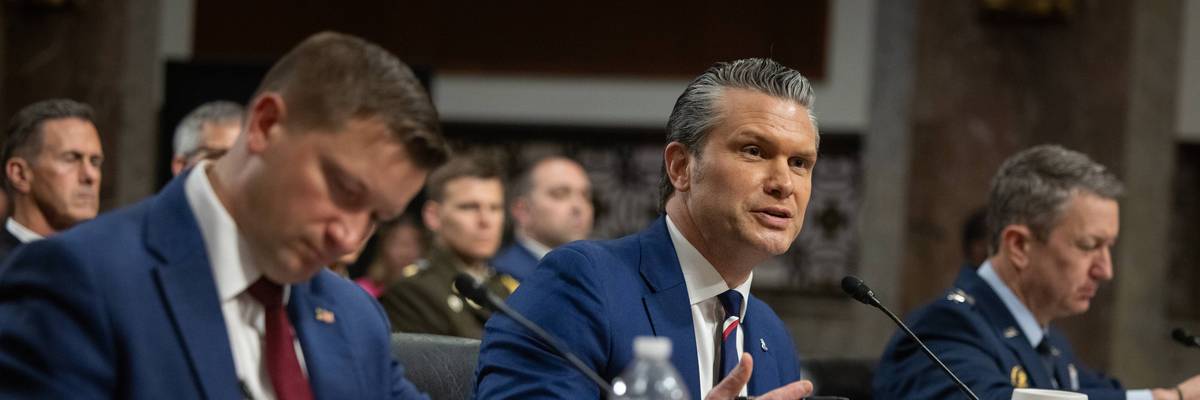
Pentagon Secretary Pete Hegseth testifies during a Senate Armed Services Committee hearing on April 30, 2026.
(Photo by Nathan Posner/Anadolu via Getty Images)
Jake Johnson
May 01, 2026
COMMON DREAMS
Iran’s foreign minister on Friday accused the Pentagon of deliberately misleading the American public with its formal estimate that the war on Iran has so far cost the US $25 billion—a number that the chief Iranian diplomat said was a fourfold undercount of the conflict’s true price tag.
“The Pentagon is lying,” Iranian Foreign Minister Abbas Araghchi wrote on social media. “[Israeli Prime Minister Benjamin] Netanyahu’s gamble has directly cost America $100 billion so far, four times what is claimed. Indirect costs for US taxpayers are FAR higher. Monthly bill for each American household is $500 and rising fast.”
Harvard Expert Says She Is ‘Certain’ Price Tag of Trump’s Illegal Iran War Will Hit $1 Trillion

‘Shameful’: $4,049 of Average US Taxpayer’s Bill Last Year Went to War and Weaponry
The Iranian diplomat’s comments came days after the Pentagon’s acting comptroller, Jules Hurst, told US lawmakers under oath that the Trump administration has thus far spent $25 billion on the historically unpopular war of choice. The New York Times observed that Hurst “did not elaborate on the figure, which was strikingly smaller than the $200 billion the Pentagon had initially requested for the conflict and suggested a major slowdown in expenditures since the start of the war, when officials estimated it had cost more than $11 billion in its first six days.”
Outside analysts’ estimates of the illegal war’s total cost to American taxpayers have varied widely, but most put the number higher than the $25 billion offered by the Pentagon.
The Center for American Progress, a liberal think tank, estimated earlier this month that the Pentagon was likely to have spent more than $33 billion during the first 39 days of the conflict. An April 10 assessment released by the conservative American Enterprise Institute after the ceasefire began put the war’s cost between $25 billion and $35 billion.
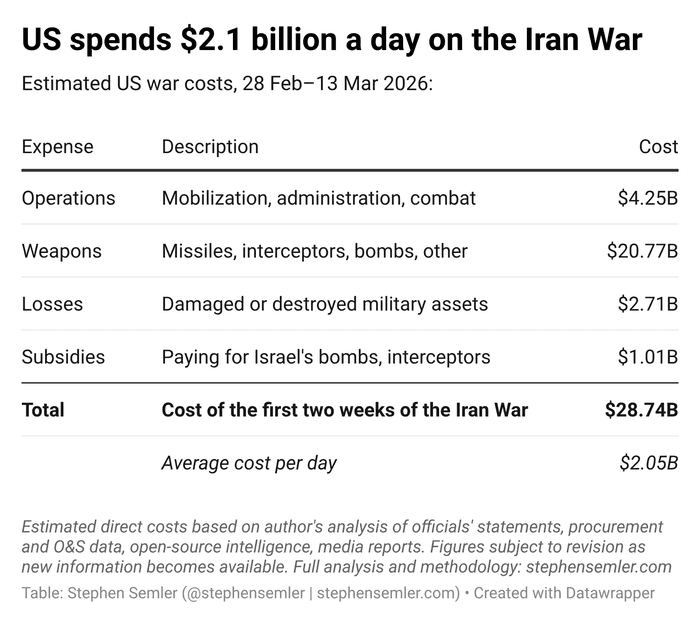
Independent policy analyst Stephen Semler has estimated that the US spent nearly $29 billion on the Iran war during just the first two weeks of the conflict—an average of $2.1 billion per day.
“Hegseth lied to Congress when he said the Iran war has cost $25 billion,” Semler wrote Thursday on social media. “It cost more than that in the first two weeks.”
On top of direct war spending, lawmakers and experts have pointed to indirect costs of war in the form of higher gas and food prices paid by American consumers.
US Rep. Ro Khanna (D-Calif.) said on the House floor on Thursday that the Iran war has cost Americans over $630 billion—or $5,000 per household on average—“because of the increase in the price of food, the price of gas, the price of electricity.”
“We need to end this war now, and help the American people reduce costs,” said Khanna.
Linda Bilmes, a public policy expert at the Harvard Kennedy School, said in early April that the Iran war’s cost to the US is likely to exceed $1 trillion in the long-term, when accounting for veterans’ care and other outlays.
“It is hard to measure the exact cost,” said Bilmes. “But based on what we know now, it is costing about two billion dollars a day in short-term, upfront costs, which is the tip of the iceberg.”
Analysts have also cast serious doubt on the Pentagon’s official estimate of the Iran war’s price tag, with one arguing the conflict cost more than $25 billion “in the first two weeks.”
Pentagon Secretary Pete Hegseth testifies during a Senate Armed Services Committee hearing on April 30, 2026.
(Photo by Nathan Posner/Anadolu via Getty Images)
Jake Johnson
May 01, 2026
COMMON DREAMS
Iran’s foreign minister on Friday accused the Pentagon of deliberately misleading the American public with its formal estimate that the war on Iran has so far cost the US $25 billion—a number that the chief Iranian diplomat said was a fourfold undercount of the conflict’s true price tag.
“The Pentagon is lying,” Iranian Foreign Minister Abbas Araghchi wrote on social media. “[Israeli Prime Minister Benjamin] Netanyahu’s gamble has directly cost America $100 billion so far, four times what is claimed. Indirect costs for US taxpayers are FAR higher. Monthly bill for each American household is $500 and rising fast.”
Harvard Expert Says She Is ‘Certain’ Price Tag of Trump’s Illegal Iran War Will Hit $1 Trillion
‘Shameful’: $4,049 of Average US Taxpayer’s Bill Last Year Went to War and Weaponry
The Iranian diplomat’s comments came days after the Pentagon’s acting comptroller, Jules Hurst, told US lawmakers under oath that the Trump administration has thus far spent $25 billion on the historically unpopular war of choice. The New York Times observed that Hurst “did not elaborate on the figure, which was strikingly smaller than the $200 billion the Pentagon had initially requested for the conflict and suggested a major slowdown in expenditures since the start of the war, when officials estimated it had cost more than $11 billion in its first six days.”
Outside analysts’ estimates of the illegal war’s total cost to American taxpayers have varied widely, but most put the number higher than the $25 billion offered by the Pentagon.
The Center for American Progress, a liberal think tank, estimated earlier this month that the Pentagon was likely to have spent more than $33 billion during the first 39 days of the conflict. An April 10 assessment released by the conservative American Enterprise Institute after the ceasefire began put the war’s cost between $25 billion and $35 billion.
Independent policy analyst Stephen Semler has estimated that the US spent nearly $29 billion on the Iran war during just the first two weeks of the conflict—an average of $2.1 billion per day.
“Hegseth lied to Congress when he said the Iran war has cost $25 billion,” Semler wrote Thursday on social media. “It cost more than that in the first two weeks.”
On top of direct war spending, lawmakers and experts have pointed to indirect costs of war in the form of higher gas and food prices paid by American consumers.
US Rep. Ro Khanna (D-Calif.) said on the House floor on Thursday that the Iran war has cost Americans over $630 billion—or $5,000 per household on average—“because of the increase in the price of food, the price of gas, the price of electricity.”
“We need to end this war now, and help the American people reduce costs,” said Khanna.
Linda Bilmes, a public policy expert at the Harvard Kennedy School, said in early April that the Iran war’s cost to the US is likely to exceed $1 trillion in the long-term, when accounting for veterans’ care and other outlays.
“It is hard to measure the exact cost,” said Bilmes. “But based on what we know now, it is costing about two billion dollars a day in short-term, upfront costs, which is the tip of the iceberg.”
‘Complete Bullshit’: Expert Torches Hegseth Claim That War Was Necessary to Prevent Iranian Nuke
“It feels insane to have to keep repeating this,” said Matt Duss, pointing to US intelligence assessing that “Iran ended nuclear weapons-related work in 2003.”
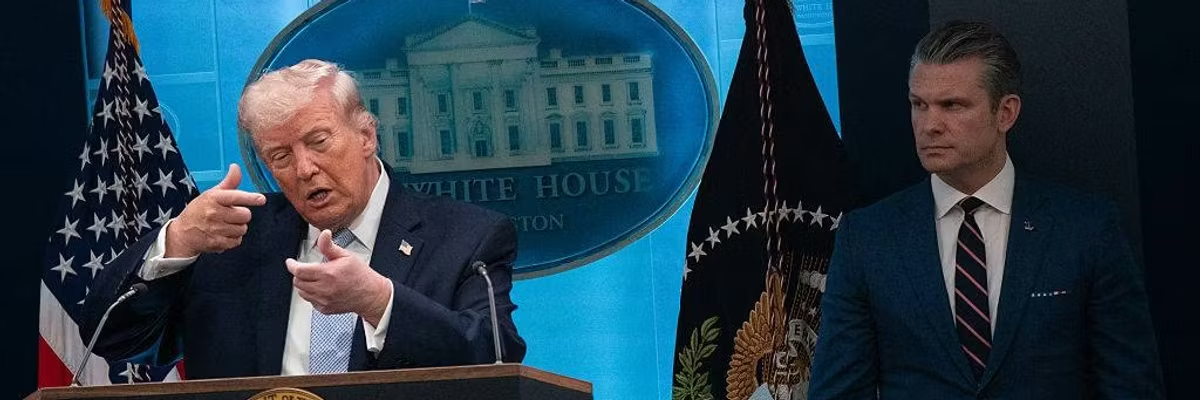
President Donald Trump mimics firing a rifle while speaking to reporters at a briefing on Monday, April 6, 2026 at the White House in Washington, DC.
(Photo by Maxine Wallace/The Washington Post via Getty Images)
Brad Reed
May 01, 2026
COMMON DREAMS
President Donald Trump and his administration have continued to claim that their historically unpopular war with Iran was necessary to prevent Iran from obtaining a nuclear weapon despite ample evidence to the contrary.
During testimony before the House Armed Services Committee on Wednesday, Hegseth insisted that the US military had “obliterated” Iran’s nuclear capabilities with strikes carried out in 2025, while maintaining that a full-scale war was necessary because the country hadn’t given up its “nuclear ambitions.”
Merely having the “ambition” to create a nuclear weapon would not make Iran an imminent threat, and US intelligence found no evidence that Iran was anywhere close to developing such a weapon.
US Director of National Intelligence Tulsi Gabbard testified under oath before the Senate Select Intelligence Committee last month that Iran’s nuclear weapons program had been “obliterated” by US-led airstrikes that were launched last year, and that there “has been no effort since then to try to rebuild their enrichment capability.”
Matt Duss, executive vice president at the Center for International Policy, pointed out in a social media post that US intelligence showing that Iran lacks the capacity to build nuclear weapons goes back decades.
“It feels insane to have to keep repeating this: The 2007 [National Intelligence Estimate] assessed that Iran ended nuclear weapons-related work in 2003,” Duss explained. “That assessment has not changed. The claim that this war was necessary to prevent an Iranian nuke is just complete bullshit.”
Despite multiple US intelligence reports indicating that Iran is not an imminent threat to the US, Trump has continued to hype its supposed nuclear ambitions to justify his war, which he launched illegally without any congressional authorization in late February.
In a Thursday interview with Newsmax, Trump baselessly claimed that Iran would immediately launch a nuclear weapon after acquiring one, even though doing so would risk massive retaliation by the US, which has more than 5,000 nuclear warheads at its disposal.
“I will tell you that Iran would use the nuclear weapon if they had it,” Trump said. “I deal with these people. I know people. They will use their nuclear weapons, and we’re not going to give them a chance to do it.”
“It feels insane to have to keep repeating this,” said Matt Duss, pointing to US intelligence assessing that “Iran ended nuclear weapons-related work in 2003.”
President Donald Trump mimics firing a rifle while speaking to reporters at a briefing on Monday, April 6, 2026 at the White House in Washington, DC.
(Photo by Maxine Wallace/The Washington Post via Getty Images)
Brad Reed
May 01, 2026
COMMON DREAMS
President Donald Trump and his administration have continued to claim that their historically unpopular war with Iran was necessary to prevent Iran from obtaining a nuclear weapon despite ample evidence to the contrary.
During testimony before the House Armed Services Committee on Wednesday, Hegseth insisted that the US military had “obliterated” Iran’s nuclear capabilities with strikes carried out in 2025, while maintaining that a full-scale war was necessary because the country hadn’t given up its “nuclear ambitions.”
Merely having the “ambition” to create a nuclear weapon would not make Iran an imminent threat, and US intelligence found no evidence that Iran was anywhere close to developing such a weapon.
US Director of National Intelligence Tulsi Gabbard testified under oath before the Senate Select Intelligence Committee last month that Iran’s nuclear weapons program had been “obliterated” by US-led airstrikes that were launched last year, and that there “has been no effort since then to try to rebuild their enrichment capability.”
Matt Duss, executive vice president at the Center for International Policy, pointed out in a social media post that US intelligence showing that Iran lacks the capacity to build nuclear weapons goes back decades.
“It feels insane to have to keep repeating this: The 2007 [National Intelligence Estimate] assessed that Iran ended nuclear weapons-related work in 2003,” Duss explained. “That assessment has not changed. The claim that this war was necessary to prevent an Iranian nuke is just complete bullshit.”
Despite multiple US intelligence reports indicating that Iran is not an imminent threat to the US, Trump has continued to hype its supposed nuclear ambitions to justify his war, which he launched illegally without any congressional authorization in late February.
In a Thursday interview with Newsmax, Trump baselessly claimed that Iran would immediately launch a nuclear weapon after acquiring one, even though doing so would risk massive retaliation by the US, which has more than 5,000 nuclear warheads at its disposal.
“I will tell you that Iran would use the nuclear weapon if they had it,” Trump said. “I deal with these people. I know people. They will use their nuclear weapons, and we’re not going to give them a chance to do it.”
Defense industry flooding Congress with money with 'millions' as Iran war rages on
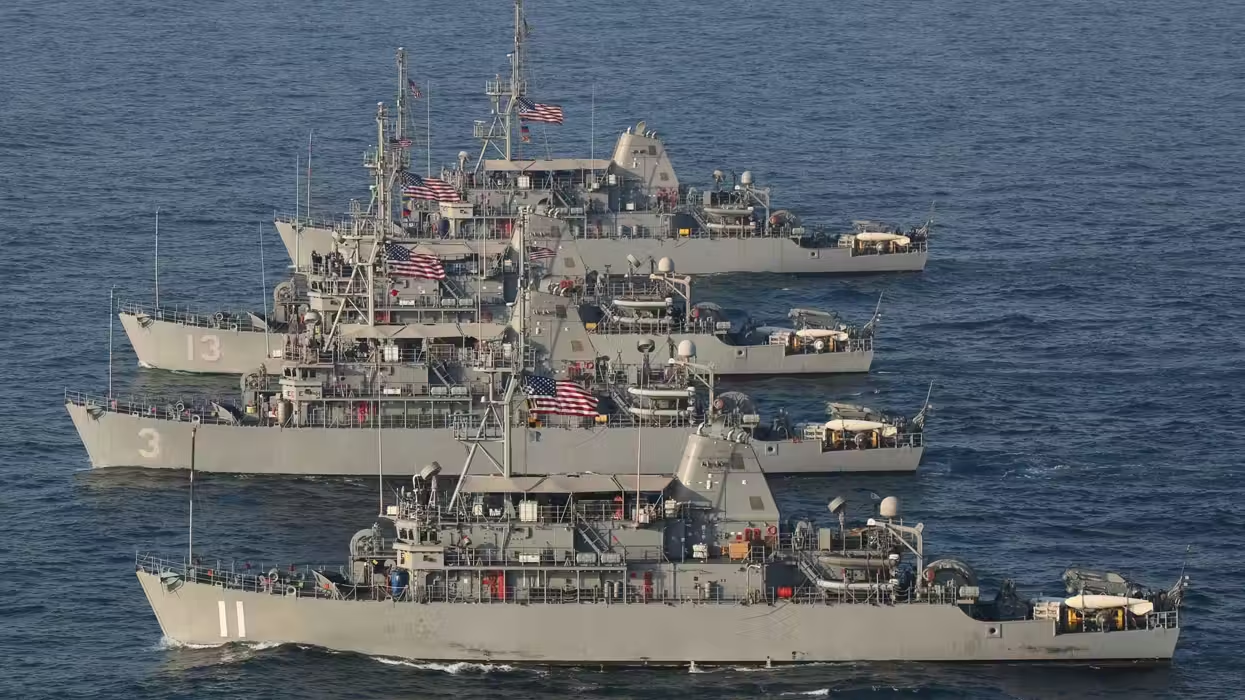
A formation of Avenger-class mine countermeasure ships maneuver in the Arabian Sea, July 6, 2019. Picture taken July 6, 2019. Antonio Gemma Moré/U.S. Navy/Handout via REUTERS
A formation of Avenger-class mine countermeasure ships maneuver in the Arabian Sea, July 6, 2019. Picture taken July 6, 2019. Antonio Gemma Moré/U.S. Navy/Handout via REUTERS
May 01, 2026
ALTERNET
As President Donald Trump's war with Iran has dragged on for the last two months, a new NOTUS report revealed that defense contractors have been flooding congressional candidates with their hands on major regulatory powers with campaign money.
In a report published Friday, NOTUS revealed several telling findings from campaign contribution data pulled from Jan. 1 through March 31, revealing that "the defense industry spent millions" to boost the funding for candidates likely to play a role in regulatory decisions surrounding them, as well as other "competitive races" in general.
"Some of the lawmakers who have received the most contributions from defense interests sit on key congressional committees that routinely make decisions that profoundly affect the financial fortunes of military contractors," NOTUS explained. "For example, Congress is tasked with scrutinizing the Pentagon’s $1.5 trillion budget request for 2027 — a nearly $500 billion increase."
Political action committees connected to "11 defense contractors, including Lockheed Martin, Northrop Grumman, Leidos, RTX, Anduril," poured a total of $4.7 million into congressional campaigns during the first quarter of 2026, NOTUS found.
The report further dug into the specific lawmakers being wooed with big money donations and how much they have been taking in.
"Rep. Ken Calvert [a California Republican] chairs the House Defense Appropriations Subcommittee, which is charged with drafting the Defense Department’s budget," the report continued. "The Republican is running in a competitive race after California Democrats gerrymandered his district, and his campaign committee received more than $200,000 during the first three months of 2026 from defense contractor PACs and direct contributions from top defense executives, according to FEC records."
Across two days in early March, Calvert took in two separate payments from "from leaders at military vehicle manufacturer AM General: Darrell Duckworth, an executive director, and Chief Financial Officer Ryan DuRussel." A week and change later, "the political action committees of Lockheed Martin and RTX, Raytheon’s parent company," also made two separate donations of $5,000 to the lawmaker. A senior congressional adviser for Calvert insisted to NOTUS that "His votes and actions are always based on what he believes is in the best interest of the constituents he represents and all Americans."
"House Armed Services Committee Chair Rep. Mike Rogers of Alabama received $68,000 last quarter through his campaign," the report added. "Rogers, a Republican who oversees the National Defense Authorization Act, has said he’s focused on making it easier for new defense firms such as Anduril and ShieldAI to secure defense contracts. Palmer Luckey, co-founder of Anduril, donated $7,000 to Rogers’ campaign in March."
It has not just been Republicans getting this money, either, with NOTUS reporting that most Democrats continue to accept defense PAC money, despite some swearing it off. Rep. Adam Smith of Washington, the ranking Democrat on the House Armed Services Committee, received "about $130,000 from industry PACs and executives." This included "$7,000 from Anduril co-founder and CEO Brian Schimpf, $1,000 from RTX Vice President of State and Local Government Relations Peter Holland and $1,000 from BAE Systems Vice President of Strategy Chris Rappa," as well as, "$5,000 contributions from PACs tied to defense contractors Northrop Grumman, SpaceX and Leonardo DRS."
In an email to the outlet, Smith also asserted that these extensive contrbituons would not have any sway over his voting decisions.
"I have opposed the Iran War since before it started and I oppose the $1.5 trillion defense budget increase," Smith said. "No contribution changes that. I’ve spent decades pushing back on wasteful defense spending and challenging entrenched interests in the Pentagon."
As President Donald Trump's war with Iran has dragged on for the last two months, a new NOTUS report revealed that defense contractors have been flooding congressional candidates with their hands on major regulatory powers with campaign money.
In a report published Friday, NOTUS revealed several telling findings from campaign contribution data pulled from Jan. 1 through March 31, revealing that "the defense industry spent millions" to boost the funding for candidates likely to play a role in regulatory decisions surrounding them, as well as other "competitive races" in general.
"Some of the lawmakers who have received the most contributions from defense interests sit on key congressional committees that routinely make decisions that profoundly affect the financial fortunes of military contractors," NOTUS explained. "For example, Congress is tasked with scrutinizing the Pentagon’s $1.5 trillion budget request for 2027 — a nearly $500 billion increase."
Political action committees connected to "11 defense contractors, including Lockheed Martin, Northrop Grumman, Leidos, RTX, Anduril," poured a total of $4.7 million into congressional campaigns during the first quarter of 2026, NOTUS found.
The report further dug into the specific lawmakers being wooed with big money donations and how much they have been taking in.
"Rep. Ken Calvert [a California Republican] chairs the House Defense Appropriations Subcommittee, which is charged with drafting the Defense Department’s budget," the report continued. "The Republican is running in a competitive race after California Democrats gerrymandered his district, and his campaign committee received more than $200,000 during the first three months of 2026 from defense contractor PACs and direct contributions from top defense executives, according to FEC records."
Across two days in early March, Calvert took in two separate payments from "from leaders at military vehicle manufacturer AM General: Darrell Duckworth, an executive director, and Chief Financial Officer Ryan DuRussel." A week and change later, "the political action committees of Lockheed Martin and RTX, Raytheon’s parent company," also made two separate donations of $5,000 to the lawmaker. A senior congressional adviser for Calvert insisted to NOTUS that "His votes and actions are always based on what he believes is in the best interest of the constituents he represents and all Americans."
"House Armed Services Committee Chair Rep. Mike Rogers of Alabama received $68,000 last quarter through his campaign," the report added. "Rogers, a Republican who oversees the National Defense Authorization Act, has said he’s focused on making it easier for new defense firms such as Anduril and ShieldAI to secure defense contracts. Palmer Luckey, co-founder of Anduril, donated $7,000 to Rogers’ campaign in March."
It has not just been Republicans getting this money, either, with NOTUS reporting that most Democrats continue to accept defense PAC money, despite some swearing it off. Rep. Adam Smith of Washington, the ranking Democrat on the House Armed Services Committee, received "about $130,000 from industry PACs and executives." This included "$7,000 from Anduril co-founder and CEO Brian Schimpf, $1,000 from RTX Vice President of State and Local Government Relations Peter Holland and $1,000 from BAE Systems Vice President of Strategy Chris Rappa," as well as, "$5,000 contributions from PACs tied to defense contractors Northrop Grumman, SpaceX and Leonardo DRS."
In an email to the outlet, Smith also asserted that these extensive contrbituons would not have any sway over his voting decisions.
"I have opposed the Iran War since before it started and I oppose the $1.5 trillion defense budget increase," Smith said. "No contribution changes that. I’ve spent decades pushing back on wasteful defense spending and challenging entrenched interests in the Pentagon."

No comments:
Post a Comment