While the Supreme Court is right to acknowledge that the situation today is different from past decades, it errs drastically in concluding that the proper path forward is to gut one of the key pieces of legislation that made that progress possible.
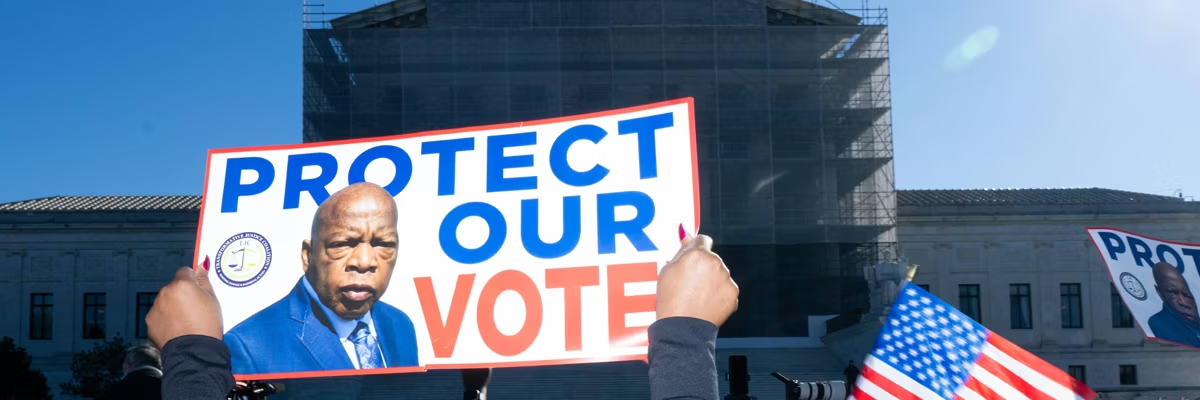
Voting rights activists protest outside the US Supreme Court as the court prepares to hear arguments in a case challenging Louisiana’s congressional map in Washington on Wednesday, October 15, 2025.
(Photo by Bill Clark/CQ-Roll Call, Inc via Getty Images)
Jordan Liz
May 01, 2026
Common Dreams
On April 29, the Supreme Court voted 6-3 along ideological lines to weaken Section 2 of the Voting Rights Act, which prohibits voting practices that discriminate based on race, color, or membership in a “language minority group.” Under this provision, states were allowed to consider race in drawing district maps for the purposes of protecting the voting power of people of color. That is, until now.
In Louisiana v. Callais, the Supreme Court struck down a Louisiana congressional map that created a second majority-Black district as “an unconstitutional gerrymander.” The map was created after the Fifth US Circuit Court of Appeals found that an earlier redistricting attempt with only one such district violated Section 2. The circuit court argued that the state unjustly divided Black communities in a way that “deprive[d] them of the opportunity to form effective voting blocs.” In response, Louisiana created a second majority-minority district, which Rep. Cleo Fields (D-La.) won in 2024.
RECOMMENDED...
‘Tragic Day for the Freedom to Vote’: Supreme Court Guts Remnants of Voting Rights Act
This new map was later challenged by a group of self-described “non-African Americans” who contended that it violated the Constitution’s equal protection clause. The Supreme Court concurred. Writing for the majority, Justice Samuel Alito remarked, the new map “would violate the plaintiffs’ constitutional rights.”
Notably, the Supreme Court did not rule that Section 2 itself was unconstitutional. Rather, they determined that the framework used to determine whether a map violates the provision must be updated “so it aligns with the statutory text and reflects important developments” in the decades following the passage of the Voting Rights Act (VRA). These “great strides” include abolishing voting tests, erasing disparities in voter registration and turnout due to race, as well as greater shares of people of color elected to political office. For the Supreme Court, these developments warrant a higher bar for Section 2 violations.
The Supreme Court misunderstands the present. It pretends that we live in a nation largely free of the very kinds of racial prejudices and issues that gerrymandered maps like Louisiana’s allow Congress to overlook.
This is a reckless conclusion. While recent decades have seen sizable progress in addressing racial discrimination, the court ignores two key points: Fiirst, progress does not mean that the problem is gone. Anti-voter bills designed to undermine the political power of people of color continue to be introduced and passed across the country. This is especially true in red states. As the Brennan Center of Justice notes, “Racially diverse states controlled by Republicans are far more likely to introduce and pass restrictive provisions than very white states with Republican control; in other words, it’s states like Texas and Arizona, not Wyoming or Utah, that are passing the most restrictive legislation.” In fact, on April 27, the Supreme Court issued a shadow docket ruling that allows Texas to implement a gerrymandered map that a Trump-appointed judge had previously found to be “racially discriminatory.”
Second, and as this very ruling indicates, progress can always be undone. Prior to this ruling, the Supreme Court had already undermined core aspects of the VRA. This includes eliminating “preclearance” requirements which mandated that states with histories of racist voting practices must have new election laws or procedures reviewed by a federal court or the Department of Justice. Since then, multiple states previously covered by those requirements, including Alabama, Georgia, and Louisiana, have seen their congressional maps challenged in federal court over concerns of racial discrimination.
Becoming complacent, as the Supreme Court would have us, puts the hard-fought victories that people of color have achieved at risk. Their emphasis on racial progress overlooks that even seemingly colorblind policies can set us back decades. Consider for instance the nominally race neutral SAVE America Act. It requires proof of citizenship, such as a US passport or birth certificate, to vote. This is effectively a poll tax that will disproportionately harm poor people and people of color. According to a 2023 YouGov poll, only about a third of Black Americans have a current passport. Moreover, some Black people may face more novel challenges. The Center on Budget and Policies Priorities reports that elderly Black people who were born under Jim Crow may never have been issued a birth certificate at all. As Senate Minority Leader Chuck Schumer (D-NY) put it, the SAVE America Act is “Jim Crow 2.0. […] What they’re trying to do here is the same thing that was done in the South for decades to prevent people of color from voting.” In short, the past is not simply history; if we are not vigilant, it can become our future.
The multigenerational, centuries-long issues of race will require more than 60 years to solve. While the Supreme Court is right to acknowledge that the situation today is different from past decades, it errs drastically in concluding that the proper path forward is to gut one of the key pieces of legislation that made that progress possible. More fundamentally, the Supreme Court misunderstands the present. It pretends that we live in a nation largely free of the very kinds of racial prejudices and issues that gerrymandered maps like Louisiana’s allow Congress to overlook. Importantly, by diluting the voting power of people of color and by extension their congressional representation, it undermines their efforts to combat racism, colorism, and xenophobia.
Nevertheless, under this court’s decision, future plaintiffs will have to show that “the State intentionally drew its districts to afford minority voters less opportunity because of their race.” Simply demonstrating that a congressional map dilutes a minority group’s voting power will not be sufficient. As Justice Elena Kagan writes in her dissenting opinion, requiring “vote-dilution plaintiffs” to prove a “race-based motive” will “make success in their suits nearly impossible.”
Intentionality is an incredibly difficult legal standard to meet. Proving intent is among the core reasons why hate crimes are so difficult to convict in court. As such, it is no surprise that Kagan believes this ruling effectively renders Section 2 “all but a dead letter.”
Justice Clarence Thomas, in his concurring majority opinion, wrote that the Supreme Court should never have interpreted Section 2 “to effectively give racial groups ‘an entitlement to roughly proportional representation.’” In his view, Section 2 “does not regulate districting at all.” Thomas’ opinion is not only inconsistent with the legislative and judicial history of the VRA, but it is inherently contrary to the ideals of a democracy. Proportional representation is not a mere “entitlement”—it is a constitutionally mandated guarantee that ensures that communities have their unique concerns addressed and their interests protected.
The Supreme Court’s decision, in conjunction with the Trump administration’s unrelenting assault on the Constitution, have set American democracy back decades. Yet, this is no time to despair. Now more than ever, we must organize, build broad multi-state coalitions, protest, and demand that our rights be recognized.
Our work is licensed under Creative Commons (CC BY-NC-ND 3.0). Feel free to republish and share widely.
Jordan Liz
Jordan Liz is an Associate Professor of Philosophy at San José State University. He specializes in issues of race, immigration and the politics of belonging.
Full Bio >
On April 29, the Supreme Court voted 6-3 along ideological lines to weaken Section 2 of the Voting Rights Act, which prohibits voting practices that discriminate based on race, color, or membership in a “language minority group.” Under this provision, states were allowed to consider race in drawing district maps for the purposes of protecting the voting power of people of color. That is, until now.
In Louisiana v. Callais, the Supreme Court struck down a Louisiana congressional map that created a second majority-Black district as “an unconstitutional gerrymander.” The map was created after the Fifth US Circuit Court of Appeals found that an earlier redistricting attempt with only one such district violated Section 2. The circuit court argued that the state unjustly divided Black communities in a way that “deprive[d] them of the opportunity to form effective voting blocs.” In response, Louisiana created a second majority-minority district, which Rep. Cleo Fields (D-La.) won in 2024.
RECOMMENDED...
‘Tragic Day for the Freedom to Vote’: Supreme Court Guts Remnants of Voting Rights Act
This new map was later challenged by a group of self-described “non-African Americans” who contended that it violated the Constitution’s equal protection clause. The Supreme Court concurred. Writing for the majority, Justice Samuel Alito remarked, the new map “would violate the plaintiffs’ constitutional rights.”
Notably, the Supreme Court did not rule that Section 2 itself was unconstitutional. Rather, they determined that the framework used to determine whether a map violates the provision must be updated “so it aligns with the statutory text and reflects important developments” in the decades following the passage of the Voting Rights Act (VRA). These “great strides” include abolishing voting tests, erasing disparities in voter registration and turnout due to race, as well as greater shares of people of color elected to political office. For the Supreme Court, these developments warrant a higher bar for Section 2 violations.
The Supreme Court misunderstands the present. It pretends that we live in a nation largely free of the very kinds of racial prejudices and issues that gerrymandered maps like Louisiana’s allow Congress to overlook.
This is a reckless conclusion. While recent decades have seen sizable progress in addressing racial discrimination, the court ignores two key points: Fiirst, progress does not mean that the problem is gone. Anti-voter bills designed to undermine the political power of people of color continue to be introduced and passed across the country. This is especially true in red states. As the Brennan Center of Justice notes, “Racially diverse states controlled by Republicans are far more likely to introduce and pass restrictive provisions than very white states with Republican control; in other words, it’s states like Texas and Arizona, not Wyoming or Utah, that are passing the most restrictive legislation.” In fact, on April 27, the Supreme Court issued a shadow docket ruling that allows Texas to implement a gerrymandered map that a Trump-appointed judge had previously found to be “racially discriminatory.”
Second, and as this very ruling indicates, progress can always be undone. Prior to this ruling, the Supreme Court had already undermined core aspects of the VRA. This includes eliminating “preclearance” requirements which mandated that states with histories of racist voting practices must have new election laws or procedures reviewed by a federal court or the Department of Justice. Since then, multiple states previously covered by those requirements, including Alabama, Georgia, and Louisiana, have seen their congressional maps challenged in federal court over concerns of racial discrimination.
Becoming complacent, as the Supreme Court would have us, puts the hard-fought victories that people of color have achieved at risk. Their emphasis on racial progress overlooks that even seemingly colorblind policies can set us back decades. Consider for instance the nominally race neutral SAVE America Act. It requires proof of citizenship, such as a US passport or birth certificate, to vote. This is effectively a poll tax that will disproportionately harm poor people and people of color. According to a 2023 YouGov poll, only about a third of Black Americans have a current passport. Moreover, some Black people may face more novel challenges. The Center on Budget and Policies Priorities reports that elderly Black people who were born under Jim Crow may never have been issued a birth certificate at all. As Senate Minority Leader Chuck Schumer (D-NY) put it, the SAVE America Act is “Jim Crow 2.0. […] What they’re trying to do here is the same thing that was done in the South for decades to prevent people of color from voting.” In short, the past is not simply history; if we are not vigilant, it can become our future.
The multigenerational, centuries-long issues of race will require more than 60 years to solve. While the Supreme Court is right to acknowledge that the situation today is different from past decades, it errs drastically in concluding that the proper path forward is to gut one of the key pieces of legislation that made that progress possible. More fundamentally, the Supreme Court misunderstands the present. It pretends that we live in a nation largely free of the very kinds of racial prejudices and issues that gerrymandered maps like Louisiana’s allow Congress to overlook. Importantly, by diluting the voting power of people of color and by extension their congressional representation, it undermines their efforts to combat racism, colorism, and xenophobia.
Nevertheless, under this court’s decision, future plaintiffs will have to show that “the State intentionally drew its districts to afford minority voters less opportunity because of their race.” Simply demonstrating that a congressional map dilutes a minority group’s voting power will not be sufficient. As Justice Elena Kagan writes in her dissenting opinion, requiring “vote-dilution plaintiffs” to prove a “race-based motive” will “make success in their suits nearly impossible.”
Intentionality is an incredibly difficult legal standard to meet. Proving intent is among the core reasons why hate crimes are so difficult to convict in court. As such, it is no surprise that Kagan believes this ruling effectively renders Section 2 “all but a dead letter.”
Justice Clarence Thomas, in his concurring majority opinion, wrote that the Supreme Court should never have interpreted Section 2 “to effectively give racial groups ‘an entitlement to roughly proportional representation.’” In his view, Section 2 “does not regulate districting at all.” Thomas’ opinion is not only inconsistent with the legislative and judicial history of the VRA, but it is inherently contrary to the ideals of a democracy. Proportional representation is not a mere “entitlement”—it is a constitutionally mandated guarantee that ensures that communities have their unique concerns addressed and their interests protected.
The Supreme Court’s decision, in conjunction with the Trump administration’s unrelenting assault on the Constitution, have set American democracy back decades. Yet, this is no time to despair. Now more than ever, we must organize, build broad multi-state coalitions, protest, and demand that our rights be recognized.
Our work is licensed under Creative Commons (CC BY-NC-ND 3.0). Feel free to republish and share widely.
Jordan Liz
Jordan Liz is an Associate Professor of Philosophy at San José State University. He specializes in issues of race, immigration and the politics of belonging.
Full Bio >
Further
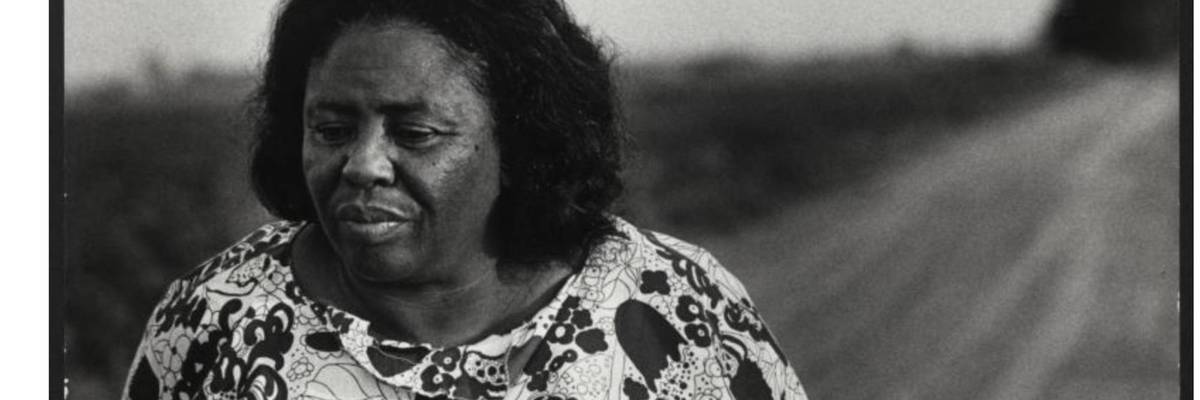
Fannie Lou Hamer in 1971
Photo by Louis H. Draper
Abby Zimet
Apr 30, 2026
Telling It Like It Is
Fannie Lou Hamer in 1971
Photo by Louis H. Draper
Abby Zimet
Apr 30, 2026
COMMON DREAMS
In a devastating blow to what John Lewis called “the most powerful non-violent tool we have in a democracy,” a right-wing, illegitimate SCOTUS finally gutted the Voting Rights Act they’ve long been chipping away at, ensuring communities of color will increasingly be denied “a voice in their own destiny.” By striking down a new Louisiana voting map as a bogus “racial gerrymander,” the court’s extremist hacks betrayed generations who fought and bled, said Fannie Lou Hamer, “to live as decent human beings.”
The court’s 6-3 decision in Louisiana v. Callais kneecapped “our nation’s most important federal civil rights law,” effectively voiding the last remaining provision of the landmark 1965 Voting Rights Act’s Section 2 that allowed voters of color to legally challenge racially discriminatory electoral maps. Specifically, they rejected Louisiana’s redrawn 2024 Congressional map that created a second majority-Black district - in a one-third Black state - aimed at righting the GOP’s racist wrongs of the past, defying precedent, context and common sense to argue the move, already upheld by two courts, was “an unconstitutional racial gerrymander.”
It's Time to Abolish Columbus Day
In another outlandish opinion, Samuel Alito, the hackiest of a cabal of hacks, didn’t directly strike down Section 2, which prohibits voting practices that discriminate on the basis of race; writing for the majority, he argued he was simply “properly” re-interpreting it to require proof of intentional discrimination - which Congress didn’t write into the law, which defies past rulings that redistricting must only result in discrimination, intended or no, and which is almost impossible to prove. Thus, wielding “sleight of hand and legal gibberish,” did Alito give license for corrupt politicians to further rig the system by silencing entire communities of color.
The potential death knoll for a vital law that’s curtailed racial gerrymandering and discrimination for 60 years comes, of course, after years of whittling away by Roberts Court zealots, using tactics from voter ID laws to limiting registration. One advocate: “This ruling isn’t about the law, it’s about power, and giving Republicans more seats they (could) win at the ballot box.” One “pernicious” result, writes Rick Hasen: To “bleach the halls” of Congress, state legislatures and city councils, the life’s work of judges who see their constituency as aggrieved white men hostile to the rights of minorities - a stance that puts them “at odds with democracy itself.”
In a fiery dissent, Justice Elena Kagan charged the majority “straight-facedly holds the Voting Rights Act must be brought low to make the world safe for partisan gerrymanders.” The law they “eviscerate”, she wrote, “is - or, now more accurately, was - one of the most consequential, efficacious, and amply justified exercises of federal legislative power in our Nation’s history. It was born of the literal blood of Union soldiers and civil rights marchers, and repeatedly, and overwhelmingly, reauthorized by the people’s representatives in Congress. Only they have the right to say it is no longer needed - not the Members of this Court.”
Above all, critics decry the hubris and perfidy of those heedless Court members blithely stripping from millions of Americans the elemental rights so many of their descendants struggled, suffered and died for. The Rev. William Barber eviscerated a court, ignorant of the painful history of “the rights that cost our people so much,” that has “decided their job is to enable extremism and systemic racism by arguing that race has no place in the American Democratic process. Race has always had a place in the process. And claiming that partisan decisions are not racist is a form of racism.” “Some of us,” John Lewis humbly noted of his lifetime of good trouble, “gave a little blood for (that) right.”
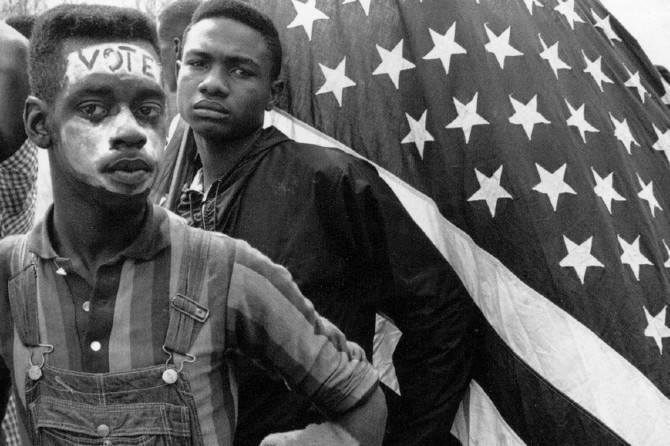
In a devastating blow to what John Lewis called “the most powerful non-violent tool we have in a democracy,” a right-wing, illegitimate SCOTUS finally gutted the Voting Rights Act they’ve long been chipping away at, ensuring communities of color will increasingly be denied “a voice in their own destiny.” By striking down a new Louisiana voting map as a bogus “racial gerrymander,” the court’s extremist hacks betrayed generations who fought and bled, said Fannie Lou Hamer, “to live as decent human beings.”
The court’s 6-3 decision in Louisiana v. Callais kneecapped “our nation’s most important federal civil rights law,” effectively voiding the last remaining provision of the landmark 1965 Voting Rights Act’s Section 2 that allowed voters of color to legally challenge racially discriminatory electoral maps. Specifically, they rejected Louisiana’s redrawn 2024 Congressional map that created a second majority-Black district - in a one-third Black state - aimed at righting the GOP’s racist wrongs of the past, defying precedent, context and common sense to argue the move, already upheld by two courts, was “an unconstitutional racial gerrymander.”
It's Time to Abolish Columbus Day
In another outlandish opinion, Samuel Alito, the hackiest of a cabal of hacks, didn’t directly strike down Section 2, which prohibits voting practices that discriminate on the basis of race; writing for the majority, he argued he was simply “properly” re-interpreting it to require proof of intentional discrimination - which Congress didn’t write into the law, which defies past rulings that redistricting must only result in discrimination, intended or no, and which is almost impossible to prove. Thus, wielding “sleight of hand and legal gibberish,” did Alito give license for corrupt politicians to further rig the system by silencing entire communities of color.
The potential death knoll for a vital law that’s curtailed racial gerrymandering and discrimination for 60 years comes, of course, after years of whittling away by Roberts Court zealots, using tactics from voter ID laws to limiting registration. One advocate: “This ruling isn’t about the law, it’s about power, and giving Republicans more seats they (could) win at the ballot box.” One “pernicious” result, writes Rick Hasen: To “bleach the halls” of Congress, state legislatures and city councils, the life’s work of judges who see their constituency as aggrieved white men hostile to the rights of minorities - a stance that puts them “at odds with democracy itself.”
In a fiery dissent, Justice Elena Kagan charged the majority “straight-facedly holds the Voting Rights Act must be brought low to make the world safe for partisan gerrymanders.” The law they “eviscerate”, she wrote, “is - or, now more accurately, was - one of the most consequential, efficacious, and amply justified exercises of federal legislative power in our Nation’s history. It was born of the literal blood of Union soldiers and civil rights marchers, and repeatedly, and overwhelmingly, reauthorized by the people’s representatives in Congress. Only they have the right to say it is no longer needed - not the Members of this Court.”
Above all, critics decry the hubris and perfidy of those heedless Court members blithely stripping from millions of Americans the elemental rights so many of their descendants struggled, suffered and died for. The Rev. William Barber eviscerated a court, ignorant of the painful history of “the rights that cost our people so much,” that has “decided their job is to enable extremism and systemic racism by arguing that race has no place in the American Democratic process. Race has always had a place in the process. And claiming that partisan decisions are not racist is a form of racism.” “Some of us,” John Lewis humbly noted of his lifetime of good trouble, “gave a little blood for (that) right.”
John Lewis called the fight for voting rights "the struggle of a lifetime, or maybe even many lifetimes."Photo from Getty Archives
So did Fannie Lou Hamer, who fought against a Jim Crow South she’d grown up in because, “I was sick and tired of being sick and tired.” The granddaughter of slaves and youngest of 20 children of sharecroppers, she was 45 in 1962 when she went to a SNCC meeting at a church in Sunflower County, Mississippi and learned Black people could register to vote. The next day, she took a bus with 17 others to the county seat in Indianola. Police only let her and another person take the literacy test; she failed, but kept going back until she passed: “If I’d had any sense, I’d a been scared. But the only thing (whites) could do was kill me, and it seemed they’d been trying to do that a little bit at a time since I could remember.”
On the way back, police stopped them and brought them back to Indianola, where the bus driver was fined for “driving a bus the wrong color.” Back at the plantation, her children said the owner was angry she’d gone to vote; he told her to leave that night “because we are not ready for that in Mississippi.” “I didn’t try to register for you,” she said.. “I tried to register for myself.” Then she left: “They set me free. It’s the best thing that could happen. Now I could work for my people.” For the rest of her life, she did. She joined the voter registration campaign, helped organize Freedom Summer, became SNCC’s oldest field secretary, ran for Congress.
Left with a limp after surviving childhood polio, she embraced her identity as a Black working-poor woman with a disability and little formal education, upending preconceptions of both Black colleagues and white foes. When Rep. Adam Clayton Powell Jr. once challenged her expertise, she retorted, “How many bales of cotton have you picked?” In 1963, she became more disabled after she was arrested with other activists in Winona MS, taken to jail and brutally beaten by cops and, on their order, other black prisoners, suffering permanent damage to her eyes, legs and kidneys. She was still in jail when Medger Evers was murdered.
In August 1964, she recounted that ordeal at the Democratic National Convention in Atlantic City, days after the funerals of murdered Freedom Riders Chaney, Schwerner and Goodman. Testifying to the Credentials Committee, she challenged the seating of Mississippi’s all-white delegation - from still-all-white primaries - demanding the party seat Black members of an integrated Mississippi Freedom Democratic Party she’d helped found. In the end, MFDP delegates were not seated - party leaders offered a compromise of 2 seats, which she declined - but she had confronted them on a national stage about their own discrimination, famously asking, “Is this America?”
- YouTubewww.youtube.com
During Hamer’s testimony, then-president Lyndon Johnson had hastily called a news conference to divert attention for white Dem voters alarmed by her insistence on true equality. Cameras duly cut away from Hamer, but networks later showed her speech. “Hamer had pulled back the curtain,” read one account. “The United States could not claim to be a democracy while withholding voting rights from millions of its citizens.” Ultimately, Hamer’s inclusive political vision, along with a groundswell of civil rights activism, led to Johnson’s finally signing the 1964 Civil Rights Act and the 1965 Voting Rights Act, ensuring government could not “deny or abridge the right of any citizen to vote on account of race or color.”
Hamer remained active through the 1960s and 1970s. She spoke with Malcolm X in Harlem, at the ‘68 and ‘72 DNC, at 1969’s Vietnam War Moratorium rally in Berkeley. In 1971, she helped found the National Women’s Political Caucus, aimed at recruiting, training and supporting women to run for office. The titles of her speeches reflected her resolve, her anger, her fierce hope: “We’re On Our Way,” “Nobody’s Free Until Everybody’s Free,” “The Only Thing We Can Do Is Work Together,” “”What Have We To Hail,“ ”America Is A Sick Place,“ ”To Make Democracy A Reality,“ and, in 1976, ”We Haven’t Arrived Yet.“
Clearly, sorrowfully, we damn sure still haven’t. Unlike so many others, Hamer lived to do her work and tell her story, for a while. She died in Mississippi on March 14, 1977, aged just 59, of breast cancer exacerbated by high blood pressure, diabetes, and complications from her jail beatings. She died, too, “from being poor, Black, and an activist in Mississippi at a time when all of that was lethal.” Andrew Young gave her eulogy, telling mourners “the seeds of social change in America were sown here by the sweat and blood of you and Fannie Lou Hamer.” Then they sang her favorite song: “This little light of mine.” Her gravestone reads, “I am sick and tired of being sick and tired.” May we honor her labors, and may she rest in well-earned peace and power.
“The wrongs and the sickness of this country have been swept under the rug. But I’ve come out from under the rug, and I’m going to tell it like it is.” - Fannie Lou Hamer
“To the Justices Who Took What Others Bled For: History will have its say. But so will the bridge. So will the blood on the pavement. So will the people who were told to wait, then beaten for praying, then buried for believing the Constitution meant what it said....You’ll wear this shame for the rest of your lives.” - Derek Penwell
Our work is licensed under Creative Commons (CC BY-NC-ND 3.0). Feel free to republish and share widely.
Abby Zimet
Abby Zimet has written CD's Further column since 2008. A longtime, award-winning journalist, she moved to the Maine woods in the early 70s, where she spent a dozen years building a house, hauling water and writing before moving to Portland. Having come of political age during the Vietnam War, she has long been involved in women's, labor, anti-war, social justice and refugee rights issues. Email: azimet18@gmail.com
Full Bio >
So did Fannie Lou Hamer, who fought against a Jim Crow South she’d grown up in because, “I was sick and tired of being sick and tired.” The granddaughter of slaves and youngest of 20 children of sharecroppers, she was 45 in 1962 when she went to a SNCC meeting at a church in Sunflower County, Mississippi and learned Black people could register to vote. The next day, she took a bus with 17 others to the county seat in Indianola. Police only let her and another person take the literacy test; she failed, but kept going back until she passed: “If I’d had any sense, I’d a been scared. But the only thing (whites) could do was kill me, and it seemed they’d been trying to do that a little bit at a time since I could remember.”
On the way back, police stopped them and brought them back to Indianola, where the bus driver was fined for “driving a bus the wrong color.” Back at the plantation, her children said the owner was angry she’d gone to vote; he told her to leave that night “because we are not ready for that in Mississippi.” “I didn’t try to register for you,” she said.. “I tried to register for myself.” Then she left: “They set me free. It’s the best thing that could happen. Now I could work for my people.” For the rest of her life, she did. She joined the voter registration campaign, helped organize Freedom Summer, became SNCC’s oldest field secretary, ran for Congress.
Left with a limp after surviving childhood polio, she embraced her identity as a Black working-poor woman with a disability and little formal education, upending preconceptions of both Black colleagues and white foes. When Rep. Adam Clayton Powell Jr. once challenged her expertise, she retorted, “How many bales of cotton have you picked?” In 1963, she became more disabled after she was arrested with other activists in Winona MS, taken to jail and brutally beaten by cops and, on their order, other black prisoners, suffering permanent damage to her eyes, legs and kidneys. She was still in jail when Medger Evers was murdered.
In August 1964, she recounted that ordeal at the Democratic National Convention in Atlantic City, days after the funerals of murdered Freedom Riders Chaney, Schwerner and Goodman. Testifying to the Credentials Committee, she challenged the seating of Mississippi’s all-white delegation - from still-all-white primaries - demanding the party seat Black members of an integrated Mississippi Freedom Democratic Party she’d helped found. In the end, MFDP delegates were not seated - party leaders offered a compromise of 2 seats, which she declined - but she had confronted them on a national stage about their own discrimination, famously asking, “Is this America?”
- YouTubewww.youtube.com
During Hamer’s testimony, then-president Lyndon Johnson had hastily called a news conference to divert attention for white Dem voters alarmed by her insistence on true equality. Cameras duly cut away from Hamer, but networks later showed her speech. “Hamer had pulled back the curtain,” read one account. “The United States could not claim to be a democracy while withholding voting rights from millions of its citizens.” Ultimately, Hamer’s inclusive political vision, along with a groundswell of civil rights activism, led to Johnson’s finally signing the 1964 Civil Rights Act and the 1965 Voting Rights Act, ensuring government could not “deny or abridge the right of any citizen to vote on account of race or color.”
Hamer remained active through the 1960s and 1970s. She spoke with Malcolm X in Harlem, at the ‘68 and ‘72 DNC, at 1969’s Vietnam War Moratorium rally in Berkeley. In 1971, she helped found the National Women’s Political Caucus, aimed at recruiting, training and supporting women to run for office. The titles of her speeches reflected her resolve, her anger, her fierce hope: “We’re On Our Way,” “Nobody’s Free Until Everybody’s Free,” “The Only Thing We Can Do Is Work Together,” “”What Have We To Hail,“ ”America Is A Sick Place,“ ”To Make Democracy A Reality,“ and, in 1976, ”We Haven’t Arrived Yet.“
Clearly, sorrowfully, we damn sure still haven’t. Unlike so many others, Hamer lived to do her work and tell her story, for a while. She died in Mississippi on March 14, 1977, aged just 59, of breast cancer exacerbated by high blood pressure, diabetes, and complications from her jail beatings. She died, too, “from being poor, Black, and an activist in Mississippi at a time when all of that was lethal.” Andrew Young gave her eulogy, telling mourners “the seeds of social change in America were sown here by the sweat and blood of you and Fannie Lou Hamer.” Then they sang her favorite song: “This little light of mine.” Her gravestone reads, “I am sick and tired of being sick and tired.” May we honor her labors, and may she rest in well-earned peace and power.
“The wrongs and the sickness of this country have been swept under the rug. But I’ve come out from under the rug, and I’m going to tell it like it is.” - Fannie Lou Hamer
“To the Justices Who Took What Others Bled For: History will have its say. But so will the bridge. So will the blood on the pavement. So will the people who were told to wait, then beaten for praying, then buried for believing the Constitution meant what it said....You’ll wear this shame for the rest of your lives.” - Derek Penwell
Our work is licensed under Creative Commons (CC BY-NC-ND 3.0). Feel free to republish and share widely.
Abby Zimet
Abby Zimet has written CD's Further column since 2008. A longtime, award-winning journalist, she moved to the Maine woods in the early 70s, where she spent a dozen years building a house, hauling water and writing before moving to Portland. Having come of political age during the Vietnam War, she has long been involved in women's, labor, anti-war, social justice and refugee rights issues. Email: azimet18@gmail.com
Full Bio >

No comments:
Post a Comment