Wednesday, November 20, 2024


Hong Kong Maps Action Plan on Green Maritime Fuel Bunkering
Hong Kong
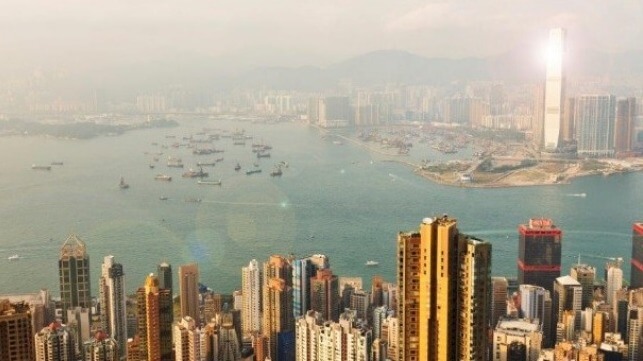
Hong Kong mapped its action plan to develop green bunkering operations (file photo)

Published Nov 18, 2024 7:31 PM by The Maritime Executive


The Government of Hong Kong hosted a presentation on Friday, November 15 to detail its action plan to promote the development of Hong Kong into a high-quality green maritime fuel bunkering center. As one of the busiest ports in Asia, the government looks to catch up and remain competitive with regional rivals such as Singapore while incorporating the central government’s decarbonization plans and anticipated industry demand.

Hong Kong’s Chief Executive announced in the 2023 Policy Address the goal to develop Hong Kong into a green maritime fuel bunkering center. In addition, China’s Five-Year Plan calls for measures to promote the development of green ports and enhance the promotion and application of clean maritime fuels.

The Transport and Logistics Bureau (TLB), in collaboration with the Environment and Ecology Bureau, reports it has conducted a feasibility study and proceeded to formulate the Action Plan released on Friday by taking into account international experiences and the current market developments, as well as in consultation with the Hong Kong Maritime and Port Board (HKMPB) and various organizations and players in the industry.

The Action Plan also reflects the expectation that the International Maritime Organization will promulgate a maritime fuel standard and launch a global maritime carbon pricing mechanism by 2027 driving the need to develop green bunkering capabilities. 

Among the goals set for Hong Kong is reducing carbon emissions for Hong Kong registered vessels by at least 11 percent compared to 2019 levels. They are also seeking to ensure that 55 percent of the diesel-fueled vessels in the government fleet switch to using green fuels by 2026. Carbon emissions from the Kwai Tsing Container Terminal are targeted to fall by at least 30 percent compared to 2021 levels.

Among the goals of the Action Plan to to ensure that at least seven percent of Hong Kong-registered ships take up green maritime fuels by 2030. The government projects that the bunkering service will involve over 200,000 tonnes of green maritime fuels by 2030, with at least 60 bunkering operations.

"This Action Plan fully reflects the Hong Kong Special Administrative Region Government's determination to develop green maritime fuel bunkering, and provides clear and definite directions and action targets for Hong Kong to keep pace with the international trends of green shipping,” said Lam Sai-hung, Hong Kong’s Secretary for Transport and Logistics.

The plan sets out five strategies and 10 actions to develop the supply and infrastructure for green maritime fuels. The government reports it has identified a land parcel near the port for green maritime fuel storage and expects to invite expressions of interest from the industry next year in developing the designated site. It will also facilitate the first LNG ship-to-ship bunkering demonstration by the industry within the first half of 2025. It also plans to establish a Green Maritime Fuel Bunkering Incentive Scheme to encourage enterprises to start green maritime fuel bunkering businesses in Hong Kong.

To build the supply chain for green maritime fuels, the government will also seek to facilitate offtake agreements between the green fuel bunkering supplies from the mainland and shipping companies.

By early next year, the government expects to release a comprehensive Code of Practice both for LNG and methanol bunkering. These steps are viewed as a key part of the strategy to build Hong Kong’s role in the future green bunkering marketplace.
 

Vancouver Accredits Seaspan Energy for First LNG Ship-to-Ship Bunkering
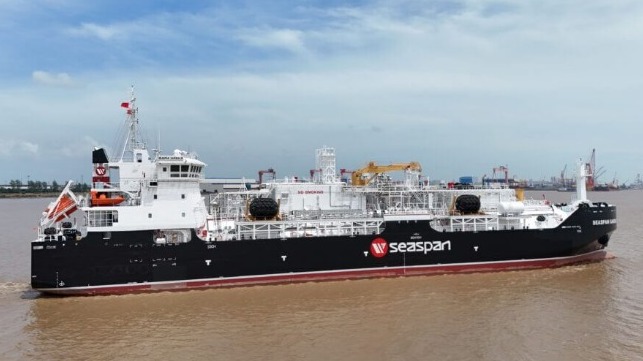
LNG bunker vessel
Seaspan Energy is building three LNG bunker vessels to start the first ship-to-ship operation based in the Port of Vancouver (Seaspan Energy)

Published Nov 19, 2024 6:03 PM by The Maritime Executive


The Port of Vancouver and Seaspan Energy took a key step forward to launching the first ship-to-ship LNG bunkering operation for a wide range of vessels calling at the port. The company went through an extensive multi-year assessment process conducted by the Vancouver Fraser Port Authority in collaboration with other Canadian authorities to ensure the safety of the new operation.

Seaspan Energy is working toward launching its LNG bunkering operation along the West Coast of North America. Harly Penner, Senior Vice President of Seaspan Energy called the accreditation a “meaningful step,” towards the start-up of the Vancouver-based LNG bunkering hub.

The first two of three newly built 7600 cbm LNG bunkering vessels are due for delivery in the near future with a third scheduled for 2025. The LNG bunkering vessels are being built by CIMC Sinopacific Offshore & Engineering after Seaspan Energy worked closely with the Canadian-based team at VARD Marine to incorporate emerging technologies resulting in a decrease in emissions and underwater noise.

Each of the vessels will be approximately 113 meters (approximately 370 feet) in length with a design speed of 13 knots. Seaspan reports the design is focused on safe, efficient, and economical refueling of multiple ship types with an ability to transfer to and from a wide range of terminals. The vessels will be engaged in ship-to-ship LNG transfer along with coastal and short-sea shipping cargo operations.


Three vessels due for delivery in 2024 and 2025 will provide the new ship-to-ship bunkering operation (Seaspan Energy)


The first of the vessels, Seaspan Garibaldi was launched in January 2024. It was followed by the launching of Seaspan Lions in April and Seaspan Baker in July.

The Port of Vancouver highlights that it is a key step in its efforts to meet industry demands and proceed with sustainability programs.  They expect to be able to provide bunkering operations to a wide range of vessels including Ro-Ro vehicle carriers, tankers, containerships, and cruise ships expanding the role of the port in the West Coast trade.

The safety assessment program incorporated international best practices, assessed operational procedures, and produced a risk assessment. Vancouver approved designated locations for LNG bunkering operations within the port area. 

The port authority is also requiring Seaspan Energy to renew its license annually to ensure it continues to meet the highest LNG bunkering safety standards and procedures.

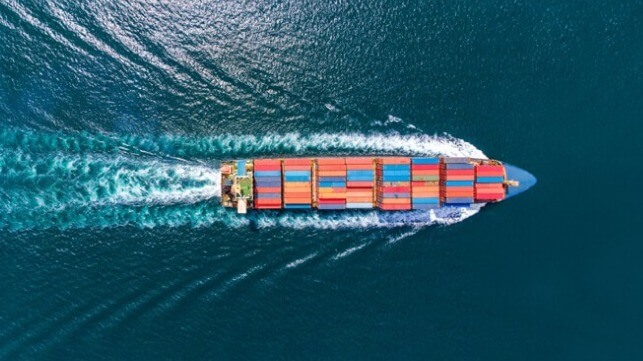
 

Report: Green Corridors Face “Feasibility Wall” Due to Fuel Costs

green shipping corridor
Green corridors have made progress but fuel costs could be an impediment

Published Nov 19, 2024 7:04 PM by The Maritime Executive


A new report warns that a “feasibility wall” could jeopardize the significant progress being made for the adoption of green corridors, a key part of efforts to support sustainable shipping. The Getting to Zero Coalition and the Global Maritime Forum report that the lack of policies to bridge the cost of switching to zero-emission fuels has emerged as the number one bottleneck creating a “feasibility wall” risking the implementation of the concept.

The initiative to form green corridors as a way to support and encourage the adoption of sustainable fuels and new technologies was one of the cornerstones at the UN’s COP 26 event in Scotland in November 2021. A total of 22 nations signed the initial decree, pledging to support the launch of net-zero corridors.

The Annual Progress Report on Green Shipping Corridors 2024 released today, November 19, highlights significant growth in programs seeking to launch the corridors. It reports the number of initiatives increased by 40 percent in 2023 with a total of 62 initiatives globally. 

The first demonstration took place in the Baltic this summer. Viking Line ran two of its ferries, Viking Grace and Viking Glory, fueled exclusively with liquid biogas. The Baltic emerged as one of the early proponents of the green corridor concept while there are also proposals for long-distance runs such as between Singapore and Rotterdam, which was first announced in August 2022.

The report highlights that six frontrunning initiatives are now preparing for real-world implementation. They note that these would provide a blueprint for green corridors worldwide. They highlight that a third of the proposed corridors have advanced to a new phase of exploration, including feasibility studies, implementation roadmaps, and cost assessments.

“Green shipping corridors have an essential role to play in accelerating zero-emission shipping. This year saw a handful of advanced corridors setting the pace, but continued progress is not inevitable,” said Jesse Fahnestock, Director of Decarbonisation at the Global Maritime Forum. “If industry and national governments make a concerted effort to share the costs and risks associated with new fuels, these leading corridors could together generate a breakthrough for zero-emission shipping before 2030.”

The cost of green fuels and the premium over traditional fuels is an often-cited barrier with many in the industry calling for efforts to bridge the gap. The corridor concept was to create significant demand to encourage investment in the production and distribution of new fuels. The report concludes that progress could stall without urgent action from governments to overcome the cost challenges.

The groups warn that the initiative “initiatives risks hitting a ‘feasibility wall’ if the cost of transitioning to sustainable energy sources is not urgently addressed by national policy incentives. This lack of national policy to bridge fuel costs is now the number one bottleneck and will soon limit the development of green corridors.”

The six frontrunning initiatives they believe could require over two million tonnes of hydrogen-based fuel per year by 2030. 

The report calls on national governments to step up support and help unlock the business case for alternative energy, such as hydrogen-based fuels. With an increased number of governments focusing on incentivizing the adoption of hydrogen in multiple sectors, they write that providing shipping-specific support could catalyze both national hydrogen economies and the decarbonization of the maritime sector.

They are making five recommendations to ensure progress on the green corridor initiative. They believe the cost gap could be addressed by tapping into existing schemes designed to support hydrogen adoption. Furthermore, they also call for the development of innovative commercial agreements for fuel procurement and chartering within the green corridors and additional government efforts to encourage participation as well as financing policies. 

Maersk as it launched its first large dual-fuel methanol containerships this year repeatedly cited the cost differential and lack of supply as major concerns for alternative fuels. At the International Maritime Organization’s MPEC committee meeting this year, member states were also called on to support a carbon pricing mechanism to support R&D and close the price gap between traditional and alternative fuels. This industry has highlighted for years the cost gap as a major impediment to the early adoption of alternative fuels.

EU Operators Brace for Cost and Complexity of FuelEU Carbon Regs

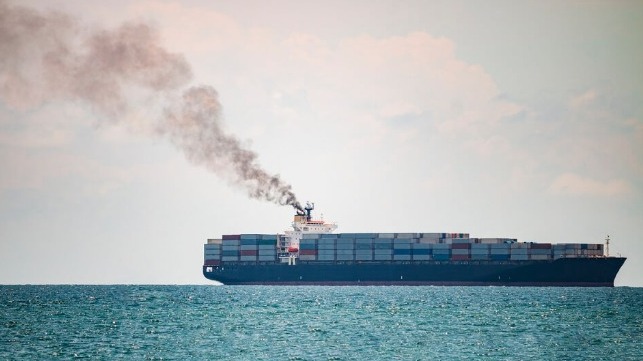
Container ship smokestack
iStock

Published Nov 19, 2024 4:38 PM by The Maritime Executive


The European Union's FuelEU Maritime regulation takes effect on Jan. 1, 2025, and it is expected to give European shipping interests a big compliance challenge - or opportunity, depending on how they operate. The regulation is highly technical and is driven more by math than text, opening the door to strategization - but many owners do not like the game, believing it will make them less competitive on the global market. 

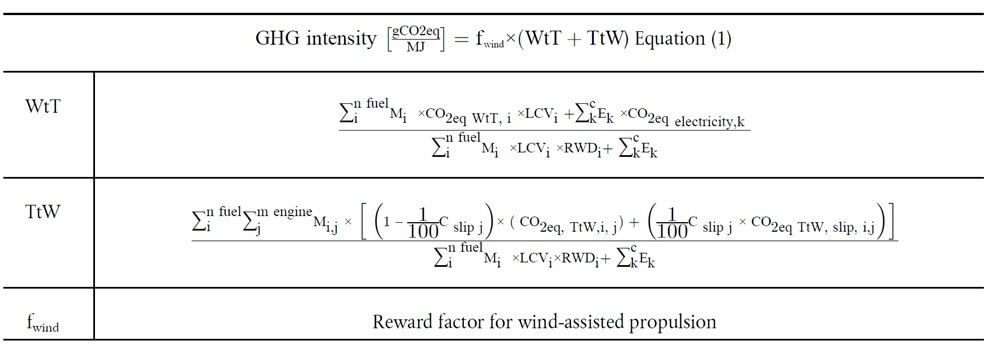
FuelEU Maritime requires operators to calculate the well-to-wake greenhouse gas intensity of each ship's fuel consumption, then reduce it over the course of a 25-year ratchet-down schedule, starting with a two percent cut next year.

Noncompliance is a law-abiding strategy for this regulation, but it is an expensive choice. The penalty for high carbon operation will be €2,400 per tonne of VLFSO energy equivalent - about triple the price of bunker fuel - for emissions over the limit. Repeat noncompliance in sequential years increases the penalty, though operators can also pool their emissions or borrow from future year compliance in order to reduce cost. The other cost-saving alternative is compliance, whether by improving vessel efficiency, adding wind propulsion or buying green fuels. 

FuelEU Maritime's greenhouse gas intensity formula (EU Consilium)

At least a dozen consultants and class societies offer solutions for navigating this sophisticated ruleset, and some go further to attempt to monetize the regulation for finance-minded shipowners. Veson, NAPA, StormGeo, BV, DNV, Normec, BSM, LR, Wilhelmsen, OrbitMI, ABS, OceanScore and countless others have developed compliance assistance services for this new market.  

Owners are paying close attention, and some are reprioritizing to take action, according to a recent qualitative survey by consultancy Houlder. "[The Emissions Trading System] is not a particularly big deal. It’s small penalties compared to FuelEU. What [FuelEU] has done is shocked businesses into realizing the penalties they are going to have to pay if they don’t act on energy efficiency . . . and then eventually future fuels," one industry member told Houlder. "From an R&D point of view, these have helped secure support and budget."

FuelEU Maritime is opposed by the German Shipowners' Association (VDR), whose chief executive recently called the regulation "terrible." The association is worried that it will make EU owners uncompetitive, and it wants to see international, IMO-led rules as fast as possible. 

"Well-intentioned is not always well done. Shipping is international, and emissions know no borders. Regional regulations such as FuelEU Maritime create a patchwork of rules. They distort international competition and are ineffective in the fight against climate change," VDR said in a statement. "The mandate from shipping to the new European Commission is clear: the EU rules and above all FuelEU Maritime must be integrated into the IMO's international measures as quickly as possible."


 ALL CAPITALI$M IS $TATE CAPITALI$M

India Rolls Out Subsidies and Preferential Financing for its Shipyards

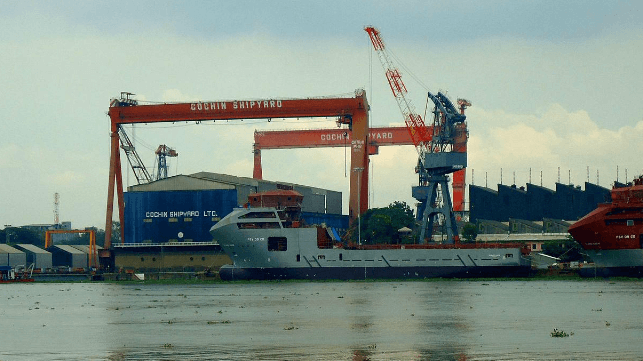
Cochin Shipyard
Ranjithsiji / CC BY SA 3.0

Published Nov 17, 2024 10:01 PM by The Maritime Executive


India is set to unveil a new policy aimed at incentivizing domestic shipbuilding. The ports, shipping and waterways ministry (MoPSW) is finalizing a cabinet note on incentives to promote domestic shipyards, reported the Indian business newspaper Mint. The proposed incentives are primarily focused on encouraging the development of fuel-efficient and technologically advanced vessels.

The new incentive program is the second phase of the existing Shipbuilding Financial Assistance Policy (SBFAP), which was adopted in 2016 and slated to expire in 2026. In the first phase of SBFAP, 313 vessel orders encompassing both domestic and export orders have been procured by 39 shipyards. So far, 135 vessels have been delivered.

During the second phase, the government reportedly wants to allocate $2.1 billion for the program. This will help provide a 25 percent subsidy for specialized vessels, rising to 30 percent for green and highly specialized vessels.

Another significant proposal is issuing credit notes worth 40 percent of a ship’s scrap value. After a demolition sale, the credit note could be reimbursed against the cost of constructing a new vessel at an Indian shipyard. Through this proposal, the government is hoping to encourage fleet renewal of Indian vessels. Around 44 percent of India’s merchant shipping fleet is above 20 years of age, data from MoPSW shows.

In addition, the government is also considering to introduce a purchase preference policy beginning in fiscal year 2031. This means vessels seeking new registration for coastal cargo transport in India would need to be built at a domestic shipyard.

India is targeting the shipbuilding industry as one of the critical pillars in achieving its Atmanirbhar Bharat vision (self-reliant India). The goal is to increase the percentage share of India-built ships in India’s fleet to seven percent by 2030 and 69 percent by 2047. The subsidy programs are key in making Indian yards as competitive as those of China and South Korea.

India is also in the process of giving the shipping industry infrastructure status for the first time. Currently, only shipbuilding and shipyards have infrastructure status, but the broader coverage will help reduce project costs for the shipping sector. Infrastructure status means a company can float infrastructure bonds, hence attracting investments from commercial banks and other kinds of concessions.

Top image: Ranjithsiji / CC BY SA 3.0


Estonian Maritime Industry: Unlocking new opportunities

Estonian Transport Administration

Published Nov 19, 2024 1:07 PM by Estonian Transport Administration


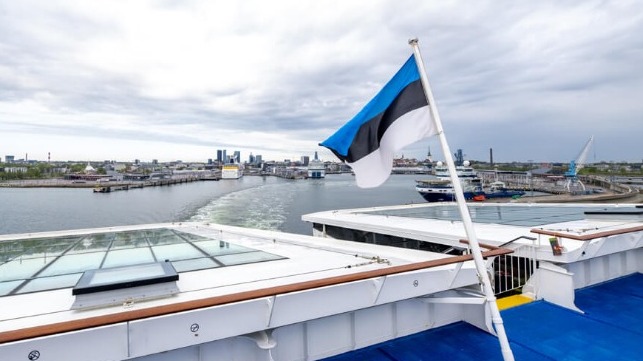
Estonia’s maritime sector offers a wealth of opportunities for shipowners and maritime entrepreneurs looking to establish a business in a digitally progressive, efficient, and entrepreneur-friendly environment. The Estonian Transport Administration initiative by the EST Flag, promoting an efficient and competitive environment for shipping companies with streamlined solutions tailored to the needs of today’s global maritime industry.

Estonia has garnered international attention and recognition for its e-solutions that empower citizens and businesses alike. As the world’s first fully digital country, Estonia offers 99 percent of government services online, 24/7. Key tools like the e-business register, e-notary, e-signature, and e-tax systems are just a few of the innovations that make conducting business here seamless. Estonia’s commitment to digital innovation extends to the maritime sector, where e-Residency unlocks powerful tools for shipowners. 

Digital systems for maritime business owners: Seafarers information system & ship information system 

Estonia’s e-Residency enables shipowners to access two specialized digital systems that transform how maritime business is managed: 

Seafarers Information System: Allows seafarers to apply for and extend various documents without leaving home or ship. It securely stores all maritime documents such as qualification certificates, practice records, medical certificates, and endorsements. Additionally, the system provides a convenient option to verify the validity check for a certificate of competency, endorsement, or medical certificate. 

Ship Information System: With 24/7 self-service and ship management capabilities one can operate a fleet remotely from anywhere in the world – order audits, apply for or update certificates, and access results and documents. The system also helps to keep track of payment obligations, so one never misses a fee. 

e-Residency: A gateway to maritime business 

Estonia’s pioneering e-Residency program, launched in 2014, offers entrepreneurs worldwide the opportunity to establish and manage an EU-based company remotely. Today’s statistics show that more than 118,500 e-residents have joined the program and over 32,500 Estonian companies have been established by e-residents. 

With e-Residency, shipowners benefit from: 

Easy EU Company Formation: Register an Estonian company online, unlocking access to the European market under the EU flag.

Digital Business Management: With a secure digital ID, e-residents can remotely manage key business functions, including signing contracts, filing taxes, and accessing government and bank services. 

Flexible Financial Solutions: Estonian banks and fintech companies provide accessible business accounts for e-residents, facilitating easy financial management. 

Applying for e-Residency is simple: submit an online application, pass a background check, and collect your digital ID card at an Estonian embassy or consulate. After your application has been approved, it can take 2-5 weeks for your e-Residency kit to arrive at your selected pickup location. This straightforward process provides maritime business owners with a stable and transparent EU business environment. Business consulting, accounting, and other trusted service providers can be found on the e-Residency website. 

The EST Flag advantages for maritime entrepreneurs 

Estonia offers respected value to shipowners through EST Flag, which supports a fast, solution-oriented approach to maritime operations. Recognizing that “every hour a vessel is in port costs”, the Estonian Transport Administration prioritizes rapid response times, ensuring that administrative processes are completed as quickly as possible with a focus on efficient and constructive solutions. 

EST Flag offers shipowners competitive advantages, including: 

Transparent Tax Benefits: Estonia’s tax system is transparent, efficient, and has simple tax rules and uniform tax rates, which keep compliance costs low. Tax filings take minimal time thanks to a fully digital tax environment. Estonia has the most competitive tax system in the OECD, and its deferred profit tax system encourages entrepreneurship and makes a company’s path to market much easier and less risky. 

EU-Integrated Environment: Estonia’s combination of stable political course and EU membership ensures a reliable and compliant framework for maritime businesses seeking to expand internationally. All Estonian digital business services through e-Residency are available in English. 

By choosing Estonia, maritime entrepreneurs gain access to a digitally advanced, EU-compliant, and supportive business ecosystem tailored to shipowners' needs. Whether registering a vessel under the Estonian flag, exploring marine technology, or expanding business in the EU, Estonia provides a streamlined, innovative path to success. 


This article is sponsored by the Estonian Transport Administration. For additional information visit the website and its LinkedIn page.

The opinions expressed herein are the author's and not necessarily those of The Maritime Executive.

WWIII

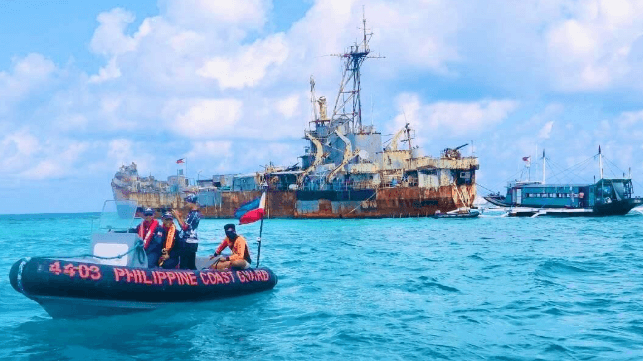
Fragile Agreement Holds as China “Monitors” Philippine Resupply Effort

Philippine Coast Guard
(file image Philippine Coast Guard)

Published Nov 15, 2024 12:20 PM by The Maritime Executive


The agreement between China and the Philippines for the resupply missions to the Philippines base aboard the vessel BRP Sierra Madre continued with the third unchallenged delivery to the base. Both sides acknowledged the mission in an apparent recognition that the non-disclosed agreement has so far been able to lower the temperature and advert the recent confrontations.

Chinese state media on Friday, November 15, issued a brief statement saying that its Coast Guard had “maintained oversight throughout the process.” They reported, “With China’s approval, the Philippines resupplied an illegally grounded military ship with living necessities.”

The China Coast Guard in its statement said, “It is hoped the Philippines will honor its commitments, work with China in the same direction and jointly manage the maritime situation,” the South China Post reported. However, later in the day, a spokesperson for China’s defense ministry reiterated its commitment to safeguard its territorial claims and maritime rights and to “counter infringements and provocations.”

A spokesperson for the Armed Forces of the Philippines confirmed the mission had taken place on November 14. They said, “There were no untoward incidents during the mission.”

It marks the third resupply mission since reports of an agreement between China and the Philippines in July aimed at reducing some of the tensions in the region. Unnamed sources in the Philippines told the Associated Press that the deal set a “temporary arrangement” to let the Philippines transport supplies and troop rotations to the vessel despite China’s demands that the Philippines withdraw from the Second Thomas Shoal in the South China Sea.

China reportedly had demanded that the Philippines provide advance notice of the resupply missions and permit inspections of the vessels conducting the supply missions. China reportedly agreed to waive those demands while continuing to say the Philippines must abandon the post.

The Philippines has maintained the outpost aboard the beached World War II-vintage vessel BRP Sierra Madre since 1999 as part of its territorial claims to the area. Already considered one of the primary flashpoints in the South China Sea, the situation escalated in 2024 with a series of confrontations. Chinese vessels attempted to block the Philippine vessels, including several contact incidents, alleged intentional ramming, and frequent use of water cannons.

Associated Press highlights that while the incidents at the Second Thomas Shoal have ceased recently China continues its incursions throughout the region. In addition to the Philippines, Vietnam, Malaysia, Taiwan, and Indonesia have all complained of incidents.


After Ukrainian Drone Attacks, Three Russian Refineries Set to Close

Ukrainian attack on Tuapse refinery, July 2024 (OsintTechnical / Russian social media)
Ukrainian drone attack on the Tuapse refinery, July 2024 (OsintTechnical / Russian social media)

Published Nov 18, 2024 8:45 PM by The Maritime Executive


Three Russian refineries that were hit by Ukrainian drones earlier this year could soon close, according to Reuters. The affected facilities are having a harder time competing in an environment of higher oil prices, and their expected closures are believed to be motivated by finances. 

The refineries include two small independent facilities, Ilsky (in Krasnodar) and Novoshakhtinsky (in Rostov). The Tuapse refinery, owned by state oil firm Rosneft, was built in 1929 and despite several rounds of technological upgrades, its infrastructure is relatively dated. It is the sole Russian refinery on the Black Sea coastline and is particularly vulnerable to Ukrainian attacks. 

All of these plants have been hit by Ukrainian drones. Tuapse was hit three times, once in January and again in May and July, forcing it offline each time. It has also shut down voluntarily several times because of weak refining margins. 

If Tuapse shuts down altogether, it would have minimal impact on the Russian domestic market or the Kremlin's war effort. Its 240,000 bpd of fuel production is sold almost entirely to overseas customers, primarily in Turkey and in the Far East.

The Ilsky refinery is a 130,000 bpd refinery in the Krasnodar region, about 35 miles inland from the port of Novorossiysk. It was hit and damaged in a Ukrainian drone strike in June, and it has applied for government assistance to help with modernization upgrades. Russia's extra-high wartime interest rates (currently 21 percent) have made it hard to borrow for industrial projects like refinery improvements. 

The Novoshakhtinsky refinery is an independently-owned topping plant in the Rostov region, and can produce about 100,000 bpd. It was attacked by Ukrainian drones in March, April and June, and was partially closed for repairs until August.


WE'RE BACK

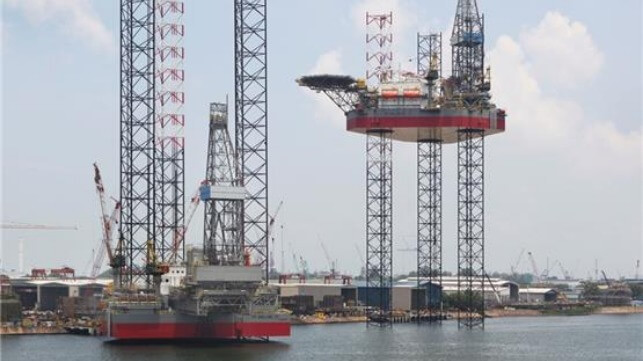
Keppel Seeks to Monetize Legacy Rigs as Offshore Energy Sector Rebounds

jackup rigs
Keppel is taking control of 13 legacy jackup rigs due to the improving offshore market (Keppel file photo)

Published Nov 19, 2024 5:10 PM by The Maritime Executive


Opportunities are emerging in the offshore energy sector as the market improves prompting Singapore-based Keppel to announce it will take direct control of 13 offshore rigs that are part of its former offshore and marine business. The new transaction is a follow-up to the $3.3 billion combination of Keppel Offshore & Marine and Sembcorp Marine which created Seatrium Offshore & Marine in 2023.

Keppel highlights that the global drilling fleet is aging rapidly and that during the prolonged downturn, the sector experienced years of under-investment which is impacting new supply. They note that a shortage of premium jackup rigs is projected in the coming years.

The high cost and long lead times associated with constructing new jackup rigs, Keppel anticipates is likely to create attractive opportunities for rigs that are currently undelivered as well as the opportunity to reactivate rigs that have sat idle during the downturn in the offshore market. Keppel was once a leader in the shipbuilding segment but with the prolonged downturn decided to transform into an asset manager focusing on infrastructure, real estate, and connectivity while merging its legal shipbuilding and repair operations with Sembcorp Marine.

As part of the previous transaction, 13 legacy rigs including unfished construction projects, were placed into a holding company. Keppel currently holds 10 percent of the equity along with securities and vendor notes which it will convert to take full control of the holding company by the end of 2024. Keppel emphasizes that has no intention to re-enter the offshore market, but it will form a new private fund to hold and manage the rigs.

“Keppel remains focused on the monetization of legal assets,” the company highlighted in announcing this transaction. “This will provide Keppel with the greatest strategic flexibility to respond to market opportunities via directly managing the rig assets.” The company will also gain access to S$843 million in cash (US$643 million) which it says can be utilized to complete the unfinished rigs.

Loh Chin Hua, CEO of Kepple, highlighted that the rigs are among the most advanced fleet available in the market today. He said that about half the rigs are contracted and generating stable cash flow, while they will have the opportunity to complete the others and contract them into a strengthening market.

The company said the current trend in the market presents a prime opportunity for Keppel as an asset manager to unlock the potential of its legacy rigs. They said they will be able to offer operators a more cost-effective and quicker means of securing additional rigs for near-term drilling projects.
 

 HIGH SEAS CRIMINAL CAPITALISM

Italy Launches Antitrust Investigation into MSC Investment in Moby

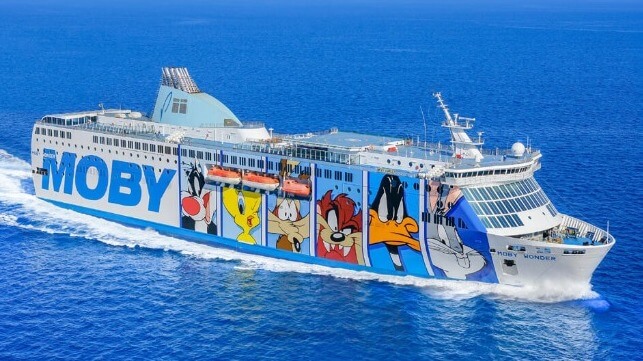
Moby ferry Italy
Moby's ferries are distinctive with the images of cartoon characters on the sides of the ships (Moby)

Published Nov 18, 2024 4:18 PM by The Maritime Executive


Italy’s Competition and Market Authority revealed today that it has launched an investigation into the investment by MSC Mediterranean Shipping Company into Italian ferry operator Moby. The investigation is looking at the potential of “restrictions of competition,” after MSC made a series of actions in 2022 and 2023 to save the financially troubled ferry operator.

The authority reports with the assistance of the Special Antitrust Unit of the Guardia di Finanza, they carried out inspections on November 13. They visited the offices of Moby and Grandi Navi Veloci (GNV), as well as the parent company Onorato Armatori and MSC’s Marinvest which carried out the investments through Shipping Agencies Services (SAS, another MSC company.

Moby operates a fleet of ferries between the Italian mainland and destinations including Sardinia, Corsica, Sicily, and Elba. Parent company Onorato Group reports it operates a total of 38 ships, with about 41,000 departures for 33 ports annually. In addition to Moby, the group acquired Toremar, Compagnia Regionale Toscana in July 2012, and Tirrenia in 2015. 

Moby group however was facing financial difficulties unable to repay debts from the mergers and in 2022 was faced with bankruptcy. The Aponte family working with the Ororato family devised a plan by which SAS would acquire 49 percent of Moby for approximately €150 million while providing a loan for an additional €243 million. In January this year, MSC also acquired two Moby RoPax ferries, Moby Vinci and Moby Sharden, for a further €109 million.

The regulators are highlighting that it is a highly concentrated market that already has high barriers to entry. They note the services transporting passengers and cargo in some cases are only offered by Moby and GNV while on some routes there is a third operator. GNV, which was started by the Grimaldi group in 1992, has been owned by MSC since 2010.

Moby and GNV confirmed that the investigation was underway. They said in prepared statements that they were fully cooperating with the organizations providing requested information.

This investigation is proceeding as MSC continues to be very aggressive with acquisitions across the group. Among the other deals the company recently acquired car carrier operator Gram Car Carriers. Last week, it was reported that MSC has received all the required approvals for its 49 percent investment in Hamburg’s port operator HHLA to proceed. The company is also expanding its logistics operations both with port investments and shoreside logistic operators. 


Trafigura Charged for Alleged Bribery Scheme in Angola

Cash
File image

Published Nov 19, 2024 10:08 PM by The Maritime Executive


Swiss commodity trading giant Trafigura has been charged with failing to prevent a $5 million bribery scheme in its chartering and oil trading operations in Angola, the latest public corruption case involving the commodity-trading industry in the developing world. It is the first such case in Switzerland to result in charges against a top executive - Mike Wainwright, the firm's former CEO, who retired earlier this year. 

According to Swiss prosecutors, Trafigura paid off an Angolan oil official, Paulo Gouveia Junior, in exchange for his signature on eight ship charter contracts and one bunkering contract in 2009-10. These allegedly corrupt agreements netted Trafigura $144 million in profits. 

Over the course of 2009-11, prosecutors said, Trafigura paid $4.3 million into a shell company in the Virgin Islands and designated Gouveia as the beneficiary of the fund. Gouveia also allegedly received an additional cash bribe of $600,000 delivered in Angola. The transactions were highly structured and were routed through an intermediary - a consultant who previously worked for Trafigura and whose sole client was Trafigura. This fixer was given the nickname "Mr. Non-Compliant" by Trafigura founder Claude Dauphin, prosecutors asserted.

Wainwright was personally involved, according to the indictment, and allegedly signed some of the documents for these transactions. He has maintained his innocence, and his legal counsel told the FT that he will be mounting a robust defense. 

Trafigura is also a defendant in the case. If convicted, the company would have to forfeit its earnings from the alleged scheme, totaling about $150 million - equal to about two percent of its total profit in 2023. 

The trading company is a pivotal player in Angola's development plans, with a leading role in the deepwater Port of Lobito. 


Galaxy Leader's Crewmembers Mark One Year in Houthi Captivity

The rebel group continues to mount attacks on shipping, including another attempted strike on Sunday

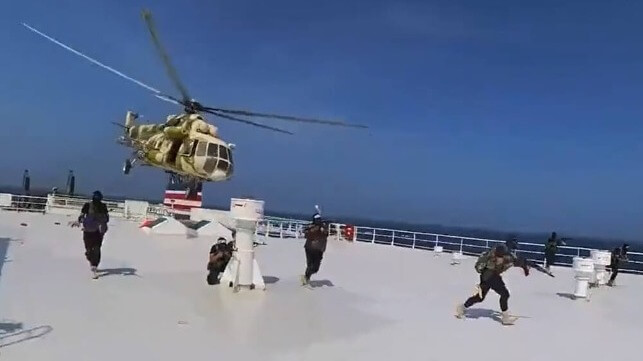
Houthi fighters land on the deck of the Galaxy Leader, Nov. 19, 2023 (Houthi Military Media)

Published Nov 17, 2024 9:31 PM by The Maritime Executive


This week, the crew of the hijacked car carrier Galaxy Leader mark one full year in Houthi captivity near the port of Hodeidah, Yemen. 

The Galaxy Leader has been held in Houthi custody since the group's commando forces boarded and seized it on November 19, 2023. The Houthis boarded the vessel using a helicopter and quickly seized control of the bridge. It was the group's first high-profile attack on shipping after the start of the war in Gaza, and it presaged countless attacks to follow. 

As motivation for the hijacking, the Houthis cited the Israeli-linked ownership interests of the ship's commercial operator, UK-based Ray Car Carriers. The militants diverted the vessel to Hodeidah, Yemen and opened it to the public, making it a popular tourist attraction and dance-hall destination. 

It appears that the crew have been living aboard Galaxy Leader throughout their ordeal. Seventeen of the crewmembers are from the Philippines, and Manila has repeatedly called for their release. The remainder of the crew includes three Ukrainians, two Bulgarians, two Mexicans and one Romanian, reflecting the global nature of shipping and crewing.  

In August, the Philippines Department of Foreign Affairs reported that several of the Filipino crewmembers were experiencing "significant health issues," including symptoms of malaria - a potentially fatal illness if untreated. 

"It seems incredible that a year has passed, and the crew of the Galaxy Leader are still being held hostage. Innocent seafarers and families who have had their lives irrevocably changed by geopolitical forces wholly out of their control," said International Chamber of Shipping Secretary General Guy Platten. "The seafarers, some of whom have been at sea for nearly two years, have been held against their will only limited contact with their families, friends, and loved ones. This is unconscionable and must not be allowed to endure. We are thinking of the seafarers and all of those affected at this time, and we continue to call for humanity to prevail and their immediate release."

Since the hijacking of Galaxy Leader, Houthi forces have attacked more than 100 vessels with drones and missiles, sinking two ships, damaging countless others, and killing four seafarers. The rebel group's latest attack occurred Sunday night, when a vessel transiting off Mocha reported a near-miss missile splashdown, according to the Royal Navy's UK Maritime Trade Operations (UKMTO). No damage or injuries were reported, and the vessel continued on its commercial voyage. 


 FREE THE GALAXY LEADER CREW


On First Anniversary of Red Sea Crisis, U.S. Warns of Russian Involvement

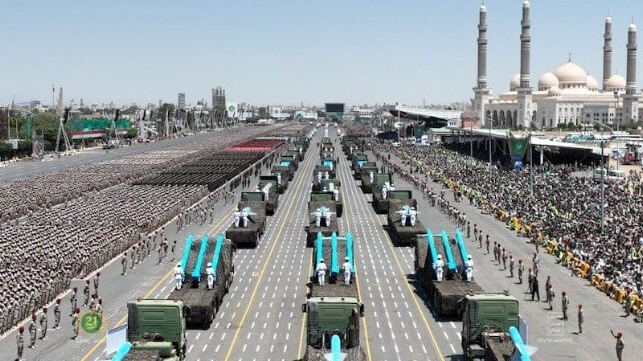
Houthi missile parade
Courtesy Houthi Military Media

Published Nov 19, 2024 9:33 PM by The Maritime Executive


On the first anniversary of the start of the Red Sea crisis, the UN Security Council called on the group to release the hijacked car carrier Galaxy Leader and the 25 crewmembers that the group has held hostage since 2023. 

The Galaxy Leader has been in Houthi custody since November 19, 2023, when the group's commandos boarded the vessel using a helicopter and quickly seized control of the bridge. It was the group's first and last hijacking, but it was a harbinger of countless kinetic attacks that followed. Houthi forces have since struck at more than 100 vessels using drones and missiles, sinking two ships, damaging countless others, and killing four seafarers.

In a statement, the Security Council called for the Houthis to cease their campaign of attacks on merchant shipping, and emphasized that the UN arms embargo on Yemen could be an important tool in reducing threats to maritime security if enforced. The council's members called for continued international involvement in stabilizing regional security. 

According to the U.S. government, Russia is becoming more closely involved in the Red Sea security situation, but not for purposes of stability. US Special Envoy for Yemen Tim Lenderking told Business Insider that Russia is talking with the Houthis about providing them with support, and he said that there is "a fairly serious level of engagement happening."

"We are particularly concerned about the kind of equipment that would really enable the Houthis to be more accurate in their targeting of US and other ships in the region," Lenderking said. "The fact that the Russians might assist in this effort is diabolical."

According to Reuters, Houthi officials likely met with Russian representatives in Iranian-brokered talks twice already this year. The group already receives extensive assistance from Iran, including both missile hardware and targeting intelligence. 

Houthi forces may have found a way to earn money from their blockade by charging a "safe-transit" fee for Red Sea traffic, according to a recent panel of experts report compiled for the Security Council. The panel's evidence suggests that the Houthis’ earnings from these safe-transit fees could be "about $180 million per month" - a source of revenue that the group might be loathe to give up if it ceased its attacks. A spokesperson for the terrorist group recently told Lloyds' List that this fee system does not exist, and that the report was false.


Tanker Suffers “Rudder Failure” Forcing Turkey to Suspend Bosphorus Traffic

disabled tanker
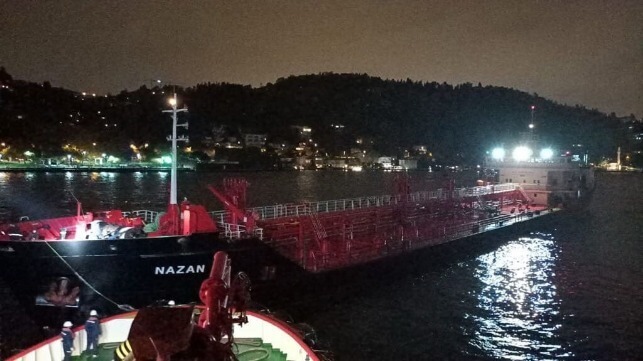
Prodcut tanker suffered "rudder failure" causing Turkey to close the sea lane (KEGM)

Published Nov 18, 2024 5:28 PM by The Maritime Executive


Mechanical failures and incidents are not particularly uncommon in the region around the Bosphorus due to the ragtag fleet operating to the Black Sea and along the Turkish coast, but yesterday’s incident was not the typical emergency for Turkish authorities. It forced them to close all north and southbound traffic in the busy sea lane for four hours.

A small product tanker with a spotty record caused the incident. The Turkish-managed vessel named Nazan (4,600 dwt) reported an incident Sunday evening, November 17.  Built in 2006 and registered in Panama, the vessel was laden bound from Russia to Turkey when it experienced what the authorities termed “rudder failure.” Other reports are calling it a “steering malfunction” that left the vessel disabled and the crew was unable to immediately make repairs.

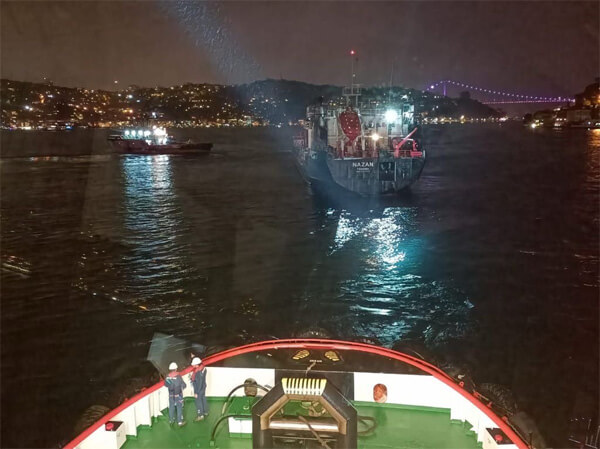
Turkey’s Directorate General of Coastal Safety (KEGM) which oversees the busy waterway reports it sent two tugs coordinated by the Istanbul Ship Traffic Services Center and accompanied by the pilot captain.


Two tugs maneuvered the disable tanker (KEGM)


The vessel has what might be termed a spotty record. It has been cited for deficiencies in 16 consecutive Port State inspections spanning between 2017 and 2024, with additional problems in previous inspections. In August, the inspection identified issues in nine categories including fire safety and life-saving equipment. 

The breakdown occurred in the narrowest portion of the winding sea lane near one of the turns. However, the Turkish authorities reported their tugs were able to take control of the disabled tanker. The tugs Kurtarma-7 and Kurtarma-9 secured the Nazan with a towline and were able to guide the tanker into the anchorage south of Istanbul, where she remains.

Operation on the Bosphorus however remained temporally suspended with traffic from south to north not resumed till 0050 Monday morning.