It’s possible that I shall make an ass of myself. But in that case one can always get out of it with a little dialectic. I have, of course, so worded my proposition as to be right either way (K.Marx, Letter to F.Engels on the Indian Mutiny)
Saturday, May 17, 2025
SPACE/COSMOS
A multitude of protoplanetary discs detected in the galactic centre
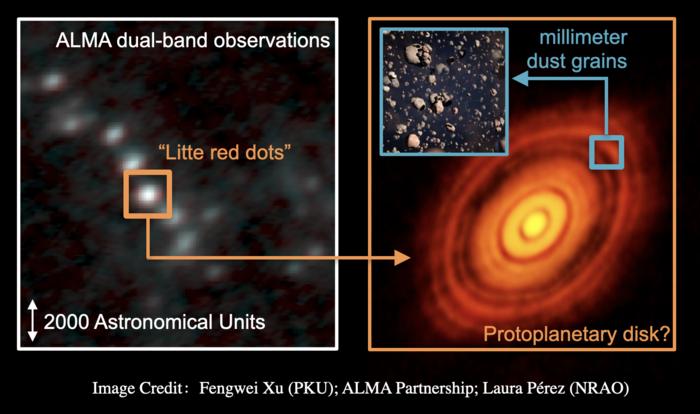
Credit: Fengwei XU (PKU); ALMA Partnership; Laura Pérez (NRAO)
For decades, astronomers have discovered hundreds of protoplanetary disks – structures believed to represent the early stages of our own solar system. However, most of these discoveries lie within our neighbourhood, which may not reflect the extreme conditions found in other parts of the Milky Way. Among the most dynamic and turbulent regions is the Central Molecular Zone (CMZ) near the Milky Way Galactic Centre, where high pressure and density may shape star and planet formation in fundamentally different ways. Studying protoplanetary systems in the CMZ provides a rare opportunity to test and refine our theories of solar system formation.
An international team of researchers from the Kavli Institute for Astronomy and Astrophysics at Peking University (KIAA, PKU), the Shanghai Astronomical Observatory (SHAO), and the Institute of Astrophysics of the University of Cologne (UoC), along with several collaborating institutions, has conducted the most sensitive, highest-resolution, and most complete survey to date of three representative molecular clouds in the Milky Way’s CMZ. Their observations revealed over five hundred dense cores – the sites where stars are being born. The results have been published in the journal Astronomy & Astrophysics under the title ‘Dual-band Unified Exploration of three Central Molecular Zone Clouds (DUET). Cloud-wide census of continuum sources showing low spectral indices’.
Detecting such systems in the CMZ is exceptionally challenging. These regions are distant, faint and deeply embedded in thick layers of interstellar dust. To overcome these obstacles, the team utilized the Atacama Large Millimeter/submillimeter Array (ALMA) in the Chilean Atacama Desert, an interferometric telescope that combines signals from antennas spread over several kilometres to achieve extraordinary angular resolution. “This allows us to resolve structures as small as a thousand astronomical units even at CMZ distances of roughly 17 billion AU away,” said Professor Xing Lu, a researcher at Shanghai Astronomical Observatory and the Principal Investigator of the ALMA observing project.
By reconfiguring the array and observing at multiple frequencies, the team performed ‘dual-band’ observations – capturing two different wavelengths at the same spatial resolution. Just as human vision relies on colour contrast to interpret the world, dual-band imaging provides critical spectral information about the temperature, dust properties and structure of these remote systems.
To their surprise, the researchers found that more than seventy percent of the dense cores appeared significantly redder than expected. After carefully ruling out observational bias and other possible explanations, they proposed two leading scenarios – both suggesting the widespread presence of protoplanetary disks.
“We were astonished to see these ‘little red dots’ cross the whole molecular clouds,” said first author Fengwei Xu, who is currently conducting research at the University of Cologne’s Institute of Astrophysics in the context of his doctoral work. “They are telling us the hidden nature of dense star-forming cores.”
One possible explanation is that these cores are not transparent, homogeneous spheres as once thought. Instead, they may contain smaller, optically thick structures – possibly protoplanetary disks – whose self-absorption at shorter wavelengths results in the observed reddening. “This challenges our original assumption of canonical dense cores,” said Professor Ke Wang, Fengwei Xu’s doctoral supervisor at the Kavli Institute.
Another possibility involves the growth of dust grains within these systems. “In the diffuse interstellar medium, dust grains are usually just a few microns in size,” explained Professor Hauyu Baobab Liu at the Department of Physics of National Sun Yat-sen University, who led the radiative transfer modelling in the study. “But our models indicate that some cores may contain millimetre-sized grains, which could only form in protoplanetary disks and then be expelled – perhaps by protostellar outflows.”
Regardless of which scenario proves dominant, both require the presence of protoplanetary disks. The findings suggest that over three hundred such systems may already be forming within just these three CMZ clouds. “It is exciting that we are detecting possible candidates for protoplanetary disks in the Galactic Centre. The conditions there are very different from our neighbourhood, and this may give us a chance to study planet formation in this extreme environment,” said Professor Peter Schilke at the University of Cologne, Fengwei Xu’s doctoral co-supervisor. Computing resources and technical support at the UoC’s Institute of Astrophysics contributed to the result.
Future multi-band observations will help to further constrain their physical properties and evolutionary stages, offering a rare glimpse into the early processes that give rise to planetary systems like our own, even in the most extreme corners of the Milky Way.
The Southwest Research Institute-led Ultraviolet Spectrograph (UVS) aboard NASA’s Europa Clipper spacecraft has successfully completed its initial commissioning following the October 14, 2024, launch. Weighing just over 40 pounds and drawing only 7.9 watts of power, Europa-UVS is smaller than a microwave oven, yet this powerful instrument will determine the relative concentrations of various elements and molecules in the atmosphere of Jupiter’s moons once it arrives in the Jovian system in 2030.
SAN ANTONIO — May 15, 2025 — The Southwest Research Institute-led Ultraviolet Spectrograph (UVS) aboard NASA’s Europa Clipper spacecraft has successfully completed its initial commissioning following the October 14, 2024, launch. Scheduled to arrive in the Jovian system in 2030, the spacecraft will orbit Jupiter and ultimately perform repeated close flybys of the icy moon Europa. Previous observations show strong evidence for a subsurface ocean of liquid water that could host conditions favorable for life.
Europa-UVS is one of nine science instruments in the mission payload, including another SwRI-led and developed instrument, the MAss Spectrometer for Planetary EXploration (MASPEX). The UVS instrument collects ultraviolet light to create images to help determine the composition of Europa’s atmospheric gases and surface materials.
“SwRI scientists started this process in January from NASA’s Jet Propulsion Laboratory, however, we had to evacuate due to the fires in southern California,” said SwRI Institute Scientist Dr. Kurt Retherford, principal investigator (PI) of Europa-UVS. “We had to wait until May to open the instrument’s aperture door and collect UV light from space for the first time. We observed a part of the sky, verifying that the instrument is performing well.”
SwRI has provided ultraviolet spectrographs for other spacecraft, including ESA’s Rosetta comet orbiter, as well as NASA’s New Horizons mission to Pluto, Lunar Reconnaissance Orbiter mission in orbit around the Moon and Juno mission to Jupiter.
“Europa-UVS is the sixth in this series, and it benefits greatly from the design experience gained by our team from the Juno-UVS instrument, launched in 2011, as it pertains to operating in Jupiter’s harsh radiation environment,” said Matthew Freeman, project manager for Europa-UVS and director of SwRI’s Space Instrumentation Department. “Each successive instrument we build is more capable than its predecessor.”
Weighing just over 40 pounds (19 kg) and drawing only 7.9 watts of power, UVS is smaller than a microwave oven, yet this powerful instrument will determine the relative concentrations of various elements and molecules in the atmosphere of Europa once in the Jovian system. A similar instrument launched in 2023 aboard ESA’s Jupiter Icy Moons Explorer spacecraft, which will be studying several of Jupiter’s icy moons, gases from the volcanic moon Io and Jupiter itself. Having two UVS instruments in the Jupiter system at one time offers complementary science.
In addition to performing atmospheric studies, Europa-UVS will also search for evidence of potential plumes erupting from within Europa.
“Europa-UVS will hunt down potential plumes spouting from Europa’s icy surface and study them to understand what they tell us about the nature of subsurface water reservoirs,” said Dr. Thomas Greathouse, SwRI staff scientist and Europa-UVS co-deputy PI. “The instrument is working fabulously, and we’re excited about its ability to make new discoveries once we get to Jupiter.”
NASA’s Jet Propulsion Laboratory (JPL) manages the Europa Clipper mission for NASA’s Science Mission Directorate in Washington, D.C. The Europa Clipper mission was developed in partnership with the Johns Hopkins University Applied Physics Laboratory (APL), in Laurel, Maryland.
This “first-light” image from the Europa-UVS instrument shows data at far-ultraviolet wavelengths, photons more energetic than the UV light that gives us sunburns on Earth. Light passes from its telescope into a long, narrow slit onto the detector, left to right, and the top-to-bottom direction of the image captures spatial information along this length in addition to the wavelength separations in spectral bins — a powerful combination for use in astronomical studies. Light from hydrogen atoms in the solar system is the source of the red line in the middle of the image, and this sky-background measurement confirms Europa-UVS is working well.
Credit
Southwest Research Institute
Astronomers take a second look at twin star systems
New Haven, Conn. — Apples-to-apples comparisons in the distant universe are hard to come by.
Whether the subject is dwarf galaxies, supermassive black holes, or “hot Jupiters,” astronomers can spend months or years searching for comparable objects and formations to study. And it is rarer still when those objects are side-by-side.
But a new Yale study offers a road map for finding “twin” planetary systems — showing whether binary stars that orbit each other, and that were born at the same time and place, tend to host similar orbiting planets. The study’s authors found that certain orientations of twin star systems may provide critical information about planet formation, while also being easier for astronomers to discover planets within the systems.
The side-by-side, “edge on” configuration of certain binary star systems potentially allows astronomers to do comparative studies, in the same way that doctors study human twins to gain knowledge about biological and behavioral mechanisms.
“This could be an unprecedented avenue for examining how deterministic, or orderly, the process of planet formation is,” said Malena Rice, an assistant professor of astronomy in Yale’s Faculty of Arts and Sciences and senior author of the new study.
The study appears in The Astrophysical Journal Letters. The first author is Joseph Hand, an undergraduate at the University of Kansas who conducted the research as a Dorrit Hoffleit Undergraduate Research Scholar, a Yale fellowship named in honor of the longtime Yale astronomer. Konstantin Gerbig, a Ph.D. candidate in Yale’s Graduate School of Arts and Sciences, is co-author of the study.
In earlier work, Rice identified an unexpectedly large number of binary systems with orbits that are perfectly aligned, meaning that the two binary stars and their planets orbit on the same geometrical plane. In such systems, the companion star can serve as a stabilizer for the planets' orbits, preventing dramatic long-term climate variations that may otherwise be destructive to life as we know it.
These “edge-on” binary systems, because of their alignment, are also excellent candidates for the detection of new planets, according to the researchers: the stars wobble directly toward and away from Earth, creating a signal boost.
For the study, the team identified nearly 600 edge-on binary star systems based on data from the European Space Agency’s Gaia DR3 catalogue of high-precision stellar astrometry. Drawing from the Gaia dataset, the researchers found the brightest nearby binary star systems, measured their orbits, and simulated the set of expected planets waiting to be discovered orbiting each star.
The result, researchers say, is essentially a prediction for locations in the sky where planet-hunters are more likely to find new planets to identify and characterize — and, for the first time, to compare planets across stars in the same system.
“We outline how this could, for the first time, be used to conduct comparative studies of planet formation where we have a control sample — that is, a second planetary system born together with the first planetary system,” Rice said.
The work was funded by the Dorrit Hoffleit Undergraduate Research Scholarship program and support from the Heising-Simons Foundation.
# # #
Journal
The Astrophysical Journal Letters
Stretched in a cross pattern: Our neighboring galaxy is pulled in two axes
New evidence supports the Small Magellanic Cloud’s ‘tearing phenomenon’.
Researchers at Nagoya University in Japan have discovered that Cepheid variable stars in our neighboring galaxy, the Small Magellanic Cloud (SMC), are moving in opposing directions along two distinct axes. They found that stars closer to Earth move towards the northeast, while more distant stars move southwest. This newly discovered movement pattern exists alongside a northwest-southeast opposing movement that the scientists previously observed in massive stars.
These complex bidirectional movements along two different axes indicate that the SMC is being stretched by multiple external gravitational forces—its larger neighbor, the Large Magellanic Cloud (LMC) in one direction and another, currently unknown mechanism in the other. The findings were published in the journal The Astrophysical Journal Letters.
This study is the first to analyze stellar motions within the SMC by taking individual distances into account. Previous studies that investigated stellar motions within the SMC assumed that all stars were at the same distance from Earth (200,000 light-years), due to the lack of precise distance measurements—an oversimplification that may have caused errors.
The researchers used data from the Gaia satellite to analyze over 4,200 Cepheid variable stars—pulsating stars that expand and contract rhythmically causing their brightness to change. Astronomers can accurately measure their distances from Earth by comparing the time it takes for one complete cycle of brightening and dimming. By accounting for these individual distances, the researchers could analyze the stars' movements with more accuracy than previous studies.
A previous study by the same group reported that the SMC is being stretched by its bigger neighbor, the LMC. These two galaxies are gravitationally bound and interact with each other. These interactions have likely influenced their structure and evolution.
“There is also a possibility that the gravitational influence from our own Milky Way or the effects from a past close encounter between the two Magellanic Clouds contribute to the stretching of the SMC,” Dr. Kengo Tachihara from the Department of Physics at Nagoya University said.
Additionally, the research confirmed the theory that the SMC does not rotate, further suggesting that this relatively small, irregular shaped galaxy has unique dynamics likely influenced by gravitational interactions with the Milky Way and the LMC.
"Our discovery challenges previous theories of the galaxy’s structure and dynamics. We need to rethink how the SMC, LMC, and the Milky Way interact. New simulations that consider the SMC's non-rotating nature are needed to understand these complex relationships,” PhD student and lead author, Satoya Nakano, explained.
Stars observed by the Gaia satellite. The image shows our galaxy, the Milky Way, and our two smaller neighbor galaxies to the bottom right. Data from more than 1.8 billion stars was used to create this map of the entire sky.
Credit
European Space Agency (ESA)
Arrows show the velocities of approximately 4,000 Cepheid variable stars. Green arrows represent closer stars, while magenta arrows indicate more distant stars. The green star (★) marks the average position of stars closer than 180,000 light-years, and the magenta star (★) marks those more than 230,000 light-years. Arrows from these stars show the average motion direction (northeast and southwest). The top of the figure is north, and the left side is east.
Figure 1: (Left) Rotation and acceleration measurements using the CSSAI in-orbit and (Right) Rotation comparison between the CSSAI and the classical gyroscopes of the CSS.
High-precision space-based gyroscopes are important in space science research and space engineering applications. In fundamental physics research, they can be used to test the general relativity effects, such as the frame-dragging effect. These tests can explore the boundaries of the validity of general relativity and search for potential new physical theories. Several satellite projects have been implemented, including the Gravity Probe B (GP-B) and the Laser Relativity Satellite (LARES), which used electrostatic gyroscopes or the orbit data of the satellite to test the frame-dragging effect, achieving testing accuracies of 19% and 3% respectively. No violation of this general relativity effect was observed. Atom interferometers (AIs) use matter waves to measure inertial quantities. In space, thanks to the quiet satellite environment and long interference time, AIs are expected to achieve much higher acceleration and rotation measurement accuracies than those on the ground, making them important candidates for high-precision space-based inertial sensors. Europe and the United States propose relevant projects and have already conducted pre-research experiments for AIs using microgravity platforms such as the dropping tower, sounding rocket, parabolic flying plane, and the International Space Station.
The research team led by Mingsheng Zhan from the Innovation Academy for Precision Measurement Science and Technology of the Chinese Academy of Sciences (APM) developed a payload named China Space Station Atom Interferometer (CSSAI) [npj Microgravity 2023, 9 (58): 1-10], which was launched in November 2022 and installed inside the High Microgravity Level Research Rack in the China Space Station (CSS) to carry out scientific experiments. This payload enables atomic interference experiments of 85Rb and 87Rb and features an integrated design. The overall size of the payload is only 46 cm × 33 cm × 26 cm, with a maximum power consumption of approximately 75 W.
Recently, Zhan’s team used CSSAI to realize the space cold atom gyroscope measurements and systematically analyze its performance. Based on the 87Rb atomic shearing interference fringes achieved in orbit, the team analyzed the optimal shearing angle relationship to eliminate rotational measurement errors and proposed methods to calibrate these angles, realizing precise in-orbit rotation and acceleration measurements. The uncertainty of the rotational measurement is better than 3.0×10⁻⁵ rad/s, and the resolution of the acceleration measurement is better than 1.1×10⁻⁶ m/s². The team also revealed various errors that affect the space rotational measurements. This research provides a basis for the future development of high-precision space quantum inertial sensors. This work has been published in the 4th issue of National Science Review in 2025, titled "Realization of a cold atom gyroscope in space". Professors Xi Chen, Jin Wang, and Mingsheng Zhan are the co-corresponding authors.
The research team analyzed and solved the dephasing problem of the cold atom shearing interference fringe. Under general cases, the period and phase of shearing fringes will be affected by the initial position and velocity distribution of cold atom clouds, thus resulting in errors in rotation and acceleration measurements. Through detailed analyses of the phase of the shearing fringes, a magic shearing angle relationship was found, which eliminates the dephasing caused by the parameters of the atom clouds. Furthermore, a scheme was proposed to calibrate the shearing angle precisely in orbit. Then, the research team carried out precision in-orbit rotation and acceleration measurements based on the shearing interference fringes. By utilizing the fringes with an interference time of 75 ms, a rotation measurement resolution of 50 μrad/s and an acceleration measurement resolution of 1.0 μm/s² were achieved for a single experiment. A long-term rotation measurement resolution of 17 μrad/s was achieved through data integration. Furthermore, the research team studied error terms for the in-orbit atom interference rotation measurement. Systematic effects were analyzed for the imaging magnification factor, shearing angle, interference time sequence, laser wavelength, atom cloud parameter, magnetic field distribution, etc. It is found that the shearing angle error is one of the main factors that limits the measurement accuracy of future high-precision cold atom gyroscopes in space. The rotation measured by CSSAI was compared with that measured by the gyroscope of the CSS, and these two measurement values are in good agreement, further demonstrating the reliability of the rotation measurement.
This work not only realized the world's first space cold atom gyroscope but also provided foundations for the future space quantum inertial sensors in engineering design, inertial quantity extraction, and error evaluation.
Figure 2: Atom interferometer and data analysis with it. (a) The China Space Station Atom interferometer. (b) Analysis of the dephasing of shearing fringes. (c) Calibration of the shearing angle.
Grout is a mixture commonly used to fill joints between tiles in small domestic projects, and usually features a simple composition of water, cement and sand. However, this is not its only application: in structures that are designed to support heavy loads, such as bridges, grout is injected as a filler in post-tensioning systems, where the cables running through the conduits inside them provide a flexibility that the concrete covering them does not have. This is very costly and complex work that requires not only careful planning and execution, but also materials specifically designed for this function, and maintenance to avoid the risks related to their deterioration.
In this type of mega-construction, the development of a smart material capable of "self-repairing" if it finds a crack might seem like something from a science fiction plot, but it is closer to reality than one might suspect. The secret lies in the incorporation of crystalline admixtures, or additives, which, by reacting with water, generate crystals capable of sealing the crack. Their use has already been explored in concretes and mortars, and now a team from the University of Cordoba, as part of the SMARTINCS project, is studying their addition tocement-based grouts for application in post-tensioning systems. However, incorporating these crystalline additives into the grout mix is not as simple as it may seem. As with a cooking recipe, when manufacturing building materials it is important to address the whole process right from the designing of the materials. Neither the ingredients used nor the proportions between them are chosen at random,and the mixture must be checked for its suitability whenboth freshly made and afterwards, as these are materials that will be in service for decades. When designing the composition of these materials, it is also necessary to take into account how their elements react to the addition of new ingredients, and to keep them from, in any case, alteringthe characteristics of the final mixture.
This was the challenge taken up by researcher Suelen da Rocha, from the FQM 175 group, who, together with Mercedes Sánchez Moreno and Luis Sánchez, colleagues in the Department of Inorganic Chemistry and Chemical Engineering at the UCO, and Isabel Santacruz, from the University of Málaga, has published a study in which she discusses the design of a grout that incorporates crystalline additives. Da Rocha explains that the addition alters the fluidity and exudation requirements that a grout should have, which makes it necessary to reformulate the composition by altering the rest of the elements until striking theideal balance between the proportions of each one. In addition, the process requires knowledge of how these properties evolve in their transition from fresh to hardened material.
Thus, through a series of tests, this team has come up with a successful formula for a "self-repairing" grout that may be especially useful for usein large works, such as bridges and dams, where contact with water and its absorption by cement-based materials can pose risks that would be minimized by the chemical reaction produced by the crystalline additives. The next step, Da Rocha explains, is to study its response to corrosion, another cause of infrastructure deterioration.
(a) Deep purification of 99TcO4– species in LAW streams by CPFs composite beads to produce drinking water. (b) The optimization strategy inspired by the challenges of CPFs sorbents and commercial resin in practical applications.
Tianjin Normal University and Southeast Normal University teams developed a scalable strategy to integrate 17 types of crystalline porous frameworks (CPFs) with hydrophilic poly(acrylic acid) (PAA) or hydrophobic polyether sulfone (PES), fabricating 34 millimeter-scale composite beads (CPFs beads). Through a microdroplet shaping technique, materials such as PG-HOF-2 were uniformly embedded into polymer matrices with high loading efficiency, forming mechanically stable porous structures. This strategy combined the high adsorption efficiency of powdered materials with the engineering applicability of resin granules, preserving crystallinity while preventing microparticle leakage through polymer networks—effectively addressing industrial challenges such as reactor clogging, material recovery, and the long-standing trade-off between adsorption performance and mechanical stability.
PG-HOF-2/PES beads demonstrated exceptional adsorption capabilities, including efficient adsorption kinetics (>99.99% within 10 minutes, Kd = 1.471 × 10⁷ mL/g), impressive capacity (976.9 mg/g), and accurate selectivity. The hydrophobic surface preferentially captured less hydrophilic TcO4–/ReO4– by overcoming Hofmeister bias, highlighting both industrial durability and lifecycle cost efficiency.
In continuous-flow column tests, 1 g of PG-HOF-2/PES beads processed 4.8 L of pre-treated low-activity waste (LAW), reducing Re/Tc concentrations far below the WHO (0.159 ppb) and U.S. EPA (0.053 ppb) drinking water standards. In contrast, commercial resin Purolite A530E yielded a residual Re concentration of 8.498 ppb under identical conditions. The composite beads demonstrated excellent reusability over multiple adsorption-desorption cycles, validating their reliability in real-world applications.
To understand the adsorption mechanism at the molecular level, density functional theory (DFT) calculations were performed to model the local charge structures. The simulations revealed strong binding interactions between PG-HOF-2/PES and TcO4–/ReO4– species. This strong binding interaction significantly outperformed that of quaternary ammonium resins, demonstrating that PG-HOF-2 is more favorable to sequester trace TcO4– than commercial resins. Furthermore, the purification performance of various CPF-X powders and their CPF-X/PES composites was analyzed. The CPF-X/PES beads consistently outperformed their parent CPF-X powders in deep purification, corroborating the universality of this strategy.
SHOWCASE advances biodiversity-friendly farming: Key findings now featured on EU CAP Network platform
The Horizon 2020-funded project SHOWCASE has published four practice abstracts on the EU CAP Network platform, a significant step forward in promoting biodiversity integration within European agriculture.
The Horizon 2020-funded project SHOWCASE is proud to announce the publication of four practice abstracts on the EU CAP Network platform, a significant step forward in promoting biodiversity integration within European agriculture. These findings reflect the project’s mission to support farmers in adopting sustainable practices that enhance native biodiversity while maintaining productive, resilient farming systems.
The inclusion of these practice abstracts on the EU CAP Network platform is a milestone not only for dissemination but for impact. As a core hub for sharing knowledge and innovation under the EU Common Agricultural Policy (CAP), the platform ensures wide accessibility of SHOWCASE’s results to farmers, advisors, policymakers and other stakeholders across Europe. These abstracts deliver practical, evidence-based insights, offering both strategic guidance and actionable solutions that align with the CAP’s evolving goals for sustainable agriculture.
The first abstract provides insight into the comprehensive understanding of the social, economic, ecological and policy-related factors that influence biodiversity management on farms. Across 10 EU countries, socioeconomic research has revealed the complex motivations and trade-offs farmers face when considering biodiversity-enhancing practices. While many farmers recognise the functional benefits of biodiversity - such as improved pollination and soil fertility - these are often weighed against costs, administrative burdens and uncertainty in outcomes. Farmers who value biodiversity for its intrinsic worth are more likely to adopt holistic, long-term conservation strategies, but knowledge gaps and lack of support frequently hinder implementation.
The importance of well-designed incentives and policy instruments is zeroed on in the second practice abstract. Despite the presence of regulatory frameworks like the EU Nature Directives and CAP conditionality rules, much of their potential to support biodiversity-positive farming remains underutilised. However, the future CAP’s eco-schemes show promise: 20 out of 45 proposed practices directly target biodiversity through approaches like agroecology, agroforestry and high nature value farming. Financial incentives - particularly those that are flexible, locally tailored and result-based - can help overcome barriers and encourage widespread adoption of biodiversity-friendly practices.
Understanding farmer behaviour is equally crucial. Hence, the third practice abstract provides insights from a survey of 700 farmers across Europe, identifying strong environmental motivations, but also the need for structural support. Recommendations from this work include strengthening cooperation across the food value chain, such as through local food hubs; implementing agglomeration bonuses and spatial coordination in biodiversity measures; and offering independent, on-the-ground advisory services to bridge information gaps. While there is limited enthusiasm for biodiversity-specific product labels, there is growing interest in business models that use measurable biodiversity indicators, suggesting a future path for integrating biodiversity into broader sustainability standards like organic certification.
Finally, the fourth practice abstract emphasises the importance of bridging the science-policy gap. Research only has transformative potential when it informs real-world decisions. To that end, scientists involved in SHOWCASE have outlined a strategy for effective policy engagement: embedding policy needs into research design, co-producing outcomes with stakeholders, communicating across sectors and translating complex findings into clear, actionable insights for decision-makers. This proactive, collaborative approach is essential in making biodiversity research relevant, accessible and influential in shaping future agricultural policy.
The publication of these practice abstracts not only reflects the depth and breadth of the SHOWCASE project, but also serves as a tool for empowering Europe’s farming communities. By addressing key challenges and proposing scalable, context-sensitive solutions, SHOWCASE supports the EU’s broader ambition for a sustainable transition in agriculture - one where biodiversity is not a barrier to efficiency, but a core component for achieving sustainable farming.
A person holds medications. Limited access to diagnostics and medicines will worsen treatment quality, inducing resistance to antiretrovirals and medicines for infections.
Credit: Institute of Tropical Medicine (ITM), Antwerp, CC-BY 4.0 (https://creativecommons.org/licenses/by/4.0/)
The international community must protect global responses to HIV, tuberculosis (TB), and malaria to serve humanity’s collective interests, according to an opinion article published May 14, 2025, in the open-access journal PLOS Global Public Health by Gorik Ooms from the Institute of Tropical Medicine, Belgium, and colleagues.
Within days of starting his second term as President, Donald Trump ended most United States (US) contributions to global health. Global responses to HIV, TB and malaria are not the only programs affected but were particularly dependent on US support. The US withdrawal from global health could result in 3 million additional HIV deaths and 10 million additional HIV infections, 107,000 additional malaria deaths and 15 million additional malaria infections, and 2 million additional TB deaths, all in 2025.
HIV, TB and malaria are global health security threats that require international collective action. The Global Fund to fight AIDS, TB and Malaria (Global Fund) entered its replenishment cycle for 2027–2029, with a target of $18 billion. A failure of this replenishment would make it impossible for many countries to compensate for decreasing US funding and decreasing Global Fund support.
The abrupt end of most US funding for global health comes at a crucial moment for the fight against the three epidemics. For HIV, funding cuts are disrupting treatment and prevention, and increasing morbidity, mortality and infections especially among marginalized groups. The transmission of TB remains high due to insufficient access to treatment, urbanization and undernutrition. Control of malaria remains elusive due to emerging resistance to treatments, and insecticides, gaps in prevention, and limited access to healthcare.
According to the authors, the reduction of US bilateral aid calls for re-prioritization and enhanced coordination of the global fights against HIV, TB and malaria. Currently, the Global Fund is uniquely positioned to undertake this endeavor, as it financially supports HIV, TB and malaria programs in most, if not all, countries affected by US spending cuts. This requires a successful replenishment, which seems improbable given uncertainty about the US position and considering the aid spending cuts announced by other high-income countries. Low- and middle-income countries need to step in, which necessitates an overhaul of the Global Fund governance.
The authors outline four action points. First, all countries, regardless of income level, should support the current replenishment of the Global Fund. Second, the replenishment mechanism should move toward agreed and fair assessed contributions, such as 0.01% of the annual gross domestic product of all countries. Third, the Global Fund should commit to overhauling its governance structures to promote equal representation among geographical constituencies. Fourth, the Global Fund should commit to adhere to the Lusaka Agenda, which captures consensus around five key shifts for the long-term evolution of global health initiatives and the wider health ecosystem.
As noted by the authors, these four actions would save essential elements of the global responses to HIV, TB and malaria and set a central and collaborative mechanism for global health security on a path toward the principles of global public investment.
Dr Gorik Ooms adds: "Richer countries still view global health cooperation primarily as aid, from them to poorer countries. They do not seem to realize how this cooperation also protects their own interests. We must not only find enough funding to sustain it; but also rethink how we work together. Through genuine international cooperation between equal partners."
Co-author Dr Raffaella Ravinetto concludes: "It is not only a matter of keeping life-saving programs alive. It is also a matter of building and maintaining a solid ecosystem, encompassing health infrastructure, policies and human resources, to make quality health care feasible everywhere. Through solidarity we can serve common interests."
####
In your coverage please use this URL to provide access to the freely available article in PLOS Global Public Health: https://plos.io/4djaJ2H
Citation: Ooms G, Assefa Y, Charalambous S, Dah TTE, Decoster K, de Jong B, et al. (2025) Is global health security worth 0.01% of our gross domestic product? PLOS Glob Public Health 5(5): e0004491. https://doi.org/10.1371/journal.pgph.0004491
Author Countries: Australia, Belgium, Burkina Faso, Japan, South Africa
Funding: The author(s) received no specific funding for this work.
Is global health security worth 0.01% of our gross domestic product?
Article Publication Date
14-May-2025
COI Statement
Competing Interests: Ryuichi Komatsu worked for the Global Fund until 2023. The authors have declared that no other competing interests exist. This does not alter our adherence to PLOS ONE policies on sharing data and materials.
Experts unravel the genetic mechanism behind facial color differences between male and female zebra finches
Article Title: Molecular insights into region-specific sexual dichromatism: Comparative transcriptome analysis of red cheek pigmentation in zebra finches
Author Countries: Taiwan, United States
Funding: This work was supported by National Institutes of Health (R35 GM150714, RO1 AR047364, R37 AR060306, RO1 AR078050 to CMC), National Science and Technology Council (Dragon Gate fellowship 104-2911-I-002-577 and 105-2911-I-002-520 to GWL; Postdoctoral Research Abroad Program fellowship 107-2917-I-564-024 to CKC), Taipei Medical University (107-5400-001-400, 109-5400-004-400, 111-5400-002-400 to GWL), Ministry of Education for iEGG and Animal Biotechnology Center at National Chung Hsing University (Feature Areas Research Center Program within the framework of the Higher Education Sprout Project MOE-112-S-0023-A to CKC, PCT and CFC), China Medical University and University of Southern California (005884-00001 to CMC). The funders had no role in study design, data collection and analysis, decision to publish, or preparation of the manuscript.