Saturday, May 17, 2025


A dam destroyed their river — 61 years later, two First Nations fought for justice
A new documentary — ‘Nechako: It Will Be a Big River Again’ — tells the story of the northwestern ‘B.C.’ landscape and the communities taking care of it
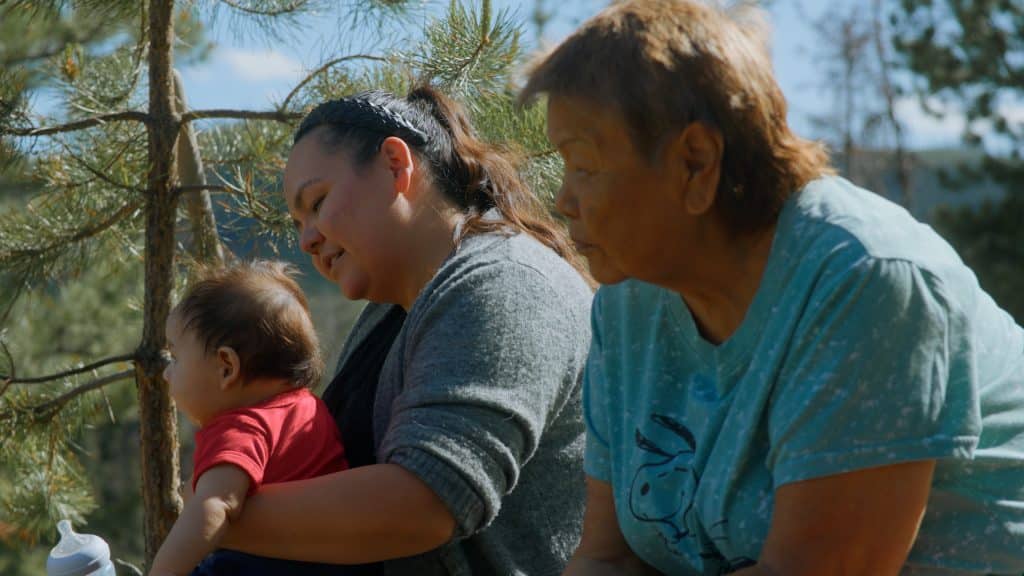
Saik’uz councillor Jasmine Thomas and her baby (left) and Elder Minni Thomas sit in the forest. Photo courtesy National Film Board of Canada/Lantern Films/Experimental Forest Films

This story originally appeared in The Narwhal and is reprinted here with permission and light style edits.


Three Saik’uz environmental monitors walk along a stretch of the Nechako River — though all they see is a stretch of boulders with no water in sight. When the Kennedy Dam was built in northwestern “B.C.” in 1950, 70 per cent of its water was diverted. 

In the 75 years since, the Nechako has seen a dramatic decline in salmon.

“It had to be deep,” James Thomas, one of the monitors, says as he looks down at the rocks. 

“We used to go up and down this creek to hunt and fish,” he says. “A lot of us had to change our ways … [The dam] made a big impact.”

The scene unfolds in a new documentary, Nechako: It Will Be a Big River Again.

In it, Stellat’en director Lyana Patrick delves deep into how Saik’uz and Stellat’en First Nations battled mining company Rio Tinto Alcan and “B.C.” in court for more than a decade, seeking justice for damage to the Nechako and to have their constitutional fishing rights recognized. 
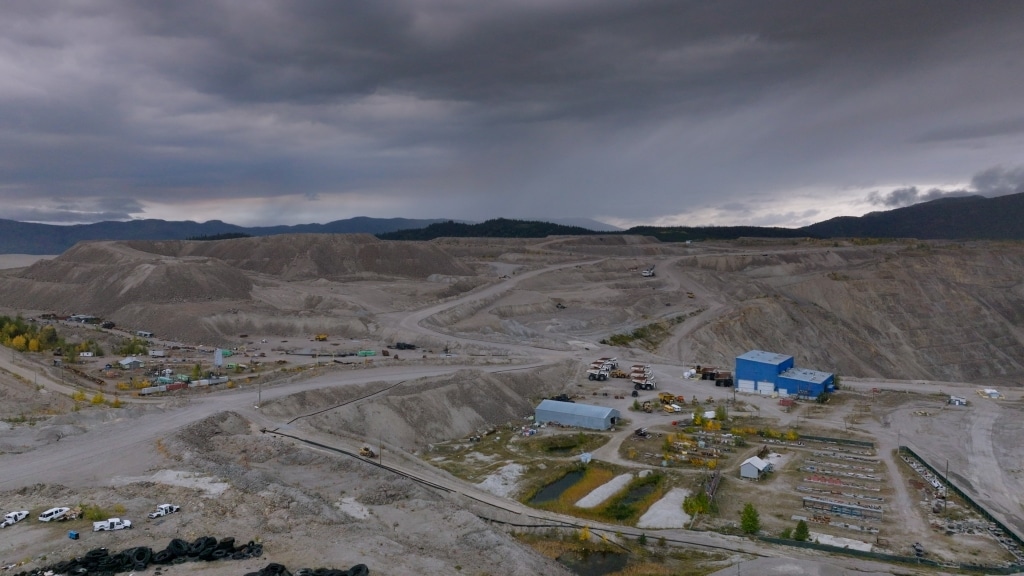
The dam flooded about 900 square kilometres of Dakelh and Wet’suwet’en territory. Photo courtesy National Film Board of Canada/Lantern Films/Experimental Forest Films

The Nechako is a tributary of the “Fraser River.” While data for the Nechako is not readily available, according to Watershed Watch, just 26 adult Early Stuart sockeye returned in the Upper Fraser in 2024, compared to 45,000 in 1984. In the Lower Fraser, salmon have been cut off from the vast majority of their former habitat due to dams and other infrastructure.

In the documentary, Patrick depicts the scale of dams and the sometimes unseen — or ignored — costs.

“The pockets of a few shareholders are lined, beautifully lined, at the expense of everything downstream — the animals, the trees, the humans,” she said in an interview. 

“That, to me, is what the dam represents — it represents greed.”

The film will premiere in “Vancouver” on May 3 in the DOXA Documentary Film Festival.
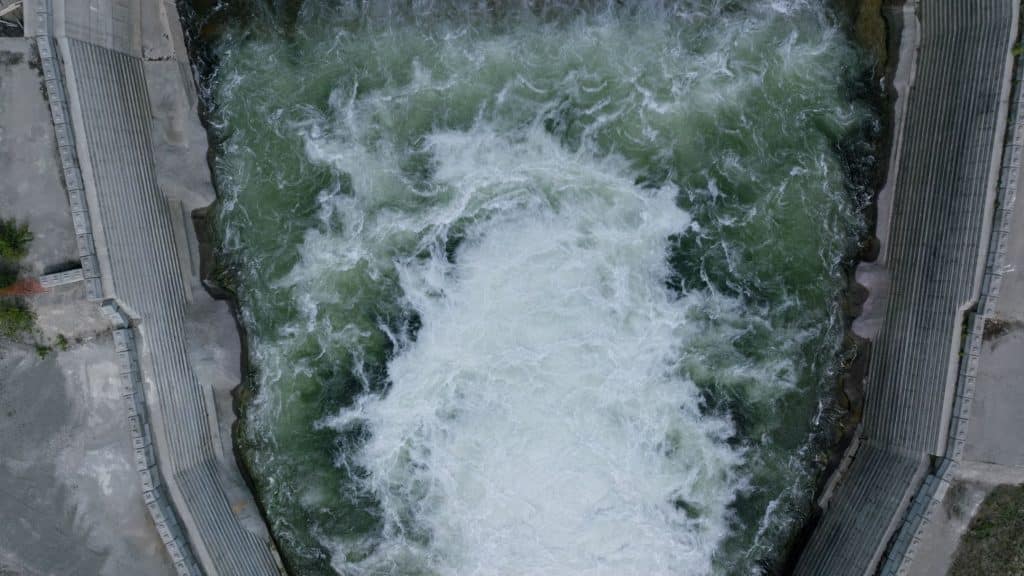
The Kenney Dam, pictured, diverted 70 per cent of water from the Nechako River, and salmon populations plummeted. A new documentary details two First Nations pursuing justice. Photo courtesy National Film Board of Canada/Lantern Films/Experimental Forest Films

Rio Tinto Alcan ‘fought tooth and nail not to let a drop of that water go’

The documentary was made by an entirely Indigenous crew, including Secwépemc cinematographer Sean Stiller. It centres community members and the relationships they have with the land and each other.

The camera and stories capture the scale of the dam, as well as the cumulative impacts of other industries and climate change on the landscape.

“We absolutely wanted to convey the scale and the scope — and I don’t think we’ve even completely captured that,” Patrick said. “I’m not sure how you can.”

The dam flooded about 900 square kilometres of Dakelh and Wet’suwet’en territory in central “B.C.”

It was built to provide power to an aluminum smelter and today is operated by Rio Tinto Alcan, a subsidiary of Rio Tinto.
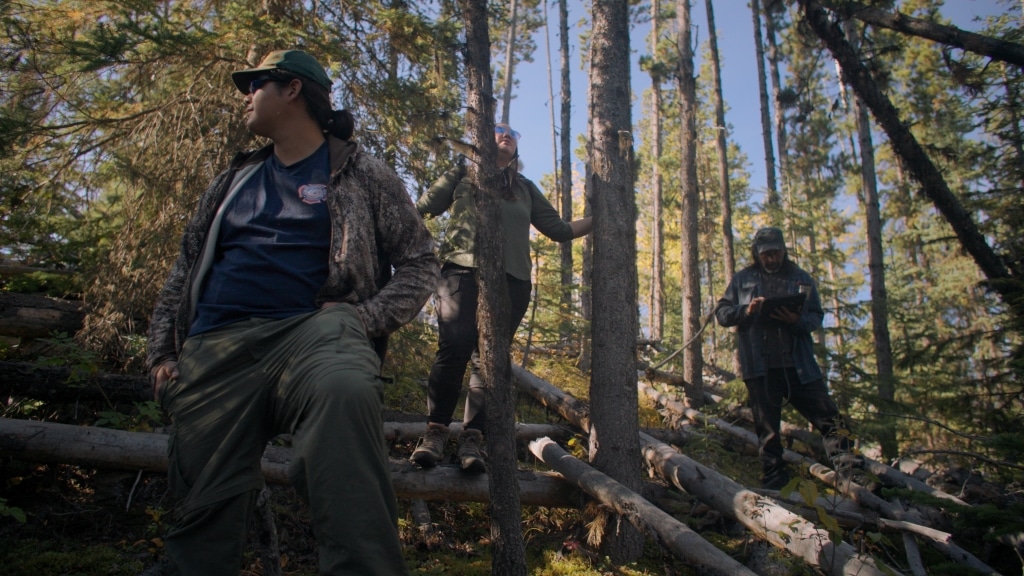
Saik’uz environmental monitors Caleb Nome (left), Ashley Raphael and James Thomas work on the territory. Photo courtesy National Film Board of Canada/Lantern Films/Experimental Forest Films

Kenney Dam Road, which leads to the reservoir, cut through Stellat’en reserve land when it was built, affecting people’s access to hunting grounds and opening up the land to other industries, Patrick said.

Forests were cleared for logging and agriculture while mines and pipelines were expanded, resulting in a degraded ecosystem, she explained — and the resulting extraction and emissions are still contributing to climate change.

In the film, her father and former Stellat’en chief, Archie Patrick, likens cumulative effects to “taking poison.” Take a little bit at a time, it won’t harm you right away — “but in time, it will kill you.”

Archie knows people may wonder why the First Nations brought this case forward decades later and why Indigenous people didn’t “resist” at the time.

The answer can be found in the Indian Act, which prohibited Indigenous people from obtaining legal representation until 1951 — the year after the dam was built. 

“We couldn’t hire lawyers,” he says. “We could go to jail.”
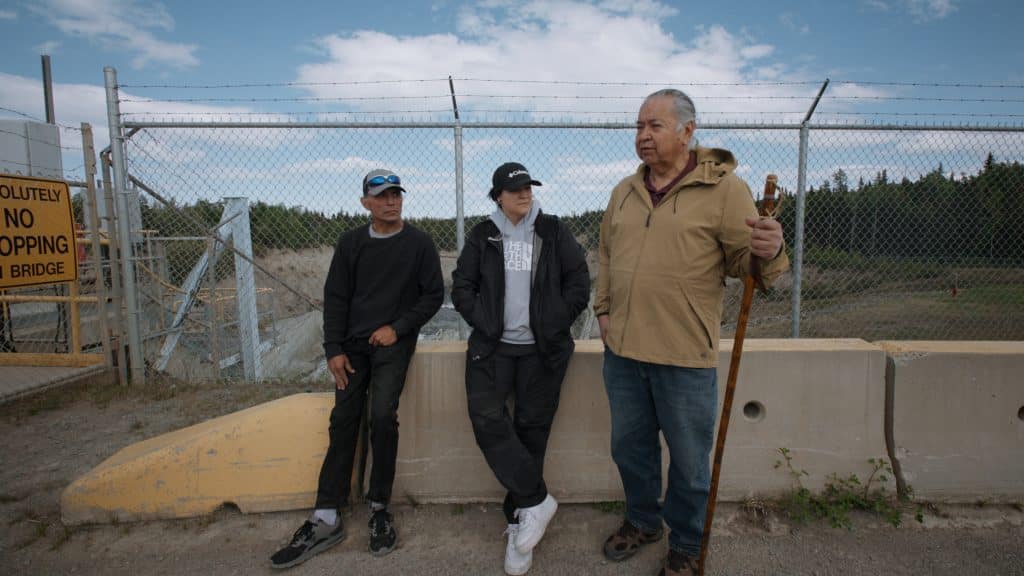
Former Stellat’en chief Archie Patrick (right), Deane Carlson (centre) and William Wissler look out on the reservoir. Photo courtesy National Film Board of Canada/Lantern Films/Experimental Forest Films

The First Nations sought to hold Rio Tinto Alcan accountable for damage to the ecosystem and to demand water be restored to the Nechako. The court battle waged on from 2011 until 2024.

“Alcan has fought tooth and nail not to let a drop of that water go,” Maegan Giltrow, legal counsel for the First Nations, says in the documentary.

Court found province responsible — not Rio Tinto

In 2022, the B.C. Supreme Court recognized the nations’ rights to fish in the Nechako, and that the dam had significantly harmed the river.

But the court decided responsibility lay with the province, agreeing with Rio Tinto’s argument that “B.C.” authorized the company to operate as it did.

The First Nations appealed, but in 2024 another judge agreed Rio Tinto was not responsible.

That was a disappointment for some community members, though the appeal did put a greater duty on the Crown to consult with the nations in regulating the Nechako’s flow and avoiding harm to their fishing rights.

While they didn’t get everything they hoped for, better consultation is important: Patrick argued Indigenous governance will be “the bulwark against the harms that are going to come and the harms that are here already, like drought and wildfire and changing weather patterns — all of these crises that are impacting everybody.”
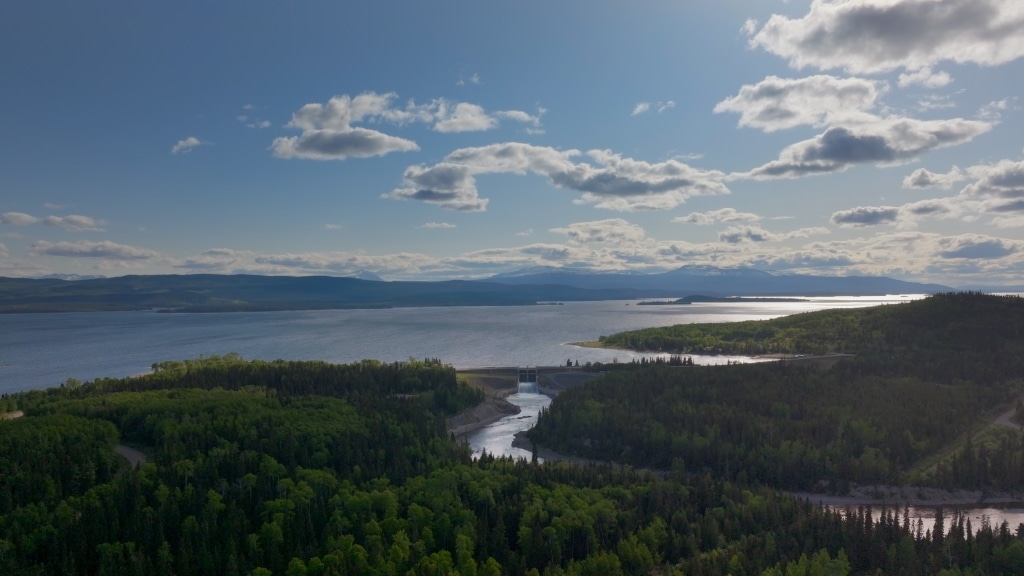
Rio Tinto has committed $50 million to the Nechako Environmental Enhancement Fund to improve the watershed, in an agreement with the province. Photo courtesy National Film Board of Canada/Lantern Films/Experimental Forest Films

It was a long and arduous battle that not all First Nations choose to pursue — or are able to.

“Industry has deep pockets to keep us going a long, long time in the courts,” Patrick said.

In a written statement, a Rio Tinto spokesperson said it has been working with the First Nations since 2021 to evaluate the river’s condition and “explore long-term solutions to improve its capacity to support ecological functions, Yinka Dene cultural practices and economic activity.”

“After many decades of conflict, the Saik’uz First Nation and Stellat’en First Nation and Rio Tinto have embarked on a reconciliation journey, together with Nadleh Whut’en First Nation and the Cheslatta Carrier Nation, centred around our common goal of improving the health of the Nechako River,” the spokesperson said in a statement.

It said the company signed an agreement with the nations in January to study two major infrastructure projects that could allow “a more natural flow” in the river. 

“While there is a lot of work ahead of us, we remain committed to strengthening our relationship and progressing on this journey together with trust, respect and transparency,” it said.

Director challenged documentary norms

The film focuses on Indigenous sovereignty, and Patrick wanted to embody that in the process of making it, not just the final product, rather than continue the long history of extractive practices that take stories from Indigenous communities.

The film was made by Lantern Films and Experimental Forest Films and co-produced with the National Film Board of Canada. Lantern Films signed benefit agreements with the two First Nations and participants were asked for input on an early version. 

The team also compensated participants — which Patrick knows is thorny in the industry.

“Similar to journalism, you don’t pay people to do interviews, right?” she said. “You don’t pay people to be in your documentary.” 

But she decided that, for this project, compensation was a “crucial” way to honour people’s knowledge and energy. 

Stellat’en filmmaker Lyana Patrick scoops up water from the Nechako River. Photo courtesy National Film Board of Canada/Lantern Films/Experimental Forest Films

Filming took place between 2022 and 2024.

The film is anchored in her point of view and experience and how her relationship with her Stellat’en homelands and waters changed through making it.

She grew up familiar with the devastation of the land — but the documentary process brought her closer to the “beauty of it,” and how devoted people are to stewarding it.

Places that are burned, mined, damaged, are still “loved more than ever,” she said.

“That’s what this court case is about,” she explained. “It’s about having responsibility to those places.

“With climate change, that’s a shared responsibility now.”


Author

STEPH KWETÁSEL’WET WOOD, THE NARWHAL


Steph Kwetásel’wet Wood is a Sḵwx̱wú7mesh journalist living and writing in North Vancouver. In 2022 she won the Canadian Association of Journalists’ Emerging Indigenous Journalist award. She has worked with The Tyee, Media Indigena, CBC, CiTR 101.9 FM, and National Observer. She earned her Master of Journalism degree at the University of British Columbia.

 

Tiny House Warriors given conditional sentences, but no jail time, after 4-year TMX case

‘To us, this court system and this courthouse is foreign,’ says Secwépemc land defender arrested for 2021 confrontation at Trans Mountain pipeline worksite
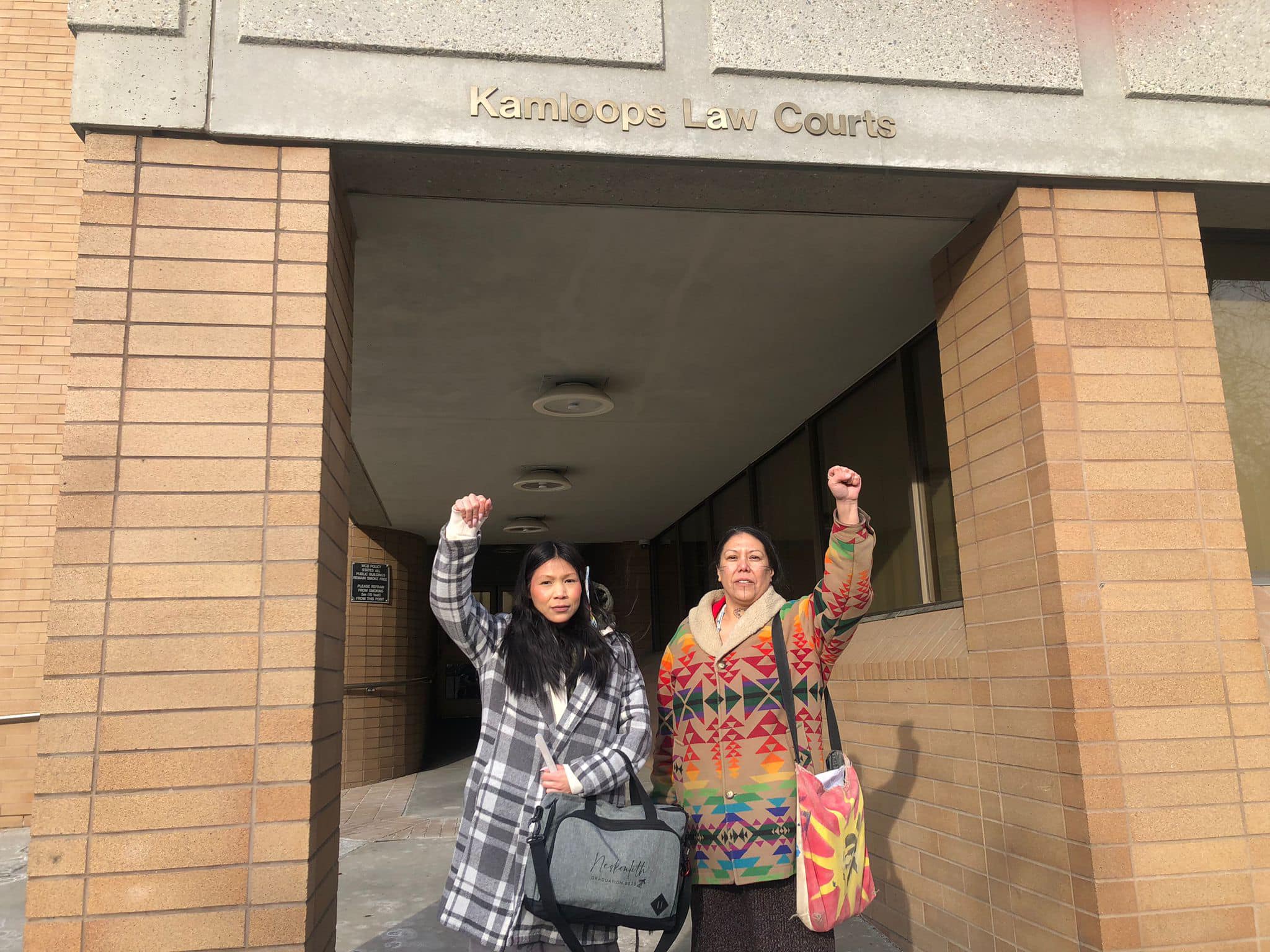
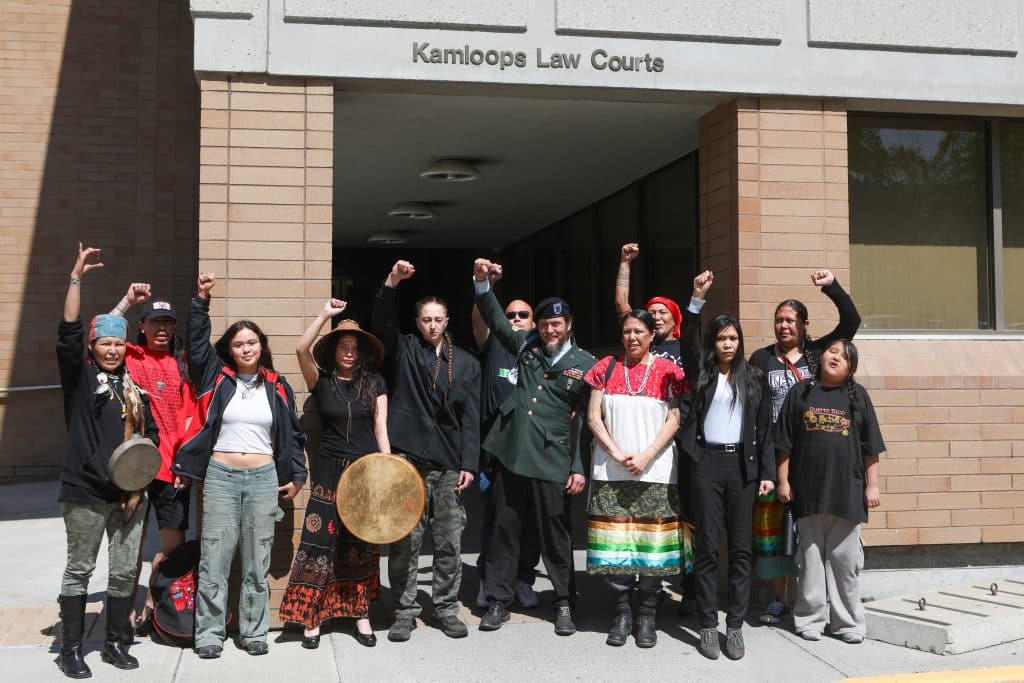
Members of the Tiny House Warriors stand outside of Kamloops Law Courts in Secwépemcúl’ecw with family and supporters on Friday, following a sentencing decision against four of the group’s members. Photo by Aaron Hemens

Four members of the Tiny House Warriors arrested after confrontations at a Trans Mountain pipeline work camp in 2021 will not face any jail time.

On Friday, the judge overseeing the provincial court case, Lorianna Bennett, handed the land defenders conditional sentence orders (CSO) and suspended sentences, to be served in the community.

A CSO is “served in the community, instead of in jail, under the supervision of a probation officer,” a provincial government website explains, but comes with “strict conditions” that must be followed to stay out of prison.

“The toxic environment created by the accused and their actions that day caused certain Trans Mountain employees — regardless of their ancestral heritage — to feel vulnerable and unsafe,” Bennett said in court Friday. 

The Tiny House Warriors are a Secwépemc-led resistance group opposing the Trans Mountain Pipeline Expansion (TMX) project on the nation’s unceded lands. 

In 2018, the group set up a number of mobile tiny homes along Murtle Lake Road in “Blue River” in Secwépemcúl’ecw, to disrupt both the pipeline’s expansion and a nearby temporary camp for its workers.

Police arrested the four defendants on Sept. 15, 2021, after they confronted TMX security employees at a Trans Mountain work camp near the Tiny House Warriors village.

“I don’t want anyone to feel ashamed of what they did on Sept. 15,” one of the accused, Mayuk (Nicole) Manuel, said outside of the courtroom at Kamloops Law Courts. 

“We didn’t do anything wrong. It’s this court system that is wrong here.”

Manuel’s conditional sentence includes eight months of house arrest.

She told IndigiNews she’s relieved to not be incarcerated, but that it’s sad her house-arrest order will keep her from being out on the land this summer — a crucial time for harvesting roots, berries, salmon and deer.

“I’m going to be imprisoned in my home,” she said. “It’s really devastating, that part of it. I’m still removed from the land, from my food harvesting and culture.”

Sentences include community service, bans from TMX sites

Prosecutors had sought jail sentences ranging from 187 to 374 days for the four land defenders — Manuel, Isha Jules, Sami Nasr and Tricia Charlie — for their actions opposing the federally owned pipeline expansion in Secwépemcúl’ecw.

Manuel was given a 16-month conditional sentence to be served in community, followed by two years of probation. For the first eight months of her CSO, she will be under house arrest, requiring her to stay inside her home at all times.

Afterwards, for the remainder of her sentence, she must obey a curfew from 10 p.m. to 6 a.m.

During her probation period, the house arrest will be lifted, but Bennett also ordered that Manuel complete 250 hours of community service.

Meanwhile, Bennett handed fellow defendant Jules a nearly identical sentence, with two years on probation, but a CSO of 15 months. His house arrest and ensuing probation orders mirror Manuel’s, and he must also complete 250 hours of community service. 

Nasr was given a CSO of one year, also to be served in community. They are restricted to 24-hour house arrest for the first six months, followed by the same curfew restrictions as Manuel and Jules for the remainder of their order. Nasr must complete 150 hours of community service.

Charlie was only given a suspended sentence with 36 months of probation, and must complete 100 hours of community service.

The sentencing orders also ban the four defendants from going within 30 metres of any TMX worksite or operations, or from interacting with any TMX employees in that buffer zone.

Several Tiny House Warriors members are arrested outside of the gate to a temporary camp for Trans Mountain workers on Sept. 15, 2021. Source: @Weasel_Woman/Twitter.com
Several Tiny House Warriors members are arrested outside of the gate to a temporary camp for Trans Mountain workers on Sept. 15, 2021. Courtesy of @Weasel_Woman/X.com

Initially, Bennett had fined the land defenders a $1,000 victim surcharge for damaging Trans Mountain pipeline property.

According to her, the accused caused nearly $80,000 of damage TMX property that day. She determined that more than three-quarters of those damages resulted from Nasr smashing a company-owned solar panel.

Instead, the land defenders requested an additional 50 hours of community service be added to their sentences. Bennett agreed, and she waived the victim surcharge.

Manuel, Jules, Nasr and Charlie were all arrested in September 2021 after three hours of heated, and at times physical, confrontations with TMX workers and security personnel.

During Jules’s confrontation with two TMX security employees, video evidence presented in court showed Jules punching one in the head, knocking him to the ground. The other guard testified Jules “sucker-punched” him in the head, causing him to fall and break four ribs.

“The level of verbal abuse and profanity — in particular by Nicole Manuel and Isha Jules — together with the vulgar gesticulations and actions by Mr. Jules was appalling and disturbing,” Bennett said, before issuing her sentences.

“Frankly, I was not surprised by the events and destruction that followed. It appeared to be an inevitable and predictable outcome.”

Judge rules land defenders ‘took things too far’

During the sentencing, Bennett said she found the four land defenders to be remorseful for their actions, based on information submitted in their Gladue reports, and their allocutions — statements they read in court before sentencing — in February.

“Deep down, you all mean well and you are all good people,” Bennett said. “It is evident to me that you care for each other and for your people, and you have a real and passionate cause.

“The problem is, that on Sept. 15, you took things too far. Your insult and injury had a very negative impact on others, who were simply there to do their job.”

She said Manuel’s intentions are legitimate, and noted that she is “very passionate about her cause” with the “potential to make people listen.” 

“I think that you mean well. I think that you have the ability to make some positive changes,” Bennett said. “I think it’s important that the young people — your children — see those changes and watch you move forward in a more positive way and you carry on the work that you do.”

Mayuk Manuel, the twin sister of Kanahus and a member of the Tiny House Warriors, stands outside of the Mission Flats stockyard for the Trans Mountain expansion project in Tk’emlúps on April 14, 2022. Photo by Aaron Hemens
Mayuk Manuel, a member of the Tiny House Warriors, stands outside of the Mission Flats stockyard for the Trans Mountain expansion project in Tk’emlúps on April 14, 2022. Photo by Aaron Hemens

But she then pointed to Manuel’s criminal history, which includes one charge when she was a youth and eight as an adult, saying her record is an indicator that “she takes things too far.”

“If any of the four accused were actually hoping to raise awareness or get across an important message that day to anyone who they believed needs to hear it, they failed,” Bennett said. “All of you need to work on your delivery.”

She encouraged the land defenders to change their approach, saying that “people don’t listen when they are yelled at, threatened or intimidated.”

“If you continue on a volatile and aggressive path of protest, you’re likely to find yourselves back in court,” she warned. “Next time, facing further and more significant consequences.”

‘If we don’t carry on our way of life, the land is going to get destroyed’

Following the sentencing, Manuel and her mom Beverly thanked supporters outside the courtroom. 

Although the land defenders got no jail time, Beverly said the sentences were still harsh — particularly the judge’s strict conditions around house arrest and probation.

“We have to gather our food out on the land — that’s how we take care of our land, is being out there,” Manuel’s mother said.

“You shouldn’t be restricted from doing that. Because if we don’t carry on our way of life, the land is going to get destroyed.”

She said “Canada” has already destroyed so much of the land in Secwépemcúl’ecw.

“It affected the water, it affected the animals, the huckleberries,” she said.

“I was just up in Blue River and I walked by those [TMX] fences. That’s what they did to our land, when they first came here. We never had fences on the land.”

Mayuk said, despite all four of the land defenders avoiding jail time, the court’s decision “doesn’t feel like a win.”

“Assimilation isn’t a win. Colonization isn’t a win,” she said. “I get reminded by that by all the young people, because the young people do want to decolonize. I’m following all of your lead to decolonize further.”

‘Indigenous rights defenders against the colonial settler state’

Her twin sister Kanahus — and fellow Tiny House Warriors member — described the court’s decision as a disappointment, saying the restrictive conditions are excessive.

“This is a case of Indigenous land defenders — Indigenous rights defenders — against the colonial settler state of Canada,” Kanahus said.

“We’re happy that they’re not put in shackles and taken away today. But we’re disappointed that the judge gave house arrest and long-term probation periods.”

Regardless, the sisters said the court’s decision will not deter them or the other Tiny House Warriors from defending the land, water and salmon, and for fighting for Secwépemc title and rights.

“It’s still a fight. Our people are still standing up,” Kanahus said. 

“We all know the Canadian government is the one who purchased this pipeline to push this pipeline through, and are the same ones that run the colonial courts here as well.”

Mayuk said that one day, colonial powers will understand that Secwépemc land defenders are fighting for their title and rights, and for the ability to govern themselves — not for criminal intent.

“To us, this court system and this courthouse is foreign,” Mayuk said. 

“Out there, the natural laws are what we have to remember — the natural laws that we’re fighting to protect, so the berries keep on growing, the roots keep on growing, the salmon keep on spawning, the deer keep on returning.”

She said Indigenous people need to “keep on speaking up,” even when it makes others feel “uncomfortable.”

In her message to other Indigenous land defenders, Mayuk encouraged them to continue to decolonize and rid themselves of “all this colonial mindset,” encouraging them to learn the laws of their Indigenous nation, not the laws of “Canada.”

“Don’t be restricted to what these laws are telling you,” she said. “We have our own laws, and we’re going to continue to defend it.

“Focus on our laws as Secwépemc, as people of the land. That’s how we ensure that there’s clean water for our future generations … That’s why we’re opposed to the Trans Mountain pipeline.”


Author

AARON HEMENS, LOCAL JOURNALISM INITIATIVE REPORTER

Aaron Hemens is an award-winning photographer, journalist and visitor in unceded syilx Okanagan territory. He is Filipino on his mom’s side, and has both French and British roots on his dad’s. As a settler, he is committed to learning and unlearning in his role as Storyteller for the Okanagan region, and to accurately and respectfully tell stories of Indigenous Peoples throughout the area. Aaron’s work is supported in part with funding from the Local Journalism Initiative in partnership with The Discourse and APTN.


Why you won’t see IndigiNews among those sharing in the $100M Google news fund

As the CJC hands out millions to ‘Canadian’ media under the federal Online News Act, our Indigenous newsroom is left behind
Google’s headquarters in London. Photo by Garry Knight

On April 30, the collective responsible for doling out $100 million annually to newsrooms under the federal Online News Act announced the first group of publications that had received funds.

IndigiNews was absent from this list — and we won’t appear on subsequent lists of recipients, either. 

Though we applied, we were told by the fund’s gatekeepers — the Canadian Journalism Collective, or CJC — that we are ineligible for funding and membership in the collective.

The reason? We’ve learned the funding is for media owners, not newsrooms or journalists. 

Since January 2025, IndigiNews has been part of tâpwêwin media, a newly-established, Indigenous-led nonprofit. But the funding for IndigiNews’s journalism from the Online News Act funds will not follow the publication or its journalists. 

In an email, the executive director of the CJC informed us that we cannot “prove” that IndigiNews employed journalists in 2023, the year upon which this first cycle of funding is based. Because the next round of funding will be based on 2024 staff hours, we have been told we will also be excluded from that funding round as well. 

Instead, IndigiNews’s former parent company is eligible to receive those funds.

It’s hard for us to understand the rationale behind the CJC’s decision to exclude us on this basis. 

Though tâpwêwin media is a new business, IndigiNews is not. It was founded in 2020, and has never stopped publishing original, award-winning journalism or employing journalists. Anyone can look at the bylines on our website and see this for themselves. 

Furthermore, the CJC and the Online News Act itself both stress the importance of supporting Indigenous newsrooms specifically.

“Our overriding objective,” the CJC states on its website, “is to ensure that the Act and regulations are implemented in a way that supports the full diversity of Canadian media.”

So when we were first told we did not qualify for these funds, we assumed it was an oversight based on a technicality. 

After all, we believed that the fund was to support the production of journalism in “Canada” and ensure that independent outlets focused on underrepresented communities also had a chance to thrive. 

This has been underscored by statements from the CJC itself; after announcing the first round of funding recipients, executive director Sarah Spring said in a statement, “Today we show our world-leading model in action, ensuring Big Tech compensates news media for their journalism equitably and fairly across Canada’s news ecosystem.” 

But in a call with us on Monday, Spring said the purpose of the funds was to compensate owners of publications for lost advertising revenues due to the absence of a commercial agreement between media organizations and Google, beginning with their 2023 expenses. 

The current production of journalism — whether it’s created by newly independent media entities like ours, or by journalists laid off by massive corporations such as Postmedia — is not factored into these calculations. 

It’s worth noting that Discourse Community Publishing received $107,000 in this first round of funding, according to a recent public disclosure from the CJC. As seen in the publicly available list of applicants, among the publications that Discourse Community Publishing applied for was IndigiNews.

A statement the CJC provided to IndigiNews acknowledged this.

“The CJC-CCJ administers funding in accordance with our obligations under the Online News Act and our Agreement with Google, and we take our mandate to ensure maximum participation from Indigenous news organizations very seriously,” the statement said.

“Discourse, the news organization under which IndigiNews operated until 2024, received a contribution from the CJC-CCJ, as disclosed in our April 30 release.

“Should we believe the funds distributed are not being used for their intended purpose, we will look into it and ensure recipients comply with their funding agreement.”

In their own statement, Discourse Community Publishing said they “advocated for fair funding formulas and equitable rules” during the creation of the CJC “that prioritized independent media across Canada,” including Indigenous media. 

“As current members of the CJC, we continue to support efforts that contribute to the CJC advancing these goals,” they added. 

Our separation from Discourse Community Publishing was an act of Indigenous sovereignty. The newsroom leaders of IndigiNews never felt right about the fact that our publication — which was created to amplify the stories of Indigenous people — was led by non-Indigenous people. 

So, in January, we changed that.

Our new parent company, tâpwêwin media, was founded by — and is entirely governed by — Indigenous women.

This model is based on our own cultural teachings around leadership, caretaking, self-determination and truth-telling. 

This is also a right guaranteed under the United Nations Declaration on the Rights of Indigenous Peoples, which underlines the right of Indigenous people to “maintain, control, protect and develop” our own literatures and intellectual property. 

The journalism at IndigiNews has always centred those values, and throughout our transition, IndigiNews never stopped publishing original journalism that uplifts Indigenous communities and storytellers. 

It is in this spirit that we are being transparent with our readers about this situation, since it will inevitably affect us — pushing us behind the other media outlets, which received anywhere from thousands to millions of dollars to continue their operations. It makes things less equitable for our small team. 

We are disappointed that a model such as the CJC — brand-new, and founded on commitments to fairness, inclusivity and a robust future for “Canadian” media — has already demonstrated that it is not capable of fulfilling these ambitions. 

It’s not lost on us that other companies, large and small, may also be profiting off the work of reporters and editors who they no longer employ. Postmedia, which received more than $4.2 million, has already laid off dozens of its staff since 2023. 

We fail to see how this process supports a fair, equitable and diverse future for the journalism industry — or how it ensures the communities and audiences we serve see their stories  represented in the country’s media. 

This disappointment has only strengthened our commitment to building a storytelling ecosystem that is founded on Indigenous values and principles, to honour and celebrate our people and our stories. 

We created tâpwêwin media because we believe in that future, and we put our faith in readers and Indigenous community members — not industry gatekeepers or Big Tech — to help us build it.