Saturday, May 17, 2025


How A Big Freeze Descended On The Arctic Council – Analysis

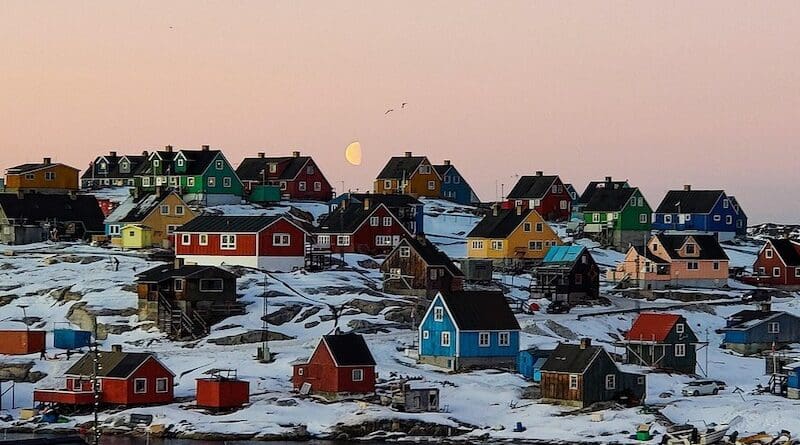
file photo greenland city town

By 

By Luke Coffey


With much of the world’s attention focused on US President Donald Trump’s historic visit to the Middle East or the fluctuating progress of talks between Russia and Ukraine, a quiet but consequential event took place last week that largely escaped notice.

In Norway, relatively low-level officials gathered for a closed-door ceremony to mark the transfer of the Arctic Council’s two-year rotating chairmanship from Norway to Denmark. This may seem mundane. In fact it was an important moment for one of the world’s few remaining forums where East and West, until recently, found ways to cooperate.

The council, established in 1996, brings together the eight Arctic states — Canada, Denmark (through Greenland), Finland, Iceland, Norway, Russia, Sweden, and the US — to collaborate on non-military issues. For years, it functioned effectively by focusing on practical, low-conflict areas such as environmental protection, search and rescue coordination, and oil spill response.

This pragmatic approach allowed the council to thrive, even during periods of broader geopolitical tension. Crucially, it also includes six indigenous organizations as permanent participants, giving the peoples who live in the Arctic a direct voice in shaping its future. Observer states, including faraway Singapore and major players such as China, contribute expertise and funding, but have no vote.

This system worked — until it didn’t.


The invasion of Ukraine by Russia in February 2022 shattered many channels of cooperation between Moscow and the West, including the Arctic Council. Although Russia handed over the chairmanship to Norway in May of that year, the customary fanfare was noticeably absent. Over the past two years Norway has tried to keep the council afloat, but the breakdown in relations with Russia rendered it largely ineffective. By the time Norway passed the chairmanship to Denmark, the best that could be said was that the council still existed.

Complicating matters further are suggestions by Trump that the US might seek to annex Greenland and an unwillingness to rule out military force to do so, which have alarmed NATO allies and unsettled the Arctic Council’s delicate balance. That may explain why it was Greenland’s foreign minister, rather than a Danish official, who accepted the chairmanship on Denmark’s behalf. How this tension between the US and Denmark plays out within the council remains to be seen, but it will not make cooperation any easier.

With the council unable to conduct substantial work, its immediate goal is simply to survive. Should a ceasefire or peace agreement be reached in Ukraine, some might push to quickly revive the council, but they would face serious headwinds. Since 2022, the Arctic security landscape has changed profoundly. Norway’s newly released national security strategy describes its situation as “the most serious … our country has faced since the Second World War.”

Finland and Sweden, previously militarily non-aligned, have joined NATO, placing seven of the eight Arctic states under the same security umbrella. Their accession to the alliance would have been unimaginable before Russia’s invasion. The new Canadian government is expanding its presence in the Arctic, for geopolitical reasons that are unlikely to disappear anytime soon: Russia’s actions in Ukraine have left deep scars.

This evolving environment also affects non-Arctic states seeking a larger role in the region. China, for example, has been one of the major losers of the Arctic Council’s dysfunction. Beijing used the forum to expand influence in polar affairs. With the council no longer functioning as it once did, China has lost a key international venue. In response, Russia and China have deepened their cooperation in the Arctic, particularly on energy and infrastructure projects, driven partly by Western sanctions.

If the Arctic Council does eventually resume full operations, expect China to re-engage quickly to regain lost ground.

Another unresolved challenge concerns indigenous representation. Among the six permanent indigenous participants is the Russian Association of Indigenous Peoples of the North. However, many indigenous Russians have fled the country and formed exile organizations, such as the International Committee of Indigenous Peoples of Russia. These groups seek a seat at the Arctic Council table, but so far no effort has been made to include them. Moscow would undoubtedly veto any attempt to do so. If the council hopes to rebuild credibility, it cannot return to business as usual while excluding exiled indigenous voices. Navigating this will be tricky, but necessary.

Has the damage to trust between Russia and its Arctic neighbors gone too far for the council to recover? It’s too early to say, but it cannot be ruled out.

Also, that the Arctic is thousands of kilometers from the Middle East doesn’t mean it’s irrelevant to this region. With key shipping lanes in the Red Sea threatened by Houthi attacks and piracy concerns persisting off the Horn of Africa, global shipping companies are eyeing new trade routes between Asia and Europe. Depending on how rapidly Arctic ice continues to melt, northern sea routes may become increasingly viable.

Moreover, scientific research in the Arctic — especially on climate and environmental change — is of global importance. Countries such as the UAE and Saudi Arabia have already shown interest in Arctic research and investment. Both have sent delegations to Arctic conferences and expressed willingness to fund scientific initiatives. As the region becomes more accessible and geopolitically important, Arab engagement is likely to grow.

What happens in the Arctic is often shaped by geopolitical currents elsewhere, and increasingly what happens in the Arctic has consequences across the globe. While the headlines may focus on more immediate crises, the Arctic deserves attention. We ignore it at our peril.

• Luke Coffey is a senior fellow at the Hudson Institute. X: @LukeDCoffey


US Anti-Terrorism Cases Against MTN Group Put Multinationals In Peril – Analysis

blind lady justice


By 

By Michael Walsh


(FPRI) — In April 2025, legal scholars raised concerns about the ongoing Iran-related terrorism cases against the MTN Group in the US court system. Professor Jeffrey Breinholt of George Washington University even went so far as to express his belief that MTN Group may have committed securities fraud.

A few weeks ago, MTN Group experienced another unwelcome development. After more than a decade in the South African courts, the South African Supreme Court of Appeal ruled that South African courts have jurisdiction to hear a separate Iran-linked bribery case brought against MTN Group. Its legal woes mounting, legal scholars are now saying that multinational companies should do more to notify their own shareholders of the risks of their own business partnerships with the MTN Group. That includes US financial services companies (e.g., BNY Mellon; Mastercard), professional services companies (e.g., Accenture; Covington & Burling; Deloitte), and technology companies (e.g., Apple; Meta; Microsoft).

The Anti-Terrorism Act    

On 17 March 2025, the MTN Board of Directors authorized the most recent version of its Annual Financial Statements. That report disclosed that MTN Group is involved in a total of five Anti-Terrorism Act (ATA) cases in US courts.

One of those cases is Zobay v. MTN Group Limited. That case alleges that MTN Group is legally responsible for damages involving “a group of American citizens killed or injured by terrorist attacks in Iraq and Afghanistan between 2011 and 2019.”

On 28 September 2023, the plaintiffs passed the first major legal hurdle in their case when a United States District Court ruled that they had plausibly stated a claim for aiding and abetting liability against MTN Group, and the court denied a motion to dismiss MTN Group from the case.


That order carries political implications for President Cyril Ramaphosa, who served as the MTN Chairman of the Board from 2002 to 2013. That means that he was at the helm when some of the aiding and abetting-related claims are said to have occurred. According to William Saunderson-Meyer, “MTN’s close connections to the (African National Congress) elite” creates “a gigantic political problem” for South Africa.


The Director’s Report Could be Evidence Against MTN

Despite losing the motion to dismiss, the Annual Financial Statements reported that the company had assessed the risks associated with ATA cases as “remote,” and therefore, no contingent liabilities had been disclosed.

“From a governance and risk disclosure standpoint,” Professor John Katsos of American University of Sharjah argues that “the prudent approach” would have instead been “to treat this litigation as a non-remote contingency and disclose the potential financial and operational impacts.” By pursuing an alternative approach, Katsos warns that the MTN Group has now created the risk that the annual financial statements could “later be deemed misleading to investors,” which could lead to further litigation that “would need to wind its way through the courts.”

Those risks are problematic for the newly appointed South African Special Envoy to the United States, Mcebisi Jonas, who was the MTN Chairman of the Board when the most recent annual financial statements report was authorized. As MTN Chairman of the Board, Jonas had a fiduciary responsibility to protect the interests of MTN Group as well as its shareholders. This included ensuring that the Board of Directors exercised proper oversight of the Annual Financial Statements.

Ecosystem Risks

Over the past few years, MTN has established business relationships with several multinational corporations that have a US jurisdictional nexus. Prominent examples include AccentureAppleBank of New York MellonEricssonDeloitteGenesysIHS TowersMastercardMicrosoft, and Meta, which operates Facebook, Instagram, Threads, and WhatsApp.

Now that a United States District Court has denied the motion to dismiss MTN Group from Zobay v. MTN Group, Professor Breinholt warns that these companies face significant risks in doing business with MTN Group. Breinholt is a former US government official who spent over two decades working on counterterrorism and national security law in the US Department of Justice. He is also the editor of “Pursuing terrorists in US civil courts: the Encyclopedia of ATA cases.”

With the United States District Court order in the public domain, Breinholt says that multinational companies “can’t very well say that they didn’t know about” the risks associated with doing business with MTN Group.

The risks include legal risks.

“The Zobay order’s recognition that the plaintiffs ‘plausibly stated a claim for aiding-and-abetting liability” under the Anti-Terrorism Act (ATA)raises serious concerns for US companies maintaining relationships with MTN Group,” explains Katsos. “From a legal standpoint, any American entity continuing business with MTN after this finding risks secondary liability under the ATA if it can be shown that they provided substantial assistance to if MTN is ever found liable for terrorism-related harms (which it hasn’t been),” continues Katsos. “This could include supply chain providers, professional services firms, or technology companies.”

The risks also include reputational risks.

“Any time you have a company that relies on its reputation,” notes Breinholt, “there is a risk of harming that reputation by meddling with companies accused of engaging with terrorists.” Breinholt  cautions that the legal and reputational risks vary by sector. This is because plaintiffs tend to target the “deep pockets” when it comes to ATA cases, such as financial services companies and social media companies.

Aside from the risks, there are also ethical concerns.

“From a business ethics perspective, continued partnership – absent rigorous due diligence and robust mitigation measures – could imply complicity in or willful ignorance of alleged misconduct,” maintains Katsos. “Firms must now consider whether their relationships uphold standards of human rights due diligence and responsible business conduct, particularly under frameworks like the UN Guiding Principles on Business and Human Rights (UNGPs) and in certain markets.”

Corporate Responses

Multinational corporations in the MTN partner ecosystem appear to be somewhat hesitant in responding to questions about managing the risks arising from their business relationships with the MTN Group.  Apple, Bank of New York Mellon, Ericsson, Genesys, IHS Towers, and Microsoft, were provided an opportunity to comment for this report. However, none responded with a comment  before filing. Those who are willing to respond tend to be brief in their comments.

A Deloitte representative stressed that Deloitte Africa, not Deloitte US, is part of the MTN Group ecosystem, and “Deloitte US is separate and independent from Deloitte Africa.”

A Mastercard representative sought to clarify that the company wanted “to be clear that our relationship is with MTN Group Fintech, an entity specifically focused on the African continent,” and all of their “activities – including supporting the expansion of digital payments across the continent – are guided by strong governance standards and internal controls.”

An Accenture representative provided the boilerplate response, “Accenture is a global company committed to conducting business responsibly, which includes reviewing where and who we do business with. We are committed to complying with sanctions laws in the jurisdictions in which we operate, including sanctions administered and enforced by the US, UN, and EU. This commitment extends to compliance with Iran-related sanctions.”

According to a Meta spokesperson, “Like many other American companies, we work with MTN Group, the largest mobile provider in Africa. Meta does not have, and has never had, any commercial relationship with MTN’s Iran subsidiary and our work with MTN itself explicitly excludes Iran.”

What does all this mean?    

Legal scholars express skepticism about how some multinational corporations frame the terrorism litigation risks associated with their business relationships with MTN Group.

“It is well established that ethically and also in very many legal contexts that companies are responsible for the actions of their subsidiaries and affiliates,” said      Michael Santoro, Professor of Management and Entrepreneurship at Santa Clara University.

“Legally, the separation between Deloitte US and Deloitte Africa might offer some insulation, but it does not absolve Deloitte US entirely,“ adds Katsos. “If there is any financial, managerial, or operational entanglement, or if Deloitte US benefits from revenues or reputational capital generated through Deloitte Africa’s work with MTN, plaintiffs could argue contributory involvement; not an easy argument to make by any means and, depending on the facts (which we don’t have as of yet) unlikely to succeed.” Katsos takes a more nuanced stance on Meta. Assuming that Meta excluded MTN Irancell from its strategic partnership with the MTN Group, Katsos says that this “indicates a proactive risk mitigation step that could reduce exposure.” From a purely “legal perspective,” that, in turn, “shows a wariness of potential ATA liability and a deliberate move to avoid facilitating activity connected to sanctioned or high-risk entities.”

From an ethical perspective, Katsos says that it also “signals that Meta is attempting to navigate the complexities of operating in geopolitically sensitive regions while honoring international norms.” However, he cautions. ‘that “may not be sufficient if MTN Group’s broader actions remain problematic (again, yet to be evidenced in court).”

“The parent group, MTN Group, is being sued,” explains Santoro. “As a matter of corporate social responsibility, the parent is ethically and legally responsible for its subsidiaries and affiliates. This is not a close or complicated case in this regard. If the facts as alleged are true, then the reputational risks of MTN strategic partnerships extends to relations with the parent.”

Generally speaking, Katsos is of the opinion that it is essential to draw a distinction between business relationships established before and after 28 September 2023.

“Legally, companies that entered into partnerships after the Zobay order may face greater exposure,” observes Katsos. That is because that “ruling establishes a clearer line of foreseeability: it would be difficult for a post-September 2023 partner to argue ignorance of potential ATA implications.”

Either way, Katsos argues that multinational corporations in the MTN partner ecosystem should treat corporate disclosure of the risks associated with the MTN terrorism litigation as “essential from both a fiduciary and ethical perspective.” That is because shareholders “have a right to know the risk exposure of ongoing business activities – especially when those activities could result in litigation, regulatory action, or reputational damage.”

Important Questions

The MTN terrorism litigation raises novel corporate social responsibility (CSR) issues that Katsos says revolve “around indirect complicity in conflict zones.”

“Traditionally, CSR has focused on direct violations (e.g., labor practices, environmental harm),” emphasizes Katsos, but “the MTN case underscores the evolving expectation that firms must consider how their business relationships affect peace, security, and human rights in fragile regions.”

The MTN terrorism litigation also carries serious implications for national security, foreign policy, and trade and investment interests of the United States.

“The average American should care for two reasons,” Katsos said.

One is because their retirement funds, pensions, or consumer dollars may be invested in companies that – knowingly or unknowingly – support enterprises allegedly linked to armed groups or terrorism.    

Another is because the alleged conduct “undermines US foreign policy goals by damaging America’s international reputation, which (was) the same primary justifications for passage of the US Foreign Corrupt Practices Act, which had been (up until recently) one of the best examples of America’s moral leadership in international business.”

“Very few Americans are aware of these lawsuits,” said Santoro. “If the facts alleged turn out to be true,” Santoro says, that US companies that are in strategic partnerships with MTN Group “will have a lot of explaining to do. Both ethically and in regard to the effect on their shareholders.”

In the short term, media coverage of the MTN terrorism litigation could also impact the debate over Ramaphosa’s appointment of Jonas as Special Envoy to the United States, potentially leading shareholders to demand that multinational corporations justify their business relationships with the MTN Group.

MTN Group was contacted for comment, and a company representative responded, “As the legal matter you referenced is ongoing, MTN Group will not be participating in interviews at this time.”

  • About the author: Michael Walsh is a Non-Resident Senior Fellow in the Foreign Policy Research Institute’s Africa Program.
  • Source: This article was published by FPRI
Published by the Foreign Policy Research Institute

Founded in 1955, FPRI (http://www.fpri.org/) is a 501(c)(3) non-profit organization devoted to bringing the insights of scholarship to bear on the development of policies that advance U.S. national interests and seeks to add perspective to events by fitting them into the larger historical and cultural context of international politics.


Ghana Suspends Licenses Of Chinese Trawlers Over Illegal Fishing

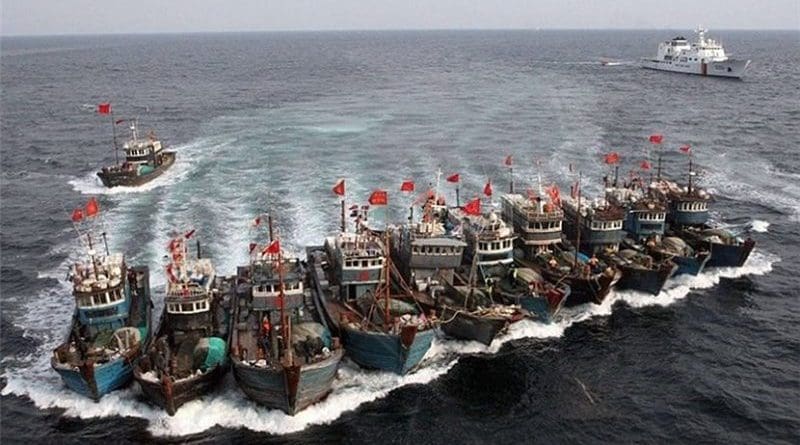
File photo of Chinese fishing fleet. Photo Credit: Tasnim News Agency China

By 

Ghana continues to make a stand against illegal, unreported and unregulated fishing, a scourge that costs the country between $14.4 million and $23.7 million annually. Ghana’s Fisheries Commission and Ministry of Fisheries and Aquaculture in April suspended the fishing licenses of four Chinese trawlers for a year over an array of violations.


The vessels Meng Xin10, Florence 2, Long Xiang 607 and Long Xiang 608 are all flagged to Ghana but are beneficially owned by three Chinese companies, Ghana Business News reported. Chinese trawlers are notorious for using this practice, known as “flagging in,” in which they abuse local rules to flag a foreign-owned and -operated fishing vessel into an African registry to fish in local waters. Flagging in is a common sign that vessels engage in illegal, unreported and unregulated (IUU) fishing.

At least 90% of the industrial trawlers operating in Ghana are owned by Chinese corporations, according to the Environmental Justice Foundation.

Officials suspended the four vessels for unauthorized transshipment of fish at sea, a practice known as saiko: dumping unwanted fish; fishing in restricted zones; and harvesting juvenile fish. All of these practices lead to declining fish stocks and destroy ecosystems critical to the survival of marine life. They also drive food insecurity and threaten the livelihoods of more than 2 million people employed by Ghana’s small-scale fisheries.

Saiko has pushed the population of Ghana’s small pelagic species such as sardinella to the brink of collapse. Pelagic fish are easier to catch than are deep-water species.

“Saiko is precipitating the collapse of Ghana’s staple fish stock and with it, poverty and hunger for its people,” Steve Trent, executive director of the foundation, said in a Dialogue Earth report. “Chinese trawlers are making millions of dollars in an illegal trade which makes up over half of the fish caught by industrial boats in Ghana.”


Only artisanal fishers are allowed to catch pelagic fish in Ghana, but large commercial fleets continue to haul them in, robbing local fishing communities of revenue. The average annual income of Ghana’s more than 100,000 artisanal fishermen has dropped by as much as 40% per canoe in the past 15 years or so, according to the foundation.

Industrial vessels also harm fish populations by using illegal nets to catch juvenile fish, fishing with powerful lights at night, and fishing with explosives. “This compounds the plights of artisanal fishers and frustrates efforts aiming to address illegalities in the artisanal sector,” Nana Kweigyah, an artisanal fisherman in Ghana, told Oceana, an international organization dedicated to conservation.

China commands the world’s largest distant-water fishing fleet and is by far the world’s worst illegal fishing offender, according to the IUU Fishing Risk Index. Of the top 10 companies engaged in illegal fishing globally, eight are from China.
Chinese trawlers also notoriously engage in bottom trawling, dragging a huge net along the ocean floor, indiscriminately scooping up all manner of marine life. The practice kills juvenile fish, leading to declining fish stocks, and destroys ecosystems critical to the survival of marine life.

The Meng Xin fleet, owned by the Dalian Mengxin Ocean Fishery Company, is linked to the 2019 disappearance of Ghanaian fisheries observer Emmanuel Essien. He went missing from the Meng Xin 15 trawler after filming the crew illegally discarding fish at sea and filing a report with the country’s Fisheries Commission. Essien has not been found,

Ghanaian fisheries observers interviewed by the BBC years after Essien’s disappearance said workers earned low wages on foreign trawlers and it sometimes took as long as five months to get paid, meaning kickbacks from Chinese and Ghanaian crew managers were necessary to feed their families.

“If you reject the bribe you go home hungry,” an observer told the BBC.

Emelia Arthur, Ghana’s new fisheries and aquaculture development minister, has promised greater transparency in the fisheries sector. In April, Ghana joined Cameroon and South Korea to officially endorse the Global Charter for Fisheries Transparency. The charter aims to ensure that information about vessels and fishing is widely available to promote responsible fisheries management, eliminate illegal practices and protect human rights at sea.

“I stand here fully subscribing to the Global Charter for Fisheries, which for me is in-caught within a framework of accountability,” Arthur said in an Oceana news release. “Not just because it’s important to do, but it’s also because it reflects Ghana’s fisheries laws and objectives and sets a good map for reforms.”


Africa Defense Forum

The Africa Defense Forum (ADF) magazine is a security affairs journal that focuses on all issues affecting peace, stability, and good governance in Africa. ADF is published by the U.S. Africa Command.


Salvage Tow Begins for Maersk Ship After Three Weeks Adrift in the Atlantic

Maersk containership
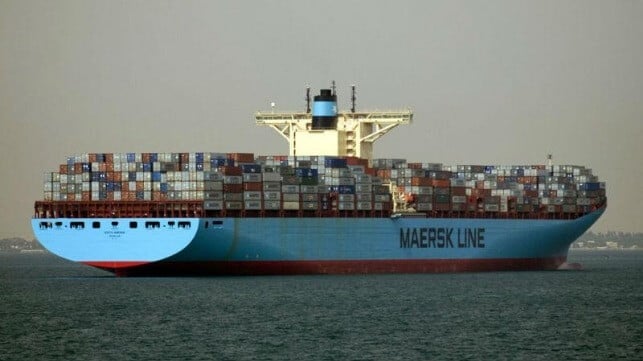
Tow has begun for a containership adrift in the Atlantic near Bermuda (file photo)

Published May 16, 2025 11:57 AM by The Maritime Executive


Maersk is confirming that an ocean-going salvage tug reached the disabled containership Maersk Sana on May 16 and that a salvage tow is commencing. The 102,000 dwt containership (8,450 TEU) was reported by Maersk to be “safely adrift at sea” near Bermuda since being disabled on April 28.

In a brief statement, a company spokesperson said that a “tugboat arrived at the location of the Sana and is in the process of towing her to a port of refuge in the Bahamas, with an expected arrival in the last week of May. Our monitoring teams continue to track weather developments and operational progress to ensure safe and efficient handling throughout this operation.”

AIS signals show the Sea1 Ruby (3,800 dwt) reached the containership. Earlier reports said the vessel would be bringing technicians and parts. Registered in Norway, the anchor handler is operated by Sea1 Offshore, the former Siem Offshore, which changed its corporate identity in 2024. Built in 2010, Sea1 reports the vessel has 28,000 BPH and a bollard pull capability of 310 tons.

The vessel’s AIS signal shows that it is bound for Freeport in the Bahamas, a tow of approximately 900 nautical miles, which at 5 knots would take seven days. The vessel made a stop in Ponta Delgada in the Azores before reaching the Maersk Sana.

Maersk previously said that it had selected a tug from Europe as “we wanted to employ a ‘first time right’ approach,” said the spokesperson. “We had to find the right tug for this operation, not necessarily the closest tug.”

Unconfirmed reports said the vessel experienced an explosion and fire in its engine room after departing the U.S. bound for Singapore. Maersk emphasized that while the vessel was drifting, it had power and the ability to use side thrusters for maneuvering. However, it was 75 nautical miles from Bermuda.

Three crewmembers were injured during the incident with one receiving First Aid on the ship. The other two were transferred to another Maersk vessel and later evacuated to Bermuda. One was treated and released in Bermuda while the third was later airlifted to the United States for further medical treatment. Maersk reports this crewmember remains in a hospital “in stable but critical condition and is receiving the best possible care.”

Maersk has committed to investigating the incident.


Greta Thunberg Occupies Maersk Tankers

Protest in Copenhagen targeting A.P. Moller-Maersk, May 2025 (Mayhem Against Maersk)

Published May 13, 2025 4:11 PM by The Maritime Executive


On Tuesday, climate activist Greta Thunberg and protesters from Danish environmental group Den Gronne Ungdomsbevaegelse (The Green Youth Movement) briefly occupied the offices of Maersk Tankers, located in the Amager East precinct of Copenhagen. 

The group's aim was to protest Maersk Tankers' primary business, the transport of fossil fuels. Dozens of activists took up positions in the firm's head office, rolling out cloth signs and chanting messaging with megaphones. With spray bottles and rags, some of the protesters cleaned the office's glass partitions, an act intended to mock Maersk Tankers' alleged "greenwashing" PR efforts.

The NGO had a secondary messaging objective: they took aim at a related firm, A.P. Moller-Maersk, for alleged transport of weaponry to Israel - a message that many other anti-war protesters have presented over the past year. 

Maersk Tankers is owned by A.P. Moller Holding, the same family foundation holding company that owns container freight and ports giant A.P. Moller-Maersk. The tanker firm is independently run and unrelated to container division Maersk Line. As a wet bulk operator, Maersk Tankers has no meaningful capability to transport weaponry.  

"We demand that Maersk stop their shipments of weapons to Israel, which are used directly in the genocide of the Palestinians, but we also demand that they stop all shipments of oil and gas," activist Freya Skriver said at the event.