Saturday, May 17, 2025


Western Sahara: Colonialism, labor and imperialist complicity


Published 

Western Sahara

First published at The Pan Afrikanist.

In 2025, we mark 50 years since Morocco’s illegal occupation of Western Sahara — a colonial occupation sustained by a repressive military apparatus, a deliberate policy of demographic substitution, and, above all, a web of international complicity. It is a colony in the full Marxist sense of the term: a territory exploited, dominated, and manipulated to serve the economic and geopolitical interests of a metropolis aligned with imperialism.

The essential characteristic of colonialism is the denial of peoples’ right to self-determination and the use of force to maintain an unequal relationship that benefits the occupying power. In the case of Western Sahara, this definition fully applies. Morocco acts as an extension of imperialist interests — particularly those of France, Spain, and the United States — in exchange for recognition, weapons, diplomatic support, and economic protection. Its presence in the territory is an extension of capitalist logic, which requires subdued territories and resources to fuel accumulation in the metropoles.

The complicity of these powers is total. France remains Morocco’s main diplomatic ally, using its seat on the UN Security Council to block any meaningful progress toward Sahrawi self-determination. The United States, in addition to supplying arms — including Stinger missiles and surveillance technologies — unilaterally recognized the occupation as legitimate, in blatant disregard of UN resolutions. Spain, the former administering power, maintains a stance of active surrender, yielding to commercial and energy interests with Morocco and abandoning its legal and moral responsibilities toward the Sahrawi people.

The occupation of Western Sahara is not only military or political — it is profoundly economic. Morocco uses the occupied territories as a means of managing its domestic labor surplus, relocating Moroccan workers to sectors such as administration, mining, and fishing, while Sahrawis are systematically excluded from public employment, subjected to structural unemployment, and persecuted when they try to organize. The goal is clear: displace, erase, replace. This is not classical exploitation of indigenous labor; it is its elimination as an economic and political subject.

Since Morocco’s violation of the ceasefire in 2020, the territory has once again entered a state of war. The Moroccan army has used armed drones to target Sahrawi civilians, including minors, in the liberated zones and near refugee camps. These war crimes are ignored — or even covered up — by Rabat’s Western allies, who continue to provide political and military support to the regime.

Cases such as Sidi Abdallah Abbahah, imprisoned since 2010 and in prolonged solitary confinement since 2018, or others from the Gdeim Izik group like Abdeljalil Laaroussi and Mohamed Bourial, demonstrate a policy of systematic repression, prolonged torture, and denial of medical care — practices condemned by UN bodies such as the Committee Against Torture. Yet these decisions are consistently ignored by Morocco, with the complicit silence of its international partners.

The Sahrawi people’s struggle directly embodies what Lenin called the right of oppressed nations to national liberation. In Lenin’s view, a true proletarian revolution cannot exist without a firm position in support of anti-colonial struggles. The global revolution demands active solidarity with all peoples fighting against colonialism and imperialism. Western Sahara is today one of these centers of resistance, confronting a global system of domination upheld by capital and alliances between local elites and foreign powers.

Denouncing what is happening in Western Sahara is not just an act of solidarity — it is a revolutionary obligation. To ignore this reality is to align, by omission, with imperialism and the colonial violence it perpetuates. The liberation of the Sahrawi people will not come from diplomatic concessions among capitals. It will come from the persistence of their struggle, from conscious international support, and from the inevitable collapse of a system that denies sovereignty to peoples while serving the interests of profit. It is time to break the silence. It is time to say, clearly: Western Sahara is a colony — and it must be freed.

As Karl Marx wrote, ‘a nation that oppresses another can never be free.’ Colonial oppression is not merely a matter of political power — it is an economic structure that denies self-determination and uses the territory and people as tools of accumulation for the metropolis. In Western Sahara, this accumulation is shared between Morocco and the imperialist centers that support it.

A central element of the occupation is the growing collaboration between Morocco and Israel — an alliance that has existed since the beginning of the occupation but has become public and institutionalized in recent years. The delivery of drones, surveillance technology, weapons, and military advisers to the Makhzen is just one aspect. Israeli companies like Ratio Petroleum are now involved in oil exploration in Sahrawi waters, violating international law and deepening colonial plunder with complete impunity.

It is common in progressive circles to celebrate the liberation of African peoples and to recall the anti-colonial struggles of the twentieth century. However, the case of Western Sahara remains an open wound — one of the few examples of inherited colonialism still active in the world today. Its specificity is brutal: it is not merely a military occupation, but a chain of colonialism sustained by new forms of transnational domination — armed, energetic, diplomatic, and symbolic.

In recent years, we have witnessed the expulsion of France from several Sahel countries, such as Mali, Burkina Faso, and Niger. However, the replacement of that influence with Morocco represents a continuation of the same yoke under a different flag. The Atlantic access project supposedly offered by Morocco to these countries involves using the port of Dakhla — located in occupied Sahrawi territory. This is not African sovereignty: it is recycled colonialism, with Morocco acting as the operational arm of French imperialism on the continent.

This relationship between Morocco and Israel is more than a tactical alliance: it is a strategic synergy of colonial interests. Both regimes practice forms of settler colonialism — one in Western Sahara, the other in Palestine — and they share repressive know-how, military technology, and population control practices. What is exported to Western Sahara is not only weaponry, but methods of domination, mechanisms of silencing, and demographic engineering — all with the endorsement and financing of Western powers.

The presence of Israeli companies in the energy and security sectors of the occupied territories further reinforces Morocco’s integration into a network of imperialist domination that instrumentalizes Sahrawi land for purposes entirely unrelated to local development. It is the continuation of a logic in which colonized peoples are treated as logistical obstacles or collateral damage in the process of capitalist expansion and geostrategic control.

This reality shows that the case of Western Sahara is not simply a matter of self-determination — it is a structural issue of the global order. The continuation of the occupation serves the system of global domination. France ensures diplomatic cover. The United States provides weapons and UN silence. Israel applies tested models of repression. Morocco acts as the local manager and public face of this multinational colonial scheme.

The international left — particularly Marxist-Leninists — cannot continue to treat the Sahrawi cause as peripheral. This is a struggle that synthesizes the contradictions of global capitalism: resource expropriation, militarization, colonialism, racism, and collusion between local elites and imperial powers. The liberation of Western Sahara represents more than the victory of one people. It represents the collapse of a chain of exploitation and the emergence of new historical possibilities on the African continent.

Morocco’s role in North and West Africa fits perfectly within the concept of subimperialism, as formulated by Marxist theorist Ruy Mauro Marini. According to Marini, subimperialism occurs when a peripheral or semi-peripheral country in the global capitalist system acts as a regional agent of imperialism while maintaining dependency on foreign capital. These countries not only internalize the logic of imperialist domination but also reproduce it in relation to neighboring or more vulnerable peoples, functioning as local extensions of the global capitalist order.

Morocco meets all of these criteria. It is deeply integrated into the imperialist structure: a privileged partner of the European Union, a strategic ally of the United States, and a close military and technological collaborator of Israel. This trio guarantees Rabat diplomatic support, access to advanced weaponry, international forum cover, and economic investment — in return, Morocco plays the role of regional gendarme, controlling migration flows, repressing internal and external political movements, and ensuring geostrategic stability for the benefit of the Western powers.

The occupation of Western Sahara is the clearest expression of this subimperialist function. Morocco not only colonizes a territory in violation of international law but also transforms the occupation into a tool of regional projection. The most recent example of this is the so-called ‘Atlantic access’ project offered by Morocco to Sahel countries — including Mali, Burkina Faso, and Niger — via the port of Dakhla, located in occupied Sahrawi territory. This initiative, presented as African regional cooperation, is nothing more than a new form of subjecting peoples liberated from one colonial yoke (the French) to another (the Moroccan), reaffirming Morocco as the operational arm of French imperialism in Africa.

The alliance with Israel reinforces this logic. Beyond the provision of drones and surveillance technology, the presence of Israeli military advisers within the Makhzen and the awarding of oil exploration contracts in Sahrawi waters to Ratio Petroleum highlight the colonial, securitarian, and extractivist nature of the occupation. This is a clear case of the transfer of colonial methods and structures between regimes that share a common logic of repression and territorial usurpation — a true ‘axis of occupation.’ In return, Morocco offers political and logistical support to the Zionist regime.

In this sense, the case of Western Sahara cannot be seen as an isolated or regional conflict. It represents a subimperialist structure articulated with global imperialism. Moroccan subimperialism not only oppresses the Sahrawi people but also serves to preserve a system that denies true liberation to all exploited peoples of the region. Fighting it is a fundamental part of the anti-imperialist struggle of our time.

Dr. Isabel Lourenço is a Researcher at the Center for African Studies, University of Porto, Portugal. She is specialized in African Studies, Colonialism, International Law and Human Rights.


Hidden crisis: Malaysia’s food security blind spots

Published 

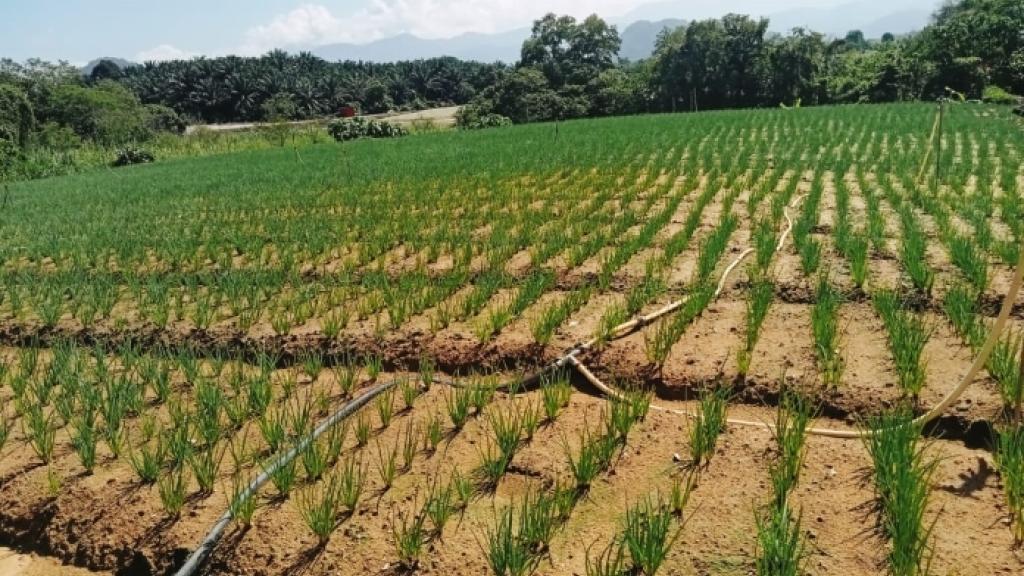
Kanthan farmland

First published at Aliran.

Let’s start by reflecting on the term ‘food security’.

What should this mean to the planning departments in government agencies? How should national planners evaluate the status of the country’s food supply ‘security’? Is it by listing the self-sufficiency levels of common food items consumed by the people? And then somehow combining them to give an overall self-sufficiency level?

Should we give weightage to any of the food items? Are all food items equally important when assessing food security?

We need to evaluate and plan for our food security by asking a crucial question: would we be able to feed the people of Malaysia if there is a severe disruption in world food supply chains (especially if that international situation also disrupts Malaysia’s exports leaving the country with a negative trade balance).

In considering this question, we have to bear in mind the dearth of solidarity displayed in 2021, when rich countries acquired all the available Covid vaccines, leaving the poorest nations with hardly any vaccines. If that was their response with regard to what was considered to be a crucial life-saving vaccine, do we expect anything different if a global shortage of wheat develops? Rich country with probably rush to stockpile wheat, worsening the shortage and driving up wheat prices to impossible levels.

Malaysia is actually insecure with regards to its caloric requirements, the most important component of food security of any population. [The US Department of Agriculture uses a caloric threshold of 2,100 calories per capita per day to evaluate the food security status of countries.]

Malaysia’s caloric requirements are met primarily by rice (62%  3 million tonnes consumed in 2024) and wheat (38% — 1.8 million tonnes). Currently, we import all the wheat we consume and about half of the rice we consume. What this means is Malaysia only produces about 31% of the caloric requirements of its people.

The country is obviously in a vulnerable situation! Domestic production of grains and other caloric-rich food products has to be ramped up.

This is a crucial step to bolster Malaysia’s food security status.

Current context

We need to consider the following sources of calories.

Rice

We now use about 640,000ha of agricultural land (out of a total of 8.4 million hectares of agricultural land in the country) for rice production. This works out to 7.6%.

But the productivity of our rice farmers is generally low. The average yield in the major rice-growing regions in the country is about five tonnes of paddy per hectare per year. This is less than half the yield in Sekinchang, Selangor where the farmers attain 11 tonnes per hectare per year.

Our rice farmers, who number some 220,000, make up one of the poorest groups in the country. This of course leads to an out-migration of the younger generation from the paddy farmlands and to the ongoing conversion of paddy land into residential and other projects.

The are many factors causing the low income of farmers including:

  • small plots of farmland
  • malfunctioning irrigation systems. The water does not come at the right times and in the correct amounts
  • excessive deductions for moisture content (up to 30% of the weight of the padi) by the mills buying the paddy. Over the years, many of the smaller mills have closed down, leaving a concentrated field
  • rising costs of seeds, pesticides and services such as ploughing, planting seedlings and harvesting

The government subsidises the paddy sector by about RM2.6bn per year.

However, as the president of Pesawah, a coalition representing rice farmers revealed, only 20% of this aid is paid directly to the rice farmers.

The remainder is channelled through non-governmental agencies which, according to the farmers, do not function as efficiently (or honestly) as they should. For example, the fertilisers provided are not suitable to the soil conditions of some farms and are often delivered too late.

Malaysia consumes three million tonnes of rice annually. We produce a little less than 50% of this domestically.

Wheat

This is a component of the many types of bread that the people of Malaysia consume.

Unfortunately, wheat is not cultivated in Malaysia. We therefore have to import all the wheat that we consume. That was 1.8 million metric tons in 2024, with Australia and Canada the two most important source countries.

Other foodstuffs with high caloric value  maize and tubers

Maize grows well in Malaysia. So do a variety of tubers  tapioca, sweet potato, white potato and yam. Tapioca was actually a staple food for many families during World War Two.

However, tubers are seen as poor person’s diet and they are not popular with the people.

Enhancing caloric self-sufficiency

Becoming fully self-sufficient in rice

At present only 7.6% of agricultural land in Malaysia (640,000 hectares) is use for growing rice, 71.4% is committed to oil palm and 11.9% to rubber.

Rubber is largely produced by smallholders. But large plantations are dominant in the oil palm sector, using more than half the gazetted agricultural land in the country.

The government should require all plantation companies owning more than a thousand acres of land to convert a certain percentage of their land to cultivate wet paddy over the next five years so that an additional 200,000ha of land is brought into rice cultivation.

To put this in perspective, 200,000ha only constitutes less than 5% of the roughly 4.5 million hectare of plantation land currently used for oil palm cultivation. (Smallholders make up the other 1.5 million hectares under oil palm cultivation.)

Adequate funds should be allocated by the government to improve the quality and reliability of irrigation in traditional rice-producing regions, so that the yield per hectare can be increased.

Leakages in the current system of subsidies for rice farmers have to be plugged. For example, the rice farmers have asked that their fertiliser subsidy be given as cash vouchers so that they can choose the type of fertiliser that they need. (Currently, fertilisers are supplied by middlemen.)

The government has to attend to the welfare of rice farmers so that rice farming becomes a more attractive career option.

Among the measures that could be implemented:

  • increasing the production incentive from the current RM500 per tonne of paddy to RM900
  • institute a pension scheme of RM500 per month for all rice farmers who have spent 10 years or more in the rice farming sector once they reach 60 

Contingency plans for global wheat shortages

This may not happen in the near future. But given climate change and geopolitical uncertainties, any serious food security plan for Malaysia should consider this scenario and develop well thought out plans to deal with it.

One component of such a contingency plan would be to rely more on tubers, yams and maize for the caloric needs of our population.

The market for tubers and yams is not very big in Malaysia at present, as wheat flour is available at affordable prices. But we need to prepare for a situation where we might have to rely on this food source for our caloric needs.

The government should:

  • Encourage local farmers to produce tapioca, sweet potato, arrow fruit, yam, sago and other similar high caloric value foodstuff by entering into forward contracts with local farmers
  • Develop the technology to prepare flour from these tubers
  • Promote the popularity of these tubers and yams by holding cooking competitions, sharing recipes and serving them to VIPs at government functions

For now, we need to create the ecosystem for the production, processing and consumption of various tubers. This capacity can be ramped up if there is a global wheat shortage.

Undermined by ‘development’

While these food items are not as crucially important compared to the high-caloric foodstuffs we discussed earlier, they are important in providing sufficient protein and a balanced diet for the people.

Unfortunately, many of these food producing sectors are being undermined by the forms of ‘development’ taking place in the country.

Let’s discuss the situation.

Vegetable farmers

Most of these farmers can be found near the 540-odd “new villages” that dot the west coast states of the peninsula. These new villages were set up under the Briggs Plan in 1950-52 to prevent the rural population from providing food to the communist insurgents.

Thousands of small farmers were forced by the British to move into these new villages. Their homes on their farms were razed. But they were allowed to go and tend to their fields during the day as the British recognised their importance as food suppliers.

Most of these farmers continued with their farming activities following the independence of Malaya in 1957. But few were awarded titles to the land they were tilling by the Malayan and then the Malaysian government. But as the land they were working on did not have much economic value back then, they were allowed to carry on.

However, the development of urban areas and the birth of the private housing market changed that. State governments began selling farmland to housing developers and other development projects. Thousands of vegetable farmers have been evicted from the land they had been tilling since before World War Two.

For example, the Chemor-Kuala Kuang-Tanah Hitam region in Kinta used to be the largest producer of fresh vegetables and fruit in Perak. Over the past 30 years, 2,900 acres or 95% of the area used for “market gardening” in that region, was sold to either state-owned companies such as the Perak State Development Corporation and the Perak State Agricultural Development Corporation (PPPNP) or to private developers. [Market gardening refers to the cultivation of vegetables, fruits and tubers, as well as the rearing of fresh-water fish.

Of the 2,900 acres sold, the resident farmers have already been evicted from about 1,200 acres.

In another 200 acres, 45 farmers are facing court action (in five separate cases) by the new owners of the land  government-linked companies and private developers. If the government remains indifferent to their plight, they too will be evicted, as the Torrens land system introduced by the British during the colonial era vests the right to land in the person awarded the land title, irrespective of the history of occupation or land use.

The farmers on the remaining 1,500 acres have not yet been visited by the new land owners. But it is only a matter of time before they too will be evicted.

The vegetable farmers face another problem: the unregulated import of vegetables and fruit from neighbouring countries. Because of the Asean Free Trade Agreement, 99% of all goods traded among Asean countries are now at zero tariff. The agreement also specifically prohibits the raising of any existing tariffs.

This situation results in the intermittent flooding of the Malaysian market with Thai or Vietnamese vegetables and fruits whenever there is a good harvest in those countries. This results in the collapse of prices for these items, sometimes to the extent the depressed market price does not even cover the cost of harvesting and transporting of the vegetables to the market.    

At present, farmers in Malaysia only produce about 60% of the vegetables the people consume. The ongoing evictions of vegetable farmers and the failure to stabilise vegetable prices are decimating local farming communities. These farmers have a wealth of knowledge gleaned from their three generations of tending the soil.

This expertise, unfortunately, is not appreciated by the powers controlling land sales. As a result, a vital human resource is being rapidly dissipated. 

Fish farmers and fisherfolk

Freshwater fish farmers are located in the vegetable farming areas discussed in the preceding section. They too are being evicted along with the vegetable farmers.

Saltwater fish farmers and coastal fishermen are badly affected by pollution arising from household and industrial waste, as well as by sand mining and land reclamation projects.

The region comprising the south of Penang Island and the coast of the mainland up till northern Perak is an important source of fish for the country.

Unfortunately, this region will be badly affected by the southern Penang Island land reclamation project that the Penang government is keen on. This land reclamation project will destroy the breeding grounds of many species of fish.

In addition, sand mining leads to an increase in organic matter in the sea water. This can cause an explosive growth of algae and other micro-organisms that deplete the oxygen dissolved in sea water, leading to the asphyxia of fish.

A group of coastal fishermen filed a legal challenge to the environmental impact assessment report for the southern Penang reclamation project. They lost at the High Court and have taken their case to the Appeal Court.

Cattle farmers

Many of the cattle farmers in Malaysia are the children or grandchildren of estate workers who were encouraged to rear cattle in the estates they worked in.

For some unfathomable reason, Sime Darby, which occupies 1.25 million hectares of agricultural land, has announced a “zero cattle” policy, and is now attempting to evict these cattle farmers from all Sime Darby estates.

The Sime Darby policy is perplexing, as numerous studies* have shown that allowing cattle to graze in oil palm estates actually reduces costs and increases the oil palm yields.

How? Management does not need to spend as much on herbicides. Instead, the cattle graze on and reduce the undergrowth. The reduction in herbicide use promotes the proliferation of birds and insects in these estates. This leads to a higher rate of pollination and thus higher yields of oil palm fruit bunches.

The affected cattle farmers have formed a national coordinating committee and are trying to involve the Ministry of Agriculture and Food Security in their discussion with Sime Darby. So far, Sime Darby has not moved from its position, despite corroboration by ministry experts that integrated farming actually reduces costs, increases biodiversity and improves yields in oil palm estates.

Preserving vegetable, fish and cattle farming

We urgently need to impress on policymakers that preserving the nation’s capacity to produce food is crucially important to national security and the people’s wellbeing.

Food production should be given much higher priority when economic ‘development’ plans are drawn up. Much can be done to stop the ongoing erosion of the nation’s food production capacity.

Market gardeners

State governments should be asked to review the sale of food-producing farmlands for residential or industrial purposes. If such projects are thought necessary, agricultural land used for oil palm cultivation should be acquired by the state for the development projects. Farmland used for market gardening should be preserved.

The National Land Code needs to be revised to require the creation of an oversight committee in each state. Its members should be drawn from state-level bodies, including NGOs and farmers associations, to monitor and vet the sale of farmlands for ‘development’. This oversight committee must be independent of the state’s executive branch for it to play an effective role.

The government should revoke the sale of food-producing farmlands that have not yet been destroyed. The state government can use the Land Acquisition Act to re-acquire the land and lease it to the vegetable farmers with agreements that commit them to only grow food crops on the land leased to them. The federal government may need to intervene to provide a portion of the funds for acquiring the land.

The government must renegotiate the Asean free trade agreement to enable import restriction provisions to protect domestic food production. These provisions should enable the government to use a mixture of tariffs and import quotas to ensure that cheap food in any Asean country does not undermine its neighbours’ food production.

With artificial intelligence (AI) and Big Data being in vogue, the government should set up an online national information board that tracks and displays several parameters that will be help vegetable farmers decide which type of vegetable to plant at any point in time.

Parameters that should be tracked are the amount of various vegetable seeds bought each month, acreages of newly planted vegetables and the market demand for various types of vegetable. These would enable farmers to make more informed decisions regarding which crops to plant.

Fish farmers and fisherfolk

We need to set up an agency that has the expertise to review plans to develop coastal regions from the perspective of preserving our fisheries reserves.

Laws governing environmental impact assessment studies need to be modified. These studies should be commissioned by the Department for the Environment and not by the project mover. The DfE could levy a charge on the project mover for this service. Such a provision would render environmental impact studies a lot more objective.

Under the current system, the environmental consultants bend over backwards to make sure that their client, the prospective developer, succeeds in itss bid for the project.

The southern Penang Island reclamation project should be called off.

Cattle farmers

Stop the ongoing harassment of cattle farmers on Sime Darby estates.

The Ministry of Agriculture should form a committee which includes both Sime Darby and representatives of the cattle farmers to work out a set of guidelines on cattle farming in oil palm estates.

Food security framework lacking

Malaysia lacks a coherent food security framework despite giving lip service to its importance.

Conceptual errors, ignorance, a short-sighted focus on immediate financial gain for certain parties, and self-interest are some obstacles. These have obstructed the formulation of a rational, comprehensive plan to protect and enhance food production capacity in the country. Such a plan needs to emphasise the domestic production of high caloric value grains and tubers.

If these barriers are not acknowledged and addressed, we will continue to piously assert that we are concerned about food security when, in reality, our actions are seriously undermining it.

Dr Jeyakumar Devaraj, a long-time Aliran member and contributor, served as Member of Parliament for Sungai Siput from 2008 to 2018. A respiratory physician who was awarded a gold medal for community service, he is also a secretariat member of the Coalition Against Health Care Privatisation and chairperson of the Socialist Party of Malaysia.


Gilbert Achcar: ‘For the neofascists, the law of the jungle is the only one that makes sense’


Published 

Posle graphic Achcar interview

First published at Posle.

Where did the “global neofascist axis” come from, and where is it going? What destabilizing effects might Russia’s war in Ukraine have? Ilya Budraitskis and Gilbert Achcar discuss the current conjuncture.

With the beginning of Trump's second term, the world is experiencing a tremendous geopolitical shift, and I would like to start discussing it with the question of NATO’s future. Today, it is obvious that the alliance is in a situation of strategic and ideological crisis. The United States, as the key country of the bloc, is openly building separate relations with Russia, which used to be seen as NATO's main opponent, while Europe is talking about rearmament and ensuring its own security in some new format. What are the preconditions of the current NATO crisis? Could it end in the actual disintegration of the bloc, and what could replace it?

Let us first remember that NATO was already in crisis before the present US administration. Already during Trump's previous term, French President Emmanuel Macron famously described NATO as “brain dead.” It was so indeed, because Trump has never hidden his contempt for European liberal governments and the whole so-called liberal, rules-based international order, which originated in the Atlantic alliance of World War II.

NATO was obviously revitalized by Putin's invasion of Ukraine. It gave NATO a renewed sense of purpose, at a time when a very Atlanticist president [was back in the White House] — I mean Joe Biden, of course. All the NATO folks were quite happy about the renewed relevance of their organisation. Except that, in retrospect, this appears as a swan song — the final burst of energy of the organisation before it resumes its agony.

We are in the midst of it today. As you mentioned, there is obviously a clear divorce between both sides of the Atlantic, or at least between the United States and the rest of NATO. This divorce is not geographical; it is political and ideological, in the sense that Canada belongs to the liberal cohort, whereas Orban’s Hungary belongs to the same neofascist ideological family to which Donald Trump belongs. This ideological rift is pushing European liberal governments to try to make the EU — which is the alternative organization at their disposal — into some kind of defence alliance and military force, in cooperation with the United Kingdom. Western Europe, Poland, and the Baltic states are in need of Britain as one of only two Western European nuclear powers and a major Western European armed force. And that is what is presently brewing.

Because instead of defending a NATO ally, Washington is trying to impose on it what is basically a capitulation — although, as we know, Donald Trump is unpredictable and changes his mind all the time. But the signals [that he has given], at least during the first hundred days of his presidency, are very much indicative of a neofascist affinity with Vladimir Putin.

It is clear that we have entered into what I called “the age of neofascism.” This has been developing over several years in the present century. The second coming of Donald Trump to the White House completed the mutation. Thus, we have seen the emergence of a powerful global neofascist axis, which goes from Trump to Netanyahu in Israel, Milei in Argentina, Orban in Hungary, Meloni to a point (and she has the very clearly neofascist Salvini in her government), Modi in India, Erdogan in Turkey, etc. I described this new era in a summarized way in an article titled “The age of neofascism and its distinctive features.”

How long it will go on is difficult to predict. One can only wish that it gets entangled in its own contradictions and failures, rather than ending with a world war — as the previous age of fascism did in the previous century. We can see signs of that with the completely chaotic results of Donald Trump’s presidency in the United States. It might lead to a powerful backlash against Trumpism. The backlash is already taking place in countries such as Canada and Australia, where local neofascists or Trump admirers have been negatively affected by Trump’s deteriorating image. So, we can remain hopeful in this regard, but the situation is extremely serious.

Can you describe the foreign policy prospects of this neofascist project? What kind of world conditions would they like to see? Does the ideological affinity between these various neofascist regimes in various countries also mean the possibility of an alliance, or could it combine with the rising conflicts between various countries with neofascist regimes?

The first point to stress in this regard is that for far-right forces, there is no common value that supersedes nationalism. Liberals may adhere to some values that they believe should be put higher in importance than narrow nationalism, and they generally try to refrain from naked nationalism. Some of them even claim to be “internationalists” — liberal internationalism is a term very much used in the United States, for instance, to describe a fraction of the foreign policy establishment — whereas the far right is always ultra-nationalist. For them, it’s always America first, Israel first, Hungary first, Russia first — whichever is their country. It’s the narrow nationalist perspective.

They converge when their nationalistic interests can be reconciled, but that doesn’t exclude tensions between neofascist governments because of clashing interests — for instance, economic ones. We can see that some of the neofascist governments of Eastern Europe are resenting Trump’s tariff policy, which is hurting them. The same is true of other governments — Modi, Erdogan — whose governments are trying to negotiate with America, but you can see that this is taking place under economic coercion exerted by the present White House.

So, that’s the limitation. Neofascists tend to coalesce against the liberals, against liberalism — their joint, their common enemies — even though today’s liberals are very pale liberals. Actually, one of the reasons this neofascist wave has risen is the way Western liberals, instead of fighting head-on against the far right, have been adapting to it, adopting whole chunks of the far right’s ideology and program, starting with anti-migrant and other racist measures, on a backdrop of continued neoliberal austerity, which is the very socioeconomic ground upon which neofascism was able to develop. And that’s why we have seen an acceleration of the rise of neofascism in this century: the 2008 economic crisis and then the COVID economic crisis boosted the far right.

Speaking of an age of neofascism, the prospects are also very worrying. The National Rally in France is very much [within striking distance of] winning power in the next presidential election in 2027. The UK Reform Party, which is the UK’s far right, is growing at a worrying pace — at the expense of both the Conservatives and the very pale and very neoliberal Labour Party.

China is a common target of many of the neofascist forces. It is targeted by the Trump administration, but more generally by the United States as a major rival power that has been rising steadily. The United States is trying to push the European far right in that direction [of opposing China]. The issue here is that China is obviously regarded by the United States today as somewhat an equivalent of what the Soviet Union was yesterday — that is, its main global contender — with the difference that China is rising economically at amazing speed, unlike the Soviet Union, which stagnated since the 1970s.

China is not a neofascist government. It is a dictatorial, authoritarian government of Stalinist-Maoist origin, a single-party dictatorship, but it is not based on the permanent reactionary ideological mobilisation of a mass base, as you can see with Trumpism or Putinism. Thanks to China’s sustained development pace, there is presently no mass popular threat to the Chinese government. It has been thriving on increased economic growth and welfare. That’s why Beijing has been adopting over the last decades a rather peaceful profile, internally and externally, because its main legitimation — its main source of legitimacy — is economic development. And we shouldn’t forget that China is still a developing country. It has a huge GDP, but compared to the size of its population, it remains a middle-income country.

At the same time, of course, for Vladimir Putin, it’s a game of triangular relations globally. Faced with the United States — under Biden, especially — he cultivated “eternal friendship” with Beijing.

But Vladimir Putin is not that stupid: as long as he cannot rely on the neofascists remaining in power in Washington, he will not jeopardise his relationship with China.

If Washington were to become a dictatorship, like the one you have in Moscow, that could change, because obviously the natural inclination of Russia is to prefer a Western ideological ally over China. There is racism in Russia against the Chinese, a resentment of depending on China, a neighbouring country with which there have even been border conflicts. None of this exists with the United States. And it still is, of course, more powerful than China technologically and economically, let alone militarily.

That’s part of the game. Putin will certainly not jeopardise his relations with Beijing as long as he sees how chaotic the Trump administration is. He knows that it would not be not a safe bet, and he is not going to change anything fundamental in his international alliances just on the basis of Donald Trump’s promises.

Another extremely frightening global process is [that countries are beginning to revise their relationship to] nuclear weapons. At the forefront of this revision is Putin's Russia, which modified its nuclear doctrine last year. Now, nuclear weapons can be used in response to various forms of conventional threats. And Russian propagandists in recent years have generally spoken of the possibility of a pre-emptive nuclear strike to avert a broadly understood threat to national security. Thus, nuclear weapons are transformed from an instrument of war prevention into a decisive element of a possible global war. To what extent is this approach to nuclear weapons spreading globally?

This is not difficult to understand — it is a really elementary question of strategy.

Until then, Vladimir Putin believed that Russia was an almighty military power. He invaded Crimea and entered eastern Ukraine in 2014 without any difficulty. The Obama administration’s reaction was very subdued and limited. Then Putin sent his troops into Syria in September 2015, first cautiously trying to see what the Western response would be — to the point that he announced very few weeks into his intervention that the mission was accomplished and was to end.

And then, in the absence of any significant pressure from the United States, he carried on and started expanding through either official forces or the Wagner Group into other countries of the Middle East, Libya and Sudan in particular, and increasingly into sub-Saharan Africa. We have seen the vast military expansion abroad of Putin’s Russia, in contrast with the very limited expansion of the Soviet Union outside its post-1945 sphere of domination. The first and only time that the Soviet Union went out of that sphere was the invasion of Afghanistan in 1979. Before that, it limited its military interventions to Eastern Europe: Hungary, East Germany, Poland, all within the Yalta divide.

But the Soviet influence was also present in Africa.

True, but the Soviet influence was represented there by advisors and the delivery of weapons but not combat troops. Moscow would facilitate the intervention of Cuban troops as a substitute to sending Soviet troops. There was a big misunderstanding about the Soviet Union that it was an aggressive country, as portrayed by Western propaganda. In fact, the post-Stalinist Soviet bureaucracy was fundamentally conservative because of its fear of creating chaotic conditions that could turn against it domestically. That's the root of bureaucratic conservatism. They couldn’t afford to be predatory at the global level in the way Putin is.

Putin has gone far beyond the Soviet Union in foreign intervention. One reason for that is the conjunction between Russia’s reduced size and the importance of fossil-fuel income in fuelling the Russian economy, giving it an important margin of action without worrying too much about the economy. As we could see since the invasion of Ukraine, despite all the Western sanctions, the Russian economy was much more resilient than Western analysts were expecting.

Putin is taking advantage of this — and of the other pillar inherited from the Soviet Union, which is the military-industrial complex, the only industrial sector in which the former Soviet Union really rivalled the West, developing the whole range of military forces and technologies from conventional to nuclear and space. That was part of the reason why the Soviet Union got economically exhausted — having to compete with much richer Western economies.

When Putin went into Ukraine in February 2022, he was expecting his troops to get to Kyiv, bring down the government like US troops did in Baghdad in 2003. That was his argument: “You did regime change in Iraq, I will do regime change in Ukraine. I actually have more rights over Ukraine than you had over Iraq.” But he failed miserably. He has now been at war for three years and has not even been able to fully invade those “oblasts” that he formally annexed. His army is still progressing, but at snail’s pace. That shows the limitation of his military power.

So, what remains for Putin? All this automatically enhances the importance of the other field in which he has a superior force — actually, the most important in the world, more than that of the United States itself — which is nuclear force. The weakness of its conventional war in Ukraine immediately enhances therefore the strategic value of its non-conventional force. That’s a very classical strategic equation. Hence the change of doctrine that you pointed to, as if he were saying, “Look, you have seen me weakened in conventional war, but don’t try to take advantage of it, because I won’t hesitate to use tactical nuclear weapons if you try. I know that if I use tactical nuclear weapons, you won’t dare to retaliate, let alone escalate, because I have many more strategic nuclear weapons than any of you.”

No one will take the risk of a nuclear escalation. So that’s basically the logic we are in, which is very dangerous, very worrying. Think also of the impact of this on the rest of the world now that you have India and Pakistan, two nuclear powers, on the cusp of a military confrontation, which we all hope won’t happen because it would lead to a terrible nightmare.

That shows you how increasingly dangerous the world is. There is no question and no doubt that Vladimir Putin has been a major factor in the deterioration of global peace and international relations. I’m not one who ever excused NATO. But whatever responsibility lies with NATO and the West, it is no excuse for what Putin did: the way he got Russia bogged down in this absurd war in eastern Ukraine, which has cost Russia and the Russian people — not to mention the Ukrainians — much more than the economic or even ideological value of those territories that he is fighting for. There is no great enthusiasm in Russia for those oblasts in Eastern Ukraine. It is a major strategic error of miscalculation leading to failure by Putin.

Trump argued that Ukraine was to blame for the war because it should have fulfilled all the conditions of the stronger side [i.e. Russia] to prevent the invasion. This coincides well with Moscow’s position. Those without nuclear weapons and comparable resources cannot reject ultimatums from one of the world’s key military powers. Can we imagine this principle being extended to other Eastern European countries — for example, to the Baltic states or Moldova? And to what extent might the European Union and NATO agree to this in order to prevent a larger conflict?

Well, that’s a key characteristic of neofascism, which it shares with old fascism: the view that “might makes right,” which you summarized well. “We are the strongest, and you have to abide by what we decide.” And that’s, again, the difference between them and what followed the defeat of the fascist axis in 1945: it gave way to what we mentioned as the liberal international order based on rules that also translated into the creation of the United Nations, its Charter, and a set of principles supposed to regulate international relations. To be sure, the United States was the first and foremost violator of this very world order of which it had been the key architect.

This logic, of course, is extremely dangerous in international relations, because it is a recipe for permanent wars. Russia has been increasingly involved in wars over the last years. At the international level, we can see a very worrying surge in wars. We have all witnessed the ongoing Israeli genocidal war in Gaza, which is the first genocidal war waged by a technologically advanced state backed by the West since 1945. You have had several genocides after 1945, but they were mostly in the Global South — except the so-called Bosnian genocide, although this characterization was hotly disputed in its case. None of these genocides, however, was perpetrated by an industrially advanced state so closely linked to the West as Israel is.

It is no coincidence that this is happening under the watch of a coalition of neofascists and neo-Nazis ruling Israel. The fact is that before Vladimir Putin, the key pioneer of neofascism — who was even a role model for a whole range of neofascist forces, including Putin himself — was Benjamin Netanyahu. Netanyahu, who came to power for the second time in 2009 and has remained in power most of the time since then, with a very brief interruption, became a beacon of neofascism early on. One difference between neofascism and old fascism is the pretence of respecting democratic rule. As long as it is possible for the neofascists to remain in power through a relatively open electoral system, they carry on — and they do everything they can to adapt this electoral system to their needs.

Of course, the situation changes when a government is afraid of a major rise of mass opposition — like the Putin government became afraid, after 2012, of seeing a mass opposition arising and even losing elections, and then turned to completely coercive policy and the fundamental cancellation of electoral democracy. But basically, as long as the neofascist can win through relatively credible elections, they prefer that, because political legitimation in modern times requires a semblance of democracy at the very least — unlike what you had in the 1930s, where the idea of naked dictatorship could be popular. In countries such as Germany or Italy, there's no doubt that Mussolini and Hitler enjoyed real popularity, in spite of being declared enemies of democracy.

Netanyahu has been a pioneer of the neofascist “democratic” trend and a major ally of most neofascists, one common ideological basis of most of them being anti-Muslim racism.

It made Western hypocrisy and double standards become more blatant than any time before. At the same time, it is striking to see how the Israeli government never took sides against Russia and remained on good terms with Putin.

Putin also was quite ambivalent about Gaza.

Lavrov even said, “We are doing the same — the Israelis are fighting Nazis in Gaza, and we are fighting Nazis in Ukraine.”

Yes, [and both governments call their wars] a “special military operation.” So, my next question is: almost a decade ago, Russia intervened in the Syrian civil war to save the Assad regime. At that point, in our conversation 10 years ago, you argued that this happened as a result of the failure of US policy in the region and was a success for Iran and Russia, with both expanding their influence regionally. How has Assad’s collapse changed the balance of forces? To what extent can Turkey be seen as its main beneficiary? And what, in your opinion, are the possible scenarios for the development of events in Syria?

The Assad regime survived during the last 10 years on two pillars: Iranian support and Russian support. The regime was on the brink of defeat in 2013 when the Iranians intervened, mostly through the Lebanese Hezbollah, but also through forces sent directly from Iran into Syria. Even that was not enough to save the regime, especially given that Iran does not have an air force. In this regard, Iran is a very weak country because it’s been under embargo, an international embargo, for a very long time. It had a few old US planes. That’s why Russia intervened in 2015. Its rescue of the regime was much more decisive. There were Iranian troops but no planes; then you had Russian planes, but no troops involved in fighting — and those Russian planes and missiles made a huge difference. They allowed the regime to remain in place.

Now, with the war unfolding in Ukraine since 2022, Russia got bogged down in a quagmire in eastern Ukraine and removed most of its planes from Syria. According to Israeli sources, there were only 15 Russian planes left in Syria at the time of the collapse of the Assad regime. Iran was then dealt a very heavy blow from Israel as a result of its onslaught on Hezbollah in Lebanon last autumn. This weakened Hezbollah to the point that it was no longer able to intervene in Syria.

So, the two key forces that were backing the Syrian regime were practically out, and that’s when Syrian Islamic forces linked to Turkey chose to go on the offensive. They were probably very much surprised themselves to see how quickly the regime collapsed. Even though we know that puppet regimes resting on foreign support collapse very quickly when this foreign support is withdrawn. The latest major example of this prior to Syria was the Kabul regime in 2021, when Biden decided to remove US forces from Afghanistan: we saw how fast the puppet regime collapsed.

Now, of course, Turkey is taking advantage of this, but there’s a big “but” here. Those Islamic forces that existed within Syria are not closely comparable to the Assad regime in military strength. They consist of a few tens of thousands of fighters, with limited military means. Until the Syrian regime collapsed, Israel had always seen Assad as “the devil we know,” and regarded him as no threat since he never let anyone launch attacks against the Israeli occupation of Syrian territory in the Golan. That was the quietest occupied border of Israel. On top of that, Israel had confidence in Russia controlling Syria and had a Russian green light to strike at Iran’s forces inside Syria.

There was very clearly a coordination between Israel and Moscow for these actions because, even though Iran and Russia were both supporting the Assad regime, they were at the same time rivals in the control of Syria. So, when the Assad regime collapsed, Israel immediately destroyed all of Assad’s military potential. Whatever air force the regime had, its missile stocks and even the navy: all this was destroyed a very few days after the regime’s collapse.

This increased the weakness of the new self-proclaimed Syrian government in Damascus, which only controls a limited part of the territory, much less than what the Assad regime controlled with Iran’s and Russia’s support. This regime is even militarily weaker than the Kurdish forces in the northeast of the country alone. There are thus forces in the south of the country and northeast, some of them backed by the United States, which do not see themselves represented by the new government in Damascus. So Syria is an arena of struggle between regional forces. Turkey and Qatar are old supporters of the Islamic forces that prevailed. On the other hand, the Saudi kingdom, the United Arab Emirates, Egypt, and Jordan, which are regarded as pro-Western, but maintain warm relations with Putin’s Russia at the same time, form a regional alliance, in ideological and political rivalry with the Turkish-Qatari axis. There is a competition between the two alliances to win the new Syrian government’s allegiance. And the new Syrian government is very opportunistically playing on these rivalries to try to get some margin of maneuvre. The situation in Syria has become extremely volatile. It is very difficult to make any prognosis other than protracted instability.

In your recent texts, you have said that the United Nations could play a decisive role in a peace settlement in Ukraine. How realistic is that, given that most of the UN General Assembly’s resolutions on Ukraine have been ignored by Russia, while any recognition of Russia's right to the occupied territories would violate the foundations of international law on which the UN relies? In general, what significance can the UN have in the present situation of the rapid degradation of international law and division into military-political blocs?

You’re right to point to the very limited impact of the United Nations on what has been happening in Ukraine since 2022. But that's because the UN Security Council has been paralyzed. And what we got are resolutions of the United Nations’ General Assembly. They have no constraining power. Russia can easily ignore them with the support of very few allies. Stunningly, we have seen in recent times the United States and Israel vote with Russia and its very few traditional allies on Ukraine.

But that's not what I meant when I mentioned the United Nations as a potential key actor in what's happening in Ukraine. I meant the Security Council, of course, which is the executive branch of the United Nations. For that, the elephant in the room is China. Since the beginning of the invasion in February 2022, China has stated its official position. It clearly articulated support for the territorial integrity — that’s exactly the phrase they used — and sovereignty of all countries, “including Ukraine,” as they specifically added.

That was a powerful statement, as was the 12-point “China’s Position on the Political Settlement of the Ukraine Crisis” marking the invasion’s first anniversary. Had the United States and its Western allies seized these opportunities to try to work with Beijing at the Security Council to push for an immediate end to this aggression and some kind of negotiated settlement within the boundaries of international law, we would not be where we are today. What happened is that the Biden administration, despite reversing some other policies, continued the first Trump administration’s approach in two major respects. One is hostility to China. And here you have a continuity between Trump-I, Biden, and Trump-II, which contrasts with Obama’s relatively peaceful and friendly relationship with Beijing. And the other is Israel, of course, on which the Biden administration embodied a complete continuity with Trump. Whatever small differences there may be between Trump and Biden regarding China and Israel, their policies have much more in common. This attitude led the Biden administration from the start to accuse Beijing of supporting the Russian invasion without a shred of evidence.

And that’s where a major opportunity was squandered. I remain convinced that if Western countries were to turn and ask Beijing to cooperate for a negotiated settlement within the framework of international law and the United Nations, which is a constant stated goal of Beijing’s foreign policy, things could turn different. Beijing’s foreign policy is to play by international law while sticking to the principle of non-interference in internal affairs. China doesn’t like any country interfering in its own affairs, but for relations between states, it has consistently been advocating the United Nations, international institutions, multilateralism, and international law. And, as we know, Russia would not have been able to stand against both the West and China.

China holds decisive influence in this regard. Zelensky was smarter; at some point, he tried to cozy up to Beijing. In recent days, however, in trying to please Trump, he’s been making anti-Chinese statements. But basically, it is Washington that prevented a negotiated settlement with China’s participation, and that's where Washington bears a key responsibility in the continuation of the war in Ukraine.

Ostracizing China is a recipe for world chaos, as we are seeing. Western pundits like to completely ignore this and indulge in the demonization of China. Today, however, with the rise of neofascism, we are witnessing the beginning of a Western European revision of stance towards China. Western Europeans had been pushed by the United States, by both Biden and Trump, into adopting an increasingly anti-Beijing attitude, including the extension of NATO’s area of interest to China, beyond the territorial limitations of the North Atlantic Treaty. Now the Western Europeans are having second thoughts, because of the US attitude, both for economic and political/military reasons. There is some reconsideration going on, with an inclination to reestablish friendly relations with China, at a time of tense relationship with the Trump administration. That goes for France, the UK, even more so for Germany, which has strong economic ties with China. They now tend to give precedence to their own economic interests instead of always tailing Washington.