Thursday, May 29, 2025

Is 'brain rot' real? Experts weigh on on the impact of excessive screen time on our brains

Is the overconsumption of "trivial or unchallenging" content online or on social media platforms causing our brains to deteriorate?



Copyright Canva

By Euronews with AP
Published on 28/05/2025 


Doomscrolling. Instagram obsessions. Mindless YouTube video viewing. Distracting behaviours, yes, but can they actually rot a person's brain?

Last year, Oxford University Press designated "brain rot" as its word of the year, defining it as the "supposed deterioration of a person's mental or intellectual state" caused by overconsuming "trivial or unchallenging" material found on social media and other online platforms.

"It's what happens when you consume too much low-quality online content, which is like junk food for the brain," said Dr Andreana Benitez, an associate professor in the Department of Neurology at the Medical University of South Carolina in the United States.

But whether that content is actually harming the brain – and how – remains unclear.

Screen habits can shape health

According to the US Centers for Disease Control and Prevention (CDC), half of teenagers in the US spend four hours or more looking at screens each day, and global estimates suggest adults may be online an average of more than six hours per day.

There are no federal health guidelines for how many hours of daily screen time are appropriate for teens or adults.

Researchers lack sufficient data to fully understand the concept of brain rot and what it might lead to.


"There really isn't a coherent science around it," Benitez said.

There is, however, CDC data showing that 1 in 4 teenage frequent scrollers report feeling anxious or depressed.


Some research suggests problems with heavy online use may begin quite young. Adolescents who spend greater amounts of time in front of screens may be more likely to experience mental health issues, including depression, anxiety, attention-deficit/hyperactivity disorder, and oppositional defiant disorder, and related physical symptoms such as pain, dizziness, or nausea.

That's according to a 2024 analysis of data from the Adolescent Brain Cognitive Development study, the largest long-term child brain development study in the US.

Other studies have potentially linked brain rot to emotional desensitization, cognitive overload, negative self-worth, and impaired executive function skills, including memory, planning, and decision-making.


Rethinking our digital diet

While there's no evidence that hours of daily screen time are changing the structure of the human brain, it's what's not happening during those hours that could be harmful, especially for young people whose brains are still developing, said Dr Costantino Iadecola, director and chair of Feil Family Brain and Mind Research Institute at Weill Cornell Medical Center in New York City.

The more time young people spend in front of screens, the less time they spend being physically active or having face-to-face human interactions that supply the developing brain with critical, complex sensory and emotional input, he said.

"Brain development requires diversity of exposures," Iadecola said.

"When you are on your phone, you are not getting these other experiences. We are substituting artificial interactions for human interactions, and artificial interactions lack the complexity of the human experience – the verbal, sensory, and emotional reactions we have after interacting with people".


It's not just screen time that matters – it's also screen content, Benitez said.

"If you consume excessive amounts of low-quality online content, you are more likely to be exposed to information that might distort your perception of reality and harm your mental health," she said.

Cycling through large amounts of negative content can also leave a person mentally exhausted, she said.

But how much is too much has yet to be determined, Benitez said. Sticking to her junk food analogy, she likened short periods of screen time to the occasional junk food snack.

"One bag of chips might not be that bad, but if you're eating three at a time, that might be a problem," she said.


How to have smarter screen time

Helping kids – and adults – consume a healthier online diet isn't easy, Benitez said, because so much of modern life, from schoolwork to shopping, entertainment, and socializing, involves online applications.

"With kids, screens are a part of their lives," she said. "It's how they get a lot of information".

But, she said, "it's incumbent upon adults to curate the content, make sure they are consuming content that's good for them and in a way that does not result in mental fatigue. We need to make sure they are engaging in critical thinking as they engage with screens".

For both children and grown-ups, Benitez also cautioned against scrolling before bedtime.


"Consuming arousing information and being exposed to light when your body should be winding down for sleep might affect your sleep," she said.

The American Academy of Pediatrics suggests families develop screen-time plans together and encourage usage that builds creativity and connections with family and friends.

It also suggests parents emphasise the importance of offline activities such as sports, music, art, and other hobbies.

The AAP also notes that some screen use may be "healthy and positive," a point both Benitez and Iadecola agreed with.

"You could be consuming good content," Benitez said. "There's a value judgment in this".

Iadecola suggested making sure online usage is "purpose-appropriate. It's OK to use the technology for whatever task is at hand. The problem is when it becomes addictive behavior. Everything in moderation".
Azerbaijan pardons French street artist jailed for painting graffiti on metro


Copyright AP Photo

By David Mouriquand & AP
Published on 28/05/2025 - 

Théo Clerc was submitted to “discriminatory treatment," according to French authorities, who have advised citizens against traveling to Azerbaijan because of the risk of “arbitrary detention and unfair sentencing."

A French street artist who had been sentenced to three years in prison in Azerbaijan for painting a graffiti in the Baku metro has been pardoned and freed, French authorities announced Tuesday.

Théo Clerc, 38, has returned to France following 422 days in detention after he was pardoned by Azerbaijan’s President Ilham Aliyev, France’s Foreign Minister Jean-Noël Barrot told lawmakers.

In a message posted on X, Barrot said that Clerc was “back in France, after 422 days in detention.”


He added: "It is the honor and pride of French diplomacy and its representatives to have worked tirelessly for his release.”

For her part, the entourage of the European Union's head of diplomacy, Kaja Kallas, announced that she had contributed to the Frenchman's release by pleading his cause during a recent visit to Azerbaijan. This release “illustrates the effects of discreet diplomacy and respectful dialogue,” said Kallas in a message on X.

French authorities had complained in September that Clerc was submitted to “discriminatory treatment," because two co-defendants who were accused of the same offense – a New Zealander and an Australian - only received ‘simple fines’ for the same offences.

In September 2024, the Quai d'Orsay condemned the “arbitrary and blatantly discriminatory treatment” of Théo Clerc.

The street artist's conviction provoked outrage in France, which called on its citizens to refrain from travelling to Azerbaijan unless absolutely necessary. Indeed, France has advised its citizens against traveling to Azerbaijan because of a lack of legal protections and the risk of “arbitrary detention and unfair sentencing."

Another French citizen, Martin Ryan, is currently being held in Azerbaijan on espionage charges - charges which have been rejected by Paris.

French-Azerbaijani relations have been strained ever since Azerbaijan completely retook the Nagorno-Karabakh region following a lightning offensive in September 2023, which led to the exodus of more than 100,000 Armenians.

Baku accuses Paris of supporting Armenia, while France accuses Azerbaijan of interfering in its overseas territories - allegations that the latter rejects.
New US Senate bill could wreck Russia, but also damage the EU economy

In a bid to isolate Moscow, a new bill in the US Senate threatens to impose 500% tariffs on any country that buys Russian fossil fuels. If implemented as intended, the plan could ravage several EU countries.


Copyright Michael Reynolds/AP

By Jorge Liboreiro
Published on 28/05/2025 

A bill rapidly making its way through the United States Senate and gathering impressive bipartisan support threatens to wreak untold havoc on Russia's economy in a bid to force Vladimir Putin into "good faith negotiations for a lasting peace in Ukraine".

But the concerted push, jointly promoted by Lindsey Graham, a Republican from South Carolina, and Richard Blumenthal, a Democrat from Connecticut, also risks devastation for roughly half the European Union.

"Our legislation will isolate Russia – putting it on a trade island by imposing stiff tariffs on other countries that support these atrocities," Graham and Blumenthal said last week as they announced the text had secured 81 signatures in the 100-seat Senate.

Besides a wide range of primary sanctions and duties against the Kremlin, including sweeping prohibitions on financial transactions with Russian entities, the bill also foresees secondary tariffs on countries that still do business with Moscow.

In particular, it zeroes in on Russia's energy exports, an indispensable source of revenue to maintain the costly full-scale invasion of Ukraine.

The text drafted by Graham and Blumenthal proposes a tariff of "not less" than 500% on any country that "knowingly sells, supplies, transfers, or purchases oil, uranium, natural gas, petroleum products, or petrochemical products that originated in the Russian Federation." In other words, any nation on Earth that consumes Russian energy.

According to the senators, the law is mainly intended to "hold China accountable for propping up Putin's war machine by buying cheap Russian oil from the shadow fleet." The critical assessment of Beijing's "no-limits" partnership with Moscow is widely shared in Brussels, where the "shadow fleet" has become a highly pressing concern.

"Without China's economic support, Putin's war machine would come to a grinding halt," the two senators said.

And yet, given the vast extraterritorial scope of the bill, the no-holds-barred offensive against Moscow and Beijing has the potential to spill over and inflict intense pain on disparate nations worldwide, also in Europe, at a time of sky-high trade tensions.

Old habits die hard

Despite unprecedented efforts to wean the bloc off Russian energy, several member states remain hooked. Last year, the EU spent an estimated €23 billion on Russian fossil fuels, exceeding the military support provided to Ukraine.

Gas, consistently spared from any sanctions due to a lack of unanimity, led the chart.

Today, five coastal states – France, Spain, Belgium, the Netherlands and Portugal – act as entry points for Russian-made liquefied natural gas (LNG), which last year saw a 9% uptick in purchases. Italy, Greece, Hungary, Slovakia and Bulgaria receive flows of Russian gas through the pipelines that crisscross the continent.

Hungary and Slovakia, meanwhile, get Russian oil through the Druzhba pipeline, indefinitely spared from an EU-wide ban at Budapest's request.

Additionally, five countries – Bulgaria, the Czech Republic, Hungary, Slovakia and Finland – operate Russian-made nuclear reactors that require specific Russian-made fuels.

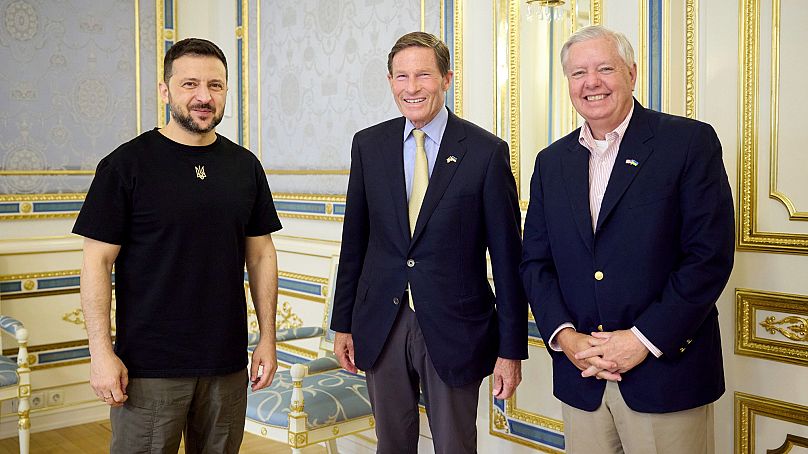
Senators Richard Blumenthal and Lindsey Graham with Ukrainian President Volodymyr Zelenskyy.AP Photo

The European Commission has presented a roadmap to phase out all Russian energy by the end of 2027, but the action plan is still in early stages. Hungary and Slovakia have come out strongly against the roadmap, warning it would imperil competitiveness.

The state of play means that, should the Graham-Blumenthal bill pass and apply as originally conceived, something far from guaranteed at this stage, up to 12 member states could be subject to a punitive 500% tariff when they sell to the American market.

Both goods and services could be targeted, further spreading the pain across the many corners of the economy. The 500% tariff would come "in addition" to anti-subsidy and anti-dumping duties already in place.

Primary and secondary sanctions should remain in place until "the Government of the Russian Federation has entered into a peace agreement with Ukraine", the law says.

The offices of Graham Blumenthal did not reply to a request for comment.

Making it work


In Brussels, the Senate bill is seen as a double-edged sword.

On the one hand, it is considered a welcome initiative to tighten the screws on the Kremlin, something that President Donald Trump has until now refused to do. On the other hand, it is an explosive gamble that could exacerbate transatlantic turmoil and ravage export-dependent sectors overnight.

If introduced, the secondary tariffs would throw a grenade right into the ongoing trade talks between the Commission and the White House.

Both sides have set a 9 July deadline to strike an agreement. Otherwise, Trump has threatened to slap an across-the-board 50% tariff on all EU-made goods.

"We try to coordinate with the US on sanctions to the extent possible because the more we join on that front, the bigger impact we can have," a Commission spokesperson said when asked about the Graham-Blumenthal bill, without commenting on the devastating effects it could have on parts of the EU economy.

"So coordination in that sense, in the various fora, does take place."

But there is a glimmer of hope for Brussels: the draft law offers the possibility for the president to grant a 180-day exemption from the 500% tariff to a country, good or service – as long as doing so is justified for "national security interests".

The one-time waiver would be left entirely at Trump's discretion: the president would be able to hand-pick whom he saves and whom he punishes. This would give individual member states a chance to visit the Oval Office and lobby for a reprieve, a ritual that Trump appears to enjoy, particularly when cameras are present.

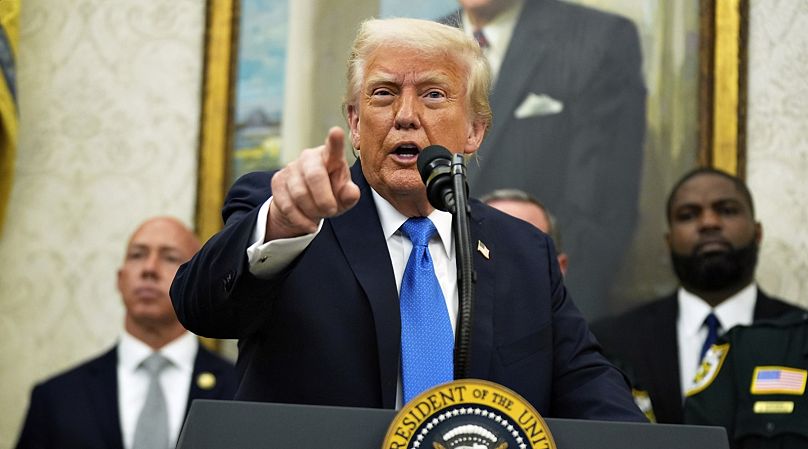
Donald Trump has refused to apply new sanctions against Russia.Manuel Balce Ceneta/Copyright 2025 The AP. All rights reserved.

The question of enforcement might also dent the impact on the bloc.

Maria Shagina, a senior fellow at the International Institute for Strategic Studies (IISS), believes implementing the 500% tariffs would be logistically challenging, if not impossible, due to the numerous countries that regularly purchase Russian energy. The list of clients features some of America's strategic partners, like India and Turkey.

"Would the US monitor exports of these fossil fuels, and if so, how? Would it impose blanket bans on all goods imported from countries that import Russian fossil fuels? How does this square with an all-out trade war against allies and adversaries alike?" she asked.

The law, Shagina noted, should be seen in the context of American politics and Trump's much-publicised mission to achieve a settlement between Russia and Ukraine, which has made limited progress since his first phone call with Vladimir Putin in February.

"The bill does not seek to put congressional pressure on Russia independently of Trump's actions regarding Russia," Shagina told Euronews.

"Rather, it aims to support Trump's rhetoric on Russia."
Spanish minority language question echoes across Europe

Spain is continuing to push for greater recognition of its regional languages at EU level, but it's far from alone among countries wresting with a multilingual population where some feel less recognised.


Copyright AP Photo

By Marta Iraola Iribarren
Published on 28/05/2025 

Spain failed on Monday to obtain the necessary unanimity to elevate Catalan, Galician and Basque into official languages of the European Union, as several member states raised concerns over the administrative and legal implications of such an unprecedented move.

One of the main arguments against the proposal is that it could set a precedent, leading to similar demands from other countries with minority languages.

Across Europe, between 40 and 50 million people speak around 60 regional and minority languages.

However, only a handful of countries recognise these languages as co-official, allowing them to be used in government, administration, and public institutions on an equal footing with the majority spoken language.

Spain

In Spain, Basque, Catalan and Galician, enjoy strong legal protections in their respective autonomous communities and are widely used in education, government, and media.

Catalan is spoken by approximately 7.5 million people, primarily in Catalonia and it is one of the most widely spoken minority languages in Europe.

It is also spoken, to a lesser extent, in parts of France and Italy.

Around 1 million people speak Basque in the regions of the Basque Country and Navarra. It also has speakers in the French Basque country where it is not recognised as an official language, while around 2 million people speak Galician.

The Netherlands

While Dutch is the national language, the northern province of Friesland is home to Frisian, which is recognised as the region’s second official language.

Frisian comprises three branches across the Netherlands and Germany, West Frisian, East Frisian, and North Frisian, the latter being most prominent, spoken by an estimated 4,000 to 10,000 people.

The German government, however, does not officially recognise Frisian as an administrative language.

Portugal

Portugal also has a regional co-official language: Mirandese.

Spoken in the region of Miranda do Douro, it is officially recognised by the Portuguese government as one of the two languages of the country.

A 2020 study by the University of Vigo estimated that around 3,500 people knew the language, with only about 1,500 actively using it.
Finland

In the northernmost regions of Finland, approximately 2,000 people speak Sámi as their native language. This figure includes speakers of Northern Sámi, Inari Sámi, and Skolt Sámi.

Sámi is also spoken in Sweden, where estimates suggest that between 7,000 and 9,000 people use some form of the language, although official language data is not recorded in population registers.

Indigenous parliaments in Sweden, Finland, and Norway have raised concerns about the endangered status of several Sámi languages, including Pite Sámi and Ume Sámi, each with fewer than 50 speakers.
Italy

French, German, Ladin, Slovene and Catalan are also recognised as co-official to Italian in certain regions or municipalities of Italy.

Many are more widely spoken outside the country. French, German and Slovene are main languages in their respective countries and Catalan is mostly used in Spain.

Ladin is mainly spoken in the Dolomite Mountains in Northern Italy in the provinces of South Tyrol, Trentino, and Belluno, by the Ladin people.
Seven dead after migrant boat capsizes near Canary Islands, emergency crews say

The Spanish archipelago located off Africa's western coast has for years been a main route, and a deadly one, for migrants trying to reach Europe.


Copyright AP Photo

By Gavin Blackburn with AP
Published on 28/05/2025

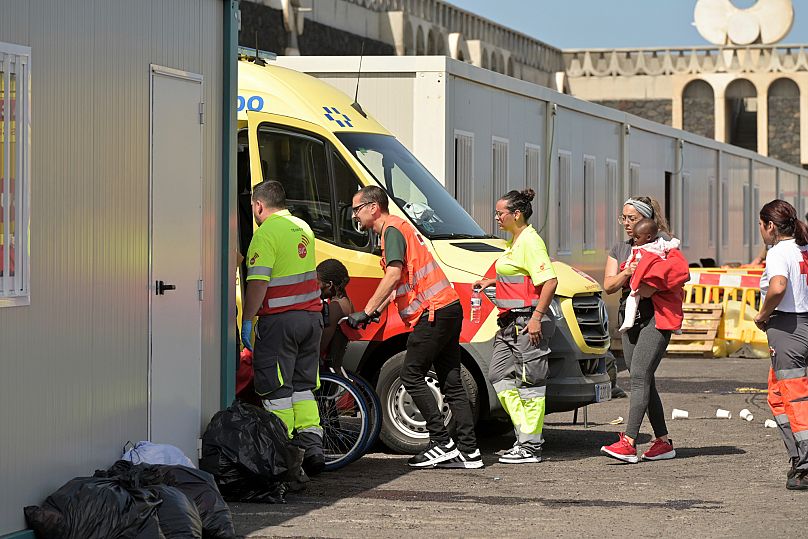
Four women and three girls died on Wednesday when a small boat carrying migrants capsized while arriving to port in the Canary Islands, emergency services in Spain said.

Spain's maritime rescue service, which located the boat some 9.6 kilometres from shore, said the boat tipped over as rescuers started removing children as it arrived at a dock on the island of El Hierro.

Local media said the small boat appeared to be packed with more than 100 people.

Spanish rescuers and members of the Red Cross were involved in a rescue operation, pulling several people out of the water.

The Spanish archipelago located off Africa's western coast has for years been a main route for migrants trying to reach Europe.

But it's also one of the world’s most dangerous with the Spanish migrants' rights group Caminando Fronteras (Walking Borders) saying in a January report that more than 10,000 people had died last year trying to reach the archipelago.

Survivors of a capsized boat are transported by rescue workers in the port of El Hierro in the Canary Islands, 28 May, 2025AP Photo

But a record number of migrants were more lucky, with authorities in the Canary Islands saying more than 43,000 people had arrived there in 2024.
Several EU member countries have started to update their migration policies, just as migration also comes at the top of the European Council's agenda.

In a letter to EU member states, European Commission President Ursula von der Leyen proposed speeding up the return of asylum seekers and opening detention centres in third countries, following the precedent set by Italian Prime Minister Giorgia Meloni's controversial agreement with Albania.

Meanwhile, the Spanish government announced last year the opening of an emergency reception centre at Ciudad Real airport to deal with asylum requests from irregular arrivals.

And in March, Madrid adopted a measure to redistribute thousands of unaccompanied migrant minors currently sheltered on the Canary Islands to other parts of Spain.

The reform ended a months-long political stalemate between Spain's regions and the central government and was aimed at easing pressure on overcrowded migrant reception centres, mainly in the Canary Islands.

For several months, local leaders in the Canaries had complained about a lack of resources to shelter the thousands of unaccompanied children and teenagers who reach their shores.

The Canary Islands are sheltering more than 5,000 unaccompanied minors across the archipelago.


Racial profiling still rife across the EU, Council of Europe says

New technologies such as facial recognition could worsen the problem, experts have suggested.


Copyright Claude Paris/Copyright 2021 The AP. All rights reserved.

By Lauren Walker
Published on 28/05/2025 -

Law enforcement officials across Europe continue to use racial profiling, the Council of Europe's human rights monitoring body (ECRI) has warned.

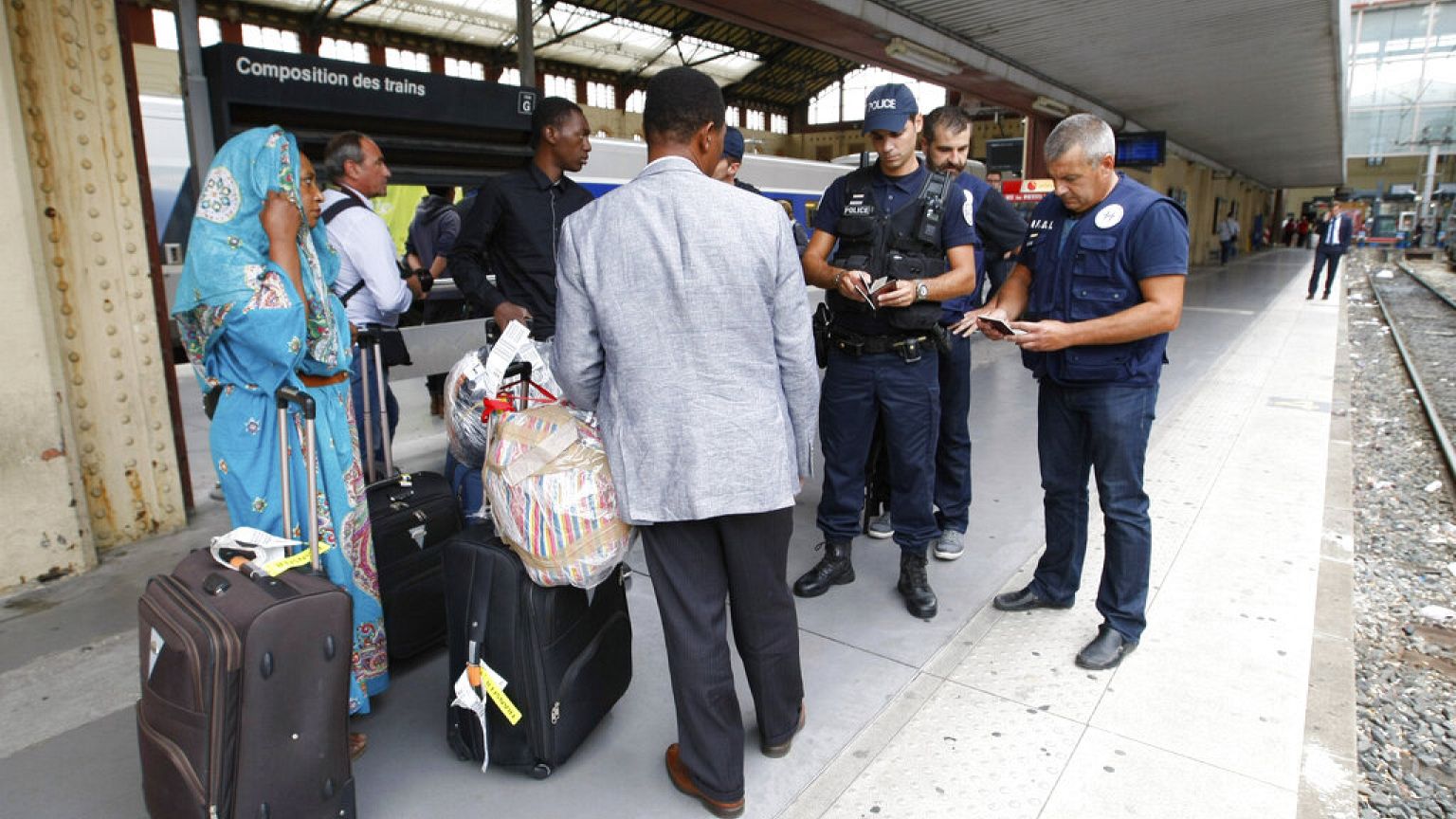
In a report published on Wednesday, the ECRI said the practice — which sees officials act on ethnic background, skin colour, religion or citizenship rather than objective evidence — persists both in stop-and-search policing and at border controls.

"We've noticed that no member state of the Council of Europe is really immune when it comes to racial profiling," Bertil Cottier, chair of the European Commission against Racism and Intolerance (ECRI), told Euronews.
Concerns over new technologies

Experts are concerned about law enforcement agencies' plans to make extensive use of facial recognition technology. Adequate safeguards need to be introduced first, they say

Despite the strict European framework outlined in the Artificial Intelligence Act, which came into force in August 2024, practices vary across different member states.

French police, for example, have been routinely using facial recognition on the streets for many years, and Belgium is looking into systematically introducing the controversial technology for "tracking convicted and suspected offenders".

The Council of Europe pointed to research indicating that such technology risks misidentifying individuals.

"It is a concern for us. New technologies are always a problem when it comes to discrimination issues," said Cottier. "We fear that if new technologies are abused then it will enhance the problem."

For this reason, the ECRI watches over emerging technologies.

The Council of Europe has adopted a framework convention on AI and human rights.

"One committee of the Council of Europe is dealing with anti-discrimination issues and is preparing a specific recommendation on the field of AI and discrimination," said Cottier.
Countries failing to deal with police racial profiling, CoE says

The ECRI report does not cite situations in specific countries.

However, in the past, the body has published country-specific reports.

In France, for example, the ECRI has long recommended that authorities introduce an effective system of recording identity checks by law enforcement officers.

Last year, the Council of Europe organised a round table with the French authorities, police forces and NGOs to discuss the recommendation.

"France is one country of concern when it comes to racial profiling," said Cottier.

"But still we noticed a couple of months ago sadly that our recommendation on combating racial profiling — in particular on tracing the police officers who (incorrectly) stopped people — has been ignored so far," Cottier added.

France's highest administrative court ruled in 2023 that the state was failing to deal with the widely documented practice of racial profiling by the police.

NGOs have warned that the practice damages the relationship between the police and the public. So does the ECRI, which said in its report that "racial profiling generates a feeling of humiliation and injustice in society".

"Such practices jeopardise the work of law enforcement officials who comply with the law and police ethics standards, and who are committed to combating racism and racial discrimination," the ECRI experts wrote.

Italian government hits back against study

Italy is another country of concern.

"During our visit to Italy we noticed some cases of racial profiling within the police forces. We made a recommendation to the Italian government to take this issue seriously," Cottier noted.

Here, racial profiling by law enforcement especially targets the Roma community and people of African descent.

An October 2024 report urged Italy to carry out an independent study to assess the level of racial profiling within its police forces.

However, the Italian government hit back against it.

Italy's Premier Giorgia Meloni defended the “men and women who, every day, work with dedication and self-sacrifice to ensure the safety of all citizens, without distinction".

Meanwhile, Deputy Prime Minister Matteo Salvini called the ECRI “a useless body".

Cottier regrets this response. "They had the impression that we denounced Italy and the Italian police by saying they committed racial profiling. In fact, we just asked the Italian government to assess the problem," he said.

It remains a delicate issue, the ECRI chair acknowledged. "We don't want to counter the police. We know that we need them and we want to trust them. That's why it's sometimes very difficult to make states aware of this issue," Cottier concluded.
Severe flooding cripples Romania's historic Praid salt mine

Heavy flooding in Romania's Harghita County has caused critical conditions at the historic Praid salt mine, a major tourist attraction.


Copyright Mti/Papp Gábor

By Sandor Zsiros
Published on 28/05/2025

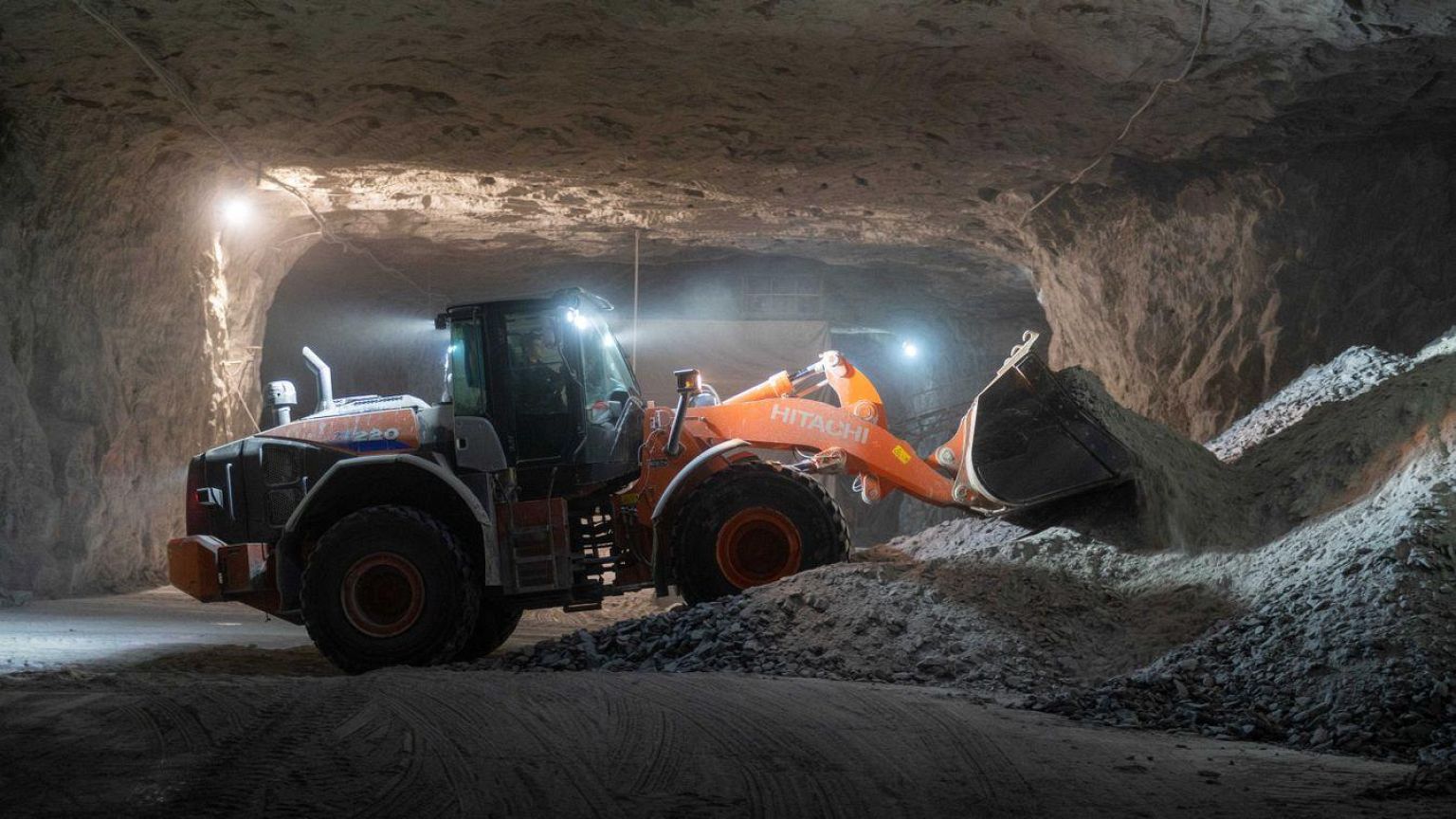
Heavy flooding in Romania's Harghita County — the worst in the past three decades — has led to critical conditions at the historical Praid salt mine, one of Europe's largest salt reserves and a major tourist attraction in the country, authorities said.

According to County Prefect Petres Sandor, the inflow of water is uncontrollable.

"We lost the fight with nature. The water has started to enter the salt mine again, with a flow that cannot be controlled at the moment," Sandor told local press.

"Authorities will carry out an expertise as soon as possible to establish the condition of the walls, the pillars inside the mine, and to decide what to do next," he added.

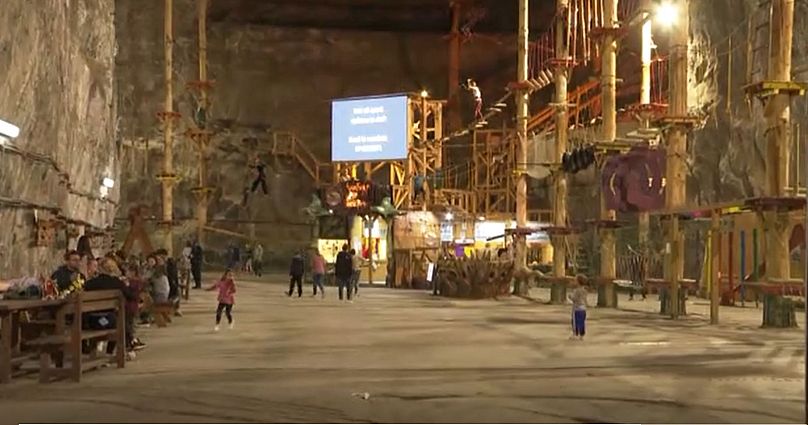
The Praid salt mine dates back to Roman times. In recent times, the attraction on the Via Transilvanica long-distance trail also served as a medical centre and a tourist destination, including an adventure park, a cinema, a small museum and other facilities, all located some 120 metres underground.

Scope of damage remains unclear

The authorities are yet to determine the extent of the salt mine emergency and the impact of the flooding.

"The situation is complicated. When water comes into contact with the salt, it immediately melts it and makes a hole," Sorin Rindasu, head of the Emergency Situations department in the Romanian Waters Administration, said.

The flow of the Corund stream increased, resulting in the water further pouring into the mine, he added.

Authorities say that although the situation is critical, the flooding will not destabilise the entire mine.

"it would take quite a while for the water to dissolve so much salt inside to pose a problem of stability, we are talking about months, years, not days, weeks, in any case," Sandor said.

Archive picture of the visitor centre inside the Praid Salt mine in Romania 
Zsiros, Sandor/

In recent years, water leaks have already posed a problem to the mine, and authorities have carried out works to prevent infiltration.

The Romanian government offered assistance to the region to deal with the emergency situation, and the ministry of economy assured the residents that it would make further investments to reduce the impact of the salt mine's flooding on Romanian tourism and reopen the mine for visitors.
MISOGYNISTIC TOXIC MASCULINITY ONLINE

Influencer Tate brothers charged with rape and trafficking in the UK, prosecutors say

The charges were authorised in January last year but the Crown Prosecution Service said this is the first time it confirmed the two had been criminally charged in Britain.


Copyright AP Photo

By Gavin Blackburn with AP
Published on 28/05/2025 - 21:04 GMT+2

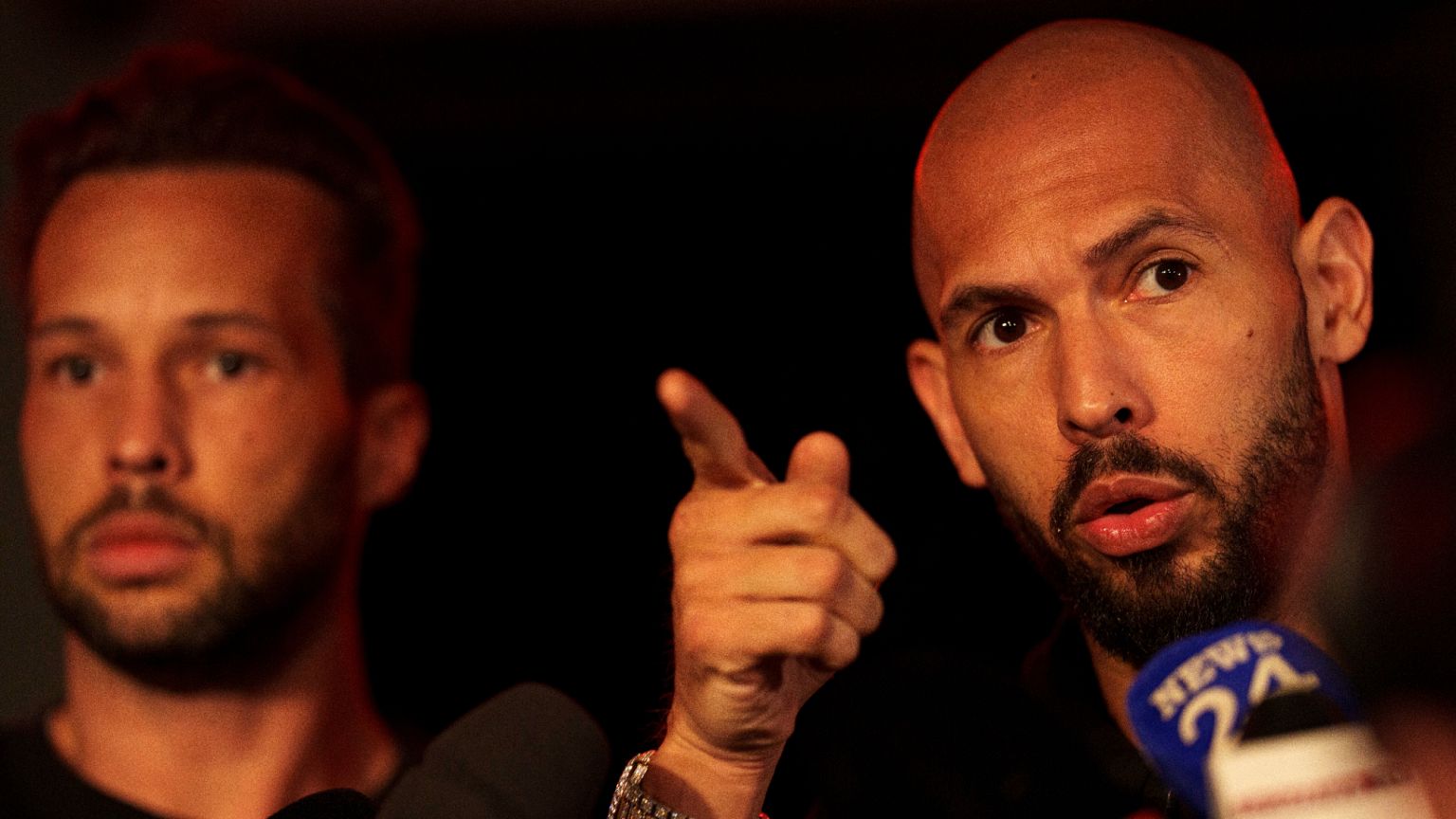
Influencer brothers Andrew and Tristan Tate have been charged in the United Kingdom with rape and other crimes, prosecutors have said.

The charges were authorised in January last year and news media at the time reported on arrest warrants issued against the brothers, dual US and British citizens who moved to Romania in 2016.

But the Crown Prosecution Service said this was the first time it confirmed the two had been criminally charged in Britain.

Andrew Tate, 38, faces 10 charges related to three women that include rape, actual bodily harm, human trafficking and controlling prostitution for gain.

Tristan Tate, 36, faces 11 charges related to one woman that include rape, human trafficking and actual bodily harm.

Andrew Tate and his brother Tristan, top left, arrive at a police station in Voluntari, 21 May, 2025AP Photo

A spokesperson for the two had no immediate comment when reached by The Associated Press.

The brothers are both former professional kickboxers who have millions of followers on social media.

Andrew is more well-known, having drawn a larger following with his unapologetic misogyny that has drawn boys and young men to the luxurious lifestyle he projects.

The Tates were arrested in Romania in late 2022 and formally indicted last year on charges that they participated in a criminal ring that lured women there, where they were allegedly sexually exploited.

Andrew Tate was also charged with rape. They have denied all the allegations in Romania.

Related

Romanian courts have issued an order to extradite the two to the UK once their court case is concluded in there, British prosecutors said.

The warrant issued by Bedfordshire Police for the siblings dates back to between 2012 and 2015.

The whereabouts of the brothers is not immediately clear.

They were photographed a week ago outside a police station in Voluntari, Romania, where they have to report regularly while facing charges there.
Slovakia’s central bank chief convicted of bribery and fined $225,000

WHITE COLLAR CRIME DOES NO TIME

By The Associated Press
Published: May 29, 2025 

Slovakia's central bank (NBS) governor Peter Kazimir during a press conference in Bratislava, June 29, 2020. (Martin Baumann/TASR via AP)

BRATISLAVA, Slovakia — Slovakia’s central bank chief, who is a member of the European Central Bank committee that decides monetary policy for 20 countries, was convicted of bribery and fined 200,000 euros (US$225,000) on Thursday.

The verdict against central bank Gov. Peter Kažimír was issued by Judge Milan Cisarik at the country’s Special Criminal Court in Pezinok.

Kažimír’s attorneys argued that he should have been acquitted because of the recent changes in Slovakia’s penal code, which reduced punishment for corruption and that recently ended a number of corruption cases and trials.

Kažimír wasn’t present at the court. He said in a statement that he would appeal. His six-year term in office expires on Sunday.

Kažimír was accused of paying a bribe of 48,000 euros ($54,000) at the turn of the year in 2017-18 to the head of the country’s tax office in connection with a tax audit of several private companies.

At the time, Kažimír was acquiring a luxury villa located in an upscale neighborhood of Bratislava, the capital, from the owner of the companies.

Kažimír, who pleaded not guilty, had previously said that he considered the charges to be illegal and fabricated.

The case dates to when Kažimír served as finance minister in the leftist government of populist Prime Minister Robert Fico from 2012 to 2019. He was a member of Fico’s Smer, or Direction, party before taking the central bank job.

Smer lost the 2020 general election and was replaced by a coalition government whose parties campaigned on an anti-corruption ticket.

Since that government took power, a number of people linked to Fico’s party faced prosecution in corruption scandals.

Kažimír was the first minister of Fico’s government to stand trial.

Slovakia is one of 20 countries that use the euro currency, and Kažimír is a member of the ECB’s governing council, its main decision-making body.

A number of people linked to the prime minister’s party faced prosecution in corruption scandals.

Fico returned to power for the fourth time in 2023 after his leftist party Smer won the Sept. 30 parliamentary election on a pro-Russia and anti-American platform.

In February 2024, lawmakers loyal to Fico’s new coalition government approved changes to the penal code and eliminated the office of the special prosecutor that deals with major crime and corruption.

The legislation faced sharp criticism at home and abroad while thousands of Slovaks repeatedly took to the streets to protest.


The changes include a reduction in punishments for corruption and some other crimes, including the possibility of suspended sentences, and a significant shortening of the statute of limitations.

The Associated Press
CRIMINAL CRYPTO  CAPITALI$M
Why ‘wrench attacks’ on wealthy crypto holders are on the rise

By The Associated Press
 May 28, 2025 

New York police officers arrest John Woeltz, May 23, 2025, in New York, who was charged with kidnapping, assaulting and holding a man against his will for several weeks in an upscale Manhattan town house.(AP Photo/Kava Gorna via AP)

The headline-grabbing tale of an Italian man who said he was kidnapped and tortured for weeks inside an upscale Manhattan townhouse by captors seeking his bitcoin highlights a dark corner of the cryptocurrency world: the threat of violence by thieves seeking digital assets.

The alleged attempted robbery is known as a “wrench attack.” It’s a name popularized by an online comic that mocked how easily high-tech security can be undone by hitting someone with a wrench until they give up passwords.

Wrench attacks are on the rise thanks in part to cryptocurrency’s move into mainstream finance, Phil Ariss of the crypto tracing firm TRM Labs said in a recent blog post.

“Criminal groups already comfortable with using violence to achieve their goals were always likely to migrate to crypto,” Ariss said.

Some of the crypto’s key characteristics help explain why wealthy individuals who hold a lot of digital assets can be ripe targets for such attacks.

The draw

Cryptocurrencies like bitcoin offer traders full control of their funds without the need for a bank or permission from a government to buy, sell or hold it. The trade-off is that if funds are lost or stolen, there can be no way to get them back.

Self-reliance is a key ethos of crypto. Securing and controlling one’s private keys, which are like passwords used to access one’s crypto holdings, is viewed as sacrosanct among many in the crypto community. A popular motto is “not your keys, not your coins.”

Transactions on the blockchain, the technology that powers cryptocurrencies, are permanent. And unlike cash, jewelry, gold or other items of value, thieves don’t need to carry around stolen crypto. With a few clicks, huge amounts of wealth can be transferred from one address to another.

In the case in New York, where two people have been charged, a lot of details have yet to come out, including the value of the bitcoin the victim possessed.
Crypto thefts

Stealing cryptocurrency is almost as old as cryptocurrency itself, but it’s usually done by hacking. North Korean state hackers alone are believed to have stolen billions of dollars’ worth of crypto in recent years.

In response to the threat of hacking, holders of a large amount of crypto often try and keep their private keys off the internet and stored in what are called “cold wallets.” Used properly, such wallets can defeat even the most sophisticated and determined hackers.

But they can’t defeat thieves who force a victim to give up their password to access their wallets and move money.

The case in New York is the latest in a string of high-profile wrench attacks. Several have taken place in France, where thieves cut off a crypto executive’s finger.

Mitigation

Experts suggest several ways to mitigate the threats of wrench attacks, including using wallets that require multiple approvals before any transactions.

Perhaps the most common way crypto-wealthy individuals try to prevent wrench attacks is by trying to stay anonymous. Using nicknames and cartoon avatars in social media accounts is common in the crypto community, even among top executives at popular companies.

Alan Suderman, The Associated Press