Wednesday, July 02, 2025

TRUMPNOMICS

US private sector shed jobs for first time in recent years: ADP


By AFP
July 2, 2025


US private sector employers lost 33,000 jobs in June, according to payroll firm ADP 
Copyright AFP/File Frederic J. BROWN

Beiyi SEOW

The US private sector unexpectedly lost jobs in June, according to data from payroll firm ADP on Wednesday, a potential sign of labor market weakness amid uncertainty from President Donald Trump’s tariffs.

It was the first such decline in recent years, in data that will be scrutinized ahead of government employment numbers due to be released a day later.

As companies grapple with uncertainty from Trump’s shifting tariff policies — alongside supply chain disruptions and added cost pressures — analysts are watching for signs that the world’s biggest economy may be less solid than expected.

Private sector employment declined by 33,000 last month, ADP said, while job growth in May was revised lower to 29,000.

“Though layoffs continue to be rare, a hesitancy to hire and a reluctance to replace departing workers led to job losses last month,” ADP chief economist Nela Richardson said in a statement.

But she maintained that the hiring slowdown “has yet to disrupt pay growth.”

The losses came about in areas like professional and business services, alongside education and health services.

But sectors like leisure and hospitality, alongside manufacturing, showed gains, ADP said.

Meanwhile, pay growth held steady, according to the report.

For those who remained in their jobs, annual pay gains were little-changed at 4.4 percent. Increases for those who changed jobs was 6.8 percent in June, slowing slightly.

The last massive contraction in private sector employment came about during the pandemic, while ADP historical data indicates a smaller loss in early 2023.

Analysts have cautioned that the ADP data sometimes differ significantly from official numbers.

But the decline still marked a concerning development, they said.

Since returning to the presidency, Trump has imposed a sweeping 10 percent tariff on almost all US trading partners and higher levels on imports of steel, aluminum and autos.

The president’s approach of unveiling, then adjusting or pausing duties, has also sent shocks through supply chains.


– ‘Startling’ –


“The ADP headline figure is well below market expectations, and the optics of a decline is startling,” said Carl Weinberg, chief economist at High Frequency Economics.

“Whether this report is accurate or not, traders and investors will read today’s number as a dark result for trading today,” he added in a note.

Among different types of companies, the decline in June was riven by smaller and medium-sized businesses, ADP data showed.

“We could be in for a downside surprise in Thursday’s official jobs report,” warned LPL Financial chief economist Jeffrey Roach.

While he believes ADP’s forecasting value is “minimal on a monthly basis,” it can be helpful in determining long term trends.

Adam Sarhan from 50 Park Investments said it is the first time in recent months that the US jobs market has disappointed and contracted.

“That is worrisome because up until now unemployment has been low and jobs have been strong and growing,” Sarhan said.

Weinberg cautioned that companies are likely to respond to the chances of a tariff-induced hike in costs by “becoming more aggressive about trimming their workforces.”

“This may be the tip of an iceberg, but it also could be a false start,” he said.
Drought-hit Morocco turns to desalination to save vegetable bounty


By AFP
July 2, 2025


Farmers irrigate their field in the Chtouka region of southern Morocco - Copyright AFP Abdel Majid BZIOUAT

Kaouthar Oudrhiri

On the drought-stricken plains of Morocco’s Chtouka region, cherry tomato farms stretch as far as the eye can see, clinging to life through a single, environmentally contentious lifeline: desalination.

“We wouldn’t be here without it,” said Abir Lemseffer, who manages production for the tomato giant Azura.

Severe drought driven by climate change has gripped the North African country since 2018, leaving Azura’s 800 hectares (2,000 acres) of farms entirely dependent on desalinated water.

But the technology comes at a high cost — both financially and environmentally.

It is energy-intensive, and in a country where more than half of the electricity still comes from coal, it carries a heavy carbon footprint.

Since 2022, Morocco’s largest desalination plant, located nearby, has been producing 125,000 cubic metres (4.4 million cubic feet) of water a day.

The supply irrigates 12,000 hectares of farmland and provides drinking water for 1.6 million people in Agadir and surrounding areas, said Ayoub Ramdi of the regional agricultural development office.

By the end of 2026, officials hope to boost production to 400,000 cubic metres of water, half of which would be designated for agriculture.

Without that water, “a catastrophic scenario would loom over Morocco”, said Rqia Bourziza, an agronomist.

Agriculture, which contributes about 12 percent to Morocco’s overall economy, has been badly hit by six consecutive years of drought — prompting the country to go all-in on desalination.

Across Morocco, there are 16 plants capable of producing 270 million cubic metres of water per year, with a target of reaching 1.7 billion cubic metres by 2030.


– Pricey water –


While around 1,500 farmers in the Agadir region make use of the water provided by the plant, others don’t because it’s simply too expensive.

Among them is Hassan, who grows courgettes and peppers on half a hectare of land and uses water from a well shared with 60 other farmers.

“I can’t afford to use that water,” he said, declining to give his full name.

Desalinated water is sold at $0.56 per cubic metre, excluding taxes, compared with $0.11 per cubic metre for conventional water.

That hefty price tag comes despite a 40 percent subsidy from public coffers.

Ali Hatimy, another agronomist, said “the cost of desalinated water significantly reduces the range of potential crops because only very high-value-added crops can offset it”.

Bourziza insisted that desalination was “a very good alternative” but only for high-value crops such as tomatoes and orchard fruits.

Beyond the financial cost, desalination also exerts an environmental cost, said Hatimy.

“The production of desalinated water requires tremendous amounts of electrical energy and brine discharges impact marine ecosystems,” he said.

Highly concentrated brine is a byproduct of the desalination process.

Ramdi, from the agricultural development office, said that “no impact” had been observed in the waters around Agadir, adding that the brine was diluted before its release.

While Morocco has a growing share of renewable energy, 62 percent of its electricity came from coal in 2023 and 14 percent from oil and gas, according to the International Energy Agency.


– Insufficient groundwater –


The stakes in the wider region of Souss-Massa, which accounts for 85 percent of Morocco’s fruit and vegetable exports, are high.

Nearly two million tonnes are produced each year, with a turnover of $1.1 billion.

Ramdi said the desalination plant had thus helped to protect $1 billion of revenue a year and more than a million jobs.

“Desalination has saved agriculture in Chtouka,” said Mohamed Boumarg, walking through one of his tomato greenhouses.

“Before, I only cultivated five hectares because I was constrained by the amount of water I had. Groundwater was not sufficient,” said the 38-year-old farmer who now grows 20 hectares of tomatoes, with 60 percent of his crop marked for export.

“Our survival depends on it,” said Lemseffer of Azura. “Either we accept sacrificing some of our margin by using desalinated water, or we close up shop.”
Indonesia free meal plan stunted by delays, protests, poisonings


By AFP
July 3, 2025


Indonesian President Prabowo Subianto touted a billion-dollar free meal programme as a solution to the high rates of stunted growth among children
 - Copyright AFP BAY ISMOYO

Dessy SAGITA

When an Indonesian mother dropped off her daughter at school in May, she did not expect her to become violently sick after eating lunch from the government’s new billion-dollar free meal programme.

“My daughter had a stomachache, diarrhoea, and a headache,” the woman told AFP on condition of anonymity about the incident in the Javan city of Bandung.

“She also couldn’t stop vomiting until three in the morning.”

Indonesian President Prabowo Subianto touted the populist scheme as a solution to the high rates of stunted growth among children, as he carved his way to a landslide election victory last year.

But its rollout since January has stumbled from crisis to crisis, including accusations of nepotism, funding delays, protests and a spate of food poisonings.

It was slated to reach as many as 17.5 million children this year to the tune of $4.3 billion.

But so far it has only served five million students nationwide from January to mid-June, according to the finance ministry.

The poisoning issues were not isolated to that girl’s school — five others reported similar incidents.

But Prabowo has lauded the number of illnesses as a positive.

“Indeed there was a poisoning today, around 200 people out of three million,” he said in May.

“Over five were hospitalised, so that means the success rate is 99.99 percent. A 99.99 percent success rate in any field is a good thing.”


– Rushed policy –


Large-scale aid programmes in Indonesia have a history of allegations of graft at both the regional and national levels.

Experts say this programme is particularly vulnerable, with little in the way of accountability.

“A big budget means the possibility of corruption is wide open, and with lax monitoring, corruption can happen,” said Egi Primayogha, a researcher at Indonesia Corruption Watch.

“Since the beginning, the programme was rushed, without any good planning. There is no transparency.”

The programme was rolled out soon after Prabowo took office in October and local investigative magazine Tempo reported that “several partners appointed” were Prabowo supporters in the election.

Agus Pambagio, a Jakarta-based public policy expert, said Prabowo rushed the plan, with critics saying there was little public consultation.

“Japan and India have been doing it for decades. If we want to do it just like them within a few months, it’s suicide,” he said.

“We can’t let fatalities happen.”

The plan’s stated aim is to combat stunting, which affects more than 20 percent of the country’s children, and reduce that rate to five percent by 2045.

Prabowo’s administration has allocated $0.62 per meal and initially set a budget of 71 trillion rupiah ($4.3 billion) for this year.

But authorities have been accused of delays and under-funding the programme.

A catering business in capital Jakarta had to temporarily shut down in March because the government had not paid the $60,000 it was owed. The case went viral and it eventually got its money back.


– Poses risks –


The government announced a $6.2 billion budget boost recently but revised it by half as problems mounted in its ambitious quest to deliver meals to almost 83 million people by 2029.

Widespread cuts to fund the programme’s large budget also sparked protests across Indonesian cities in February.

Yet some say the programme has benefited their child.

“It’s quite helpful. I still give my son pocket money, but since he got free lunch, he could save that money,” Reni Parlina, 46, told AFP.

However a May survey by research institute Populix found more than 83 percent of 4,000 respondents think the policy should be reviewed.

“If necessary, the programme should be suspended until a thorough evaluation is carried out,” said Egi.

The National Nutrition Agency, tasked with overseeing free meal distribution, did not respond to an AFP request for comment.

The agency has said it will evaluate the scheme and has trained thousands of kitchen staff.

Kitchen partners say they are taking extra precautions too.

“We keep reminding our members to follow food safety protocols,” said Sam Hartoto of the Indonesian Catering Entrepreneurs Association, which has 100 members working with the government.

While they seek to provide assurances, the debacles have spooked parents who doubt Prabowo’s government can deliver.

“I don’t find this programme useful. It poses more risks than benefits,” said the mother of the sick girl.

“I don’t think this programme is running well.”
Congress targets TikTok. 
YouTube and Instagram cash in

ByDr. Tim Sandle
July 2, 2025
DIGITAL JOURNAL


In a major defeat for TikTok, the US Supreme court ruled that the US government had demonstrated legitimate national security concerns about a Chinese company owning TikTok - Copyright AFP SAUL LOEB

In April 2025, the U.S. House passed legislation requiring TikTok’s parent company ByteDance to divest its U.S. operations by November or face a nationwide ban. This move, dubbed by some lawmakers as the “Digital Sovereignty Act,” comes after months of intelligence briefings and escalating tensions over data privacy, election interference, and algorithmic influence.

Within six weeks, the aftershocks reshaped the creator economy and global brand strategy. According to the 2025 Social Media Benchmark Report, YouTube and Instagram have seen surges in creator uploads, ad spend, and platform engagement, especially in the U.S., EU, and Asia-Pacific markets, places where TikTok’s dominance once seemed unshakeable.

From Washington to New Delhi: Governments Clamp Down

The U.S. is not alone in its scrutiny. India continues its full ban on TikTok since 2020, which remains one of the most significant blows to the app’s global market share.

Indonesia introduced a national mandate in March 2025 requiring all social commerce and creator marketplaces to localize data servers—putting TikTok Shop’s operations under review.

France and Germany launched coordinated inquiries into algorithmic transparency and underage data processing.

The UK’s Online Safety Act, enacted in January 2025, includes enforceable age-verification tools and holds platforms legally accountable for “harmful viral content”—with TikTok mentioned by name in recent parliamentary hearings.

Turkey, in April, briefly throttled TikTok’s bandwidth during the country’s election season, citing “electoral disinformation risks,” while Meta and YouTube remained untouched.

Outcome

A negative effect on TikTok’s growth and a redirection of creator and advertiser resources to more stable platforms.

Creator Exodus: From FYP to Future-Proofing

In June 2025, Views4You’s report shows a 19% increase in new YouTube channels launched by U.S.-based influencers previously known for TikTok content. YouTube Shorts—once mocked as a late-to-the-party clone—now commands over 75 billion views per day, with monetization programs offering consistent payouts many creators say they never saw on TikTok.

Instagram has also benefited. The Views4You report notes that Reels engagement in North America rose 23% quarter-over-quarter following the U.S. TikTok vote. Instagram’s Creator Marketplace saw a record number of brand-influencer matchings in May, particularly from fashion, fitness, and wellness sectors that once favored TikTok.

Brands Shift Budgets — and Narratives

The benchmark report shows a 29% decline in brand-sponsored campaigns on TikTok in the U.S. between March and June 2025. In contrast, YouTube and Instagram each saw double-digit growth in branded content deals, with Instagram leading in “launch campaigns” and

For example, Nike shifted its “Back to School 2025” campaign to YouTube Shorts and Instagram Reels exclusively, after running similar campaigns on TikTok in previous years.

Sephora paused all TikTok campaigns in May and announced a “brand safety-first” pivot to YouTube creators.

In addition, Sony Music struck a deal with Meta to promote new artist debuts on Instagram Reels over TikTok, citing “platform uncertainty.”

European approach

In the European Parliament, digital regulators proposed a “Media Source Labelling” framework aimed at tagging state-linked content—TikTok, due to its opaque algorithm and Chinese ownership, is considered a primary target. Overall, politicians continues to use the platform in a very hypothetical way and reshaping the political engagement.
AI reshapes the world of work


By Dr. Tim Sandle
July 2, 2025
DIGITAL JOURNAL


A Star Robotics surveillance robot sits on display during the Consumer Electronics Show (CES) in Las Vegas. — © AFP

For several occupations, AI is no longer a distant threat; it is reshaping job security, skills priorities, and career plans. Some potential outcomes are that AI may replace 300 million jobs, based on McKinsey estimates. In terms of timelines, 41% of companies globally expect to reduce their workforce by 2030 due to AI. More specifically, 53% of IT leaders believe AI will shrink workforces.

This is the assessment from the recruitment firm LiveCareerUK, which has released its Jobs AI Will Replace Report. The report outlines the 10 professions most likely to be displaced by AI. The report also provides some guidance as to what those set to be impacted by the report should do next, which Digital Journal summarises.

To support this, sociology professor Eric Dahlin at Brigham Young University in Utah, U.S., has demonstrated that not only are robots not replacing human workers at the rate most people fear, the rate may well be higher. Dahlin’s data showed about 14% of workers said they had seen their job replaced by a robot.

The roles most likely to lose out

Data Entry Clerks
What to do instead: Reskill in data analysis or data management.
Learn Excel, SQL, or Python to shift into roles that interpret and act on data, not just record it.

Telemarketers
What to do instead: Reskill in digital marketing or customer success
Build skills in CRM tools, social media engagement, and sales strategy to stay valuable in a human-centered sales role.

Basic Customer Service Representatives
What to do instead: Reskill in technical support or customer success
Focus on more complex problem-solving roles that require empathy, expertise, and relationship-building.

Retail Cashiers
What to do instead: Reskill in retail management or supply chain operations
Move into areas that require strategic thinking, leadership, or technical know-how in the retail ecosystem.

Proofreaders and Copy Editors
What to do instead: Reskill in content strategy or digital marketing
Leverage your writing instincts in higher-order tasks like brand storytelling, SEO, and campaign planning.

Paralegals and Legal Assistants
What to do instead: Reskill in legal tech, compliance, or litigation support
Apply your legal knowledge in tech-forward fields that blend law with AI and automation tools.

Bookkeepers
What to do instead: Reskill in financial analysis or advisory roles
Move beyond basic number-crunching to deliver strategic insights that businesses can act on.

Fast Food and Restaurant Frontline Workers
What to do instead: Reskill in culinary innovation or restaurant management
Creativity, leadership, and operations knowledge will always be in demand, even if robots flip the burgers.

Warehouse Workers
What to do instead: Reskill in logistics coordination or warehouse technology roles
Learn to operate, oversee, or improve the systems that are replacing repetitive labor.

Entry-Level Market Research Analysts
What to do instead: Reskill in business analytics or data storytelling
Go beyond data collection by learning to turn insights into decisions with tools like Tableau, Power BI, or Python.

Based on the above trends, it remains that AI’s impact on the job market is a significant concern, with predictions ranging from substantial job displacement to a more nuanced shift in employment.


Why Choosing The Dalai Lama Is Not Just A Spiritual Matter – Analysis

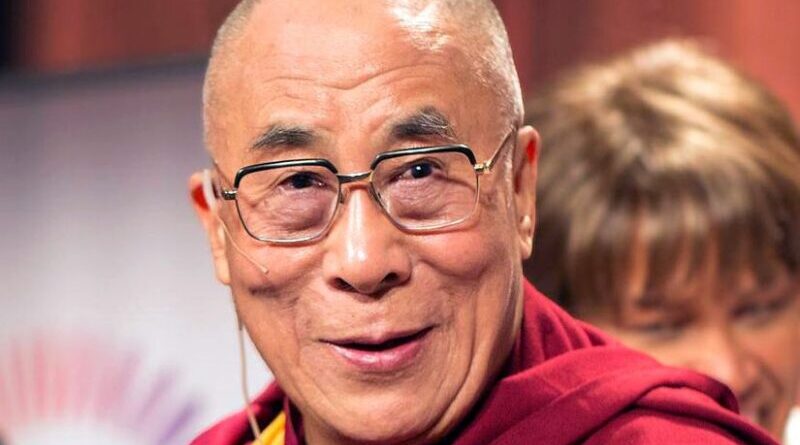
Dalai Lama. Photo by *christopher*, Wikipedia Commons.


By 

By Lobsang Gelek

The Dalai Lama, the spiritual leader of Tibetan Buddhism, said on Wednesday that he will have a successor chosen by a nonprofit he started— not by the Chinese government. Beijing sounded a different note: foreign ministry spokesperson Mao Ning said China had the right to approve the Dalai Lama’s successor. Beijing’s bottom line: whatever spiritual force guides this sacred process must adhere to the strictures of the Chinese Communist Party, or CCP.

If that sounds unholy, that may be the point. China has very practical reasons why it wants a say in who is the next Dalai Lama, given the enormous popularity of the current one and his ability to maintain cohesion among Tibetans across the globe in their fight for greater autonomy for Tibet.

The current Dalai Lama has become an enormously popular figure. Winner of the 1989 Nobel Peace Prize, his international renown has helped maintain a unity among Tibetans in and outside Tibet, despite efforts to negate his influence by the CCP.

Last year, the China Tibetan Buddhist Academy — a Chinese government-supported institution — held a seminar to promote its views on the matter. The seminar re-emphasized the CCP’s policies on reincarnation that must align the system with Xi Jinping thought and party policies.

According to Beijing’s official media, the seminar attendees were Tibetan Buddhism representatives and experts from Tibetan populated areas, including the Tibet Autonomous Region and the provinces of Qinghai, Sichuan and Gansu.

But that quickly triggered a rebuttal from the Tibetan government-in-exile, the institution the current Dalai Lama helped set up in 1959.

“While China recognizes only the Tibet Autonomous Region as the only ‘Tibet,’ they still recruited attendees from other Tibetan populated areas for important issues,” Sikyong Penpa Tsering, the president of the current government, said in response to the seminar.

“No government nor any individual has the right to interfere in the reincarnation of the 14th Dalai Lama,” he added.

Who is the Dalai Lama?

“Lama” means teacher or master, and a lama is essentially a monk who has achieved some renown and taken on a leadership role within a community. There are thought to be hundreds of lamas within Tibetan Buddhism, which incorporates tenets of both traditional Buddhism and shamanistic practices that preceded its creation.

Worshippers consider the Dalai Lama to be the manifestation of Avalokiteshvara (Phakchok Chenri Se-འཕགས་མཆོག་སྤྱན་རས་གཟིགས in Tibetan), the Buddhist source of compassion.

The current Dalai Lama, Tenzin Gyatso, is the 14th in a line that began in 1391. Tibetans believe that when he dies he will be reborn to continue his role as spiritual leader.

Beyond the Dalai Lama’s spiritual significance, thousands of Tibetans who have fled their homeland and were forced to leave behind families view him as a father figure who has provided for their temporal needs as well — security, education, health care — through an exile government he helped create in Dharamsala.

How is a new Dalai Lama selected?

Tibetan Buddhists believe that when the Dalai Lama dies his spirit will reincarnate in a new body. A search committee traditionally composed of high-ranking monks and lamas is formed to find a child born within a year of the Dalai Lama’s death who exhibits exceptional qualities and behaviors akin to his predecessor. The present Dalai Lama was two years old when he was identified.

The method of discovery includes visions, consultations with oracles and interpretations of omens. The child must recognize belongings of the previous Dalai Lama, demonstrating a connection to his past life.

Why is choosing the Dalai Lama controversial?

The process of succession affirms the continuity of Tibetan Buddhist leadership and culture, which is why China seeks to have control over the selection. Choosing the 15th Dalai Lama could help solidify authority over Tibet and provinces where ethnic Tibetans live in large numbers. There are thought to be more than 6 million Tibetans in China, compared to 150,000 in exile.

The China Tibetan Buddhist Academy’s meeting this month attempted to promulgate the Chinese government-preferred process, known as the “Golden Urn Selection.” The method is considered a historical custom popularized during the Qing dynasty, but is disputed by the Tibetan way of recognizing the reincarnated lamas.

A previous effort to control the selection of Tibetan leaders has met only minimal success. In 1995, Chinese authorities kidnapped a 6-year-old Panchen Lama, the second most important figure in Tibetan Buddhism, shortly after he was chosen by the Dalai Lama. The Panchen Lama and the Dalai Lama traditionally participate in each other’s reincarnation recognition process, so many experts believe that Beijing will use its own Panchen to choose the next Dalai Lama.

The person they installed as a replacement continues to be viewed with suspicion by many Tibetans inside and outside China.

What has the Dalai Lama said about his reincarnation?

The Dalai Lama himself has suggested several possibilities for his reincarnation, declaring once that ” If I die in exile, my reincarnation will be born in exile not in Tibet. The statement was viewed as a way to emphasize the importance of spiritual freedom.

He had also raised the possibility that the line would die with him; that a woman for the first time would be chosen; and that he may identify his successor before his death.


RFA

Radio Free Asia’s mission is to provide accurate and timely news and information to Asian countries whose governments prohibit access to a free press. Content used with the permission of Radio Free Asia, 2025 M St. NW, Suite 300, Washington DC 20036.
Teen plotting attacks on women charged in France’s first ‘incel’ case

The man has been charged with terrorist conspiracy 

By AFP
July 2, 2025


A French male, 18, suspected of plotting attacks on women was arrested the DGSI security service in the eastern city of Saint-Etienne - Copyright POOL/AFP STEPHANE DE SAKUTIN

An 18-year-old French man suspected of planning attacks on women has been charged in the country’s first case of a terror plot linked to the misogynist “incel” movement, officials said on Wednesday.

According to a source close to the investigation, the suspect, Timothy G., was arrested on Friday by the DGSI security service near a public high school in the southeastern city of Saint-Etienne.

According to sources close to the case, the suspect was arrested with two knives in his bag and identified himself as a member of the “incel,” or involuntary celibate, subculture.

The “incel” movement is an internet subculture rife with misogyny, with men tending to blame women and feminism for their romantic failings.


They typically target those who they see as attractive or sexually active women.

The National Anti-Terrorism Prosecutor’s Office (PNAT) said that an investigation had been opened on Tuesday “against an 18-year-old man claiming to be part of the ‘incel’ movement”.

The man has been charged with terrorist conspiracy with a view to preparing one or more crimes against persons and imprisoned, the PNAT said.

The involvement of anti-terror prosecutors appears to indicate that French authorities recognise this form of gender-based violence as terrorism.

On Tuesday evening, Timothy G. appeared before a judge who remanded him in custody.

He looked shy and had an almost hairless face and a slender build, according to an AFP journalist.

His lawyer Maria Snitsar described him as “a teenager who is suffering, not a fighter preparing for action”.

According to one of the sources close to the case, the teenager, who wanted to become an engineer, was a fan of misogynist videos on social media, particularly short-video app TikTok.

According to another source close to the case, this is the first time the PNAT has been called upon to investigate a man who exclusively identifies as part of the “incel” subculture.

The concept had previously appeared only marginally in at least two cases handled by the anti-terrorism prosecutor’s office.
French court convicts ex-Ubisoft bosses for workplace harassment


By AFP
July 2, 2025


Thomas Francois received the heaviest sentence - Copyright AFP/File Frederic J. BROWN

A French court sentenced three former Ubisoft executives on Wednesday to suspended prison terms for enabling a culture of sexual and psychological harassment at the gaming giant.

Thomas Francois, a former editorial vice president who was also convicted on a charge of attempted sexual assault, received the heaviest sentence of a suspended three-year term.

Among the three defendants, he faced the most damning allegations, including forcing an employee to do a headstand while in a skirt.

During the trial, the court heard that Francois would greet employees using inappropriate names, attempt to touch people’s genitals as part of a so-called “game”, and try to kiss male employees by surprise.

Francois testified during the trial that he “lacked perspective” during the incidents from 2012 to 2020, when he was aged 38 and 46, saying he believed at the time that he was “treating people with respect”.

For his part, former chief creative officer Serge Hascoet was given an 18-month suspended sentence for psychological harassment and complicity in sexual harassment.

Hascoet told the court he was unaware of the harassment happening outside of his glass office.

But he also instructed his female assistants to perform personal tasks for him not linked to their qualifications, such as picking up his daughter from school or crossing Paris to buy him peanuts, justifying the behaviour as something typically “seen in movies”.

A third executive, former games director Guillaume Patrux, received a 12-month suspended sentence for harassment on a “smaller scale”.

The court ordered Francois to pay a 30,000 euro ($35,340) fine, while Hascoet was fined 45,000 euros and Patrux 10,000 euros.

During the trial, the defence lawyers insisted that their clients had never received any disciplinary warnings from human resources.

Ubisoft started investigations after the media reported the claims, leading to wider criticism of the gaming industry in France.

Hascoet and Francois left the company in 2020, along with Patrux, following internal investigations.
Public or private? Funding debate splits reeling aid sector


By AFP
July 2, 2025


Spanish Prime Minister Pedro Sanchez addresses the UN's 4th International Conference on Financing and Development on June 30, 2025 - Copyright AFP/File Peter PARKS
Imran Marashli

As cuts by rich donors decimate aid budgets for the world’s most vulnerable, private financing has been touted as the sector’s saviour — but not everyone is convinced.

The United Nations puts the annual funding deficit for aid at more than $4 trillion, with chilling consequences for health, education and humanitarian programmes in the poorest countries.

The yawning gap left by traditional aid sources such as governments, development banks and philanthropy thrusts private investment into the spotlight at a UN aid conference in Spain this week.

“We need the private sector and the jobs it creates because jobs are the surest way to put a nail in the coffin of poverty,” World Bank chief Ajay Banga told attendees at the event in Seville.

Banga said the private sector could succeed with the “right conditions”, including infrastructure, transparent laws and institutions, and an environment favourable for business.

The document adopted in Seville, which will frame future development cooperation, pledges to generate funds “from all sources, recognising the comparative advantages of public and private finance”.

Private resources appeal to developing nations as “a more sustainable source of finance that doesn’t lead to debt spirals and dependency on external resources”, said Laura Carvalho, an economics professor at the University of Sao Paulo.

But they have so far failed to deliver at the scale required and are “perceived as a way to deviate from commitment” for rich nations, with many pledges becoming “fictional”, she told AFP.

The UN Development Programme said tapping into potentially trillions of dollars of private capital had a role to play for development finance alongside traditional external aid and increased domestic resources, notably taxation.

“We have a lot of private capital… not all aligned to national development priorities. They are primarily motivated by profit,” the agency’s head Haoliang Xu told AFP.

According to a report by the Organisation for Economic Cooperation and Development (OECD), only 12 percent of private finance mobilised from 2018 to 2020 went to projects in low-income countries.

These are typically viewed as riskier investments with costlier interest on their loans, compounding their debt burden.


– ‘Investor whitewash’ –


Campaigners have criticised rich countries for pushing private finance over public sources of aid, citing a lack of accountability and debt issues.

International charity Oxfam said private creditors accounted for more than half of the debt of low- and middle-income countries, exacerbating the crisis “with their refusal to negotiate and their punitive terms”.

“Wealthy Global North investors’ ambitions have been whitewashed under the guise of financing development”, whereas there was “no substitute” for foreign aid, Oxfam wrote in a statement.

For Rebecca Thissen, global advocacy lead at Climate Action Network International, rich countries must stop “clinging to the false hope that the private sector alone can fill the gap” in climate finance.

Grant-based public finance is instead necessary for helping poor nations respond to the devastating impact of fiercer storms, floods and droughts, which set back their development and for which they are least responsible, she said.

“Public international finance remains indispensable,” Kenya’s President William Ruto said Monday, urging the United States — which snubbed the Seville talks — to reconsider its disengagement from foreign aid under President Donald Trump.

With the OECD forecasting that official development assistance could fall by up to 17 percent this year, the focus is also on increasing public resources in low-income nations.

The language on this topic, which highlights taxation, national development banks and clamping down on tax evasion, is a “big win” in the Seville document, said Carvalho, who is also director of economic and climate prosperity at Open Society Foundations.

Even before the recent aid cuts, net flows of resources were moving from the Global South to the North through illicit financial networks, tax evasion, multinationals and debt servicing, she said.

“There is an opportunity to reform the system in a way that helps countries raise their own resources, as opposed to relying on external loans,” Carvalho said.
'Spineless Capitulation to Extortion': Paramount Caves to Trump With $16 Million Settlement

Critics characterized the payment as a bribe in exchange for federal approval of Paramount's pending merger with Skydance.


A billboard displayed in New York City on June 25, 2025 urges Paramount Global not to settle a lawsuit brought by President Donald Trump.
(Photo: Ekō/CC BY 4.0)

Jake Johnson
Jul 02, 2025
COMMON DREAMS

The parent company of CBS News, Paramount Global, announced Tuesday that it has agreed to pay U.S. President Donald Trump $16 million to settle what legal experts called an entirely meritless lawsuit over the media organization's handling of a pre-election "60 Minutes" interview with Kamala Harris.

Under the reported terms of the settlement, the money will go toward Trump's legal fees and his future presidential library. Paramount said the settlement deal does not include a formal apology, but the company agreed to release written transcripts of future "60 Minutes" interviews with presidential candidates.

Critics responded with outrage to news of the settlement, which one observer characterized as "spineless capitulation to extortion." Some posted screenshots to social media showing they canceled their Paramount+ subscriptions in response.

As Paramount engaged in talks with Trump's legal team over the lawsuit in recent weeks, press freedom advocates and members of Congress implored the organization not to settle, warning that caving to the president would reward and embolden his attacks on media outlets he views as his political enemies.

"If you settle cases, you're going to send a message to your news team to not push the envelope for fear of people being sued," media attorney Edward Klaris toldThe Washington Post, "and you're going to court more cases against your company because they might think that if they sue you they're going to collect."

"A line is being drawn between the owners of American news media who are willing to stand up for press freedom and those who capitulate to the demands of the president."

Paramount's controlling shareholder, Shari Redstone, supported a settlement with Trump in the hope that it would "clear the way" for federal approval of the company's merger with the entertainment company Skydance, according to The Wall Street Journal, which cited sources familiar with the internal discussions. Bloombergreported that Redstone could reap $180 million in "severance and other benefits on top of hundreds of millions from the sale of her stock" if the merger goes through.

In May, the Freedom of the Press Foundation—a Paramount shareholder—cautioned that a settlement with Trump "could amount to a bribe" to the Trump administration in exchange for approval of the merger. The advocacy group said it would sue Paramount if the company caved to the president, arguing that "a settlement of Trump's meritless lawsuit may well be a thinly veiled effort to launder bribes through the court system."

Sens. Bernie Sanders (I-Vt.), Elizabeth Warren (D-Mass.), and Ron Wyden (D-Ore.) similarly warned Paramount that a settlement with Trump could run afoul of federal anti-bribery laws.

"Paramount appears to be attempting to appease the administration in order to secure merger approval," the senators wrote in a May 19 letter to Redstone.

Clayton Weimers, executive director of Reporters Without Borders USA, said in a statement Wednesday that the settlement was "a shameful decision by Paramount."

"Shari Redstone and Paramount's board should have stood by CBS journalists and the integrity of press freedom," said Weimers. "Instead, they chose to reward Donald Trump for his petty legal assault against both. A line is being drawn between the owners of American news media who are willing to stand up for press freedom and those who capitulate to the demands of the president."

"Paramount's leaders chose to be on the wrong side of that dividing line, but they'd be mistaken to believe appeasing Trump today will stop his attacks in the future," Weimers added. "News media owners are much better off standing strong than acquiescing."

This story has been updated to include a statement from Reporters Without Borders USA.

US senator urges bribery probe over Trump-Paramount settlement


By AFP
July 2, 2025


US Senator Elizabeth Warren was among three senators who initially raised bribery concerns with Paramount Global Chair Shari Redstone
 - Copyright AFP/File SAUL LOEB

Frankie TAGGART

A US senator renewed calls Wednesday for a bribery probe into Paramount following its reported $16 million settlement with President Donald Trump over a lawsuit the entertainment giant initially described as meritless.

The president had sued the CBS News parent company for $20 billion, claiming its “60 Minutes” program had deceptively edited an interview with his 2024 election rival Kamala Harris in her favor.

The suit is described by Trump’s critics as part of a broader assault on press freedom that has seen him bar the Associated Press from the Oval Office and sue other media organizations over their coverage.

Paramount nevertheless entered into mediation in a bid to placate Trump, as it seeks to close its $8 billion merger with the entertainment company Skydance, which needs federal government approval.

“With Paramount folding to Donald Trump at the same time the company needs his administration’s approval for its billion-dollar merger, this could be bribery in plain sight,” said Massachusetts Senator Elizabeth Warren, a Democrat.

“Paramount has refused to provide answers to a congressional inquiry, so I’m calling for a full investigation into whether or not any anti-bribery laws were broken.”

Warren was among three senators who wrote to Paramount Global Chair Shari Redstone in May with bribery concerns over the company’s efforts to settle the suit, and calling for a congressional probe.

Republicans control both chambers of Congress, limiting the power of Democrats to investigate or compel answers from witnesses.

The senators’ letter came after CBS News head Wendy McMahon and “60 Minutes” executive producer Bill Owens announced they were quitting over Paramount’s handling of the showdown with Trump.


– ‘Paramount’s surrender’ –


The company — which didn’t immediately respond to AFP’s request for comment — initially called the suit “completely without merit” and had sought to have it dismissed.

“The Trump administration’s level of sheer corruption is appalling and Paramount should be ashamed of putting its profits over independent journalism,” Warren added.

Trump accuses CBS of airing two different snippets from the same answer that Harris, then vice president, gave about Israel, to help her in her election campaign.

The Republican billionaire sued last October, alleging that the interview violated a Texas consumer protection law.

Legal experts have argued that the lawsuit would have been an easy victory in court for CBS, which made public an unedited transcript of the Harris interview.

And media watchers have pointed out that Trump routinely takes part in interviews that are edited for all manner of reasons, often in his favor.

The $16 million will go toward Trump’s future presidential library rather than to him personally, according to a Paramount statement published by the Los Angeles Times Tuesday.

ABC News, owned by Disney, agreed to donate a similar amount to the library in its own settlement with Trump late last year.

Jameel Jaffer, executive director of the Knight First Amendment Institute at Columbia University, called the settlement “a sad day for press freedom.”

“This was a frivolous lawsuit and the payment being described as a ‘settlement’ bears no relation to Paramount’s actual legal exposure in the case, which was negligible,” he said in a statement.

“Paramount should have fought this extortionate lawsuit in court, and it would have prevailed. Now Trump’s presidential library will be a permanent monument to Paramount’s surrender, a continual reminder of its failure to defend freedoms that are essential to our democracy.”