Friday, October 10, 2025


Tanintharyi’s Mangrove Deforestation Amid Political Crisis – Analysis
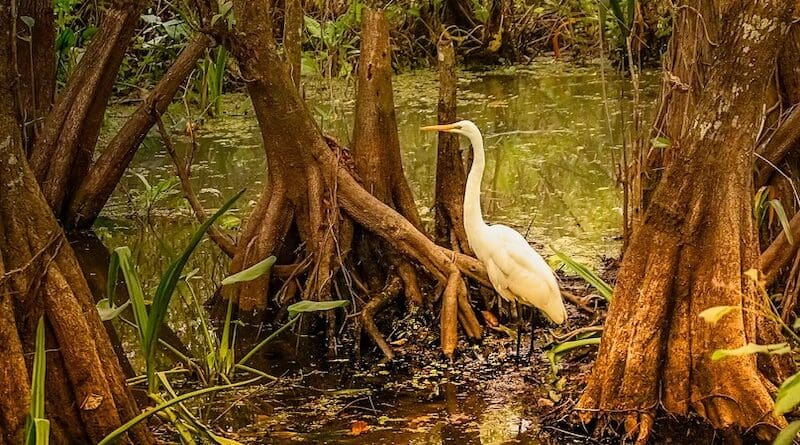


Credit: The Sabai Times

October 10, 2025 
By Shwetaungthagathu Reform Initiative Centre
By Hnin Eaindra Khine


Mangroves play a crucial role as a guardian angel of coastal towns, for many communities, but the need to secure food is more important than saving the guardian.
Key Takeaways:Mangroves provide environmental and community benefits, while also serving as one of the most effective natural systems for carbon sequestration in combating climate change.
In the Tanintharyi Region, charcoal production has accelerated mangrove deforestation, especially without effective governance and legal control following the 2021 military coup.
Although the SAC tries to meet the targets of the Forestry Master Plan (2001–2030), its efforts seem to be symbolic conservation designed for international recognition rather than genuine protection.

Mangrove: The Guardian Angel of Coastal Towns

Mangroves are one of the richest sources of blue carbon, offering environmental and community benefits. They act as natural barriers, protecting coastal villages from cyclones, storm surges, tsunamis, and erosion. At the same time, they provide vital habitats for marine biodiversity and shelter for birds, reptiles, and other wildlife. Their intricate root systems trap sediments and filter pollutants, improving water quality. Most importantly, mangroves absorb around 12.3 kg of CO₂ annually, 2 – 4 times more than most other tropical forests, and are crucial in mitigating climate change.

Mangroves support fisheries, tourism, aquaculture, and agriculture for community benefits. Many coastal communities depend on fish, prawns, and crabs that thrive within mangrove ecosystems. The leaf litter and nutrients mangroves release enrich coastal soils and waters, sustaining nearby agriculture and aquaculture. In addition, healthy mangrove forests attract ecotourism, creating opportunities to boost local livelihoods and strengthen community income.

Although mangroves comprise only about 1% of Myanmar’s total forest cover (42.92%), they play a crucial role in the country’s ecological and community well-being. Myanmar’s mangrove forests are the 3rd largest in Southeast Asia. In Myanmar, mangroves are found in Tanintharyi, Ayeyarwady, Yangon, Bago, Rakhine, and Mon States.
Killing the Guardian Angel for A living

Most people in Myanmar continue to rely heavily on nonrenewable fuels, particularly charcoal, as their primary source of cooking fuel. It is estimated that 90% of charcoal production in the country comes from coastal mangrove forests. Among the coastal regions where mangroves are found, Tanintharyi is the center of charcoal production, providing domestic markets and supplying cross-border trade with Thailand.

Even before the 2021 military coup, communities in the Tanintharyi Region had relied on cutting mangroves and trading charcoal illegally to Thailand as a source of livelihood. Villages in Myeik, Kyunsu, Boatpyin, and Kawthaung townships have already engaged in mass charcoal production since Thailand’s charcoal ban in the late 1990s. However, in the economic downturn following the coup, mangrove deforestation only intensified as more people turned to mangrove cutting and charcoal burning for their living. In particular, charcoal kilns have rapidly expanded in villages across Kyunsu and Boat Pyin townships.

Mrs. Htway Naing, a local villager who made a living from making charcoal, shared her experiences and insights into the culture of charcoal production. Mrs. Htway Naing and her husband did mangrove burning in Shwe Ge Nyo Village from Kyun Su Township, their main livelihood for nearly a decade. She said, “Nearly all households in those villages are involved in mangrove cutting. In Shwe Ge Nyo Village, where we once lived, there were two main charcoal producers, each owning about 12 large kilns and over a hundred small-scale burners across the village.”

She continued, “The owners hire men to cut mangroves using chainsaws. On average, they harvest 10 – 15 Pone San per day.” A Pone San is a local unit of measurement for firewood, referring to a stack of wood measuring approximately 5 feet in length by 6 feet in height. Each unit is valued at around 8 to 9 USD in the market.

“Some villagers cut and sell mangroves per trunk. During tidal days, they cut daily, filling boats with nearly 100 or 200 trees based on the size of the boats. Once the tide recedes, they focus on the charcoal-making process,” explained Mrs. Htway Naing. The charcoal kilns vary in size. A 7×7 ft kiln takes about 10 days to bake, a 12×12 ft kiln lasts around a month and a half, and a 16×16 ft kiln can take more than two months to produce charcoal.

There are over a hundred household-level charcoal-burning camps in larger villages such as Yay Aye and Shwe Ge Nyo. Following the economic downturn and rising inflation, grassroots communities have struggled to sustain their livelihoods from agriculture, fisheries, and rubber plantations. As a result, charcoal production has become one of the few remaining income sources; however, it also brings the added burden of unofficial payments to local administrators and SAC officials.

Community-led Conservation in Kaw Thaung Township, Tanintharyi Region

Even before the coup, community-led conservation efforts had taken root in Kawthaung Townships. In Kawthaung, Mr. Shwe Fun, a local environmental enthusiast, founded the Pakchan River Conservation Group in 2016, bringing together five villages from the upper part of the Pakchan River. “ Since 2017, some active villagers and I have been actively planting trees and raising awareness among local villagers about the importance of mangrove protection and community forests. Through these collective efforts, we have grown more than a hundred thousand trees together,” said Mr. Shwe Fun.

The Pakchan River, also known as the Kraburi River, forms the natural boundary between Myanmar and Thailand. Rising in the Tenasserim Hills flows into the Andaman Sea near Kawthaung (Myanmar) and Ranong (Thailand). It provides a wide range of benefits to both people and nature. Its extensive mangrove forests serve as critical habitats for marine life. Villages along the river from both sides rely on its resources daily.

Mangrove conservation in the southern coastal area is crucial since Irrawaddy dolphins can be found in the Myeik to Kawthaung coastal line. The Irrawaddy dolphin, Orcaella brevirostris, one of the endangered species, is found in both freshwater and coastal environments in South and Southeast Asia, mainly in three rivers: the Ayeyarwady (Myanmar), the Mahakam (Indonesian Borneo), and the Mekong in Southeast Asia.

Hence, mangrove forests in Tanintharyi Region are important for Irrawaddy dolphins because they are crucial habitats that provide food, shelter, and nursery grounds for the dolphins and their prey. These coastal ecosystems support rich biodiversity, including various fish and invertebrates that form the dolphins’ diet, and their interconnected waterways serve as vital areas for dolphin movement and survival in the Ayeyarwady’s estuaries.

SAC’s Showpiece Conservation and Efforts

The Forestry Master Plan (2001–2030) sets targets: to increase reserved and protected public forests to 30% of the country’s land area, to establish 10% as protected areas, and to create 2.27 million acres (919,000 ha) of Community Forests. Under this framework, the State Administration Council (SAC), a council founded by the military junta following the February 2021 coup d’état, hasdesignated more than 660,000 acres of reserved and protected public forests and 610,000 acres of protected areas during its tenure. However, no new community forests have been established.

According to the Community Forest Instruction (2019), community forest user groups have rights to be granted for at least 30 years for the first time, allowing them to benefit from and self-manage these forests. As of November 2021, there were 7,010 user groups with nearly 180,000 members, collectively managing 965,600 acres (390,761 ha) of community forests nationwide. Yet, since the SAC’s takeover, no additional community forests have been developed, only focusing on the reserved and protected public forests, which are meant to be under the state’s complete control and managed primarily to extract forest products.

In July 2025, the SAC designated 54,000 acres of six mangrove forests as protected public forests in Kyun Su Township, Tanintharyi Region, including two forests established in 2024. However, no additional conservation or monitoring measures have been implemented. Since before the 2010 political transition, and even under the civilian government (2015 – 2020), forestry inspectors regularly visited villages, and patrol boats monitored activities around coastal areas. But after the 2021 military coup, there were clashes between the Kyun Su People’s Defense Force(PDF) and SAC troops in coastal villages in late 2023. Following the ambushes and clashes with the Kyun Su PDF, patrol officials do not dare to patrol around, leaving these areas largely unmonitored. Despite this, SAC has kept designating two mangrove forests as protected public forests in 2024 and four in 2025 in Kyun Su Township, Tanintharyi Region. On the other hand, small-scale charcoal burners continue making charcoal by paying unofficial payments to village administrators and SAC forestry officials.

To conclude, while the SAC has declared new reserved forests and protected public forests nationwide, it is clear that it cannot effectively monitor or controlthem. Since the 2021 military coup, local people’s defense forces have emerged across the country, and the SAC has lost control of roughly 42% of Myanmar’s territory, leaving vast forest areas beyond its reach. Hence, these designations seem aimed at gaining international recognition or projecting the image that the military regime can manage all sectors, including environmental sustainability, despite the ongoing civil war. In reality, such measures are for show, intended to make the country appear stable in international news, even as the SAC struggles to govern nearly half the nation.

About the author: Hnin Eaindra Khine is a Junior Research Fellow at the Sustainability Lab of the Shwetaungthagathu Reform Initiative Centre (SRIc). She is also currently interning at RecyGlo Myanmar, where she supports various environmental sustainability projects.
Source: This article was published at The Sabia Times


Shwetaungthagathu Reform Initiative Centre

The Shwetaungthagathu Reform Initiative Centre (SRIc) is a hybrid think tank (non-partisan) and consultancy firm that advances sustainable governance, policy innovation, and sustainability literacy in Myanmar. Through its Sustainability Lab, SRIc conducts in-depth public policy research and analysis to promote sustainable development and guide Myanmar toward a more resilient, equitable, and environmentally conscious future. SRIc provides strategic policy advocacy, CSR consultation, and the development of sustainability roadmaps grounded in Environmental, Social, and Governance (ESG) principles. These services support public institutions and private sector actors in aligning their operations with the Sustainable Development Goals. By integrating rigorous research with actionable consultancy, SRIc supports responsible business practices, fosters innovative CSR strategies, and designs impactful sustainability pathways. SRIc contributes to local transformation & global sustainability efforts through this dual approach.


 

Peru removes President Boluarte as crime crisis fuels political upheaval

Peru removes President Boluarte as crime crisis fuels political upheaval
The ouster of Dina Boluarte may cap off a disgraced presidency, but it does not end the crisis that made it possible in the first place.
By Alek Buttermann in Berlin October 10, 2025

The Peruvian Congress forced President Dina Boluarte from office on October 10, in a swift, highly choreographed withdrawal that exposed far more about the self-preservation instincts of the political class than about any coherent constitutional remedy. 

By the early hours of Friday, the unicameral legislature had approved a presidential vacancy, with what most accounts describe as an overwhelming majority. 122 legislators voted in favour of the "vacancia," the constitutional mechanism that declares the presidency vacant due to “permanent moral incapacity”. The president of Congress, José Jerí (Somos Perú), was immediately sworn in as interim head of state under the constitutional line of succession.

The move came amid rising violence, falling approval ratings, and political calculations ahead of the 2026 elections.

Boluarte’s removal follows weeks of public anger over crime and insecurity. The immediate trigger was an armed attack at a concert by the cumbia band Agua Marina in Lima’s Chorrillos district, where five people were injured, including four musicians and a street vendor. Police described it as a planned assault linked to organised crime. The event fuelled outrage across the country and reinforced the view that the government had lost control of public safety.

The Ministry of the Interior’s own data shows that reported assaults rose by 22% in 2024. Contract killings, known locally as sicariatos, have multiplied in cities such as Trujillo and Piura, while extortion networks have spread through Lima’s transport and market systems. Public perception surveys consistently ranked insecurity as the country’s main concern, far above inequality or unemployment.

Boluarte’s ministers appeared overwhelmed. Interior Minister Carlos Malaver became a symbol of the government’s disarray when he told Congress that improving security required “forcing Meta to open an office in Peru” to help investigations, comments that generated ridicule across the political spectrum.

Until the day before the vote, Boluarte was still backed by the conservative bloc that had supported her since taking power in late 2022: Fuerza Popular, Alianza para el Progreso (APP), and Somos Perú. But by the afternoon of October 10, that alliance collapsed. At 15:02, Fuerza Popular issued a statement on X announcing its support for the vacancia. APP and Somos Perú quickly followed, leaving the president isolated.

The timing was not accidental. With general elections approaching in April 2026, Fuerza Popular, led by right-wing populist firebrand Keiko Fujimori, could no longer afford to appear aligned with a deeply unpopular government. Boluarte’s dismal approval record stood at 2.5%, as per the latest polls. Within the party, there was growing concern that defending her could damage Fujimori’s own presidential chances and hand the far-right Renovación Popular the opportunity to capitalise on anti-Boluarte sentiment.

One congressional adviser told El Comercio that “the party couldn’t go into an election still defending a government that everyone blames for insecurity.” Others within Fuerza Popular described the decision as “electoral hygiene,” a way to cut ties before the campaign season begins.

As her support vanished, Boluarte reportedly tried to negotiate a last-minute truce. According to El Comercio, she called party leaders offering to reshuffle her cabinet and appoint figures acceptable to the right. The proposal was rejected. Both Fuerza Popular and APP advised her to resign voluntarily to avoid humiliation, but she refused, hoping to delay the session. When the left-wing caucus demanded an immediate vote, the conservative bloc chose to proceed, sealing her fate before midnight.

Boluarte’s fall was not a surprise but rather the culmination of two years of growing discontent. Her government had survived violent protests in 2022 and 2023 that left at least 60 people dead, according to human rights groups, but never recovered politically. By the end, she had lost not only public legitimacy but also the parliamentary support that had kept her in power.

With Boluarte’s removal and no vice-presidents in office, the presidency passed automatically to José Jerí Oré, the 38-year-old leader of Congress and a member of Somos Perú. In his first address, Jerí promised to “lead with empathy” and to “win the war against insecurity.” He also pledged to maintain the 2026 elections as scheduled.

Jerí’s record, however, raises serious questions. He has faced several investigations, including allegations of sexual assault, corruption, and disobedience to judicial orders. Earlier this year, a woman accused him of rape during a private gathering in Canta, although prosecutors later dropped the case for lack of evidence. Separate reports indicate he ignored a court order to attend therapy for “impulsive sexual behaviour,” leading to another investigation.

His political past is also controversial. Businesswoman Blanca Ríos accused him of involvement in a bribery network during his time as head of the Budget Committee, claiming she paid intermediaries linked to his office to secure funding for regional projects. Jerí has denied wrongdoing but has not provided detailed explanations.

Despite these accusations, Congress moved swiftly to confirm him. A motion to censure Jerí, presented by left-wing legislator Jaime Quito, failed with 61 votes against, 36 in favour, and 17 abstentions. The legislature’s first vice-president, Fernando Rospigliosi of Fuerza Popular, was then sworn in as new head of Congress, ensuring the right retains institutional control.

Since 2016, Peru has cycled through six presidents, reflecting a pattern of chronic political fragmentation and congressional overreach. Pedro Pablo Kuczynski resigned under corruption allegations, Martín Vizcarra was impeached for “moral incapacity,” Manuel Merino lasted only five days after deadly protests forced his resignation, Francisco Sagasti completed an interim mandate, Pedro Castillo was ousted in 2022 for attempting to dissolve Congress, and Dina Boluarte has now been removed in turn. 

The repeated use of the vacancia clause, a vaguely defined constitutional tool, has turned presidential succession into a routine political weapon rather than an extraordinary measure.

Observers now warn that street unrest could return, recalling the 2020 protests that erupted after Merino’s short-lived appointment. Those demonstrations, led largely by young Peruvians angered at Congress’s power grab, left two dead and dozens injured. 

The ousting of Boluarte and Jerí’s rise follows a pattern that has come to define Peruvian politics. Congress operates less as a stabilising force than as a self-preserving mechanism. The same parties that sustained Boluarte until it became electorally costly now control the presidency through Jerí, without a single vote from citizens.

For Fuerza Popular, the vacancia was less a moral stand than a strategic move to regain distance from a discredited government and reset its public image ahead of 2026. By leading the ouster, Fujimori’s party can present itself as the one that “ended Boluarte’s crisis,” rather than the one that enabled it.

However, the broader consequences remain uncertain. Public trust in Congress is near record lows, and security conditions continue to deteriorate. The change in leadership offers little evidence of a new direction. Instead, it reflects a political class skilled at surviving crises it helps to create.

The vacancia of Dina Boluarte may cap off a disgraced presidency, but it does not end the crisis that made it possible in the first place. Peru now enters another phase of instability, governed by a Congress that continues to act in its own interest, while citizens face growing violence and institutional fatigue.


Trump Floats Expelling Spain From NATO

US President Donald Trump. Photo Credit: Martijn Beekman, NATO

By 

By Chris Powers

\

(EurActiv) –US President Donald Trump has suggested Spain could be expelled from NATO over its resistance to meeting the alliance’s new defence spending target of 5% of GDP.

Speaking at a joint press conference in Washington alongside Finnish President Alexander Stubb – seen as having entered Trump’s circle of trust – the US president said Spain was “one laggard” among NATO’s 32 members.

The country “had no excuse” for not raising its defence spending, he said. “Maybe you should throw them out of NATO, frankly.”

In his first term in the White House, Trump made similar comments about withdrawing NATO protection from countries he considered to be spending too little on defence, for example, Norway and Iceland.

At a June summit, NATO leaders agreed to boost defence spending to 5% of GDP, divided into 3.5% for core military needs, including personnel and weapons, and 1.5% for defence-related expenditure, such as infrastructure.

\

Spanish Prime Minister Pedro Sánchez, however, has said that Madrid will raise its defence budget to only 2.1% of GDP – currently it spends 2% – and claims an exemption from the target.

Sánchez also believes that Spain faces different threats from other European countries. “Our threat is not Russia bringing its troops across the Pyrenees,” he said in March, while pushing back on the need to boost defence spending.

Trump is not alone in doubting Spain’s commitment to European defence. In an exclusive interview with Euractiv, the new US ambassador to the EU, Andrew Puzder, said Trump was “very pleased” with Europe’s commitment to defence but acknowledged regional differences.

“You have the eastern nations who are very, very concerned about Russia. And as you get further west and south, they become a little less concerned,” Puzder said, adding that he expects the US to continue to support NATO.

In Thursday’s press conference, Trump seemed to reinforce that. Asked by a reporter if he would defend Finland in case of a Russian attack, Trump replied, “Yes I would, they’re a member of NATO,” adding that he would do so “vigorously.”

NATO ambassadors are set to meet in Brussels on 15 October to review progress on spending pledges, with US Secretary of War Pete Hegseth expected to push for faster compliance.

A PLAGUE ON BOTH YOUR HOUESE

Both Sides In Sudan’s War Blamed For Rising Civilian Deaths

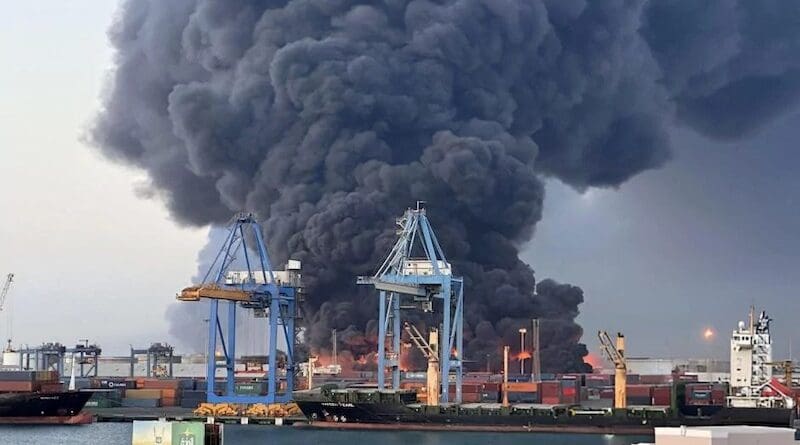
Explosion at Port Sudan. Photo Credit: Sudanese Ministry of Culture and Information


By 

Sudan’s devastating civil war intensified over the first half of 2025 as civilians continued to bear the brunt of the violence amid an out-of-control humanitarian crisis.

Both the paramilitary Rapid Support Forces (RSF), led by Gen. Mohamed Hamdan “Hemedti” Dagalo, and the Sudanese Armed Forces (SAF), led by Gen. Abdel Fattah al-Burhan, are accountable for a significant rise in civilian killings, according to a new report by the United Nations Human Rights Office.

Between January 1 and June 30, 3,384 civilians died in the conflict, mostly in Darfur, followed by Kordofan and Khartoum. That number represents almost 80% of the 4,238 civilian casualties recorded last year.

“Several trends remained consistent during the first half of 2025: a continued pervasiveness of sexual violence, indiscriminate attacks, and the widespread use of retaliatory violence against civilians, particularly on an ethnic basis, targeting individuals accused of ‘collaboration’ with opposing parties,” the report said.

Emerging trends included the use of drones, including in attacks on civilian sites, and military assaults in the north and east of the country, areas that had previously been largely spared from violence. Attacks on internal displacement camps were common. Authorities accused military, paramilitary and militia forces of killing people based on their ethnicity.

“The increasing ethnicization of the conflict, which builds on longstanding discrimination and inequalities, poses grave risks for longer-term stability and social cohesion within the country,” Volker Turk, the U.N.’s human rights chief, said in a statement. “Many more lives will be lost without urgent action to protect civilians and without the rapid and unhindered delivery of humanitarian aid.”

Officials accused the SAF on March 24 of killing up to an estimated 270 people during airstrikes on a bustling market in Tora, about 35 kilometers north of El-Fasher, the capital of North Darfur State. The Darfur Initiative for Justice and Peace called it the “deadliest single bombing since the beginning of the war.”

Mohamed Chande Othman, chair of the U.N.’s Fact-Finding Mission on Sudan, said girls as young as 12 have been forced into marriage, sometimes after their families were threatened with death.

“Men and boys were also subjected to sexualized torture and such acts are rooted in racism, prejudice and impunity and they devastate entire communities,” Othman said.

Deadly Hospital, Mosque Attacks

In January, officials accused the RSF of a hospital attack in El-Fasher that killed 70 people and injured 19.

“At the time of the attack, the hospital was packed with patients receiving care,” Tedros Adhanom Ghebreyesus, the World Health Organization’s director-general, said in a post on X.

According to Othman, dozens of detainees in an RSF facility have died since June after being tortured, denied food and medical care.

In SAF-run detention facilities, “civilians were also subjected to torture, including electric shock, sexualized abuse, and they were held in cells so overcrowded that some prisoners had to sleep standing,” Othman said.

On September 19, the RSF killed 75 people in a drone strike that hit a mosque at a camp for displaced people in Darfur. This was part of an offensive aimed to force the SAF out of El-Fasher, which is the last remaining capital in the region controlled by the SAF, according to The Guardian. Yale University’s Humanitarian Research Lab showed the RSF is building an earthen wall around the city to trap people inside. Attacks in El-Fasher killed at least 89 civilians over 10 days in August.

Dire Humanitarian Crisis

Some estimates place the war’s death toll as high as 150,000 since it erupted in April 2023.

“We can’t responsibly give a number,” Nathaniel Raymond, executive director of Yale’s Humanitarian Research Lab, told Science.org. “Many who would do the counting are dead or displaced.”

According to the U.N’s International Organization for Migration, 14.3 million people — about Rwanda’s total population — have fled their homes due to the violence. About 24.6 million people faced food insecurity between December 2024 and May, while at least 638,000 people are on the brink of famine. Disease outbreaks, including cholera, dengue fever, malaria and measles are rising due to disrupted health services. More than 90% of Sudan’s 19 million school-aged children have no access to formal education, according to the U.N. Children’s Fund.

The SAF now largely controls the country’s eastern, central and northern territories, while the RSF dominates parts of the south and nearly all of the western Darfur region. Efforts to broker a ceasefire have failed.

Africa Defense Forum

The Africa Defense Forum (ADF) magazine is a security affairs journal that focuses on all issues affecting peace, stability, and good governance in Africa. ADF is published by the U.S. Africa Command.