Friday, October 10, 2025


Migrant Rescue NGO Wins a Legal Battle Over Italian Port Calls
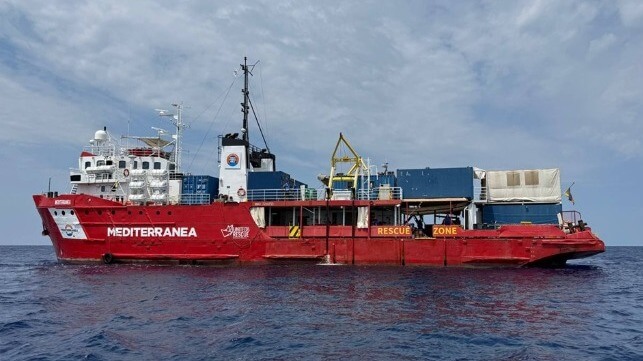
Mediterranea
Courtesy Mediterranea

Published Oct 10, 2025 5:19 PM by The Maritime Executive


A court in Trapani, Italy has handed the migrant rescue NGO community a symbolic but potentially consequential win. In a ruling this week, the presiding judge lifted a detention order on a rescue ship that had refused to divert to a distant port for disembarkation. The judge censured Italy's interior ministry for imposing an excessive penalty and praised the “humanitarian and solidarity objectives” pursued by the vessel's operators. 

Starting in February 2023, Italy enacted new regulations controlling the operations of the fleet of NGO rescue vessels combing the Mediterranean. The law - known as the "Piantedosi Decree" for interior minister Matteo Piantedosi - requires humanitarian rescue ships to head to port immediately after each rescue, foregoing additional rescues even if they are next to other people in distress. Italian authorities can also designate distant ports of disembarkation, adding days of transit without regard to weather or the condition of the survivors. Captains and NGOs are liable for fines of up to $50,000 and vessel detention for violations of the decree.

In August, Mediterranea pulled into port in Trapani, Sicily after a rescue of seven adult migrants and three teenagers off Libya. This violated an instruction from the Italian interior ministry, which had ordered the captain to call at Genoa, three days and 500 nautical miles further to the north. The decision to ignore the ministry's order and call in Sicily was deliberate, the group's leaders said. "We chose to reassert the basic principle which today is not to be taken for granted: that dignity and human life come before any other consideration," said Mediterranea president Laura Marmorale at the time. 

The interior ministry swiftly handed the vessel 60 days of administrative detention and a €10,000 fine for delivering the rescuees to an unauthorized port. In response, the master and owner of Mediterranea filed suit in Trapani to get the detention lifted, and the judge in the case has issued an initial ruling in their favor. 

Judge Federica Emanuela Lipari ruled that Mediterranea's decision to call at Trapani was a sensible choice for those on board, "taking into account their vulnerable and fragile condition" and in alignment with "the objectives of protecting life and health at sea." She took the Interior Ministry to task for "the illegality of the measure" of the penalty assessed on Mediterranea, and described the NGO's solidarity mission as "particularly worthy of protection."

The court case continues; in the interim, Mediterranea will soon return to sea. 


ExxonMobil Charters Two Vessels to Launch LNG Bunker Business

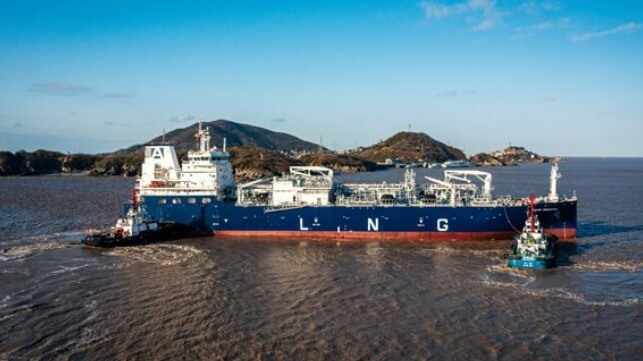
LNG bunker vessel
Avenir after sellings its first large LNG bunker vessels is building two 20,000 cbm vessels with one now chartered to ExxonMobil (Avenir)

Published Oct 9, 2025 9:17 PM by The Maritime Executive


ExxonMobil announced it is entering the LNG marine bunkering market as part of its broader strategy to pursue up to $30 billion in lower-emission investments by 2031. It said that supportive policies and a rising demand for LNG in marine transportation are creating opportunities in the market and driving its decision to enter the business by initially chartering two vessels.

“Both LNG and bio-LNG can help reduce lifecycle GHG emissions compared with conventional marine fuels,” said Amy Wood, ExxonMobil Global Lower Emission Fuel Manager. “Our combination of LNG expertise and a proven record as a trusted marine industry supplier is helping us deliver these fuel options.”

The company cites its more than four decades of experience in LNG across the entire value chain. It confirmed the charter of two vessels as the backbone of its initial LNG marine supply capability. However, to ensure continuity of service and meet customer needs, the company said ahead of the delivery of the new vessels, it is also actively developing “complementary supply solutions.” The strategy will enable an early market entry for ExxonMobil and support customers who are ready to adopt LNG as a marine fuel.

The first vessel, chartered from Avenir LNG, is scheduled for delivery in the first quarter of 2027, followed by a second vessel from Evalend Shipping in the fourth quarter of 2027. Further, ExxonMobil reports that it plans to expand its LNG bunkering fleet over time to support growing customer demand. 

Avenir currently owns and operates a fleet of five LNG bunker and supply vessels, and in April 2024 announced an order for two 20,000 cbm vessels. Being built in China at Nantong CIMC Sinopacific Offshore & Engineering, the vessels are due for delivery in the fourth quarter of 2026 and the first quarter of 2027. Avenir pioneered with 20,000 cbm vessels several years ago before selling its first pair to Chinese operators. The company highlights that it is de-risking its newbuild program through long-term charters that also provide sustainable cash flow.

The first of Avenir’s new vessels will be operated by Vitol International Shipping under a seven-year charter that can be extended up to 10 years in total. SeaRiver Maritime, the marine transportation affiliate of ExxonMobil, has agreed to take the second vessel under a multi-year charter when it is delivered in 2027.

Avenir reported when the vessels were ordered that they would feature new Type C tank designs and lower boil-off rates. In addition to the latest engine technologies, the hull form has been optimized and incorporates subcoolers that will offer carbon emission reductions and minimize cargo losses compared to other vessels of the same size. The vessel design enables compatibility and versatility for loading and discharging LNG and BioLNG to a wide range of receiving vessels and terminals.

The decision of an energy major to jump into the bunkering segment is seen as another confirmation of the longer-term role LNG and later bio-LNG are likely to take in the maritime sector’s fuel strategy. The ship-to-ship LNG bunkering business emerged 15 years ago, and today DNV reports there are 62 LNG bunker vessels in service with 185 ports currently providing LNG fueling capabilities.

The maritime industry continues to embrace LNG. DNV estimates that the number of vessels operating on LNG, currently at 788, will nearly double over the next eight years. The orderbook currently stands at 688 LNG dual-fuel vessels, with containerships leading, followed by car carriers, but LNG has been adopted by nearly every segment of commercial shipping. 


Rotterdam Container Ops Remain at Standstill as Lashers Extend Strike

Port of Rotterdam
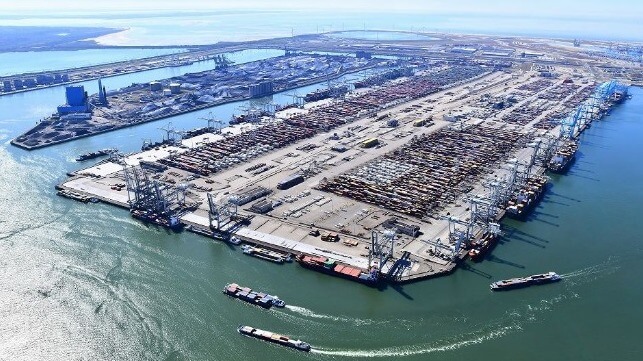
Container operations continue to be interrupted due to a strike (Port of Rotterdam)

Published Oct 10, 2025 9:20 PM by The Maritime Executive


The union representing the lashers that handle containers at the Port of Rotterdam announced on Friday, October 10, that its members had unanimously decided to extend their strike indefinitely. Container operations in the Port of Rotterdam have mostly been halted since Wednesday afternoon when the strike began, with reports that vessels are backing up.

The lashers, who secure and release containers while vessels are docked, are striking two stevedoring companies, International Lashing Services and Matrans Marine Services, which have outsourced contracts from the container terminal operators at the Port of Rotterdam. Maersk warned customers that the strike is impacting the four primary container terminals operated by APM, Hutchinson, ECT Delta, and Rotterdam World Gateway.

"Our people have made it clear that half-hearted measures are not enough,” said Niek Stam, director of FNV Havens. “There's some movement among employers, but the difference compared to the previous offer is minimal. Employers seem to think we'll stop striking automatically, but that's a miscalculation."

The union held a midday meeting for members on Friday and originally had planned to resume work with the Friday afternoon shift. They, however, said the offers from the employers were “insufficient,” prompting the decision to extend the strike.

Union leadership said they were willing to lower their wage increase demand to 6.5 percent from the original demand of seven percent. The employers are reported to be offering a four percent raise.

AIS signals show vessels from Maersk, CMA CGM, Hapag-Lloyd, COSCO, and others, all holding offshore in the anchorages south of Rotterdam. Further complicating the situation, sea pilots in Belgium are also continuing their work slowdown that has been underway all week as they are demanding changes to proposed pension reforms. As of Friday morning, the union was reporting that there are now 113 ships waiting for their pilots, with 80 ships in the North Sea.

With the job actions in the two ports, analysts fear that disruptions and backlogs will build and ripple through the schedules of the container carriers. A group of small businesses cited the same concerns filing an emergency lawsuit on Friday, calling for a court to halt, delay, or restrict the strike in Rotterdam. Port officials confirmed the potential significant impact saying that a quarter of the import containers carry food. They said 40 percent of exports are also food items. The suit contends the strike will disrupt the supply of goods to retailers and healthcare providers. In addition, a general strike has been called for all unions in Belgium, which is expected to halt all vessels from Monday evening till Wednesday morning.

Further complicating the situation at the Port of Rotterdam, protests emerged on Friday from activists in support of Gaza. The port alleged that the protestors entered secure and private areas while they were blocking access roads. The same group is calling for a mass protest on Saturday to block all the roads into the Port of Rotterdam.

The union said it was available for weekend negotiations. It urged the two firms to return to the negotiations to complete a deal.


Japan - Korea links under pressure

Japan - Korea links under pressure
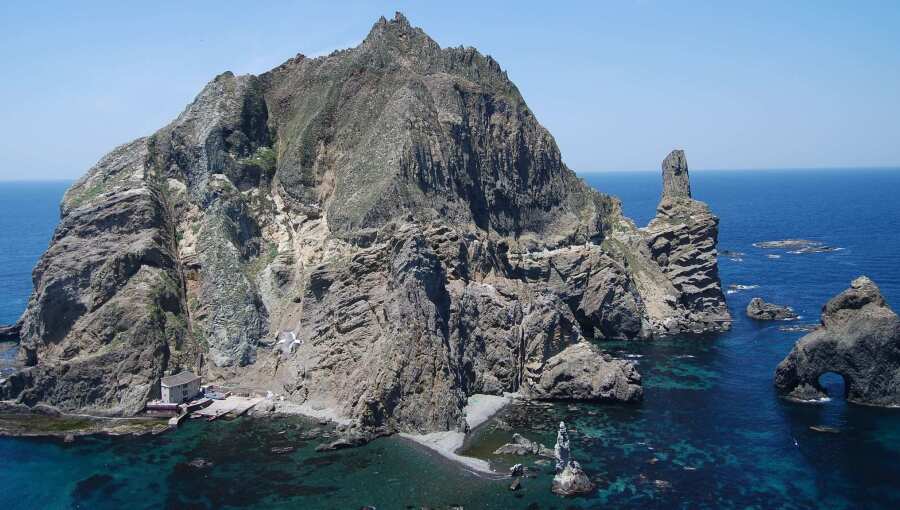
/ Ulleungdont - CC BY-SA 3.0
By bno - Busan Office October 9, 2025

South Korea is watching closely as Japan prepares for a political shift following the election of Sanae Takaichi as leader of the ruling Liberal Democratic Party (LDP), paving the way for her to become the country’s next prime minister, The Korea Times says.

Takaichi, known for her right of centre leanings on historical and territorial matters, has long taken a hardline stance on Japan’s wartime past and the disputed Dokdo islets as they are known in Korean – Takeshima in Japanese - which are currently administered by South Korea but claimed by Japan. Her rise to power has fuelled concerns in Seoul that recent progress in bilateral ties could stall or even regress.

The former internal affairs minister has also previously criticised expressions of remorse over Japan’s colonial rule of Korea between 1910 and 1945, and defended her visits to the Yasukuni Shrine, where Japan’s war dead, including several convicted war criminals, are commemorated. According to The Korea Times, analysts in Seoul fear that her premiership could see a return to a more nationalist tone in Tokyo’s diplomacy.

Even so, there are signs that Takaichi may seek to temper her rhetoric. Japanese media have reported that she is considering forgoing a visit to the Yasukuni Shrine during this autumn’s festival in what would be a move that would mark a departure from her previous insistence on attending as a lawmaker.

Observers also believe that despite ideological tensions, both Seoul and Tokyo have incentives to maintain momentum in their security and economic cooperation, particularly within the trilateral framework with the United States. Recent reciprocal visits between President Lee Jae Myung and outgoing Prime Minister Shigeru Ishiba of Japan underscored an effort to institutionalise dialogue and avoid diplomatic backsliding.

The continuation of local and ministerial exchanges has been viewed in Seoul as a sign that the administration is committed to preventing historical disputes from derailing broader strategic cooperation.

President Lee and Prime Minister Takaichi are expected to hold their first bilateral meeting on the sidelines of the Asia-Pacific Economic Cooperation (APEC) summit in Gyeongju at the end of October in a bid to see whether the discussions will serve as an early test of whether the fragile links across the Sea of Japan can be sustained under Japan’s first female PM.


Belarusian dissident Kolesnikova sends first letter from prison in more than two years

Belarusian dissident Kolesnikova sends first letter from prison in more than two years
Kolesnikova was kidnapped by unidentified law enforcement officers and taken to the Ukrainian border by force. She was reportedly pressured to leave the country but escaped through a car window, tore up her passport, and returned to Belarus on foot. / Viktor Babariko HQ
By bne IntelliNews October 10, 2025

Belarusian opposition figure Maria Kolesnikova has sent her first letter in more than two and a half years, according to a statement from her family published on Instagram. The message is her first known communication since early 2023.

Kolesnikova, who is serving an 11-year sentence in the Homel women’s prison colony, has been imprisoned since September 2020. Her detention followed her refusal to be forcibly deported to Ukraine, during which she tore up her passport in front of Belarusian security officials.

In the handwritten letter, Kolesnikova addressed her family and reflected on the time that had passed since their last contact. 

“Every morning I look at the morning sky, and in the evening at the starry sky, I remember you and hug you all tightly in my mind! And I always feel your love and care, which protect me and give me confidence that we will endure everything. The time of our meeting is fast approaching, and it will be the happiest day of my life,” she wrote.

In 2020, Kolesnikova headed the electoral campaign of Belarusian banker and opposition figure Viktor Babariko. Following Babariko’s arrest, she supported opposition candidate Svetlana Tikhanovskaya in the presidential election. After the disputed vote, she became a member of the presidium of the Coordination Council formed during the 2020 Belarusian protests opposing President Alexander Lukashenko’s regime.

Later that year, Kolesnikova was kidnapped by unidentified law enforcement officers and taken to the Ukrainian border by force. She was reportedly pressured to leave the country but escaped through a car window, tore up her passport, and returned to Belarus on foot. She was subsequently convicted of “conspiracy to seize power”, “creating an extremist organisation”, and “calls for actions undermining national security”.

Kolesnikova’s letter comes as the Belarusian government seeks to re-establish limited diplomatic channels with Western countries. In recent weeks, at least 60 political prisoners have been released under a United States-mediated arrangement aimed at easing international sanctions. Among those freed were journalists, civil society activists, and opposition figures, some of whom were immediately deported to Lithuania.

Despite these releases, human rights organisations report that more than 1,100 political prisoners remain in custody in Belarus, including Nobel Peace Prize laureate Ales Bialiatski and veteran opposition figure Mikalai Statkevich.

The office of exiled opposition leader Tikhanovskaya, based in Vilnius, said that security services loyal to Lukashenko continue to target dissidents abroad “through attacks, disinformation and constant death threats”. 


Côte d’Ivoire presidential race begins amid rising tensions

Campaigning in Cote d'Ivoire's presidential election kicked off on Friday. The five candidates approved by the Constitutional Council have two weeks to win over voters ahead of the 25 October polls. RFI's correspondent Bineta Diagne is following the campaign trail.


Issued on: 10/10/2025 - RFI

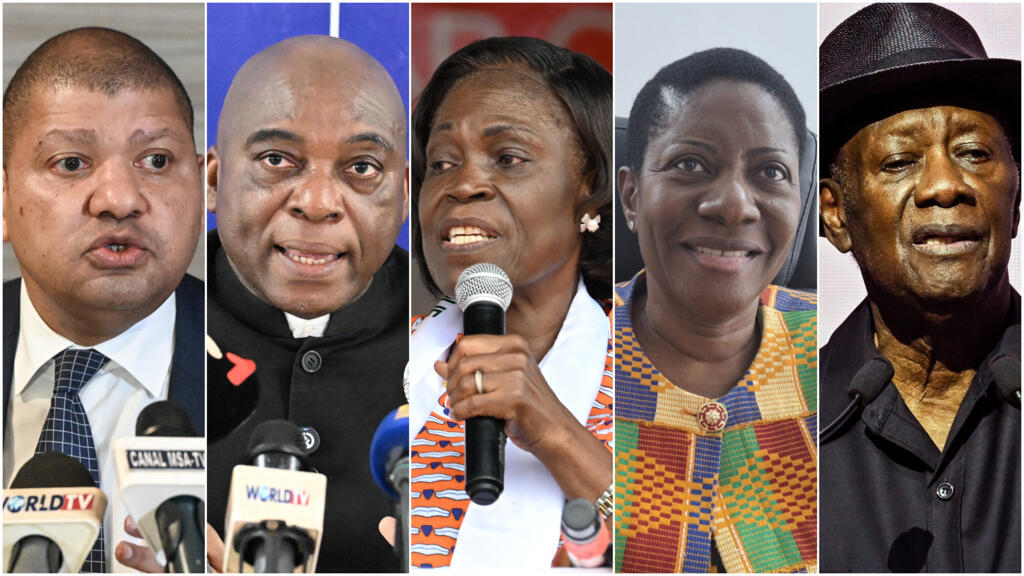
The five presidential candidates from left to right: Jean-Louis Billon, Ahoua Don Mello, Simone Ehivet, Henriette Lagou and Alassane Ouattara. © Photos AFP & RFI - Montage RFI

Alassane Ouattara, in power since 2011, is facing off against four candidates: former ministers Jean-Louis Billon, Ahoua Don Mello and Henriette Lagou, and former first lady Simone Ehivet Gbagbo.

Billon, a dissident from Tidjane Thiam's Democratic Party of Côte d'Ivoire (PDCI), is launching his campaign with a parade in the Abidjan district of Koumassi. He will then hold a rally in Marcory, another district of the economic capital, led by Mayor Aby Raoul of the Democratic Party of Côte d’Ivoire - African Democratic Rally (PDCI-RDA).

Billon's key challenge is to persuade PDCI supporters to carry on backing him. The party has yet to issue voting instructions following the rejection of its president Thiam’s candidacy.

“The first obstacle comes from within your own party,” one of his aides noted, while remaining optimistic and citing discreet negotiations in his favour.

Rallying support

Ahoua Don Mello, a former member of Gbagbo's African Peoples' Party - Côte d'Ivoire (PPA-CI), is now running as an independent and has not received the party's official support.

His campaign focuses on promoting national economic sovereignty – ideas he says he will present “in major cities and small villages”. He will hold a meeting in Cocody before heading to Bouaké, in the centre of the country.

Former First Lady Simone Ehivet will be in Bouaflé, in central Côte d’Ivoire, where she plans to meet cocoa producers – opportunity to highlight one of the key pledges of her campaign: adding value through the local processing of agricultural products.

Henriette Lagou, who was a candidate in 2015, will also campaign in the centre. She is due to hold a rally on 13 October in Daoukro, the PDCI stronghold. Her slogan: peace and social cohesion.

Incumbent Alassane Ouattara is to hold a rally on 11 October in the city of Daloa in the central-western region.

Why Côte d’Ivoire’s election could be more complex than it seems
'March for peace and freedom'

Voter mobilisation is a challenge for all candidates, including for the ruling Rally of Houphouëtists for Democracy and Peace (RHDP).

“We cannot afford to give Alassane Ouattara just 50 percent. If we give him 50 percent, it means we have failed,” said RHDP executive secretary Ibrahim Cissé Bacongo. “We have to secure the highest possible score. That starts at 75 percent,” he added.

The campaign is being held in a particularly tense context. Thiam and Laurent Gbagbo both had their candidacies rejected by the Constitutional Council in early September and their parties have since called for demonstrations.

The Common Front – an alliance bringing together Thiam and Gbagbo's parties – plans to hold a march in central Cocody on Saturday.

Initially aimed at demanding “dialogue for inclusive, transparent and democratic elections”, organisers say it's now a “march for peace and freedoms”.

Protests erupt in Côte d'Ivoire after opposition leaders blocked from election

At least 30 PDCI and PPA-CI activists have been charged and placed in pre-trial detention, mainly for “public order offences”.

There is uncertainty over whether the march will go ahead. The authorities banned a similar gathering last Saturday, citing “risks of public disorder”.

WAR CRIME AGAINST HUMANITY

Putin admits Russian air defences downed Azerbaijan Airlines plane in 2024 that killed 38


By Gavin Blackburn
Published on 

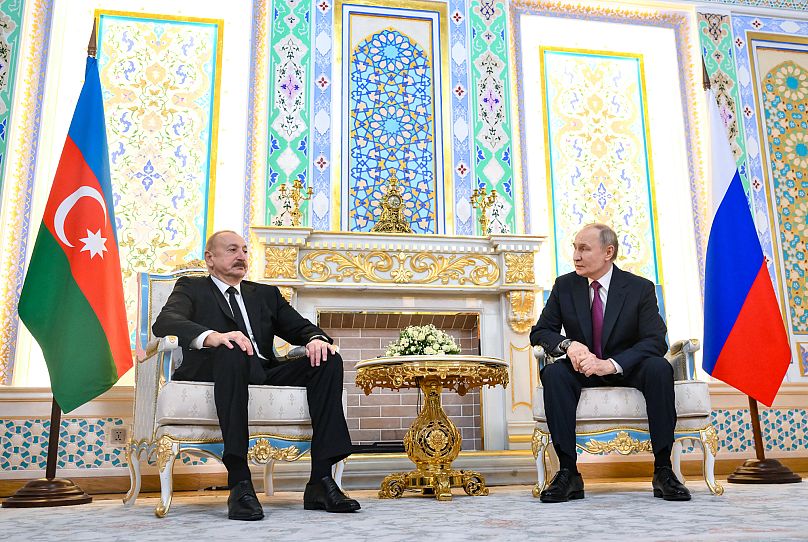
Russian President Vladimir Putin admitted on Thursday that Russia's air defences were responsible for shooting down an Azerbaijani passenger aircraft in December that killed 38 people, in his first public admission of blame for the crash.

Putin made the statement at a meeting with Azerbaijan’s President Ilham Aliyev in Tajikistan's capital Dushanbe, where both are attending a regional summit, where he promised to pay compensation to those affected.

The Azerbaijan Airlines passenger jet crashed on 25 December 2024 in Kazakhstan's Aktau while en route from Baku to Chechnya's Grozny. A total of 29 people on board survived largely thanks to the heroics of the pilots, who were among the 38 casualties.

Azerbaijani government sources exclusively confirmed to Euronews a day after the crash that, according to their findings at the time, a Russian surface-to-air missile was understood to be the cause of the plane's crash in Aktau.

According to the sources, the missile was fired at Flight 8432 during drone air activity above Grozny and the shrapnel hit the passengers and cabin crew as it exploded next to the aircraft mid-flight

Russian President Vladimir Putin and Azerbaijan's President Ilham Aliyev talk in Dushanbe, 9 October, 2025 AP Photo

The missile was fired from a Pantsir-S air defence system, Baku-based international outlet AnewZ reported.

Government sources told Euronews that the damaged aircraft was not allowed to land at any Russian airports despite the pilots’ requests for an emergency landing, and it was ordered to fly across the Caspian Sea towards Kazakhstan.

According to data, the plane’s GPS navigation systems were jammed throughout the flight path above the sea.

Last year, Putin issued a rare public apology to Aliyev for what he called a "tragic incident" but stopped short of acknowledging responsibility.


Rescuers work at the wreckage of Azerbaijan Airlines Embraer 190 lays on the ground near the airport of Aktau, 25 December, 2024 AP Photo


Aliyev had previously criticised Moscow for trying to "hush up" the incident.

In July, Aliyev announced that Azerbaijan was preparing to file lawsuits in international courts against Russia regarding the crash, saying the circumstances behind it were "as clear as day."

He criticised the lack of a meaningful response from Russia to the incident.

"We know what happened and we can prove it. And we know that Russian officials know what happened," Aliyev said in July.

Additional sources 

PUTIN'S PUPPET

EU to investigate Hungarian spy ring that targeted Brussels institutions

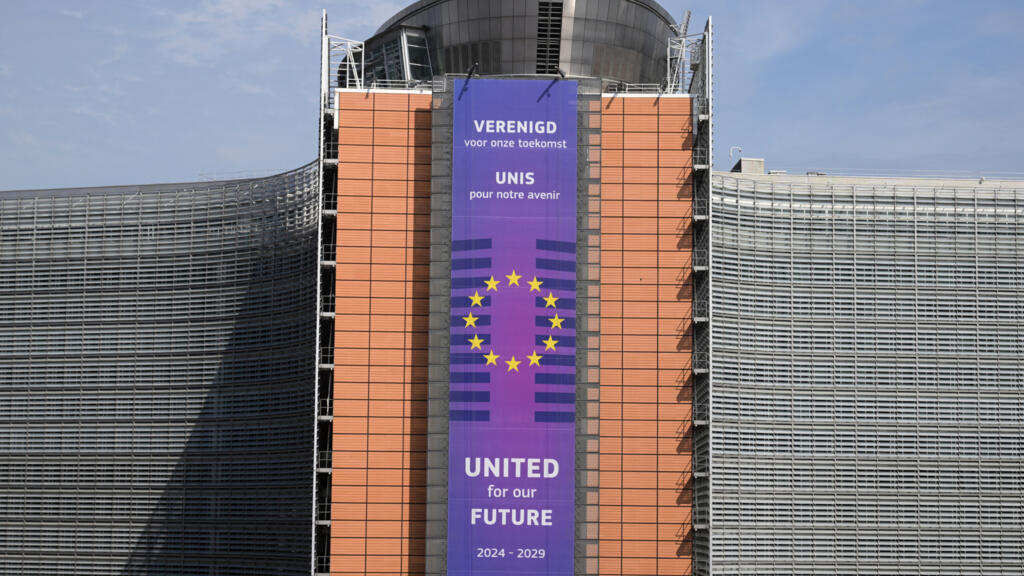
An investigation has revealed how Hungary’s intelligence services recruited citizens to spy on behalf of Prime Minister Viktor Orban’s government, targeting sensitive European Union decision-making. The exposé, published by Hungarian outlet Direkt36 and partners, uncovers the extent of this clandestine operation and exposes vulnerabilities in the EU’s security framework.


Issued on: 10/10/2025 - RFI
Play - 08:11
The European Union Commission headquarters min Brussels, pictured on 13 June, 2025. AFP - NICOLAS TUCAT

By:Jan van der Made

The investigation found that Hungarian intelligence services recruited Hungarians working in the EU's institutions to spy on them, in a bid to ascertain whether its policies or decisions could threaten Orban and his ruling party, Fidesz.

The report – written by Szabolcs Panyi of the Budapest-based independent publication Direkt36, alongside Belgian journalist Lars Bové of De Tijd and Hannes Munzinger and Elisa Simantke of Germany’s Paper Trail Media – details how Orban’s intelligence service set up a network hidden in plain sight between 2012 and 2018.

It cites unnamed Hungarian EU officials and other sources familiar with the operation.

The EU said on Thursday that it would probe the report's allegations. Spokesman Balazs Ujvari said: "We remain committed to protecting Commission staff, Commission information and networks from illicit intelligence gathering actions. We will be setting up an internal group to look into these [allegations]."

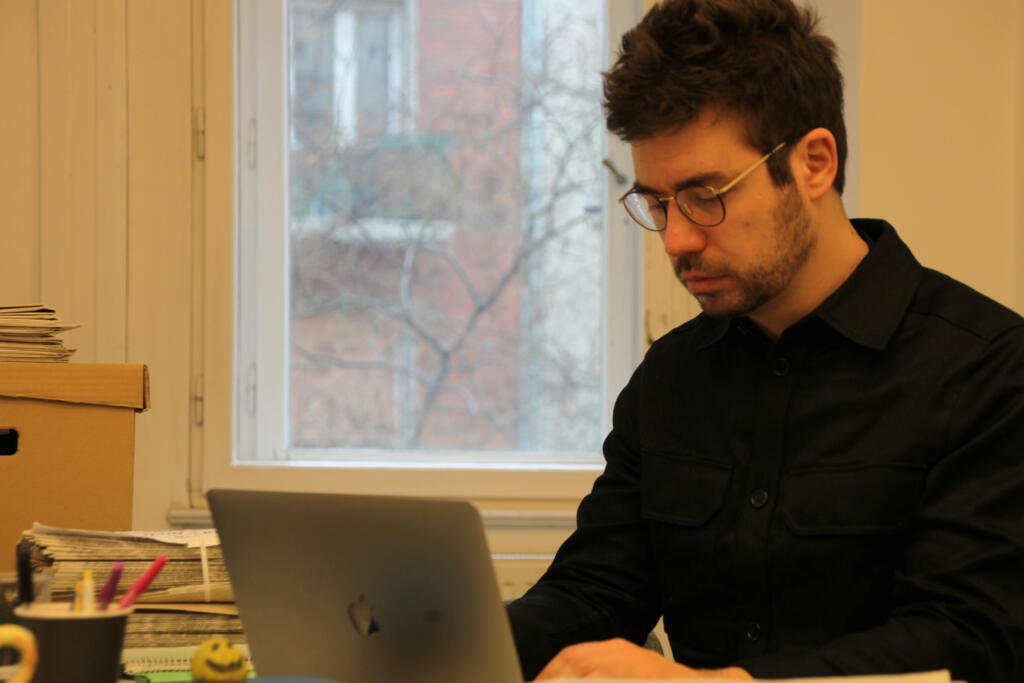
Investigative journalist Szabolcs Panyi working in the office of Direkt36, a crowdfunded, online publication. © RFI/Jan van der Made


Hungary, under Viktor Orban’s government, built a spy network in Brussels in the 2010s, operating covertly. Hungary dispatched intelligence officers under diplomatic cover to the Hungarian Permanent Representation to the EU,” according to Panyi.

At least half a dozen operatives – working under diplomatic cover – were active. Their mission, according to Panyi, was broad.

"They tried to recruit Hungarian citizens working within the EU institutional system as secret collaborators or informants to provide information about any countermeasures against, for example, the Orban government’s crackdown on media freedom, rule of law, or judiciary independence," he told RFI, "as well as any steps the EU Commission was preparing regarding the embezzlement of EU funds in Hungary."

These operatives were also reportedly asked to “rewrite” or remove sections of drafts “to ensure the texts reflected Orban’s government’s worldview", according to the report.

Between 2015 and 2019, the mission was headed by Oliver Varhelyi, who has since become a member of the European Commission, the EU's executive body.

The Commission spokesman indicated the EU's executive was not aware of the allegations at the time Varhelyi was vetted to be a commissioner, saying: "I don't think we had this type of information at that moment."

EU strips Hungary of €1bn in frozen funds over corruption concerns


Incentives


Hungary’s methods resembled those of several notorious intelligence services, said Panyi. “Hungary acted in a manner similar to Russia’s, China’s and Iran’s agencies. They created a covert spy ring in Brussels."

This operation involved mapping every Hungarian citizen in Brussels with access to information, conducting in-depth background checks and identifying those most likely to cooperate – and their tactics were direct.

“They offer money and career advancement, and appeal to patriotic duty,” Panyi explained, noting that several EU staff members resisted these recruitment attempts.


"The whole EU institution is completely unprepared for what happens when suddenly an EU member state becomes rogue, becomes hostile."

08:11

INTERVIEW Szablocs Panyi, investigative journalist with Budapest-based Direct36

Jan van der Made


But not every effort failed. In one case uncovered by Panyi and colleagues, “a large media company” under pressure from the Hungarian government sought help from the European Commission.

However, a Hungarian citizen representing the Commission allegedly leaked details to the Hungarian government almost immediately. The affected company suspects confidential details ended up on Orban’s desk within days, according to Panyi.
Security weaknesses

In 2017, the network unravelled. Its leader – identified only by the initial "V" – and his agents “acted too recklessly” and were reported to EU security, leading to identification by Belgium’s intelligence service, VSSE.

“It was a serious affair. Practically everyone was burned. The entire [Hungarian intelligence] network had to be rebuilt from scratch,” recalled a source who was familiar with the Hungarian intelligence service's operations at the time in the report.

While Panyi said it is unclear if the operations spying on EU institutions continued after this, he added that: "We know through our Belgian partners that the Hungarian government has bought a very prestigious building in central Brussels, right across the street from the Belgian prime minister's office... and Belgian intelligence is paying special attention to it."

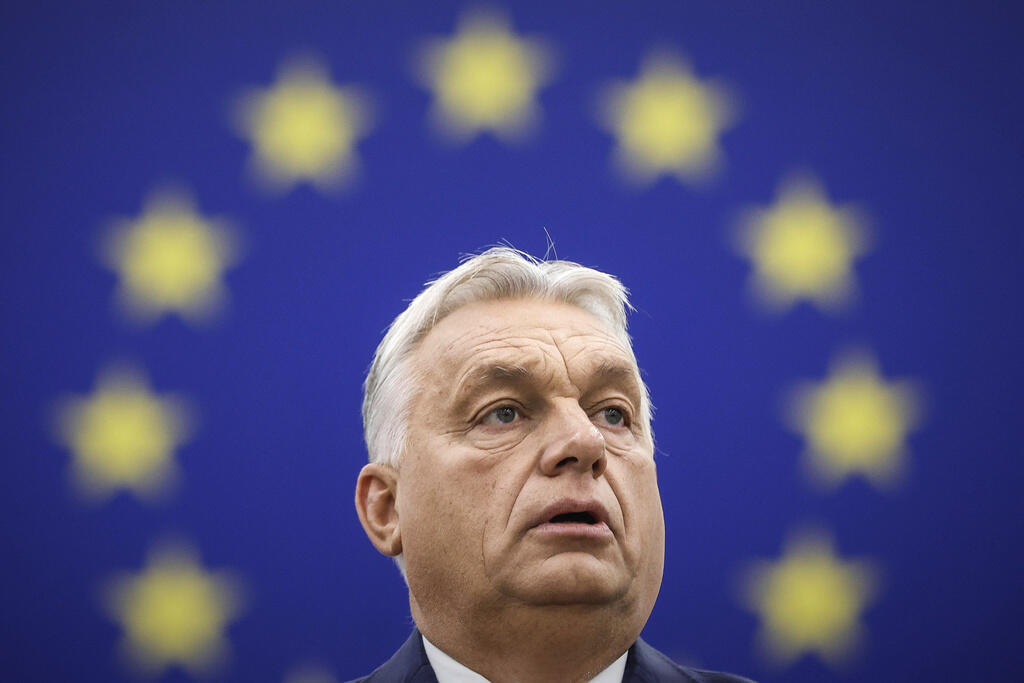
Viktor Orban delivers a speech at the European Parliament in Strasbourg, 9 October, 2024. © Jean-Francois Badias / AP

The report exposes profound weaknesses in the EU’s ability to protect its institutions. A security system designed around trust between member states has proved vulnerable.

“The EU is utterly unprepared for the scenario in which a member state goes rogue or becomes hostile,” says Panyi.

He notes shortcomings in the bloc’s vetting process – in particular, a flawed system that alerts national agencies when citizens gain access to sensitive documents, which inadvertently flagged targets for Hungarian intelligence.

What can Europe learn from Orban's victory in Hungary's elections?

In response to the report, Belgian foreign minister Maxime Prévot said: “It is unacceptable to spy in Belgium, and we do everything possible to prevent it and to defend EU institutions against espionage.”

The Hungarian government has not so far responded to French news agency AFP's request for comment.

Hungary's nationalist leader Orban has been at loggerheads with Brussels since his return to power in 2010 over what the EU says is his undermining of democratic institutions and divisive foreign policy stance.

(with newswires)
'A steak is a steak': EU Parliament votes to ban meat terms for vegetarian food

Green Party MEPs also pointed to what they describe as undue influence from the meat industry.


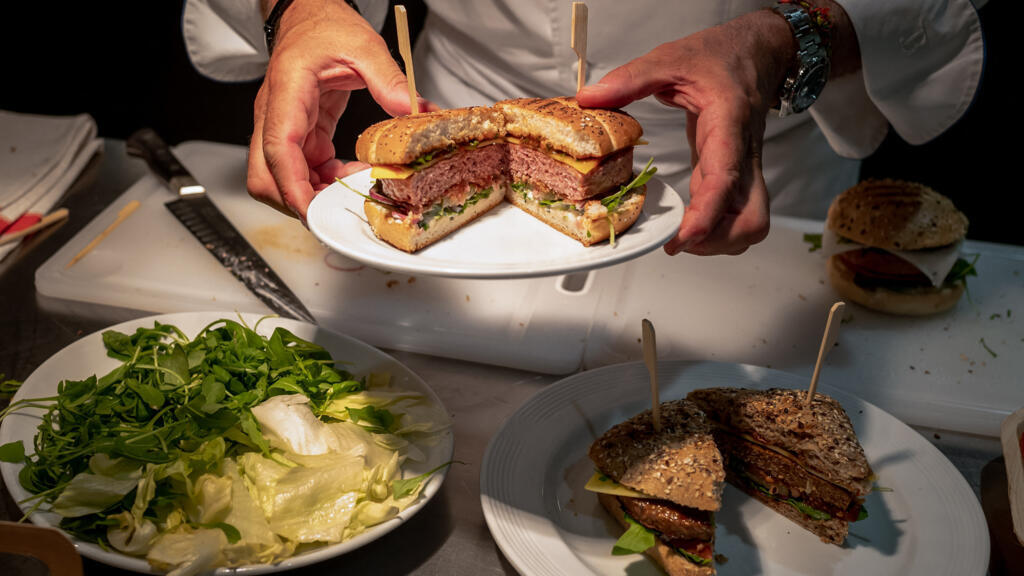
European Union lawmakers this week voted in favour of a proposal to restrict meat-related terms such as "burger" and "sausage" to products that contain actual meat, in order to protect the interests of livestock farmers. The decision has sparked debate across the European Parliament, notably among French MEPs.

Issued on: 10/10/2025 - RFI
2 minReading time
Burgers made with "vegetal steak". © AFP / Fabrice Coffrini


Put to the European Parliament on Wednesday as part of a package of broader farming reforms, the measure passed with a comfortable majority: 355 in favour and 247 against.

Many of Europe's livestock farmers see plant-based foods that mimic meat products as potentially misleading for consumers, and a threat to their already troubled sector.

France has already issued its own labelling restrictions on vegetarian products, though the EU's Court of Justice subsequently overturned them.

EU rules France can't stop veggie products being called 'steak'

Céline Imart, a French MEP from the conservative Republicans party and member of the European People’s Party, proposed the EU-wide ban. She argued that using meat-related terms for plant-based products distorts reality.

"We are witnessing an offensive from plant-based substitutes, and also from companies – especially American food tech firms – investing millions in lab-grown meat," Imart told RFI.

"I'm sorry, but a steak is a steak. It's meat. When I see a cat, I call it a cat. When I see a dog, I call it a dog. I don't say it’s a cat-dog. No! It’s the same thing."
'Distraction'

However, not all legislators agreed. Pascal Canfin, a centrist French MEP from the Renew Europe group, dismissed the measure as a distraction from more serious challenges facing European agriculture.

"People who want to eat meat know what meat is. And those who don't want to eat meat also know that a vegetarian burger is not meat," he said.

"Let's not treat consumers and Europeans like idiots. The real paradox is that many of those who voted in favour of this today also support the EU-Mercosur deal – when it’s actually Brazilian imports that pose the real threat to European livestock farming."

French Green MEP Marie Toussaint condemned the vote as a stunt by the political right. "Given the state of agriculture today, it’s clear that this is just a right-wing tactic to distract from the real issues," she said.

Green Party MEPs also pointed to what they describe as undue influence from the meat industry.

The proposal now needs the backing of the bloc's 27 member states, as well as the European Commission, before it can become law.

The EU already bans the use of dairy terms such as "milk" or "cheese" to refer to plant-based alternatives.


French Gaza flotilla activists plan legal complaint over detention in Israel


Thirty-one French nationals who joined an aid flotilla to Gaza plan to file a criminal complaint in France over what they describe as arbitrary detention and mistreatment in Israel. The Global Sumud Flotilla was stopped by the Israeli navy before reaching the Palestinian territory. One of the French participants told RFI about the conditions inside the prison where they were held.


Issued on: 10/10/2025 - RFI

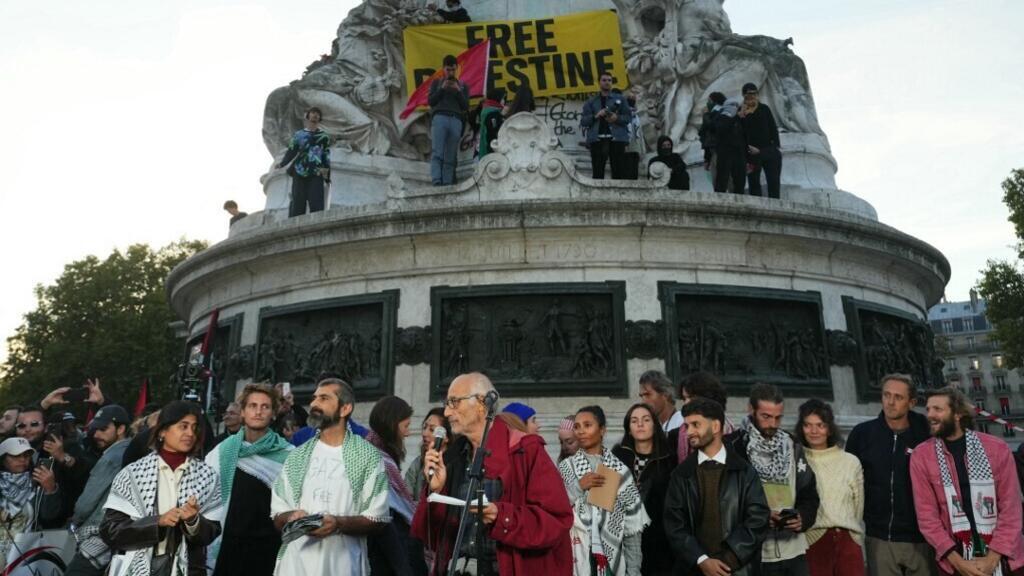
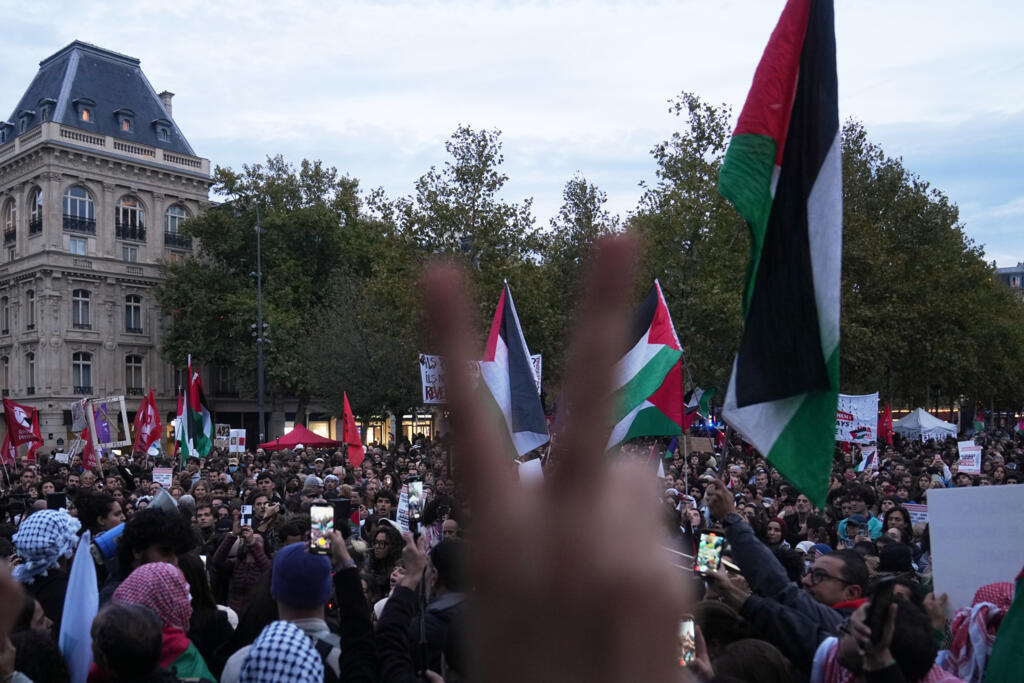
French nationals who sailed with the Global Sumud Flotilla to Gaza and were detained in Israel attended a gathering at Place de la République, Paris, 8 October 2025. © AFP/Dimitar Dilkoff

By:Zeenat HansrodFollow
Advertising


“We were treated like animals,” said Yacine Haffaf, a French surgeon. “It was three and a half days of daily humiliation, intimidation and abuse.”

Haffaf, 69, heads Waves of Freedom, which led the French contingent of the Global Sumud Flotilla. He was on board Jeannot III, one of the vessels intercepted by the Israeli military on 3 October, and among the 31 French citizens later expelled to Athens.

“Soldiers would suddenly storm into our cell when we were sleeping, pointing guns with green laser dots at us and ordering us into a corner,” he said. “We realised after a while that they didn’t intend to shoot but wanted to terrify us.”

The Global Sumud Flotilla left Barcelona in September to challenge Israel’s blockade and deliver humanitarian aid to Gaza. The mission involved 42 boats carrying 462 civilians from 57 countries.

Most of the activists have since been released from Ketziot, a high-security prison in Israel’s Negev desert. The facility is mainly used to detain Palestinians accused by Israel of terrorist activity.

Israel said the flotilla’s “true goal was provocation in the service of Hamas, not humanitarian assistance”.

Dr. Yacine Haffaf, warmly welcomed back in Paris after taking part in the Global Sumud Flotilla and being jailed in Israel. © RFI/Sarah Girard BI

National Security Minister Itamar Ben-Gvir called the participants “terrorists” in a video shared online.

He said he is “proud that the flotilla activists are being treated as terrorists”. In a second video, he said that they should not be sent home immediately.

“I think we must keep them in Israeli prison for a few months so they can get a taste of the terrorist wing,” he added.

French lawyers representing those expelled from Israel said legal proceedings are under way.

“We will file, in the coming weeks, a criminal complaint to the French public prosecutor for arbitrary detention and mistreatment of the French nationals who were in the Global Sumud Flotilla,” said Lucie Simon, one of five lawyers representing them.

Gaza flotilla boarded by Israeli navy amid calls to lift blockade


Claims of abuse in custody

Haffaf said the detainees were denied essential medicine.

“One of our comrades suffered an asthma attack. We hammered on the cell door to demand medicine, but it only came 48 hours later,” he said. “Despite the inhumane treatment, we refused to bow down and would chant ‘Free Palestine’ to the soldiers.”

Several other activists described similar treatment. Tabea Zaug, a Swiss national, said detainees were treated differently depending on their skin colour and passport.

“I have white skin, blue eyes, I have a Swiss passport. They treated me much better than other passengers on board,” she said after her release.

Zaheera Soomar, a South African activist, said her hijab was forcibly removed and she was stripped naked in front of Israeli soldiers. The South African group said they received harsher treatment than others.

French activist Lyna Altabal said dogs were released into the cell where she was held. French–Palestinian Rima Hassan, a member of the European Parliament for France Unbowed (LFI), told RFI she was beaten by soldiers.

French nationals on Gaza aid flotilla deported from Israel, sent to Greece


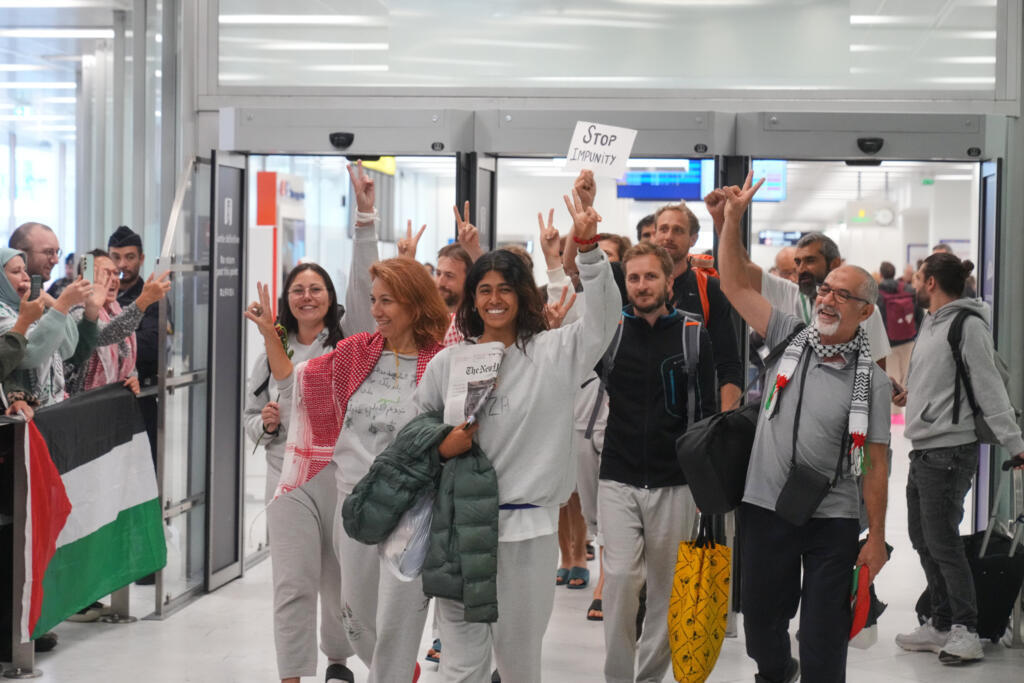
French nationals - Rima Hassan center - arrive at Orly airport after being deported from Israel for taking part in the Gaza-bound Global Sumud Flotilla, 7 October 2025. © AP/Thibault Camus


Shahd Hammouri, a lecturer in international law at the University of Kent, said Israel’s actions were illegal.

“The humiliating mistreatment of civilians illegally detained in an Israeli prison is a violation of their human rights and of the torture convention,” she told RFI.

Hammouri added that Israel acted unlawfully by seizing the ships in international waters and transferring the detainees to Israeli territory. “Israel does not have the authority to cross the borders with them,” she said.

“Under the law of occupation, you should never hold people you catch outside the territory where you caught them.”

She also rejected Israel’s claim that Palestine has no recognised borders.

“The International Criminal Court, one of the highest courts in the world, rejected these claims in a 2021 judgment and confirmed that Palestine is a sovereign state under international law,” Hammouri said.
Return to Greece

Thirty-one French nationals were expelled from Israel to Greece on 6 October. During their detention, they received consular protection from the French government.

A French diplomatic source said the Consulate General in Tel Aviv stayed in contact with Israeli authorities and the families of those detained. In Athens, consular staff met the group at the airport to help arrange their return home.

The source said officials helped them find flights, contact relatives, and, if needed, book accommodation for the night.

But Haffaf disputed this account.

“They brought chocolates and protein bars and explained that the French government would not pay for the plane fare to Paris,” he said.

“We were left to fend for ourselves in Greece. Thank God for the wonderfully generous Greeks who came to greet us with music at the airport.”

He said Greek supporters brought food and clothes, since the group was still wearing prison uniforms, and hosted them overnight. “We had nothing, no money, no phone, nothing,” he said.

“It is true that we knew the risks, but I thought our government would step forward and take care of us in our hour of need.”
People in Paris gathered at Place de la République to welcome the French nationals who participated in the Global Sumud Flotilla bringing aid to Gaza and were jailed in Israel, 7 October 2025. © AP/Thibault Camu

Possible action against France

Lawyer Simon said that her team is considering taking the French state before the administrative court of justice for failing to protect French citizens wrongfully arrested in international waters and arbitrarily detained in an Israeli prison.

She argued that the government should have done more.

“Consular protection means protection before their arrests, protection through diplomatic channels or by sending a vessel like Spain and Italy to escort the flotilla and more specifically the French nationals,” she said.

Warning them of the risks before they travelled to Gaza is not enough, she added.

She compared the government’s stance to what she called “the short skirt theory”.

“You’re wearing a short skirt, so you know that you might get raped. It’s the same theory. I cannot understand that a state bound by international law can behave like that towards its citizens,” Simon said.

Meanwhile, MEP Rima Hassan is calling for strikes and blockades – similar to those in Italy and Spain – to increase pressure on the French government over its response to events in Palestine.

Looking ahead

Back in Paris, Haffaf – who has carried out humanitarian work in conflict zones such as the Democratic Republic of Congo and Yemen – said that while he usually manages to return to normal life after a mission, this time is different.

"I am completely exhausted, both mentally and emotionally. It has been a roller coaster of emotions. Staring down the barrel of a gun is not the same as operating under bombs in Gaza,” he said.

Like most of the activists, he plans to volunteer again.

“This mission created a huge impact in mobilising the hearts and minds of citizens across the world,” he said. “We may not have succeeded in breaking the blockade this time, but we opened a way. We mobilised more people and more resources for future flotillas to Gaza.”