It’s possible that I shall make an ass of myself. But in that case one can always get out of it with a little dialectic. I have, of course, so worded my proposition as to be right either way (K.Marx, Letter to F.Engels on the Indian Mutiny)
Friday, October 10, 2025
CU
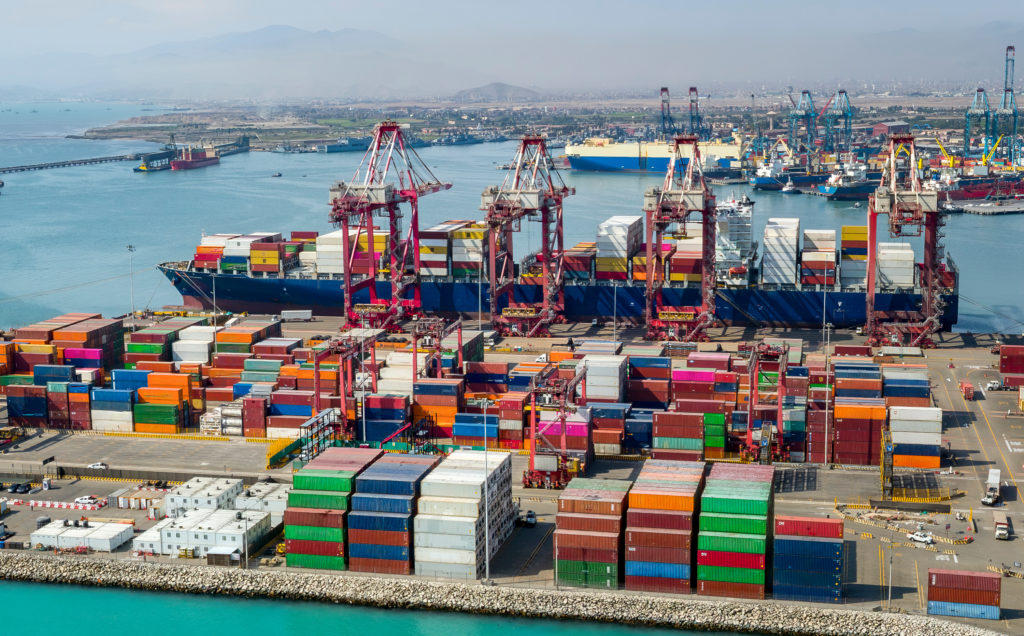
Blackrock-backed Peru copper port to expand as China rivalry heats up
Latin America’s top copper-shipping hub — co-owned by BlackRock Inc. — has secured approval for a $700 million expansion as it seeks to retain a key Chinese customer.
The Matarani port in southern Peru won government clearance to invest in new infrastructure to handle rising exports from mines coming online in the world’s No. 3 copper producer, according to operator Terminal Internacional del Sur SA, or Tisur. The upgrade, authorized under a decree this month, forms part of a 30-year extension of Tisur’s concession, allowing it to bypass a competitive tender for the operating rights.
The green-light marks a major boost for a company in which BlackRock’s Global Infrastructure Partners arm acquired a 50% stake in 2023, and positions Matarani to better compete with Chinese-backed ports in Peru. Chinese groups are developing the $1.3 billion Chancay port north of Lima and were awarded the San Juan de Marcona project, 280 miles north of Matarani.
“There’s undoubtedly a geopolitical element in how the big investments in Peruvian ports have been taking place,” Tisur general manager Mauricio Nuñez del Prado said in an interview.
Matarani serves Las Bambas, owned by China’s MMG Ltd., as well as operations run by Freeport-McMoRan Inc., Glencore Plc, and Hudbay Minerals Inc. The port aims to handle copper from projects by Teck Resources Ltd. and Southern Copper Corp. that are expected to start producing later this decade.
Las Bambas, Matarani’s main Chinese client, has indicated it’s evaluating alternatives, including the planned San Juan de Marcona port. “Las Bambas is actively conducting studies around the San Juan port area,” the company said in a presentation earlier this year.
Nuñez del Prado said the Las Bambas contract with Matarani expires in 2029, and the port hopes to renew it by offering competitive terms. “It will always be their prerogative — either for economic or geopolitical reasons — to seek alternatives,” he said.
In a response to questions, Las Bambas said it currently has no plans to change ports but regularly reviews logistics to optimize shipments and mitigate community impacts along Peru’s Southern Road Corridor. “Any future changes would be evaluated against commercial considerations,” it said.
Nuñez del Prado said Matarani’s integrated infrastructure gives it a logistical edge.
“There’s no other installation like this in the world that handles copper from five medium-to-large mines in one place,” he said, citing the combination of truck and rail links that deliver concentrate directly inside the port.
(By Marcelo Rochabrun)
Zambia’s record copper production meets a red-hot market
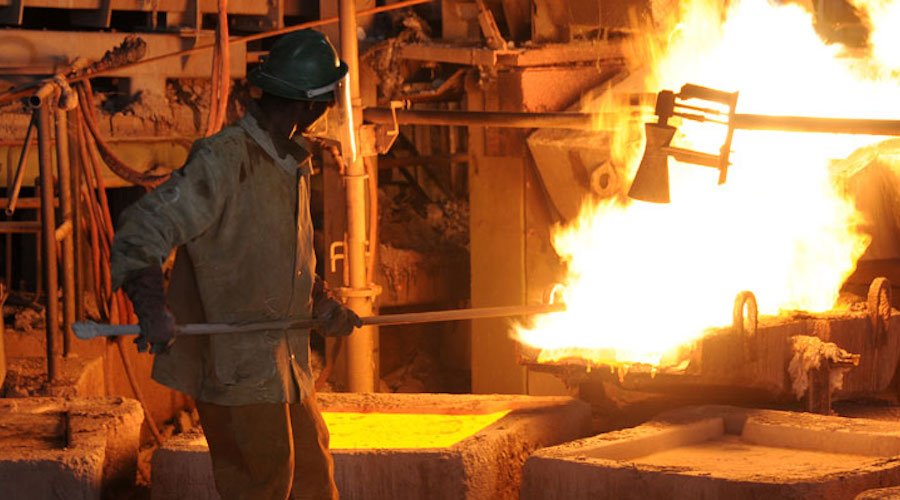
Zambia is poised for record copper production this year, bolstering its standing as a key global supplier just as prices surge and demand is set to grow.
A wave of accidents and disruptions at major mines has squeezed supply and helped drive copper prices up more than 20% this year, and Zambia stands out as one of the few places where output is rising. If it can deliver while rivals stumble, the cash-strapped nation could reap a major windfall.
Zambia plans to seize the moment and expand production. Firms including Barrick Mining Corp., First Quantum Minerals Ltd. and Sinomine Resource Group Co. are investing about $10 billion to boost output. President Hakainde Hichilema, up for re-election in August, has made rapid copper growth central to his pitch, targeting output of 3 million tons annually by early next decade. That would be more than triple current levels.
“We believe in audacious goals,” Jito Kayumba, the president’s special assistant for finance and investment, said in an interview in Zambia’s capital, Lusaka. “We are determined to get to that milestone.”
The global shift to electrify industry, transport and increase renewable power generation is set to underpin rising copper demand. The metal’s use in grids, batteries and construction makes it strategically critical for the energy transition.
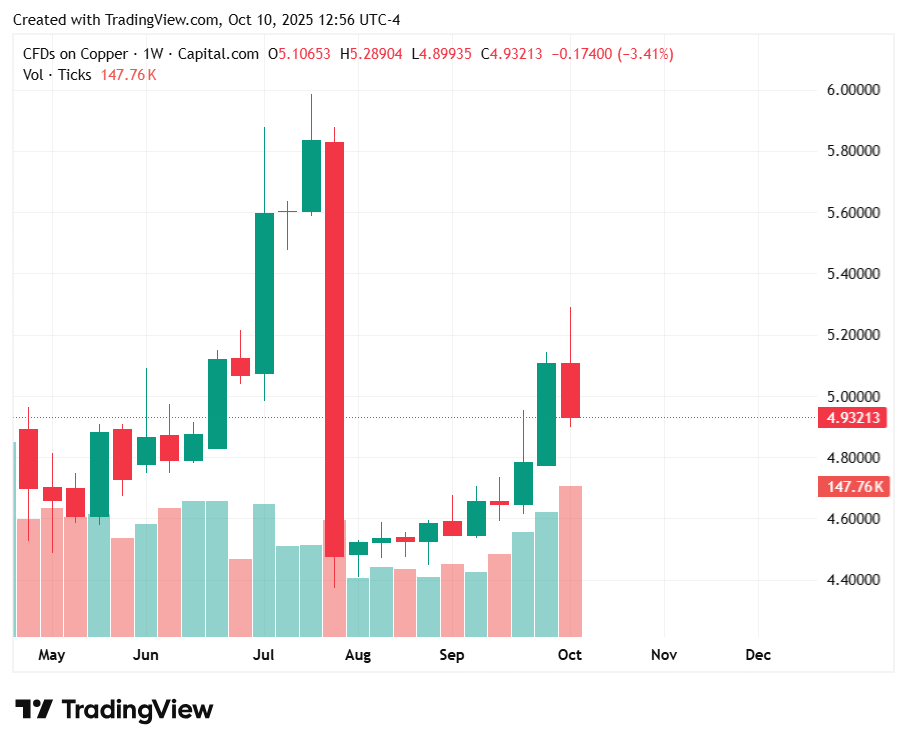
Copper is trading near a record high and was up 2.1% at $10,887.50 a ton as of 9:16 a.m. in London. Banks including Goldman Sachs Group Inc. expect further gains as the market moves into a deficit later this decade. The bank raised its 2026 forecast by 5% in an Oct. 6 note. It means producers in Zambia, able to ramp up output, have a rare chance to capitalize on higher prices and lift profits.
The rally stems largely from a string of supply shocks. Earlier this year, a giant copper mine in the Democratic Republic of Congo flooded and Chile suffered its deadliest mining collapse in decades. Last month, a mud flow at the world’s second-biggest copper mine prompted operator Freeport-McMoRan Inc. to slash its production guidance for this year and next. This week, Teck Resources Ltd. cut output guidance for its flagship copper mine in Chile.
Zambia is Africa’s second-biggest copper producer after neighboring Democratic Republic of Congo. Bloomberg calculations show miners have announced more than $10 billion of investments that could add roughly 1.2 million tons of annual output in the 2030s, compared with 821,000 tons last year.
The biggest project now under way is a $2 billion expansion of Barrick’s Lumwana mine near the Congolese border — the centerpiece of the gold producer’s move into copper. Once complete in 2028, Barrick expects to recoup its investment in less than two years if current market levels hold. The work — which management said was progressing slightly ahead of schedule when Bloomberg visited in August — is a mammoth endeavor to double annual production by blasting multiple existing pits into a single vast crater.
Relations between copper producers and Zambia’s government have often been uneasy. Privatization in the 1990s revived the industry after years of state mismanagement, but investment slowed in the 2010s amid frequent tax hikes and disputes over revenue.
Under Hichilema’s pro-business administration, investors are once again racing to tap Zambia’s copper riches — helped by historically high prices.
“The level of investment that’s coming in right now, I don’t think that can be matched in the history of Zambia,” First Quantum chief executive officer Tristan Pascall said in an interview. The company, Zambia’s biggest producer, was among the first to buy assets after privatization, along with Glencore Plc and Anglo American Plc.
Still, the government’s 3 million-ton target won’t be met by the investments pledged so far. Several projects face major hurdles — notably an ambitious underground expansion at a mine controlled by Indian billionaire Anil Agarwal. KoBold Metals Co’s plan to spend more than $2 billion to build the firm’s first mine is also a challenging undertaking.
To get close to the goal, exploration efforts will need to bear fruit too, with global miners including Barrick, Anglo American, Ivanhoe Mines Ltd. and Rio Tinto Group prospecting across the country.
Hichilema hopes Zambia will surpass 1 million tons of production this year for the first time in a century of commercial mining — a boost to government coffers as it emerges from a bruising debt restructuring. The deal with creditors, including bondholders and China, offers larger payouts if the economy outperforms.
Zambia “seems to be on a remarkable turnaround path,” Barclays analysts Michael Kafe and Andreas Kolbe said in an Oct. 7 note to clients after visiting the country. “Major extraction companies have begun to respond to the business-friendly environment that the Hichilema administration has pursued.”
(By William Clowes and Matthew Hill)
Antofagasta ignites Centinela mine expansion with new pit
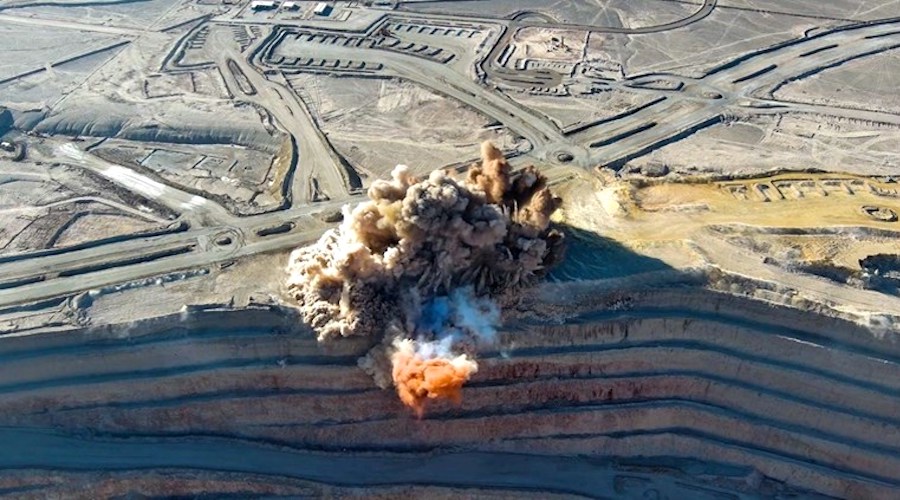
The Encuentro pit will serve as the main ore source for Centinela’s second concentrator. (Image courtesy of Antofagasta.)
Chilean miner Antofagasta (LON: ANTO) has launched the next phase of its copper growth strategy with the first blast at the Encuentro Sulphides pit at its Centinela mine in the country’s north.
The blast marks the start of initial stripping activities that will supply higher-grade sulphide ore for the Centinela second concentrator, which is at the core of Antofagasta’s $4.4 billion expansion project for the mine.
The ore will complement feed from the existing Esperanza South pit, strengthening Centinela’s production profile. Antofagasta aims to boost its copper output by 30% in the medium term thanks to the expansion, optimizing value from Centinela’s 2.6 billion tonnes of ore reserves.
Approved in July 2025 with an estimated $1 billion investment, the Encuentro Sulphides project is expected to complete its stripping phase by 2028. The deposit, included in Antofagasta’s 2024 year-end reserves, holds about 738 million tonnes grading 0.45% copper, along with by-products of 0.17 g/t gold and 0.015% molybdenum. This compares favourably with Centinela’s broader sulphide reserve grade of 0.41% copper.
The Centinela mining complex, located in Chile’s Antofagasta region, was created in 2014 from the merger of the Esperanza and El Tesoro mines. It produces copper concentrates containing gold and silver through milling and flotation, among other processes.
Powering growth
Once operational, the Encuentro Sulphides pit will serve as the main ore source for Centinela’s second concentrator, which will add 95,000 tonnes per day of processing capacity. The concentrator will use high-pressure grinding rolls and other modern processing technologies to boost efficiency and recovery.
Centinela’s second concentrator is expected to begin operations in 2027. At the peak of construction, more than 13,000 people will be employed, supporting local and regional economies. The project will extend Centinela’s operational life by 30 years.
Over its first decade of operation, the facility is projected to produce an average of 170,000 tonnes of copper-equivalent output annually, including about 144,000 tonnes of copper, 130,000 oz of gold, and 3,500 tonnes of molybdenum.
Centinela’s expansion adds a second concentrator and tailings deposit 7 kms away, built in two phases. (Image courtesy of Antofagasta.)
The Second Concentrator project also entails major infrastructure upgrades — enhancing Centinela’s raw seawater pumping system, adding new tailings storage facilities, and improving energy and logistics systems. These developments will reinforce operational reliability and sustainability as Centinela ramps up production.
During pre-stripping, roughly 186 million tonnes of material will be moved over two years. The project will progressively introduce autonomous mining equipment, building on the successful use of autonomous haul trucks at Esperanza Sur. Full autonomy is targeted for January 2026.
Smart, sustainable mining
Centinela is recognized as a global leader in innovation. It pioneered large-scale thickened tailings technology and became the first company in Chile to secure permits for depositing tailings in inactive pits. The project has earned awards from the Chilean Association of Consulting Engineers (2022) and the Antofagasta Industrial Association (2025).
The mine also leads in efficient raw seawater use, autonomous operations, and the supply of 100% renewable electricity. With the Second Concentrator, Centinela will nearly double its processing capacity, create jobs, and open new opportunities for local suppliers — strengthening its economic contribution to the Antofagasta Region.
Analysts have trimmed output forecasts following a series of accidents and disruptions at mines in Chile, the Democratic Republic of Congo, and Indonesia, prompting expectations of significant supply deficits.
Worries intensified after Freeport-McMoRan (NYSE: FCX) declared force majeure at its Grasberg mine in Papua, Indonesia — the world’s second-largest copper operation — after severe flooding halted production. The company confirmed over the weekend that all seven missing workers were found dead following the discovery of five additional bodies.
CU
Chile mine regulator probes worker death at BHP’s Escondida
Chile’s mining regulator Sernageomin said on Friday it is investigating the death of a worker at BHP’s Escondida, the world’s largest copper mine.
Two sources with knowledge of the matter said mining operations continued normally after the incident.
BHP in a statement said a contractor had died on Thursday. An internal memo from Chilean construction company Workmate described the worker as a crane operator at Escondida.
(By Fabian Cambero and Daina Beth Solomon; Editing by Kylie Madry)
Codelco lifts El Teniente loss estimate, copper output target intact
Codelco’s copper losses from the accident at its El Teniente mine are likely to be 45% higher than previously estimated, but chairman Maximo Pacheco still expects the world’s largest copper miner to slightly increase output this year.
Loss of output from Chile’s El Teniente along with other disruptions including at Freeport-McMoRan’s Grasberg mine in Indonesia has tightened supplies and pushed copper prices to $11,000 a metric ton this week, close to the record hit last year.
The July accident at El Teniente, Codelco’s most profitable mine, will reduce its output by 48,000 metric tons this year and cost the company around $500 million in EBITDA.
In an interview ahead of LME Week, a gathering of the global metal industry in London, Pacheco said Codelco’s production from January to September was 2% above the same period of last year.
“We continue to believe that in 2025, we should have a production level that is slightly above last year’s,” he said.
The state-owned miner’s copper output for the first nine months of the year was 938,000 tons while Codelco’s guidance for 2025 is 1.34 million-1.37 million tons.
Rock burst
On the internal investigation into the El Teniente accident, due to be finalized by the end of the year, the most probable cause was a rock burst due to a change in the geological structure of the deposit, according to Pacheco.
“This was a process of vertical unloading due to geometric changes and cavity interaction in the northwest of the deposit…weakening the structure and facilitating downward movement of material. This means at depth, rock layers are shifting over one another,” Pacheco said.
That, he added, means Codelco needs to monitor terrain structure, seismic activity and geomechanical factors throughout the entire mine, which is made up of 4,500 kilometers of tunnels.
The Andesita unit within the El Teniente complex will remain suspended until the investigation is complete.
Environmental permits
Codelco plans to apply for environmental permits by 2027 for the joint operation of its Andina mine and Anglo American’s neighboring Los Bronces operation, Pacheco said. The companies finalized their agreement last month, saying it will produce $5 billion in savings.
Pacheco also said Codelco will contribute to discussions on the future of Teck Resources’ Quebrada Blanca mine in Chile, where it holds a 10% stake and has two seats on the mine’s board.
Teck is aiming to combine Quebrada Blanca with the adjacent Collahuasi mine as part of a proposed merger with Anglo American.
(By Pratima Desai, Daina Beth Solomon and Fabian Cambero; Editing by Kirsten Donovan)
Codelco posts worst monthly copper output in decades on accident
Codelco registered the lowest month of copper output in more that two decades after a mine collapse disrupted the Chilean firm’s efforts to recover from a protracted production slump.
The state behemoth produced 93,400 metric tons in August, according to data released Thursday by Chilean copper agency Cochilco. That’s down 25% from the same month last year and the lowest since the agency’s data set began in 2003.
A July 31 accident at El Teniente mine killed six people, injured nine and halted activities for more than a week, prompting the company to trim its annual output projection. While work has resumed in areas unaffected by the collapse, the Chilean industry’s worst accident in three decades is undermining Codelco’s status as the world’s biggest copper producer.
That adds to mounting supply-side risk in the global copper market just as the energy transition and building of more data centers start to push up demand for the wiring metal.
Escondida, operated by BHP Group, produced 105,100 tons in August, lower than July though little changed from a year ago, according to Cochilco data on the world’s biggest copper mine.
Meanwhile, the Collahuasi mine — in which Anglo American Plc and Glencore Plc each have a 44% stake — posted a slight increase from July, but remained well down on last year’s production levels due to a period of lower quality ore.
(By James Attwood)
CUT NOSE TO SPITE FACE DEPT.
Trump’s crackdown on EVs hits home in the Battery Belt
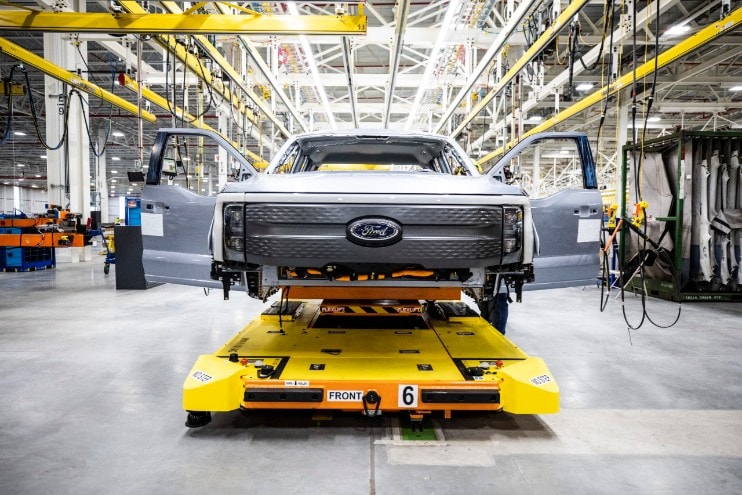
Ford F-150 Lightning pre-production at Rouge Electric Vehicle Center. Credit: Ford
Stanton, Tennessee – population 450 – welcomed a massive new neighbor a few years ago: a Ford F.N electric-truck factory and a joint-venture battery plant slated to employ 6,000 workers.
Ford’s 2022 groundbreaking triggered an influx of construction activity into the former cotton-and-soybean farmlands outside of Memphis. Hard-hatted workers filled local diners. Developers scrambled to build homes and fire stations.
Stanton is quieter these days. Ford over the past 18 months repeatedly delayed phases of the project. The EV truck plant is slated to begin initial production in 2027 and start sending deliveries the next year, a timeline delayed several times from the original plan of coming online in 2025.
Ford said it “will be nimble in adjusting our product launch timing to meet market needs and customer demand while targeting improved profitability.”
The Ford complex is part of the so-called Battery Belt, a swath of factories stretching across the U.S. heartland that spans from Georgia to Indiana. Roughly two dozen battery projects worth tens of billions in investment have been announced this decade, promising to inject tens of thousands of jobs in Republican-dominated states like Georgia and Kentucky.
By last year, though, Americans’ waning enthusiasm for electric cars led automakers to delay or scrap some factory projects. Now, the additional fallout from U.S. President Donald Trump’s recent policy changes is descending on the Battery Belt.
Ford CEO Jim Farley last week offered the prediction that electric-car sales could fall by around 50% following the Sept. 30 expiration of a $7,500 tax credit for buyers, echoing other gloomy forecasts for the EV market.
The uncertain fate of these massive, high-tech factories and their employment has rattled the small rural communities that spent years hitching their economic futures to these projects.
“That’s on everybody’s mind, quite frankly,” said Allan Sterbinsky, who retired as mayor of Stanton in December and advocated for the site for years before Ford came to town. Some residents worry that Ford will never follow through on the plant, the former mayor says. Others hope the company will repurpose the 3,600-acre site if demand doesn’t increase for EVs.
A Ford spokesperson pointed to the automaker’s community work in Stanton, including grants to public safety organizations as part of a broader $9 million commitment to the area.
A Reuters review of U.S. battery-investment plans shows those worries are justified. The industry appears headed toward a huge glut of factory capacity, if all those projects were to move ahead as planned.
By 2030, the planned battery plants would provide the capacity to produce 13 million to 15 million EVs annually, according to figures provided to Reuters by research firm Benchmark Mineral Intelligence. But the industry now might only need about one-quarter of that factory space. S&P Global Mobility predicts only around 3 million EVs will be produced that year, and some would likely use batteries imported from other countries.
Some of that excess roughly 10 million-EV worth of battery capacity would likely be used for hybrids and extended-range EVs as well as the booming energy storage industry, but there is still a sizable gulf, said Stephanie Brinley, S&P Global Mobility automotive analyst.
The demise of the $7,500 tax credit – which had been in place for more than 15 years to persuade Americans to try green cars – is only the highest profile of several anti-EV measures put forth by the Trump administration. Combined, they further jeopardize battery projects and other electric-car-related investments, experts say. In the last few months, several automakers have canceled, delayed or downsized EV projects.
Meanwhile, a pot of tens of billions of dollars available to companies that make EV batteries domestically has tighter restrictions that will likely reduce the amount of federal money that flows to the battery sites.
“All of a sudden, much of what was originally going to benefit from these credits now no longer can to a large degree,” said Jennifer Stafeil, tax auto sector lead for KPMG.
Trump has said he is not anti-EV, but prefers that consumers decide what cars to buy, without government influence. He also has criticized EV-friendly regulations implemented under former President Joe Biden, which Trump has said were costly and threatened American auto jobs.
One of the nation’s largest EV projects, Hyundai Motor’s $12.6 billion assembly plant and joint-venture battery factory near Savannah, Georgia, is moving ahead. Last month the project suffered a setback when federal law enforcement raided it. Hyundai has said the fallout would delay the battery plant by at least two to three months.
In the three years since Hyundai announced the megasite, 21 suppliers have opened operations near the site.
“Hyundai is committed to offering a diverse product lineup, including internal combustion, hybrid, plug-in hybrid, and EV models. We understand that every customer is unique, and we strive to meet a wide range of needs,” a spokesperson said.
The complex is gearing up to hire 8,500 employees by 2031, and is paying wages 25% above the county average, said Trip Tollison, president of the Savannah Economic Development Authority.
Tollison acknowledged that some in the community worry about the uncertain future of the nascent EV industry that underpins all that development. He is hopeful Hyundai can flexibly shift to hybrid production if the EV market doesn’t take off.
“That’s how you provide opportunities like this to lift people out of poverty,” he said.
(By Nora Eckert, Editing by Mike Colias and Anna Driver)
CU
Copper price tumbles as Trump threatens massive new tariffs on China
Copper plunged after President Donald Trump threatened a massive increase of tariffs on goods from China, the world’s top buyer of the industrial metal.
Prices slid almost 5% below $10,400 a ton on the London Metal Exchange, in the biggest drop in five months. The move wiped out gains that lifted prices towards a record high on Thursday.
Trump’s comments on a social media post sparked turmoil across financial markets, with stocks dropping sharply in the US, while bonds and gold gained. Copper is particularly sensitive to concerns about trade and the global economy given its widespread use in manufacturing and key role in the world’s growing electrification.
Friday’s slump reversed a rally that was fueled by major setbacks at massive copper mines in Chile, Democratic Republic of Congo and Indonesia. With other projects also struggling to hit production targets, investors had been piling into the metal in recent weeks on a bet that the market could be heading for deep shortages.
Trump said he saw “no reason” to meet Chinese President Xi Jinping at a scheduled meeting in South Korea later this month, citing “hostile” export controls on rare earth minerals. One countermeasure the US is considering “is a massive increase of Tariffs on Chinese products coming into the United States of America,” he said.
The post follows a series of moves by both the US and China to potentially curb flows of technology and materials between the countries.
LME copper prices were down 4% at $10,440 a ton as of 12:47 p.m. New York time, as all metals declined on the exchange. Futures contracts on New York’s Comex also tanked.
Prices had rallied to $11,000 on Thursday, about $100 shy of an all-time high struck in May last year.
(By Mark Burton)
Trump shocked by China’s move on rare earths, threatens more 100% tariffs
By bno - Taipei OfficeOctober 11, 2025
US President Donald Trump has announced plans to impose an additional 100% tariff on imports from China from next month, escalating economic tensions between the world’s two largest economies. The move follows Beijing’s decision to tighten export controls on rare earth elements, a vital group of materials used in electric vehicles, smartphones, and other advanced technologies.
"Some very strange things are happening in China!" Trump wrote in a post on his Truth Social account on October 10, adding "They are becoming very hostile."
The US president later added that China had "taken an extraordinarily aggressive position on Trade in sending an extremely hostile letter to the World, stating that they were going to, effective November 1st, 2025, impose large scale Export Controls on virtually every product they make, and some not even made by them."
Washington is also preparing to introduce export restrictions on certain critical software, marking a further deterioration in the fragile trade truce reached earlier this year. Financial markets reacted sharply to the prospect of renewed confrontation, with the S&P 500 closing 2.7% lower, its steepest single-day decline since April, multiple US sources havereported.
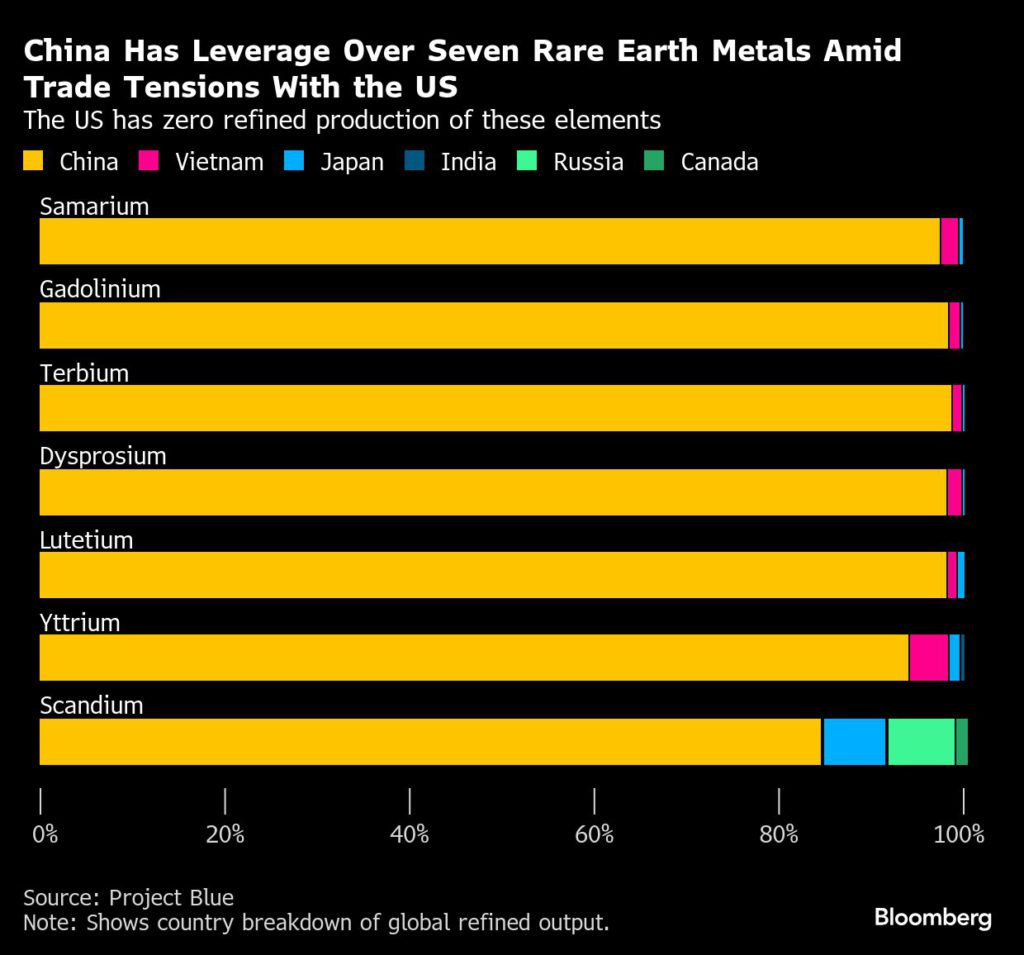
China remains the dominant global producer of rare earths and other key minerals essential to manufacturing and defence industries. Previous curbs on such exports, introduced after earlier US tariff hikes, prompted widespread disruption for American firms reliant on Chinese materials.
In a parallel move, according to the BBC, Beijing has launched an antitrust investigation into the US technology company Qualcomm, potentially jeopardising its planned acquisition of another chipmaker. China has also indicated it will begin levying new port fees on vessels with links to US ownership or operations.
The latest escalation threatens to derail planned trade discussions between Trump and Chinese President Xi Jinping, who had been expected to meet later this month at a summit in South Korea. Recent negotiations between the two sides have focused on semiconductor exports, agricultural trade, and the future of platforms such as TikTok.
Despite earlier progress towards easing tariffs, under which US goods entering China currently face a 10% levy and Chinese exports to the US a 30% surcharge, the prospect of further duties and export controls underscores the fragility of US-China relations.
The world’s chip supply chain is bracing for fallout from China’s rare earth curbs
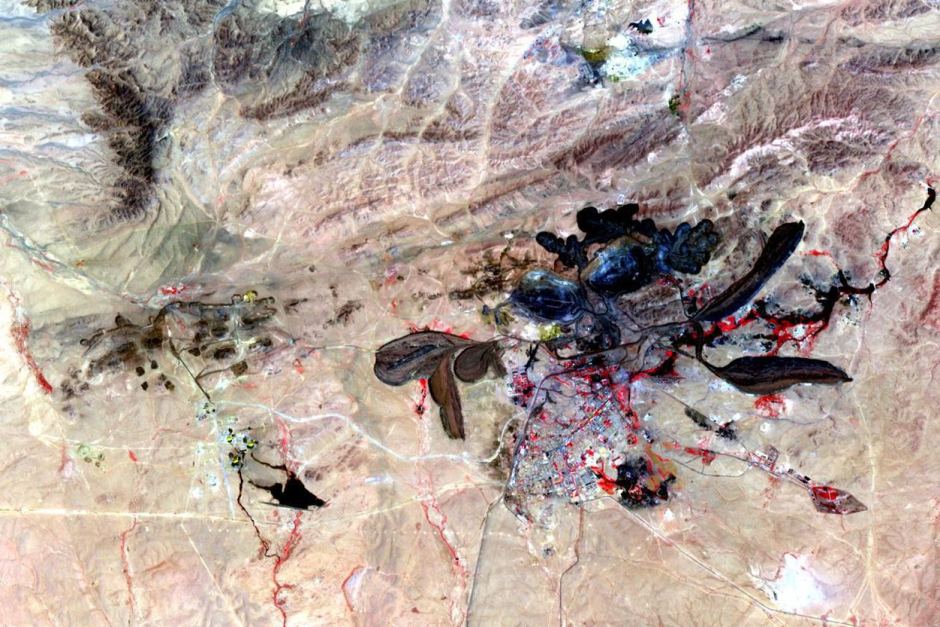
The Baiyun Ebo mine in China’s Inner Mongolia region is the site of almost half the world’s rare earth production. (Image courtesy of NASA.)
Businesses across the global semiconductor supply chain are bracing themselves for disruptions from an escalating trade war, after China imposed curbs on rare earth mineral exports and the US responded with additional tariffs and restrictions on software sales to the Asian nation.
China’s restrictions, the most targeted move yet to limit supplies of rare earth materials, represent the first major attempt by Beijing to exercise long-arm jurisdiction over foreign companies to target the semiconductor industry, threatening to stall the chips powering the AI boom. They prompted US President Donald Trump to announce on Friday that he would impose an additional 100% tariff on China and export controls on “any and all critical software.”
The rare earth curbs may lead to weekslong delays in shipments for ASML Holding NV, the only manufacturer in the world of machines that make the most advanced semiconductors, a person familiar with the company said.
A senior manager at a major US chip company said the firm is still assessing potential impacts. But the clearest risk the company is facing now is an increase in the prices of rare earth-dependent magnets that are critical to the chip supply chain, this person said, asking not to be identified discussing operations.
An official at another US chip company said the business is rushing to identify which of its products contain rare earths from China and is worried that the country’s requirement for licenses will grind its supply chain to a halt.
It’s not clear what software products from the US might be hit by Trump’s latest proposed export ban. In July, the administration lifted export license requirements for chip-design software sales, rules that had been imposed in May as part of a raft of measures responding to Beijing’s earlier limits on shipments of essential rare earths.
China’s new rules require overseas firms to seek approval for shipping any material containing even trace amounts of Chinese rare earths — and explicitly call out parts used to make certain computer chips and advance AI research with military applications.
“These are the strictest export controls that China has utilized,” said Gracelin Baskaran, a critical minerals-focused director at the Center for Strategic and International Studies. “It’s quite clear that they have the sticks and the leverage to make, not just US firms, but firms worldwide comply.”
Chipmaking machines, like those sold by ASML and Applied Materials Inc., are especially dependent on rare earths because they contain extremely precise lasers, magnets and other equipment that use these elements.
ASML is preparing for disruptions, particularly due to a clause that requires foreign firms to seek China’s approval for reexports of products containing its rare earths, said the person familiar with ASML, who asked not to be identified discussing private matters and noted that ASML is lobbying Dutch and US allies for alternatives. The company declined to comment.
“Within the semiconductor value chain, China’s new export controls will likely most impact chipmakers that use rare earth-based chemicals during the chip fabrication process and toolmakers that integrate rare earth magnets into their equipment,” said Jacob Feldgoise, senior data research analyst at Georgetown University’s Center for Security and Emerging Technology.
Some have questioned how long the restrictions will last, viewing them as potential posturing ahead of a trip to Asia Trump had planned that was expected to include a meeting with Chinese President Xi Jinping later this month. It’s unclear how China would even track rare earths at such discrete levels to enforce the rules.
But China’s move has instead escalated tensions with the US. Trump’s announced tariffs would raise import taxes on many Chinese goods to 130% starting next month. That would be just below the 145% level imposed earlier this year, before both countries ratcheted down the levies in a truce to advance trade talks. On Friday, Trump also threatened to call off his meeting with Xi altogether, describing the new rare earth controls as a “hostile” action.
“I have always felt that they’ve been lying in wait, and now, as usual, I have been proven right! There is no way that China should be allowed to hold the World ‘captive,’” Trump said in a post on Truth Social.
This isn’t the first time that rare earths have landed in the center of US-China trade wars. After Trump hiked tariffs on Chinese imports earlier this year, China’s government responded by cutting off mineral exports to US companies. Officials from both sides had agreed to a truce in the spring, under which Trump lowered duties and Xi’s officials agreed to resume the flow of the minerals.
The world’s biggest chipmakers, including Intel Corp., Taiwan Semiconductor Manufacturing Co. and Samsung Electronics Co., rely on ASML to produce semiconductors. Samsung and Intel declined to comment. TSMC didn’t respond to a request for comment.
A White House official said the government and relevant agencies are assessing any impact from the new rules, which were announced without notice and imposed in an apparent effort to exert control over the entire world’s technology supply chains.
The US House Select Committee on China panned the Asian nation for the move, describing the restrictions as “an economic declaration of war against the US.” Committee Chairman John Moolenaar, a Republican, said in a statement on Thursday that China has “fired a loaded gun at the American economy.”
Germany, Europe’s biggest economy, has already introduced measures to diversify its supply of raw materials, and its economic ministry called China’s curbs a “great concern” on Friday. The government said it’s in close contact with affected companies and the European Commission to respond.
Taiwan relies mainly on Europe, the US and Japan for rare earth supplies. “We still need further assessment before deciding on the impact” on the chip industry, the nation’s economic affairs ministry said in a statement. “We will continue to monitor indirect impact from fluctuations in the pricing of raw materials and supply chain adjustments.”
(By Dasha Afanasieva, Debby Wu and Maggie Eastland)
China expands rare earth restrictions, targets defence, semiconductor users
China dramatically expanded its rare earths export controls on Thursday, adding five new elements and extra scrutiny for semiconductor users as Beijing tightens control over the sector ahead of talks between Presidents Donald Trump and Xi Jinping.
The world’s largest rare earths producer also added dozens of pieces of refining technology to its control list and announced rules that will require compliance from foreign rare earth producers who use Chinese materials.
The Ministry of Commerce’s announcements follow US lawmakers’ call on Tuesday for broader bans on the export of chipmaking equipment to China.
“The White House and relevant agencies are closely assessing any impact from the new rules, which were announced without any notice and imposed in an apparent effort to exert control over the entire world’s technology supply chains,” a White House official told Reuters on Thursday.
The new curbs come ahead of a scheduled face-to-face meeting between Trump and Xi in South Korea at the end of October.
“This helps with increasing leverage for Beijing ahead of the anticipated Trump-Xi summit in (South) Korea later this month,” said Tim Zhang, founder of Singapore-based Edge Research.
China produces over 90% of the world’s processed rare earths and rare earth magnets. The 17 rare earth elements are vital materials in products ranging from electric vehicles to aircraft engines and military radars.
Exports of 12 of them are now restricted after the ministry added five – holmium, erbium, thulium, europium and ytterbium – along with related materials.
Foreign companies producing some of the rare earths and related magnets on the list will now also need a Chinese export licence if the final product contains or is made with Chinese equipment or material. This applies even if the transaction includes no Chinese companies.
The regulations mimic rules the US has implemented to restrict other countries’ exports of semiconductor-related products to China.
It was not immediately clear how Beijing intends to enforce its new regime, especially as the US, the European Union and others race to build alternatives to the Chinese rare earth supply chain.
“We’re likely entering a period of structural bifurcation — with China localizing its value chain and the US and allies accelerating their own,” said Neha Mukherjee, a rare earths analyst with Benchmark Mineral Intelligence.
In a nod to concerns about supply shortages, the ministry said the scope of items in its latest restrictions was limited and “a variety of licensing facilitation measures will be adopted”.
China’s latest restrictions on the five additional elements and processing equipment will take effect on November 8, just before a 90-day trade truce with Washington expires.
The rules on foreign companies that make products using Chinese rare earths equipment or material are to take effect on December 1. Shares in China Northern Rare Earth Group, China Rare Earth Resources and Technology and Shenghe Resources surged by 10%, 9.97% and 9.4%, respectively, on Thursday.
Shares in US-based rare earths companies jumped as well after New York markets opened, with Critical Metals Corp gaining 17%, Energy Fuels adding 11%, and MP Materials and USA Rare Earth each up 6%.
Chips and defense
The ministry also said overseas defence users will not be granted licences, while applications related to advanced semiconductors will be approved on a case-by-case basis.
The new rules apply to 14-nanometer chips or more advanced chips, memory chips with 256 layers or more, and equipment used in production of such chips, as well as to related research and development. These advanced chips are used in products from smartphones to AI chipsets that require powerful computing performance.
The rules will also apply to research and development of artificial intelligence with potential military applications.
South Korea, home to major memory chipmakers Samsung Electronics and SK Hynix, is assessing the details of the new restrictions and will continue discussions with China to minimize their impact, its industry ministry said in a statement to Reuters.
Samsung declined to comment. SK Hynix and Taiwan’s TSMC did not immediately respond to questions.
Shares in TSMC rose 1.8% on Thursday, as the company reported forecast-beating third-quarter revenue. South Korea’s financial markets were closed on Thursday for a public holiday.
(Reporting by Beijing bureau; Additional reporting by Heekyong Yang, Ernest Scheyder, Erin Onstad and Jarrett Renshaw; Editing by Christian Schmollinger, Kate Mayberry, Tom Hogue, Mark Heinrich, Jason Neely and Marguerita Choy)
Calling USTR Port Fees Protectionist, China Launches Reciprocal Port Fees
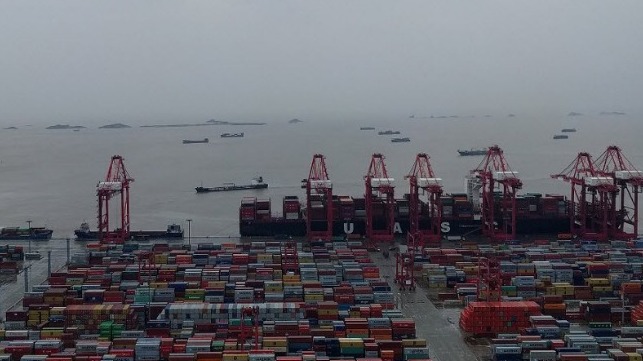
China is adding a reciprocal program of "special port fees" on U.S. shipping (Shanghai file photo)
Days before the U.S. is scheduled to start collecting port fees for Chinese-owned, operated, or built ships, China’s Ministry of Transportation announced its own program of “special port fees” for U.S. vessels. An official said China will “resolutely take countermeasures… against these erroneous U.S. practices.”
The fees are largely symbolic based on the small size of the U.S. merchant marine, but they are another tit-for-tat in the battles between China and the United States. The port fees for ships start a month before the latest extension on tariffs is due to expire, and as the two sides continue to negotiate new trade agreements. The Trump administration has announced and then rolled back proposed steep tariffs on all Chinese imports into the U.S. as it seeks to apply pressure for a new trade deal.
The U.S. Trade Representative announced the planned port fees in April 2025 in response to its finding that the Chinese government is attempting to unfairly dominate global shipping. It found that China has taken a series of systematic steps to support its shipbuilding industry in becoming the global leader. China responded, saying that the U.S. was attempting to blame China for long-standing problems and a historic decline in U.S. shipbuilding.
China recently changed its maritime regulations, and today, October 10, a spokesperson for the Ministry of Transport said the U.S. practice “disregards facts,” and that the USTR program “fully exposes its unilateralist and protectionist nature. It is clearly discriminatory.”
Citing the fees that will be imposed by the United States, China said, “This seriously violates the relevant principles of international trade and the China-US Maritime Shipping Agreement, and causes serious damage to maritime trade between China and the United States.”
The response is a fee program starting the same day as the USTR’s port fees, October 14, levied on ships owned or operated by U.S. enterprises. It defines U.S. interest as 25 percent equity in the company. The fees also apply to all ships built in the United States or flying the U.S. flag.
The fees start at 400 RMB per net ton in 2025 and increase annually each April to RMB 1,120 per net ton in 2028. Based on current exchange rates, the fees would start at approximately $56 per ton and rise to $157 over the next three years. The U.S. program, by contrast, is $50 per net ton for Chinese-owned or operated vessels and the higher of $18 per net ton or $120 per container for vessels built in China operated by foreign companies.
China copied the structure of the U.S. program. Both are imposing the fee only at the first port of call and cap the fees at five trips per year. The U.S. has other exemptions, including for vessels arriving in ballast to load U.S. exports.
U.S. Customs and Border Protection announced at the end of last week that ship operators are responsible for determining which ships are subject to the fees. The USTR was expected to provide additional guidance with an FAQ on the program, but barring a last-minute delay, ships arriving in the U.S. ports as of October 14 need to begin paying the fees. Alphaliner has estimated the major container lines alone could include more than $3 billion in U.S. fees in 2026, although it appears far fewer ships will incur China’s “special port fee.”
USTR Proposes Further Changes to Port Fees for Car Carriers and Equipment
USTR proposed increasing the fees on foreign-built car carriers while clarify elements for containerships (IMO file photo)
Four days before the USTR Section 301 fee program is due to launch for Chinese-owned, operated, or built ships, they are proposing further changes while also seeking to provide answers to some of the definition questions. The latest proposed modifications are in response to comments on the program, with the largest impact likely on the car carrier segment of the market, as well as port equipment.
The latest proposed modifications launch a new comment period for the program that will run through November 12. While the proposals are being reviewed, liquified gas carriers, LPG carriers, and the Ro-Ro segments would be permitted to defer fees through December 10. Other segments will proceed next Tuesday, October 14.
One of the areas that received comments was on how the fees should be set for car carriers. There has been a debate between a fee per unit carried versus net tonnage, and the USTR has decided to proceed with net tonnage. It, however, is proposing to raise the fee from $14 per net ton to $46 per net ton based on comments that the fee was too low to be effective in “obtaining the elimination of China’s acts, policies, and practices.”
The argument was that the Car Equivalent Unit measurement can be manipulated. Net tonnage is a set figure used by the U.S. Government. The fee applies to all foreign-built vehicle carriers, not just those from China. This has opened it up to further criticism that it is beyond the scope of the mandate, and that could become a future point to challenge the fees.
They are proposing an exemption for vessels in the Maritime Security Program to maintain the incentives for maximum use of the U.S. flag and to ensure the availability of such vessels. However, they are now proposing that the provision would expire on April 18, 2029, unless extended.
The provision that the USTR could suspend the licensing for LNG shipments if certain restrictions were not met would be removed from the program. The USTR acknowledges the need for U.S.-flagged vessels and the current lack, while saying it will continue to monitor progress in this area.
Cargo handling equipment, including cranes, however, would see further increases in their tariffs. An additional tariff of up to 150 percent on equipment such as rubber tire gantry cranes would be added. This continues the push to force the reshoring of the manufacturing of this equipment despite ports’ complaints that there currently are no options, and it would limit the ability to expand operations.
In addition to providing some additional definitions on segments of containerships and bulkers, the proposed changes add exemptions for certain ethane and liquified petroleum gas carriers, but they remove exemptions for Chinese-built “Lakers.” A provision for exemptions of vessels up to 10,000 dwt would also expire on April 18, 2029, unless renewed.
The proposed changes come as China also announced today, October 10, that it would introduce a reciprocal program next week for U.S.-owned or flagged vessels.
Lawyers will be continuing to review the latest proposed changes for additional details within the 32 memoranda. It is certain to spark further comments and complaints while extending some of the deadlines till mid-December.
Chinese River Cruise Line Enters European Market with Concordia Damen Ship
Hull of the Chinese cruse line's first European river cruise ship arriving at the yard for outfitting (Concordia Damen)
China’s Century Cruises, which calls itself China’s largest local tour operator for inbound travel, will enter the European market. It has ordered a ship from Concordia Damen for delivery in June 2026.
The new cruise ship, which will be named Century Star, is being customized from one of the standard hulls Concordia Damen built on speculation based on its strong belief in the market opportunities. The Dutch shipbuilder, which has a long heritage in inland shipping, entered the cruise segment in 2022, building the vessel Arosa Sena. Last year, it also announced that it was building the first of a new generation of hybrid river cruise ships for a Swiss luxury river cruise operator, and sensing a market opportunity, also decided to build stock hulls.
The hull for the future Century Star recently arrived at Concordia Damen’s yard in Werkendam for fitting out. The standard design is a 135-meter (443-foot) hull designed for 76 passenger cabins and a capacity of 176 passengers.
Concordia Damen highlights that the design will be customized to the client’s specific outfitting preferences. By using the standard hull, Concordia Damen offers a shorter delivery time for the cruise lines. It was developed to provide the basis for a luxury river cruise vessel that will feature hybrid propulsion and a low draft for maneuverability and broader river access. Century highlights that the customized design will blend Asian elegance with European craftsmanship.
The company was started in 1992 and today operates a fleet of luxury river cruise vessels on China’s Yangtze River. It reports over 300,000 Yangtze cruise tourists annually, including 100,000 foreign inbound tourists. The company reports it has a goal of expanding to 12 vessels and will innovate with itinerary upgrades.
The European cruise expansion is being supported by Basel, Switzerland-based United Waterways. The company operates vessels for various brands, handling infrastructure, ship management, and hospitality services.
Pre-pandemic, there was a fast-growing segment of Chinese travelers to Europe. River cruise operator Viking was dedicating ships from its fleet to Chinese travelers. Century looks to leverage its reputation in the Chinese market to capture a portion of the rapidly growing European river cruise market.
 Port of Callao in Lima, Peru. Stock image.
 Konkola Copper Mines smelter. (Photo: Vedanta)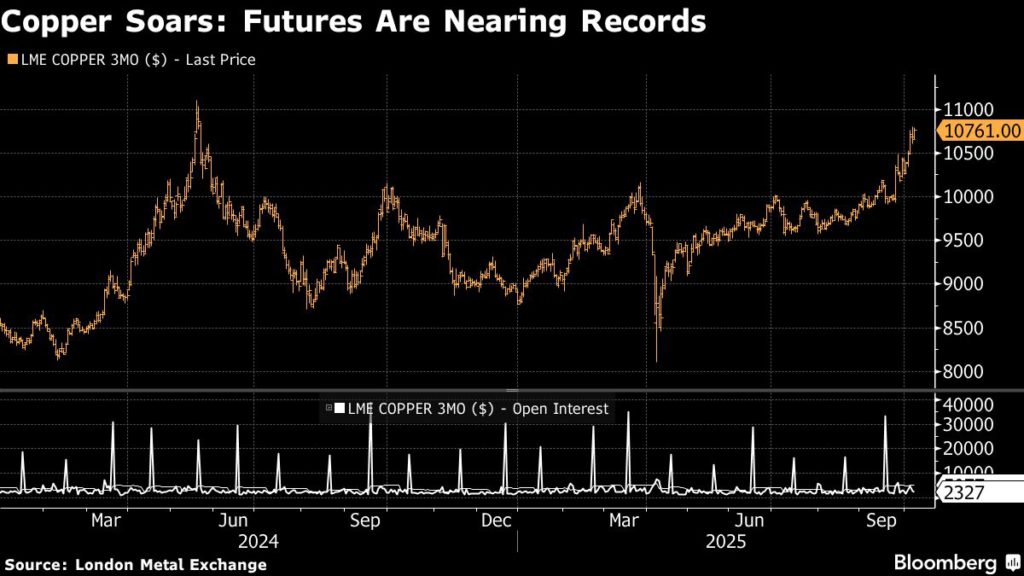
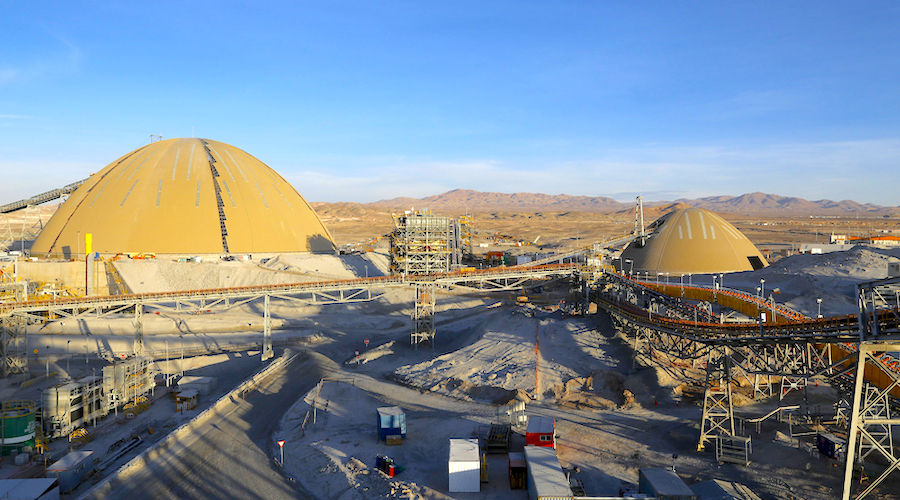
 The Encuentro pit will serve as the main ore source for Centinela’s second concentrator. (Image courtesy of Antofagasta.)