Thursday, January 22, 2026

Round-up on three key issues and the core challenge for 2026

ISRAEL AND PALESTINE

 Israel intensifies de facto annexation of West Bank

The latest commentary on Israel-Palestine by the International Crisis Group focuses on Israel’s increasingly brutal campaign of de facto annexation of the West Bank, despite  President Donald Trump’s insistence that Israeli annexation of the West Bank is off the table.

Israeli actions include:

  • The highest number of settler attacks on Palestinians since the UN started keeping track in 2006
  • The machinery of settlement, continuing apace with thousands more settler homes approved and legislative actions begun to officially annex the West Bank
  • Increasing economic suffocation of Palestinians, with 900 roadblocks inside the Occupied Palestinian Territory (OPT), a near-total ban on permits to work in Israel, and a clamp down on informal trade with Palestinians in Israel and the OPT
  • Continued withholding from the Palestinian Authority (PA) of tax revenues Israel collects on its behalf, denying funds to the West Bank’s biggest employer and provider of social services
  • Continued severe restrictions on the Palestinian banking system

Trump administration responds to Israeli killing of top Hamas leader in Gaza

Despite U.S. silence in the face of continued Israeli bombing of Gaza and restriction of vital humanitarian assistance, media reports suggest that the White House  considered the killing by Israel of a top Hamas commander in Gaza recently as a dangerous violation of the ceasefire agreement, indicating to Netanyahu in a private message that:

If you want to ruin your reputation and show that you don’t abide by agreements be our guest, but we won’t allow you to ruin President Trump’s reputation after he brokered the deal in Gaza.

Israel is vulnerable to U.S. pressure, if only because Trump does not want his Gaza peace plan imperilled, which is exactly what Israel’s actions in both Gaza and the West Bank are doing.

No international stabilization force for Gaza without a negotiated disarmament deal

Many countries are willing to commit troops to help police Gaza and to help pay for rebuilding. But none will do so before a negotiated disarmament deal is in place – the Israeli army having failed to forcibly disarm Hamas in two years of brutal siege.

In the words of the Crisis Group:

The obvious Palestinian candidate to take Hamas’s guns is the PA in the West Bank….

Yet Israel’s policy of systematically withholding tax funds owed to the PA in the West Bank is rendering the PA toothless.

No international stabilization force for Gaza without a “clear political horizon”

Likewise, few of the countries that are otherwise willing to commit troops to Gaza  are likely to do so in the absence of a clear path forward to the establishment of an independent, sovereign and viable Palestinian state.

Crisis Group calls for much “bolder action” by foreign governments

To have any real prospect of making an impact, foreign governments will have to be much bolder.

The Crisis Group calls on the EU to take key actions that do not require unanimous backing of member states, including:

  • banning Israeli trade in goods and services emanating from settlements in the West Bank and
  • restricting visa-free travel for certain Israeli decision-makers implicated in human rights or UN charter breaches.

Israel fails in its bid to block ongoing ICC Gaza war crimes investigation

In the midst of America’s ongoing assault on international law, including sanctioning and attempted financial crippling of the International Criminal Court, appeals judges of that court rejected Israeli efforts to overturn a lower court decision allowing the ICC prosecutor to investigate alleged crimes in Israel’s war on Gaza following the Hamas-led attack on southern Israel on October 7, 2023.

The decision upholds the continuation of the court’s Palestine investigation and the validity of its issuance of arrest warrants in November 2024 for Israeli Prime Minister Benjamin Netanyahu and former Defence Minister Yoav Gallant over alleged war crimes and crimes against humanity.

Whither Canada?

As with the EU, much bolder action is required from Canada in the face of egregious Israeli violations of the Gaza Ceasefire agreement and its accelerating campaign of de facto West Bank annexation.

In this regard,  we refer to our blog post of 17 June 2025 and the comprehensive list of concrete actions that civil society called on the Government of Canada to undertake on an urgent basis.

The list included a call for Canada to forthwith recognize the State of Palestine. On 21 September 2025 Canada did just that, as we highlighted in our October 2025 blog post.

But most of the other calls to action remain unfulfilled, and they are now more urgent than ever if the Gaza Peace Plan is to have any chance at all.

We therefore reiterate our call on the Government of Canada to immediately withdraw from the free trade agreement between Canada and Israel, which is now in breach of fundamental international norms.

In light of the recent ruling of the Appeals Court of the International Criminal Court upholding the validity of the warrants issued against Prime Minister Netanyahu and former Defence Minister Gallant for alleged war crimes, we reiterate our call for Canada to impose sanctions on them as well as other Israeli leaders suspected of involvement in atrocity crimes in both Gaza and the West Bank, including Minister of Defence Israel Katz, Minister of National Security Itamar Ben-Gvir, and Minister of Finance Bezalel Smotrich.

RUSSIA – UKRAINE WAR

In a CBC interview on 30 November 2025, Canadian defence expert Andrew Rasiulis described the then about-to-be launched round of negotiations in Florida between the Trump administration and Ukrainian officials as

one of the last opportunities for a negotiated or diplomatic solution to the war as opposed to having the war itself conclude through military force.

Underscoring the need for realism on Ukraine’s part, Rasiulis continued:

The Ukrainians are negotiating from the weaker position; the Russians have the advantage on the battlefield.

The Russia-Ukraine War Report Card, Dec. 17, 2025 underscores that frank military assessment, noting that

 multiple senior Trump administration officials assess that Ukraine is losing the war and would lose if the fighting continued.

At long last the U.S. has put meaningful security guarantees on the table

In a significant departure from past positions of both the Biden and Trump administrations, the U.S. has, at long last, apparently put meaningful security guarantees on the table, in return for Ukraine forgoing the possibility of NATO membership.

Citing multiple sources, Just Security reported on 16 December that

The United States, Ukraine, and Europe have agreed on security guarantees for Ukraine similar to NATO’s Article 5 mutual defense pact….

Both Ukraine and the U.S. acknowledged that significant progress had been made, with a key difference remaining over the status of areas in the Donbas claimed by Russia, but still under Ukrainian control.

Ceasefire.ca comments:

The U.S. has ended its own logjam by putting real security guarantees on the table. That in turn has focused both Ukraine and Europe on realistic terms of settlement. Bearing in mind that Russia has yet to respond, this is nonetheless very hopeful news.

CANADA AND TRUMP’S GOLDEN DOME DELUSION

RI President testifies before Senate Defence Committee on Golden Dome

Golden Dome is the [proposed] massive expansion of an unsound system, requiring a mega-constellation of orbiting satellites in Low Earth Orbit (LEO) carrying interceptor missiles. – Peggy Mason Opening Statement

In our 17 June 2025 post, we highlighted civil society concerns with Donald Trump’s Golden Dome initiative.  On 17 November 2025,  RI President Peggy Mason amplified those concerns in testimony before the Senate Standing Committee on National Security, Defence and Veterans’ Affairs “in its examination of defence procurement in the context of Canada’s commitment to increased defence spending.”

Her opening statement is attached HERE in PDF format. The video of her testimony — and that of RI Vice-President Steven Staples, appearing in his personal capacity — is available HERE, beginning at the 18-minute mark.

The opening statement is limited to five minutes. The Rideau Institute will therefore be submitting to the Senate Committee a much more detailed written statement early in 2026. Stay tuned! In the meantime, listen here to a panel discussion where Mason debates with several CGAI Senior Fellows.

Project Ploughshares senior researcher urges Canada to invest in space stability

We are pleased to share with you an article by space expert Jessica West, of Project Ploughshares, on the importance of keeping weapons out of space. Its under-banner reads:

We rely on our satellites for everything. More weapons won’t protect them.

Instead, West argues that:

[I]f Canada wants to protect itself up there, we need to invest in stability.

A Message from RI President Peggy Mason

Our Rideau Institute mission statement reads as follows:

Our mission is to help revitalize Canada’s peacekeeping, diplomatic peacemaking and peacebuilding roles in the world, through creative, innovative and inclusive multilateralism, strengthening the UN capacity for conflict prevention and peaceful conflict resolution and the progressive enhancement of international law.

We advocate for made-in-Canada policies that recognize the interdependence of the global community, and the equal right of all peoples to peace, security and justice.

Never have those objectives been more important and more threatened with President Donald Trump employing America’s vast political, economic, and military power to create what a feature article in the January/February 2026 issue of Foreign Affairs calls “competitive authoritarianism”.

The article outlines the singular importance of all those in the U.S. who are opposed to this outcome to “seriously contest power at the ballot box, in the courts and on the street”.

The UN is under direct attack from the Trump administration and Canada must work with others to hold the line

We need commensurate action at the international level, among like-minded nations across the globe, in support of the United Nations and international law.  Canada’s recent recognition of the Palestinian state, in the face of adamant U.S. and Israeli opposition, is one bright spot to this end.

But so much more is needed!

It is to these goals that we dedicate our efforts in 2026 and humbly thank all those who continue to support us financially and in so many other ways!

We pledge determined and relentless efforts to continue to identify and promote realistic steps for Canada in defence of, and where possible, in advancement of the core principles on which international cooperation, peace, and security depend.

I wish everyone a wonderful holiday season!

Yours in solidarity and peace,


Photo credit: Creative Commons licence Patrick Gruban (UN General Assembly); Government of Canada (Parliament Hill).

Ceasefire.ca is a public outreach project of the Rideau Institute linking Canadians working together for peace. We need your support more than ever to promote an independent, sovereign and viable Palestinian state, to help bring peace to Ukraine and to advance our common security globally. 

Naheed Nenshi: 
ALBERTA SEPERATISM
The threat to our nation is very real
Published: January 16, 2026
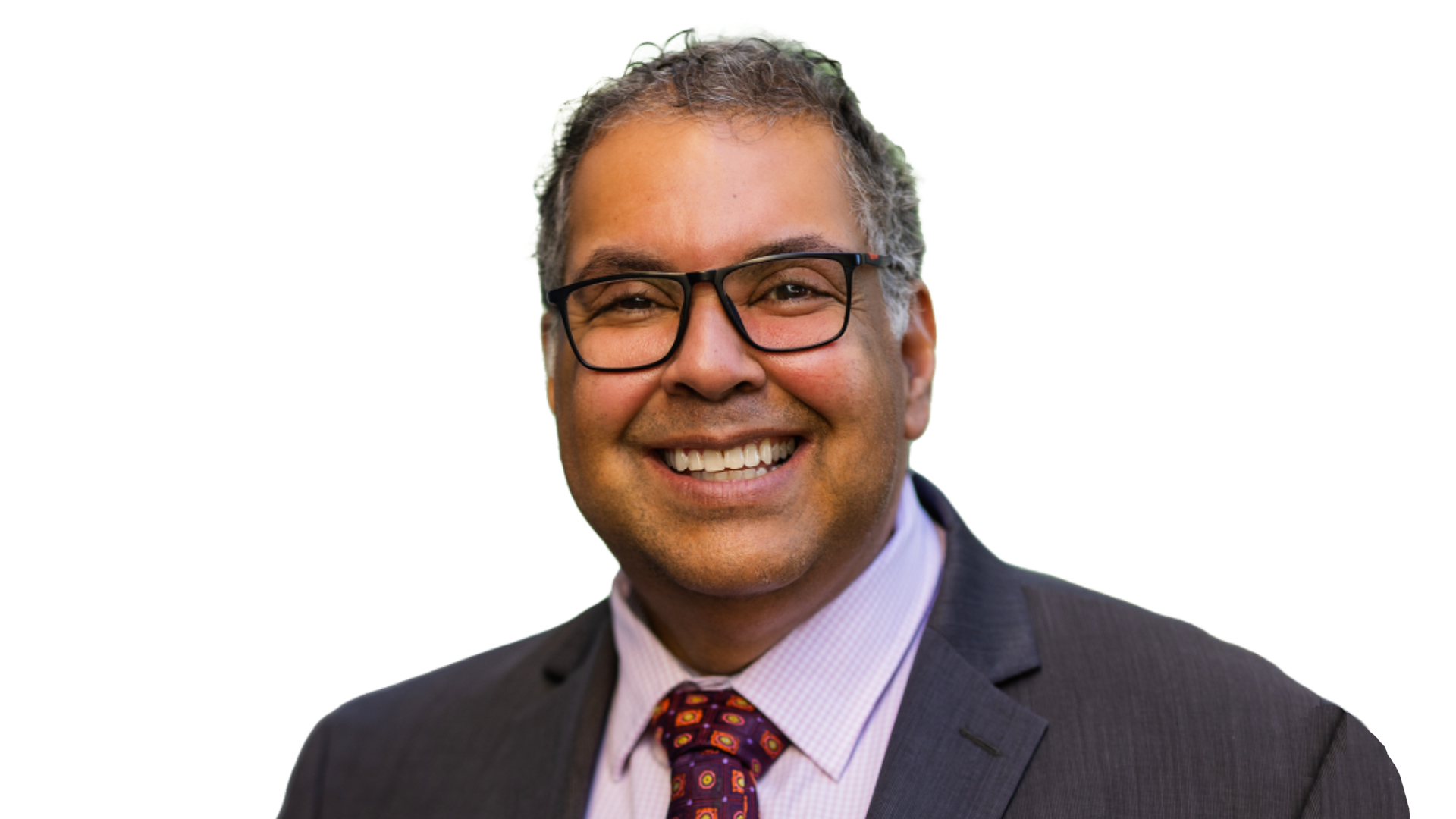
Naheed K. Nenshi served three terms as mayor of Calgary, is currently leader of the Alberta New Democrats and is a contributing columnist for CTVNews.ca

Prime Minister Mark Carney, right, signs a memorandum of understanding with Alberta Premier Danielle Smith in Calgary on Thursday, Nov. 27, 2025. THE CANADIAN PRESS/Jeff McIntosh

A question I keep hearing from folks across Canada is pretty simple: “What the heck is going on in Alberta?” It’s a fair question. The Alberta government, whether through incompetence or malice, is dismantling public services, trampling on human rights, and threatening the very future of the country.

Two factors in particular -- the rise of Alberta separatism and the U.S. invasion of Venezuela with its potential impact on the Canadian energy sector -- have thrown this into stark relief. While Premier Danielle Smith’s mismanagement of, well, everything is exceptionally troubling, there is also an opportunity for all of us to address some long-standing issues and build a better Canada for us all.

While most commentators believe that there’s no way the separatist side will win a referendum (most polls show that support for separatism in Alberta remains well below 30 per cent) the threat to our nation is very real. Smith, by coddling this extreme faction of her base, has lost control. The United Conservatives have become a separatist party, much to the surprise of many who voted for them and many of her own caucus members.

Indeed, after a judge ruled that a referendum on separatism in Alberta would be unconstitutional as written, the government changed the law to allow for one anyway, and to make it easier to force a referendum. (Interestingly, to avoid other referendum petitions, they also increased the cost for future initiatives from $500 to $25,000. The separatists get the old price).

A hard trick to pull off


Smith’s strategy here has been extremely clear for a long time: use the threat of separatism (which she herself has strongly encouraged) to extract concessions from the federal government, then paint herself as Captain Canada and the one who saved the nation during a referendum. Not only is this extraordinarily cynical, but it would be a hard trick to pull off, even for the most brilliant of politicians. Citizens are smarter than most politicians give them credit for, and they will see right through this.

Alberta Premier Danielle Smith holds a press conference on Parliament Hill in Ottawa on Tuesday, Oct. 7, 2025. The prospect of Alberta holding a referendum to leave Canada triggered a wave of clickbait stories on video-sharing sites earlier this year. THE CANADIAN PRESS/Sean Kilpatrick

Nonetheless, there are many problems here that should concern all Canadians.

First is the extraordinary danger inherent in this ploy. Referenda are very difficult to predict. Canadians in 1995 certainly didn’t think we would come within a whisker of losing the country.

I was in the room when then U.K. Prime Minister David Cameron announced his plans for a Brexit referendum, assuring those present that it would never pass, but that it would give him leverage to negotiate a better deal with Brussels. What Cameron didn’t say that day is that he also felt that a referendum was a necessary tactic to avoid a split in his conservative movement so that he could stay in power. Smith admitted as much on her radio show this summer when she responded to a question about why she was pandering to separatists by saying that if she didn’t, she would lose the next election.

We know what happens next. History is clear. Montreal lost over 300 head offices when Quebec separation became an ascendant political movement, and many would argue that the province of Quebec has seen 50 years of economic malaise ever since. The U.K. economy still has not recovered from the turmoil of Brexit a decade later.

These are the “head” arguments, and they are irrefutable. Alberta separation is a recipe for economic ruin, and a landlocked nation that will have to negotiate access to world markets will be beholden to other countries, and ironically far less independent as a result.

However, in my opinion, the “heart” arguments are far more compelling. This past summer, the Alberta government conducted a series of farcical town halls to gauge support for a number of separatist ideas. The culmination of these included a famous moment when the premier’s executive director, who was inexplicably moderating the panels, suggested that a 17-year-old student be spanked because he dared to disagree with the government. These meetings were, to be charitable, considerably more heat than light.
Albertans are proud Canadians

My caucus colleagues and I also spent the summer talking to Albertans in something we called the Better Together Summer. We knocked on hundreds of thousands of doors, attended rodeos and parades and music festivals, and hung out in dog parks. Without spending untold millions of government money, we also attracted nearly as many citizens to our series of 10 town halls across the province as the government did to theirs. Citizens were very clear: Albertans are, have always been, and always will be proud Canadians.

They recognize challenges with our federation but they also know all this separatist talk is a distraction from the things they truly care about: life being so expensive and hard to manage, jobs disappearing, and public services like health care and education not being there when people need them.

They reminded us that Albertans are bold, audacious, and optimistic at our core. That a government that relies on keeping people angry all the time is fundamentally un-Albertan.

But barring an early election call or a few more government members leaving or being recalled, it seems the deck is stacked for an Alberta separation referendum in 2026. The actions of a weak and desperate government -- one with the smallest majority in Alberta history, that has already had two floor-crossers and with half its caucus facing recall petitions -- are putting our nation at risk.

It’s time for Canada, politicians and citizens alike, to act. Not by appeasing and emboldening Danielle Smith, but by showing Albertans and all Canadians that we can make this great country work better for all of us.


Naheed Nenshi

Contributor
How the Alberta MOU Violates Canada’s 
Climate Obligations

How the Alberta MOU Violates Canada’s Climate Obligations

This post provides a summary of a much longer analysis, one version of which is available on both the Rideau Institute website, and the original on RI Senior Fellow Craig Martin’s Substack.

While there has been much discussion of the Canada-Alberta Memorandum of Understanding (the MOU), there has been rather less analysis of whether it is consistent with Canada’s international law obligations.

There has been much debate about the new Memorandum of Understanding (the MOU) that the federal government and Alberta signed in December. As most readers will recall, it envisions a rapid expansion of Alberta’s production of bitumen from its oil sands fields, the development of a new pipeline from Alberta to the Pacific coast for export to Asia of the expanded oil production, and a massive expansion of electrical generation for data centers and new infrastructure. The agreement also provides for all of this to be facilitated by a streamlining of the climate and energy-related regulatory process, exempting Alberta from many of the current climate and energy policy regulations that would be implicated by the planned expansion.

Canada has both legal and moral obligations to do its fair share in responding to the climate change crisis….

While there has been much discussion of the Canada-Alberta Memorandum of Understanding (the MOU), there has been rather less analysis of whether it is consistent with Canada’s international law obligations. Canada has both legal and moral obligations to do its fair share in responding to the climate change crisis—and understanding what these obligations are, and whether policies such as this new agreement violate them, should be of considerable importance to all Canadians.

Key Elements of the Canada-Alberta MOU

In a nutshell (as most Canadians will know), the federal government and Alberta signed a new Memorandum of Understanding (the MOU) that envisions a rapid expansion of Alberta’s production of bitumen from its oil sands fields, the development of a new pipeline from Alberta to the Pacific coast for export of the expanded oil production to Asia, and a massive expansion of electrical generation for data centers and new infrastructure. All of this is to be facilitated by a streamlining of the regulatory process, and exempting Alberta from current climate and energy policy regulations, including the carbon pricing standards under the Greenhouse Gas Pollution Pricing Act (the GGPPA), and the federal Clean Energy Regulation enacted under the Canadian Environmental Protection Act. The plan assumes that its impact on greenhouse gas (GHG) emissions will be offset by a massive carbon capture, utilization and storage (CCUS) project. The entire project is to be privately funded, and it envisions buy-in and involvement of the First Nations.

Canada’s Legal Obligations – The ICJ Decision

[T]here have been several groundbreaking decisions by international tribunals on the obligations of states regarding their response to the climate change crisis, culminating with the Advisory Opinion on the Obligations of States in Respect to Climate Change from the International Court of Justice (ICJ) just last summer.

Critics, including some within the government itself, quickly condemned the project for making the achievement of Canada’s climate goals—particularly its ultimate long-term goal of attaining net-zero by 2050—all but impossible. But there has also been widespread support for the project as being a boon for the Canadian economy. Strangely, there has been little discussion of how the project relates to Canada’s legal obligations. Yet in just the last year, there have been several groundbreaking decisions by international tribunals on the obligations of states regarding their response to the climate change crisis, culminating with the Advisory Opinion on the Obligations of States in Respect to Climate Change from the International Court of Justice (ICJ) just last summer.

The ICJ established that the states have a fundamental obligation, under both treaty and customary international law, not to harm the climate system. This obligation requires that states take increasingly ambitious action to reduce their net GHG emissions, to do their part in achieving the consensus goal of keeping the average global temperature increase to 1.5º Celsius above pre-industrial levels. This is an obligation of conduct, which requires states to act with due diligence in setting and implementing the measures necessary to reduce their GHG emissions. In addition, states have obligations to cooperate with one another in this effort, and they have separate obligations under human rights law to prevent harm to the climate system, given that it is a precondition to the enjoyment of other fundamental rights.

The MOU…now more clearly violates Canada’s climate change obligations.

Canada’s climate plans submitted in accordance with the Paris Agreement, which committed Canada to be net-zero by 2050, were already deemed insufficient to fulfill Canada’s fair share of the reductions required to meet the global 1.5º C objectives. The MOU, however, now more clearly violates Canada’s climate change obligations. The expansion of bitumen extraction and processing will directly produce an increase in GHG emissions that cannot be completely mitigated by the CCUS project, even if the developing technology for that project is entirely successful. What is more, the expanded energy generation called for will also likely increase emissions. Finally, the relaxation of regulations and the exemptions afforded Alberta will weaken and undermine the Canadian climate change law and policy regime in ways that will further lead to a reduction in the rate at which GHG emissions are being reduced within Canada.


The adoption of such plans in and of itself constitutes a violation of the due diligence obligations identified by the ICJ. Far from increasing the ambitiousness of its plans to reduce GHG emissions, Canada is, with this MOU, implementing plans that will directly increase GHG emissions, weaken its climate change law and policy regime, and make it virtually impossible to meet its already insufficient targets.

There is real injustice in failing to do one’s part in resolving a problem that one has helped to cause, and which is causing harm to innocent people.

Some may think such obligations abstract and of little matter. But Canada is among the group of Western states that are responsible for creating the bulk of historic GHG emissions, and thus bear disproportionate responsibility for creating this existential crisis for humanity. The obligations identified by the ICJ are owed in large part to the states of the Global South, and the peoples of those states, which are highly vulnerable to the increasingly dire consequences of climate change, and which contributed almost nothing to the causes of this crisis. There is real injustice in failing to do one’s part in resolving a problem that one has helped to cause, and which is causing harm to innocent people.

Canada must do its fair share to help the world deal with the crisis.

Finally, Canada owes obligations, as a matter of human rights, to the people of Canada—both those currently alive but also those of future generations. We are now on a trajectory of hitting a temperature increase of 3.8º C by 2100, which will be catastrophic for human civilization. Canada must do its fair share to help the world deal with the crisis.


Our next post will examine Prime Minister Carney’s landmark speech at Davos, Switzerland on 20 January 2026; take stock of President Trump’s so-called Board of Peace for Gaza, and update on the increasingly dire situation in Ukraine

Photo credit: Craig Martin – AI generated (Alberta oil sands).

Ceasefire.ca is a public outreach project of the Rideau Institute linking Canadians working together for peace. We need your support more than ever to promote an independent, sovereign and viable Palestinian state, to help bring peace to Ukraine and to advance our common security globally. 


The Grassy Mountain coal project already had a fair hearing. It was rejected in the 2021 joint review panel for reasons that it would create great environmental harm for little economic benefit. But the Minister of Energy interfered in the AER process to revive the project. How can the public or investors have any trust in Alberta’s regulatory processes when the UCP government interferes in independent processes? #ableg
Mark Carney’s Davos speech marks a major departure from Canada’s usual approach to the U.S.

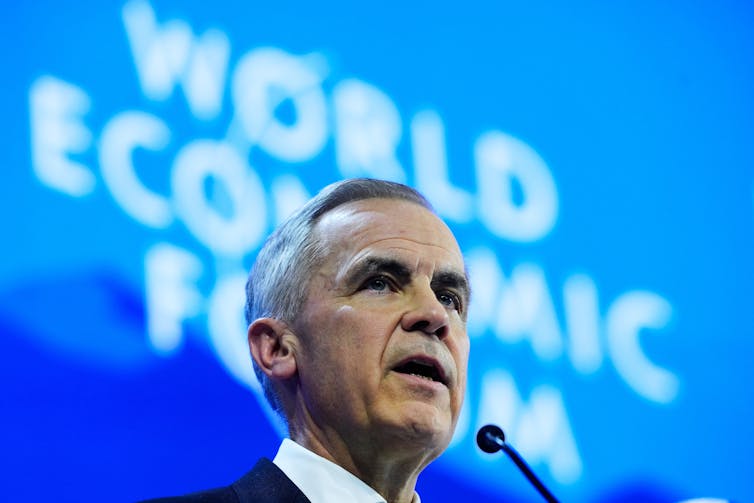
Prime Minister Mark Carney speaks during the Annual Meeting of the World Economic Forum in Davos, Switzerland, on Jan. 20, 2026. 
(AP Photo/Markus Schreiber)


Published: January 21, 2026
THE CONVERSATION

Author


It was a moment of global clarity. Prime Minister Mark Carney’s speech to the world’s political and economic elite gathered in Davos this week described global realities, past and present, with a candour and nuance rarely heard from a serving politician.

The message was twofold.


First, Carney made clear that the world has changed, and the old comfortable ways of global politics are not coming back. Those who wait for sanity to return are waiting in vain. We are in a world increasingly shaped by the threat and the use of hard power. All states must accept that reality.

Despite this, Carney’s second and more hopeful message was that while the globally powerful may act unilaterally, others — notably “middle powers” like Canada — are not helpless.

By finding ways to co-operate on areas of shared interest, states like Canada can pool their limited resources to build what amounts to a flexible network of co-operative ties. Taken together, they can provide an alternative to simply rolling over and tolerating whatever great powers like the United States dole out.

There’s also little choice in the matter if countries want to remain independent. As he eloquently put it: “If we’re not at the table, we’re on the menu.


From ‘elbows up’ to capitulation and back


The speech represented a remarkable departure from Canada’s usual approach to its relationship its neighbour to the south.

For all the talk of “elbows up” during the 2025 federal election campaign, the Carney government has been somewhat ambivalent since then. It’s placed its hopes in achieving a renewed trading relationship and normalized relations with the U.S. through a combination of good faith negotiations and a steady stream of conciliatory gestures on issues that seemed to matter most to U.S. President Donald Trump.


That resulted in Canada committing significant funds to combat a largely non-existent fentanyl trafficking problem and to meet American demands for increased military funding. At times the conciliation verged on placation, as when Canada unilaterally ended relatiatory tariffs on American goods to no discernible effect.

This strategy clearly was not working, however, as Carney made clear in Davos.

While neither America, nor Trump, were mentioned by name, there’s no doubt who’s driving the dramatic global changes Carney was describing. At times the veneer became very thin as Carney reiterated Canada’s support for the sovereignty of Greenland as a territory of Denmark.

In fact, the speech was remarkably blunt in its rebuke of America’s foreign policy during Trump’s second term, drawing attention, as others have, to how U.S. actions leave almost everyone, including Americans, worse off

.
People participate in a rally in response to U.S. President Donald Trump’s threats to Canadian sovereignty on Parliament Hill in Ottawa in March 2025. THE CANADIAN PRESS/Justin Tang


Trump’s response


That not-so-subtle barb was not lost on the audience, either in the room or across the Atlantic in the White House.

Trump wasted little time in firing back in the manner and style the world has become accustomed to. During his own address to the World Economic Forum the next day, Trump delivered a rambling and at times confusing speech.

He reiterated his intent to annex Greenland while confusing the island multiple times with neighbouring and also sovereign Iceland, and he took time to single out Carney by name.

“Canada lives because of the United States,” he said. “Remember that, Mark, next time you make your statements.”

The comments provided helpful proof of Carney’s argument, demonstrating the naked threat of power by the American president to coerce its neighbour and ostensible ally. It revealed the kind of “gangster” mindset we see often from Trump, as he effectively said: “Nice country, Mark. Be a shame if something happened to it.”

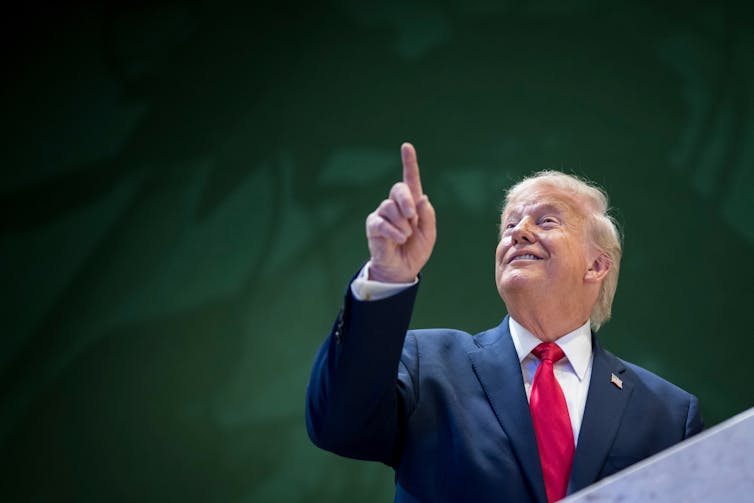
U.S. President Donald Trump gestures in the hallway after his special address during the 56th annual meeting of the World Economic Forum in Davos, Switzerland, on Jan. 21, 2026. (Gian Ehrenzeller/Keystone via AP)

Critique of past

As blunt as Carney’s assessment of the present was — that the rules-based, liberal international order has faded away — in some ways his critique of the past was even more remarkable. The prime minister spoke with a candour one wouldn’t expect to find at the podium at Davos.
Prime Minister Mark Carney departs Zurich, Switzerland on Jan. 21, 2026, after attending the annual World Economic Forum in Davos. THE CANADIAN PRESS/Sean Kilpatrick

Effectively, Carney correctly characterized the old order as one defined as much by its hypocrisy as by its rules. He acknowledged that countries like Canada benefited from a system in which rules are applied unevenly, and superpowers continue to shape outcomes.

This idea, along with the need to look ahead in order to survive a new order, appeared to underpin Carney’s exhortation not to mourn the rapidly vanishing old order.

Carney clearly hopes a new system may emerge that is not only more resilient to diverse and unpredictable threats, but is more honest and just.

By finding common ground on shared issues, middle powers can act in accordance with their own values and interests, instead of deferring to the proclaimed values of global power that are frequently violated in practice. Power will always matter, but it doesn’t have to be all that matters.

History in the making?

Carney’s Davos remarks were powerful by any measure. But will he back up his words with action in the months and years ahead?

His speech was met with a rousing standing ovation, and has justly received plaudits from around the world for its clear-eyed description of a less forgiving world order and its vision for how states like Canada can continue to thrive within it.

Whether it proves a speech for the ages, however, depends on what happens next. If Canada is serious about charting a new path, distinct from the great powers of the world, it must do more than talk. Acts like deploying symbolic forces to Greenland if necessary will show a seriousness of purpose. Canada cannot expect others to stand with it if it doesn’t stand with them.

Similarly, Canada must reject schemes like Trump’s “board of peace,” a thinly disguised attempt to replace institutions of global governance with a body composed by and serving at the president’s whim.

Carney has captured the world’s attention with this speech. There’s a lot hanging on what he does with that attention.


One venue, two speeches – how Mark Carney left Donald Trump in the dust in Davos

Canadian prime minister, Mark Carney, gained widespread approval for his Davos speech, which he delivered in French and English. EPA/Gian Ehrenzeller


One leader donned the cloak of statesmanship at Davos this week. It wasn’t Donald Trump


Published: January 21, 2026 
THE CONSVERSATION

The meeting and venue were the same, but the style and tone of the two most anticipated keynote speeches at the World Economic Forum in the Swiss town of Davos could not have been more different. On Tuesday, January 20, Canadian prime minister Mark Carney addressed the assembled political and business leaders as one of them: a national leader with deep expertise in finance.

He spoke about a “rupture” in the world order and the duty of nations to come together through appropriate coalitions for the benefit of all. It was a paean to multilateralism, but one that recognised that the US would no longer provide the glue to hold alliances together. Carney never mentioned the US by name in his speech, instead talking of “great powers” and “hegemons”.

Carney’s quiet, measured and evocative case-making demonstrated his ability to be the leader France’s Emmanuel Macron would like to be and the UK’s Keir Starmer is too cautious to be. He was clear, unequivocal and unafraid of the bully below his southern border. In standing up to the US president, Donald Trump, he appeared every inch the statesperson.


Mark Carney delivers his speech at Davos, January 21 2026.


Then, on January 21, Trump took the stage. There was none of Carney’s self-awareness and nor did he read the room recognising the strengths, talents and economic power of the audience. Trump started with humour, noting he was talking to “friends and a few enemies”.

But he quickly shifted to a riff on the greatest hits of the first year of Trump 2.0 with the usual weaving away from his script down the rabbit holes of his perceived need for vengeance. Joe Biden still takes up far too much of Trump’s head space, but the next hour could be summed up as: “Trump great: everyone else bad.”

The president is the most amazing hype man for his own greatness, but it’s a zero-sum game. For him to win, others must lose, whether that’s the UK, Macron or the unnamed female prime minister of Switzerland whom he mocked for the poverty of her tariff negotiation skills. It’s worth noting Switzerland has no prime minister and its current president is a man.

While Carney was at pains to connect with his audience of allies, Trump exists happily in his own world where support – and sovereign territory – can be bought, and fealty trumps all. As ever, Trump played fast and loose with facts, wrapping real successes, aspirations and his unique view of the truth into a paean to himself.

He actually returned to his script to make the case for taking Greenland. The case is built on a notional need for “national and international security”, underscored by pointing out the territory is “in our hemisphere”. As so many commentators have said, collective security will do the job Trump insists that only the US can – and won’t require Denmark to cede territory. But Trump is sounding ever-less the rational actor.

Contrasting visions

The coming year is one of inflection for Trump’s presidency. His Republican party may well lose control of the House and possibly the Senate in the November midterms, which would severely curtail his ability to impose his will unfettered.

Trump is focused on his legacy and demands he’s up there with former US presidents Thomas JeffersonJames MonroeJames Polk and William McKinley, expanding the American empire and its physical footprint. This may be a step too far, even for a president with such vast economic and military power.

Donald Trump’ delivers his speech at Davos, January 21 2026.

Carney’s speech played well both at home and around the world. His line, “If we’re not at the table, we’re on the menu,” clearly resonated with his fellow western leaders. His vision for how “the power of legitimacy, integrity and rules will remain strong if we choose to wield them together”, also offered a positive vision in a dark time.

Trump told the audience that he would not use “excessive strength of force” to acquire Greenland. But, ever the real estate developer, he demanded “right, title and ownership” with an ominous threat: “You can say no – we will remember.”

As Trump laid out his grand vision of protecting and cherishing the rich and aligning nations to do America’s bidding, it was in stark contrast to Carney. The hyperbole and self-aggrandising, the insults and threats, and the singular vision of seeing the world only through the personal impact it has on him mark the US president out as remarkable, even exceptional.

But is this the exceptionalism the US wants? Is America about more than the strongman politics of economic and military coercion?

The immediate reaction in the US was relief, jumping on the line that Trump won’t take Greenland by force. It will be telling to look at the commentary as the country reflects on the president’s aim of lifting America up, seemingly by dragging the rest of the world down.

One leader donned the cloak of statesmanship at Davos this week. It wasn’t Donald Trump


Author
Mark Shanahan
Associate Professor of Political Engagement, University of Surrey

Disclosure statement
Mark Shanahan has a new edited collection of essays, Trump Unbound, due for publication by Palgrave Macmillan in October 2026.

.