Tuesday, February 10, 2026


Highway to Hell


FEBRUARY 9,2026

Vince Mills reports on the continued fall of Scottish Labour and the SNP and the rise of the right.

It is hardly surprising that the focus of politics in Scotland has been on the fall and fall of the Scottish Labour Party (SLP). A poll in late January, this time from YouGov, provided more evidence that the SLP is on the highway to electoral hell. Data were collected before the full impact of the ban on Andy Burhan, the denial of compensation to the WASPI women and the most recent exposure of the antics of Mandelson as Business Secretary, allegedly passing secrets to Epstein in 2009.

In the poll, the SLP scored only 15 per cent in the constituency vote, 15 per cent in the regional list and that would give them, according to polling expert Professor John Curtice just 15 seats in the Scottish Parliament in the May election.  If this indeed were the result in four months’ time, it would be Labour’s worst result in either a Westminster or Holyrood election in 116 years.

No wonder, then, that this potential catastrophe has distracted from the performance of the likely but surprising victors of May 2026 – the Scottish National Party (SNP). I say “surprising” because the poll gave the SNP only 35 per cent of the constituency vote, down 14 points since the 2021 election, 29 per cent of the list vote, down 11 points. Indeed, such a performance in May would be their lowest share of the regional vote since 2003. Ironically it would be similar to Starmer’s victory in 2024, shallow but widespread, achieved through comparatively narrow victories in the constituencies’ first past the post section, almost certainly intensifying calls for the Scottish Parliament to adopt a fully proportional system.

Before we try to make sense of this, as you will have probably guessed, the left outside the SLP has not been able to take advantage of the collapse of what you might describe as Scottish social democracy. While the Greens managed a creditable Constituency voteof9 per cent, it is unlikely that would deliver them more than one seat by that route. In the proportional regional listvotetheir 12 per cent vote would, according to Professor John Curtice, give them 10 seats in the 129 member Parliament. Your Party are likely to mount a challenge.  They met this weekend (10th, 11th February) in Dundee to decide. However, they are likely, according to Professor Curtice, to take what votes they win, from the Greens, hardly changing the balance of the Parliament in the unlikely outcome of them winning any seats at all.

The real victors in the poll, sorry to say, are Reform UK. Reform UK scored 20 per cent in both the constituency and regional list sections. According to Professor Curtice’s extrapolations, this would give them 23 seats, second to the SNP and ahead of Labour’s 15 in this poll. Although it should be noted that this poll is a bit of an outlier in that it has Reform UK performing slightly better than other pollsters, nevertheless it looks increasingly likely that Reform will be the opposition to the SNP’s ruling party after the May elections.

Such a scenario is deeply worrying because it will offer the right in Scotland a megaphone to peddle their politics of grievance, based on their racist assumptions and the SNP’s certain continued failure to address real working-class concerns. According to the YouGov poll only 25 per cent of Scots approve of the SNP Scottish government’s record to date.  By contrast, 57 per cent disapprove.

No wonder. According to the YouGov poll, the economy and then health are the top two issues of most importance to Scottish voters. The SNP’s utter failure in both of these areas is inextricably tied to their craven support for neo-liberal economics – financialisation, outsourcing and precarity. In Keep left: Red Paper on Scotland 2025, Richard Leonard outgoing MSP for Central Scotland, points out that control of the Scottish economy by foreign owners has increased and the Scottish Parliament has had no significant impact on stopping this process despite 19 years of SNP control. 

Indeed, under the SNP, attracting foreign direct investment has been a priority. This includes newer sectors like renewable energy. These are dominated by multinationals whose headquarters are overseas.  Furthermore, as the leasing of ScotWind demonstrates, if anything, the Scottish government is accelerating the sell-off of Scottish energy assets to private corporations and overseas state-owned utilities.

Manufacturing jobs in Scotland have declined by 130,000 since the advent of the Scottish Parliament. As Richard Leonard points out, however, Scotland’s manufacturing base still remains massively important. As recently as 2023, it accounted for 53 per cent of the value of all Scotland’s international exports. Since then, of course, Scotland has lost the petro-chemical plant at Grangemouth and last week production ended at the Mossmorran chemical works in Fife. All of this pushes workers into unemployment or precarious poorly paid jobs. The SNP has utterly failed to address this ongoing crisis in the Scottish economy.

And if you think Scotland’s economy is in bad shape, you want to have a look at health. Two words – “scandal” and “crisis” dominate its coverage in the Scottish media. Last month NHS Greater and Clyde admitted that some infections among child cancer patients at the state-of-the-art Queen Elizabeth University Hospital were “on the balance of probabilities” caused by the hospital environment. It is yet to be seen whether this was at heart an administrative, political or resources driven problem, but whatever the cause, it has become emblematic of the SNP’s failure to improve health outcomes in Scotland.

But the real crisis is actually not to be found in these high-profile failures; it is in the chronic poor health and early deaths that are driven by a complex interplay of poor housing, poor diet, poor education and poor healthcare for poor people. In short, poverty. Just one quote from the Health Foundation’s 2025 Inequality Landscape illuminates the despair in many working-class communities:

“Scotland’s rates of drug-related deaths, alcohol-specific deaths and deaths from suicide remain the highest in the UK, with drug misuse mortality among the highest in Western Europe; around 70% of deaths across these causes were among men in 2023. The burden is concentrated in the most deprived communities and contributes to Scotland’s stark male life-expectancy gap (13+ years between the most and least deprived).”

The Scottish government can and often does point its finger at the UK government for an inadequate settlement to meet Scottish needs, but the reality is, as the Scottish TUC pointed out in its report Taxing Wealth for a Fairer and Greener Scotland, the SNP has the power to introduce wealth taxes that could be used to raise the money necessary to transform public services in Scotland. Will the SNP do this? Will they hell.

Consequently, there will be political space for the radical right to blame immigrants for unemployment, precarity and rotten services. For immigration is the third most important concern of Scots according to the YouGov poll. Attitudes to immigration in Scotland have changed over the last ten years.  The fact that it could have risen so far up the list popular concerns is partly a result of the far right’s capacity to mainstream their ideas. But it is also the result of political parties – and in Scotland that means primarily the SNP – failing to address the material conditions of working-class people and in that failure, offer an open goal to racist solutions to ills of capitalism. This is not helped by an assumption, widespread amongst independence supporters, that Scots are less inclined to be racist than the English because Scots are in some way also oppressed – as opposed to our Scotland’s actual history as a partner in imperialism and colonialism.

After the elections in May the wider movement will have to mobilise against what is almost certainly going to be a surge by the radical right. Scottish Labour has been poor on this issue anyway, but it will in any case be much diminished in the Scottish Parliament. By continuing on its neo-liberal course the SNP will continue to foster conditions that create support for a radical right. The Scottish left has a fight on its hands.

Vince Mills is a member of the Red Paper Collective.

Image: Grangemouth petrochemical works https://commons.wikimedia.org/wiki/File:Grangemouth_petrochemical_works_-_geograph.org.uk_-_3525746.jpg Source: Geograph Britain and Ireland. Author: Richard Webb, licensed under the Creative Commons Attribution-Share Alike 2.0 Generic license.


Colombia at the crossroads

FEBRUARY 9,2026

Justice for Colombia  preview the upcoming elections in a country facing intense pressure from US President Trump.

As Colombians prepare to head to the polls for legislative elections in March and a presidential election in May, the choices they make will determine the country’s future far beyond the upcoming four-year electoral term.

In 2022, voters elected the country’s first ever progressive government, under the leadership of President Gustavo Petro, who campaigned on a platform of peacebuilding, social investment and national sovereignty.

With Petro unable to stand again due to the constitutional single-term limit, supporters of his Historic Pact government will give their votes to Senator Iván Cepeda, a longstanding advocate of peace and human rights who for decades has fought tirelessly to hold politicians to account for complicity in human rights violations. Confirmed as the Historic Pact’s presidential candidate, Cepeda currently tops polling with around 30 per cent of voter intention.

However, facing Cepeda are a multitude of right-wing candidates, with a definite challenger yet to emerge from the pack. The most prominent figure is the far-right independent Abelardo de la Aspriella, a media-savvy lawyer and politician who models himself on El Salvador’s Nayib Bukele. Other conservative challengers are journalist Vicky Dávila and Senator Paloma Valencia of the hard-right Democratic Centre party.

Were the right to win the presidential election, it would take immediate steps to reverse the progress made under Petro. This would mean ending current peace negotiations with armed groups, turning a blind eye towards state violence and ripping up social reform bills drafted to reduce gaping inequality and bringing Colombia firmly under the influence of the Trump White House. By contrast, a Cepeda win would continue the country’s journey along a pathway towards social, political and economic transformation that the country has urgently needed for so long.

Since entering office, the Petro government has made efforts to tackle deep-rooted problems of conflict and inequality. Decades of armed conflict were partially resolved through the 2016 peace agreement between the then-government and the FARC guerilla movement. However, the subsequent far-right government starved the agreement of funding, resources and the political will to implement it, as armed groups occupied power vacuums in regions formerly under FARC control. Consequently, conflict remains a daily reality for many communities.

The Petro government’s response to the instability it inherited has been a policy of ‘Total Peace’ whereby dialogue is prioritised to resolve conflict. This strategy has born mixed results, with some groups advancing in talks while others remain in armed confrontation with one another and with the state. The latter scenario has provided ammunition for Petro’s right-wing critics who argue he has been overly lenient on the groups.

Meanwhile, the government’s social reforms bills, which seek to ameliorate the disparities that make Colombia South America’s most unequal country, have also run up against right-wing opposition. While a pensions reform bill benefiting up to three million retirees was passed in congress, education and healthcare reforms seeking to expand access to essential services are deadlocked. While the passing of a labour rights bill provided important benefits to Colombian workers, proposed guarantees for trade union rights were removed under right-wing pressure.

The government’s electoral base recognises the challenges presented through the lack of a congressional majority that has therefore necessitated compromise with conservative sectors. This has preserved its support for the Historic Pact. However, will swing voters exhibit a similar degree of sympathy towards a government unable to fully implement its plans to address the material needs of so many?

Overshadowing these important domestic issues is the looming presence of Donald Trump, who has repeatedly threatened President Petro and his government. This intensified following the 3rd January raid on Venezuela and abduction of President Nicolas Maduro and First Lady Cilia Flores. In the immediate aftermath, Trump implied that a similar action in neighbouring Colombia was on the table. This was the culmination of months of deteriorating relations over US support for Israel’s genocide in Gaza, drugs production and US attacks on small boats at sea, in which Colombian citizens have been killed extrajudicially. A White House meeting on 3rd February appears to have eased tensions, at least for the time being. As ever, one feels Trump’s renewed attacks may only be one perceived slight away.

As the far-right advances elsewhere in Latin America, the US has made no secret of its intentions to install subservient regimes across the region, even directly stating it would cut economic assistance to Argentina and Honduras if elections did not bring about the preferred result. If Cepeda emerges victorious in Colombia’s presidential contest, it is likely his government will come under intense pressure from Washington and its regional lackeys. With Colombia at the crossroads, the next few months could set the country’s course for decades to come.

Justice for Colombia was set up in 2002 by the British trade union movement to support Colombian civil society in its struggle for human rights, labour rights, peace and social justice.

Image: Gustavo Petro and Donald Trump https://www.flickr.com/photos/197399771@N06/55076622551/ Creator: Juan Diego Cano  Copyright: Juan Diego Cano Licence: Public Domain Mark 1.0 Universal PDM 1.0 Deed

What is UpScrolled and why are progressives flocking to it?

8 February, 2026 


“I watched first-hand as meaningful stories disappeared from feeds, while harmful disinformation thrived.”


As TikTok users in the US report what they describe as suspicious activity on the platform, including the apparent suppression of videos covering controversial political topics, such as the killing of Alex Pretti by an ICE agent, a new social media platform is gaining traction – UpScrolled.

Dissatisfaction with TikTok comes just weeks after the company’s US operations were placed under the control of a new joint venture, TikTok USDS, led by a consortium of US-backed investors and companies. While the arrangement was presented as a safeguard against foreign political interference and data misuse, many users fear it has instead opened the door to domestic political manipulation.

Against this backdrop, UpScrolled has emerged as a magnet for politically engaged users, particularly progressives and pro-Palestinian activists.

UpScrolled was founded in July 2025 by Issam Hijazi, a Palestinian-Jordanian-Australian technologist who left a career in Big Tech to build what he describes as a censorship-resistant alternative to mainstream social media. The platform is backed by Tech for Palestine, an advocacy initiative that funds pro-Palestinian technology projects.

Promising “transparent tech,” UpScrolled positions itself as a platform owned by its users rather than by opaque algorithms or corporate interests. On its website, the company says it aims to give people a place to “freely express thoughts, share moments, and connect with others,” without “hidden algorithms or outside agendas.”

Functionally, UpScrolled resembles a hybrid of X and Instagram, with a strong emphasis on text and images rather than short-form video. Its “Discover” page is dominated by political content, with Palestine currently the most popular topic. Posts frequently express solidarity with Palestinians and document the ongoing humanitarian catastrophe in Gaza.

The platform’s growth has been explosive. According to Hijazi, UpScrolled expanded from around 150,000 users at launch to 2.5 million users largely through word-of-mouth. In a video posted on Smashi TV, a Middle Eastern business and tech media channel, he described the pace of adoption as beyond anything he had anticipated.

“Our community is growing at a pace that I only could have dreamt of,” Hijazi said.

The influx has pushed UpScrolled to the top of app download charts in the United States, and into the top rankings in the UK, Canada, and Australia.

In an interview with the tech news site Rest of World, Hijazi said he was motivated by what he sees as systemic censorship across major social media platforms, particularly following Israel’s attacks on Gaza, attacks which the United Nations Commission of Inquiry has described as genocidal.

“I couldn’t take it anymore,” Hijazi said. “I lost family members in Gaza, and I didn’t want to be complicit… I wanted to feel useful.”

Born in Jordan to parents and grandparents from Safad, a Palestinian city near the Lebanese border, Hijazi said the events since 2023 have altered his relationship with technology.

“I watched first-hand as meaningful stories disappeared from feeds, while harmful disinformation thrived,” he said.

That sentiment appears to resonate widely. Several high-profile figures have joined UpScrolled, including Chris Smalls, the American labour activist and former Amazon Union organiser. Smalls was among those who joined the Gaza Freedom Flotilla in July 2025 in an attempt to break Israel’s blockade on the Gaza strip.

UpScrolled’s rise coincides with growing unease among TikTok’s roughly 200 million US-based users following the restructuring of the platform’s ownership. Under the new TikTok USDS arrangement, a consortium that includes major US technology firms,notably cloud computing company Oracle, controls the platform’s US operations, while Chinese parent company ByteDance retains a 19.9 percent stake.

Many of the investors involved have close ties to Donald Trump and the global right. Oracle CEO Larry Ellison is a prominent Trump supporter, a vocal backer of Israel, and a friend of Israeli Prime Minister Benjamin Netanyahu.

Although the restructuring was introduced under legislation passed during Joe Biden’s presidency to curb Chinese political influence and protect user data, critics argue it may simply shift algorithmic power from Beijing to Washington. Some users fear that a future Trump administration could exploit this control to suppress dissenting political speech, echoing the very accusations previously levelled against China.

These concerns have prompted California Governor Gavin Newsom to call for a review of TikTok’s algorithm to determine whether it complies with state law. TikTok USDS has denied any political motivation, attributing recent system disruptions to a power outage at an Oracle data centre.

For many new users, UpScrolled is less a tech novelty than a political statement. As one European user who recently joined the platform wrote on Facebook: “I am now on UpScrolled, the REAL alternative to the odious Facebook! No data harvesting/selling! No algorithms! No shadow banning, ‘jail time’ or censorship! Join me here!”
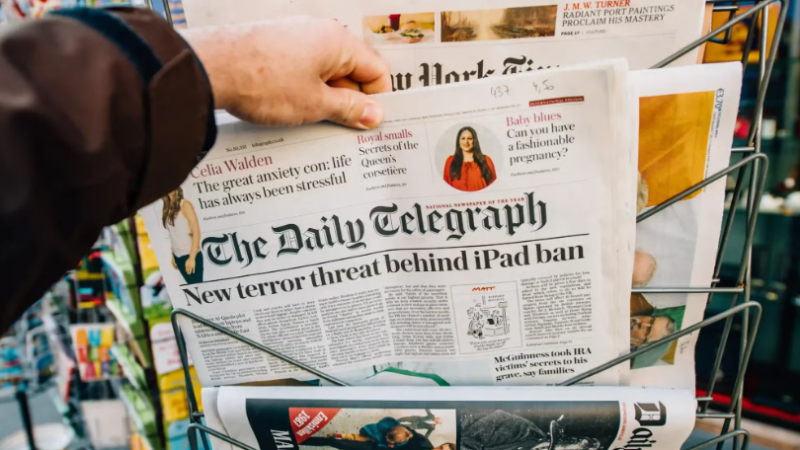
From ‘deeply uncomfortable’ to Dubai darling: Farage flip-flops on UAE Telegraph bid


7 February, 2026 

His change of tone comes as Reform UK seeks to raise funds and boost its political profile among wealthy British expatriates in the Gulf.

\\

Just months after warning that Emirati ownership of a British newspaper would be “deeply troubling,” Nigel Farage has changed his position over the UAE’s attempted takeover of the Telegraph, criticising the UK for blocking the deal.

His change of tone comes as Reform UK seeks to raise funds and boost its political profile among wealthy British expatriates in the Gulf.

During a visit to Dubai last week, Farage claimed the UK had not been “very straight” with the UAE over its failed bid to acquire the Telegraph, which was blocked under rules banning foreign state ownership of British newspapers. Speaking to the Financial Times, the Reform leader suggested the UK’s handling of the deal had damaged relations with Abu Dhabi, accusing the Foreign Office of “lecturing” the Emiratis and arguing that they simply wanted a closer relationship with Britain.

The comments sit uneasily alongside Farage’s own previous position. Writing in the Telegraph in 2023, he said he would be “deeply uncomfortable” if RedBird IMI’s takeover went ahead, describing the UAE as an “absolute monarchy with an abysmal human rights record.” He questioned whether such a state could tolerate the irreverence of the British press, adding that it “seems fanciful that it would take jokes or questions in the spirit that runs through the British press.”

Farage was not alone at the time. A broad cross-party group of politicians raised concerns about the bid, which involved IMI, a media company owned by the UAE, alongside the US private equity firm RedBird Capital Partners. In 2024, Rishi Sunak’s Conservative government ultimately blocked the takeover by tightening the law to ban foreign state ownership of UK newspapers altogether.

The decision reportedly angered UAE officials, who believed they had been given assurances by the previous Conservative government that the investment would be welcome. The collapse of the deal reportedly strained bilateral relations.

Since then, the rules have shifted again. Under Keir Starmer’s government, foreign state investment in British newspapers has been permitted up to a capped 15 percent. RedBird Capital returned with a revised proposal that would have reduced IMI’s stake, but the consortium walked away in November after struggling to raise the £500m asking price and as regulators were poised to investigate the bid’s UAE ties.

Farage’s newfound sympathy for the Emirati position coincides with Reform UK’s efforts to cultivate donors in the region. British citizens living overseas are legally entitled to donate to UK political parties, and Reform is understood to be targeting expatriates in the UAE as it builds its war chest ahead of future elections.

While in Dubai, Farage lavished praise on the emirate’s business environment and criminal justice system and compared the oil-rich state’s approach to criminal justice to the UK’s.

Speaking at an event marking the fifth anniversary of GB News, where he is a presenter, Farage lauded Dubai’s “law and order,” low taxes and pro-enterprise culture, declaring: “These are all the things that we are going to do in the UK.”

The links between British right-wing media and Gulf-based capital are already well established. GB News is jointly owned by Sir Paul Marshall and the Legatum Group, a Dubai-based investment firm. Marshall himself acquired the Spectator in 2024 for £100m from RedBird IMI, after the magazine was separated from the collapsed Telegraph deal.

As Reform looks abroad for financial backing, the episode raises fresh questions about how firmly its leader holds the principles he once invoked, and how readily they bend when political funding and influence are at stake.
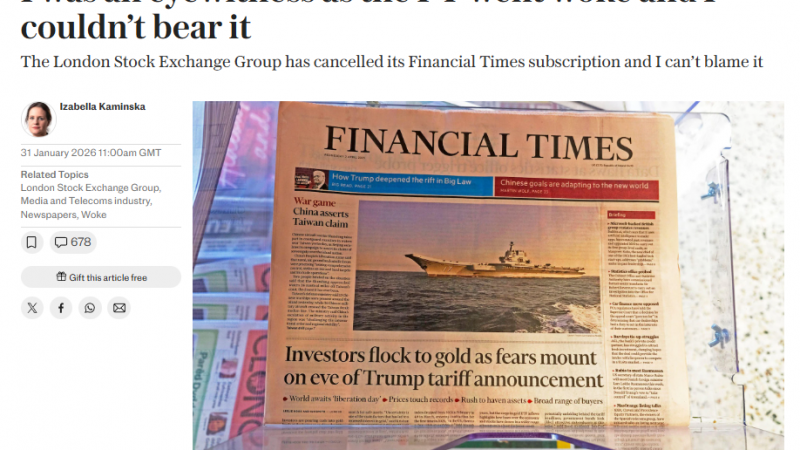
Woke-bashing of the week – The FT, woke? Surely not!

8 February, 2026 

The author argues the FT has shifted from a “candid elite forum” and the “best of the British free-thinking tradition,” to a “timid, risk-averse rag
."

(NOT THAT WOKE! ED LUCE; FT EDITOR USA, IS A REGULAR ON MSNOW MORNING JOE)


If there’s one newspaper you’d think would be immune to accusations of being “woke,” it’s surely the Financial Times.

Yet according to an opinion piece in the Telegraph, the 138-year-old FT, whose pink pages are as much a symbol of the City as bowler hats and pinstripe suits, has succumbed to the clutches of the woke brigade.

In a lengthy polemic, Isabella Kaminska, former editor of the FT’s markets and finance blog Alphaville, casts herself as an “eyewitness” to the paper’s alleged ideological capture, a transformation she says she “couldn’t bear.”

Her central evidence is the London Stock Exchange Group’s (LSEG) decision to cancel hundreds of corporate subscriptions to the FT, ending a relationship that stretches back to the creation of the FTSE 100 itself. Kaminska argues that the move reflects the LSEF’s dissatisfaction with the FT’s “shifting editorial priorities.”

As a former FT journalist who resigned over what she calls “institutional politicisation,” she claims she can “understand where the LSEG is coming from.”

The charge of “wokeness” soon unravels. Kaminska argues the FT has shifted from a “candid elite forum” and the “best of the British free-thinking tradition,” to a “timid, risk-averse rag,” supposedly unwilling to publish ideas that sit outside the “prevailing party line.”

Yet she never convincingly defines what that party line is, beyond a vague sense that it is more socially liberal, more global in outlook, and less indulgent of contrarian positions that once circulated comfortably within City circles.

She attributes this shift to a changing business model. Where the FT once served a narrow, UK-centred financial readership, it now seeks a global and demographically diverse subscriber base. According to Kaminska, this required “diplomacy, not candour” in editorial lines.

Fair enough, after all, like most newspapers, the FT has seen a long-term declines in print circulation, down roughly 34 percent over the past decade. But while its print has declined, digital subscription has increased. In 2025, the FT reported the highest digital circulation year on year in 2025, up 66.9 percent to 43,043 copies.

So, it seems, whatever the FT’s business model is, it’s working. But then, you’d surely expect nothing less from one of the world’s leading business news organisations, recognised internationally for its authority, integrity and accuracy, an editorial approach that saw it win three headline awards at the 2023 Newspaper Awards.

But perhaps the most notable section of Kaminska’s column concerns Covid. The author argues that the FT’s “worst mistake” was failing to mount a sustained economic counterargument to lockdowns, instead aligning with the official consensus. The fact that most mainstream economists, governments, and institutions supported lockdowns at the time is seen not as important context, but as proof of conformity, and bad conformity.

Kaminska then turns to internal culture, citing memos encouraging “inclusive language”, pronoun use in sign-offs, and efforts to attract women readers. These are presented as smoking guns. Yet the leap from workplace inclusion to editorial “wokeness” is never really explained.

The FT has not “gone woke”. It has simply stopped pretending that the interests and worldviews of a narrow City audience are synonymous with objectivity.

The column didn’t slip past readers. As one posted on X:

“Hahahahahah I’m sorry Kaminska is the most ridiculous mediocrity around. The biggest delusion being the notion that she was pushed out because of her (ridiculous) views on the covid lockdown (which the UK barely did which makes it even funnier).”


Right-Wing Media Watch: 
Freedom to what, exactly? 
The Daily Express and the Brexit fantasy

8 February, 2026 

“WHAT FREEDOM? IT GAVE US NOTHING GAHHHHHHHH."
\


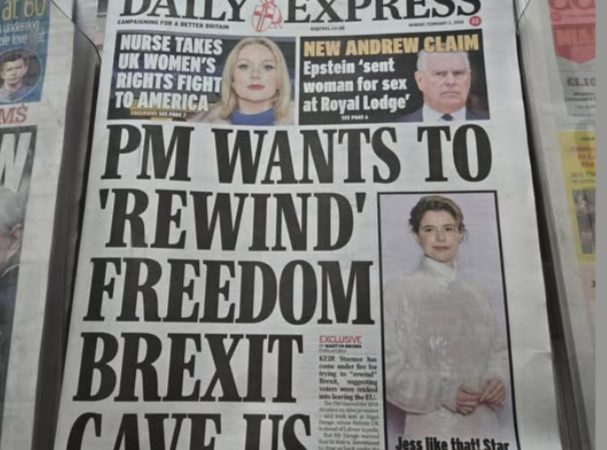
The Daily Express didn’t earn the nickname ‘the Brexpress’ for no reason. But if any reminder were needed as to why, its front page on February 2 provided it in abundance, and promptly became an object of ridicule.

“PM wants to ‘rewind’ freedom Brexit gave us,” the front page screamed, implying Brexit delivered concrete freedoms, and Keir Starmer is now plotting to snatch them away.

The problem, of course, is that the Express never quite explains what those freedoms actually are.

The article claims Starmer was “slammed for trying to ‘rewind’ Brexit,” after suggesting the public had been misled in 2016 by a series of promises that never materialised. This is an uncontroversial observation supported by years of post-Brexit reality, yet the Express frames it as an assault on democracy itself.

And the person doing the slamming? Nigel Farage, no less, who hit back, warning: “For some reason Sir Keir Starmer remains determined to drag us back under the heels of Brussels.”

The paper also called in shadow foreign secretary Priti Patel, who accused Starmer of “ten years after the referendum… still arguing with the British people rather than accepting their decision.”

That argument neatly sidesteps a basic democratic principle, that voters are allowed to reassess political decisions when the promised outcomes fail to appear.

Outside the Express bubble, the reaction was less obliging. Social media users responded with a simple question the paper declined to answer:

“WHAT FREEDOM? IT GAVE US NOTHING GAHHHHHHHH,” as one reader wrote.

The ridiculed front page followed a piece headlined: “Our greatest Crusade: How the Daily Express fought for YOUR Brexit.”

In it, the paper proudly retells its long campaign against European integration.

Readers are reminded that the Express opposed joining the European Economic Community in 1973, declared EU membership “a mistake,” and in 2010 became the first national newspaper to demand withdrawal. Former editor Peter Hill is praised for recognising readers’ supposed distrust of a “Brussels elite.” The paper boasts of petitions, front-page campaigns, and its refusal to be “cowed” by the political establishment, while relentlessly pushing stories about “uncontrolled immigration,” “ludicrous EU waste,” and Brussels diktats.

Having spent decades promising liberation, prosperity, and restored sovereignty, the Express now falls back on vague invocations of “freedom.” While the freedoms Brexit actually removed – freedom of movement, ease of trade, the right to live and work across Europe, for starters – are conveniently ignored.


‘A British ICE’ – Far-right fantasy or creeping reality?

Yesterday
Left Foot Forward


The UK already has its own version of ICE. Reform UK and the far-right dream of taking that sinister approach even further


When Reform UK politicians recently voiced support for Donald Trump’s Immigration Customs Enforcement (ICE), it was a double-take moment. Was the UK already becoming Trump’s America?

The comments were made after ICE kidnapping and arresting children (including a two-year-old baby!). Last month, enforcement agents in Minneapolis fatally shot two unarmed civilians in a matter of weeks. Renée Nicole Good, a 37-year-old mother of three who was volunteering as a legal observer to ICE’s operations was shot dead on 7 January. Weeks later, and just a mile down the road, masked federal agents killed Alex Pretti, who had been protesting ICE’s presence in the city after Good’s killing.

Rather than condemning the scenes, Joseph Boam, a Reform councillor in Leicestershire shared an “I stand with ICE” Homeland Security graphic, which he deleted shortly after. Reform’s London mayoral candidate, Laila Cunningham told GB News that the UK needs “a strong border force, like ICE”. Reform councillor Mick Cockerham went further, saying that ICE techniques should be used on “woke interfering lefties”. He said this in response to London mayor Sadiq Khan warning that Reform would bring ICE to the UK. Meanwhile, Tory leader Kemi Badenoch has said if her party won power, they’d launch a US-style ICE force and deport 150,000 undocumented migrants per year.

The rhetoric is hardline, signalling that many politicians are raring to import policies straight from Trump’s playbook. However, it is not only the far-right adopting this kind of messaging. The Labour government has been publicising its Home Office raids on TikTok and tweeting deportation figures, showing just how tough it wants to appear on immigration. The question now is, will the far-right go further and turn its Trump-style ICE fantasy into a reality?

The UK already has its own ICE (sort of)

“While what is happening in the US is a more violent version or more extremely violent version of the kind of immigration politics we have here, we do have some of this politics here already,” Senior policy and research officer at Refugee Action, Ben Whitham tells Left Foot Forward.

Whitham later sends me a link to a blog post written by Right to Remain, which talks about the UK’s own ICE (Immigration Compliance and Enforcement) teams. The UK’s ICE teams were set up in 2012 as a distinct law enforcement command to the former UK Border Agency. The Home Office’s ICE teams carry out raids in workplaces and people’s homes. Right to Remain points out that under Labour, ICE teams have become far more active.

According to Home Office figures, “Between 1 July 2024 and 31 December 2025 Immigration Enforcement teams made more than 12,322 arrests of people in illegal working visits, an 83% increase on the same period immediately 18 months prior.”
Raids as photo opportunities

In 2026, we’re living in a reality whereby immigration raids are seen as political opportunities to chase the anti-migration vote. Whitham says that “successive governments of both main parties have used those immigration raids as photo opportunities for politicians, to demonstrate that they are tough”.

He says that the raids are used in a “very performative” way “to say we’re out there in the street raiding workplaces and locking people up and deporting people”.

Jake Atkinson, a spokesperson for the Stop Trump Coalition, is quick to make the same point: “We should make no mistake that when people look at what’s happening in the US, this is already happening here.”

“We have our own version of ICE,” he says, again referring to the raids that the Home Office carries out in people’s homes and communities.

Atkinson also warns that the expansion of police use of facial recognition under Labour, as well as the crackdown on civil liberties, repeat protests and erosion of migrants’ rights is creating “an increasingly authoritarian state”.

He adds that Starmer is giving someone like Farage, “who already wants to strip back human rights and holds more radical positions, the infrastructure to enact a vision they want to replicate from the US”.
The far-right fantasy

While the UK’s approach to immigration is not a million miles away from what we’re seeing in places like Minneapolis or the apartment raids in Chicago, Whitham does not expect similar scenes in London or Manchester anytime soon.

He says that “to some extent, this is about that sort of far-right fantasy of power and violence, that they want to see on our streets.”

Whitham explains that Reform and Kemi Badenoch want to use that “imagery to mobilise among their supporters and potential supporters, a sense of being able to wield really brutal power and do further harm to marginalised communities in the UK”.

“That far right fantasy would be a lot harder to realise in the UK,” he explains. Whitham points to the fact that the UK does not have a federal system nor powerful enforcement agencies like ICE that are heavily influenced by the President.
Gun culture

In addition, both Whitham and Atkinson noted key differences between the UK and the US in terms of law enforcement and gun culture. Police fatally shoot around three people per year in the UK. In the US, more than 1,000 people a year are killed by police.

However, Atkinson warns that it is “not out of the realm of possibility” for UK police to start using lethal force against unarmed members of the public, as we are seeing in Minneapolis.

“When Nigel Farage and others talk about importing an ICE-style taskforce to the UK, we need to understand that it opens the door to that possibility that we will see more armed personnel on the streets and that is intimidating to our communities,” he explains.

He adds: “That’s absolutely why people need to resist any further encroachment of this kind from the US.”
Resisting ICE

It might be a far-right fantasy, but it doesn’t mean that Farage, Badenoch and others on the right won’t try to bring Trump’s ICE to the UK.

“This should be a wake-up call,” Atkinson says. “We need to step up and meet the moment, as we’ve seen in Minneapolis, it’s not enough for people to see it and be shocked.”

He adds that people who have been observing and monitoring ICE operations and warning their communities, as Good and Pretti did, have “saved people”. “It has given them the chance to get away and hide with their neighbours,” he says.

In the UK, people can help by getting involved in local community defence groups and anti-raid organisations. Atkinson also encourages people to work with migrant rights groups such as Praxis and the Joint Council for the Welfare of Migrants.

The Stop Trump Coalition has held protests in UK cities, including Leeds, London and Edinburgh to show solidarity with those resisting ICE in the US.
Politicians must stop appeasing the far-right

Alongside campaigning against raids and immigration enforcement activities, Atkinson says “we must demand that politicians stop appeasing the far-right here”.

Whitham explains that the rise of the far-right in the UK is partly due to mainstream political parties “relentlessly punching down at migrants as though they were the cause of our wider socioeconomic decline”.

Blaming migrants has been seen “as a cheaper, easier way of trying to address the deep crises we have rather than tackling them in a more substantial way,” he adds.

Yet, as recently as in his 2020 leadership campaign, Starmer himself said: “Low wages, poor housing, poor public services are not the fault of people who come here: they’re political failure.”

Whitham says: “We need to get back to that kind of understanding, which was always correct and true, but in office, the government has completely abandoned that.”

After all, if migration were really to blame for the cost-of-living crisis, low wages and a lack of affordable housing, then Trump’s ICE, and the hostile environment policies under the Tories and now Labour would have magically solved all of those issues by now, wouldn’t they?

Olivia Barber is a reporter at Left Foot Forward
Outrage as Reform UK threatens to defund university after student society blocks event

Today
Left Foot Forward


Reform's threat to strip Bangor University of millions in funding has been described as Trumpian


TweetShareWhatsAppMail


Bangor University Debating and Political Society has refused to allow Reform UK’s Sarah Pochin and Jack Anderton from hosting a Q&A event with students.

The student debating society said they had refused Pochin and Anderton’s request to run a Q&A because they have “zero tolerance for any form of racism, transphobia or homophobia displayed by the members of Reform UK”.

In response, Reform’s head of policy Zia Yusuf has furiously threatened that under a Reform government, Bangor’s £30 million a year in state funding would be pulled.

Writing on X, Yusuf said: “I am sure they won’t mind losing every penny of that state funding under a Reform government. After all, they wouldn’t want a racist’s money would they?”.

Reform deputy leader Richard Tice MP added: “Simple. In line with our values, if Bangor Uni does not believe in free speech, then British taxpayers should not have to fund them.

“Perhaps remove all government funding and no student loans for Bangor students. The phone will ring very soon.”

GB News presenter Bev Turner also weighed in, describing the decision as “the most small-minded, petulant, unintelligent display of censorship from @bangor_staff” and tagging the President of the United States in her post.

Users on X have pointed out that the decision was made by the student debating society, not Bangor University itself.

Journalist Michael Crick said: “Hang on Mr Yusuf, this isn’t Bangor University as a whole, but the Political Society, probably just a few young students. They’re wrong to ban Reform UK but you shouldn’t threaten to take it out on Bangor University as a whole. You sound too much like that bully Trump.”

Another X user said: “Quite the statement from Reform. A Reform Gov would not fund a university who didn’t agree with them. Where’ve we heard that before? Nazi vibes. What scary times we live in.”

Claire Hughes, Labour MP for Bangor Aberconwy, said: “Fancy accusing Bangor University of “banning” Reform and issuing threats. All because a debating society turned them down…?

“Pathetic. We will fight them all the way.”

Reform Party UK Exposed wrote: “Stripping funding to a university due to the actions of a single university society is exactly the type of thin-skinned over-reaction that you would expect from Reform UK.”

Reform’s threats to cut funding mirror what Donald Trump is doing in the US. During his second administration, Trump has cut, frozen, or threatened to withhold billions of dollars in federal research grants and funding from U.S. universities to “stamp out” “woke” and “radical left” ideologies on American campuses.


Olivia Barber is a reporter at Left Foot Forward
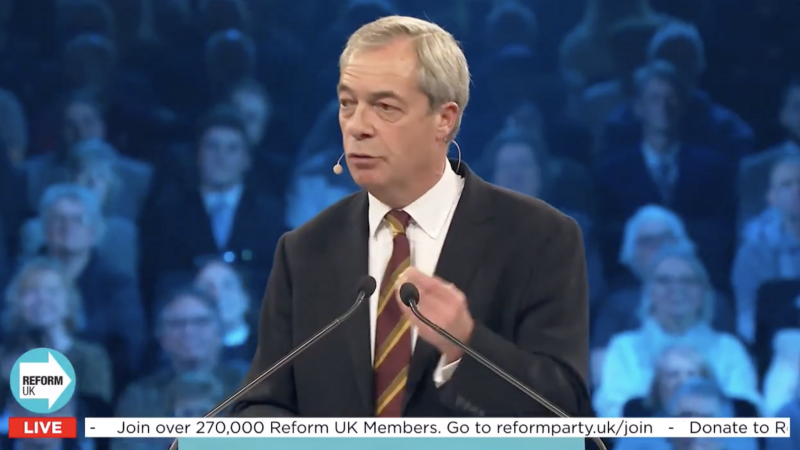
Nigel Farage calls for an end to working from home

Fact Checker
Left Foot Forward 
Olivia Barber 
Today


'Richard Tice is a property developer with huge interests in inner-city office projects'


TweetShareWhatsAppMail


Nigel Farage has again waged war on people’s ability to work from home and the focus on work-life balance, saying that people should return to the office.

In a speech at a Reform rally in Birmingham yesterday, Farage said there needed to be “an attitudinal change to working from home”, adding that “people aren’t more productive working at home”.

“It’s a load of nonsense. They’re more productive being with other fellow human beings,” he said.

The Reform leader also said there needed to be “an attitudinal change to hard work rather than work-life balance”.

As Farage reignites the culture war over working from home, it has been noted that Reform deputy leader Richard Tice, who divides his time between the UK and Dubai, has significant interests in office space.

Tice is a director of property investment companies Quidnet REIT Ltd and Tisun Investments, which own and manage commercial office space.

One X account, The Purple Pimpernel, said: “Richard Tice is a property developer with huge interests in inner-city office projects. Working from home is a huge threat to men like Tice. Not that Reform have any ulterior motives of course!”.

Simon Gosden added: “Working from home: banned. There’s a populist policy, for the managers and the office block owners.”

In the run-up to the May 2025 local elections, Reform said it would not allow anyone working for a Reform council to work from home. Soon after, the party advertised regional director roles that offered a work from home option.

Olivia Barber is a reporter at Left Foot Forward


Source: Everyday Anarchism

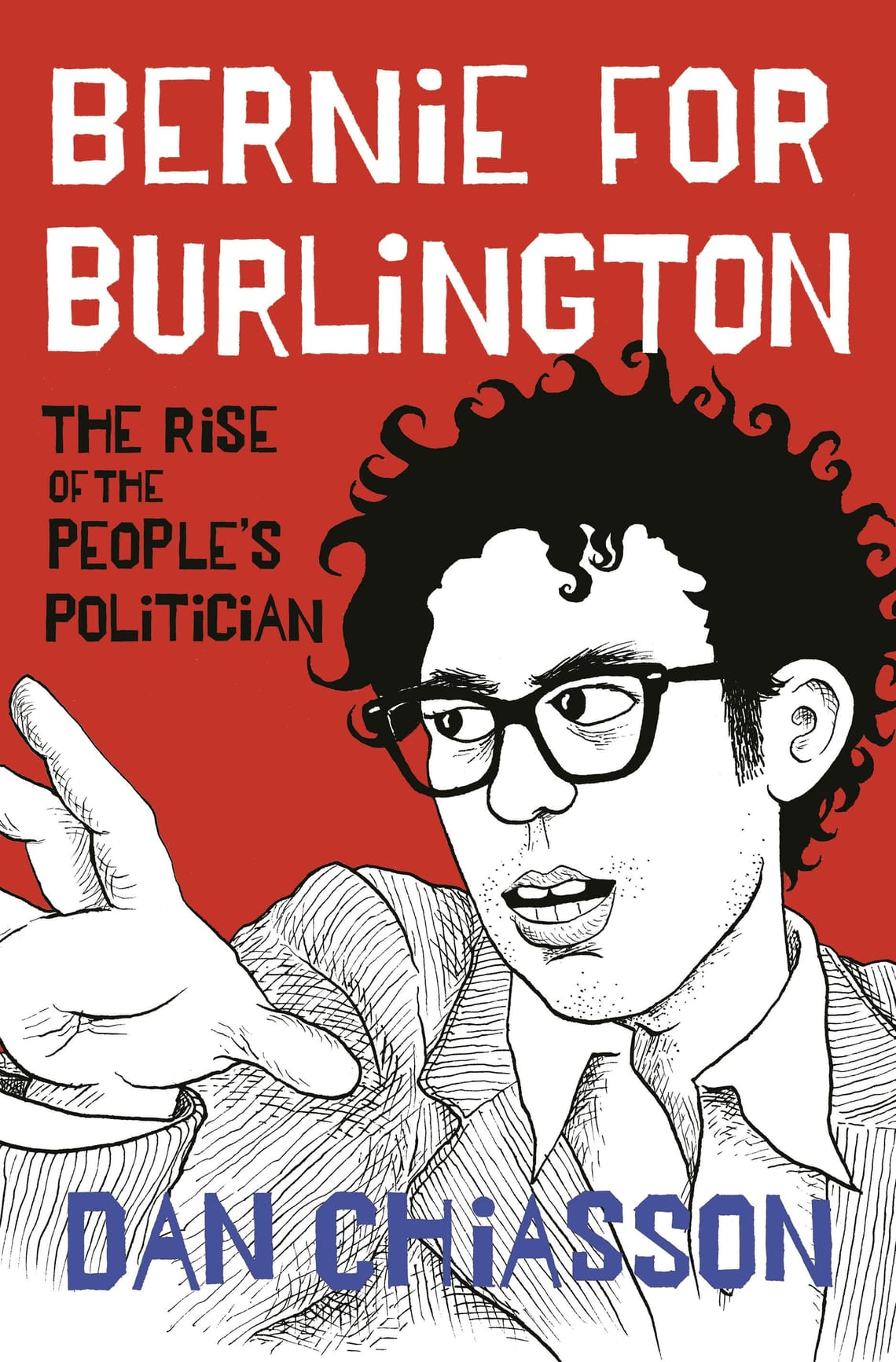
Dan Chiasson joins me to discuss his combined Bernie and Burlington biography, Bernie for Burlington, and the connections between Bernie’s socialism and Mamdani’s socialism.

You can purchase Dan’s book here: https://flyleafbooks.com/book/9780593317495

Here’s Dan’s article about Mamdani: https://www.nybooks.com/online/2025/11/06/have-you-met-z-zohran-mamdani/

And we discuss Corey Robin’s piece on socialist excellence: https://coreyrobin.com/2025/11/15/excellence-over-mediocrity-from-mamdani-to-marx-to-food/Email

Dan Chiasson teaches at Wellesley. His next book, Bernie for Burlington: The Rise of the People’s Politician, will be published in February.


Source: Socialist Project

What is most revealing about the MAGA aesthetic is its studied ugliness. On one side stands the grotesque excess of beauty-pageant femininity, plastic smiles, puffy lips, lacquered beach-wave hair, sharpened jawlines, and a hyper-sexualized nostalgia masquerading as “traditional values.” US Secretary of Homeland Security Kristi Noem exemplifies this aesthetic as a badge of cruelty. Carefully styling herself in a Barbie-doll register of hyper-femininity, she delivers media performances staged in front of prisons and other sites associated with the punishment and terrorization of immigrants. The effect is chilling: a glossy, pornographic aesthetic fused with images of confinement, state violence, and racialized cruelty. Beauty here does not soften power; it aestheticizes domination and makes authoritarian violence appear natural, even glamorous. This aesthetic of cruelty is not confined to clothing (heavy on tweeds), posture, or setting. It increasingly takes hold at the level of the face itself, where artificiality is no longer concealed but aggressively displayed.

As Inae Oh observes in Mother Jones, perhaps “the most jarring element of this burgeoning MAGA stagecraft is its unbridled embrace of face-altering procedures: plastic surgery, veneers, and injectable regimens of Botox and fillers.” Artificiality here is no longer a flaw to be concealed but a badge of belonging, a visual shorthand for power, wealth, and ideological conformity. As one Daily Mail headline bluntly declared, “Plastic surgery was the star of the show” at the Republican National Convention in 2024. The resulting look, widely disparaged as “Mar-a-Lago face,” signals a politics that treats the body as a surface to be engineered, disciplined, and branded, a mask of dominance and emotional vacancy masquerading as strength. The face becomes armor – hard, synthetic, and affectless – training its wearer to project authority while erasing vulnerability.

Traditional Feminine and Masculinist Style

If this surgically enhanced, hyper-feminized spectacle provides one face of the MAGA aesthetic, what Maureen Lehto Brewster has described as “an almost Fox News anchor look” that signals “dressing in [an] overtly feminine way to reassert patriarchal dominance,” its other face emerges in a parallel masculinist style that draws even more directly from the visual grammar of fascism. Shaved or tightly cropped hair, rigid posture, militarized clothing, and the revival of authoritarian silhouettes unmistakably echo twentieth-century fascist pageantry. Consider Border Patrol commander Gregory Bovino’s long black trench coat, worn not for function but for theatrical authority. It is costume politics, a visual performance of domination meant to intimidate rather than persuade. As Arwa Mahdawi remarks in The Guardian, “the Zambian bum-stick chimps seem positively sophisticated in comparison.”

Together, these aesthetic registers do more than signal allegiance. They train bodies to feel power before thinking about it, rehearsing domination as posture, style, and presence, a lesson that now circulates with particular intensity across digital culture. This aesthetic hardens further in the digital sphere. MAGA men proliferate across TikTok, YouTube, X, and other platforms like a fever dream of authoritarian masculinity. They present themselves as strongmen-in-training: squared jaws clenched in permanent hostility, hyper-muscular bodies forged in gym rituals that double as moral theater, libidinal excess mistaken for strength, and rigid, armored postures that signal domination rather than confidence. Their movements are stiff and rehearsed, their bodies disciplined into what Wilhelm Reich once called crippling body armor, where repression congeals into aggression, and vulnerability is converted into cruelty.

Pedagogy of Violence

This is not merely a style; it is an embodied pedagogy of violence. These men learn power through posture, gaze, and gesture. Clenched fists, growling stares, and exaggerated physical presence rehearse domination as a way of being in the world. Misogyny and hostile sexism are not simply beliefs but bodily dispositions, ways of standing, moving, and occupying space that render women, queer bodies, migrants, and the “weak” as threats to be neutralized rather than human beings to be encountered. It is therefore no accident that this aesthetic and affective training culminates in the celebration of ICE, an updated Ku Klux Klan in military dress, where white supremacist terror is bureaucratized and legalized, folded into official policy, and normalized as the everyday practice of state power.

The MAGA aesthetic is tethered to Trump’s regressive theater of white masculinity, a spectacle of grievance, racial resentment, and performative cruelty masquerading as strength. These bodies are drawn to Trump because he licenses their rage. His performance of white supremacy, racism, and nationalist victimhood authorizes the conversion of fear into aggression and resentment into entitlement. What parades as confidence is, in fact, fragility armored with force.

The MAGA male aesthetic is saturated with an evolutionary fantasy of domination: a Hobbesian survival of the fittest worldview stripped of ethics, solidarity, and care. Etched into their faces is a sneer aimed at the “weak,” the feminized, and the racialized other is not incidental; it is central. Violence is already present, normalized through repetition. These bodies function as rehearsals for cruelty, training grounds for a politics in which empathy is viewed with disdain as a weakness, democracy is feminized, and power is proven through the capacity to humiliate, exclude, and harm.

What we are witnessing is more than bad taste or digital bravado; rather it is the corporeal staging of authoritarian desire, a fascist aesthetic that teaches men to feel powerful by hardening themselves against the claims of others. It is violence before the blow, domination before the command, pedagogy before policy.

The MAGA aesthetic is not accidental. Fascist movements have always understood aesthetics as pedagogy, as a way of training people to feel power before they are allowed to think about it. Walter Benjamin warned that fascism aestheticizes politics to mobilize the masses without granting them rights, replacing democratic participation with spectacle, ritual, and submission. Susan Sontag likewise observed that fascist aesthetics glorify obedience, hierarchy, and the eroticization of force, transforming domination into visual pleasure and cruelty into style. In Sontag’s terms, the spectacle does not merely depict power, it trains the eye to desire it. The MAGA look follows this script precisely. It abandons democratic appeal for spectacle, substituting ethical substance with visual aggression and emotional coercion. Its ugliness mirrors its politics: cruel, nostalgic, obsessed with hierarchy, and openly hostile to pluralism. What we see here is not bad taste but a deliberate visual language of authoritarianism, an aesthetic designed to normalize exclusion, glorify force, strip joy and imagination from public life, and prepare the ground for repression.

Nowhere is this aesthetic logic more nakedly visible than in Trump himself, whose body has always functioned as a political text. His appearance is not incidental to his power but central to it, staging domination, excess, and entitlement as visual norms. To read Trump’s look closely is to see how authoritarian values are worn on the body long before they are imposed as policy.

As Jess Cartner-Morley notes, “to critique the Trump aesthetic is not to trivialize abominations, because his values and beliefs run through both. It [begins] at face value, where Trump’s brazenly artificial shade of salmon reflects not only vanity,” but a grotesque misunderstanding of authority, as if a three-week Caribbean cruise tan were an appropriate look for a man entrusted with the gravest responsibilities of public office. His oversized suits and perpetually overlong ties do similar symbolic work. The ties hang like exaggerated phallic markers, extending well past the belt line, signaling not elegance but compulsion, a visual overreach that mirrors his politics. They do not finish the outfit; they dominate it. The result is a body styled not for restraint or dignity but for excess, spectacle, and domination, a supersized ego draped in fabric and color.

All of this is engineered by a president who wears ill-fitting designer suits, commandeers cultural institutions such as the Kennedy Center to impose a politics of vulgarity, and casually announces imperial ambitions, from Greenland to Venezuela. It would be easy to dismiss him as a narcissistic clown. That would be a mistake. He is a demagogue who despises democracy, targets people of color, revels in violence, and has worked to create a personal Gestapo-like police apparatus unaccountable to law. He has elevated staggering levels of inequality and white supremacy into governing principles, funded the genocide in Gaza, and aligned himself on the global stage with war criminals. He appears most animated when humiliating others or inflicting pain. He is the embodiment of an ugly ideology clothed in an equally ugly aesthetic. And in ugly times, such symbols are not incidental; they are warnings. 


Henry Giroux (born 1943) is an internationally renowned writer and cultural critic, Professor Henry Giroux has authored, or co-authored over 65 books, written several hundred scholarly articles, delivered more than 250 public lectures, been a regular contributor to print, television, and radio news media outlets, and is one of the most cited Canadian academics working in any area of Humanities research. In 2002, he was named as one of the top fifty educational thinkers of the modern period in Fifty Modern Thinkers on Education: From Piaget to the Present as part of Routledge’s Key Guides Publication Series.