Sunday, March 01, 2026


No Collective Security or Decision-Making Power for New Orleans Charter School Teachers

Charter schools are outsourced schools that have always opposed teachers’ unions, which is why about 90% of the nation’s roughly 8,200 charter schools have no unions. In other words, the vast majority of charter school teachers nationwide have no collective security or real decision-making power. As private employers, charter schools consider teachers “at will” employees—someone they can terminate at any time, for any reason, or no reason at all.

When teachers do strive to form a union at a charter school it is usually in secret and a long uphill battle fraught with various assaults by charter school owners, administrators, and lawyers.

Charter school teachers generally fall under the auspices of the National Labor Relations Board (NLRB), an independent federal agency established in 1935 to protect private sector workers. See here for more information about NLRB.

Unfortunately, according to The Guardian, “The number of union elections overseen by the National Labor Relations Board (NLRB) dropped 30% in 2025 after the Trump administration left the federal labor watchdog powerless…. Since the start of his second term, Trump has made unprecedented moves to freeze the board.” This has harmed private sector workers, which in turn also hurts public sector workers.

In this context, we learn from The Louisiana Weekly (February 23, 2026) that, “Nearly two years after teachers at New Orleans charter school Lycee Francais International de la Louisiane (formerly Lycee Francais de la Nouvelle-Orleans) voted overwhelmingly to unionize, a federal board has ruled that the school doesn’t have to recognize the union.” This is a big blow to teachers’ working conditions and students’ learning conditions.

In April 2025, the NLRB ruled that, “it no longer has jurisdiction over the unionization push at the school, meaning it cannot compel Lycee Francais’ administrations to negotiate with members.” While the citywide teachers’ union, United Teachers of New Orleans (UTNO), appealed the decision, the NLRB denied the appeal in January 2026.

This attack on workers’ rights was achieved through the passage of a 2024 state law (Act 172) that conveniently converts charter school teachers from “private employees of the school’s nonprofit charter operator into public employees of a government body, who therefore fall outside of the NLRB’s jurisdiction.” This is a textbook example of charter school advocates manipulating the categories “public” and “private” in self-serving ways. Charter schools are public when they want to be and private when it serves them better.

Act 172 arbitrarily renders charter schools as public schools (“political subdivisions of the state”) so that charter school teachers no longer fall under NLRB jurisdiction and find it harder to unionize and defend themselves. On paper, Act 172 capriciously makes the New Orleans charter school Lycee Francais a school “administered by individuals who are responsible to public officials or to the general electorate.”

No one should be fooled by this sleight of hand though: charter schools remain private in character and engage in profiteering regardless of whether they are considered non-profit or for-profit schools. And to be sure, charter schools are not state actors. They are not government agencies or political subdivision of the state. They are not created by the government like traditional public schools are. They are independent deregulated schools that are exempt from many laws, rules, and statutes upheld by traditional public schools. They have always by run by private operators and governed by unelected private persons. Charter schools also routinely cherry-pick students even though they are “open to all” and “tuition free.” Charter schools were conceived more than 30 years ago as schools set up outside of the traditional public school model, independent of it. This is why they are frequently referred to as “autonomous” schools. Indeed, they came into being to compete with traditional public schools, which is why they are often called “free market” schools that embrace consumerism and a fend-for-yourself culture.

It comes as no surprise that, “All of the [Lycee Francais] teachers who had originally been involved with organizing the union in 2024 have since left the school or have been fired, which some employees alleged was in retaliation for the union drive.”

Creating a union for teachers at a charter school just got much harder in New Orleans. As a result, teachers and students will remain marginalized while the private interests that operate charter schools will hold the upper hand.

To add insult to injury, it is worth noting that New Orleans became the first major city in the country to become an all-charter-school-city in 2019, which essentially means that no traditional public schools exist in the city. This mocks the whole idea of “choice” driving charter schools.

For extensive information and analysis on the many failures and scandals plaguing New Orleans charter schools over the years, see hereherehere, and here.

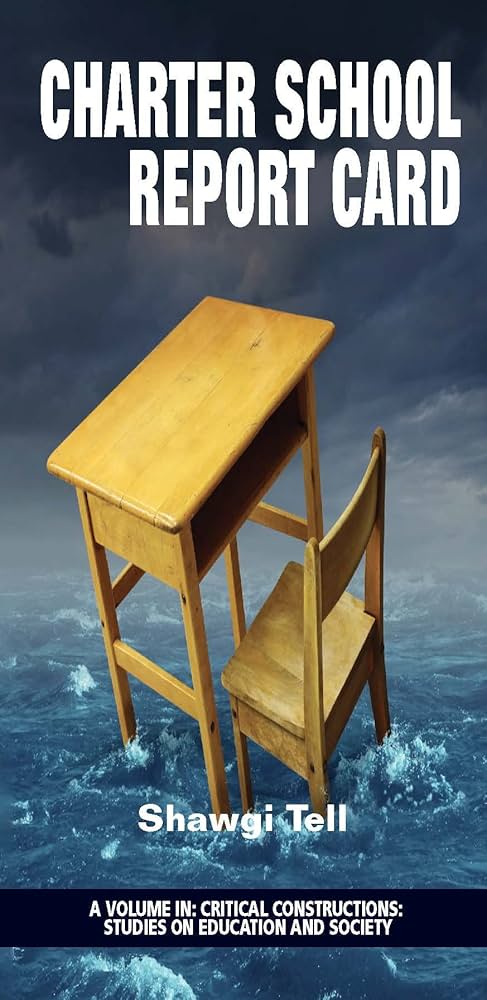
Shawgi Tell (PhD) is author of the book Charter School Report Card. He can be reached at stell5@naz.eduRead other articles by Shawgi.

Start school later, sleep longer, learn better


University of Zurich


High school students often have trouble getting to bed at a reasonable time, which makes it difficult for them to start school early in the morning. This is because teenagers are biologically wired to fall asleep later than adults, with their biological clock shifting progressively later throughout adolescence. The result is that most teenagers don’t get enough sleep on school days, and their sleep deficits increase as the week progresses.

“This is concerning, as chronic sleep deprivation not only affects well-being, but also has a measurable impact on mental health, physical development and the ability to learn,” says Oskar Jenni of the University of Zurich (UZH). According to Jenni, a developmental pediatrician, adolescent sleep biology prevents them from falling asleep early enough to meet their sleep need, so starting school later in the morning could have significant positive effects. While the impact of beginning the school day later has been well-studied internationally, there is currently a lack of research on flexible models that allow students to choose between an early and a later start.

New school model with flexible start and end times

Joëlle Albrecht, Reto Huber and Oskar Jenni from the University of Zurich and the University Children’s Hospital Zurich have now conducted research that provides scientific backing for school schedules that are better adapted to teenagers’ needs. Three years ago, the Gossau Upper Secondary School in the northeastern canton of St. Gallen introduced flexible school hours. Since then, students have had the option to attend modules before regular classes begin in the morning, at midday and in the afternoon. This means students decide when they start their school day: they can arrive at 7:30am or wait until 8:30am, when classes officially begin.

Using this model, the research team examined the sleep patterns of adolescents and the impact of sleep deprivation on their health and academic performance. The pupils, who were 14 years old on average, were surveyed once under the old school model, with a 7:20am start, and a second time a year later under the new model. The research team evaluated 754 responses in total.

Flexible school schedules allow for more sleep

The findings are unequivocal: 95% of students took advantage of the option to start school later – on average, 38 minutes later than under the old system. As a result, the teenagers were able to get up 40 minutes later in the morning. Because they continued to go to bed around the same time, their total amount of sleep increased: on school days, the students slept an average of 45 minutes longer.

There were also other advantages. “The students reported fewer problems falling asleep, and health-related quality of life increased ,” summarizes lead author Joëlle Albrecht. Under the new model, objective learning outcomes in English and mathematics improved compared to cantonal test results.

Improved health and academic performance

The study, published in the renowned Journal of Adolescent Health, shows that flexible school start times can be an effective and practical approach to reducing chronic sleep deprivation and improving adolescents’ mental health and academic performance. “Starting classes later in the morning can therefore significantly contribute to addressing the current mental health crisis among pupils,” adds co-author Reto Huber. In 2022, a study published by the Swiss Health Observatory (Obsan) found that 47% of 11- to 15-year-olds experienced multiple recurring or chronic psycho-affective complaints, such as sadness, fatigue, anxiety, low mood, tension, irritability, anger and difficulty falling asleep.

The $13 Billion Sewage Plant


Oh what a relief it is to see that 13 Billion of our tax dollars, give or take, are well spent. The Empire’s newest and largest Aircraft Carrier, the USS Gerald R. Ford is swimming in its own excrement. News around the world reports the Ford is having major sewage problems. Evidently the overflow affects 650 Necessaries, aka, toilets, aboard the Gerald R. As scuttlebutt has it, the Captain restricted their use among the 5,000 sailors aboard. Not sure just how the Navy’s high brass plans on enforcing such a restriction.

In a number 1 emergency, which in this case it undoody’ably is, instead of using the Head the male members of the crew are encouraged to hang their tallywackers out the portholes. It has been suggested the gals use spare wash buckets. A boatload doing a number 2 presents a whole nuther problem. The passageways are already open laterines.

Fortunately, the Ford has just docked in Israel, where help is just around the corner. Israel produces more shitsky than any other place on God’s green earth — even more than Senator Lyndsey Graham, Donald Trump, and US Ambassador Mike Huckabee combined. There’s yet hope for the USS Gerald Ford. The Zionists know how to dish it out, discharging Epstenian ordure to the four corners like it was manna from on high.

Damn the torpedoes, full speed ahead, hopefully in the upcoming battle with Iran and the Houthis, the Ford isn’t forced to make any sudden hard-a-starboard (right) or hard-a-port (left) turns while maneuvering. The USS Harry S. Truman already lost two F/A-18 Super Hornets in the Red Sea after they slipped off the deck while the ship dodged Houthi missiles. A deck awash in muck and not just on the Poop Deck, only increases the chance of F-35Cs, Growlers, and E2-Hawkeyes, not to mention more than a few sailors slipping overboard… either consigned to Davy Jones Locker or limping back home, an event that would not fare well among the American citizenry. Just saying…

Jimmy R. Coleman is a former President of Garon Inc, a computer consulting company, but his real work started after he began his quest to find an answer to a rather simple question - “Why is it seemingly impossible to have peace in the Middle East?” Twenty plus years have gone by – the answer proving more difficult and elusive than the question. His research has taken him to the four corners of the globe, spanning centuries, covering the rise and fall of empires, cultures and religions. He has relied on some of the best experts in their respective areas, historians, theologians, political and military mindsets, and radical thinkers from the left and right, from Zionist, Jihadist and proponents of End Times eschatology, a journey that has helped frame his thinking, not as an expert who sees the trees, but as someone with a more generalist viewpoint of the forest. Read other articles by Jimmy.

Jailed PKK boss says laws needed in Turkey peace process

Imprisoned PKK leader Abdullah Öcalan urges new Turkish laws to advance peace, reintegrate former fighters, and end decades of violence.

The New Arab Staff & Agencies
28 February, 2026


The appeal by Abdullah Öcalan came a year after his historic call for the Kurdistan Workers' Party, or PKK, to lay down its arms and dissolve itself [GETTY]

The imprisoned leader of a militant Kurdish group in Turkey on Friday urged new legislation that would advance a peace initiative with the Turkish government in the wake of their decades‑long conflict.

The appeal by Abdullah Öcalan came a year after his historic call for the Kurdistan Workers' Party, or PKK, to lay down its arms and dissolve itself.

His latest message, read out in parliament by a senior member of Turkey's pro-Kurdish party, followed weeks after a parliamentary committee recommended a series of reforms to support the peace efforts, including measures to reintegrate PKK members who renounce violence.

"The transition to democratic integration necessitates laws of peace," read Öcalan's message.

"We aim to close the era of politics based on violence and to open a process based on a democratic society and the rule of law," legislator Pervin Buldan read from the message.

"We invite all segments of society to create opportunities and take responsibility in this direction," it also said.

The PKK has waged an armed insurgency since 1984 in Turkey that has claimed tens of thousands of lives and spilt into neighbouring Iraq and Syria. The group is designated as a terrorist organisation by Turkey, the United States and the European Union.

After Öcalan's 27 February 2025 announcement, the PKK said in May that it would disarm and disband, ending more than four decades of hostilities.

The group later held a symbolic disarmament ceremony in northern Iraq, where its fighters had long found safe havens during the insurgency, and burned dozens of weapons in a cauldron before starting to withdraw its remaining fighters from Turkey to Iraq.

Earlier this month, a multi-party parliamentary commission recommended a series of reforms, including the reintegration of PKK members who renounce violence, while stressing that legal steps should be tied to state security institutions verifying that the group has surrendered its weapons.
Related


Natacha Danon

Among other measures, the commission also called for steps to expand freedom of expression, release older or sick prisoners and ensure that nonviolent acts are not prosecuted under anti‑terror laws.

On Friday, the pro‑Kurdish Peoples' Equality and Democracy Party, or DEM, also urged the adoption of such legal measures.

"The state and the executive branch are obligated to move this process forward with the seriousness and determination that matches Mr. Öcalan's pace for a solution", DEM party co-chairman Tuncer Bakirhan said. "The responsibility now rests with the state and the executive branch."

Öcalan, 76, has been imprisoned on the island of Imrali, off the coast of Istanbul, since 1999, after being convicted of treason.

Despite his incarceration, he continues to wield significant influence over the PKK. The group initially sought an independent Kurdish state but later shifted to demands for autonomy and expanded rights in Turkey.


Trump asks US Supreme Court to end protections for Syrian immigrants

Trump administration asks US Supreme Court to end TPS deportation protections for 6,000 Syrians, seeking to lift judge’s block as legal fight continues.


Trump's Department of Homeland Security has moved to terminate TPS for 12 countries, including Syria 

President Donald Trump's administration asked the US Supreme Court on Thursday to intervene in its effort to strip deportation protections from about 6,000 Syrians living in the United States.

The Justice Department in an emergency request asked the Supreme Court to lift a judge's November decision that blocked the administration's move to end Temporary Protected Status, or TPS, for Syrians while litigation challenging the move continues.

It is the third time the administration has turned to the Supreme Court related to its efforts to terminate these protections for migrants. The court sided with the administration on both previous occasions, involving the revocation of TPS for hundreds of thousands of Venezuelans.

TPS is a humanitarian designation under US law for migrants from countries stricken by war, natural disaster or other catastrophes, shielding people given this status from deportation and allowing them to work in the United States.

Trump's Department of Homeland Security has moved to terminate TPS for 12 countries, including Syria. Similar lawsuits have led to court rulings that are currently blocking the end of TPS for people from nations including Ethiopia, South Sudan, Haiti, Syria and Myanmar.

TPS was first extended to Syrians in 2012 during former President Barack Obama's administration, after the country plunged into a civil war that culminated with the toppling of President Bashar al-Assad in December 2024.

Homeland Security Secretary Kristi Noem, an appointee of the Republican president, announced in September that Syria's TPS designation would end, noting that the situation there "no longer meets the criteria for an ongoing armed conflict that poses a serious threat to the personal safety of returning Syrian nationals."

In November, US Judge Katherine Polk Failla in Manhattan blocked the Trump administration from terminating TPS for Syrians. The New York-based 2nd US Circuit Court of Appeals on 17 February declined to halt that order.

The Justice Department said in a filing that lower courts were flouting the Supreme Court's prior orders in the cases involving Venezuela's TPS designation. It suggested that the Supreme Court take up and hear arguments in the dispute,e given the "lower courts' persistent disregard" for the Supreme Court's actions.

The administration has said the TPS program has been overused and that many migrants no longer merit protection. Democrats and advocates for the migrants have said that TPS enrollees could be forced to return to dangerous conditions and that US employers depend on their labour.

The court requested a response to the administration's request by 5 March from a group of Syrians challenging the policy.


As government fails on economy, Syrians must mobilise from below

For weeks, Syrians have protested from Damascus to Deir ez-Zor, denouncing layoffs and austerity, writes Joseph Daher — but will Ahmed al-Sharaa shift course?


Joseph Daher
25 Feb, 2026


The economic policies being imposed have manly reinforced the concentration of economic power among the new ruling elite and its affiliated business networks, all whilst Syrians continue to live in poverty, writes Joseph Daher. [GETTY]

February has been marked by a significant rise in protests and organised action against the Syrian government’s economic policies, as well as the worsening of living and working conditions.

In Damascus and elsewhere in the country, ongoing demonstrations against the astronomical rise of electricity prices (in some cases reaching up to a 6000% hike), occurred at the end of January and first few weeks of February. Whilst rumours are circulating that the ministry of energy could reconsider the new tariffs, no official decisions have been taken so far.

Teachers in Tartus and Latakia have been protesting continuously for several weeks after a decision by the ministry of education to order their return from these cities where they’ve now settled, and back to their original provinces. The educators are angry that the government is ignoring the fact that most have been living in Tatus and Latakia for years. Not to mention, they don’t have the financial means to relocate.

Many believe the move is a precursor to a mass termination of thousands of teaching staff.

Additionally, in the Idlib and Aleppo countryside governorates teachers have engaged in a massive strike to demand permanent employment, the swift reinstatement of those who were sacked, and salary increases that match the soaring cost of living. More than 1700 schools in these areas have closed their doors

Joseph Daher

This ‘Strike for Dignity’ is in response to the authorities’ broken promises over salary increases and an improvement in working conditions. With the support of the national teachers’ union, the workers declared that the strike would be open-ended, and that they will not go back to classrooms until salary commitments are honoured and basic school supplies are provided.

In Raqqa too, following the withdrawal of the Syrian Democratic Forces, local teachers have been protesting on a nearly daily basis demanding permanent positions in schools in their areas.

An open-ended strike was also called by teachers in the southern Hasaka governorate, who announced the suspension of classes in schools located in Al-Shaddadi, Al-Arisha, Markada, and Tel al-Shaer. They want job security and improved living conditions.

The teachers aren’t alone, however. Freight truck drivers also launched an open-ended strike and announced a halt to the transport of commercial goods after authorities did not react to their demands. They protested the end to nationalised transport fares that left them at the mercy of brokers and traders, which has unsurprisingly negatively impacted their livelihood.

They also demand the activation of unions, and the establishment of a cooperative fund. The state has only partially responded by suspending the entry of foreign trucks.

Other workers’ mobilisations took place at Latakia Port by workers denouncing their dismissal, and by mill workers in Deir ez-Zor against the reduction to their salaries.

Doctors in several hospitals in the Damascus area also staged a protest demanding improved financial and professional conditions, following promises of salary increases and incentive adjustments.

In Aleppo, even street vendors took to the streets in early February against the local authorities' decision to ban their activities and, in some cases, to remove their street stalls.


In Qunaytra, employees of the agricultural research centre organised a rally to protest dozens of dismissals without prior notice, and demanded their reinstatement. Bassam al-Saeed, the head of the local labour union, raised that the research centre “which has a special status because it is located on the frontline with the Zionist enemy” officially requires 600 workers to run it, but there are only 300 people currently operating it. Yet, more government cuts are expected to come.

In the city of Palmyra, citizens held a demonstration to denounce the continued neglect of residents, including their access to basic, quality services.

Activists and residents of Deir ez-Zor province similarly launched a widespread campaign under the hashtag #Enough_Deir_ez-Zor_is_Disaster. This was in response to what they describe as systematic marginalisation, and against policies that have led to the collapse of basic living conditions and public services in a province that has vast oil and agricultural resources.

Locals taking action hold government authorities directly responsible for the unprecedented economic and social deterioration, and issued a statement calling out their continued silence regarding the suffering of the majority of the populations in the city and surrounding countryside.

The situation is so desperate, that protestors are also demanding that Deir ez-Zor be officially declared a "disaster-stricken" province so that and emergency response can actually be imposed.

Protestors have also called on authorities to allocate a percentage of the oil and gas revenues extracted from the province to fund development projects and local services, and immediately rehabilitate bridges and main roads to salvage what remains of the region's lifeline.

They also seek the involvement of the local community in key decision-making, supporting local staff, and launching sustainable development projects to ensure that resources are used to improve people’s lives.

Austerity measures

All the mobilisations reflect the growing popular frustration towards the government’s economic policies which haven’t led to the country’s sustainable economic recovery - as promised following the Assad regime’s fall. Instead, it has embraced a neoliberal economic model based on liberalization of trade, privatisation of state assets, attraction of foreign direct investment, sharp austerity and a shrinking public sector.

Nevertheless, Syrian officials continue to call for the trap of further privatisation of state-owned enterprises and a reduction in the state's role.

Back in January 2025, the government had already announced plans to dismiss up to one-third of the state’s workforce, and since then no legal grounded procedures for layoffs and temporary suspensions have even been put forward by the Syrian authorities. This has continued to raise serious concerns about arbitrary dismissals.

Since the beginning of the year, layoffs have continued at pace across different ministries. Over 300 employees were dismissed in the agricultural directorates of Lattakia, more than 40 employees lost their jobs in Lattakia’s grain institution, 200 in the Tartus province ministry of agriculture, 400 from the Syrian Company for Construction and Development, several hundreds of employees from the electricity directorates in Homs, Lattakia, and Hama, as well as dozens from the ministry of information. And this list goes on…

Additionally, 180 employees of the Aleppo City Council did not have their contracts renewed at the beginning of the year.

Indeed, the economic policies being imposed have manly reinforced the concentration of economic power among the new ruling elite and its affiliated business networks, all whilst Syrians continue to live in poverty.

Potential from below?

Concerningly, the vast majority of the trade union leaderships are actually aligned with the authorities. This is because the ruling authorities have placed loyalists at the head of the unions and professional associations, without holding elections for new representation. The only exception to this was the election of the General Federation of Trade Unions’ Executive Office by its General Council in early December 2025.

This was clear to see when the teachers’ union publicly stated that the support they were extending to their striking colleagues in the north did not in any way imply a negative stance towards the Syrian state.

There are, however, some attempts by professional associations to gain more autonomy. The Syrian Journalists Association, for instance, recently condemned the ministry of information's intention to launch a ‘professional code of conduct’ for those in the field. They argued that this would not only undermine the role of the union and association, but it would also weaken "the possibility of building a free investigative media", thus reproducing a system of censorship.

More of this is urgently needed in the face of current economic woes. It is, after all, through independent, democratic, and autonomous mass trade union organisations that aren’t state controlled, that living and working conditions of the population will improve. This is also key for strengthening broader democratic rights and establishing an economic system based on social justice and equality.

With al-Sharaa’s government showing no indication that it is about to radically change its policies, and more and more people losing faith, change will need to come from below. Using this period of mass action to connect struggles against exploitation and oppression, to join forces in the mobilisations organised across the country, is certainly the best way to build a political alternative rooted in the interests of the country’s popular classes.


Joseph Daher is an academic and author of Syria after the Uprisings, The Political Economy of State Resilience; Hezbollah: the Political Economy of Lebanon’s Party of God; Marxism and Palestine.

Follow him on Twitter: @JosephDaher19

Opinions expressed in this article remain those of the author and do not necessarily represent those of The New Arab, its editorial board or staff.
\
Firm selling Israel’s spy tech woos Europe’s cops & ICE

David Cronin 
19 February 2026
ELECTRONIC INTAFADA


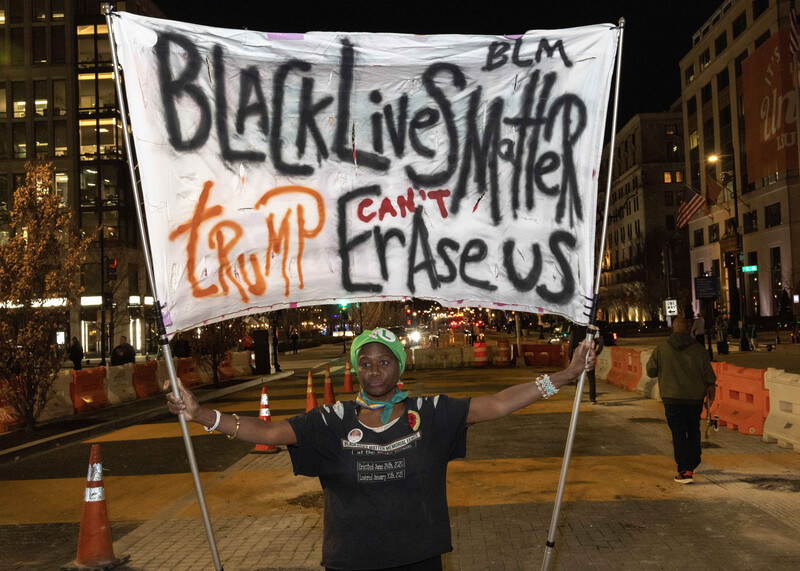
Cobwebs Technologies (now owned by PenLink) has recommended that its products be used to spy on Black Lives Matter activists
. Probal RashidZUMA Press

Israel’s spy technology will be displayed at an exhibition organized by the British government next month.

PenLink – one of the listed participants in the London expo named Security and Policing – is, to put it mildly, a firm that should be shunned.

Five years ago, Meta banned Israel’s Cobwebs Technologies – which PenLink has subsequently acquired – from gathering intelligence across the corporation’s platforms.

Meta, the owner of Facebook, Instagram and WhatsApp, had found that Cobwebs was using hundreds of social media accounts to surveil activists, civil servants and opposition politicians in Mexico and Hong Kong.

The details provided about PenLink on the website for the Security and Policing exhibition are misleading. They present PenLink as a British company.

PenLink is headquartered in Nebraska and has extremely strong connections to Israel.

Omri Timianker, a founder of Cobwebs, is among several Israelis on PenLink’s senior management team.

Timianker has in the not-too-distant past been promoted as a veteran of the “special forces” within the Israeli military and “Israel’s secret services.”

When speaking at conferences, he has been praised as being a pioneer among “Israel’s secret services” in the use of “tactical SIGINT.”

As signals intelligence (SIGINT) involves the interception of communications, it is really a fancy term for spying. It is highly probable that any innovation which Timianker helped to realize has been tested out on Palestinians living under an illegal occupation.

In January, Timianker hosted a visit to PenLink’s Israel offices by Michael Mann, the European Union’s ambassador in Tel Aviv.

By Timianker’s account, the pair chatted about “how fast reality is shifting and how critical it is to equip people not just with tools but with the ability to think, question and stay aware in a world shaped by algorithms and narratives.”
From a freedom of information request, I learned that Mann had met a PenLink representative during a November event in the city of Herzliya. In follow-up email correspondence, Mann stated that he would be “delighted to arrange a visit” so that he could see PenLink’s offices.

After I sent a query to Mann, the EU’s Tel Aviv embassy described his meeting with Timianker as a “courtesy visit.”

The visit, according to the embassy, “entailed an informal conversation about technology and disinformation.”

The EU, incidentally, is increasingly accusing journalists and academics with whom it disagrees of “disinformation.”

They include the German citizen Hüseyin Dogru, who is subject to EU sanctions that imperil his livelihood for publishing articles critical of Israel and German state violence against Palestine solidarity activists on Red, a media outlet which he set up.

“Ambassador Mann did not discuss concrete business opportunities for the firm in Europe or elsewhere,” the embassy added.

It is nonetheless indisputable that the meeting with Mann took place amid efforts by PenLink to woo Europe’s law enforcement agencies. PenLink, for example, showcased its wares at last year’s Europe Police Congress in Berlin.


Selling to ICE


Cobwebs – the Israeli firm now owned by PenLink – had previously sought to drum up business by illustrating how one of its systems could be used against Black Lives Matter protesters in the US.

Tangles, as the system is called, mines social media posts to find out which events targeted individuals attend and then combines that data with details leaked about those individuals online.

ICE – the notoriously bellicose US Immigration and Customs Enforcement – has spent approximately $5 million on using Tangles, particularly a feature named Webloc.

Long before he was named the EU’s ambassador to Tel Aviv, Michael Mann had developed cordial relations with Israel and its lobbying network.

Prior to taking up his current job, he was one of the leading figures dealing with the Middle East in the Brussels-based administration of the EU’s diplomatic service.

Another senior player in that service is Hélène Le Gal, a former French envoy to Israel and Morocco.

Through a separate freedom of information request, I learned that Le Gal agreed to receive a delegation from the American Jewish Committee (AJC), a prominent pro-Israel group, in November. The delegation had asked for a meeting to talk about “the current situation in the Middle East, as well as Russia’s ongoing war against Ukraine and its increasingly aggressive posture toward Europe.”

Russia’s ongoing war against Ukraine is undoubtedly a serious issue – as well as being a consequence of the West’s aggressive posture towards Russia (something that EU and NATO representatives would never acknowledge).

Achieving a fair and sustainable resolution of that war is not, however, foremost on the AJC’s agenda.

Rather, it exploits Russia’s invasion of Ukraine to try and distract attention from the genocide which Israel is committing in Gaza.

Lobbyists know very well, too, that the rapid growth in Western military spending prompted by the Russia-Ukraine conflict presents opportunities to boost Israel’s weapons exports.

Israel and its support network thrive on war. As the EU’s leading players are dedicated to building a war economy, it is grimly logical that they are looking to Israel and its advocates for inspiration and assistance.


Why is the EU accusing me of “disinformation”?

David Cronin 
25 February 2026


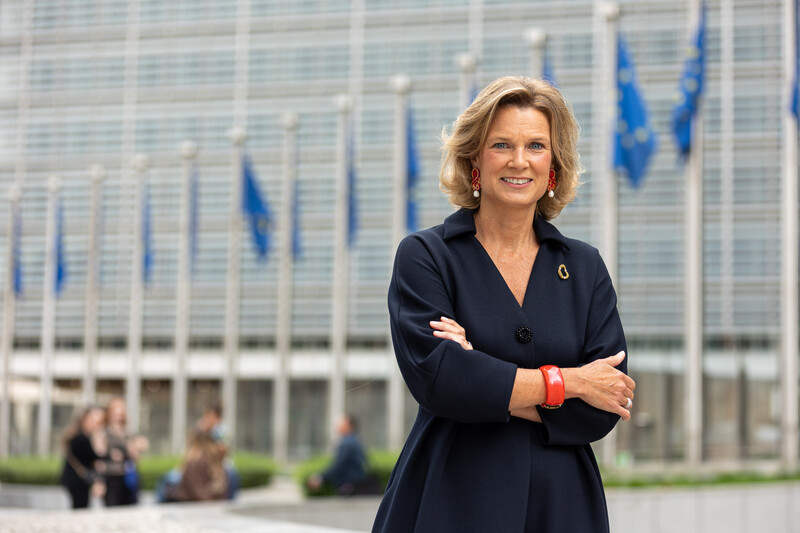
Katharina von Schnurbein, an EU official who has been praised as an “unwavering partner” by Israel. Xavier LejeuneEuropean Union

The European Union is accusing me of “disinformation” for reporting accurately about how it works in tandem with Israel to weaponize anti-Semitism.

The accusation was made after I filed a formal complaint about how the Brussels bureaucracy was keeping secret details of who paid for a May 2025 trip to Israel undertaken by Katharina von Schnurbein, the EU’s coordinator for combating anti-Semitism.

The complaint was made to the European Ombudsman, which sent me a report of a meeting it held with several Brussels officials while assessing my complaint.

That report refers to “articles about the coordinator amounting to disinformation, written by the complainant” – i.e. me.

It says that the officials representing the European Commission – the EU’s executive – at the meeting “shared a sample of relevant articles” with the Ombudsman’s “inquiry team.”

The EU is increasingly using “disinformation” claims to try to muzzle or otherwise punish journalists and academics with whom it disagrees.

Victims of such claims include Hüseyin Dogru, a German citizen who is unable to travel or access his bank account because the EU has imposed sanctions on him over material published on Red, a website which he founded.

The content on Red to which the EU took umbrage concerned the Gaza genocide, the Russia-Ukraine conflict and protests against Israel in Germany.

The EU defines “disinformation” as “false or misleading content that is spread with an intention to deceive or secure economic or political gain, and which may cause public harm.”

I have been investigating and writing about the activities of Katharina von Schnurbein for The Electronic Intifada since 2016. In the ensuing decade, the European Commission has not once pointed out a factual inaccuracy in my articles on von Schnurbein or sought a clarification.

The meeting report sent to me by the European Ombudsman is the first document I have seen in which I am accused of “disinformation.”

The report suggests that the European Commission previously referred to articles written by me, while handling the freedom of information request I had made concerning von Schnurbein’s Israel trip.

However, the European Commission’s reply to an appeal I had lodged following the initial rejection of my request did not directly or explicitly make accusations against me.

That reply claims “there is a real and non-hypothetical risk that the processing of the person mentioned in your request’s data and its public disclosure would harm her privacy and subject her to unsolicited external contacts. Indeed, the person, even though she is not a high-level official and does not form part of the senior management of the EU, has already been the subject of journalistic articles attacking, not only her professional capacities, but also her personal character.”

The reply does not specify who wrote the “journalistic articles” in question.
Racist endeavor

Having learned that the allegation apparently concerned my own work, I strongly object to the insinuations made by the European Commission.

The articles I have written about von Schnurbein have not involved ad hominem attacks.

Rather, they have examined how she conflates bigotry against Jews based on their religion or ethnicity with opposition to Israel’s crimes and Zionism, the ideology underpinning those crimes.

That von Schnurbein resorts to such conflation is implicitly confirmed by the meeting report from the European Ombudsman.

Citing arguments made by von Schnurbein’s colleagues at the European Commission, the report says that she “engages in the global fight against anti-Semitism in all its forms as defined by the definition of anti-Semitism by the International Holocaust Remembrance Alliance.”

The IHRA definition was drafted by pro-Israel lobbyists. At least one of its drafters – Kenneth Stern, a former staff member with the American Jewish Committee – has opposed how it is being invoked to suppress free speech.

That definition is accompanied by 11 “examples [which] may serve as examples” of anti-Semitism. Seven of those “examples” concern Israel.

Among them is the assertion that “the existence of the state of Israel is a racist endeavor.”

It is a simple fact that Israel is a racist endeavor.

The quasi-constitutional Law of Return allows Jews throughout the world to live in Israel and be granted Israeli citizenship. Palestinians and their direct descendants forced out of historic Palestine by Zionist forces in the 1940s are, by contrast, denied the right to go home solely because they are not Jewish.

Discriminating against people based on religion or ethnicity is the very epitome of a racist endeavor.

After initially declining to release any details of who paid for von Schnurbein’s May 2025 Israel trip, the European Commission is finally being a little more forthcoming.

A note from the Ombudsman says that the European Commission’s representatives have “confirmed that the work trip in question was an official mission, the costs of which were covered by the Commission.”

The European Commission has still not released any of the receipts or other documentation relating to the visit’s expenses. In particular, it has not spelled out whether von Schnurbein enjoyed any meals or refreshments paid for by Israel or its lobbying network.

To “justify” its secrecy, the European Commission says that freedom of information requests are processed if they concern its senior management or a “public figure acting in a public capacity.”

According to the European Commission, von Schnurbein is not part of its senior management. The argument is deceptive.

Von Schnurbein is the most senior civil servant in Brussels handling the anti-Semitism dossier. She works in the European Commission’s core administration, under the political leadership of Ursula von der Leyen, the institution’s president.

Furthermore, von Schnurbein is demonstrably a public figure.

She has been on numerous public platforms, representing the European Commission.

In late January, she was the main speaker during an event at the European Parliament. The event was held in public.

I asked the European Commission to explain why it is now accusing me of “disinformation” when it has never once identified a factual error in my articles about von Schnurbein.

The European Commission did not answer the question. A spokesperson said, “In the European Union, individuals, political, media and other actors have the right to express themselves freely. The Commission upholds the rights to freedom of expression, which is enshrined in the Charter [of Fundamental Rights].”

“As your requests relate to an ongoing Ombudsman inquiry, we are not in a position to provide further comments,” the European Commission spokesperson added.

Ali Abunimah, the executive director of The Electronic Intifada, roundly rejects the European Commission’s claims.

“The Electronic Intifada’s reporting on the European Union, particularly on the pro-Israel activities of Katharina von Schnurbein, is done with the highest attention to accuracy and journalistic best practices,” he said.

“At no time has the European Commission challenged our reporting and when we asked the Commission to point us to any examples that qualified as ‘disinformation,’ its spokesperson was unable to do so.”

He added: “We will be unyielding in defending our truthful journalism and our right to report on matters of public interest despite such smears or any attempts at censorship.”

There is a sordid irony behind how the European Commission is alleging that I have practiced “disinformation.”

Von Schnurbein has herself been responsible for making false and misleading claims.

During the May 2025 Middle East trip, she dismissed the voluminous evidence that Israel had been carrying out massacres in Gaza as “rumors about Jews.” She even sought to smear fellow EU officials by contending that a bake sale they organized for a Red Cross Gaza appeal risked causing “ambient anti-Semitism.”

Her comments during that trip followed earlier slurs on the boycott, divestment and sanctions (BDS) movement.

In 2019, von Schnurbein spread the fake and patently malicious allegation that BDS activists targeted the American singer known as Matisyahu solely because he was Jewish.

Matisyahu had actually been denounced by activists because he took part in fundraising for Israel’s military.

Back in 2020, I reported how von Schnurbein’s formal job description does not mention Israel at all.

Despite lacking a mandate to act on Israel’s behalf, she has consistently pursued a pro-Israel agenda.

Her bias has been applauded by the Israeli government. A new feature on von Schnurbein in the Tel Aviv newspaper Haaretz reminds us that Israel’s foreign ministry has called her an “unwavering partner.”

Monitoring how the EU-Israel partnership manifests itself involves putting information into the public domain.

The information is undoubtedly embarrassing for EU officials such as von Schnurbein. But there is a marked difference between information and disinformation.

I refuse to be silenced or intimidated by Katharina von Schnurbein or any other EU representative. If they keep on accommodating Israel’s crimes, then I will continue to chronicle how they do so.


David Cronin is an associate editor of The Electronic Intifada. His books include Balfour’s Shadow: A Century of British Support for Zionism and Israel and Europe’s Alliance with Israel: Aiding the Occupation.

From Greenland to Gaza, the White Man's Burden makes a comeback

From Gaza to Greenland, Iran to Venezuela, imperial projects are rebranded as “security” at the expense of Indigenous freedoms, writes Randa Ghazy.


Voices
Randa Ghazy
26 Feb, 2026


Decisions about land, sovereignty, and resources are debated in distant capitals, while those most affected are treated as secondary actors in their own history. Their voices, once again missing from Western media, writes Randa Ghazy

British imperialist businessman Cecil Rhodes once claimed that “[The English people] are the first race in the world, and the more of the world we inhabit, the better it is for the human race.” This statement, I feel, perfectly embodies the so-called “civilising mission” behind every British colonial endeavour in history.

It was such scientific racism that legitimised imperial expansion: under this logic, having one’s homeland annexed by the British empire was not dispossession, it was an advancement for humanity itself.

For a time, many of us believed this ideology — with its ethical cover for exploitation and brutality — had been consigned to the past. Not anymore.

In the past few years, the genocide in Gaza and the de-facto annexation of the West Bank have reminded us that imperial expansion has not disappeared; it has merely been rebranded. Much of the Western political establishment continues to frame such projects as matters of “security,” “stability,” or “shared values.” And in 2026, leaders like Donald Trump and his allies have revived colonial tropes with striking openness.

Profit-making, wrapped in the language of a “civilising mission,” that echoes Rudyard Kipling’s 'White Man’s Burden', underpins how foreign intervention is sold to the public — whether in Iran, Greenland, or Venezuela. Meanwhile, legacy media often provides reassuring framing: strategic necessity, geopolitical chess, and national interests. Whilst leaving out the human side of the story.

Greenland is a revealing example. The dominant concern among Western liberals was Danish sovereignty, not Greenlandic self-determination. European leaders expressed solidarity “with the Kingdom of Denmark and the people of Greenland,” subtly conflating a colonial administrative structure with the will of an Indigenous population.

As critics have noted, supporting Denmark in the name of international law risks reinforcing an imperial conception of international law — one that arbitrates between empires rather than empowering colonised peoples.

Much of the coverage focused either on Denmark’s legal claim or on Trump’s bombastic style. Trump “wants” Greenland, he “needs it” for security. As Republican Senator Eric Schmitt told the BBC: “Europe should understand that a strong America is good — it’s good for Western civilisation.”

But what does “Western civilisation” mean in this context? Civilisation for whom? And at whose expense?

The Greenlandic Inuit — the Indigenous people of the territory — were largely absent from the conversation. Palestinians are conspicuously missing from the so-called reconstruction discussions around Gaza that are taking place at the ‘Board of Peace’, all whilst aid remains severely limited, and Israel is continuing to encroach on the Strip as the yellow line going further west.

Decisions about land, sovereignty, and resources are debated in distant capitals, while those most affected are treated as secondary actors in their own history. Their voices, once again missing from Western media.

This rhetoric was echoed when US Secretary of State Marco Rubio addressed the Munich Security Conference on 14 February. He urged European allies not to be “shackled by guilt and shame” over their “culture and heritage” and to help the US “revive the West’s age of dominance”. He received a standing ovation.

Soon after, the State Department’s official X account proclaimed that Western civilisation stretches “from Athens to Rome to America” and must embrace its “noble legacy” to reverse its decline.

Yet, few seriously believe that the motivation behind acquiring or threatening to invade Greenland is the defence of Plato or the Parthenon. It is about resources — oil, methane, uranium, nickel, titanium, tungsten, zinc, gold and diamonds — Greenland’s vast and largely untapped mineral wealth.

And this is how colonialism has always functioned, through threats and political pressure, economic domination, and extraction of land as well as labour for the benefit of the coloniser. It is not an archaic system, it is a recurring pattern.

Iran offers another telling case. Western outlets provide extensive coverage to opposition figures such as Reza Pahlavi, son of the deposed shah, while often devoting far less space to the diversity of political voices within Iran itself. The country’s complexity — its ethnic plurality, its ideological divisions, its deeply fragmented diaspora — is flattened into a binary: regime versus liberation through Western pressure.

History should have served as a warning. In 1953, US and British intelligence services intervened in Iran, restoring Mohammad Reza Pahlavi to power after the nationalisation of oil. At the time, US Secretary of State John Foster Dulles justified intervention partly on the grounds that the “free world” could not be deprived of Iranian oil. Strategic resources, once again, were framed as moral necessity.

Today, calls for regime change are often presented as humanitarian concern. Yet the devastating impact of sanctions on ordinary Iranians — and the extent to which economic pressure fuels unrest — receives comparatively little attention. Criticism of Tehran’s brutal repression is necessary and justified. But that should not become a gateway to manufacturing consent for foreign military intervention.

The same double standards are evident elsewhere. Venezuela is framed primarily through the lens of oil and geopolitical shifts. Cuba is discussed through sanctions and containment. Gaza is analysed as a security dilemma. Rarely are the people at the centre of these crises given sustained, primary attention.

The “rules-based international order” is in retreat, while occupation, annexation, or collective punishment are becoming the norm, whether it’s Russia invading Ukraine, Israel annexing Palestinian territory, the US treating Latin America as its ‘backyard’.

Western media cannot single-handedly reverse this trajectory. But it does have a responsibility to decentre imperial narratives, to foreground Indigenous and local voices, to resist the false framework of “civilisation versus chaos.” Journalism should challenge power — not echo it.

Because at its core, this debate is not about civilisation. It is about who gets to define it.

If “Western civilisation” is truly grounded in democracy, human rights and self-determination, then those principles must apply universally — not selectively. They must apply to Greenlanders deciding their own future, to Palestinians seeking freedom and safety, to Iranians navigating their political destiny, to Venezuelans controlling their own oil, and to Cubans living free from the weight of sanctions.

Otherwise, we are not witnessing the defence of civilisation. We are watching the rehabilitation of empire — repackaged in modern language, amplified by media megaphones, and justified once again as a gift to humanity.

The question is not whether history is repeating itself. It is whether we are willing to recognise it — and refuse to participate in its next chapter.


Randa Ghazy is an Italian Egyptian journalist and writer based in London. She has published several books with Italian publisher Rizzoli, including "Dreaming of Palestine" at the age of 15, which has been translated into 16 languages. She has worked as a TV producer at Pan-Arab network Al Araby TV, and led the Gaza media response at Save the Children International, where she held the role of Middle East, North Africa and Eastern Europe Media Manager.

Follow Randa on X: @ghazy_r on Instagram: @randa_ghazy

Have questions or comments? Email us at: editorial-english@alaraby.co.uk.

Opinions expressed in this article remain those of the author and do not necessarily represent those of The New Arab, its editorial board or staff.


'Every Arab is to be killed': Israeli 1948 files expose harrowing war orders to ethnically cleanse Palestine

New Israeli military files reveal written orders to 'kill' and 'annihilate' Palestinians as more than 700,000 were driven out in the 1948 Nakba.


The New Arab Staff
27 February, 2026


Israeli forces issued written orders to 'kill' and 'annihilate' Palestinians in 1948, newly uncovered documents revea
l [Getty/file photo]


Thousands of newly uncovered Israeli military documents have revealed written orders and sworn testimony detailing the killing of civilians and the use of terror to expel Palestinians in 1948, directly contradicting the long-promoted claim that they fled voluntarily.

The documents, published on Thursday by Haaretz, were discovered in 2024 when zoologist Ronit Zilberman found boxes of archival material beside a dumpster in Tel Aviv.

The trove belonged to Rafi Kotzer, an early Golani Brigade fighter, and includes operational orders, battlefield directives and military court testimonies.

Among them is a July 1948 order written and signed by Yitzhak Broshi, commander of Golani's 12th Battalion, titled: "Conduct in captured villages where there is a population".

It instructs that if an "outside Arab", referring to a Palestinian not originally from the village, is found, he is to be shot immediately.


In villages where displaced Palestinians are discovered, troops were to shoot "every 10th man". All men sheltering in homes where property described as “stolen from Jews” is found are to be executed.

Regarding a Bedouin community in the Lower Galilee, the order states plainly: "Every Arab among the Zabahim (a specific Bedouin community) is to be killed".

Another written directive instructs troops to search for Palestinians hiding after an area was seized and to "kill anyone who is hiding". A separate document under the heading "The method" states: "Every Arab who will be met with is to be annihilated."

Senior officers later testified that such violence was not accidental.

"There were operations in which the potential enemy, namely civilians, was annihilated," Mordechai Maklef, then an operations officer who later became Israel’s chief of staff, told a military court. "The intention was to expel. It is impossible to expel 114,000 people… without terror. There had to have been an element of initial terror for them to leave."

Maxim Cohen, commander of the Carmeli Brigade, testified: "How do you expel a village? You lop off the ear of one of the Arabs before everyone else's eyes, and they all flee… We won thanks only to the fear of the Arabs, and they were fearful only of deeds that were not in accordance with the law."

Haim Ben-David, an operations officer who later became a major general, acknowledged: "We often did not behave according to those laws. We resorted to illegal means."

He said that if a Palestinian insisted on remaining in his home, "he gets a bullet", adding that such measures were implemented "with the knowledge of the High Command".

Yisrael Carmi, a battalion commander, described the seizure of Bir al-Saba: "I gave an order to annihilate anyone who appeared in the street, whether they resisted or did not resist… Until then everyone was killed – women and children and everyone."

Court records also detail cases in which prisoners were executed, villages were "cleansed", and soldiers were ordered not to take prisoners - a phrase witnesses testified was understood to mean killing them.

One verdict cited in the investigation states that soldiers were ordered "to shoot every Arab… whether it is a man or a woman, whether the Arab is armed or not, whether he flees or raises his hands and surrenders".


The report notes that nearly 800,000 Palestinians were displaced in 1948. It concludes, based on the newly accessible material, that the Israeli forces had "expelled Arabs systematically and violently", using massacres, murder and terror to expedite their flight.

Decades of archival secrecy have obscured much of this history - among 17 million files in Israel's state and military archives, more than 16 million remain inaccessible to the public.

Internal archive guidance cited by Haaretz instructed staff to conceal material that could harm the army's image by revealing "killing" and "murder".

Nearly eight decades after the founding of Israel, the newly surfaced files place signed orders and courtroom admissions into the public record, written "black on white", as the report notes, detailing directives to "kill", "annihilate" and use terror to drive Palestinians from their homes and land.


A history of strikes on Iran from 1980 to 2026


l
US President Donald Trump announcing US strikes on Iran on February 28, 2026. (HANDOUT / TRUTH SOCIAL: @realDonaldTrump / via AFP)


Plumes of smoke rose over different parts of Tehran as Israel and the US launched on Saturday a joint attack on Iran. (AFP)Next

Jonathan Gornall
February 28, 2026

From Operation Ajax in 1953 to Epic Fury yesterday, US-Iran tensions have repeatedly spilled into open conflict

The latest joint Israeli-US strikes mark a turning point in a rivalry that dates back to the 1979 Islamic Revolution


LONDON: The war that generations of diplomats, generals and spies had tried to avoid began on Saturday morning, when waves of US and Israeli aircraft and missiles struck targets across Iran, including in Kermanshah, Qom, Isfahan, Tabriz and Karaj, in what President Donald Trump called a “massive and ongoing” campaign.

For nearly half a century, the US and Iran have circled each other through covert action, proxy wars, sanctions and sporadic clashes, but never tipping into open conflict. That balance has now collapsed.

Ajax, Eagle Claw, Nimble Archer, Prime Chance, Praying Mantis, Midnight Hammer and now – in collaboration with Israel’s own Operation Lion’s Roar – Operation Epic Fury.


There has been no shortage of US military operations against Iran or Iranian forces in the Gulf ever since the two countries became sworn enemies following the overthrow of the pro-Western Shah by the Islamic Revolution in 1979.

The seeds of that revolution, and the subsequent emergence of Iran as a destructive force in the Middle East, were sown in 1953. Operation Ajax, a coup engineered by America’s CIA and the UK’s MI6, overthrew Iran’s democratically elected prime minister, Mohammed Mosaddegh, who had attempted to nationalize the British-owned Anglo-Persian Oil Company.

As part of that plot, America’s first attack on Iranian soil took place in August 1953 when, in a bid to stir up anti-Communist sentiment, CIA operatives bombed the home of a prominent Muslim in Tehran.

The coup, which led to the installation of the Shah, paved the way for the 1979 revolution, the return of Ayatollah Khomeini from exile and the foundation of the Islamic Republic of Iran.


America’s first military incursion followed shortly afterward. When news broke in 1980 that the deposed Shah had been flown to America for medical treatment, Iranian revolutionary students seized the US embassy in Tehran and held 52 Americans hostage for 444 days.

US President Jimmy Carter authorized an audacious rescue bid, Operation Eagle Claw, but it ended in disaster, thanks to poor planning and a collision between two US aircraft on the ground in central Iran, which cost the lives of eight US personnel.

It was President Ronald Reagan, Carter’s successor, who designated Iran as a state sponsor of terror following the bombing of a US base in Beirut in 1983 by Iran-backed Hezbollah, in which 241 US military personnel were killed.

Between 1987 and 1989, America and Iran came to blows several times in the Gulf during Operation Earnest Will, in which the US navy sought to protect tankers from Iranian attacks during the Iran-Iraq war.
The US Navy aircraft carrier USS Gerald R. Ford departs Souda Bay on the island of Crete on February 26, 2026, as part of the US military buildup in the Middle East. (AFP)

In a secret parallel operation, codenamed Prime Chance, US special forces attacked Iranian ships laying mines under cover of darkness, and in 1987 Operation Nimble Archer saw the US navy attack and destroy an Iranian oil platform.

The following year, two Iranian warships and three attack speedboats were sunk with the loss of 56 lives during Operation Praying Mantis (1988), launched in retaliation for the mining of a US frigate.

Also in 1988, the USS Vincennes, an American warship on patrol in the Gulf, shot down a civilian Iranian Airbus A300 on a scheduled flight to Dubai. All 290 people on board, including 65 children, were killed.

For the past 47 years, America’s main weapon against Iran has been sanctions. They were imposed for the first time in November 1979, during Carter’s presidency, in response to the takeover of the US embassy and the hostage crisis. Diplomatic ties between the US and Iran were severed the following year.

Sanctions targeted at Iran’s nuclear program and Tehran’s support for terrorist proxies, including Hamas and Hezbollah, were first imposed during Bill Clinton’s presidency in 1995.

The pressure was further increased by President Barack Obama between 2010 and 2013. But it was under his administration that, in 2015, the US agreed to ease sanctions in exchange for Iran signing up to the Joint Comprehensive Plan of Action, a deal under which it agreed to limit its nuclear program.

In May 2018, during his first presidency, President Donald Trump unilaterally withdrew the US from the JCPOA and imposed fresh sanctions on Iran.

In 2019, the Trump administration designated Iran’s Quds Force a terror organization. The following year, in the dying days of the first Trump presidency, the US killed Qassem Soleimani, the head of the organization, in a drone strike at Baghdad airport.

In this photo taken in Tehran on February 22, 2026, vehicles drive past a statue of Qassem Soleimani, the commander of the Revolutionary Guards, who was killed in Iraq by the US in 2020. (AFP)

Trump returned to office in January 2025 and nuclear talks, mediated by Oman, began in April that year. The first round ended inconclusively. But on June 13, two days before the talks were due to resume, Israel launched a surprise attack on Iranian nuclear targets.

It was the beginning of the so-called Twelve Day War. On June 21 America joined the conflict, sending long-range bombers to hit targets including nuclear facilities at Fordow, Natanz and Isfahan in Operation Midnight Hammer.

Indirect talks between the two countries resumed in Muscat, Oman, on Feb. 6 this year, and continued in Geneva on Thursday.

They appeared to have gone well.

Afterward, Iranian Foreign Minister Abbas Araghchi said they had made “very good progress and entered into the elements of an agreement very seriously, both in the nuclear field and in the sanctions field.”

A US official described the talks as “positive,” and a further round was proposed for this week.

But for the past few weeks, even as the talks were under way, America had been assembling the largest force of warships and aircraft seen in the region since the invasion of Iraq in 2003.

On Friday, President Trump said he was not happy with the way the talks were going but implied they would continue. “We’ll see what happens,” he said. “We’re talking later.”

But the talking had stopped.

On Saturday morning, the world woke to the news that at 09:30 a.m. Tehran time, the US and Israel had launched Operation Epic Fury, a joint attack on Iran.


]