Sunday, March 22, 2026

UK consumers facing a ‘Trump War Tax’
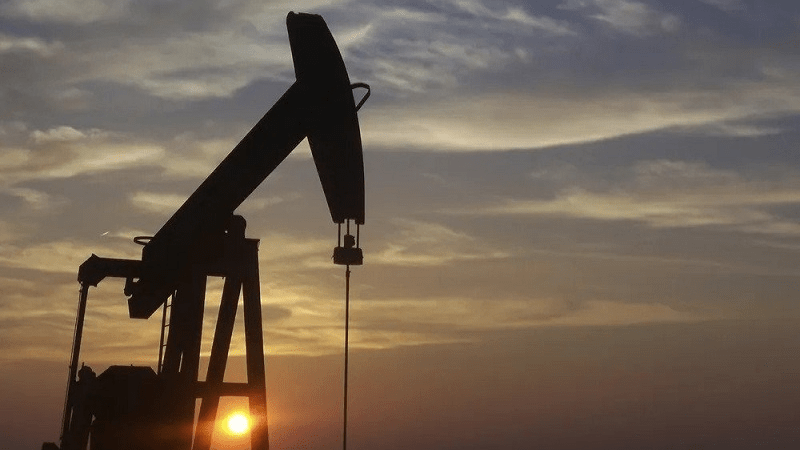
Campaign coalition urges government to prepare emergency energy bill support as gas and oil price spikes continue.

At what point does the US-Israeli war on Iran become a war on everybody? Oil prices are up by over 50% on their pre-war level and global markets are in sharp decline. The International Monetary Fund estimates that every 10% rise in oil prices, sustained over a year, would correspond with a 0.4% increase in global inflation and a 0.15% reduction in economic growth.

Energy markets now face exceptional volatility. The US, with its domestic sources of gas, may feel more protected, but the rest of the world is likely to pay a very high price.

The impact here will be significant. Gas prices have soared to a three-year high as the Middle East conflict escalates. Attacks on energy sites in Iran and Qatar were followed by threats from US President Donald Trump to “massively blow up” a key Iranian gas field in retaliation.

Simon Francis, coordinator of the End Fuel Poverty Coalition, commented: “These gas and oil prices haven’t been seen since the winter of 2022/23 when an Energy Price Guarantee was needed to protect households from the worst excesses of our exposure to global markets. The reality is that households will face a ‘Trump Tax’ on their energy bills as a result of this war and the case for Government action to support households is becoming impossible to ignore. 

“We have written to Ministers with proposals to ensure support reaches the households most exposed to high energy costs first, while giving the Government the ability to scale up help quickly if the crisis continues.

“That means immediate support for households relying on heating oil, LPG and other off-gas fuels, help for heat network customers facing rising commercial energy prices, and targeted reductions in energy bills from July when the price cap rises. It also means faster action on energy debt, stronger winter support through the Warm Home Discount and reformed Cold Weather Payments, and an overhaul of electricity pricing so households do not pay more than they should.

“These are practical steps that can protect people now while complementing longer-term plans such as the Warm Homes Plan and moves to renewables, which are essential to bringing bills down for good.”

The End Fuel Poverty Coalition is urging the Government to prepare an emergency energy support framework to protect households from rising energy bills as global fossil fuel prices remain volatile. Millions of households could be plunged into fuel poverty if bills increase again from July. Tthe Coalition estimates that around 13 million households will be left spending more than 10% of their income on energy, with around 5 million spending more than 20%.

Some households are already feeling the impact of rising costs. Off-gas households relying on heating oil have reported refill prices doubling in recent weeks, LPG customers are facing rising prices, while heat network customers could soon face steep increases as energy supply contracts expire.

The immediate measures recommended include a new, longer-term, Alternative Fuel Support Scheme for households relying on heating oil, LPG and other off-gas-grid fuels, as well as support for heat network customers who face rising commercial energy prices.

The proposal also recommends preparing a targeted reduction in energy unit rates from July if the Ofgem price cap rises significantly, alongside faster rollout of a national energy debt relief scheme to address record levels of household debt.

For the winter, the Coalition is calling for reforms to existing schemes including further expansion of the Warm Home Discount and strengthening Cold Weather Payments so support reaches vulnerable households earlier. Ministers are also urged to speed up reform to electricity pricing and prepare a scalable universal support package that could be activated quickly if energy prices spike further.

Simon Francis added: “Rather than making snap decisions, the Government should establish an emergency support framework now, so households know what support can be expected. Reducing energy price spikes benefits the whole country. It helps limit inflation, reduces pressure on household finances, prevents worsening fuel poverty and cuts the health impacts associated with cold homes.

“This support should be funded fairly. Energy companies and other parts of the energy industry make huge profits during periods of price volatility, so it is only right that windfall taxes and excess profits are used to help protect households from another energy price shock.”

Maria Booker, Head of Policy, Fair By Design, commented: “The Government must use the next two and a half months to design an emergency support package that is both effective and fair. This shock is yet  another reminder of why the Government must accelerate progress on data‑matching capabilities so that support can be better targeted.”

Uplift Deputy Director Robert Palmer said: “Everyone in the UK is going to pay the price if this reckless conflict continues via a ‘Trump War Tax’ that could add thousands of pounds to people’s bills. We risk seeing higher energy bills, more expensive petrol, pricier mortgages and bigger food bills.”

Morgan Vine, Director of Policy and Influencing at Independent Age, said: “It is clear that support is needed for older people in financial hardship who are understandably anxious about what the fuel crisis could mean for them. With over half of older people on a low income already finding it a struggle to keep up with their energy bills, many are already making tough choices, not turning the lights on at night, heating only one room even in the depths of winter, or washing in cold water.  

“Older people on low incomes can’t afford to absorb any more costs; they’re already at breaking point. The UK Government must take comprehensive action now to protect everyone on a low income from sky-high energy prices.”

Jonathan Bean, spokesperson for Fuel Poverty Action, said: “Any emergency support must recognise that electric-only homes face much higher unit prices than oil and gas households due to our rigged energy market. The Government must urgently break the link between gas and electricity which allows firms to inflate the price of cheap renewable energy.

“The Prime Minister must also get a grip on the huge profits that already make up £500 of the average energy bill. If the Government was serious about bringing down our bills, they would work with Ofgem to cut profits and pass the savings back to us.”

Susie Elks, Senior Policy Advisor on the UK Power System at E3G commented: “The government must lower the cost of ‘hidden taxes’ on bills, which add £11bn to households and business energy bills. 

“They must solve the energy debt crisis, which is adding £50-£70 to every household’s bill. They must find a way for us to modernise our energy networks, which have been chronically underinvested in, whilst managing the costs to households.”

Ian Preston, Director of Development and External Affairs from the Centre for Sustainable Energy commented: “Another fossil fuel price crisis, when many households still haven’t recovered from the last one, underlines the urgent need to support households to switch to heat pumps powered by homegrown renewable energy generation as quickly as possible.” 

The End Fuel Poverty Coalition brings together more than 100 charities, health organisations, housing groups, trade unions and consumer bodies working to end fuel poverty across the UK.

Image: https://www.rawpixel.com/image/5945203 Licence: CC0 1.0 Universal CC0 1.0 Deed


How music in detention still inspires


 March 20, 2026

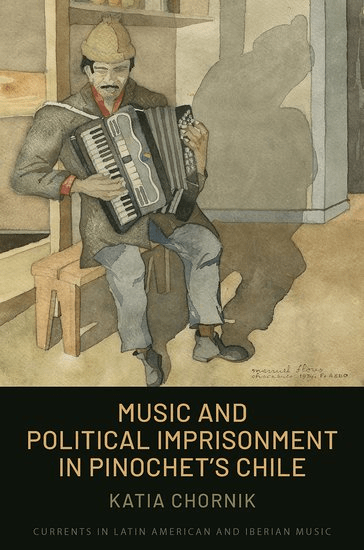
Sue Lukes reviews Music and Political Imprisonment in Pinochet’s Chile, by Katia Chornik, published by Oxford University Press.

About 20 years ago I was asked to speak briefly at the Royal Academy of Music, by a student performing as part of her masters degree. Her thesis was on music played and heard by those held in Nazi concentration camps and Chilean political prisons. 

Katia Chornik left a great impression on me: it was a fascinating topic. My grandparents were held in Terezin, where there was a strange flowering of musical talent, and I liked to think that they had heard the music of Viktor Ullmann or Gideon Klein in those grim barracks.  Katia played Klein’s unfinished string trio at the concert. 

My Chilean friends and family talked about and performed the songs that had sustained them through their imprisonment following the 1973 Pinochet coup. Candombe para José is a regular on the playlist I have to give me focus when writing: it was a popular hit by the folk group Illapu just before the Chilean coup, and its celebration of friendship acquired a special meaning for political prisoners looking after each other, often sung as those released left the jail.

Another I listen to often is Palabras para Julia, described here by a woman imprisoned  as “a song with lyrics by José Agustín Goytisolo and music by Paco Ibáñez. It speaks of strength, love, resistance, and it became the anthem of the women of the Tres Álamos political prison camp. With it, we greeted those who arrived and said goodbye to those who were freed.”  You can see why it has such power:

Life is beautiful, you’ll see
despite its sorrow
you’ll have friends, you’ll have love
you’ll have friends.

I don’t know what more to tell you
but you should understand
that I am still on the road.

But always, always remember
what I wrote one day
thinking of you, thinking of you
as I am thinking of you now.

Some of those women sing it here. They were celebrating the launch of Cantos Cautivos, the website that Katia went on to set up, to collect the testimonies of those held in Pinochet’s jails about the music they shared. 

And then in February 2026 I went to the Chilean embassy for the launch of the book that was initially inspired by the thesis. But Music and Political Imprisonment in Pinochet’s Chile is not solely the narrative of musical resistance and resilience that Cantos Cautivos has commemorated. Katia tells darker and different stories too, as she says, a “memory cacophony” a “discordant kaleidoscope, including the role that music played in torture. There are even interviews with some of the most notorious torturers about their relationship to music.

She unearths and celebrates the music created or made by prisoners, but does not flinch from describing the conflicts that arose around it, with some songs seen as too frivolous, for example. She looks for the truth behind the story of Julio Iglesias’ visit to Valparaiso prison- his attempt to be the Spanish Johnny Cash ended with the political prisoners booing and swearing at him for both his support of the Chilean regime (and Franco) and his insensitivity to their imprisonment. 

She returns again and again to the role of memory, remembrance and what music means. Even Candombe Para José was used briefly during the election campaign of Jose Antonio Kast, the new far right President of Chile who has promised to release those convicted of human rights abuses from jail. Music will inspire and comfort those who are already mobilising against Kast, just as Victor Jara’s anthem, El Derecho de Vivir en Paz, inspired the uprising against another right wing Chilean President, Sebastián  Piñera, in 2020.  It is a brilliant, complex, disturbing and fascinating book that inspires and challenges. Read it!

But let’s not leave it there, because I did not. That concert over 20 years ago inspired us in the UK as well. Hear Me Out was set up soon afterwards, as Music in Detention, to take music into immigration detention centres and to make detainees’ voices heard outside.  It has flourished, and now works with people trapped in the asylum system, in hotels, in barracks and bases and in detention, to find connection, support and hope in deeply isolating circumstances, uplifting voices of hope and building an empowering community that stands for dignity in the face of hostility.

And right now, you can help, Hear Me Out has a fundraising campaign and donations to it will be doubled if made by 23rd March. Please give, and just as importantly, please watch, like and share this amazing video by Ardavan, who found hope in an asylum hotel and with whom I am so proud to be a trustee of Hear Me Out. You can share it on Instagram, on Facebook, on Linked In. We stand in solidarity with all those trapped in the asylum and immigration detention systems. We are building a community that supports and uplifts voices of hope, and we are doing it with music. Please join us.

Sue Lukes was an Islington Labour Councillor from 2018 to 2022 and is a writer and consultant on migration issues.


Banning 280 Sudanese students will not ‘Save Britain’

MARCH 21, 2026

280 Sudanese Students – and Britain shuts the door. Alhadi Osman probes the real reasons for the Home Secretary’s latest clampdown.

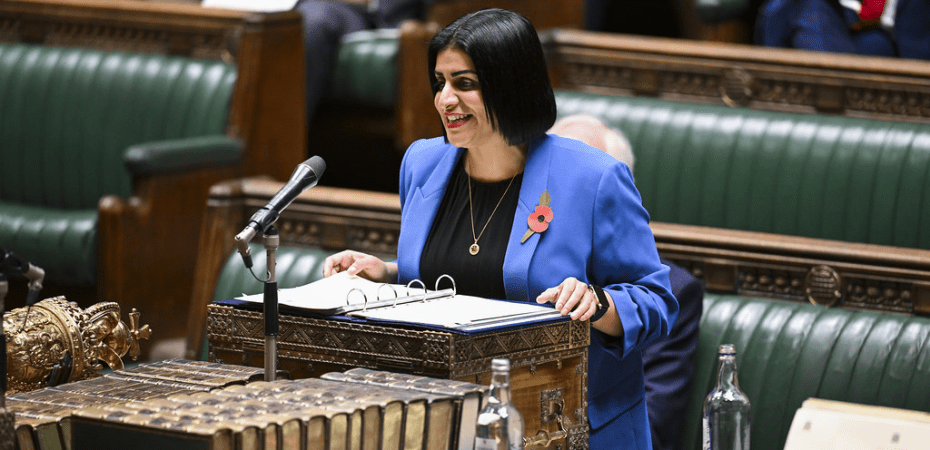
On March 3rd, 2026, UK Home Secretary Shabana Mahmood announced an “emergency brake” on study visas for nationals of Sudan, Afghanistan, Myanmar, and Cameroon. The official justification? Stopping people from “exploiting our generosity.”

Pause on that phrase. Examine it carefully. 

Who is “exploiting” whom?

Sudan is currently home to the largest displacement crisis on the planet, confirmed by the United Nations itself. Over 13 million people are forcibly displaced, both inside Sudan and across its borders into neighbouring countries. Nearly two-thirds of the entire population needs humanitarian assistance. 17 million children are out of school. Over 70% of health facilities in conflict-affected areas have ceased functioning. The WHO recorded 63 attacks on healthcare facilities in Sudan in 2025 alone, killing 1,611 people, wiith numbers from LSHTM suggesting a much higher mortality. The surge of asylum cases in the UK is a pure paper trail of a war, the very same war in which UK military equipment was used by the RSF militia accused of genocide in Sudan

This is the context in which a Sudanese student submits a study visa application to the United Kingdom. Deciding to remain ambitious in such a context is far from exploitation; it should be bravery and courage, at the least, if not determination.

The Sudanese diaspora in the UK (the largest in Europe) contributes to the UK economy primarily through professional expertise, business development, and, increasingly, by facilitating economic connections and humanitarian support, which in turn strengthens UK-Sudan relations. An alumnus of the London School of Economics should not be seen as anything less than an intelligent individual capable of driving policy and business at a large scale. Applying for asylum does not discredit his abilities nor his potential; it’s a mere legal status. Popular examples of public figures who contributed to a forgiving and hospitable culture in the UK include Mo, a Sudanese barber from Derby, who has been travelling the UK giving free haircuts to homeless people, filmed and covered by the BBC. But confidently, the NHS sits on the shoulders of hundreds (if not thousands) of Sudanese health professionals. Applying for asylum did not diminish their humanity or their impact. It was simply a legal status.

Remember Ukraine?

When Russia invaded Ukraine in February 2022, the UK’s response was swift. The Homes for Ukraine scheme was launched within weeks, and visa processing was fast-tracked through a dedicated 24/7 helpline, with application fees waived. By the end of 2024, 218,600 Ukrainians had arrived under the two Ukraine visa schemes. Universities across the country opened their doors. The message was unambiguous: people fleeing war deserve protection, and Britain will provide it. That was the right response, and it should be acknowledged as such.

But it also set a standard. Because the question that now hangs uncomfortably in the air is this: why does the same logic not apply to a student from Khartoum? Sudan’s war has displaced more people; its civilian death toll was more catastrophic; its universities, too, were bombed and looted. The only substantive difference between a Ukrainian student and a Sudanese student arriving in Britain is not the war they fled, it is the colour of their passport. But let’s move beyond basic principles.

 The numbers that indicate the policy

The UK hosts over 750,000 international students annually. The number of Sudanese students among them, according to the Higher Education Statistics Agency? 280 (less than 0.04% of the total), and the number has been declining steadily over the last few years. This is the scale of ‘abuse’ that required an emergency government decision. For context, the total number of students from all four banned countries combined is 3,875 out of three-quarters of a million.

If this is genuinely about numbers, consider this: Pakistan accounts for 40% of all student visa asylum claims in the UK. Nigeria ranks among the top three nationalities in asylum-supported accommodation. Neither country was banned on March 3rd. If the policy were truly driven by data, the list would look very different. The fact that it does not tells you something important about what this policy is actually for.

The UK government’s central argument is a 330% surge in asylum claims from Sudanese and Cameroonian student visa holders between 2021 and 2025. This is data manipulation. The issue was clearly not the burden. As I wrote earlier, this surge is a pure paper trail of a war. 

The policy has already failed its own test

Britain tried this before. In 2025, it raised short-term study visa refusal rates from 45% to 68%. The result was a 20% reduction in student asylum claims, clearly proving this is not a solution, but a marginal shift, achieved by making the legal route harder for everyone.

The “emergency brake” is not a new policy. It is a tacit admission that the old policy failed, and instead of examining why people flee, the response is to punish the people fleeing.

When legal doors close, people do not stop moving; they simply take more dangerous routes. In 2025 alone, 41,472 people crossed the English Channel irregularly. This new ban will not reduce that number. It will add to it.

 When policy language becomes a weapon

“Exploiting our generosity” is not a legal term. It is a political instrument, carefully chosen to summon a particular image in the minds of the British public: the opportunistic outsider, not the student whose university was bombed into rubble.

When that phrase is applied to a student from Khartoum, Wad Madani or Nyala, it is not a drafting error. It is a deliberate narrative choice. And it deserves to be named as such.

And here is what makes this not just unjust but strategically incoherent. International students generate a £37.4 billion net gain for the UK economy. Over a quarter of the world’s heads of state were educated at British universities. The NHS is actively recruiting health workers abroad to fill critical shortages. And the UK is spending £226.5 million in humanitarian aid to Sudan, which requires trained local professionals to be effective. Banning 280 Sudanese students does not protect British interests. It quietly dismantles them.

 The question this policy cannot answer

The UK repeatedly claims to support “safe and legal routes” for those fleeing conflict. Very well, if the study visa is closed, the work visa is closed, and the visit visa is closed… what exactly is the safe and legal route you keep promising?

The policy does not answer this. Because an honest answer would reveal that in many cases, no such route exists, and what is being labelled “exploitation” is, in reality, people doing what they must do to grow, prosper at best, or stay alive at least.

That is not a policy. That is a message.

Alhadi Osman is a Senior Health Advisor at Save the Children UK, before which he worked with the Ministry of Health in Sudan. He is a medical doctor from Sudan, with an MPH degree from the KIT Institute in the Netherlands and is currently enrolled in the Global Healthcare Leadership master’s degree at the University of Oxford. This article originally appeared here.

Image: https://www.flickr.com/photos/uk_parliament/54087412451 Copyright: House of Commons Licence: Attribution-NonCommercial-NoDerivs 2.0 Generic CC BY-NC-ND 2.0 Deed

Keir Starmer and the Haldane Society of Socialist Lawyers

MARCH 21, 2026

Bill Bowring recalls the early years of an ambitious lawyer.

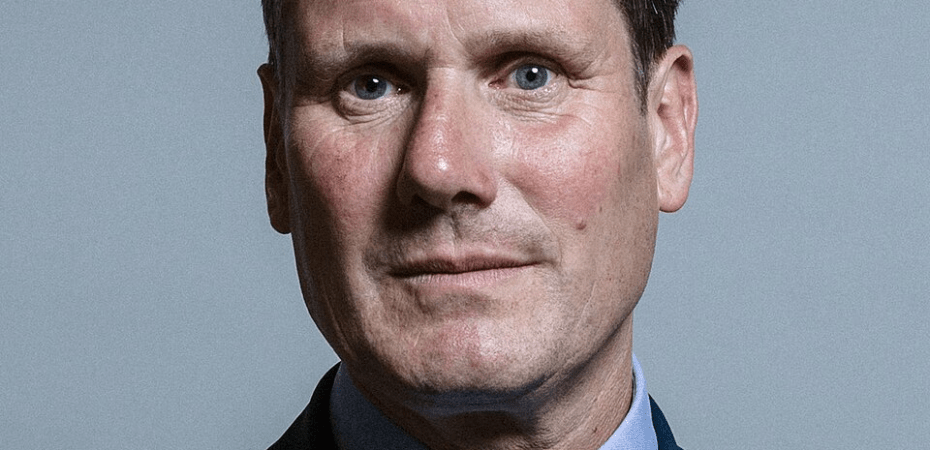
Keir Starmer was Secretary of the Haldane Society of Socialist Lawyers when I was Chair in the early 1990s.

I joined Haldane in 1986, for solidarity. I had been a Labour Party councillor in Lambeth since 1978, and was being prosecuted by Margaret Thatcher for Wilful Misconduct. With my fellow councillors I was fined £160,000 and banned from public office for five years. Like George Lansbury and the Poplar councillors in 1921, we deliberately broke the law, believing that we would join up with other Labour councils, and with the miners, to bring down Thatcher. We were defeated.

Thatcher’s intention was to bankrupt me and my Lambeth and Liverpool comrades, as the Tories had done with the Clay Cross councillors some years earlier. But, with the support of the three big unions, and money collected by us all over the country, she failed to do so.

I had not joined Haldane earlier. It was dominated by the Communist Party lawyers, Stalinists, although John Hendy and others played a magnificent role defending the miners and their union in the Miners Strike, 1984-5. Starmer had never had anything to do with trade unions, and nothing to do with the Labour Party until Frank Dobson stood down in 2014.

Starmer would never under any circumstances break the law. He was not involved in Haldane in 1986. He became a member of the Editorial Collective of Socialist Lawyer in 1987. The late Joanna Dodson QC was Chair, Beverley Lang (now a High Court judge) was Secretary. Starmer first wrote an article in SL in Autumn 1987 – “Beyond Collective Bargaining”. I wrote my first SL article, on the Poll Tax, in 1987-88 – same Chair and Secretary, same Editorial Collective. Starmer became Joint Secretary with Pam Brighton in late 1988, and Secretary in 1989, Joanna Dodson still the Chair. He attempted to change Haldane’s name, so that it would no longer be “socialist” but “radical” or “democratic”. He was defeated at a noisy meeting, which I vividly recall, by the CP lawyers.

I was elected Chair in 1990 with Starmer as Secretary, and this continued through 1991 with Kate Markus as Vice Chair. In Autumn 1990 Starmer wrote an article for SL entitled “Haldane Forth: What Next”, in which he set our his proposals for transforming Haldane into something more like Liberty, with premises, staff, and a charitable Educational Trust making money through CPD (Continuing Professional Development) courses. For several years Haldane had premises, first in Tooks Court, then over Conway Hall. The Educational Trust fizzled out.

In September 1991 Starmer organised and led a successful Haldane mission, fifteen-strong, to Northern Ireland. I have the Report, published in 1992, entitled “Upholding the rule of law? Northern Ireland: criminal justice under the ‘emergency powers’ in the 1990s”. We called for a united Ireland.

In Spring 1993 I was still Chair, Nadine Finch became Secretary, and Starmer became Treasurer. Kate Markus took over from me as Chair in 1995, with Richard Bielby as Secretary.

There were two large summer parties in my house in Brixton/Herne Hill in 1994 and 1995, with Starmer and the others present, and a late night altercation between Starmer and Bielby as to who was more working class. Richard Bielby, a former train driver and barrister, was working class.  

In 1996, Starmer organised and led a large delegation, 45-strong, to the XIV IADL (International Association of Democratic Lawyers) Congress in Cape Town, South Africa. I was IADL Treasurer, and met Nelson Mandela, who was IADL President. There was a reprise of the altercation between Starmer and Bielby.

I don’t think Starmer was ever a ‘socialist’, certainly not a Marxist, although I have PDFs of his articles in the ‘Pabloite’ journal Socialist Alternatives, including in 1987, “Wapping – beyond a defeat”. I never heard Starmer utter the words “Trotsky”, “Pablo” or “Marx”. But then the Labour Party is not a socialist party. It is a trade union party.

Starmer was a good civil liberties and human rights lawyer, and acted pro bono for ten years for the defendants Helen Steel and David Morris, in the McLibel case brought by McDonalds. He became Director of Pubic Prosecutions in 2008 through his work in the peace process in Northern Ireland (contacts he made in the 1991 mission), reforming police and prosecutors. In 2007, before he became DPP, he led me in drafting the application to the Strasbourg Human Rights Court in Carter v Russia, the poisoning of Alexandr Litvinenko by the Russian state, brought by his widow Marina. I won the case at Strasbourg in September 2021, with a finding of murder against Russia.

Starmer was always intensely ambitious. If you had told him in 1990 that he would become Sir Keir Starmer KC, former Director of Public Prosecutions, Leader of the Labour Party, and Prime Minister, that would simply have confirmed his ambition.

Bill Bowring, Colchester CLP, teaches international law and human rights at Birkbeck College. He was a Lambeth Labour Councillor from 1978 to 1986.

Image: https://commons.wikimedia.org/wiki/File:Official_portrait_of_Keir_Starmer_crop_2.jpg. Source: https://api20170418155059.azure-api.net/photo/X9dwBvuR.jpeg?crop=MCU_3:4&quality=80&download=trueGallery: https://beta.parliament.uk/media/X9dwBvuR. Author: Chris McAndrew (1974, licensed under the Creative Commons Attribution 3.0 Unported license.

“The USA pulled the strings behind the assassination of Patrice Lumumba”

MARCH 22, 2026

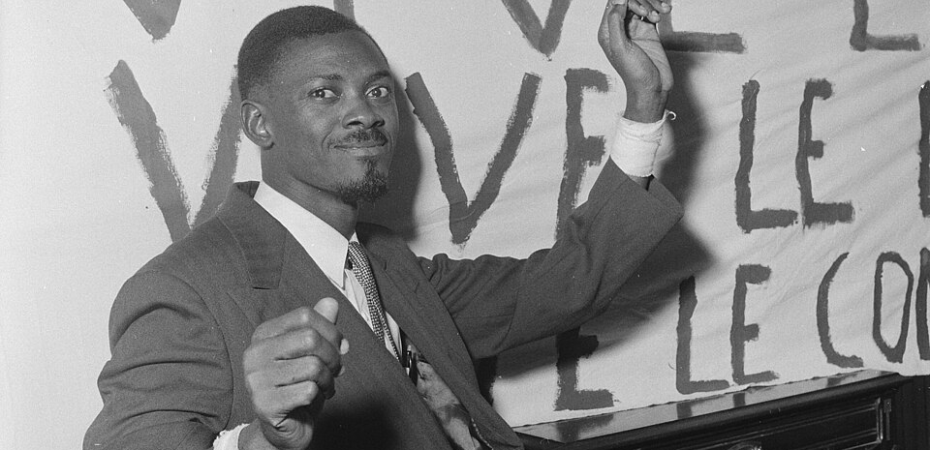
A Belgian court has ordered that a 93-year-old former diplomat stand trial for the 1961 assassination of Congo’s former prime minister and independence leader, Patrice Lumumba.

Lumumba was killed at age 35, after serving for just three months as the first prime minister of the Congolese Republic, now known as the Democratic Republic of Congo (DRC). He was ousted in a political coup and assassinated a few months later by mercenaries.

It was only in 2002 that Belgium admitted moral responsibility for Lumumba’s assassination. Lumumba’s remaining family brought the case to the Belgian courts some 15 years ago. Etienne Davignon, a junior diplomatic intern in Kinshasa at the time of the coup, is the last living among ten Belgians with suspected involvement in the killing.

Prosecutors allege that the ex-diplomat participated in Lumumba’s unlawful detention and transfer and was complicit in denying Lumumba’s right to a fair trial, and subjecting him to “humiliating and degrading treatment”. He also stands accused of complicity in the murders of Maurice Mpolo and Joseph Okito, who were prominent allies of Lumumba. Taken together, these accusations amount to war crimes.

To understand the significance of Patrice Lumumba and the movement he led, we republish below an interview conducted by Maurin Picard with Susan Williams, who has written extensively on this subject. Susan Williams told Labour Hub that the legal ruling is a significant step forward — but it’s important not to absolve the United States from involvement, as was pointed out by the 2001 report of the Belgian parliamentary inquiry into Lumumba’s assassination.

The interview

Maurin Picard: What is left of Patrice Lumumba’s legacy in Africa today? 

Susan Williams: Patrice Lumumba belongs to the pantheon of great Pan-Africanist leaders of the twentieth century, alongside Kwame Nkrumah, Frantz Fanon, Amilcar Cabral, and Thomas Sankara. Currently, it is his brutal death that is being remembered. But the power of his legacy in Africa today rests on the strength of his ideals: democracy, non-violence, freedom from colonialism and white minority rule, non-tribalism, and non-alignment.  

This legacy has also thrown up reasons to distrust the West. The CIA-backed overthrow and killing of Lumumba was a direct attack on the elected and legitimate government of the Congo. Such aggression was incompatible with America’s portrayal of itself as the world’s champion of democracy. 

MP: How do you explain the extraordinary success of this man, then, and his incredible popularity, comparable to Che Guevara? Is it well deserved and if yes, why? 

SW: It is indeed deserved. Both Lumumba and Che Guevara can be seen as martyrs: courageous men still in their thirties who were murdered in CIA-backed operations. But, unlike Guevara, Lumumba was against the use of violence in the struggle for liberation. Barely three months after his election he realized that everything was against him and he told his supporters that it was up to them to carry on the fight. “For me,” he said, “it’s finished. I feel that I am going to die. I will die like Gandhi.”

MP: Your book White Malice uncovers efforts made by the CIA and the Eisenhower Administration to keep a tight leash on newly independent African countries, starting with Congolese political elites… What was the end goal? 

SW: The end goal was clear: to assert US control over the former colonial territories of Africa and their resources. US administrations feared that the newly-independent nations might become satellites of the Soviet Union. The Congo was seen as central in this concern, because of its geographical position and its strategic mineral resources, especially the Shinkolobwe uranium mine in Katanga. This mine produced the uniquely rich ore that was used to build the atomic bombs dropped on Japan in 1945. A CIA agent explained: “We didn’t want the Russians to get all of the Uranium. They had Uranium of their own, but we certainly didn’t want them to control any of the ores that were coming out of Congo. We did our best to prevent them…”

Some American leaders’ attitudes to Africa were fuelled by racial prejudice. At a meeting in January 1960, Vice President Richard Nixon revealed his extremely racist views when he stated: “Some of the peoples of Africa have been out of the trees for only about fifty years.” 

MP: When does the US turn against Patrice Lumumba (in other words, can we identify a watershed or a point of no return)? 

SW: American hostility against Lumumba started to brew even before the Congo’s independence at the end of June 1960. But matters accelerated swiftly. A watershed moment occurred in late July, when Lumumba was visiting New York and was asked whether Americans would still have access to Congolese uranium, as they had when Belgium ruled the country. Lumumba’s response was a clear no: “From now on we are an independent and sovereign state. Belgium doesn’t produce any uranium; it would be to the advantage of both our countries if the Congo and the US worked out their own agreements in the future.” Eisenhower was outraged. He cancelled his planned meeting with Lumumba, saying he preferred to play golf. A month later, at a meeting of the National Security Council, he backed the plan to assassinate the democratically-elected Prime Minister of the Congo.  

MP: Very early on, US spies start plotting against Lumumba. Yet, the last hours seem to involve only Belgian and Katangese personnel. Where is the American touch in Lumumba’s demise? 

SW: Yes: the Americans seem to be invisible. But they were lurking in the shadows of events in multiple covert and sinister ways, facilitating the steps that led tragically to Lumumba’s death. Important details about the involvement of the CIA are starting to emerge, especially from recent releases of documents under the JFK Assassination Records Collection Act. The US managed events in such a way that their policy of assassination was enacted by others, who have been held responsible ever since. 

MP: With Lumumba gone, have you established a sense of relief on the American side, or did it prove to be in vain, with regards to American plans for the Congo? 

SW: It was not so much in vain, as a stage in the process of establishing American control of the Congo through the insertion of puppet leaders. Kennedy’s inauguration as the new president of the US in January 1961 – just a few days after Lumumba’s assassination – was perceived by newly-independent nations as a reason for hope. But the new administration did not alter Eisenhower’s policy in the Congo; if anything, it strengthened it. There were even contingency plans for a military intervention. 

MP: What was Lumumba’s ultimate weakness? Too naive (re: Mobutu), too inexperienced on the international stage as it is often said (threatening the UN and the US to appeal to the USSR to oust Belgian troops)? Something else? 

SW: Lumumba was too trusting; he found it difficult to accept that people might behave dishonourably. This weakness led him to trust Mobutu, even against the warnings of his advisors. But Lumumba’s murder was not the result of mistakes or failings on his part. The reason for his death was his commitment to the genuine and unfettered independence of his nation, including control over its own extremely valuable mineral resources. Lumumba never had a chance.  

MP: Is there any form of US guilt and apologies regarding American involvement in Lumumba’s death, comparable to Belgium’s formal ‘regrets’ in 2002? 

SW: Thus far, Belgium has taken all the blame. The US Senate Committee that was set up in 1975 under Senator Frank Church to investigate the abuses of US intelligence agencies, acknowledged the fact of American plots to kill Lumumba. But it acquitted the CIA of any responsibility for his actual death. The 2001 report of the Belgian commission of inquiry does not accept this: it states that Belgian government files do not support the modest role claimed by CIA officials. This finding is abundantly supported by my own research, as set out in White Malice.

Belgium is trying to find a way of coming to terms with its colonial past and of shouldering its responsibilities for the terrible things that were done. It is a step forward and in sharp contrast with the approach of the UK government, which firmly resists the idea of facing up to any of the realities – and horrors – of its own colonial history. Indeed, the UK itself – as the junior partner to the US – supported plots to kill Lumumba, as official documents reveal.  

Maurin Picard, a former correspondent in the USA for French and Belgian publications, is the author of Katanga! La guerre oubliée de la Françafrique contre l’ONU (2024) and Ils ont tué Monsieur H. (2019). Susan Williams, a Senior Fellow at the School of Advanced Study, University of London, is the author of White Malice. The CIA and the Neocolonisation of Africa (2021) and Who Killed Hammarskjöld? (2011). This is a slightly edited version of an article that was published in Africa Briefing and is a translation of an interview published in French in Le Soir.

Image: https://commons.wikimedia.org/wiki/File:LumumbaBruxelles1960.jpg Source:
GaHetNa (Nationaal Archief NL)
 910-9732.Author: Herbert Behrens (ANEFO), licensed under the Creative Commons CC0 1.0 Universal Public Domain Dedication.

Opinion

The connections between the Irish Celt and the Highland Celt go back way beyond living memory

17 March, 2026 
Left Foot Forward

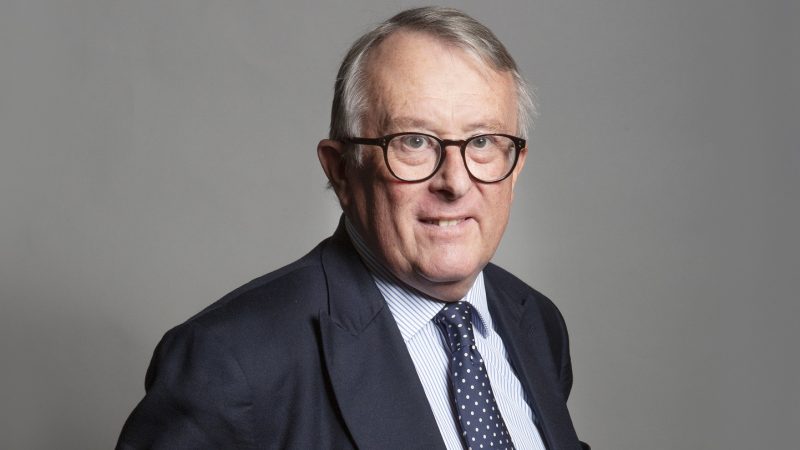
Jamie Stone MP reflects on his Irish heritage this St Patrick's Day


Jamie Stone is the Liberal Democrat MP for Caithness, Sutherland and Easter Ross and the chair of the House of Commons Petitions Committee.


Dear Old Ireland…

When I was growing up on the shores of the Dornoch Firth in the Scottish Highlands, I had hardly even heard of the place – although I might have heard of a leprechaun.

At uni, I met a nice girl who told me that she came from the Emerald Isle. I remember trying to charm her and, in my ignorance, I confused Belfast with Ulster, blissfully unaware that one was a city and the other was a province. I thought I’d blown my shot – and I may not have given it a second thought, but for the fact that one day I married that very same girl. That started a twice yearly visit to her home, the county of Armagh, bang on the border between Northern Ireland and the Republic of Ireland. It was a voyage of discovery, one that continues all these years on.

One thing I discovered was that my grandmother – who my mother had always assured me came from a reputable Scottish family – was in fact of Irish descent. This lineage included an ancestor who had once been a doctor in Dublin (his nickname was ‘stirabout Gus’ – a reference to the fact that in the late 18th century he prescribed porridge ‘stirabout’ as the cure for all ailments). Why had the Irish blood in my veins been so unacknowledged? I’m still yet to find out.

In more recent times, as our children got bigger, we as a family have stayed with my kind sister-in-law and her husband in a small holiday home in the remote northwest of County Donegal in Éire. To be precise, on the Fanad Peninsula overlooking Lough Swilly. A more remote and romantic part of Ireland it would be hard to find.

Now me being me, when I’m in Ireland, it is only really right and proper that I drink one or two pints of Guinness. And so it is that one evening I found myself in the Lighthouse Tavern, just where the Falad Peninsula punches northwards into the wild Atlantic. One evening as I raised my pint, one of my nephews and nieces took a picture of me with my brother-in-law sitting beside me in the bar. More of that picture anon.

Only a year later in 2017, I was surprised to find myself elected to the House of Commons. It would be fair to say that the House of Commons was equally as surprised to get me. I learnt that they had been rather badly caught and hadn’t had time to prepare a security pass for me in the event of my being elected. Apparently a mad scramble ensued to find my picture and prepare a pass in the knowledge that I could well be on the next train south from Inverness.

As I write this, I look at my security pass. It is that same picture of me in the Donegal pub which they had found online – albeit, with my brother-in-law, the optics and the darts trophies all cropped out. Over the ensuing years, I have been greatly touched to learn that the pub now takes a close interest in what I say and do in Westminster. Beyond this, most of the people in that remote part of Ireland had heard of the late Charles Kennedy and had taken some pleasure over the years in noting his success and ascent in UK politics.

That is the point about what I write in this piece. Little known to me as a child, but the fact is that the connections between the Irish Celt and the Highland Celt – between Gaelic in Ireland and Gaelic in the Highlands is not just strong but goes back way beyond living memory.

So as I sit here in my office on St Patrick’s day, I am reminded that a wee part of Ireland is with me whenever I stand and speak in the Chamber. I celebrate today with a proud personal commitment and also on behalf of my wife and three children – who all have strong Irish blood in them.

Happy St Patrick’s Day!

Image credit: UK Parliament – Creative Commons
Alan Rusbridger investigation says Ofcom has allowed GB News to become ‘Reform TV’
18 March, 2026 
Left Foot Forward


The report found that GB News predominantly frames news "in ways that overlap with Reform’s political agenda"


A new investigation, led by the former editor of the Guardian, Alan Rusbridger, has concluded that GB News has become ‘Reform TV’.

The investigation was published by The New World, where Rusbridger is editor-at-large, and found that GB News has repeatedly broken broadcasting rules and has “essentially become Reform TV”.

The New World assembled a team of 20 senior journalists from a range of outlets including the Daily Mail, the Sunday Telegraph, the Guardian and the BBC, who analysed 15 hours of GB News programming against Ofcom’s guidelines.

The investigation uncovered “numerous glaring breaches of impartiality” in GB News’ coverage.

These breaches included a “widespread disregard for accuracy”, a predominant framing of news that aligns with Reform’s political agenda, a “systemic use of Reform politicians, candidates and supporters,” and an “overwhelmingly right wing bias” in the selection of guests and issues.

One of the journalists wrote of Bev Turner’s interview with Donald Trump in November 2025, “No reasonable person could regard this interview as journalistic in character… it is an exercise in regime-compliant propaganda that barely bothers to present itself as reporting.”

There have been 32 complaints about the Trump interview, but no action has been taken in regard to these complaints.

Another journalist heavily criticised Matt Goodwin’s show, saying it “Absolutely did not comply” with broadcasting standards.

“It was one man’s rant against immigration, supported by compliant and affirmative opinions and a pretence of an opposing view that was shut down rapidly. It was a disgrace,” the journalist wrote.

In another segment, GB News presenter Nana Akua celebrated Nadhim Zahawi’s defection from the Tories to Reform, calling him the type of “heavy hitter” Reform needed to boost its credibility.

However, Akua neglected to mention that Zahawi was previously fired from government over tax issues. Furthermore, to address Zahawi’s 2015 tweet calling Nigel Farage “racist”, Akua implied that Zahawi’s defection served as evidence that Reform is not, in fact, racist.

The journalists were asked to score the programmes on a scale of 0-5 (0 being not at all compliant with Ofcom’s Broadcasting Code and 5 being wholly compliant). The overall score GB News received for its compliance with broadcasting rules was just 1.5.

The report is critical of Ofcom’s role in allowing GB News to breach the broadcasting code, saying it “has more or less given up the ghost” when it comes to regulating the channel.

Chris Banatvala, who was Ofcom’s founding director of standards responsible for drafting and enforcing its first broadcasting code, told The New World: “It now appears that Ofcom has abandoned any pretence that meaningful regulation of broadcast content is still being maintained”.

Olivia Barber is a reporter at Left Foot Forward
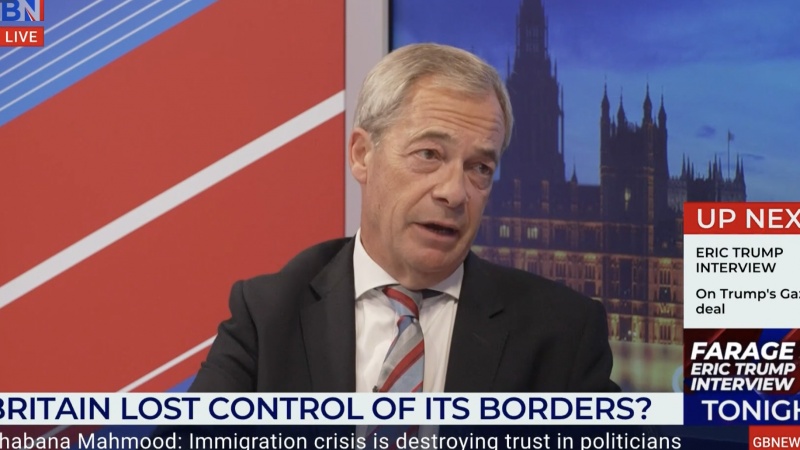
REFORM UK  leader Nigel Farage called for release of imprisoned rapper Sean ‘Diddy’ Combs and praised effort to free drug trafficker in Cameo videos

19 March, 2026 
Left Foot Forward


Nigel Farage made over £140,000 from recording Cameo videos last year


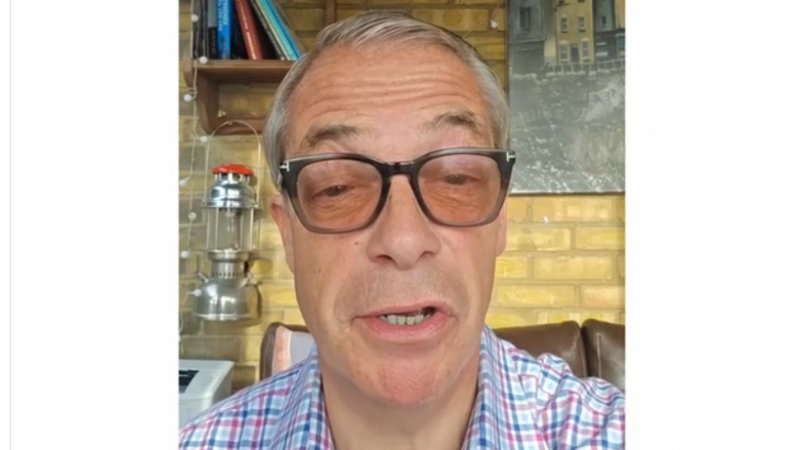
Nigel Farage called for imprisoned rapper Sean ‘Diddy’ Combs to be freed and praised a woman’s efforts to free a former Honduran president jailed in the US for drug trafficking on Cameo.

Farage has already come under fire this week after another of his controversial Cameo videos was unearthed. In the video, he promoted an event organised by a Canadian neo-Nazi group.

A Guardian investigation has revealed that in early 2025, Farage recorded a message for a Cameo user calling for Diddy, who is in jail for prostitution-related charges, to be released.

Combs also faced racketeering conspiracy and sex trafficking charges, but was found not guilty of these offences.

The user paid £82 for a birthday message for “Kieron”, who was turning 17 in March 2025, and requested Farage say “Free Diddy, eat Shankly”.

The user also asked the Reform leader to use a hardline anti-immigration phrase, “if in doubt kick ‘em out”. Farage said: “I’ve got to roast Newcastle and say Free Diddy, eat Shankly.” He added: “And if in doubt, let’s control our borders.”

In January 2025, a Cameo user paid Farage £84 to produce a 26th birthday message for a woman from Honduras. “Please commend her for her efforts to free Juan Orlando Hernández from prison,” the customer wrote.

Hernández was President of Honduras between 2014 and 2022. After he left office, he was extradited to the US, and in June 2024, was sentenced to 45 years in prison in the US for drug trafficking and accepting millions of dollars in bribes.

In his message to the woman, Farage said: “I’ve got to commend you for your efforts to free Juan Orlando Hernández from prison. You are working hard. You are a campaigner for justice and truth.”

Donald Trump later pardoned Hernández, saying that his prosecution was a “Biden setup”.

A spokesperson for Farage told The Guardian: “Mr Farage has recorded many thousands of videos for genuine supporters to celebrate weddings, congratulate friends or send novelty messages. At that scale, the occasional mistake can occur.”

Olivia Barber is a reporter at Left Foot Forward
Opinion

Is the Britain on the path to barbarism?


20 March, 2026
Left Foot Forward

Dehumanisation of the people always unleashes personal and social tragedies


History is littered with examples of powerful societies decaying from within, with tragic outcomes. How does that happen?

That question occupied Hannah Arendt, one of the Twentieth century’s leading thinkers, an escapee from Nazi Germany. How could Germany, an advanced society excelling in science, engineering, education and aesthetics give rise to the evil of Nazism? She concluded that “the death of human empathy is one of the earliest and most telling signs of a culture on the verge of descending into barbarism”.

Empathy is the glue that holds societies together. It enables us to be compassionate, caring, share feelings and see people’s predicament from a different viewpoint. It builds civilisations, trust and an environment of dignity and advancement. But it is slowly stripped away by populist dehumanising discourses orchestrated by charismatic figures hungering for power. With the aid of media and think-tanks they reconstruct people’s common-sense by creating folk-devils and moral panics. Minorities, the old, poor, sick, disabled and the unfortunate are scapegoated for social and economic problems and portrayed as undeserving. Dehumanisation of people occurs gradually and once people are dehumanised, their lives don’t matter to the system. Inhumane policies are portrayed as ‘toughness’ and financial discipline on the road to authoritarianism and decay.
They came for the minorities

The above isn’t something that happened in the past. It is happening now in the UK. Islamophobia, antisemitism and misogyny is on the rise. Minorities, rather than capitalism or inept government policies, are blamed for the housing and employment crisis. Racist discourses have been normalised.

Mass deprivation of citizenship, long abandoned after the Nazis stripped Jewish people of citizenship, is being touted as UK state policy. The presence of migrants is portrayed as an “invasion” by Reform UK. Its candidate in a recent by-election said: “It takes more than a piece of paper to make somebody ‘British’.” The implication is that people with black, Asian and other non-white backgrounds are not British. Reform would forcibly deport more than 600,000 people in its first year in office and this could include individuals holding indefinite leave to remain. A Conservative MP, touted as a future leader wants legally settled families to be deported, in order to ensure the UK is mostly “culturally coherent”. Up to nine million people are vulnerable to having their British citizenship stripped. The prospect of detention centres [concentration camps] looms. People of colour are twelve times as likely to be at risk as their white peers. Any person with dual nationality could be stripped of UK citizenship. The hard-right Restore Party appeals to Christian nationalism to marginalise others, paradoxically celebrating the life of a brown male refugee from Palestine.

The Nationality and Borders Act 2022 passed by the Conservative government empowers the Home Secretary to strip a person of citizenship without notifying them. Labour government’s Deprivation of Citizenship Orders (Effect during Appeal) Act 2025 means that even in cases where a court has found the Home Secretary to have acted unlawfully in stripping a British national of their citizenship, they do not get their citizenship back until all appeals by the government have been exhausted – a process that often takes many years. Further legislation to make it harder for migrants to get citizenship rights is on the way.
And… pensioners

The politics of indifference do not respect race, age or economic condition. People falling on hard times due to unemployment, sickness or disability are portrayed as scroungers. The elderly are targeted too. The UK state pension age is 66 and rising to 67 between 2026 and 2028, compared to 62 in France and rising to 64 in 2030. The UK state pension, as a percentage of average earnings, is one of the lowest in the advanced capitalist societies. The full post-2016 state pension, received by about 35% of pensioners, is less than 50% of the minimum wage. Around two million pensioners live in poverty. Some 110,000 pensioners a year die in poverty.

However, think-tanks funded by the super-rich describe the triple-lock on the state pension as a “clear financial burden on the state”, paving the way for “national bankruptcy”. They demand a three-year freeze on state pensions. Consequences for human life receive no attention.
And… children

There is no empathy for children. In 2017, the Conservative government introduced the two-child benefit cap, depriving poorest families of income and blighting the future of many children. Children in poverty have difficulties in realising their full education and employment potential, leading to lower earnings and contribution to the public purse. They are more likely to have healthcare problems and make greater demand for public and welfare services throughout their life and die younger compared to their peers. The Child Poverty Action Group estimates that keeping children in poverty costs the economy some £40bn a year.

Around 14.2m people, including 7.9m working-age adults and 4.5m children live in poverty. In opposition, Labour party described the two-child benefit cap as “obscene and inhumane” but upon taking office in July 2024 decided to continue with it as this somehow showed fiscal toughness. Prime Minister Keir Starmer withdrew the party whip from seven MPs for opposing the policy. Eventually, in March 2026 the Universal Credit (Removal of Two Child Limit) Bill abolished the cap. It will lift 450,000 children, and their families, out of poverty, and stimulate the local economy too. Abolition of the cap will increase government spending by £2.3bn in 2026-27, rising to about £2.9bn by 2029-30. In the overall scheme of things, this is not a huge sum. In 2025-26, the government is projected to spend around £1,370bn.

However, not all families with more than two children will receive additional financial support as there is an overall benefit limit of around £22,020 a year for families and £14,753 for single adult households (amounts are larger in London) without children though there are exceptions. In the interest of ‘toughness’ some 119,000 households had their benefit capped. Some 300,000 children won’t benefit from abolition of the benefit cap.

The Conservative party opposed the abolition and has promised to reimpose the two-child benefit cap. It claims that the abolition discourages work. The party does not oppose spending on corporate welfare. It wants to increase defence spending by confining children to poverty. Of course, defence spending can be increased by taxing the rich but that is not party policy. Reform UK has promised to reimpose the cap to buttress its pro-business credentials. It would use the £2.3bn/£2.9bn to cut beer duty and taxes on pubs and reduce the price of a pint of beer.
And… low-paid workers too

Minorities, unemployed, children and pensioners are increasingly portrayed as undeserving and a threat. That classification is applied to low-paid workers too. Without providing any evidence, the Conservative Party this year opposed the rise in minimum wage with the claim that the rise would somehow damage business profits and create unemployment. The legislation increases the hourly pay rate from £12.21 to £12.71. for workers over the age of 21 and from £10.00 to £10.85 per hour workers aged 18 to 21. A worker over the age of 21 will have gross earnings of around £25,000 a year for working 37.5 hours a week. This is well below the employee annual median wage of £31,056.

Tory opposition to the increase in minimum wage made no mention of the social condition of the masses. Average real wage has hardly moved since 2008. Some 25.3m Britons live below Minimum Income Standard i.e. lack incomes required to meet material needs and to enable participation in society. This comprises 48.6% of children and 35.0% of working-age adults. Low wages deprive people of good food, housing, education and life chances. The UK has a high rate of infant mortality compared with peer countries. Due to poor food and living conditions, British five-year-olds are up to 7cm shorter than children of the same age in Europe. One in four young people in England have mental health condition. Victorian illnesses like rickets and scurvy have returned. Altogether, some 7 million children are growing up in households lacking the income needed for a dignified standard of living. Some 3 million people are malnourished or at risk of malnutrition.

In sharp contrast to treatment of low-paid workers, nothing was said about soaring executive pay. A typical FTSE100 CEO collects average UK wage in two days, and the CEO-to-worker pay ratio is 141 times. Recently, the CEO of Shell got a pay rise of 60% to £13.8m. BP CEO’s pay has doubled to £11.7m. Her daily pay exceeds the annual median wage of a UK employee. At Melrose Industries, the CEO-to-worker ratio is over 1,110 times.

The above is a tiny glimpse of the systematic erosion of empathy. Minorities, pensioners, children and workers are confined to negative spaces and portrayed as burdens on society, often by wealthy people. Human rights are sneered at. People are being turned against each other by charismatic individuals. The UK may not be on the verge of descending into barbarism, but dehumanisation of the people always unleashes personal and social tragedies.


Prem Sikka is an Emeritus Professor of Accounting at the University of Essex and the University of Sheffield, a Labour member of the House of Lords, and Contributing Editor at Left Foot Forward.