Sunday, March 22, 2026


Long-term road surveys reveal widespread declines in South African birds of prey


University of Cape Town - Faculty of Science

Secretarybird by Megan Murgatroyd 

image: 

A new study has revealed widespread declines of many birds of prey across South Africa, including species such as this secretarybird, which showed declines of 68% over 16 years

view more 

Credit: Photo by Megan Murgatroyd


A comprehensive study has revealed substantial declines in many of South Africa’s birds of prey (raptors) over the past 16 years, raising fresh concerns about the conservation status of several iconic and threatened species. Researchers assessed population trends for 18 raptor and 8 large terrestrial bird species across central South Africa between 2009 and 2025. Half of the species experienced significant declines, many exceeding 50%, while only three showed clear increases.

“These results point to widespread and often severe population declines across South Africa’s raptor community,” said Dr Santiago Zuluaga, lead author of the study and a researcher at the University of Cape Town and National Museum of Natural Sciences of Spain. “What is particularly concerning is that some of the steepest declines were detected in species that play key ecological roles and are already considered conservation priorities.”

DECLINES IN THREATENED AND ICONIC RAPTORS  
Several globally threatened raptors showed steep declines, including the Endangered Secretarybird, which dropped 68% over 16 years. “The declines detected in species such as  Secretarybirds are especially worrying,” said Dr Megan Murgatroyd, International Programs Director at HawkWatch International and a co-author on the study. “These birds require vast areas to survive and reproduce, so sustained population losses at this scale suggest that pressures across the landscape are having real and lasting impacts.” 

The study also found strong declines in migratory raptors such as Lesser Kestrel, Amur Falcon, and Steppe Buzzard, highlighting the vulnerability of species dependent on multiple regions. Sharp declines were also detected in species currently listed as Least Concern, including Spotted Eagle-Owl and Jackal Buzzard, suggesting population changes may occur before they are reflected in formal conservation assessments.

THE VALUE OF LONG-TERM MONITORING
The road count data underpinning the study were collected over more than 15 years, largely through repeated surveys conducted across central South Africa.

“When I started these road counts over 15 years ago, I never expected that they would reveal such severe declines across so many species,” said Ronelle Visagie of the Endangered Wildlife Trust, who carried out the fieldwork. “It involved a huge amount of time on the road, counting birds year after year, but it is reassuring to see that all that effort has produced something meaningful that can genuinely inform conservation.”

STRENGTHENING THE EVIDENCE BASE FOR CONSERVATION  
To place these findings in a broader context, researchers compared their road-survey results with trends from the Southern African Bird Atlas Project (SABAP2), a key citizen-science initiative. While atlas data remain invaluable for mapping species distributions and supporting biodiversity monitoring, the comparison showed that different survey approaches can sometimes produce contrasting signals of population change. “Citizen science atlas projects like SABAP2 are absolutely vital for bird conservation in Africa,” said Associate Professor Arjun Amar, senior author of the study from the University of Cape Town. “Our findings underline the importance of combining multiple monitoring approaches, particularly for wide-ranging species such as raptors, to ensure we have the most accurate picture possible of how populations are changing.”

WHY IT MATTERS  
Raptors are vital as top predators and scavengers, indicators of environmental health, yet across Africa they are among the fastest-declining bird groups, pressured by land-use change, infrastructure, illegal killing, and climate change. “With human populations in Africa projected to increase sharply over the coming decades, pressures on biodiversity are only likely to intensify,” said Zuluaga. “Robust, long-term monitoring is essential if we are to detect declines early and implement conservation actions before populations reach critical levels.


SCIENCE SUNDAY


ISSAC ASIMOV


The Three Laws of Robotics (often shortened to The Three Laws or Asimov's Laws) are a set of rules devised by science fiction author Isaac Asimov, which were to be followed by robots in several of his stories. The rules were introduced in his 1942 short story "Runaround" (included in the 1950 collection I, Robot), although similar restrictions had been implied in earlier stories.

The Laws

The Three Laws, presented to be from the fictional "Handbook of Robotics, 56th Edition, 2058 A.D.", are:[1]

  1. A robot may not injure a human being or, through inaction, allow a human being to come to harm.
  2. A robot must obey the orders given it by human beings except where such orders would conflict with the First Law.
  3. A robot must protect its own existence as long as such protection does not conflict with the First or Second Law.

Gaza Tribunal: UK government complicit in atrocity crimes – Peace and Justice Project

Featured image: Jeremy Corbyn addresses a rally in solidarity with Palestine. Photo credit: Jeremy Corbyn MP on Twitter/X

“In some instances, the British government has even been an active participant in these crimes.”

The Peace and Justice Project on the launch of Jeremy Corbyn’s Gaza Tribunal.

Over 100 pages long, the Report compiles testimony examining the devastating human impact of the genocide and the role of the British government.

Read the report here.

In the words of Jeremy Corbyn, we hope the report serves as “a landmark contribution to the campaign for justice, and as a historical repository of evidence for generations to come.”

Over the last two years of genocide, there has been the complete destruction of the healthcare system, the education system and the genocide has resulted in the production of famine.

The United Kingdom has heightened responsibilities in relation to Israel’s conduct in Gaza and the wider Occupied Palestinian Territory (OPT), and the government has failed in every single legal obligation. This failure has contributed to the mass killing of Palestinian civilians and the wholesale destruction of civilian objects, the desecration of international law and the further erosion of Britain’s status as a nation committed to the rule of law 

The report concludes the British government has failed in its fundamental obligation to prevent genocide and has been complicit in atrocity crimes. In some instances, the British government has even been an active participant in these crimes.

You can watch the press conference here.

As Tayyab Ali told the Tribunal, “The people of Britain deserve the truth. The people of Palestine deserve justice.”

We hope that this report is a step on that road to justice.


UK

Emily Thornberry Keir Hardie Lecture in full


Emily Thornberry delivers the Keir Hardie Lecture.

I am so honoured to have been invited to speak here today and to have the opportunity to reflect on the values of our first leader, Keir Hardie, and to ask what his vision demands of the Labour Party today. 

It was a hundred and twenty years ago that our movement chose its first leader: a man called Keir. And in the 1906 General Election, under our Labour name, that young party won 29 seats in Parliament. 

Today, another Keir leads our family, and at the last General Election the British people placed their trust in us on a scale that our founder could never have imagined.  

We now have over 400 MPs. We have come a long, long way. 

People call it a “historic” victory. And they are absolutely right. We stood on a Labour platform, and the British public gifted us a majority on an extraordinary scale. But they expect something in return. And they expect what we said we would give, which was change. That’s what we promised. And that’s what we have to deliver.

So far so good. But it’s not is it? 

Here we are today, with that thumping great majority, with that clear mandate to do big things, really shake things up. And yet, we seem to be wrestling with something really quite troubling. 

We seem to be wrestling with a crisis of identity, a crisis of confidence.  

It’s as if we started to question what it means to be a Labour Party, to be a Labour Government. 

And the public are furious with us about that.

Insecurity in government isn’t just poor politics, it’s dangerous. Because when a government doesn’t know what it stands for, it risks squandering the hope and goodwill of the great many people who trusted us to do better. To be better. 

We cannot afford to be insecure, to be unsure of ourselves. 

We cannot waste this opportunity, this opportunity to enact generational change, to show Britain what a Labour government driven by Labour values really means. 

So, we must ask ourselves: Who are we? What are we fighting for? 

I think in moments like this, it helps to remember where we’ve come from. In order to know who we are, and where we’re going next.

Because when we understand where we’ve come from, when we understand the principles upon which we’ve built this movement, we can see more clearly what we need to do. 

Today, I want to talk in particular about Labour’s place in the world. About our Internationalism. 

Everyone always says “oh we’re Labour. We’re such great internationalists” 

But what does that mean? What does it really mean? 

Well, I think it means believing in something both very simple and yet very radical. 

It comes from believing that whoever you are, wherever you come from, you have a place in our socialist movement. And that we are all equal brothers and sisters.

That when you join Labour, you become part of something bigger than yourself. 

But it goes much further. We believe that spirit of solidarity goes beyond borders. Keir Hardie saw that working people were working people wherever in the world they came from across the world.

It means recognising that we all have far more in common than we have that divides us. 

We might have different eye colour.

We might have different skin colour.

We might call our God a different name.

We might speak a different language.

We might wear strange exotic hats.

But fundamentally, fundamentally at the level that really matters, we are all the same.

That’s our internationalism. That’s what it means. And it comes from our socialist origins to the progressive politics we practise today. There has always been something fundamentally internationalist about the Labour Party. 

And history bears that out. 

It was a Labour Prime Minister – Clem Attlee – who helped establish the United Nations and declared that the world should never again descend into the horrors of war. And that’s what it means to be Labour.

It was a Labour Foreign Secretary – Ernest Bevin – who helped create NATO, ensuring that Britain and its allies could defend peace in an uncertain world. And do it together. All for one and one for all. And that’s what it means to be Labour.

And it was a Labour minister – Barbara Castle – who, working with the Fabians, helped establish the Office for Overseas Development, because she understood that helping people thousands of miles away isn’t charity. It’s solidarity. And that’s what it means to be Labour. 

So alright. We are a party of internationalists. 

But how does that history, those values, help guide us through the crossroads we face today? 

Well, it reminds us that there are certain things that Labour has always rejected. 

We reject the idea that our prosperity should ever be built on the exploitation of others. 

We reject what Keir Hardie called the “plunder and butchery” of imperialism. 

And we reject the notion that the suffering of a stranger somehow means less than the suffering of a neighbour. 

Hardie understood this. 

Or more truthfully, he learnt this on his world tour. Where he travelled India and South Africa as the first leader of the Labour Party. And he learnt along the way that Labour was not just about the miner in the Rhondda Valley, or the dock worker in East London, or the millworker in Lanarkshire.

It was a movement for all those fighting for dignity, security and a better life. 

He learnt that Labour is a family borne of class but driven by values. Values of solidarity, and empathy. 

And I suspect no one in this room would disagree with those instincts. Those Labour instincts remain good ones. And they remain true.

They are beliefs to be proud of and they should remain the moral compass which guides us today. Our light in darkness.

But let’s be honest. It is easy to say these things. It is easy to celebrate these values. But values are meaningless if we do not deliver on them. 

So, we believe all these things. What are we prepared to do about it? 

Well, in the last two weeks, I think we may have seen those values in action. 

Our leader – the younger Keir that is – was confronted with precisely the kind of moment that tests a government. That reveals what exactly a government is prepared to stand up for. It was a true test of the mettle of a leader.

When the pressure came, our Prime Minister made clear that this Labour government should stand up for what is right. 

He made clear that Britain should not be drawn into war for war’s sake. 

A war with no clear purpose.

A war that is contrary to law. 

If people are going to die, either bravely and willingly as combatants, or just because they were in the way, like a little girl’s school, they deserve to know why they have to die.

And Keir has held that line. 

And let’s be honest, it’s not easy for Prime Minister to do that. It’s not easy for a Prime Minister when you’ve got the Americans breathing down your neck. They are close friends and allies and we rely on the US for defence and security, although that reliance is mutual.

But just as Harold Wilson refused to send British troops to fight in Vietnam, this Labour government knows that we have principles that we are not prepared to violate. Unlike the Tories, we stuck to our guns and said we have values that define who we are. It is the first time that a British Prime Minister has said no to an American President since the 1960s.

So no Mr President. We say no.

And with every passing day, I think we see just how important that decision actually was. How hard it was, and how pivotal it has been for this second Keir. 

Because the pressure did not come only from the United States. 

It came from the press. 

It came from the Opposition Benches. 

It came from the armchair generals beating their chests and roaring us on into war.

We forget it now but just two weeks ago, the drumbeat was relentless: The claim that Britain had to fall in line, that refusing to do so would somehow place us on the “wrong side” of the Americans. And how difficult and dangerous that would be for our country. 

I think it took real courage for the Government to resist that kind of pressure. 

But once you stand firm and say so, something remarkable happens – the fog clears. And suddenly the path becomes obvious. 

Of course we had to stand up for what was right. Of course we can’t be involved in attacking another country, no matter how hateful their regime is. And no one is apologising for Iran, but where is it going to end? What is the plan? And who is going to decide when that plan has been fulfilled, that we have done everything we wanted to do in that war, if we don’t have a clear idea what we’re going to do before we get involved?

The answer had to be no.

Unlike many of our founding fathers and mothers, not many of us in the Labour Party are pacifists these days. But we cannot agree to violence and the loss of life without either the agreement of the international community, or the real need for self-defence. That’s the law. And that’s what’s right. 

Of course we had to put principles before pressure. 

And looking back you can see this is exactly the kind of courage Keir Hardie displayed when he stood so firmly against the First World War. 

When he was ridiculed. 

When he was called unpatriotic. 

When he was spat at in the street. 

But history proved him right. 

Hardie was such a relentless advocate for peace that the outbreak of war very much killed him. But I think what he said in the weeks before the First World War tells us a lot about what it means to be an internationalist Labour Party. 

He told Parliament: “Our honour is said to be involved in entering into the war. That is always the excuse.” 

He went on: “I suppose our honour was involved in the Crimean war, and who today justifies it? Our honour was involved in the Boer War, how many today will justify it?”

Let’s update that. Let’s change Crimea to Iraq. Let’s change Boer War to Libya. 

He concluded: “If we are led into this war, we shall look back in wonder and amazement at the flimsy reasons which induced the Government to take part in it.” 

More than a century later, those words still ring true. 

So, the lesson for us today is simple. 

Standing by Labour values may not always be easy in the moment. But when we do it – when we hold our nerve – we discover that is exactly what we should do. This is where Labour belongs. This is who we are. This is what it means to govern according to our principles. 

And look how Labour’s internationalism, our belief in treating others with respect, as brothers and sisters, has helped our standing in the world.

Just think back a couple of years. Back to the depths of Brexit.  

When Britain was a laughing stock.  

When people openly mocked us. They mocked the politicians that were supposed to represent us.

We had David Davis turning up for Brexit negotiations without any notes. I mean really. The arrogance. The entitlement. 

We had Boris Johnson making everything into some silly little game, some chance for him to just show off, when real working people paid the price for his incompetence. 

We had Dominic Raab deciding he’d sit on a beach in Greece while Kabul fell to the Taliban, rather than get up and do something about it. 

The politicians who represented Britain on the world stage let us down, and our credibility vanished. People didn’t know what Britain stood for anymore. And neither did we as a country.

These people said they were patriots, but I think real patriotism doesn’t need to brag. It needs to be comfortable with itself, it needs to believe in itself, it needs to be strong.  

And we were so far away from that.

But look at the difference we have made in the last 18 months. 

Under Labour, Britain is once again a serious player on the world stage. And we are doing it on our terms. On Labour terms.

We are a force for good.

We back international law because we know it is right.  

We back strong partnerships because we know we are better together.  

We back fighting for peace because we know it’s a hell of a lot easier to get into a war than it is to get out of one. 

I have to say, I found it deeply disturbing to see Kemi Badenoch and her Shadow Attorney General arguing that we should simply ignore international law if we didn’t like it and commit our troops to unlawful action. 

That when the Americans asked us to jump our response, they thought, should be: “how high, Mr President?” 

She said that our troops were “just hanging around,” when they were bravely defending our partners and bases from incoming fire. 

It’s disgraceful. 

Sending our young men and women to war is one of the most solemn decisions any government can ever make. And the eagerness of the Tories and Reform to trample over the UN Charter, to ignore the legal protections Britain helped write and to embrace what is essentially the law of the jungle – that should trouble every one of us. They are the alternative.

Under Labour, we will not let our country be seduced by self-serving populists who are prepared to put our country’s security on the line. 

Under Labour, we will not be afraid to do what is right, no matter how loud the warmongers shout. 

Under Labour, we will never again forget who we are and what we are fighting for. 

Getting ourselves into the right place internationally at a time of war, is no small thing. 

But we need to show that same strength, the same vision, the same clarity of principle when it comes to our domestic policy.  

If we do that, if we stay true to our values and our principles then I know we are going to be alright. 

And more than that, we will take the country along with us. 

It’s about understanding the nervousness people feel when they believe there is no control of our borders without falling into the trap of being unfair and cruel to vulnerable people who come here seeking safety and a better life. 

It’s about being brave when it comes to tackling the crisis in social care. Because we know in our hearts we are never going to fix the NHS without being bold and ambitious and finally, finally ensuring the elderly, disabled, and vulnerable have the care they need to live in dignity and to keep them healthy.

Yes, some of these things look really difficult, but we need to take a deep breath, listen to our hearts, listen to who we are, and take action. 

How many people here think we should be standing up for our children and protecting them from the addictive nature of social media? Or protecting people from the vile abuse they suffer online?

How many people here think we should be doing something about the manipulative algorithms feeding us all of this hate, and division, or disinformation? Or the blatant use of bots to promote hatred by hijacking the algorithms and supporting the Right?

Exactly.

We just have to go for it.

We have to be brave, and bold, and go for it.

We know it’s about time we updated our laws to give equal rights to couples who are not married. By not updating the law, we are not protecting marriage, we’re just disadvantaging children, the majority of whose parents are not married in Britain these days. And we’re disadvantaging women who believe being a “common-law wife” gives you some sort of rights. It doesn’t. It doesn’t give you anything. 

We know it’s about time we had a proper green revolution so people can actually afford their heating bills.  

But we can’t do that unless our homes are insulated properly and unless we build the pylons to get the clean energy to where it is needed. We can’t secure a warm future for people while most of us, 73% of us across the country, and 84% here in Merthyr, still rely on gas. We have to change that. It’s going to take a lot. We have to do it. We are Labour

We cannot continue to be unsure about ourselves. We have to say: people have got to have heating they can afford and we just have to get it done. We are in power. We have a big majority. We are Labour.

I’m not saying Britain is broken. I don’t believe it is. But I am saying we have to sort this out, and we can sort this out.

We can only do it though, with a Labour government that believes in itself, that knows where it comes from, and that is willing to be a bit braver, a bit louder, a bit prouder. 

If we are not sufficiently clear and confident, if all we have to offer the country is something which seems a bit timid, a bit boring, a bit managerial, if Labour is no longer a moral crusade, then what are we? Not much.

And we make the populists even more attractive.  

Because if we can’t be clear about what we stand for, we are in trouble.

But if we can be clear and if we can be positive and we can be passionate: then we win.  

Because we have the truth on our side. We have the arguments that stack up. We have a vision that makes sense. And we have a plan.

The problem with populists, whether it’s Reform or the Greens or Plaid, is that they just say what they think people want to hear. 

It’s never about knowing the cost of delivering it. Or how they’re going to do it. Or what the consequences will be. They never think that through.

Of course, we do. Trouble is, sometimes it seems like that’s all we do. And we forget the reason why we’re doing it, what the essence of the plan is and where we want to go.

We’ve spent so much time talking about the cost, about next steps. And yes, of course we must do that because we are a responsible party of power.

But we also need to be able to look people in the eye and say: we know where we’re going, that things are going to be alright. Stick with us, and we can sort things out together. 

Because if we don’t, people will just turn to the Farage’s, the Polanski’s, the ap Iorwerth’s. The snake-oil salesmen. Whatever their names are, we see them. They are prepared in their vanity and glibness, to make us all poorer, to make us all more divided. 

I think that lately, we could be forgiven for thinking that all our passion, and beliefs, and confidence in our Labour values, had been beaten out of us. But our Labour values are still here. They’re still here in our hearts. They haven’t gone anywhere. We just have to rediscover it.   

 We have a duty to take advantage of this massive chance the public has given us to transform our country. 

 To be as brave as Keir Hardie was.  

 To be as bold as Keir Hardie dreamed.  

 To be Labour, as Keir Hardie envisaged. 

 And to show Britain what a strong Labour government, grounded in proud, Labour values, can truly achieve. 

 Thank you.

UK

How we are winning UNISON for the left

MARCH 18, 2026


Dan Sartin reflects on UNISON’s recent General Secretary election.

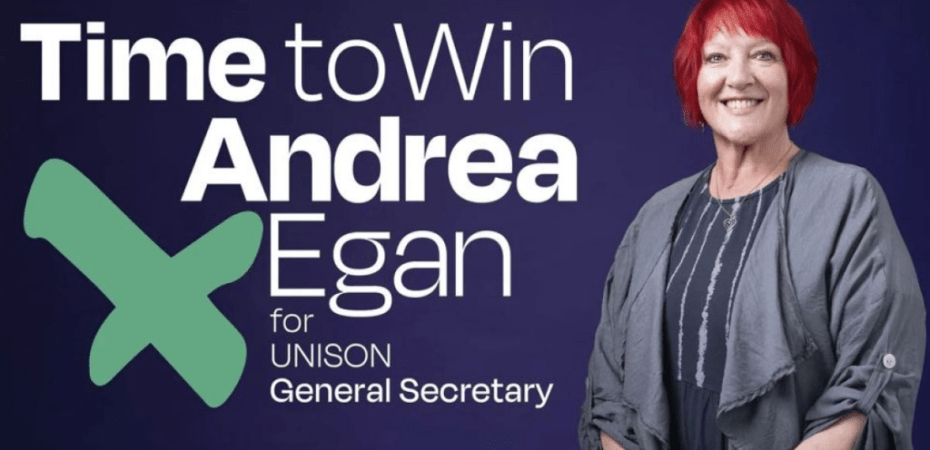
Something staggering happened on December 17th, 2025. UNISON, the UK’s largest trade union, elected a new General Secretary – Andrea Egan – a candidate standing on a clear and unashamed socialist platform. This marked arguably the biggest win for the left since Jeremy Corbyn saw off the ‘chicken coup’ in 2016.

Why was UNISON the unlikely focus for this change of fortune? After all, UNISON had been in the iron-grip of the Labour right since its inception as a union in 1993. Decades had seen the union’s right-wing bureaucracy entrench itself and consolidate power. The resultant political culture was stifling and was a direct contributor to UNISON’s organisational inefficiency and failure to win industrially for members.

Years in the making

Like all hard-won changes, this one was years in the making. In 2016, UNISON Action was created as a new left caucus within the union. UNISON Action helped propel the left to become a more effective opposition within UNISON’s governing body, its National Executive Council (NEC). It did well in the 2019 NEC elections, albeit not winning a majority. Unity on the left in UNISON did not hold, however. By the time of the 2020 UNISON General Secretary election, UNISON Action was wound up following the Socialist Party’s decision to stand its own candidate. This led to the creation of Time For Real Change, a new left formation without Socialist Party comrades, which ultimately went on to prove itself the most successful left group in UNISON’s history.

Time For Real Change retained a remarkable unity of purpose. Its candidate in the 2020 General Secretary election, Paul Holmes, achieved a record number of votes for a lay member, coming second to Christina McAnea with 34 per cent of the vote in a four-horse race.

Lessons learnt 2021-25

Time For Real Change built on this progress and the following year in 2021 achieved an overall majority on the union’s NEC. This was a huge breakthrough, sending shockwaves through the bureaucracy, and naturally enough led to a bitter fightback from the right-wing of the union throughout 2021-25. These were tough years with many ups and downs, but all comrades who engaged in those struggles to win UNISON for its members learnt and improved from them in a variety of ways.

By the time of the 2025 General Secretary election, years of comradely working on the NEC and its committees throughout 2021-25 rebuilt trust to a level that the Socialist Party agreed not to stand a candidate. Andrea Egan stood with the endorsement of Time For Real Change following a contested selection process amongst its supporters. The selection was held informally due to Time For Real Change’s necessary lack of any constitution (such formalisation could have been against the union’s election rules set by the right and could have led to disciplinary action being taken against UNISON members). But it was held with enough rigour and transparency that all parties were satisfied with the outcome and committed to work to elect Andrea Egan.

Having one candidate, and the comradely selection process used to identify her, was not the only reason for the left’s success.

Sheer hard bloody work

Winning an election against an incumbent candidate with the backing of the union’s bureaucracy was never going to be easy. UNISON’s rules allow for its paid staff to become its members. They cannot benefit from UNISON’s bargaining or its individual representation for members, but they do have a right to stand for election to its General Secretary position and to take a full part in campaigning in that election.

Time For Real Change activists needed to overcome several inbuilt disadvantages. Of foremost importance in countering these was the capacity for sheer hard work amongst lay activists, and the discipline and commitment required to get campaigning tasks done and on time, over an extended period. Hundreds of comrades across the union’s regions and nations played a role in getting Andrea Egan elected. They should all take a bow.

Campaigning is an ‘extra’ for lay activists, done after the end of the working day or before it starts, on top of the day job and the union commitments reps have. The determination to stick to the plan and get the job done was critical. For Andrea’s core campaign team, and their candidate, this meant daily weekday meetings for over a year prior to the voting period, plus weekend and evening meetings. It was gruelling but making the personal sacrifices to find the time to grind out the victory, task by task and campaign output by campaign output, was what made the difference. This is a lesson we would do well not to forget.

Trust your comrades

Time For Real Change has a collective, informal leadership. For the reasons above, it could not be constituted. Time For Real Change worked and works well because of an implicit trust, shared between comrades at all its levels. This trust is built by UNISON branch activists and reps through years of their shared experience and understanding of the union, its bureaucracy and its shortcomings. The difficult and punitive internal culture, which previous General Secretaries presided over, inevitably brought activists together in a spirit of comradeship and defiance. Through years of frustration and dissatisfaction came, over time, an acceptance of the primary and overriding need to win internal union elections if things were ever going to change.

Time For Real Change has circles of informal leadership and activity: at its core, in its regions, in its service groups, and in its self-organised (equalities) groups. This way of working evolved organically and as a result led to semi-autonomous activity taking place at all levels throughout UNISON’s multiple elected structures. Time For Real Change works without a formal constitution or elections of officers, and its success is based on trust and toleration. It might sound simple, but we have seen recently what happens to left projects when trust is lost.

A radical manifesto

Andrea Egan’s election manifesto was developed similarly through an informal but nevertheless democratic and participatory series of meetings of Time For Real Change supporters from across the union. This development process again was one rested on trust, which led to a comprehensive final manifesto which all supporters could sign up to and be proud of. The manifesto and how it was arrived at was a contributory factor to the election win, as it spoke to the union’s activists and members about what UNISON could and should become.

But one particular manifesto commitment was and remains key to reinforcing the trust required for organisational success. The commitment for the Time For Real Change candidate to only take a worker’s wage if elected (and not the £181,000 salary package on offer) played this dual role.

A worker’s wage

It is probably the most important single pledge for members. It tells them that the candidate is motivated to do the role for the right reasons, and has no interest in rising above them, and indeed will do the job better by remaining ‘one of them’. In a union with hundreds of thousands of low-paid public service workers, this is an important signal and indicates also the care that will be taken of the hard-earned subs members pay to the union.

But more than this, it is a signal to Time For Real Change comrades ourselves that we, as a movement determined to democratise and build a union fit for our members and which will also serve the country better, do not put forward our leaders for personal gain or profit. This reinforces trust and the relationship between Time For Real Change and our own leaders, whom we increasingly hope to elect and see within all the union’s structures over time. We are all committed to this industrial and political project for our union, and this commitment transcends and must continue to transcend any desire for personal reward over and above a worker’s wage.

The worker’s wage principle is one we should be discussing more within our labour movement. If we are ever to be in a position to win trust again with the UK electorate, as we were on the precipice of achieving in the 2017 general election, there is a role for the worker’s wage principle. We need to convince a rightly cynical electorate that we are different and we aspire to power for different reasons than other politicians. Mandelson and his like mean we as the left must be clearer than ever that we are not motivated by personal gain, as has become ubiquitous in Parliament.

If it ain’t broke…

Time For Real Change’s forced informality and ways of working have served the left well.We havedecisively wona critical election for the leader of the UK’s biggest trade union. But within UNISON, because of its complex structures, the job is only half done, if that. There are multiple poles of power within UNISON and if you are not able to influence them all, you can be held back.

Time For Real Change cannot therefore afford to take its foot off the pedal. It must forge ahead. We have internal Service Group elections starting from 1st April to 13th May, and absolutely vital NEC elections in Spring 2027.

Time For Real Change cannot spend its next year wrangling over its own structures or we will miss the opportunity in front of us. There is a trade-off because in practice UNISON activists only have so much spare time, given the multiple competing pressures of day job or jobs, union work supporting members, union work within elected positions, commitments to family and friends and so on. The priority must be to continue to focus on our objectives of winning elections and preparing the conditions to allow our new General Secretary to succeed. We will not be able to do both successfully.

Nor has Time For Real Change been a forum for the left to debate every issue in UNISON and come to agreed positions. Time For Real Change is a broad left coalition, focused on winning power and how best to do that. If comrades want to change the union’s policy or practice, there are ample democratic structures available within the union itself to force those debates and effect change.

An urgent task for Time For Real Change is to draw more supporters into its activism, and our shared challenge will be to help those comrades into our networks where they can be supported to do the critical work still needed to build the left within UNISON.

Our winning candidate

For a union with over one million members, there was a consensus that this time the left should stand a candidate who was a woman. Andrea Egan is not just any woman candidate, however. She is the real deal: a working class lay member and fighter, with acumen, talent and capability in buckets. We are proud of her and thrilled to see her elected, as we know what UNISON could now become, if the left can maintain the same work ethic, trust and tolerance which led to the electoral breakthrough itself.

We as UNISON activists can already see the benefits of Andrea’s interventions in the media, whether defending migrant workers from Labour Government attacks or making clear our union’s demands for peace even when the leadership of the Party we affiliate to prefers indiscriminate bombing. These interventions would never have happened under previous UNISON General Secretaries, and we must not take them for granted.

But there is of course still a massive job ahead to implement Andrea’s manifesto. Elements of our union remain hostile to a socialist being in charge with its implications for the Labour right. There is though the possibility of a broader consensus on industrial issues and how we should change the union to address them.

Time For Real Change must remain focused on these tasks ahead, and winning forthcoming elections in 2026 and 2027, if we are to see through the change our union needs. Only then, as public service workers, can we hope to have the positive and lasting impact on the wider politics and priorities of our country which we all want to see so much.

Dan Sartin is branch secretary of UNISON West Sussex and a member of UNISON’s National Executive CouncilTime For Real Change can be contacted through their website at https://timeforrealchange.uk/

UK consumers facing a ‘Trump War Tax’

Campaign coalition urges government to prepare emergency energy bill support as gas and oil price spikes continue.

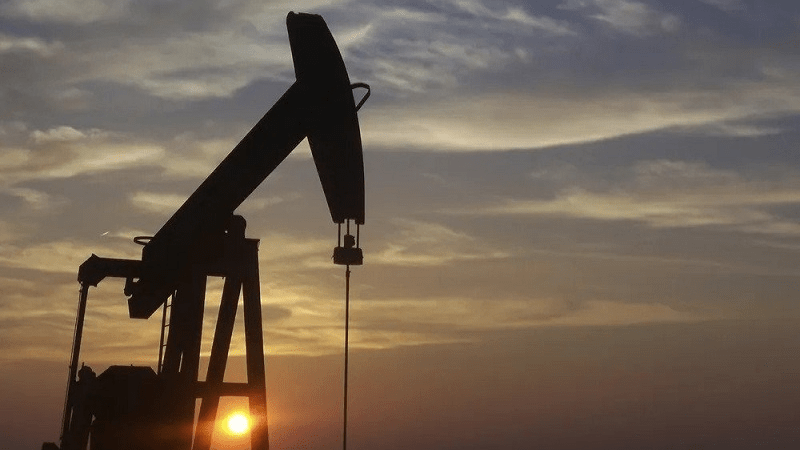
At what point does the US-Israeli war on Iran become a war on everybody? Oil prices are up by over 50% on their pre-war level and global markets are in sharp decline. The International Monetary Fund estimates that every 10% rise in oil prices, sustained over a year, would correspond with a 0.4% increase in global inflation and a 0.15% reduction in economic growth.

Energy markets now face exceptional volatility. The US, with its domestic sources of gas, may feel more protected, but the rest of the world is likely to pay a very high price.

The impact here will be significant. Gas prices have soared to a three-year high as the Middle East conflict escalates. Attacks on energy sites in Iran and Qatar were followed by threats from US President Donald Trump to “massively blow up” a key Iranian gas field in retaliation.

Simon Francis, coordinator of the End Fuel Poverty Coalition, commented: “These gas and oil prices haven’t been seen since the winter of 2022/23 when an Energy Price Guarantee was needed to protect households from the worst excesses of our exposure to global markets. The reality is that households will face a ‘Trump Tax’ on their energy bills as a result of this war and the case for Government action to support households is becoming impossible to ignore. 

“We have written to Ministers with proposals to ensure support reaches the households most exposed to high energy costs first, while giving the Government the ability to scale up help quickly if the crisis continues.

“That means immediate support for households relying on heating oil, LPG and other off-gas fuels, help for heat network customers facing rising commercial energy prices, and targeted reductions in energy bills from July when the price cap rises. It also means faster action on energy debt, stronger winter support through the Warm Home Discount and reformed Cold Weather Payments, and an overhaul of electricity pricing so households do not pay more than they should.

“These are practical steps that can protect people now while complementing longer-term plans such as the Warm Homes Plan and moves to renewables, which are essential to bringing bills down for good.”

The End Fuel Poverty Coalition is urging the Government to prepare an emergency energy support framework to protect households from rising energy bills as global fossil fuel prices remain volatile. Millions of households could be plunged into fuel poverty if bills increase again from July. Tthe Coalition estimates that around 13 million households will be left spending more than 10% of their income on energy, with around 5 million spending more than 20%.

Some households are already feeling the impact of rising costs. Off-gas households relying on heating oil have reported refill prices doubling in recent weeks, LPG customers are facing rising prices, while heat network customers could soon face steep increases as energy supply contracts expire.

The immediate measures recommended include a new, longer-term, Alternative Fuel Support Scheme for households relying on heating oil, LPG and other off-gas-grid fuels, as well as support for heat network customers who face rising commercial energy prices.

The proposal also recommends preparing a targeted reduction in energy unit rates from July if the Ofgem price cap rises significantly, alongside faster rollout of a national energy debt relief scheme to address record levels of household debt.

For the winter, the Coalition is calling for reforms to existing schemes including further expansion of the Warm Home Discount and strengthening Cold Weather Payments so support reaches vulnerable households earlier. Ministers are also urged to speed up reform to electricity pricing and prepare a scalable universal support package that could be activated quickly if energy prices spike further.

Simon Francis added: “Rather than making snap decisions, the Government should establish an emergency support framework now, so households know what support can be expected. Reducing energy price spikes benefits the whole country. It helps limit inflation, reduces pressure on household finances, prevents worsening fuel poverty and cuts the health impacts associated with cold homes.

“This support should be funded fairly. Energy companies and other parts of the energy industry make huge profits during periods of price volatility, so it is only right that windfall taxes and excess profits are used to help protect households from another energy price shock.”

Maria Booker, Head of Policy, Fair By Design, commented: “The Government must use the next two and a half months to design an emergency support package that is both effective and fair. This shock is yet  another reminder of why the Government must accelerate progress on data‑matching capabilities so that support can be better targeted.”

Uplift Deputy Director Robert Palmer said: “Everyone in the UK is going to pay the price if this reckless conflict continues via a ‘Trump War Tax’ that could add thousands of pounds to people’s bills. We risk seeing higher energy bills, more expensive petrol, pricier mortgages and bigger food bills.”

Morgan Vine, Director of Policy and Influencing at Independent Age, said: “It is clear that support is needed for older people in financial hardship who are understandably anxious about what the fuel crisis could mean for them. With over half of older people on a low income already finding it a struggle to keep up with their energy bills, many are already making tough choices, not turning the lights on at night, heating only one room even in the depths of winter, or washing in cold water.  

“Older people on low incomes can’t afford to absorb any more costs; they’re already at breaking point. The UK Government must take comprehensive action now to protect everyone on a low income from sky-high energy prices.”

Jonathan Bean, spokesperson for Fuel Poverty Action, said: “Any emergency support must recognise that electric-only homes face much higher unit prices than oil and gas households due to our rigged energy market. The Government must urgently break the link between gas and electricity which allows firms to inflate the price of cheap renewable energy.

“The Prime Minister must also get a grip on the huge profits that already make up £500 of the average energy bill. If the Government was serious about bringing down our bills, they would work with Ofgem to cut profits and pass the savings back to us.”

Susie Elks, Senior Policy Advisor on the UK Power System at E3G commented: “The government must lower the cost of ‘hidden taxes’ on bills, which add £11bn to households and business energy bills. 

“They must solve the energy debt crisis, which is adding £50-£70 to every household’s bill. They must find a way for us to modernise our energy networks, which have been chronically underinvested in, whilst managing the costs to households.”

Ian Preston, Director of Development and External Affairs from the Centre for Sustainable Energy commented: “Another fossil fuel price crisis, when many households still haven’t recovered from the last one, underlines the urgent need to support households to switch to heat pumps powered by homegrown renewable energy generation as quickly as possible.” 

The End Fuel Poverty Coalition brings together more than 100 charities, health organisations, housing groups, trade unions and consumer bodies working to end fuel poverty across the UK.

Image: https://www.rawpixel.com/image/5945203 Licence: CC0 1.0 Universal CC0 1.0 Deed