Friday, May 22, 2026


The baby bust: how a global demographic crisis crept up on everyone

The baby bust: how a global demographic crisis crept up on everyone
From Seoul to São Paulo, fertility rates are collapsing faster than anyone predicted. The consequences for pensions, growth and geopolitical power will define the coming century / bne IntelliNewsFacebook
By Ben Aris in Berlin May 22, 2026

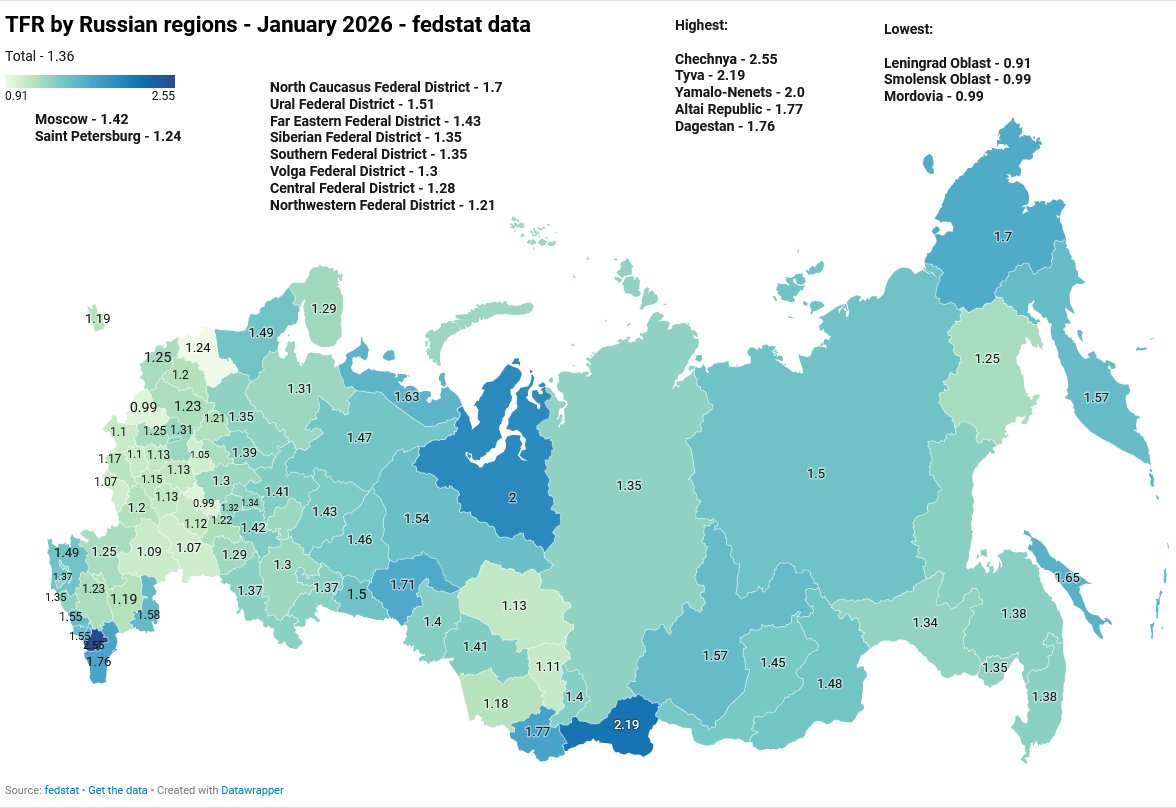
Just a decade ago, the dominant demographic narrative was of "dying Russia" — a population hollowed out by the chaos that followed the Soviet collapse, shrinking through a combination of low birth rates, high mortality and mass emigration. The meme was convenient and, for a while, accurate. It is now obsolete. Russia's problem has become everybody's problem.

Thanks to what might be called "Putin’s babies" — an aggressive pro-natalist programme launched by the Kremlin at the very start of his rule, combining generous maternity payments, housing support and social pressure — Russia's demographic profile looks considerably healthier than most of the rest of Europe, even if its population is still shrinking along with everyone else's. The uncomfortable truth is that there is now nowhere in Europe where the fertility rate exceeds the replacement level of 2.1 births per woman — except Kosovo, which just scrapes above at 2.01. Every other European country sits below the line.

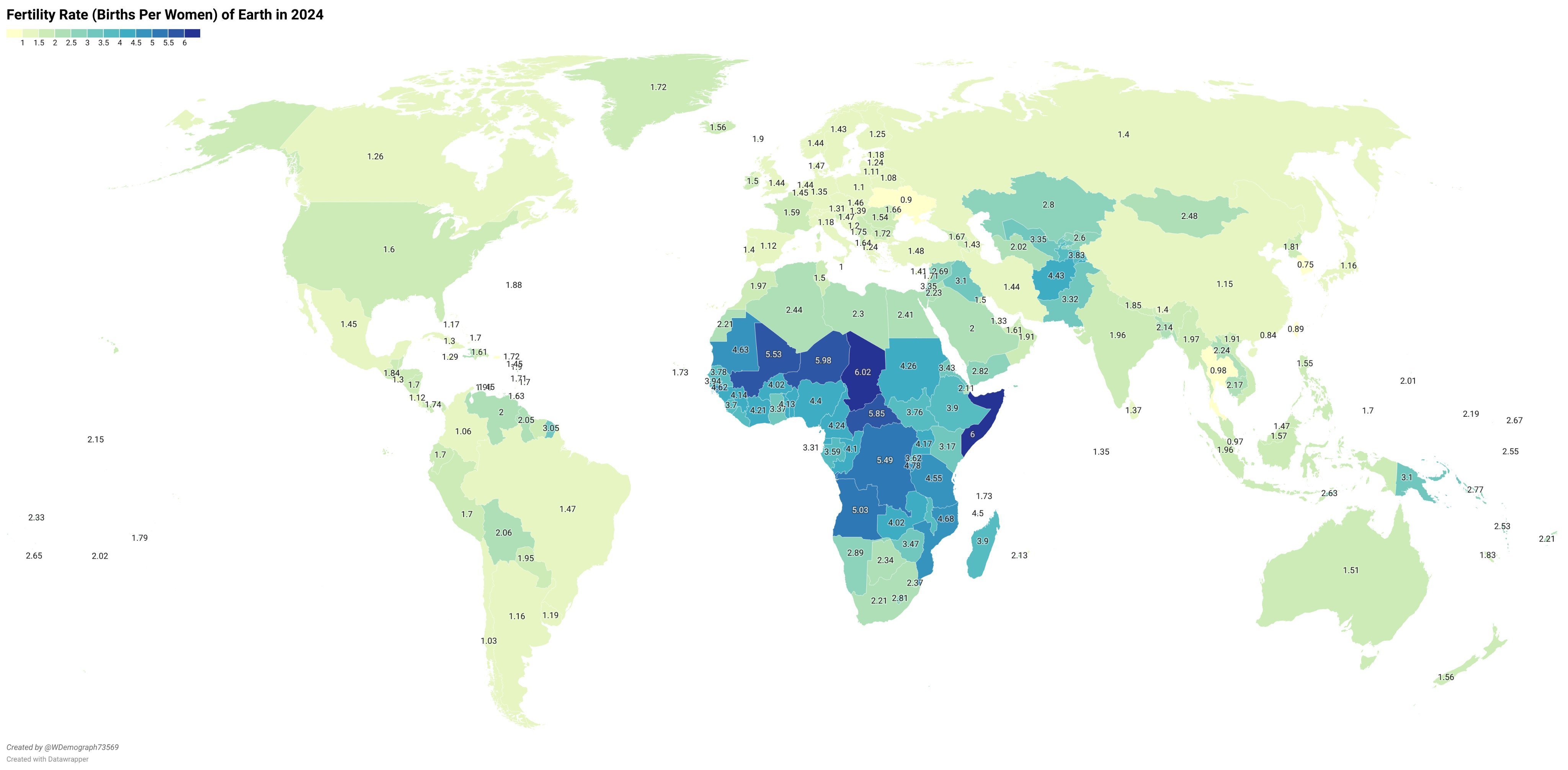
The crisis extends far beyond Europe. In more than two-thirds of the world's 195 countries, the average number of children born to each woman has fallen below replacement rate. In some countries the situation has become catastrophic.
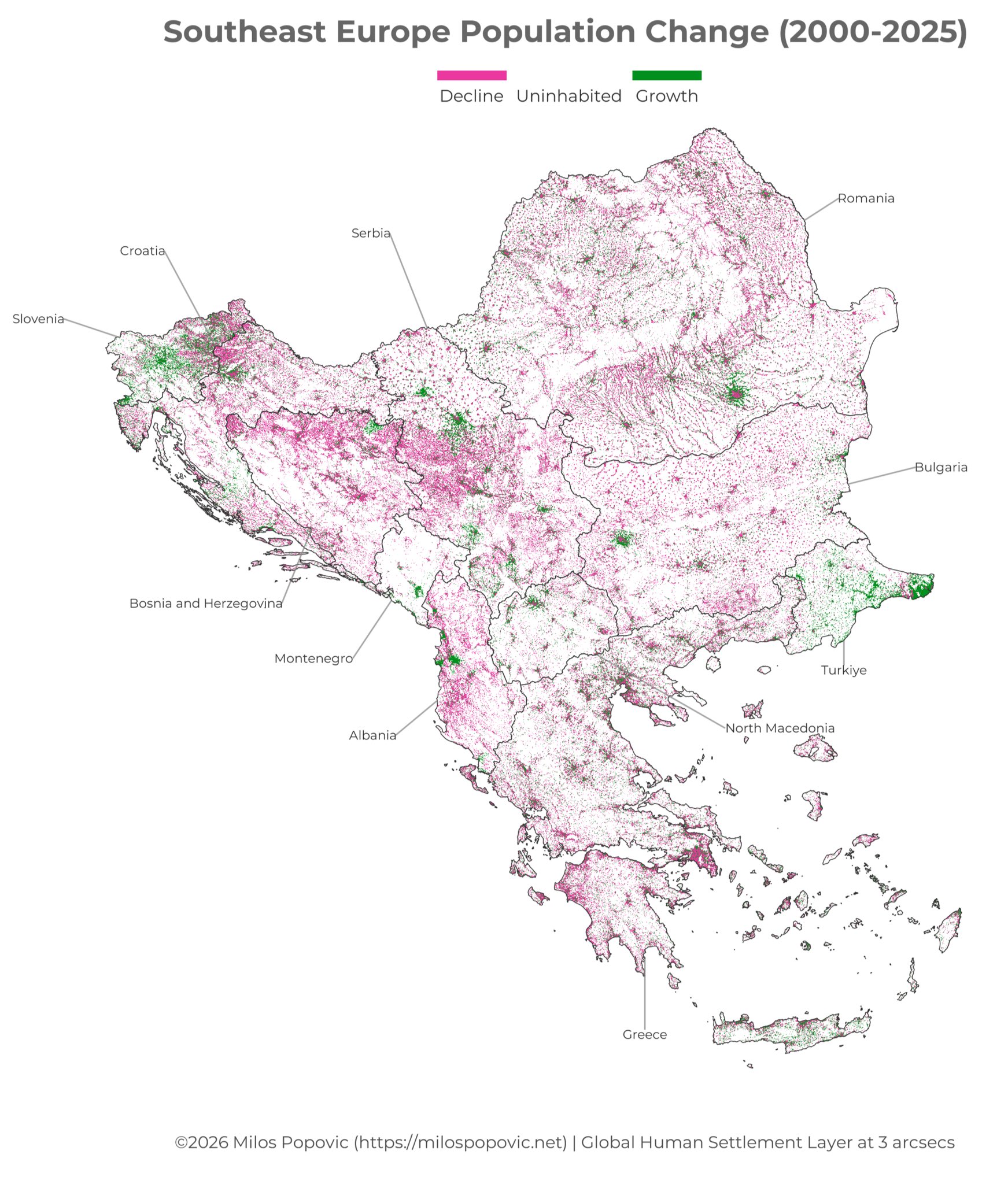
Europe

Ukraine has by far the worst demographic in the world. Its mortality rate is three times its birth rate, and the population is in rapid collapse — a crisis dramatically worsened by a war that has carved a deep gouge out of the 25-to-35-year-old cohort and sent millions of women abroad. Ukraine's total fertility rate stands at 0.90, the lowest in the world. Lithuania follows at 1.04 and Poland at 1.08, with the Baltic states and Central Europe close behind. Eastern Europe as a whole has become the epicentre of depopulation.

Even Hungary, with its elaborate suite of ultra-natalist policies — tax exemptions for mothers of four or more children, interest-free loans, subsidised housing — manages only 1.31 children per woman. Bulgaria leads the EU at a still-inadequate 1.62. France records 1.56, a figure somewhat inflated by its overseas territories. Germany sits at 1.3, with a rapidly ageing population of pensioners that it will struggle to sustain financially. In March German Chancellor Friedrich Merz crunched the numbers and concluded: "We can no longer afford our social system."  In Italy, some regions have seen the fertility rate fall below 1.0, as young couples simply cannot afford a second child.

Oxford Economics' assessment is blunt. "With the influx of Ukrainian refugees abating, it would take several hundred thousand more migrants than we project to prevent a persistent fall in the eurozone's working-age population," said senior economist Riccardo Marcelli Fabiani. "Our baseline forecast is for net migration to alleviate some, but not all, of the decline." The eurozone's working-age population is expected to begin shrinking next year.

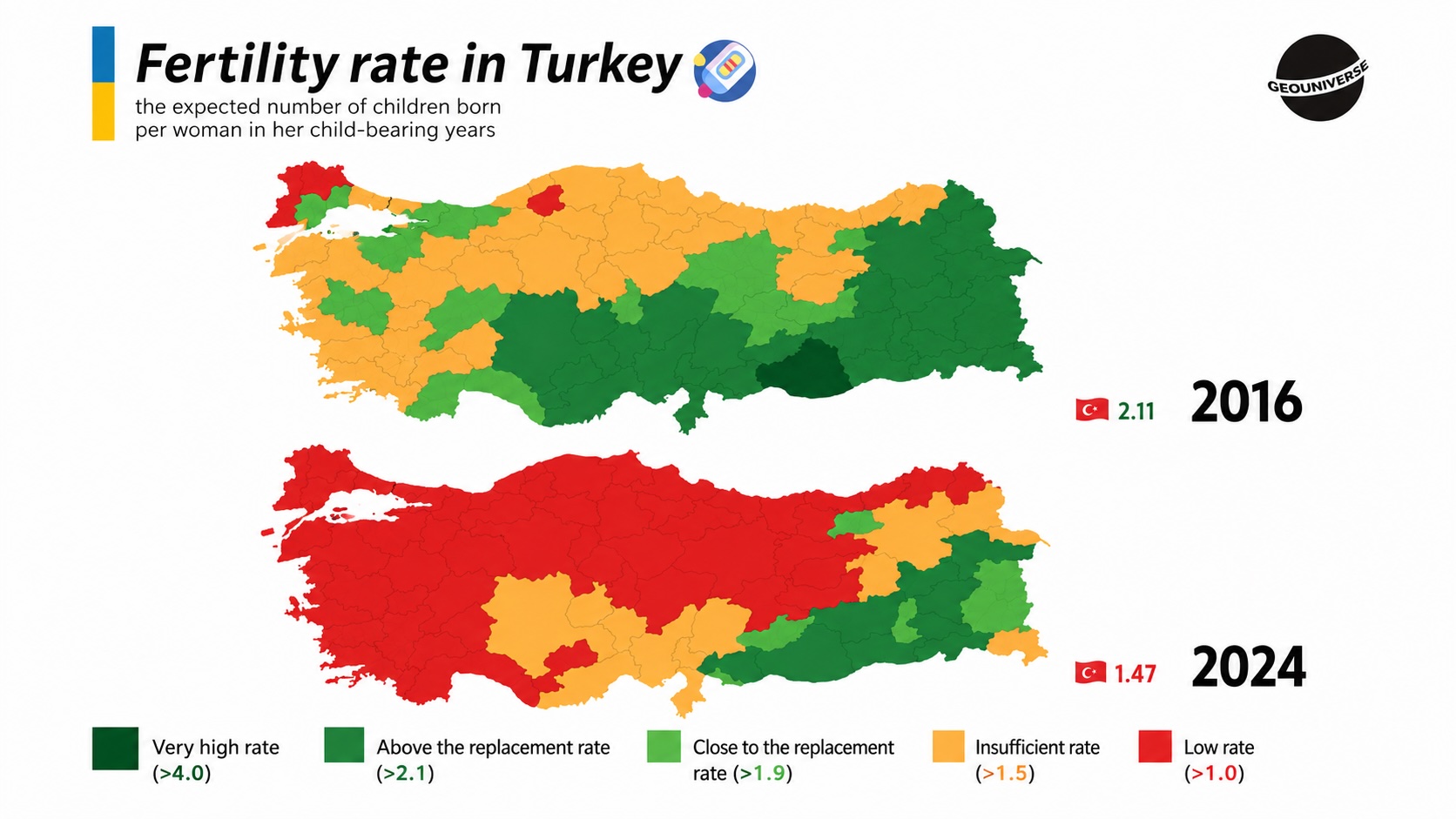
In November, residents of Turkey were reflecting on some disturbing news: fully one half of all families have no children. Turkey, despite being perceived as a relatively young country, is also experiencing a demographic crisis, with a birth rate of just 1.39 — lower than large parts of Europe.
Asia

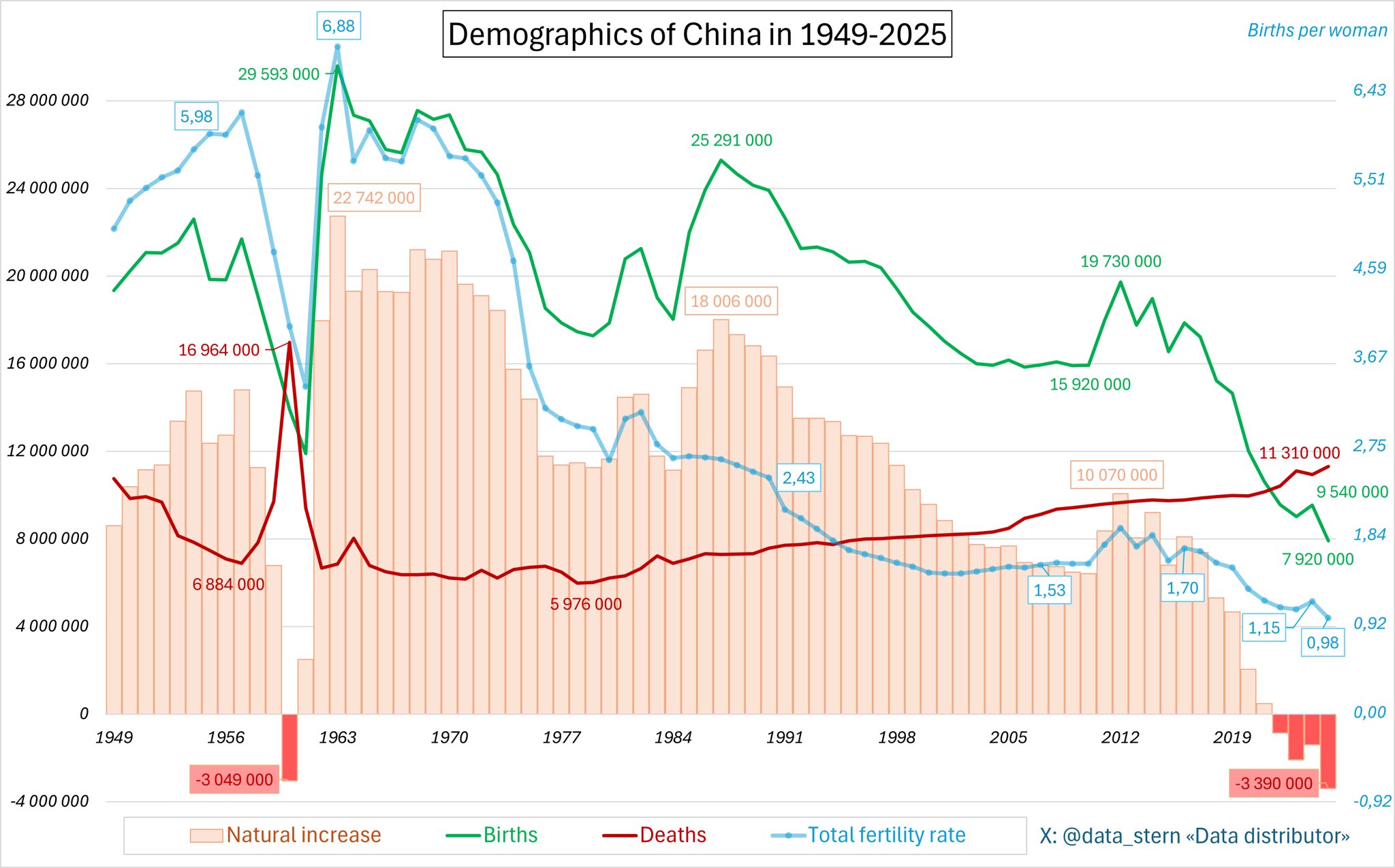
The problem is equally acute in the markets that have typically seen populations grow alongside rising incomes. South Korea leads the world in demographic dysfunction at 0.80 children per woman — the lowest fertility rate ever recorded for a major economy. Taiwan sits at 0.72, Singapore at 0.88, Thailand at 0.87, and China at 0.93. Japan, whose ageing crisis has been extensively documented for decades, records 1.13. Even Malaysia, at 1.41, and the Philippines, at 1.7, are well below replacement.

China's situation stands out. It has long vied with India as home to the most humans on the planet and both were the only countries with over a billion people, but China has not only already lost its lead to India, it is going to lose half its population full stop, according to the IMF.

The legacy of the one-child policy has produced an age pyramid that looks more like a tower. With a working-age population of around 800mn now beginning to contract, the speed of demographic ageing is without precedent in economic history. Oxford Economics estimates that shrinking workforce dynamics will subtract approximately one percentage point from China's potential output growth by the 2050s — a compounding drag that will fundamentally reshape the country's economic trajectory. China's population, currently around 1.4bn, is projected to roughly halve over the coming decades without a dramatic reversal in fertility that shows no sign of materialising.

India remains in a lot better shape, in that its population pyramid still looks like a pyramid. With a fertility rate hovering around 2.0, it will be one of the few Asian countries to see mild population growth over the same period — though even here the middle-class effect is beginning to suppress birth rates in urban and educated cohorts.
The Middle Income Effect

Where has fertility fallen most sharply in the past decade? Not in the richest countries, but in middle-income ones. Turkey, Iran, Argentina, Thailand and Mexico all now have fertility rates well below that of the United States. The explanation lies in economics: as incomes rise to the point where a middle class emerges, birth rates fall. The incentive structure shifts. In poor families, more children mean more hands to work the land and more people to support parents in old age. Once life becomes comfortable and parents become professionals, children come to be seen as expensive choices rather than economic necessities and caregivers have less time to spend on looking after toddlers.

This middle-class effect is already visible at the bottom of India's demographic curve, where urban, educated families are shrinking in size. Latin America presents a similarly stark picture: Brazil at 1.5, Argentina at 1.13, Chile at 1.14, Uruguay at 1.15, Colombia at 1.28, Mexico at 1.38 and Costa Rica at 1.10. The highest fertility rate in the region belongs to French Guiana at 2.76 — an outlier explained by its specific demographic composition.

In the Middle East, Iran records 1.49, while the Gulf states are all well below replacement: Qatar at 1.33, Kuwait at 1.5, the UAE at 1.6, and Saudi Arabia at 2.0. Israel, at 2.87, stands as a striking outlier — one of the highest rates in the developed world and well above its neighbours.

The Exceptions: Africa and Central Asia

Two regions remain genuine exceptions to the global trend, though for different reasons and with different trajectories.

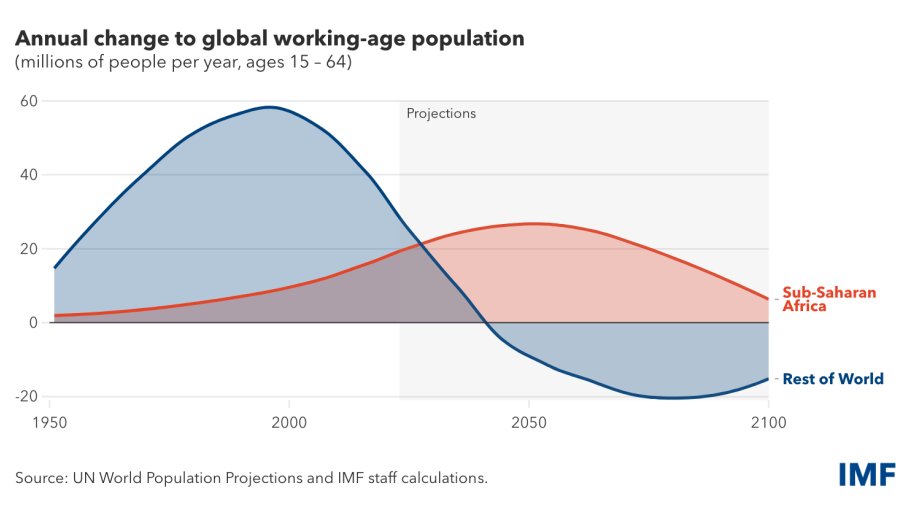
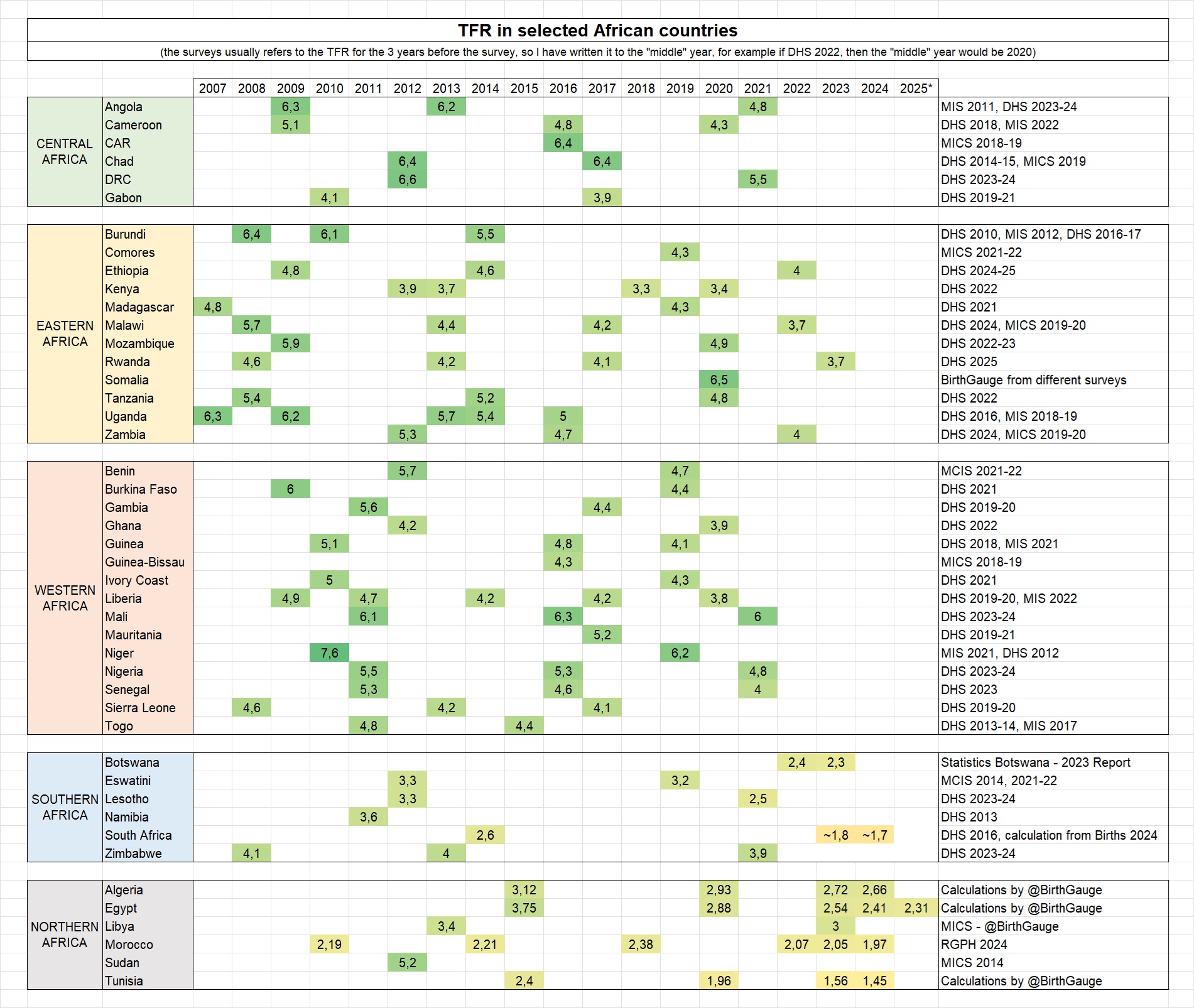
Africa remains the world's primary source of population growth. Only three African countries currently sit below replacement rate: Morocco at 1.97, South Africa at 1.7 and Tunisia at 1.45. Most African countries still record fertility rates of three or more. But the direction of travel is clear and accelerating — rates that stood at six to ten births per woman just fifteen years ago have fallen dramatically. Egypt, Africa's third most populous state, is projected to be the first to fall below two children per woman replacement before 2030 – largely to the middle class growth effect.

Central Asia, and Uzbekistan in particular, represents the other growth hotspot. With an average age below 35 and a rapidly expanding young population, Uzbekistan is bucking the global trend. One of the central challenges facing President Shavkat Mirziyoyev is creating enough well-paid jobs for an increasingly youthful electorate. Kazakhstan, by contrast, saw a 10% decrease in births last year.
What Is Driving the Collapse

The scale of the collapse has surprised even demographers. Just five years ago the United Nations predicted roughly twice as many births as have actually occurred. The demographic deterioration in high and middle-income countries has accelerated sharply in the past decade alone.

Several factors are in play. The Financial Times has reported a link between the spread of smartphones and falling fertility rates — the hypothesis being that social media suppresses the romantic interactions that lead to partnership formation. Staring at your phone all day is not very sexy. The evidence is suggestive but not conclusive, and the decline in many countries began in the 1990s, well before smartphones became ubiquitous.

More concretely, the past half-century has seen a fundamental shift in how economic growth is distributed. Since the 1970s, the gains from productivity growth have increasingly accrued to capital rather than labour — to shareholders rather than workers. Real wages in the United States, for example, have stagnated for decades even as corporate profits, dividend payments and the overall size of the economy have soared.

The cost-of-living crisis accelerating across much of the developed world is another problem: housing costs have risen far faster than incomes, particularly in major cities. Berlin's combination of restrictive planning permissions and rent control — designed to keep accommodation affordable — has produced a split market in which tenants wont leave their rent-controlled accommodation sending up prices in the unregulated new-build apartments. The upshot is a chronic shortage of affordable accommodation that is yet another a powerful disincentive to family formation.

The Economic Reckoning

What impact all this will have on the global and local economies is hard to say. But investors are already taking notice. In Oxford Economics' fourth-quarter 2025 Global Risk Survey, concern about demographic change rose sharply, with 40% of respondents identifying it as a top risk — up from 25% just two quarters earlier. The drivers are straightforward: falling fertility rates combined with accelerating ageing are fundamentally altering the structure of labour supply across most of the world's economies and putting already cash-strapped government budgets under even more pressure.

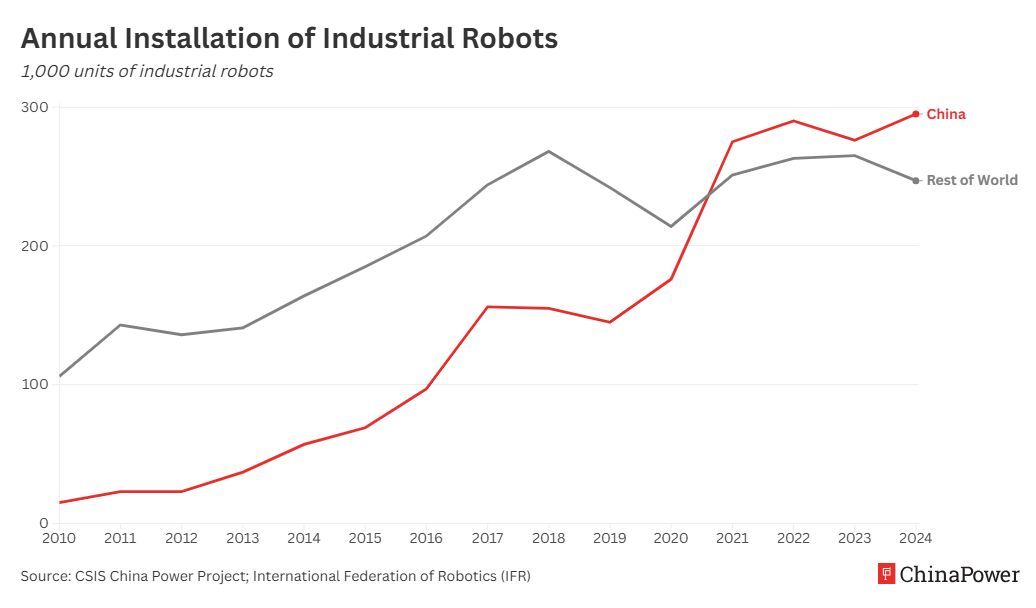
One solution already being studied by governments, investors and corporations alike is to look to artificial intelligence and robotics to fill the gap. McKinsey Global Institute estimates that existing technology could, in theory, automate around 57% of current US work hours. Work in the future will likely be a partnership between humans, AI agents and robots. But the transition raises as many questions as it answers — about which skills remain valuable, which jobs disappear, and how the gains from automation are distributed in societies already struggling with inequality.

The demographic crisis crept up on the world slowly, then arrived very fast. The babies that were not born in the 1990s, the 2000s and the 2010s are the workers, consumers and taxpayers who will not exist in the 2030s, the 2040s and the 2050s. Reversing that arithmetic, where it can be reversed at all, will take generations.


Can a satirical social media movement change Indian politics?

Can a satirical social media movement change Indian politics?
/ SC of the party landing pageFacebook
By IntelliNews May 21, 2026

Opposition members of India’s Parliament (MPs) belonging to the Trinamool Congress (TMC), Mahua Moitra and Kirti Azad have seemingly, albeit it jokingly, endorsed a viral social media movement satirically called the Cockroach Janta Party.

The MPs belong to the same TMC that was swept out of power in India’s Eastern state of West Bengal in an historic election earlier in May, with the centre ruling Bhartiya Janta Party (BJP) securing a win for the first time since independence in 1947.

Posting on social media platform X, both TMC MPs inquired about the criteria for joining the movement in an obvious pun, and interacted with its handle. The Cockroach Janta Party, however, is a satirical online-only phenomena which has emerged as a reflection of voices of dissent in India over concerns most commonly identified with the prevailing political order.

According to a report by the Times of India, the Cockroach Janta Party was started by Abhijeet Dipke, a former social media volunteer for another Indian opposition political party called the Aam Aadmi Party (AAP).

The AAP, which emerged from several civil-society movements that appeared in India during the 2010s has also gone through tough times, as its head and former Delhi Chief Minister Arvind Kejriwal is involved in a legal case in which he is accused of misusing his position in a liquor excise policy matter.

A major political defection of note from the AAPs stable has been Raghav Chaddha, another MP who switched his political allegiance to the BJP after the AAP accused him of being aligned with the ruling party when he opted not to join other opposition MPs in parliament as part of protest actions.

Raghav Chaddha briefly emerged as a figure who put forward personal finance and economic concerns affecting the majority tax base of India’s middle class. Chaddha’s questions and discussion points in parliament during his tenure with the AAP were appreciated by social media users at the time who saw them as representing the most vocal part of the Indian politically aware demographic currently active online.

While Dipke has not connected the Cockroach Janta Party to his former association with the AAP, the idealistic motivation and ethos behind it is purportedly similar to the civil-society movements of the 2010s that spoke out against the then prevailing anti-corruption and anti-incumbency sentiment of the era.

The movement now has a website with an ever evolving short manifesto which includes proposals such as barring representatives who defect to other parties from contesting elections for two decades, additional, guaranteed, places for women in cabinet positions, but without increasing the size of the parliament, curbs on media ownership by certain industrial conglomerates and the investigation of certain news anchors who create the narrative in the national media space.

The website also has a Google form which reportedly crossed 100,000 sign-ups for membership in just 3 days following its inception.

The movement emerged after alleged remarks made by the incumbent Chief Justice of India, Surya Kant, who is said to have likened rabble rousers who attack the system of governance in the country with “cockroaches” which, upon not finding employment elsewhere, get into certain professions.

The Chief Justice later clarified that his remarks were misconstrued in widespread media reporting and that he was referring solely to people who have “fake degrees” and get into professions with the sole purpose of negatively criticising and hurting the system of governance.

While not a new concept, the Cockroach Janta Party, has a similar aesthetic quality to the Gen-Z movements that led to political regime changes in India’s neighbouring countries, Bangladesh and Nepal.

Economic conditions in India including rising inflation and a depreciating currency have also given some narrative space to the movement and in some areas have found a sympathetic ear.

However without major organisational momentum behind it, the movement is unlikely to become a driver of any real change and may fizzle out as a brief online phenomena.

At best it can remain relevant as a channel for shared frustrations from independent activists, opposition leaders and disaffected citizens looking for a way to express themselves online.

Thursday, May 21, 2026

New Submarines, No Mission: The Doctrine Gap Behind Canada’s Procurement Debate – Analysis


By

By Meng Kit Tang


Buried inside the Canadian Patrol Submarine Project’s (CSPS) mandatory capability requirements sits a deceptively cautious phrase. Canada’s future submarines, the document specifies, must be capable of operating “near, in, and if necessary, under ice (for limited periods).”

Those final three words carry unusual strategic weight.

Limited by what? By propulsion endurance beneath Arctic ice? By communication constraints under polar conditions? By the authorities delegated to a submarine commander once contact with Ottawa becomes intermittent or disappears altogether?

The document does not say, and in a narrow technical sense, it cannot. Those limits are not merely engineering constraints. They emerge from prior decisions about what Canadian submarines are expected to do, against whom, under what political conditions, and with what tolerance for operational risk.

No such decisions have been articulated in public strategic documents. Not in Our North, Strong and Free. Not in the CPSP mandatory requirements themselves. Not in the Senate committee reports that have most directly addressed the undersea question.

Canada is now moving through one of the largest defence procurements in its modern history. Yet the submarine debate remains focused on a question one layer above the issue that will ultimately determine whether the program succeeds. Ottawa is asking what submarine Canada should buy before deciding what missions those submarines must perform.

That inversion matters more than the platform competition itself. Doctrine eventually follows procurement, but by then it is constrained by the submarine already chosen. Technical limits harden into operational assumptions. Once embedded in construction, doctrine must accommodate what the platform can do rather than what Arctic sovereignty may require. Procurement language becomes strategy through institutional default.

Canada risks reaching that point without publicly answering the questions platform choice will quietly resolve.

Canada’s Submarine Procurement Debate So Far

The procurement critique is largely correct on its own terms. Canada’s Victoria-class submarines are nearing the end of their operational relevance. Availability rates have long been poor. Their ability to operate under Arctic ice is minimal. The fleet can sustain only a narrow operational presence even under favourable conditions.

Much of the current debate reflects accumulated frustration over decades of deferred spending, cancelled programs, and political hesitation dating back to the abandonment of Canada’s planned nuclear submarine acquisition in 1989.

The CPSP is now firmly embedded in the procurement system, with a contract decision expected by 2028 and deliveries projected for the mid-2030s. Most analysis has therefore concentrated on acquisition questions: propulsion systems, industrial capacity, maintenance requirements, Arctic survivability, crew sustainability, and interoperability with allies.

Those are necessary debates. None addresses the prior issue beneath them. What is the fleet actually for?

That question governs far more than rhetoric. A state seeking persistent under-ice presence in the Arctic Basin requires a different operational profile from one conducting episodic sovereignty patrols near the Northwest Passage. A navy designed primarily to reinforce allied anti-submarine warfare (ASW) operations in the North Atlantic will make different trade-offs from one prioritizing independent Canadian Arctic surveillance.

Those missions overlap. They are not identical.

The “limited periods” language matters not because it suggests hidden incompetence, but because it reflects unresolved prioritization. The requirement appears to acknowledge a tension between political expectations surrounding Arctic under-ice capability and the operational limits conventional propulsion imposes. Whether that balance is sufficient depends entirely on what missions Ottawa expects the fleet to perform.

That uncertainty matters because submarines are unusually inflexible platforms once construction begins. Endurance profiles, propulsion choices, communication architectures, and crew requirements become embedded for decades. Canada is approaching that point without publicly answering the questions those choices will quietly resolve.

The Four Questions Doctrine Must Answer

In the undersea domain, doctrine is not an abstract policy exercise. It determines what a submarine commander is authorised to do while operating beneath Arctic ice under conditions of limited communication, uncertain escalation pathways, and potentially close contact with foreign submarines. Canada’s existing defence documents leave four foundational questions unresolved, and each bears directly on the platform decision now approaching.

Rules of Engagement

If a Canadian submarine operating in Arctic waters detects a Russian or Chinese submarine inside waters Ottawa considers sovereign, what follows? Does the Canadian vessel merely track and report? Is it expected to manoeuvre in ways that signal presence? Under what circumstances, if any, could a Canadian commander interfere with another submarine’s operations absent allied coordination?

No public Canadian defence document addresses those questions directly; Ottawa has not clearly articulated whether its future submarine fleet is primarily intended for surveillance, denial, sovereign enforcement, allied reinforcement, or some combination of all four.

That ambiguity is not a prudent hedge. It is an unresolved decision the procurement process is already moving beyond.

Command Authority Under Ice

Arctic submarine operations occur under severe communication constraints. Submarines beneath polar ice cannot reliably maintain continuous contact with national command authorities. Extremely Low Frequency (ELF) communication systems mitigate part of that problem, but Canada possesses no sovereign ELF infrastructure and depends heavily on allied architectures.

This creates questions no procurement document can answer. Under what circumstances can a Canadian submarine commander act without immediate authorisation from Ottawa? What authorities are pre-delegated before patrol? How much operational discretion is Canada willing to entrust to commanders operating beyond reliable communication windows?

These are not technical matters. They involve political authority, legal responsibility, and the practical boundaries of national command sovereignty.

The Deterrence Mechanism


Canadian defence policy routinely describes the future submarine fleet as contributing to deterrence in the Arctic and North Atlantic. Yet deterrence in the undersea environment differs significantly from deterrence in air or land domains, and they are operationally consequential.

A submarine force optimised for covert surveillance generates deterrence through uncertainty. An adversary cannot know where the boat is and must plan accordingly. A fleet integrated tightly into allied anti-submarine warfare networks generates deterrence through collective denial capacity. A force intended primarily to demonstrate sovereign Canadian presence requires something different again: periodic, signalled activity that makes the capability politically legible.

Each of these approaches requires different platform characteristics, patrol patterns, and communication architectures. Canada has not publicly articulated which it prioritises. The procurement now underway will therefore resolve that question by default, embedding a deterrence logic into steel before Ottawa has consciously chosen it.

Allied Integration and Sovereign Boundaries

Canadian submarines will not operate independently of US naval activity in the Arctic and North Atlantic. Any serious undersea mission intersects with the highly sensitive process of water-space management: the classified bilateral arrangements governing patrol zones, depth corridors, and deconfliction procedures that prevent allied submarines from interfering with one another’s operations.

The architecture surrounding the Victoria class evolved around a fleet with limited Arctic reach and modest operational tempo. A future Canadian fleet capable of meaningful under-ice operations would require new understandings with Washington regarding patrol areas, intelligence sharing, operational coordination, and command relationships.

That negotiation forces Ottawa to confront a question successive governments have preferred to leave imprecise: how independent does Canada intend its Arctic undersea posture to be?

These are not secondary questions. They determine whether the future fleet possesses strategic coherence at all.

The AUKUS Sequencing Lesson

The comparison with AUKUS demonstrates a different sequencing logic. Australia’s nuclear submarine program is far larger and more ambitious than Canada’s conventional procurement effort. The industrial burden, alliance integration, and technological complexity are not directly comparable, nor did AUKUS resolve every doctrinal question before procurement advanced.

But before Canberra committed itself to a specific platform pathway, the AUKUS partners spent eighteen months conducting the review process that became the Optimal Pathway, examining operational missions, alliance integration, industrial capacity, basing requirements, and regional force posture before finalising platform decisions.

Doctrine and mission analysis preceded procurement. Platform choice followed from strategic purpose.

Canada’s process has moved in the opposite direction. The submarine project accelerated years ago. Requirements have been issued; suppliers narrowed. A contract decision approaches. Yet Ottawa has produced no comparable public strategic assessment clarifying what missions the submarines are expected to prioritize or what trade-offs Canada is prepared to accept.

The consequences are visible inside the requirements themselves. The under-ice “limited periods” language reflects unresolved operational assumptions. So does the stated range requirement of at least 7,000 nautical miles. Whether that figure is sufficient depends on where patrol cycles begin, how long submarines are expected to remain submerged, what missions they are tasked to conduct, and how heavily Canada intends to rely on allied infrastructure.

Requirements without settled doctrine do not eliminate uncertainty. They embed it in technical specifications where it hardens into fleet design.

The 2028 Deadline and the Doctrine Clock

The doctrine problem is no longer theoretical because the procurement timeline is no longer distant.

Once Canada signs a submarine contract, the opportunity to reconcile doctrine with platform choice narrows sharply. Hull design, propulsion assumptions, endurance limitations, and communication architectures will remain embedded in the fleet for decades. Canada will still be able to adapt tactics and deployment patterns. It will not easily redefine the strategic logic of the force itself.

That deadline arrives amid intensifying undersea competition. Russian submarine activity in the North Atlantic has risen sharply, while China continues expanding its Arctic scientific presence, icebreaker operations, and dual-use infrastructure with clear strategic implications. At the same time, the Victoria-class submarines are nearing the end of service life while maritime patrol transition timelines remain stretched.

The result is a period in which Canada may lack both the operational assets and the strategic clarity to define what Arctic undersea security requires of it.

That matters because doctrine shapes interim choices as much as long-term procurement. Without a settled conception of mission, Ottawa lacks a coherent basis for prioritizing temporary measures such as fixed sensor networks, allied burden-sharing arrangements, Arctic communication infrastructure, or undersea surveillance systems. Policy becomes reactive because the operational objective itself remains undefined.

Three things therefore need to occur before the contract is signed.

Canada requires a formal Arctic undersea doctrine process whose existence is publicly acknowledged even if its substance remains classified. Ottawa does not need to publish patrol patterns or escalation thresholds; but it needs to demonstrate that the foundational questions surrounding command authority, deterrence logic, alliance integration, and mission priorities are being addressed before platform selection is finalized.

Canada also requires a structured bilateral process with the United States focused on future water-space management and Arctic undersea coordination for the incoming fleet. Existing arrangements were built around a different operational reality. A fleet with meaningful Arctic reach will require new agreements on patrol zones, deconfliction procedures, and command relationships negotiated before the submarines enter service.

Finally, doctrine milestones should be integrated directly into the CPSP procurement timeline. Platform selection and strategic purpose cannot remain parallel processes that never formally intersect.

None of these steps require selecting a winning submarine design. All are necessary if the eventual winner is to serve a coherent strategic purpose.

The Real Stakes of the 2028 Decision

When Canada signs the CPSP contract, it will commit itself to a particular understanding of Arctic undersea operations whether Ottawa has articulated that understanding or not.

A submarine designed for intermittent under-ice access reflects different strategic assumptions from one built for persistent Arctic presence. A fleet optimized for allied integration embodies different political choices from one intended to maximize sovereign operational independence.

Those choices will not remain unsettled until doctrine catches up. The platform itself will answer them by default, embedding a strategic posture into procurement language before the country has consciously decided what that posture should be.

That is why the phrase “limited periods” matters. It is not merely a technical qualifier buried in a procurement document. It is the visible trace of a strategic question Canada has yet to resolve, and the point at which the design of the fleet may begin determining Canada’s Arctic posture before Canada has fully decided what that posture is meant to be beneath the ice.