Monday, June 08, 2026


Negotiations on air passenger rights hit turbulence: EU Parliament takes on airlines


Issued on: 05/06/2026 - FRANCE24
Play (13:07 min) From the show

Negotiators from the European Parliament and EU member states have been trying to reach an agreement on the rights of air passengers travelling within the bloc. The current rules date back to 2004, but the scale and nature of air travel have changed dramatically since then. We take you inside the negotiations, examine the key sticking points, and explain why MEPs are pushing for stronger protections for passengers affected by delays and cancellations.


Programme prepared by Oihana Almandoz, Perrine Desplats, Aline Bottin and Isabelle Romero
Talking Europe © FRANCE 24

OUR GUESTS
Virginijus SINKEVICIUSLituanian MEP, Group of the Greens/EFA
Cynthia Ní MhruchúIrish MEP, Renew Europe

BY: Armen GEORGIAN
Residents of French village say US defense chief Hegseth not welcome for D-Day visit

US Defense Secretary Pete Hegseth on Saturday marked the 82nd anniversary of the World War II D-Day landings with a visit to Normandy, but did not attend the international ceremony hosted in Langrune-sur-Mer. Residents said his "warlike views" were unwelcome in their village and questioned his commitment to "democratic values".


Issued on: 07/06/2026 - 
By: FRANCE 24

US Defense Secretary Pete Hegseth visits the US cemetery to commemorate the 82nd anniversary of the D-Day landings in Colleville-sur-Mer, Normandy, France on June 6, 2026. © Jeremias Gonzalez, AP


US Defense Secretary Pete Hegseth on Saturday travelled to Normandy to commemorate the 82nd anniversary of the World War II D-Day landings.

But after making a speech at the American military cemetery in Colleville-sur-Mer, he conspicuously skipped afternoon’s main international ceremony marking the anniversary of the Allied landings, which helped herald the end of World War II.

His presence was not missed by some residents of the village hosting the ceremony, Langrune-sur-Mer, who said the US official was not welcome there.

"He has very warlike views and it seems to us that this man does not share our democratic values," Sylvie Lamy Thepaut, a member of the municipal association Langrune en commun, told BFM TV.

A message on the association’s website called for Hegseth’s visit to be cancelled on the grounds that the Pentagon chief “espouses values contrary to democracy, human rights and peace” and had made “numerous anti-European remarks”, “warlike statements” and “American supremacist pronouncements".

“The honor of Langrune, that of France, and the memory of the young Allied soldiers – American, British, Canadian – who died on our beaches in the name of democracy would dictate canceling this individual’s visit,” the statement concluded.

Langrune-sur-Mer Mayor Franck Jouy declined to comment on Hegseth's visit, underscoring that the event was a memorial.

“We are here for a commemmoration and I don’t want to make it political,” he told BFMTV. “I’m here to remember the people who came to make sure that France was liberated.”

Attendees of Saturday’s ceremony in Langrune-sur-Mer included veterans from the United States and British Defence Minister John Healey, who hailed the "resilience" of the UK during the war and US allies as "this great people, friends of liberty".

French Prime Minister Sébastien Lecornu paid tribute to the "3,000 men, barely 20 years old", who died on D-Day, offering "the breath of their youth and the sacrifice of their lives".

In his earlier speech at the American military cemetery, Hegseth utilised dehumanising anti-immigrant rhetoric, urging Europe to counter what he termed an "invasion" of its coastline by migrants.

Echoing the rhetoric of the US administration, he also called on European countries to do more to contribute to their own defence. European defence spending has been on the rise.

In an apparent reference to European defence initiatives, Lecornu said the continent had to meet "the challenge of our generation" to build "our autonomy, our capacity to defend ourselves" to face threats that are "getting closer, intensifying and multiplying".

The Normandy landings on June 6, 1944, were the largest amphibious operation in history.

An armada of 6,939 ships and 132,700 British, Canadian, American, Belgian, Norwegian and Polish troops stormed 80 kilometres (50 miles) of beaches in northern France.

The operation contributed decisively to the Allied victory over Nazi Germany, which was also being squeezed by USSR forces to the east.

(FRANCE 24 with AFP)


NASA aircraft breaks sound barrier in first supersonic test flight

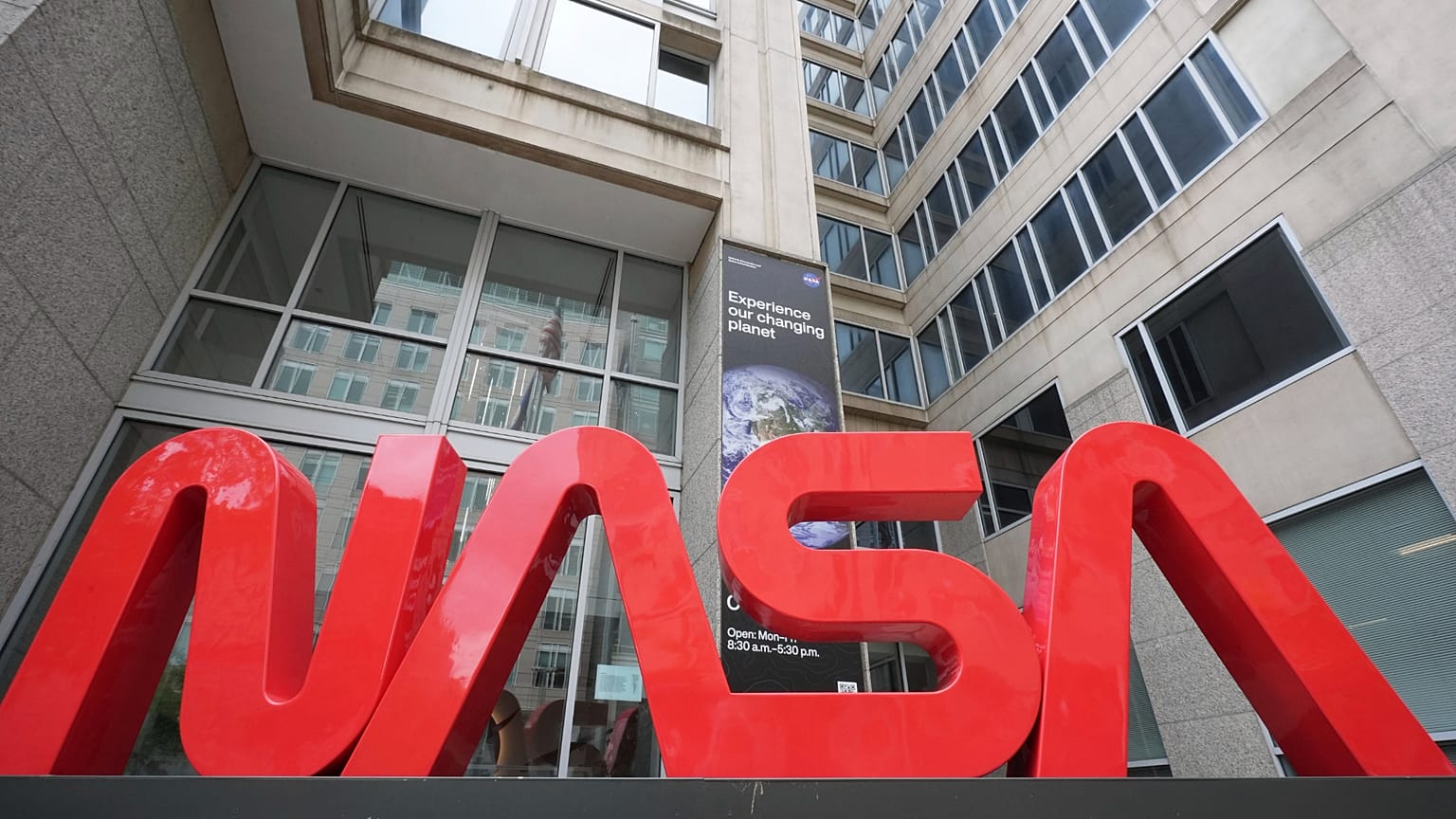
NASA headquarters in Washington, DC.
Copyright AP Photo

By Rebecca Rommen
Published on

The milestone comes after a busy testing period for NASA. Since the first flight on 28 October 2025, the team has completed 16 flights in the last 90 days

NASA’s experimental X-59 aircraft has flown faster than the speed of sound for the first time, marking a significant step in the development of quiet supersonic flight technology.

NASA test pilot Jim "Clue" Less took off and landed at Edwards Air Force Base in California, reaching a top speed of approximately Mach 1.1 (1,147 km/h) and an altitude of 13,228 metres.

The aeroplane’s flight began at 11:08 am local time (8:08 pm CEST) on Friday and lasted 81 minutes. The engineering team focused on flying qualities at both subsonic and then supersonic speeds.

The milestone comes after a busy testing period. Since the first flight on 28 October 2025, the team has completed 16 flights in the last 90 days.

NASA Administrator Jared Isaacman said, "I’m grateful to the NASA team and Lockheed Martin Skunk Works for their help getting us to this point, and I hope this is the first of many collaborations as we rebuild NASA’s X-plane portfolio.”

The X-59 is designed to fly at supersonic speeds while creating only a quiet thump instead of a loud sonic boom. For this flight, a NASA F-15 chase aeroplane flew nearby to monitor the X-59.

The loud sonic booms from the F-15 obscured any sound made by the X-59.

In just days, the aeroplane is expected to make its first 'mission conditions' flight. This test will see the aircraft reach a cruising speed of Mach 1.4 (1,489 km/h) and an altitude of approximately 16,764 metres.

The X-59 will also be accompanied by a chase aeroplane for this flight. These conditions will serve as the baseline when the aircraft eventually flies over several communities in the US. NASA’s experimental X-59 aircraft has flown faster than the speed of sound for the first time, marking a significant step in the agency's development of quiet supersonic flight technology.

NASA test pilot Jim "Clue" Less took off and landed at Edwards Air Force Base in California, reaching a top speed of approximately Mach 1.1 (1,147 km/h) and an altitude of 13,228 metres.

The aeroplane’s flight began at 11:08 am local time (8:08 pm CEST) on Friday and lasted 81 minutes. The engineering team focused on flying qualities at both subsonic and then supersonic speeds.

The milestone comes after a busy testing period. Since the first flight on 28 October 2025, the team has completed 16 flights in the last 90 days.

NASA Administrator Jared Isaacman said, "I’m grateful to the NASA team and Lockheed Martin Skunk Works for their help getting us to this point, and I hope this is the first of many collaborations as we rebuild NASA’s X-plane portfolio.”

The X-59 is designed to fly at supersonic speeds while creating only a quiet thump instead of a loud sonic boom. For this flight, a NASA F-15 chase aeroplane flew nearby to monitor the X-59.

The loud sonic booms from the F-15 obscured any sound made by the X-59.

In just days, the aeroplane is expected to make its first 'mission conditions' flight. This test will see the aircraft reach a cruising speed of Mach 1.4 (1,489 km/h) and an altitude of approximately 16,764 metres.

The X-59 will also be accompanied by a chase aeroplane for this flight. These conditions will serve as the baseline when the aircraft eventually flies over several communities in the US.

The flights will enable NASA to gather data about how people perceive the quiet thump, after which NASA will share its findings with US and international regulators to help establish new noise standards.

The flights will enable NASA to gather data about how people perceive the quiet thump, after which NASA will share its findings with US and international regulators to help establish new noise standards.


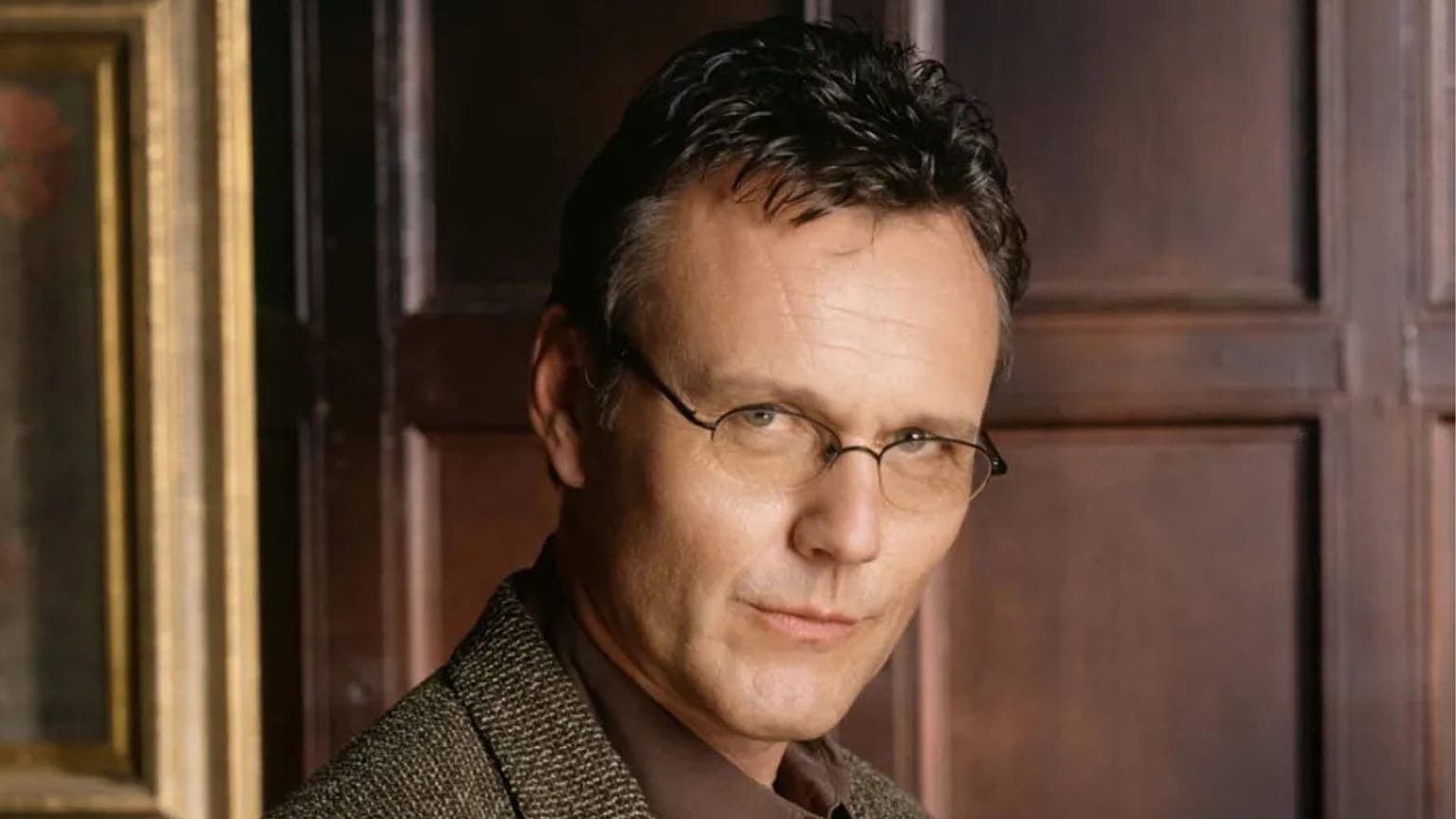
‘He was the best of us’: Heartfelt tributes paid to Buffy star Anthony Head, dead at 72

‘He was the best of us’: Heartfelt tributes paid to Buffy star Anthony Head, dead at 72
Copyright The WB screenshot


By David Mouriquand
Published on


Best known for his role as Giles on the cult TV show Buffy The Vampire Slayer, Anthony Head died at the age of 72. Over the weekend, his co-stars and friends paid heartfelt tributes to a performer who will be sorely missed.

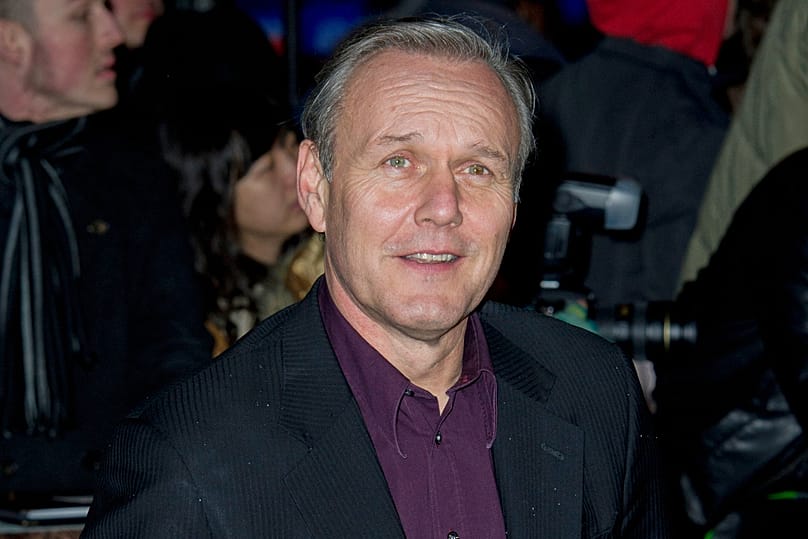
Anthony Head, the celebrated British actor best known for roles in the cult TV show Buffy The Vampire Slayer and Ted Lasso, died at the age of 72, his family revealed on Friday (5 June).

Head’s daughters, actors Emily and Daisy Head, revealed that the actor died due to complications from pneumonia.

Emily and Daisy Head wrote: “It is with heavy hearts that we announce the death of our extraordinary father. He passed away peacefully of complications due to pneumonia, surrounded by his family.”

“It has been, and forever will be, an honour and a privilege to be his daughters, and to have witnessed firsthand the impact both he and his work have had on so many,” they added.

Anthony Head
Anthony Head AP Photo

Over the weekend, countless stars have paid tribute to Head, whose career touched the lives of so many.

From the “will-they, won’t-they” romantic couple in a series of British ads for Nescafe Gold Blend instant coffee in the 80s, to his stand-out role as Rupert Giles, the Watcher of Buffy on Buffy The Vampire Slayer - via roles in Little Britain, Doctor Who, Jonathan Creek, Bridgerton, and his recurring role in Apple TV+’s show Ted Lasso - Head’s smooth delivery, immeasurable charm and scene-making charisma made him a fan favourite.

Little Britain co-creator Matt Lucas paid tribute on social media, writing: “When we were casting Little Britain, we were looking for a ‘Tony Head-type’, because we never imagined for a moment that the man himself would be interested, but he was. Lucky us. He was unfailingly brilliant, and always so kind and warm. My heart goes out to Daisy and Emily.”

Harlan Coben, the writer of the novel The Stranger, the Netflix adaptation of which Head appeared in, described him as “charming and erudite and funny and open and friendly and so damn talented”, saying he “brought joy and warmth and sparkle and wonder to every room he entered”.

Head's Ted Lasso co-star and writer on the show, actor Brett Goldstein, remembered Head as "infinitely charming and kind and fun and a joy".

He wrote: "Anthony Head was a brilliant actor who played the worst person in the world, which was an incredible skill because he was the best person. He will be sorely missed. Love to his family."

Screenwriter and producer Russell T Davies remembered Head as an "absolute delight" and recalled their time working together on shows including Doctor Who and Merlin.

Buffy The Vampire Slayer
Buffy The Vampire Slayer The WB screenshot

The cast of Buffy also paid tribute to their co-star and friend.

Sarah Michelle Gellar, who played Buffy, wrote on Instagram: “’Tell Giles I figured it out and I’m ok’ Well I don’t have it figured out and I’m not ok. But I know I’m the lucky one because I knew you. Thank you to Daisy and Emily who not only shared their dad with me, but with the world.”

David Boreanaz, who played Angel in the show, described him as a "kind and generous soul", while James Marsters (Spike) said: “There’s a hole in the World. Anthony Head has passed on from us. He was an unflaggingly kind and steady presence on the set of Buffy, and the best actor in the cast. He was the best of us. I was lucky to have known, and learned from him. He left the world a better place for his presence. Thank you Tony for all you gave.”

Alyson Hannigan, who played Willow, wrote this weekend: “This cut is so deep I fear it can never heal. Oh Tonal…I am so grateful to have had you in my life! I want to say a million wonderful things about you and yet I can’t seem to find the words that would do you justice. I love you so much and will miss you forever. RIP.”

Charisma Carpenter, who played Cordelia, honored Head with a touching post, saying: “Tony brought life to a character who, for so many, was the father figure they needed but didn’t have at home. Fans far and wide are surely grieving, and for that, I am deeply sorry.”

Emma Caulfield, who played Anya Jenkins, posted a photo of herself with Head on Instagram, writing: “This was taken on the London Underground in 2011. I went to visit my friend Tony on the set of The Iron Lady. We had lunch, hit up a record store, had dinner and drinks and laughed until our sides hurt. It was a perfect day. There were many of these moments with this amazing human who I was lucky enough to call my friend for 27 years. He was kind and wise and a guide in troubled times. You were so loved.”

The Buffy-verse experienced a loss earlier this year when Nicholas Brendon, who played Xander Harris during the show’s entire run, died at the age of 54. Last year, Michelle Trachtenberg, who played Buffy’s sister Dawn Summers, died aged 39.

Anthony Head lost his long-term partner Sarah Fisher, an animal welfare campaigner, last December at the age of 61.

RIP Anthony Head 1954 – 2026. You will be missed.

Cannes winner Jafar Panahi faces prison and travel ban from Iran


By Alain Chandelier & Sertac Aktan
Published on 07/06/2026 - EURONEWS

On Sunday, Mostafa Nili, lawyer for Jafar Panahi, announced that a Tehran Revolutionary Court has rejected the objections and fully upheld the in-absentia verdict against the prominent Iranian filmmaker.

“Under the initial verdict, Panahi had been sentenced to one year in prison on the charge of engaging in propaganda against the Islamic Republic of Iran," Mostafa Nili, the lawyer of the acclaimed and Cannes Palme d’Or winner Iranian filmmaker Jafar Panahi, said in an interview with the Iranian media outlet 'Emtedad'.

Nili added that he was also handed a two-year travel ban and prohibited from joining political and social groups and associations. With this, the Branch 26 of Tehran's Revolutionary Court, presided over by Judge Iman Afshari, has upheld the original verdict in full.

He explained that the grounds cited for the verdict included making an “underground and problematic film against the establishment,” supporting political and security prisoners, backing popular protests against the government, supporting the “Woman, Life, Freedom” slogan, signing and disseminating a statement in support of a lorry drivers’ strike, “painting a bleak picture” of the country’s situation, and reposting a video clip of a collective performance of the anthem “Ey Iran” in protest at the issuing and carrying out of death sentences.

Panahi’s lawyer noted that the ruling can be appealed to the Tehran Provincial Court of Appeal within 20 days of notification.

The initial court ruling against Panahi was issued while he was abroad taking part in the publicity campaign for the film “A Simple Accident”, which, after winning the Cannes Palme d’Or, was selected to represent France in the race for the Academy Award for Best International Feature Film.

Despite the in absentia verdict, this prominent Iranian director returned to Iran on 30 March after attending the Oscars; his return coincided with the continuation of the war between the United States and Israel on the one hand and the Iranian authorities on the other.

In 2022 and 2023, Panahi spent 86 days in Evin Prison on charges of “propaganda against the state”. He was released after going on a hunger strike, and after his appeal was accepted, which led to the annulment of the initial charges.
French prosecutors ordered to review all child abuse complaints after girl's murder

French Justice Minister Gérald Darmanin has ordered a review of all complaints involving child victims of sexual violence in France after the death of an 11-year-old girl allegedly killed by a man who had previously been accused of rape and sexual assault of other children but had never been convicted.


Issued on: 08/06/2026 - 

Lyhanna's father, Martial Bernard along with Fleurance mayor Gregory Bobbato and Lyhanna's mother Charly Rameau hold a sign that says "never again" at the front of a march in tribute to Lyhanna in Fleurance, 7 June 2026. © Lionel Bonaventure/AFP

Darmanin has instructed prosecutors to "review all" outstanding complaints involving children by 14 July. This involves some 70,000 cases in France.

He told LCI television Sunday that he was "furious" at the failures in how the main suspect in the death of 11-year-old Lyhanna had been treated in the judicial system.

The man, known as Jerome B, the father of one of Lyhanna’s classmates and the last person seen with her, has been the subject of multiple allegations of sexual assault, including four complaints of alleged rape of minors – none of which were fully investigated.

"I will not be going on holiday," said Darmanin, nor would any senior magistrate until he has personally met with each public prosecutor to asses the situation.

In an unusual move for a justice minister, Darmanin apologised Friday to Lyhanna’s family on behalf of the judicial system, acknowledging failures in following up on the complaints.

The case has prompted widespread outrage in France over the failures to protect children.
'Unacceptable lapses'

French President Emmanuel Macron last week condemned what he described as "unacceptable" lapses in the judicial system.

Several feminist and child advocacy organisations have called for demonstrations on Monday evening outside the Justice Ministry and courts across the country.

On Sunday, 6,000 people took part in a March in the girl’s hometown of Fleurance, 80 kilometres outside Toulouse.

Prosecutors and magistrates have responded cautiously, warning against making the judiciary a scapegoat for broader institutional failures.

The question of resources and staffing is expected to feature in discussions on Monday. While the justice ministry’s budget has increased in recent years, much of it goes to prisons, according to Frederic Chevallier, president of the National conference of public prosecutors.

He pointed to structural issues in the speed at which cases are treated, including the fact that France has around three prosecutors per 100,000 inhabitants, compared to a European average of 12.2.

(with AFP)

Thousands gather for march for French girl whose killing sparked outrage over lapses

The parents of an 11-year-old girl, named as Lyhanna, joined thousands of people in the southwestern French town of Fleurance on Sunday for a silent march in her memory, as outrage spread over systemic failures blamed for her suspected killing.


Issued on: 07/06/2026 - 
By: FRANCE 24

Thousands took part in the march in memory of 11-year-old Lyhanna. © Lionel Bonaventure, AFP

The grieving parents of an 11-year-old girl feared murdered in France joined a silent march in her memory by thousands of people on Sunday, as outrage spread over systemic failures blamed for her suspected killing.

The body of the girl, named as Lyhanna, was found last week after she went missing on May 29 near the southwestern town of Fleurance.

She was last seen getting into a man's car, and outrage grew after it emerged that the main suspect, who is now under arrest, had previously been accused of sexually abusing children.

A sea of people filled the streets of Fleurance under scorching afternoon heat for the march, which was attended by local representatives but, in line with the family's wishes, not by national politicians.


They marched in total silence, dressed in white shirts and some holding white flowers. Around 6,000 people were present, according to the local authorities.

"Lyhanna. Never again! We love you, we miss you," read the banner at the front of the procession, which was held by her father and other community members. Her mother walked a few steps back, while her brother was also present.

The main suspect, named as Jerome B., 41, is the father of one of Lyhanna's school friends.

He had never been convicted despite allegations including four complaints for alleged rapes of minors against him, prompting President Emmanuel Macron last week to condemn "unacceptable" lapses in the judicial system.


Justice Minister Gérald Darmanin has also in an unusual step apologised to Lyhanna's family and said he is "furious" over the failures in the judiciary's treatment of Jerome B.
'Justice system does nothing'

The case has sent a shockwave through Fleurance, a small town of around 6,000 people 80 kilometres (50 miles) outside the regional centre of Toulouse.

"I feel personally affected. I have two children, a 12-year-old daughter and a 13-year-old son. It could have happened to my family, to my son, to my daughter," said Karine Camus, 41, dressed in white with a white rose in her hand as she took part in the march.

Herself a victim of sexual violence for 10 years, Camus said young girls must speak out. "They must have the courage to talk about it for themselves."

Manola Martin, a pensioner, who said she was a victim of rape aged 17, said she was there for her "daughters and granddaughters".

The girl's father and mother were among those present. © Lionel Bonaventure, AFP

"Unfortunately, the justice system does nothing for these people," she said.

Jerome B., who lived with his family in the neighbouring village of Montestruc-sur-Gers, had previously worked as a staff member in schools.

The sign for the entry to his village was covered Sunday with a white sheet that had been daubed with the slogan "death penalty for paedophiles", an AFP photographer said.

Jerome B. was charged on Monday -- before the body was found -- with suspected abduction and remanded in custody.

(FRANCE 24 with AFP)


Berlin closes parks and sports facilities after poisonous caterpillar outbreak

Toxic caterpillars infest Berlin housing estates: elderly residents no longer dare to leave their homes
Copyright AP Photo

By Diana Resnik
Published on  

Poisonous caterpillars are infesting residential areas in Berlin. As health authorities fail to intervene, residents are taking matters into their own hands.

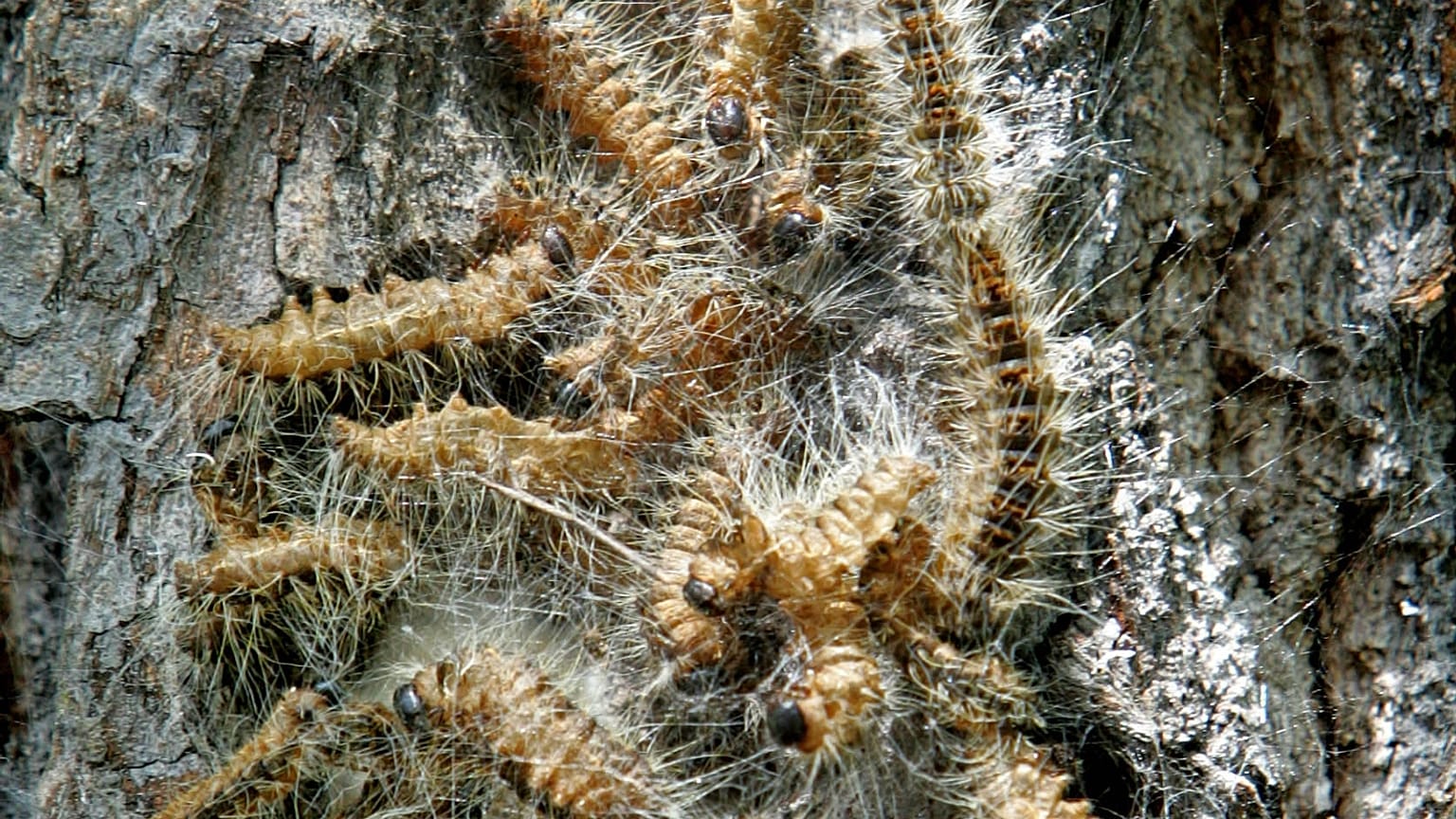
Oak processionary caterpillars have spread extensively across parts of Berlin, forcing authorities to close sports facilities and green spaces in the Charlottenburg-Wilmersdorf district due to health concerns.

Residents living near Jungfernheide, a large park in the west of the German capital, have been particularly affected. According to locals, the caterpillars and their nests can be found on door frames, cars, building façades and even street lighting.

District councillor Nico Kaufmann (SPD) told German newspaper B.Z. that some children have developed severe skin reactions, while residents say they have had to rely on cortisone medication to cope with the symptoms. Older people have reportedly become reluctant to leave their homes.

The danger comes from the caterpillars' tiny stinging hairs, which contain the protein thaumetopoein. The hairs can easily detach and be carried by the wind. Because they are microscopic and barbed, they can penetrate the skin, eyes and respiratory tract, causing itching, rashes, conjunctivitis and, in some cases, breathing difficulties.

A further challenge is that the hairs remain active long after the caterpillars have left their nests, meaning abandoned nests can continue to pose a health risk.

Local residents accuse authorities of failing to respond quickly enough to the outbreak. Health authorities do not classify the insects as conventional pests such as rats, while restrictions on the use of biocides have limited control measures.

Residents have now launched a petition calling for a binding protection plan for Jungfernheide and a broader city-wide strategy to tackle the problem across Berlin.

HORSE LOVERS

Pompeii excavations reveal equid skeleton at House of the Chaste Lovers

By Greta Ruffino
Published on 07/06/2026 - EURONEWS

The remains of an equid were discovered in a bakery area of Pompeii's House of the Chaste Lovers complex, offering new insights into the role of working animals in Roman daily life and during the eruption of Mount Vesuvius in AD 79.

An equid skeleton has been uncovered during archaeological excavations in a bakery area of Pompeii's House of the Chaste Lovers complex.

The Insula of the Chaste Lovers is one of the most important excavation sites in Pompeii because it preserves an entire production complex, including a bakery oven, storage rooms, workspaces and the owner's residence.

The complex is named after the famous “Chaste Kiss” fresco discovered in a triclinium of the house and comprises a large bakery with adjoining stables, where other equids used to operate millstones and transport grain for bread production had previously been found.

“For a long time, Pompeii has primarily represented the beauty of its frescoes and the opportunity to study the material culture of antiquity,” said Gabriel Zuchtriegel, director of the Pompeii Archaeological Park.

“In reality, it is much more than that: it offers the possibility of learning about the human lives that were cut short by the eruption, as highlighted by the recent exhibition of the victims’ casts here in Pompeii, but also about the lives of animals.”

Researchers say the study could shed light on how animals reacted to the catastrophic event and help improve understanding of the eruption’s impact on Pompeii. According to the study, the discovery highlights the exceptional state of preservation at the site, enabling experts to reconstruct daily life, production activities and human-animal interactions in the ancient city.

The excavation marked the first stage of the investigation and was followed by initial studies of the recovered remains. Ongoing laboratory analyses are expected to provide further insights into the animal’s role within the bakery and the conditions it experienced during the eruption of Mount Vesuvius in AD 79.

The discovery was made through close cooperation between archaeologists and experts from the Applied Research Laboratory, including specialists in archaeozoology, archaeobotany and anthropology, as part of an interdisciplinary project.
Armenia And The Disappearing Mountain – Analysis


Khor Virap Monastery, with Mount Ararat, known in Turkish as Mount Agri, in the background Photo: Amos Chapple, RFE/RL


June 7, 2026
RFE RL
By Amos Chapple

(RFE/RL) — Something seems to be missing from Armenia’s new biometric passport. That’s according to many in the country, who have flagged an unusual image in the document.

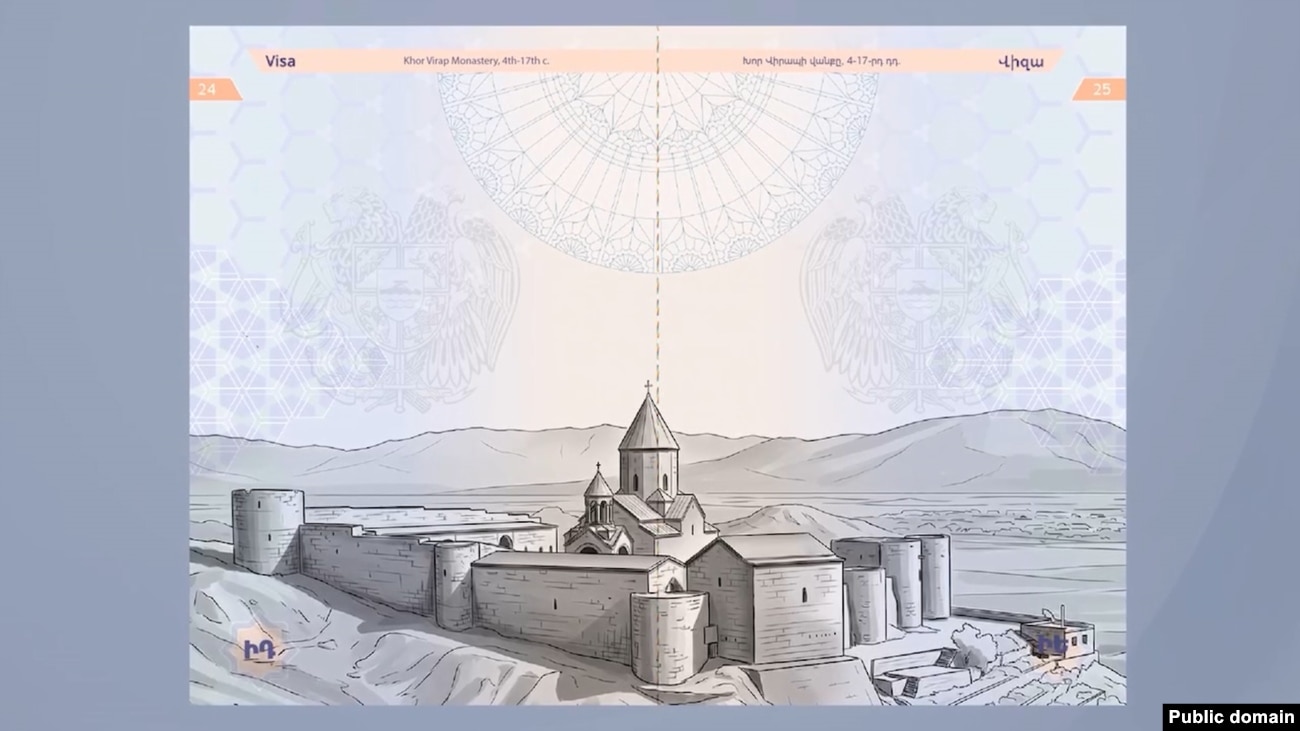
Among pages showcasing Armenia’s heritage and culture is a picture of Khor Virap. The 17th century monastery is famous largely for its spectacular backdrop of Mount Ararat. In the passport, however, the monastery is depicted from an angle showing only nondescript mountains on the horizon. Critics have called the unusual image a “ploy” to avoid including Ararat in the official document

.
Pages 24-25 of the new Armenian passport


Mount Ararat is situated inside Turkey and officially known by its Turkish name Mount Agri, but the landmark rises prominently above Yerevan on clear days.

The 5,100 meter mountain was a part of ancient kingdoms of Armenia, but ethnic Armenians were driven from settlements around Ararat amid the Ottoman state-led killings, which have been recognized as genocide by dozens of countries including the United States. When borders in the region were redrawn following World War I, Ararat’s twin peaks were included within the eastern edge of modern Turkey.

Armenian Prime Minister Nikol Pashinian recently hinted at the controversy over the passport depiction of Khor Virap, saying during a live stream with Interior Minister Arpine Sargsian that, “we’ve chosen such a perspective to suit our policies and what we have discussed for a long time.”

“Given it is the passport of the Republic of Armenia,” Pashinian added, the passport reflects “the territory of the Republic of Armenia.”


The absence of the mountain in the passports, which are set to be rolled out in the fall of 2026, follows a government decision late last year to remove snow-capped icons of Mount Ararat from passport stamps. That decision led to an uproar in the country, including a lawsuit filed against the government.

Opposition politician Hayk Mamijanian condemned the removal of the mountain from passport stamps at the time, telling reporters “it never ceases to amaze how zealously Pashinian is ready to please Turkey or Azerbaijan.”

Since Azerbaijan’s military recapture of the Nagorno-Karabakh region in 2023, Armenia has sought to normalize relations with neighboring Azerbaijan and Turkey, both historic foes of Armenia.

Armenia and Azerbaijan initialled a peace agreement in 2025 that includes a clause indefinitely forbidding either country from making territorial claims on the other. Turkey, a close ally of Baku, has long objected to Armenia’s use of Ararat as a national symbol, including in the coat of arms of the Soviet Republic of Armenia.

Joshua Kucera, a senior analyst for International Crisis Group, says the Khor Virap image appears to be, “part of the larger ‘real Armenia’ narrative that [Pashinian] is promoting, trying to refocus Armenians’ attentions to the issues within their own borders rather than ‘historical Armenia’ outside its borders.”

The Caucasus expert says that reframing effort also includes the recaptured Nagorno-Karabakh region of Azerbaijan.

Some fear a more consequential target for the Pashinian government could be the current Armenian coat of arms, which features Ararat as its centerpiece, topped with Noah’s Ark. The mythical vessel is believed by some Christians to have settled atop Mount Ararat following the biblical flood. In 2023, Pashinian criticized the emblem for representing “a dichotomy between historical Armenia and real Armenia.”

Edmon Marukian, a politician and former ally of the Armenian prime minister, called the 2025 erasure of Mount Ararat from passport stamps a potential precursor to Armenia’s coat of arms being remade. “Removing [Ararat] would require changing the constitution and the law,” the politician noted, adding, “are we, as citizens, ready to tolerate this?”

In April, RFE/RL’s Armenian Service asked Pashinian about the potential for Ararat to be removed from the coat of arms. The prime minister responded only that “I am not raising such a question.”Amos Chapple is a New Zealand-born writer and visual journalist with a particular interest in the former U.S.S.R.


Joint Sino-Indian Bid To Get UNESCO Recognition For Buddhist Monk Xuanzang – Analysis


A depiction of the Chinese monk Xuanzang on his journey to India.

 Credit: Wikipedia Commons


June 8, 2026 
By P. K. Balachandran


As early as 2016, the Chinese Consul General in Kolkata had mooted the idea of jointly celebrating the work of Xuanzang, who translated Buddhist scriptures into Chinese and helped Buddhism gain wide acceptance in China.

Thanks to the thaw in relations between India and China, a 10-year old project to jointly secure UNESCO recognition for the work of the 7 th. Century Chinese Buddhist monk, Xuanzang, is set to take off.

China had suggested to India that the two countries jointly bid for UNESCO’s recognition of Xuanzang, who translated Buddhist texts from Sanskrit and Pali to Chinese, and gave Buddhism a firm foundation in China and South East Asia. The goal is to put Xuanzang’s work in UNESCO’s “Intangible Cultural Heritage List.”

The Indian side responded favourably, and internal consultations are underway. An Indian representative is expected to visit China in the coming weeks to hold discussions with his counterparts.

The project aims to identify practices, narratives, and sites associated with Xuanzang. The proposed nomination needs delineation of cultural practices linked to the transmission of Buddhist knowledge, pilgrimage routes traversed by Xuanzang and oral traditions preserved in monasteries and local communities.

Need to Establish It As A Living Heritage

The project must demonstrate that Xuanzang is a “living heritage” in accordance with UNESCO’s criteria. UNESCO’s Intangible Cultural Heritage (ICH) framework, under the 2003 Convention, recognises living traditions such as practices, expressions, knowledge systems and rituals that communities “continue to transmit across generations”.

The list excludes physical manifestations like monuments.

The UNESCO list of Intangible Heritages includes material from over 150 countries, with multinational nominations forming a growing share as States collaborate on shared cultural traditions.

India ratified the convention in 2005 and currently has 16 elements inscribed on UNESCO’s Intangible Culture List, including Yoga, the Kumbh Mela and Durga Puja. Inter-State nominations include Nowruz, a transnational cultural practice shared by several countries in West and South Asia.

Inter-State nominations require participating States to agree on documentation, safeguarding measures and community participation. A joint Sino-Indian proposal would require alignment on the narrative and shared ownership of the elements included.

UNESCO nominations are not easy to get. They require extensive documentation, including evidence of community participation, plans for safeguarding, and demonstration of the element’s continued practice.

UNESCO guidelines require that nominations reflect “community consent and participation”. Therefore, local communities will have to be consulted.

Discussions between India and China will focus on mapping existing material on Xuanzang across archives, monasteries and academic institutions. While India will be examining records related to Nalanda and other sites linked to his stay, China will be compiling material from its own historical sources.

Idea Mooted A Decade Ago

Ten years ago, in 2016, the Chinese Consulate General in Kolkata had held a public event to explain the depth of China’s “cooperative relationship” with India over the last 1400 years. A seminar on “Xuan Zang and China-India Friendly Interactions” was held in Kolkata, which traced the monk’s role “in strengthening Indo-China relations.”

The Chinese Consulate was working with the K.P. Jayaswal Institute, a Bihar-based archaeological institution run by the Bihar Government, to study Stupas.

Improved Climate for Sino-Indian Cooperation

The current outreach from China comes at a time when India-China relations have been seeing attempts at a rapprochement after a period of strain following the 2020 standoff along the Line of Actual Control (the de facto border) between the two countries in Ladakh.

Diplomatic and military talks have continued, with both sides maintaining engagement through established mechanisms. India has allowed increased Chinese investments in its industries and the Hindu pilgrimage to Kailash in Tibet has resumed.

Faxian’s Quest

Buddhism travelled from India to China in the “Later Han period” (from 25-220 AD). Initially, the Chinese rejected it as a “foreign” religion. Only later, during a period of turmoil between 220-and 589 AD, Mahayana or “Great Vehicle” Buddhism began winning Chinese adherents.

It was dissatisfaction with existing Chinese translations of Sanskrit Buddhist scriptures that drove the Buddhist monk Faxian (5 th.Century AD) to set out for India at age 65, intent on finding the originals. After studying them for 10 years in India, he brought back to China a great number of copies of Buddhist texts and translated them from Sanskrit into Chinese. Among them, two of the most important were the “Mahaparinirvana-sutra” a text glorifying the eternal, personal, and pure nature of “nirvana”, on which the nirvana school in China then based its doctrines, and the “Vinaya” (rules of discipline for the monks) of the “Mahasanghika” school, which became available for the regulation of the numerous monastic communities in China.

Xuanzang’s Quest

More than two centuries after Faxian came another Chinese Buddhist monk, Xuanzang (602-664 AD ). He set out for India with much the same purpose in mind – to increase his understanding of the Buddha’s teachings by going to the source. He also wanted to get a feel of the places the Buddha trod.

Judson Knight, writing in encyclopedia.com about Xuanzang, says that under the Sui Dynasty (589-618 AD) and the newly founded T’ang Dynasty (618-907 AD ), Xuanzang and other monks faced a hostile environment. Not only did the T’ang dynasty’s first ruler, Kao Tsu (618-626 AD), embrace the rival faith of Taoism, but placed restrictions on travel in the Western parts of China, which was the gateway to Central Asia and India.


Xuanzang’s Search For Theological Clarity


But Xuanzang was determined to go to India. Whereas Faxian was dissatisfied with Chinese translations of the Buddhist scriptures and wanted to see the originals, Xuanzang’s longing arose from his preoccupation with difficult theological questions. He needed to consult the “Yogacarabhumi Sastra” (dated between 4 th., and 5 th., century AD), which could only be found in India. Therefore, he resolved to make the arduous, extremely challenging journey across the mountains.

But the Chinese Emperor had barred travel beyond the Western borders of China. “As I approached China’s extreme outpost at the edge of the Desert of Lop, I was caught by the Chinese army. Not having a travel permit, they wanted to send me to Tun-huang to stay at the monastery there. However, I said ‘If you insist on detaining me I will allow you to take my life, but I will not take a single step backwards in the direction of China.'”

As it turned out, the top-most government official in the region was a devout Buddhist, and he chose to look the other way, allowing Xuanzang to pass the military outposts that separated China from the lands of Central Asia.

Further West, Xuanzang encountered bandits and marauding tribes, as well as admiring rulers and welcoming groups of monks. He visited Tashkent, Samarkand, and Balkh. (The first two are today in Uzbekistan, and the last in Afghanistan). All three were important trading and cultural centres in the premodern era.

Xuanzang reached India in 631 AD and made his way to the monastery at Nalanda, India’s largest Buddhist centre, where the esteemed master, Silabhadra, taught him personally for 15 months. Xuanzang spent five years at Nalanda, during which time he composed three religious treatises in Sanskrit.

He also travelled to various parts of India, including Bengal, the Deccan Plateau in Central India, and both the Coromandel (eastern) and Malabar (western) coasts. In addition, he journeyed through the Indus River Valley.

King Harsha Hosts Xuanzang

However, a king named Kumara invited Xuanzang to visit him in Assam, in northeastern India, an offer he could not refuse. This in turn led King Kumara’s rival King Harsha ( 590-647 AD), India’s greatest ruler of the early medieval era, to make an invitation of his own.

At Harsha’s court in 642 AD, Xuanzang greatly impressed a gathering of several thousand kings and wise men, winning arguments with Hindu and Jain theologians. Pleased, Harsha showered him with gifts, but Xuanzang accepted only a buffalo-skin coat to keep him warm and dry, and an elephant to transport the many books he had brought with him. Finally, in 643 AD, he set off for China.

Given the fact that he had left China illegally, Xuanzang sent a letter to the Emperor, announcing his return. Eight months later, he received a welcoming reply. As it turned out, Emperor Kao Tsu had been ousted by his son T’ai Tsung (626-649 AD ), who was a Buddhist and eager to meet Xuanzang. The latter arrived at his capital in Ch’ang in early in 645, and the crowd that came out to greet him was so large that at first he could not enter the city.

Rousing Reception In China

He met with the Emperor, and briefed him on all the lands he had visited. Emperor T’ai Tsung offered him a position as his personal advisor, but Xuanzang declined. So the Emperor set him up at the nearby Hung-fu Monastery with a fleet of assistants to help him in his translation work. The only stipulation was that Xuanzang should write a record of his travels, “Ta T’ang Hsi-yü-chi”” or “The Great T’ang Record of Travels to the Western Lands,” which he completed in 646 AD.

Xuanzang’s translation work continued under the reign of Emperor Kao Tsung (649-683 AD ). In 19 years, he produced 76 books. When the great monk died in 664 AD, it was said that a million people attended his funeral. In later years he became a legend.

His translations, commentaries, and those of his close followers make up a quarter of Buddhist literature in Chinese. And the contact he had initiated with India led to close ties between the T’ang dynasty and India


About P. K. Balachandran

P. K. Balachandran is a senior Indian journalist working in Sri Lanka for local and international media and has been writing on South Asian issues for the past 21 years.

View all posts by P. K. Balachandran →