It’s possible that I shall make an ass of myself. But in that case one can always get out of it with a little dialectic. I have, of course, so worded my proposition as to be right either way (K.Marx, Letter to F.Engels on the Indian Mutiny)
Monday, June 29, 2026
Trump administration issues emergency order to keep Colorado coal plant operating
U.S. Secretary of Energy Chris Wright on Friday issued an emergency order to keep a Colorado coal plant operational.
The order directs Tri-State Generation and Transmission Association (Tri-State), Platte River Power Authority, Salt River Project, PacifiCorp, and Public Service Company of Colorado (a subsidiary of Xcel Energy), to take all measures necessary to ensure that Craig Unit 1 is available to operate at the direction of the Southwest Power Pool (SPP).
Unit 1 of the coal plant was originally scheduled to shut down at the end of 2025, but in December 2025 and again in March 2026, Secretary Wright issued emergency orders directing Tri-State and the co-owners to ensure that Unit 1 at the Craig Station remains available to operate.
“Taking reliable generation off the grid compromises energy reliability and needlessly raises energy costs for Americans,” Secretary Wright said in a news release.
Coal plants across the country are being saved from premature retirement and reversing plans to shut down, Wright said, adding that in 2025, more than 17 gigawatts of coal-power electricity generation remained online.
According to DOE’s Resource Adequacy Report, blackouts were on track to potentially increase 100 times by 2030 if the U.S. continued to take reliable power offline.
The North American Electric Reliability Corporation (NERC) 2025 Long-Term Reliability Assessment warns that the WECC-Rocky Mountain assessment area faces challenges from an aging thermal resource fleet, which can lead to unplanned outages, exacerbated by supply chain issues, and vendor availability.
The order is in effect until September 26.
Bolivia pushes industry reforms after 53 days of protests
Bolivia President Rodrigo Paz. Credit: Dirección de Prensa, Presidencia de Chile, via Wikimedia Commons, under licence CC BY 3.0 CL.
As Bolivians try to resume a sense of normalcy after 53 days of blockades that roiled the economy, President Rodrigo Paz is right back where he was just two months ago: attempting to reform the nationalistic laws that dictate the country’s key industries.
His government was able to end the protests that called for his resignation after enacting a 90-day state of emergency that would allow for military intervention and the suspension of some individual rights. And for Paz and heads of industry, now is the time to attract more foreign investment into mining, hydrocarbons, lithium and energy. On Friday, Bolivia’s Finance Ministry announced the country would move to a flexible exchange-rate system to strengthen macroeconomic stability.
“During these 90 days, what the government urgently needs to do is present, approve and implement the laws necessary for the country’s economy recovery,” said Bolivian Exporters Chamber chief Oswaldo Barriga.
It will take months for a full recovery of foreign trade, and the government should help businesses by guaranteeing fuel supplies and assistance to avoid fines from shipping companies and contract losses, he said.
There were about $3 billion in total economic losses, or 6% of Bolivia’s gross domestic product, during the nearly two months of blockades organized by the national labor union, the La Paz farmers federation and followers of former President Evo Morales. The resulting shortages of food, medicine and fuel left residents of La Paz and El Alto in despair — along with those stuck along the routes into those cities.
As lawmakers get back to the negotiating table, buses have started running again, businesses reopened and some groceries began to reappear on supermarket shelves.
Still, much of the country remains in distress. Freight agencies are in chaos, with depots full of packages and endless lines of customers who couldn’t send goods for almost two months. Stressed traffic officers argue with irritated drivers in the recently reopened La Paz bus terminal, while truckers who spent more than 50 days stranded on the roads are now queuing at a nearby gas stations for diesel.
Tomás Flores, a 53-year-old truck driver, was one of thousands stranded in the roads. He spent 51 days and nights inside the cabin of his truck, enduring the freezing temperatures of the Bolivian highlands in the border town of Desaguadero. By Wednesday, the day after all blockades were lifted, he remained in his cabin, this time waiting in a kilometer-long line in El Alto to refuel with diesel.
“Thank God we were in a privileged location,” Flores said, because he and his colleagues got provisions and medical care from neighboring Peru. Others, however, were stranded in remote areas, digging wells in search of fresh water or even dying from health complications, according to local media reports.
Hydrocarbons Minister Marcelo Blanco told local radio Fides that the government was working to guarantee the quality of fuel — after thousands of vehicles were damaged from poor-quality gasoline at the beginning of the year, sparking protests that later escalated into the blockades. He denied any financial difficulties in importing fuels. However, he said Bolivia owes commodity traders Vitol SA and Trafigura Group Pte more than $500 million for fuel purchased on credit.
Foreign cash reserves at Bolivia’s central bank stood at $712 million as of June 19.
“A blockade of this length is not a local inconvenience that clears when the tires come off the road,” said Jonathan Fortun, senior economist at the Institute of International Finance.
He added that the real problem in Bolivia’s situation “is timing,” as the government must move ahead with an ambitious agenda to stabilize the economy, which includes a program with the International Monetary Fund and local currency devaluation while inflation and exhaustion have hit Bolivians’ pockets.
“The country walks into the next phase with less output, more inflation, more fatigue and less room than it had before the conflict,” Fortun said.
A blockade resumed on Thursday in Chapare, not far from the town of Lauca Ñ, where the followers of Morales have built a fortress around a local radio station from which he frequently broadcasts his messages. The government has not publicly discussed plans to execute an arrest warrant against the former president for alleged statutory rape.
Many Bolivians, meanwhile, are far from getting back to their everyday routines.
After weeks trapped by road blockades between La Paz and Oruro, 44-year-old driver Wálter Argollo was still sleeping in his truck cabin while waiting outside the gas station on Wednesday.
He and other drivers tried to stage a protest by blocking the avenue where they were lined up, but a group of police officers warned them that, under the state of emergency, they would be arrested. They had to abandon the demonstration they hoped would bring public attention to their situation and speed up fuel delivery to the station.
“Maybe we’ll have to set up blockades ourselves,” he said. “If blood has to be shed, then so be it, because we can’t live like this.”
(By Sergio Mendoza)
Greenland rejects Energy Transition Minerals’ request for licence renewal
Greenland said on Friday it has rejected an application from Greenland Minerals, a unit of Australia’s Energy Transition Minerals, to renew its exploration licence for the Kuannersuit rare earths project.
“Further exploration in the area is not deemed likely to lead to the discovery of deposits that can be exploited in accordance with the Uranium Act,” the government said in a statement.
In 2021, the then-ruling Inuit Ataqatigiit party in Greenland banned uranium mining, effectively halting development of the Kuannersuit rare earths project, also known as Kvanefjeld, which has uranium as a byproduct.
ETM said in April it had received a draft decision from the Greenland government indicating that the mineral resources ministry intended to recommend that the application be declined.
The Australian miner said in an emailed statement its project would bring jobs, training and revenue to Greenland and the town of Narsaq.
“Greenland has positioned itself as open for business. This decision creates a different impression,” ETM said.
It added that Greenland’s Ministry of Mineral Resources had its application for nine months before giving the company 48 hours to respond to technical geological assessments, refusing a one-week extension.
“The compressed timeframe meant the decision did not take account of ETM’s recent exploration results, which identified new mineralized zones across the wider licence area,” it added.
Mute Egede, Greenland’s minister of foreign affairs as well as mineral resources, said on Facebook the government had made the decision based on legislation passed by parliament.
“At the same time, we are listening to the people — especially in South Greenland — who have made their position clear for many years. We remain committed to the course Greenland has chosen,” said Egede, who was prime minister when the uranium mining ban was imposed in 2021.
(By Louise Rasmussen; Editing by Paul Simao and Rod Nickel)
Canada, Japan consider critical minerals joint stockpiling in hunt for China alternatives
Canadian Prime Minister Mark Carney meeting with Japanese Prime Minister Sanae Takaichi in March. Credit: CanadianPM | X
Canada and Japan are working on a range of mining projects, including potential joint stockpiling, Canada’s trade minister told Reuters, as Japan moves to diversify supplies of critical minerals and reduce dependence on China.
Ottawa and Tokyo are in talks on options for cooperation including joint mining projects, off-take agreements and stockpiling arrangements for minerals such as graphite and gallium, International Trade Minister Maninder Sidhu said in an interview.
“We’re offering Japan that avenue to do more with Canada in terms of critical minerals,” he said.
Sidhu is in Tokyo leading Canada’s trade mission, with a delegation of roughly 300 members from nearly 180 companies and organizations – the North American country’s largest of its kind in the Asia-Pacific.
Japan, along with Western governments and manufacturers, has been seeking to secure supplies of rare earth minerals to reduce dependency on China, the world’s dominant rare earths producer and supplier.
In February, China prohibited exports of so-called dual-use items to 20 Japanese entities, which it said supply Japan’s military. That came after Japanese Prime Minister Sanae Takaichi angered Beijing by saying Tokyo would act in the event of an attack on democratically governed Taiwan, which China claims.
Sidhu’s trip to Japan is also focused on broader energy cooperation. Among the companies he has met so far is Mitsubishi Corp, which he said is “very interested in doing more in Canada in terms of investments”.
Mitsubishi is a key investor in the LNG Canada project in Kitimat, British Columbia, the first major liquefied natural gas facility in North America with direct access to the Pacific Coast.
(By Makiko Yamazaki; Editing by Christopher Cushing)
Sunday, June 28, 2026
Leaders Address Regulatory Barriers to Maritime Nuclear Technologies
The U.S. Center for Maritime Innovation (USCMI) convened industry, government and regulatory leaders for a workshop on Maritime Nuclear Technology Regulatory Barriers. Facilitated by its Secretariat, the American Bureau of Shipping (ABS), and in collaboration with the U.S. Coast Guard’s (USCG’s) Maritime Nuclear Policy Division and U.S. Maritime Administration (MARAD) leadership, the event focused on identifying and addressing the challenges associated with deploying advanced nuclear technology in the maritime sector.
The workshop brought together stakeholders from across the maritime, energy, and regulatory communities, including shipowners, shipbuilders, technology developers, classification societies and federal agencies. Participants explored pathways to enable the safe, secure and commercially viable adoption of nuclear-powered vessels and offshore energy platforms.
“The United States has a critical opportunity to lead in the deployment of next generation maritime systems powered by small modular reactors,” said Steve Carmel, U.S. Maritime Administrator. “Workshops like this ensure we are bringing the right stakeholders together to identify and address regulatory barriers, fostering innovation while maintaining the highest standards of safety and security.”
“The collaboration we are seeing across industry and government is essential to advancing maritime nuclear technologies from concept to reality,” said David Walker, Executive Director of the Secretariat operating the USCMI for MARAD and Vice President at ABS. “By convening stakeholders with diverse expertise, USCMI is helping to clarify regulatory pathways and accelerate progress toward viable, scalable solutions for the maritime sector.”
The workshop also featured keynote remarks and engagement from key federal partners, including Captain Robert Compher, Assistant Commandant for Prevention Policy at the USCG and Dr. Mehdi Reisi Fard Director of the Division of Advanced Reactor Engineering in the Office of Advanced Reactors at the U.S. Nuclear Regulatory Commission.
Through the workshop, a large audience of in-person and online participants shared their inputs on potential regulatory and other related barriers that oversight agencies need to address to facilitate safe deployment of this innovative technology in maritime applications. Discussions underscored the complexity of maritime nuclear deployment, including licensing pathways, safety frameworks, operational considerations and coordination across domestic and international regulatory bodies. Participants emphasized that continued collaboration between industry and government will be critical to enabling innovation while ensuring robust safety and security standards.
The products and services herein described in this press release are not endorsed by The Maritime Executive.
GPS Jamming Can Be Solved With Existing Satcom Signals
GPS is easily corrupted, but all sorts of other radio signals can be used for accurate positioning
Starlink's vast satellite constellation transmits signals that can be used for positioning, without any approval or involvement from the operator (SpaceX file image)
Few people want to get lost when traveling. But if there are places where being lost feels especially unsettling, they tend to be the sea, desert and sky. These environments share a defining feature: the absence of distinctive visual cues. Where horizons blur, landmarks disappear and every direction can look deceptively similar. Knowing where you are depends on information that you cannot see for yourself.
For most of human history, finding your way in such environments required skill, judgment and constant attention. Satellite navigation marked a fundamental shift. The advent of GPS has made navigation almost effortless: Press a button and voilà, location and heading appear instantly.
GPS’s great strength is that under benign conditions, it works remarkably well in precisely the environments where being lost would be most dangerous. Civilian systems routinely achieve meter?level accuracy. This accuracy, however, masks a growing vulnerability.
Over the past few years, deliberate GPS interference has surged worldwide, disrupting maritime and aviation operations at an unprecedented scale. I’m an electrical engineer who studies alternative methods of electronic navigation. My lab and others around the world are developing these alternatives as backup for when GPS is unavailable or unreliable.
When GPS is silent – or lies
Jamming overwhelms weak satellite signals with noise or radio frequency signals, blocking GPS position and time altogether.
Spoofing is more insidious: Counterfeit signals surreptitiously replace authentic ones, misleading GPS receivers about location and timing while appearing to crews and automated systems to operate normally.
Interference arises from three sources: military activity, criminal exploitation and accidental misuse. In conflict zones, GPS disruption has become a routine tool of warfare, used to protect assets, degrade surveillance and counter drones. This activity is well documented across Ukraine, the Black Sea, the Baltic Sea, the eastern Mediterranean and the Persian Gulf. It routinely spills over to affect civilian ships and aircraft, and civilian life.
Accidental GPS jamming has caused serious disruption at international airports by making it difficult for aircraft and air traffic controllers to track traffic in and out of the airports. Intentional GPS spoofing was even used in a highway heist to steal US$1 million worth of restaurateur Guy Fieri’s tequila.
Making matters worse, spoofed GPS data does not remain confined to a single system. Ships use the Automatic Identification System to broadcast their locations and to see what other ships are nearby to avoid collisions. The system broadcasts a ship’s GPS position information along with the ship’s name, course and speed, classification and call sign.
GPS spoofing effectively corrupts Automatic Identification System signals, sending false position information to nearby vessels, shore authorities, insurers and commercial tracking services. This activity can create fleets of “ghost ships” that appear real to others navigating nearby.
Criminals use GPS interference to block or alter Automatic Identification System information to evade oversight. Illegal fishing fleets, oil smugglers, sanctions evaders and maritime sand thieves have been repeatedly linked to falsified or disrupted Automatic Identification System and GPS signals.
Deadly consequences
GPS intereference is not new, and the U.S. government warned about it decades ago, but the scale of its impact has significantly accelerated over the past few years. GPS spoofing and jamming incidents affecting civil aviation increased by about 500% from January to August 2024.
Maritime authorities reported hundreds of ships affected daily, with groundings and collisions in 2024–25 publicly linked to interference of GPS and other satellite navigation systems, including in the Baltic Sea and the Strait of Hormuz.
The consequences have claimed lives. In December 2024, Azerbaijan Airlines Flight 8243 was struck by a Russian air-defense system, killing 38 people after the flight was diverted due to GPS interference. At sea, GPS interference in the Strait of Hormuz has caused oil tanker collisions.
GPS jamming caused the container ship MSC Antonia to run aground in the Red Sea near Jeddah, Saudi Arabia, on May 10, 2025.
Disruption has also forced runway closures, mass flight diversions and emergency procedures at Newark Liberty, Dallas-Fort Worth and Denver international airports.
Even senior officials are not immune: In 2025, GPS jamming forced an aircraft carrying the European Commission President Ursula von der Leyen to make an emergency landing.
Strait of Hormuz: Navigation danger zone
Recent incidents in the Strait of Hormuz during the U.S.-Iran war mark a decisive escalation in the risk posed by GPS interference. The strait sits at the intersection of intense geopolitical conflict and one of the world’s most critical maritime choke points. Around 20% of global petroleum trade transits these narrow waters each day, alongside dense commercial traffic. There’s little margin for navigational error. Here, even modest mistakes in position or timing can rapidly escalate into collisions, groundings or environmental disasters.
The Iran war has led to sustained spoofing across the Persian Gulf. Ships have reported positions via Automatic Identification System that place them on land or otherwise miles from their true locations without triggering alarms.
In the confined waters of the Strait of Hormuz, where ships pass one another in close proximity, GPS interference erodes situational awareness precisely where it matters most.
Crucially, interference in Hormuz is persistent rather than episodic. Reports show jamming and spoofing used systematically over extended periods, not merely as short-term responses to specific incidents. This pattern suggests that GPS disruption has become routine practice rather than a niche capability in electronic warfare.
Once normalized in one of the world’s busiest sea-lanes, such practices are difficult to contain geographically. The result is a navigation environment in which people can no longer fully trust position, timing and identity at sea. The consequences extend far beyond the confines of the Persian Gulf.
Beyond GPS
The normalization of GPS disruption exposes a deeper issue: Modern navigation resilience has been built around the assumption that GPS signals are usually available and trustworthy. As that assumption erodes, attention has shifted from hardening GPS toward security through diversification. This means drawing navigation information from fundamentally different signals.
For a backup to satellite navigation, several countries, including the U.K., France, Saudi Arabia, Russia, South Korea and China, are deploying or modernizing long-range radio navigation, or LORAN, a system that dates back to World War II.
Another alternative that has gained increased interest over the past decade or so is using signals never intended for navigation, referred to as signals of opportunity. In contrast to dedicated navigation systems, such as long-range radio navigation, this approach uses existing infrastructure and preserves scarce radio spectrum. A particularly fruitful type of signal to exploit is terrestrial cellular.
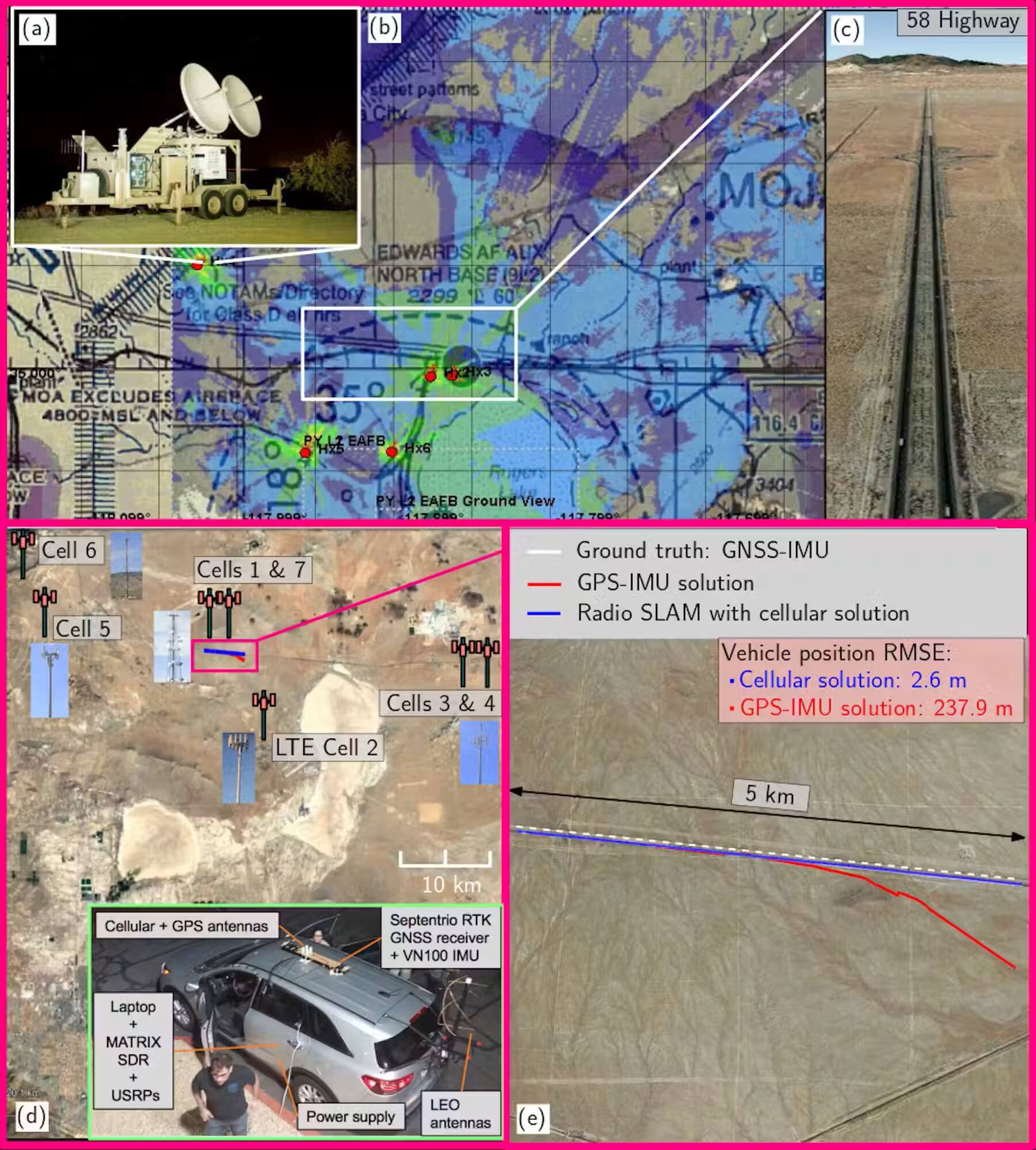
The author’s team tracked the path of its car using signals from cell towers during live GPS jamming at Edwards Air Force Base. Zak Kassas
My lab has demonstrated this type of navigation with ground vehicles, unmanned aerial vehicles, or UAVs, high?altitude balloons and aircraft, including in GPS?jammed environments. We developed specialized receivers that exploit signals from existing LTE and 5G cellular networks.
We have demonstrated sub?meter accuracy on UAVs, near-lane?level accuracy on ground vehicles, and meter-level accuracy on aircraft and high-altitude balloons, without cooperation from cellular network providers.
The author’s team tracked the flight of a U.S. Air Force plane it was aboard using signals from cell towers, demonstrating that its method aligned closely with GPS. Zak Kassas
Another approach leverages the rapid proliferation of constellations of low Earth orbit communication satellites. Compared with GPS signals from medium Earth orbit, low Earth orbit satellites offer stronger signals, are numerous, transmit in a much wider swath of the spectrum, and their signals are more resilient to wide-area disruption.
We demonstrated meter-level positioning accuracy exploiting signals transmitted by Starlink satellites. We then developed receivers that can passively listen to signals emitted from multiple low Earth orbit satellite constellations.
The author’s lab demonstrated using satellite signals not meant for navigation to approximate the position-tracking ability of GPS. The blue line represents the vehicle’s GPS position and the green the vehicle’s position estimated by the researchers’ system.
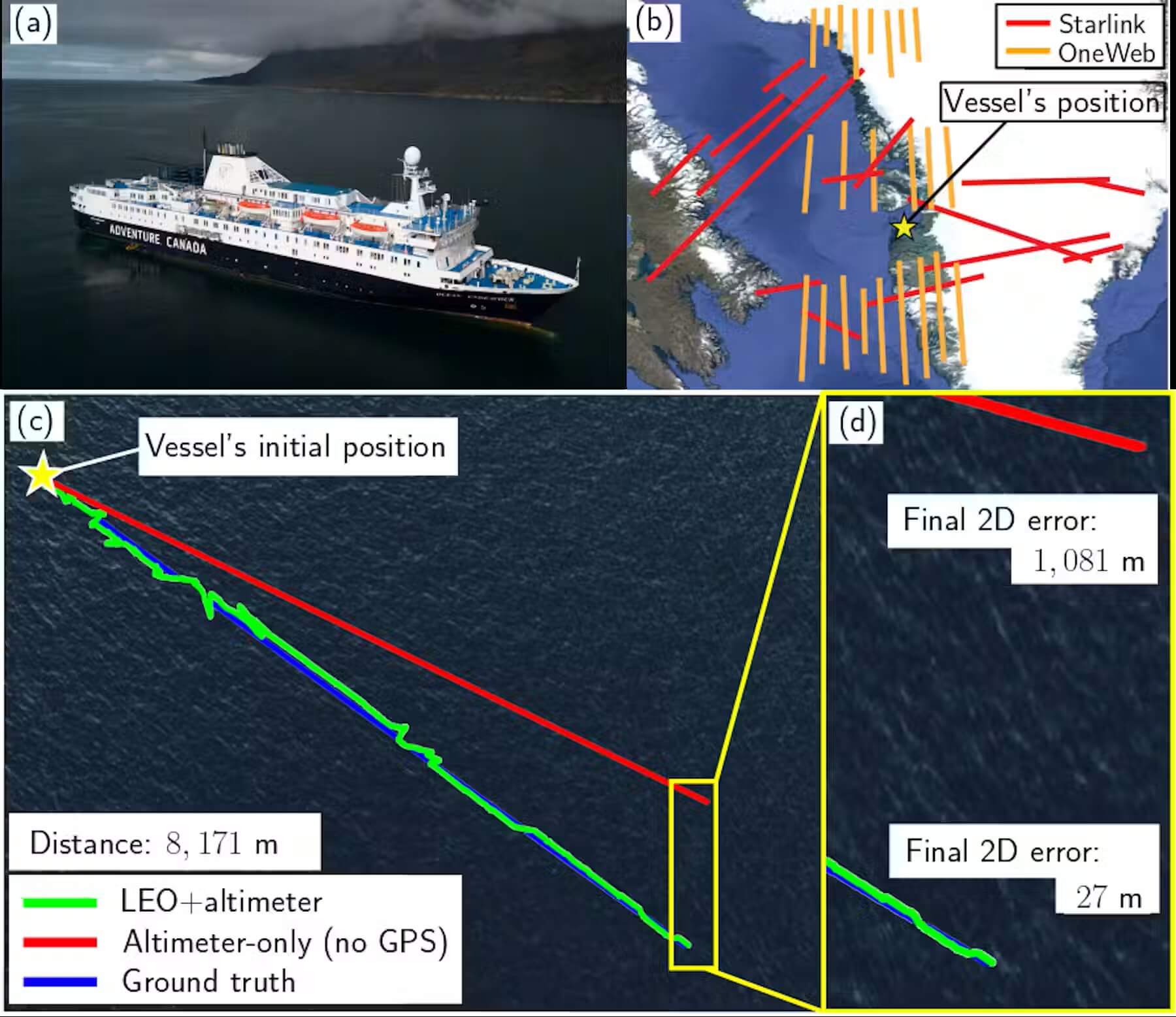
Since then, my lab has demonstrated navigation with low Earth orbit satellites across the U.S. In our latest experiment, we successfully navigated a vessel in the Arctic seas, off the coast of Greenland.
The author’s team tracked the course of a ship it was aboard in the Arctic using nonnavigation signals from low Earth orbit satellites. Zak Kassas
These results point to a pragmatic solution: Navigation resilience will come from a diversity of techniques. We and others are already demonstrating the technologies to do so. Whether they are put into practical use is now a matter of policy, regulation and timing.
Volkswagen Sells Majority Stake in Everllence to Bain Capital
Automaker Volkswagen Group has agreed to sell a majority stake in its storied diesel engine division, Everllence - previously known as MAN Energy Solutions - to the American private equity giant Bain Capital.
Everllence - formerly a division of MAN SE - can trace its roots back to the start of the Ruhr Valley iron smelting industry, but its engineering history is centered in Bavaria. MAN's Augsburg plant sponsored Rudolf Diesel's experiments in the late 1890s, fostering the invention of the diesel engine and the beginning of modern industrial power systems. MAN later became a leading maker of marine diesels through the acquisition of Burmeister & Wain in the 1980s, and was itself acquired by Volkswagen in 2011. The marine-diesel business was spun out of MAN SE as MAN Energy Solutions in 2018, placed under VW's direct ownership, then (last year) renamed Everllence.
Today, it is a top manufacturer of large diesels for marine propulsion and power generation, and it also makes turbochargers and low-carbon power systems. Like others in the medium-speed segment, its fortunes have been boosted by the outsize power demands of data centers, which are growing so quickly and have such demanding requirements that they often require their own supplemental power generation.
After six years of successful restructuring, Everllence has revenue of about $5 billion and a book value of $3.9 billion. Volkswagen Group has agreed to sell 51 percent of its stake in the company to Bain for about $8.4 billion in a leveraged buyout. VW says that it plans to retain the remaining 49 percent "in the medium term."
"Leaner structures and processes will give Everllence the opportunity to achieve further growth in attractive markets such as data centers, the energy sector and shipping. At the same time, it will allow us to focus even more strongly on our core business," said Oliver Blume, CEO of the Volkswagen Group.
US Coast Guard Charters an Offshore Vessel to Support its Cutters
The U.S. Coast Guard is taking a page from the U.S. Navy's operating manual and beginning to hire in civilian-crewed tonnage for sealift support, freeing up transit days for its cutters to remain at sea and stay on mission hunting drug-runners.
The service's new Homeland Security Cutter-Ocean program is a newly-launched plan to bring in commercially operated vessels that can carry out the basic logistics on behalf of the cutter fleet, and specifically the Fast Response Cutters - small, capable vessels that can do the job of medium-sized cutters but are constrained in range and endurance by stores capacity. Having a "mother ship" that can deliver supplies and conduct crew change at sea - much like the function that a reefer ship performs for a high seas fishing fleet - will keep Coast Guard-manned law enforcement assets deployed in the mission area for longer.
"As demands on the Coast Guard continue to grow, we must find innovative ways to sustain our fleet and keep our crews focused on the mission," said Vice Adm. Nate Moore, Deputy Commandant for Operations. "Homeland Security Cutter-Ocean will help us deliver critical supplies and personnel more efficiently while increasing the endurance and effectiveness of our operational forces."
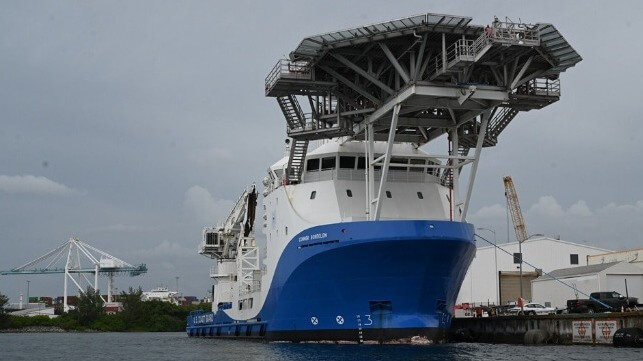
The contract with Bordelon provides for the use of one offshore vessel, crewed by civilians and overseen by coastguardsmen. Bordelon's team will handle all the vessel operations, and the Coast Guard personnel will take care of the mission and the logistics - a pattern the service has previously experienced with the rapid delivery of the commercial icebreaker Aiviq, which came with a civilian crew in order to speed up the handover of a modern, technically complex vessel.
Carnival Corp. Expands Surplus Meal Donations to the Dominican Republic
Carnival Corporation (NYSE: CCL), the world's largest cruise company, today announced the expansion of its surplus meal donation program to the Dominican Republic, marking the second Latin American country to join the company's initiative to safely redirect prepared, unserved meals to local communities where its ships visit.
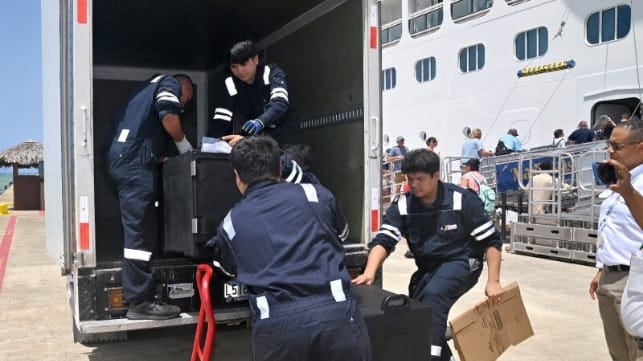
As part of Carnival Corporation's Less Left Over food waste reduction strategy, the donation of approximately 200 portions of prepared, unserved meals from Carnival Cruise Line's Mardi Gras was provided to the Archdiocese of Puerto Plata, Carnival Corporation's local program partner, for distribution to area organizations assisting families and the elderly. Supported by government collaboration, coordination with local partners ashore and Carnival Cruise Line's culinary teams, the effort is designed to move meals from ship to shore safely and consistently. The program is expected to expand quickly to all Carnival Cruise Line ships calling on Amber Cove.
With the addition of the Dominican Republic, the program has expanded to 19 ports since launching in 2017, helping address food insecurity in port communities where the company's ships visit. As of year-end 2025, the program has provided more than 320,000 meal portions to global communities since its inception, with plans to continue expanding the model into new markets.
"Bringing our surplus meal donation program to the Dominican Republic is an important part of expanding this work across Latin America," said Vicky Rey, vice president of government relations for Latin America, Carnival Corporation. "This work depends on clear processes, strong coordination with government and local partners, and a shared commitment to supporting the local community. Amber Cove's long-standing presence in Puerto Plata gives us a strong foundation to build on. We are grateful to the Archdiocese of Puerto Plata for serving as our local program partner, to our business partner Fabio Valenzuela, advisor to Rannik Group, and to government authorities for helping make this possible."
"We value Carnival Corporation's continued investment in Puerto Plata and its work with the Archdiocese of Puerto Plata to help ensure these meals reach organizations serving people in need," said Claritza Rochtte Peralta de Senior, governor of Puerto Plata. "This donation reflects the value of bringing the right partners together to support communities across the province."
The announcement builds on Carnival Corporation's long-standing role in Puerto Plata through Amber Cove, which opened in 2015 as an $85 million cruise destination that helped return cruise tourism to the region after more than three decades. Since then, Amber Cove has welcomed approximately seven million visitors, helped position Puerto Plata as a leading Caribbean cruise destination and created opportunities for local tour operators, artisans, vendors, transportation providers and small businesses.
The meal donation milestone adds to Carnival Corporation's broader work with local partners in Puerto Plata, including Maimón Basura Cero, a collaboration with the District Municipality of Maimón and Fundación Héroes del Medio Ambiente that is nearing completion of its third and final phase. The initiative is designed to strengthen local waste management by reducing solid waste sent from Maimón to the Puerto Plata landfill, encouraging separation at the source and supporting recycling and circular economy opportunities within the community.
As the leading cruise operator in the Dominican Republic, Carnival Corporation's eight global cruise lines will visit six Dominican ports in 2026, bringing more than 1.3 million guests and representing 50% of the country's cruise market share.
The products and services herein described in this press release are not endorsed by The Maritime Executive.
GREENWASHING
Port Canaveral Earns Green Marine Certification for 10th Consecutive Year
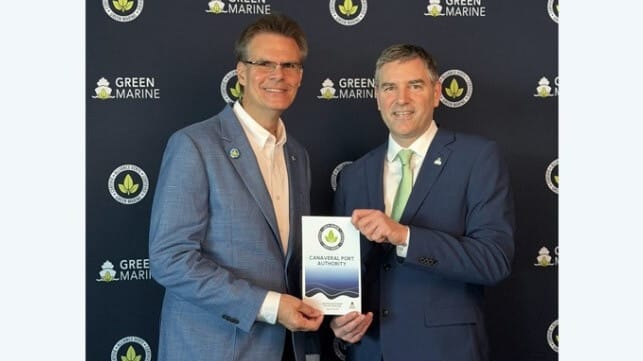
Port Canaveral’s Sr. Dir. – Environmental Bob Musser is shown accepting the Port’s Green Marine 10th year of certification from David Bolduc, Green Marine International's Pres. and CEO. (Credit: Canaveral Port Authority)
For the 10th consecutive year, Port Canaveral has earned Green Marine certification, continuing its decade of environmental leadership and sustainability performance among deepwater seaports. The achievement underscores the Port’s ongoing commitment to implementing responsible environmental practices across its diverse operations while continuously improving its environmental performance.
“Achieving this international certification year after year reflects our continuous commitment to operate responsibly and with respect for the natural resources that make our region such a special place,” stated Capt. John Murray, Port Canaveral CEO.
Bob Musser, Port Canaveral’s Senior Director, Environmental, added, "Environmental stewardship is fundamental to everything we do. Green Marine challenges participants to continually improve their environmental performance beyond regulatory requirements. Maintaining certification demonstrates our commitment to measure our performance, identify opportunities for improvement and, most importantly, implement sustainable practices that benefit both our operations and the surrounding environment.”
Green Marine is a voluntary international environmental certification program that includes ports, seaways, terminal operators, shipyards and vessel owners. Port Canaveral has been a member since 2016, earning certification that same year by meeting the organization’s rigorous environmental standards and performance criteria.
Participants are evaluated on a range of performance indicators that extend beyond regulatory compliance, including air emissions – including greenhouse gases and air pollutants – as well as aquatic ecosystems, community impacts, community relations, environmental leadership, spill prevention and stormwater management, underwater noise, and waste management. Certification requires annual self-assessments and every two years an independent third-party verification to ensure accountability and continuous improvement.
Since first earning Green Marine certification, Port Canaveral has maintained its standing in the program by demonstrating ongoing improvements and performance across multiple environmental categories while advancing initiatives that support long-term sustainability throughout its operations.
The products and services herein described in this press release are not endorsed by The Maritime Executive.