Wednesday, July 01, 2026


Armenia’s elections and the future of the left
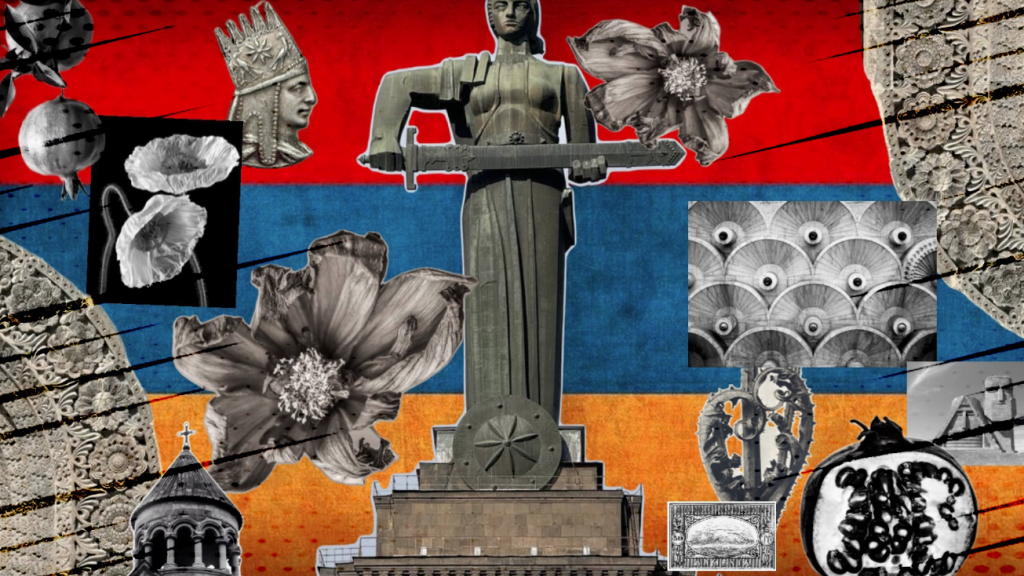

Armenia graphic Posle

First published at Posle.

Elections in Armenia have never been dull. The 2018 election is a case in point: it was held just months after the Velvet Revolution, when mass protests led by opposition figure Nikol Pashinyan — a former journalist and political prisoner — toppled Serzh Sargsyan’s authoritarian regime. In the ensuing wave of revolutionary euphoria, Pashinyan’s My Step Alliance captured 70 percent of the vote. Or, take the 2021 election, when voters stood by Pashinyan even after a crushing defeat in the Karabakh war, handing him a smaller but decisive 54 percent victory. Because Armenia is a parliamentary republic, it is parliamentary elections that decide who rules. On both of these occasions, Pashinyan’s party formed a government, and he took the helm as prime minister.

Even so, the June 7, 2026, election was permeated by geopolitics to an unprecedented degree. It was essentially a referendum on the foreign policy of Pashinyan, who casts himself as a pro-European, pro-democracy leader fighting against corruption and oligarchy. As a post-Soviet state, Armenia spent most of its modern history within Russia’s sphere of influence. This dependence stemmed primarily from Armenia’s conflict with its neighbors, Azerbaijan and its key regional ally Turkey. The dispute over Nagorno-Karabakh left Armenia in a state of permanent anticipation of war, forcing it to seek protection from Russia as a security guarantor. Exploiting this role, Moscow steadily tightened its grip on the country. Yet during the 2020 war and subsequent clashes with Azerbaijan, Russia would not, or could not, come to Armenia’s aid. Now, Armenia is trying to break free from this dependence and pursue an independent foreign policy that looks towards Europe.

It is worth noting that viewing the situation solely through the lens of a West-versus-Russia power struggle oversimplifies a complex reality. Pashinyan’s strategy rests on two pillars: a “peace agenda” and “diversifying foreign policy.” The peace agenda part is straightforward — it centers on normalizing relations with Azerbaijan and Turkey, nations many Armenians still see as historical adversaries. Meanwhile, diversifying foreign policy does not mean, as many assume, simply pivoting away from Russia and toward the West (i.e., the EU and the United States); it means building up Armenia’s diplomatic agency and independence from Moscow. The trouble is that Moscow, by all appearances, still treats Armenia as a vassal state — but the harder it tries to assert control, the more reason Armenia has to look westward.

Ultimately, voters backed the agenda of peace and diversification championed by Pashinyan. His party, Civil Contract, captured roughly 50 percent of the vote — an amount sufficient, under Armenian electoral law, to form a single-party government. Also clearing the parliamentary threshold were Strong Armenia, led by Russian billionaire Samvel Karapetyan (23.3 percent), and the Armenia Alliance of former President Robert Kocharyan (9.9 percent). A third major pro-Russian party, led by local billionaire Gagik Tsarukyan, fell just short of the required 4 percent of the vote. Although pro-Russian opposition figures and one pro-Western party have petitioned the Constitutional Court to contest the results, the overall outcome is highly unlikely to change.

Never before in Armenian history, it seems, have Armenian elections been subject to such international scrutiny. Both Brussels and the Kremlin viewed them as the next geopolitical battleground after Moldova and Hungary. Moscow was eager to avenge its previous defeats, despite heavy spending on fake news and other subversive operations. That might have been easy enough, had Armenian public opinion on Russia not shifted dramatically in recent years. First of all, Russia dashed Armenian expectations of aid during the 2020 Karabakh war, whereas Turkey threw its full weight behind Azerbaijan. Russia did eventually step in as a peacemaker, brokering a ceasefire and deploying a peacekeeping contingent to Nagorno-Karabakh. But in the years that followed, Moscow again did nothing to protect Armenia or the Armenians of Nagorno-Karabakh. A second factor was the invasion of Ukraine. In all likelihood, it was the war in Ukraine that motivated the Kremlin to avoid a fight with Ankara and Baku, effectively buying them off at Armenia’s expense. When Baku launched a military operation in Nagorno-Karabakh in 2023, Russian peacekeepers made no attempt to intervene, forcing the region’s entire Armenian population to flee to Armenia. After that exodus, Armenian public opinion toward Russia changed, perhaps irreversibly. Moscow has just now begun to realize that it could “lose” Armenia.

The Kremlin chafed at Yerevan hosting the European Political Community Summit in early May, and was particularly infuriated by Volodymyr Zelensky’s attendance and harsh words for Moscow. This triggered a wave of hostile rhetoric toward Yerevan — not just in state media, as expected, but from high-ranking officials as well. Vladimir Putin himself demanded that Yerevan hold a referendum to decide once and for all whether to remain in the Eurasian Economic Union or pursue European integration. This was quickly followed by Russian import bans on various Armenian products, ranging from Jermuk mineral water to flowers and apricots. Such punitive measures could potentially inflict serious damage on the Armenian economy. While trade between Yerevan and Moscow has been declining, Russia remains Armenia’s largest trading partner; in 2025, even after trade volumes dropped by nearly half compared to the previous year, Russia still accounted for 35.5 percent of Armenia’s total foreign trade.

Ultimately, however, this pressure not only failed to bolster pro-Russian forces within Armenia but actively backfired. Pashinyan’s victory was no landslide, but it was decisive — all the more impressive given the vast arsenal of hybrid interference the Kremlin deployed against him. Even so, it is worth remembering that this electoral outcome was not shaped by foreign policy factors alone.

Beyond foreign policy

When the first exit polls and initial results began trickling in on the evening of June 7, Pashinyan’s party appeared poised for a landslide victory of around 60 percent of the vote. This was because the vote count began in the countryside and smaller towns, where voters lean heavily toward Pashinyan. However, as data from Yerevan began rolling in, the margin narrowed noticeably. The fact that the pro-European Pashinyan performed better in the provinces, while pro-Russian parties running on nationalist rhetoric drew substantial support in major urban centers, was the central paradox of these elections. It demonstrates that framing the Armenian elections as a clash between the pro-Western Pashinyan and a pro-Russian opposition, while not completely inaccurate, is oversimplified, because it fails to account for their socioeconomic and domestic-policy dimensions.

Put simply, the standard of living for most Armenians has steadily improved in the years since 2018. Armenia’s GDP per capita has more than doubled, climbing from $4,200 to nearly $9,500 in 2025. To be sure, much of this surge was driven by shifting economic conditions across the post-Soviet space after Putin’s invasion of Ukraine — but not all of it, as the country had been charting impressive growth even before then. The revolution successfully cleared away the structural barriers to socioeconomic development that characterized the presidencies of Kocharyan and Sargsyan: namely, systemic corruption and a network of monopolies controlled by pro-regime oligarchs.

Pashinyan’s ideological stance can broadly be classified as centrist. In many areas, his administration pursues distinctly neoliberal policies; shortly after the revolution, for instance, Armenia introduced a flat income tax. Pashinyan himself has, on multiple occasions, expressed views that sound like a defence of old-school capitalism with zero social guarantees — like, that “poverty only exists because people lack the skills to not be poor,” or that “living well means working hard, earning a lot, and spending a lot.” Behind this laissez-faire approach, however, lies a bleak reality for labor rights. Armenia does see occasional strikes, such as those at the Kajaran mines in 2025 and at Akhtala in 2026. Recently, the country even witnessed its first strike by Indian migrant workers at a garment factory in Ijevan. In these disputes, state authorities typically either remain passive or openly side with employers.

Perhaps the clearest example of the Pashinyan administration’s neoliberal bent is the controversy surrounding the gold deposit on Mount Amulsar, located near Jermuk, a resort town famous for its mineral water. A permit to develop a mine here, right next to one of Armenia’s best-known resorts, had been granted before the 2018 revolution, leading many to expect that Pashinyan’s government would rescind it. Yet despite fierce opposition from local residents and environmental activists — and even a rift within the ruling party — the government ultimately sided with the investors (who, for their part, handed a 12.5 percent stake in the company over to the state).

And yet, when compared to the pre-2018 era, Pashinyan’s socioeconomic policy looks almost social democratic. State spending on infrastructure — including the construction and repair of roads, schools, and day cares, particularly in the provinces — has risen sharply. Corruption significantly declined and ceased to be a fixture of the political system, creating a more favorable environment for small and medium-sized businesses. In the run-up to the election, Pashinyan took a series of steps that prompted some critics to label him a welfare populist. Chief among them was a healthcare reform that will phase in universal medical insurance for all citizens; for pensioners, it is already in effect and entirely free, with the state covering all costs. Another example of Pashinyan’s “left-wing” policies was nationalizing the Electric Networks of Armenia (ENA). The takeover of ENA, which had been owned by Samvel Karapetyan’s conglomerate, marked a major escalation in the ongoing feud between Pashinyan and Karapetyan.

The opposition forces arrayed against Pashinyan also attempted to win voters over with welfare promises. For instance, Karapetyan’s party pledged to exempt small businesses from taxes. Similarly, local billionaire Gagik Tsarukyan declared that “no one should have to choose between medicine and food,” promising free healthcare, free education, and high pensions if he won. Former President Robert Kocharyan was equally lavish with his promises. Even so, many Armenian voters remember the pre-revolutionary era all too well and are hesitant to trust the oligarchs. In fact, many are willing to vote for anyone at all just to prevent the return of the byvshie — “the exes,” as the pre-2018 ruling elite is commonly known in Armenia.

Furthermore, Pashinyan faces heavy criticism for failing to penalize these figures; despite his repeated campaign promises, men like Kocharyan and Tsarukyan were never held accountable for past corruption and vote-rigging, allowing them to retain the immense financial resources needed to run for office these days. Yet there are also plenty of those who view Pashinyan with such hostility — blaming him for the loss of Nagorno-Karabakh — that they would back any candidate just to oust him. For voters of that stripe, though, the socioeconomic agenda is secondary to concerns over security and national identity.

Against this backdrop, a left could have capitalized on issues of inequality, but left-wing forces were virtually non-existent in this election cycle. That is, unless you count the Armenian Revolutionary Federation, one of Armenia’s oldest political parties, which was originally founded as a left-wing socialist and nationalist movement. However, it has long since mutated into a conservative — if not far-right — party that forms the backbone of Kocharyan’s Armenia Alliance.

One could consider Hayk Marutyan’s New Force party a part of the left. Marutyan, the former mayor of Yerevan and a onetime ally of Pashinyan, has mentioned his social democratic values before; indeed, during his mayoral tenure, Sanitek — the private company handling the capital’s waste management — was nationalized. For the most part, however, Marutyan focused his campaign on attacking Pashinyan over the loss of Nagorno-Karabakh and his concessions to Azerbaijan. Thus, on the rare occasions when a left-wing agenda surfaced in election discourse, it was rudimentary at best.

Socioeconomic promises that could be classified as left-wing also popped up in the platforms of various other parties that otherwise had little to do with the left. For instance, one party proposed nationalizing Armenia’s mineral resources while simultaneously vowing to preserve the country’s “mono-ethnic character” and to crack down on undocumented migrants (“supposedly from India, but actually from Pakistan”). Another faction, led by a retired general, advocated for rejoining the Collective Security Treaty Organization and restoring an alliance with Russia, while pairing those geopolitical stances with a call for progressive taxation.

The absence of a left in Armenian elections is nothing new; they were missing from the 2021 vote as well. Back in 2018, the Citizen’s Decision Social Democratic Party — founded by left-wing activists who had participated in the revolution — did run in the election. Their campaign is chiefly remembered for handing out tangerines to prospective voters. The tangerines did not work: the party captured less than 1 percent of the vote and quickly disbanded. In the current election cycle, several former members of that defunct party aligned themselves with the None of the Above Party. This fringe movement brought together a disparate coalition of people united solely by their rejection of mainstream politics, including leftists, libertarians, nationalists, and gun-legalization advocates. None of the Above ran a highly unconventional campaign, with party representatives frequently appearing in costume as Spider-Man and other superheroes. Ultimately, however, the superheroes failed to clear the 4 percent electoral barrier.

A brief history of the Armenian left

The left has been fairly marginal within the political landscape of post-Soviet Armenia. Yet it was not always so. The Armenian left boasts a rich history stretching back at least to the mid-nineteenth century. Its roots lie with the revolutionary democrat Mikayel Nalbandian, whose poetry would later form the lyrics of Armenia’s national anthem. Furthermore, of the three historic Armenian political parties founded in the late nineteenth century, two were left-wing: the aforementioned Armenian Revolutionary Federation and the Hunchak party, whose name — meaning “The Bell” — was a deliberate nod to Alexander Herzen’s famous radical periodical of the same name.

Armenians, most notably Stepan Shahumyan, leader of the Baku Commune, were also well-represented among the Bolsheviks. When Armenia briefly gained independence as a republic from 1918 to 1920, it was governed by the Armenian Revolutionary Federation. However, following the “Sovietization” of Armenia, the Bolsheviks branded the party bourgeois and systematically persecuted it. While the Armenian Revolutionary Federation survived within the Armenian diaspora, it essentially mutated into a right-wing, national conservative party, retaining its membership in the Socialist International purely out of inertia.

In the final years of the Soviet Union, the Armenian Communist Party was heavily tarred by its association with Moscow, and it never recovered from its defeat in the first free elections of 1990. Subsequent attempts to build a modern social democratic party from its ruins yielded little success; the Democratic Party, led by Aram Sargsyan, remained a marginal political force. Nevertheless, by the mid-1990s, a deep nostalgia for the relative prosperity and stability of the late Soviet era had taken root among the public. Consequently, the unreformed Communist Party of Armenia, led by Sergei Badalyan and ideologically similar to the Communist Party of the Russian Federation, continued to stand in elections throughout the decade, even winning seats in parliament. However, after Badalyan’s death in 1999, the party’s electoral base rapidly eroded.

The primary beneficiary of this Soviet nostalgia was not the ideological left, but rather one of Armenia’s last Soviet-era leaders, Karen Demirchyan. He was widely viewed as a pragmatist and “capable manager.” In the 1998 presidential election — apparently rigged — Demirchyan narrowly lost to Robert Kocharyan. He subsequently went on to serve as speaker of parliament before being tragically assassinated in the 1999 parliament shooting.

When Levon Ter-Petrosyan, the “Armenian Yeltsin,” was forced to hand power to Kocharyan in 1998, it signaled that Armenia’s liberals had given way to the national conservatives. In the socioeconomic sphere, an oligarchic capitalism with neo-feudal elements became firmly institutionalized, while the ideological landscape shifted onto conservative, nationalist ground. Under the successive presidencies of Robert Kocharyan and Serzh Sargsyan, the ruling elite cultivated a state-sponsored nationalist ideology that served both to neutralize the opposition and to legitimize the oligarchic system.

During Kocharyan’s tenure, the administration outsourced its ideological apparatus to the Armenian Revolutionary Federation, giving it control over the ministries of education and culture. Under Serzh Sargsyan, the balance of power shifted toward the Republican Party — heir to the Soviet-era nationalist dissidents — and the Armenian Apostolic Church (AAC). Public schools even introduced a mandatory course on “the history of the Armenian church,” which effectively amounted to religious indoctrination into AAC theology.

Following a brutal crackdown on protests in 2008, a wave of grassroots activist groups and civic initiatives emerged across Armenia. While they fiercely opposed the authorities, they deliberately avoided aligning themselves with any established opposition party. It was from this specific milieu that a new generation of left-wing activists began to surface. They made their presence felt most acutely in 2012 during the Mashtots Park protests. What began as local opposition to the city government’s plan to rezone part of the public park for commercial retail development quickly evolved into a broader struggle against authoritarianism and oligarchy, framing itself as a localized branch of the global Occupy movement. Later, these left-wing activists participated in the far larger Electric Yerevan movement — dubbed the “Electromaidan” in the Russian-language press — which erupted in protest against the rise in electricity tariffs.

During the 2018 revolution, activists — including leftists who had gained vital on-the-ground experience in previous demonstrations — played a pivotal role. Working alongside members of Pashinyan’s Civil Contract party, they initiated the earliest acts of civil disobedience, which rapidly swelled into a mass nonviolent uprising. The Ilik Café in Yerevan, a traditional gathering spot for the left, served as one of the revolution’s headquarters during those days. In fact, it was left-wing activists who coined the slogan, “Long live the revolution of love and solidarity!” — a rallying cry soon adopted by Pashinyan and his fellow party members.

Yet, as the movement grew exponentially, it became obvious that a centralized political leader and an established party were required to wrest power from Sargsyan’s tottering regime. The left lacked the desire, coherent organizational structure, and the necessary public profile to lead the protests. So, while the demonstrations were still unfolding, Pashinyan and Civil Contract emerged as the undisputed leaders of the revolution.

Faced with this political vacuum, left-wing activists had three choices: some joined Pashinyan’s coalition, some returned to their old lives, and others set about building their own parties (Citizen’s Decision among them). Consequently, the left failed to coalesce into a unified political force capable of shaping national events. This fragmentation deepened following the devastating defeat in the 2020 war and the subsequent mass exodus of Karabakh Armenians in 2023, which opened fresh rifts within the movement. Today, while one faction of left-wing activists backs Pashinyan's “peace agenda,” others have pivoted toward nationalist positions, actively participating in the rallies of the national conservative opposition. This latest election cycle found Armenian leftists divided, with some absorbed into Pashinyan’s camp, others remaining on the sidelines, and the rest firmly entrenched in the opposition.

One final, symbolic player in these elections warrants mention: the pro-democracy Russian emigrant community, which includes a substantial number of left-wing activists. Since 2022, Armenia has taken in many political exiles; many have stayed and are working to integrate into Armenian society, while others have moved on to Europe while maintaining ties to Armenia. In the days leading up to the vote, Russian political émigrés even took to the streets of Yerevan to demonstrate against Russian interference in the Armenian election cycle. While the impact of Russian-speaking political exiles was largely symbolic, their support for free elections was noticed and appreciated across Armenia.

In place of a conclusion: What is to be done?

Demand still persists for a left-wing agenda in Armenia, at least within a segment of society. The evidence is visible in numerous activist campaigns — from labor strikes to environmental protests — and in the sheer volume of left-wing rhetoric and promises that filled the platforms of otherwise non-left parties during these elections. But, as of now, there is no political force capable of putting these demands forward. Instead, isolated components of the left-wing agenda are being co-opted by the centrist government, the oligarchic opposition, or the far right.

However, there is still time before the next election cycle. A political vacuum has emerged in which a significant portion of the electorate does not feel represented by any of the parties in parliament. That means that the left has the opportunity to regroup and put forward its own agenda. Doing so is vital: it must push back against the rising far-right sentiment that is basically inevitable as long as the right is the only alternative to Pashinyan.

The very logic of Armenia’s development points directly to what a left-wing agenda should look like. The forces of market capitalism unleashed by the 2018 revolution and championed by a business-oriented administration have brought a wave of new systemic challenges. These include pressing environmental issues, labor rights for both domestic and migrant workers, skyrocketing property prices and rents that threaten to spark a housing crisis, gender inequality, the rights of minorities and marginalized groups, and the widening economic chasm between an affluent greater Yerevan and the rest of the country. Mainstream political discourse glosses over these issues — meaning that the time is ripe for the left to champion them. Otherwise, the opposition will remain full of pro-Russian oligarchs and right-wing populists, an outcome that bodes ill for Armenia’s democratic future.


 

Malaysia: Why we need a progressive bloc


MUDA PSM

First published at Think Left.

Looking at all the major issues facing the country today — pig farming in Selangor, matriculation quotas, temples labelled as illegal, halal and non-halal controversies, the Rohingya question, and more — one thing is clear: almost all of these issues are rooted in racial and religious tensions. These tensions dominate social media discourse and create an atmosphere of insecurity and unease. This feeling is felt across the country, but more especially on the western coast of Peninsular Malaysia, where the population is more diverse and plural.

Major parties like DAP and PAS actually gain votes because they cater to their respective voter bases by creating fear of what happens if the other side governs. Using these fears, they both gain votes. That is why elections in Malaysia are about selling the same product to different ethnic groups, using different logic.

Legacy of divide and rule

What Barisan Nasional achieved over the decades was a form of unity built on a divide-and-rule framework. The Malays were taken care of by UMNO, the Indians by MIC, and the Chinese by MCA. This narrative was a direct rejection of the more progressive demands put forward by the AMCJA-PUTERA coalition in the 1947 People’s Constitution, which proposed that all born in Malaya be called “Malays” — without any religious identification. Had that narrative won, we would not be fighting over ethnic-based allocations and quotas today. These were the designs of the British, later continued by the Alliance Party and its successors. Even subsequent coalitions like PN were built to replicate BN by bringing in Gerakan and MIPP.

This race-based political alliance — first under the Alliance, then Barisan Nasional — eventually found its antithesis in the emergence of PAS to counter UMNO, which propagated an Islamic state, and DAP, which championed a “Malaysian Malaysia” concept. Later, PKR came in with a reform agenda, and that narrative of institutional reform, combined with an effective campaign against corruption among the ruling elites, brought about political change. But that change did not last long. It was rolled back under the Sheraton Move, and today we have a government where both opposing parties now work hand in hand in a coalition. When they fight, all the old issues resurface.

Enter Bersama – A new hope?

Now we have Bersama offering new hope, claiming that PKR and PH have failed to deliver real reform. Malaysian voters get angry quickly and are constantly looking for a new saviour to latch onto to quench their thirst.

Take Mahathir, once known as the “Maha Firaun.” When he retired as Prime Minister, it was celebrated as a victory against dictatorship and draconian rule. Who can forget how he used the ISA, shut down major newspapers, and sacked the Lord President just to stay in power? Yet later, the same people who condemned him hailed him as a democrat when he led the opposition under PH. From zero to hero. Then Mahathir was blamed again during the Sheraton Move. Some said he masterminded the collapse of PH. Now the hero is back to zero.

Anwar replaced him and was seen as the new hope. There was so much hype and hope. But now, even his supporters accuse him of being more draconian than Mahathir — weaponising MACC against his opponents and failing to deal with racial tensions.

So, in this climate of constant change, what kind of policies does the nation actually need?

This is precisely why we need a party that speaks about building a Malaysian nation through a multiracial platform — policies that address the needs of all people, rather than feeding into toxic racialised politics. We need to have proper dialogue to get everyone talking and thinking. We need to build the space and atmosphere for that. Not divide and talk.

We need to tackle climate change, not just hand out aid during floods. We need sound policies on migrant workers and refugees — issues that current political parties refuse to address substantively, as they prefer to use them for local votes while simultaneously demanding more migrant labour to serve corporate interests. Every government when in power kowtows to corporate interests, while having another agenda during the campaign period.

We need to address public transportation and forest management, rather than building more roads to cater for more private cars while selling our cars.

We need to prioritise public healthcare over building more private hospitals to cater for those who can pay. We cannot keep our farmers poor while arguing about food security.

We need progressive taxation and wage policies. Only a progressive bloc can address this and will have the desire to tackle these issues for the many.

A progressive bloc is a long-term project — but it must start now

Many political parties keep saying that if we stop corruption and ensure good governance, everything will be fine. This is naive. The system itself is built on corruption structurally. It is built on divide and rule. It is built on feudal conceptions of how a nation should be governed. It is structured to make the bottom 90% to look for scapegoats.

To fight this — and to address all the issues raised above — we need progressive politics. We need to put things on track, not just offer a new package with new labels. We need participatory spaces where every community in the nation is activated — from kampungs, to housing estates, to towns, to cities. We need allocation based on needs. We need a proper balance between government, GLCs, and privatisation. GLCs should cater for the rakyat (people) as they were originally designed to.

Why does PSM stand in elections?

That is why it is our role to bring together progressive voices and civil society movements to build on these policies. Tying up with MUDA in the upcoming state election and the previous year was a project in progress. Two political parties may not agree on everything, but together we can agree on something and that is the concept of the progressive bloc. We need to progress, and we need to fight conservative and regressive policies.

That is why when people ask PSM: Why do you stand in elections? Why do you want to lose your deposits? Why not just be an NGO? — our answer is simple.

We need to stand to put our policies forward. We need to show that we are talking about systemic change, not just changing leaders or parties. We need to build empowerment at the grassroots; the very work that PSM has consistently done. We need to argue for controversial policies on issues like privatisation of healthcare, Rohingya refugees, the LGBTQ+ community, and other issues that mainstream parties will not touch. That is why our voice is needed.

The future belongs to the many

The future does not belong to a few rich individuals running the country for their own benefit. The future must be built by the many, for the many — with the many involved in running the country. The road will be thorny and long. While it took us ten years to be registered as a political party, and yet it may take us longer to fight for our ideals, it will be a fight worth fighting and worth waiting for.

S. Arutchelvan is Deputy Chairperson of Parti Sosialis Malaysia (PSM)


Americans Want Peace, Israel Wants War


by | Jul 1, 2026 

America wants peace. Israel wants war. The great majority of Americans want an end to the war against Iran. The great majority in Congress just want more contributions from the Israel Lobby and its supporters.

Now, most members of Congress are really squirming. They know that most of their constituents are fed up with foreign wars and want this stupid war in Iran over, the sooner the better.

But they are afraid to criticize Israel’s war for fear of the Israel Lobby steering big campaign contributions against them. Their silence is deafening.

Most members are trying to keep quiet. Almost no one other than Mark Levin, Ben Shapiro, and the Israel First crowd are enthusiastic about this war.

The only ones speaking out strongly in favor of it are members who have received and/or who hope to receive millions in campaign contributions from the Lobby like Senators Ted Cruz, Lindsay Graham, Tom Cotton and others.

They didn’t even criticize Israel when it was starving and killing more than 20,000 children in Gaza. Congress would have rushed to pass a resolution of condemnation if it had been done in any other country than Israel.

But the killing goes on, even during so-called ceasefires. Thousands have been killed over this past year by Israeli forces in Gaza, Lebanon, and Iran.

We don’t hear and see as much about all this killing because Israel was losing the public relations battle, and pro-Israel billionaires bought up significant parts of the national media that they did not already own.  Lesser-known conservative “influencers” and podcasters were given money, and 1,000 ministers were given free trips to Israel. Even TikTok was bought because its coverage was supposedly causing too many teenagers to have anti-Israel opinions.

However, all the pro-Israel propaganda has not worked so far. Even President Trump has apparently gotten angry at times with Netanyahu, telling him at one point that he shouldn’t blow up an entire apartment building to get at one person.

And Vice President Vance told the world in a press conference that Israel’s cabinet should realize that President Trump was the only world leader still supporting  Netanyahu and that two-thirds of all the military equipment and ammunition used by the IDF in these latest wars had been paid for by U.S. taxpayers.

The very few members of Congress and commentators who are criticizing President Trump for giving into Iran in the Memorandum he signed need to be asked what their alternative is.

I mentioned in my last column that even many Jews believe the Iran War was a huge mistake. They know the Netanyahu government has gone too far.

Last year, for instance, Thomas Friedman wrote in the New York Times that “Netanyahu is not our friend.” Also last year, 36 members of the Board of Deputies of British Jews criticized what it called this “most extremist of Israeli governments.”

Their letter said: “Silence is seen as support for policies and actions that run contrary to traditional Jewish values… We stand against the war. We acknowledge and mourn the loss of Palestinian life.”

Of course, their letter was written during the war in Gaza, but as mentioned above, all this killing by the IDF in all three countries has gone on with almost no letup. Israel has been a terrorist state in the Middle East at least since October 7, 2023, and many would say off and on since the forced exodus of Palestinians in 1947-48.

Just before this war started, oil was $60 a barrel. This war has caused gas, diesel, fertilizer, food and airline tickets all to go up. Most experts have predicted that it will take months for everything to get back to as good as it was just last February.

A few days ago, the respected political analyst, Ryan Girdusky, told Clay Travis on his radio show that he had just met with a group of MAGA senators. He said they told him that the war, which has caused a big drop in Trump’s popularity, was causing Republicans to run even or behind in all the key states they need to win to keep control of the Senate and has even caused some shoo-in incumbents to have closer-than-expected races.

Unless we want to see more democratic socialist candidates win in elections all over the Country, for the sake of the Republican Party and our economy, we need to end this war. We need to start really putting America First once again.

John James Duncan Jr. is an American politician who served as the U.S. representative for Tennessee’s 2nd congressional district from 1988 to 2019. A lawyer, former judge, and former long serving member of the Army National Guard, he is a member of the Republican Party.

HAPPY CANADA DAY

REVISIONIST HISTORY

1867 Speech of Louis-Joseph Papineau at the Institut canadien

"When the right to freethinking, whether religious, political or scientific, is as generally proclaimed as it is it by the laws, the values and the practice of our days, it cannot be lost. Judicious people will not need to demand it later."


THIS IS PAPINEAU'S DENUNCIATION OF CONFEDERATION AS A SCAM OF THE RULING CLASSES IN QUEBEC AND ONTARIO, THE SAME GROUP KNOWN AS THE "FAMILY COMPACT" WHICH RULED BOTH COLONIES.  

THE FATHERS OF CONFEDERATION WERE A SMALL GROUP OF THESE WHITE MEN, BOTH CATHOLIC AND PROTESTANT, WHO SIGNED THE ACTS WITHOUT TAKING THEM TO THE PEOPLE

IT IS FOR THIS BASIC DEMOCRATIC PRINCIPLE OF NO TAXATION WITHOUT REPRESENTATION THAT PAPINEAU ACCUSES THEM FAILING TO GET CANADIANS  AND CANADIENS APPROVAL. THE CONSTITUTION THAT EVERYONE IS AFRAID TO OPEN AND DISCUSS TODAY IS BECAUSE THERE NEVER WAS A DISCUSSION OR VOTE BY THE ENFRANCHISED PEOPLE AT THE TIME OF CONFEDERATION 

THIS DOCUMENT WILL SHOW YOU THAT WHILE THE CANADIAN RADICALS OF 1827
PAPINEAU AND MACKENZIE KING WERE IMPRESSED BY ASPECTS OF AMERICA
PAPINEAU EXPLAINS WHY CANADA HAS A DIFFERENT SET OF LIBERAL IDEALS 
THAN OUR SOUTHERN NEIGHBOUR. 

HE WAS SO FAR SEEING THAT HE PREDICTS THE COMING OF CHINESE IMMIGRATION AND IMMIGRATION FROM ASIA IN GENERAL TELLING CANADIANS TO LOOK TO THE WEST ACROSS THE PACIFIC FOR CANADA'S FUTURE 

THIS  SHOULD BE REQUIRED READING IN ALL SOCIAL STUDIES AND HISTORY CLASSES IN CANADA IF WE STILL HAVE THEM IN K-12


1867 Speech of Louis-Joseph Papineau at the Institut canadien 


Among the most important and useful truths, those that pertain the the better political organization of a society are at the forefront. They are among those of which it is a shame to have not studied carefully, and cowardly to dare not proclaim, when we believe that those we possess are true and therefore useful.

The good political doctrines of modern times, I find them condensed, explained and delivered for the love of peoples and for their regeneration, in a few lines of the 1776 Declaration of Independence, and the 1789 Declaration of the Rights of Man and of the Citizen.

The true sociological doctrines of modern times can be summed up in a few words: Recognizing that, in the political and temporal order, the only legitimate authority is the one to which the majority of the nation has given its consent; that are wise and beneficial constitutions only those for which the governed have been consulted, and to which the majorities have given their free approbation; that all which is a human institution is destined to successive change; that the continuous perfectibility of man in society gives him the right and imposes him the duty to demand the improvements which are appropriate for new circumstances, for the new needs of the community in which he lives and evolves.


It is not the precipitated acceptance of the butchered Quebec Act of confederation that can prove the wisdom of the statesmen of England. It is not their work; it was prepared in hiding, without the authorization of their constituents, by some colonists anxious to stud themselves to the power that had escaped them. The sinistre project is the works of badly famed and personally interested men, it is the achievement of evil at the British Parliament, surprised, misled, and inattentive to what it was doing.


At first sight, the act of confederation cannot have the approval of those who believe in the wisdom and the justice of the Parliament and the excellency of the English constitution, since it violates its fundamental principles, by taking control over the sums of money belonging to the colonists alone and not to the metropolis nor to any authority in the metropolis. It is guiltier than any of the preceding acts. It has the same defects, and it has new ones, which are unique to it, and which are more exorbitant against the colonists than were those of the parliamentary charters granted or imposed before. 

The others were given in times and conditions that were difficult and exceptional. The transfer of a new country, with a majority whose religious beliefs and political education differed deeply from those of the minority, could have let us fear that the latter be exposed to denials of justice. Full religious tolerance, the most important of the rights which belong to men in society, had not been understood nor allowed at the time. England was persecuting at home, insane and unjust; she was insane and unjust here, here more than elsewhere, because the public law was supposed to protect us from evil. She ignored it. If she had restricted herself to protective measures for the minorities, she would have been praised; but she exceeded the goal, she oppressed the majority, she did wrong. But it was then a common error which misled her and which excuses her. The odious laws of intolerance are repudiated by all of the civilized world today, except for Rome and St. Petersbourg. There too however, sooner or later it will be necessary to render justice at the sight of the benefits which it pours on the States which respect it.

The concision in the word of Cavour: "The free Church in the free State", is one of the most beautiful titles given to respect, love and admiration, justly acquired by this famous statesman. These happy words, which once stated can never be forgotten, which, in a short sentence, contain a complete and perfect code on the subject they expose and explain, in one moment, -- as if all the tongues of fire of the Coterie had touched all those which tried to retain them -- allow us to understand, love, and proclaim the full truth which was only obscurely perceived and timidly loved before. And yet this revelation, sudden for a lot of people, is already codified, since a long time, for all, in the thirty-six States of the Union next door.

The free, independent Churches, separated from the State, do not require anything from it in presence of one another, are the happiest and become most useful, because of this separation from the State and the proximity of their rivals. They rely on their knowledge and their virtues, they do not require nothing else. They as nothing of what they consider useful to the promotion of their cult, all to the benefit of all their ministers, their charity, and their benevolent organizations. Watching one another, they are eminently moral, because the exposure and publicity would punish each fault they commit. No fault being able to go by unpunished, one will rarely occur. Where only one Church rules, it is not useful, it represses heresies, schisms and witches. Its adversaries claim: "it must necessarily be that it is wrong, if it is so cruel." and its friends say: "it must necessarily be that it is divine, if it obtains support in spite of these cruelties."

When the right to freethinking, whether religious, political or scientific, is as generally proclaimed as it is it by the laws, the values and the practice of our days, it cannot be lost. Judicious people will not need to demand it later.

Other parliamentary acts against Canada were acts of rigour, following disorders which would have been prevented by a tiny portion of the concessions that were granted much too late. The merit of these concessions is small and has little value, because they were made only after executions which were murders.

(The reference here is to the rebellion of 1837 in Upper and Lower Canada which Papineau was a leader of SEE I Am Canadien http://plawiuk.blogspot.com/2007/07/i-am-canadien.htm)

The present act was inflicted to provinces which were peaceful, where there no longer existed animosities of race or religion to calm down. Where nobody was guilty, all were punished, since they received a law for which they were not consulted.

This new governmental plan reveals, more than the others, the violent animosity of that the aristocracy feels towards elective institutions. It was only after long years of ceaseless efforts that the Legislative Councils were made elective. 


Did those who had been morally glorified by tearing off this important concession to the colonial and metropolitan authorities glorify themselves much today by ravishing it to their compatriots? On the contrary, they felt and they knew that they would not escape the contempt that these tergiversations deserved. They fought among themselves with eagerness to obtain nobility titles from overseas. They defrauded on the one hand their country and other the other they were even defrauding among themselves for the superiority of the rank; and they found ways to associate many accomplices to their shame, as if it was less dark because it was shared! They promised the elected councillors to have them counsellors for life. They created themselves a fake aristocracy, that became such by their participation in an obvious violation of the law. All these intrigues were immoral enough to please the English cabinet and to push it to adopt an act even worse than almost all its past wrongs. These reactionaries were asking the institutions of the Middle Ages back at the very moment the noble English people was demolishing them.

No, it is not true that the political discussions, which were as sharp in both Canadas, were a fight between races. They were as rough in Upper Canada, where there was only one nationality, than here, where there were two. The majorities of both of them were uninterested friends of rights freedoms, and privileges due to all the English subjects. They were voluntarily exposing themselves to lie full slanderings, to dangerous angers, to sanguinary revenges sometimes, from egoistic minorities, by themselves weak, but supported by the strength of the baionnettes paid with the gold of the people, but everywhere directed against the people.

The privileged people always think that the prayers and the complaints against the abuses which benefit them are an invitation to repress them by violence. 


Proud, just and enlightened men, whose convictions are intense because they are the result of strong studies and long meditations, have faith in the empire of reason, and it is for reason alone that they ask the correction of the abuses. Their efforts are addressed to all, to the powerful ones initially, to inspire them sympathy for the people that are suffering and that were impoverished by the abuses. They present them with glory and happiness to conquer, if they know how to render the society of their time more prosperous and more moral that it was it in the times which preceded. They address them initially and preferably, because their mind being more cultivated, they would be better prepared to be able to consider questions of general interest under all their various aspects, and to solve them quickly and correctly when selfishness does not blind them. They address the masses after, to say them that the sabre is not in their hands, but that reason is the richest and most invaluable of divine gifts and that it was separated almost equally amongst all, that the culture of the mind can centuplicate its fruitfulness and strength; that to clear the land one needs physical strength enlightened by experience, but that in order to make good constitutions and good laws, and to apply them wisely, it is necessary to have before all a strong reason, enlightened not only by serious studies, but above all by a real devotion to the country, and the absence of any personal covetousness of ambition or interest. Here is what could seen before, here is what has since become so rare, now that fortunes acquired at the expense of the public and personal honor, have become so numerous! How badly do these reproaches of propensity to violence come from those who constantly have recourse to violence to prevent the free discussion of political or social questions, physical violence by means of the law, moral violence by the anathema!

Papineau was 81 years old when he appeared at the Institute in 1867


Papineau Bio See https://www.pc.gc.ca/en/lhn-nhs/qc/manoirpapineau/decouvrir-discover/natcul1/a

ORIGINALLY PUBLISHED  Saturday, July 01, 2017

LA REVUE GAUCHE - Left Comment: Search results for I AM CANADIEN

SEE:

Edward Gibbon Wakefield

Happy Canada Day/Jour heureux du Canada

Origins of the Capitalist State In Canada

Rebel Yell

A History of Canadian Wealth, 1914.