Wednesday, July 01, 2026

The Chancellor, the Asset Manager, and the Missiles

by | Jun 30, 2026

There is a particular kind of arrangement that no law forbids and no scandal quite captures, because nothing in it is hidden. It sits in plain view, in regulatory filings and procurement requests, and it works precisely because everyone involved can say, truthfully, that they broke no rule. Friedrich Merz’s Germany is building one of these in real time.

Start with the weapons. In July 2025, Defense Minister Boris Pistorius told Washington that Germany wanted to buy the American Typhon launch system and Tomahawk cruise missiles — the system’s first foreign sale, the decision left entirely to the United States. Trade outlets, citing Politico, put the order at three launchers and some 400 Tomahawk Block Vb missiles, north of €1 billion. Nearly a year later, Washington has not answered. The request stalled after Merz criticized the American war on Iran and Trump pulled 5,000 troops out of Germany and canceled a planned long-range-fires deployment. Europe’s would-be military leader, it turns out, cannot get deep-strike capability without American factories and a president’s goodwill. So much for sovereignty.

Now follow the money, because that is where the story actually lives. The Tomahawk is built by RTX, formerly Raytheon, where BlackRock sits among the largest institutional holders. The Typhon launcher is Lockheed Martin’s, where BlackRock has disclosed beneficial ownership above 5 percent in a Schedule 13G filed with the SEC. And BlackRock is where Merz spent four years before climbing back into politics: from 2016 to 2020 he chaired the supervisory board of its German arm. The man asking Washington to sell Germany missiles was, until lately, the public face of a firm that profits when the missiles are sold.

His time there was not quiet. In November 2018, while Merz chaired its supervisory board, prosecutors raided the Munich offices of BlackRock Asset Management Deutschland over cum-ex trades — the dividend-stripping fraud that drained the German treasury of tens of billions of euros. The conduct under investigation predated his arrival, prosecutors named him no suspect, and he called the practice “completely immoral” and ordered the firm to cooperate. Note the pattern all the same: this is a man who has spent his career adjacent to the machinery, never holding the smoking gun, always in the room.

Then came the policy. The fiscal lock came off before Merz was even sworn in. As leader of the election-winning CDU and chancellor-in-waiting, he drove through the outgoing Bundestag — on March 18, 2025, weeks before he took office, and deliberately before the newly elected parliament could convene — the amendment exempting defense spending above 1 percent of GDP from the constitutional “debt brake.” The borrowing limit Germans had treated as sacred since 2009 was gone, replaced by an open tap. German military spending rose 24 percent in 2025 to $114 billion, the largest in NATO Europe. Merz has pledged more than €750 billion for the armed forces.

And BlackRock holds the contractors cashing in. It disclosed a 6.91 percent stake in Rheinmetall, the tank-maker whose shares have soared since 2022, with the ownership chain running through the very German subsidiary Merz once chaired. It crossed the 5 percent threshold in the sensor firm Hensoldt. These are not idle positions. They are the firm collecting on a rearmament its former chairman set loose.

Merz, naturally, denies the whole framing. “I never accepted a lobbying mandate,” he told Die Zeit. The transparency group LobbyControl notes that BlackRock’s own description of his job included cultivating contacts with governments and regulators — which is what lobbying is, whatever euphemism rides on the business card.

This is how the war economy actually feeds itself. Not through bribery or secret cabals, but through a revolving door wide enough to drive a tank through, lubricated by the language of deterrence. The threat is real enough to justify the spending; the spending enriches the contractors; the contractors’ largest shareholders sit on both sides of the ocean; and the men who open the spending taps are drawn from, and return to, the same financial firms. Eisenhower warned about the acquisition of unwarranted influence by the military-industrial complex. He did not quite foresee that the complex would one day supply the chancellor.

And the spending does not even buy what it promises. Economists at the Berlin School of Economics argue that NATO’s headline targets are “a poor substitute for strategic prioritisation,” that pouring money in risks “increasing inputs while failing to strengthen security.” Spending is an input; deterrence is an outcome; and the gap between them is precisely where the contractors and their shareholders make their living.

Worse, the buildup manufactures the danger it claims to answer. SIPRI’s data show Russian military spending grew just 5.9 percent in 2025 — slower than Europe’s 14 percent surge. An arms race justified by the Russian threat is also an engine of it: every European budget hardens Moscow’s conviction that it is being encircled, which justifies its next budget, which justifies the next NATO target, around and around, while the men who profit count their dividends and call it security.

Merz broke no law. He simply spent four years learning, from the inside, how the largest pool of capital on earth profits from the policies he would later set in motion — and then went and set them in motion. The scandal isn’t any single transaction. It’s that the whole thing is legal.

Thomas Karat writes investigative work published at karat.substack.com and the Libertarian Institute, drawing on a corporate career and academic training as a behavior analyst to examine how institutions manufacture consent and influence.

Heatwaves and Wildfires

July 1, 2026

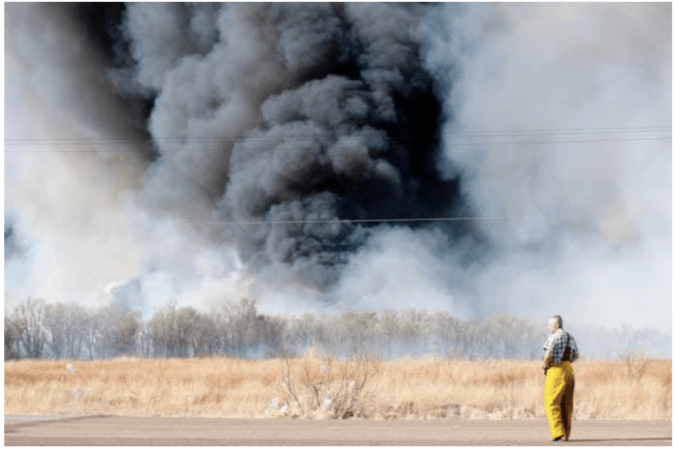
Growing drought and heatwaves are expanding wildfire acreage. Wildfire Tucumcari NM. Photo by George Wuerthner

Most residents of the West are aware that summer days are getting warmer, and nights are not cooling as much as in the past. Climate change is real, whether the current administration wants to acknowledge it or not.

Warming temperatures have extended and intensified wildfire season in the West, where long-term drought has heightened the risk of wildfires. Scientists estimate that human-caused climate change has already doubled the area of forest burned in recent decades, with the amount of land consumed by wildfires in Western states projected to increase by 2 to 6 times by around 2050.

A recent study amplifies these basic conclusions. The study found that heat waves drive up the area burned by wildfires. According to the researchers, this occurred during 2001–2024, during and immediately following heatwaves. Researchers observed a 2.5-fold increase in burned areas in WUS forests since 2001, with ~64% of this increase coinciding with heatwaves. Approximately 15% of the high-heat days accounted for 42% of the acreage charred.

Heatwaves can rapidly dry fine fuels, including easily ignited materials such as grass, leaves, needles, and small branches. Heatwaves also limit overnight humidity recovery, and temperatures often remain high. And rising heated air can increase atmospheric instability, promoting plume-dominated fire behavior and rapid-fire growth.

During the heat waves, the amount of land burned each day was over 50% higher than on cooler days. In some western areas, that increase reached 300%.

Heatwaves increase the vapor deficit, increasing the moisture the atmosphere can absorb, drying out vegetation.

Heatwaves also limit the normal nighttime cooling, permitting fires to burn longer and hotter.

Adding to the potential for larger fires is that lightning storms are more common during heatwaves.

Modeling shows that climate change will continue to transform the Pacific Northwest, with annual average temperatures projected to increase by roughly 4.7°F to 10°F relative to the 1950 to 1999 baseline by 2080.

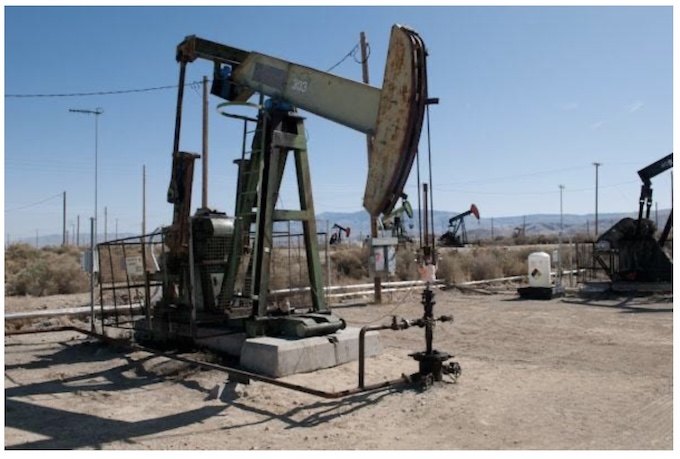
Promoting fossil fuel burning is likely to increase warming climate. Oil field near Mariposa, California. Photo by George Wuerthner.

What all this suggests is that thinning, prescribed burning, and other so-called solutions are unlikely to be effective in reducing wildfire’s impact on western landscapes.

Of course, the current administration’s efforts to promote fossil fuels will only exacerbate wildfire spread and influence.

George Wuerthner has published 36 books including Wildfire: A Century of Failed Forest Policy

Cuba: Blockades and Capitulation…or Canny Compromises?


 June 30, 2026

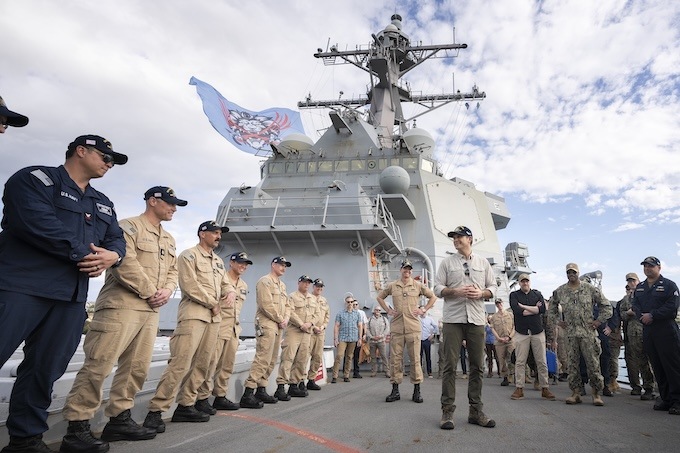
Pete Hegseth meets with on board the guided-missile destroyer USS Hudner during his visit to Naval Station Guantanamo Bay, Cuba, Feb. 25, 2025. Photo by U.S. Navy Petty Officer 1st Class Alexander C. Kubitza, Department of Defense.

Events in Cuba have flown under the radar lately, but big changes are afoot. Noted by PBS June 19 but only belatedly by anybody else, Cuba’s new free-market reforms include 176 measures “to further decentralize Cuba’s state-run economy…[with] more space for private businesses, imports and exports without state intermediation, free hiring of personnel, authorization for private banks and investment by Cubans abroad.” There will even be fast-food chains on the island. If this echoes to you the so-called opening up of Eastern Europe after the Soviet collapse, you’re onto something – namely the corporate blueprint for privatizing a state-run, aka communist, economy. This was not inevitable for Cuba before Donald “Nail the Commies” Trump quite repulsively blockaded the island, but once he did, it arguably became so.

Cuba’s state monopoly on foreign trade and centralized production are now kaput, PBS reports. However, in a happy sign of governmental sanity, “Cuban authorities cautioned that…measures will not be viable if the U.S. does not lift the energy and financial embargo on the island.” So, Mr. Trump: no end to sanctions and the blockade, no free-market “opening up” of Cuba. The blockade will be the key test. Sanctions have been around, doing their insidious damage, forever. But the blockade is Trump’s signature barbarity, and if these reforms don’t inspire enough magnanimity in the Washington despot to end this brutality, this siege, then all bets are off.

You’d think Trump would seize this opportunity to try to freeze the Russians and Chinese out of the Caribbean, and he may: Moscow was the only power in the world that broke the energy blockade. It boldly sent the Anatoly Kolodkin tanker with 730,000 barrels of crude oil that arrived in late March in Matanzas and then later dispatched the Sea Horse, with 200,000 barrels of gas and oil. Russians have long memories. They have not forgotten the horrific Nazi blockade of Leningrad and clearly, with that in mind, were not scared by Washington. They’ve seen worse. And there was nothing the white house could do about this.

 The Kremlin didn’t care, because you can bet its denizens are currently mad as hornets about revelations of over 40 Pentagon biolabs in Ukraine with, likely, Slav targets for their pathogens, as revealed by Tulsi Gabbard when she recently resigned. Rumors of these bio-weapons facilities have percolated through the internet for years, and indeed, some years back, yours truly even watched a video clip of Victoria Nuland confessing to Congress that yes, the U.S. researched pathogens in military biolabs on the Ukraine border with Russia. Was this video an AI fake – all the way back, just a year or two after the start of Moscow’s 2022 invasion? Who knows. Since it appeared, it’s evidently been scrubbed from the internet. So maybe its provenance was sketchy. Or maybe that public admission was just too damn explosive. One thing’s for sure, that clip wasn’t just watched in the U.S. – it was watched in the Kremlin, too. This was before the 2024 Ukrainian intelligence (ahem, CIA-inspired?) assassination of Russian Lieutenant General Igor Kirilov, in charge of investigating these Pentagon biolabs in Ukraine. Maybe Kirilov was just too effective.

Gabbard revealed that the U.S. army worked with “anthrax, avian flu, Ebola, plague and tuberculosis” in these Ukrainian labs, RT reported June 13. According to Tass, around the same time, the Pentagon spent “over $11 million to establish biological laboratories in Ukraine,” and the U.S. firm “Black and Veatch was the main contractor for the project.” And western elites like to dismiss Kremlin leadership as, ho, ho! paranoid. They probably thought the Soviets were paranoid during the Leningrad siege, which murdered and starved to death roughly 1.5 million people or the defense of Stalingrad, which saw the deaths of 1.1 million Russians. I doubt the Kremlin cares who calls it paranoid; it’s sachems know a monstrosity when they see one and they saw it in Trump’s blockade of Cuba. It’s a pity they haven’t turned the same attention to the criminal Israeli blockade of Gaza – but that likely has to do with the 1.5 million-strong Russian diaspora in Israel. Moscow takes care of its own.

China also broke Trump’s Cuban blockade, sending 60,000 tons of rice and over 5000 sets of 2-kilowatt photovoltaic power generation equipment, as part of the collaboration in which it built 55 solar parks for Cuba in 2025, with 37 more projected over the next two years. But still, these substantial acts of solidarity are not enough, so tight is the stranglehold on Cuba from the bully to the north. Per Drop Site News June 23, even Vietnam now assists Cuba “with its recently unprecedented economic overhaul by sharing lessons, strategies and operational frameworks from its 40 years of…(Renewal) reforms, the Vietnam Plus reports.” Drop Site goes on to call what’s happening Cuba’s “deepest economic liberalization since 1959…and using Vietnam’s transition to a market-oriented socialist economy as a model.” Vietnam’s “flexible, market-adaptable State-Owned Enterprises” are critical here.

For socialists and communists everywhere, this bed of thorns raises the question, will Cuba still be socialist when the metamorphosis ends? Exactly how much damage to working people on this island did Donald Trump manage to do – beyond, of course, obvious crimes like killing infants in the NICU by blockading vital energy to run hospitals and so forth. Because clearly, Cuba’s president, Miguel Diaz-Canel, is making these changes under duress. They affect, according to Drop Site June 12: enterprise and markets; decentralization and the state; trade and investment; agriculture and food; fiscal, monetary and social; energy and transport; tourism, commerce and labor. And these reforms have no mere mild effects. For instance, foreign direct investment will be incentivized, land use and wages will be “reformed,” and there will be a “move from subsidizing products to subsidizing people.”

 While it’s easy to carp that these concessions amount to capitulation to the tyranny of the late-stage finance capitalism headquartered in New York City, frankly, I don’t see a lot of wiggle room for Diaz-Canel. He’s clearly making the best of a terrible situation. Trump apparently doesn’t care that his blockade is killing Cubans, because when it comes to Latin America, he is a dictator, egged on by years of nauseating propaganda from outlets like The New York Times about people like Venezuelan president Nicolas Maduro and by its caricatures of Cuban communist repression; while behind Trump looms a merciless, blood-stained phalanx of finance, real estate, stock market, banking and hedge fund predators. To say nothing of U.S. military might and its agonizing proximity to a tiny island that numerous pentagon bigwigs over the decades have threatened to turn into a parking lot.

Russia has size, resources and nukes. So does China, plus a massive population. Iran has missiles like you wouldn’t believe and an unstoppable esprit de corps. But what do little countries like Vietnam and Cuba have? Not much beyond their ingenuity and their wits. Cuab’s president has no choice but to use those. And as anyone who’s ever survived solely by their wits can tell you, it’s usually touch and go.

Eve Ottenberg is a novelist and journalist. Her latest novel is “Death Calls It a Day.” She can be reached at her website.