Desperately Missing Susan
July 7, 2026
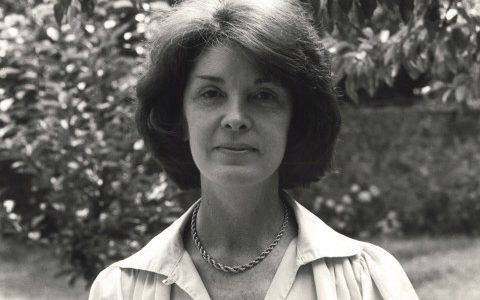
Susan George. Photo: Transnational Institute.
Susan George passed away in February of this year. It is good to have waited this long for the movement to give her a proper send-off, for we have finally absorbed the shock of her departure and realized what a jewel we have lost.
What can one say about Susan George in 15 minutes? One can just scratch the surface of a truly multi-faceted life and personality. Only a biography will do her justice, and I hope one of her many admirers will do one soon.
But let me begin by saying that Susan wrote at least 15 books, all of them of great importance to the progressive movement, two of which definitely belong to the great books of political economy in the last half century, How the Other Half Dies and A Fate Worse than Debt.
In her work, Susan showed her thorough grasp of the dynamics of capitalism not by abstract theorizing but by showing how, in the concrete, they worked to wreak such devastating consequences on the lives of billions of people, especially on those in the Global South. She had a sure command of the analysis. She had a sure command of the numbers. And she had a sure command of the language, one marked by beauty, wit, and urgency.
This combination made her one of the most effective educators at a time that people were trying to make sense of the head-spinning changes that global capitalism was putting them through in the age of neoliberalism.
She was a master of several genres, including satire. The Lugano Report might be viewed as being a contemporary take on Jonathan Swift’s eighteenth-century classic, A Modest Proposal, where he famously proposed that the families of poor Irish families could be improved if they sold their numerous children to be made into delicious dishes that could be eaten by the rich. Imagining herself as a committee tasked with coming up with measures to preserve capitalism in the twenty-first century, she recommended “eschewing the Auschwitz solution” and resorting to more “humane” measures to radically reduce the numbers in a world that was 40 percent overpopulated, like making “reproductive inhibition” via chemical and other means part of the conditionalities for economic assistance programs in the Global South, the natural consequence of which would be a great reduction of pressures to replace market capitalism.
The Lugano Report was graced with sparkling examples of George’s wit, as were her other books. I am grateful to Claudio Schuftan for compiling a list of some of her best quotes, among them:
Unstable financial markets do not behave rationally; they can also create losers on a scale which would today make the 1930s look like a bad day at the races.
For the poor, children are like lottery tickets: one may succeed in life and change the status of the whole family
The Invisible Hand is thwarted by the Invisible Womb
The doctrine of Liberalism is akin to that of the Gospel: many are called, only a few are chosen
Markets discipline instantly; they hold, as it were, permanent elections
Happily, few politicians are heroes
Big money is nomadic and travels at the speed of bytes
While ignorance and stupidity must be given their due, most things come out the way they do, because the powerful want them to come out that way
Susan was not an academic, though she had a doctorate from the University of Paris. Thank god, she decided that her role was to be an educator outside the four walls of the university, to be an agitator, an activist.
Among her many memorable achievements was her role in co-founding the Amsterdam-based Transnational Institute in 1973, of which she was president at the time of her passing in February of this year. It was at TNI that I met her back in the early 1990s and came under her spell, as did so many others who were fellows and associates of that wonderful hotbed of ideas.
She worked with many movements, among them ATTAC in France, and generously shared her time with many others. She was at her best with big audiences and at mass rallies. I heard her agitate the crowd in Seattle in late November 1999 at a historic teach-in organized by the International Forum on Globalization. She was again at it in that other landmark anti-globalization rally that drew hundreds of thousands in Genoa in June 2001. She was charismatic, but she did not set out to cultivate inspiration, charming an audience instead with her persuasive analysis, her often caustic wit, the elegance of her delivery, and the strength of her conviction.
She was generous with her praise, but she was not uncritical. She was frank and always made sure to accompany praise with constructive criticism. For instance, in endorsing the book Dark Victory that I co-authored with Shea Cunningham and Bill Rau in 1994, she said, “One could wish that Bello at al had made more of the complicity of Southern elites who, on the whole, lie back and enjoy rollback because they, too, profit hugely from it. A North versus South, Empire versus Barbarian scenario, yes, but another serious player is the transnational elite to match transnational capital, sitting pretty at the top, with everyone else underneath. The world-as-sphere, North-South, is also world-as-pyramid and those at the apex are not all white.” She was right, of course.
Susan was an internationalist at a time that internationalism was under assault from right-wing nationalism that put the blame for the troubles of the Global North on migrants. Although she devoted most of her work to showing how capitalism was destroying the Global South, she also considered herself a European and campaigned for the creation of a progressive, non-neoliberal Europe. Indeed, she also found time to endorse and campaign for preferred candidates in the U.S. elections. Like her ideas, her activism knew no borders.
I got to know Susan better when I interviewed her while preparing her nomination for the Right Livelihood Award, also known as the Alternative Nobel Prize, in 2005. One thing I learned was that she went to Smith College, one of the leading finishing schools for women of the upper class in the United States, that she was, in fact, descended from the patrician upper class in the United States and had enjoyed all the privileges of that class growing up and inherited its style. It was a class style that she put to good use in battling the representatives of capitalism later in life. Few men of the global elite dared go up against her in public debate, since she could devastate them not only with her arguments but with a gaze that said “I know what you are since I came from where you came.”
Susan did not get the Right Livelihood Award, and both of us were quite disappointed she didn’t. But she did get the equally prestigious Outstanding Public Scholar Award from the International Studies Association in 2007.
I need to end, and I will do so by invoking the three Cs in summing up Susan George, the thinker and global personality.
She was courageous in taking on the task of unmasking capitalism at a time that the establishment was saying “There is no alternative” to neoliberalism, a perspective to which the established progressive parties and many thinkers of the left had capitulated.
She was consistent in her opposition to capital till the very end, and she lived to see this pay off with the collapse of neoliberalism and globalization after 2008.
She was a class act, unique in her elegance, style, and wit.
She will be missed. Sorely.