Tuesday, July 07, 2026

Canadian and U.S. markets diverge amid rising oil prices and AI weakness


Updated:


A man walks past a building in Toronto that used to house the Toronto Stock Exchange on August 18 2011.THE CANADIAN PRESS/Aaron Vincent Elkaim

TORONTO — Canadian and U.S. markets moved in opposite directions on Tuesday as oil prices rose.

“What we’re seeing right now is a bit of a rotation in the marketplace … in general, if you look at the North American equity market, we’ve got a shift away from technology stocks,” said Philip Petursson, chief investment strategist at IG Wealth Management.

In Canada, he said the rotation is moving into “older economy stocks,” including energy and financials.

The S&P/TSX composite index was up 60.27 points at 35,272.59.

In New York, the Dow Jones industrial average was down 130.76 points at 52,925.15. The S&P 500 index was down 33.58 points at 7,503.85, while the Nasdaq composite was down 302.47 points at 25,818.69.

The British military said three tankers were struck by projectiles in the Strait of Hormuz. The United States later revoked a licence that had authorized the sale of Iranian oil as part of an interim deal to end the fighting between the U.S. and Iran.

That hurt hopes that the strait may fully reopen to oil tankers carrying crude to customers worldwide from the Persian Gulf.

Brent crude, the international standard, rose three per cent to settle at US$74.16 per barrel. The August crude oil contract was up US$1.89 at US$70.44 per barrel.

Over the past few weeks, Petursson said there has been “relative calm” in the market.

“That, in my mind perhaps reflected a little bit more confidence than was warranted that the Middle East conflict is completely behind us and I think we will continue to see these flare-ups,” he said.

Petursson said he thinks the uncertainty will persist and could result in a US$5 to US$10 risk premium in the price of oil that would benefit energy stocks.

Higher oil prices put upward pressure on inflation, and U.S. Treasury yields climbed in the bond market. The yield on the 10-year Treasury rose to 4.54 per cent from 4.48 per cent late Monday and from just 3.97 per cent before the war with Iran began.

“When you start seeing the 10-year yield break above 4.5 per cent, that means inflation expectations are becoming more entrenched,” Petursson said.

He said the 10-year Treasury will be a key metric to watch going forward.

“It has the greatest impact on U.S. equity valuations and could be the trigger for increased volatility as we head into the fall,” Petursson said.

On Wall Street, AI stocks have been under similar pressure in recent weeks on worries that their prices shot too high and that AI may not produce enough productivity and profits to make all the investments in chips and data centers worth it.

Drops of 6.5 per cent for Advanced Micro Devices, 9.7 per cent for Intel and 4.7 per cent for Micron Technology were the heaviest weights on the market.

SpaceX, which owns the xAI business, fell 6.8 per cent in its first trading after getting included in the Nasdaq 100 index.

The Canadian dollar traded for 70.43 cents US compared with 70.33 cents US on Monday.

The August gold contract was down US$10.10 at US$4,157.40 an ounce.

---

Daniel Johnson, The Canadian Press

With files from The Associated Press

This report by The Canadian Press was first published July 7, 2026.

StatCan study examines the role real estate investors play in rent increases


Published:

New homes are constructed in Ottawa on Monday, Aug. 14, 2023. THE CANADIAN PRESS/Sean Kilpatrick

In recent decades, home and rental prices have risen significantly in Canada, raising questions about the role of real estate investors both big and small when it comes to housing affordability.

A Statistics Canada (StatCan) study released Tuesday examined the ways in which individual and institutional investors have changed housing markets across the country both for renters and buyers.

The study focused largely on the role of institutional investors who have grown their share of rental property ownership in North America, StatCan said.

“In the United States, real estate investment trusts (REITs) and institutional investors have acquired an increasing number of residential properties in recent years,” the statistics agency said in the study.

“In the house and condominium apartment segment of the housing market, this increasing presence puts these investors in direct competition with individuals looking to purchase a property, raising concerns about housing affordability.”


The growing presence of REITs in Canada’s housing market has been noted by various other studies in recent decades, according to StatCan. However, the agency’s own study found that small-scale investors still owned the majority of the rental housing stock in the markets that were examined.

Small-scale individual investors owned the largest share of rental properties in every province that was looked at in the study except for Nova Scotia, StatCan said. The agency classifies those investors as anyone who owns five or fewer properties, excluding any whose properties are for personal use.

“In 2022, their share of the assessed value of rental properties ranged from 35.9 per cent in Nova Scotia to 57.1 per cent in Prince Edward Island,” StatCan said in the study.

Meanwhile, the growing presence of larger scale investors across the country can lead to concentrated or non-competitive rental markets, StatCan noted in the study, which can contribute to higher baseline rent prices.

However, StatCan’s most recent data from 2022 suggested that rental markets in the 12 areas it analyzed in Prince Edward Island, Nova Scotia, New Brunswick, Ontario, Manitoba and British Columbia remained “non-concentrated and competitive.”

The lower concentration aligns with more recent data from the Canada Mortgage and Housing Corporation, which found that in 2025, the price difference between units rented by REITs and other types of landlords was not statistically significant, StatCan noted.

Big investors ‘mostly absent’ from housing market

StatCan said that in the non-rental housing market in general, large institutional investors are “mostly absent.

“In the six provinces studied, the share of the stock of houses owned by institutional investors ranged from 0.1 per cent (Prince Edward Island and Manitoba) to 0.4 per cent (Ontario) in 2022,” StatCan said.

“The ‘house’ category includes single-detached houses, semi-detached houses, row houses and mobile homes. Houses were generally owned by owner-occupants. Otherwise, they were mostly owned by smaller-scale individual investors and individual investors for personal use.”

These findings suggest institutional investors such as REITs have made the majority of their inroads into Canada’s housing market by purchasing rental properties rather than single-family homes.


What is Property? by Proudhon


Canada unleashes wave of oil drilling permits in next big play


Oil rig in Alberta Canada. (Stock image by laughingmangovideo.)

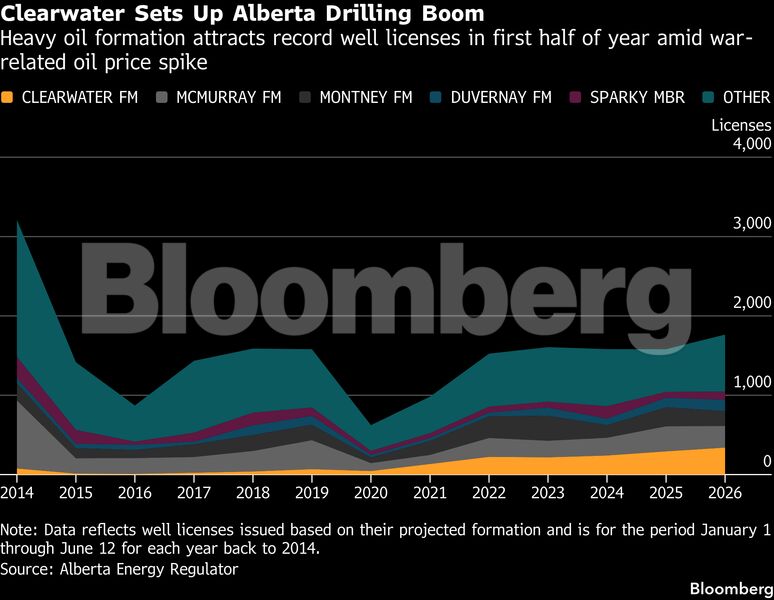
As oil prices surged this spring, Alberta producers didn’t look to Canada’s long-cycle oil sands. Instead, they rushed to drill the Clearwater formation, a low-cost conventional oil play that lets producers bring on new supply far more quickly.

Alberta issued 1,764 drilling licenses between the start of the year and June 12, the most for a similar period since 2014, provincial data show. Nearly one in five permits targeted the Clearwater formation, the highest share on record.

For decades, Canada’s oil industry has been defined by the oil sands, where multi-billion-dollar projects can take years to build. Clearwater is changing that equation. As the Iran war exposed the vulnerability of global oil supplies, the formation gave Alberta producers the opportunity to respond to higher prices with new production in months, rather than years.

“It doesn’t take a whole bunch of capital to get started, and therefore it’s quite cost efficient,” said Brian Schmidt, chief executive officer of Tamarack Valley Energy Ltd., one of the two largest Clearwater producers. “It’s phenomenal. There’s no conventional play that compares.”

The Clearwater yields dense, high-sulfur crude oil similar to that found in Canada’s oil sands. But unlike the oil sands, the crude can be extracted at a lower cost using conventional multilateral drilling techniques, without the need for pumping steam into the ground. That’s what enables production to be brought on more quickly. 


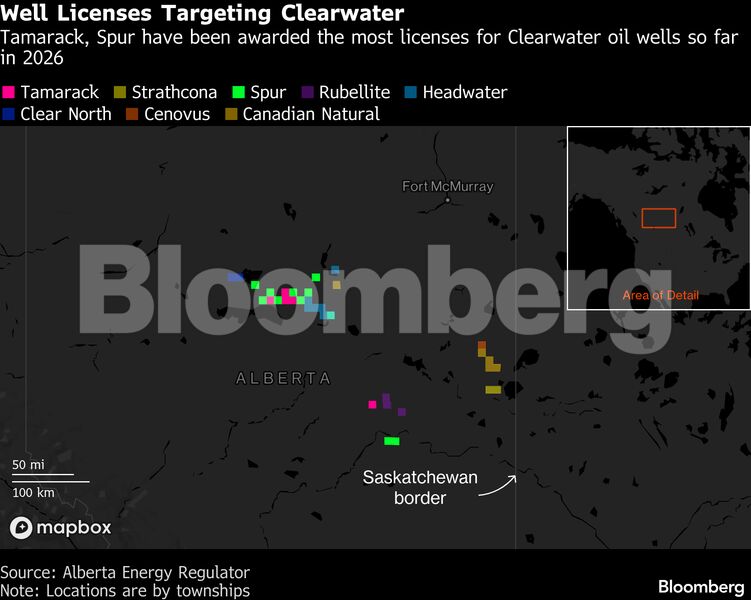
The formation has attracted some major producers including Canadian Natural Resources Ltd., Canada’s biggest oil company. But the Clearwater has mostly been the playground of smaller firms.

Once minnows, Clearwater drillers Spur Petroleum Ltd. and Tamarack have risen into the ranks of the top 10 oil producers in Alberta, rivaling some oil sands companies. 

Tamarack has received 89 drilling licenses this year, up by 37 from the same period last year, the biggest increase of any company in the province, Alberta Energy Regulator data show. Wells targeting the Clearwater accounted for 80 of those licenses, second only in volume to privately-held Spur Petroleum.

The company sold its position in the Charlie Lake region for C$804 million ($570 million) in May to focus entirely on the Clearwater. Schmidt, the CEO, said by phone that Tamarack has made “modest” increases in its capital budget to between C$430 million and C$450 million. He emphasized that the advent in recent years of multilateral, horizontal drilling has made the Clearwater viable. Tamarack and others have been injecting water into the reservoir to push out more oil.

Steam rising from a mine at the Athabasca oil sands near Fort McMurray, Alberta.

Headwater Exploration Inc., another major Clearwater producer, increased its capital budget to C$250 million from C$185 after raising the company’s forecast oil price by more than $15 to $78.85 a barrel amid the Iran war. Production will grow by 10% this year, versus 8% in earlier forecasts. Most of the growth is coming from investing in equipment to inject water into the reservoir, which roughly doubles the amount of oil that can be recovered at less than double the cost per well, Jeff Magee, the company’s vice president of engineering, said by phone.

Spur Petroleum didn’t respond to a request for comment.

Located in the boreal forests of north central Alberta, the Clearwater emerged from obscurity in 2017 following a series of high-priced land sales in the Marten Hills and Nipisi region, north of the provincial capital of Edmonton. Production from the formation has surged in less than a decade. 

Clearwater production rose from 30,000 barrels a day in 2017 to 230,000 barrels a day last year, and the formation holds 1.6 billion barrels of oil, AER said last year, citing work by McDaniel & Associates Consultants Ltd. 

Figures citing the total volume of output depend on how Clearwater, which encompass a vast area including some thermal oil sands sites, is defined. For example, Headwater’s Magee defines Clearwater production in more limited terms. He cited the play as currently producing about 175,000 barrels a day, and sees it growing to as much as 250,000 barrels a day by decade end. 

The multitude of Clearwater producers has drawn consolidation in the past, including Tamarack’s takeover of Deltastream Energy Corp. four years ago. More such deals are on the horizon, Schmidt of Tamarack said.

“There’s a number of smaller privates that don’t want to be in the game long,” he said. “There’ll be more consolidation in the Clearwater.”


BP to Sell Bay du Nord Stake to Equinor in Canada Portfolio Shake-Up

BP has agreed to sell its non-operated interest in the Bay du Nord offshore oil development to Equinor, marking another step in the UK energy major's strategy to streamline its upstream portfolio and tighten capital allocation.

Financial terms of the transaction were not disclosed. The sale remains subject to customary regulatory approvals and closing conditions.

The divestment covers BP's interests across 10 licenses associated with the Bay du Nord project in the Flemish Pass Basin, located around 500 kilometers offshore Newfoundland and Labrador. BP said its holdings represented an average working interest of 37.212%, while Equinor remains the project's operator.

The move aligns with BP's broader efforts to simplify its asset portfolio and concentrate investment on projects expected to generate stronger returns.

"We're proud of our partnership with Equinor and the work we've done together to develop the Bay du Nord project," Gordon Birrell, BP's executive vice president for upstream, said in a statement. "However, BP is exercising strict capital discipline, allocating it to the opportunities that create the most value for BP."

Bay du Nord is one of Canada's largest planned offshore oil developments and received regulatory approval in 2022 after a lengthy environmental review. The project is expected to become the country's first deepwater oil development, although its final investment decision has faced delays amid higher costs and changing market conditions.

Following the sale, BP said it will retain a 100% interest in two exploration licenses offshore Newfoundland and Labrador, designated EL 1166 and EL 1170.

The company added that any accounting impacts from the transaction will be disclosed with its second-quarter results.

By Charles Kennedy for Oilprice.com


Canada set to back Teck’s BC smelter to boost germanium output: report


Teck’s Trail operations. Credit: Teck Resources.

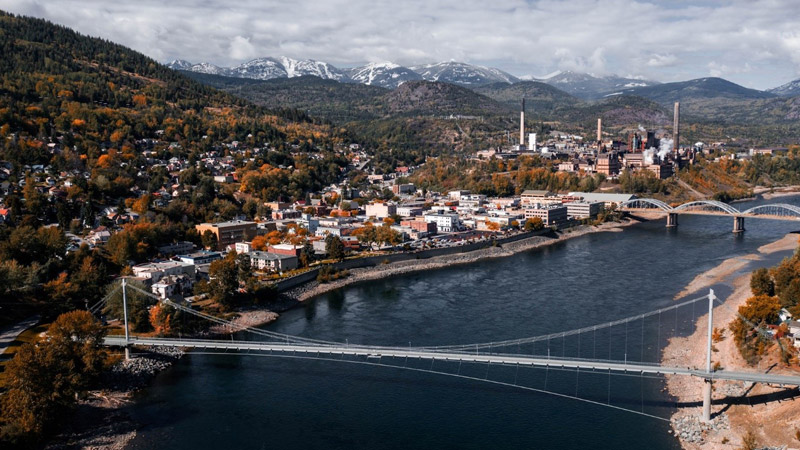
Canada’s federal government is set to invest hundreds of millions of dollars in Teck Resources’ (TSX: TECK.A, TECK.B)(NYSE: TECK) Trail metals facility in British Columbia to expand germanium output and strengthen North American supply of critical minerals, the Globe and Mail reported.

The funding is expected to come from Natural Resources Canada, the Canada Growth Fund and Export Development Canada (EDC), the Globe said, citing unidentified sources familiar with the transaction.


Energy and Natural Resources Minister Tim Hodgson is scheduled to make a “critical minerals announcement” in Trail Tuesday at 3 p.m. Eastern time, according to a media advisory issued Friday by his ministry. A spokesperson for Natural Resources Canada declined to comment on the Globe story Tuesday morning, referring The Northern Miner to the media advisory.

Largest producer

Vancouver-based Teck is North America’s largest germanium producer, recovering the mineral as a byproduct of its zinc-mining operations in Alaska. The company is Canada’s only supplier of germanium dioxide to the United States.

Germanium is considered essential to defence, semi-conductors and chip manufacturing, but China controls more than 80% of global output. The UShas limited domestic production and processing capacity, highlighting the importance of securing new supply sources.

In May, Titan Mining (NYSE-A: TII) said it was evaluating potential germanium production from its US-based zinc mining in partnership with Teck. 

Titan and Teck envision recovering 13,000 kg a year of germanium from Titan’s Empire State zinc mine in New York state, according to a cooperation agreement signed May 14. U.S. pricing for germanium now tops $6,000 (C$8,520) per kg, Titan CEO Rita Adiani said Tuesday in a statement.

Specialty metal

Germanium is one of the specialty metals that Teck’s Trail complex produces, along with indium and antimony, in addition to refined zinc and lead. The facility is one of the world’s largest integrated zinc and lead smelters.

Canada and the US are among the Western countries that have been seeking to diversify critical mineral supply chains following China’s 2024 decision to impose export restrictions on germanium and antimony sales to the US. Although China suspended the restrictions in late 2025, supply security remains a concern because the US has no domestic germanium production, the Globe said.

Funding the Trail facility would align with Ottawa’s broader push to support critical minerals processing and cut reliance on China. In March, EDC and the Canada Infrastructure Bank (CIB) jointly committed $335 million (C$459 million) in senior debt to fund Nouveau Monde Graphite’s (NYSE: NMG, TSX: NOU) Matawinie project in Quebec through its construction.


Ottawa to invest up to $400 million in Teck critical minerals smelter in B.C.


Published:

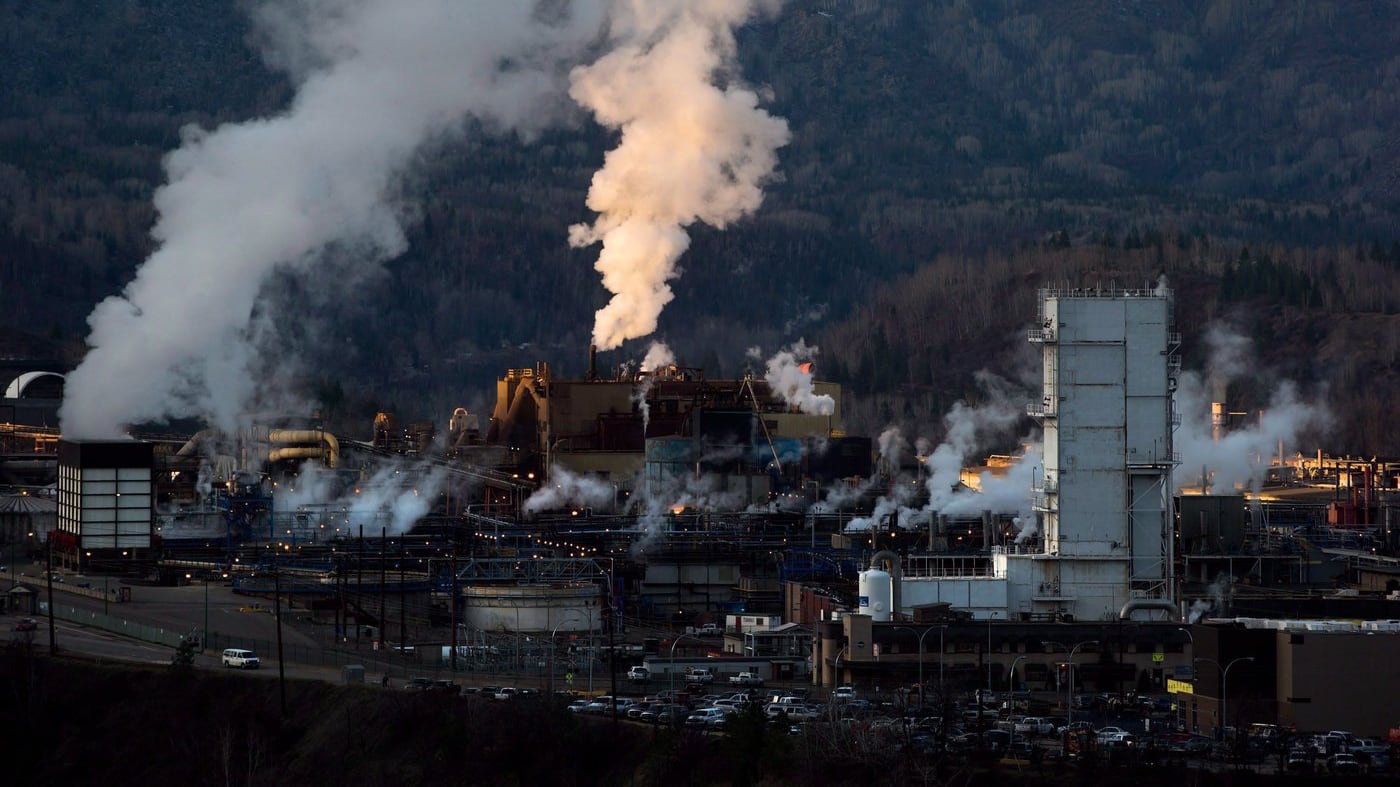
Teck Mining Company's zinc and lead smelting and refining complex is pictured in Trail, B.C., on November 26, 2012. THE CANADIAN PRESS/Darryl Dyck

The federal government will invest up to $400 million into Teck Resources Ltd.’s critical minerals processing operations in southern B.C. as Ottawa looks to shore up supplies of metals used in the defence and green energy sectors.

“We are facing a trade war we did not ask for; the most volatile geopolitics since the end of World War II, which has led to the biggest energy crisis in modern history; technological change at a pace not seen in decades, mainly due to AI; and an accelerating clean energy transition,” Tim Hodgson, the federal natural resources minister, said in Trail, B.C., Monday.

“Anyone who tells you facing these challenges as a government, and as a nation, is not daunting is not telling the truth.”

But Hodgson said the crisis is creating an opportunity for Canada, and some of the country’s “best cards” are in its critical minerals.

“In 2026, these minerals are no longer just commodities. They are strategic assets — essential to the world’s manufacturing of defence technologies, semiconductors, telecommunications, clean energy, electric vehicles, batteries, solar panels, as well as the next generation of advanced manufacturing.”

The announcement on Monday is the first under the Canada Critical Mineral Accelerator, a Natural Resources Canada program set up last year to speed up development of minerals it says are needed for economic sovereignty, national security and the energy transition. Export Development Canada manages the accelerator.

The agreement could see the Canada Growth Fund, a federal arm’s-length cleantech investment vehicle, make an “equity-like investment” of up to $400 million directly into Teck’s facility in Trail, Natural Resources Canada said in a release.

The smelting and refining complex currently produces 19 products and employs more than 1,400 people. Teck is planning an up to $850-million expansion to its Trail operations that could double production of germanium and antimony and add new capacity for gallium.

Germanium is used in fibre optic, infrared and semiconductor technology, while antimony is crucial for flame retardants, batteries and alloys. Gallium is key for semiconductors used in telecommunications, radar and electronics.

The agreement could also see Ottawa obtain rights to a portion of the future production of those minerals.

Jonathan Price, Teck’s chief executive, said the agreement will help the company quickly and significantly increase production of key strategic metals.

“By leveraging Trail’s existing infrastructure and expertise, this initiative has the potential to deliver new supply of strategic metals while providing strong returns for Teck shareholders,” he said.

Teck and London-based Anglo American PLC announced a deal last year to join forces and create a $70-billion copper-focused mining powerhouse. The combined company is to be called Anglo Teck and keep its headquarters in Vancouver.

When the deal was announced last September, Anglo American said it expected the transaction to close within 12 to 18 months.

This report by Lauren Krugel, The Canadian Press, was first published July 7, 2026.