Carney meets with allied nations in Turkiye on margins of NATO summit
Updated:
ANKARA -- Canada’s multi-billion-dollar submarine deal with German defence manufacturer TKMS is among billions in military purchases being showcased at the NATO leaders’ summit in Turkiye this week, as the allies look to appease U.S. President Donald Trump.
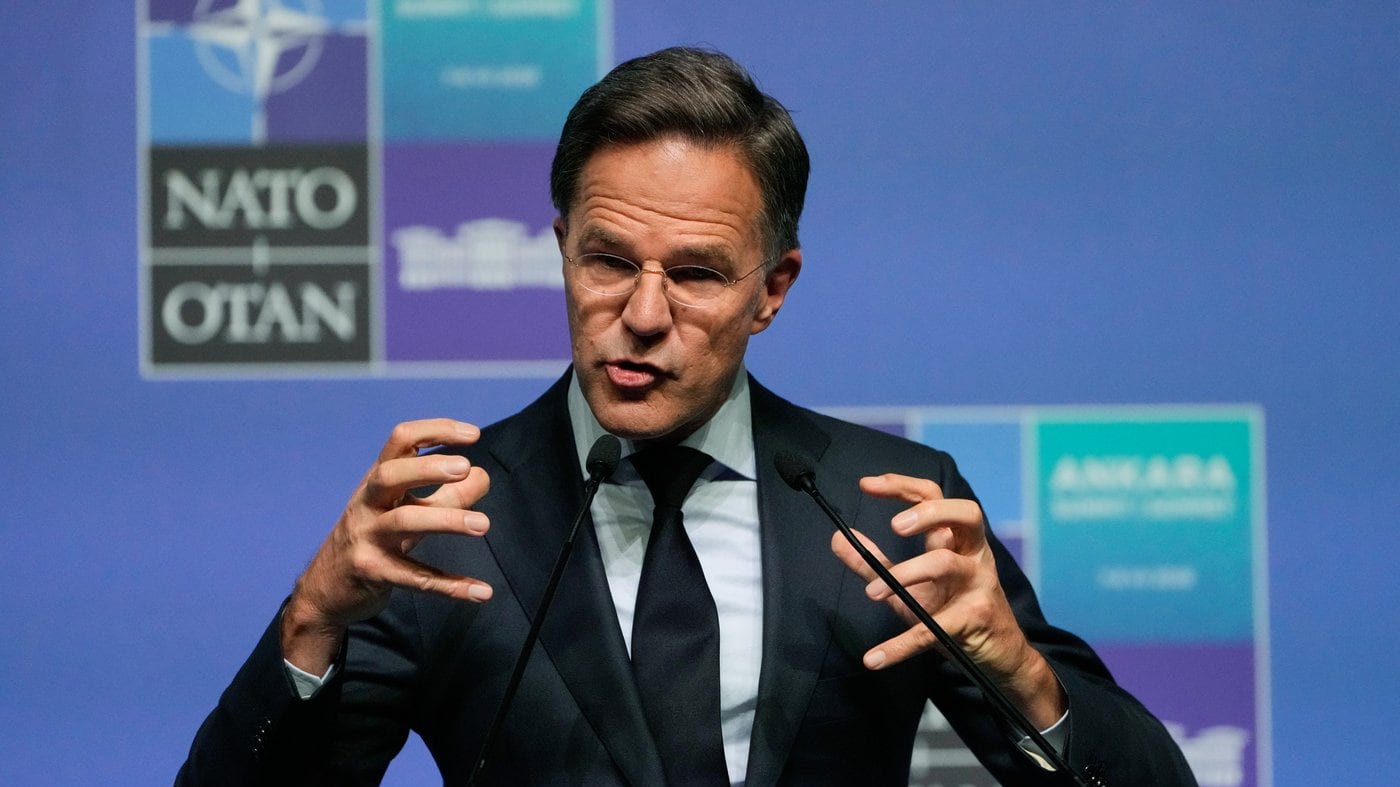
NATO Secretary-General Mark Rutte said Tuesday that allies and industry were revealing new major projects and signing contracts worth billions of dollars.
Announcements included the delivery of Airbus A330 MRTT aircraft, as well as the joint procurement of up to 10 radar jets from Swedish manufacturer Saab that will largely be built in Canada.
“It’s a moment of great pride,” Swedish Prime Minister Ulf Kristersson said of the GlobalEye announcement Tuesday, adding that the twin-engine aircraft would be “made within the alliance for all the alliance.”
Over a year ago the member nations agreed to increase their spending target from the current two per cent of GDP to five per cent by 2035. Rutte repeated at multiple events in Ankara on Monday and Tuesday that the alliance is already showing the results of that promise.
He said last year Europe and Canada together increased spending by more than 20 per cent, adding an additional US$139 billion.
“So, basically, one thing is clear. The money is there and much more is coming,” he said, before warning that the threat from Russia requires a swift and immediate response.
‘Yes, we have made real progress," he said. “We are moving in the right direction. The strategy is clear. But the match is far from over. And to win it, we need all team members to pull their weight. Do more, faster, together. We don’t have the luxury of time. We need capabilities now, to ensure we remain ready. The security situation demands it.”
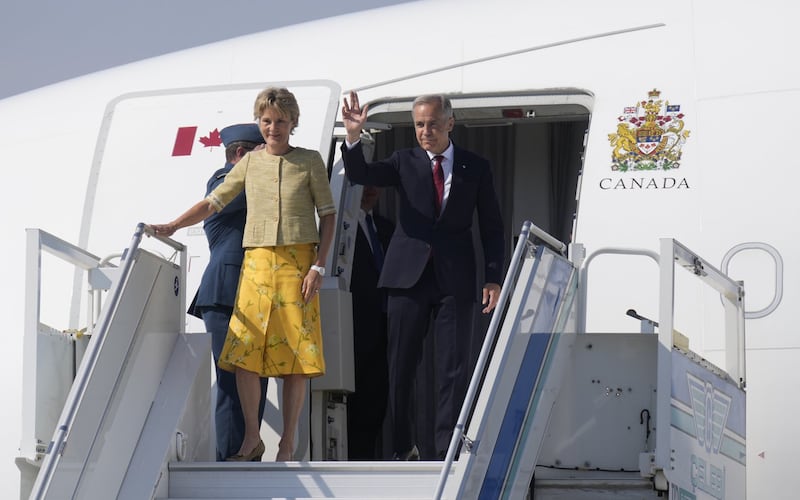
Canada’s submarine pact was not among the NATO purchases showcased by Rutte, but it was promoted by Prime Minister Mark Carney, German Chancellor Friedrich Merz and Norwegian Prime Minister Gahr Store, who held a meeting of their own on the sidelines Tuesday.
On Monday, Carney named TKMS as the preferred bidder for a fleet of submarines for the Royal Canadian Navy. Canada is planning to buy up to 12 submarines, and the estimated purchase cost has been pegged at as much as $24 billion. Maintenance and operations costs are much higher.
At the meeting with Merz and Store Tuesday, Carney said this would be a very important partnership for Canada and that it was very important the procurement was being talked about at NATO.
The three met in a large room packed with media that featured two models of the 212CD submarine -- one large one behind glass, and a smaller, desk-sized model on a desk.
Carney said the decision by Canada to pursue a contract with TKMS, which will create “very high quality jobs in all of our countries,” was taken within a year rather than by the end of the decade because of the “urgency of the situation” and the “threats that we face.”
“It is a great day for all of us and a great day for NATO,” he said.
Store said it was a “huge” decision and it speaks to swift action under Carney’s leadership. He said the three subs can operate in an integrated way -- saying the three countries will have 26 subs in the water combined.
“This is the new way NATO will work. This is great. Our people from the navy can exchange and visit each others’ ships, they can integrate strategy,” he said.
Carney has been campaigning for allies to set up a multinational defence bank to help finance growth in the global defence sector. The decision was made earlier this year to headquarter the bank in Canada.
On Tuesday, eight countries committed to supporting the Canada-led bank: Albania, Belgium, Greece, Latvia, Luxembourg, Romania, Turkiye and Ukraine.
Major European partners, including other G7 allies in NATO, have not yet backed the project.
The Prime Minister’s Office said in a statement the countries will be entrusted with defining the initial policies and directives of the bank, as well as shaping its operations and ensuring benefits flow to members’ economies.
The NATO spending announcements come as U.S. President Donald Trump maintains that allies don’t spend enough on defence. The summit this week is to include an update on where the member nations are at in meeting the existing target to spend the equivalent of two per cent of GDP on defence.
Canada met that target for the first time last year.
The president has also been critical of allies’ response to the U.S. war in Iran. The U.S. did not consult NATO before attacking Iran in February, but has been heavily critical of major European members including Italy, Germany, France and the United Kingdom, for not supporting the war.
On Tuesday, Trump also repeated his assertion that the United States should be in control of Greenland rather than NATO ally Denmark. Trump’s musings about trying to seize control of Greenland rocked the alliance earlier this year.
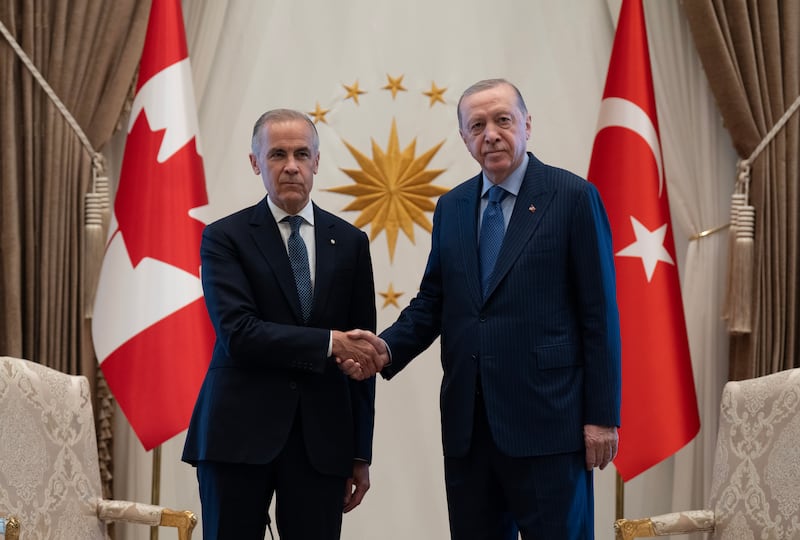
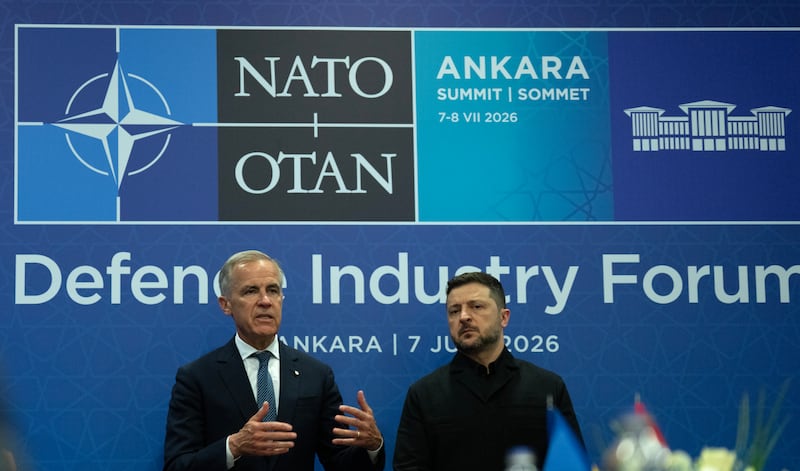
Carney has no meeting with Trump on his schedule for Ankara, but did meet Tuesday with Turkish President Recep Erdogan and Ukrainian President Volodymyr Zelenskyy Tuesday. He also met with Prime Minister Rob Jetten of the Netherlands.
Carney and Erdogan used their bilateral meeting to announce their governments are formally launching free trade negotiations.
Carney also met with Ukrainian President Volodymyr Zelenskyy, speaking about air defence and how Canada can continue to support Ukraine in its war against Russia.
Merz meantime called Ottawa’s speedy selection of a preferred bidder a “bold decision.” Merz said beyond the fleet, the maintenance will last for “years if not decades.”
“This goes far beyond submarines,” Merz said. “This is a new era of co-operation of this part of the world.”
Defence Minister David McGuinty said Tuesday in Ankara that the choice to select TKMS as the preferred submarine bidder means there will be greater interoperability in Arctic defence, including sharing crews with Germany and Norway.
Carney also met with South Korean President Lee Jae Myung on the sidelines of the NATO leader’s summit. Carney said Monday he had also spoken to Lee on the weekend before he announced that TKMS had beaten out South Korea’s Hanwha Ocean to negotiate a contract to build the fleet of submarines.
McGuinty said it was a good meeting and reiterated Carney’s pledge that Hanwha remains a bidder in reserve for the submarine contract, depending on how formal negotiations with TKMS go.
“There’s a lot of co-operation possibilities here between Canada and Korea. We’re going to continue building that relationship, and that’s exactly what the prime minister mentioned to President Lee,” McGuinty said.
McGuinty said after hitting the initial NATO target of putting two per cent of GDP into defence spending, the next goal is to hit 3.5 per cent by 2029. The minister said Tuesday those numbers will be in the fall budget document.
“Our objective here is to continue showing to our NATO partners that we are moving forward. We are making significant investments, we’ve just chosen the submarines, we are building out our economy in this area, we’re procuring lots of goods and services, we’re rebuilding our bases. We’ve extended our stay in Latvia by three years. We’re making massive investments,” McGuinty said.
Carney was to speak at a panel at the summit about financing the defence sector, but that was removed from his schedule.
Leaders gathered for a dinner event Tuesday evening before the main North Atlantic Council meeting on Wednesday.
The summit is being streamlined this year, which experts say is to avoid diplomatic frictions.
This report by The Canadian Press was first published July 7, 2026.
By Kyle Duggan