Tuesday, July 07, 2026


Chemical control dominates global fight against invasive alien plants


Newcastle University

Himalayan balsam in a UK ancient woodland 

image: 

Himalayan balsam in a UK ancient woodland

view more 

Credit: Lizzie Keen


Efforts to manage invasive alien plant species in forests could be held back by a continued reliance on chemical methods, according to a new study.

Research led by Lizzie Keen, a postgraduate researcher at Newcastle University’s School of Natural and Environmental Sciences, shows that chemical methods remain the dominant approach worldwide, despite growing recognition of the need for more sustainable management options.

The findings show widespread issues driven by how countries approach, tackle and report invasive alien plants (IAPs), also referred to as invasive non-native plant species, affecting their success at reaching global targets for biodiversity and forest health.

Forests are critical to the provision of goods and services. They face many threats including the presence of IAPs which can impact native biodiversity and ecosystem functioning.

However, there are data gaps around outcomes of managing IAPs in forests. To help fill this knowledge gap, the authors analysed existing studies into the management of IAPs, spanning 26 countries and covering 192 studies with 623 combinations of species and management treatments.

The results highlight the extraordinary number of management treatments used to tackle the issue of IAP species globally, yet there is still no consensus on the most effective management strategy. However, the findings confirm that the use of chemicals is the most popular global approach to address IAPs, although biological control had the most positive management outcomes.

In addition, the findings highlight that season and site-specific conditions are important for influencing the outcome of management. The study also shows that few organisations report on the labour and financial costs involved in dealing with IAPs.

Published in the Journal of Applied Ecology, the study was led by Newcastle University and the University of Stirling with funding by Natural Environment Research Council (NERC) and the Woodland Trust. 

Lead author, Lizzie Keen, said: “Our study exposes urgent and critical knowledge gaps in forest IAP management, which need addressing to meet global targets for biodiversity and forest health. These gaps include highly uneven global research effort, narrow species focus, limited method replication, overlooked seasonal effects, and inconsistent cost reporting.

“A strong legacy of using chemical methods may also be deterring efforts to develop non-chemical approaches. Immediate action is needed to develop standardized methodologies and reporting channels to close these gaps and thus aid informed choice of management options by practitioners.”

Principal Investigator Dr Zarah Pattison, Senior Lecturer in Plant Sciences at the University of Stirling, said: “Non-native plants are invading forests worldwide, yet we still don't know the best ways to manage them.

“Our review reveals alarming gaps in research, patchy global coverage, and a heavy reliance on chemical controls.

“Where management is taking place, we implore land managers and researchers to record key information on costs, area treated and labour time and wherever possible, the change in invasive alien plant populations following treatment, so that we can more effectively assess management outcomes.”

Dr Harriet Downey, Conservation Evidence Manager, Woodland Trust, added: “Invasive non-native plants put the benefits of our UK ancient woodlands at risk. Based on current evidence, it is difficult for land managers to make effective decisions on removing widespread non-native species in the most sustainable, cost-efficient, and permanent way. We must identify best conservation practice in the removal of invasive non-native plants from our woodlands, to ensure we can restore woods and trees to their full potential, so they can thrive for people and wildlife, and deliver nature recovery on the ground.”

The authors recommend future research that focuses on greater collaboration with practitioners and more standardised data reporting which will be key to strengthening global management efforts and their effectiveness.

Reference

Keen L, et al. Management of invasive alien plants in forests: a global perspective. Journal of Applied Ecology. Published online July 7, 2026. doi:10.1111/1365-2664.70451

--ends—


Ancient rocks reveal how water shaped Earth 3.1 billion years ago


Adelaide University
Ancient rocks reveal how water shaped Earth 3.1 billion years ago 

image: 

An example of variolitic pillow lavas in the Whundo Group. The black spots are a feature known as varioles, which form in water-rich lavas

view more 

Credit: Adelaide University


Geologists studying some of the planet’s oldest volcanic rocks have uncovered new evidence that water was playing a major role in shaping Earth’s interior and driving volcanic activity more than three billion years ago.

An international research team, led by Adelaide University geochemist Dr Eric Vandenburg, analysed ancient rocks from Western Australia's Pilbara Craton. They found signs that water had travelled deep beneath the Earth's surface before helping to generate magmas that formed volcanoes like those found in the Pacific “Ring of Fire” today.

The findings, published in Nature Communications, suggest that Earth was already running a version of the water-recycling processes that shape the planet today, despite conditions being dramatically different during the planet’s infancy.

Dr Vandenburg, from the School of Physics, Chemistry and Earth Sciences, said the research provides a rare window into Earth's distant past.

"These rocks formed more than three billion years ago, when Earth was a very different place,” he said.

Today, water is continually recycled through a process known as plate tectonics, where water from the oceans is carried down into the mantle at subduction zones, where one tectonic plate slides beneath another, feeding the volcanoes that build continents.

“The early Earth was too hot for plates to behave that way, so until now it has been unclear whether surface water could have made that journey more than three billion years ago, and if so, how.

"What surprised us was finding evidence that large amounts of water had already made their way deep into the Earth's interior and influenced the formation of volcanic rocks."

The new study suggests that while modern plate tectonics may not yet have existed, another process could have been transporting water into the mantle.

The researchers propose a mechanism they call “dripduction”, in which dense, water-rich sections of Earth's cool outer crust sporadically sagged and collapsed into the hotter mantle below, carrying their water down with them.

As this material descended, the water it contained was released into the Earth’s mantle, generating magmas that fed volcanic eruptions and later solidified into rocks that can still be studied today.

"The Earth wasn't operating exactly as it does now, but it appears some of the key processes were already in place," Dr Vandenburg said.

The discovery helps answer one of geology's biggest questions: when did Earth begin exchanging materials between its surface and deep interior?

Understanding when water first started moving deep underground is important because the process influences everything from volcanic eruptions to continental growth, and even life-crucial ingredients.

The findings also provide clues about how Earth's continents formed and how the planet evolved into the world we know today.

Because rocks this ancient are exceptionally rare, the Pilbara – where they are also unusually well preserved – is one of the few places to study the young Earth.

By analysing the chemical fingerprints preserved within the rocks, the researchers were able to reconstruct events that occurred 3.1 billion years ago.

The results suggest that Earth's interior and surface may have been connected far earlier than previously recognised, revealing a surprisingly dynamic young planet that was already recycling one of its most important ingredients: water.

The study involved researchers from Adelaide University, Monash University, the Geological Survey of Western Australia, Curtin University, the Australian National University, Cardiff University and the GEOMAR Helmholtz Centre for Ocean Research in Germany.

‘Modern arc-like water content in the source of 3.1-billion-year-old volcanic rocks’ is published in Nature Communications. DOI: 10.1038/s41467-026-74653-1

Toyota to invest $3.6bn in Texas as Tacoma production shifts from Mexico

Toyota to invest $3.6bn in Texas as Tacoma production shifts from Mexico
Toyota said it will add 2,000 workers at its Texas plant to bolster assembly operations. / Bicanski

By Julian DeLucia July 7, 2026

Toyota Motor Corp will invest $3.6bn to expand its manufacturing plant in San Antonio, Texas, creating a second vehicle assembly line and around 2,000 jobs by 2030. The move, announced on July 7, will gradually shift part of the production of the Tacoma pickup truck from Mexico to Texas over roughly four years, though Toyota will continue building some Tacoma models — as well as the Corolla — at its Mexican plants.

The expansion will add 2.5mn square feet to the Texas facility, doubling its size, and bring more than 150,000 units of additional annual capacity, closely matching the volume being wound down at Toyota's Tijuana plant in Baja California, El Economista reported. Notably, Toyota's own announcement made no reference to tariffs as a driver of the decision, even as the White House moved quickly to cast it as vindication of its trade policy.

"By expanding our San Antonio plant, we are reinforcing our commitment to American manufacturing, creating meaningful and sustainable jobs," said Tetsuo "Ted" Ogawa, president and chief executive of Toyota North America, who also described the investment as reflecting the company's confidence in the region's workforce, innovation and long-term growth potential.

With the new outlay, Toyota's cumulative investment in San Antonio since construction began in 2003 will reach $8.3bn, and its Texas workforce is expected to grow to roughly 6,000 employees, supported by 23 on-site suppliers. The plant has produced trucks and sport utility vehicles for two decades, assembling more than 197,000 units last year, and remains the sole manufacturing site for the Tundra and Sequoia models.

"San Antonio is proud to be home to Toyota, and we are excited to have been selected for further expansion," said San Antonio Mayor Gina Ortiz Jones.

The latest announcement builds on a broader US investment push: The Japanese automaker said in November it planned to invest up to $10bn in the country over five years, a commitment it began detailing in March with a wider North American investment plan, expanded on in the days following Japanese Prime Minister Sanae Takaichi's visit to the White House. Toyota already ranks among the world's largest carmakers, and the added Texas capacity could support its ambition to become the top-selling carmaker in the US.

President Donald Trump, who has pushed carmakers to shift production to the US through tariffs on vehicles, steel and aluminium, claimed the investment as evidence his policy was working. “Toyota is moving from Mexico to the United States (Texas!). A really big deal. Tariffs at work!” he wrote on Truth Social. Speaking later the same day during a visit to Ankara, Turkey, he returned to the theme: "It came over the wires that Toyota is moving out of Mexico into the United States, and building one of the biggest truck and car plants ever built. It's amazing. That's what tariffs do, properly used." Peter Navarro, the White House's top trade adviser, pointed to the same investment figures as evidence the administration's tariff strategy was reshaping carmakers' production decisions, according to El Economista.

The announcement followed Washington's decision on July 1 not to renew the US-Mexico-Canada Agreement (USMCA) in its current form for a further 16 years, subjecting the pact instead to annual reviews, a shift that has unsettled business leaders on both sides of the border. The Trump administration is said to be pushing for revised rules that would require half of all automotive parts and manufacturing to take place in the US, according to Business Insider.

Toyota said it remained committed to its operations across all three USMCA countries, calling for what it termed a swift resolution to the trade dispute to keep North America globally competitive. Toyota Mexico, contacted separately, said operations continued as normal at its plants in Tijuana and Guanajuato. The Tijuana facility produces about 150,000 units a year and employs 2,000 people.

Mexican President Claudia Sheinbaum sought to play down the impact on July 7, telling her morning press conference that Toyota had notified the Ministry of Economy it would transfer part of Tacoma production from Tijuana to the US gradually, with the shift completing by 2030 and the plant's longer-term future still under review. She stressed that Toyota's Guanajuato complex, which directly employs 2,800 people, would continue operating. Sheinbaum rejected any suggestion that the decision was linked to the USMCA review, describing it instead as part of a worldwide restructuring by the company. "What Toyota is telling us is that it's part of their global review... We always seek the best conditions for the workers," she said. She added that the ministry had also secured a new investment exceeding $500mn from another, unnamed, automotive company, with an announcement expected in the coming days.

The move adds to a wider pattern of carmakers reassessing Mexico-based production that has historically relied on duty-free access to the US market, as Trump's tariffs raise the cost of that arrangement.


Greek shipowners earnt $4bn from Russian oil trade sanctions busting - FT

Greek shipowners earnt $4bn from Russian oil trade sanctions busting - FT
Greek tankers make up about a fifth of Russia's so-called shadow fleet and earned just under $4bn in fees from carrying Russian oil in the last year, according to the FT. / bne IntelliNewsFacebook


By Ben Aris in Berlin July 7, 2026

Greek shipping companies have earned at least $3.8bn transporting Russian crude oil since mid-2023, as a leading member of Russia’s shadow fleet, the Financial Times reported on July 7.

Analysis by the FT found that Greek-owned tankers have remained among the largest carriers of Russian crude under the G7's oil price cap regime, and account for about a fifth of the Russian shadow fleet transporting Russian oil mainly to Asian markets.

The oil price cap sanctions imposed at the end of 2022 meant that EU ships were not allowed to carry Russian oil if the cost of a barrel was more than $60. However, through so-called attestation fraud that mispriced the value of a barrel of oil or hid some of the costs, not a single barrel of Russian crude oil was sold below the oil price cap of $60. More recently the EU tried to close this loophole by introducing a floating rate oil price sanctions cap of 15% below market rates for the Urals blend, Russia’s main export product, but this fix also failed to stop the transport of oil. Last year Russia earned $160bn from oil exports which have largely been unaffected by the sanctions regime.

The biggest beneficiary has been Dynacom Tankers, controlled by Greek shipping magnate George Prokopiou, which generated at least $915mn in freight revenues carrying Russian crude since July 2023, according to FT calculations. The figure accounts for almost a quarter of the revenues earned by Greek shipowners from the trade over the period.

The Onassis Group's Olympic Shipping and Management ranked second with at least $404mn in revenues, while Athens-based tanker operators Stealth Maritime and Polembros Shipping each earned more than $200mn.

The flow of oil has been a lifeline for the Kremlin that is spending about 40% of its budget on defence but has been struggling recently with a ballooning budget deficit as military spending continues to rise. Ukraine has attempted to curtain the stream of money by an escalating bombing campaign of Russian refineries that has caused a fuel crisis, but has not impacted the Kremlin’s oil export revenues to any significant decree.

The loophole that allowed Greek shipping to work for the Kremlin is the result of contradictory goals. Since the G7 introduced its price cap in December 2022, the policy has sought to reduce Moscow's earnings from oil exports but at the same time not to restrict supplies to the international market that could have provoked price spikes.

Western shipping, insurance and financial services remain available for Russian crude only if cargoes are sold below the cap, currently set at $44.10 per barrel. During the Iran war the cost of Brent rose to a peak of $113 per barrel, but in order to ensure sufficient supplies the US granted India a temporary 30-day waiver on the ban on buying Russian oil. Since US President Donald Trump signed a Memorandum of Understanding (MoU) with Iran oil prices have collapsed again to around $70, but the discount on the Russian Ural blend, the subject of the sanctions, has fallen further and Moscow is currently offering a reported $25 discount on its oil taking the effective price down to below $40 – less than the sanctions cap.

Shipowners are required to obtain written attestations confirming compliance, although former sanctions officials have repeatedly questioned how effectively the system is monitored. Attestation fraud was reportedly widespread.

The trade has become an increasingly contentious issue between Greece and Ukraine. Several Greek shipping companies, including Dynacom, were designated by Ukraine's National Agency on Corruption Prevention in 2023 as "international sponsors of war" because of their continued involvement in transporting Russian oil. The companies were subsequently removed from the list following diplomatic pressure from Athens.

Despite mounting political criticism, Greek operators have continued to play an outsized role in Russian exports. According to marine intelligence firms Windward and Vortexa, almost 15% of Russia's seaborne crude exports in May were transported by Greek-owned vessels.

"There is money to be made there and no one else will go in and make that money," maritime intelligence analyst Michelle Wiese Bockmann told the FT, referring to Greek shipowners' willingness to operate in the Russian trade despite the legal, political and reputational risks.

Greek owners have long cultivated a reputation as some of the shipping industry's most aggressive risk-takers. Dynacom has also remained one of the most active tanker operators transiting the Strait of Hormuz since the latest Gulf conflict erupted earlier this year, underscoring the industry's willingness to continue operating in regions where freight rates command substantial premiums.

According to shipbrokers familiar with the market, charterers typically pay 30% to 40% higher freight rates to transport Russian crude than for comparable cargoes originating from countries unaffected by Western sanctions. The higher returns reflect the additional legal scrutiny, insurance complications and reputational risks associated with the trade.

The FT based its analysis on freight assessments compiled by pricing agency Argus Media, combined with tanker movement data from Kpler and ownership records maintained by the International Maritime Organization. The calculations cover 389mn barrels shipped on routes for which Argus publishes freight estimates, while excluding a further 153mn barrels of exports for which pricing data were unavailable.

Eight of the twenty shipping companies generating the highest revenues from Russian crude since June 2023 are Greek. The remaining operators are predominantly Russian state-controlled companies, including Sovcomflot and Rosnefteflot, or affiliated subsidiaries, with Hong Kong-based ship manager Prominent the only significant non-Russian exception.

Brazil's top presidential candidates Lula and Flávio Bolsonaro clash over US tariff proposal


Published:

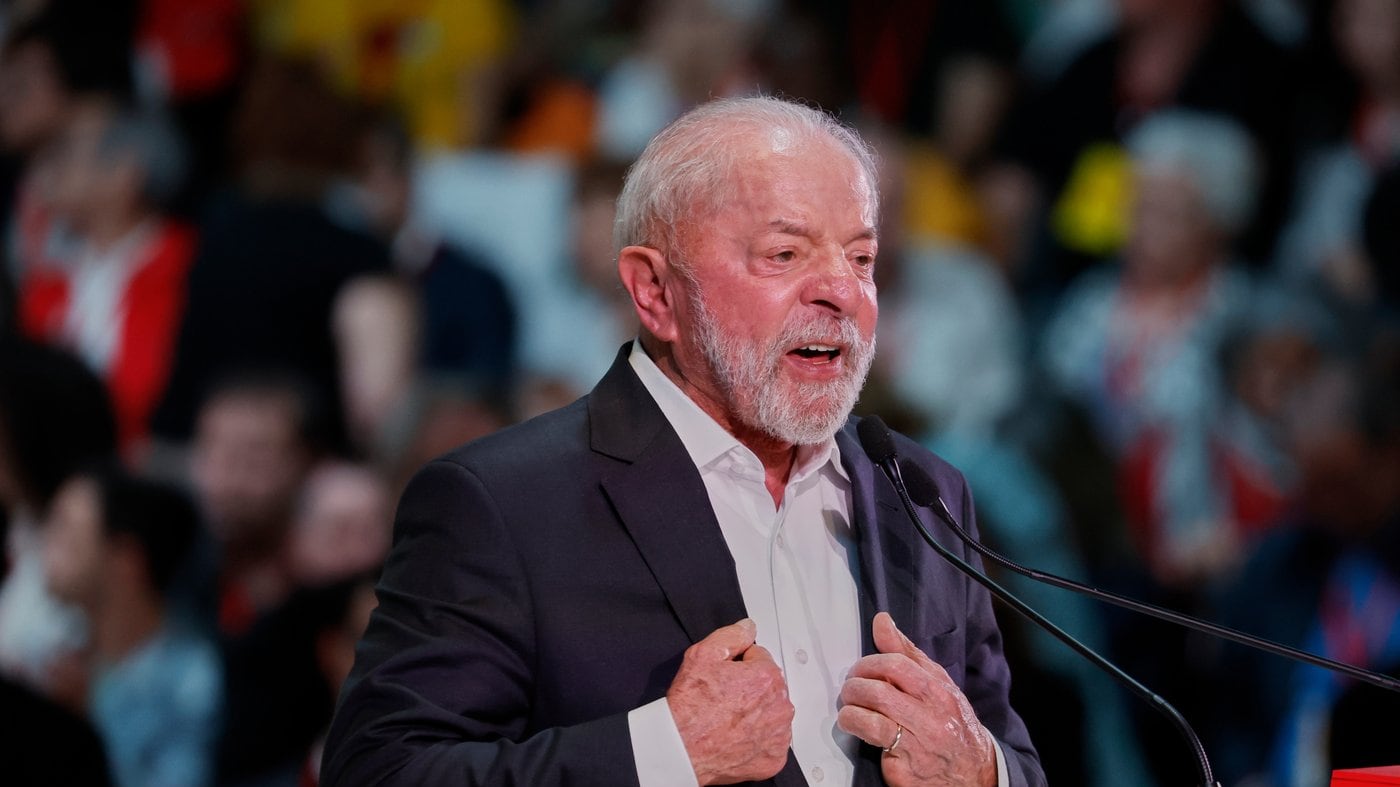
Brazil's President Luiz Inacio Lula da Silva delivers his speech during the Global Progressive Mobilization summit in Barcelona, Spain, April 18, 2026. (AP Photo/Joan Monfort, File)

RIO DE JANEIRO — Brazil’s President Luiz Inácio Lula da Silva and his rival Sen. Flávio Bolsonaro clashed over U.S. tariffs this week, as both sought to discourage the Trump administration from following through with its proposal of applying taxes of 25 per cent on Brazilian products despite an extensive U.S. trade surplus.

The two top candidates for October’s presidential election traded barbs over their responses, suggesting that they believe how they are perceived as handling the deeply unpopular U.S. tariffs will be a key factor in the vote.

While Sen. Bolsonaro, son of former President Jair Bolsonaro, emphasized that the tariffs would strengthen Lula, Brazil’s government rebuked the argument that its trade policies are unreasonable, discriminatory or burdensome to U.S. commerce.

The Trump administration first imposed a 50% tariff on Brazilian imports last July, citing a “witch hunt” against Jair Bolsonaro, who was on trial at the time for attempting a coup despite his 2022 electoral defeat to Lula and was later convicted.

In his letter, U.S. President Donald Trump also accused Brazil of unfair trade practices and said he had directed U.S. Trade Representative Jamieson Greer to initiate an investigation, which led the office to charge Brazil with lax anti-corruption enforcement and unfair tariffs, among other things, in June. The U.S. has had a goods trade surplus with Brazil for years.

After relations between the two countries appeared to warm following meetings between Lula and Trump last year, the U.S. proposal to impose tariffs in June led to a renewed souring of relations, with Lula warning the U.S. leader against meddling in the country’s elections.

Impact on public opinion before elections

The move prompted Lula to again defend Brazil’s sovereignty, a discourse that last year struck a chord and gave Lula an unexpected boost of popularity.

Flávio Bolsonaro himself pointed to the impact on public opinion in the document he sent to the office of United States Trade Representative (USTR) on Wednesday.

“Brazilian public polling shows that the incumbent government’s electoral position has strengthened during precisely the periods when U.S. tariff pressure has been most salient,” he wrote in the document, which included graphs of the polls, adding that the proposed tariffs would hand the government a “political victory.”

Bolsonaro also said the findings of the USTR investigation can be “reaffirmed in full even as implementation is suspended,” suggesting that tariffs be postponed.

Lula called the document “yet another act of treason against the fatherland.”

Jair Bolsonaro’s other son Eduardo, who lives in Texas, was convicted this year for illegally lobbying the U.S. government to threaten Brazilian officials to stop his father’s trial.

“It is unacceptable that the Bolsonaro family, with its sellout policies, seeks to submit Brazil to the interests of the United States,” Lula said Thursday on X. “There has never been, nor is there, any justification for a tariff hike now or later.”

Three hours later, Flávio Bolsonaro said on X that Lula is the only “one who wants the tariff hike against Brazilian products” and announced he is returning to the U.S. next week to reinforce the demand that the additional tariffs not be applied.

In response to the USTR’s investigation, Lula’s government rejected, among other grievances, the argument that its PIX instant payment system unfairly disadvantaged competing electronic payment services. It said its practices are lawful, neutral and promote competition.

Lula and Flávio Bolsonaro have also clashed over the Trump administration’s decision to classify two of Brazil’s main organized crime groups — First Command of the Capital, known as PCC, and Red Command — as terrorist organizations.

Sen. Bolsonaro supported the move, which some experts saw as a U.S. attempt to interfere in the election. Lula has argued the designation is inappropriate because the groups seek profit rather than political change.

Earlier this week, the U.S. announced sanctions targeting companies and individuals for their links to PCC and called it “the largest transnational criminal organization in the Western Hemisphere.”

___

Eléonore Hughes, The Associated Press