Nuclear News
US nuclear fuel enricher scales up to offset Russia uranium ban
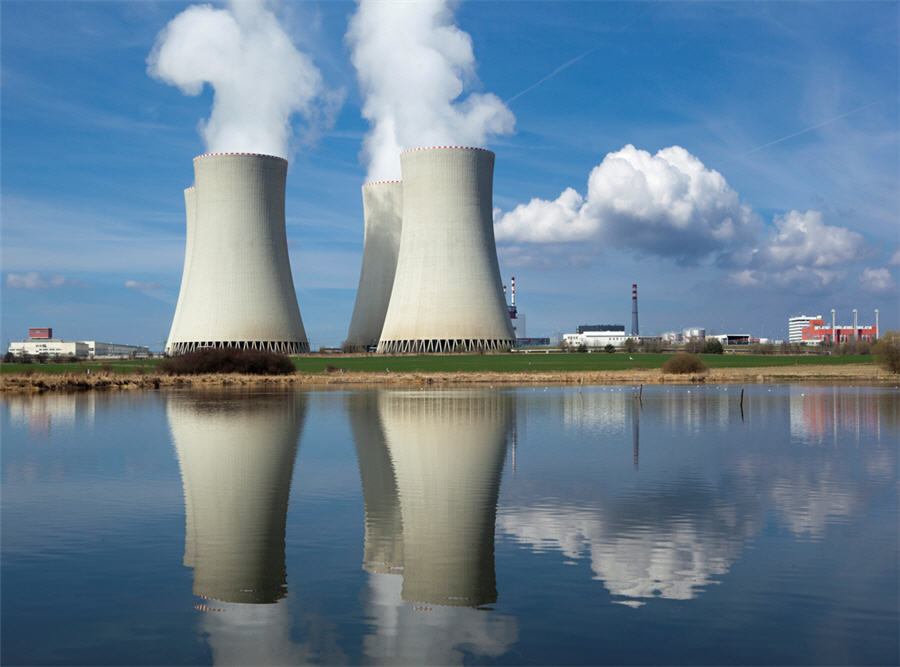
Urenco USA, the only commercial-scale nuclear fuel producer in the US, aims to lift its capacity to make enriched uranium by almost 50% through a multibillion expansion project as America moves to wean itself off of Russian uranium.

The British, Dutch and German consortium announced plans on Tuesday to expand its enrichment facility in Eunice, New Mexico. Urenco aims to have its plant update operational in six years, helping address concerns of possible fuel shortages at US nuclear sites amid a ban on Russian uranium.
“This expansion reinforces our commitment to a resilient US nuclear fuel supply chain focused on meeting the long-term needs of our customers as well as supporting US energy security,” chief executive officer Boris Schucht said in Tuesday’s statement.
Urenco’s expansion plans come as the Trump administration pushes to quadruple output from US nuclear plants, which will require a leap in uranium fuel production to meet that challenge. The US has been racing to provide huge amounts of electricity for AI data centers, with nuclear power emerging as one of the big winners.
Still, the Energy Information Administration said last September that owners and operators of US reactors face possible uranium shortages over the next decade. While Russia dominates the global market for the nuclear fuel — the nation supplied around a fifth of US demand two years ago — the US banned imports of Russian uranium in 2024, though there are allowances for limited waivers until 2028.
Urenco’s investment will fund the expansion of its New Mexico facility, with the first of 24 sets of centrifuges used to enrich uranium expected to be operational from 2032. The firm said the expansion will add 2.1 million separative work units of new enrichment capacity to the facility. The plant already has an existing annual capacity of 4.3 million SWU, which is roughly a third of current US demand.
(By John Ainger and Will Wade)
Urenco to Boost U.S. Uranium Enrichment Capacity by Nearly 50%
Urenco USA has announced plans for a major expansion of the National Enrichment Facility in Eunice, New Mexico, committing a multi-billion-dollar investment to increase uranium enrichment capacity by nearly 50% and reinforce the U.S. nuclear fuel supply chain.
The project will add 2.1 million separative work units (SWU) of enrichment capacity through the installation of up to 24 new centrifuge cascades using the company's gas centrifuge technology. Initial production from the expansion is expected to begin in 2032, with additional cascades coming online through 2036.
The expansion comes as the United States seeks to strengthen domestic nuclear fuel capabilities amid growing interest in both existing nuclear generation and next-generation reactor technologies. Low-enriched uranium (LEU), the primary product of the facility, fuels the current U.S. commercial reactor fleet, which generates roughly one-fifth of the nation's electricity. LEU is also a key feedstock for producing high-assay low-enriched uranium (HALEU), a fuel expected to be required by many advanced reactor designs planned for deployment in the next decade.
Urenco currently operates the only commercial-scale uranium enrichment facility in the United States. The plant's existing capacity stands at 4.3 million SWU annually, equivalent to about one-third of current U.S. enrichment demand. An ongoing expansion project adding another 700,000 SWU is scheduled for completion in 2027, while refurbishment work on existing capacity is also planned. Combined with the newly announced investment, the facility's installed capacity is expected to exceed 7 million SWU over the next decade.
The project is expected to support between 300 and 600 construction jobs at peak activity and create approximately 70 permanent operational positions. Urenco USA already employs more than 500 workers and contractors at the site, which has been operating commercially since 2010.
The New Mexico expansion forms part of a broader strategy by Urenco Global to add 4.6 million SWU of enrichment capacity across facilities in the United States, the Netherlands, and Germany. The move reflects a wider effort among Western nations to reduce dependence on Russian nuclear fuel services and build more resilient supply chains as governments increasingly view nuclear power as a key component of energy security and decarbonization strategies.
Urenco said customer commitments through new long-term contracts helped support the investment decision, underscoring growing demand for domestic enrichment services from U.S. utilities.
By Charles Kennedy for Oilprice.com
Urenco to build new US enrichment plant capacity
Urenco has announced a multi-billion-dollar investment to provide a near-50% increase in enrichment capacity at Urenco USA's National Enrichment Facility, with construction beginning in 2029 and first production of low-enriched uranium in 2032.
_58830.jpg)
Urenco USA's facility in Eunice, New Mexico, is currently the only commercial uranium enrichment capacity in the USA. Urenco's decision to increase capacity by 2.1 million SWU marks its commitment to strengthening the US nuclear fuel supply chain as the country expands the use of nuclear power, the company said. (SWU stands for Separative Work Unit - the standard measure of the effort required to separate U235 and U238 - see WNN's guide to uranium and the nuclear fuel cycle and World Nuclear Association's Information Library for more information about uranium enrichment.)
The new plant will use Urenco's proven gas-centrifuge enrichment technology, installed in up to 24 cascades of centrifuges. The first cascades are expected to start producing low-enriched uranium (LEU) in 2032, with additional cascades installed and coming online through to 2036.
LEU serves as the foundational fuel for the existing operating fleet of commercial light water reactors, which generate nearly 20% of US electricity, but will also serve as essential feedstock to produce high-assay low enriched uranium (HALEU) in the future, the company said. HALEU will be used in some advanced reactor designs planned for deployment in the 2030s.
Urenco invested about USD5 billion in the National Enrichment Facility - the first ever project to be issued a combined construction and operating licence by the US Nuclear Regulatory Commission and - at the time construction began in 2006 - the first new nuclear project in the USA in almost 30 years, according to information from the company. It began producing enriched uranium in June 2010.
The site now has some 64 cascades of centrifuges online and produces about 4.3 million SWU per year, which is sufficient capacity to meet nearly one-third of the annual US demand for enrichment services. An ongoing expansion project to add 700,000 SWU of capacity is due to be completed in 2027, and the company also plans to refurbish existing capacity at the site.
"For more than fifteen years, Urenco USA has provided its US utility customers with a reliable domestic supply of enriched uranium to power their nuclear reactors," said Boris Schucht, CEO of Urenco Global. "This expansion reinforces our commitment to a resilient US nuclear fuel supply chain focused on meeting the long-term needs of our customers as well as supporting US energy security through continued investment by Urenco."
Urenco USA currently employs more than 500 staff and long-term contractors at the New Mexico facility. A report published late last year by Oxford Economics found that the operations of Urenco USA contributed more than USD360 million to the US economy in 2024-2025.
The new project will support between 300-600 US jobs during the peak construction period and 70 jobs in long-term operations at the site, and Managing Director of Urenco USA John Kirkpatrick said the company's new investment will bring jobs and economic benefits to local communities and the state of New Mexico. "This is the most transformative expansion decision for Urenco in the past decade, and our New Mexico employees are ready to fuel the continued growth of the US power industry by bringing this additional capacity online. We are already preparing for the expansion and are excited to continue the work done onsite in recent years to add new capacity to our existing plant," he said.
The US capacity programme is part of a larger effort by UK-headquartered Urenco Global to install 4.6 million of new SWU enrichment capacity at sites in the United States, the Netherlands, and Germany over the next decade. It is also building a commercial HALEU facility - the first in Europe - at Capenhurst in the UK, with joint funding from the UK Government.
The US government has been taking steps to strengthen its domestic nuclear supply chain, and earlier this year awarded task orders totalling USD2.7 billion to three companies - General Matter, American Centrifuge Operating, and Orano Federal Services - to provide enrichment services for LEU and HALEU to transition the USA away from foreign sources of uranium and diversify its domestic fuel supply, plus a separate award of USD28 million going to Global Laser Enrichment to continue advancing next-generation uranium enrichment technology. Orano Federal Services's application for a construction and operating licence for its Project IKE centrifuge enrichment plant, to be built in Tennessee, is currently undergoing review by the US Nuclear Regulatory Commission.
Aura Energy targets 2026 FID for Mauritania uranium mine following deal with "major" nuclear utility
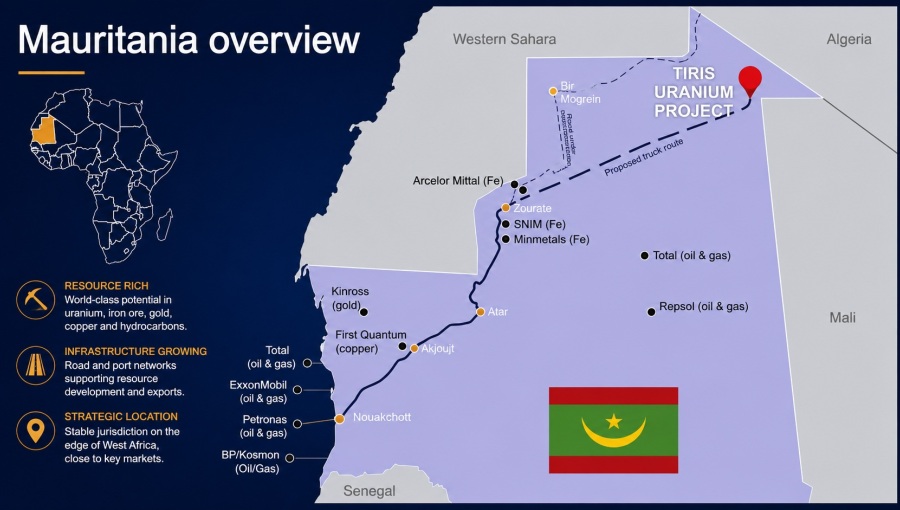
Aura Energy (ASX: AEE, AIM: AURA) is targeting a final investment decision (FID) for its Tiris uranium project in Mauritania by the end of 2026 after signing a memorandum of understanding (MOU) with a “major international nuclear utility” and advancing multiple funding options.
The Australian miner said in an update on June 2 that the non-binding MOU covers potential investment, uranium offtake and technical collaboration linked to the Tiris project, which would become Mauritania’s first uranium mine and the country’s first new mine in two decades.
Aura said the agreement supports a pathway toward a “substantial, well-capitalised funding partner” without excluding other financing routes. The company added that its bankable feasibility study (BFS) remains on track for completion in September 2026, with the FID targeted before year-end.
The company said its funding strategy includes a potential cornerstone equity investment from the unnamed nuclear utility, senior project debt discussions with the U.S. International Development Finance Corporation (DFC), and a separate non-binding fully funded proposal from a major US investment fund.
Aura executive chairman Phil Mitchell described the agreement as a “defining moment” for the Tiris project and said the company had now settled the processing flowsheet, removing a major technical uncertainty ahead of development.
The company said the revised processing design combines pre-leach centrifuge separation with ATA polymer dewatering and horizontal vacuum belt filtration technology. The ATA system is owned by Clean TeQ Water (ASX: CNQ).
Aura said early-stage analysis indicated positive project economics, although it stressed the assessments remain preliminary pending completion of the BFS. The company is also studying a potential expansion of annual uranium production capacity from a base case of 2mn pounds of U₃O₈ per year to as much as 3.5mn-4mn pounds annually.
The company said it was continuing optimisation work on mining methods, uranium recovery rates and energy costs, highlighting Mauritania’s strong solar-energy potential as a possible source of lower-cost power for the operation.
According to Aura, the MOU outlines a framework for potential strategic equity investment, funding support, uranium offtake agreements and technical cooperation, including a pilot plant programme in Mauritania expected to be completed by the fourth quarter of 2026.
Aura said the identity of the nuclear utility remains confidential under the terms of the agreement and will only be disclosed when required under ASX listing rules or once confidentiality obligations lapse.
While Mauritania is not currently a uranium producer, Africa already hosts some of the world’s largest uranium-producing jurisdictions, including Niger and Namibia, while developers across Tanzania, Zambia and Botswana are also advancing uranium exploration and development projects amid rising long-term demand forecasts tied to nuclear power expansion.
The renewed investment push comes as utilities in Europe, Asia and North America seek to secure future uranium supply outside traditional markets following geopolitical disruptions and tightening global inventories. Uranium prices have strengthened sharply since 2021, supporting new project development across Africa’s mining sector.
Spot uranium prices climbed from below $30 per pound in 2020 to above $100/lb in early 2024 — the highest levels in more than 15 years — before easing back into the $70–80/lb range during 2025 and 2026. The rally has been driven by growing reactor demand, supply disruptions in major producing countries such as Niger and Kazakhstan, and increased long-term contracting activity by utilities seeking to secure future fuel supply.
Cameco, Orano take full ownership of Cigar Lake
Cameco and Orano have reached agreement to acquire Tepco's 5% participating interest in the Cigar Lake Joint Venture.
_45982.jpg)
The agreement with Tokyo Electric Power Company Holdings' subsidiary Tepco Resources Inc will see Cameco's ownership in the Cigar Lake uranium mine in northern Saskatchewan increase by 2.871 percentage points to 57.418%, while Orano's share will rise by 2.129 percentage points to 42.582%, giving the two companies 100% ownership of the project between them. Idemitsu Canada Resources Ltd previously owned a 7.875% stake, which Cameco and Orano agreed to purchase in 2022.
Cameco said the purchase cost to acquire its respective share of Tepco's interest in Cigar Lake was around CAD115.75 million (USD83.7 million), subject to customary closing adjustments. The acquisition is subject to regulatory approvals and other standard closing conditions, with the transaction expected to close in the third quarter of this year.
"Cigar Lake is among the world's best uranium mines, producing the highest-grade uranium ore from a safe, reliable, and cost-effective operation," said Cameco's CEO Tim Gitzel. "Increasing our ownership in this world-class, tier-one asset further demonstrates our commitment to our strategy, with scarce, licensed, permitted assets like Cigar Lake playing an essential role in fuelling global ambitions to expand nuclear energy generation."
Orano Canada CEO and President Pascal Bastien said the investment reflects the company's long-term confidence in Saskatchewan and its importance to Orano's future growth in the global nuclear fuel cycle, and thanked Tepco for its contribution to the operation over many years. "Together with Cameco, we remain committed to the safe and reliable operation of the Cigar Lake mine and McClean Lake mill, while continuing to support our employees and the communities where we operate," he said.
Cigar Lake is described by operator Cameco as the world's highest grade uranium mine, with an average ore grade of 16.33% U3O8, but the orebody is in soft Athabasca sandstone, and ground conditions at the 480-metre-deep mine are challenging. Cameco developed an innovative jet-boring technique specifically for the project, freezing the ground and using a high-pressure water jet to mine out cavities in the frozen ore. The mixture of ore and water is then pumped to underground grinding and processing circuits. Thickened ore slurry is pumped to the surface and transported in tanker trucks 70 kilometres to the McClean Lake mill - operated by Orano - where it is processed into uranium concentrate.
Cigar Lake has estimated proven and probable reserves of 172.4 million pounds of U3O8 (66,313 tU), measured and indicated resources of around 26.3 million pounds, and inferred resources of 20.0 million pounds. (100% basis, as of December 31, 2025). Production began in 2014, and by the end of 2025, it had produced around 174.5 million packaged pounds (on a 100% basis).
Cameco's production outlook for the mine for 2026 is 17.5-18 million pounds U3O8 on a 100% basis, with the company planning to continue production and development activities in the area currently being mined, while continuing to advance development work related to Cigar Lake extension needed to extend the life of the mine to 2036. Planned capital projects related to the extension include construction of a freeze pad, freeze distribution, and underground infrastructure, Cameco said.
New York issues solicitations for nuclear new-build
_79052.jpg)
The Request for Qualifications (RFQ) follows on from Requests for Information issued by the authority last year, to which more than 30 entities - including 23 potential developers or partners and eight Upstate New York communities - responded. It aims to identify a set of developers qualified to deliver an advanced nuclear generation project across two possible technology pathways: a large-scale reactor, "such as the AP1000" and/or a small modular reactor "such as the BWRX-300".
Respondents are asked to present "credible pathways" to deliver at least 1 GW of advanced nuclear capacity in Upstate New York, including technology readiness, siting and permitting strategy, schedule and cost assumptions, ownership structures, and partnership models. Qualified firms will then be invited to participate in a future Request for Proposal.
The authority said it would consider so-called nth-of-a-kind Generation III+ or Generation IV technologies provided that a first-of-a-kind project (either by the respondent or by another owner/developer) is "at or beyond First Nuclear Concrete by early 2030". The selected pathway must "demonstrate a credible path to both produce 1+ GW of energy and start construction before 2033" to ensure eligibility for investment tax credits under the US Inflation Reduction Act Investment Tax Credit. First-of-a-kind technologies and micro modular reactors are outside the scope of this project. Bidders must have "commensurate experience".
The deadline for submissions is 26 June.
The second solicitation is a Request for Applications (RFA) inviting eligible training providers based in New York State to apply for funding to develop and deliver technical training under the Nuclear Energy Workforce Training initiative. The deadline for submissions under the RFA is 31 July.
"Nearly a year ago, I called on the Power Authority to lay the groundwork for the next era of emissions-free power in New York as part of my all-of-the-above approach to energy," New York Governor Kathy Hochul said. "The solicitations announced today will help ensure New York is poised to lead the nation in new nuclear development, that along with renewables, will provide needed power in the face of increasing demand to keep the lights on while helping keep costs down. By taking a proactive approach, we are preparing our state to take advantage of the opportunities associated with advanced nuclear, which will provide round-the-clock reliable clean energy while cultivating the partnerships needed to bring the project from concept to concrete."
"New York needs reliable, around‑the‑clock clean power to meet growing energy demand, sustain economic momentum, and achieve a clean energy economy," New York Power Authority President and CEO Justin Driscoll said. "These solicitations will help NYPA establish the roadmap for deploying the first new nuclear facility in New York in a generation that will deliver the dependable, emissions‑free power we will rely on for decades to come."
Four nuclear reactors - all operated by Constellation Energy - currently provide some 21.4% of all New York's electricity, and 41.6% of its carbon-free electricity, according to information from the Nuclear Energy Institute. The State of New York has already supported the continued operation of those facilities - two units at Nine Mile Point and the single-unit Ginna and Fitzpatrick plants - by explicitly recognising their zero-carbon attributes in its clean energy mandate. Two pressurised water reactors at the Indian Point plant were closed down prematurely in 2020 and 2021 respectively following on from a settlement agreement between the plants' then-owner Entergy and the State of New York, although earlier this year New York Congressman Mike Lawler called for those units to be returned to service.
UK to cooperate with Singapore on nuclear regulation
_79926.jpg)
The MoU was signed at the Office for Nuclear Regulation's (ONR's) office in London by Paul Dicks, its Director of Regulation - New Reactors, and Li-Na Koh, Deputy Chief Executive Officer of the National Environment Agency (NEA), and witnessed by Grace Fu, Singapore's Minister for Sustainability and the Environment.
The MoU - valid for five years - establishes a framework for exchanging safety-related regulatory information across the full nuclear lifecycle - from siting, construction and commissioning through to operations, decommissioning and waste management. It also covers the regulation of transporting radioactive material, radioactive sources, emergency preparedness, and importantly, regulatory considerations around new reactor technologies. The agreement provides for personnel exchanges and technical visits, helping the development of regulatory capability on both sides.
The partners also agreed to implement a workplan that will support sharing of information that delivers mutual benefit to both parties, and specify the focus areas for collaboration and desired outcomes.
"Sharing licencing frameworks, inspection procedures, safety assessments and research helps ensure that robust regulatory standards keep pace with technological development, wherever in the world that development is happening," ONR said. "This is part of our commitment to support embarking nations in the deployment of nuclear technologies and contribution to worldwide nuclear harmonisation and we were happy to explain and talk through our assessment and licencing processes to the Singapore delegation as they work to establish a new nuclear regulatory framework."
NEA said the cooperation with ONR supports Singapore's overarching effort to build capabilities in nuclear safety, and to study the feasibility of the safe deployment of nuclear energy in the island city-state.
"The MoU with the United Kingdom's Office for Nuclear Regulation will strengthen Singapore's capabilities in radiation protection, nuclear safety and assessment," Koh said. "Through partnerships with well-established regulators like ONR, NEA will deepen its technical expertise to understand new reactor technologies and build the institutional capabilities needed to rigorously assess nuclear safety."
The NEA, as the radiation and nuclear safety regulator, has been developing Singapore's nuclear safety capabilities through close partnerships with the International Atomic Energy Agency and established regulatory bodies in Finland, France and the USA, as well as its regional neighbours with whom it engages in nuclear safety cooperation discussions.
In March 2022, the EMA released a report that concluded nuclear energy could supply about 10% of Singapore's energy needs, helping its power sector achieve net-zero carbon emissions by 2050.
In September last year, the EMA appointed UK-headquartered engineering firm Mott MacDonald to conduct a study on the safety and technical feasibility of advanced nuclear energy technologies. The study aims to evaluate the safety performance and technical feasibility of advanced nuclear energy technologies, such as small modular reactors, based on their safety features, technology maturity, and commercial readiness.
Delivering his Budget 2025 speech in February 2025, Prime Minister Lawrence Wong - who is also Finance Minister - said the government would study the potential deployment of nuclear power in Singapore and take further steps to systematically build up capabilities in this area. "We will need new capabilities to evaluate options, and to consider if there is a solution that Singapore can deploy in a safe and cost-effective way," he said.
Fuel transfer work begins at Fukushima Daiichi unit 2
_99641.jpg)
A total of 615 fuel assemblies (587 used and 28 unused) are currently stored in unit 2's storage pool.
Tokyo Electric Power Company (Tepco) completed an initial survey of Fukushima Daiichi unit 2's fuel pool using a submersible remotely-operated vehicle in June 2020. It concluded there were no obstacles to the removal of assemblies from the pool of unit 2.
Similar to the reactors at units 1 and 3, unit 2's reactor suffered a core meltdown after it temporarily lost its cooling functions, but the reactor building - which also houses the fuel storage pool - was spared a hydrogen explosion.
Tepco completed the construction of a fuel removal work platform at unit 2 in June 2024. In May 2025, fuel handling equipment was loaded onto the work platform. Installation of the fuel handling equipment was completed in March this year. Since March, Tepco has been conducting training during which the actual fuel handling equipment and onsite transport casks were used to move simulated fuel in order to repeatedly practice the fuel removal procedure.
Tepco said the first fuel assembly was lifted from a rack within the storage pool using a remotely controlled crane and loaded into a transport cask in the pool on Tuesday. Once full, the cask will subsequently be raised from the pool and lowered onto a trailer from a platform installed next to the building.
_e532a429.jpg)
The fuel assembly is placed in a transport cask (Image: Tepco)
The company expects the process to remove all 615 assemblies to be completed in fiscal year 2028 (ending March 2029).
Tepco completed the removal of 1331 used fuel assemblies and 202 unused ones from the storage pool at the top of Fukushima Daiichi 4's heavily damaged reactor building in December 2014. Removal of the used fuel from the damaged building eliminated the largest radiological hazard at the site.
The process of removing all 566 fuel assemblies from the storage pool of unit 3 was completed in February 2021. The removal of fuel began in April 2019 after several years of work to remove debris from the reactor building service floor and preparations for this work.
The transfer of 392 fuel assemblies from the storage pool at unit 1 to the common on-site storage pool has yet to start.
The removal of 398 fuel assemblies from the undamaged unit 6 was completed in April last year, whilst the removal of 1388 assemblies from the pool of unit 5 has been under way since July.
Milestones reached at Xudabao construction site
_83068.jpg)
China National Nuclear Corporation (CNNC) announced that hot functional tests - which simulate the temperatures and pressures which the reactor systems will be subjected to during normal operation - were completed at Xudabao 3 on 2 June.
Hot functional tests involve increasing the temperature of the reactor coolant system and carrying out comprehensive tests to ensure that coolant circuits and safety systems are operating as they should. Carried out before the loading of nuclear fuel, such testing simulates the thermal working conditions of the power plant and verifies that nuclear island and conventional equipment and systems meet design requirements.
_62feca4f.jpg)
(Image: CNNC)
Cold functional tests - which are carried out to confirm whether components and systems important to safety are properly installed and ready to operate in a cold condition - were completed at Xudabao 3 in December. The main purpose of those tests - which marked the first time the reactor systems were operated together with the auxiliary systems - was to verify the leak-tightness of the primary circuit.
CNNC said the completion of the hot tests at Xudabao 3 "lay a solid foundation for subsequent nuclear fuel loading, grid connection, and power generation".
Unit 2 reactor vessel in place
CNNC said the reactor pressure vessel (RPV) of unit 2 was successfully hoisted into place on 28 May, "marking the official start of the peak period for the installation of main equipment for unit 2".
_110464b6.jpg)
(Image: CNNC)
The high-strength steel RPV - weighing more than 300 tonnes - will house the reactor core and all associated components, including the reactor vessel internals which support and stabilise the core within the reactor vessel, as well as providing the path for coolant flow and guiding movement of the control rods.
Background
The Ministry of Ecology and Environment announced in November 2023 that the National Nuclear Safety Administration had decided to issue a construction licence for Xudabao units 1 and 2, which will both feature 1250 MWe CAP1000 reactors - the Chinese version of the Westinghouse AP1000. A ceremony was held later that month at the Xudabao site near Xingcheng City, Huludao, to mark the start of construction of unit 1.
The Xudabao project (also known as Xudapu) was originally expected to comprise six CAP1000 reactors, with units 1 and 2 in the first phase. Site preparation began in November 2010. The National Development and Reform Commission gave its approval for the project in January 2011. CNNC noted that the total investment in units 1 and 2 exceeds CNY48 billion (USD6.6 billion).
However, with a change in plans, construction of two Russian-supplied VVER-1200 reactors as Xudabao units 3 and 4 began in July 2021 and May 2022, respectively.
_f2695e65.jpg)
Xudabao 3 and 4 (Image: CNNC)
The Xudabao plant is owned by Liaoning Nuclear Power Company Ltd, in which CNNC holds a 70% stake with Datang International Power Generation Company holding 20% and State Development and Investment Corporation owning 10%. The general contractor is China Nuclear Power Engineering Company Ltd, a subsidiary of CNNC.
Two further CAP1000 reactors are proposed for units 5 and 6 at the Xudabao plant.
Upon completion, the six-unit project - with a total installed capacity exceeding 7.6 MWe - will provide nearly 54 billion kilowatt-hours of clean electricity annually, saving 19.2 million tonnes of standard coal and reducing carbon dioxide emissions by 56.7 million tonnes annually, CNNC said.
Containment dome installed at Lianjiang 1
_21742.jpg)
The steel dome module is an important component of the shielded building, situated on top of a steel-concrete composite structure, and supporting the passive containment cooling water storage tank. The steel dome is conical in shape, consisting of 32 radial main beams, three ring beams, 96 steel cladding panels, and three steel platforms connected at the bottom. It has a diameter of about 41 metres, a height of about 11 metres, and a total lifting weight of nearly 1,000 tonnes.
"This marks the official completion of the main structure of Unit 1's main plant, signifying the project's transition from the civil construction phase to the equipment installation phase, laying a solid foundation for subsequent project progress," China National Nuclear Corporation (CNNC) said. "As a crucial final step in the modular construction of the project's steel structure, the steel dome is not only a key symbol of the main plant's structural closure but also a critical barrier ensuring the safe and stable operation of the nuclear power plant."
_ba95fab7.jpg)
(Image: CNNC)
The construction of the first two 1,250 MWe CAP1000 reactors - the Chinese version of the Westinghouse AP1000 - at the Lianjiang site was approved by China's State Council in September 2022. Excavation works for the units began in the same month, with the pouring of first concrete for the foundation of unit 1 starting in September 2023 and that of unit 2 in April 2024. Unit 1 is expected to be completed and put into operation in 2028.
CNNC is constructing the plant on behalf of the State Power Investment Corporation (SPIC).
The CAP1000 reactor design uses modular construction techniques, enabling large structural modules to be built at factories and then installed at the site. This means that more construction activities can take place at the same time, reducing the time taken to build a plant as well as offering economic and quality control benefits.
Once all six CAP1000 units planned at the site are completed, the annual power generation will be about 70.2 TWh, which will reduce standard coal consumption by more than 20 million tonnes, and reduce carbon dioxide emissions by more than 52 million tonnes, sulphur dioxide by about 171,000 tonnes and nitrogen oxides by about 149,000 tonnes.
SPIC says the Lianjiang plant will be the first nuclear power project in China to adopt seawater secondary circulation cooling technology as well as the first to use a super-large cooling tower.
