.jpg)
Credit: Wikipedia Commons
June 8, 2026
By P. K. Balachandran
As early as 2016, the Chinese Consul General in Kolkata had mooted the idea of jointly celebrating the work of Xuanzang, who translated Buddhist scriptures into Chinese and helped Buddhism gain wide acceptance in China.
Thanks to the thaw in relations between India and China, a 10-year old project to jointly secure UNESCO recognition for the work of the 7 th. Century Chinese Buddhist monk, Xuanzang, is set to take off.
China had suggested to India that the two countries jointly bid for UNESCO’s recognition of Xuanzang, who translated Buddhist texts from Sanskrit and Pali to Chinese, and gave Buddhism a firm foundation in China and South East Asia. The goal is to put Xuanzang’s work in UNESCO’s “Intangible Cultural Heritage List.”
The Indian side responded favourably, and internal consultations are underway. An Indian representative is expected to visit China in the coming weeks to hold discussions with his counterparts.
The project aims to identify practices, narratives, and sites associated with Xuanzang. The proposed nomination needs delineation of cultural practices linked to the transmission of Buddhist knowledge, pilgrimage routes traversed by Xuanzang and oral traditions preserved in monasteries and local communities.
Need to Establish It As A Living Heritage
The project must demonstrate that Xuanzang is a “living heritage” in accordance with UNESCO’s criteria. UNESCO’s Intangible Cultural Heritage (ICH) framework, under the 2003 Convention, recognises living traditions such as practices, expressions, knowledge systems and rituals that communities “continue to transmit across generations”.
The list excludes physical manifestations like monuments.
The UNESCO list of Intangible Heritages includes material from over 150 countries, with multinational nominations forming a growing share as States collaborate on shared cultural traditions.
India ratified the convention in 2005 and currently has 16 elements inscribed on UNESCO’s Intangible Culture List, including Yoga, the Kumbh Mela and Durga Puja. Inter-State nominations include Nowruz, a transnational cultural practice shared by several countries in West and South Asia.
Inter-State nominations require participating States to agree on documentation, safeguarding measures and community participation. A joint Sino-Indian proposal would require alignment on the narrative and shared ownership of the elements included.
UNESCO nominations are not easy to get. They require extensive documentation, including evidence of community participation, plans for safeguarding, and demonstration of the element’s continued practice.
UNESCO guidelines require that nominations reflect “community consent and participation”. Therefore, local communities will have to be consulted.
Discussions between India and China will focus on mapping existing material on Xuanzang across archives, monasteries and academic institutions. While India will be examining records related to Nalanda and other sites linked to his stay, China will be compiling material from its own historical sources.
Idea Mooted A Decade Ago
Ten years ago, in 2016, the Chinese Consulate General in Kolkata had held a public event to explain the depth of China’s “cooperative relationship” with India over the last 1400 years. A seminar on “Xuan Zang and China-India Friendly Interactions” was held in Kolkata, which traced the monk’s role “in strengthening Indo-China relations.”
The Chinese Consulate was working with the K.P. Jayaswal Institute, a Bihar-based archaeological institution run by the Bihar Government, to study Stupas.
Improved Climate for Sino-Indian Cooperation
The current outreach from China comes at a time when India-China relations have been seeing attempts at a rapprochement after a period of strain following the 2020 standoff along the Line of Actual Control (the de facto border) between the two countries in Ladakh.
Diplomatic and military talks have continued, with both sides maintaining engagement through established mechanisms. India has allowed increased Chinese investments in its industries and the Hindu pilgrimage to Kailash in Tibet has resumed.
Faxian’s Quest
Buddhism travelled from India to China in the “Later Han period” (from 25-220 AD). Initially, the Chinese rejected it as a “foreign” religion. Only later, during a period of turmoil between 220-and 589 AD, Mahayana or “Great Vehicle” Buddhism began winning Chinese adherents.
It was dissatisfaction with existing Chinese translations of Sanskrit Buddhist scriptures that drove the Buddhist monk Faxian (5 th.Century AD) to set out for India at age 65, intent on finding the originals. After studying them for 10 years in India, he brought back to China a great number of copies of Buddhist texts and translated them from Sanskrit into Chinese. Among them, two of the most important were the “Mahaparinirvana-sutra” a text glorifying the eternal, personal, and pure nature of “nirvana”, on which the nirvana school in China then based its doctrines, and the “Vinaya” (rules of discipline for the monks) of the “Mahasanghika” school, which became available for the regulation of the numerous monastic communities in China.
Xuanzang’s Quest
More than two centuries after Faxian came another Chinese Buddhist monk, Xuanzang (602-664 AD ). He set out for India with much the same purpose in mind – to increase his understanding of the Buddha’s teachings by going to the source. He also wanted to get a feel of the places the Buddha trod.
Judson Knight, writing in encyclopedia.com about Xuanzang, says that under the Sui Dynasty (589-618 AD) and the newly founded T’ang Dynasty (618-907 AD ), Xuanzang and other monks faced a hostile environment. Not only did the T’ang dynasty’s first ruler, Kao Tsu (618-626 AD), embrace the rival faith of Taoism, but placed restrictions on travel in the Western parts of China, which was the gateway to Central Asia and India.
Xuanzang’s Search For Theological Clarity
But Xuanzang was determined to go to India. Whereas Faxian was dissatisfied with Chinese translations of the Buddhist scriptures and wanted to see the originals, Xuanzang’s longing arose from his preoccupation with difficult theological questions. He needed to consult the “Yogacarabhumi Sastra” (dated between 4 th., and 5 th., century AD), which could only be found in India. Therefore, he resolved to make the arduous, extremely challenging journey across the mountains.
But the Chinese Emperor had barred travel beyond the Western borders of China. “As I approached China’s extreme outpost at the edge of the Desert of Lop, I was caught by the Chinese army. Not having a travel permit, they wanted to send me to Tun-huang to stay at the monastery there. However, I said ‘If you insist on detaining me I will allow you to take my life, but I will not take a single step backwards in the direction of China.'”
As it turned out, the top-most government official in the region was a devout Buddhist, and he chose to look the other way, allowing Xuanzang to pass the military outposts that separated China from the lands of Central Asia.
Further West, Xuanzang encountered bandits and marauding tribes, as well as admiring rulers and welcoming groups of monks. He visited Tashkent, Samarkand, and Balkh. (The first two are today in Uzbekistan, and the last in Afghanistan). All three were important trading and cultural centres in the premodern era.
Xuanzang reached India in 631 AD and made his way to the monastery at Nalanda, India’s largest Buddhist centre, where the esteemed master, Silabhadra, taught him personally for 15 months. Xuanzang spent five years at Nalanda, during which time he composed three religious treatises in Sanskrit.
He also travelled to various parts of India, including Bengal, the Deccan Plateau in Central India, and both the Coromandel (eastern) and Malabar (western) coasts. In addition, he journeyed through the Indus River Valley.
Rousing Reception In China
He met with the Emperor, and briefed him on all the lands he had visited. Emperor T’ai Tsung offered him a position as his personal advisor, but Xuanzang declined. So the Emperor set him up at the nearby Hung-fu Monastery with a fleet of assistants to help him in his translation work. The only stipulation was that Xuanzang should write a record of his travels, “Ta T’ang Hsi-yü-chi”” or “The Great T’ang Record of Travels to the Western Lands,” which he completed in 646 AD.
Xuanzang’s translation work continued under the reign of Emperor Kao Tsung (649-683 AD ). In 19 years, he produced 76 books. When the great monk died in 664 AD, it was said that a million people attended his funeral. In later years he became a legend.
His translations, commentaries, and those of his close followers make up a quarter of Buddhist literature in Chinese. And the contact he had initiated with India led to close ties between the T’ang dynasty and India
About P. K. Balachandran
P. K. Balachandran is a senior Indian journalist working in Sri Lanka for local and international media and has been writing on South Asian issues for the past 21 years.
View all posts by P. K. Balachandran →
June 8, 2026
By P. K. Balachandran
As early as 2016, the Chinese Consul General in Kolkata had mooted the idea of jointly celebrating the work of Xuanzang, who translated Buddhist scriptures into Chinese and helped Buddhism gain wide acceptance in China.
Thanks to the thaw in relations between India and China, a 10-year old project to jointly secure UNESCO recognition for the work of the 7 th. Century Chinese Buddhist monk, Xuanzang, is set to take off.
China had suggested to India that the two countries jointly bid for UNESCO’s recognition of Xuanzang, who translated Buddhist texts from Sanskrit and Pali to Chinese, and gave Buddhism a firm foundation in China and South East Asia. The goal is to put Xuanzang’s work in UNESCO’s “Intangible Cultural Heritage List.”
The Indian side responded favourably, and internal consultations are underway. An Indian representative is expected to visit China in the coming weeks to hold discussions with his counterparts.
The project aims to identify practices, narratives, and sites associated with Xuanzang. The proposed nomination needs delineation of cultural practices linked to the transmission of Buddhist knowledge, pilgrimage routes traversed by Xuanzang and oral traditions preserved in monasteries and local communities.
Need to Establish It As A Living Heritage
The project must demonstrate that Xuanzang is a “living heritage” in accordance with UNESCO’s criteria. UNESCO’s Intangible Cultural Heritage (ICH) framework, under the 2003 Convention, recognises living traditions such as practices, expressions, knowledge systems and rituals that communities “continue to transmit across generations”.
The list excludes physical manifestations like monuments.
The UNESCO list of Intangible Heritages includes material from over 150 countries, with multinational nominations forming a growing share as States collaborate on shared cultural traditions.
India ratified the convention in 2005 and currently has 16 elements inscribed on UNESCO’s Intangible Culture List, including Yoga, the Kumbh Mela and Durga Puja. Inter-State nominations include Nowruz, a transnational cultural practice shared by several countries in West and South Asia.
Inter-State nominations require participating States to agree on documentation, safeguarding measures and community participation. A joint Sino-Indian proposal would require alignment on the narrative and shared ownership of the elements included.
UNESCO nominations are not easy to get. They require extensive documentation, including evidence of community participation, plans for safeguarding, and demonstration of the element’s continued practice.
UNESCO guidelines require that nominations reflect “community consent and participation”. Therefore, local communities will have to be consulted.
Discussions between India and China will focus on mapping existing material on Xuanzang across archives, monasteries and academic institutions. While India will be examining records related to Nalanda and other sites linked to his stay, China will be compiling material from its own historical sources.
Idea Mooted A Decade Ago
Ten years ago, in 2016, the Chinese Consulate General in Kolkata had held a public event to explain the depth of China’s “cooperative relationship” with India over the last 1400 years. A seminar on “Xuan Zang and China-India Friendly Interactions” was held in Kolkata, which traced the monk’s role “in strengthening Indo-China relations.”
The Chinese Consulate was working with the K.P. Jayaswal Institute, a Bihar-based archaeological institution run by the Bihar Government, to study Stupas.
Improved Climate for Sino-Indian Cooperation
The current outreach from China comes at a time when India-China relations have been seeing attempts at a rapprochement after a period of strain following the 2020 standoff along the Line of Actual Control (the de facto border) between the two countries in Ladakh.
Diplomatic and military talks have continued, with both sides maintaining engagement through established mechanisms. India has allowed increased Chinese investments in its industries and the Hindu pilgrimage to Kailash in Tibet has resumed.
Faxian’s Quest
Buddhism travelled from India to China in the “Later Han period” (from 25-220 AD). Initially, the Chinese rejected it as a “foreign” religion. Only later, during a period of turmoil between 220-and 589 AD, Mahayana or “Great Vehicle” Buddhism began winning Chinese adherents.
It was dissatisfaction with existing Chinese translations of Sanskrit Buddhist scriptures that drove the Buddhist monk Faxian (5 th.Century AD) to set out for India at age 65, intent on finding the originals. After studying them for 10 years in India, he brought back to China a great number of copies of Buddhist texts and translated them from Sanskrit into Chinese. Among them, two of the most important were the “Mahaparinirvana-sutra” a text glorifying the eternal, personal, and pure nature of “nirvana”, on which the nirvana school in China then based its doctrines, and the “Vinaya” (rules of discipline for the monks) of the “Mahasanghika” school, which became available for the regulation of the numerous monastic communities in China.
Xuanzang’s Quest
More than two centuries after Faxian came another Chinese Buddhist monk, Xuanzang (602-664 AD ). He set out for India with much the same purpose in mind – to increase his understanding of the Buddha’s teachings by going to the source. He also wanted to get a feel of the places the Buddha trod.
Judson Knight, writing in encyclopedia.com about Xuanzang, says that under the Sui Dynasty (589-618 AD) and the newly founded T’ang Dynasty (618-907 AD ), Xuanzang and other monks faced a hostile environment. Not only did the T’ang dynasty’s first ruler, Kao Tsu (618-626 AD), embrace the rival faith of Taoism, but placed restrictions on travel in the Western parts of China, which was the gateway to Central Asia and India.
Xuanzang’s Search For Theological Clarity
But Xuanzang was determined to go to India. Whereas Faxian was dissatisfied with Chinese translations of the Buddhist scriptures and wanted to see the originals, Xuanzang’s longing arose from his preoccupation with difficult theological questions. He needed to consult the “Yogacarabhumi Sastra” (dated between 4 th., and 5 th., century AD), which could only be found in India. Therefore, he resolved to make the arduous, extremely challenging journey across the mountains.
But the Chinese Emperor had barred travel beyond the Western borders of China. “As I approached China’s extreme outpost at the edge of the Desert of Lop, I was caught by the Chinese army. Not having a travel permit, they wanted to send me to Tun-huang to stay at the monastery there. However, I said ‘If you insist on detaining me I will allow you to take my life, but I will not take a single step backwards in the direction of China.'”
As it turned out, the top-most government official in the region was a devout Buddhist, and he chose to look the other way, allowing Xuanzang to pass the military outposts that separated China from the lands of Central Asia.
Further West, Xuanzang encountered bandits and marauding tribes, as well as admiring rulers and welcoming groups of monks. He visited Tashkent, Samarkand, and Balkh. (The first two are today in Uzbekistan, and the last in Afghanistan). All three were important trading and cultural centres in the premodern era.
Xuanzang reached India in 631 AD and made his way to the monastery at Nalanda, India’s largest Buddhist centre, where the esteemed master, Silabhadra, taught him personally for 15 months. Xuanzang spent five years at Nalanda, during which time he composed three religious treatises in Sanskrit.
He also travelled to various parts of India, including Bengal, the Deccan Plateau in Central India, and both the Coromandel (eastern) and Malabar (western) coasts. In addition, he journeyed through the Indus River Valley.
King Harsha Hosts Xuanzang
However, a king named Kumara invited Xuanzang to visit him in Assam, in northeastern India, an offer he could not refuse. This in turn led King Kumara’s rival King Harsha ( 590-647 AD), India’s greatest ruler of the early medieval era, to make an invitation of his own.
At Harsha’s court in 642 AD, Xuanzang greatly impressed a gathering of several thousand kings and wise men, winning arguments with Hindu and Jain theologians. Pleased, Harsha showered him with gifts, but Xuanzang accepted only a buffalo-skin coat to keep him warm and dry, and an elephant to transport the many books he had brought with him. Finally, in 643 AD, he set off for China.
Given the fact that he had left China illegally, Xuanzang sent a letter to the Emperor, announcing his return. Eight months later, he received a welcoming reply. As it turned out, Emperor Kao Tsu had been ousted by his son T’ai Tsung (626-649 AD ), who was a Buddhist and eager to meet Xuanzang. The latter arrived at his capital in Ch’ang in early in 645, and the crowd that came out to greet him was so large that at first he could not enter the city.
However, a king named Kumara invited Xuanzang to visit him in Assam, in northeastern India, an offer he could not refuse. This in turn led King Kumara’s rival King Harsha ( 590-647 AD), India’s greatest ruler of the early medieval era, to make an invitation of his own.
At Harsha’s court in 642 AD, Xuanzang greatly impressed a gathering of several thousand kings and wise men, winning arguments with Hindu and Jain theologians. Pleased, Harsha showered him with gifts, but Xuanzang accepted only a buffalo-skin coat to keep him warm and dry, and an elephant to transport the many books he had brought with him. Finally, in 643 AD, he set off for China.
Given the fact that he had left China illegally, Xuanzang sent a letter to the Emperor, announcing his return. Eight months later, he received a welcoming reply. As it turned out, Emperor Kao Tsu had been ousted by his son T’ai Tsung (626-649 AD ), who was a Buddhist and eager to meet Xuanzang. The latter arrived at his capital in Ch’ang in early in 645, and the crowd that came out to greet him was so large that at first he could not enter the city.
Rousing Reception In China
He met with the Emperor, and briefed him on all the lands he had visited. Emperor T’ai Tsung offered him a position as his personal advisor, but Xuanzang declined. So the Emperor set him up at the nearby Hung-fu Monastery with a fleet of assistants to help him in his translation work. The only stipulation was that Xuanzang should write a record of his travels, “Ta T’ang Hsi-yü-chi”” or “The Great T’ang Record of Travels to the Western Lands,” which he completed in 646 AD.
Xuanzang’s translation work continued under the reign of Emperor Kao Tsung (649-683 AD ). In 19 years, he produced 76 books. When the great monk died in 664 AD, it was said that a million people attended his funeral. In later years he became a legend.
His translations, commentaries, and those of his close followers make up a quarter of Buddhist literature in Chinese. And the contact he had initiated with India led to close ties between the T’ang dynasty and India
About P. K. Balachandran
P. K. Balachandran is a senior Indian journalist working in Sri Lanka for local and international media and has been writing on South Asian issues for the past 21 years.
View all posts by P. K. Balachandran →

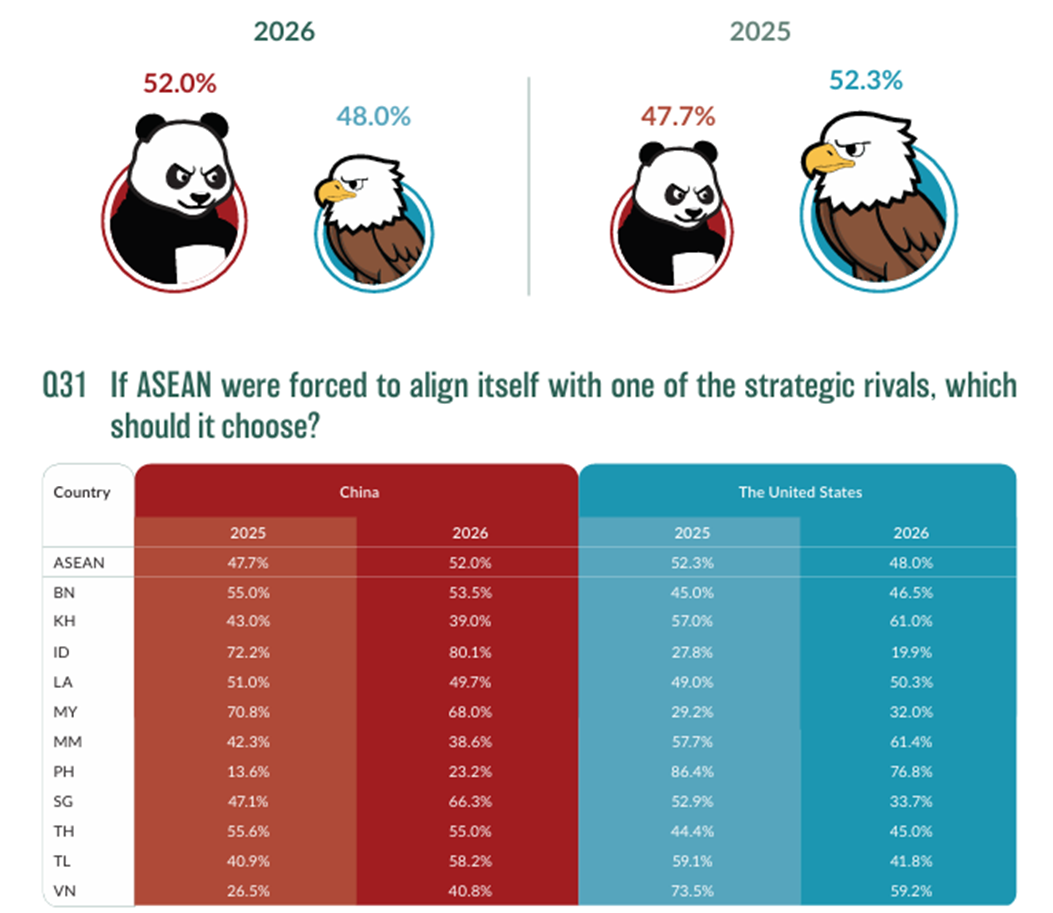 From pg. 51 of 80 of 2026 ISEAS Yusof Ishak Institute State of Southeast Asia Survey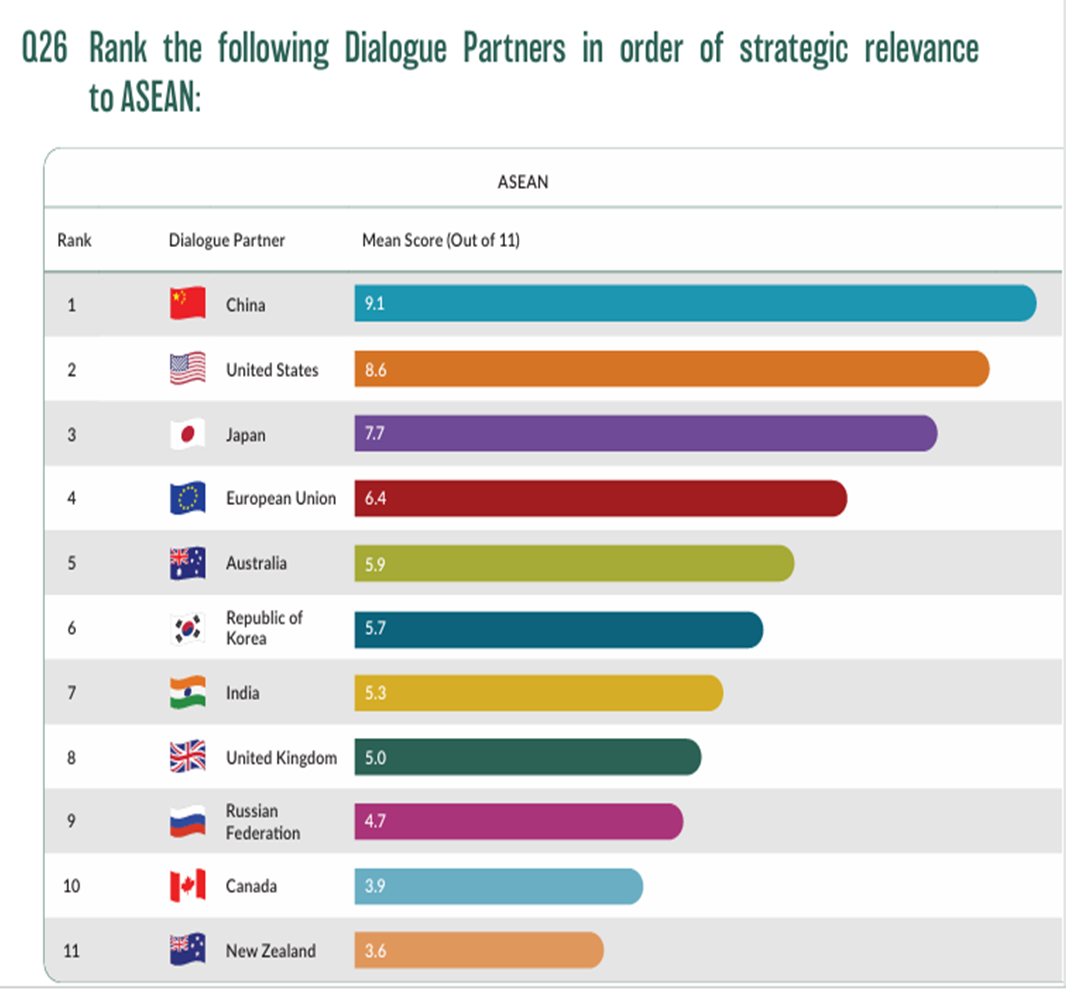

.jpeg)