Sunday, July 12, 2026

'This is our sky': Palestinians fly kites in defiance of Israeli settlers in West Bank


Every summer since 2009, residents of a Palestinian village in the Israeli-occupied West Bank have gathered for a kite festival. The event is held on land that they say has been partly lost since a settlement was established in 1983. The festival, while primarily for children, carries a "political message", according to one of its organisers.


Issued on: 11/07/2026 - 
By: FRANCE 24

Palestinians from the Israeli-occupied West Bank village of Burin celebrate the annual kite festival, which they say offers some respite from the daily hardship. © Jaafar Ashitiyh, AFP

As brightly coloured kites climb above Burin, a Palestinian village in the Israeli-occupied West Bank, children race across a sun-baked hillside, watching their creations soar into the sky.

Behind them, the red-roofed houses of Har Bracha, an Israeli settlement, overlook the village below.

Established in 1983, the settlement, illegal under international law, is one of several that encircle Burin, a village of a few thousand people.

Every summer since 2009, residents have gathered on this hill for a kite festival, held on land they say has been partly lost after being confiscated by settlers.


"We want to tell the settlers that this is our land, this is our sky. If we can't reach those lands anymore, our kites can," Ghassan Najjar, one of the festival's organisers, said.

While the festival is primarily for children, it also carries a "political message", he says.

In Burin, conversations rarely drift far from settler attacks or the steady spread of Israeli settlements across the Palestinian territory.

As early as 2008, the United Nations Office for the Coordination of Humanitarian Affairs (OCHA) had warned of settler attacks in the area, citing shootings targeting Burin residents and the uprooting of their olive trees.

Since the start of the war in Gaza in October 2023, the United Nations has reported a sharp increase in violence attributed to Israeli settlers in the West Bank, while several Israeli ministers have continued to call for the annexation of all or part of the territory.

'Our roots'


Palestinians from the village of Burin in the Israeli-occupied northern West Bank celebrate the annual kite festival, saying it was their defiance against Israeli settlers in the area. Jaafar Ashitiyah, AFP

For a few hours, however, the hillside takes on the air of a village fair.

A clown paints children's faces, music fills the air, as families spread picnic carpets across the grass.

Kites in the black, white, green and red of the Palestinian flag soar overhead, joined by another in the colours of Egypt, flown in tribute to the Egyptian national football team.

"Our children have the right to play and to have a real and a good life," says Najjar.

Yet even this celebration unfolds under the shadow of the conflict.

Before gathering, residents say they first checked that no groups of Israeli settlers were nearby.

"Sometimes we are scared ... Last year we didn't come because settlers had attacked the village," says 15-year-old Sanaa Bashar Najjar.

"We stay only half an hour or an hour, just to get a bit of fresh air. With the war and the economic hardship, we're simply trying to breathe."

Another resident, Dalia Zaban, says her parents' home was attacked, its windows smashed and cars vandalised.

"Today, we just hope they don't come down here," she said.

As the afternoon wears on, the wind begins to fade and the kites slowly drift back to earth.

The villagers, however, say they will return next summer, determined to reclaim at least a patch of sky.

Wearing sunglasses and dressed with care, Burin resident Qusai Walid Eid summarises the feeling, saying he attends the festival every year to strengthen "our roots in this land".

(FRANCE 24 with AFP)
WEST BANK

‘Calling for their arrest’: Dem lawmaker goes scorched earth after detention

Alexander Willis
July 12, 2026 
RAW STORY


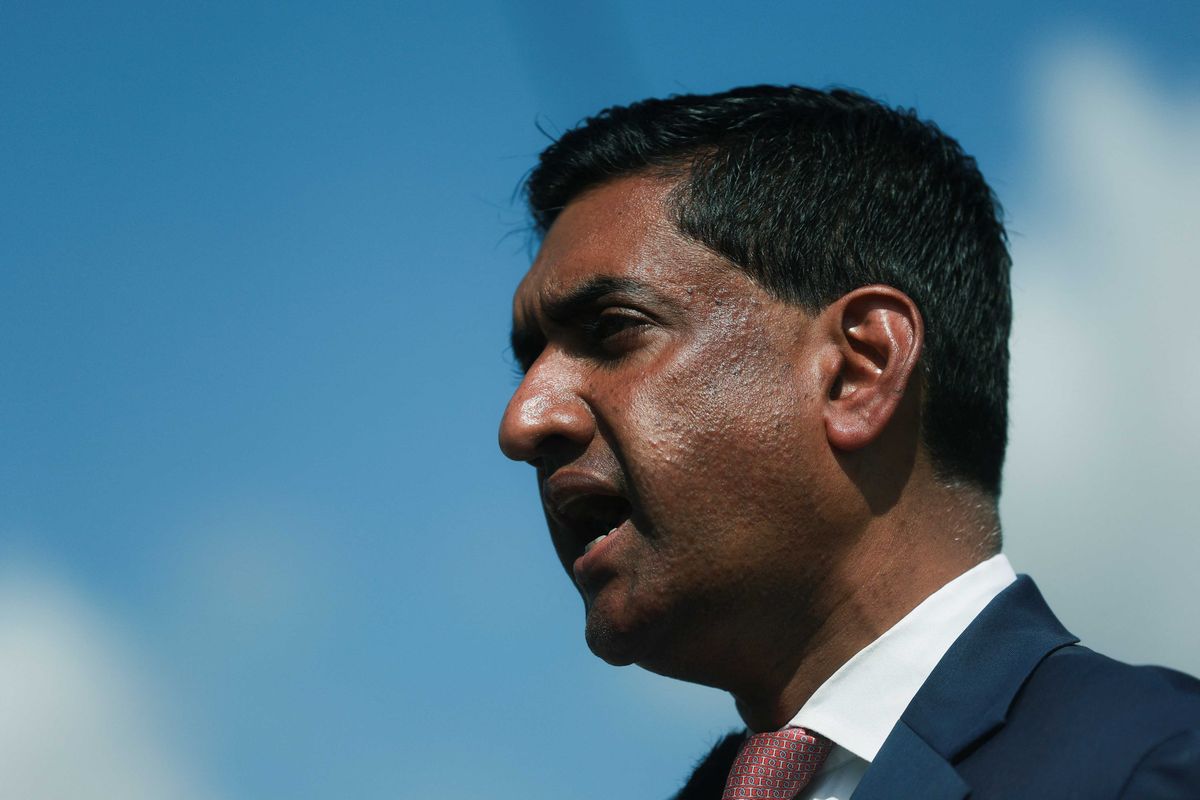
U.S. Representative Ro Khanna (D-CA) speaks as he is interviewed by Reuters during a visit to Turmus Ayya, near Ramallah, in the Israeli-occupied West Bank, July 9, 2026. REUTERS/Ammar Awad

Rep. Ro Khanna (D-CA) is now calling for the “arrest and prosecution” of Israeli settlers he accused of detaining him earlier this week while traveling the Israeli-occupied West Bank, and accused the Israeli government of “lying” about him to “cover up” their involvement in the incident.

Khanna revealed earlier on Saturday that he had been detained by a group of Israeli settlers “brandishing American-made M4s,” and shared video of the incident on social media. He also claimed that the Israel Defense Forces (IDF) “sided with the settlers” and “continued” his detention.

The incident drew scattered bipartisan criticism, though some – including prominent right-wing influencer Laura Loomer and Rep. Greg Murphy (R-NC) – appeared to side with the Israeli government and condemn Khanna instead.

On Saturday evening, the conservative New York Post published a report claiming that during his trip to Israel and the West Bank, Khanna "blew off" an offer to meet with former Israeli hostages. While the Post did not disclose the identity of its source for the claim, Khanna suggested it had come from Israeli officials, whom he accused of lying.

“The Israeli government is lying to cover up for 4 IDF soldiers who aided violent settlers brandishing M4 guns and threatening American lives,” Khanna wrote Saturday night in a defiant social media post on X.

“I am calling for their arrest and prosecution. I have met with Israeli hostages and condemned the brutal, terrorist attacks of Oct 7. That does [not] excuse the IDF from detaining American citizens.”

The same day Khanna revealed he had been detained by Israeli settlers, a CNN crew and other journalists were also detained by settlers in the West Bank, which CNN described as an “attack.”

“The four settlers were wielding wooden and metal rods and stones. One settler brandished a knife and tried to puncture the tires of CNN’s vehicle,” CNN reported Saturday.

“The settlers then began to jump on the vehicle behind CNN’s – carrying another group of journalists – and smashed the windshield of that vehicle. Another group of settlers tried to block a separate exit route before chasing the journalists towards the town of Sinjil.”

More than 700,000 Israeli settlers illegally live in the West Bank, with instances of settler violence increasing over the past year. Approximately 1,732 incidents of settler violence “resulting in casualties or property damage” were documented in the 12-month period up to Oct. 31, 2025, according to a United Nations Human Rights Office report. Israeli settlers have also killed at least 15 Americans since 2003.


Machine Gun-Toting Israeli Settlers Detain Ro Khanna During Trip to Occupied West Bank

“These hoodlums come in with machine guns—M4, an American-made machine gun—and they detain us. They block off the road.”


Brad Reed
Jul 11, 2026
COMMON DREAMS


Rep. Ro Khanna this week was detained by a group of Israeli settlers whom he described as “hoodlums... with machine guns” while making a visit to a Palestinian village in the occupied West Bank.

In an interview with Reuters published on Saturday, Khanna (D-Calif.) said he and his tour group were surrounded by armed settlers as they were traveling through the West Bank on Wednesday.

“We were at a village that Israeli settlers had destroyed, they had destroyed the school, they had destroyed that village, and we were just looking at it,” said Khanna. “And these hoodlums come in with machine guns—M4, an American-made machine gun—and they detain us. They block off the road.”

The California Democrat said that the settlers called in members of the Israel Defense Forces (IDF) to help them deal with him and his group.

“The IDF is on their side,” Khanna remarked, “not on the side of the Americans.”

Cameron Kasky, an aide to Khanna, told Reuters that the group was held for over an hour before officials whom he believed to be police intervened and secured their release.

The IDF told Reuters that both military troops and police officers dispersed the settlers who had set up a roadblock near the small Palestinian village of Khirbet Zanuta.

Khanna wasn’t the only American to have a run-in with Israeli settlers this week, as CNN reported that four settlers attacked groups of journalists, including CNN reporters and crew, who were traveling through an area north of the Palestinian city of Ramallah on Saturday.

As the journalists were driving, four settlers blocked off the road with their cars and began attacking the reporters’ vehicles with wooden clubs and metal rods.

“The settlers then began to jump on the vehicle behind CNN’s—carrying another group of journalists—and smashed the windshield of that vehicle,” the network reported. “Another group of settlers tried to block a separate exit route before chasing the journalists towards the town of Sinjil.”

Israeli police arrived on the scene and arrested four settlers who were allegedly responsible for the attacks, CNN reported.

“The Israel Police and the IDF view any manifestation of violence or causing damage to property very seriously,” the Israeli officers said after the arrests, “especially when it concerns media personnel performing their work.”

Israeli settlers for years have carried out violent attacks on Palestinians living in the West Bank, and witnesses have regularly described IDF soldiers at the scene either standing by as the attacks occur or even actively helping the attackers.

In an interview with CNN on Tuesday, Israeli Prime Minister Benjamin Netanyahu said that claims about settler violence have been “blown up beyond belief,” describing attacks as being carried out by a small number of “juvenile delinquents.”
Brazil: Sao Paulo's AI surveillance system accused of racial profiling

Cover image: FOCUS © FRANCE 24

Issued on: 10/07/2026 - 
06:17 min  From the show

Under the guise of fighting crime, Sao Paulo has rolled out the world's largest facial recognition system operated by a city. India, China, Hong Kong and the United Kingdom have introduced similar technologies under vague legal frameworks. But no city has embraced surveillance on the same scale as Sao Paulo, making it the world's biggest "Big Brother". The artificial intelligence system, known as Smart Sampa, is now at the centre of a growing scandal after being accused of racial profiling.

 Report by Marine Resse, Fanny Lothaire, Mélanie Blondeau.

Man nearly sucked out of 'detached' window on Ryanair flight


Ryanair said one ​of its planes ‌was forced into an emergency landing at Thessaloniki airport ⁠in Greece shortly after takeoff on Friday after a window was "detached", with industry sources saying a ‌passenger was partially sucked out of it.


Issued on: 10/07/2026 - 
By: FRANCE 24

Ryanair said the flight returned to Thessaloniki after the window 'detached', with witnesses describing fellow passengers pulling the man back inside © Ed JONES / AFP


A man was nearly sucked out the window of a Ryanair flight when it "detached" mid-air en route to Germany, with other passengers pulling him back inside, witnesses and officials said Friday.

The passenger, described as a tourist from Serbia on a flight from Thessaloniki in Greece to Memmingen in Germany, has been hospitalised with friction burns but was otherwise in good condition, authorities said.

"Most of us had fallen asleep, we had closed our eyes. There was a noise, like a tyre bursting," a fellow passenger told Radio Thessaloniki.

"We immediately realised there had been a decompression. There were screams ... for a moment I thought someone had accidentally opened the emergency door," the woman said.

"The masks dropped and there was a strong smell. The head and shoulders of one passenger were outside the window. Fortunately, he hadn't taken off his seat belt."

Other passengers near the man helped to pull him in, she said.

Greek media reported the incident had occurred over North Macedonia, and said the window had been broken by a piece of debris that detached from one of the plane's engines.

Ryanair in a statement said the flight "returned to Thessaloniki shortly after takeoff when a passenger window detached during the flight. The aircraft landed normally and the passengers returned to the terminal."

A replacement aircraft was made available to transport the remaining passengers to Memmingen, the Irish carrier said.
'Greed' and loopholes: How cricket's $55 million development fund gets gamed

INVESTIGATION

The International Cricket Council distributes tens of millions of dollars per year in development funding through a system that insiders say is loosely monitored and easily manipulated, a Play the Game investigation has found in partnership with FRANCE 24.


Issued on: 11/07/2026 - FRANCE24
By: Peter O'Brien

Nepal's Kushal Bhurtel plays a shot during the 2026 ICC Men's T20 Cricket World Cup group stage match between Nepal and Scotland at the Wankhede Stadium in Mumbai on February 17, 2026. © Punit Paranjpe, AFP

This story was first published at Play the Game.

Cricket’s power brokers gather in Edinburgh this week for the Annual Conference of the sport’s governing body, the International Cricket Council (ICC). On the agenda: how to divvy up the game’s money. Not on the agenda: how the system that hands out the funds is being gamed, insiders say.

“After 28 years of the ICC's development programme,” one administrator told a Play the Game survey, “GREED is still the key to earning money, sacrificing national cricket development.” Speaking with Play the Game on condition of anonymity, some member-country administrators raised concerns around the potential for fraud and lack of accountability in the global development programme run by the ICC.

“There’s an enormous amount of money floating around,” said another chairperson. “The programme is designed to enhance certain countries and make the others survive just enough that they don’t die.”

A quick guide to how the cricket money flows

The ICC has 12 Full Members and 98 Associate Members. Full Members like India, Australia, and England take 88.8% of the organisation’s budget, allocated mainly by the commercial value they bring to the ICC. India alone takes nearly 40% of the ICC’s annual earnings – largely thanks to its vast broadcast market.

The Associate Members “where cricket is firmly established and organised”, according to the ICC, operate mostly on volunteer labour, with few having more than one or two full-time staff.

The ICC distributes the remaining 11.2% of its budget among the Associate Members through two funding streams: a competition grant – participation and reward money for ICC tournaments – and a ‘Scorecard’ grant, a payment meant to incentivise the growth of grassroots cricket. The latter is allocated based on a so-called Scorecard containing self-reported statistics including how many seniors and juniors play, the number of pitches available and how much funding members raise outside the ICC.

Based on the Scorecards, members are ranked and placed into 14 funding tiers – determining how much they receive.

According to documents obtained exclusively by Play the Game, the total pot for Associate Members in 2026-27 is USD 54.9 million, with the Scorecard grant making up just over half.

Source: ICC 2026-27 Cricket Grants (document obtained by Play the Game). © Play the Game

Top tier countries like the United Arab Emirates and Scotland each receive $1.02 million in Scorecard funding. Those at the bottom, like Iran and Saint Helena, receive $26,000.
The cricket funding gap in numbers: the 26 lowest-ranked members receive 26,000 USD each – combined, less than a fifth of what the top-funded country, Scotland, receives. Source: ICC 2026-27 Cricket Grants (document obtained by Play the Game). © Play the Game

For lower ranked boards, a difference of one place in the rankings can mean a dramatic funding swing. The Philippines, for example, rose from 57th to 47th between 2024 and 2026, jumping three tiers and more than tripling its Scorecard funding from $65,000 to $237,000.

Sharp funding swings between cycles: UAE and Scotland each gained close to 1 million USD – largely through competition grants, while boards like Singapore, Botswana and Mozambique saw their funding fall by up to 260,000 USD. Sources: ICC Funding Model 2024, ICC 2026-27 Cricket Grants, ICC 2026-27 Scorecard (documents obtained by Play the Game). © Play the Game

This is not to suggest the Philippines’ growth is illegitimate. Rather, it illustrates the powerful incentive to keep numbers rising and avoid a drop at all costs. Combined with patchy oversight, insiders say this creates fertile ground for dishonesty.

Journalist Bertus de Jong, who has covered Associate cricket for more than a decade, put it bluntly: “Scorecard fiddling is utterly endemic.”


Cricket's disappearing numbers


One key source of transparency has quietly disappeared.

Around six years ago, the ICC stopped publishing its Census, which detailed participation and infrastructure across all Associate Members. The last time the Census appeared in official communication seems to have been a 2020 blog post, with a summary of key figures rather than granular data.

With public data scarce, Play the Game commissioned a survey to all 98 Associate Members, requesting their most recent Scorecard submissions and their views on the system.

Of the 96 reachable boards, 80 did not respond, 10 declined, and just six offered comment. Only Norway shared its data.

Greig White, the Isle of Man’s development officer, said, “all good thank you from our perspective”, adding that any concerns would be raised “through the committees rather than the press”.

'You can manipulate the data'

Given the amateur nature of many boards, a 6% participation rate is unsurprising. More revealing were the comments from those who did speak.

“You can manipulate the data,” said Yousuf Gilani, chairman of Norway’s cricket federation. “How does the ICC quality-check what countries have done, what they have been writing in the Scorecard?”

Gilani said Norwegian cricket does not rely heavily on ICC funding thanks to government support, but argued the Scorecard is still “a good thing to have” for global development.

He disputes how the ICC counted Norway’s data – for instance, claiming the board reported 80 junior women players, not the zero recorded by the ICC. Junior participation is the most heavily weighted category in the Scorecard and therefore the most valuable. As a result, he said, Norway sits one tier lower than it should – costing $70,000 in funding – and at rank 44, misses out on ICC voting rights typically granted to the top 40.

He and other sources also criticised the lack of adjustment for geography and demographics.

“Norway has only a three-month season,” Gilani said. “Spain has a nine-month season, and still we’re compared on the same Scorecard. That does not make sense.”

“80% of the countries don’t understand how to report [the Scorecard],” he added. “It’s only the ICC administration that understands.”

ICC Europe Development Officer Esther de Lange, speaking on the BBC Stumped podcast in April, acknowledged that European cricket boards face significant capacity constraints: “There's always limited amounts of money available, limited amounts of time for people to do things that need to be done”.

The loopholes no one closes

For the chair of another board, speaking anonymously due to ongoing discussions with the ICC, the Scorecard is not just misunderstood. It’s misleading.

“I’m told that if I have a team in a competition that has 11 players on it, they count as 15 for the Scorecard. That’s already four ghosts.”

Guidelines obtained by Play the Game state that “Teams consisting of the same players, playing across multiple competitions, should only be counted once.” The source said that wording allows for interpretations that inflate numbers.

“There is no hard and fast understanding on how the counting is being done,” they said. “Most of this fraud is in the loose interpretation. It’s in the loopholes of the system that’s being exploited.”

“There are people out here committing fraud, and it’s financial fraud, because they are taking money based on false information.”


“I’m told that if I have a team with 11 players on it, they count as 15 for the Scorecard”Associate cricket chairperson, on condition of anonymity

Play the Game did not independently verify specific instances of fraud.

So how much auditing is actually done?

Guidelines say regional officials will request evidence for “at a minimum, 30% of the data submitted.”

But de Jong said the Census is “more or less entirely self-reported”, and regional bodies “don’t have the resources to actually check”.

He cited long-standing implausible data: “Suriname claims they have 10 turf wicket facilities. I know for a fact they have none.”

Suriname’s cricket board did not respond to a request for comment.

The anonymous chair said auditors tend to focus on big variations: “If you’ve been cheating and you’ve always been cheating, then it looks like you’re not cheating because the numbers are the same.”

Two anonymous survey respondents said they had been audited, one as recently as 2024. One described the Scorecard as “modelled on the big cricketing nations”, arguing it shows “little understanding” of how sport develops in their region.

Gilani suggested more transparency could help: “They should publicly announce all the Scorecards for the European side, for the African and the Asian side… on a webpage where everyone can follow.”

‘Mercenary’ cricket

The ICC’s funding model increasingly rewards tournament performance over grassroots development. Some of the sources Play the Game interviewed argue this encourages countries to recruit foreign-born players rather than develop local talent.

Competition grants now represent almost half of Associate funding, up from just over a third in 2022, according to the data we obtained. For instance, each country playing at the Cricket World Cup League 2 – the main route through which Associate nations can qualify for the One Day International (ODI) World Cup – receives $1.16 million, more than the highest development grant.

Under ICC eligibility rules introduced in 2018, players need only prove their “primary and permanent home” has been in a country for three consecutive years to represent its national team; no citizenship required.

Our data also shows that the UAE, home to the ICC’s headquarters, appears to be reaping the rewards. Ranked top of the Scorecard, its funding has increased from $2.44 million to $3.40 million this period, driven almost entirely by competition grants. Only 11.4% of its 102,705 registered players are juniors, compared to 37% for fourth-ranked Scotland.

“The top eight countries are getting $20 million out of [more than] $50 million,” said one former regional administrator, also granted anonymity. “Four of those countries don’t have [homegrown] players. They play mercenaries.”

Scorecard data shows stark disparities in youth pipelines: two of the eight countries receiving the highest competition grants report junior participation below 15%, while one reports over 75%.

Source: ICC data (document obtained by Play the Game), excluding the “modified playing” category, which includes non-traditional or educational forms of cricket. © Play the Game
Beyond the boundary: the Iceland case

The system frustrates even those outside it.

Iceland Cricket, with a national team, five clubs and three domestic competitions (plus a cult following on the internet), is not an ICC Member.

Chairman Bala Kamallakharan said requirements for new ICC membership, particularly around women’s activity, are difficult to meet, while existing members face little scrutiny.

“There is a lot of smoke and mirrors surrounding cricket activity,” he said. “Associate Members wouldn’t put their funding at risk by saying they no longer meet membership requirements.”

“We are following strict rules [to try and join the ICC]; those already in the system are not.”
No change of ends: privileging the privileged

Reform looks unlikely.

Voting rights determine who can influence funding rules, eligibility criteria, and audit frameworks. While commonly believed that the top 40 Associates hold voting rights, an ICC document obtained by Play the Game shows that in 2024, 39 of the top 47 did, with exceptions including boards in administrative turmoil like Sweden and the USA. Those rights will be exercised this week at the ICC meeting in Edinburgh.

This concentration of power makes reform difficult, sources said, as those benefiting control the votes needed for change.

The ICC did not respond to multiple requests for comment within seven months, including questions about verification procedures and whether inaccurate data had affected funding decisions.

Cricket’s inclusion in the 2028 Olympic Games will essentially exclude Associate nations, with only six men’s and six women’s teams competing. But Associates hope it will still bring more eyeballs and once-in-a-lifetime funding opportunities. All the more reason for accurate reporting and transparent governance.

For now, in a system that mostly benefits those with the money and the power, tens of millions of dollars are doled out per year based on largely self-reported statistics and scarce independent oversight.

Those calling for reform remain in a lonely place, believing the system fails the very grassroots it claims to serve.

Nothing decided in Edinburgh is likely to change that.
Firefighters gain upper hand on 'horrific' Spain wildfires that killed at least 12

Firefighters gained the upper hand on wildfires in Spain on Saturday, aided by better weather conditions. Around 500 firefighters are battling the blaze that erupted Thursday in the southern region of Andalusia. At least 12 people have died since the fire started, according to officials, and another seven are officially missing.

Issued on: 11/07/2026 - 
By: FRANCE 24
Video by: Sarah MORRIS

Cover image: The wildfire broke out on Thursday in the Andalusia region of southern Spain. © Jose Jordan, AFP
02:16


Firefighters aided by better weather on Saturday gained the upper hand on one of Spain's deadliest wildfires as survivors described "horrific" and terrifying moments as they escaped the flames.

Around 500 firefighters backed by over 20 water-dropping aircraft were battling the blaze, which erupted Thursday in the Gallardos area of the southern region of Andalusia, home to many foreign residents.


"We were absolutely terrified. We could see the flames. It was horrific," Manoli Ramos, 72, a councillor in the small whitewashed village of Bedar where the victims were found, said.


She recalled another major wildfire in 2012 when residents had been able to return home the following day, saying: "This time it was like hell."

Officials said the 12 people who died were of different nationalities who had been trapped in vehicles and as they tried to flee on foot.

Austin Crilly, an 87-year-old British resident evacuated by police from the wildfire zone, said he was watching television when he "saw a huge black cloud, well I thought it was a cloud".

"I thought, 'My God, I will shut the door'. Then, five minutes later, there was banging at the door. They said, 'Take your money, take your cards and get out'," he said.

Officials said some of those who died had not followed orders to evacuate or to shelter in place once the flames got too close.
'Best news'

The fast-moving fire – one of the deadliest in Spain's recent history – showed signs of easing Saturday, allowing firefighters to directly attack the flames for the first time, officials said.

Twelve people died in the blaze, which spread rapidly across parched woodland and scrub. © Jose Jordan, AFP

"The overnight evolution has been favourable and the weather conditions allow us to face the day with better prospects than yesterday," Antonio Sanz, the Andalusian regional government's emergency chief, told reporters.

"For the first time we will be able to carry out a direct attack on the fire. Until now, both the weather conditions and the nature of the blaze only allowed us to work defensively," he added.

Strong winds that had fuelled the fire had eased, humidity levels had risen and temperatures had fallen, Sanz said.

The blaze has so far burned around 6,600 hectares in an area of steep ravines that is hard for vehicles to reach, he said.

There was no immediate confirmation of the identities of the 12 who died but the authorities said many of the victims may be foreigners who were in Bedar.

"It wasn't good. Not good at all. I'd never seen anything like it. You see things like that in films, but never in real life," said Martin Smith, 63, a British tourist who was evacuated with his wife, Elizabeth, 65, from the campsite where they were on holiday.

Sanz said there had been no reports of additional deaths overnight, describing that as "the best news we could have".
Missing people

He said Spain's Civil Guard police had searched the affected areas without finding any further victims, although he cautioned that the search was continuing.

"That does not mean it cannot happen, but after the Civil Guard swept the area, including locations that were still hotspots, it gives us hope," he said.

Sanz said references to 23 missing people were misleading, explaining that the figure referred to people whose relatives had been unable to contact them and who could have reached evacuation centres or other safe locations.

He said seven formal missing persons reports had been filed.

However, officials said they could not establish a definitive toll until autopsies had been completed and the bodies recovered from the fire had been formally identified.

Scientists agree that human-driven climate change is making extreme weather events such as heatwaves more likely and more intense.
Patriot missile license a 'long-term' investment for Ukraine – but can it afford the wait?

ANALYSIS


US President Donald Trump’s surprise announcement that he will approve a license for Ukraine to produce its own Patriot missile interceptors signals a potential breakthrough for Kyiv, though experts caution that it will not translate into an immediate fix.


Issued on: 11/07/2026 - 
FRANCE24
By: Sébastian SEIBT


A file photo of Patriot missile launchers acquired by Ukraine from the US and deployed in Warsaw, Poland, on February 6, 2023. © Michal Dyjuk, AP

US President Donald Trump’s surprise announcement on July 9 that he will approve a license for Ukraine to produce its own Patriot missile interceptors signals a potential breakthrough for Kyiv – though one that could take years to produce concrete results.

“We're going to give a license to you to make Patriots [. . .] This way, you can't complain that we're not giving them enough,” Trump told Ukrainian President Volodymyr Zelensky on the sidelines of the NATO summit in Ankara in Turkey.

Where are the Patriots?


The Ukrainian president has warned for weeks that the country is running out of Patriot interceptors, hampering its ability to defend Ukrainian cities from a near-constant barrage of Russian ballistic missiles.

Ukraine “intercepts drones as well as cruise missiles because they don’t require any sophisticated interceptors. Yet it’s completely different with ballistic missiles. Ukraine is completely out of Patriot missiles, so they desperately need them”, said Huseyn Aliyev, an expert on the war in Ukraine at the University of Glasgow.

Compounding the problem for Kyiv, Russia has stepped up its use of ballistic missiles precisely because it knows that Ukraine doesn't have enough interceptors, added Aliyev.
US gives Ukraine licence to build Patriot missiles for its air defence system

Cover image: US gives licence to build Patriots to Ukraine AP Photo/Alex Brandon - Alex Brandon
02:03


The price Ukraine is paying for this shortage was grimly apparent in the early hours of July 6 after Kyiv's defences failed to intercept any of the 23 ballistic missiles launched overnight by Russia. At least 22 people were killed in ferocious strikes on the Ukrainian capital.

Ukraine has struggled to acquire new Patriot interceptors because other countries, mostly in Europe, are urgently trying to replenish their own stockpiles of Patriot systems.

There is a long line of countries waiting for the coveted interceptors, said Justin Bronk, an airpower specialist at the Royal United Services Institute, a defence and security think tank in London.

European countries “have purchased or placed orders for new Patriots to replace those they handed over to Ukraine”, said Bronk. Germany has invested several billion dollars to produce Patriots on its territory.

There is also huge demand from South Korea and Japan, which face a ballistic missile threat from China. Middle Eastern countries also need to replace their depleted stockpiles after the Iran war.


An obstacle course

Trump’s move marks the beginning of what could be a very long process.

“The US president’s announcement doesn’t mean that Ukraine gets the license,” said Timur Kadyshev, senior researcher at the Institute for Peace Research and Security Policy (IFHS) at the University of Hamburg. “It takes six months to a year just for the paperwork to go through because Patriot systems are under tight export controls.”

It’s only at the end of this administrative process that Lockheed Martin, the main manufacturer for Patriot defence systems, can grant the license to Ukraine.

Another question will be whether the deal would be for the older PAC-2 interceptors, or the newer PAC-3 interceptors. Both models can be used against airborne threats, and Ukraine has employed both in the past to defend itself.

But the two types of interceptors also have more specific purposes.

“PAC-2 was specifically designed for air defence which can target helicopters, airplanes, or cruise missiles. The PAC-3 is a more recent version designed to intercept ballistic missiles,” said Kadyshev.

In the absence of the crucially needed PAC-3 model, Ukraine can use PAC-2 interceptors to defend itself from Russian ballistic missiles, but its precision is much lower. “With a PAC-3 interceptor, the chance of stopping a Russian ballistic missile is about 30-50%, and usually two are used to maximize their efficiency. With a PAC-2 GEMP-T, the chances of intercepting a Russian shot fall below 10%,” said Kadyshev.

Zelensky most likely hopes to produce PAC-3 interceptors on Ukrainian territory. But it's a long road for Kyiv to reach that objective. Japan is currently the only country besides the US capable of producing the system on its territory.

A long-term investment


If Ukraine hits the PAC-3 jackpot, it will still take years to manufacture the interceptors. “PAC-2 production was approved in Germany in 2022, with the first missiles delivered in 2027. Germany is of course not at risk of Russian strikes,” said Bronk.

Ukraine will face specific challenges, beginning with the construction of the factory on its territory. “It will be a major target for Russians as soon as they find it. Ukraine will be required to disperse the weapons production all over the country just to make it harder for the Russians to hit it,” said Kadyshev.

Kyiv will also have to wait for various components. “Lockheed Martin doesn’t make everything. Ukraine will have to sign contracts with subcontractors which produce the interceptor’s components,” said Bronk.

Certain components will probably be harder to obtain than others. “There are currently supply problems for the seeker [which guides the interceptor to the incoming missile],” explained Kadyshev.

Nothing guarantees Ukraine will be prioritized among the clients waiting to receive the interceptors. Economic factors – including which client can pay the most – and political ones must first be considered, according to the experts interviewed.

Kyiv is unlikely to deliver its first interceptor before several years. “We can legitimately ask ourselves about the use of this deal when Kyiv needs the system immediately,” said Aliyev.

For Kadyshev, the development of Patriot systems on Ukrainian soil will serve as “a long-term investment allowing Ukraine to provide itself with a dissuasive force” against attempts by Russia to continue or resume its attacks.

It will also allow Kyiv to help its European allies. If it does indeed develop the capacity to produce PAC-3 interceptors one day, “it will possess the only production line on the continent of high-in-demand technology”, Kadyshev adds.

Until that day, Ukraine has little choice but to continue facing down Russian missile attacks.

“There is unfortunately no miracle solution for the moment,” said Aliyev – other than to intensify attacks against Russian missile factories and launching sites, following the logic that attack is the best form of defence.

This article has been translated from the original in French.


Ukrainian drone strikes hit southern Russian refineries and Azov port, officials say


By Gavin Blackburn
Published on

Kyiv says the strikes are fair retribution for Russia's more than four-year barrages on Ukraine and that it is a bid to force Russia to the negotiating table.

Ukrainian drone strikes hit southern Russian oil refineries and the port of Taganrog on the Azov Sea on Friday, where authorities declared an emergency and evacuated some residents, officials said.

Kyiv has beefed up its efforts in recent months to hinder Moscow's financial capabilities in its war against Ukraine, targeting energy infrastructure in retaliatory strikes and causing a nationwide fuel shortage.

Russia's defence ministry said its forces downed over 370 Ukrainian drones, including over the Moscow region.

In the port of Taganrog, near occupied Ukraine, social media videos showed plumes of smoke rising over the city.

Local governor Yuri Slyusar said he visited the port after "massive" night-time strikes.

"Efforts to extinguish the fire of petroleum products at the seaport are ongoing."

Slyusar said several dozen of the city's residents had been moved to temporary accommodation.

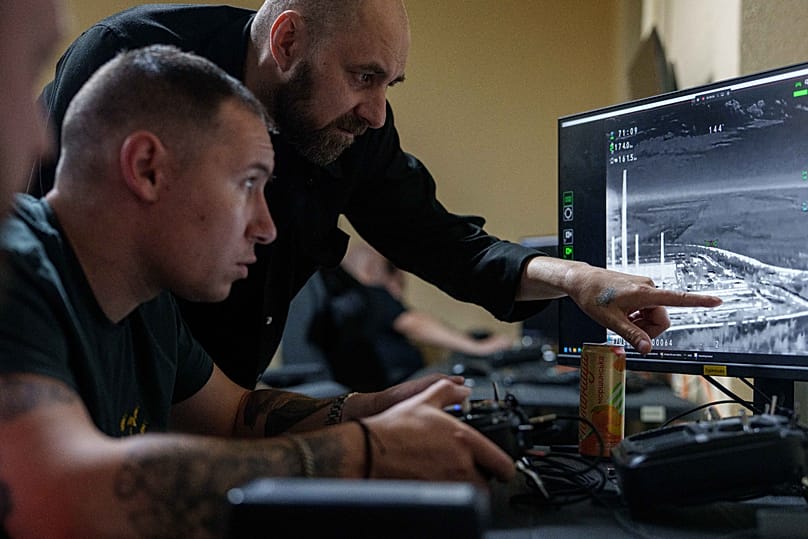
A Ukrainian serviceman of K-2 brigade of the Unmanned Systems Forces operates a midrange drone during a flight towards Russian positions at the frontline, 21 June, 2026 AP Photo

"I told them frankly: unfortunately, it will not be possible to extinguish this type of fire quickly," he said.

Earlier Slyusar said drones had hit two "oil storage facilities" in the town of Azov.

In the neighbouring Krasnodar region, authorities said drones caused a fire at the Ilsky oil refinery.

Authorities reported no casualties.

Russian leader Vladimir Putin has acknowledged that the Ukrainian strikes are causing a fuel shortage and said they are aimed at dividing Russians.

US President Donald Trump, asked about Kyiv's strikes during a meeting with Ukraine's Volodymyr Zelensky this week, appeared to endorse the campaign.

"It's an escalation, but it's also an escalation that can help lead to an end," Trump said.

The Kremlin said Ukrainian military pressure would not force it into concessions.

"We see certain misconceptions within the White House administration, that by escalating military pressure it can help move to a peace settlement. That is a mistaken view," Kremlin spokesman Dmitry Peskov told reporters.

Kyiv says the strikes are fair retribution for Russia's more than four-year barrages on Ukraine and that it is a bid to force Russia to the negotiating table.

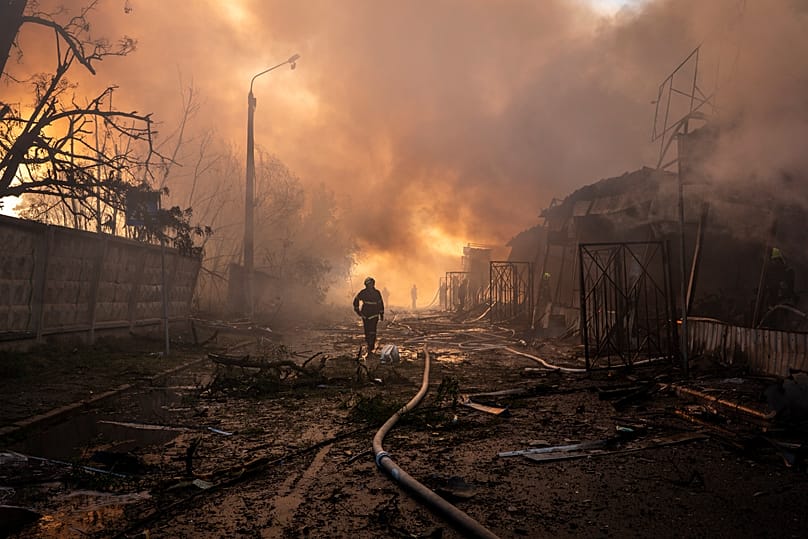
Firefighters try to put out a fire at a city marketplace following a Russian missile and drone attack in Kyiv, 15 June, 2026 AP Photo

Ukraine's army chief says war not yet at 'turning point'

Meanwhile, Ukraine's commander-in-chief Oleksandr Syrsky said on Friday that a turning point in the war with Russia was "still a long way off," despite hailing a string of recent successes for his troops.

Kyiv's army has halted the Russian advance across much of the front line in recent months and delivered a string of major long-range attacks on Russian oil refineries.

Many in Ukraine and among their backers abroad are saying Kyiv's troops are on the front foot in the more than four-year war.

In a social media post summarising the first half of the year, Syrsky noted a decrease in the number of "active offensive fronts" and said Russia's assaults had dropped by half.

"In terms of the rate of advance, the two sides have effectively reached parity," Syrsky said.

"At the same time, the enemy must not be underestimated. We are still far from a turning point in the war," he added.

Syrsky also said Ukraine had carried out successful strikes on 697 targets inside Russia over the last six months as it upped its own campaign of retaliatory long-range attacks.

India's Hindu nationalists take 17th-century king as new anti-Muslim symbol


Statues of 17th-century king Shivaji have been erected across various Indian cities over the past few years by Hindu nationalist groups, who view him as a symbolic defender of Hindus against Muslims. The campaign marks another act of intolerance toward Muslim and Christian minorities, who have been targeted since the Bharatiya Janata Party took power 12 years ago.

Issued on: 10/07/2026 
By:The FRANCE 24 Observers

Screenshot of a video showing the Indian army erecting a statue of Chhatrapati Shivaji Maharaj near the Line of Control that separates India and Pakistan on March 5, 2026. 
© Instagram/ anilchoudhari2909

A few hundred men paraded on motorcycles through the streets of Sangareddy, in the southern Indian state of Telangana, on May 29, 2026. They were supporters of the Rashtriya Swayamsevak Sangh, or RSS, the foremost organisation within the Hindu nationalist movement and the ideological backbone of the ruling Bharatiya Janata Party (BJP) – the Hindu nationalist party of Indian Prime Minister Narendra Modi.

Wearing saffron scarves around their necks, they rode down the roads waving their signature double-pennant flags, also saffron – the colour of the BJP.
A video shows members of the Hindu nationalist group celebrating the unveiling of a statue of Chhatrapati Shivaji Maharaj in Sangareddy on May 29, 2026. The footage was posted on X on May 31, 2026. Source: X/VLKAS_PR0NAM0

Since 2022, hundreds of statues of King Chhatrapati Shivaji Maharaj – some of them towering up to 27 metres – have emerged across several towns and cities, including in Telangana and Ladakh, a northern Indian state bordering Pakistan and China.

These statues are sometimes erected in secret by nationalist groups, at times with the complicity of local authorities and elected officials and in some instances, with the assistance of the military.


This video shows the Indian army erecting a statue of Chhatrapati Shivaji Maharaj near the Line of Control that separates India and Pakistan on March 5, 2026. Source: Instagram/anilchoudhari2909

Shivaji is a prominent 17th-century figure in Maharashtra, a state in western India. Today, he serves as a key point of reference for local political parties across the entire political spectrum. He is widely known for his military campaigns against the Muslim Mughal emperor Aurangzeb, who is commonly depicted as a tyrant in popular Indian historical narratives.

However, in the political communication strategy of the Hindu nationalist right, Shivaji has been cast as a symbol of the struggle against Muslimsa minority community heavily targeted by the BJP and the RSS.

‘There has been this Hindu right-wing project aimed at making India a de facto Hindu state’

The New York Times reported that several states governed by Modi’s political party have allocated funds to projects aimed at promoting Shivaji's legacy.

The narrative the party is trying to push aligns with a clear political agenda, according to Rohit Chopra, a communications professor at Santa Clara University and a member of the advisory board of the Centre for the Study of Organised Hate:


“At this point, this has become a project of state and society. In my opinion, it's definitely coming from the BJP high command. [...] Since the BJP came back to power under Mr. Modi's prime ministership in 2014, there has been this Hindu right-wing project, which is a hundred-year-old project aimed at making India a Hindu state de facto, as opposed to a secular state. Even if it is constitutionally a secular state, the idea is that the national culture at large should be Hindu, and accepted as such.

There's been this project to create an overarching pan-Hindu cultural identity, in which Shivaji is a figure who is now being recast as a Hindu nationalist figure who has significance not just for Maharashtra but also for all Hindus and all of India. So there's this new kind of landscape and topography where these pan-Hindu icons are being recast and reshaped through statues. [...] It is a state project, but there are some different cultural organisations also involved.”

A driver filmed a statue of Shivaji, transported on a truck. The video was posted on YouTube on September 29, 2024. Source: YouTube / Vinay_khatri_vinu

Chopra said that the RSS’s narrative surrounding the Maratha king is, moreover, “historically completely inaccurate”:

“That is reading a 20th-century conception of nationalism and ethno-nationalism back into an earlier time, when that logic of our conflation of political and religious identification didn't exist. Aurangzeb, against whom Shivaji fought, had Hindus in his army, and Shivaji had Muslims in his army. These were regional political battles. The conception of Hinduism that the RSS and the BJP promote is a profoundly modern one, rooted in the 19th and 20th-century conception of religion that conflates religious territory and national identity. That way of looking together religion, territory, land and politics simply did not exist in an earlier period.”
‘Another reminder that minorities don't have a claim on public space’

Since 2014, religious minorities in India – specifically Muslims and Christians – have been targeted by violence and what Human Rights Watch terms “abusive policies”, such as expulsions and politically motivated prosecutions.

Chopra says the erection of Shivaji statues is part of an ongoing pattern of exclusion targeting these marginalised groups:


“It doesn't directly insult minorities as such, but it becomes another way in which Muslims, Islam, and Christians are completely excluded from public life and public culture. I doubt anyone will speak up publicly against it because if you are a minority and speak up, the risks are very high. But it is another reminder that they don't have a claim on public space. [...] The idea is that this conception of Hinduism is not just the only way to be a Hindu, but this is also the only authentic way to be an Indian.”

A driver filmed a statue of Shivaji in Bengaluru, southern India. The video was posted on YouTube on October 2, 2023. Source: YouTube/RAM-lf2jt

While the erection of statues dedicated to Shivaji serves a clear political agenda, the specific locations chosen for these monuments are equally crucial to the nationalists' political strategy:


“Telangana is in the south of India, a region that has historically not been a stronghold of the BJP, though they are beginning to make some inroads there in alliance with local parties. So it's very clear that the goal is to cover the whole of India, and I'm sure that we'll see one in the east as well.”

This article has been translated from the original in French.
The Bayeux Tapestry's risky journey across the Channel

Cover image: Bayeux Tapestry © Loic Venance, AFP

Issued on: 10/07/2026 - 
Play (12:17 min)From the show


Nearly 1,000 years after chronicling the Norman conquest of England, the Bayeux Tapestry is making history once again. The fragile 11th-century embroidery has arrived in London on an unprecedented loan to the British Museum, prompting delight and concern in equal measure. Celebrated as one of Europe's greatest medieval treasures, its journey has reignited debates over heritage, diplomacy and the risks of moving delicate cultural artefacts.

Today, many scholars believe its 58 vivid scenes recounting the events leading up to the Battle of Hastings in 1066 were stitched in England. More than nine centuries after William, Duke of Normandy, defeated King Harold, the tapestry has become a symbol of the love-hate relationship between England and France. "The tapestry's always been a political object," according to former British ambassador Lord Peter Ricketts, who helped coordinate the loan. "It's absolutely the founding story of our modern history. It's the date everybody knows from school: 1066."

For historians, the embroidery's enduring appeal lies in its remarkable detail. "You don't really get many other historical sources that are that evocative of the everyday person's experience of war," explains academic Millie Horton-Insch. From royal intrigue and military strategy to horses, ships and soldiers, the tapestry offers an extraordinary window onto medieval life.

A loan decades in the making

Successive British governments have sought to borrow the tapestry over the years, including for Queen Elizabeth II's coronation in 1953, but France has always refused. A breakthrough came in 2018, when President Emmanuel Macron floated the idea during talks with then British Prime Minister Theresa May. Brexit tensions and the Covid-19 pandemic delayed the project, alongside concerns about the feasibility of transporting such a fragile object.

Yet when the museum in Bayeux, where the tapestry had been on display since 1983, closed for major renovations, the tapestry had to be placed into storage. Closed since September 2025, the site is undergoing a €40 million transformation, with the new museum and annexe due to open in 2027. During a detailed conservation assessment in 2020, experts concluded that the tapestry should no longer hang vertically but instead be displayed along its full length on a gently sloping support, reducing stress on its ageing fibres. The new annexe has been designed to accommodate the tapestry under those specific conditions.

For Bayeux's residents, its temporary absence is bittersweet. "We live with the Bayeux Tapestry," said one local. "The whole town lives with it and we're proud of it." Others see the loan as fitting for an artwork that illustrates the birth of the Anglo-Norman monarchy. "The English used to come and see it here," explained tour guide Christèle Tait. "We're sending it there. We just hope they'll give it back!"

Conservation concerns overshadow a highly symbolic journey

Amid the cultural and political significance of this priceless artefact, transporting the tapestry has sparked fierce criticism in some quarters. Its most recent scientific assessment identified thousands of stains, holes and tears, prompting recommendations for restoration. Critics argue that moving such a fragile textile is an unnecessary risk, particularly as some technical details of the transport operation were not disclosed in advance by the French Ministry of Culture.

Art historian and journalist Didier Rykner launched a petition opposing the loan in 2025. He argues that experts have never fully measured how the tapestry might respond to vibrations during transport. "We've never transported something this fragile," he says. French authorities, meanwhile, insist that every precaution has been taken, pointing to the custom-built, climate-controlled crate used for the journey. Curators at the British Museum also say the bespoke transport technology developed for the move is unprecedented.

"There is never any movement that goes without any risk whatsoever," acknowledges lead curator Michael Lewis. "But the procedures put in place have been designed to reduce that risk to as low a level as reasonably possible."

At a time when public spending on the arts has been cut in both countries, this high-profile Franco-British operation has prompted debate over the role of governments in cultural heritage. Yet while 1066 is synonymous with conflict for generations of Britons, 2026 may be remembered as the year two countries came together to celebrate a shared history – and the extraordinary work of art born from it.
BY:

Olivia SALAZAR-WINSPEAR

Stéphanie CHEVAL

Mélina HUET