It’s possible that I shall make an ass of myself. But in that case one can always get out of it with a little dialectic. I have, of course, so worded my proposition as to be right either way (K.Marx, Letter to F.Engels on the Indian Mutiny)
Wednesday, July 15, 2026
‘Once we were like you’: Ancient Roman faces brought back to life in Budapest exhibition
Using archaeology, anthropology and DNA analysis, experts reconstructed Roman-era faces and paired them with imagined life stories inspired by historical evidence.
A peasant girl, a soldier and a slave who lived nearly 2,000 years ago have been given new faces - and imagined stories - in a fascinating new exhibition in Budapest.
At the Aquincum Museum, Roman-era skulls discovered at the ancient city of Aquincum have been transformed into lifelike facial reconstructions, offering visitors a glimpse of the people who once lived on the empire’s distant frontier.
The exhibition, titled “Once we were like you”, utilised archaeology, anthropology, genetics and historical imagination in the hopes of reconnecting modern audiences with those whose remains have survived for almost two millennia.
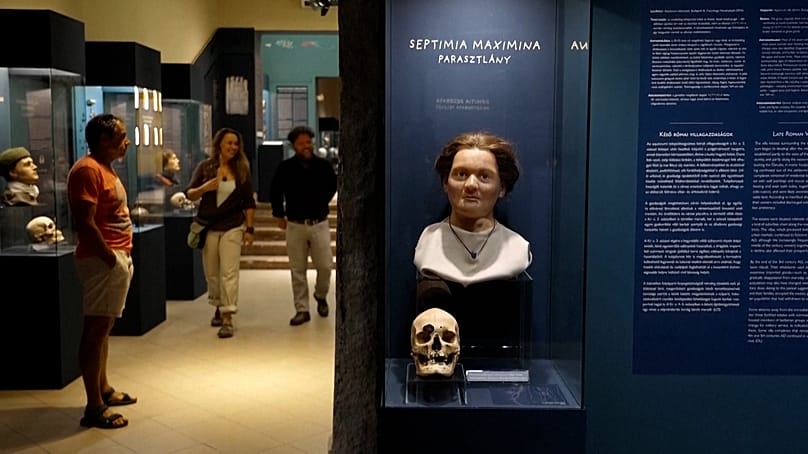
A facial reconstruction of a Roman-era resident of Aquincum is displayed alongside the original skull that inspired it at the Aquincum Museum in Budapest Credit: AP Photo
Displayed alongside their original skulls, the reconstructed faces are accompanied by fictional names, occupations and possible life stories - an attempt to make the ancient residents of Aquincum feel less like archaeological objects and more like real people.
"During the excavations we find the skulls, the skeletons, we document them, we roughly can tell whether they belonged to a man or a woman and the findings end up in the appropriate storage room, but that's it. The bodies have no weight, no life, no soul," said Dr. Lóránt Vass, archaeologist and exhibition co-curator.
He continued: "In connection with this exhibition, we thought what happens if we bring these people closer to the visitors by using archaeological findings, information provided by inscriptions, results of anthropological studies and results of archaeogenetics."
Experts analysed the shape and structure of the skulls, alongside archaeological evidence and DNA research, to estimate details such as facial structure, possible ancestry, and even characteristics like hair, skin and eye colour.
The most realistic reconstructions were created by facial reconstruction artist Emese Gábor, who works from a studio in Budakeszi, near Budapest.
Using 3D-printed replicas of the original skulls, she carefully rebuilt the faces layer by layer, studying the bones before modelling muscles and features.
Facial reconstruction artist Emese Gábor works on a model based on a Roman-era skull Credit: AP Photo
A reconstructed face of a Roman-era child, imagined as the member of a family of textile dyers, is displayed at Budapest’s Aquincum Museum. Credit: AP Photo
But while the faces are based on scientific evidence, the identities and biographies attached to them are not real. The curators created possible names, jobs and backgrounds based on what researchers know about life in Aquincum.
“It's all fiction. We don't even know the real names of these people, unfortunately. We tried to incorporate into their imagined life stories everything that anthropology and genetic studies have offered. But no matter what, it's still fiction. In fact, we can not say that they lived like that, it happened that way, but they could have been living that way,” said Dr. Péter Vámos, archaeologist and exhibition co-curator.
Researchers used historical naming customs, inscriptions and anthropological studies to create plausible scenarios for the individuals.
Alongside the facial reconstructions, visitors can see a reconstructed burial site and a Roman-era mummy.
“Once we were like you” is on show at the Aquincum Museum in Budapest until 31 October 2027.
As Europe experiences another spell of extreme heat, social media users are once again claiming that a US military programme is manipulating the weather and causing the continent's high temperatures. Available evidence does not support the claim.
Social media posts circulating in recent weeks allege that a US military programme is being used to manipulate the weather, suggesting it is responsible for the heatwaves affecting Europe.
To support the claim, several accounts have shared clips of journalists, scientists, and public figures discussing geoengineering (deliberate, large-scale interventions in Earth's climate system), presenting them as evidence that weather events are being deliberately manipulated.
One of the shared videos features French TV presenter Anne-Claire Coudray discussing geoengineering.
"In response to climate change, more and more countries are exploring what's known as geoengineering," she said in the clip. "The idea is to intervene directly in the climate system to artificially cool the planet."
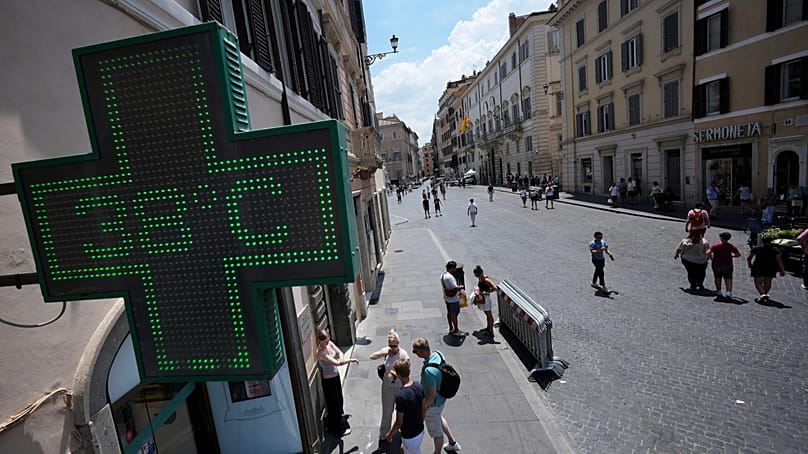
The thermometer of a drugstore shows the temperature of 38 degrees Celsius as temperatures reach record highs, in Rome, Wednesday, June 24, 2026. (AP Photo/Andrew Medichini) AP Photo
The clip has been presented online as proof that governments are actively manipulating the climate, but its original context does not support the claim.
The report does not suggest that these technologies are currently being used to create or intensify heatwaves.
Many of the posts also refer to HAARP, the High-frequency Active Auroral Research Program, a US research facility that has frequently been the subject of conspiracy theories.
What is HAARP?
Launched in the 1990s, HAARP was built to study the ionosphere, a layer of the Earth's upper atmosphere. Scientists do this by transmitting high-frequency radio waves and measuring how electrically charged particles respond.
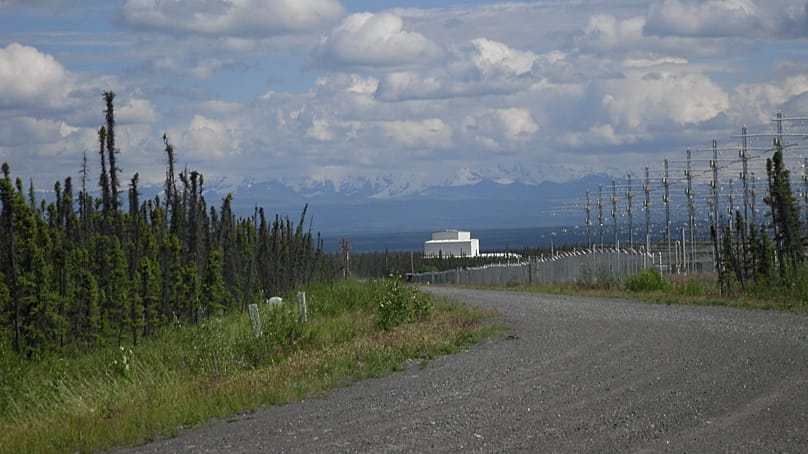
The unclassified site is surrounded by woods within 5000 acres located 200 miles west of Anchorage and eight miles from the town of Gakona, Alaska. Kirtland Airfoce base
According to the programme's stated mission, the research was intended to improve understanding of the ionosphere and help develop communication and surveillance technologies. Since 2015, HAARP has been operated by the University of Alaska, which publicly documents its research activities.
Frequent conspiracy theory
The theory relies on a misunderstanding of how the atmosphere works.
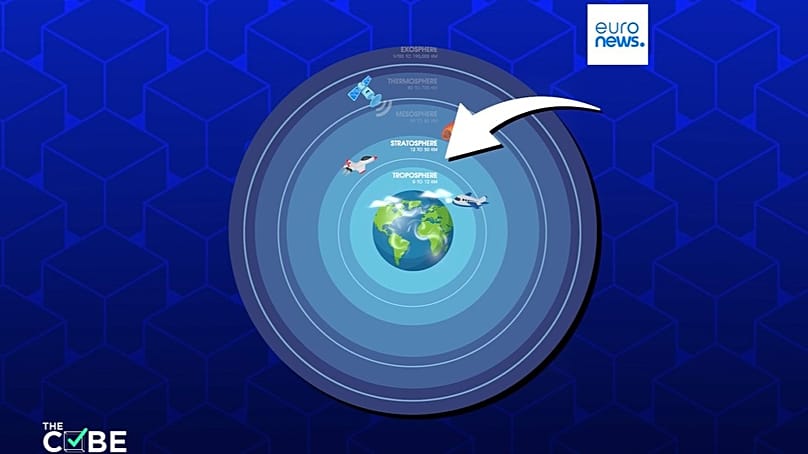
Weather systems, including heatwaves, develop in the troposphere and, to some extent, the stratosphere. HAARP's experiments take place in the ionosphere, hundreds of kilometres above the Earth's surface.
The radio waves used by the facility do not interact with the lower layers of the atmosphere where weather forms.
Graphic showing the troposhere and stratosphere - The Cube, Euronews @Damaso Jaivenois
Scientists have repeatedly stated that there is no known mechanism through which HAARP could create or intensify weather events.
According to climate scientists, the recent heat across Europe was driven by a persistent high-pressure system that trapped hot air over western parts of the continent.
Researchers also say that human-induced climate change is making heatwaves more frequent, longer-lasting and more intense.
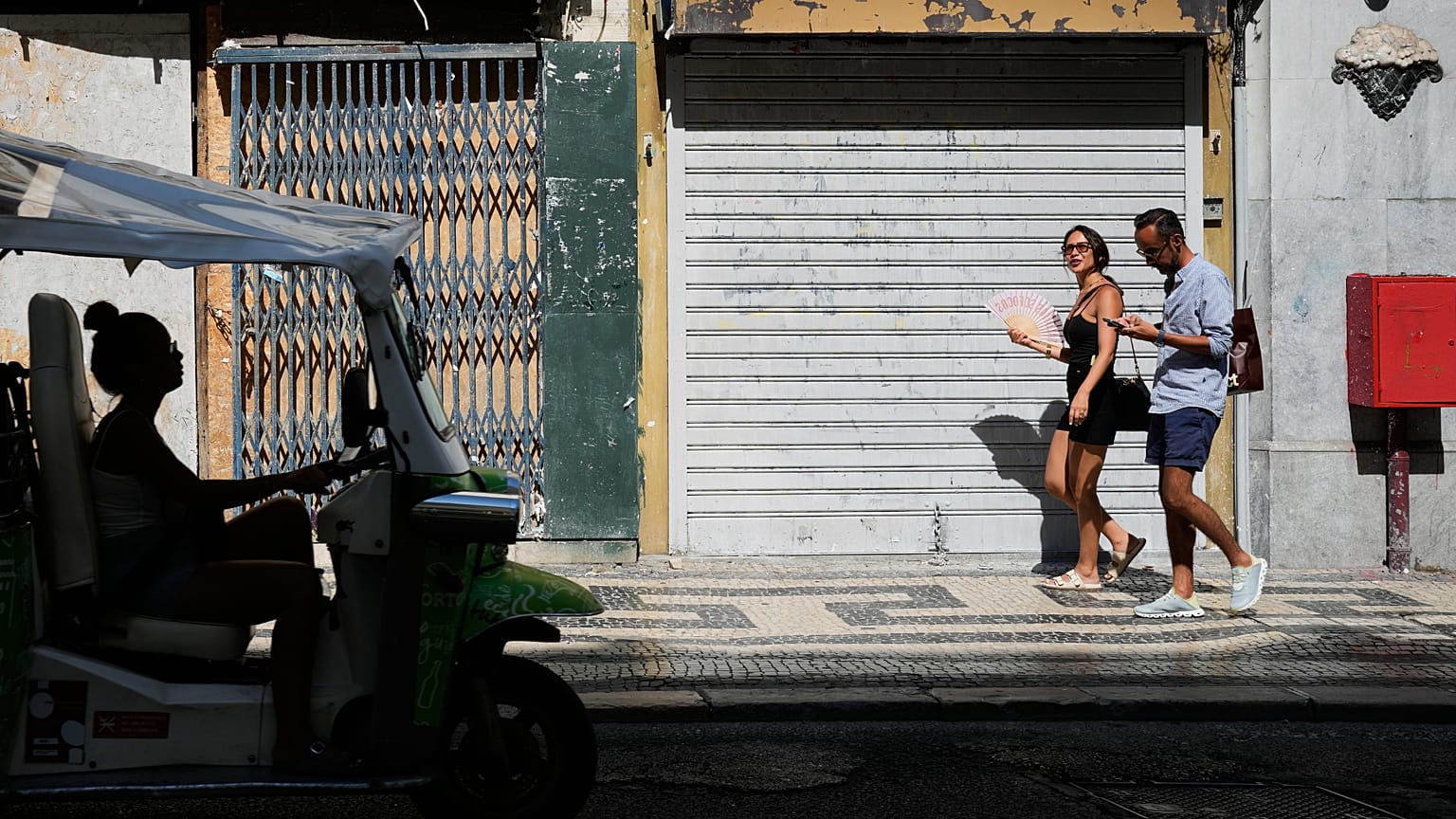
'Lisbon is not a sauna': Environmentalists demand climate shelters throughout Portugal
On the European Day for Victims of the Global Climate Crisis, several groups signed an open letter to the state and councils urging swift action to adapt cities to heatwaves.
More frequent, more extreme and more deadly heatwaves. That is the picture of a Europe battered by high temperatures which, during June, saw record after record broken on the thermometers.
"We have already had six heatwaves, the same as the total for last year. And we are only in July. On top of that, the intensity – in other words, the difference in temperatures compared with what is normal – is greater," Francisco Ferreira, president of the environmental association Zero, told Euronews.
Faced with a problem that experts attribute to greenhouse gas emissions and the resulting climate change, environmental organisations say it is urgent to find solutions that not only seek to mitigate the cause, but also help the population adapt to a scenario that is only going to get worse.
"It is inevitable that we have to look not only at cutting greenhouse gas emissions, which we call mitigation, but also, of course, at adaptation," explains Francisco Ferreira.
"It is crucial that we build and develop cities that are prepared for this, with the capacity to adapt. That basically means taking a very close look at the building stock, which in many cases reflects situations of energy poverty, where we cannot keep homes warm in winter, but we also cannot keep them cool in summer."
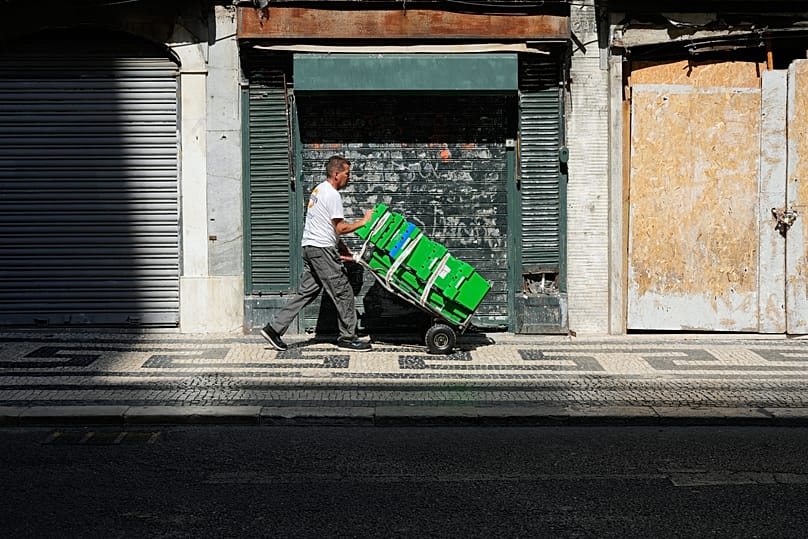
A worker carrying boxes walks in the sun in Lisbon, Portugal, where the temperature has risen sharply and the authorities have issued a warning for a prolonged heatwave. AP Photo/Armando Franca
An open letter delivered to the government
Zero is one of the signatories of the open letter that today, on the European Day for the Victims of the Global Climate Crisis, will be delivered to the Government headquarters at Campus XXI in Lisbon.
The letter is addressed to the prime minister, the ministries of Environment and Energy, Health, and Infrastructure and Housing, and to the National Association of Portuguese Municipalities, labelling extreme heat a public health emergency while demanding intervention measures in urban centres.
"This has to do with the way and the priorities that we have had in many cities. We believe that there really has not been sufficient care given to these circumstances," the association’s president said.
Handing over the document will also be a symbolic moment, in a street action where participants will wrap themselves in towels and hold up placards bearing the message "Lisbon is not a sauna!"
Alongside Zero, 11 organisations have signed the document, including Quercus, Geota, Greenpeace Portugal, WWF Portugal and the Portuguese Network of Ambassadors of the European Climate Pact, setting out concrete measures for adapting to heat in Portuguese cities.
Relate
These include the creation of a national network of climate shelters - the identification by each municipality of existing public and private spaces (libraries, swimming pools, parks) that can offer protection during heatwaves, speeding up the renovation of buildings and even installing air‑conditioning in nurseries, care homes and day centres.
"The idea is to really have assets available, climate refuges – meaning shaded areas, green spaces, air‑conditioned zones – which can take different forms, from services and shops to public institutions," he tells Euronews.
The letter states that municipal climate adaptation plans are "a fundamental step" for local resilience and stresses that implementing them is essential.
"In Portugal we are obliged to draw up Municipal Climate Action Plans, which should have been ready by February 2024, and yet here we are in 2026," the president of Zero stressed. "More than these plans, what is really needed is to move into practice, because with the summer we are having and also with the situations we have already seen in recent years, the need to respond is increasingly urgent if we are to reduce morbidity."
Relate
Climate emergency not a priority and changes are "expensive"
According to the president of Zero, there are several reasons that explain the lack of action in cities. "Municipal priorities are sometimes elsewhere, and they have not given this response the prominence and importance it deserves," he explains. "In some cases, especially in small municipalities, there is a lack of technical capacity. It is not easy to prepare this kind of plan, whether in terms of reducing emissions or in terms of climate adaptation.
In addition, the costs associated with structural measures place obstacles in the way of decision‑making, redirecting "political will".
"The changes sometimes involved in climate adaptation are expensive. In the future they will work out cheaper, there is no doubt. They will improve the quality of life of residents and of everyone who uses the cities. But they require costly investment and are therefore often difficult for local authorities to approve."
FILE (08.07.2022) People wash their feet as they leave Carcavelos beach, on the outskirts of Lisbon, on Friday 8 July 2022. AP Photo/Armando Franca
Heatwaves increasingly frequent and deadly
"Extreme heat is no longer a distant risk. It is a threat to public health, quality of life and the safety of our cities. We also know that this risk is not distributed equally. Those who live in neighbourhoods with little green space, streets that are excessively paved, heavy traffic and scarce shade are more exposed," the letter addressed to the Portuguese prime minister states.
By early July, Portugal had already recordedsix heatwaves in 2026, amounting to 59 days under heatwave conditions in the first six months of the year — episodes that occurred in February, March (twice), April, May and June, according to IPMA.
"A rising trend can be seen in the maximum number of days under heatwave conditions, with 2009 standing out with 93 days, followed by 2017 with 83 days and 2023 with 80 days. In 2025 there were 74 days under heatwave conditions and 59 days in the first six months of 2026," the Portuguese meteorological service said in a statement.
These episodes of extreme temperatures, also recorded in other European countries such as the United Kingdom, France and Spain, are also driving up mortality.
During the most recent heatwave in the country, recorded at the beginning of July, there was excess mortality. According to figures from the Death Certificate Information System (SICO), excess deaths were observed between 2 and 8 July, when the country was under high temperatures. Calculating the difference between the number of deaths observed and the baseline, the period from 2 to 8 July saw approximately 539 excess deaths.
Between 3 and 6 July 2026, when the government declared an alert situation across mainland Portugal, 313 excess deaths were recorded.
According to data published on Monday by EuroMOMO, a mortality monitoring service supported by the European Centre for Disease Prevention and Control and the World Health Organization, 27 countries recorded 10,650 excess deaths between 22 and 28 June.
The World Health Organization has already issued a warning: this is only the beginning, with the organisation reporting that the coming summers will be more difficult.
"This heatwave is a dress rehearsal," said Hans Henri Kluge, the WHO regional director for Europe.
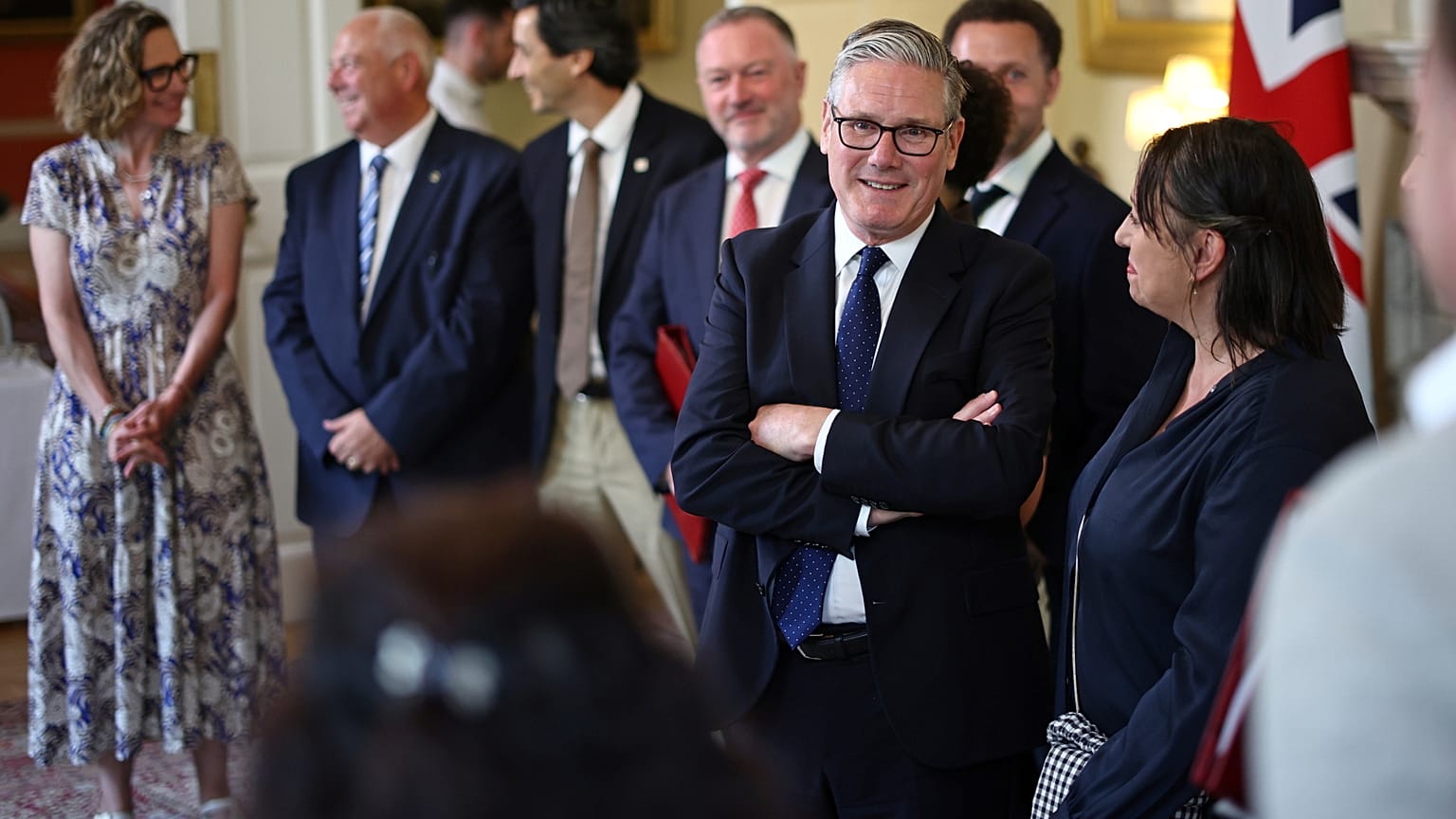
Keir Starmer bids UK MPs 'goodbye', vows to support Burnham
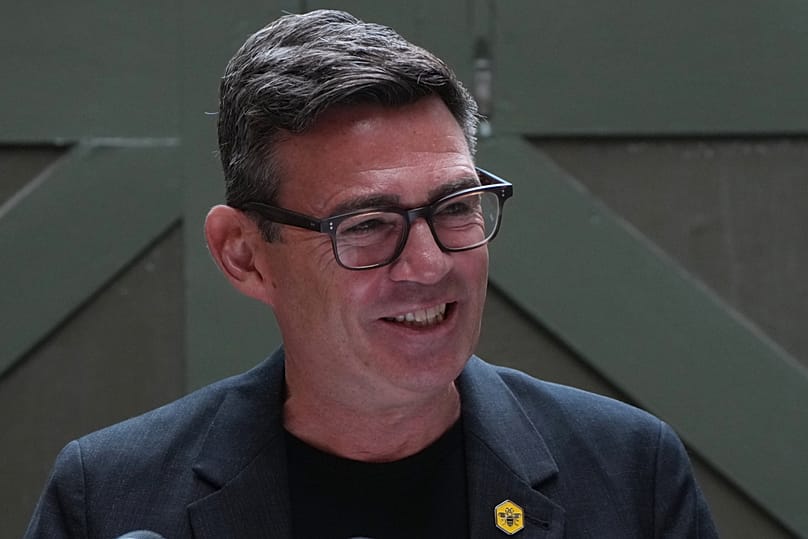
Andy Burnham is to replace Starmer on Monday, shortly after he is expected to meet King Charles III to be asked to form the next government.
Outgoing UK Prime Minister Keir Starmer on Wednesday pledged his "wholehearted support" to his successor as he prepares to hand over to premier-in-waiting Andy Burnham.
"I will give my wholehearted support to my successor. I want this Labour government to be a success," he said when asked what advice he had for his successor during his final weekly grilling by MPs in parliament.
"I want our country to be a success. I shall give my support privately if asked for, not publicly when not asked for."
Burnham is expected to be crowned Labour's leader on Friday after securing overwhelming support from the party's 403 MPs and the backing of major trade unions.
The party's comfortable majority in the 650-seat House of Commons means he will automatically become the next prime minister.
Labour Party's Andy Burnham delivers a speech at the People's History Museum in Manchester, England, Monday, June 29, 2026.(AP Photo/Alastair Grant) AP Photo
Starmer announced his resignation last month, bowing to months of pressure to step down after a series of scandals, missteps and policy U-turns.
They blighted his two-year tenure, after he led his party to victory in 2024 elections following 14 years in opposition.
'Not a silver bullet'
MPs from all parties wished Starmer well, thanking him for his public service and calling on him to ensure that England wins Wednesday's World Cup semi-final showdown against Argentina and go on to beat Spain in the final on Sunday.
Even Conservative leader Kemi Badenoch softened her tone, but criticised Starmer, saying: "He spent a long time laughing that I'd lost control of my party. I think he should have been paying attention to his backbenchers instead of mine".
"Changing prime minister is not a silver bullet. Indeed, it may be that the Labour Party's troubles are only just beginning," Badenoch added.
"Solving the fundamental problems in this country will require difficult decisions."
Burnham will become Britain's seventh prime minister in a decade.
MPs broke into a loud round of applause as fervent football fan Starmer wished them an emphatic "Goodbye" from the despatch box in the middle of the parliament floor, saying he had a date with his television at 8:00 pm CET for the World Cup match.
"This is the end of my political journey," he said, although he plans to stay on as an MP for the time being.
"In two years in government, I leave the country in better shape than I found it. I am proud of everything that we have achieved."
Sitting next to him finance minister Rachel Reeves, who seems set to lose her job in the next cabinet, was in tears.
Greenland research centre halts new collaborations with US to protect its scientists
The Trump administration has cut billions of dollars in public research funding and fired government scientists.
The Greenland Institute of Natural Resources, the Arctic island's leading environmental and natural-resource research centre, is halting new collaboration with US partners to protect its data and scientists.
"I can confirm that we... made the decision to only engage in projects with US partners that we already are or have been working with," Josephine Nymand, director of the institute, told news agency AFP.
The decision comes amid tension over US President Donald Trump's vows to seize the mineral-rich island.
In an interview with Greenland's public broadcaster, KNR, she said the decision was based on a need to protect the institute's data and scientists, citing the Trump administration's deletion of troves of scientific data and refusal to allow some foreign scientists into the United States.
"I can't do much to help our compatriots if they are detained" on arrival in the United States, she told KNR.
"That's why we decided the best thing was not to go there in the current situation."
The decision comes amid renewed tensions over Greenland.
Last week, Trump revived his claim from earlier this year that Greenland, the semi-autonomous Arctic territory of Denmark, “should be controlled by the United States”, apparently reversing months of diplomacy earlier this year to get him to drop the demand.
Reports and data on climate and the environment have been targeted for large-scale deletion from government websites.
The Greenland Institute of Natural Resources carries out research on Arctic ecosystems and monitors the island's environment and biological resources.
Former Hungarian foreign minister Szijjártó resigns from parliament to join Chinese carmaker
Péter Szijjártó announced his resignation and details of his new position with the world's largest electric carmaker, China's BYD, on his Facebook page on Wednesday, detailing that he'll be filling an "international executive position".
Hungary's former foreign minister Péter Szijjártó has resigned from his seat in parliament and taken an executive position with Chinese electric automaker BYD.
Szijjártó, who served as Hungary's top diplomat for nearly 12 years under former Prime Minister Viktor Orbán, wrote on Facebook that he had received “a highly prestigious offer” from the world's top electric carmaker “to fill an international position”.
“BYD is one of the greatest success stories in the automotive industry over the past 20 years,” Szijjártó wrote. “Starting today, I will continue to work as the executive responsible for the group’s external relations and the development of new business lines.”
Szijjártó lost his job as foreign minister after opposition leader, and now prime minister, Péter Magyar, won in a landslide election against Orbán's Fidesz party back in April.
Since then, Szijjártó had been absent for most parliamentary votes and rarely appeared in public or posted on social media. He has held a seat in Parliament since 2002.
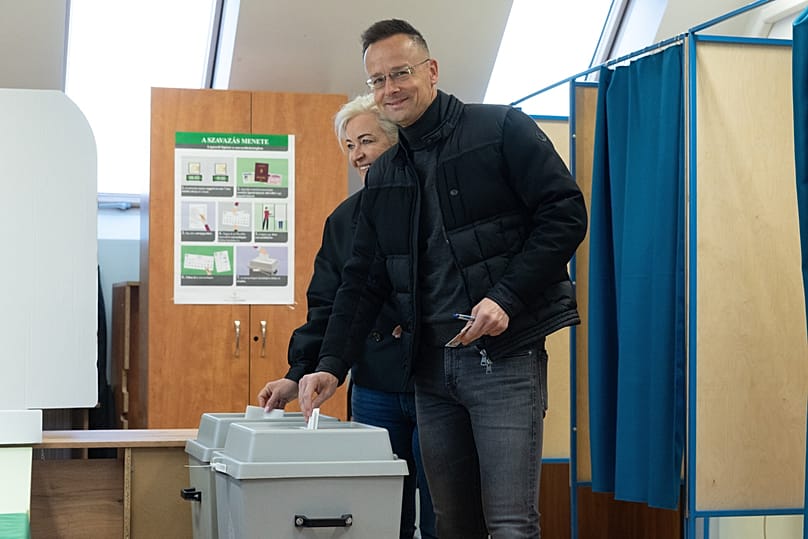
Hungarian Foreign Minister Peter Szijjarto and his wife cast their votes during the general election in Dunakeszi, Hungary, Sunday, April 12, 2026 Zoltan Kocsis/MTI - Media Service Support and Asset Management Fund
In 2023, Szijjártó announced that his now-employer BYD would open its first European factory in Hungary — allowing the conglomerate to skirt European Union import tariffs on Chinese electric vehicles imposed to protect the continent's domestic auto manufacturing sector.
As Hungary's foreign affairs and trade minister, he played a central role in talks with BYD to bring the plant to Hungary, and said at the time that the decision came after 224 rounds of negotiations between the company and Hungary’s government.
Szijjártó called the project “one of the largest investments in Hungarian economic history,” and said the government would provide financial incentives to BYD for building the plant.
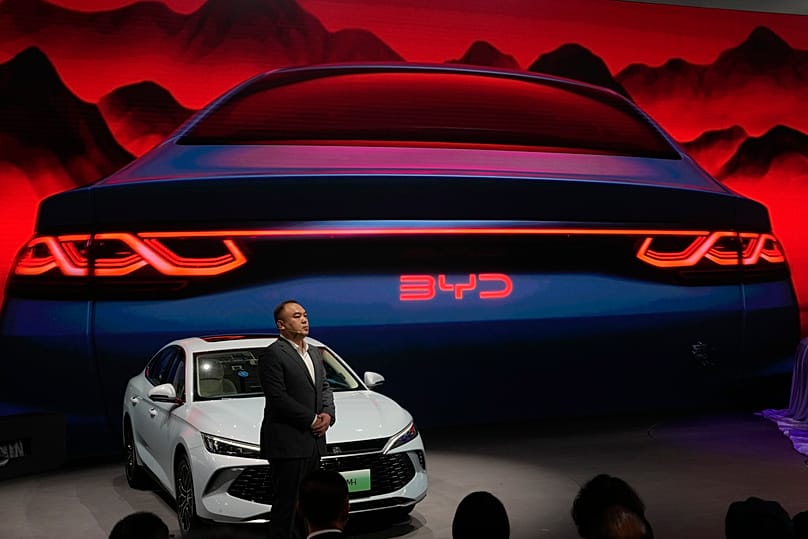
Global automakers and EV startups unveiled new models and concept cars at China's largest auto show in Beijing, Thursday, April 25, 2024 Ng Han Guan/Copyright 2024 The AP. All rights reserved
While in office, Szijjártó and Orbán opposed EU tariffs against Chinese products and sought major investment from Beijing, opening a series of Chinese EV battery manufacturing plants across the country.
Orbán's government and Beijing also jointly developed a rail corridor between Hungary and Serbia that is part of China’s “Belt and Road” global trade initiative.
EU-China trade tensions
The announcement comes amid growing trade tensions between Brussels and Beijing, with the latter repeatedly threatening to retaliate against EU moves to protect its market from Chinese overcapacity.
The EU is facing a growing trade deficit with China, which across the bloc has reached a record €1 billion a day, and engagement with Beijing has become a top priority for Brussels.
The extent to which that deadline is achievable, however, has been questioned. German MEP Bernd Lange (S&D), chair of the European Parliament's trade committee, said the October deadline set by the European Commission in trade talks with China was "not realistic at all" if the EU wanted a binding agreement.
Foxconn subsidiary drives growth in Hungary’s industrial exports
Cloud Network Technology was Hungary's third-largest company by revenue in 2025. / Facebook/Cloud Network Technology
By bne IntelliNewsJuly 14, 2026
Hungary's recent export recovery has been driven primarily by AI-related server manufacturing rather than the country's automotive industry, financial website Portfolio.hu wrote after the KSH released industrial data for May.
The detailed reading by the statistics office showed the production of the computer, electronics and optical equipment segment, which accounted for 15% of manufacturing, surged 43%, boosted by production of peripherals.
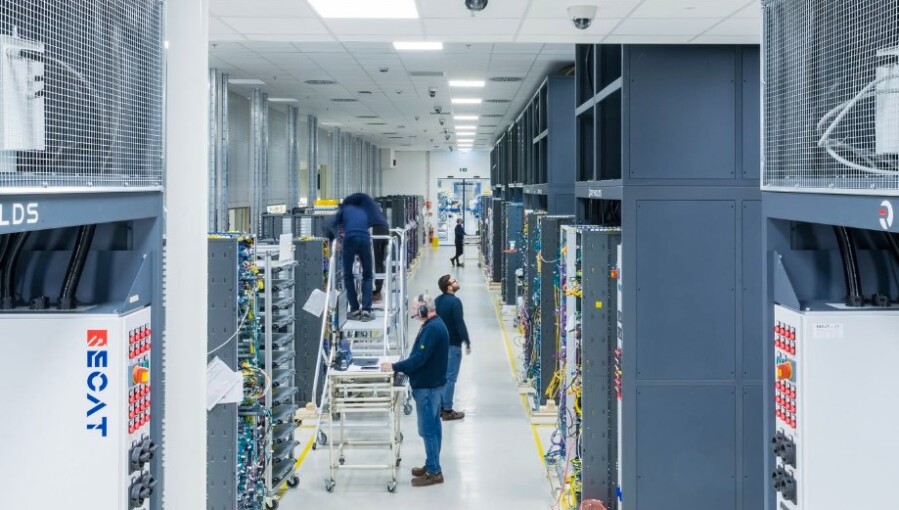
Growth was reportedly fuelled by rising output by Cloud Network Technology, a Foxconn subsidiary operating a manufacturing facility in Komarom, bordering Slovakia. The company produces server systems used in AI infrastructure and is a major global cloud service provider.
The company, set up in 2017 has become one of Hungary's fastest-growing electronics manufacturers as global demand for AI servers, cloud computing infrastructure and networking equipment has surged. Foxconn says headcount exceeded 2,000 in 2025 after hiring more than 900 workers, making it one of the largest employers in the region.
The plant forms part of Foxconn's strategy to diversify manufacturing closer to European customers while reducing dependence on Asian production. The company also fits into Hungary's broader strategy of attracting high-value electronics manufacturing alongside automotive investments, with the government supporting expansion through investment incentives and workforce development.
The company says it is investing in advanced manufacturing technologies and AI-enabled production processes. It has also taken part in discussions with the Hungarian government on AI and industrial policy.
Public data showed that Cloud Network Technology is Hungary's third-largest company by revenue in 2025, behind energy groups MOL and MVM as it booked HUF2.6 trillion (€7.2bn) in sales.
The KSH on July 14 confirmed that headline industrial output edged down 0.4% y/y in May, but rose 5.4% when adjusted for the number of workdays. On a monthly basis output increased by 2.3% and edged up 0.7% in the first five months.
Broken down by sectors, output of the automotive industry, Hungary's biggest manufacturing sector with a 25% weight, inched up 0.7% y/y.
After bottoming out in late 2025, Hungary's industrial sector has returned to growth, boosting exports. While the recovery has coincided with a rebound in vehicle production, the automotive sector accounts for only about 28% of export growth recorded so far this year.
Output of the food, drinks and tobacco products segment, making up 12% of manufacturing, slipped 4.5%. Output of the electrical equipment segment, accounting for 8.6% of manufacturing, declined 5.3%.
New orders in the manufacturing sectors surveyed rose 13.6% y/y in May, driven by a 15.8% increase in export orders, while domestic orders edged up 1.6%. Total order books at the end of the month were 41% higher than a year earlier.
BEYOND THE BOSPORUS: Imamoglu, jailed challenger to Erdogan, given 3 minutes per criminal charge to defend himself
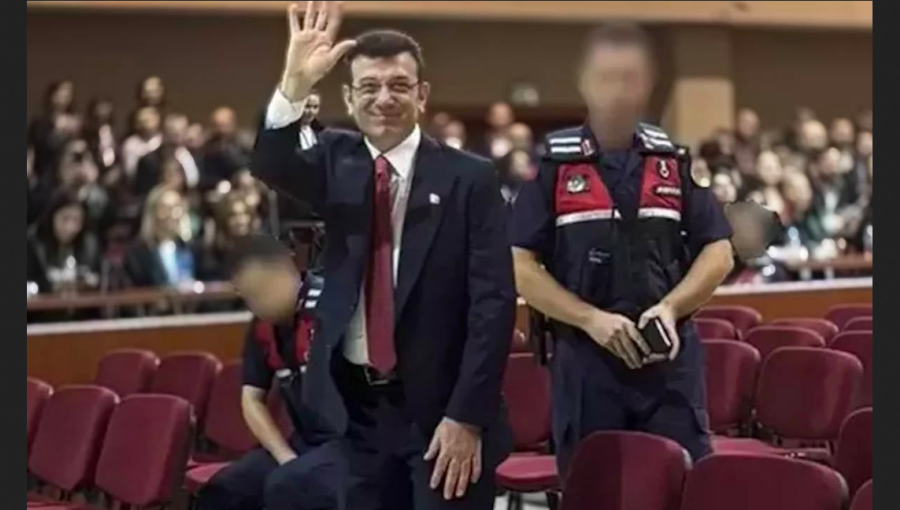
Imamoglu in court. The jailed politician also indicated astonishment at the world leaders who last week visited Ankara for a NATO summit, but said nothing about the Erdogan regime's crushing of Turkey's opposition. / social mediaFacebook
Elected mayor of Istanbul Ekrem Imamoglu, the opposition politician jailed before he could step up his campaign to end the grip of Recep Tayyip Erdogan on Turkey’s presidency, on July 13 launched a blistering attack on the country’s judiciary from his prison cell.
From Silivri prison, Imamoglu warned that Turkey faces a "multifaceted judicial collapse" that will silence political dissent ahead of future elections.
In an AI-generated video message targeted at young voters, Imamoglu – who would be widely expected to defeat Turkish leader of 23 years Erdogan in a head-to-head contest – explained the tight constraints he faces in his ongoing trial over supposed extensive corruption in his Istanbul municipal administration. The court, he said, has severely restricted his ability to defend himself against a mountain of state accusations.
Three minutes per charge
Imamoglu revealed how the court has allocated a single session of seven to eight hours for his entire defence. The time must be divided up between himself, three defence lawyers and cross-examinations conducted by judges, prosecutors and co-defendants.
"They tell me, 'make your defence'. They expect a defence in this timeframe against 143 criminal charges and a 4,000-page pile of nonsense," said Imamoglu.
"Under this schedule, I am being given barely three minutes to defend myself against each charge levelled against me. They make it so hopeless, the prosecution has no questions to ask me and neither does the court panel. Their only required path is to prevent a defence so that no one hears Ekrem."
Case “architect” Erdogan is “afraid”
The massive trial has become a flashpoint in Turkish politics. The first hearing commenced in March, as the court moved to deal with more than 400 defendants. After three months, the court insisted that it would end the first hearing on July 9, even as Imamoglu, accused of being the leader of a gang of organised criminals, awaited his moment as the last defendant to present his defence.
Remarked Imamoglu: “Erdogan, who is afraid of both live broadcasts and his [political] rival, and is the architect of all these [prosecution] files, has gone down in history as the perpetrator of the pinnacle of this lawlessness organised by the justice minister [Akin Gurlek], who is a candidate to be his successor, and as the perpetrator of the legal ‘murder’ committed in every judicial process.”
Judicial collapse threatens all
He added: “Turkey is facing a many-sided threat of judicial collapse. The threat does not discriminate, it is a threat to businessmen, artists, journalists, dissidents, students, politicians, mayors and presidential candidates.
“Practices that disregard everyone's rights and freedoms loom over our nation. The justice ministry has been turned into a 'ministry of collapse'. With phrases like 'the bigger radish is still in the saddlebag' [a Turkish proverb somewhat equivalent to “The worst is yet to come”—Ed.] or 'the arms of the octopus', I don't know for the how-many-eth time but I think there is deceit with Erdogan once again."
Jarring silence of world leaders who came and went
Imamoglu – speaking in the week that brought the 10th anniversary of the failed coup attempt that foreshadowed Erdogan’s huge crackdown on opponents in all fields up and down the country – concluded: “While Turkey was experiencing this judicial disgrace, world leaders [attending the Nato leaders’ summit in Ankara] came and went.
“What was the result? [Donald] Trump said: 'I can't say Erdogan is friends with [Benjamin] Netanyahu, but he left Israel alone, he is a wonderful ally. They [Turkey] have the largest land forces [in Nato apart from those of the US] ready to fight'.”