Showing posts sorted by relevance for query BAN DEEP SEA MINING. Sort by date Show all posts

Monday, February 20, 2023

Why has a Canadian company partnered with the tiny island of Nauru to fast-track deep-sea mining?

A leaked video of ocean pollution during a trial by The Metals Company (TMC) has renewed calls for a ban on deep-sea mining.


By Joanna Chiu
Staff Reporter
Mon., Feb. 20, 2023

Brown-black discharge gushed out of a pipe from a hulking ship, dispersing murky clouds of sediment into the international waters of the Pacific Ocean.

The scene, captured in a video that’s garnered international attention, turned a spotlight to a controversial Canadian company that is poised to become the first in the world to extract critical metals from the ocean floor — with the help of a tiny island in Micronesia.

While The Metals Company (TMC) insists the incident during a mining trial was harmless, the spill has renewed calls for a global ban on deep-sea mining. Protesters in Vancouver recently waved placards that singled out TMC for its operations, and asked that delegates to a global ocean conference push for a ban.

The uproar has highlighted the tension between our world’s growing demand for metals that power renewable energy technologies and the impact on the earth of pursuing them.

This month, Canada issued a surprise domestic moratorium on deep-sea mining and said international mining should only take place if regulators can ensure environmental protections.

But the federal government stopped short of weighing in on whether there should be a global ban.


“It’s a huge debate we’re having about how to responsibly produce batteries for electronic vehicles and other technologies for clean energy,” says Dr. Juan José Alava, principal investigator at the University of British Columbia’s Ocean Pollution Research Unit.

“But as metals or valuable elements from the land become scarce or more difficult to extract, more industries are looking to the ocean bottom.”

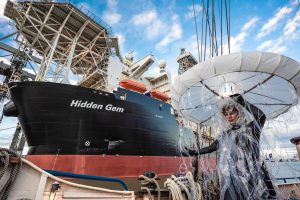
Speaking a day after the Natural Resources Canada statement, TMC chief executive officer Gerard Barron defended his company’s handling of the incident on the ship Hidden Gem and laid out his arguments for why the benefits of deep-sea mining would outweigh harm to marine life.

“It wasn’t toxic waste,” he told the Star. “It was water and nodules and sediment … We shut it off right away.” (In the mining trial, the company picked up nodules — potato-sized rocks containing metals such as cobalt, copper, nickel and manganese needed for batteries — but is not allowed to sell them commercially.)


The International Seabed Authority, a United Nations body regulating mineral-related activities, said a preliminary assessment by its experts identified no threat of harm to the environment. But it was awaiting a more detailed report from TMC’s subsidiary, Nauru Ocean Resources Inc.

The video came from scientists who were part of TMC’s required team of experts to monitor mining trials, a Greenpeace spokesperson told the Star. The scientists shared the video with a group of NGOs including Greenpeace, and allowed Greenpeace to post the video and share with media. The scientists shared it with organizations but declined to speak with journalists, according to the spokesperson.

Barron objected to calling the video a “leak” from concerned scientists. “There were more than 200 people on board. We weren’t trying to hide anything,” he said.

Hundreds of international experts have questioned the company’s claims, saying the deep-sea environment is the least understood ecosystem in the world and that scientists simply don’t have enough data to understand the effects of using heavy machinery to hoover up nodules that took millions of years to form.


Sharing slides over a Zoom call, Barron displayed a map of the Clarion-Clipperton Zone, which spans 4.5 million square kilometres between Hawaii and Mexico. It is here where some of the world’s deep-sea mining companies are conducting trials in anticipation that the International Seabed Authority may soon announce a regulatory framework for projects to begin.

Barron pointed out an area near an edge of the zone. “In this section alone, where we’ve invested 90 per cent of our resources (hundreds of millions of dollars), there is enough metal to power 60 million mid-sized electric vehicle batteries,” he said.

“In this area, most life is under the sea floor, and those are very small organisms … Let’s look at it from a bigger perspective. Let’s not just think about the worms,” Barron said.

The longtime Australian investor, who works out of TMC headquarters in Vancouver, said he was drawn to deep-sea exploration for environmental protection reasons.

To him, the prospect of “picking up” nodules from the sea floor seemed far less destructive than mining on land, which is “threatening rainforests in the Philippines and Indigenous communities.”

Alava, from UBC, said the company should allow independent scientists to closely review all data and protocols related to the incident since video clips and TMC’s public statement may not tell the full story.

“Simply calling it an accident is unacceptable. We don’t know if it was human error, engine failure or machine failure,” he said. “When you have a lot of suspension of sediment, it can obstruct the feeding processes of marine life for quite some time.”


It’s not only the prospect of future deep-sea mining that worries scientists, but existing activities such as offshore oil exploitation and natural gas drilling.

“A lot of research is still needed on whether we can use modelling tools to predict impact in the long term on seawater quality and marine biodiversity because there are more marine species being discovered every day.”

The concern is that we might lose unique marine species, ones which may have applications in medicine and technology before they are found.”

Newly discovered deep-sea creatures include a blind eel with transparent skin, deep-sea batfishes that are flat with beady eyes and a new species of spiderfish with large mouths, which dwell below the surface of the Indian Ocean.

TMC pairs up with Nauru

While 22 different companies have deep-sea mining exploration contracts from the ISA, a consensus among industry observers is that TMC and its subsidiaries are clearly in the lead. Barron confirmed TMC could start mining as early as next year, pending regulatory approvals.

The imminent legalization of deep-sea mining projects is connected to the actions of Barron’s company, too.


Since 2011, TMC has partnered with the tropical island nation of Nauru, which has a population of 12,500. The Canadian company’s wholly owned subsidiary, Nauru Ocean Enterprises, is registered in Nauru. Nauru acts as the firm’s official state sponsor.

Since deep-sea mining in international waters is not allowed because no regulations exist to govern the industry, Nauru issued a two-year deadline to the ISA in June 2020 to complete rules on deep-sea mineral exploitation. They invoked the so-called “two-year rule,” a treaty provision obliging the authority to try to finalize decisions within the deadline.

In response to Nauru and TMC’s gambit, more than 700 marine science and policy experts signed a letter calling for a pause to deep-sea mining. The experts said organisms in the deep sea support “ecosystem processes necessary for the Earth’s natural systems to function,” playing a key role in climate regulation and elemental cycling.

Major companies using advanced batteries, including Google, Samsung, Volvo and BMW, also joined a World Wildlife Fund call for a moratorium on deep-sea mining over fears of environmental impact.

A spokesperson for the ISA said the body has been discussing a draft exploitation regulation since 2019 and declined to comment on criticisms that Nauru’s deadline put pressure on the authority to rush the process.

“Discussions are progressing well, and ISA member states have agreed to continue their work with a view to reaching an agreement for the adoption of the exploitation regulations for July 2023, if possible.”

In his interview, Barron said his company was “utilizing” the two-year rule to ask for regulations to be completed by this year, before correcting himself to say it was Nauru that had invoked the treaty provision at the ISA.

“I think scientists will be very pleased when they see the volume and quality of the science we’ve been gathering this last decade,” Barron said.

If mining exploitation can go forward, it’s not clear how Nauru will benefit. Negotiations on future revenue sharing are underway but for now, TMC supports several local jobs including two Nauruan directors as well as initiatives such as university sponsorships, according to Barron. In the future, the company may pay taxes to Nauru. A representative for the Nauru government at the UN could not be reached for comment.

The whole situation has raised eyebrows, says Pradeep Singh, a specialist in ocean regulation and fellow at the Research Institute for Sustainability, Helmholtz Centre in Potsdam, who advises several governments on deep seabed mining and attends ISA meetings as an observer delegate.

“It is apparent that the company does not currently have a significant presence or meaningful and physical assets within the jurisdiction of Nauru so the question is raised as to whether it is appropriate for the country to be sponsoring this company,” Singh said.

“The pertinent question to ask is whether Nauru has effective control over the actual activities that are being carried out in the name of Nauru Ocean Enterprises Inc.,” he added.

TMC has struck similar deep-sea mining exploration partnerships with the countries of Tonga and Kiribati, in 2012 and 2015, respectively. “Without investment in this industry from private sector companies such as ours, developing nations would not otherwise have an opportunity to benefit from this new resource opportunity,” Barron argued.

Green Party supports ban

Besides questions over Nauru’s role, the crux of TMC’s reasoning for the relative environmental good of deep-sea mining is flawed, Singh says.

“The launch of a deep-sea mining industry doesn’t mean that traditional mining companies will drop out as competition. Rather, it is likely that terrestrial miners will compete, and in so doing, make matters worse by digging further and deeper, with lesser controls, more abuses just to gain a competitive edge,” Singh told the Star.

“So that really eats into the narrative that deep-sea miners claim to reduce terrestrial mining, whereby in reality, we will just see more of the old problems on land and new ones at sea.”


Elizabeth May, leader of the Green Party, is among those supporting an international ban on deep-sea mining and says Canada should take a stronger leadership role on such a position.

“I think we should ban deep-sea mining and that should be (Canada’s) position globally … It’s too big a threat to the climate, it’s a threat to biodiversity,” she told the Star.

“The question you have to ask is, ‘Do we need this?’ There are many ways to recycle metals and minerals. There are other places to be mining for lithium and other metals that are needed in electric vehicles. We have plenty of sources.”

In fact, international and Canadian companies are set to open several new lithium mines across Quebec, Manitoba and the Northwest Territories, in what is being dubbed the “White Gold Rush.”

Calls from countries for a pause on deep-sea mining now include several ISA Council members including Palau, Fiji, Samoa, Micronesia, New Zealand, Costa Rica, Spain, Germany, Panama and Chile. Last month, France became the first country to call for an outright ban on international deep-sea mining.

Barron chalks up the growing opposition from some governments to “narrative warfare” waged by activist groups who “think some magical cure will drop out of the sky” to meet renewable energy power needs.

“What we can do is be as transparent as possible. It’s an understandable question people have of, ‘How do we know what you’re doing deep in the ocean, thousands of miles from shore?’ We have a plan to set up a digital dashboard from our ships so regulators and stakeholders can get a near-live view of what we’re doing.”

With files from Marco Chown Oved

Joanna Chiu is a B.C.-based staff reporter for the Star. She covers global and national affairs. Follow her on Twitter: @joannachiu

Sunday, October 20, 2024


Ocean’s Last Frontier: Hidden Dangers of Deep-Sea Mining


What are the legal challenges of deep-sea mining and why cannot the world wait any longer to deal with them?

The International Seabed Authority (ISA), based in Kingston, Jamaica, has emerged as a significant cause for worry as it exercises control over more than half of the world’s ocean area, with minimal public supervision or media examination.

Founded in 1994, the authority is entrusted with the twin mandate of safeguarding and utilising the Earth’s seas, which raises concerns about potential conflicts of interest in its activities.

One of the main critiques centres on the perceived favouritism of the ISA towards mining corporations. The secretary-general of the ISA Michael Lodge, frequently criticised for his strong connections to the mining industry, further exacerbates concerns over the agency’s neutrality. Detractors contend that this interplay could undermine the ISA’s dedication to protecting the oceans.

Founded in 1994, the ISA is entrusted with the twin mandate of safeguarding and utilising the Earth’s seas, which raises concerns about potential conflicts of interest in its activities.

The ISA is a crucial institution in our global scene, as it addresses the urgent requirement for sustainable management of international seabed resources. The ISA’s regulatory structure ensures responsible exploration of deep-sea mining, as it recognises its role as a caretaker of the shared legacy of humankind.

The function of resource exploitation beyond national borders is addressed by implementing rigorous standards and limiting undesirable environmental repercussions.

Amidst the increasing demand for resources from the ocean floor, the importance of the ISA is its capacity to reconcile economic ambitions with environmental responsibility, promoting fair advantages for all countries and protecting the fragile equilibrium of our interconnected global ecosystem.

Deep-sea mining, an increasingly contentious practice, is motivated by the need for a rapid solution to the worldwide scarcity of metals. The ISA, primarily targeting mining contractors, has granted exploratory licences for polymetallic nodules to 19 firms.

These nodules, which have an appearance similar to little rocky objects, contain significant amounts of metals such as cobalt and nickel. These metals are essential components for the rapidly growing lithium battery industry.

The ecological ramifications of deep-sea mining are substantial and pervasive. Deployment of large submersible mining vehicles, such as the Patania II, has the potential to cause significant disruption and damage to the ocean floor. Activities of dredging and polymetallic nodule removal pose a significant risk of causing irreparable harm to the marine ecosystem, comparable to the destructive impact of deforestation on a rainforest.

Deep-sea ecosystems are remarkably fragile and exhibit a sluggish capacity for regeneration as a result of the severe conditions of pressure, temperature and darkness. Mining endeavours have the potential to destabilise sediment plumes, which can result in the suffocating of benthic organisms and the disruption of the intricate food chain equilibrium.

The nodules, which require more than 10 million years to develop, are a limited resource, highlighting the necessity for carefulness in their exploitation. Although the mining industry advocates for deep-sea mining as a circular economy solution, some contend that this approach neglects the environmental repercussions.

Achieving true circularity necessitates significant investment in recycling infrastructure, rather than relying solely on large-scale metal extraction. The pressing need for minerals, particularly cobalt (expected to increase by 500 percent by 2050, as stated by the World Bank), underscores the necessity for systemic alterations in consumer habits and the longevity of products.

Notwithstanding the pressing nature of the issue, there is a growing worldwide movement that is gathering strength and promoting the prohibition of deep-sea mining.

ISA, having assigned substantial areas of the Atlantic, Pacific and Indian seas, is now facing crucial decisions over the issuance of licences for industrial extraction. Demands for a distinct division between ISA and mining corporations resonate, underscoring the imperative for a global prohibition on deep-sea mining in the open seas, akin to the effective ban on whaling.

This year is significant as industrial extraction may begin if the ISA approves mining permits. The need to take action is emphasised by the irreparable consequences that deep-sea mining could have on marine biodiversity, climate regulation and the overall well-being of the planet.

Deep-sea mining, an increasingly contentious practice, is motivated by the need for a rapid solution to the worldwide scarcity of metals.

As the ISA’s involvement in the allocation of oceanic regions is examined closely, ongoing endeavours to advocate for a prohibition emphasise the significance of averting the irreversible ramifications of unregulated deep-sea mining.

In addition to the pressing environmental concerns, it is imperative to implement a more holistic systemic transformation. In order to meet the incessant demand for the most recent technological products, both product design and consumer behaviour must change.

The prevalent consumerist (disposable) culture, characterised by the frequent replacement of items instead of their repair, perpetuates the extraction of resources. The establishment of a truly circular economy necessitates substantial investments in recycling infrastructure and a comprehensive reassessment of the lifecycles of products.

Although proponents of deep-sea mining assert that it serves as a means to reduce reliance on new materials and close the cycle, this strategy’s sustainability is called into question. The extensive magnitude of polymetallic nodule extraction required to satisfy demand gives rise to apprehensions regarding inadvertent repercussions on marine ecosystems, atmospheric carbon levels, and the intricate equilibrium of life on our planet.

For example, promoting the prioritisation of repair and maintenance over the perpetual upgrading of devices among consumers could serve as a means to alleviate the environmental consequences.

In the same way, incorporating modularity or easy upgradability into the design of electronic devices can aid in the establishment of a more sustainable product lifecycle. Investing in the development of innovative recycling technologies or investigating sustainable material alternatives may present more environmentally favourable alternatives to deep-sea mining.

The capacity for an enduring and catastrophic effect on the life-support systems of our planet must not be undervalued. Deep oceans, which are frequently perceived as inaccessible and detached from terrestrial existence, serve an essential function in the processes of carbon sequestration and oxygen generation. It is not merely an environmental imperative that these ecosystems be preserved; it is also vital to the welfare of humanity.

An increasingly urgent matter that demands the attention of the international community is the implementation of a comprehensive prohibition on deep-sea mining in international waters. Attaining this objective requires coordinated endeavours to enhance consciousness, galvanise public sentiment, and interact with policymakers on a global and domestic scale.

The ecological ramifications of deep-sea mining are substantial and pervasive.

In conjunction with the critical nature of safeguarding our oceans, the triumph of previous environmental movements provides optimism that a unified front can emerge to oppose the ill-advised endeavour of deep-sea mining.

The ISA plays a crucial role in response to the changing Polar Silk Route and its impact on the growing marine operations in the Arctic. In addition to its traditional role of regulating mineral-related operations in the international seabed, the ISA is also faced with the task of addressing the issues presented by possible resource extraction and environmental consequences linked to the opening of Arctic shipping routes.

The mandate of the ISA is extended to encompass the wider repercussions of climate change, requiring the implementation of flexible legislation to guarantee sustainable practices, mitigate ecological damage, and promote fair utilisation of these fragile polar settings.

As countries increasingly explore the Arctic region for transportation and natural resources, the ISA plays a crucial role in protecting the fragile equilibrium of this developing maritime boundary.

India’s role in protecting the oceans

India has emerged as a major player in global ocean governance. Its involvement in the Arctic Council as an observer nation underscores this commitment. While primarily focused on the Arctic, India’s ocean conservation efforts extend to its coastal waters and beyond.

Domestically, the Offshore Areas Mineral (Development and Regulation) Act of 2002 provides a framework for managing mineral resources within India’s Exclusive Economic Zone (EEZ). Additionally, India’s network of Marine Protected Areas (MPAs) showcases its dedication to safeguarding marine ecosystems.

India’s MPAs are designated coastal and marine regions under varying degrees of protection, case in point, the Gulf of Munnar Marine National Park and the Andaman and Nicobar Islands. These MPAs are crucial safeguards for biodiversity since they protect coastal communities, and contribute to creating sustainable fisheries by preserving critical marine habitats.

There is a growing worldwide movement that is gathering strength and promoting the prohibition of deep-sea mining.

On the international stage, India actively participates in the United Nations Convention on the Law of the Sea (UNCLOS) meetings, shaping global maritime regulations. The country is also a member of the International Maritime Organisation, contributing to international efforts to protect marine environments from shipping pollution. India’s growing scientific research on deep-sea ecosystems is crucial for informed decision-making.

India has been an active participant in the ISA. The country holds two exploration contracts granted by the ISA: one for polymetallic nodules in the Central Indian Ocean Basin and another for polymetallic sulphides in the Indian Ocean Ridge. These contracts highlight India’s interest in tapping into the potential mineral wealth of the seabed.

However, India’s role in the ISA extends beyond its own exploration interests. As a developing country with significant stakes in ocean resources, India can play a crucial role in shaping international regulations for deep-sea mining.

By advocating for stringent environmental safeguards and promoting equitable sharing of seabed resources, India can contribute to the sustainable management of the ocean floor.

Additionally, this would help India’s broader strategic ambitions. Given China’s increasing influence in the region and even in deep-sea mining, India stands at a critical juncture to not only counter-balance its rival but also solidify itself as a regional hegemon.

However, India faces several challenges in balancing its economic interests with environmental stewardship. It is critical to create sound legal frameworks for deep-sea mining, make sure that benefits are shared fairly, and fund research and development for sustainable alternatives.

In order to solve mutual problems and boost its bargaining power inside the ISA, India can also take advantage of its position to form alliances with other Global South nations.

By actively participating in the ISA and promoting sustainable ocean governance, India can place itself as a global leader in ocean conservation and management. However, a significant gap exists in India’s regulatory framework for deep-sea mining beyond its EEZ.

India’s approach to deep-sea mining will be crucial in shaping the future of this emerging industry. By carefully considering the potential benefits and risks, India can position itself as a responsible and innovative player in the global ocean economy.

The absence of a global leader: A critical gap in deep-sea governance

One major obstacle to successful global ocean governance is the US’s glaring exclusion from the ISA. In the past, the US has opposed the development of a legal framework for deep-sea mining, placing domestic mining interests ahead of international cooperation. The US has not yet taken the lead in this re-evaluation, despite growing global worries about the activity’s environmental effects.

This year is significant as industrial extraction may begin if the ISA approves mining permits

With its significant geopolitical and economic clout, the United States is in a unique position to affect the direction of deep-sea mining. Its involvement in the ISA would be crucial to creating strong environmental protections and guaranteeing fair resource distribution. Regrettably, the US’s prolonged absence prevents the establishment of a complete and efficient international order by leaving a leadership vacuum.

This absence of global leadership raises the possibility of uncontrolled, potentially dangerous deep-sea mining operations.

Due to the lack of a distinct global leader, other nations have been able to step in and take advantage of the opportunity, although their level of success has varied. China has become a major participant in deep-sea mining, making substantial investments in research and development.

Although there are concerns about China’s environmental record, its involvement has emphasised the necessity of robust international cooperation. In contrast, nations such as Norway, which have a well-established history of marine conservation, have adopted a more prudent strategy by prioritising the precautionary principle.

By reengaging with the ISA, the US has the potential to establish a crucial equilibrium between economic interests and environmental preservation. Participating would not only bolster the global regulatory framework but also amplify its influence in determining the future of the maritime economy.

Additionally, the leadership of the US has the potential to cultivate enhanced confidence and collaboration among nations, thereby diminishing the likelihood of geopolitical conflicts stemming from the race for seabed resources.

It is imperative for the international community to escalate its efforts in order to promote US involvement in this crucial matter. It is also important to adopt a cooperative strategy that includes all significant maritime nations in order to safeguard the fragile marine ecosystems and guarantee the sustainable administration of oceanic resources.

A call to action: Protecting our ocean’s last frontier

The prospect of deep-sea mining poses a significant threat to the future of our oceans. The potential ecological damage is tremendous, with extensive implications for marine biodiversity, climate regulation and human well-being.

India has emerged as a major player in global ocean governance. Its involvement in the Arctic Council as an observer nation underscores this commitment.

Deep-sea habitats, commonly known as the ‘rainforests of the sea’, house a wide variety of distinctive and delicate species, such as deep-sea corals, sponges and peculiar fish that have evolved in harsh environments.

These ecosystems play a crucial role in providing essential services to the environment, including storing carbon, recycling nutrients and sustaining global fisheries.

Mining in these fragile areas has the potential to do irreparable harm, resulting in widespread species loss and disturbing the delicate equilibrium of marine ecosystems.
In addition to the immediate ecological consequences, deep-sea mining presents substantial hazards to climatic stability.

The ocean plays a vital role in the regulation of the Earth’s climate through the absorption of carbon dioxide. Mining activities that disturb seafloor sediments have the potential to release stored carbon, which can worsen the effects of climate change.

In addition, deep-sea mining may disrupt the ocean’s capacity to absorb heat, which could result in heightened occurrences of severe weather events and an increase in sea levels.

It is necessary to consider the substantial environmental concerns while evaluating the potential economic advantages of deep-sea mining. Engaging in deep-sea mining without a thorough comprehension of its repercussions is a risk that we cannot financially bear, despite the worldwide need for essential minerals.

To decrease our dependence on deep-sea resources, it is crucial to allocate resources towards researching and developing alternative technologies, including enhanced recycling techniques, advancements in battery technology, and sustainable mining practices on land.

In order to protect our seas for future generations, it is imperative that we insist on prompt action from governments, international organisations and the mining sector.

In addition, deep-sea mining may disrupt the ocean’s capacity to absorb heat, which could result in heightened occurrences of severe weather events and an increase in sea levels.

It is also crucial to implement a worldwide ban on deep-sea mining until comprehensive scientific studies, assessments of environmental damage and international rules are established.

Furthermore, it is critical to endorse endeavours that advocate for the preservation of the ocean, the establishment of sustainable fishing practices, and the creation of marine protected zones.

The deep sea is an expansive and predominantly uncharted territory. Preserving this invaluable asset for future generations is our duty. Through prompt and cooperative action, we can guarantee the ocean’s ongoing ability to sustain life on our planet and serve as a perpetual wellspring of awe and motivation for future generations.

Anuraj Singh is an incoming student at the Fletcher School of Law and Diplomacy and has formal training in political science with a specialisation in foreign policy and economics.

Rohan Singh is a practising advocate who regularly appears before the Supreme Court of India and the Delhi High Court.

Courtesy: The Leaflet

Friday, June 21, 2024

Explainer: Deep-sea mining

With the future of mineral mining on the ocean floor remaining contested and murky, Dialogue Earth digs into the debates


Patania II is a prototype deep-sea mining machine developed by Belgian company GSR to collect small nodules. They contain valuable minerals used in technology, such as smartphones and, increasingly, solar panels. (Image © GSR)


Regina Lam, Jessica Aldred
June 20, 2024


The deep sea is an underwater world scientists are still trying to fathom. It is also a reserve of increasingly sought-after minerals that are critical for modern life, making it a site of major competition for resources. Some governments are gearing up to exploit the seabed, while others want such deep-sea mining halted until its risks to marine life and the environment are better understood.

As the debate escalates, Dialogue Earth breaks down what is known about the uncharted waters of deep-sea mining.

In this explainer:
What exactly is deep-sea mining?
What are deep-sea miners after?
How might deep-sea mining affect the ocean?
Is mining already taking place?
What is the International Seabed Authority?
Who wants to mine?
Who is against mining?
Where does China stand?
When could commercial mining start?
What exactly is deep-sea mining?

Mining the deep sea involves extracting mineral deposits from seabeds at more than 200 metres below the surface. This area covers around 65% of the planet and harbours a rich diversity of species, many still unknown to science. It encompasses geological features including mountain ranges, plateaus, volcanic peaks, canyons, vast abyssal plains and chasms including the Mariana Trench, which is home to the deepest point of the ocean, at 11,000 metres.

While commercial mining is still a prospect rather than a reality, experimental deep-sea mining has already taken place. The process usually involves deploying seafloor vehicles to dredge or sever seabed formations and scooping or suctioning up mineral-rich deposits to a support vessel, where they can be stored, processed and transported to shore.

(Source: The Pew Charitable Trusts & New Zealand Environment Guide. Graphic: Ed Harrison / Dialogue Earth)
What are deep-sea miners after?

Would-be miners are targeting nickel, copper, cobalt, manganese, zinc, silver and gold. These are so-called “critical minerals” – metals essential to modern technology and widely used in the manufacture of smartphones, laptops, solar panels, wind turbines and electric vehicles. Attention is focused on three types of marine mineral deposits: polymetallic nodules found lying on the seafloor; polymetallic sulphides known as “seafloor massive sulphide deposits” that form around active, high-temperature hydrothermal vents; and cobalt-rich ferromanganese crusts that cover underwater mountains known as seamounts.

Graphic: Ed Harrison / Dialogue Earth

Advocates argue that the deep sea could be a reliable, clean and ethical alternative to terrestrial sources. Opponents have environmental concerns and say projections of the need for deep-sea minerals may be wildly optimistic, and that demand can be met by known terrestrial resources and more advanced recycling of metals.
How might deep-sea mining affect the ocean?

Scraping the ocean floor to extract resources could destroy deep-sea homes of octopuses, sponges and other species. Mining hydrothermal vents would require removing entire vent structures, which can support thriving animal communities. Exploiting cobalt-rich crusts deposited on seamounts would potentially remove fauna found there and on the seafloor, which could do similar or even more damage to bottom trawling.

Secondary impacts are also possible. Mining would produce sediment plumes, some of which could be toxic and smother animals downstream. Noise and light pollution caused by mining could disrupt deep-sea communities uniquely adapted to high pressures and the lack of sunlight. Deep-sea animal communities are often slow growing and could take decades – even centuries – to recover from disturbance.

Is mining already taking place?

Shallow-water mining for sand, tin and diamonds is already happening around the world. Some deep-sea mining exploration has taken place to scope for mining potential and test equipment, both within areas under national control and in international waters. But mining has yet to be conducted commercially.

Countries have the rights to explore and exploit the natural resources of the seabed and subsoil within their territorial sea and exclusive economic zone (EEZ), which normally extends 200 nautical miles beyond a nation’s territorial sea. Nations can claim rights over even more seabed on the continental shelf under certain circumstances. Norway and the Cook Islands are among the nations actively pursuing mining in the waters under their control.

As for seabeds beyond national jurisdiction, the UN stipulates that they belong to no individual nation and are the “common heritage of mankind”; any activities carried out there must therefore be for “the benefit of mankind”. Full-scale mining in these areas cannot begin until the International Seabed Authority signs off a binding code on how it should be conducted.

What is the International Seabed Authority?

The International Seabed Authority (ISA) is an intergovernmental organisation based in Kingston, Jamaica, that has been tasked with developing a code to regulate the exploitation of minerals in international waters. It was established under the UN Convention on the Law of the Sea and counts all 168 signatories as member states, including the EU.

To date, it has issued 31 contracts for mining exploration in high seas areas totalling more than 1 million square kilometres. Over half of the exploration contracts are for polymetallic nodules in the area between Hawaii, Kiribati, and Mexico in the Pacific Ocean, known as the Clarion-Clipperton Zone (CCZ).

The ISA has since 2014 been working on a code for deep sea mining, and some nations and businesses are putting increasing pressure on the body to finalise these regulations. In 2021, the small Pacific island state of Nauru invoked a never-before-used ISA rule that compels the authority to allow mining to proceed within two years under whatever regulations are in place at the time. The regulations were still far from complete when the two-year rule expired.

Any exploitation license applications submitted under the two-year rule still have to be approved by the ISA, and it is very unlikely this will happen before the regulations are finalised. During the regulator’s meeting in July 2023, delegates agreed to a non-legal binding target of working “with a view” to completing the rules by July 2025.

Who wants to mine?

The list of would-be deep-sea miners includes private businesses, state-owned companies and governments, including those of China, India, Japan, Russia and South Korea. Some nations have teamed up: the Interoceanmetal Joint Organization is a consortium formed of Bulgaria, Cuba, the Czech Republic, Poland, Russia and Slovakia. Small island states which control significant amounts of seabed are also keen to engage in mining, including the Cook Islands, Kiribati, Nauru, Singapore and Tonga.


RECOMMENDEDIn Latin America, resistance to deep-sea mining is growing


Some nations are further ahead than others. The Cook Islands has already offered licences to three companies to study the feasibility of mining seabed minerals in its territorial waters. Norway’s parliament decided to open its extended continental shelf for deep-sea mining exploration earlier this year (this area goes beyond its territorial waters but falls under Norwegian control due to UN rules). The government says any extraction plans require approval from the energy ministry and the parliament, and only “sustainable and responsible” projects will be permitted.

Who is against mining?

An increasing number of nations are cautioning against starting commercial deep-sea mining without a better understanding of its impacts. To date, 25 countries have called for pauses or a full ban, including Brazil, Canada, Denmark, France, Fiji, Germany, Mexico and the UK.

Scientists concerned about potentially irreparable damage to ecosystems say not enough is known about deep-sea species and ecosystems to establish an adequate baseline against which to protect them or monitor the impact of mining. Conflicts between mining and other ocean activities could also occur as proposed mining areas overlap with shipping routes, fishing grounds, and areas bio-prospected for genetic resources. The increase in marine traffic and mining waste discharge could disrupt the primary productivity of the food web (the rate at which energy is converted to organic substances by organisms), and potentially affect fish populations.

Major companies, including Google, Samsung, Patagonia, BMW, Volvo and Volkswagen Group, have backed a call from the WWF for a temporary ban. These companies have pledged to ensure minerals extracted from the deep sea are not used in their products.


A sea star 2,500 meters beneath the central Pacific Ocean turns its stomach inside out to feed on Victorgorgia coral (Image: NOAA)

Where does China stand?

China holds five out of the 31 ISA exploration contracts, the most of any country. Several of its national research institutions, universities and state-owned companies have built up their technical capability for deep-sea exploitation, in part as a hedge against high reliance on imported strategic minerals. Recently, Qingdao and Shanghai’s municipal governments have also begun exploring opportunities to boost related research.

In 2016, the country adopted a Deep Sea Law to set regulations for deep-sea exploration and exploitation activities, including licensing, environmental impact assessments and monitoring requirements. China’s representatives at the ISA have been actively engaged in the mining regulation negotiations, pushing back on a discussion of a moratorium on mining during the ISA talks in July 2023. Beijing said the ISA was established to regulate seabed activities by setting out rules for mineral exploitation and protecting the deep sea environment
.
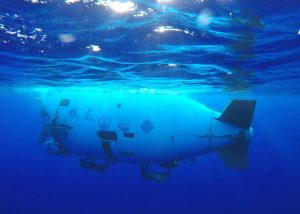
RECOMMENDEDHow will China’s submersibles help us explore the ocean depths?


Some marine engineering researchers suggest more effort and investment is needed from the nation for it to catch up with progress in technological and equipment development achieved by Europe, Japan and South Korea.

When could commercial mining start?

For mining rights in international waters to be granted, contractors will have to conduct environmental impact assessments in line with ISA rules. They also need to demonstrate financial and technological capacity to actually undertake proposed mining activities. Nauru’s invocation of the ISA law means that contractors can now apply for mining licenses. But applications are unlikely to be approved by the authority before it finalises the rules, regulations and procedures. Member nations have agreed to work towards adopting the rules by July 2025, but many representatives have expressed doubt that the body will be able to meet a non-binding timeline.

To date, no party has submitted a mining licence to the ISA. But Nauru could be the first to start commercial exploitation. It is a sponsoring state for Nauru Ocean Resources Inc (NORI), a wholly owned subsidiary of The Metals Company. The company, based in Canada, says NORI intends to apply for an exploitation contract following the next ISA meeting in July 2024, and expects to be in production in late 2025.

This is an updated version of the explainer, which was first published in February 2019 and last updated in November 2021.


Regina Lam is an ocean and special projects assistant editor at Dialogue Earth, based in London. She joined in 2021 and has worked at major Hong Kong newspapers and has reported for the BBC World Service. She holds an MSc in global affairs from King’s College London. Regina is interested in global ocean governance, environmental justice and what makes compelling storytelling and robust investigation in environmental journalism. She speaks Cantonese, Mandarin and English.

Jessica Aldred is former special projects (oceans) editor at Dialogue Earth

Sunday, July 10, 2022

French President says deep-sea mining must not go ahead

Reuters | June 30, 2022 | 

French President Emmanuel Macron. 

French President Emmanuel Macron said on Thursday a legal framework was needed to stop deep-sea mining from going ahead and urged countries to put their money on science to better understand and protect the world’s oceans.


There is growing international interest in deep-sea mining but there is also pressure from some environmental groups and governments to either ban it or ensure it only goes ahead if appropriate regulations are in place.

Deep-sea mining would involve using heavy machinery to suck up off the ocean floor potato-sized rocks, or nodules that contain cobalt, manganese, and other rare metals mostly used in batteries.

“We have … to create the legal framework to stop high sea mining and to not allow new activities putting in danger these ecosystems,” Macron said at an event on the sidelines of the UN Ocean Conference in Lisbon.

“But at the same time we need to promote our scientists and explorers to better know the high seas… we need to better understand in order to protect,” Macron added.

Although he expressed concerns about deep-sea mining, France holds an exploration contract through the Institut Francais de Recherche pour l’Exploitation de la Mer, valid until June 2026, for a 75,000-square-kilometre (28,958-square-miles) area in the Clarion-Clipperton Zone in the North Pacific rich in polymetallic nodules.

The International Seabed Authority (ISA), a UN body, is drawing up regulations governing seabed mining in the high seas – areas outside any national jurisdiction. Until global rules are in place, seabed mining is not allowed.

Several nations, such as the Pacific islands of Palau and Fiji but also Chile, have called for a global moratorium on all deep-sea mining activities, citing environmental concerns and a lack of sufficient scientific data.

But not all countries are against it. China is a leader in deep-sea mining exploration, and small nations have also gotten involved. The tiny island nation of Nauru last year asked the ISA to fast-track the adoption of seabed mining regulations.

G7 countries last month agreed they would only consent to such mining projects if they did not seriously harm the environment. Peter Thomson, UN Special Envoy for the Ocean, told Reuters he believed regulations to counter those concerns will appear soon.

(By Catarina Demony and Helen Reid; Editing by Sandra Maler)


‘Terrifying’: WWF chief hits out at plans to mine the deep sea

Reuters | June 28, 2022 

Marco Lambertini, WWF’s director general. Credit: WWF


The World Wildlife Fund’s chief warned on Tuesday that the potential impact of mining the deep sea could be “terrifying” and called for strict regulations to avoid yet another environmental disaster.


There is growing interest in deep-sea mining but there is also pressure from some environmental groups and governments to either ban it or ensure it only goes ahead if appropriate regulations are in place.

Deep-sea mining would involve using heavy machinery to suck up off the ocean floor potato-sized rocks or nodules that contain cobalt, manganese, and other rare metals mostly used in batteries.

“Have we not learned our lesson?” asked Marco Lambertini, WWF’s director general, referring to the environmental impacts of digging for minerals on land. “We simply don’t know what we will unleash by going down hundreds, thousands of meters (feet)to the bottom of the ocean.”

Speaking to Reuters on the sidelines of the UN Ocean Conference in Lisbon, Lambertini said the WWF was confident there would be consequences if plans to excavate mineral deposits from the deep seabed get a green light.

He said it could potentially generate damaging sediment plumes and affect fish migration. Lambertini said authorities should instead look into the “great potential of recycling” e-waste for the materials needed for batteries.

The International Seabed Authority (ISA), a UN body, is drawing up regulations governing seabed mining in the high seas – areas outside any national jurisdiction. Until global rules are in place, seabed mining is not allowed.
‘Everybody’s waters’

WWF has called for a global moratorium on all deep-sea mining activities, and countries such as the Pacific islands of Palau and Fiji launched an “alliance” on Monday to back it.

But not all nations are against it. China is a major proponent and even smaller nations like the tiny Pacific island of Nauru, for instance, asked the ISA last year to fast-track the adoption of seabed mining regulations.

Speaking to Reuters, US climate envoy John Kerry said his country, which has not ratified the UN Convention on the Law of the Sea, has concerns regarding deep-sea mining and is “very wary of procedures that could disturb the ocean floor”.

The United States is not a member of the ISA but has participated as an observer state in negotiations over the regulations.

“We are looking very closely at the proposals and procedures and we will continue to be involved,” Kerry added.

WWF’s Lambertini also said it was “fundamental” that UN member states reach an agreement on a treaty to protect the open seas beyond national jurisdictions, which they failed to do in March this year.

“Today they are nobody’s waters and we need to turn the concept on its head,” he said, explaining that not having a treaty means the high seas are not regulated enough. “They need to become everybody’s waters.”

Member states will meet again in August to discuss the issue and although Lambertini believes there was a “general consensus” on some countries were likely to oppose the long-awaited treaty.

“Without having a common governance mechanism, I think it will be very difficult to coordinate action,” he said.

(By Catarina Demony; Editing by Sandra Maler)


‘Not worth the risk’: Palau, Fiji call for deep-sea mining moratorium
Reuters | June 27, 2022 | 

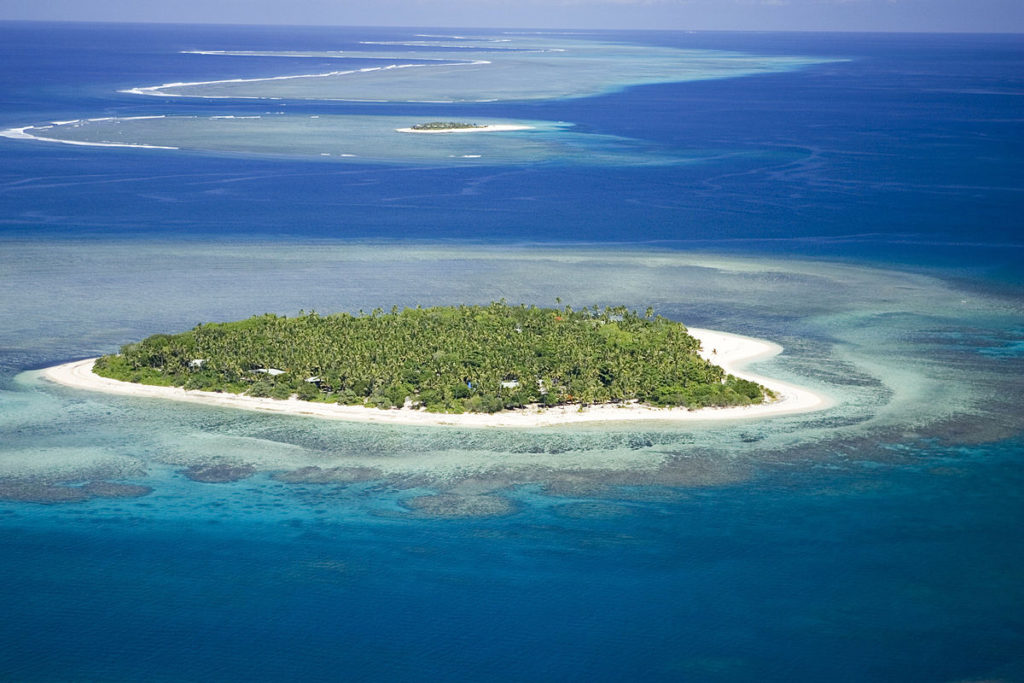
Tavarua Island, Fiji. Credit: Wikimedia Commons

Concerned about the potential impacts of deep-sea mining on ocean biodiversity, the Pacific islands of Palau and Fiji on Monday launched an “alliance” to call for a moratorium of the nascent industry.


The backing of a moratorium comes amid a wave of global interest in deep-sea mining but also growing pressure from some environmental groups and governments to either ban it or ensure it only goes ahead if appropriate regulations are in place.


Deep-sea mining uses heavy machinery to suck up off the ocean floor potato-sized rocks or nodules that contain cobalt, manganese, and other rare metals mostly used in batteries.

Speaking to a packed room at the United Nations Ocean Conference in Lisbon, Palau President Surangel Whipps asked: “How can we in our right minds say ‘let’s go mining’ without knowing what the risks are?”

“We believe it is not worth the risk,” he said. “We ask all of you to support that… deep-sea mining increases the vulnerability of the seabed floor and marine life.”

The International Seabed Authority (ISA), a U.N. body, is drawing up regulations governing seabed mining in the high seas – areas outside any national jurisdiction. Until global rules are in place, seabed mining is not allowed.

The Deep Sea Conservation Coalition, which also supports a moratorium, said the ISA would meet in July and August to try to push through draft regulations that, if adopted, would see mining licensed to begin in the deep ocean as soon as July 2023.

Earlier this month, Chile also called for a 15-year moratorium on adopting regulations, citing environmental concerns and a lack of sufficient scientific data.

G7 countries last month agreed stringent environmental controls should govern deep-sea mining and that they would consent to such mining projects only if they did not seriously harm the marine environment.

But not all nations are against it. China is a major proponent and even smaller nations like the tiny Pacific island of Naru, for instance, asked the ISA last year to fast-track the adoption of seabed mining regulations.

Companies such as Google, BMW and Samsung were the first globally to sign up to a World Wildlife Fund call for a moratorium on deep-sea mining.

“The costs outweigh the short-term benefits,” said renowned oceanographer Sylvia Earle. “We need to hit the stop button.”

(By Catarina Demony, Sergio Goncalves and Helen Reid; Editing by Sandra Maler)

Thursday, August 03, 2023

Deep sea mining: Here’s which countries oppose and support the controversial practice

Conservationists worry that ecosystems will be damaged by deep sea mining, especially without any environmental protocols.
By Angela Symons  with AP

Finland, Germany and Portugal were among the countries that blocked deep sea mining licences.

After weeks of fierce debate, deep sea mining has failed to get approval during international talks.

The controversial practice involves removing precious metals and minerals from the ocean’s seabed. So far, only small tests have been carried out but companies were hoping to get the green light to start full-scale production.

Opponents point to the destruction it would cause to marine ecosystems and the climate.

The UN’s 36-member International Seabed Authority (ISA), which governs international waters, began a lengthy conference on the issue on 10 July in Jamaica. It ended on 28 July with more than 20 governments opposing fast-tracked licences.

However, a legal loophole remains, which could allow companies to start mining next year.

What is deep sea mining and why is it problematic?

Deep-sea mining would see heavy machinery scoop up small rocks containing rare metals and minerals from the ocean floor. These would then be pumped to the surface.

Companies are particularly interested in cobalt, nickel, copper and manganese, which could be extracted for electric car batteries and smartphones.

These precious metals and minerals have built up on the seafloor over millions of years. They form an important habitat for marine life.

Scientists have warned that such extraction could kick up silt storms and create noise and light pollution in the little-explored ocean deep.

Environmentalists are also concerned about the impact of deep sea mining on the ocean as a heat and carbon sink. Others say it could negatively impact the fishing industry.

Companies pushing for deep sea mining, however, argue that undersea mining would be cheaper and have less of an environmental impact than land mining.

Greenpeace, a vocal opponent of deep sea mining, says we should instead focus on improving recycling and reducing dependence on cars.

Where has deep sea mining taken place so far?

The ISA has issued more than 30 exploration licences but none for actual mining so far.

Most of the exploration is focused in an area between Hawaii and Mexico that spans some 4.5 million square kilometres, with the activity taking place at depths of up to 6,000 metres.

As well as debating the future of licensing, the recent conference looked at laying out regulations for the budding industry.

A deadline of 9 July was set to finalise the regulations. This is because in July 2021 the Micronesian island of Nauru announced its intention to begin deep sea mining. That announcement triggered a loophole called the ‘two-year rule’, which obliged the ISA to provisionally approve the application by July 2023, regardless of whether regulations were in place.

The regulatory framework is still stuck in draft mode, however, and will be discussed again at the body's November meeting, the third one of the year.

Which countries are opposed to deep sea mining?

A growing number of countries are calling for a temporary suspension of deep sea mining, saying they are concerned about the potential environmental impact. They want more scientific studies to be done first.

Brazil, Canada, Costa Rica, Chile, Finland, Germany, Portugal, Switzerland and Vanuatu were among the 21 countries that support a ban, moratorium or precautionary pause on deep sea mining.

China, Norway, Nauru, Mexico and the UK, meanwhile, were in support of fast-tracking licences for deep sea mining.

The next meeting of the Assembly will take place in mid-2024.