Belarus frees another 250 political prisoners as US eases sanctions
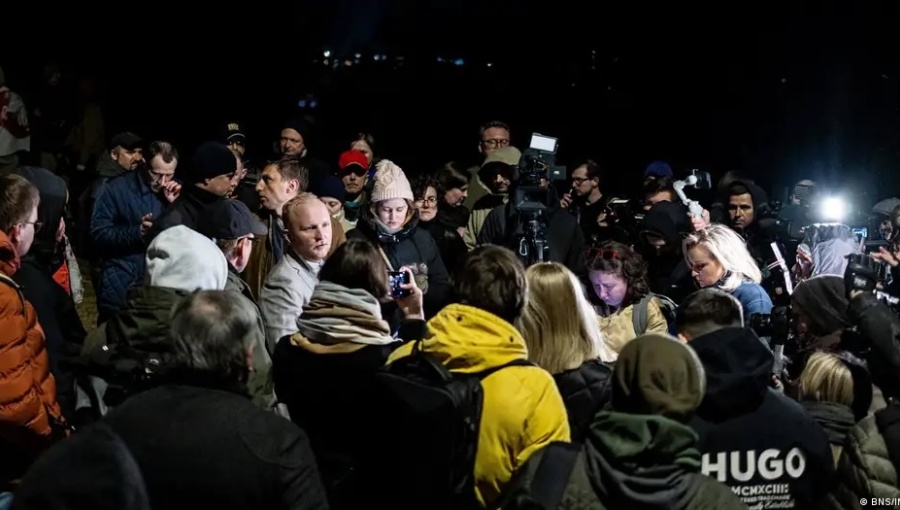
Belarus has released another 250 political prisoners, the largest single release to date, after cutting a new sanctions relief deal with the US, Associated Press reported on March 19.
President Alexander Lukashenko ordered the pardons after meeting US President Donald Trump’s special envoy for Belarus, John Coale, in Minsk, in what officials described as a step towards improving relations between the long-isolated state and the West.
Coale described the move as a “significant humanitarian milestone” and a testament to Trump’s “commitment to direct, hard-nosed diplomacy”.
He said Washington would lift sanctions on two Belarusian state banks and the country’s finance ministry, while also removing leading potash producers from a sanctions list.
Lukashenko has been trading prisoners for sanction relief that is also bolstering his position with the Kremlin as he tries to play the White House off against the Kremlin. Since supporting Russia’s invasion of Ukraine by allowing Russian forces to launch an attack on Kyiv from Belarusian soil, Minsk has been hit by a string of harsh sanctions. Belarus is currently the sixth most sanctioned country in the world, after Russia which is the fifth.
However, surprisingly Lukashenko has nurtured good relations with US President Donald Trump, who called him a “great leader” last year and offered to release all 1,300 political prisoners in exchange for sanctions relief.
Most of the most prominent opposition leaders have now been released after spending five years in jail, including Sergey Tikhanovsky (Siarhei Tsikhanouskiy), the husband of Belarusian opposition leader Svetlana Tikhanovskaya (Sviatlana Tsikhanouskaya) who contested the 2020 presidential elections in his stead after he was arrested before the poll.
Tikhanovsky's dramatic release follows a trip to Minsk by US Special Envoy to the Middle East Steve Witkoff to broker a pardon for the popular blogger who challenged Lukashenko in the flawed 2020 presidential elections that ended in the largest mass protests the country has ever seen.
In exchange, the US has eased sanctions on the national carrier, Belavia and Belarus’ cash cow, the potash mine, Belaruskali.
Tikhanovskaya welcomed the recent release, calling it “a moment of great relief and hope”.
“After years of isolation, people are now free and can finally embrace their loved ones,” she told Associated Press. “There is nothing more powerful than seeing someone who endured unjust imprisonment reunited with their family.” She added that US efforts “are saving lives”.
The release follows a similar exchange in December, when the easing of sanctions on Belarus’s potash sector coincided with the freeing of 123 political prisoners. Minsk has increasingly used such gestures to recalibrate ties with Western governments while maintaining its close alliance with Russia.
Belarus, a country of 9.5mn people, has faced years of sanctions over its domestic crackdown and its support for Moscow’s 2022 invasion of Ukraine. Lukashenko has ruled for more than three decades, and his hold on power was challenged by mass protests following the disputed 2020 presidential election.
Amongst the other prominent figures freed have been Maria Kolesnikova who campaigned with Tikhanovskaya in the 2020 presidential campaign, and Viktor Barbaryko, who was widely expected to win the elections until he was jailed by Lukashenko. Human rights activists Valiantsin Stefanovich and Marfa Rabkova, activist Nasta Loika, journalist Katsiaryna Bakhvalava and opposition blogger Eduard Palchys have all also been released. However, despite these releases, around 1,000 political prisoners remain in jail.
Despite the releases, rights groups say repression remains widespread. Tikhanovskaya said “many people are still behind bars” and that “our goal remains unchanged - to free them all and to put a final end to repression, so that every Belarusian can live freely in their own country.”
Some detainees were transferred to Lithuania without identity documents. Dzianis Kuchynski, an adviser to Tikhanovskaya, described this as a “mockery” intended to complicate their lives abroad.

No comments:
Post a Comment