Iran and Ukraine wars 'very much interlinked' by Russia, Kallas warns
"We can't forget about Ukraine," EU High Representative Kaja Kallas has said as the war in the Middle East leads the geopolitical agenda at G7 meeting.
The wars in Iran and Ukraine are "very much interlinked" by Russia, High Representative Kaja Kallas warned on Thursday, calling on the United States to ramp up economic pressure on the Kremlin as it benefits from rising oil prices due to the conflict.
Moscow is reportedly providing Tehran, a long-standing ally, with drones and intelligence services to help target American military assets in the Middle East. The administration of President Donald Trump has largely avoided blaming Russia.
"We see that Russia is helping Iran with intelligence to target Americans, to kill Americans, and Russia is also supporting Iran now with the drones so that they can attack neighbouring countries and also US military bases," Kallas said as she headed into a G7 meeting of foreign affairs ministers in Abbaye des Vaux de Cernay, France.
"These wars are very much interlinked. So if America wants the war in the Middle East to stop (and) Iran to stop attacking them, they should also put the pressure on Russia so that they are not able to help them in this," she added.
Kallas urged the US, Israel and Iran to "sit down" and find a negotiated solution, or an "off-ramp", as she put it, that could bring the war to a quick end. Washington and Tehran have sentconflicting messages about a potential settlement, sowing confusion.
Trump insisted Thursday that Iran is "begging" for a deal, after moving an ultimatum for Tehran to reopen the Strait of Hormuz or face the "obliteration" of its power plants to Friday.
Kallas stressed that Europe would join a coalition to secure the waterway carrying one fifth of the global oil production only "after the cessation of hostilities".
"We need an exit, not an escalation," she said. "There has to be a diplomatic solution so that this region will come out of it stronger and more peaceful."
Her plea comes as the White House, in a bid to calm rattled energy markets, eases sanctions on both Iranian and Russian oil, causing dismay among Europeans.
The dramatic rise in oil prices has reversed the downward trend that weighed down the Russian economy. Now, Moscow is emerging as a winner from the global energy chaos.
Meanwhile, the intensity of the Middle East war has drastically upended the global demand for weapons and ammunition, which threatens to complicate Ukraine's access to the air defence systems it needs to repel incoming Russian fire.
"We can't forget about Ukraine," Kallas said.
In a new interview with Reuters, Ukrainian President Volodymyr Zelenskyy said the Trump administration had made security guarantees conditional on Kyiv ceding the entire Donbas to Moscow. The region, which is partially occupied, includes heavily fortified cities that Ukraine needs to contain the Russian advance.
"President Trump, unfortunately, in my opinion, still chooses a strategy to put more pressure on the Ukrainian side," Zelenskyy said.
Asked about Zelenskyy's remarks, Kallas warned the US against giving Russia something that it has failed to conquer on the battlefield.
"This is clearly the wrong approach. It is, of course, the Russian playbook of negotiations," she said. "This is the trap that we should not walk into."
Closing the 'deterrence gap': German military association calls for war economy
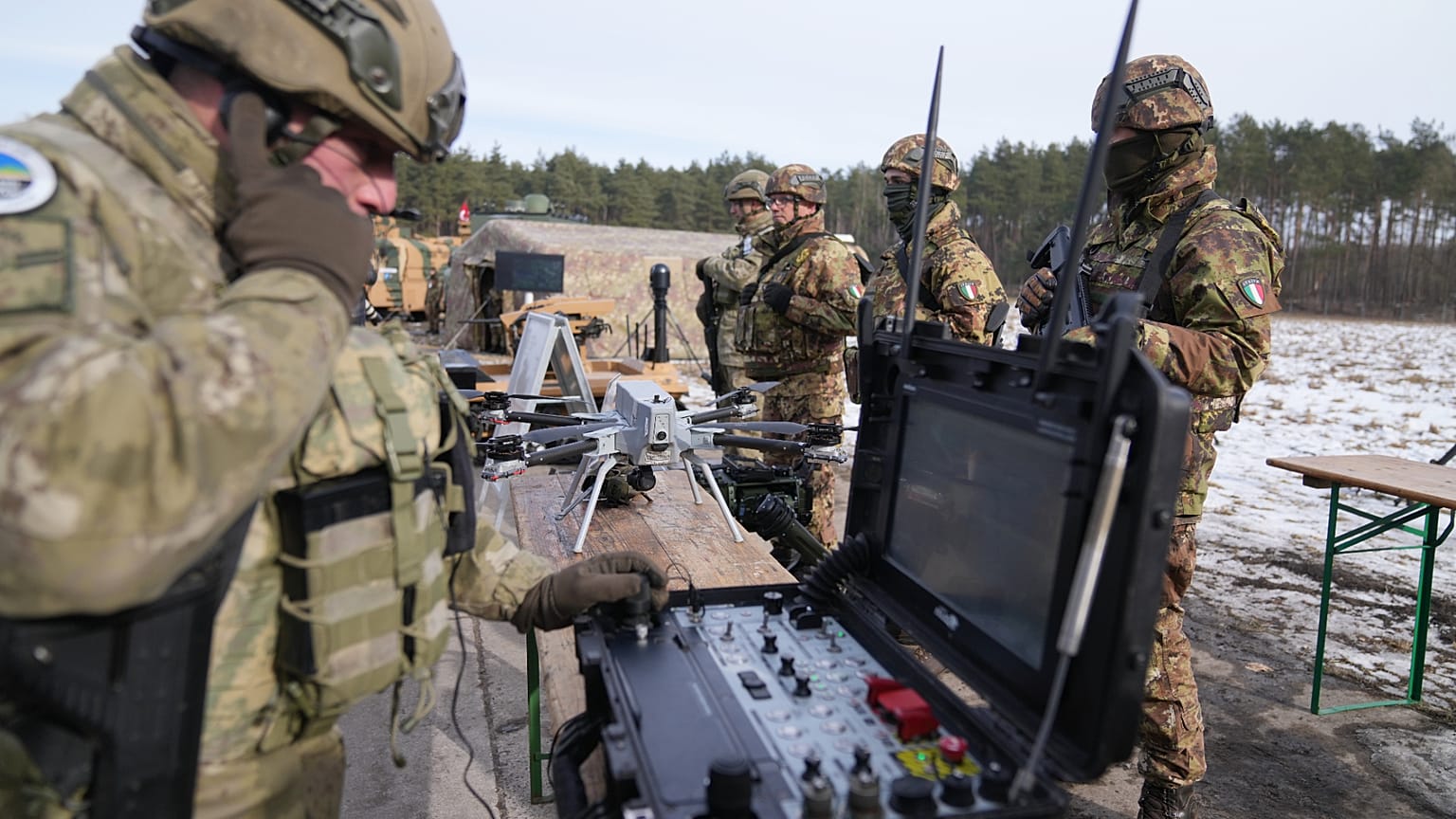
The German Armed Forces Association is warning of a growing Russian threat, a weakened Europe and an unreliable Washington — while the Iran conflict pours billions into Putin's coffers.
Germany's Armed Forces Association (DBwV) is sounding the alarm: the country needs to put its defence industry on a war footing, and fast.
"The danger already exists now — and it is growing every day," association head André Wüstner told Handelsblatt, warning that Russia could be ready for a confrontation with NATO far sooner than the 2029 timeline experts had previously assumed.
Wüstner called on German defence manufacturers to expand capacity and introduce shift working, steps he described as necessary to move toward "a kind of war economy" if tensions continue to escalate.
Europe's vulnerability is compounded, he argued, by Washington's unreliability under Donald Trump, which has left the continent with what he called a "deterrence gap".
The DBwV represents active and former soldiers, reservists and military personnel across Germany.
Iran war hands Putin a golden opportunity
The Iran war has handed Vladimir Putin an opening he will not waste, according to Wüstner.
"Strengthened by fresh income from oil sales and spurred on by the decreasing supply of air defence systems to Ukraine, he can further intensify his brutal attacks on the infrastructure and civilian population," the DBwV chief told Handelsblatt.
Wüstner warned that Europe's "deterrence gap" could embolden Russia to step up hybrid attacks — and raised the prospect of incursions on NATO's eastern flank.
The Iran war, he argued, must not become a distraction from the threat on Europe's doorstep.
Rising oil prices are filling the Kremlin's coffers
Three weeks into the conflict, the economic windfall for Moscow is already stark.
Brent crude was trading just below $71 a barrel two days before the first strikes.
It neared $120 at peak uncertainty and remains above $106 at the time of publication.
US WTI crude climbed from $65 to above $100 over the same period. Russia's Urals blend has surged more than 66% over the past month, last trading above $96 a barrel.
The numbers translate directly into Kremlin revenue.
Instead of the $99bn (€86bn) projected for 2026, Moscow now stands to earn $169bn (€146bn) from oil exports alone, plus a further $50bn (€43bn) from gas — a total windfall of $84bn (€73bn) in additional raw material revenues and $45bn (€39bn) in extra state income.
Putin, meanwhile, is playing the statesman.
Positioning himself as a reliable energy partner, he told Europeans this week that Russia stood ready to supply oil and gas.
"We need signals from them that they are ready to co-operate with us," he said.
US weapons bound for Ukraine are being diverted
The war is also squeezing Ukraine's armoury.
Patriot anti-aircraft missiles urgently needed in Kyiv are being redirected to the Iran theatre — piling fresh pressure on European allies already stretched by years of military aid commitments, and on Germany in particular, which lacks sufficient air defence systems to protect its own airspace.
Pentagon mulls redirecting Ukraine military aid to Middle East, reports claim
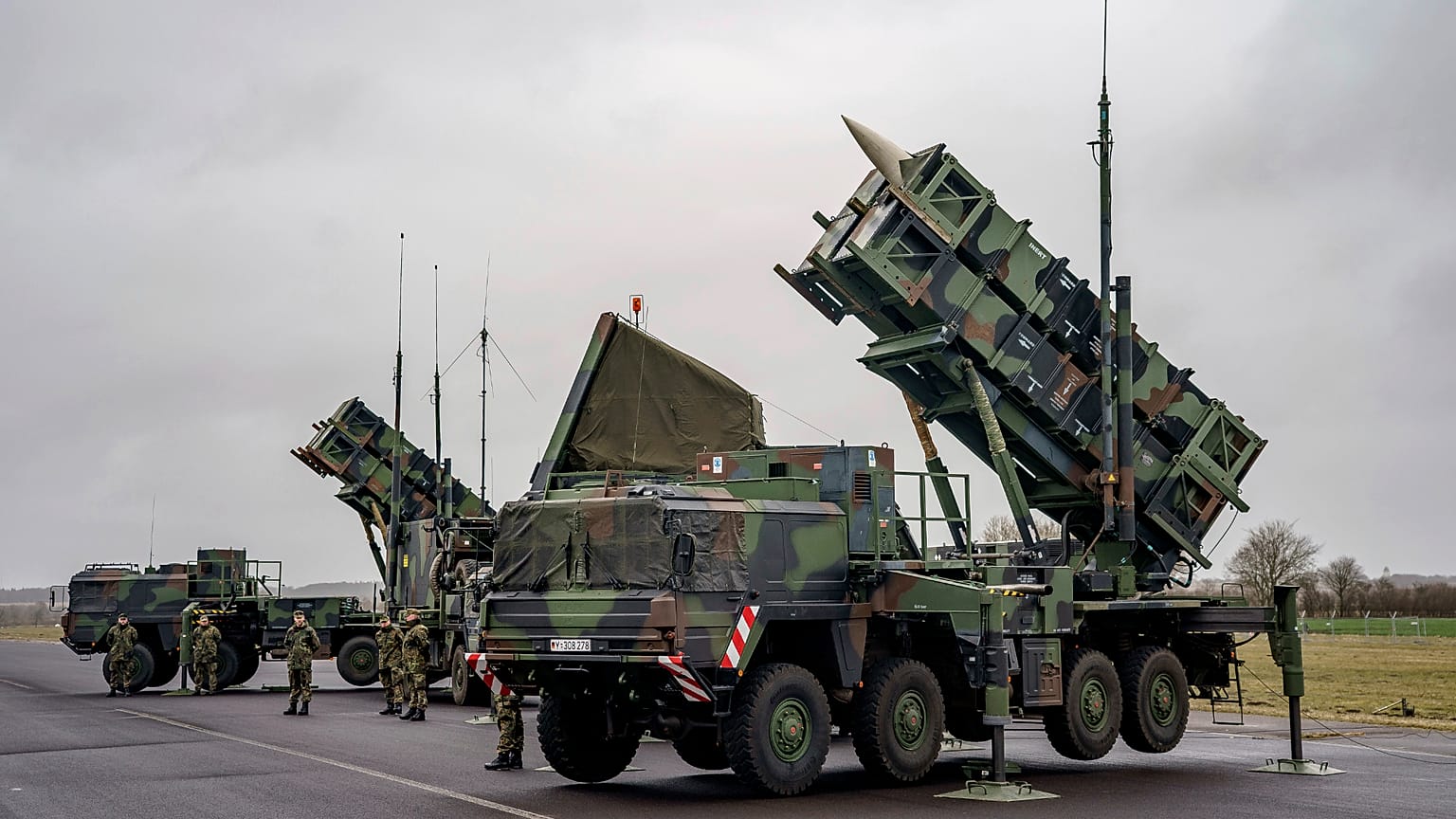
With the Iran war showing no signs of winding down, the US might prioritise the Middle East over Ukraine not only in terms of its focus and attention, but also in terms of military aid, US media reported Thursday.
The Pentagon is reportedly considering redirecting military aid planned for Ukraine to the Middle East, the Washington Post reported on Thursday, citing unnamed sources familiar with the matter.
According to the report, the weapons under consideration include air defence interceptor missiles ordered through the Prioritised Ukraine Requirements List (PURL) programme.
PURL allows other NATO members to fund the procurement of US weapons for Ukraine.
NATO Secretary General Mark Rutte declined to answer the question regarding the Pentagon's plans at Thursday’s press conference, despite being asked several times.
Rutte said it was not his place to comment on critical support, but assured that essential military equipment “continues to flow” to Ukraine, alongside military intelligence from the US.
The NATO chief did note that since last year, PURL has supplied Ukraine with vital equipment, including 70% of the batteries used in Patriot systems, underscoring the programme’s crucial importance.
Ukrainian officials have openly voiced concerns that Washington’s attention and resources have been more focused on the Middle East.
These fears have been echoed by the European leaders. French President Emmanuel Macron said at the end of last week’s EU summit in Brussels that the Iran war “must not divert our attention from the support we give Ukraine.”
The Pentagon notified the US Congress on Monday that it intended to divert about $750 million in funding provided by NATO countries through the PURL programme to “restock the US military’s own inventories, rather than to send additional assistance to Ukraine," the Washington Post reported.
Addressing the Joint Expeditionary Force Leaders' Summit in Helsinki on Thursday, Ukrainian President Volodymyr Zelenskyy called on Europe to “have full capacity to produce all types of air defence systems and missiles for them,” including protection against drones, cruise missiles and ballistic threats.
“We cannot rely on other partners’ industries. We must be confident in our own industry here in Europe," Zelenskyy said.
"And while we are building this capacity, please remember that we need protection from Russian missiles every single day. I am grateful to those of you who actively support us through the PURL programme, it’s critically important.”
More than 800 Patriot missiles were used in the first three days of fighting in the Iran war, more than Ukraine has received throughout the entire Russian full-scale invasion, Zelenskyy said during a press briefing on 5 March.
Yurii Ihnat, Head of the Communications Department of the Ukrainian Air Force Command said as Russia specifically targeted Ukraine’s energy infrastructure over the past few months, Moscow increased the use of ballistic missiles, which only the Patriot systems can intercept.

No comments:
Post a Comment