
VENCEREMOS!
Why US Cuba Coverage Falls Far Short of the Truth
As the Trump regime tightens the screws of the embargo by further restricting oil access to the country, legacy media continue to toe the government’s line on the issue, with coverage that is either low on context or outright stenography.
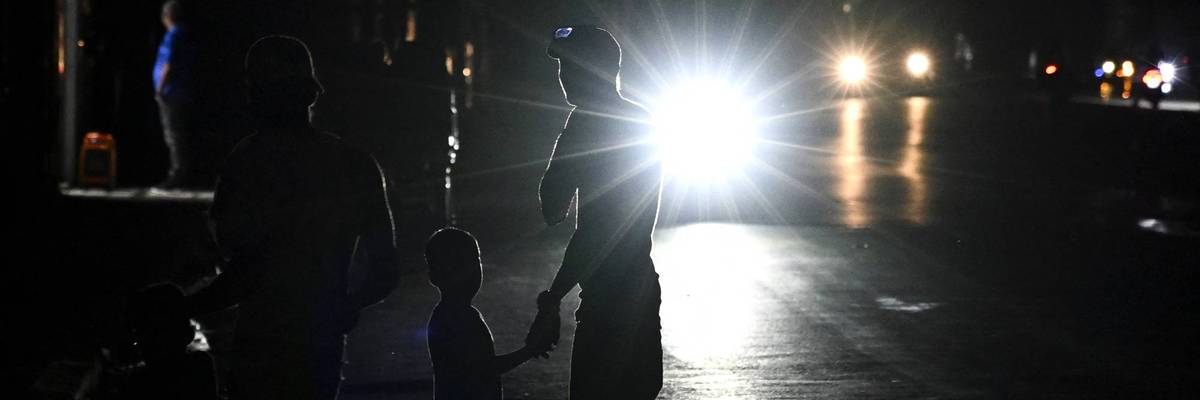
People stand on a street during a blackout in Havana on March 16, 2026.
(Photo by Yamil Lage / AFP via Getty Images)
Tyler Wann
Mar 22, 2026
‘Willing to Drown an Entire People’
The idea that the Cuban government has been rigid and unwilling to enact reforms is a false one, according to Main. “For better or for worse, they’ve taken a lot of measures to open up the economy,” including a major reform in 2021 that gave the private sector access to most sectors of the economy. “There’s a very limited number of sectors that remain completely under state control.”
“The problem with these reforms,” he says,
is that you can’t really implement them when there’s an embargo or blockade going on, when you’re basically restricting all of foreign capital from getting in, when you’re restricting the means of Cubans to import essential inputs for their own national production, when you’re starving the economy of cash. These reforms aren’t going to go very far.
Yet Cuban leaders are depicted throughout the Herald article as stubborn and cruel for refusing to give in to US pressure, which the paper’s choice of sources would have you believe is contrary to the interests of the people. Indeed, resisting extended economic attack, and refusing to allow the United States its God-given right to decide the structure of any country it chooses, is depicted as Cuban leaders being “willing to drown an entire people in the name of ideology,” by an unnamed “source in connection with Cuban officials.”
Are there any average citizens of Cuba who value their nation’s sovereignty, who don’t want their government to relent, or who blame the United States for enacting policies designed to hurt their own economy? Herald readers may never know, as the source given the most space to push back on the economic attack is a former Democratic congressmember from Miami. A quick reference to Cuban diplomats encouraging comparisons between the Trump admin’s actions and Israel’s in Gaza is also thrown in four paragraphs from the end of the article, though only in the context of “what some Cuba observers see as a strategy to blame the humanitarian crisis entirely on the United States and create a public-opinion crisis that would put pressure on the administration.”
The Herald gives priority to sources that are consistently critical of the Cuban government, though it is not especially difficult to find Cubans capable of giving a different perspective, as a video from Cuba-focused outlet Belly of the Beast (1/31/26) shows. The Herald’s reporting makes clear that the paper is capable of lifting up Cuban voices, just so long as those voices are singing the right tune.
As the Trump regime tightens the screws of the embargo by further restricting oil access to the country, legacy media continue to toe the government’s line on the issue, with coverage that is either low on context or outright stenography.
People stand on a street during a blackout in Havana on March 16, 2026.
(Photo by Yamil Lage / AFP via Getty Images)
Tyler Wann
Mar 22, 2026
FAIR
The US government’s decades-long economic blockade against Cuba is in many ways not a complicated issue. The policy of restricting trade with the country’s communist government was put into full force under the Kennedy administration, with the explicit goal of causing enough economic hardship, hunger, and desperation to spur regime change.
The United Nations General Assembly has overwhelmingly and consistently voted to end the embargo since a resolution to that effect was first introduced in 1992. Member countries argue that the embargo violates international law. It has cost the country anywhere between $130-170 billion since its inception, and has restricted the Cuban people’s access to food and medicine. And it has not accomplished its primary goal of overthrowing the Cuban government.
These are key points that should be included in any article reporting on Cuba’s economic struggles. However, US journalists have consistently leaned into the US government’s framing of the issue: that the country’s communist government is largely or exclusively to blame for its financial woes (FAIR.org, 11/4/24).
As the Trump regime tightens the screws of the embargo by further restricting oil access to the country, a move that has been condemned by UN human rights experts as a further violation of international law (New York Times, 2/13/26), legacy media continue to toe the government’s line on the issue, with coverage that is either low on context or outright stenography.
‘Extraordinary Threat’
President Donald Trump has tried to justify his administration’s significant escalation in tactics on the basis that Cuba represents an “unusual and extraordinary threat” to the security of the United States, primarily by supporting US geopolitical enemies. This accusation is not new: The country has previously been accused of hosting both Russian and Chinese spy bases. Despite neither claim being backed by evidence (Belly of the Beast, 2/6/26, 8/1/24), the Trump administration doubled down on them when rolling out its new and harsher set of policies.
But the administration also unveiled a new claim that upped the ante: Cuba has apparently been harboring Hamas and Hezbollah forces, not 90 miles off of our shores! “Cuba welcomes transnational terrorist groups, such as Hezbollah and Hamas,” reads an executive order from January 29,
creating a safe environment for these malign groups so that these transnational terrorist groups can build economic, cultural, and security ties throughout the region, and attempt to destabilize the Western Hemisphere, including the United States.
The administration did not provide evidence to support this claim, and none has surfaced, despite local journalists’ investigative efforts (Belly of the Beast, 2/2/26).
That hasn’t stopped legacy media from repeating the claim uncritically, with nothing more than an “alleged” or “accused” attached, suggesting reporters can’t be bothered to fact-check it. This could be found in coverage in both The Guardian (1/29/26) and CNN (2/1/26) at the beginning of the recent round of escalations.
A full month later—plenty of time for a serious reporter to get to the bottom of the allegations, or at least ask the administration what evidence it has—The Atlantic (3/1/26) relayed the claim yet again, with just as little evidence supporting it as when it was first made. Throwing in the word “alleged” does little to change the fact that the US government has been given primary control of the narrative in this media coverage.
Despite the abundance of evidence regarding the intentions of US foreign policy toward Cuba, legacy media often fail to give proper context when reporting on the topic.
The Cuban government has categorically denied harboring or supporting terrorist organizations (Granma, 2/2/26). But defying basic journalistic practice, neither The Guardian nor The Atlantic gave any space to the Cuban government to respond to the claims made against it.
The Atlantic did quote a source that pushed back on using Cuba’s designation as a “state sponsor of terrorism” as a rationale for overthrowing its government. But that designation long preceded Trump’s recent comments, and the article did not offer any challenge to the recent accusations. The CNN article included only that Cuban President Miguel Díaz-Canel said that Trump’s threats were made under “empty pretexts.”
‘It Is Indeed a Blockade’
Some recent New York Times reports, on the other hand, have shown a willingness to break from the official narrative. An article by reporter Frances Robles (1/30/26) on the decision to cut off fuel to the island noted that the administration hadn’t provided evidence to support its claims that Cuba is harboring Hamas or Hezbollah fighters.
The article’s sourcing is more robust as well. For instance, the Times gave Mexico’s President Claudia Sheinbaum space to oppose Trump’s decision, affirming her support for the sovereignty of the Cuban people and respect for international law. This was followed by Cuba’s foreign minister saying that what his government calls the “economic genocide” being enacted by Trump’s decision is built on “a long list of lies.” A social media post attributed to the Venezuelan government rounded out the opposing sources balking at the idea that Cuba constitutes a threat to the US.
The Times (2/20/26) challenged official terminology in another piece headlined “A New US Blockade Is Strangling Cuba.” The article, by Jack Nicas and Christiaan Triebert, explained that the term “blockade” is a contentious one:
The US government called its 1962 policy a “quarantine” to avoid using the word “blockade,“ which legally could be interpreted as an act of war. The Trump administration has also avoided using the word ”'blockade.“
Regardless of the Trump administration’s refusal to call the recent change in policy a “blockade,” the article said, “it is functioning as one.”
The article also quoted Fulton Armstrong, “former lead Latin American analyst for the Central Intelligence Agency,” who agreed with the diagnosis. “Among us longtime Cuba watchers, we’ve always resisted people using the word blockade,” he says. “But it is indeed a blockade.”
(Of course, the Cuban government has considered the US’ economic punishment to be an illegal blockade and a “wartime measure” long before the recent escalation—Granma, 2/2/17.)
The article also had a rare reference to the possible illegality of US sanctions:
The United Nations has criticized the US policy as a violation of international law that has exacerbated the suffering of Cuba’s roughly 10 million residents.
‘Lead an Army of Exiles’
Despite the abundance of evidence regarding the intentions of US foreign policy toward Cuba, legacy media often fail to give proper context when reporting on the topic. In a Reuters report (2/25/26) about the Trump administration allowing oil sales to private companies in Cuba amid the ongoing crisis, Secretary of State Marco Rubio was given space to blame the Cuban government for the country’s woes without any pushback.
“What the Cuban people should know is this: that if they are hungry and they are suffering, it’s not because we’re not prepared to help them. We are,” he said. “It’s that the people standing in the way of us helping them is the regime, the Communist Party.”
Are there any average citizens of Cuba who value their nation’s sovereignty, who don’t want their government to relent, or who blame the United States for enacting policies designed to hurt their own economy? Herald readers may never know.
The article allowed this quote to hang bizarrely in the middle of a story about the US exercising disproportionate power over the country. The article put very little blame on the US at all, noting that its recent escalations have only been “worsening an energy crisis in the Communist-run country that is hitting power generation and fuel for vehicles, houses, and aviation.”
Nowhere was the long history of US attacks on the Cuban economy mentioned. Nor was there any suggestion that Rubio, a man who boasted as a child that he would one day “lead an army of exiles to overthrow Fidel Castro and become president of a free Cuba” (Atlantic, 12/23/14), might be invested in policies that might achieve his childhood dream. Rubio’s recent admission (Belly of the Beast, 1/28/26) that the Trump administration would like to see regime change in Cuba, a condition that is itself codified into US law as a prerequisite for lifting the “embargo,” is glaringly absent as well.
‘Failure of the Socialist Economic Model’
Similarly, the Miami Herald (2/17/26)—long hostile to the Cuban government—depicted Rubio as simply urging the Cuban government “to make economic reforms as a way out of the impasse.” While documenting the poor conditions on the streets of Cuba, the Herald’s Nora Gámez Torres reported:
The economic crisis, a deep economic contraction that has lasted years, has largely resulted from the failure of the socialist economic model, a hard-currency-hungry military stashing billions of dollars in its accounts, and years of Cuban leaders dragging their feet on urgently needed economic reforms. The Covid-19 pandemic and the tightening of US sanctions under the first Trump administration also played a part.
The “stashing billions” reference is to a bogus story the same reporter (Miami Herald, 8/6/25) published last year; Gámez Torres, who accused the Cuban military of having a huge secret reserve of cash based on a leaked spreadsheet, apparently failed to understand that a dollar sign is used to denote both US dollars and Cuban pesos (FAIR.org, 8/29/25). In her latest piece, the final line of the paragraph is the only reference to the decades-long history of economic warfare against the island.
“By design, these sanctions exist in order to suffocate the country economically, and they’re very effective in doing so,” Alexander Main, director of international policy at the Center for Economic and Policy Research, told FAIR. He notes that the sanctions are aimed at cutting Cuba off from the wider economic world. For instance, Cuba’s current placement on the US State Sponsor of Terrorism list has been deterring foreign investment in the country.
“It’s not going to happen because nobody wants to invest. They’re scared to death of running afoul of the sanctions criteria, so there’s this effect of overcompliance where companies are just not going to do it,” he says. “The risk of being hit by secondary sanctions is just way too high.”
And yet, throughout the Herald article, the US is depicted as simply wanting to “make economic changes,” “increasing external pressure” in an attempt to “reform the island’s hardline Marxist economy.”
The US government’s decades-long economic blockade against Cuba is in many ways not a complicated issue. The policy of restricting trade with the country’s communist government was put into full force under the Kennedy administration, with the explicit goal of causing enough economic hardship, hunger, and desperation to spur regime change.
The United Nations General Assembly has overwhelmingly and consistently voted to end the embargo since a resolution to that effect was first introduced in 1992. Member countries argue that the embargo violates international law. It has cost the country anywhere between $130-170 billion since its inception, and has restricted the Cuban people’s access to food and medicine. And it has not accomplished its primary goal of overthrowing the Cuban government.
These are key points that should be included in any article reporting on Cuba’s economic struggles. However, US journalists have consistently leaned into the US government’s framing of the issue: that the country’s communist government is largely or exclusively to blame for its financial woes (FAIR.org, 11/4/24).
As the Trump regime tightens the screws of the embargo by further restricting oil access to the country, a move that has been condemned by UN human rights experts as a further violation of international law (New York Times, 2/13/26), legacy media continue to toe the government’s line on the issue, with coverage that is either low on context or outright stenography.
‘Extraordinary Threat’
President Donald Trump has tried to justify his administration’s significant escalation in tactics on the basis that Cuba represents an “unusual and extraordinary threat” to the security of the United States, primarily by supporting US geopolitical enemies. This accusation is not new: The country has previously been accused of hosting both Russian and Chinese spy bases. Despite neither claim being backed by evidence (Belly of the Beast, 2/6/26, 8/1/24), the Trump administration doubled down on them when rolling out its new and harsher set of policies.
But the administration also unveiled a new claim that upped the ante: Cuba has apparently been harboring Hamas and Hezbollah forces, not 90 miles off of our shores! “Cuba welcomes transnational terrorist groups, such as Hezbollah and Hamas,” reads an executive order from January 29,
creating a safe environment for these malign groups so that these transnational terrorist groups can build economic, cultural, and security ties throughout the region, and attempt to destabilize the Western Hemisphere, including the United States.
The administration did not provide evidence to support this claim, and none has surfaced, despite local journalists’ investigative efforts (Belly of the Beast, 2/2/26).
That hasn’t stopped legacy media from repeating the claim uncritically, with nothing more than an “alleged” or “accused” attached, suggesting reporters can’t be bothered to fact-check it. This could be found in coverage in both The Guardian (1/29/26) and CNN (2/1/26) at the beginning of the recent round of escalations.
A full month later—plenty of time for a serious reporter to get to the bottom of the allegations, or at least ask the administration what evidence it has—The Atlantic (3/1/26) relayed the claim yet again, with just as little evidence supporting it as when it was first made. Throwing in the word “alleged” does little to change the fact that the US government has been given primary control of the narrative in this media coverage.
Despite the abundance of evidence regarding the intentions of US foreign policy toward Cuba, legacy media often fail to give proper context when reporting on the topic.
The Cuban government has categorically denied harboring or supporting terrorist organizations (Granma, 2/2/26). But defying basic journalistic practice, neither The Guardian nor The Atlantic gave any space to the Cuban government to respond to the claims made against it.
The Atlantic did quote a source that pushed back on using Cuba’s designation as a “state sponsor of terrorism” as a rationale for overthrowing its government. But that designation long preceded Trump’s recent comments, and the article did not offer any challenge to the recent accusations. The CNN article included only that Cuban President Miguel Díaz-Canel said that Trump’s threats were made under “empty pretexts.”
‘It Is Indeed a Blockade’
Some recent New York Times reports, on the other hand, have shown a willingness to break from the official narrative. An article by reporter Frances Robles (1/30/26) on the decision to cut off fuel to the island noted that the administration hadn’t provided evidence to support its claims that Cuba is harboring Hamas or Hezbollah fighters.
The article’s sourcing is more robust as well. For instance, the Times gave Mexico’s President Claudia Sheinbaum space to oppose Trump’s decision, affirming her support for the sovereignty of the Cuban people and respect for international law. This was followed by Cuba’s foreign minister saying that what his government calls the “economic genocide” being enacted by Trump’s decision is built on “a long list of lies.” A social media post attributed to the Venezuelan government rounded out the opposing sources balking at the idea that Cuba constitutes a threat to the US.
The Times (2/20/26) challenged official terminology in another piece headlined “A New US Blockade Is Strangling Cuba.” The article, by Jack Nicas and Christiaan Triebert, explained that the term “blockade” is a contentious one:
The US government called its 1962 policy a “quarantine” to avoid using the word “blockade,“ which legally could be interpreted as an act of war. The Trump administration has also avoided using the word ”'blockade.“
Regardless of the Trump administration’s refusal to call the recent change in policy a “blockade,” the article said, “it is functioning as one.”
The article also quoted Fulton Armstrong, “former lead Latin American analyst for the Central Intelligence Agency,” who agreed with the diagnosis. “Among us longtime Cuba watchers, we’ve always resisted people using the word blockade,” he says. “But it is indeed a blockade.”
(Of course, the Cuban government has considered the US’ economic punishment to be an illegal blockade and a “wartime measure” long before the recent escalation—Granma, 2/2/17.)
The article also had a rare reference to the possible illegality of US sanctions:
The United Nations has criticized the US policy as a violation of international law that has exacerbated the suffering of Cuba’s roughly 10 million residents.
‘Lead an Army of Exiles’
Despite the abundance of evidence regarding the intentions of US foreign policy toward Cuba, legacy media often fail to give proper context when reporting on the topic. In a Reuters report (2/25/26) about the Trump administration allowing oil sales to private companies in Cuba amid the ongoing crisis, Secretary of State Marco Rubio was given space to blame the Cuban government for the country’s woes without any pushback.
“What the Cuban people should know is this: that if they are hungry and they are suffering, it’s not because we’re not prepared to help them. We are,” he said. “It’s that the people standing in the way of us helping them is the regime, the Communist Party.”
Are there any average citizens of Cuba who value their nation’s sovereignty, who don’t want their government to relent, or who blame the United States for enacting policies designed to hurt their own economy? Herald readers may never know.
The article allowed this quote to hang bizarrely in the middle of a story about the US exercising disproportionate power over the country. The article put very little blame on the US at all, noting that its recent escalations have only been “worsening an energy crisis in the Communist-run country that is hitting power generation and fuel for vehicles, houses, and aviation.”
Nowhere was the long history of US attacks on the Cuban economy mentioned. Nor was there any suggestion that Rubio, a man who boasted as a child that he would one day “lead an army of exiles to overthrow Fidel Castro and become president of a free Cuba” (Atlantic, 12/23/14), might be invested in policies that might achieve his childhood dream. Rubio’s recent admission (Belly of the Beast, 1/28/26) that the Trump administration would like to see regime change in Cuba, a condition that is itself codified into US law as a prerequisite for lifting the “embargo,” is glaringly absent as well.
‘Failure of the Socialist Economic Model’
Similarly, the Miami Herald (2/17/26)—long hostile to the Cuban government—depicted Rubio as simply urging the Cuban government “to make economic reforms as a way out of the impasse.” While documenting the poor conditions on the streets of Cuba, the Herald’s Nora Gámez Torres reported:
The economic crisis, a deep economic contraction that has lasted years, has largely resulted from the failure of the socialist economic model, a hard-currency-hungry military stashing billions of dollars in its accounts, and years of Cuban leaders dragging their feet on urgently needed economic reforms. The Covid-19 pandemic and the tightening of US sanctions under the first Trump administration also played a part.
The “stashing billions” reference is to a bogus story the same reporter (Miami Herald, 8/6/25) published last year; Gámez Torres, who accused the Cuban military of having a huge secret reserve of cash based on a leaked spreadsheet, apparently failed to understand that a dollar sign is used to denote both US dollars and Cuban pesos (FAIR.org, 8/29/25). In her latest piece, the final line of the paragraph is the only reference to the decades-long history of economic warfare against the island.
“By design, these sanctions exist in order to suffocate the country economically, and they’re very effective in doing so,” Alexander Main, director of international policy at the Center for Economic and Policy Research, told FAIR. He notes that the sanctions are aimed at cutting Cuba off from the wider economic world. For instance, Cuba’s current placement on the US State Sponsor of Terrorism list has been deterring foreign investment in the country.
“It’s not going to happen because nobody wants to invest. They’re scared to death of running afoul of the sanctions criteria, so there’s this effect of overcompliance where companies are just not going to do it,” he says. “The risk of being hit by secondary sanctions is just way too high.”
And yet, throughout the Herald article, the US is depicted as simply wanting to “make economic changes,” “increasing external pressure” in an attempt to “reform the island’s hardline Marxist economy.”
‘Willing to Drown an Entire People’
The idea that the Cuban government has been rigid and unwilling to enact reforms is a false one, according to Main. “For better or for worse, they’ve taken a lot of measures to open up the economy,” including a major reform in 2021 that gave the private sector access to most sectors of the economy. “There’s a very limited number of sectors that remain completely under state control.”
“The problem with these reforms,” he says,
is that you can’t really implement them when there’s an embargo or blockade going on, when you’re basically restricting all of foreign capital from getting in, when you’re restricting the means of Cubans to import essential inputs for their own national production, when you’re starving the economy of cash. These reforms aren’t going to go very far.
Yet Cuban leaders are depicted throughout the Herald article as stubborn and cruel for refusing to give in to US pressure, which the paper’s choice of sources would have you believe is contrary to the interests of the people. Indeed, resisting extended economic attack, and refusing to allow the United States its God-given right to decide the structure of any country it chooses, is depicted as Cuban leaders being “willing to drown an entire people in the name of ideology,” by an unnamed “source in connection with Cuban officials.”
Are there any average citizens of Cuba who value their nation’s sovereignty, who don’t want their government to relent, or who blame the United States for enacting policies designed to hurt their own economy? Herald readers may never know, as the source given the most space to push back on the economic attack is a former Democratic congressmember from Miami. A quick reference to Cuban diplomats encouraging comparisons between the Trump admin’s actions and Israel’s in Gaza is also thrown in four paragraphs from the end of the article, though only in the context of “what some Cuba observers see as a strategy to blame the humanitarian crisis entirely on the United States and create a public-opinion crisis that would put pressure on the administration.”
The Herald gives priority to sources that are consistently critical of the Cuban government, though it is not especially difficult to find Cubans capable of giving a different perspective, as a video from Cuba-focused outlet Belly of the Beast (1/31/26) shows. The Herald’s reporting makes clear that the paper is capable of lifting up Cuban voices, just so long as those voices are singing the right tune.
First international aid convoy arrives in crisis-hit Cuba
By AFP
March 18, 2026

A group of people transporting humanitarian aid from Europe arrived in Havana with five tons of medical supplies and other essential items. - Copyright AFP Ilia YEFIMOVICH
The first shipment of international aid for crisis-hit Cuba has arrived in the country in the shape of five tons of medical supplies, official sources said Wednesday.
A delegation of around 100 European activists arrived overnight at Havana airport with the aid, which will be distributed to hospitals, the sources said.
Cuba has been mired in an economic crisis exacerbated by the sudden suspension of oil supplies from Venezuela in January after the United States ousted president Nicolas Maduro, a Cuba ally.
The island nation of 9.6 million was already battling the effects of the US fuel blockade against the island.
The aid activists from several European and Latin American countries as well as Turkey belong to the Nuestra America (“Our America”) flotilla who are out to show their solidarity with the Cuban people.
All told, humanitarian organizations and public figures plan to deliver 20 tons of aid to the island by air and sea to help Cuba through its worst economic crisis in three decades exacerbated by the US capture of Maduro and the cut-off in oil shipments from Venezuela.
US President Donald Trump has threatened retaliation against any country sending oil to the Caribbean island.
Official Cuban media said another convoy was leaving Chile on Wednesday with “medicines, supplies and food to help Cuba cope with the tightening of the energy blockade imposed by the United States.”
Additionally, a group of 140 people — including doctors, lawyers, labor leaders and activists — will be flying from Miami, Florida, to Havana on Friday to deliver 2.8 tons of medical supplies to clinics and hospitals, according to the pacifist group CODEPINK, one of the operation’s organizers.
A flotilla from Mexico is also expected to reach Havana by the end of the week.
Separately, leftist activists are also planning to hold a solidarity event along the Havana waterfront.
Among expected attendees are Pablo Iglesias, a former Spanish politician and founder of the left-wing party Podemos, Irish punk-rap group Kneecap, Brazilian climate activist Thiago Avila and leftist British Parliamentarian Jeremy Corbyn, according to a statement by organizers.
In their statement, organizers quoted Corbyn as saying that the United States had blockaded Cuba for six decades and “now the Donald Trump administration is intensifying” it.
Corbyn insisted that a majority of people around the world sided with the Cuban people.
Iglesias said that “to defend the Cuban people is to defend sovereignty and freedom against the criminal logic of the blockade” imposed by Washington.
Cuba hit by second nationwide blackout in a week
By AFP
March 21, 2026

Cuba has been hit by several blackouts due to an aging power grid and a US fuel embargo - Copyright AFP Yamil LAGE
Laurent Thomet and Rigoberto Diaz
Cuba plunged into darkness for the second time in less than a week on Saturday after its national power network failed again, strained by aging infrastructure and a US oil blockade.
As night fell, Havana’s streets were mostly pitch black, with people navigating using phone lights or flashlights, just five days after the previous blackout.
In the touristy old city, some restaurants were able to stay open thanks to generators, with musicians playing music, but the regular blackouts have made life more difficult for Cubans.
“This is becoming unbearable,” Ofelia Oliva, a 64-year-old Havana resident, told AFP.
“It hasn’t even been a week since we experienced a similar situation. It is getting tiresome,” Oliva said as she returned home after giving up on plans to visit her daughter.
The “total disconnection” of the national electricity system was due to an outage in a power unit at one of the country’s thermoelectric plants, causing a “cascading effect”, the state-owned Cuban Electric Union said.
It said it was activating micro-grids to provide power to critical facilities, including hospitals and water treatment plants.
“I wonder if we’re going to be like this our whole lives. You can’t live like this,” Nilo Lopez, a 36-year-old taxi driver, told AFP.
– US blockade –
The country’s electricity generation is sustained by a network of eight aging thermoelectric plants — some in operation for over 40 years — that suffer frequent breakdowns or must be shut down for maintenance cycles.
Cubans face daily blackouts of up to 15 hours in Havana. In the interior of the island, these outages can exceed 40 hours.
The breakdowns have intensified since Cuba’s main regional ally and oil supplier, Venezuela’s socialist leader Nicolas Maduro, was captured in a US military operation in January.
And US President Donald Trump has threatened to impose tariffs on countries that sell oil to Cuba.
No oil has been imported to the island since January 9, hitting the power sector while also forcing airlines to curtail flights to the island, a blow to the all-important tourism sector.
The blackout occurred as an international aid convoy began to arrive in Havana this week, bringing sorely-needed medical supplies, food, water and solar panels to the island.
– ‘Honor of taking Cuba’ –
The crisis in the country of 9.6 million people comes as Trump has made no secret of his desire to see regime change in Havana.
“I do believe I’ll be…having the honor of taking Cuba,” he said.
“Whether I free it, take it — think I could do anything I want with it, you want to know the truth. They’re a very weakened nation right now.”
The next day, Cuban President Miguel Diaz-Canel warned that “any external aggressor will encounter an unbreakable resistance.”
Tanieris Dieguez, Cuba’s deputy chief of mission in Washington, told AFP earlier this week that Havana was open to broad talks with Washington and allowing more investment.
But she said Cuba’s political system would “never” be part of the negotiations.
The outages as well as regular shortages of food, medicine and other basics are spurring frustrations, with demonstrators vandalizing a provincial office of the Cuban Communist Party last weekend.
With Cuba in desperate need of fuel, maritime trackers reported this week that two tankers carrying Russian oil and diesel appeared to be on their way to the island, but their status remains unclear.
Some took the latest outage in stride.
Meiven Rodriguez, 40, kept working in a small shop, selling cigarettes and using her phone light to count money.
“You have to keep going, otherwise you won’t bring money home,” she said.
A few fishermen cast for sardines into the dark waters of the oceanfront city.
“What would we do at home?” said Leonsio Suarez, 50.
By AFP
March 21, 2026
Cuba has been hit by several blackouts due to an aging power grid and a US fuel embargo - Copyright AFP Yamil LAGE
Laurent Thomet and Rigoberto Diaz
Cuba plunged into darkness for the second time in less than a week on Saturday after its national power network failed again, strained by aging infrastructure and a US oil blockade.
As night fell, Havana’s streets were mostly pitch black, with people navigating using phone lights or flashlights, just five days after the previous blackout.
In the touristy old city, some restaurants were able to stay open thanks to generators, with musicians playing music, but the regular blackouts have made life more difficult for Cubans.
“This is becoming unbearable,” Ofelia Oliva, a 64-year-old Havana resident, told AFP.
“It hasn’t even been a week since we experienced a similar situation. It is getting tiresome,” Oliva said as she returned home after giving up on plans to visit her daughter.
The “total disconnection” of the national electricity system was due to an outage in a power unit at one of the country’s thermoelectric plants, causing a “cascading effect”, the state-owned Cuban Electric Union said.
It said it was activating micro-grids to provide power to critical facilities, including hospitals and water treatment plants.
“I wonder if we’re going to be like this our whole lives. You can’t live like this,” Nilo Lopez, a 36-year-old taxi driver, told AFP.
– US blockade –
The country’s electricity generation is sustained by a network of eight aging thermoelectric plants — some in operation for over 40 years — that suffer frequent breakdowns or must be shut down for maintenance cycles.
Cubans face daily blackouts of up to 15 hours in Havana. In the interior of the island, these outages can exceed 40 hours.
The breakdowns have intensified since Cuba’s main regional ally and oil supplier, Venezuela’s socialist leader Nicolas Maduro, was captured in a US military operation in January.
And US President Donald Trump has threatened to impose tariffs on countries that sell oil to Cuba.
No oil has been imported to the island since January 9, hitting the power sector while also forcing airlines to curtail flights to the island, a blow to the all-important tourism sector.
The blackout occurred as an international aid convoy began to arrive in Havana this week, bringing sorely-needed medical supplies, food, water and solar panels to the island.
– ‘Honor of taking Cuba’ –
The crisis in the country of 9.6 million people comes as Trump has made no secret of his desire to see regime change in Havana.
“I do believe I’ll be…having the honor of taking Cuba,” he said.
“Whether I free it, take it — think I could do anything I want with it, you want to know the truth. They’re a very weakened nation right now.”
The next day, Cuban President Miguel Diaz-Canel warned that “any external aggressor will encounter an unbreakable resistance.”
Tanieris Dieguez, Cuba’s deputy chief of mission in Washington, told AFP earlier this week that Havana was open to broad talks with Washington and allowing more investment.
But she said Cuba’s political system would “never” be part of the negotiations.
The outages as well as regular shortages of food, medicine and other basics are spurring frustrations, with demonstrators vandalizing a provincial office of the Cuban Communist Party last weekend.
With Cuba in desperate need of fuel, maritime trackers reported this week that two tankers carrying Russian oil and diesel appeared to be on their way to the island, but their status remains unclear.
Some took the latest outage in stride.
Meiven Rodriguez, 40, kept working in a small shop, selling cigarettes and using her phone light to count money.
“You have to keep going, otherwise you won’t bring money home,” she said.
A few fishermen cast for sardines into the dark waters of the oceanfront city.
“What would we do at home?” said Leonsio Suarez, 50.
After Cuba beckons, Miami entrepreneurs are mostly reluctant to invest in the island
By AFP
March 21, 2026

Havana's communist authorities have said exiled Cubans can invest on the island to help its ramshackle economy but the idea is being met with caution in Florida A coconut water stall is seen on a street in Havana with a sign reading "Ice-cold coconut water", on March 16, 2026. Cubans living abroad and their descendants will be able to invest and have their own businesses on the island, the communist government announced on March 16, 2026, at a time when the country’s economy is almost paralyzed by the energy blockade imposed by Washington. - Copyright AFP YAMIL LAGE
Gerard MARTINEZ
Havana announced this week that it would allow Cuban emigrants to invest to address the communist island’s severe economic and energy crises. But in Miami, the epicenter of the diaspora, entrepreneurs are generally reluctant.
“I don’t think a single businessman, not a single Cuban in exile, will invest in this island where there is no legal security,” said Ivan Herrera, director of the Univista insurance company, calling the initiative “a huge scam.”
The entrepreneur, whose grandfather was a political prisoner for 12 years before fleeing to Miami, refuses to invest under what he calls the “criminal” government.
This opening by Havana, a serious breach in the island’s anti-capitalist system, comes as the Cuban economy teeters on the brink of collapse. The shortage of essential goods is worsening daily, and power outages have multiplied since President Donald Trump’s administration cut off Venezuelan oil supplies.
Carlos Saladrigas, president of the human resources company Regis HR Group and the think tank Cuba Study Group, viewed the move as a step in the right direction, but said that Cuban authorities needed to resolve many unanswered questions to attract investment.
“Reintegrating the diaspora into the country’s economic life is essential for Cuba’s future,” he said.
“But behind their words lies an entire legal framework that needs to be reformed,” Saladrigas said.
“The government has to say: ‘We are going to discard traditional socialism and a centrally planned economy and adopt market-based measures.'”
– ‘Extremely risky’ –
Hugo Cancio, owner of the digital media outlet OnCuba and Katapulk, an online supermarket that allows the purchase and delivery of products in Cuba, was more enthusiastic.
“Of course I would invest in Cuba, and I would do so with great pleasure,” he said. “Do you know why? Because it’s not just an investment; I would be helping to rebuild my country.”
But Pedro Freyre, a Cuban-American lawyer specializing in the island’s regulatory framework, considers Cuba an “extremely risky” investment destination.
He justified this view by citing a dysfunctional banking system, a highly unstable currency, the absence of the rule of law guaranteeing private property, the failure of the centrally planned economy, and “completely dilapidated” infrastructure.
“It’s very difficult to say to yourself, ‘I’m going to take the money I’ve saved my whole life to open a McDonald’s on the Malecon (Havana’s famous seaside promenade) when I don’t know if there’s electricity, water, or if the Malecon is going to collapse into the sea,'” he said.
Adding to these obstacles is the fact that, under the American embargo imposed since the 1960s, Washington must allow its residents to conduct business on the island.
Herrera hoped to be able to invest “when there is a free Cuba,” to support his compatriots who lack housing, infrastructure, sanitation, and electricity.
“Here in Miami, people and very large companies built the city while we arrived with nothing,” he said. “In the same way, we can build and rebuild Cuba.”
By AFP
March 21, 2026
Havana's communist authorities have said exiled Cubans can invest on the island to help its ramshackle economy but the idea is being met with caution in Florida A coconut water stall is seen on a street in Havana with a sign reading "Ice-cold coconut water", on March 16, 2026. Cubans living abroad and their descendants will be able to invest and have their own businesses on the island, the communist government announced on March 16, 2026, at a time when the country’s economy is almost paralyzed by the energy blockade imposed by Washington. - Copyright AFP YAMIL LAGE
Gerard MARTINEZ
Havana announced this week that it would allow Cuban emigrants to invest to address the communist island’s severe economic and energy crises. But in Miami, the epicenter of the diaspora, entrepreneurs are generally reluctant.
“I don’t think a single businessman, not a single Cuban in exile, will invest in this island where there is no legal security,” said Ivan Herrera, director of the Univista insurance company, calling the initiative “a huge scam.”
The entrepreneur, whose grandfather was a political prisoner for 12 years before fleeing to Miami, refuses to invest under what he calls the “criminal” government.
This opening by Havana, a serious breach in the island’s anti-capitalist system, comes as the Cuban economy teeters on the brink of collapse. The shortage of essential goods is worsening daily, and power outages have multiplied since President Donald Trump’s administration cut off Venezuelan oil supplies.
Carlos Saladrigas, president of the human resources company Regis HR Group and the think tank Cuba Study Group, viewed the move as a step in the right direction, but said that Cuban authorities needed to resolve many unanswered questions to attract investment.
“Reintegrating the diaspora into the country’s economic life is essential for Cuba’s future,” he said.
“But behind their words lies an entire legal framework that needs to be reformed,” Saladrigas said.
“The government has to say: ‘We are going to discard traditional socialism and a centrally planned economy and adopt market-based measures.'”
– ‘Extremely risky’ –
Hugo Cancio, owner of the digital media outlet OnCuba and Katapulk, an online supermarket that allows the purchase and delivery of products in Cuba, was more enthusiastic.
“Of course I would invest in Cuba, and I would do so with great pleasure,” he said. “Do you know why? Because it’s not just an investment; I would be helping to rebuild my country.”
But Pedro Freyre, a Cuban-American lawyer specializing in the island’s regulatory framework, considers Cuba an “extremely risky” investment destination.
He justified this view by citing a dysfunctional banking system, a highly unstable currency, the absence of the rule of law guaranteeing private property, the failure of the centrally planned economy, and “completely dilapidated” infrastructure.
“It’s very difficult to say to yourself, ‘I’m going to take the money I’ve saved my whole life to open a McDonald’s on the Malecon (Havana’s famous seaside promenade) when I don’t know if there’s electricity, water, or if the Malecon is going to collapse into the sea,'” he said.
Adding to these obstacles is the fact that, under the American embargo imposed since the 1960s, Washington must allow its residents to conduct business on the island.
Herrera hoped to be able to invest “when there is a free Cuba,” to support his compatriots who lack housing, infrastructure, sanitation, and electricity.
“Here in Miami, people and very large companies built the city while we arrived with nothing,” he said. “In the same way, we can build and rebuild Cuba.”
White House piles pressure on Cuba as island fights power cut
By AFP
March 17, 2026

About a quarter of Cuba's citizens are eldery, and many of them are poor
- Copyright AFP YAMIL LAGE
Washington piled pressure on Cuba’s communist authorities Tuesday to allow free market reforms as the impoverished island scrambled to recover from a nationwide electricity blackout.
US Secretary of State Marco Rubio said Cuba’s decision announced this week to let exiles invest and own businesses did not go far enough.
“What they announced yesterday is not dramatic enough. It’s not going to fix it. So they’ve got some big decisions to make,” Rubio, a Cuban-American and vociferous critic of the island’s ruling party, told reporters at the White House.
President Donald Trump, who just Monday had said he would “take” Cuba, added: “We’ll be doing something with Cuba very soon.”
Cuba’s authorities are under increasingly crushing pressure, with Washington openly stating it wants to end the nearly seven-decades-old US standoff with the one-party communist state.
A total electricity breakdown on Monday underscored the parlous state of the economy. Cuba lost Venezuela as its chief regional ally and oil supplier this January after a US military operation to topple Venezuela’s socialist leader Nicolas Maduro.

US Secretary of State Marco Rubio and US President Donald Trump renewed pressure on Cuba which is also dealing with its latest mass power cut – Copyright AFP Jim WATSON
Power was restored to two-thirds of the country early Tuesday, including to 45 percent of the capital Havana, which is home to 1.7 million people.
“What we fear all the time is that the blackout will drag on and we will lose the little bit that we have in the fridge, because everything is so expensive,” said Olga Suarez, a 64-year-old retiree.
“Otherwise we are used to it because here almost all the time you go to bed and wake up without electricity,” she told AFP.
Adding another scare, a 5.8-magnitude earthquake struck off the coast of Cuba early Tuesday. There were no immediate reports of casualties or damage.
– Trump to ‘take’ Cuba –
Cuba’s ageing electricity generation system is in shambles, with daily power outages of up to 20 hours the norm in parts of the island, which lacks the fuel needed to generate power.
But since the US ouster of Maduro on January 3, the island’s economy has been further hammered by a de facto US oil blockade.
No oil has been imported to the island since January 9, hitting the power sector while also forcing airlines to curtail flights to the island, a blow to the all-important tourism sector.
And Trump is explicitly saying he wants the Cuban government to fall.
“You know, all my life I’ve been hearing about the United States and Cuba. When will the United States do it?” Trump told reporters at the White House on Monday.
“I do believe I’ll be…having the honor of taking Cuba,” Trump said.
“Whether I free it, take it — think I could do anything I want with it, you want to know the truth. They’re a very weakened nation right now.”
burs-sms/msp
Washington piled pressure on Cuba’s communist authorities Tuesday to allow free market reforms as the impoverished island scrambled to recover from a nationwide electricity blackout.
US Secretary of State Marco Rubio said Cuba’s decision announced this week to let exiles invest and own businesses did not go far enough.
“What they announced yesterday is not dramatic enough. It’s not going to fix it. So they’ve got some big decisions to make,” Rubio, a Cuban-American and vociferous critic of the island’s ruling party, told reporters at the White House.
President Donald Trump, who just Monday had said he would “take” Cuba, added: “We’ll be doing something with Cuba very soon.”
Cuba’s authorities are under increasingly crushing pressure, with Washington openly stating it wants to end the nearly seven-decades-old US standoff with the one-party communist state.
A total electricity breakdown on Monday underscored the parlous state of the economy. Cuba lost Venezuela as its chief regional ally and oil supplier this January after a US military operation to topple Venezuela’s socialist leader Nicolas Maduro.
US Secretary of State Marco Rubio and US President Donald Trump renewed pressure on Cuba which is also dealing with its latest mass power cut – Copyright AFP Jim WATSON
Power was restored to two-thirds of the country early Tuesday, including to 45 percent of the capital Havana, which is home to 1.7 million people.
“What we fear all the time is that the blackout will drag on and we will lose the little bit that we have in the fridge, because everything is so expensive,” said Olga Suarez, a 64-year-old retiree.
“Otherwise we are used to it because here almost all the time you go to bed and wake up without electricity,” she told AFP.
Adding another scare, a 5.8-magnitude earthquake struck off the coast of Cuba early Tuesday. There were no immediate reports of casualties or damage.
– Trump to ‘take’ Cuba –
Cuba’s ageing electricity generation system is in shambles, with daily power outages of up to 20 hours the norm in parts of the island, which lacks the fuel needed to generate power.
But since the US ouster of Maduro on January 3, the island’s economy has been further hammered by a de facto US oil blockade.
No oil has been imported to the island since January 9, hitting the power sector while also forcing airlines to curtail flights to the island, a blow to the all-important tourism sector.
And Trump is explicitly saying he wants the Cuban government to fall.
“You know, all my life I’ve been hearing about the United States and Cuba. When will the United States do it?” Trump told reporters at the White House on Monday.
“I do believe I’ll be…having the honor of taking Cuba,” Trump said.
“Whether I free it, take it — think I could do anything I want with it, you want to know the truth. They’re a very weakened nation right now.”
burs-sms/msp

No comments:
Post a Comment