CU
Barrick warns of “significant increases” to budget, timeline for Pakistan copper project
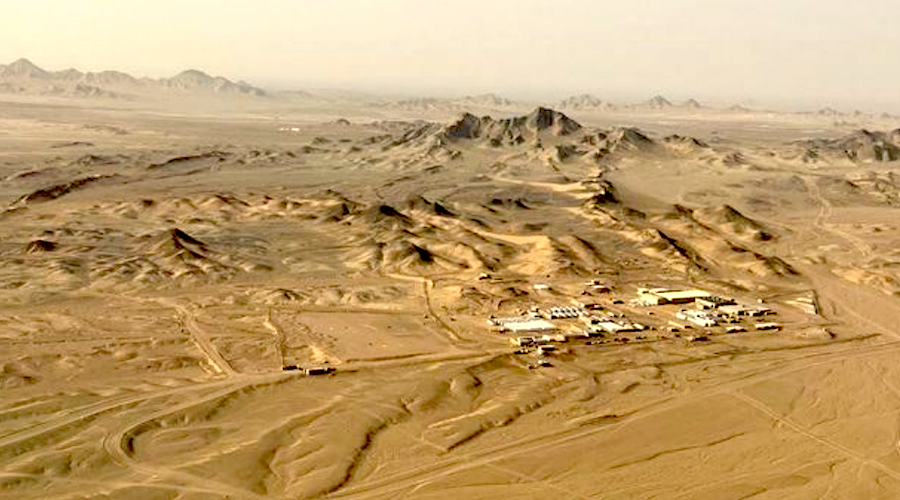
Barrick Mining (NYSE:B)(TSX:ABX) said on Thursday that it anticipates that there could be “significant increases” to the previously disclosed total estimated capital budget and timeline for its Reko Diq copper project in Pakistan.

On March 26, Barrick said it will slow its development of the Reko Diq deposit and extend the project’s review period, citing security concerns in the Middle East.
Reko Diq, one of the world’s largest undeveloped deposits of the metal, is in the remote, insurgency-hit western province of Balochistan and held in an equal partnership between the company and the Pakistani authorities.
The previously disclosed total estimated capital cost of Phase 1 was between $5.6 billion and $6.0 billion (100% basis, exclusive of capitalization of financing costs) and of Phase 2 was between $3.3 billion and $3.6 billion (100% basis, exclusive of capitalization of financing costs), with first production targeted by the end of 2028.
“Barrick continues to believe in the long-term value of Reko Diq. Following the preliminary findings of the review and the further escalation of security issues in Pakistan and the region, the company considers it necessary to slow the development activity and continue the project review until mid-2027,” the Canadian miner said in a statement released just after market close in Toronto.
Barrick has viewed Reko Diq — with an estimated 15 million tonnes of copper reserves — as a key pillar of its strategy to become a Tier 1 producer of the metal.
The continued review will allow the company to assess in a comprehensive manner the evolving security situation, capital requirements, project financing, project scope and timeline, it said.
“While development activity will be slowed, the project will remain under active management with a reduced capital spend,” Barrick said. “Development of Phase 1 of the Reko Diq project was approved on this basis. Barrick recognizes its important role in the local community and intends to continue to invest in and honor its existing in-country community and social programs.”
Barrick, which has been developing the project in partnership with the governments of Pakistan and Balochistan for years, initially planned for the project to come online in 2028, subject to financing.
Once operational, the mine is forecast to generate over $70 billion in free cash flow and $90 billion in operating cash flow over a 37-year lifespan.
No sign yet of China’s plan to cut copper output in major smelters’ results
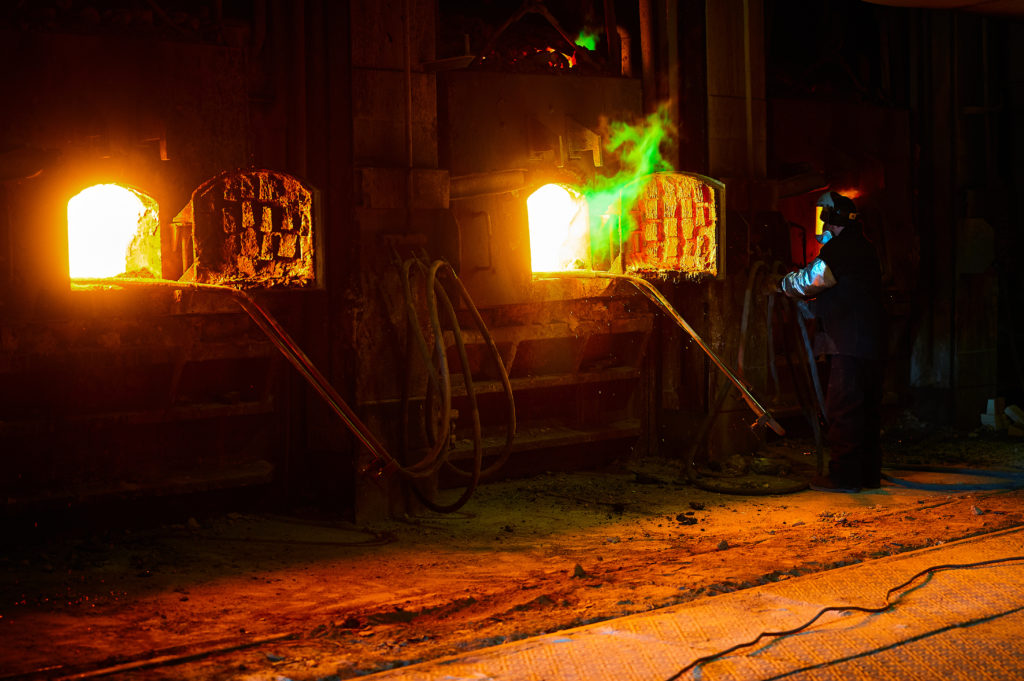 Stock image.
Major Chinese copper smelters are planning to raise or maintain output in 2026, their earnings outlooks show, despite a public commitment by the state-linked industry association last year to cut production by over 10%.
The China Smelter Purchase Team (CSPT), a group of 16 of the top copper smelters, agreed last year to cut production to counter overcapacity amid falling processing fees for copper concentrates.
But there’s no sign of output cuts in guidance issued by three major smelters, all CSPT members, as part of annual earnings over the past few weeks.
Jiangxi Copper, China’s top copper smelter, raised 2026 production guidance for copper cathodes to 2.39 million metric tons, up from 2.38 million tons produced in 2025.
Similarly, Yunnan Copper increased its 2026 guidance to 1.71 million tons, up from 1.64 million tons produced last year.
Daye Nonferrous, which published its 2025 results on Wednesday, flagged a slight drop in 2026 to 713,000 tons, from output of 716,000 tons for last year.
The three smelters produced a third of the country’s 14.72 million tons of refined copper last year.
The production cut announcement last year was made as treatment and refining charges (TC/RCs), which are traditionally paid by miners to smelters to process copper concentrates, collapsed in 2025 due to tight supply of the feedstock, leaving smelters having to pay miners.
The CSPT did not set quarterly TC/RC guidance for the fifth time in a row this week. The figure traditionally served as a benchmark for spot copper concentrate deals in China.
Negative fees have left Chinese smelters relying on by-product profits, especially sulphuric acid. Sales of sulphuric acid, for example, accounted for 14.65% of total gross profit of Jiangxi Copper, more than the gross profit from copper rod and wire and finished copper products combined in 2025.
(By Lewis Jackson and Dylan Duan; Editing by Sonali Paul)
Major Chinese copper smelters are planning to raise or maintain output in 2026, their earnings outlooks show, despite a public commitment by the state-linked industry association last year to cut production by over 10%.
The China Smelter Purchase Team (CSPT), a group of 16 of the top copper smelters, agreed last year to cut production to counter overcapacity amid falling processing fees for copper concentrates.
But there’s no sign of output cuts in guidance issued by three major smelters, all CSPT members, as part of annual earnings over the past few weeks.
Jiangxi Copper, China’s top copper smelter, raised 2026 production guidance for copper cathodes to 2.39 million metric tons, up from 2.38 million tons produced in 2025.
Similarly, Yunnan Copper increased its 2026 guidance to 1.71 million tons, up from 1.64 million tons produced last year.
Daye Nonferrous, which published its 2025 results on Wednesday, flagged a slight drop in 2026 to 713,000 tons, from output of 716,000 tons for last year.
The three smelters produced a third of the country’s 14.72 million tons of refined copper last year.
The production cut announcement last year was made as treatment and refining charges (TC/RCs), which are traditionally paid by miners to smelters to process copper concentrates, collapsed in 2025 due to tight supply of the feedstock, leaving smelters having to pay miners.
The CSPT did not set quarterly TC/RC guidance for the fifth time in a row this week. The figure traditionally served as a benchmark for spot copper concentrate deals in China.
Negative fees have left Chinese smelters relying on by-product profits, especially sulphuric acid. Sales of sulphuric acid, for example, accounted for 14.65% of total gross profit of Jiangxi Copper, more than the gross profit from copper rod and wire and finished copper products combined in 2025.
(By Lewis Jackson and Dylan Duan; Editing by Sonali Paul)
Chinese copper miners join $1.2 billion African rail revamp
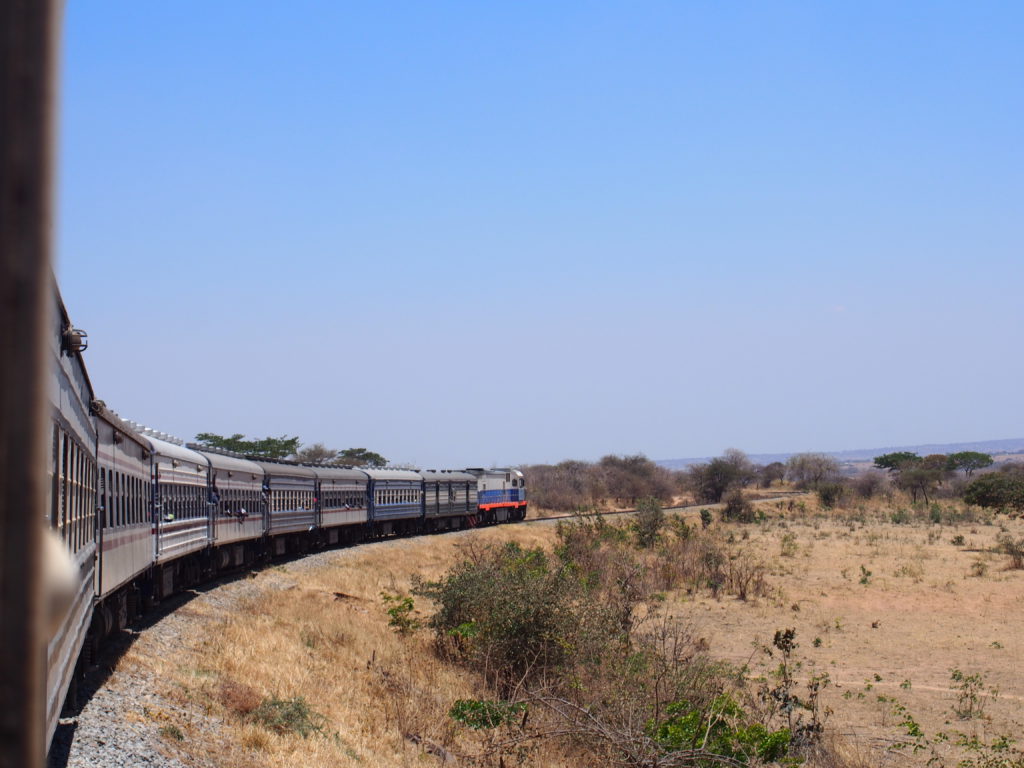
Chinese mining, shipping and logistics companies are joining a $1.24 billion project to revamp a railway linking Zambia’s copper region to a port on the Indian ocean.
Copper producers CMOC Group Ltd. and Zijin Mining Group Co. are teaming up with state-owned China Civil Engineering Construction Corp., or CCECC, to upgrade the 1,860-kilometer (1,156-mile) rail line that runs to Dar es Salaam in Tanzania.
CCECC – which signed a deal with Zambia and Tanzania in September to rehabilitate the so-called Tazara railway – will retain an 80% interest in the joint venture undertaking the project, according to a statement on Wednesday from Jiayou International Logistics Co., one of four firms taking 5% stakes. The other three are units of Zijin, CMOC and COSCO Shipping Holdings Co., Jiayou said.
The backing for the Chinese project comes as Washington tries to loosen Beijing’s grip on supply chains for critical minerals in Africa. The US concluded a bilateral minerals partnership with the Democratic Republic of Congo in December that grants American companies preferential access to some of the country’s abundant reserves of metals.
The Tazara link — originally built with Beijing’s assistance under Mao Zedong in the 1970s — will compete with the Lobito Corridor, a rail project backed by the US and European Union. That railway connects the same copper-rich region of central Africa to an Angolan port on the west coast of the continent.
CMOC and Zijin are among the Chinese miners that dominate metal exports from Congo, the world’s No. 2 copper producer and the biggest source of battery material cobalt. By contrast, Western firms – particularly Canada-headquartered First Quantum Minerals Ltd. and Barrick Mining Corp. – account for most output in neighboring Zambia.
Tanzania and Zambia granted CCECC a 30-year concession to operate the line. Once completed, the rehabilitated infrastructure will ease congestion on roads in Zambia and Congo, from where most mineral cargoes are currently trucked over long distances to African ports.
The Chinese companies will invest in the Tazara project according to the size of their interests in the Dubai-registered joint venture entity, according to Jiayou, which will contribute $62.2 million. The partners will operate freight services on the line after renovating the railway and purchasing equipment including locomotives and containers, it said, adding that the project still needs to complete the approval and filing process with China’s government.
The investments reflect a shift in China’s Belt and Road Initiative to increasingly partner with private companies to operate projects on commercial terms.
State-owned COSCO is China’s largest container line, while Jiayou is the majority owner of one of Zambia’s biggest trucking firms and is developing road concessions in the country. Zijin is also Jiayou’s second-biggest shareholder, with a 17.5% stake in the group.
Washington’s pact with Congo recognizes the “strategic nature” of the Lobito Corridor and aims to increase the volume of minerals exported to the US and its allies using the railway.
(By William Clowes, Annie Lee and Matthew Hill)
Ivanhoe stuns market with deep Kamoa-Kakula output cut
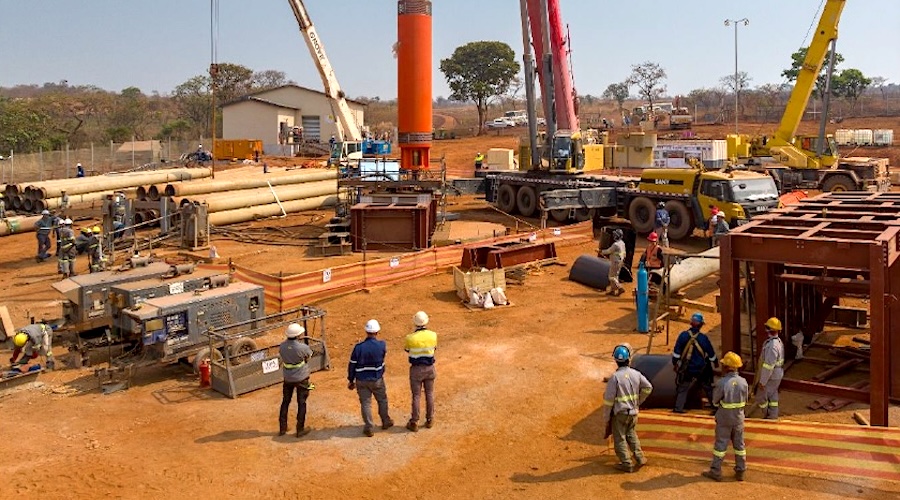
Ivanhoe Mines (TSX: IVN) has slashed near-term production guidance for its flagship Kamoa-Kakula copper complex in the Democratic Republic of Congo, surprising analysts and resetting investor expectations.
The company now expects 2026 copper anode output of 290,000 to 330,000 tonnes, down from 380,000 to 420,000 tonnes, while 2027 production will reach 380,000 to 420,000 tonnes versus a prior projected 500,000 to 540,000 tonnes.
Ivanhoe released the update after markets closed Tuesday, citing a shift toward underground development, rehabilitation and access work that will constrain ore delivery over the next 18 to 24 months. The company also raised expected cash costs, compounding the weaker outlook.
“The headline takeaway was a material reset to near-term expectations,” Jefferies analyst Fahad Tariq said in a note, adding that investors were not anticipating the downgrade. “We view the update as a clear acknowledgment that operational challenges at Kakula are taking longer to resolve than initially envisaged, pushing volume recovery further out.”
At the core of the revision is a new reserve model that cut contained copper by 24.7% and reduced reserve grade by 28%, reflecting more conservative assumptions, lower cutoff grades and revised mine sequencing. Ivanhoe now caps underground extraction rates at about 60%, down from 70% to 80% or higher, as it widens pillars and excludes inaccessible areas to improve long-term stability.
The reset underscores a broader trade-off facing large mining projects: sacrificing short-term output to secure more reliable, efficient production over time, forcing investors to recalibrate expectations.
Key ramifications
BMO analysts said the reserve update appears conservative but carries more significant implications for near-term production and valuation, largely due to the lower grade profile.
“The reserve update for Kakula/Kamoa came in below both the market’s and our expectations,” analyst Andrew Mikitchook wrote. “The largest impact on valuations comes from a 28% decrease in reserve grade.”
BMO cut its price target on Ivanhoe shares to $16 from $23, citing weaker near-term output and revised long-term assumptions. Year-to-date, the stock is down almost 35%, trading at $10.51 on Wednesday for a market capitalization of $11.8 billion (C$15B).
The bank also highlighted a planned redevelopment of the complex in 2026 and 2027, aimed at enabling broader and more efficient mining with faster backfill sequencing, though at the cost of reduced extraction rates in the interim.
Despite the downgrade, BMO said there is potential upside as Ivanhoe continues to refine its mine plan. Ongoing optimization work, including geotechnical drilling and further analysis of Kakula East, could lead to improved efficiency, with an updated prefeasibility and feasibility plan expected in the first quarter of 2027.
Jefferies similarly noted that mine plans for 2026 and 2027 now focus explicitly on development and rehabilitation rather than production, with slower advance rates and more conservative sequencing reducing ore delivery and raising costs in the near term.
Long-term outlook safe
Ivanhoe continues to target annual copper production exceeding 500,000 tonnes from 2028, positioning Kamoa-Kakula among the world’s largest copper operations.
The current redevelopment phase aims to unlock that scale by improving underground access, expanding mining areas and enabling more consistent extraction, even as it delays the ramp-up profile that had supported prior market expectations. Analysts said the company’s more cautious approach reflects a focus on long-term performance and stability after persistent operational challenges at Kakula.
Near-term sentiment will hinge on execution, including improved operating performance, timely redevelopment progress and clearer visibility on the next iteration of the mine plan, with signs of progress later this year likely key to rebuilding investor confidence.

No comments:
Post a Comment