$100 Oil Isn’t Enough to Balance Alberta’s Books

- Oil prices surged sharply after Donald Trump signaled further escalation against Iran, raising fears of prolonged conflict and supply risks.
- Higher prices are hurting consumers (e.g., rising fuel costs) but boosting energy stocks and oil-producing economies, though not enough to fix all budget deficits.
- Fiscal impacts vary widely: some producers benefit from higher prices, while others still struggle due to high budget break-even levels.
Oil markets reversed their recent downtrend on Thursday, with oil prices surging after President Donald Trump declared that the U.S. would continue to hit Iran "extremely hard" for the next two to three weeks. Trump warned that he would hit all of Iran's electric generating plants if a deal is not reached, sending the country back to the Stone Age. Trump’s bellicosity marks a sudden shift in policy, suggesting that securing the Strait of Hormuz is no longer Washington’s top priority. Brent crude for May delivery was up 7.58% to trade at $108.8 per barrel at 2.50 pm ET, while the corresponding WTI crude contract jumped 11.54% to change hands at $111.70/bbl.
Oil consumers are beginning to bear the brunt of the oil price spike, with the average price of gasoline in the U.S. surging past $4 per gallon for the first time since the summer of 2022. However, oil companies and oil-dependent economies are enjoying a rare bonanza: previously, we reported that the Energy sector is outpacing the other 10 U.S. market sectors by a wide margin, with the sector’s nearly 40% gain in the year-to-date incomparable to the -4.5% decline by the S&P 500. Still, oil prices are not high enough for some economies to dig themselves out of their deep holes. According to Alberta Finance Minister Nate Horner, it is "highly unlikely" the recent surges in oil prices will be enough to erase the province's multibillion-dollar deficit for the 2025–26 fiscal year. Horner says the deficit is likely to narrow considerably from the earlier projection of $4.1-billion, but has emphasized a surplus remains out of reach. The final deficit number will be revealed before the end of June when the year-end fiscal report is tabled. Alberta’s new fiscal year starts on April 1.
“There’s been a lot of napkin math done in my office,” he said. “We’re very interested in this, too. All I can say for sure is that the position will have improved. Is it enough to take us out of a deficit position? Highly unlikely.”
Every $1 change in the price of WTI impacts Alberta's annual revenue by approximately $680 million. However, oil prices only surged in late February when US-Israel launched attacks on Iran, meaning Alberta only got to enjoy higher oil revenues for just over a month for the last fiscal year. Previously, Alberta had projected a massive $9.4-billion deficit for the 2025/2026 fiscal year, based on a WTI forecast of US$60.50.
Thankfully, the province might be able to balance its books in the current financial year since it requires oil prices to average $74 and $77 per barrel for the entire year. StanChart has increased its average Brent price forecast for 2026 to $85.50/bbl from $70.00/bbl and for 2027 to $77.50/bbl from $67.00/bbl. However, StanChart has predicted that oil prices will gradually ease as the months and quarters roll on, with Brent crude averaging $78.00/bbl in Q1 2026; $98.00/bbl in Q2 2026, $85.00/bbl in Q3 2026, and $80.50/bbl in Q4 2026.
That said, the budget outlook is mixed for Gulf producers. Saudi Arabia will need some luck to avoid posting a deficit in the current year, with the Kingdom needing a Brent oil price between approximately $90 and over $100 per barrel to balance its 2025-2026 budget, according to IMF and Bloomberg estimates. The high price is driven by massive spending on Vision 2030 projects, public services, and previously lower production levels under OPEC+ cuts.
The UAE is almost certain to post a big surplus in the current year, thanks to a low breakeven oil price of just under US$66 per barrel to balance its budget. The UAE’s strategic economic diversification allows its budget to be balanced at lower levels. Similarly, Qatar could be gushing cash for years, with Fitch projecting the country’s fiscal breakeven oil price could fall to around $50 by 2027. Qatar has traditionally employed a conservative oil price estimate to enhance financial flexibility, ensuring that even with lower oil prices, it can manage its expenditures. Oman is also in good standing, with a budget breakeven oil price estimated to be between US$65 and US$80 per barrel.
Unfortunately, Bahrain can only hope to narrow its budget deficit despite the high oil price, due to the country’s high breakeven oil price of $124.9 to $125.7 per barrel, largely due to a high reliance on oil revenues and lower diversification.
By Alex Kimani for Oilprice.com
Suncor plans major shift in focus to in situ oil sands output by 2040
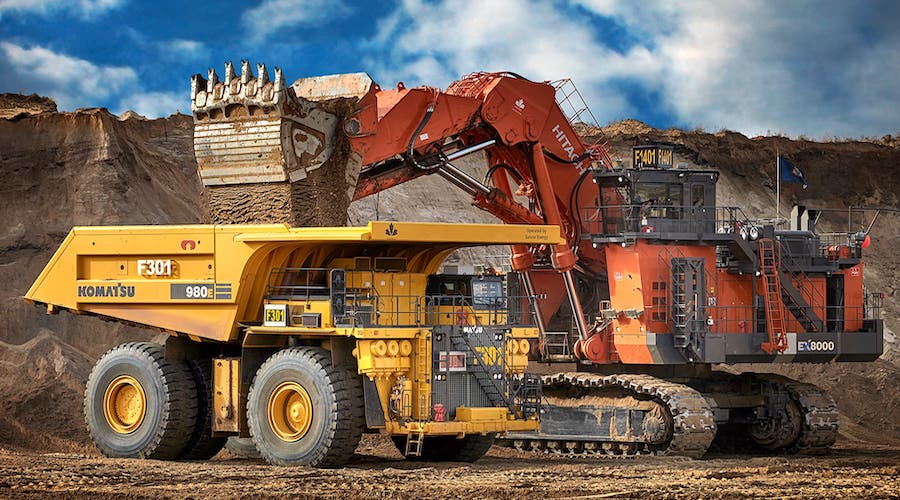
Canada’s Suncor Energy said on Tuesday the majority of its bitumen output by 2040 will be produced using steam-assisted extraction technology, an announcement that marks a significant structural shift for the oil sands heavyweight and which the company said will result in lower costs and higher cash flow over the long term.

Currently, 70% of Suncor’s oil sands crude is produced at its large-scale mining operations in northern Alberta, where trucks and shovels are used to extract the thick, heavy bitumen deposits that lie close to the surface. The remaining 30% comes from deeper deposits that require the use of steam technologies, a method called in situ, to loosen the oil underground before it can be pumped to the surface.
But over the next 15 years, Suncor’s production mix will shift so that by 2040, 60% of its oil sands barrels will come from in situ developments, and just 40% from mining, CEO Rich Kruger said at an investor day presentation. The change reflects anticipated declining production from Suncor’s Base Plant mine, which is expected to be largely depleted by the mid-2030s, but also reflects the company’s desire for lower-cost production.
“All barrels are not created equal,” Kruger said. “In situ delivers two times the relative cash flow per barrel compared to mining today.”
Already, Suncor’s most profitable asset is its Firebag site, which produces approximately 245,000 barrels per day using in situ technology. On Monday, the company filed a regulatory application to expand the site’s permitted capacity from an existing limit of 368,000 bpd to 700,000 bpd.
While most of the planned ramp-up of in situ development will come after 2032, Kruger said, Suncor expects to be able to increase output from Firebag to 275,000 bpd by 2028, through a series of debottlenecking and optimization projects.
The company also has a proposed in situ development, called Lewis, which is expected to produce 160,000 bpd and which Kruger said will be developed in phases, sequenced to coincide with the timing of the Base Plant mine’s gradual depletion.
Suncor’s investor day had been highly anticipated by the market, which has been waiting to hear how the company plans to secure a long-term bitumen supply to replace its Base Plant production.
One option the company had previously proposed was a new, 225,000-bpd, open-pit oil sands mine expansion, which would be located adjacent to its existing Base Plant operations. But it has been unclear whether such a project would get the go-ahead from Canadian regulators.
On Tuesday, Kruger said the company’s latest reserve estimate indicates it has 11 billion barrels more in reserves than previously estimated, bringing its total bitumen reserves to 30 billion barrels. Suncor expects to grow its upstream production by about 100,000 bpd by 2028.
($1 = 1.3936 Canadian dollars)
(By Amanda Stephenson and Sumit Saha; Editing by Shinjini Ganguli and Chris Reese)

No comments:
Post a Comment