Showing posts sorted by relevance for query NORDSTREAM. Sort by date Show all posts

Friday, November 01, 2024

Using Any Metric, the U.S. Gamble to Harm Russia by Bombing Nordstream Was a Failure


 November 1, 2024
Facebook

Photograph Source: Bair175 – CC BY-SA 3.0

Years have passed since president Joe Biden allegedly ordered the bombing of the Nordstream 2 pipeline, and the dust has long settled. We can now answer whether the reckless white house gamble to damage Moscow succeeded or not. The answer is definitive: it failed. But did the white house really commit this massive economic, political and climate crime? Well, renowned investigative reporter Seymour Hersh long ago concluded, with lots of insider pizazz, that it did. Much more recently, on September 26, we very nearly got a smoking gun, namely verified reports of the surreptitious presence of U.S. navy warships with their transponders suspiciously OFF, near the crime scene, four or five days before the explosion. These warships operated in the exclusive economic zone of Denmark. The captain of a small Danish port learned of this, but officials silenced him for years. Only recently could he speak out to Danish journalists.

So whom did the explosion harm? Not Russia. Moscow just rerouted its cheap natural gas to the east and has been making money there, hand over fist. Similarly with its sanctioned oil: Moscow sells it to India, which raises the price and sells it to Europe. Russia is now the world’s fourth largest economy measured by purchasing power parity, edging out Japan, and is relatively unscathed by impotent western sanctions. Really, whom did the explosion hurt? Not the U.S., enabled by this convenient catastrophe to sell its outrageously expensive and therefore previously non-competitive liquified natural gas to Europe. But Europe? Ah, that’s another matter. And specifically Germany. Remember Biden threatened on TV to destroy Nordstream 2. His henchwoman Victoria Nuland fulminated thus also. It turns out, these Mafiosi-like threats came to fruition and led to the swift deindustrialization of Europe’s economic powerhouse – Deutschland.

Germany boasted 10,702 corporate insolvencies in the first quarter of 2024, rather an indictment of its Russophobic foreign and economic policy. After all, had Berlin okayed using the one remaining and functioning Nordstream pipeline, cheap Russian gas would have prevented many of those businesses from going bust. But prime minister Olaf  “Liver Brain” Scholz cut off his country’s nose to spite its face: No cheap energy from Moscow, even for the flagship German car corporation Volkswagen, currently mulling up to 30,000 job cuts, when it closes several German plants. The company also ended its longstanding job security arrangements with the country’s unions. And what has caused this manufacturing debacle? Abrupt withdrawal from cheap Russian energy. And other sundry imbecilic sanctions. Europe, with the Teutonic nation leading the way, decided to commit economic suicide.

Germany’s economy shrinks steadily, as RT reported October 14: Its growth for 2024 will likely be minus .2 percent, and this is “the new, miserable German normal.” It’s not a blip, not an aberration, but the way things are gonna be for quite some time. As RT observes, gone are the halcyon, pre-Russia sanction days of the mid-2000s with 24 percent cumulative growth. And things aren’t better elsewhere in the European Union. France is on track for 57,000 to 62,000 corporate insolvencies in 2024. Italy is predicted to suffer a 22 percent increase in such bankruptcies this year, while in Spain thousands of businesses shuttered. Meanwhile thousands of U.K. companies went belly up in 2024, and officials estimate 147 percent insolvencies over pre-pandemic levels.

This is not the rosy picture of a thriving region. It has the whiff of the funeral parlor, especially when these lousy bankruptcy stats combine with a long-term, declining birthrate. Europe depended vitally on cheap Russian energy. In truth, Moscow subsidized European industry and protected it from American economic predation – who knew? Evidently not the Europeans, who apparently in their degraded arrogance just took this sweet deal for granted. Now that they’ve spurned it for their so-called principles (what principles? That they should be allowed to expand a murderous military alliance right onto Russia’s doorstep, without a peep of objection from the kremlin? Or that they should aid Ukro-fascist slaughter of ethnic Russians in the Donbass?), they find their companies closing up shop and many relocating, where? Dum, da, dum, dum: to the United States, thanks to the American Inflation Reduction Act, a deliberate affront to its so-called allies in Europe, designed to steal their businesses. Washington’s vassalization project for Europe is complete, and demonstrating Germany’s abject submission, its president recently awarded Joe “Nordstream Bomber” Biden a medal. I mean, is this the height of masochism or what?

Meanwhile, in other dismal EU news, Moldova’s recent referendum was manipulated October 20 so that it can join this gang of suicidal masochists, aka the EU. The election was a disgrace for democracy; according to political scientist and East European expert Ivan Katchanovski on twitter October 21, many pro-Russian citizens in Transdniestria could not vote, while only two polling stations in Moscow opened for the 400,000 Moldovan citizens living in Russia. That meant maybe as few as 10,000 out of 400,000 Moldovans in Russia could vote. This was a decision of the pro-EU Moldovan government, which, by the way, only won an even 50 percent of Moldovans living in country for its EU membership bid…Welp, that’s it for Moldova, in all likelihood the next Ukraine, self-immolating on a western altar of spurious openness to troublemaking groups like NATO and whatever idiotic fad of the day comes along.

One incident involving the presidential election, tweeted out by Peacemaket October 21, was especially egregious. “A Moldovan citizen arrived in Moldova, went to vote in the country’s presidential election and found that the UK had already voted for him. The incident occurred with a man called Alexander Nikolaevich in the town of Tvarditsa in the Taraclia region of the republic. This is known as election fraud.”

So from this you can conclude that the presidential vote, like the EU referendum one, was not exactly on the up and up. But hey, U.S. officials helped actual Nazis to overthrow the Kiev government back in 2014, so they’re old hands when it comes to such funny-business in this corner of Europe. I don’t know if there was any American involvement in this shady Moldovan election, but U.S. preferences there are no secret. And those preferences, of course, come with ideologically doctrinal anti-Russian blinkers. No dissent allowed. As we also see in Georgia, where the overwhelming late October vote to remain, well, Georgian instead of joining the EU’s kamikaze mission for it to open a second front against Russia may yet lead to a western-backed coup against the legally elected government.

Back in Berlin, one can say that overall, American behavior toward its EU ally has been atrocious. Calling for destroying an ally’s critical infrastructure – Nordstream – then actually bombing it, then cravenly lying about it and expecting its victims to swallow these lies, literally rubbing their faces in this humbug – what are the words for such behavior? Treacherous, wicked, arrogant, violent, feckless, stupid? You pick. But however many you pick, don’t forget stupid. Because Washington needs a healthy European ally. Joe Biden may not have thought so, if thought can be attributed to his actions, but without a healthy Europe, who does the U.S. have? Canada, Japan, South Korea, Israel and Australia. That’s about it. Compare it to the number of countries in or clamoring to join BRICS. And make no mistake, Washington has induced decline in Europe. This, after embarking on its disastrous Ukraine proxy adventure, which has left western defense cupboards nearly bare.

When photos first appeared of the effects of the Nordstream explosion in the sea, Polish minister of foreign affairs, Radek Sikorski tweeted: “Thank you, America.” Thank you for nothing is more like it. Thank you for robbing us, he should have said. And when the history of this disgraceful and disgusting episode comes to be written, it will be noted prominently that this was Washington’s first shot at its closest ally’s head and, ultimately, its own.

Eve Ottenberg is a novelist and journalist. Her latest novel is Booby Prize. She can be reached at her website.

Friday, September 04, 2020

Calls mount for Germany to rethink Russian gas pipeline plan after Navalny poisoning

Issued on: 03/09/2020 - 
A supporter of Alexei Navalny holds up a picture of the Kremlin opponent after he was taken ill with poisoning OLGA MALTSEVA AFP/File

Text by:FRANCE 

A European response that involves the Nord Stream 2 gas pipeline is needed against Russia after the poisoning of Kremlin critic Alexei Navalny with a Soviet-style Novichok nerve agent, some politicians and diplomats in Germany said on Thursday.

Chancellor Angela Merkel said she expected Moscow to join efforts to clear up what happened and that Germany would consult its NATO allies about how to respond, raising the prospect of new Western sanctions on Russia.

"There must be a European response," Norbert Roettgen, head of Germany's parliamentary foreign affairs committee, told Deutschlandfunk radio on Thursday, when asked whether work on the NordStream 2 pipeline from Russia to Germany should stop.

"We must pursue hard politics, we must respond with the only language (Russian President Vladimir) Putin understands - that is gas sales," said Roettgen, a member of Merkel's ruling conservatives.

Navalny is lying in intensive care in a hospital in Berlin after his flight was arranged by activists. A German military laboratory produced "unequivocal evidence" that he had been poisoned with Novichok, the government said on Wednesday.


Moscow has denied involvement in the poisoning of Navalny, a longtime critic of Putin's rule, and the Russian foreign ministry said Germany's assertion was not backed by evidence.

Kremlin spokesman Dmitry Peskov said there was no reason to discuss sanctions against Moscow after Merkel said Germany would consult its NATO allies about how to respond to the poisoning.

Wolfgang Ischinger, chairman of the Munich Security Conference and a former ambassador to Washington, backed a joint response from the EU and NATO and said softer gestures, such as the expulsions of diplomats, may not suffice.

"If we want to send a clear message to Moscow with our partners, then economic relations must be on the agenda and that means the NordStream 2 project must not be left out," said Ischinger, adding that a full boycott would not be a good move.

"We can't put up a wall between the West and Russia, that would be a step too far, but there is a middle ground, something between diplomatic gestures and total boycott," said Ischinger.

(FRANCE 24 with REUTERS)

Tuesday, June 09, 2020

A Pipelineistan fable for our times
Ukraine was supposed to prevent Russia from deepening energy ties with Germany; it didn't work out that way


By PEPE ESCOBAR JUNE 8, 2020


Once upon a time in Pipelineistan, tales of woe were the norm. Shattered dreams littered the chessboard – from IPI vs. TAPI in the AfPak realm to the neck-twisting Nabucco opera in Europe.

In sharp contrast, whenever China entered the picture, successful completion prevailed. Beijing financed a gas pipeline from Turkmenistan to Xinjiang, finished in 2009, and will profit from two spectacular Power of Siberia deals with Russia.

And then there’s Ukraine. Maidan was a project of the Barack Obama administration, featuring a sterling cast led by POTUS, Hillary Clinton, Joe Biden, John McCain and last but not least, prime Kiev cookie distributor Victoria “F**k the EU” Nuland.

Ukraine was also supposed to prevent Russia from deepening energy ties with Germany, as well as other European destinations.

Well, it did not exactly play like that. Nord Stream was already operational. South Stream was Gazprom’s project to southeast Europe. Relentless pressure by the Obama administration derailed it. Yet that only worked to enable a resurrection: the already completed TurkStream, with gas starting to flow in January 2020.

The battlefield then changed to Nord Stream 2. This time relentless Donald Trump administration pressure did not derail it. On the contrary: it will be completed by the end of 2020.

Richard Grennel, the US ambassador to Germany, branded a “superstar” by President Trump, was furious. True to script, he threatened Nordstream 2 partners – ENGIE, OMV, Royal Dutch Shell, Uniper, and Wintershall – with “new sanctions.”

Worse: he stressed that Germany “must stop feeding the beast at a time when it does not pay enough to NATO.”

“Feeding the beast” is not exactly subtle code for energy trade with Russia.

Peter Altmaier, German minister of economic affairs and energy, was not impressed. Berlin does not recognize any legality in extra-territorial sanctions.

Grennel, on top of it, is not exactly popular in Berlin. Diplomats popped the champagne when they knew he was going back home to become the head of US national intelligence.

Trump administration sanctions delayed Nordstream 2 for around one year, at best. What really matters is that in this interval Kiev had to sign a gas transit deal with Gazprom. What no one is talking about is that by 2025 no Russian gas will be transiting across Ukraine towards Europe.

So the whole Maidan project was in fact useless.

It’s a running joke in Brussels that the EU never had and will never have a unified energy policy towards Russia. The EU came up with a gas directive to force the ownership of Nord Stream 2 to be separated from the gas flowing through the pipeline. German courts applied their own “nein.”

Nord Stream 2 is a serious matter of national energy security for Germany. And that is enough to trump whatever Brussels may concoct.

And don’t forget Siberia

The moral of this fable is that now two key Pipelineistan nodes – Turk Stream and Nord Stream 2 – are established as umbilical steel cords linking Russia with two NATO allies.

And true to proverbial win-win scripts, now it’s also time for China to look into solidifying its European relations.

Last week, German chancellor Angela Merkel and Chinese premier Li Keqiang had a video conference to discuss Covid-19 and China-EU economic policy.

That was a day after Merkel and President Xi had spoken, when they agreed that the China-EU summit in Leipzig on September 14 would have to be postponed.

This summit should be the climax of the German presidency of the EU, which starts on July 1. That’s when Germany would be able to present a unified policy towards China, uniting in theory the 27 EU members and not only the 17+1 from Central Europe and the Balkans – including 11 EU members – that already have a privileged relationship with Beijing and are on board for the Belt and Road Initiative.

In contrast with the Trump administration, Merkel does privilege a clear, comprehensive trade partnership with China – way beyond a mere photo op summit. Berlin is way more geoeconomically sophisticated than the vague “engagement and exigence” Paris approach.

Merkel as well as Xi are fully aware of the imminent fragmentation of the world economy post-Lockdown. Yet as much as Beijing is ready to abandon the global circulation strategy from which it has handsomely profited for the past two decades, the emphasis is also on refining very close trade relations with Europe.

Ray McGovern has concisely detailed the current state of US-Russia relations. The heart of the whole matter, from Moscow’s point of view, was summarized by Deputy Foreign Minister Sergei Ryabkov, an extremely able diplomat:

“We don’t believe the US in its current shape is a counterpart that is reliable, so we have no confidence, no trust whatsoever. So our own calculations and conclusions are less related to what America is doing …. We cherish our close and friendly relations with China. We do regard this as a comprehensive strategic partnership in different areas, and we intend to develop it further.”

It’s all here. Russia-China “comprehensive strategic partnership” steadily advancing. Including “Power of Siberia” Pipelineistan. Plus Pipelineistan linking two key NATO allies. Sanctions? What sanctions?

Wednesday, July 24, 2024


Tempting Armageddon as a national strategic policy

Quos Deus vult perdere, prius dementat. “Whom the gods would destroy, they first make mad.”

If you want to get ahead in Washington, devise the most dangerous, reckless, merciless and destructive plan for US world domination. If it kills millions of people (especially if they are mostly women and children), you will be called a bold strategist. If tens of millions more become refugees, it will be even more impressive. If you find a way to use nuclear weapons that would otherwise be gathering dust, you will be hailed as brilliant. Such is the nature of proposals for dealing with Russia, China and Iran, not to mention smaller nations like Cuba, Syria, Yemen, Venezuela, North Korea, etc. Can a plan to decimate humanity and scorch the earth be far behind?

How did we get here? This is not the world that was envisioned in the years following the greatest war in history.

If you consider yourself a hammer, you seek nails, and this seems to be the nature of US foreign policy today. Nevertheless, when WWII ended in 1945, the US had no need to prove that it was by far the most powerful nation on the planet. Its undamaged industrial capacity accounted for nearly half the economy of an otherwise war-torn and devastated world, and its military was largely beyond challenge, having demonstrated the most powerful weapons the world had ever known, for better or worse.

That was bound to change as the world recovered, but even as the rebuilding progressed, it did so with loans from the US and US-dominated institutions like the World Bank and the International Monetary Fund, which added international finance as another pillar of US supremacy. The loans built markets for US production, while creating allies for its policies in the postwar period.

It wasn’t all rosy, of course. But the war and its immediate aftermath introduced greater distribution of wealth, both in the US and much of the world, than had hitherto been the case. Highly graduated income taxes – with rates greater than 90% on the highest incomes – not only funded the war effort, but also assured relative social security and prosperity for much of the working class in the postwar period. In addition, the GI Bill provided funds for college education, unemployment insurance and housing for millions of returning war veterans. Although a main purpose of the legislation may have been to avoid the scenes of armed repression against unemployed and homeless war veterans, as occurred with a much smaller number of veterans after WWI, it had the effect of ushering many of them into middle class status. Another factor was the introduction of employee childcare and health insurance benefits during the war, in order to entice women into the work force and make it possible for them to devote more of their time to war production. These benefits (especially health insurance) remained widespread and even increased after the war, contributing to higher living standards compared to the prewar era.

Internationally, wider distribution of wealth was seen as a means of deterring the spread of Soviet-style socialism by incorporating some of the social safety net features of the socialist system into a market economy that nevertheless preserved most of the power base in capitalist and oligarchical hands.

Unfortunately, many of the wealthy and powerful may have seen these developments as temporary measures to avoid potential social disorder, and a means of fattening the cattle before milking, shearing and/or butchering. One of the earliest rollbacks was the income tax structure, which saw a decades-long decline in taxation of corporations and the wealthy, as well as features in the tax code that allowed many of the wealthy to dodge income taxes altogether.

Similarly, savings and loan institutions, designed to serve the financial needs of the middle class, became a means to exploit them, thanks to changes in chartering rules engineered by the lobbyists of the wealthy to profit from speculative trade in mortgage securities. The most egregious consequence of this was the crash of 2008, resulting in the greatest transfer of wealth in US history to the top 1% (or even 0.1%) in such a short time. By then the neighborhood savings and loan was a memory, having been devoured by investment bankers to satisfy (unsuccessfully) their insatiable appetites.

In the international dimension, another important development was the uncoupling of the US dollar from the gold standard in 1971. This ended the Bretton Woods agreement of 1944, and made the untethered dollar the standard, rendering its value equivalent to whatever purchasing power it might possess at any given time, and placing the United States in unprecedented control of international exchange.

A further instrument of postwar power was NATO, an ostensibly voluntary defensive alliance of nonsocialist western European and North American nations, to which the socialist countries reacted with their own Warsaw Pact. Both were voluntary to roughly the same imaginary degree, and justified each other’s existence. But both were also a means for the great powers of the US and the USSR to dominate the other members of their respective alliances. The defensive function of these alliances became obsolete with the dissolution of both the Soviet Union and the Warsaw Pact in 1991. NATO then became an offensive alliance, functioning to preserve, enhance and expand US hegemony and domination in the face of its descent into internal dysfunction and external predation.

These transfers of wealth and power, both domestically and internationally took place even as US industrial and manufacturing power waned. This was due not only to competition from the expected postwar recovery of powers destroyed during the war (as well as newly rising ones), but also to the unmanaged voracious appetites of US speculators and venture capitalists, who replaced vaunted US industrial capacity with cheap foreign (“offshore”) sources. This eventually converted the US from a major production economy to a largely consumer one. It also helped to transfer middle and lower class wealth from the American masses to its upper echelons, as well-paying union and other full-time jobs were replaced by menial minimum wage and part-time ones, or by unemployment, welfare and homelessness. The service industries, construction, entertainment, finance, military, government and agriculture usually remained relatively stronger than industry and export, but less so than during the 1950s, and were increasingly funded by expansion of the national debt, rather than a strong economic base.

Of course, concentration of wealth is commensurate with concentration of power, and although the wealthy always have greater political power than the less wealthy, the transition to an increasingly oligarchical US society got a major boost in 2010 with the Supreme Court decision Citizens United v. Federal Election Commission, which granted corporations and other associations unprecedented power to use their vast financial resources to control the outcome of elections. It was a bellwether: despite the fact that Supreme Court justices are unelected officials, it is hard to imagine such a decision taking place a half century earlier (during the Warren Court, for example), when popular power in the US (though never as great as proclaimed) was perhaps at its peak, and which was reflected in the composition of the court and its decisions in that era. Citizens United gave corporations and well financed interest groups virtually unlimited control over US domestic and international policy.

The coalescing of these trends has resulted in a power structure and decision-making procedure (or lack thereof) that accounts for the astonishing headlong rush toward Armageddon described in the introductory paragraph of this article. The US is currently considered the only remaining superpower, but what is the basis of that power? It is not industrial or economic power, which the US abandoned for the sake of short-term profits in “offshore” manufacturing, as previously stated.

It is not even military power, much of which has been invested in extremely expensive air and sea forces that are now becoming obsolete, as second and third tier powers like Russia and Iran develop cheaper mass drone architecture, untouchable hypersonic missiles and electronic systems that make traditional weaponry less relevant. An extreme example of such irrelevance can be seen in the strategies of Hamas and its Palestinian allies, armed largely with low-tech self-developed weapons designed to exploit the vulnerabilities of massively armed Israeli forces laying waste to the Palestinian population and infrastructure above ground, while the resistance forces remain relatively invulnerable below ground, and able to attack effectively and indefinitely from their hundreds of miles of deep reinforced tunnels.

Similarly, the irrelevance and obsolescence of US arms became evident in the Ukraine war, as the US, and indeed all of NATO, proved themselves incapable of manufacturing more than a fraction of the artillery, shells and armored vehicles that Russia produces, with a military budget hardly more than a tenth that of the US, much less the combined NATO budget.

The US aim in the Ukraine war was and is ostensibly to defeat Russia. But it will consider the war a success even if (as seems certain) this objective fails. This is because the more immediate US goal is to assure and reinforce the subjugation of the western NATO countries, as well to expand to the rest of Europe. In effect, the Ukraine war solves the problem perceived by US policymakers that the dissolution of the USSR removed much of the justification for a defensive alliance which was no longer facing a threat of the sort against which it was created to defend.

But that question was apparently raised mainly if at all by academics at the time, not diplomats. Perhaps a partial explanation was inertia: why change what seemed to be keeping both peace and prosperity (for its members)? The US also found missions for NATO from the Balkans to 9/11 response to West Asia to Afghanistan and North Africa. But all of these paled in comparison to its previous function of deterring the Soviet Union. In order to justify the continued existence of NATO, a new, similar threat was needed, not merely “police actions”. This was manufactured by the US, starting with expansion of NATO to eastern Europe, in violation of its promises in 1991 to the leadership of the dissolving Soviet Politburo not to expand “an inch beyond the eastern border of [East] Germany.” Poland, Hungary and the Czech Republic joined in 1999. Bulgaria, Estonia, Latvia, Lithuania, Romania, Slovakia, and Slovenia in 2004. In 2009, Albania and Croatia also joined, followed by Montenegro in 2017 and North Macedonia in 2020. Finland joined in 2023 followed by Sweden in 2024.

The purpose of the expansion, while giving the appearance of relevance, was not so much to respond to a perceived threat as to manufacture one, and Russia was selected to be the threat, despite the fact that it had posed no apparent strategic threat to NATO for more than two decades after the end of the Soviet Union. It even discussed the possibility of joining the Alliance. But the US had other intentions. Without a credible common threat, NATO might cease to be a defensive military alliance, with the eventual possibility of defections by members that no longer saw a significant benefit to their otherwise exorbitant and oppressive membership. Furthermore, many western European nations were finding common interests with Russia, most notably the Nordstream pipelines providing cheap, plentiful and reliable Russian natural gas to the European economies.

Obviously, this was intolerable for the US and its plan to dominate all of western and eastern Europe combined. Russia soon understood that the expansion of NATO was intended as a strategic threat to Russia’s security. As successor of, and inheritor to, the Soviet nuclear arsenal and its delivery systems, Russia could not afford to have NATO nuclear strike systems sitting on its doorstep any more than the US could accept nuclear missiles in Cuba in 1962. The US therefore chose to threaten Russia’s existence through Ukraine.

Ukraine was the perfect weapon to prod the Bear. It was poor and corrupt, and it had a substantial racist and ultranationalist anti-Russian Nazi and Fascist minority, with origins dating to collaboration with Nazi Germany. These elements hated Ukraine’s large ethnically and linguistically Russian population, who had a strong traditional link with Russia and its history, including Ukrainian cities founded by Russia. With well-placed undercover money, arms and expert CIA covert manipulation, a small but violent uprising, a coup d’état and civil war might turn Ukraine into a security threat to Russia that could be used to seal NATO under US control.

Under the stewardship of Hillary Clinton’s handmaiden, Victoria Nuland, laden with $5 billion (actually, with unlimited funds), this is exactly what happened in 2013-14. The newly installed Ukrainian coup government promptly began the repression of its ethnically Russian population, which mounted a resistance movement to defend itself, as intended by the US/NATO covert operators. Over the next eight years, the US funded, armed and trained its Ukrainian puppet, all the while amplifying the repression against the ethnic Russians, whose resistance groups Russia supported with arms and training. Negotiated agreements in 2014 and 2015 (the Minsk accords) to end the fighting were only partially and temporarily effective, and as German Chancellor Angela Merkel admitted in an interview with Die Zeit in 2022, they were only an attempt to gain time [to strengthen the Ukrainian military until they were ready to take on Russia].

That time was February, 2022, when – on cue from its US puppeteers – Ukraine escalated its attacks on its Russian minority in Lugansk and Donetsk oblasts (provinces), instantly raising the daily casualty toll from dozens to hundreds. As intended, this prompted Russia to intervene directly with a “Special Military Operation”, ostensibly limited mainly to ending the massacres and defending the population that was under attack, but also to driving Ukraine to the negotiating table.

It worked. At the end of March, the two countries reached a ceasefire agreement at negotiations in Istanbul, under the auspices of the Turkish government. But this was not what the US had in mind, so British Prime Minister Boris Johnson was promptly dispatched to Istanbul, to remind the Ukrainians that puppets are controlled by the hands of their masters. From then on, the war escalated until it engaged more than a million armed combatants and resulted in more than a half million casualties. And in case some NATO member might be tempted to explore reconciliation with Russia, the US destroyed the Nordstream pipelines, breaking a major foundation of Russia’s peaceful economic bonds with the rest of Europe, and with them much of Europe’s heretofore economic success, on the assumption that weaker partners are more dependable than strong ones (and constitute weaker economic competition, as well).

The US thus became the undisputed hegemon of Europe by means of a conventional proxy war with Russia. But their original plan included the defeat of Russia, as well, both militarily and economically, the latter by means of sanctions that would deny markets and world trade to the Russian economy. This part of the plan was a miserable failure, as Russia found prosperity in new markets, and invested in an astonishingly productive, innovative and efficient strategic defense industry, mainly at its robust defense complex in the Ural mountains. No matter. War, destruction and wanton slaughter had nevertheless proven to be effective strategies for European domination, even without defeating Russia. In addition, the US had shown that, despite its industrial limitations, it could impose its will through proxies bought, trained and supplied with its most powerful weapon, which it had in unlimited supply: the mighty US dollar.

I therefore return to the question of the basis of US power. What enables a country with a declining industrial base and stagnating military production, a shrinking working and middle class and an expanding homeless population to expend vast sums of money to hire and arm proxy fighting forces, purchase and develop foreign political parties, overthrow governments, maintain a military budget that is the equal of the next nine countries combined, and an intelligence budget that is larger than the entire defense budget of every other country except China and Russia?

Part of the answer is that the US increases its national debt by whatever amount it wishes, usually paying low but reliable rates of interest, depending on the market for US Treasury notes. Currently, the debt is roughly $35 trillion, more than the annual US GDP. The only other time in history that debt has exceeded GDP was in WWII, which hints at profligate borrowing. But the US is not worried about the size of the debt or about finding takers for its IOUs. As mentioned earlier, the dollar was uncoupled from the value of gold in 1971. The untethered dollar is therefore the basis for most currencies in the world. As a result, the  entire world is heavily invested in the dollar and in maintaining its value, and will buy US Treasury notes as needed to assure that it remains stable and valuable. This enables the US to outspend all other countries to maintain and augment its power throughout the globe. Some have accused the US of treating this system of funding as “the goose that lays the golden egg”.

Others have accused it of coercing or “shaking down” other countries to participate in this financing scheme or face unpleasant consequences. The same accusation has sometimes been leveled with respect to the purchase of US “protection services” and expensive military hardware as part of the NATO member “contributions” that bring US installations and personnel to those countries, and to other US satellite countries around the globe.

The other major basis of US power is the use of unlimited dollar resources to visit extreme violence, death, war and destruction upon countries and societies that do not accept subordinate status, or even those who do, but whose destruction may be seen as a necessary object lesson to those who might otherwise step out of line. This is a commitment to use totally disproportionate force with little or no effort at diplomatic efforts to reach strategic goals. The Israelis call this the “Dahiyeh Doctrine”, in reference to turning entire suburbs (“dahiyeh” in Arabic) or cities and their populations into smoldering ruins for the sake of intimidation. In the case of Ukraine, the US/NATO, has raised the stakes in the destructiveness of the weapons being used against Russia, as well as the choice of increasingly deeper targets inside Russia, while refusing negotiated diplomatic solutions. Threats to use low yield nuclear weapons have also been suggested.

This is, in effect, the insanity ploy, “We are unreasonable and capable of anything. Do what we say or accept terrible consequences.” It is the Armageddon strategy, “We are willing to go to any lengths.” It is the strategy of those who think they are invincible, and who demand complete obedience from, and dominance of, potential rivals. It is the strategy of those who think that they can do whatever they want without serious consequence to themselves. The direct origin of this strategy is the Wolfowitz Doctrine, first issued by Under Secretary of Defense Paul Wolfowitz in 1992, and submitted to his superior, Defense Secretary Dick Cheney. The basis of the doctrine is that any potential rival to US power must be destroyed or reduced to size.

Cheney and Wolfowitz are part of the neoconservative political movement that began during the Vietnam war. It is a movement of warmongers and autocrats who believe that the control of US foreign policy must be kept in the hands of “experts” (themselves) and out of the hands of elected officials who don’t support them. The dissolution of the Soviet Union was in their eyes a vindication of their influence in the Reagan and George H.W. Bush administrations, and their “success” led to the founding of the short-lived Project for a New American Century think tank during the latter part of the Clinton presidency.

The Project for a New American Century in turn became a springboard for neocon saturation of the George W. Bush administration in the major foreign policy arms of the government – the cabinet, the National Security Agency, the State Department, the intelligence services, and eventually the military. Since then, neoconservative control has only broadened and deepened in the U.S. To a large extent they are the unelected cabal that run US foreign policy and related agencies, with support from the interests that profit from war and exploitation, including weapons manufacturers, petroleum and mineral companies, and, of course, the similarly-minded Israel Lobby.

It is in these circles that arrogance knows no bounds, that no risk is too great, and that no amount of death and destruction is inconceivable, because you are not invited to participate unless you consider yourself too intelligent and powerful to make a mistake, and because Armageddon can only happen if you will it so.Facebook

Paul Larudee is a retired academic and current administrator of a nonprofit human rights and humanitarian aid organization. Read other articles by Paul.

Sunday, November 30, 2025

NORDSTREAM BOMBING

Opinion - A German court may have just shattered one of the Biden era’s biggest lies


Jonathan Turley,
FOX NEWS  opinion contributor
Sat, November 29, 2025


It is often said that “the first casualty when war comes is truth.” A criminal warrant just issued in Germany shows that war continues to claim its victims. However, this warrant could prove to be as great an indictment not just of the government of Volodymyr Zelensky, but also of former President Joe Biden.

This week, a German court issued an arrest warrant for Ukrainian Serhii Kuznietsov, which may finally confirm what was long suspected: that Ukraine was responsible for the 2022 sabotage of the Nord Stream pipelines in the waters near Denmark and Sweden.

The Biden administration may have been given prior warning. It was allegedly told years ago by a Ukrainian whistleblower that a six-person team of Ukrainian special forces was planning to rent a boat, dive to the sea floor and blow up the Nord Stream project. The operation was reportedly led by Gen. Valerii Zaluzhnyi, commander-in-chief of Ukraine’s armed forces.

Nevertheless, after the attack, the Biden administration and many in the media fueled speculation that Russia had destroyed its own pipeline, despite evidence and logic to the contrary. It was another convenient claim of a Russian false-flag operation that allowed the Biden administration to ignore the possibility that Ukraine had not only engaged in environmental crimes but had also knowingly lied to its allies.

For years, some of us have questioned the official account from the Biden administration about the available evidence of those responsible.

The suggestion of a Russian attack on a Russian pipeline never seemed logical. However, the administration was funneling billions in support for Ukraine, funding that has now exceeds an estimated $180 billion. Having Ukraine sabotage pipelines to our allies would hardly be opportune when many were questioning the costs to U.S. citizens.

The Biden administration was not alone in running interference for Ukraine, as Zelensky denied responsibility despite mounting evidence to the contrary. When another alleged Ukrainian saboteur was found in Poland, a Polish court blocked the extradition to Germany and ordered his release. The reason? The judge did base the decision on Ukrainian denials. Instead, he declared that the act had been committed in the name of a just war. (Poland remains the frontline against Russian aggression in Europe).

An Italian court did not engage in such rationalization. It ordered the extradition of Kuznietsov, believed to be a key figure in the conspiracy. The attack involved leasing a yacht in the German port of Rostock, using forged IDs and a screen of intermediaries. Kuznietsov insists that he was an army captain serving in Ukraine at the time.

If the investigators are correct, it was not just the Ukrainian government that was lying to us. Biden was also presumably informed by the intelligence agencies of this evidence. Yet Biden kept suggesting anyway that the Russians were covering up the truth. He told the public, “The Russians are pumping out disinformation and lies. We will work with our allies to get to the bottom [of) precisely what happened] Just don’t listen to what Putin’s saying. What he’s saying we know is not true.”

Ironically, even if we were told about this evidence, the public might still have supported the commitment to Ukraine. After all, Ukraine is the victim of a horrendous invasion that has involved repeated charges of war crimes against the Russian forces. However, the public has a legitimate expectation that a country that is receiving billions in support will not engage in environmental attacks on our allies. These pipelines were in the economic zone of two NATO countries.

As the Germans work to find the truth, the question is whether the American public will ever be given transparency on our own government’s complicity or knowledge. The public was asked to pump billions into a war while the administration allegedly covered up an attack by Ukraine on a Western pipeline — and then may have misled the public.

The public also has a right to know if the CIA was told in advance that this attack was coming and either gave tacit approval or said nothing to our allies.

While Johnson is often quoted on his 1929 line about truth in war, the line following was equally poignant: “this mode of propaganda whereby … people become war hungry in their patriotism and are lied into a desire to fight. We have seen it in the past; it will happen again in the future.”

It may have happened in the U.S., and truth was not the only casualty. The American people were treated as chumps who could not handle the truth.

Jonathan Turley is the Shapiro professor of public interest law at George Washington University and the author of the best-selling book “The Indispensable Right: Free Speech in an Age of Rage.

Saturday, September 23, 2023

One year on, Nord Stream sabotage remains a mystery
FUEL FOR CONSPIRACY THEORIES

Michelle FITZPATRICK with Pierrick YVON in Berlin
Fri, September 22, 2023 

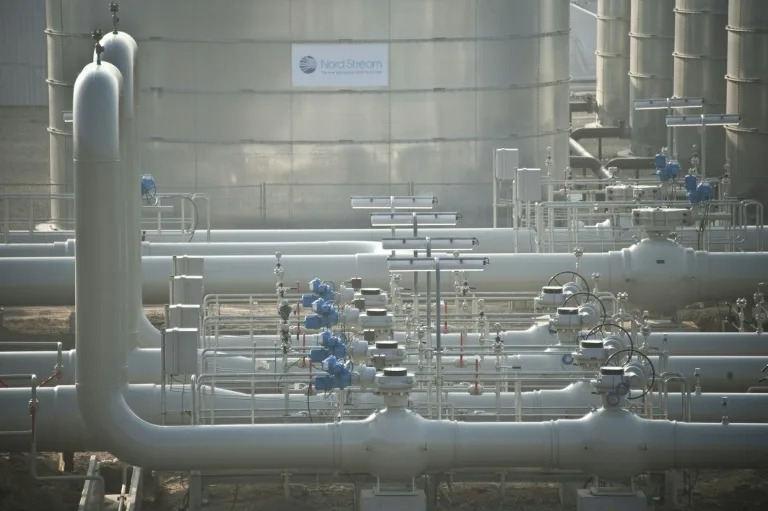
View of the Nordstream gas pipeline terminal -- the twin pipelines were sabotaged a year ago (JOHN MACDOUGALL)


The September 26, 2022 explosions that damaged the Nord Stream pipelines cut off a major route for Russian gas exports to Europe and fuelled geopolitical tensions already running high over Moscow's invasion of Ukraine.

But one year on, and despite investigations in three countries, the question of who was responsible for the brazen act of sabotage remains unanswered.

In the absence of hard evidence, different theories have emerged pointing the finger at Ukraine, Russia or the United States. All have denied involvement.

- What happened? -

Late last September, a series of underwater blasts ruptured three of the four pipelines that make up Nord Stream 1 and Nord Stream 2, spewing gas into the Baltic Sea.

Russian energy giant Gazprom had in August already halted flows through Nord Stream 1, the main conduit for Russian natural gas to Germany, amid disputes over the war in Ukraine.

The newly completed Nord Stream 2 twin pipelines never opened as Berlin pulled the plug on the project days before Russian troops entered Ukraine on February 24, 2022.

The 10-billion-euro ($10.6 billion) Nord Stream 2 had long been opposed by Ukraine, the US and eastern European countries who feared it would give Russia too much influence over Germany's energy security.

- Tight-lipped investigators -

Because the leaks occurred in their exclusive economic zones, Denmark and Sweden opened probes into the attack, as did Germany.

All three countries have kept a tight lid on their investigations, which analysts say is unsurprising given the potential diplomatic fallout of what they might uncover.

Sweden's public prosecutor Mats Ljungqvist has said the "primary assumption is that a state is behind it".

Sweden was now "in the final phase of the investigation", he told AFP this week.

German federal prosecutors searched a sailing yacht in January that may have been used to transport the explosives. They seized objects from the vessel and found traces of explosives.

They have refused to comment on media speculation that a team of five men and one woman chartered the "Andromeda" sailing yacht from Rostock port to carry out the operation.

"The identity of the perpetrators and their motives" remain the subject of ongoing investigations, the federal prosecution's office told AFP.

- Ships and CIA tip-offs -

Investigative journalists have been carrying out their own research to solve the Nord Stream whodunnit, leading to sometimes sensational -- if unconfirmed -- reports.

Dutch military intelligence warned the CIA of a Ukrainian plan to blow up the pipelines three months before the attack, Dutch broadcaster NOS and Germany's Die Zeit and ARD said in June. The Washington Post made a similar claim.

Ukraine's President Volodymyr Zelensky has repeatedly denied his country was behind the sabotage.

"I would never do that," he told Germany's Bild newspaper in June, adding that he would "like to see proof".

The New York Times wrote in March that US officials had seen intelligence indicating that a "pro-Ukrainian group" was responsible, without Zelensky's knowledge.

German media have focussed their attention on the "Andromeda", with reporters from Der Spiegel magazine and broadcaster ZDF recreating the journey they believe was made by the six-person crew.

According to their reporting, a forged passport used to hire the sailboat leads back to a Ukrainian soldier while the charter fee was paid by a company registered in Poland with ties to a woman in Kyiv.

However, Danish media have reported that a Russian naval vessel specialised in submarine operations, the SS-750, was photographed near the site of the blasts days before the attack.

A claim by US investigative journalist Seymour Hersh in February that the US was behind the attacks and that Norway assisted was dismissed as "fiction" by the White House.

- False flag? -

Experts have not ruled out a "false flag" operation by Russia, with clues deliberately placed to pin the blame on Ukraine.

Andreas Umland, an analyst at the Stockholm Centre for Eastern European Studies, sees Russia as "the most likely" culprit.

Any suspected involvement by Kyiv in an attack on Europe's energy infrastructure could threaten the support of allies, which would benefit Russia.

At the same time, the destroyed pipelines could help Gazprom avoid compensation claims for undelivered gas, even though the company displayed a reluctance to keep the taps open before the blasts.

Moscow may have sought "to kill two birds with one stone", Umland said.

The Kremlin has strongly denied responsibility.

Tuesday, June 06, 2023

CIA knew of Ukraine plan to blow up Nord Stream pipeline: report
Agence France-Presse
June 6, 2023

An aerial photo provided by the Danish Defense Command shows the Nord Stream 2 gas leak near Bornholm. Following the damage to the Nord Stream gas pipelines under the Baltic Sea, authorities in Germany and Denmark continue to search for the cause. Danish Defence Command/dpa

A European spy agency told the CIA it knew of a Ukraine special operations team plan to blow up the Nord Stream gas pipeline three months before explosions damaged the undersea system last year, the Washington Post reported Tuesday.

The newspaper cited US intelligence allegedly leaked earlier this year by a low-level US Air National Guard computer technician who had access to large amounts of highly classified materials.

The leaked documents indicated that an unnamed European intelligence body told the US spy agency in June 2022, four months after Russia invaded Ukraine, that Ukraine military divers reporting directly to the country's military commander-in-chief were planning the attack.

The Nord Stream 1 and 2 pipelines, built to carry natural gas from Russia to Germany, were rocked by underwater explosions on September 26, rendering them useless and cutting off a potential source of billions of dollars in earnings for Russia.

The apparent sabotage sparked a region-wide emergency as it cut off crucial supplies of energy for Europe just as the war had sent the price of oil skyrocketing.

Accusations were made against several countries including Russia, the United States and Ukraine, but all denied responsibility.

The Post, citing unnamed officials, said that after the Central Intelligence Agency learned of the alleged bombing plot, the United States told allies including Germany about it.

It said the original European intelligence on the plot made clear it was not a rogue operation, and that it was overseen by military chief General Valerii Zaluzhnyi without the knowledge of Ukraine President Volodymyr Zelensky.

The Post report is supported by information gathered by German investigators that a six-person team using false passports took a large sailboat from the German port of Rostock last September to undertake the operation.

The sailboat was rented by what appeared to be a front company.

According to German media reports last week, metadata from the emails used to rent a sailboat tie them to Ukraine, and the president of the front company also lives in Kyiv.

However, Danish media recently reported that a Russian navy vessel specialized in submarine operations was photographed near the location of the sabotage just before it happened.

© 2023 AFP