Showing posts sorted by relevance for query Opus Dei:. Sort by date Show all posts

Saturday, November 13, 2021

Women in Argentina claim labor exploitation by Opus Dei

By DÉBORA REY


1 of 6

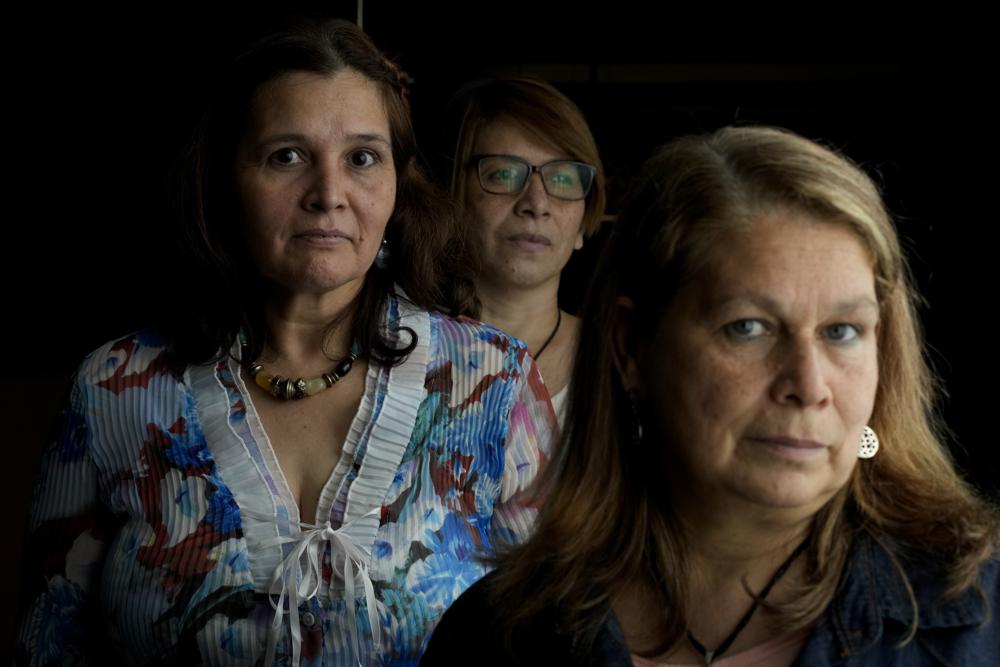
Lucia Gimenez, from left, Alicia Torancio, and Beatriz Delgado, former Opus Dei domestic workers, pose for a photo in Buenos Aires, Argentina, Thursday, Oct. 21, 2021. The women have filed a complaint against Opus Dei to the Vatican for alleged labor exploitation, and abuses of power and of conscience. (AP Photo/Natacha Pisarenko)


BUENOS AIRES, Argentina (AP) — Lucía Giménez still suffers pain in her knees from the years she spent scrubbing floors in the men’s bathroom at the Opus Dei residence in Argentina’s capital for hours without pay.

Giménez, now 56, joined the conservative Catholic group in her native Paraguay at the age of 14 with the promise she would get an education. But instead of math or history, she was trained in cooking, cleaning and other household chores to serve in Opus Dei residences and retirement homes.

For 18 years she washed clothes, scrubbed bathrooms and attended to the group’s needs for 12 hours a day, with breaks only for meals and praying. Despite her hard labor, she says: “I never saw money in my hands.”

Giménez and 41 other women have filed a complaint against Opus Dei to the Vatican for alleged labor exploitation, as well as abuse of power and of conscience. The Argentine and Paraguayan citizens worked for the movement in Argentina, Paraguay, Bolivia, Uruguay, Italy and Kazakhstan between 1974 and 2015.

Opus Dei — Work of God in Latin — was founded by the Spanish priest Josemaría Escrivá in 1928, and has 90,000 members in 70 countries. The lay group, which was greatly favored by St. John Paul II, who canonized Escrivá in 2002, has a unique status in the church and reports directly to the pope. Most members are laymen and women with secular jobs and families who strive to “sanctify ordinary life.” Other members are priests or celibate lay people.  IT IS A RIGHT WING CONSERVATIVE SECRET SOCIETY WITHIN THE CHURCH

The complaint alleges the women, often minors at the time, labored under “manifestly illegal conditions” that included working without pay for 12 hours-plus without breaks except for food or prayer, no registration in the Social Security system and other violations of basic rights.

The women are demanding financial reparations from Opus Dei and that it acknowledges the abuses and apologizes to them, as well as the punishment of those responsible.

“I was sick of the pain in my knees, of getting down on my knees to do the showers,” Giménez told The Associated Press. “They don’t give you time to think, to criticize and say that you don’t like it. You have to endure because you have to surrender totally to God.”

In a statement to the AP, Opus Dei said it had not been notified of the complaint to the Vatican but has been in contact with the women’s legal representatives to “listen to the problems and find a solution.”

The women in the complaint have one thing in common: humble origins. They were recruited and separated from their families between the ages of 12 and 16. In some cases, like Gimenez’s, they were taken to Opus Dei centers in another country, circumventing immigration controls.


They claim that Opus Dei priests and other members exercised “coercion of conscience” on the women to pressure them to serve and to frighten them with spiritual evils if they didn’t comply with the supposed will of God. They also controlled their relations with the outside world.

Most of the women asked to leave as the physical and psychological demands became intolerable. But when they finally did, they were left without money. Many also said they needed psychological treatment after leaving Opus Dei.

“The hierarchy (of Opus Dei) is aware of these practices,” said Sebastián Sal, the women’s lawyer. “It is an internal policy of Opus Dei. The search for these women is conducted the same way throughout the world. ... It is something institutional.”


The women’s complaint, filed in September with the Vatican Congregation for the Doctrine of the Faith, also points to dozens of priests affiliated with Opus Dei for their alleged “intervention, participation and knowledge in the denounced events.”

The allegations in the complaint are similar to those made by members of another conservative Catholic organization also favored by St. John Paul II, the Legion of Christ. The Legion recruited young women to become consecrated members of its lay branch, Regnum Christi, to work in Legion-run schools and other projects.


Those women alleged spiritual and psychological abuse, of being separated from family and being told their discomfort was “God’s will” and that abandoning their vocation would be tantamount to abandoning God.


Pope Francis has been cracking down on 20th-century religious movements after several religious orders and lay groups were accused of sexual and other abuses by their leaders. Opus Dei has so far avoided much of the recent controversy, though there have been cases of individual priests accused of misconduct.

“We do not have any official notification from the Vatican about the existence of a complaint of this type,” Josefina Madariaga, director of Opus Dei’s press office in Argentina, told the AP. She said the women’s lawyer informed the group last year of their complaints about the lack of contributions to Argentina’s social security system.

“If there is a traumatic experience or one that has left them with a wound, we want to honestly listen to them, understand what happened and from there correct what has to be corrected,” she said.

She added that all the people currently “working on site are paid,” adding that some 80 women currently work for Opus Dei in Argentina.

However, she said, “in the 60′s, 70′s, 80′s, 90′s, society as a whole dealt with these issues in a more informal or family way. ... Opus Dei has made the necessary changes and modifications to accompany the law in force today.”

Beatriz Delgado, who worked for Opus Dei for 23 years in Argentina and Uruguay, said she was told “that I had to give my salary to the director and that everyone gave it. ... It was part of giving to God.”

“They convince you with the vocation, with ‘God calls you, God asks this of you, you cannot fail God.’ ... They hooked me with that,” she said.

So far, the Vatican has not ruled on the complaint and it’s not clear if it will. A Vatican spokesperson did not immediately respond to a request for information.

If there is no response, the women’s legal representatives say they will initiate criminal proceedings for “human trafficking, reduction to servitude, awareness control and illegitimate deprivation of liberty” against Opus Dei in Argentina and other countries the women worked in.

Argentine law sanctions human trafficking with prison sentences of four to 15 years. The statute of limitations is 12 years after the alleged crime ceases.

“They say, ‘we are going to help poor people,’ but it’s a lie; they don’t help, they keep (the money) for themselves,” Giménez said. “It is very important to achieve some justice.”

Thursday, July 09, 2026

Vatican Excommunicates Right Wing Fundamentalists in First Test of Leo’s Papacy


 July 9, 2026

On July 2, 2026, the Vatican announced formally that the Society of St. Pius X (SSPX), a fundamentalist sect, had entered into schism by consecrating four Bishops without authorization from Pope Leo XIV, thereby incurring latae sententiae, or automatic, excommunication upon themselves. After months of intransigence in the face of outreach from Rome, SSPX carried through with plans it had announced initially last February, a highly-symbolic act timed to memorialize another instance, nearly four decades earlier, when their right wing founder Archbishop Marcel Lefebvre had incurred the same penalties for the same actions.

This was the first overt challenge to Leo’s papacy and his authority over the Church. Since his election nearly two years ago, right wing forces have been congregating to form an opposition bloc.

For instance, the illicit consecration ceremony SSPX held in Switzerland last Wednesday counted in attendance members of several right wing Italian political parties and various individual operatives were likewise attached to the ceremony. Steve Bannon has previously spoken highly of the sect on his podcast. The election of Robert Prevost as Pope Leo XIV has brought to the surface a long-simmering divide between progressive and conservative Catholics, one underwritten by immense amounts of money. It provides key insights into the Christian Nationalist psyche of people like Vice President J.D. Vance and the conservative majority of the Supreme Court.

The most temporal manifestation of this rivalry arose when the late Pope Francis implemented financial oversight reforms in the Vatican Bank, a longtime money laundering outlet for organized crime, authoritarian dictators, and the CIA. This included closure of suspicious accounts and revising the rules of eligibility to become a depositor. This in particular was a point of antagonism for the late sex trafficker Jeffrey Epstein, whose emails reveal communications with Bannon that sought to instigate a coordinated campaign against Pope Francis. One can imagine that Epstein either used the Vatican Bank or relied on those who did so to finance both licit and illicit operations in Eastern Europe. The email cache makes evident that Epstein trafficked women from the region and so it is possible to envision the utility of a Vatican Bank account as a source of clean and easily-accessed money.

The confrontation with the SSPX was never about the hobby-horses of the Latin Mass, or debates over the Second Vatican Council, or the meaning of the word “Tradition” in Catholic theology, it was a bald-faced act of insubordination trying to test limits. For example, the Priestly Fraternity of Saint Peter, an organization in full communion with Rome, offers the Latin Mass that SSPX insists would otherwise be lost were it not for these unauthorized consecrations. What truly laid behind the confrontation with SSPX was a power grab by those who subscribe to a strand of deeply-regressive and misogynist Catholicism that grants succor to various neo-fascist right ideologues in the European Union and the United States.

The next manifestation of this confrontation will be when Leo tries to reform the infamous Opus Dei, likewise known for its own litany of human rights abuses and cult-like practices. (Check out this interview with Gareth Gore for further insights.)

It has long been suspected that several Supreme Court Justices, such as Alito and Roberts, either belong to the group or at least receive ministry from an Opus Dei chapel that is located quite close to the Court building. Known for using outdated practices like corporal mortification of the flesh and other Medieval extremities, Leo has indicated his intention make the group more accountable to local Bishops, who frequently report friction with Opus Dei groups in their Dioceses. This fundamentally changes the status Pope John Paul II granted them as a Personal Prelature, a group allowed to function with complete autonomy and only beholden to the internal leadership, a near-vigilante status in theological terms that can and does enable tremendous abuse of power.

At the heart of Opus Dei lies a warped revision of Catholic theology. It embraces the Protestant Prosperity Gospel and rejects not just a preferential option for the poor but the basic tenet of the Church’s millennia-long ministry to the impoverished. Wealthy and elite members of Opus Dei are treated regally in their facilities by a coterie of low-income workers called numenaries, many from the Global South, who experience extraordinary hyper-exploitation. In spite of Christ’s claim about camels and needles, Opus Dei seems certain that the Kingdom of God is Within Your Bank Account, a religion every Libertarian dreams of.

This is not an unforeseen development given the harsh repression of Latin American Liberation Theology by John Paul II in the 1980s. As Carl Bernstein reported in his 1992 Time Magazine story ‘The Holy Alliance,’ the Polish pontiff worked closely with the Reagan administration to support the Solidarność labor union in the homeland of His Holiness, collaborating with the CIA and AFL-CIO to import technology and materiel necessary for its survival under martial law by the Communist government when it experienced extended repression. According to Gore’s reportage, the Pope envisioned deploying Opus Dei missionaries behind the Iron Curtain to support the Solidarność faction backed by Lech Walesa, part of the logic that governed his decision to grant them the unique and extraordinary status of Personal Prelature.

In this period, Reagan appointed the conservative Catholic businessman William Casey as Director of Central Intelligence, where he oversaw operations that supported the Polish while simultaneously backing the forces repressing the Latin Americans. Fr. Ernesto Cardenal, a Jesuit who served as Minister of Culture for the Nicaraguan Sandinista government, was publicly shamed and sanctioned in 1984 by the Pope when the Vatican plane landed on the tarmac. By contrast, there never were penalties for anti-government priests in Poland, instead their efforts were validated by the Pope. In August of that year, Cardinal Joseph Ratzinger, later Pope Benedict XVI, published his ‘Instruction on Certain Aspects of the ‘Theology of Liberation,’’ solidifying the Vatican stigma of heresy upon the entire movement in a way that enabled Contra death squads. Whether a calculated outcome or a true accident of history, John Paul effectively and successfully horse-traded Nicaragua for Poland. By anathematizing Liberation Theology so publicly and blatantly, shaming and shunning its membership as ‘Marxist’ heretics, the Vatican removed whatever shield of protection that was traditionally accorded the Church and clergy/religious by the ruling elite. The oligarchic and latifundia classes, previously put on the defensive by a social movement widely embraced by the faithful, suddenly found themselves granted a powerful tool necessary for the construction of a white terror. The radical base communities were massacred, nuns and priests were murdered, and the rich were empowered once again.

And all along, watching on the sidelines, was Fr. Robert Francis Prevost. He was an Augustinian in Chulucanas, Peru, during a period when Americans were being killed by Contras, arriving in 1985 after completing his seminary studies, where he had participated in anti-nuclear proliferation protests. What and how he thinks about those violent early days of his priesthood remains to be seen. But it is impossible to ignore the historic confluence of forces that bring about these new developments.

First published on Substack.

Andie Stewart is a documentary film maker and reporter who lives outside Providence.  His film, AARON BRIGGS AND THE HMS GASPEE, about the historical role of Brown University in the slave trade, is available for purchase on Amazon Instant Video or on DVD.

Monday, September 28, 2020

 Christianity and the Global Mystical Societies
September 25, 2020


By Tunji Olaopa NIGERIA

It should be clear to my readers by now, that my dimensioned exploration of Christianity in this series is a journey propelled by an intellectual search for meaning on defining issues that tend to create contention in conversations on the Christian faith and the growth of the Church of Christ. And this had entailed exploring domains of knowledge that ordinarily will be considered weird, and this contribution is one of such. And so, I find myself contending with the fact that, at its core, Christianity is a mystical religion. It indeed embodies several mystical elements that gives it an aura of curiosity and awe. It was also one of the bases for its persecution in time past. It was difficult, for instance, for many non-adherents to come to terms with the idea of the trinity, of the three-in-one God, or of the mystery of salvation. It was even more baffling to contemplate the idea of the Holy Communion and what it signifies. The Bible records, in Matthew chapter 26, and verse 26, Jesus instructed to eat the bread and drink the wine as indicators of his body and his blood. Catholics, in taking the Eucharist, believe that the bread and the wine signify the literal body and blood of Christ; the water and wine are transubstantiated when eaten into the body and blood of Jesus.

One can imagine the shock-effect of this dogma on a cultural context like the ancient Roman society. Under Emperor Diocletian and Galerius, Christians faced enormous persecution, especially during the Great Persecution of 303, when they were accused of cannibalism which the belief in the Eucharist generated. Christianity’s relationship with mysticism and the mystical experience began with Catholicism. One of the sources of the mystical union with God is in the supposed transformation of the Eucharist into the body and the blood of Christ. The mystical is so easy to relate to any religion, given the dynamics of hidden rituals and the relation with the mysterious which is what makes religion essentially what it is. Scriptures, for instance, have often been seen as not having literal meanings. When the Bible says, in Deuteronomy 29:29, that “secret things belong to God,” it alludes to the mystical dimension of scriptures that must be ferret out for understanding.


The Gnostics, of the first century AD, emphasized gnosis—or personal spiritual knowledge and experience of the Divine, over tradition and authority of the Church. This rendering of the idea of the mystical relationship with God brings Christianity very close to Greek philosophy, and especially the emergence and consolidation of Neoplatonism, and the understanding of the beauty of the human contemplation of the Logos or the Word. This is the foundation of the Gospel according to John: In the beginning was the Word. From Clement of Alexandria and his mystical theology, it was a short distance to the development of monasticism and asceticism, the experience in the desert that is supposed to mark a great turning point in the soul’s union with God through the defeat of the self’s demons. While the pre-13th century Christian mysticism denoted Christ as the medium in the union between God and the soul, the 13th century mystical writings, especially of Meister Eckhart, obviated the need for such a medium—God and the soul becomes indistinguishably one in union. This mysticism declared irrelevant the significance of religious life and practices, and rather advocated a radical aloofness that is a precursor to achieving the presence of God.

It is easy to see how Eckhart’s mysticism would serve as heretical to the teaching of the church about the connection between the sacraments the church offers, and salvation. Meister Eckhart was therefore condemned by the Pope in 1329. And the 14th century was the beginning of the Church’s acute reaction, through the Council of Vienne, against mysticism. But by the twentieth century, Christianity’s connection with the mystical has gone beyond the theological to the historical, with regard to several mystical societies that were, rightly or wrongly, regarded as having some intimate relationship with Christianity. Almost everyone is familiar with the Reformed Ogboni Fraternity (ROF) in Nigeria, and the Rosicrucian Order in the West. Both are in some sense connected or seek to be connected with Christianity as a defining brand. Indeed, both emerged from some understanding of what Christianity is and how it could be reformed or integrated with some theological or cultural beliefs. The Ogboni was a renowned traditional secret society in the traditional Yoruba society, and yet the ROF chose that framework as the core of its rehabilitation of African Christianity.

The case of Rosicrucianism is even more instructive. It emerged, in the 17th century, around the figure of a mystic philosopher and doctor, Christian Rosenkreuz (where the Order derived its name, Rosy-cross), and his knowledge of an esoteric order and knowledge, derived from Christian mysticism and even the Judaic Kabbalah. The Rosicrucians believed that the mysteries are what Jesus referred to in Matthew chapter 13 and verse 11 (“…it has been given to you to know the mysteries of the kingdom of heaven”). Similar to the vision, in Revelation, about the twenty-four elders kneeling before the throne of God, one of the iterations of the vision behind Rosicrucianism is that of twelve enlightened and exalted beings that surround a thirteenth who is Rosenkreuz. The mission of these beings, as well as all those who would accept the Order and its message, is to reform the entire mankind through the unveiling of the inner spiritual capacities which will allow humans to live in altruism.

However, the consciousness of these mystical societies was awakened most shockingly by Dan Brown, and his popular fictions, from the Da Vinci Code to Angels and Demons. From these popular novels, the world seemed to wake up to the reality of other frightening effusion of Christianity like the Illuminati, the Opus Dei, the Freemasons, and the Knights Templar. All these societies are often represented as being the secret custodians of gnostic knowledge about Christianity or certain hidden mysteries in the word of God. And around them have sprung up all manners of conspiracy theories around, for instance, the Holy Grail, the shroud that wrapped Jesus after his death, or a bit of the cross). Their relationship with Christianity is however caught in the conflicting dynamics of history and speculation that is very difficult to unravel.

One fundamental fact about these societies and orders is that they were generated by presumed or real connectedness with Christianity as grand and compelling growing brand. Most of them emerged by reason of historical circumstances or theological dynamics. The Knight Templars, for instance, came into existence mainly as a result of the Crusades which popes and kings in Europe convoke between the 11th and the 13th centuries. The objective of the Crusades was to dislodge Islam from the Holy Land. By the end of the fourteenth century, the Templars’ reputation as a monastic order and a military wing was at an end. While Pope Clement revoked its recognition by the Catholic Church in 1312, it was brutally suppressed by King Philip IV of France. Part of King Philip’s excuse in suppressing the Templars has to do with their secret initiation ceremony, and the distrust it bred. And this led to further conspiracy as to its ancient ties with the establishment of Freemasonry. The same can be said about the Opus Dei. Founded by Josemaria Escriva de Balaguer, a Catholic priest, Opus Dei came into existence after the priest claimed to have seen a vision of “opus dei” (or “Work of God”). It grew substantially after it received papal commendation in 1947 and 1950. However, despite the growth and strength of the Order, its papal approval and the canonization of Escriva, Opus Dei has not been able to escape the speculation about its mystical antecedents, and the danger it poses to the Church. Again, its secret recruitment dynamics fueled the rumor about its cult status.

Perhaps the most famous of all the global mystical societies is the Illuminati. Unlike the other societies, the Illuminati is the one famous group without a fundamental connection to the Church but to Christianity. However, like others, from the Reformed Ogboni Fraternity to the Opus Dei, the organizational dynamics of the Illuminati is equally shrouded in secrecy. Essentially, like the others too, the original Illuminati recruited Christians and specifically excluded Jews and pagans. Founded in May, 1776 in Bavaria by Adam Weishaupt (hence the society’s original name of the Bavarian Illuminati), the Illuminati’s original objective, paradoxically, was meant to serve the purpose of pushing the boundaries of the Enlightenment ideals, and standing against superstitions, injustices, clerical excesses. Weishaupt was a professor at a university run by Jesuits who waged war against non-clerical members of staff. This was one of his motivations for forming the group. The key to understanding the organizational framework of the Iluminati lies in the fact that Weishaupt modeled his own society on the ranking and grading systems employed by the Freemasons, considered to be the largest secret society in the world. Both are significantly anticlerical, and even though both have been persecuted by the Church, they both draw on Christians and Christian values as major parts of their frameworks.

The critical question this reflection instigates is: why was it possible for Christianity to generate so much mystical and secret societies that flourished under its umbrella or took up its values and ethos (before some were actively suppressed)? One immediate answer, as we hinted at the beginning, is that Christianity itself lends itself to mystical interpretations of its mysteries. Christianity itself is founded on a fundamental dynamic of relationship between humans and God, the ultimate mystery. And this divine relationship is further made complex by series of mysteries, dogmas and sacraments that are meant to facilitate the capacity of humans to achieve oneness with God. We can then conclude that while there is a specific essence of Christianity—a set of minimum spiritual and dogmatic imperatives—no one can adequately monitor the heretical and fundamentalist interpretations that they could be subjected to. The point remains that humans can go to any extent to find God.

*Prof. Tunji Olaopa is a retired Federal Permanent Secretary & Directing Staff, National Institute for Policy and Strategic Studies (NIPSS), Kuru, Jos (tolaopa2003@gmail.com tolaopa@isgpp.com.ng)

NOW YOU UNDERSTAND WHY CONSPIRACY THEORIES ARE THE NORM IN NIGERIA AND WEST AFRICA

Friday, January 12, 2024

U$A

DEI efforts are under siege. Here’s what experts say is at stake

Story by By Nicquel Terry Ellis and Catherine Thorbecke, CNN  • 

When the murder of George Floyd by Minneapolis police set off a wave of racial unrest across the country in 2020, corporate America responded swiftly with renewed and public commitments to diversity, equity and inclusion (DEI).

Major companies created new DEI positions or expanded teams dedicated to DEI and the phrase became a buzzword across the business landscape. Many corporate leaders pledged to hire more people of colorremoved branding perceived to be racist and invested in historically Black colleges

At the time, the efforts were largely met with public support, amid a so-called “racial reckoning” that laid bare a slew of systemic inequities in American society, including the workplace.

But nearly four years later, the very public ousting of Harvard’s first Black woman president earlier this week has led to a new firestorm of debate about DEI efforts in corporate America and beyond.

While Claudine Gay’s resignation from Harvard was linked to a plagiarism scandal and ongoing controversy over a congressional hearing on antisemitism last month, her departure inspired some critics to take aim at what they perceive as a broader failing of DEI efforts.

Among the most vocal of these critics pushing back against DEI is billionaire investor Bill Ackman, who in the wake of Gay’s departure posted a 4,000-word opus on X, the platform formerly known as Twitter, that blasted DEI as “inherently a racist and illegal movement in its implementation even if it purports to work on behalf of the so-called oppressed.”

Ackman’s lengthy thesis was later retweeted by billionaire Tesla and SpaceX CEO Elon Musk, who now owns the social media platform.

“DEI is just another word for racism. Shame on anyone who uses it,” Musk wrote in his post sharing Ackman’s screed on Wednesday. In a follow-up post, the world’s wealthiest person doubled down, adding, “DEI, because it discriminates on the basis of race, gender and many other factors, is not merely immoral, it is also illegal.”

As some of the most powerful business leaders in America level some of the loudest attacks yet against DEI, experts in the field insist that the term is widely misunderstood and unfairly weaponized by critics. They tell CNN DEI was created to build workplaces that more broadly reflect all of America and to foster safer, more inclusive work environments for people of all races, genders, sexual orientations and religious identities.

And they argue that the people fighting these efforts now risk alienating both employees and customers.

When DEI disappears

DEI initiatives in corporate America have long faced skepticism from both sides of the political aisle – with some voices on the left blasting these efforts as corporate window dressing that focuses more on publicity than enacting real change for people of color in the workplace.

Others on the right, meanwhile, have taken aim at these efforts, which they say unfairly disadvantage White workers.

Daniel Oppong, founder of The Courage Collective, a consultancy that advises companies on DEI, said the backlash toward DEI is unsurprising because other efforts to advance social justice in the US have historically been met with resistance.

What’s getting lost in the conversation, Oppong said, is the reason DEI was introduced to corporate America in the first place – because marginalized communities did not always have equal opportunities for jobs or feel a sense of belonging in corporate settings.

“That is the genesis of why some of these programs exist,” he said. “It was an attempt to try to create workplaces where more or all people can thrive.”

Shaun Harper, a USC professor and founder and executive director of the USC Race and Equity Center, said there are many misconceptions about DEI. It wasn’t, as some critics have claimed, created to exclude White people or White men from the workforce, he said.

Harper said many companies with DEI offices offer training that teaches employees how to unlearn stereotypes against certain groups, respect each other’s differences, and hire people of color without overlooking them because of personal bias.

“It’s not all divisive,” he said. “People can learn the skills that are needed to deliver on diversity and inclusion values.”

A pendulum swing

After a DEI hiring spree that began in late 2020, data suggests some businesses are now in fact reversing course on their efforts.

The most recent data on hiring from the job site Indeed shared with CNN Friday illustrates a pendulum swing in postings for DEI-related roles on the site.

After a more than 29% uptick in job postings with DEI in the title or description between November 2020 and November 2021, the data shows a more than 23% decline in the amount of job postings with “DEI” in the title or description between November 2022 and November 2023.

Corporate leaders who dismantle DEI programs risk creating a hostile work environment, Harper said.

“Leaders who are pulling the plug on DEI are doing so without understanding the long-term exposure to harm,” he said. “Doing away with DEI makes companies more – not less – susceptible to lawsuits, to costly levels of turnover among employees, reputational harm not only among employees but also among customers and clients and prospective partners who will refuse to work with a place because it’s such a mess.”

Separate data from the Pew Research Center published last May indicates deep divides in Americans’ attitudes towards DEI at work based on demographic and political lines.

While the Pew data finds that a majority of employed American adults (56%) say focusing on increasing DEI at work is a good thing, it also notes that a relatively small share of workers place a lot of importance on diversity at their workplace. Only about three in 10 respondents say it is extremely or very important to them to work somewhere with a mix of employees of different races and ethnicities or ages, according to Pew.

Moreover, the survey found 78% of Democratic and Democratic-leaning workers say focusing on DEI at work is a good thing, compared with just 30% of Republican and Republican-leaning workers.

The data also shows American workers have disparate views on how much attention their employers are paying to DEI. About half of the workers (54%) surveyed by Pew said their company or organization pays the right amount of attention to increasing DEI, while 14% say their employer pays too much attention and 15% say their employees pay too little attention.

The political and cultural divide was also reflected in the responses to posts from Ackman and Musk. Mark Cuban, billionaire businessman and minority owner of the Dallas Mavericks, pushed back on Musk’s posts in a thread defending DEI as good for businesses and their workers.

“The loss of DEI-Phobic companies is my gain,” Cuban wrote. “Having a workforce that is diverse and representative of your stakeholders is good for business.”

Cuban is far from alone. Hundreds of C-suite executives in the United States said their organizations remained committed or increased diversity, equity and inclusion efforts since 2022, according to a survey published this month by the employment law firm Littler.

More than half of the executives who answered the survey agreed that backlash toward corporate DEI efforts has increased since the Supreme Court overturned affirmative action in June, but 69% said it has not caused their organization to change its approach to DEI efforts.

Still, Harper said the recent backlash against DEI, along with the exodus of people in DEI roles at major companies in the last two years, demonstrates that many diversity commitments in 2020 were short-lived.

“Many companies jumped on the bandwagon at the moment because it was fashionable and en vogue to do so,” Harper said.

Oppong said he feels companies are experiencing “diversity fatigue” because their 2020 initiatives were not sustainable.

“Part of the challenge is that a lot of folks in chief DEI office roles, they were not set up for success in the first place,” he said, adding that colleagues in the field have told him they’ve had to fight for funding for their teams.

“That just shows the surface level investment in the work.”

Still, Oppong said, as the US becomes more diverse, so are the consumers for many major companies.

“The consequence is you’re not going to effectively serve the shifting demographics of the (country) and it reduces your customer base,” he said.

CNN’s Nicole Chavez contributed to this report.

For more CNN news and newsletters create an account at CNN.com

Saturday, March 28, 2026

Opus Dei: Spain under influence of ultra-conservative Catholic movement
SECRET SOCIETY


27/03/2026 - 
12:31 min


The ultra-conservative Catholic organisation Opus Dei was founded a century ago in Spain. Today, it's an international movement with around 90,000 members. In its home country, it has managed to infiltrate all spheres of modern society, from schools to hospitals. Despite serious allegations against it, Opus Dei remains a powerful force in Spain. 
FRANCE 24's Maude Petit-Jové, Mathilde Lopinski, Emile Roger and Sarah Morris report.

Friday, May 29, 2020

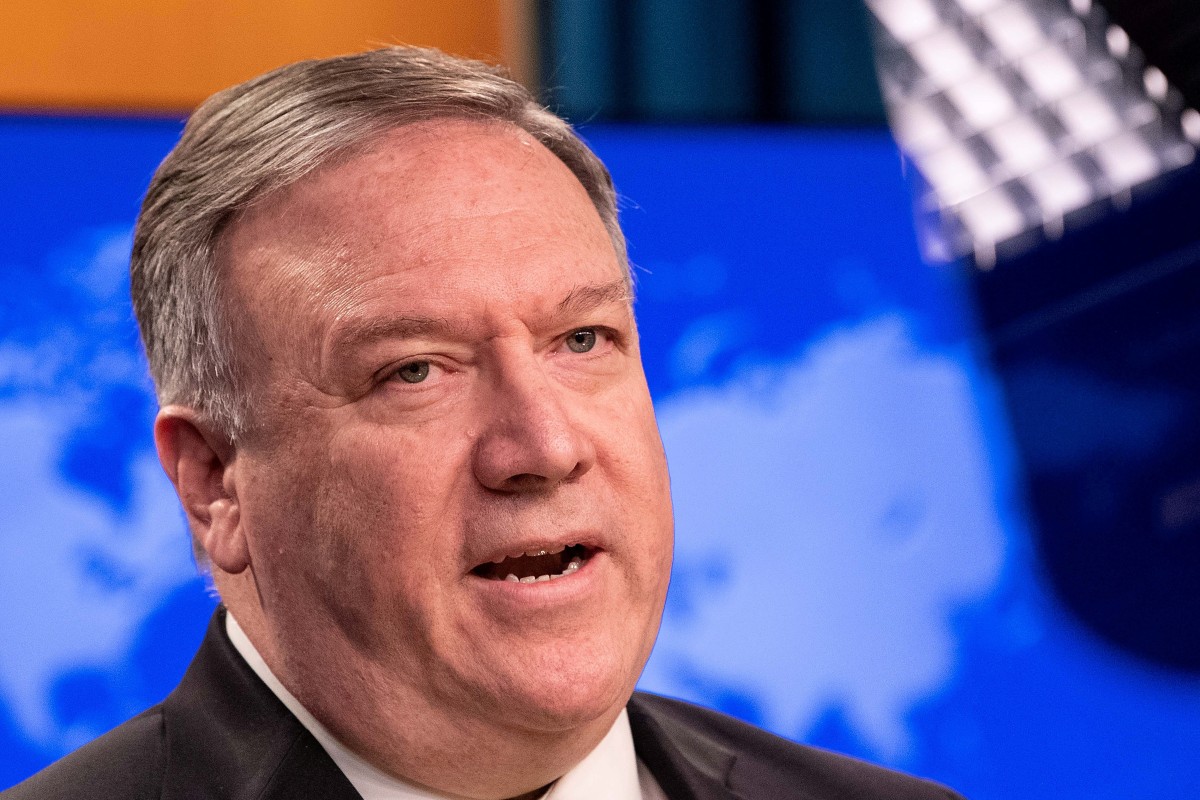
JINGOIST ANTI CHINESE, RACISM FROM THE DROOLING LIPS OF AGENT OF OPUS DEI POMPEO

Chinese students ‘shouldn’t be in our schools spying’, US Secretary of State Mike Pompeo says

‘We’re taking seriously the threat of students who come here who have connections deeply to the Chinese state,’ politician tells Fox News

US needs to act against the ‘tyrannical regime’ of the Chinese Communist Party, and President Trump is ready to take on that challenge, he says


Linda Lew Published: 29 May, 2020


US Secretary of State Mike Pompeo says the US is ready to respond to the problem of Chinese students engaging in espionage in America. Photo: Reuters

US President Donald Trump is preparing to “take on” the problem of Chinese students engaging in espionage in America, US Secretary of State Mike Pompeo said on Thursday.

“We’re taking seriously the threat of students who come here who have connections deeply to the Chinese state,” he said in an interview with Fox News.

“They shouldn’t be here in our schools spying.”

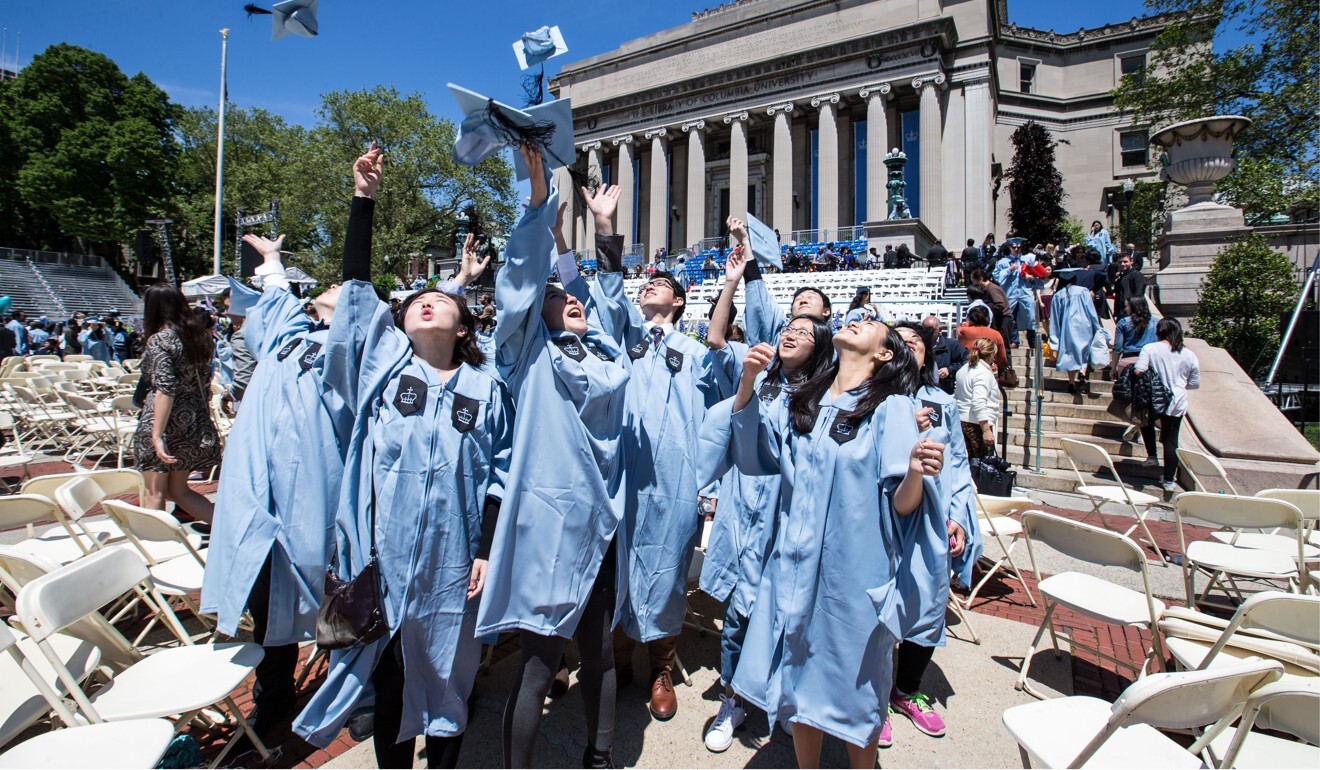
Pompeo was responding to questions about a report published by The New York Times on Thursday that the US was planning to revoke the visas of Chinese students and researchers who have direct links to Chinese universities affiliated to the country’s military.

While he declined to elaborate, Pompeo said Trump would hold a press conference on Friday at which it was likely he would make an announcement on the issue.

“We know we have this challenge,” he said. “President Trump, I am confident, is going to take that on.”

He dismissed suggestions that targeting Chinese students and academics might be seen as racist, but said the US needed to act against the “tyrannical regime” of the Chinese Communist Party, likening the situation to the tense relationship the US had with the former Soviet Union during the Cold War.

At a press conference on Friday, Chinese foreign ministry spokesman Zhao Lijian also referred to a Cold War mentality, accusing the Trump administration of racism and the “political repression” of Chinese students.

Pompeo dismissed suggestions that targeting Chinese students and academics might be seen as racist. Photo: Xinhua

Pompeo’s comments came after a group of three US lawmakers on Wednesday proposed a bill that would effectively 
bar students from the Chinese mainland from receiving visas to study STEM (science, technology, engineering and mathematics) subjects in America. The restriction would not apply to students from Taiwan and Hong Kong.

“The Chinese Communist Party has long used American universities to conduct espionage on the United States,” said Republican Senator Tom Cotton, one of the sponsors of the bill and a known critic of Beijing.

“What’s worse is that their efforts exploit gaps in current law. It’s time for that to end,” he said. “The Secure Campus Act will protect our national security and maintain the integrity of the American research enterprise.”

The proposed restrictions on Chinese students come amid a spiralling political spat between Washington and Beijing.

Earlier this month, the US imposed 90-day visa limits on mainland Chinese journalists working in America for non-US outlets, while in March, China revoked the press credentials for American journalists from three major US newspapers and declared five US media outlets to be foreign government functionaries.
Both sides’ moves have been criticised for threatening press freedom at a time when objective and independent coverage of the Covid-19 pandemic is critical.

“Beijing has barred Chinese citizens from working for foreign news outlets in China for decades,” Mia Li, a former reporter with the Beijing bureau of The New York Times, said in an article published by Chinese Storytellers, an online newsletter by non-fiction writers.

It was a “deliberate effort to keep the Western press from gaining meaningful access”, she said.

It is astonishing to see the US helping Beijing achieve that very goal while undermining its own values and soft power,” said Li, who is now a research scholar at Yale Law School’s Paul Tsai China Centre.

Additional reporting by Catherine Wong