Showing posts sorted by date for query YEMEN. Sort by relevance Show all posts

Thursday, June 11, 2026

Israel to Blame for 56% of 22,600+ Civilians Killed by Explosive Weapons Globally Last Year

“What is particularly alarming is that this harm has become persistent across conflicts worldwide, risking the normalization of civilian suffering on a massive scale,” said the report’s lead author.


Palestinians try to inspect and rescue the bodies of victims from a burning vehicle bombed by Israeli forces despite a ceasefire in Gaza City on November 22, 2025.
(Photo by Anas Zeyad Fteha/Anadolu via Getty Images)


Jessica Corbett
Jun 10, 2026
COMMON DREAM

While the overall number of civilians killed by explosive weapons decreased by 21% last year, largely due to Israel scaling back attacks on the Gaza Strip and Lebanon in response to ceasefire deals, “the majority—56%—of all global civilian fatalities in 2025 could be attributed to Israeli armed forces, most of which occurred in Palestine,” according to an annual report released Wednesday.

The report is the latest publication from the Explosive Weapons Monitor, a research initiative of the International Network of Explosive Weapons, whose members include nongovernmental organizations around the world such as Action on Armed Violence, Center for Civilians in Conflict, Human Rights Watch, Humanity & Inclusion (HI), PAX, and Save the Children.

Based on data from Armed Conflict Location & Event Data as well as Insecurity Insight, the monitor found that there were at least 22,616 civilian fatalities from explosive weapons across 65 countries and territories last year.

In addition to Lebanon and Palestine, the Democratic Republic of Congo, Ethiopia, Iran, Iraq, Myanmar, Somalia, South Sudan, Sudan, Syria, Ukraine, and Yemen were “heavily impacted,” the publication says. Countries’ armed forces were responsible for the vast majority—85%—of all incidents that reportedly affected civilians or civilian infrastructure last year.

“The number of attacks in which explosive weapons affected humanitarian aid operations, aid workers, and camps increased by 52%,” to 2,541, last year—and while they were documented in 17 countries and territories, “about 90% of all incidents were recorded in Palestine,” the report notes.

Attacks on education increased by 64%, to 1,416; they occurred in 27 places, but were most common in Myanmar, Palestine, and Ukraine. The report also highlights continued attacks on healthcare facilities and workers (1,272 incidents in 22 places), and on food and water systems (1,082 incidents in 15 places).

“Every destroyed school, hospital, market, water system, or humanitarian convoy represents far more than damaged infrastructure—it represents opportunities lost, futures disrupted, and communities pushed further from recovery,” said Alma Taslidžan, HI’s disarmament advocacy manager, in a statement.

“Long after the explosions end, civilians continue to live with the consequences of disrupted healthcare, interrupted education, damaged livelihoods, and the daily challenge of rebuilding their lives,” Taslidžan emphasized. “For many, the consequences of explosive weapons become part of everyday life and suffering for years to come.”


The report argues that “it remains a critical humanitarian priority” to bring the 2022 Political Declaration on Strengthening the Protection of Civilians from the Humanitarian Consequences Arising From the Use of Explosive Weapons in Populated Areas into greater effect.

The publication also calls out eight countries—Cambodia, Kenya, Morocco, Nigeria, Somalia, South Korea, Turkey, and the United States—that endorsed the declaration but whose armed forces reportedly used explosive weapons that caused civilian harm in 2025.

“The devastating impact of explosive weapons on civilians is both foreseeable and preventable. Yet across numerous conflicts, their continued use has entrenched a pattern of civilian harm that is increasingly treated as routine rather than exceptional,” said Katherine Young, the report’s lead author and the monitor’s research and monitoring manager, in a statement.

“When explosive weapons are used in populated areas, civilians suffer,” Young stressed. “What is particularly alarming is that this harm has become persistent across conflicts worldwide, risking the normalization of civilian suffering on a massive scale.”

The release of the report comes amid renewed Israeli attacks on Lebanon—which intensified after the United States and Israel launched an illegal war on Iran in February, and have continued despite a new ceasefire agreed to in April—as well as on Palestinians in Gaza and the occupied West Bank.

“This weekend, eight children were reported killed and a further 17 injured in five different locations in the Gaza Strip, while in the West Bank, a 7-month-old boy died after being shot by Israeli forces in the Tel Rumeida area of Hebron,” said Edouard Beigbeder, the United Nations Children’s Fund (UNICEF) regional director for the Middle East and North Africa, on Wednesday.

“We cannot let this become the new normal—children losing their lives to violence should cause global outrage and must be condemned at every level,” he continued. “UNICEF calls on the Israeli authorities to take decisive action to protect all Palestinian children. Authorities must ensure transparent, credible, and robust investigations, as well as accountability whenever children are killed or maimed.”

Since the Hamas-led October 7, 2023 attack on Israel, Israeli forces have slaughtered at least 72,991 Palestinians in Gaza—an assault widely condemned as genocide. That includes 981 people killed since the ceasefire reached last October, according to local health officials. Israeli attacks on Lebanon have left thousands more dead, including at least 3,666 since early March, per the Lebanese Ministry of Public Health.


Small Boat Trades Gunfire with Cargo Ship off Yemen as Incidents Continue

warship escorting tanker
EUNAVFOR Atalanta reports increased efforts while also warning ships to maintain security and stay as far as possible away from the coast (Atalanta)

Published Jun 10, 2026 4:14 PM by The Maritime Executive


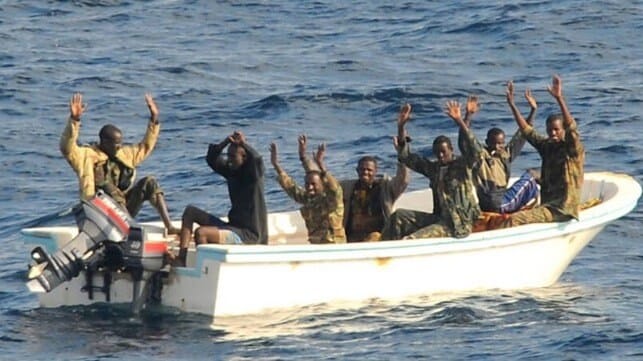
An incident took place approximately 88 nautical miles from Balhaf, Yemen, in the Gulf of Aden that was likely an attempted piracy. However, it also raised concerns after the Houthis at the beginning of the week threatened to renew their attacks on ships associated with Israel.

The master of an unnamed cargo ship reported the incident to UK Maritime Trade Operations. The details included that a small boat with six armed individuals had approached the vessel while it was underway. Some reports said the small boat attempted to hail the cargo ship before approaching.

The armed security team on the cargo ship traded small arms fire with the boat. The small boat quickly disengaged and turned away from the cargo ship.

The position is to the north of the prime area that MSCIO and others have repeatedly warned of an increased risk of piracy, primarily along the northeastern coast of Somalia, although at least one vessel was seized near Yemen and taken toward Somalia. In April, three vessels were seized and held along the Somali coast.

Today’s incident came just four days after two other reports were sent to MSCIO. On June 6, approximately 100 nautical miles northwest of Bosaso, Somalia, MSCIO was advised of two separate suspicious approaches involving small craft. One merchant vessel reported being approached and followed by a suspicious boat carrying seven persons, and fifteen minutes later, another merchant vessel also reported a continuous approach by a white dhow carrying between eight and ten persons. In both incidents, the approaching craft disengaged after the vessels implemented defensive measures, including the deployment of armed security personnel.

Other reports during May included a dhow that reported an attempted hijacking on May 24. The day before, two merchant ships told MSCIO that they had both been approached by what appeared to be the same suspicious skiff with five persons onboard. The skiff approached to within 100–200 meters of the vessels and followed one vessel for approximately three minutes before departing the area after the deployment of the vessel’s armed security team.

There were persistent reports all through the month of pirate groups likely on the move across the region. Multiple vessels spotted small boats or were approached. The authorities continue to caution the ships to steer away from the region if possible and to increase their security measures.
 

Monday, June 08, 2026

Trump Can’t End His Disastrous War Against Iran Until He Gets Israel Under Control

The rapid return to war over recent days is a stark reminder that, while the US chose how to start this conflict, it has only one vote on how to end it.


A woman passes in front of an anti-American mural on April 12, 2026 in Tehran, Iran. On April 8 President Donald Trump announced a two-week ceasefire between the US and Iran, conditional on shipping being allowed to resume through the Strait of Hormuz. Peace talks held in Pakistan have since stalled, reportedly over Iran’s nuclear stockpile and continued blockade of the Strait of Hormuz.
(Photo by Majid Saeedi/Getty Images)


Connor Echols
Jun 08, 2026
Responsible Statecraft

Amid a rapid escalation between Israel and Iran, Yemen’s Houthis have rejoined the Iran war, launching a volley of missiles at Israel and pledging to implement a “complete and total ban” of Israeli shipping in the Red Sea. It’s safe to say that the tenuous ceasefire in the Middle East is now unraveling.

President Donald Trump demanded that all parties deescalate, writing on Truth Social Monday morning that “Final negotiations on ‘Peace’ are proceeding” so long as “ignorance or stupidity” don’t get in their way. But the latest developments suggest that the United States has limited control over the path of the conflict, which is now entering its fourth month.


After Iran struck Israel on Sunday in what Tehran described as retaliation for Israeli ceasefire violations in Lebanon, Trump publicly urged Israeli Prime Minister Benjamin Netanyahu to stand by and wait for negotiations to bear fruit. “I call the shots,” Trump told the Financial Times. “Netanyahu doesn’t call the shots.”

Just a few hours later, Israel launched strikes across Iran, hitting what it called “strategic defense systems.” Iranian officials said Israel also hit a petrochemical plant in southwestern Iran.

The rapid return to war is a stark reminder that, while the US chose how to start this conflict, it has only one vote on how to end it. Israel has shown little interest in bringing the war to a close, and many influential pro-Israel voices in the US argue that Trump must “finish the job” and overthrow the Iranian government. And, while Iran has made clear that Lebanon must be part of any ceasefire, Israeli officials remain determined to keep up the fight against Hezbollah, including through large-scale attacks on Beirut.

Trump’s public demands that Israel deescalate suggest that the US is trying to create at least some public separation between its actions and Israel’s. But Iran is weary from years of staccato conflict with Israel and determined to make the most of the leverage it has gained by blockading the Strait of Hormuz.

In practice, this means Tehran is no longer willing to distinguish between US and Israeli attacks. “No one believes the Zionist regime acts without coordination with the United States,” a spokesperson for Iran’s foreign ministry said Monday.

Still, Iran has so far avoided launching new attacks on US assets in the Middle East. This relative restraint may be due to Tehran’s desire to maintain options for future escalation. Another possible explanation is that Iran believes recent reports indicating that Trump has privately said he won’t return to war unless Tehran kills more US soldiers.

The reentry of the Houthis into the war throws an uncertain variable into these calculations. The group earned sympathy throughout the Middle East for its attacks on Israel in retaliation for alleged Israeli war crimes in Gaza. With Israeli forces bogged down on multiple fronts, the Houthis now seemingly see another opportunity to increase their legitimacy and pursue their long-standing goal of confronting Israel.

If the Houthis follow through on their threats to block Israeli shipping, then the Trump administration will face significant pressure to help Israel reopen the key strategic waterway, which is now a crucial pathway for exporting Persian Gulf oil from Arab states because of the Hormuz closure. But even the US military has shown a limited ability to force the Houthis to stand down, despite the best efforts of both the Biden and Trump administrations in recent years.

It will take time to determine the exact impact of the Houthi threats to Israeli shipping. Previous Houthi attempts to partially blockade the Red Sea have already forced many shipping companies to reroute around Africa rather than traveling through the Suez Canal. While the Houthis have generally claimed to target only Israeli ships, the group has used a broad definition to define what counts as Israeli, making it difficult for companies to determine whether they are free to pass.

Meanwhile, Iran is signaling that it wants to stop the latest round of escalation with Israel, saying in a statement Monday that it will stop its attacks so long as Israeli forces halt strikes in Lebanon. The message is clear: if Trump wants a deal with Iran, then he’ll have to restrain Israel first.


© 2023 Responsible Statecraft


Connor Echols
Connor Echols is a reporter for Responsible Statecraft. He was previously an associate editor at the Nonzero Foundation, where he co-wrote a weekly foreign policy newsletter. Echols recently completed a fellowship with the Arabic Center for Study Abroad in Amman, Jordan, and he received his bachelor's degree from Northwestern University, where he studied journalism and Middle East and North African Studies.
Full Bio >


Trump Is Trying to Shoot His Way Out of US Decline—It Won’t Work

The president wants a 50% increase over last year’s Pentagon budget, to $1.5 trillion; a wiser policy would be to rethink how the US is to co-exist with other nations in what is emerging as a multipolar world.


US President Donald Trump speaks during a meeting with German Chancellor Friedrich Merz in the Oval Office of the White House in Washington, DC on March 3, 2026.
(Photo by Andrew Caballero-Reynolds/ AFP via Getty Images)

Robert Freeman
Jun 08, 2026
Common Dreams

The US empire is in decline. Compare it today to where it was only 30 years ago, following the collapse of the Soviet Union. It was a “hyperpower,” then, almost inconceivably dominant with no challengers on Earth.

Since then, China has surpassed the US economically. Russia is rated No.1 militarily. The US has to borrow close to $2+ trillion per year (the annual federal budget deficit) just to keep the lights on. Its government based on checks and balances is under assault by a sleazy felon who wants to be king. It is wracked by social divisions that presage civil war.

President Donald Trump’s proposed solution to these problems is to shoot our way out. He wants a 50% increase over last year’s Pentagon budget, to $1.5 trillion. It is stupid in the measure to which it is excessive. It is suicidal to the extent it will degrade our security and our chances of improving national prosperity.

A wiser policy would be to rethink how the US is to co-exist with other nations in what is emerging as a multipolar world. That’s a big rethink. There’s another rethink coming as well: how we run the economy and what it is that actually accounts for national well-being.

The era when the US could dominate, intimidate, and expropriate the rest of the world is over. If it continues to push military power as its primary path forward it will continue to produce catastrophe.

Neither of these “rethinkings”—neither security nor the economy—will be easy. Both will go against existing failed doctrines and the powerful interests that back them. But, without doing this, we face the certainty of continuing national decline.

The highest-level rationale for rejecting a 50% increase in the Pentagon’s budget is that the military simply doesn’t win wars. Sure, it can knock off defenseless, pipsqueak principalities like Grenada, or Serbia, or Libya. But whenever it goes up against a committed adversary, especially one that fights back, it loses.

It lost in Vietnam to a nation of rice farmers that hadn’t even entered the industrial age. It killed more than 3 million Vietnamese, 4 million Southeast Asians when you count Laos and Cambodia. Yet, it lost.

It lost in Iraq, despite Iraq having been bombed for the prior decade, since the first Gulf War in 1991. Even in losing, the US killed more than a million Iraqis and spawned ISIS, one of the most virulent terrorist organizations ever let loose on the world.

It lost in Afghanistan, despite 20 years of trying to win. Afghanistan was a fourth-world country, with the Taliban literally living in caves. The Taliban had only hand-held firearms. No air force. No artillery. No satellite intelligence. The US still managed to lose.

Ukraine isn’t over, yet, but it is lost. Russia has crushed every one of the fabled “wonder weapons” the US has thrown at it. Remember when Trump was going to end the Ukraine war “on Day One”? We’re now past Day 500. It hasn’t ended because Trump is too weak to take the Loss on his watch. But it is lost.

Iran is the most recent—and damaging—case of catastrophic US military failure. It has a military budget one-one hundredth that of the US. Yet, Iran has “humiliated” the US, at least in the words of German Chancellor, Friedrich Merz. Neocon heavyweight Robert Kagan recently wrote, “It’s hard to think of a time when the United States suffered a total defeat in a conflict, a setback so decisive that the strategic loss could be neither repaired nor ignored.”

None of these outcomes are equivocal. None are ambiguous. Is that the kind of outfit we want to give a 50% raise to when it can never come close to accomplishing its essential mission? And when it never learns from its repeated failures?

This is one of the major rethinks that will have to be conducted before any thought can be given to giving even one extra dollar to the Pentagon. We need to hear from the leadership what, exactly, is going to change. And we don’t mean fiddling at the margins. We mean at the core of the institution. For example…

US weapons systems are not made to be able to win in battle. They are made to deliver maximum profits to the weapons makers. Consider…

The Patriot missile system is easily baited with low-cost drones into giving away its location and radar signature. “Here I am! Here I am!” It is then a sitting duck for cruise missiles, hypersonic missiles, even swarms of the same low-cost drones.

The HIMARS rocket launcher uses common GPS as part of its guidance system. This is easily jammed resulting in missiles sometimes landing kilometers away from their intended targets. Its greatest value might be that every battery reliably drains $20 million from US taxpayers.

The M-1 Abrams tank wears a gigantic “shoot me” sign as soon as it’s spotted by one of the Russian drones that saturate the skies over Ukraine. The phrase “Fish in a barrel” comes to mind.

The bigger problem—bigger than weapons that don’t work—is that the US economy is not set up to support sustained, high intensity warfare. It gave up that capability decades ago, when it decided to de-industrialize so its companies could make more money building their stuff in China.

This is one of the reasons the US, via its proxy, Ukraine, has not been able to defeat Russia: it simply cannot supply the amount of ammunition Ukraine would need to prevail. Russia is firing 5-10 times the amount of artillery Ukraine is, and there’s literally nothing the US can do about it.

It would take decades to rebuild the weapons-focused industrial capacity the US possessed in the 1960s. Given the failure of the larger military enterprise in the US, there is no certainty that, once delivered, it would not be ill-conceived, misdirected, or already obsolete. In fact, given the Pentagon’s track record, the likelihood is that it would be all three.

The deepest problem for the US in grappling with increased Pentagon funding is rooted in its world view.

That was formed in the aftermath of World War II and reinforced following the collapse of the Soviet Union, in 1991. After both events, the US stood astride the world like a colossus, unchallenged in its ability to destroy any other country. Heady stuff but the world doesn’t sit still.

Countries do not acquiesce in their own destruction. They organize themselves to fight back; they collaborate with other countries for collective self-defense; and they employ asymmetric strategies to defeat predators, as Vietnam and Afghanistan did, and as Iran has just done. The US military hasn’t gotten the memo.

The unprovoked Iran debacle has boosted the fortunes of Russia and China, the US’ principal rivals. It has elevated Iran to being the hegemon in the Persian Gulf. That rise is abetted by a quartet of Islamic powers that are tired of US and Israeli bullying: Pakistan, Turkey, Egypt, and Saudi Arabia. They are forming an “Islamic NATO” to keep the US and Israel out of the Gulf. This is super important.

Since World War II, the Middle East has been one of the most important regions in the world because of its vast oil wealth. A 1945 US State Department memo stated that “Arab oil resources constitute a stupendous source of strategic power and one of the greatest material prizes in world history.”

It is the Trump Pentagon, the Pete Hegseth Pentagon, that has destroyed the US’ control of that “greatest material prize in world history.” Actually, it’s even worse than that. By forcing 50% higher oil prices on the rest of the world, the US is draining wealth from every country on Earth. Many of those countries were already economically tenuous. There’s not a one that doesn’t despise the US for the extortion.

Is that an organization to which we want to grant an additional half a trillion dollars a year? Every year? So it can wreak more destruction on US fortunes? Before it rethinks itself and how it can contribute responsibly to US well-being in the world? It’s not even fatuous. It’s insane.

So, if a $1.5 trillion budget for the military is not the solution to the US woes, what is?

The US could more plausibly revive its fortunes in the world by investing the would-be increase in Pentagon spending into the civilian economy, instead.

It should invest in the nation’s people—education—so as to improve the economy’s productivity. It should invest in the nation’s infrastructure to increase the economy’s efficiency. It should invest in scientific research and development to boost innovation. And, it should re-invest in alternative energy to build resilience.

Productivity. Efficiency. Innovation. Resilience. Those are what built the US in the 20th century. They are the real foundations of national well-being. None of them are mysteries as far as how they lead to a better economy and a stronger state. None are conceptually hard to carry out.

Donald Trump is doing exactly the opposite.

He is gutting education, rescinding major infrastructure projects, savaging scientific research, and in all ways possible dismantling alternative energy. Those avenues all go against the essence of Trumpism, which is looting, shifting national resources and wealth to the already wealthy—Trump’s base.

Looting is what Trump’s proposed increase in the Pentagon budget is really all about. It is the Mother of All Trump Grifts. It is 277 times larger than his laughable $1.8 billion Slush Fund. It wants to hide the grift under the quasi-sacrosanct cover of military spending.

But it doesn’t begin to even acknowledge, to say nothing of fix, the deep failings in the military. It actively damages the economy by diverting scarce resources to parasitic looting that inflicts more harm than it heals.

Trump’s proposal improves the fortunes of the already very wealthy, as all things from Trump do. It lards them with $500 billion of unaccountable giveaways every year. It is a payoff to his rich backers and to the military Trump thinks he’s going to need to finish his overthrow of the government when the time comes, in 2028.

The era when the US could dominate, intimidate, and expropriate the rest of the world is over. If it continues to push military power as its primary path forward it will continue to produce catastrophes like Vietnam, Iraq, Afghanistan, Ukraine, and Iran, all of which have degraded US power, influence, and standing in the world.

Alternatively, it can invest in the economy, in the American people, to create higher growth, income, equality, resilience, and prosperity. Instead of trying to shoot our way out of our self-inflicted decline, we can try to think our way out, earn our way out, work our way out. It’s not certain. Nothing ever is. But it has so much more dignity and likelihood of success about it.


Our work is licensed under Creative Commons (CC BY-NC-ND 3.0). Feel free to republish and share widely.


Robert Freeman

Robert Freeman is the Founder and Executive Director of The Global Uplift Project, a leading provider of educational infrastructure for the developing world. He is the author of The Best One Hour History series whose titles include World War I, The Cold War, The Vietnam War, and many others.
Full Bio >


Scholar Says Trump Disaster in Iran Helps Prove That Era of ‘American Empire Is Over’

Jennifer Kavanagh, senior fellow and director of military analysis at Defense Priorities, said US military retrenchment is needed on a global scale.


Brad Reed
Jun 08, 2026
COMMON DREAMS

President Donald Trump’s illegal war with Iran has gone so poorly that it portends the end of the American-led global order, foreign policy scholar Jennifer Kavanagh wrote in an analysis published Monday by The American Conservative.

Despite Trump’s repeated declarations of a total US victory over Iran, Kavanagh wrote that the continued closure of the Strait of Hormuz has revealed the limits of the American military, which in 2025 had a budget of nearly $1 trillion.

Kavanagh, senior fellow and director of military analysis at Defense Priorities, argued that the Iran war has been particularly damaging to US power because it has drained US munitions supplies and has still achieved none of the major objectives Trump outlined at the start of the conflict.

“Some estimates suggest the United States has burned through 1,000 Tomahawk missiles, nearly 50% of its Patriot and THAAD stockpiles, and significant portions of advanced stand-off weapons like PRSM and JASSM missiles,” Kavanagh wrote. “The constraints on US military power created by these shortages will be consequential and enduring.”

In practical terms, Kavanagh said, this means the US simply cannot meet key commitments for the foreseeable future, such as supporting the defense of Taiwan in the case of an attack by China.

Kavanagh emphasized that American policymakers should reduce US military commitments around the world and not cling to a global order that is no longer sustainable.

“The period of US military dominance—and of American empire—is over,” Kavanagh wrote. “The resulting future will be less comfortable for the United States, but its changes are overdue and its challenges manageable. With the right moves today, American retrenchment can leave the United States, and the world, better off.”

This retrenchment, wrote Kavanagh, would refocus American defense strategy solely on defending US territory and “ensuring access to key economic markets.” In practice, this would mean closing military bases and ending deployments in Europe and the Middle East, a “narrowing” of security guarantees to NATO allies, and explicitly stating that it would not defend Taiwan in the face of an attack from China, which Kavanagh said would “reduce the risk of a war with China that at this point the United States is unprepared to fight.”

“These changes in posture and alliance commitments would amount to a massive transformation of American foreign policy,” Kavanagh acknowledged, “but the result would be a sustainable military position, consistent with US capabilities and resources and tailored to protecting US interests.”


There Is No Military Solution to the Middle East’s Political Issues

As difficult as it may be to imagine it now, what will be required is to work toward a regional security framework built on non-aggression, non-interference, and respect for the sovereignty of all states, and an end to the Israeli occupation and denial of Palestinian rights.


A flag of Iran hangs from a damaged residential building that, according to Iranian authorities, was hit by a strike on March 4 during the US-Israeli military campaign on April 14, 2026 in southeastern Tehran, Iran.
(Photo by Majid Saeedi/Getty Images)

James Zogby
Jun 08, 2026
Common Dreams


Back when the Obama administration was negotiating a nuclear agreement with Iran, I asked National Security Council officials, “Why are you expending all of your economic leverage, and political and diplomatic resources on stopping Iran from developing a bomb they don’t have (and even if they did, could never use), while these same resources could be mobilized to pressure Iran to end its meddlesome behaviors that are destabilizing countries across the region?”

Despite this reservation, when the Joint Comprehensive Plan of Action was announced, I supported it for three reasons. First, “the nuclear deal” was a negotiated settlement, which is always better than conflict. And despite White House spokespeople saying otherwise, Catherine Ashton, a top British diplomat involved in the negotiations, offered assurances that the deal was only a first step and that Iran’s behaviors would be next on the agenda. My hope was that sane minds would prevail and the initiated process might lead to a regional security compact and framework for peace.

The second reason was the way Republicans were working overtime to sabotage the agreement. It was unconscionable that they invited a foreign leader, Israeli Prime Minister Benjamin Netanyahu, to address a joint session of Congress to urge members of Congress to vote against their own president. That was unacceptable interference in US politics.

The third (and maybe most unexpected) reason was the reaction to the JCPOA inside Iran. In a poll we conducted months after the deal was announced, we found a significant change in Iranian public opinion. Our earlier polls had demonstrated Iranians largely in favor of the regime’s spending money on allies in Lebanon, Syria, Iraq, and Yemen. With the hint of peace, Iranians turned their priorities inward, with declining support for the regime’s foreign involvements. Instead of resources going abroad, Iranians wanted them to be used at home to create employment and opportunity. They also elevated their demands for greater personal freedom and political rights.

A decade after the JCPOA, the Middle East and the Gulf region are in a more precarious place than ever.

When, after Donald Trump’s election, he cancelled the Iran deal and began threatening the regime, we repeated the poll. The results had reverted. When citizens feel their country is being threatened, they tend to be less critical or to “rally around the flag.”

In the ensuing years, amid continuing signs of hostility from all sides—US, Israel, and Iran—the situation has shown no promise of improvement. Despite promising a better agreement, Trump did nothing more than deepen the animosity. The Biden administration was handed the thankless task of bringing a dead deal back to life—a task to which they never appeared to be fully committed. For its part, Iran continued to behave as a bad regional actor, all the while making threats and building its military capabilities.

Left on their own, the Arab Gulf states sought to create stability out of the possibility of chaos with which they were forced to contend. Unlike Iran, which had decided to use its wealth to export its influence and its anti-Western ideology, the Arab Gulf states had taken a different path, focusing on development, tourism, and trade. Their continued prosperity required a stable regional environment. And so, amid the tensions between the US and Israel and Iran, these Arab states made diplomatic and economic overtures to Iran, hoping for a more secure environment in the Gulf. They even hoped that the lure of joint prosperity and security might move the Iranians to join them in pursuing a more stable and prosperous future and convince the Israelis to resolve the longstanding wound of Palestinian dispossession and occupation, fostering conditions for regional peace. There was to be no such luck!

Israel wanted the economic benefits of regional peace but was unwilling to play its part. It intensified its occupation and the repression and strangulation of Palestinians. Then came October 7, and the region exploded. In short order, as Israel was pursuing a genocidal war in Gaza, Iran’s ally in Lebanon became engaged in a fateful and costly exchange with Israel in the north, a miscalculation with devastating consequences. The Israelis launched a deadly bombing campaign killing thousands of Lebanese, including Hezbollah’s leader. Months later, Israel and the US attacked Iran and killed Iran’s spiritual leader. Iran returned fire setting off a broader confrontation.

Negotiations produced what were called “cease fires” during which Palestinian and Lebanese death tolls continued to mount. When, egged on by Israel and Republican neocons, President Trump decided to “finish the job” by defeating the Iranian regime, the conflict took on a new character. Iran intensified its attacks on neighboring Arab Gulf states that housed US bases and closed the Straits of Hormuz, cutting off 20% of the world’s oil and gas supplies and negatively impacting the Gulf region’s economies.

Reading some of the Israeli, Arab, and US press is enough to make one pull out one’s hair. Some Israeli commentators from the far-right (and their American neocon acolytes) remain convinced that all that’s needed is another massive bombing campaign, coupled with yet a few more “targeted assassinations”—as if those tactics, which Israel has used repeatedly, will be any more successful than they’ve been in the past.

Meanwhile, hard-line Arab opinion writers celebrate the “brilliance” of Iranian tactics. It’s hard to see how incurring the enmity of their neighbors and putting their own and the region’s economic futures at risk can be construed as anything but reckless.

The US media is even more confounding, with its apparent addiction to breathlessly and uncritically following the barrage of confusing and contradictory posts coming from the president.

And so, a decade after the JCPOA, the Middle East and the Gulf region are in a more precarious place than ever. Although the situation is far more complicated than a decade ago, and the enmity on all sides so much deeper, the way forward is recognition that piecemeal approaches to the region, playing whack-a-mole, have only made the region less secure.

As difficult as it may be to imagine it now, what will be required is to work toward a regional security framework built on non-aggression, non-interference, and respect for the sovereignty of all states, and an end to the Israeli occupation and denial of Palestinian rights. This entails the recognition that there are no military solutions to the region’s political issues. In fact, each round of violence only exacerbates existing problems. It’s a tall order requiring leadership that is smart, courageous, and visionary. That may not exist today, but it’s necessary—and it’s the goal toward which we must direct our efforts.


Our work is licensed under Creative Commons (CC BY-NC-ND 3.0). Feel free to republish and share widely.


James Zogby
Dr. James J. Zogby is the author of Arab Voices (2010) and the founder and president of the Arab American Institute (AAI), a Washington, D.C.-based organization which serves as the political and policy research arm of the Arab American community. Since 1985, Dr. Zogby and AAI have led Arab American efforts to secure political empowerment in the U.S. Through voter registration, education and mobilization, AAI has moved Arab Americans into the political mainstream. Dr. Zogby has also been personally active in U.S. politics for many years; in 1984 and 1988 he served as Deputy Campaign manager and Senior Advisor to the Jesse Jackson Presidential campaign. In 1988, he led the first ever debate on Palestinian statehood at that year's Democratic convention in Atlanta, GA. In 2000, 2008, and 2016 he served as an advisor to the Gore, Obama, and Sanders presidential campaigns.
Full Bio >


OPINION

Here is why we sanctioned Hillel at the New School and why students everywhere should follow our lead

In May, the New School's Student Senate sanctioned its Hillel chapter for its ties to Israeli war crimes and violations of international law. With 850 chapters worldwide, students everywhere should join the campaign to "Drop Hillel."
 June 4, 2026 
MONDOWEISS

Students participating in the “Hillel on Base” program. (Photo: Instagram/hillelatbaruch)


Two years after University administrators and state actors destroyed the Gaza Solidarity Encampments, expelled and deported students, and smeared anyone protesting against the genocidal Zionist state and in support of a liberated Palestine, the student movement is developing new tactics. One of these tactics involves challenging, exposing, and removing Hillel from our campuses. The New School, where I was chair of the Student Senate, was the first example. It should not be the last.

In May 2026, the New School’s Student Senate sanctioned its chapter of Hillel, a Zionist organization that operates on 850 campuses worldwide, by designating them “Not in Good Standing,” suspending all funding and collaboration. Hillel is an explicitly Zionist organization that claims to provide “Jewish life” services to students but, as a matter of policy, excludes students and speakers who are not Zionist. The New School Senate agreed that Hillel had violated both the Senate and the New School’s own university policy, requiring all student groups to adhere to international law.

As Chair of the Senate, I led the vote that culminated an 18-month Senate investigation. Throughout the investigation, which was supported by New School Jewish Culture Club and Students for Justice in Palestine, as well as the Drop Hillel campaign, student representatives compiled a 35+ page report documenting Hillel’s direct and extensive material ties to Israel’s violations of international humanitarian law, war crimes, and illegal occupation of Palestine.

The genocide of the Palestinian people has required a coalition of non-state actors, including civil institutions, news and media outlets, non-profits, and even groups on university campuses.

One of these groups is Hillel.

The Drop Hillel Campaign – Why Hillel?

Across the United States, Hillel embeds Israeli soldiers on university campuses to promote Israeli propaganda, or hasbara, and counter “anti-Israel activism.” The organization conducts Zionist programming on campus, often featuring active duty soldiers from the Israeli Occupying Forces (IOF), and has numerous programs where students go directly to IOF bases and volunteer for the Israeli army.

Hillel has surveilled and doxxed students, particularly of Palestinian or Arab descent. It is apart of the same Zionist ecosystem as doxxing organizations like “Canary Mission” which the Trump administration has used to identify and target pro-Palestinian academics and student protesters for deportation.

The Hillel at the New School is particularly egregious. As part of the Leder Family Hillel, which also includes Hillel at Baruch and seven other NYC campuses, Hillel at the New School, a registered student organization (RSO), offers a program titled “Hillel on Base” where students fly to Israel and directly volunteer for the Israeli military as they commit genocide, war crimes, mass starvation, and displacement.

The normalization of these trips to Israeli military bases reflects the inherent depravity of Zionism. There are students on college campuses who, during their summer and winter breaks, are providing direct material support for a military committing genocide, occupation, and apartheid.

Hillel defends these trips to military bases, calling them “normal Jewish ties to Israel.”

But, it is not normal to volunteer for a military committing a genocide. It is not normal to dress as a combatant by wearing Israeli military uniforms. It is not normal to prepare meals for Israeli soldiers who have committed massacres. And yet, this is exactly what Hillel at the New School and their affiliated students have chosen to do, and will continue to do, unless stopped.

As students and organizers, we must absolutely refuse to give even an inch to normalizing Zionist narratives and accusations of ‘antisemitism.’ Students across the United States must refuse this normalization, which builds the consensus needed to justify the massacre of the Palestinian people by the State of Israel and advance principled anti-Zionist struggles on our campuses.


Building the case against Hillel

Earlier this year, the New School Student Senate passed a bill requiring student organizations to be in compliance with international law. Additionally, we created an “RSO compliance committee” to monitor student groups’ adherence to international law and school policy. Given that Hillel was already widely known for its collaborations with the Israeli military during the genocide in Gaza, the senate’s RSO compliance committee formally placed Hillel “Under Review” and produced an extensive report detailing Hillel’s violation of international law.

On May 1, 2026, the Senate heard the committee’s findings. These findings included not only Hillel’s direct material complicity in genocide, but also that students were aiding and abetting through providing logistical support to the Israeli military. For example, the report extensively documented that Hillel students supported the Israeli military through both the “Hillel on Base” program and its Birthright “Onward Students” program. The report identified that students volunteered on two Israeli military bases and served four brigades, which have themselves been implicated in the violation of international law, including war crimes.

In the report, we identified two bases associated with the Hillel on Base program. The Hatzerim airbase and the Tze’elim Army Base. The Hatzerim airbase stations F-15I and F-16I combat squadrons that have conducted hundreds of airstrikes on Gaza and Lebanon, resulting in the maiming, disabling, and murdering of thousands of families. The Tze’elim Army Base, nicknamed “Mini Gaza,” is an Israeli military training site used for occupation tactics deployed on Palestinians in the West Bank and Gaza. Nine months into the genocide in Gaza, Hillel on Base sent students from the New School to volunteer on these two bases, where they aided over 700 soldiers from four different units: the Golani Brigade, Handasa Corps, Kfir Brigade, and Oketz Unit.

In March of 2025, the Golani brigades massacred 15 paramedics in Gaza and buried them in mass graves along with their ambulances to cover up their war crime. Mohammad Bhar, a man with Down syndrome, was mauled to death by an Oketz military dog in his family home. Omar Assad, 78, a Palestinian-American grandfather, was zip-tied, blindfolded, and left to die of a state-induced heart attack in the cold by the Kfir Brigades. The 92nd Battalion of the Kfir Brigade abducted two elderly Palestinian men, Ali Marouf and Nadi Marouf from Beit Lahia, forced them to strip and used them as human shields before killing them. The Handansa Corps has systematically destroyed Gaza’s universities, hospitals, and homes. These are only some of the violations of international humanitarian law and war crimes these groups have committed. Hillel directly aided, abetted, and provided support to all four brigades.

For these reasons, Hillel at the New School is in direct violation of international law and should be sanctioned and held accountable.

It is not the fault of Palestinians that Judaism is articulated through and expressed by Zionism, nor is it that the “center for Jewish life” on campuses is a part of a global architecture of genocide.


Administrative retaliation

Immediately following the vote, the administration retaliated against students involved with the Drop Hillel initiative. The university issued a Title IX notification to the Student Senate for its decision to adhere to international law. Additionally, Student Senate members experienced doxxing, threats, and a sweeping condemnation by Zionist media outlets and state actors, including NY Representatives Ritchie Torres and Dan Goldman, both of whom accused the students and the senate of “antisemitism.”

The day after the vote, the New School administration sent a community-wide email from President Joel Towers, Provost Richard Kessler, and Vice Provost Robert Mack to students, parents, and university affiliates, smearing the actions as a targeted act of antisemitism and anti-democratic deliberation. Hillel’s director, Adam Lehman, and the Anti Defamation League (ADL) president, Jonathan Greenblatt, both issued similar statements. Ilya Bratman, an executive director of Hillel, sent an email to the New Schools President demanding a meeting to ensure the administration continues to repress the democratic decision.

There has not been such a wide-sweeping campaign of condemnation since the 2024 Gaza Solidarity Encampments.


A blueprint for students everywhere

This fearmongering was also reflected by Zionist media outlets, including the Times of Israel, which warned that this is a new tactic and has been described elsewhere as a “new front in anti-Israel campus activity”. “The New School is just the beginning. It’s a precedent that’s set for a bunch of campuses,” said the campus director of Hillel, and forewarned that “student governments elsewhere will prosecute their Hillels using the same blueprint.”

As students, we have the power to demand that no group on our campus should have direct material ties to war crimes, let alone be participating in the genocide perpetuated by the Israeli military against the Palestinian people.

This is where the Drop Hillel campaign and Hillel agree: the goal was to build a blueprint, and we are already seeing our movement spread.

A plurality of tactics is required to dismantle Zionism. The campaign at the New School reaffirms that, as students, we have the power to demand that no group on our campus should have direct material ties to war crimes, let alone be participating in the genocide perpetuated by the Israeli military against the Palestinian people. As students, we understand that international law will never alone liberate Palestine, as has been well documented. However, the vote at the New School shows that wielding it as an instrument can lead to success.

This tactic also heightens the contradictions and asymmetries of both the university policy and international law. Right now, students are holding their institutions accountable to their own promises and policies by presenting a case in line with their own guidelines. The repression that has ensued speaks both to the hypocrisy of these institutions and their institutionalized anti-Palestinian racism. However, this repression also reveals a shifting world order, where overt dominance, violence, and force are no longer veiled in the discourse of legality.

Zionists and their administrative colleagues will be increasingly placed on the defensive and forced to address our questions. Why is there a student organization on our campus that has direct ties to genocide? Why is serving a foreign military only acceptable when it is the Israeli military? These are questions we must demand answers to, and which the New School administration, and President Joel Towers refuse to answer.

One goal of the campaign at the New School was to act as a catalyst and open a new front for the student movement in the struggle against the Zionist State, in accordance with Boycott, Divestment, and Sanctions (BDS), and Palestinian Campaign for the Academic and Cultural Boycott of Israel (PACBI). Students should advocate for, or themselves propose, legislation affirming the necessity of compliance with international law at their universities.

Nothing short of a total boycott, sanctioning and ostracization of all Zionist institutions complicit in the colonization, bombing and genocide of Palestine—and the expansion of the Zionist project into Lebanon, Iran, Yemen, Syria—is acceptable.

The stigma has now been broken. No longer will students allow Zionist organizations – such as Hillel – to mask their racism and support for genocide in the language of religious right. To all other students at universities, let this quote, written in a private email that I obtained from the executive director of a New York City Hillel chapter to the president of the New School, be used as a call for mobilization: “Our greatest concern is that this action sets a dangerous precedent – not only for The New School, but for colleges across America.”

Let’s make it so.

Ryder Glickman
Ryder Glickman is a 4th year Economics student at the New School for Social Research studying the Political Economy of Palestine, international trade, critical minerals, and the economics of imperialism. As a member of SJP, he served as Chair of the New School Student Senate, implementing students’ demands for BDS, PACBI and divestment. He remains committed to organizing for Palestine, and for the liberation of people everywhere.
CAPITALI$M 101

'Taking our jobs': Yemeni workers lose out to lower-paid Ethiopian migrants in low-skilled sectors

Already facing a severe economic crisis, Yemeni workers say they are being pushed out of cleaning and agricultural jobs as employers hire lower-paid Ethiopian migrants


Yemeni farmers work in a vegetable field during the Muslim holy fasting month of Ramadan in Yemen's capital Sanaa on 20 April 2021 (Mohammed Huwais/AFP)

By Nasser al-Sakkaf in Aden, Yemen
5 June 2026
Middle East Eye 


In a war-torn country like Yemen, young people struggle to find employment, especially those without unique skills or higher education degrees. Zahed al-Zabidi, in his 30s, is among those who have been battling to provide for his five family members.

His anxious look reflects his daily hardships; he eagerly anticipates a job opportunity from anyone who approaches him, ready to take on any work that can help support his family.

"I have been working, washing dishes and cleaning restaurants, for more than 15 years. That is the only thing I can do," Zabidi told Middle East Eye. "I used to find a job easily, but it isn't easy to find work anymore."

Yemen's youth unemployment rate stood at 32.39 percent in 2024, and this rate is particularly prevalent among young people like Zabidi, who rely on low-skilled jobs that do not require specific experience.

Originally from the Hodeidah governorate, Zabidi moved to Aden seven years ago in search of a better income. He had struggled to find stable employment in Hodeidah, where he relied entirely on intermittent day labour.

"I worked at several restaurants in Aden, but the situation gets worse every day because Ethiopian migrants are taking our jobs, and many restaurants have started hiring them," he said.

"Ethiopian migrants are ready to work for any amount, so restaurant owners prefer them and fire us."

Zabidi used to earn 130,000 Yemeni Riyals ($83) per month, but he was replaced by an Ethiopian worker who accepted 80,000 Yemeni Riyals ($51). However, he emphasised that the wage accepted by an Ethiopian worker is simply not enough for a Yemeni to support a household.


'Ethiopian migrants are ready to work for any amount, so restaurant owners prefer them and fire us'
- Zahed al-Zabidi, a young unemployed Yemeni

"The Ethiopian migrants don't have families here, and they accept whatever is enough for them just to survive. But I have a family, and I need a job that enables me to provide for them," he explained.

Zabidi is currently jobless. He has gone from restaurant to restaurant looking for work, but finding a position has proven difficult, as most establishments now seem to prefer Ethiopian workers for these roles.

"Our main meal is now just bread and tea, as that is the only thing I can afford. We only had meat when a generous person shared some with us during Eid," he said. "It is difficult for a jobless person like me to buy good food for his family. We are only eating to survive."

This year, there are 22.3 million people in need of some form of humanitarian and protection assistance in Yemen, according to United Nations Office for the Coordination of Humanitarian Affairs.

Zabidi stated that he is now considering looking for work on farms in Lahj governorate, where some of his relatives are employed.

"I don't have experience in farming, but I will learn it from my relatives and try my best to work there," he said.

Key Transit Country

During 2025, 110,144 migrants entered Yemen, of whom 97 percent were Ethiopian and three percent were Somali nationals. This highlights Yemen's continued role as a key transit country, according to the International Organisation for Migration (IOM).

Every year, tens of thousands of Ethiopian and Somali migrants embark on a high-risk journey from their countries of origin towards Djibouti, intending to reach Saudi Arabia and other Gulf countries via Yemen.

Strategically located in the southwestern corner of the Arabian Peninsula, Yemen has for decades served as a vital transit point for people migrating from East Africa and the Horn of Africa, particularly from Ethiopia and Somalia, who are seeking safety and employment opportunities.

African migrants on their way from the southern Yemeni governorate of Lahj, where they arrived, to Aden, in 2025 (Khalid al-Banna/MEE)

Despite the domestic conflict that began in 2015, followed by economic decline and institutional collapse, Yemen remains a heavily travelled transit country for migrants, according to the IOM.

The UN agency stated that more than 90 percent of incoming migrants intend to travel onwards to Saudi Arabia as their ultimate destination, with many heading towards the Jizan Governorate. The remaining 10 percent plan to remain in Yemen.

Many migrants decline to speak with strangers or the media about their journeys or why they accept such low wages. However, the pattern suggests they do not plan on staying in Yemen long-term.

'We plan to reach Saudi Arabia, and while we are here, we need to eat, so we work just like anyone else'
- Ramadan, a migrant worker

For most, this is a temporary stop until they can manage to travel to Saudi Arabia. They only take jobs to cover their immediate daily needs, rather than aiming to save money or send remittances back to their families.

One migrant, who went by the name Ramadan, though Middle East Eye could not verify if this was his real name or an alias, spoke briefly to MEE.

"We plan to reach Saudi Arabia, and while we are here, we need to eat, so we work just like anyone else," he said.

His Arabic was not fluent, having picked it up during his last seven months working at a restaurant. While he was reluctant to conduct a longer interview, MEE learned that he is working solely to support himself until he can coordinate his journey to Saudi Arabia.

"I love Yemen and Yemenis, and I don't want to make anyone unhappy," Ramadan added. "Yemenis are our brothers, and we share the same suffering."

'Unfair competition'

Ethiopian migrants typically find work cleaning restaurants, supermarkets and malls, or working on farms. However, employers usually decline to admit they hire Ethiopian workers.

Ali, a restaurant owner in Aden, agreed to speak to MEE using a pseudonym, as he preferred to stay anonymous. "The Ethiopian migrants work hard and they clean the restaurant better than some Yemenis. Moreover, they accept lower wages and don't complain," he said.


Desperation forces Yemenis to risk lives smuggling qat to Saudi Arabia
Read More »

He stated that while some Yemeni workers frequently demand higher wages and require a lot of time off, that is not the case with Ethiopians, "who work silently" and dutifully perform any task requested of them.

"Frankly speaking, there are some good Yemeni cleaning workers, but the Ethiopians are better at this job," Ali added. "As a businessman, I prefer to employ Ethiopians for these roles because they work longer hours for less pay."

Often forced to swim the final five kilometres to reach the Yemeni shore, these migrants arrive with absolutely nothing. Desperate and eager to survive, many seek immediate employment.

Economic expert Wafeeq Saleh believes that the influx of Ethiopian migrants is not the primary driver of unemployment in Yemen, though it does impact Yemeni workers in specific areas and sectors.

"These migrants work in cleaning, strenuous domestic labour and farming, especially Qat farming, where they accept low wages," Wafeeq told MEE.


'As a businessman, I prefer to employ Ethiopians for these roles because they work longer hours for less pay'
- Ali, a restaurant owner

"These low wages are not enough for a Yemeni to eke out a decent living for a family, creating unfair competition in the labour market between Yemeni workers and Ethiopians."

On the other hand, Wafeeq noted that there used to be a relative reluctance among Yemenis to take up cleaning jobs because it was culturally viewed as "shameful".

However, he explained that "the severe economic crisis has contributed to the fading away of this culture, and Yemenis are now in dire need of any opportunity".

Zabidi, the unemployed cleaning worker, emphasised that he is not against Ethiopian migrants working, but believes wages should be fair for everyone.

"I am against the low salaries that encourage restaurant owners to hire them," he said. "If we received the same salary for the same working hours, restaurant owners would prefer us."


‘Cooling Poverty’ Affects 2Bln As Heat Risks Swell


Children cooling off with piped water in Khan Village, Lao PDR in 2015. The World Meteorological Organization has warned of hotter than normal temperatures across the globe in the coming months due to the El Niño effect.
Copyright: Asian Development Bank (CC BY-NC-ND 2.0)

June 8, 2026 
By Mohammed El-Said


More than 2 billion people in some of the poorest communities face significant levels of “cooling poverty”, where they are exposed to life-threatening heat without safe or affordable ways to cool themselves, according to new analysis.

Increasingly frequent and intense hot spells are causing spikes in health risks and deaths globally and those most at risk are those with the least resources to adapt, a study published in Nature Sustainability warns.

It comes as parts of India and Pakistan are grappling with temperatures topping 45 degrees Celsius.

The World Meteorological Organization has also warned of hotter than normal temperatures across the globe in the coming months due to the El Niño effect.

“Cooling poverty and what we call systemic cooling poverty refers to conditions in which individuals are prevented from attaining thermal safety, not simply because they lack an air conditioner,” Giacomo Falchetta, a scientist at the Euro-Mediterranean Center on Climate Change and the study’s lead author told SciDev.Net.

Heat risk is compounded when people lack not only cooling devices, but also adequate housing, healthcare and information about heat risks, he explained.

The study analysed data from more than a million households in 28 countries, most of them in low- and middle-income countries. Of nearly three billion people covered, about 1.2 billion live in areas with moderate cooling poverty, around 550 million face severe cooling deprivation, and about 600 million experience high deprivation across multiple dimensions, the study calculated.

Aziza Mohamed, professor of human geography and urban studies at Cairo University in Egypt, says the study shifts the debate on heat from a purely climatic issue to a developmental, social and spatial one.

“The real danger does not come from climate alone,” she told SciDev.Net. “It comes from the interaction between heat, poverty, housing quality, weak health services and the absence of suitable infrastructure.”

South Asia and Sub-Saharan Africa are the two regions most affected, for different reasons. In South Asia, almost 80 per cent of the population in the sample live in regions where the systemic cooling poverty index exceeds 55 out of 100.

In countries such as India, Nepal and Bangladesh widespread heat and humidity exposure combines with large outdoor labour forces and gaps in education, information access and cooling policy, says Falchetta.

Harjeet Singh, climate activist and founding director of the Satat Sampada Climate Foundation, says South Asia is “at the absolute frontlines of the climate crisis”, facing “a lethal combination of geographic vulnerability and systemic economic inequality”.

The danger is not heat alone, but humid heat, which makes the body less able to cool itself through sweating, explains Singh. In a region of high population density and informal labour, retreating into an air-conditioned room is not an option for most.

In Sub-Saharan Africa, the study finds that extreme heat risks are driven by weak protective infrastructure. Falchetta named Ethiopia, the Democratic Republic of Congo (DRC), Rwanda and Malawi as countries with extremely high deprivation in housing quality, water and sanitation, energyaccess, and cooling green and blue spaces.

Even where heat and humidity is less extreme, he warned, “the near-total absence of protective infrastructure means any intensification of heat would be catastrophic”.

The study estimates that about 1.5 billion people live in areas with inadequate infrastructure, and health conditions to deal with heat. More than 90 per cent of people living in Ethiopia, DRC, Rwanda, Malawi and Zambia fit this category.

In contrast, Egypt had relatively low levels of “cooling poverty” (40 out of 100), despite 82 per cent of its population being exposed to hazardous heat and humidity. It performed well across infrastructure, social and policy dimensions.

Risk factors

Poor housing multiplies heat risk, as homes built from rudimentary roof, floor and wall materials can become heat traps rather than refuges, the research highlights.

Singh points out that millions of urban poor people live in settlements with tin or asbestos roofs, which can make indoor temperatures up to five degrees Celsius hotter than outside. Unreliable electricity, unsafe water and poor sanitation also limit cooling, hydration and protection.

Weak healthcare further increases the danger, according to the study. It identified Nepal, Yemen, Pakistan, Bangladesh and Guatemala among the most deprived countries in this regard. Limited healthcare access, explains Falchetta, means treatable heat-related illness can be fatal.

Outdoor workers in agriculture, construction, transport and informal trade are particularly at risk, spending long hours under direct sunlight.

Women, ethnic and religious minorities, elderly people, poorer households and children are disadvantaged because they are more likely to live in poor housing, lack information and healthcare, and have fewer resources to adapt, Falchetta notes.

Education and working standards were the most widespread form of cooling poverty identified in the study. Around 2.2 billion people, about 75 per cent of those studied, live in deprived areas under this lens. India ranks highest, with 95 per cent of its population facing deprivation, followed by the DRC, Nepal, Rwanda and Malawi.

The study and experts agree that air conditioning, which consumes large amounts of energy and strains fragile grids, cannot solve the problem.

“Addressing cooling poverty by distributing air conditioners alone would be neither sufficient nor sustainable,” Falchetta said.

Singh is in no doubt: “We absolutely cannot air-condition our way out of this crisis.”
Cooling strategies

Instead, the study calls for coordinated, low-cost policies across housing, water, health, labour and urban planning.

Falchetta says better housing design can reduce indoor temperatures without energy inputs. Expanding trees, parks and water bodies can provide community-level cooling, while improving water and sanitation works as both a cooling and health intervention.

Coating tin or concrete roofs with solar-reflective white paint can reduce indoor temperatures by two to five degrees Celsius, says Singh, while straw and clay offer affordable insulation. He calls for public cooling shelters with free drinking water for outdoor workers, restoring urban green spaces and water bodies, and expanding efficient BLDC (brushless direct current) fans.


Chandni Singh, associate professor at the Indian Institute for Human Settlements, says policy is crucial. Protection of blue and green infrastructure and climate-sensitive building codes, such as India’s Cool Roofs Policy, can help, she says.

Falchetta believes heat-health action plans could reduce cooling poverty, especially in Sub-Saharan Africa, where they are largely absent.

Cities in India, Pakistan and Bangladesh have introduced heat action plans, but many lack legal force and budgets, says Harjeet Singh. Governments, he argues, should adopt mandatory rest breaks for outdoor workers, climate-resilient building codes for affordable housing, and financial compensation for daily-wage workers when heat advisories force them indoors.

But Chandni Singh warned: “You cannot adapt your way out of extreme heat endlessly. There are limits to extreme heat adaptation.”

This piece was produced by SciDev.Net’s Global desk.
Mohammed El-Said writes for SciDev.Net.
View all posts by Mohammed El-Said →