Everything you need to know about the Jared Kushner resort protests in Albania
The European Commission has warned Albania that it must act now to avoid jeopardising its bid to join the bloc, which requires it to comply with EU environmental rules.
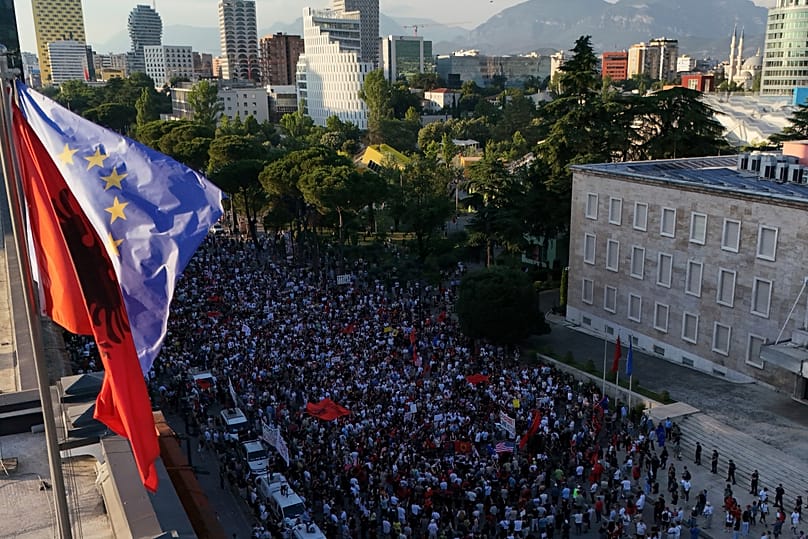
Protests have been growing in Albania against a planned resort development backed by Jared Kushner, with thousands taking to the streets of Tirana on Thursday.
Kushner, the son-in-law of US President Donald Trump, and his investment firm Affinity Partners have been in negotiations to open an estimated $4 billion luxury resort in a protected area on Albania's Adriatic coast.
But protesters have pushed back at the plans, arguing it would damage the local environment. Some are also calling for Albanian Prime Minister Edi Rama to resign over the issue.
Here's everything you need to know about the protests.
The Vjosa–Narta Lagoon and Sazan island
The proposed resort would be situated in the Vjosa-Narta Lagoon, a protected wetland area of Albania.
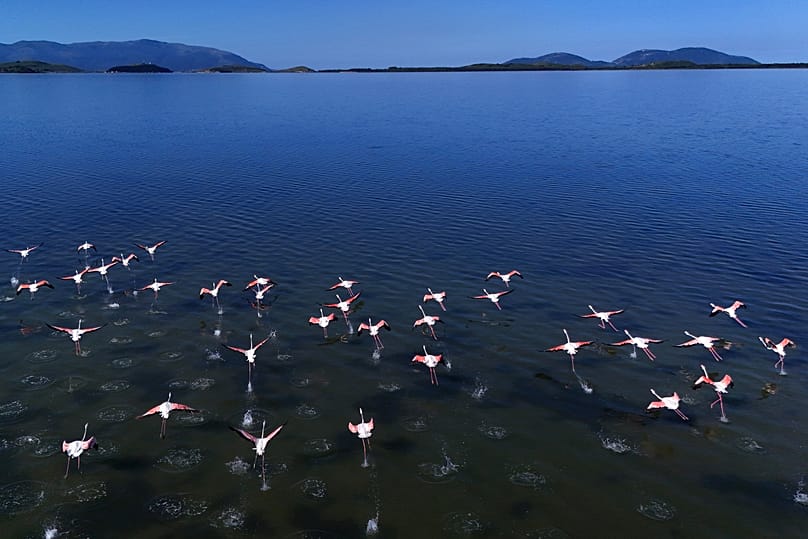
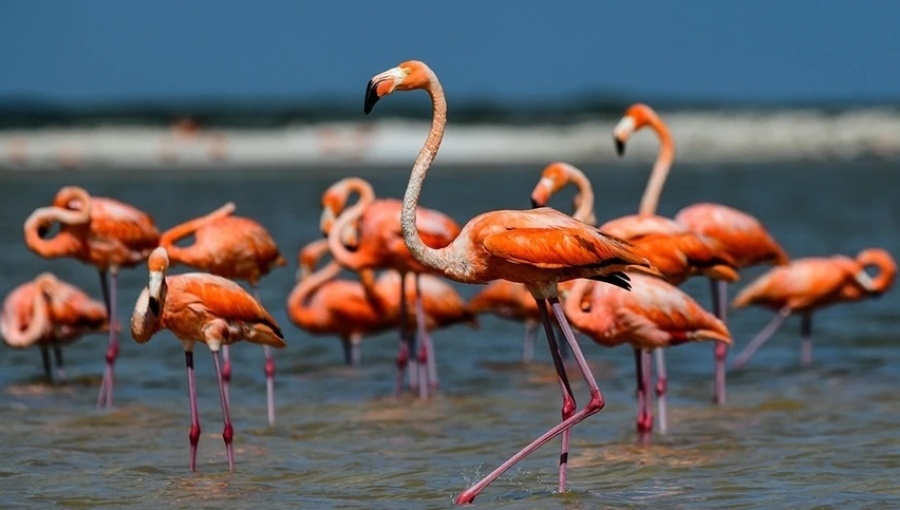
Wetlands International, an NGO that works to protect and restore wetlands, described the wetland as "irreplaceable" and said it is home to more than 200 migratory bird species, flamingos, seals and nesting sea turtles.
Chris Baker, Wetlands International Europe’s director said: “The Vjosa–Narta Lagoon is a uniquely intact and very special Mediterranean wetland, sheltering over 200 bird species and more than 70 endangered species."
"Building luxury resorts inside this protected ecosystem – despite strong protest of local citizens and environmental groups – raises serious doubts about Albania’s readiness to join the EU," he added.
The European Commission has warned Albania that it must act now to avoid jeopardising its bid to join the bloc, which requires it to comply with EU environmental rules.
“Albania should refrain from actions that could undermine the fulfilment of the closing benchmark, in this case Chapter 27, and so we expect the Albanian authorities to act without any delay,” Commission spokesperson Guillaume Mercier said earlier this week.
As part of the plan, developers are also hoping to transform the uninhabited island of Sazan into a tourist hotspot.
The Albanian Association for the Protection of the Environment said the creation of a luxury resort on the island would present "serious risks to the biodiversity and critical habitats".
Demonstrations
Protests against the project have been ongoing for almost two weeks, with demonstrators holding signs reading "Albania is not for sale," chanting slogans and carrying inflatable flamingos to highlight the potential impact to wildlife in the Vjosa-Narta lagoon.
The Albanian government argues that the project would be transformational for the nation, helping drive fresh tourism in the former communist state.
Prime Minister Rama has also pushed back on environmental concerns.
"In this protest there are well-meaning people, young people interested genuinely to the environment that have been misled big time," he recently told CNN International. "There is not such a thing like a Trump family island. There is not such a thing like the family of the American president taking over protected areas where flamingos will be killed".
Hybrid war
Rama has also suggested that the protests and media attention are being driven in part by a hybrid war against Albania, pointing his finger at Iran.
"There is one malicious actor, Iran," Rama has said of the issue. "This is something that we know for a fact. I never said and I don't say that Iran invented it. I'm saying that Iran jumped in it. Right away. And we are at war with Iran, cyber, since some years now."
Iranian foreign ministry spokesperson Esmaeil Baqaei rejected Rama's claims.
"It was YOU, sir, who started this. So...you should 'face the music'!" he wrote on X.
Clashes erupt in Tirana as anti-government protesters confront Socialist Party supporters
Brief clashes broke out in central Tirana on the evening of June 12 when supporters attending celebrations for the governing Socialist Party came into contact with anti-government demonstrators protesting outside the Prime Minister's Office, adding to tensions surrounding a campaign against a controversial tourism development project.
At the centre of the dispute are plans for high-end tourism investments in the Narta Lagoon area near the coastal village of Zvërnec and on Sazan Island, a former military installation off Albania's southern coast. The projects are linked to a company associated with Jared Kushner, the son-in-law of US President Donald Trump.
Police moved quickly to separate the groups and restore order after a scuffle erupted near the government building, where protesters had gathered to deliver speeches and demand the resignation of Prime Minister Edi Rama's administration.
The confrontations took place after celebrations marking the 35th anniversary of the founding of the Socialist Party concluded at Italia Square. According to local media reports, a group of party supporters later approached the nearby protest, where activists had been addressing the crowd through loudspeakers.
The two sides exchanged insults before the situation escalated into pushing and shoving. Video footage shared by local broadcasters showed police officers intervening as protesters and Socialist Party supporters jostled in the street.
One protest participant, speaking to local television station Top Channel, described scenes of confusion as dozens of people approached the demonstration. "They came running from that direction and started shouting all kinds of things," the protester said, estimating that around 30 to 40 people had entered the area. The participant also criticised the police response, claiming officers had initially failed to intervene effectively.
Organisers sought to calm the situation, urging demonstrators not to react to what they described as provocations. Earlier in the day, activists had appealed to participants to avoid confrontation with the Socialist Party anniversary events taking place elsewhere in the city.
After the disturbance subsided, protesters resumed their march through the streets of the capital.
The demonstrations have become a daily occurrence in Tirana since the beginning of June. What began as a local environmental campaign opposing a planned luxury tourism project has developed into a wider anti-government movement, with participants calling for political reforms and the repeal of legislation they argue facilitates controversial developments.
The Albanian government has granted the investment "strategic investor" status, arguing that it will help attract foreign capital and strengthen the country's tourism industry. Rama has repeatedly defended the initiative, describing it as an opportunity to raise Albania's international profile and encourage large-scale international investment.
Environmental organisations and local campaigners, however, argue that the developments could damage one of Albania's most ecologically sensitive coastal regions. The Narta Lagoon, home to internationally significant wetlands and large populations of migratory birds, including flamingos, has become a focal point for opposition to the project.
Protest organisers have broadened their platform beyond the tourism development itself. They have issued five principal demands, including the resignation of the government, the repeal of the law regulating strategic investments, the cancellation of the so-called "Mountain Package" legislation, the reversal of recent amendments to the Law on Protected Areas, and the repeal of changes made to the Law on Cultural Heritage.
Public anger intensified after online videos appeared to show a security guard allegedly assaulting a protester near one of the proposed development sites. The footage circulated widely on social media and was cited by activists as evidence of increasing pressure on campaigners.
The controversy has also drawn the attention of Albania's anti-corruption authorities, which have opened an investigation into aspects of the projects, including issues related to land ownership and privatisation procedures.
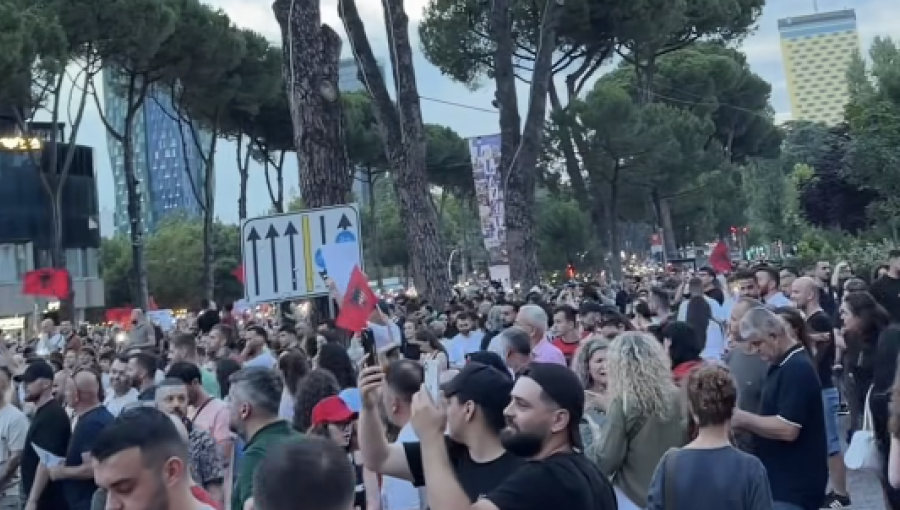
Brief clashes broke out in central Tirana on the evening of June 12 when supporters attending celebrations for the governing Socialist Party came into contact with anti-government demonstrators protesting outside the Prime Minister's Office, adding to tensions surrounding a campaign against a controversial tourism development project.
At the centre of the dispute are plans for high-end tourism investments in the Narta Lagoon area near the coastal village of Zvërnec and on Sazan Island, a former military installation off Albania's southern coast. The projects are linked to a company associated with Jared Kushner, the son-in-law of US President Donald Trump.
Police moved quickly to separate the groups and restore order after a scuffle erupted near the government building, where protesters had gathered to deliver speeches and demand the resignation of Prime Minister Edi Rama's administration.
The confrontations took place after celebrations marking the 35th anniversary of the founding of the Socialist Party concluded at Italia Square. According to local media reports, a group of party supporters later approached the nearby protest, where activists had been addressing the crowd through loudspeakers.
The two sides exchanged insults before the situation escalated into pushing and shoving. Video footage shared by local broadcasters showed police officers intervening as protesters and Socialist Party supporters jostled in the street.
One protest participant, speaking to local television station Top Channel, described scenes of confusion as dozens of people approached the demonstration. "They came running from that direction and started shouting all kinds of things," the protester said, estimating that around 30 to 40 people had entered the area. The participant also criticised the police response, claiming officers had initially failed to intervene effectively.
Organisers sought to calm the situation, urging demonstrators not to react to what they described as provocations. Earlier in the day, activists had appealed to participants to avoid confrontation with the Socialist Party anniversary events taking place elsewhere in the city.
After the disturbance subsided, protesters resumed their march through the streets of the capital.
The demonstrations have become a daily occurrence in Tirana since the beginning of June. What began as a local environmental campaign opposing a planned luxury tourism project has developed into a wider anti-government movement, with participants calling for political reforms and the repeal of legislation they argue facilitates controversial developments.
The Albanian government has granted the investment "strategic investor" status, arguing that it will help attract foreign capital and strengthen the country's tourism industry. Rama has repeatedly defended the initiative, describing it as an opportunity to raise Albania's international profile and encourage large-scale international investment.
Environmental organisations and local campaigners, however, argue that the developments could damage one of Albania's most ecologically sensitive coastal regions. The Narta Lagoon, home to internationally significant wetlands and large populations of migratory birds, including flamingos, has become a focal point for opposition to the project.
Protest organisers have broadened their platform beyond the tourism development itself. They have issued five principal demands, including the resignation of the government, the repeal of the law regulating strategic investments, the cancellation of the so-called "Mountain Package" legislation, the reversal of recent amendments to the Law on Protected Areas, and the repeal of changes made to the Law on Cultural Heritage.
Public anger intensified after online videos appeared to show a security guard allegedly assaulting a protester near one of the proposed development sites. The footage circulated widely on social media and was cited by activists as evidence of increasing pressure on campaigners.
The controversy has also drawn the attention of Albania's anti-corruption authorities, which have opened an investigation into aspects of the projects, including issues related to land ownership and privatisation procedures.
BALKAN BLOG: US U-turn on Albanian opposition leader comes at a dangerous moment for PM
The US decision to reverse sanctions on Albanian opposition leader Sali Berisha comes at a dangerous moment for Prime Minister Edi Rama’s government, which has been targeted by a wave of mass protests in Tirana.
Berisha declared "America is great" on June 11 after announcing that the US had lifted the sanctions that barred him and his family from entering the country, ending a designation that has affected Albanian politics for more than five years.
The Democratic Party issued an official statement confirming that there had been "official communication regarding the lifting of sanctions by the US" and repeating Berisha's argument that he had never formally been declared persona non grata but had instead been subject to a visa ban.
The move, which had not been confirmed publicly by the US embassy in Tirana at the time of writing, would be a major political victory for the veteran politician, who has long argued that the sanctions were politically motivated and designed to weaken Albania's opposition.
The sanctions were imposed by the US State Department on May 19, 2021, shortly after parliamentary elections won by Rama's Socialist Party. Then secretary of state Antony Blinken announced that Berisha and members of his immediate family would be barred from entering the United States because of what Washington described as "significant corruption".
At the time, Blinken said Berisha had been involved in "corrupt acts" that had "undermined democracy in Albania" and declared that "Berisha and members of his immediate family are ineligible for entry into the United States."
The designation transformed Albania's political landscape. It deepened divisions within the Democratic Party, eventually leading to Berisha's exclusion from its parliamentary group before he regained control of the party after a prolonged internal power struggle. The sanctions also became a key argument used by Rama and the governing Socialists to question the opposition's credibility.
Berisha has consistently denied all allegations against him, describing the US decision as an abuse of power driven by political interests rather than evidence of wrongdoing.
The development follows a wider pattern under the Trump administration of reassessing sanctions imposed on political figures in Southeast Europe. Last year, the United States lifted sanctions against Milorad Dodik, the former president of Bosnia's Serb Republic, reversing measures originally imposed over allegations of corruption and actions viewed by Washington as undermining the 1995 Dayton peace agreement.
Legal troubles remain
Despite the reported lifting of US sanctions, Berisha remains under legal pressure in Albania. In September 2024, the Special Prosecution Against Corruption and Organised Crime (SPAK) charged him with corruption over allegations that he helped facilitate a lucrative property development benefiting his son-in-law, Jamarber Malltezi. Both men deny the accusations.
The politician is also subject to separate sanctions imposed by the United Kingdom in 2022 over alleged links to corruption. His appeal against those measures was rejected by a British court.
It therefore remains unclear whether his reputation will recover fully even if the US sanctions are lifted, or what lasting impact the decision will have on the Albanian political landscape.
The reported reversal comes at a particularly sensitive moment in Albanian politics. The country has seen days of anti-government demonstrations, initially sparked by opposition to a planned luxury tourism development associated with Jared Kushner, US President Donald Trump's son-in-law, but which have broadened into a wider expression of dissatisfaction with the government.
Demonstrators are now calling not only for the project to be halted but also for Prime Minister Edi Rama to step down, prompting comparisons with the "colour revolutions" that swept parts of Eastern Europe and the former Soviet Union in the 2000s and 2010s.
The movement, dubbed the “Flamingo Revolution” has spread from the coastal village of Zvërnec, near the proposed development site, to the capital Tirana. For days, thousands of people have taken to the streets, making the protests one of the most significant public mobilisations Albania has seen in recent years.
The use of force against protesters in Zvërnec on May 30, combined with allegations of corruption and a lack of transparency surrounding the project approval process, helped transform the local environmental dispute into a broader political cause.
Environmental issues have increasingly become a catalyst for political mobilisation across the Balkans in recent years.
In neighbouring Serbia, repeated protests against pollution, mining projects and urban developments have drawn tens of thousands onto the streets. Demonstrations against Rio Tinto's planned lithium mine in western Serbia became one of the country's largest protest movements in years, eventually forcing the government to suspend the project in 2022, although debate over its future has continued.
The "Don't Drown Belgrade" movement and its symbol of a giant yellow duck also drew thousands of protesters into the streets in opposition to the controversial Belgrade Waterfront project. While the protests became a significant political force, they ultimately failed to halt the development. Another Kushner-linked project, planned on the site of the former Chinese embassy that was bombed by Nato in 1999, was scrapped following mass protests and a corruption probe.
Rama's long dominance
The Albanian prime minister has become one of the longest-serving leaders in the region. Since first taking office in 2013, he has won four consecutive parliamentary elections, most recently in May 2025.
His victories have been aided in part by the Socialist Party's control of state resources and strong local political networks. However, the party has also won support through its steady progress towards EU accession, from securing candidate status in 2014 to overtaking fellow Western Balkan countries Serbia and North Macedonia to become one of the frontrunners in the process, with ambitions to join the bloc by 2030. Rama's charismatic presence has also helped raise the country's profile on the international stage.
Rama made progress on fighting corruption, especially in his early years in power, though more recently the government's reputation has been tarnished by a succession of scandals. These include the incinerators affair, allegations surrounding former deputy prime minister Belinda Balluku, until recently a key member of Rama's cabinet, and questions over the use of public-private partnerships for infrastructure projects and major investments such as the UAE-backed Porto Romano development.
Meanwhile, Rama's Socialists have benefited from years of infighting within the Democratic Party. The opposition has struggled to recover from internal divisions and leadership disputes following electoral defeats, while Berisha himself remained a polarising figure because of the US sanctions and the corruption allegations he denies.
The protests have also placed Berisha in a somewhat awkward political position. Early on, he publicly backed the Kushner-linked development, as broadcaster Top Channel TV reported earlier in June. However, he has since endorsed calls for Rama's removal, voicing support for protesters mobilising against the prime minister.
The demonstrations themselves have not rallied around the opposition leader. Instead, many protesters have directed their anger at the entire political establishment, with chants calling for both "Rama in prison" and "Berisha in prison”.
The movement has no obvious political leader, having been driven initially largely by environmental groups rather than established opposition parties.
Whether the lifting of US sanctions strengthens Berisha politically may therefore depend less on Washington's decision than on whether he can successfully align himself with a protest movement that has so far emerged independently of the traditional opposition.
The US decision to reverse sanctions on Albanian opposition leader Sali Berisha comes at a dangerous moment for Prime Minister Edi Rama’s government, which has been targeted by a wave of mass protests in Tirana.
Berisha declared "America is great" on June 11 after announcing that the US had lifted the sanctions that barred him and his family from entering the country, ending a designation that has affected Albanian politics for more than five years.
The Democratic Party issued an official statement confirming that there had been "official communication regarding the lifting of sanctions by the US" and repeating Berisha's argument that he had never formally been declared persona non grata but had instead been subject to a visa ban.
The move, which had not been confirmed publicly by the US embassy in Tirana at the time of writing, would be a major political victory for the veteran politician, who has long argued that the sanctions were politically motivated and designed to weaken Albania's opposition.
The sanctions were imposed by the US State Department on May 19, 2021, shortly after parliamentary elections won by Rama's Socialist Party. Then secretary of state Antony Blinken announced that Berisha and members of his immediate family would be barred from entering the United States because of what Washington described as "significant corruption".
At the time, Blinken said Berisha had been involved in "corrupt acts" that had "undermined democracy in Albania" and declared that "Berisha and members of his immediate family are ineligible for entry into the United States."
The designation transformed Albania's political landscape. It deepened divisions within the Democratic Party, eventually leading to Berisha's exclusion from its parliamentary group before he regained control of the party after a prolonged internal power struggle. The sanctions also became a key argument used by Rama and the governing Socialists to question the opposition's credibility.
Berisha has consistently denied all allegations against him, describing the US decision as an abuse of power driven by political interests rather than evidence of wrongdoing.
The development follows a wider pattern under the Trump administration of reassessing sanctions imposed on political figures in Southeast Europe. Last year, the United States lifted sanctions against Milorad Dodik, the former president of Bosnia's Serb Republic, reversing measures originally imposed over allegations of corruption and actions viewed by Washington as undermining the 1995 Dayton peace agreement.
Legal troubles remain
Despite the reported lifting of US sanctions, Berisha remains under legal pressure in Albania. In September 2024, the Special Prosecution Against Corruption and Organised Crime (SPAK) charged him with corruption over allegations that he helped facilitate a lucrative property development benefiting his son-in-law, Jamarber Malltezi. Both men deny the accusations.
The politician is also subject to separate sanctions imposed by the United Kingdom in 2022 over alleged links to corruption. His appeal against those measures was rejected by a British court.
It therefore remains unclear whether his reputation will recover fully even if the US sanctions are lifted, or what lasting impact the decision will have on the Albanian political landscape.
The reported reversal comes at a particularly sensitive moment in Albanian politics. The country has seen days of anti-government demonstrations, initially sparked by opposition to a planned luxury tourism development associated with Jared Kushner, US President Donald Trump's son-in-law, but which have broadened into a wider expression of dissatisfaction with the government.
Demonstrators are now calling not only for the project to be halted but also for Prime Minister Edi Rama to step down, prompting comparisons with the "colour revolutions" that swept parts of Eastern Europe and the former Soviet Union in the 2000s and 2010s.
The movement, dubbed the “Flamingo Revolution” has spread from the coastal village of Zvërnec, near the proposed development site, to the capital Tirana. For days, thousands of people have taken to the streets, making the protests one of the most significant public mobilisations Albania has seen in recent years.
The use of force against protesters in Zvërnec on May 30, combined with allegations of corruption and a lack of transparency surrounding the project approval process, helped transform the local environmental dispute into a broader political cause.
Environmental issues have increasingly become a catalyst for political mobilisation across the Balkans in recent years.
In neighbouring Serbia, repeated protests against pollution, mining projects and urban developments have drawn tens of thousands onto the streets. Demonstrations against Rio Tinto's planned lithium mine in western Serbia became one of the country's largest protest movements in years, eventually forcing the government to suspend the project in 2022, although debate over its future has continued.
The "Don't Drown Belgrade" movement and its symbol of a giant yellow duck also drew thousands of protesters into the streets in opposition to the controversial Belgrade Waterfront project. While the protests became a significant political force, they ultimately failed to halt the development. Another Kushner-linked project, planned on the site of the former Chinese embassy that was bombed by Nato in 1999, was scrapped following mass protests and a corruption probe.
Rama's long dominance
The Albanian prime minister has become one of the longest-serving leaders in the region. Since first taking office in 2013, he has won four consecutive parliamentary elections, most recently in May 2025.
His victories have been aided in part by the Socialist Party's control of state resources and strong local political networks. However, the party has also won support through its steady progress towards EU accession, from securing candidate status in 2014 to overtaking fellow Western Balkan countries Serbia and North Macedonia to become one of the frontrunners in the process, with ambitions to join the bloc by 2030. Rama's charismatic presence has also helped raise the country's profile on the international stage.
Rama made progress on fighting corruption, especially in his early years in power, though more recently the government's reputation has been tarnished by a succession of scandals. These include the incinerators affair, allegations surrounding former deputy prime minister Belinda Balluku, until recently a key member of Rama's cabinet, and questions over the use of public-private partnerships for infrastructure projects and major investments such as the UAE-backed Porto Romano development.
Meanwhile, Rama's Socialists have benefited from years of infighting within the Democratic Party. The opposition has struggled to recover from internal divisions and leadership disputes following electoral defeats, while Berisha himself remained a polarising figure because of the US sanctions and the corruption allegations he denies.
The protests have also placed Berisha in a somewhat awkward political position. Early on, he publicly backed the Kushner-linked development, as broadcaster Top Channel TV reported earlier in June. However, he has since endorsed calls for Rama's removal, voicing support for protesters mobilising against the prime minister.
The demonstrations themselves have not rallied around the opposition leader. Instead, many protesters have directed their anger at the entire political establishment, with chants calling for both "Rama in prison" and "Berisha in prison”.
The movement has no obvious political leader, having been driven initially largely by environmental groups rather than established opposition parties.
Whether the lifting of US sanctions strengthens Berisha politically may therefore depend less on Washington's decision than on whether he can successfully align himself with a protest movement that has so far emerged independently of the traditional opposition.

No comments:
Post a Comment