Ceremony marks start of work at Canadian uranium project
Denison Mines - alongside Indigenous and local community partners - has marked the start of site preparation and early works construction at the Phoenix In-Situ Recovery uranium mine in Saskatchewan with a ceremonial groundbreaking ceremony.
_15348.jpg)
Denison's Board of Directors made its final investment decision in February, after receiving final federal regulatory approvals for the start of construction from the Canadian Nuclear Safety Commission. Provincial-level approvals were already in place. Earlier in the month, Denison announced it had awarded consulting and engineering company Wood Canada Limited the construction management contract to oversee the building of the mine.
Site preparation and early works construction activities actually began soon after the final investment decision. By mid-May, tree clearing activities across the primary mine site area, installation of construction management facilities, construction of an on-site helipad and civil works for the concrete batch plant pad had already been completed, as well as the start of aggregate production at a nearby quarry. Ongoing civil activities include preparations for a future airstrip. Denison has previously said it expects to commence full-scale construction by the end of the second quarter of this year, in line with its target to achieve first uranium production in mid-2028.
Phoenix - part of the Wheeler River project - is described by Denison as the largest undeveloped uranium project in the infrastructure-rich eastern portion of the Athabasca Basin region, in northern Saskatchewan. The project is host to the high-grade Phoenix and Gryphon uranium deposits, discovered by Denison in 2008 and 2014, respectively.
In-situ recovery (ISR) - also referred to as in-situ leach - is a method of recovering uranium minerals from ore in the ground by dissolving them in situ, using a mining solution injected into the orebody. The solution is then pumped to the surface, where the minerals are recovered from the uranium-bearing solution. More than half of the world's uranium production is now produced by such methods, which do not generate conventional mine tailings.
Phoenix is the first uranium mine in Canada to use the ISR mining method, and the first large-scale Canadian uranium mining project to be approved for construction in more than 20 years, and represents a "bold step forward for the Canadian uranium mining industry", Denison said: "This is a nation-building project that showcases the very best of Canadian mining ingenuity, collaboration, and determination."
Over the past couple of years, Denison has signed several agreements with First Nations representatives as well as with communities which amongst other things acknowledge traditional landowners, involve the Athabasca Communities in environmental oversight, and commit to sharing benefits from the successful operation of Denison's projects including community investment, business opportunities, employment and training opportunities, and financial compensation.
Representatives from English River First Nation, Kineepik Métis Local, Métis Nation-Saskatchewan, and Ya’thi Néné Lands and Resources joined the Denison team for the ground-breaking ceremony.
Speaking to Saskatchewan radio station CKCOM, Councillor Jenny Wolverine for English River First Nation said: "This partnership is developed on the foundation of trust, honesty, definitely humour, understanding and compromise … Because of the support from Denison, we are in a strong position to do great things for our people by our people."
Representing the Government of Saskatchewan at the ceremony, Minister of Labour Relations and Workplace Safety Ken Cheveldayoff said the development represents new jobs, economic growth, and opportunities for Saskatchewan communities while strengthening the province's position as a global leader in uranium production.
"What we are celebrating today reflects years of planning, innovation, and commitment. This project will have a significant positive impact on our province during both construction and operations. It will create good jobs and economic opportunities that will benefit Saskatchewan citizens for years and years to come," he told CKCOM.
Studsvik seeks state support for SMRs in Sweden
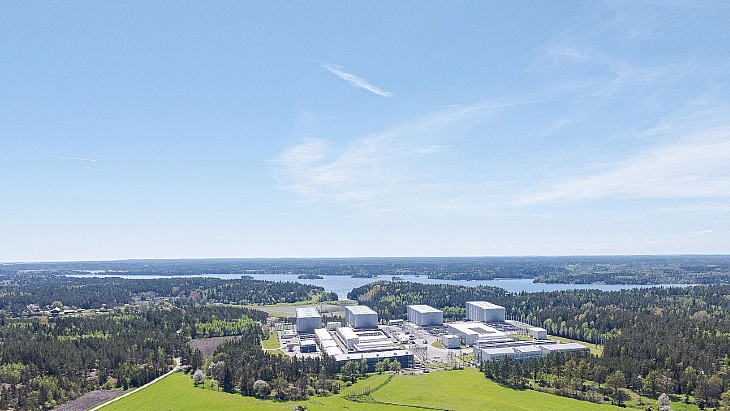
The application was formally handed over to the Minister for Financial Markets Niklas Wykman on Friday. Studsvik, which acquired Kärnfull Next and its ReFirm programme earlier this year, is developing potential small modular reactor (SMR) projects in southern Sweden, with options at Valdemarsvik and Nyköping forming the basis of the application.
The ReFirm programme is focused on light-water SMR technology, with plans for multiple units at "SMR parks". Its plan is for the first unit to be commissioned during the second half of the 2030s.
Development and permitting processes are under way and Studsvik says its plans retain "flexibility ahead of a later project selection as local, technical, regulatory and commercial conditions mature. The aim is to enable up to approximately 1,400 MWe of new fossil-free baseload capacity through multiple light-water small modular reactor units".
The Ministry of Finance said the application for Nyköping was for the establishment of two to four modular light-water reactors with a total electrical output of approximately 600-1,400 MW. The Valdemarsvik project application is for four to six SMRs with total output of 1,200-1,600 MW. It said Studsvik is expected to decide at a later stage which of the two projects to proceed with.
It is the third application for state aid for new nuclear power capacity that the government has received. In December 2025, Videberg Kraft applied to build reactors on the Värö Peninsula outside Varberg. Earlier in June 2026, the company Blykalla applied for a project at Norrsundet outside Gävle.
Karl Thedéen, president and CEO of Studsvik AB, said: "With this application, Studsvik is taking a major step towards privately led nuclear new build at meaningful scale, based on proven reactor technology and anchored in Swedish nuclear competence."
Finance minister Wykman said: "It is clear that Swedish industrial companies want to be involved in building the fossil-free base power Sweden needs."
The Ministry said that receiving an application means work can begin on making a decision on providing state support. This includes negotiations between the government and the company on the terms and scope of the support as well as ongoing dialogue with the European Commission to ensure that any support is compatible with the European Union's state aid rules.
Background
In October 2022, Sweden's incoming centre-right coalition government adopted a positive stance towards nuclear energy. In November 2023, it unveiled a roadmap which envisages the construction of new nuclear generating capacity equivalent to at least two large-scale reactors by 2035, with the equivalent capacity of up to 10 new large-scale reactors (which may include small modular reactors) coming online by 2045. A new act on state aid entered into force on 1 August 2025, since when interested companies have been able to apply for the aid.
The Swedish government received the first such application in December to support proposals for either five GE Vernova Hitachi BWRX-300 reactors or three Rolls-Royce SMRs to provide about 1,500 MW capacity at Ringhals on the Värö Peninsula. The application came from Videberg Kraft AB, a project company owned by Vattenfall AB and backed by a series of industrial firms via the Industrikraft i Sverige AB consortium.
Last week Blykalla submitted an application for government financing for its planned power plant in Norrsundet, Gävle, in east central Sweden, comprising six SEALER reactors, which will have a total generating capacity of up to 330 MWe.
Report looks into next steps for port calls for nuclear-powered ships
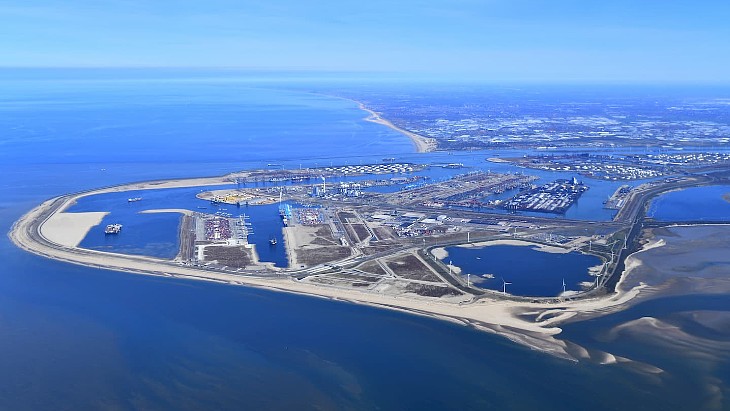
The report, Enabling Nuclear-Powered Feeder Ships - A Joint Development Project on Port Call Feasibility and Regulatory Pathways, examines the safety and regulatory considerations associated with a nuclear-powered ship calling at a European Union port.
It finds that "the principal barriers to nuclear ship port calls are not technical, but relate instead to local and international regulatory alignment, governance, risk management integration and public acceptance".
Mikal Bøe, CEO of maritime nucleaer energy specialists Core Power, said: "An obvious key to the success of civil maritime nuclear propulsion is the trusted confidence of port cities and their populations in ship calls by nuclear-powered merchant ships.
"Greenhouse gas emissions from the existing shipping fleet have become unsustainable and have led to the slowest sailing times in we've seen in decades. Now is the time to start the important work of evaluating nuclear shipping in a modern context and this report does exactly that."
The report used the hypothetical situation of a nuclear-powered Maersk container ship calling at the Port of Rotterdam, to examine the issues.
Harbour Master of the Port of Rotterdam René de Vries said: "Ports need to understand how emerging energy and shipping technologies may interact with future port operations and industrial systems."
Meg Albrecht, Senior Engineer - Nuclear Technology and Alternative Fuels, Lloyd's Register, said: "The maritime energy transition will require the industry to examine a range of future fuel and propulsion pathways. This work contributes to a broader understanding of the regulatory and operational considerations associated with nuclear-powered vessels and helps establish a structured basis for further discussion and analysis."
Ole Graa Jakobsen, Head of Fleet Technology, AP Moller-Maersk said: "Civil commercial nuclear propulsion presents a number of significant challenges, including safety, waste management, regulatory alignment and public acceptance across regions. This study does not represent a decision to pursue nuclear propulsion, but contributes to further understanding of what would be required for ports and authorities to assess such vessels in a structured and responsible way. We continue to monitor and assess this technology alongside other low-emission solutions."
In its conclusion the report says that although "nuclear ships for commercial or civilian uses are in early stages of development, ports should proactively prepare for their arrival. Globally, efforts focus on technology, safety, and regulations. Locally, this involves legal, safety and operational measures, as well as cooperation with nuclear authorities. A key aspect of this preparation is gaining insights into the potential risks associated with nuclear power and understanding the technology so that risk perception is managed by engineering logic rather than public or promoter misconceptions."
The report adds: "Further research and communication are needed on radiation safety, reactor incidents, security threats, and their effects on ships, terminals, and personnel. Only with a thorough understanding of these risks can appropriate measures be taken, allowing the port to anticipate future developments responsibly.
"Each port expecting future nuclear ships must assess safety, security, safeguards and emergency procedures. Since ports vary, these local assessments help shape national, regional and international guidance or regulations."
The shipping industry consumes about 350 million tonnes of fossil fuel annually and accounts for about 3% of total worldwide carbon emissions. In July 2024, the shipping industry, via the International Maritime Organization (IMO), approved new targets for greenhouse gas emission reductions, aiming to reach net-zero emissions by or around 2050.
There are a range of different development projects for using nuclear power in civilian vessels. The IMO is also revising the Safety Code for Nuclear Ships and the International Atomic Energy Agency is planning on launching its Applications at Sea (ATLAS) initiative in August, which "aims to support the maritime industry’s exploration of small modular reactors to power civilian ships and to provide offshore energy, as operators consider alternative fuels and seek to strengthen long-term energy security".
Nuclear-powered ship conceptual designs approved
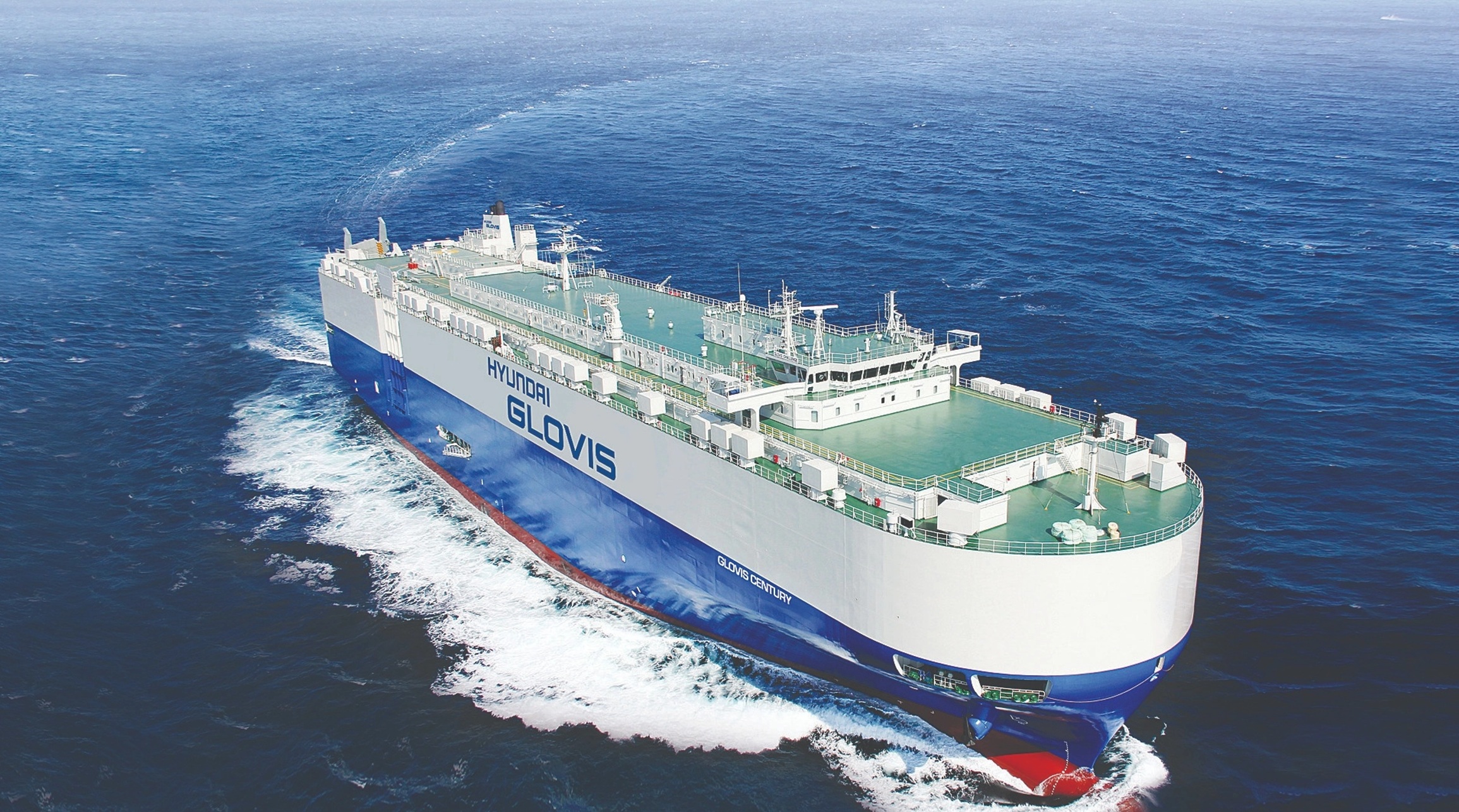
Approval in principle is a symbolic procedure in which a classification society reviews the design or technology of a new ship and recognises it as compliant with international regulations and safety standards, serving as the first step toward actual ship development.
Lloyd's Register said it is working with Hyundai Heavy Industries, HD Korea Shipbuilding & Offshore Engineering (HD KSOE), Hyundai Glovis, G-Marine Service and the Korea Atomic Energy Research Institute (KAERI) on a joint development project exploring an advanced small modular reactor (SMR) installation on a pure car and truck carrier.
The study focused on how a molten salt reactor (MSR) could be physically and operationally integrated into a large vehicle carrier. Work examined the internal arrangement and segregation of the reactor system, shielding requirements, and the impact on cargo deck layout and vehicle capacity, alongside stability and trim implications linked to the reactor’s weight and positioning. The partners also assessed propulsion system configuration and power delivery, as well as operational flexibility compared with conventionally-fuelled pure car and truck carriers, where trade routes and port calls can be tightly constrained.
HD Hyundai Heavy Industries and HD KSOE conducted the conceptual design of the vessel and a review of key technologies, while Hyundai Glovis presented measures to ensure flexibility for stable operation and address environmental factors at the actual operation site based on its experience operating large car carriers. G-Marine Service reviewed the elements required in actual operation, such as onboard safety, maintainability, crew support, and long-term operational reliability, from the perspective of ship management, while KAERI was responsible for reviewing MSR technology as a nuclear technology development organisation. Lloyd's Register led the Hazard Identification and Preliminary Risk Assessment work, focusing particularly on the interface between existing ship systems and SMRs, and constraints related to the application of nuclear technology at sea.
"While nuclear propulsion is still at an early stage of development, this project shows the importance of building technical understanding now to support future progress," said Sung-Gu Park, President - North East Asia, Lloyd's Register. "Establishing feasibility at concept stage is a valuable step forward, particularly in areas such as cargo optimisation, vessel stability and integrated safety design."
"Going forward, the participating organisations plan to continue reviewing next-generation ship propulsion technologies and jointly explore ways to ensure the safety, operability, and regulatory compliance of nuclear-powered ships," KAERI said.
Nuclear-assisted cargo ship
The American Bureau of Shipping (ABS) has issued Approval in principle (AIP) for the integration of a nuclear reactor into a cargo vessel propulsion system developed by the Massachusetts Institute of Technology (MIT), HD KSOE and Capital Maritime Group.
_0171c24a.jpg)
(Image: ABS)
This design uses a special synthetic fluid to carry heat from the reactor core. The MIT design's near-atmospheric operating pressure can allow for thinner, lighter reactor vessels, supporting modular construction and easier transport.
This is the first approval in principle to be granted through the MIT Maritime Consortium, where ABS, HD KSOE and Capital Maritime Group are founding members. ABS reviewed the reactor-to-machinery interface based on class requirements.
"As the industry evaluates new pathways for the future, this approval in principle highlights the value of collaboration with key stakeholders in advancing promising commercial nuclear technologies," said Patrick Ryan, ABS Senior Vice President and Chief Technology Officer. "The MIT reactor design is an interesting piece of technology. With characteristics that can support modular fabrication and vessel integration, these emerging technologies represent one possible pathway toward the safe, practical development of next-generation commercial shipping solutions."
Sangmin Park, Senior Vice President at HD KSOE and Head of Green Energy Research Laboratory, added: "As global environmental regulations tighten, the maritime sector requires paradigm-shifting solutions. Nuclear energy represents one of the most promising alternatives to traditional fossil fuels. Through this successful collaboration with ABS, MIT, and Capital Maritime Group, we are proud to demonstrate our readiness to lead the eco-friendly vessel market by presenting a safe and innovative nuclear-powered shipping solution."
"It is our responsibility as an industry to explore every potential solution, including those that challenge conventional thinking," said Stergios Stergiou, Chief Sustainability Officer, Capital Clean Energy Carriers Corp. "Nuclear propulsion is one such frontier. Through our membership in the MIT Maritime Consortium alongside ABS and HD KSOE, we are committed to ensuring that any pathway to net-zero is grounded in the non-negotiable highest standards of crew safety, vessel integrity, and environmental protection. This AIP is the first step in that process."
"The MIT Maritime Consortium is a unique collaboration between academia and key industry stakeholders aiming to address critical gaps in the modernisation of the commercial fleet through the development of bold technological solutions, industry standards, and policies," said Themis Sapsis, Koch Professor of Marine Technology at MIT and Co-director of the Maritime Consortium. "Our reactor design is one of the first concrete outcomes of this synergy, providing a realistic pathway towards nuclear propulsion for commercial vessels."
The shipping industry consumes about 350 million tonnes of fossil fuel annually and accounts for about 3% of total worldwide carbon emissions. In July 2024, the shipping industry, via the IMO, approved new targets for greenhouse gas emission reductions, aiming to reach net-zero emissions by or around 2050.
DOE approval milestone for Oklo reactor
The US Department of Energy's approval of the Preliminary Documented Safety Analysis is a major step on the authorisation pathway for Oklo's Aurora powerhouse which is to be built at Idaho National Laboratory.
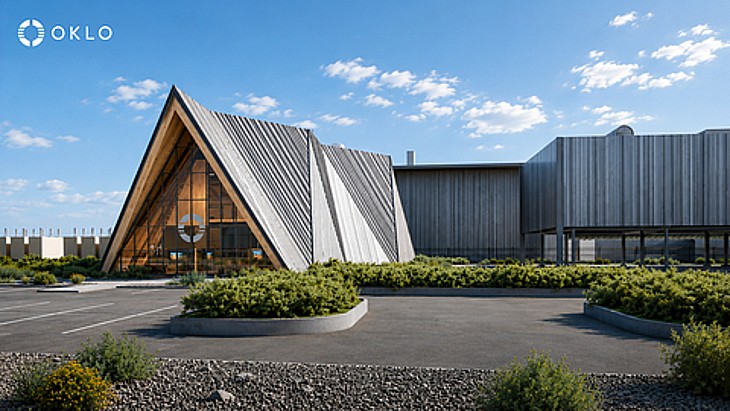
Oklo asked the department to commence review of its Preliminary Documented Safety Analysis - also known as a PDSA - after receiving its approval of the Nuclear Safety Design Agreement in March.
The Preliminary Documented Safety Analysis is a major step under the department's Reactor Pilot Program authorisation pathway and represents a detailed review of the preliminary safety basis for Aurora-INL, which will be the first of Oklo's planned fast fission power plants. It includes the project's hazard analysis, accident analysis, safety controls, and design commitments.
The Reactor Pilot Program framework aims to enable an accelerated deployment of scalable generation capacity under rigorous federal oversight. Oklo expects to gain early deployment and operating experience with Aurora-INL through the programme, while also pursuing US Nuclear Regulatory Commission licensing to support future commercial operations.
"This approval represents an important milestone for Aurora-INL and helps establish a foundation for future Aurora deployments," Oklo CEO Jacob DeWitte said. "Aurora-INL is helping show how advanced reactors can move through real safety review, real construction, and ultimately into commercial licensing."
The Aurora powerhouse fast neutron reactor builds on the design and operating heritage of the Experimental Breeder Reactor II (EBR-II), which ran in Idaho from 1964 to 1994, using metallic fuel to produce electricity and usable heat. It can operate on fuel made from fresh HALEU or used nuclear fuel. Oklo has been granted access to recovered fuel from the EBR-II following a competitive DOE process launched in 2019.
Oklo held a ground-breaking ceremony for the Aurora-INL in September 2025.
Study identifies potential SMR sites in Dutch province
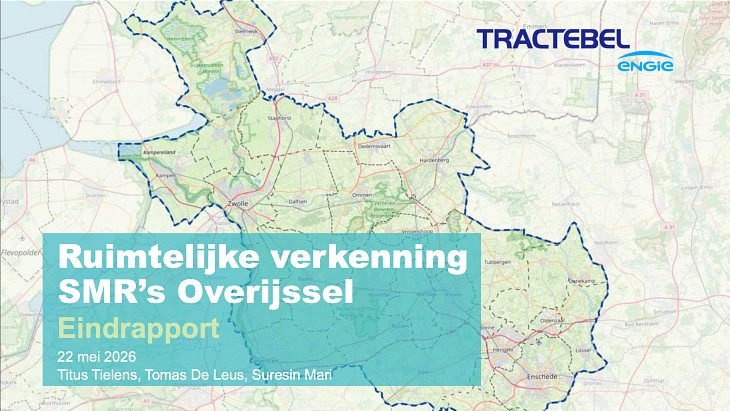
Tractebel said its team used a comprehensive evaluation framework based on the International Atomic Energy Agency's siting criteria for the small modular reactors (SMRs) spatial study, and took into account things such as population density, natural risks, cultural heritage, critical infrastructure, cooling water, and proximity to the electricity grid.
It concluded "there are potentially suitable locations for small SMRs up to 100 MW in many parts of Overijssel. For larger SMRs (between 100 MW and 500 MW), only a few locations appear possible, primarily near the IJssel".
Provincial Executive Member Gert Harm ten Bolscher said: "With this exploration, we are mapping out what might be technically possible. We are deliberately doing this first based on independent knowledge. No choices have been made yet. Thanks to the various studies, we are gaining an understanding of the opportunities and impossibilities. This allows us to discuss the potential role of SMRs in Overijssel's future energy supply."
The province is planning follow-up steps including research into public acceptance and also how SMRs might fit into the power grid.
In its announcement it stressed: "No environmental impact assessment has been carried out yet, no safety studies have been conducted, and no participation with residents has taken place … the province has not currently made a decision regarding the deployment of SMRs. Furthermore, no locations have been designated for an SMR."
Background
The Netherlands currently has one 485 MWe (net) pressurised water reactor at Borssele - operated by EPZ - which has been in operation since 1973 and accounts for about 3% of the country's total electricity generation.
In December 2021, the Netherlands' then new coalition government placed nuclear power at the heart of its climate and energy policy. In addition to keeping the Borssele plant in operation for longer, the government also called for the construction of new reactors. Based on preliminary plans, two new reactors will be completed around 2035 and each would have a capacity of 1,000-1,650 MWe. The two reactors would provide 9-13% of the country's electricity production in 2035.
The cabinet announced in December 2022 that it saw Borssele as the most suitable location for the construction of the new reactors. Three other locations are also being considered for the reactors: the Tweede Maasvlakte near Rotterdam, Terneuzen in Zeeland and Eemshaven in Groningen. A location selection is expected in September of this year. The government is also taking steps to prepare the Netherlands for the possible deployment of SMRs.

No comments:
Post a Comment