Friday, February 21, 2020

Thomson Reuters faces freelancer backlash over UK tax changes
Dozens of TV journalists and producers threaten to quit media group

Dozens of TV journalists and producers threaten to quit media group
Thomson Reuters' office in Canary Wharf, London. Freelancers at the media group claim that if they are transferred on to the payroll from April, their pay will fall © Reuters
Mark Di Stefano and Emma Agyemang in London FEBRUARY 18 2020
Dozens of freelance workers at Thomson Reuters are threatening to leave the media group unless it guarantees their pay will not fall due to a government crackdown on tax avoidance.
Changes to the off-payroll working rules, known as IR35, will come into force on April 6 in order to tackle what HM Revenue & Customs calls “disguised employment”.
The reforms will require all medium and large companies to assess the employment status of any contractors they hire who use limited companies. Companies and their recruitment agencies will be liable for any unpaid income tax and national insurance contributions if they wrongly classify workers as self-employed.
The media sector, along with other industries that rely heavily on freelance labour, has been scrambling to respond to the complex rule change.
Contractors at Thomson Reuters said the group had yet to tell individuals whether they would be transferred to the payroll after April and have demanded assurances in a letter sent to management last month and seen by the Financial Times.
The freelancers claim that, if they are transferred, their pay will fall. “If deemed inside IR35, freelance workers in Reuters’ TV newsroom are expected to lose at least 45 per cent of their gross pay,” the letter said. “As it stands, we will no longer be able to afford to continue our work at Reuters. We must now make a choice between affording our homes and bills, or continuing to freelance at Reuters.”
The freelancers’ group said the 45 per cent figure was inclusive of 20 per cent income tax, 12 per cent employees’ national insurance contributions and 13.8 per cent employers’ national insurance contributions. In limited companies, contractors pay themselves through a combination of salary and dividends, paying tax at a corporate rate which is lower.
The letter, which was signed by 30 freelance television journalists and producers, sought explicit guarantees from management that freelancers would not have to pay employers’ NI if they are told to join the payroll.
It also demanded that, if deemed an employee, Thomson Reuters pay holiday pay and pension contributions for affected workers on top of their day rate. Alternatively, the contractors said they would accept a 35 per cent increase in the day rate to offset the extra costs of joining the payroll.
“[This] could make a huge difference to the impending walkout and loss of vital newsroom workforce, which would heavily impact the quality and quantity of stories which Reuters’ clients receive,” the letter said.
One veteran freelancer who works for Thomson Reuters said workers felt humiliated by a lack of communication with management.
“Thomson Reuters has never wanted to take responsibility for its freelancers,” they said. “All we’re being offered is . . . a big question mark.”
Recommended
UK tax
Tax experts slam ‘railroading’ into law of freelance reforms
Thomson Reuters declined to comment on its plans, or confirm how many freelancers were going to be affected by the changes to IR35.
“Reuters is required to comply with IR35 legislation and is working with staff to ensure this is done in a collaborative and fair way,” a spokesperson said.
Dave Chaplin, chief executive of the ContractorCalculator advice website and a campaigner against the IR35 reforms, said the case was an example of freelancers engaging in collective bargaining.
“It appears the contractors at Reuters have teamed up and are engaging in collective bargaining to pre-emptively push back against any anticipated attempt by Reuters to push their new tax bill of employers’ national insurance on to them by way of a renegotiated reduction in rates.”
Tony Lennon, freelance and research officer for Bectu, the union which represents workers in the arts and entertainment sector, said that confusion about the IR35 reforms was “endemic” in the creative industries with employers “panicking and making blanket judgments” in order to “make the problem go away”.
https://www.ft.com/content/e2427c26-4f3e-11ea-95a0-43d18ec715f5
Mark Di Stefano and Emma Agyemang in London FEBRUARY 18 2020
Dozens of freelance workers at Thomson Reuters are threatening to leave the media group unless it guarantees their pay will not fall due to a government crackdown on tax avoidance.
Changes to the off-payroll working rules, known as IR35, will come into force on April 6 in order to tackle what HM Revenue & Customs calls “disguised employment”.
The reforms will require all medium and large companies to assess the employment status of any contractors they hire who use limited companies. Companies and their recruitment agencies will be liable for any unpaid income tax and national insurance contributions if they wrongly classify workers as self-employed.
The media sector, along with other industries that rely heavily on freelance labour, has been scrambling to respond to the complex rule change.
Contractors at Thomson Reuters said the group had yet to tell individuals whether they would be transferred to the payroll after April and have demanded assurances in a letter sent to management last month and seen by the Financial Times.
The freelancers claim that, if they are transferred, their pay will fall. “If deemed inside IR35, freelance workers in Reuters’ TV newsroom are expected to lose at least 45 per cent of their gross pay,” the letter said. “As it stands, we will no longer be able to afford to continue our work at Reuters. We must now make a choice between affording our homes and bills, or continuing to freelance at Reuters.”
The freelancers’ group said the 45 per cent figure was inclusive of 20 per cent income tax, 12 per cent employees’ national insurance contributions and 13.8 per cent employers’ national insurance contributions. In limited companies, contractors pay themselves through a combination of salary and dividends, paying tax at a corporate rate which is lower.
The letter, which was signed by 30 freelance television journalists and producers, sought explicit guarantees from management that freelancers would not have to pay employers’ NI if they are told to join the payroll.
It also demanded that, if deemed an employee, Thomson Reuters pay holiday pay and pension contributions for affected workers on top of their day rate. Alternatively, the contractors said they would accept a 35 per cent increase in the day rate to offset the extra costs of joining the payroll.
“[This] could make a huge difference to the impending walkout and loss of vital newsroom workforce, which would heavily impact the quality and quantity of stories which Reuters’ clients receive,” the letter said.
One veteran freelancer who works for Thomson Reuters said workers felt humiliated by a lack of communication with management.
“Thomson Reuters has never wanted to take responsibility for its freelancers,” they said. “All we’re being offered is . . . a big question mark.”
Recommended
UK tax
Tax experts slam ‘railroading’ into law of freelance reforms
Thomson Reuters declined to comment on its plans, or confirm how many freelancers were going to be affected by the changes to IR35.
“Reuters is required to comply with IR35 legislation and is working with staff to ensure this is done in a collaborative and fair way,” a spokesperson said.
Dave Chaplin, chief executive of the ContractorCalculator advice website and a campaigner against the IR35 reforms, said the case was an example of freelancers engaging in collective bargaining.
“It appears the contractors at Reuters have teamed up and are engaging in collective bargaining to pre-emptively push back against any anticipated attempt by Reuters to push their new tax bill of employers’ national insurance on to them by way of a renegotiated reduction in rates.”
Tony Lennon, freelance and research officer for Bectu, the union which represents workers in the arts and entertainment sector, said that confusion about the IR35 reforms was “endemic” in the creative industries with employers “panicking and making blanket judgments” in order to “make the problem go away”.
https://www.ft.com/content/e2427c26-4f3e-11ea-95a0-43d18ec715f5
Tesla gets court approval to clear forest for German Gigafactory
BERLIN (Reuters) - Tesla Inc (TSLA.O) got approval from a German court on Thursday to continue to cut down forest near the capital Berlin to build its first European car and battery factory, in a defeat for local environmental activists.
The court said in a statement it had rejected urgent applications to stop the land being cleared of trees from several environmental groups, adding its ruling was final. It had temporarily halted the tree felling earlier this month.
The U.S. electric carmaker announced plans last November to build a Gigafactory in Gruenheide in the eastern state of Brandenburg that surrounds Berlin, a decision that was initially lauded as a vote of confidence in Germany.
However, local and national lawmakers were caught out by the strength of opposition to the Gigafactory, with hundreds of demonstrators protesting over what they say is the threat it poses to local wildlife and water supplies.
Lawmakers from Germany’s pro-business Christian Democrat and Free Democrat parties had warned that the legal battle waged against the Gigafactory would inflict serious damage on Germany’s image as a place to do business.
The U.S. electric carmaker announced plans last November to build a Gigafactory in Gruenheide in the eastern state of Brandenburg that surrounds Berlin, a decision that was initially lauded as a vote of confidence in Germany.
However, local and national lawmakers were caught out by the strength of opposition to the Gigafactory, with hundreds of demonstrators protesting over what they say is the threat it poses to local wildlife and water supplies.
Lawmakers from Germany’s pro-business Christian Democrat and Free Democrat parties had warned that the legal battle waged against the Gigafactory would inflict serious damage on Germany’s image as a place to do business.
Thyssenkrupp nears full sale of $17 billion elevator division: sources
FRANKFURT/DUESSELDORF, Germany (Reuters) - Thyssenkrupp (TKAG.DE) is nearing a full sale of its elevator division, three people familiar with the matter said, adding that this would secure the highest valuation of about 16 billion euros ($17.3 billion) to help the company pay down debt.
The sale, potentially Europe’s biggest private equity transaction in 13 years, is entering its final stretch, with two buyout consortia in a neck-and-neck race to acquire the world’s fourth-largest lift maker.
Under the deal, Thyssenkrupp would likely sell all of the division, Elevator Technology, to realise the highest valuation, the people said. The 16 billion euros is roughly the same as the combined total of the group’s net debt - which soared in the last quarter - and pension liabilities.
There is a small chance the group could retain a minority stake in the business, the people said, adding the likelihood of that happening had decreased in recent weeks.
Thyssenkrupp declined to comment.
Shares in Thyssenkrupp rose as much as 1.4% on the news before trading down 0.7% at 1548 GMT.
The company, a steel-to-submarines conglomerate, said this week it would either sell a majority stake or all of the unit. Labour representatives, as well as the group’s top shareholder, the Alfried Krupp von Bohlen und Halbach foundation, have argued in favour of keeping a stake.
“Of course it would be profitable for the company to keep a stake,” Ursula Gather, who heads the foundation’s board of trustees and also sits on Thyssenkrupp’s supervisory board, told the Westdeutsche Allgemeine Zeitung newspaper.
‘REGRETTABLE’
Gather said many factors had to be taken into account as part of the deal. “But again, the decision lies with the management board,” she said, adding there had to be a fast decision on how proceeds would be spent, including on how cash could be provided to the group’s steel business.
Any private equity sale would likely see the elevator division being loaded up with debt, lowering the chance it will have enough room to pay dividends or pass on huge amounts of cash, the people said, making a stake less attractive.
Thyssenkrupp said this week it was focusing on talks with two consortia: Blackstone (BX.N), Carlyle (CG.O) and the Canada Pension Plan Investment Board; and Advent and Cinven [CINV.UL].
Sources have previously said the Abu Dhabi Investment Authority and Germany’s RAG foundation were part of the Advent/Cinven tie-up, which sources said submitted a bid just shy of the roughly 16 billion euros offered by its rival consortium.
Finland’s Kone (KNEBV.HE), which had made a bid of more than 17 billion euros, dropped out.
“From a shareholder view it is of course regrettable that the highest bid won’t be successful but apparently Thyssenkrupp has no time to lose,” said Michael Muders, fund manager at Union Investment, a top-20 shareholder.
“The price is still attractive.”
Bidders have until next week to make final changes to their binding bids submitted this month, one of the people said. Thyssenkrupp’s supervisory board is scheduled to meet on Feb. 27 and could make a decision, sources have previously said.
Thyssenkrupp, which is keeping open the option of listing the elevator unit, aims to wrap up the process in February but talks could delay the process to March, one of the people said.
FRANKFURT/DUESSELDORF, Germany (Reuters) - Thyssenkrupp (TKAG.DE) is nearing a full sale of its elevator division, three people familiar with the matter said, adding that this would secure the highest valuation of about 16 billion euros ($17.3 billion) to help the company pay down debt.
The sale, potentially Europe’s biggest private equity transaction in 13 years, is entering its final stretch, with two buyout consortia in a neck-and-neck race to acquire the world’s fourth-largest lift maker.
Under the deal, Thyssenkrupp would likely sell all of the division, Elevator Technology, to realise the highest valuation, the people said. The 16 billion euros is roughly the same as the combined total of the group’s net debt - which soared in the last quarter - and pension liabilities.
There is a small chance the group could retain a minority stake in the business, the people said, adding the likelihood of that happening had decreased in recent weeks.
Thyssenkrupp declined to comment.
Shares in Thyssenkrupp rose as much as 1.4% on the news before trading down 0.7% at 1548 GMT.
The company, a steel-to-submarines conglomerate, said this week it would either sell a majority stake or all of the unit. Labour representatives, as well as the group’s top shareholder, the Alfried Krupp von Bohlen und Halbach foundation, have argued in favour of keeping a stake.
“Of course it would be profitable for the company to keep a stake,” Ursula Gather, who heads the foundation’s board of trustees and also sits on Thyssenkrupp’s supervisory board, told the Westdeutsche Allgemeine Zeitung newspaper.
‘REGRETTABLE’
Gather said many factors had to be taken into account as part of the deal. “But again, the decision lies with the management board,” she said, adding there had to be a fast decision on how proceeds would be spent, including on how cash could be provided to the group’s steel business.
Any private equity sale would likely see the elevator division being loaded up with debt, lowering the chance it will have enough room to pay dividends or pass on huge amounts of cash, the people said, making a stake less attractive.
Thyssenkrupp said this week it was focusing on talks with two consortia: Blackstone (BX.N), Carlyle (CG.O) and the Canada Pension Plan Investment Board; and Advent and Cinven [CINV.UL].
Sources have previously said the Abu Dhabi Investment Authority and Germany’s RAG foundation were part of the Advent/Cinven tie-up, which sources said submitted a bid just shy of the roughly 16 billion euros offered by its rival consortium.
Finland’s Kone (KNEBV.HE), which had made a bid of more than 17 billion euros, dropped out.
“From a shareholder view it is of course regrettable that the highest bid won’t be successful but apparently Thyssenkrupp has no time to lose,” said Michael Muders, fund manager at Union Investment, a top-20 shareholder.
“The price is still attractive.”
Bidders have until next week to make final changes to their binding bids submitted this month, one of the people said. Thyssenkrupp’s supervisory board is scheduled to meet on Feb. 27 and could make a decision, sources have previously said.
Thyssenkrupp, which is keeping open the option of listing the elevator unit, aims to wrap up the process in February but talks could delay the process to March, one of the people said.
AP Exclusive: Agency memo contradicts Greyhound on bus raids
THEY LEFT WESTERN CANADA FOR THE PROFITABLE MEXICAN BORDER ROUTES
FILE - In this May 28, 2014, file photo, migrants are released from ICE custody at a Greyhound bus station in Phoenix. A Customs and Border Protection memo dated Jan. 28, 2020, obtained by The Associated Press confirms that bus companies such as Greyhound do not have to allow Border Patrol agents on board to conduct routine checks for illegal immigrants, despite the company's insistence that it has no choice but to do so. (Michael Chow/The Arizona Republic via AP, File)
SEATTLE (AP) — A Customs and Border Protection memo obtained by The Associated Press confirms that bus companies such as Greyhound do not have to allow Border Patrol agents on board to conduct routine checks for immigrants in the country illegally, which is contrary to the company’s long insistence that it has no choice but to do so.
Greyhound, the nation’s largest bus carrier, has said it does not like the agents coming on board, but it has nevertheless permitted them, claiming federal law demanded it. When provided with the memo by the AP, the company declined to say whether it would change that practice.
Greyhound has faced pressure from the American Civil Liberties Union, immigrant rights activists and Washington state Attorney General Bob Ferguson to stop allowing sweeps on buses within 100 miles (160 kilometers) of an international border or coastline.
They say the practice is intimidating and discriminatory and has become more common under President Donald Trump. Border Patrol arrests videotaped by other passengers have sparked criticism, and Greyhound faces a lawsuit in California alleging that it violated consumer protection laws by facilitating raids.
Some other bus companies, including Jefferson Lines, which operates in 14 states, and MTRWestern, which operates in the Pacific Northwest, have made clear that they do not consent to agents boarding buses.
The memo obtained by the AP was dated Jan. 28, addressed to all chief patrol agents and signed by then-Border Patrol Chief Carla Provost just before she retired. It confirms the legal position that Greyhound’s critics have taken: that the Constitution’s Fourth Amendment prevents agents from boarding buses and questioning passengers without a warrant or the consent of the company.
“When transportation checks occur on a bus at non-checkpoint locations, the agent must demonstrate that he or she gained access to the bus with the consent of the company’s owner or one of the company’s employees,” the memo states. An agent’s actions while on the bus “would not cause a reasonable person to believe that he or she is unable to terminate the encounter with the agent.”
Border Patrol officials have previously said agents do seek the consent of the bus driver before boarding and questioning passengers. Bill Kingsford, the operations officer for the Border Patrol’s Spokane, Washington, sector, said Thursday that before the memo he had never seen that policy in writing.
In response to criticism over the past two years, Greyhound has said that it does not support or “consent” to the bus searches, but that federal law left it no choice. The company said the immigration sweeps make for delays, missed buses and unhappy customers.
Greyhound’s parent company, FirstGroup PLC, said last summer: “We are required by federal law to comply with the requests of federal agents. To suggest we have lawful choice in the matter is tendentious and false.”
Greyhound said that it appreciated the Border Patrol “clarifying” its policy. “We were unaware of USBP’s memo clarifying their practices regarding transportation and bus check operations,” the company said. “We are pleased there appears to be greater context about these practices as we have publicly stated we do not consent to these searches and maintain that position.”
The statement said it would continue to request guidance from the Border Patrol. “Our goal is to ensure that our passengers and drivers feel safe and secure when riding with us, and we’ll continue to make that our top priority.”
Advocates said the memo could give them additional leverage.
“This puts the pressure on Greyhound,” said Matt Adams, legal director of the Northwest Immigrant Rights Project. “Are you going to stand up and protect your customers or are you going to collaborate with the government and turn over your passengers to the Border Patrol?”
ACLU chapters in 10 states — California, Washington, Vermont, New York, New Hampshire, Michigan, Florida, Maine, Texas and Arizona — wrote to Greyhound in 2018 to express their concern with passengers being pulled off buses and arrested. In several cases, they said, it appeared passengers had been singled out and questioned based on having dark skin or foreign accents.
The Border Patrol denies that, saying all passengers are questioned.
“Greyhound must take a firm stance — issue a public statement, add signage to buses and stations, train and empower employees, etc. — to make it abundantly clear that the company as a whole does not consent to these searches,” said Andrea Flores, deputy director of policy at the ACLU’s Equality Division.
Washington’s state’s Democratic attorney general has threatened legal action, saying that Greyhound’s acquiescence to the Border Patrol causes travel delays as well as alarm and confusion for patrons — in potential violation of state consumer protection law. He asked Greyhound last year to take several steps, including posting stickers on its buses notifying the Border Patrol that it does not consent to searches, but the company has so far declined to do so.
Other bus companies contacted by the attorney general’s office have placed stickers on their doors noting that the company does not consent to searches or have given drivers placards to hand to agents explaining the refusal.
“This memo is consistent with what my office has been saying all along to Greyhound,” Ferguson said in a statement. “Unfortunately, Greyhound continues to demonstrate indifference to the legal rights of its customers. If Greyhound refuses to recognize their legal obligations, then we will be forced to take action.”
Under then-President Barack Obama, Customs and Border Protection in late 2011 began cutting back on so-called “transportation checks,” especially along the U.S.-Canada border, amid criticism that it amounted to racial profiling. The agency told agents to keep away from bus and train stations entirely unless they had “actionable intelligence” about someone who had recently entered the country illegally. It also said such operations had to be cleared with Border Patrol headquarters in Washington, D.C.
The Trump administration returned authority to the chief agents in each Border Patrol sector to approve the operations, and they have been on the rise, the agency says.
In a statement, the CBP said that “enforcement operations” are routine at transportation hubs and “are performed consistent with law and in direct support of immediate border enforcement efforts.”
“The U.S. Border Patrol conducts regular outreach with transportation companies to foster good working relationships,” the statement said.
The agency has especially faced criticism for conducting the checks on buses far from the border. In Spokane, just under 100 miles (160 kilometers) from Canada, arrests at the city’s bus depot rose from 35 in 2017 to 84 last year, according to data obtained by the University of Washington’s Center for Human Rights. Bus routes there run east and west and don’t cross the border.
Among those detained in Spokane last year was Portland, Oregon, comedian Mohanad Elshieky, who was removed from a Greyhound bus as he returned home from a performance. Elshieky, a Libyan citizen who was granted asylum in the U.S., said he was detained for 20 minutes, even though he had two forms of identification showing that he was in the country legally.
Elshieky’s attorneys sued the government for false arrest in a federal lawsuit Friday. At the time of the detention, CBP said Elshieky should have been carrying different identification to prove his immigration status. The agency said it does not comment on pending litigation.
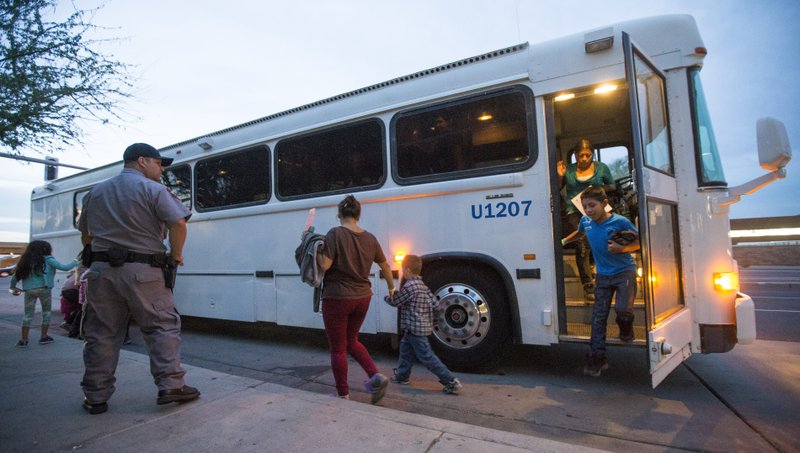
FILE - In this May 28, 2014, file photo, migrants are released from ICE custody at a Greyhound bus station in Phoenix. A Customs and Border Protection memo dated Jan. 28, 2020, obtained by The Associated Press confirms that bus companies such as Greyhound do not have to allow Border Patrol agents on board to conduct routine checks for illegal immigrants, despite the company's insistence that it has no choice but to do so. (Michael Chow/The Arizona Republic via AP, File)
SEATTLE (AP) — A Customs and Border Protection memo obtained by The Associated Press confirms that bus companies such as Greyhound do not have to allow Border Patrol agents on board to conduct routine checks for immigrants in the country illegally, which is contrary to the company’s long insistence that it has no choice but to do so.
Greyhound, the nation’s largest bus carrier, has said it does not like the agents coming on board, but it has nevertheless permitted them, claiming federal law demanded it. When provided with the memo by the AP, the company declined to say whether it would change that practice.
Greyhound has faced pressure from the American Civil Liberties Union, immigrant rights activists and Washington state Attorney General Bob Ferguson to stop allowing sweeps on buses within 100 miles (160 kilometers) of an international border or coastline.
They say the practice is intimidating and discriminatory and has become more common under President Donald Trump. Border Patrol arrests videotaped by other passengers have sparked criticism, and Greyhound faces a lawsuit in California alleging that it violated consumer protection laws by facilitating raids.
Some other bus companies, including Jefferson Lines, which operates in 14 states, and MTRWestern, which operates in the Pacific Northwest, have made clear that they do not consent to agents boarding buses.
The memo obtained by the AP was dated Jan. 28, addressed to all chief patrol agents and signed by then-Border Patrol Chief Carla Provost just before she retired. It confirms the legal position that Greyhound’s critics have taken: that the Constitution’s Fourth Amendment prevents agents from boarding buses and questioning passengers without a warrant or the consent of the company.
“When transportation checks occur on a bus at non-checkpoint locations, the agent must demonstrate that he or she gained access to the bus with the consent of the company’s owner or one of the company’s employees,” the memo states. An agent’s actions while on the bus “would not cause a reasonable person to believe that he or she is unable to terminate the encounter with the agent.”
Border Patrol officials have previously said agents do seek the consent of the bus driver before boarding and questioning passengers. Bill Kingsford, the operations officer for the Border Patrol’s Spokane, Washington, sector, said Thursday that before the memo he had never seen that policy in writing.
In response to criticism over the past two years, Greyhound has said that it does not support or “consent” to the bus searches, but that federal law left it no choice. The company said the immigration sweeps make for delays, missed buses and unhappy customers.
Greyhound’s parent company, FirstGroup PLC, said last summer: “We are required by federal law to comply with the requests of federal agents. To suggest we have lawful choice in the matter is tendentious and false.”
Greyhound said that it appreciated the Border Patrol “clarifying” its policy. “We were unaware of USBP’s memo clarifying their practices regarding transportation and bus check operations,” the company said. “We are pleased there appears to be greater context about these practices as we have publicly stated we do not consent to these searches and maintain that position.”
The statement said it would continue to request guidance from the Border Patrol. “Our goal is to ensure that our passengers and drivers feel safe and secure when riding with us, and we’ll continue to make that our top priority.”
Advocates said the memo could give them additional leverage.
“This puts the pressure on Greyhound,” said Matt Adams, legal director of the Northwest Immigrant Rights Project. “Are you going to stand up and protect your customers or are you going to collaborate with the government and turn over your passengers to the Border Patrol?”
ACLU chapters in 10 states — California, Washington, Vermont, New York, New Hampshire, Michigan, Florida, Maine, Texas and Arizona — wrote to Greyhound in 2018 to express their concern with passengers being pulled off buses and arrested. In several cases, they said, it appeared passengers had been singled out and questioned based on having dark skin or foreign accents.
The Border Patrol denies that, saying all passengers are questioned.
“Greyhound must take a firm stance — issue a public statement, add signage to buses and stations, train and empower employees, etc. — to make it abundantly clear that the company as a whole does not consent to these searches,” said Andrea Flores, deputy director of policy at the ACLU’s Equality Division.
Washington’s state’s Democratic attorney general has threatened legal action, saying that Greyhound’s acquiescence to the Border Patrol causes travel delays as well as alarm and confusion for patrons — in potential violation of state consumer protection law. He asked Greyhound last year to take several steps, including posting stickers on its buses notifying the Border Patrol that it does not consent to searches, but the company has so far declined to do so.
Other bus companies contacted by the attorney general’s office have placed stickers on their doors noting that the company does not consent to searches or have given drivers placards to hand to agents explaining the refusal.
“This memo is consistent with what my office has been saying all along to Greyhound,” Ferguson said in a statement. “Unfortunately, Greyhound continues to demonstrate indifference to the legal rights of its customers. If Greyhound refuses to recognize their legal obligations, then we will be forced to take action.”
Under then-President Barack Obama, Customs and Border Protection in late 2011 began cutting back on so-called “transportation checks,” especially along the U.S.-Canada border, amid criticism that it amounted to racial profiling. The agency told agents to keep away from bus and train stations entirely unless they had “actionable intelligence” about someone who had recently entered the country illegally. It also said such operations had to be cleared with Border Patrol headquarters in Washington, D.C.
The Trump administration returned authority to the chief agents in each Border Patrol sector to approve the operations, and they have been on the rise, the agency says.
In a statement, the CBP said that “enforcement operations” are routine at transportation hubs and “are performed consistent with law and in direct support of immediate border enforcement efforts.”
“The U.S. Border Patrol conducts regular outreach with transportation companies to foster good working relationships,” the statement said.
The agency has especially faced criticism for conducting the checks on buses far from the border. In Spokane, just under 100 miles (160 kilometers) from Canada, arrests at the city’s bus depot rose from 35 in 2017 to 84 last year, according to data obtained by the University of Washington’s Center for Human Rights. Bus routes there run east and west and don’t cross the border.
Among those detained in Spokane last year was Portland, Oregon, comedian Mohanad Elshieky, who was removed from a Greyhound bus as he returned home from a performance. Elshieky, a Libyan citizen who was granted asylum in the U.S., said he was detained for 20 minutes, even though he had two forms of identification showing that he was in the country legally.
Elshieky’s attorneys sued the government for false arrest in a federal lawsuit Friday. At the time of the detention, CBP said Elshieky should have been carrying different identification to prove his immigration status. The agency said it does not comment on pending litigation.
In the spirit of Whitney: Houston Hologram tour set to begin
February 19, 2020

FILE - In this Sept. 15, 2004 file photo, recording artist Whitney Houston performs at the 2004 World Music Awards at the Thomas and Mack Arena in Las Vegas. Houston is about to appear on the concert stage again. Eight years after her death, five years after the show was conceived and a year after production began, a holographic Houston will embark on a European tour starting Feb. 25, with U.S. dates expected to follow. The singer's sister-in-law and former manager Pat Houston says it's the right time for a revival, and says it's a show Whitney Houston would've wanted. The concerts will feature a projected Houston performing most of her biggest hits, including “I Will Always Love You," with real backup dancers and a live band. (AP Photo/Eric Jamison, file)
BURBANK, Calif. (AP) — Whitney Houston is about to appear on the concert stage again.
Eight years after her death, a holographic Houston will embark on a European tour that starts in England on Feb. 25 and runs through early April, with U.S. dates expected to follow.
“Now is just the right time,” said Pat Houston, the singer’s sister-in-law, former manager and the executor of her estate, which is producing the show in collaboration with BASE Hologram. “In the spirit of Whitney, I know we’re doing all the right things right now.”
Last week, a few dozen members of the media were given a dress-rehearsal preview in Burbank, California of most of “An Evening With Whitney: The Whitney Houston Hologram Tour,” which features a Houston projected onto a nearly invisible scrim on a stage with real dancers and a live backing band.
The concert set includes most of her biggest hits — “How Will I Know,” “Saving All My Love For You,” “I Will Always Love You,” along with some unexpected rarities, including a cover of Steve Winwood’s “Higher Love” that Houston first recorded three decades ago.
The show, which was first conceived five years ago, used a body double along with hundreds of hours of Houston performances and extensive CGI synthesizing.
“We created the hologram the same way they did Carrie Fisher in the ‘Star Wars’ movie ‘Rogue One,’” said Marty Tudor, CEO of BASE Hologram, which has previously revived performing versions of dead singers including Roy Orbison and Maria Callas. “It’s lengthy, it’s tedious, it’s a big, complicated process, but I think it worked.”
The ambitious performance is the modest brainchild of Whitney Houston herself, in at least one respect.
While on her final European tour, she had an “unplugged” section of her show, with a stripped down band and minimal fanfare. Houston liked that so much that shortly before her death at age 48 on the eve of the 2012 Grammy Awards, she expressed a desire to one day do an entire tour that way.
That concept became the model for the hologram concert.
“This is something that she wanted to do,” Pat Houston said after the media preview of the show. “I get very emotional watching this, because it is so, so close to what she wanted. The only thing missing is her, physically.”
On first appearance it’s clear how far holographic technology has come since previous iterations like Tupac’s holographic stint with Snoop Dogg at Coachella in 2012, with little of the flickering unreality audiences expect. Houston’s appearance in a gold gown looks magically realistic.
The limits are more apparent as the concert goes on, with the projection beam visible and Houston’s movements minimal, but those shortcomings are unlikely to bother the hardcore fans the tour is likely to draw.
Houston was never one for elaborate choreography or flashy moves anyway, and her small gestures — a quivering jaw on long-held notes, fluttering fingers for vocal flourishes, are all captured here.
“Whitney didn’t dance a lot, but when she did do her little moves, they were so perfectly Whitney,” said Fatima Robinson, who choreographed the show. “We did lots of studying her behavior in her videos. We would study her movements, and find the best moments in some of the live videos that just really embody her.”
The show still features plenty of dancing, via four backup dancers and two moving backup singers, all of whom occasionally interact with the hologram.
But Houston mostly preferred to let her voice do the work, and that part of the show works seamlessly, through a blend of studio takes and live performances. Close listeners may think they’re hearing the album version of a hit before it swerves into seemingly spontaneous moments that give it a live feeling.
The sound crew also found moments of between-song patter from Houston that were eternal enough to use for the new show.
“May God bless you and keep you, and let us pray for peace, and pray for the answer,” she says toward the end of the set.
The production may be most effective when it embraces its holographic possibilities — including having Houston swarmed in a shimmering shower of golden sparks during the climactic performance of “I Will Always Love You.”
Dressing the Houston hologram provided its own set of problems and possibilities.
“The first thing is, you can’t do black,” Timothy Snell, who oversaw the wardrobe for the show, said with a mock gasp. “And black and sparkles are your first go-to. But Whitney also loved color.”
Along with the gold gown, her outfits include a shimmering orange jumpsuit and a floor-length pink flowered coat.
“She liked to look sophisticated and timeless,” Snell said. “And those timeless looks really show up here.”
February 19, 2020
FILE - In this Sept. 15, 2004 file photo, recording artist Whitney Houston performs at the 2004 World Music Awards at the Thomas and Mack Arena in Las Vegas. Houston is about to appear on the concert stage again. Eight years after her death, five years after the show was conceived and a year after production began, a holographic Houston will embark on a European tour starting Feb. 25, with U.S. dates expected to follow. The singer's sister-in-law and former manager Pat Houston says it's the right time for a revival, and says it's a show Whitney Houston would've wanted. The concerts will feature a projected Houston performing most of her biggest hits, including “I Will Always Love You," with real backup dancers and a live band. (AP Photo/Eric Jamison, file)
BURBANK, Calif. (AP) — Whitney Houston is about to appear on the concert stage again.
Eight years after her death, a holographic Houston will embark on a European tour that starts in England on Feb. 25 and runs through early April, with U.S. dates expected to follow.
“Now is just the right time,” said Pat Houston, the singer’s sister-in-law, former manager and the executor of her estate, which is producing the show in collaboration with BASE Hologram. “In the spirit of Whitney, I know we’re doing all the right things right now.”
Last week, a few dozen members of the media were given a dress-rehearsal preview in Burbank, California of most of “An Evening With Whitney: The Whitney Houston Hologram Tour,” which features a Houston projected onto a nearly invisible scrim on a stage with real dancers and a live backing band.
The concert set includes most of her biggest hits — “How Will I Know,” “Saving All My Love For You,” “I Will Always Love You,” along with some unexpected rarities, including a cover of Steve Winwood’s “Higher Love” that Houston first recorded three decades ago.
The show, which was first conceived five years ago, used a body double along with hundreds of hours of Houston performances and extensive CGI synthesizing.
“We created the hologram the same way they did Carrie Fisher in the ‘Star Wars’ movie ‘Rogue One,’” said Marty Tudor, CEO of BASE Hologram, which has previously revived performing versions of dead singers including Roy Orbison and Maria Callas. “It’s lengthy, it’s tedious, it’s a big, complicated process, but I think it worked.”
The ambitious performance is the modest brainchild of Whitney Houston herself, in at least one respect.
While on her final European tour, she had an “unplugged” section of her show, with a stripped down band and minimal fanfare. Houston liked that so much that shortly before her death at age 48 on the eve of the 2012 Grammy Awards, she expressed a desire to one day do an entire tour that way.
That concept became the model for the hologram concert.
“This is something that she wanted to do,” Pat Houston said after the media preview of the show. “I get very emotional watching this, because it is so, so close to what she wanted. The only thing missing is her, physically.”
On first appearance it’s clear how far holographic technology has come since previous iterations like Tupac’s holographic stint with Snoop Dogg at Coachella in 2012, with little of the flickering unreality audiences expect. Houston’s appearance in a gold gown looks magically realistic.
The limits are more apparent as the concert goes on, with the projection beam visible and Houston’s movements minimal, but those shortcomings are unlikely to bother the hardcore fans the tour is likely to draw.
Houston was never one for elaborate choreography or flashy moves anyway, and her small gestures — a quivering jaw on long-held notes, fluttering fingers for vocal flourishes, are all captured here.
“Whitney didn’t dance a lot, but when she did do her little moves, they were so perfectly Whitney,” said Fatima Robinson, who choreographed the show. “We did lots of studying her behavior in her videos. We would study her movements, and find the best moments in some of the live videos that just really embody her.”
The show still features plenty of dancing, via four backup dancers and two moving backup singers, all of whom occasionally interact with the hologram.
But Houston mostly preferred to let her voice do the work, and that part of the show works seamlessly, through a blend of studio takes and live performances. Close listeners may think they’re hearing the album version of a hit before it swerves into seemingly spontaneous moments that give it a live feeling.
The sound crew also found moments of between-song patter from Houston that were eternal enough to use for the new show.
“May God bless you and keep you, and let us pray for peace, and pray for the answer,” she says toward the end of the set.
The production may be most effective when it embraces its holographic possibilities — including having Houston swarmed in a shimmering shower of golden sparks during the climactic performance of “I Will Always Love You.”
Dressing the Houston hologram provided its own set of problems and possibilities.
“The first thing is, you can’t do black,” Timothy Snell, who oversaw the wardrobe for the show, said with a mock gasp. “And black and sparkles are your first go-to. But Whitney also loved color.”
Along with the gold gown, her outfits include a shimmering orange jumpsuit and a floor-length pink flowered coat.
“She liked to look sophisticated and timeless,” Snell said. “And those timeless looks really show up here.”
RIP
Larry Tesler, the father of cut-copy-paste, has died at 74
HAIL HAIL HAIL TO THE GREAT ONE
I USE CCP ALL THE TIME COULD NOT CODE WITHOUT IT
IN HIS HONOUR I CUT AND PASTED THIS ARTICLE
by RACHEL KASER — 12 hours ago in APPLE
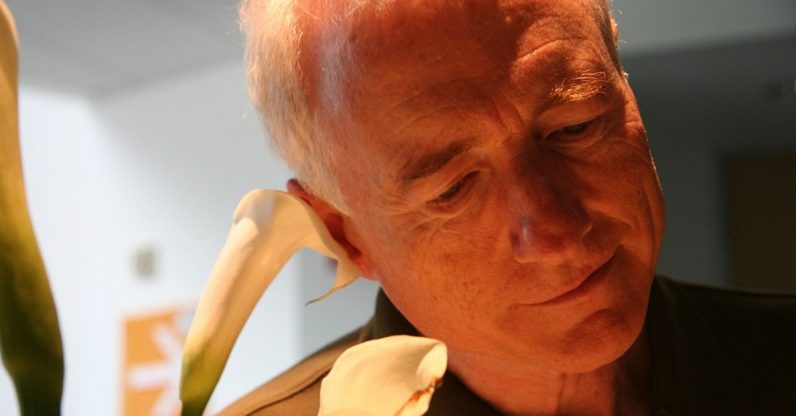
Credit: Wikimedia Commons
You might not know Larry Tesler’s name, but I can guarantee you used something he created. This former Apple computer scientist, the inventor of some of the world’s most common user interface tools — including the copy-paste — died this week at the age of 74, according to a report from AppleInsider and an obituary from Xerox.
Again, it sounds almost casual, as if this isn’t something all of us have used every day of our lives on a computer. I’ve used copy-pasting several times just while writing this very article. He also says on his website: “I have been mistakenly identified as ‘the father of the graphical user interface for the Macintosh’. I was not. However, a paternity test might expose me as one of its many grandparents.” Even if that were the extent of Tesler’s involvement in computer science, we’d still owe him a debt of gratitude, but it’s not.
Tesler was the person who was assigned to show Steve Jobs around PARC in 1979, a presentation which included Xerox’s Alto computer and its user interface. According to CNET, Jobs called the work “a goldmine,” and later persuaded Tesler to join Apple. Tesler worked there for almost 20 years, being promoted to the position of Chief Scientist in 1993. He worked on various projects, including Lisa, Newton, and Macintosh. He’s also credited with convincing Apple to invest in Advanced RISC Machines (ARM). Modern iPhones still benefit from this investment, as iOS devices run on ARM-based processors.
After he left in 1997, he worked at Amazon, Yahoo, and 23andMe. According to his most recent CV entry, he was doing private consulting work in “user experience management/research/design/programming for desktop/web/mobile/TV/print” in California.
We’ve reached out to Apple for comment.
Computer scientist who pioneered ‘copy’ and ‘paste’ has died yesterday

1 of 2
In this 1970s photo provided by Xerox PARC, Larry Tesler uses the Xerox Parc Alto early personal computer system. Tesler, the Silicon Valley pioneer who created the now-ubiquitous computer concepts such as “cut,” “copy” and “paste,” has died. He was 74. (Xerox PARC via AP)
NEW YORK (AP) — Larry Tesler, the Silicon Valley pioneer who created the now-ubiquitous computer concepts such as “cut,” “copy” and “paste,” has died. He was 74.
He made using computers easier for generations as a proponent and pioneer of what he called “modeless editing.” That meant a user wouldn’t have to use a keyboard to switch between modes to write and edit, for example.
“The inventor of cut/copy & paste, find & replace, and more was former Xerox researcher Larry Tesler. Your workday is easier thanks to his revolutionary ideas,” Xerox said in a tweet Wednesday.
Tesler was born in New York and attended Stanford University, where he received a degree in mathematics in 1965.
In 1973, he joined Xerox Palo Alto Research Center, a division of the copier company that worked on creating computer products. There, he pioneered concepts that helped make computers more user-friendly. That included such concepts as moving text through cut and paste and inserting text by clicking on a section and just typing.
He continued that work when he joined Apple in 1980. At Apple, he worked on a variety of products including the Lisa computer, the Newton personal digital assistant and the Macintosh.
After leaving Apple in 1997 he co-founded an education software company and held executive positions at Amazon, Yahoo and the genetics-testing service 23andMe before turning to independent consulting.
In 2012, Tesler told the BBC that he enjoyed working with younger people.
“There’s a very strong element of excitement, of being able to share what you’ve learned with the next generation,” he said.
Larry Tesler, the father of cut-copy-paste, has died at 74
HAIL HAIL HAIL TO THE GREAT ONE
I USE CCP ALL THE TIME COULD NOT CODE WITHOUT IT
IN HIS HONOUR I CUT AND PASTED THIS ARTICLE
by RACHEL KASER — 12 hours ago in APPLE
Credit: Wikimedia Commons
.jpeg)
You might not know Larry Tesler’s name, but I can guarantee you used something he created. This former Apple computer scientist, the inventor of some of the world’s most common user interface tools — including the copy-paste — died this week at the age of 74, according to a report from AppleInsider and an obituary from Xerox.
The inventor of cut/copy & paste, find & replace, and more was former Xerox researcher Larry Tesler. Your workday is easier thanks to his revolutionary ideas. Larry passed away Monday, so please join us in celebrating him. Photo credit: Yahoo CC-By-2.0 https://t.co/MXijSIMgoA pic.twitter.com/kXfLFuOlon
— Xerox (@Xerox) February 19, 2020
In 1973, Tesler joined the Xerox Palo Alto Research Center (PARC), where he worked with Tim Mott to create the Gypsy text editor. It was within Gypsy that he created the modeless method for copying and moving parts of text, which we now know as cutting, copying, pasting. You can still view his modest-looking CV on his website here, in which he talks about the work he did while at the company. He describes his invention of the copy-paste thus:Conceived, implemented and usability-tested GUI (graphical user interface) and IDE (integrated development environment) capabilities that have become standards in the industry, including the ability to:… insert or overwrite text without entering a mode by simply clicking or dragging and then typing… move or copy text without entering a mode using cut/copy and paste… type or paste find & replace text into a form that can be edited before and after searching…
Again, it sounds almost casual, as if this isn’t something all of us have used every day of our lives on a computer. I’ve used copy-pasting several times just while writing this very article. He also says on his website: “I have been mistakenly identified as ‘the father of the graphical user interface for the Macintosh’. I was not. However, a paternity test might expose me as one of its many grandparents.” Even if that were the extent of Tesler’s involvement in computer science, we’d still owe him a debt of gratitude, but it’s not.
Tesler was the person who was assigned to show Steve Jobs around PARC in 1979, a presentation which included Xerox’s Alto computer and its user interface. According to CNET, Jobs called the work “a goldmine,” and later persuaded Tesler to join Apple. Tesler worked there for almost 20 years, being promoted to the position of Chief Scientist in 1993. He worked on various projects, including Lisa, Newton, and Macintosh. He’s also credited with convincing Apple to invest in Advanced RISC Machines (ARM). Modern iPhones still benefit from this investment, as iOS devices run on ARM-based processors.
After he left in 1997, he worked at Amazon, Yahoo, and 23andMe. According to his most recent CV entry, he was doing private consulting work in “user experience management/research/design/programming for desktop/web/mobile/TV/print” in California.
We’ve reached out to Apple for comment.
Computer scientist who pioneered ‘copy’ and ‘paste’ has died yesterday
1 of 2
In this 1970s photo provided by Xerox PARC, Larry Tesler uses the Xerox Parc Alto early personal computer system. Tesler, the Silicon Valley pioneer who created the now-ubiquitous computer concepts such as “cut,” “copy” and “paste,” has died. He was 74. (Xerox PARC via AP)
NEW YORK (AP) — Larry Tesler, the Silicon Valley pioneer who created the now-ubiquitous computer concepts such as “cut,” “copy” and “paste,” has died. He was 74.
He made using computers easier for generations as a proponent and pioneer of what he called “modeless editing.” That meant a user wouldn’t have to use a keyboard to switch between modes to write and edit, for example.
“The inventor of cut/copy & paste, find & replace, and more was former Xerox researcher Larry Tesler. Your workday is easier thanks to his revolutionary ideas,” Xerox said in a tweet Wednesday.
Tesler was born in New York and attended Stanford University, where he received a degree in mathematics in 1965.
In 1973, he joined Xerox Palo Alto Research Center, a division of the copier company that worked on creating computer products. There, he pioneered concepts that helped make computers more user-friendly. That included such concepts as moving text through cut and paste and inserting text by clicking on a section and just typing.
He continued that work when he joined Apple in 1980. At Apple, he worked on a variety of products including the Lisa computer, the Newton personal digital assistant and the Macintosh.
After leaving Apple in 1997 he co-founded an education software company and held executive positions at Amazon, Yahoo and the genetics-testing service 23andMe before turning to independent consulting.
In 2012, Tesler told the BBC that he enjoyed working with younger people.
“There’s a very strong element of excitement, of being able to share what you’ve learned with the next generation,” he said.
Florida ‘red flag’ gun law used 3,500 times since Parkland

1 of 5
FILE - In this Wednesday, Feb. 14, 2018, file photo, students hold their hands in the air as they are evacuated by police from Marjory Stoneman Douglas High School in Parkland, Fla., after a shooter opened fire on the campus. A Florida law that allows judges to bar anyone deemed dangerous from possessing firearms has been used 3,500 times since its enactment after the 2018 high school massacre. An Associated Press analysis shows the law is being used unevenly around the state. (Mike Stocker/South Florida Sun-Sentinel via AP, File)
FORT LAUDERDALE, Fla. (AP) — A 23-year-old man who posted on Facebook, “I don’t know why I don’t go on a killing spree.” A West Palm Beach couple who shot up their home while high on cocaine. A 31-year-old Gulf Coast man who pointed a semiautomatic rifle at a motorcyclist.
All four Florida residents had their guns taken away by judges under a “red flag” law the state passed three weeks after authorities say a mentally disturbed man killed 17 people in a shooting at Marjory Stoneman Douglas High School in Parkland two years ago Friday.
The law, supported by legislators of both parties , has been applied more than 3,500 times since, with the pace accelerating during the last half of 2019. Even so, an Associated Press analysis of the law showed its use is inconsistent, with some counties and cities using it rarely and others not at all.
Advocates of Florida’s red flag measure say before it existed, it was often difficult to remove firearms from those making threats or suffering severe mental breakdowns. Investigators did not act on reports that the Parkland shooter was threatening to carry out a school massacre. But even if they had, it is likely he would have been allowed to keep his guns because he had no felony convictions or involuntary, long-term mental commitments, they say.
Pinellas County Sheriff Bob Gualtieri, who leads a commission that investigated the massacre’s causes, says the shooter would have easily qualified for a red flag order. Gualtieri says while it is impossible to say that would have prevented the shooting, the gunman wouldn’t have been able to legally buy weapons or ammunition, making his preparation difficult.
“We have needed this law for decades,” said Gualtieri, who started a unit in his department that handles only red flag cases.
But the law also has vocal critics: those who say it violates the U.S. and state constitutions, including the right to bear arms, and others who argue that laws already on the books in Florida made it unnecessary. Still others say it discriminates against the poor: Because the hearing with a judge is not a criminal proceeding, low-income defendants aren’t provided with a free lawyer.
Sixteen other states plus the District of Columbia have similar laws, 11 of which were enacted after the Feb. 14, 2018, shooting at Stoneman Douglas. President Donald Trump has at times supported a federal proposal, but has not strongly advocated it before Congress.
To get an order in Florida, police agencies must file a request with a civil court, citing serious mental illness or threats a person has made. If the judge agrees, the person must surrender their firearms to police. Within two weeks, a hearing is held during which the judge decides whether to take the person’s weapons away for a year. Police agencies can apply for an extension if there is evidence a person remains a threat after a year. If not, the guns are returned.
Orlando attorney Kendra Parris, who is trying to get a case before the state Supreme Court to overturn the law, says it doesn’t adequately define some terms, such as what constitutes serious mental health issues. And in any case, she says, other Florida statutes, such as misdemeanor breach of the peace, already allow police to take firearms from the truly dangerous before they act. That statute could easily have been invoked against the Stoneman Douglas shooter, she said.
“Probably two dozen times this guy could have been charged for breach of the peace and had his firearms removed,” Parris said.
The AP analysis shows that from March 2018, when the law was enacted, through December 2019, there was a wide disparity in its per capita usage in Florida’s 67 counties. Twenty issued at least one for every 5,500 residents during that time period, the statewide average. Three issued at least one for every 2,000 residents, including Gualtieri’s Pinellas County, which includes the Tampa Bay area, and has nearly 1 million people. Highlands County, near Lake Okeechobee, ranked No. 1, issuing one for every 850 residents.
On the other extreme, 12 counties issued one for every 30,000 residents or less. Two neighboring Panhandle counties — Escambia and Santa Rosa — issued one for every 100,000 residents or more. Another nine small, rural counties issued none.
Highlands County Sheriff Paul Blackman said he doesn’t know why his county is No. 1, but he noted that his deputies average two calls daily for mental health crises. The county has just over 100,000 residents and was the scene of a bank shooting last year that left five women dead.
“If someone has made a threat to hurt themselves or others and is intent on using a firearm, we will try to get a risk protection order against them so we can take away those guns,” Blackman said. But even the law isn’t a guarantee: Two Highlands men who received orders still killed themselves, one with carbon monoxide and the other with an illegally obtained gun, he said.
The sheriffs whose counties had no or few red flag orders during the reviewed period said in an AP questionnaire that they are not philosophically opposed to the law — they just haven’t needed it.
Santa Rosa Sheriff Bob Johnson said it was a “fluke” that his county of 155,000 had only issued one order. Baker County Maj. Randy Crews explained that the lack of red flag orders from his county on the Georgia border west of Jacksonville has to do with the fact that his deputies know most of the 27,000 residents and can intercede quickly if someone is having a breakdown and making threats.
Crews said most potential red flag cases are asked to surrender their guns to a relative, who is told to not return them until the person finishes mental health treatment. He said that approach works better than confrontation and has never backfired. He said the office would not hesitate to use the law, however, if someone didn’t cooperate.
1 of 5
FILE - In this Wednesday, Feb. 14, 2018, file photo, students hold their hands in the air as they are evacuated by police from Marjory Stoneman Douglas High School in Parkland, Fla., after a shooter opened fire on the campus. A Florida law that allows judges to bar anyone deemed dangerous from possessing firearms has been used 3,500 times since its enactment after the 2018 high school massacre. An Associated Press analysis shows the law is being used unevenly around the state. (Mike Stocker/South Florida Sun-Sentinel via AP, File)
FORT LAUDERDALE, Fla. (AP) — A 23-year-old man who posted on Facebook, “I don’t know why I don’t go on a killing spree.” A West Palm Beach couple who shot up their home while high on cocaine. A 31-year-old Gulf Coast man who pointed a semiautomatic rifle at a motorcyclist.
All four Florida residents had their guns taken away by judges under a “red flag” law the state passed three weeks after authorities say a mentally disturbed man killed 17 people in a shooting at Marjory Stoneman Douglas High School in Parkland two years ago Friday.
The law, supported by legislators of both parties , has been applied more than 3,500 times since, with the pace accelerating during the last half of 2019. Even so, an Associated Press analysis of the law showed its use is inconsistent, with some counties and cities using it rarely and others not at all.
Advocates of Florida’s red flag measure say before it existed, it was often difficult to remove firearms from those making threats or suffering severe mental breakdowns. Investigators did not act on reports that the Parkland shooter was threatening to carry out a school massacre. But even if they had, it is likely he would have been allowed to keep his guns because he had no felony convictions or involuntary, long-term mental commitments, they say.
Pinellas County Sheriff Bob Gualtieri, who leads a commission that investigated the massacre’s causes, says the shooter would have easily qualified for a red flag order. Gualtieri says while it is impossible to say that would have prevented the shooting, the gunman wouldn’t have been able to legally buy weapons or ammunition, making his preparation difficult.
“We have needed this law for decades,” said Gualtieri, who started a unit in his department that handles only red flag cases.
But the law also has vocal critics: those who say it violates the U.S. and state constitutions, including the right to bear arms, and others who argue that laws already on the books in Florida made it unnecessary. Still others say it discriminates against the poor: Because the hearing with a judge is not a criminal proceeding, low-income defendants aren’t provided with a free lawyer.
Sixteen other states plus the District of Columbia have similar laws, 11 of which were enacted after the Feb. 14, 2018, shooting at Stoneman Douglas. President Donald Trump has at times supported a federal proposal, but has not strongly advocated it before Congress.
To get an order in Florida, police agencies must file a request with a civil court, citing serious mental illness or threats a person has made. If the judge agrees, the person must surrender their firearms to police. Within two weeks, a hearing is held during which the judge decides whether to take the person’s weapons away for a year. Police agencies can apply for an extension if there is evidence a person remains a threat after a year. If not, the guns are returned.
Orlando attorney Kendra Parris, who is trying to get a case before the state Supreme Court to overturn the law, says it doesn’t adequately define some terms, such as what constitutes serious mental health issues. And in any case, she says, other Florida statutes, such as misdemeanor breach of the peace, already allow police to take firearms from the truly dangerous before they act. That statute could easily have been invoked against the Stoneman Douglas shooter, she said.
“Probably two dozen times this guy could have been charged for breach of the peace and had his firearms removed,” Parris said.
The AP analysis shows that from March 2018, when the law was enacted, through December 2019, there was a wide disparity in its per capita usage in Florida’s 67 counties. Twenty issued at least one for every 5,500 residents during that time period, the statewide average. Three issued at least one for every 2,000 residents, including Gualtieri’s Pinellas County, which includes the Tampa Bay area, and has nearly 1 million people. Highlands County, near Lake Okeechobee, ranked No. 1, issuing one for every 850 residents.
On the other extreme, 12 counties issued one for every 30,000 residents or less. Two neighboring Panhandle counties — Escambia and Santa Rosa — issued one for every 100,000 residents or more. Another nine small, rural counties issued none.
Highlands County Sheriff Paul Blackman said he doesn’t know why his county is No. 1, but he noted that his deputies average two calls daily for mental health crises. The county has just over 100,000 residents and was the scene of a bank shooting last year that left five women dead.
“If someone has made a threat to hurt themselves or others and is intent on using a firearm, we will try to get a risk protection order against them so we can take away those guns,” Blackman said. But even the law isn’t a guarantee: Two Highlands men who received orders still killed themselves, one with carbon monoxide and the other with an illegally obtained gun, he said.
The sheriffs whose counties had no or few red flag orders during the reviewed period said in an AP questionnaire that they are not philosophically opposed to the law — they just haven’t needed it.
Santa Rosa Sheriff Bob Johnson said it was a “fluke” that his county of 155,000 had only issued one order. Baker County Maj. Randy Crews explained that the lack of red flag orders from his county on the Georgia border west of Jacksonville has to do with the fact that his deputies know most of the 27,000 residents and can intercede quickly if someone is having a breakdown and making threats.
Crews said most potential red flag cases are asked to surrender their guns to a relative, who is told to not return them until the person finishes mental health treatment. He said that approach works better than confrontation and has never backfired. He said the office would not hesitate to use the law, however, if someone didn’t cooperate.
UK patient plays violin during unusual brain surgery
February 19, 2020
LONDON (AP) — Surgeons at King’s College Hospital in London removed a brain tumor from a woman who played the violin during the procedure.
Doctors for violinist Dagmar Turner, 53, mapped her brain before the surgery to identify areas that were active when she played the instrument and those responsible for controlling language and movement.
Doctors then woke her in mid-procedure so she could play to “ensure the surgeons did not damage any crucial areas of the brain that controlled Dagmar’s delicate hand movements,″ the hospital said in a statement.
“We knew how important the violin is to Dagmar, so it was vital that we preserved function in the delicate areas of her brain that allowed her to play,″ said Prof. Keyoumars Ashkan, her neurosurgeon. “We managed to remove over 90% of the tumor, including all the areas suspicious of aggressive activity, while retaining full function in her left hand.”
Turner, who plays in Isle of Wight Symphony Orchestra and various choral societies, left the hospital three days later and hopes to return to her orchestra soon. She was full of praise for the efforts of Ashkan, a fellow music lover.
“The thought of losing my ability to play was heart-breaking but, being a musician himself, Prof. Ashkan understood my concerns,″ she said. “He and the team at King’s went out of their way to plan the operation – from mapping my brain to planning the position I needed to be in to play.″
February 19, 2020
LONDON (AP) — Surgeons at King’s College Hospital in London removed a brain tumor from a woman who played the violin during the procedure.
Doctors for violinist Dagmar Turner, 53, mapped her brain before the surgery to identify areas that were active when she played the instrument and those responsible for controlling language and movement.
Doctors then woke her in mid-procedure so she could play to “ensure the surgeons did not damage any crucial areas of the brain that controlled Dagmar’s delicate hand movements,″ the hospital said in a statement.
“We knew how important the violin is to Dagmar, so it was vital that we preserved function in the delicate areas of her brain that allowed her to play,″ said Prof. Keyoumars Ashkan, her neurosurgeon. “We managed to remove over 90% of the tumor, including all the areas suspicious of aggressive activity, while retaining full function in her left hand.”
Turner, who plays in Isle of Wight Symphony Orchestra and various choral societies, left the hospital three days later and hopes to return to her orchestra soon. She was full of praise for the efforts of Ashkan, a fellow music lover.
“The thought of losing my ability to play was heart-breaking but, being a musician himself, Prof. Ashkan understood my concerns,″ she said. “He and the team at King’s went out of their way to plan the operation – from mapping my brain to planning the position I needed to be in to play.″
He told me it was an old German viol-player, a strange dumb man
who signed his name as Erich Zann, and who played evenings in a cheap theatre orchestra
The Road Between Worlds: “The Music of Erich Zann” | Tor.com
https://www.tor.com › 2014/09/10 › the-road-between-worlds-the-music-o...
Sep 10, 2014 - Today we're looking at “The Music of Erich Zann,” written in December ... He hears music from the garret above: a viol playing wild, strange ...
The Music of Erich Zann | The H.P. Lovecraft Wiki | Fandom
https://lovecraft.fandom.com › wiki › The_Music_of_Erich_Zann
"The Music of Erich Zann" is a short story by American author H. P. Lovecraft. ... In a strange part of the city he had never seen before, on a street named "Rue ...
Jan 14, 2016 - [esplayer url = “http://traffic.libsyn.com/artc/ARTC161-ErichZann.mp3” width ... get back to the audio drama with The Music of Erich Zann by H. P. Lovecraft, ... His writing focuses on the strange, the macabre, and the insane.
Trump delivers on pledge for wealthy California farmers
DON'T CALL THEM FARMERS CALL THEM WHAT THEY ARE
AGRIBUSINESS CORPORATIONS
President Donald Trump walks over to talk to the media before he boards Air Force One for a trip to Los Angeles to attend a campaign fundraiser, Tuesday, Feb. 18, 2020, at Andrews Air Force Base, Md. (AP Photo/Evan Vucci)
WASHINGTON (AP) — Hoisting the spoils of victories in California’s hard-fought water wars, President Donald Trump is directing more of the state’s precious water to wealthy farmers and other agriculture interests when he visits their Republican Central Valley stronghold Wednesday.
Changes by the Trump administration are altering how federal authorities decide who gets water, and how much, in California, the U.S. state with the biggest population and economy and most lucrative farm output. Climate change promises to only worsen the state’s droughts and water shortages, raising the stakes.
Campaigning in the Central Valley farm hub of Fresno in 2016, Trump pledged then he’d be “opening up the water” for farmers. Candidate Trump denounced “insane” environmental rules meant to ensure that enough fresh water stayed in rivers and the San Francisco Bay to sustain more than a dozen endangered fish and other native species, which are struggling as agriculture and development diverts more water and land from wildlife.
Visiting Bakersfield in the Central Valley on Wednesday, Trump is expected to ceremoniously sign his administration’s reworking of those environmental rules. Environmental advocates and the state say the changes will allow federal authorities to pump more water from California’s wetter north southward to its biggest cities and farms.
The Trump administration, Republican lawmakers, and farm and water agencies say the changes will allow for more flexibility in water deliveries. In California’s heavily engineered water system, giant state and federal water projects made up of hundreds of miles of pipes, canals, pumps and dams, carry runoff from rain and Sierra Nevada snow melt from north to south — and serve as field of battle for lawsuits and regional political fights over competing demands for water.
Environmental groups say the changes will speed the disappearance of endangered winter-run salmon and other native fish, and make life tougher for whales and other creatures in the San Francisco Bay and Pacific Ocean.
After an initial study by federal scientists found the rule changes would harm salmon and whales, the Trump administration ordered a new round of review, California news organizations reported last year.
The overall effort “ensured the highest quality” of evaluation of the rule changes, Paul Souza, Pacific Southwest director for the Fish and Wildlife Service, which is under the Interior Department, said in a statement Tuesday.
“We strongly disagree that the proposal will reduce protections for endangered species,” Souza said.
Beyond operational changes in the federal Central Valley Project water system, the administration’s changes allow for more habitat restoration, upgrades in fish hatcheries and the water system itself, monitoring of species and other improvements, Souza said.
Careers of California politicians can rise and fall on water issues. It’s often rancorous, as when Republican Rep. Devin Nunes in 2017 celebrated passage of a House resolution weakening environmental protections by tweeting a photo of cupcakes decorated with Delta smelt, a Northern California fish nearing extinction.
Trump mocked environmental limits on water deliveries in California in his 2016 campaign visit, saying they were all about “a certain kind of 3-inch fish,” the smelt.
Conservation groups have promised new rounds of water lawsuits to try to block the redone environmental rules.
“The species really are in much worse shape” than in earlier years, Doug Obegi with the Natural Resources Defense Council said. “We are at the point where we may watch them wink out ... potentially in the next few years.”
Another big change alarming conservation groups and some water agencies outside of Southern California is the pending award of a permanent federal contract from the Bureau of Reclamation to Westlands Water District, a Central Valley-based water agency that is the nation’s largest irrigation water district.
The Bureau of Reclamation is under the Interior Department, led by Secretary David Bernhardt, who was a lobbyist of Westlands Water District in Washington through 2016. Trump nominated Bernhardt to join the Interior Department, initially as deputy secretary, the next year.
The then-Republican-led Congress in 2016 approved legislation allowing California water agencies to pay to make their federal water contracts permanent. Westlands has jumped toward the front of the line, closing its public comment period last month.
Interior officials said Westlands still owes around $200 million from the initial cost of nearly a half-billion dollars.
Conservation groups and some Northern California water agencies fear Westlands’ permanent contract — and political power — will help it claim a bigger share of water when drought and over-demand reduce supplies, said Patricia Schifferle, an California water-law expert and activist.
In December, Gov. Gavin Newsom’s administration said it planned to sue the Trump administration over their proposed new rules, saying they do not do enough to protect endangered species.
That lawsuit still has not been filed. Wade Crowfoot, secretary of the California Natural Resources Agency, said state officials are still negotiating with the Trump administration about whether they would change the proposed rules to address the state’s environmental concerns.
“From our perspective, if we can resolve our concerns and ensure adequate protection of these endangered species, then we think it would be important to do so and we could avoid probably years of litigation,” Crowfoot said.
—-
Beam contributed from Sacramento.
President Donald Trump walks over to talk to the media before he boards Air Force One for a trip to Los Angeles to attend a campaign fundraiser, Tuesday, Feb. 18, 2020, at Andrews Air Force Base, Md. (AP Photo/Evan Vucci)
WASHINGTON (AP) — Hoisting the spoils of victories in California’s hard-fought water wars, President Donald Trump is directing more of the state’s precious water to wealthy farmers and other agriculture interests when he visits their Republican Central Valley stronghold Wednesday.
Changes by the Trump administration are altering how federal authorities decide who gets water, and how much, in California, the U.S. state with the biggest population and economy and most lucrative farm output. Climate change promises to only worsen the state’s droughts and water shortages, raising the stakes.
Campaigning in the Central Valley farm hub of Fresno in 2016, Trump pledged then he’d be “opening up the water” for farmers. Candidate Trump denounced “insane” environmental rules meant to ensure that enough fresh water stayed in rivers and the San Francisco Bay to sustain more than a dozen endangered fish and other native species, which are struggling as agriculture and development diverts more water and land from wildlife.
Visiting Bakersfield in the Central Valley on Wednesday, Trump is expected to ceremoniously sign his administration’s reworking of those environmental rules. Environmental advocates and the state say the changes will allow federal authorities to pump more water from California’s wetter north southward to its biggest cities and farms.
The Trump administration, Republican lawmakers, and farm and water agencies say the changes will allow for more flexibility in water deliveries. In California’s heavily engineered water system, giant state and federal water projects made up of hundreds of miles of pipes, canals, pumps and dams, carry runoff from rain and Sierra Nevada snow melt from north to south — and serve as field of battle for lawsuits and regional political fights over competing demands for water.
Environmental groups say the changes will speed the disappearance of endangered winter-run salmon and other native fish, and make life tougher for whales and other creatures in the San Francisco Bay and Pacific Ocean.
After an initial study by federal scientists found the rule changes would harm salmon and whales, the Trump administration ordered a new round of review, California news organizations reported last year.
The overall effort “ensured the highest quality” of evaluation of the rule changes, Paul Souza, Pacific Southwest director for the Fish and Wildlife Service, which is under the Interior Department, said in a statement Tuesday.
“We strongly disagree that the proposal will reduce protections for endangered species,” Souza said.
Beyond operational changes in the federal Central Valley Project water system, the administration’s changes allow for more habitat restoration, upgrades in fish hatcheries and the water system itself, monitoring of species and other improvements, Souza said.
Careers of California politicians can rise and fall on water issues. It’s often rancorous, as when Republican Rep. Devin Nunes in 2017 celebrated passage of a House resolution weakening environmental protections by tweeting a photo of cupcakes decorated with Delta smelt, a Northern California fish nearing extinction.
Trump mocked environmental limits on water deliveries in California in his 2016 campaign visit, saying they were all about “a certain kind of 3-inch fish,” the smelt.
Conservation groups have promised new rounds of water lawsuits to try to block the redone environmental rules.
“The species really are in much worse shape” than in earlier years, Doug Obegi with the Natural Resources Defense Council said. “We are at the point where we may watch them wink out ... potentially in the next few years.”
Another big change alarming conservation groups and some water agencies outside of Southern California is the pending award of a permanent federal contract from the Bureau of Reclamation to Westlands Water District, a Central Valley-based water agency that is the nation’s largest irrigation water district.
The Bureau of Reclamation is under the Interior Department, led by Secretary David Bernhardt, who was a lobbyist of Westlands Water District in Washington through 2016. Trump nominated Bernhardt to join the Interior Department, initially as deputy secretary, the next year.
The then-Republican-led Congress in 2016 approved legislation allowing California water agencies to pay to make their federal water contracts permanent. Westlands has jumped toward the front of the line, closing its public comment period last month.
Interior officials said Westlands still owes around $200 million from the initial cost of nearly a half-billion dollars.
Conservation groups and some Northern California water agencies fear Westlands’ permanent contract — and political power — will help it claim a bigger share of water when drought and over-demand reduce supplies, said Patricia Schifferle, an California water-law expert and activist.
In December, Gov. Gavin Newsom’s administration said it planned to sue the Trump administration over their proposed new rules, saying they do not do enough to protect endangered species.
That lawsuit still has not been filed. Wade Crowfoot, secretary of the California Natural Resources Agency, said state officials are still negotiating with the Trump administration about whether they would change the proposed rules to address the state’s environmental concerns.
“From our perspective, if we can resolve our concerns and ensure adequate protection of these endangered species, then we think it would be important to do so and we could avoid probably years of litigation,” Crowfoot said.
—-
Beam contributed from Sacramento.
Subscribe to:
Posts (Atom)