Tuesday, October 27, 2020


Low cost, customized prosthesis using 3D printing

SUTD, together with Tan Tock Seng Hospital, developed a novel 3D printed non-metallic self-locking prosthetic arm for a patient with a forequarter amputation - it is more comfortable, flexible and 20% cheaper than a conventional prosthesis.

SINGAPORE UNIVERSITY OF TECHNOLOGY AND DESIGN

Research News

IMAGE

IMAGE: THE SCHEMATIC REPRESENTATION OF THE VARIOUS STAGES INVOLVED IN THE USER-CENTERED, ITERATIVE PROCESS OF PROSTHESIS DESIGN. view more 

CREDIT: SUTD

Upper limb forequarter amputations which involve the removal of the entire arm and scapula require highly customized prosthetic devices that are expensive but yet, usually underutilized due to their high maintenance and low comfort levels. At the same time, while cosmetic prostheses - artificial limbs which provide patients the appearance of a pre-amputated body part - have a higher rate of continuous use, they have limitations in functional use.

Combining both technical and clinical expertise, the Singapore University of Technology and Design's (SUTD) Medical Engineering and Design Laboratory collaborated with Tan Tock Seng Hospital's (TTSH) Foot Care and Limb Design Centre, the largest provider of prosthetic services in Singapore, on a patient-specific upper limb prosthesis. This cosmetic prosthesis with a self-locking function was found to be more comfortable and around 20 percent cheaper compared to similar prostheses available in the industry.

To reduce the underutilization and delivery time, while taking improved fit, function and comfort into consideration, the research team turned to 3D printing due to its versatility and ability to cater to the device's geometrical and functional complexity.

The team also adopted a user-centered design approach, involving the patient throughout the customized design and development process. They then meticulously captured and documented the design process so that it can serve as a blueprint for other device applications or be replicated for other patients with limb amputations, thus reducing the over reliance on a prosthetist's judgement, skills and experience for an optimal fit.

Based on regular consultations with the patient and prosthetist at TTSH, including the shadowing of the patient to better understand his daily activities and functional needs, it was concluded that the new prosthesis needed to be lightweight, capable of dissipating heat, locking at 90° of flexion, comfortable to wear and void of metal components that would be detectable by airport scanners.

The research team used a digital scanner to capture residuum and contralateral arm geometries to replicate the patient's arm with high precision. They then designed different parts of the prosthesis from the captured geometries, 3D printed and verified these for fit, comfort, and function (refer to image). Their research paper was published in the Prosthetics and Orthotics International Journal.

The patient's satisfaction for the 3D printed prosthesis over his conventionally made prosthesis rated higher for its overall effectiveness, accurate size, symmetrical appearance and ease of use. Even though the new prosthesis weighed 100 grams more than the current prosthesis, the patient preferred it due to its improved suspension contributing to the feel of a lighter arm during use. However, the prosthesis was perceived to be less durable due to the patient's unfamiliarity with the quality of 3D printing, his concerns of the elbow locking mechanism breaking, and the appearance of the mesh structure compared to his current prosthesis.

"Digitalization and 3D printing have been transforming the design and manufacture of complex medical devices, surgery planning, medical education, and care delivery. Even though 3D printing technology has been around for more than three decades since the early 90's, it wasn't until recently that people really began to appreciate and trust it for end-use fabrication. In this work, 3D printing freed us from the manufacturing constraints and enabled us to optimize the design to suit the patient's needs. More importantly, this work sets the groundwork for future patient-specific end-use 3D printed parts for prosthetic needs," said principal investigator, Assistant Professor Subburaj Karupppasamy from SUTD's Engineering Product Development pillar.

Trevor Binedell, Principal Prosthetist at the Foot Care and Limb Design Centre, TTSH, and PhD student from SUTD, added, "The collaboration between TTSH and SUTD has led to a great outcome for this patient. User-design and the digitalization techniques have elevated the levels of patient-specific care to create individual designs that truly meet the needs of the user. This process has the potential to improve unique designs for many of our patients and enhance their quality of lives."

###


Irregular appearances of glacial and interglacial climate states

A clearer picture of the sequence of glacial and interglacial periods

ALFRED WEGENER INSTITUTE, HELMHOLTZ CENTRE FOR POLAR AND MARINE RESEARCH

Research News

During the last 2.6 million years of Earth's climate has altered between glacial and interglacial states. As such, there have been times in which the transition between the two climate states appeared with either regular or irregular periodicity. AWI researcher Peter Köhler has now discovered that the irregular appearance of interglacials has been more frequent than previously thought. His study makes a significant contribution to our understanding of Earth's fundamental climate changes.

In order to understand human beings' role in the development of our current climate, we have to look back a long way, since there has always been climate change - albeit over vastly different timescales than the anthropogenic climate change, which is mainly due to the use of fossil fuels over the past 200 years. Without humans, for millions of years, climate altered between glacial and interglacial states over periods of many thousands of years, mainly because of the Earth's tilt which changes by a few degrees with a periodicity of 41,000 years. This in turn changes the angle at which the sun's rays strike Earth - and as such the energy that reaches the planet, especially at high latitudes in summer. However, there is strong evidence that during the course of the last 2.6 million years, interglacials have repeatedly been 'skipped'. The Northern Hemisphere - particularly North America - remained frozen for long periods, despite the angle of the axial tilt changing to such an extent that more solar energy once again reached Earth during the summer, which should have melted the inland ice masses. This means Earth's tilt can't be the sole reason for Earth's climate to alter between glacial and interglacial states.

In order to solve the puzzle, climate researchers are investigating more closely at what points in Earth's history irregularities occurred. Together with colleagues at Utrecht University, physicist Peter Köhler from the Alfred Wegener Institute (AWI) has now made a significant contribution towards providing a clearer picture of the sequence of glacial and interglacial periods over the last 2.6 million years. Until now, experts thought that, especially over the past 1.0 million years, glacial and interglacial periods deviated from their 41,000- year cycle, and that interglacial periods were skipped, as a result of which some glacial periods lasted for 80,0000 or even 120,000 years. "For the period between 2.6 and 1.0 million years ago, it was assumed that the rhythm was 41,000 years," says Peter Köhler. But as his study, which has now been published in the scientific journal Nature Communications, shows, there were also repeated irregularities during the period between 2.6 and 1.0 million years ago.

Köhler's study is particularly interesting because he re-evaluated a well-known dataset that researchers have been using for several years - the LR04 climate dataset - yet arrived at completely different conclusions. This dataset consists of a global evaluation of core samples from deep-sea sediments that are millions of years old, and includes measurements from the ancient shells of microscopic, single-celled marine organisms - foraminifera - that were deposited on the ocean floor. Foraminifera incorporate oxygen from the seawater into their calcium shells. But over millennia, the level of specific oxygen isotopes - oxygen atoms that have differing numbers of neutrons and therefore different masses - varies in seawater.

18O reveals what the world was like in the past

The LR04 dataset contains measurements of the ratio of the heavy oxygen isotope 18O to the lighter 16O. The ratio of 18O/16O stored in the foraminifera's shells depends on the water temperature. But there is also another effect that leads to relatively large amounts of 18O being found in the foraminifera's shells in glacial periods: when, during the course of a glacial period, there is heavy snowfall on land, which leads to the formation of thick ice sheets, the sea level falls - in the period studied, by as much as 120 m. Since 18O is heavier than 16O, water molecules containing this heavy isotope evaporate less readily than molecules containing the lighter isotope. As such, comparatively more 18O remains in the ocean and the 18O content of the foraminifera shells increases. "If you take the LR04 dataset at face value, it means you blur two effects - the influence of ocean temperature and that of land ice, or rather that of sea level change," says Peter Köhler. "This makes statements regarding the alternation of the glacial periods uncertain." And there is an additional factor: climate researchers mainly determine the sequence of glacial periods on the basis of glaciation in the Northern Hemisphere. But using 18O values doesn't allow us to say whether prehistoric glaciation chiefly occurred in the Northern Hemisphere or in Antarctica.

Computer model separates the influencing parameters

In an attempt to solve this problem, Köhler and his team evaluated the LR04 dataset in a completely different way. The data was fed into a computer model that simulates the growth and melting of the large continental ice sheets. What sets it apart: the model is capable of separating the influence of temperature and that of sea level change on the 18O concentration. Furthermore, it can accurately analyse where and when snow falls and the ice increases - more in the Northern Hemisphere or in Antarctica. "Mathematicians call this separation a deconvolution," Köhler explains, "which our model is capable of delivering." The results show that the sequence of glacials and interglacials was irregular even in the period 2.6 to 1.0 million years ago - a finding that could be crucial in the coming years. As part of the ongoing major EU project 'BE-OIC (Beyond EPICA Oldest Ice Core)', researchers are drilling deeper than ever before into the Antarctic ice. With the oldest ice core recovered to date, 'EPICA', they have 'only' travelled back roughly 800,000 years into the past. The ancient ice provides, among other things, information on how much carbon dioxide Earth's atmosphere contained at that time. With 'Beyond EPICA' they will delve circa 1.5 million years into the past. By combining the carbon dioxide measurements with Köhler's analyses, valuable insights can be gained into the relation between these two factors - the fluctuations in the sequence of glacials and the carbon dioxide content of the atmosphere. And this can help us understand the fundamental relationship between greenhouse gases and climate changes in Earth's glacial history.

###


Shifts in flowering phases of plants due to reduced insect density

Research group of Jena University and iDiv uses novel research method to study effect of insect decline on plant biodiversity

FRIEDRICH-SCHILLER-UNIVERSITAET JENA

IMAGE

IMAGE: DOCTORAL CANDIDATE JOSEPHINE ULRICH FROM THE RESEARCH TEAM OF THE UNIVERSITY OF JENA. view more 

CREDIT: (IMAGE: ANNE GÜNTHER/UNIVERSITY OF JENA)

(Jena, Germany) It still sounds unlikely today, but declines in insect numbers could well make it a frequent occurrence in the future: fields full of flowers, but not a bee in sight.

A research group of the University of Jena (Germany) and the German Centre for Integrative Biodiversity Research Halle-Jena-Leipzig (iDiv) has discovered that insects have a decisive influence on the biodiversity and flowering phases of plants. If there is a lack of insects where the plants are growing, their flowering behaviour changes. This can result in the lifecycles of the insects and the flowering periods of the plants no longer coinciding. If the insects seek nectar at the wrong time, some plants will no longer be pollinated.

Innovative research method in iDiv Ecotron

Ecosystems are changing around the world, in particular due to global warming and altered land use. Insect species are dying out and the insect biomass is decreasing. Researchers have therefore studied how the biodiversity of plants is changing in the context of climate change. For this purpose, various climate scenarios have been simulated, using different temperatures and precipitation.

In a new study reported in the specialist journal Frontiers in Plant Science, the Working Group Biodiversity of Plants of the University of Jena, led by Prof. Christine Römermann, presents a different research approach. In cooperation with scientists from iDiv, led by Prof. Nico Eisenhauer, the researchers are focusing on the influence of invertebrates, such as insects, on the biodiversity and flowering behaviour of plants.

"We know that the insect biomass is decreasing," says Josephine Ulrich, a doctoral candidate from Römermann's team, referring to a study from 2017 which detected that insects had declined by 75 per cent over the previous 30 years.

The Jena research group has now studied in detail for the first time the extent to which decreasing insect density influences plant development. Whereas previous studies had only carried out field experiments, the research team used the "Ecotron", an iDiv research facility where identical climatic situations can be simulated in artificial ecosystems and observed with cameras.

In their experiment, the researchers studied how plant composition and plant development change if the number of insects falls by three-quarters.

Mismatch between plant and animal worlds

Ulrich and her colleagues discovered that the reduced insect biomass brings about a change in plant species. It is especially the dominant plant species, such as red clover, which become more prevalent. The development of the flowering period also changes as insect density declines. Some of the plants studied flowered earlier and others later.

"These changes can lead to mismatches between plant and animal species, which lead to adverse consequences for the ecosystem," says Ulrich, the lead author of the study. Examples are the food supply of insects and pollination success. This deterioration in the ecosystem function could entail further losses of insect and plant species. An additional consequence could be that plants become increasingly infested with pests. Due to the falling numbers of insects that feed on aphids, for example, these pests could spread unchecked.

###

Haunted house researchers investigate the mystery of playing with fear

ASSOCIATION FOR PSYCHOLOGICAL SCIENCE

Research News

Chainsaw-wielding maniacs and brain-munching zombies are common tropes in horror films and haunted houses, which, in normal years, are popular Halloween-season destinations for thrill seekers. But what makes such fearsome experiences so compelling, and why do we actively seek them out in frightful recreational settings?

New research accepted for publication in the journal Psychological Science reveals that horror entertains us most effectively when it triggers a distinct physical response--measured by changes in heart rate--but is not so scary that we become overwhelmed. That fine line between fun and an unpleasant experience can vary from person to person.

"By investigating how humans derive pleasure from fear, we find that there seems to be a 'sweet spot' where enjoyment is maximized," said Marc Malmdorf Andersen, a researcher at the Interacting Minds Center at Aarhus University and lead author of the paper. "Our study provides some of the first empirical evidence on the relationship between fear, enjoyment, and physical arousal in recreational forms of fear."

For years, researchers have suspected that physiological arousal, such as a quickening pulse and a release of hormones in the brain, may play a key role in explaining why so many people find horror movies and haunted houses so attractive.

Until now, however, a direct relationship between arousal and enjoyment from these types of activities has not been established. "No prior studies have analyzed this relationship on subjective, behavioral, as well as physiological levels," said Andersen.

To explore this connection, Andersen and his colleagues studied how a group of 110 participants responded to a commercial haunted house attraction in Vejle, Denmark. The researchers fitted each participant with a heart rate monitor, which recorded real-time data as they walked through the attraction. The nearly 50-room haunted house produced an immersive and intimate live-action horror experience. The attraction used a variety of scare tactics to frighten guests, including frequent jump scares, in which zombies or other monstrous abominations suddenly appeared or charged toward the guest.

The researchers also studied the participants in real time through closed-circuit monitors inside the attraction. This enabled the team to make first-hand observations of participants' reactions to the most frightening elements, and, subsequently, to have independent coders analyze participants' behavior and responses. After the experience, participants evaluated their level of fright and enjoyment for each encounter. By comparing these self-reported experiences with the data from the heart rate monitors and surveillance cameras, the researchers were able to compare the fear-related and enjoyment-related elements of the attraction on subjective, behavioral, and physiological levels.

What Is Recreational Fear?

Recreational fear refers to the mixed emotional experience of feeling fear and enjoyment at the same time. Fear is generally considered to be an unpleasant emotion that evolved to protect people from harm. Paradoxically, humans sometimes seek out frightening experiences for purely recreational purposes. "Past studies on recreational fear, however, have not been able to establish a direct relationship between enjoyment and fear," said Andersen.

Studies on fearful responses to media, for example, have mostly been conducted in laboratory settings with relatively weak stimuli, such as short video clips from frightening films. Such experimental setups can sometimes make it difficult to measure physiological arousal because responses may be modest in a laboratory context.

"Conducting our study at a haunted attraction, where participants are screaming with both fear and delight, made this task easier," said Andersen. "It also presented unique challenges, such as the immensely complex logistics associated with conducting empirical studies in a 'messy' real-world context like a haunted house."

Discovering the "Goldilocks Zone"

Plotting the relationship between self-reported fear and enjoyment, the researchers discovered an inverted U-shape trend, revealing an apparent sweet spot for fear where enjoyment is maximized.

"If people are not very scared, they do not enjoy the attraction as much, and the same happens if they are too scared," said Andersen. "Instead, it seems to be the case that a 'just-right' amount of fear is central for maximizing enjoyment."

The data also showed a similar inverted U-shape for the participants' heart rate signatures, suggesting that enjoyment is related to just-right deviations from a person's normal physiological state. However, when fearful encounters trigger large and long-lasting deviations from this normal state, as measured by pulse rates going up and down frequently over a longer period of time, unpleasant sensations often follow.

"This is strikingly similar to what scientists have found to characterize human play," said Andersen. "We know, for instance, that curiosity is often aroused when individuals have their expectations violated to a just-right degree, and several accounts of play stress the importance of just-right doses of uncertainty and surprise for explaining why play feels enjoyable."

In other words, when horror fans are watching Freddy Krueger on TV, reading a Stephen King novel, or screaming their way through a haunted attraction, they are essentially playing with fear.

###

Psychological Science, the flagship journal of APS, is the leading peer-reviewed journal publishing empirical research spanning the entire spectrum of the science of psychology. Journalists may request an unedited copy of the manuscript by contacting news@psychologicalscience.org.

Hard physical work significantly increases the risk of dementia

UNIVERSITY OF COPENHAGEN THE FACULTY OF HEALTH AND MEDICAL SCIENCES

Research News

The muscles and joints are not the only parts of the body to be worn down by physical work. The brain and heart suffer too. A new study from the University of Copenhagen shows that people doing hard physical work have a 55-per cent higher risk of developing dementia than those doing sedentary work. The figures have been adjusted for lifestyle factors and lifetime, among other things.

The general view has been that physical activity normally reduces the risk of dementia, just as another study from the University of Copenhagen recently showed that a healthy lifestyle can reduce the risk of developing dementia conditions by half.

Here the form of physical activity is vital, though, says associate professor Kirsten Nabe-Nielsen from the Department of Public Health at the University of Copenhagen.

"Before the study we assumed that hard physical work was associated with a higher risk of dementia. It is something other studies have tried to prove, but ours is the first to connect the two things convincingly," says Kirsten Nabe-Nielsen, who has headed the study together with the National Research Centre for the Working Environment with help from Bispebjerg-Frederiksberg Hospital.

"For example, the WHO guide to preventing dementia and disease on the whole mentions physical activity as an important factor. But our study suggests that it must be a 'good' form of physical activity, which hard physical work is not. Guides from the health authorities should therefore differentiate between physical activity in your spare time and physical activity at work, as there is reason to believe that the two forms of physical activity have opposite effects," Kirsten Nabe-Nielsen says and explains that even when you take smoking, blood pressure, overweight, alcohol intake and physical activity in one's spare time into account, hard physical work is associated with an increased occurrence of dementia.

One of the study's co-authors is Professor MSO Andreas Holtermann from the National Research Centre for the Working Environment. He hopes the dementia study from the University of Copenhagen will contribute to shine a spotlight on the importance of prevention, as changes in the brain begin long before the person leaves the labour market.

"A lot of workplaces have already taken steps to improve the health of their staff. The problem is that it is the most well-educated and resourceful part of the population that uses these initiatives. Those with a shorter education often struggle with overweight, pain and poor physical fitness, even though they take more steps during the day and to a larger extent use their body as a tool. For workmen, it is not enough for example to avoid heavy lifts if they wish to remain in the profession until age 70. People with a shorter education doing manual labour also need to take preventive steps by strengthening the body's capacity via for example exercise and strength training," he says.

The study is based on data from the Copenhagen Male Study (CMS), which included 4,721 Danish men, who back in the 1970s reported data on the type of work they did on a daily basis. The study included 14 large Copenhagen-based companies, the largest being DSB, the Danish Defence, KTAS, the Postal Services and the City of Copenhagen.

Through the years, the researchers have compiled health data on these men, including data on the development of dementia conditions.

According to Kirsten Nabe-Nielsen, previous studies have suggested that hard physical work may have a negative effect on the heart blood circulation and thus also on the blood supply to the brain. This may for example lead to the development of cardiovascular diseases like high blood pressure, blood clots in the heart, heart cramps and heart failure.

The National Research Centre for the Working Environment continues to work on the results with a view to identifying healthier ways of doing hard physical work. They have therefore begun to collect data from social and healthcare assistants, child care workers and packing operatives, among others, in order to produce interventions meant to organise hard physical work in such a way that it has an 'exercise effect'.

They thus hope to see companies successfully change work procedures, ensuring for example that heavy lifts will have a positive effect rather than wear down the workers. The results will be published on an ongoing basis.

###

Read the entire study, 'The effect of occupational physical activity on dementia: Results from the Copenhagen Male Study', in the Scandinavian Journal of Medicine and Science in Sports.


THAILAND PROTESTS UPDATES
Pro-democracy activists submit letter to German envoy as Parliament debates protests

Oct 27. 2020

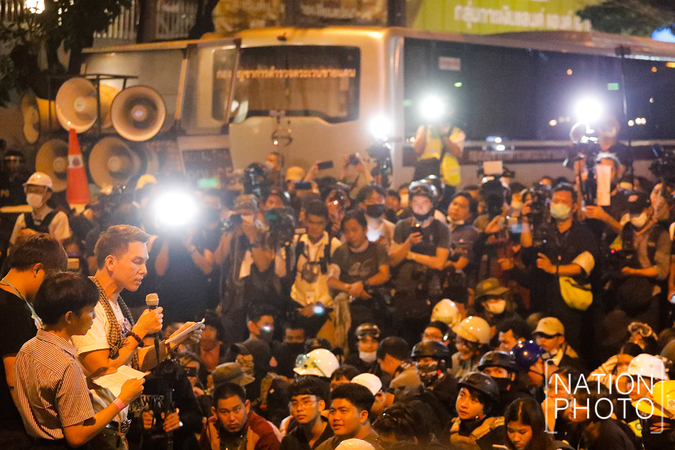
Pro-democracy demonstrators read their statement outside the German embassy on Monday. Photo by: Korbphuk Phromrekha 

By The Nation

Pro-democracy demonstrators submitted a letter to the German embassy in Bangkok on Monday asking its government to investigate whether HM the King is ruling from German soil.


Student-led activists gather in front of the embassy in Bangkok after receiving support from large numbers of office workers, school and university students and seniors during their march from Sam Yan intersection.

Meanwhile, Democrat Party leader and deputy PM Jurin Laksanavisit told an extraordinary session of Parliament that a national reconciliation committee should be set up to solve the political crisis.

Pro-democracy demonstrators gathered at Sam Yan intersection from 3.30pm on Monday for a march down Rama IV Road to the German Embassy on Sathorn Road, where they arrived at 7pm. The student-led Free Youth protest group claimed that about 100,000 activists joined the rally. 


Student-led activists gather in front of the embassy in Bangkok after receiving support from large numbers of office workers, school and university students and seniors during their march from Sam Yan intersection.

Three rally leaders were invited inside the embassy to submit the letter to German Ambassador Georg Schmidt. 

Outside, rally representatives stood up before the large crowd to read the statement in Thai, English and German.

The statement recounted the authorities’ violent crackdown on October 16, when water cannon was used on peaceful protesters, as well as the arrest and detention of dozens of protest leaders.

They asked the German government to investigate whether HM the King is using Germany as a base to conduct Thai politics.

Such actions could potentially be a violation of German law or territorial sovereignty, they said. 

“The request is aimed at reinstating HM the King to Thailand so the Palace is placed under the Constitution and Thailand can return to being a genuine constitutional monarchy,” the statement said.

Demonstrators also raised a large banner in front of the embassy that read “Reform the Monarchy”, before ending their rally at about 9pm.

Meanwhile German Foreign Minister Heiko Maas said his government is continuing to look into the behaviour of HM the King, who tends to spend long stretches of time in Bavaria, Reuters reported on Monday.

“We are monitoring this long-term,” Reuters quoted Maas as saying. “It will have immediate consequences if there are things that we assess to be illegal.”

A two-day extraordinary session of Thai Parliament kicked off on Monday morning, with Paiboon Nititawan, an MP for the ruling Palang Pracharath Party, accusing protesters of trying to overthrow the monarchy.

Jurin Laksanavisit, leader of the ruling coalition’s Democrat Party, proposed that a national reconciliation committee be set up to find solutions to the political unrest.

Opposition leader and Pheu Thai Party chief Sompong Amornvivat called for PM Prayut Chan-o-cha to resign and release the protest leaders. Dozens of pro-democracy leaders have been arrested and temporarily released in the last two weeks, but eight remain in custody after being denied bail.

Phicharn Chaowapatanawong, MP for the opposition Move Forward Party, urged Parliament to open the door for a rewrite of the Constitution, including provisions related to the monarchy’s role.

THAI PROTEST LEADER 
Pai Dao Din reveals what he said to German ambassador
Politics Oct 27. 2020

From left : Protest leaders Jatupat Boonpattararaksa, Passarawalee Thanakijwibulpol and Warin Patrick McBlain pose for a photo in front of the German Embassy in Bangkok during the pro-democracy rally on Monday. Photo Credit: Pai Jatupat FB. 

By The Nation

Jatupat “Pai Dao Din” Boonpattararaksa has revealed details of what was said when three protest leaders met with German Ambassador Georg Schmidt on Monday.

Pai, Passarawalee Thanakijwibulpol and Warin Patrick McBlain handed over letters to the ambassador asking Germany to investigate whether HM the King was conducting Thai affairs from German soil. Warin handed over a letter from Khana Ratsadon International, the overseas branch of the student-led pro-democracy movement.

Pai recounted the conversation with the ambassador on Monday evening after he and his two friends entered the embassy at around 7.40pm following a protest march from Sam Yan.

“What I said was that there will be no peace without justice, no justice without telling the truth, and no one can tell the truth without freedom of expression,” Pai posted on Facebook.

He said he went on to explain that when HM King X ascended the throne, the lese majeste law was enforced against people who had shared a BBC Thai news biography of the King – an act for which Pai himself was jailed. Then, the Computer Crimes Act was imposed to suppress freedom of expression. This year, Wanchalearm Satsaksit was forcibly disappeared, he noted, referring to the kidnapping of a Thai political dissident living in exile in Phnom Penh.

He said he told the ambassador that since October 13, the government had cracked down on protesters by arresting 80 people, including youths and one individual with a mental disorder. 

“Now eight of our friends remain in the custody. We are being arrested because we want to reform the monarchy institution into a genuine constitutional monarchy,” said Pai, recounting the conversation with Schmidt.

He said he pointed out that Thailand’s state of emergency and special emergency decree violated basic rights – rights which are guaranteed by the German constitution. 

Pai said the ambassador pledged to forward the letters to the German government or Parliament for further action. The ambassador also said that “talking is a good starting point”, Pai said.


Protest leader Jutatip summoned over role in Oct 16 rally


Oct 27. 2020

Jutatip Sirikhan

By THE NATION

Pro-democracy activist Jutatip Sirikhan announced on Facebook on Tuesday that she has received a summons from Pathumwan Police Station for participating in the October 16 rally.

The summons was dated October 20.

Jutatip, a former president of the Student Union of Thailand and a core leader of the United Front of Thammasat and Demonstration, said it is intolerable that she is being charged for violating the emergency decree, when in reality she was at the protest exercising her right to demand better laws.

She also accused the government of trying to block people from fighting for their motherland. “I reproach all intimidation and violence. This battle must end in our generation,” she said.

The government has been widely slammed for using violence to disperse peaceful pro-democracy protesters from Pathumwan intersection on October 16.

Parliament clashes over opposition call for Prayut to quit

Oct 27. 2020


By The Nation

There were clashes in Parliament on Tuesday after the opposition Move Forward Party called on the prime minister to quit to help resolve the political crisis.

The government Palang Pracharath Party (PPRP) immediately objected, saying that the resignation of the PM would inevitably trigger yellow-shirt protests, which would worsen the crisis.


Wiroj Lakkhanaadisorn

On day two of the extraordinary session, opposition MP Wiroj Lakkhanaadisorn of the Move Forward Party said General Prayut Chan-o-cha had lost all legitimacy and must resign to free the country from rule by the junta National Council for Peace and Order (NCPO).

He accused the government of adding heat to the crisis by seeking to force its viewpoint on citizens.


“We cannot get rid of people with different opinions. The government’s stance is crucial because the parliamentary mechanism must be used to resolve problems and create a safe space to talk with each other and reduce stress. But the government did the opposite. You did not listen to the voice of the people, and the PM thinks he has done nothing wrong”, said Wiroj.

He warned the government of the consequences of using sensitive issues to provoke violence, citing the 1976 Thammasat University massacre and 2010 crackdown on red shirts.

He added that institutional reforms should be discussed rationally in a safe space and an atmosphere of trust.

“I call for the prime minister to resign and the coalition government to withdraw, so we can elect a new PM without the shadow of NCPO to drive amendment of the Constitution. Mr Prime Minister, please make this sacrifice so that people can begin to move their future forward.”

Senator Thawil Pliensri accused Wiroj of spreading falsehoods by comparing the 1976 massacre and 2010 crackdown to the current crisis, where no violence had been used against protesters.


Chaiyawut Thanakamanusorn

Palang Pracharath MP Chaiyawut Thanakamanusorn added that protesters had dragged the monarchy into the debate and said they would not argue with the dog (government) but with the dog’s owner.

“The original Khana Ratsadon [revolutionary People’s Party] benefited the country in 1932, but how will its namesake in 2020 change the government,” he asked, referring to the student-led protest movement.

He said the movement operated by misrepresenting facts on social media, and questioned whether it was funded from abroad. In the past, certain groups had exploited popular protests to win political power, he said, adding that the goal this time was more than simply ousting the PM.

Chaiyawut then gave his thoughts on five options to resolve the crisis – resignation of the PM, dissolution of Parliament, a military coup, a national referendum on the protesters’ demands, and the government continuing as normal.

“The votes of 376 lawmakers are needed for the PM option. How can we create a new government without the Senate’s votes? We may follow the [protesters’] demand, but yellow shirts (royalists) will not be happy about it. If the current government stays, protesters will also come out. I don’t think the PM quitting or parliament disbanding are solutions; they would just buy more time,” said Chaiyawut.
ANA plans to transfer employees to Toyota Motor
International Oct 26. 2020

By The Japan News

ANA Holdings will ask several companies, including Toyota Motor Corp., to accept the secondment of employees, it has been learned.

The contents of a business restructuring plan, set to be announced Tuesday by ANA Holdings Inc., the holding company of All Nippon Airways Co. (ANA), have been revealed. By fiscal 2022, it plans to reduce the number of its employees by about 3,500.

The company faces an urgent need to cut personnel costs, which account for 30% of its fixed costs. At the same time, it must also secure employees in anticipation of the end of the novel coronavirus pandemic. ANA Holdings is believed to have concluded that Toyota Motor is able to accept secondment because of its financial scale and its capacity to take in employees.

For the 2020 fiscal year ending in March 2021, ANA Holdings is expected to post a record net loss of about ¥500 billion, as opposed to a net profit of ¥27.6 billion in the previous fiscal year. The company will carry out structural reforms to prepare for a prolonged slump in aviation demand.

In fiscal 2021, the company expects to cut costs by ¥80 billion through measures such as reducing the number of employees and selling aircraft.

The reduction of about 3,500 jobs will be realized through natural retirement, support for job changes and a freeze on hiring. According to the securities report of ANA Holdings, the entire group employed 46,000 people as of the end of March.


The company also plans to sell about 30 aircraft, mainly large models. As many as 59 large aircraft, such as the Boeing 777, have low fuel efficiency and are expensive to maintain.

ANA Holdings also plans to speed up the creation of other revenue sources. It plans to expand its so-called platform business to provide financial services by using customer data collected through its travel and financial operations.


Regarding international flights, which have seen a sharp drop in passengers, the company plans to prioritize resuming flights to and from Haneda Airport, due to high profit margins and high demand for international flights there.


Some flights from Narita Airport to Europe and Asia will be suspended for the time being.

Domestic flights will be concentrated at Haneda and Itami airports. ANA Holdings will also use Peach Aviation Ltd., a low-cost carrier under its wing, to promote joint operations with ANA.

Tags:


Wildfire smoke in US exposes millions to hazardous pollution
By MATTHEW BROWN and CAMILLE FASSETTOctober 15, 2020


1 of 18
FILE - In this Sept. 9, 2020, file photo, taken at 11:18 a.m., is a dark orange sky above Crissy Field and the city caused by heavy smoke from wildfires in San Francisco. Wildfires that scorched huge swaths of the West Coast churned out massive plumes of choking smoke that blanketed millions of people with hazardous pollution that spiked emergency room visits and that experts say could continue generating health problems for years. An Associated Press analysis of air quality data shows 5.2 million people in five states were hit with hazardous levels of pollution for at least a day. (AP Photo/Eric Risberg, File


SANTA CRUZ, Calif. (AP) — Wildfires churning out dense plumes of smoke as they scorch huge swaths of the U.S. West Coast have exposed millions of people to hazardous pollution levels, causing emergency room visits to spike and potentially thousands of deaths among the elderly and infirm, according to an Associated Press analysis of pollution data and interviews with physicians, health authorities and researchers.

Smoke at concentrations that topped the government’s charts for health risks and lasted at least a day enshrouded counties inhabited by more than 8 million people across five states in recent weeks, AP’s analysis shows

Major cities in Oregon, which has been especially hard hit, last month suffered the highest pollution levels they’ve ever recorded when powerful winds supercharged fires that had been burning in remote areas and sent them hurtling to the edge of densely populated Portland.

Medical complications began arising while communities were still enveloped in smoke, including hundreds of additional emergency room visits daily in Oregon, according to state health officials.

“It’s been brutal for me,” said Barb Trout, a 64-year-old retiree living south of Portland in the Willamette Valley. She was twice taken to the emergency room by ambulance following severe asthmatic reactions, something that had never happened to her before.

Trout had sheltered inside as soon as smoke rolled into the valley just after Labor Day but within days had an asthma attack that left her gasping for air and landed her in the ER. Two weeks later, when smoke from fires in California drifted into the valley, she had an even more violent reaction that Trout described as a near-death experience.

“It hit me quick and hard __ more so than the first one. I wasn’t hardly even breathing,” she recalled. After getting stabilized with drugs, Trout was sent home but the specter of a third attack now haunts her. She and her husband installed an alarm system so she can press a panic button when in distress to call for help.

“It’s put a whole new level on my life,″ she said. “I’m trying not to live in fear, but I’ve got to be really really cautious.”

In nearby Salem, Trout’s pulmonologist Martin Johnson said people with existing respiratory issues started showing up at his hospital or calling his office almost immediately after the smoke arrived, many struggling to breathe. Salem is in Marion county, which experienced eight days of pollution at hazardous levels during a short period, some of the worst conditions seen the West over the past two decades, according to AP’s analysis.

Most of Johnson’s patients are expected to recover but he said some could have permanent loss of lung function. Then there are the “hidden” victims who Johnson suspects died from heart attacks or other problems triggered by the poor air quality but whose cause of death will be chalked up to something else.

“Many won’t show up at the hospital or they’ll die at home or they’ll show up at hospice for other reasons, such as pneumonia or other complications,” Johnson said.

Based on prior studies of pollution-related deaths and the number of people exposed to recent fires, researchers at Stanford University estimated that as many as 3,000 people over 65 in California alone died prematurely after being exposed to smoke during a six-week period beginning Aug. 1. Hundreds more deaths could have occurred in Washington over several weeks of poor air caused by the fires, according to University of Washington researchers.

The findings for both states have not been published in peer-reviewed journals. No such estimate was available for Oregon.

A California heat wave on Thursday prompted warnings of extreme fire danger and some precautionary powerline shutdowns.

Wildfires are a regular occurrence in Western states but they’ve grown more intense and dangerous as a changing climate dries out forests thick with trees and underbrush from decades of fire suppression. What makes the smoke from these fires dangerous are particles too small for the naked eye to see that can be breathed in and cause respiratory problems.

On any given day, western fires can produce 10 times more particles than are produced by all other pollution sources including vehicle emissions and industrial facilities, said Shawn Urbanski, a U.S. Forest Service smoke scientist.

Fires across the West emitted more than a million tons of the particles in 2012, 2015 and 2017, and almost as much in 2018 — the year a blaze in Paradise, California killed 85 people and burned 14,000 houses, generating a thick plume that blanketed portions of Northern California for weeks. Figures for 2017 and 2018 are preliminary.

A confluence of meteorological events made the smoke especially bad this year: first, fierce winds up and down the coast whipped fires into a fury, followed in Oregon by a weather inversion that trapped smoke close to the ground and made it inescapable for days. Hundreds of miles to the south in San Francisco, smoke turned day into night, casting an eerie orange pall over a city where even before the pandemic facemasks had become common at times to protect against smoke.
Full Coverage: Wildfires

AP’s analysis of smoke exposure was based on U.S. Environmental Protection Agency data compiled from hundreds of air quality monitoring stations. Census data was used to determine the numbers of people living in affected areas of Oregon, Washington, California, Idaho and Montana.

At least 38 million people live in counties subjected to pollution considered unhealthy for the general population for five days, according to AP’s analysis. That included more than 25 million people in California, 7.2 million in Washington, 3.5 million in Oregon, 1 million in Idaho and 299,000 people in Montana.

The state totals for the number of people exposed to unhealthy air on a given day were derived from counties where at least one monitoring site registered unhealthy air.

Scientists studying long-term health problems have found correlations between smoke exposure and decreased lung function, weakened immune systems and higher rates of flu. That includes studies from northwestern Montana communities blanketed with smoke for weeks in 2017.

“Particulate matter enters your lungs, it gets way down deep, it irrigates the lining and it possibly enters your bloodstream,” said University of Montana professor Erin Landguth. “We’re seeing the effects.”

The coronavirus raises a compounding set of worries: An emerging body of research connects increased air pollution with greater rates of infection and severity of symptoms, said Gabriela Goldfarb, manager of environmental health for the Oregon Health Authority.

Climate experts say residents of the West Coast and Northern Rockies should brace for more frequent major smoke events, as warming temperatures and drought fuel bigger, more intense fires.

Their message is that climate change isn’t going to bring worse conditions: they are already here. The scale of this year’s fires is pushing the envelope” of wildfire severity modeled out to 2050, said Harvard university climate researcher Loretta Mickley

“The bad years will increase. The smoke will increase,” said Jeffrey Pierce an atmospheric scientist at Colorado State University. “It’s not unreasonable that we could be getting a 2020-type year every other year.”

CHARTS https://apnews.com/article/virus-outbreak-wildfires-health-oregon-fires-138efdcef21f15751fe1809a7853903b___

Brown reported from Billings, Montana.

___

On Twitter follow Matthew Brown: @MatthewBrownAP and Camille Fassett: @camfassett.
Forecasters: Drought more likely than blizzards this winter
By SETH BORENSTEIN October 15, 2020

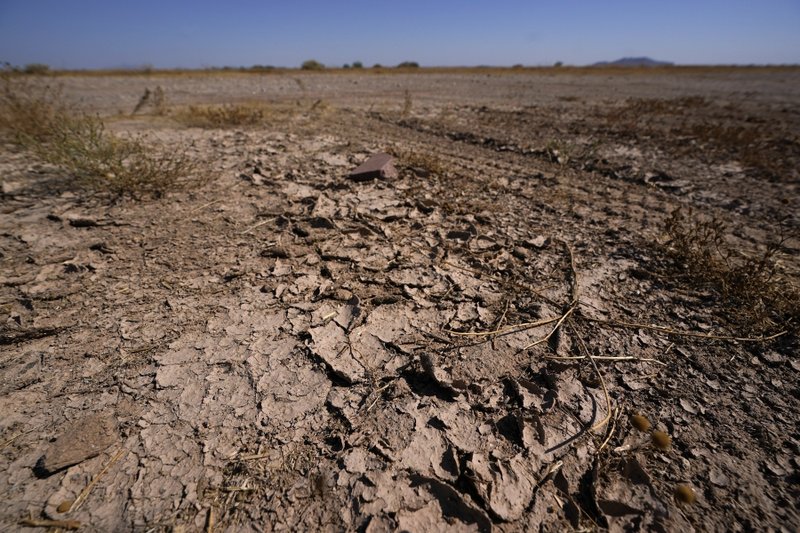
FILE - In this Wednesday, Sept. 30, 2020 file photo, dry desert soil cracks due to the lack of monsoon rainfall in Maricopa, Ariz. In a report released on Thursday, Oct. 15, 2020, National Oceanic and Atmospheric Administration forecasters see a dry winter for all of the south from coast-to-coast and say that could worsen an already bad drought. (AP Photo/Ross D. Franklin)


Don’t expect much of a winter wallop this year, except for the pain of worsening drought, U.S. government forecasters said Thursday.

Two-thirds of the United States should get a warmer than normal winter, the National Oceanic and Atmospheric Administration predicted. Only Washington, northern Idaho, Montana, the Dakotas and northwestern Minnesota, will get a colder than normal winter, forecasters said.

The forecast for winter rain and snow splits the nation in three stripes. NOAA sees the entire south from southern California to North Carolina getting a dry winter. Forecasters see wetter weather for the northernmost states: Oregon and Washington to Michigan and dipping down to Illinois, Indiana, Ohio and other parts of the Ohio Valley. The rest of the nation will likely be closer to normal, NOAA said.

For the already dry Southwest and areas across the South, this could be a “big punch,” said NOAA drought expert David Miskus. About 45% of the nation is in drought, the highest level in more than seven years.

Mike Halpert, deputy director of NOAA’s Climate Prediction Center, said he doesn’t see much relief for central and southern California, where wildfires have been raging.

What’s driving the mostly warmer and drier winter forecast is La Nina, the cooling of parts of the central Pacific that alter weather patterns worldwide, Halpert said.

For the East, big snowstorms or blizzards aren’t usually associated with La Nina. That’s more likely with its warming ocean counterpart, El Nino, he said. But he added that extreme events are not something meteorologists can see in seasonal forecasts.

Halpert also said he doesn’t expect the dreaded polar vortex to be much of a factor this year, except maybe in the Northern Plains and Great Lakes.

The vortex is the gigantic circular upper-air pattern that pens the cold close to the North Pole. When it weakens, the cold wanders away from the pole and brings bone-chilling weather to northern and eastern parts of the U.S.

While Halpert doesn’t see that happening much this winter, an expert in the polar vortex does.

Judah Cohen, a winter weather specialist for the private firm Atmospheric Environmental Research, sees a harsher winter for the Northeast than NOAA does. He bases much of his forecasting on what’s been happening in the Arctic and Siberian snow cover in October. His research shows that the more snow on the ground in Siberia in October, the harsher the winter in the eastern United States as the polar vortex weakens and wanders south.

Snow cover in Siberia was low in early October, but it is catching up fast and looks to be heavier than normal by the end of the month, he said.


The government predictions are about increased or decreased odds in what the entire three months of weather look like, not an individual day or storm, so don’t plan any event on a seasonal outlook, cautioned Greg Postel, a storm specialist at The Weather Channel. But he said La Nina is the strongest indicator among several for what drives winter weather. La Nina does bring a milder than average winter to the southeast, but it also makes the central U.S. “susceptible to Arctic blasts,” he said.

La Nina also dominates the forecast by AccuWeather. That private company is forecasting mainly dry in the South, wet and snowy in the Pacific Northwest, bouts of snow and rain from Minneapolis through the Great Lakes region, big swings in the heartland and mild weather in the mid-Atlantic. The company predicts a few heavy snow events in the Midwest and Great Lakes, but less than average snow for the Northeast.

___

Follow Seth Borenstein on Twitter at @borenbears .

___

The Associated Press Health and Science Department receives support from the Howard Hughes Medical Institute’s Department of Science Education. The AP is solely responsible for all content.