Tuesday, November 09, 2021

NET ZERO IS NOT ZERO

Net zero by 2050: 9 charts showing the world's progress

The pressure is on for leaders attending the 26th climate conference to prevent global warming from accelerating further, but there is still a long way to go.



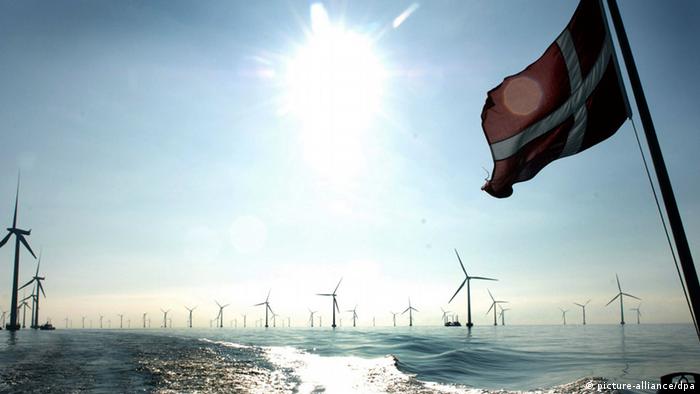
The focus has to be on renewables if we are to limit global warming to 1.5 degrees Celsius (2.7 degrees Fahrenheit)


To reach net zero CO2 and create carbon-neutral economies, countries have to ensure that for all the CO2 they emit, they remove an equal amount from the atmosphere — or not emit any in the first place.
#1 How much do we rely on fossil fuels?

Turning away from coal, oil and gas would be an important first step towards carbon neutrality. However, most economies are still heavily dependent on fossil fuels, while the share of renewables in the mix is growing only slowly.
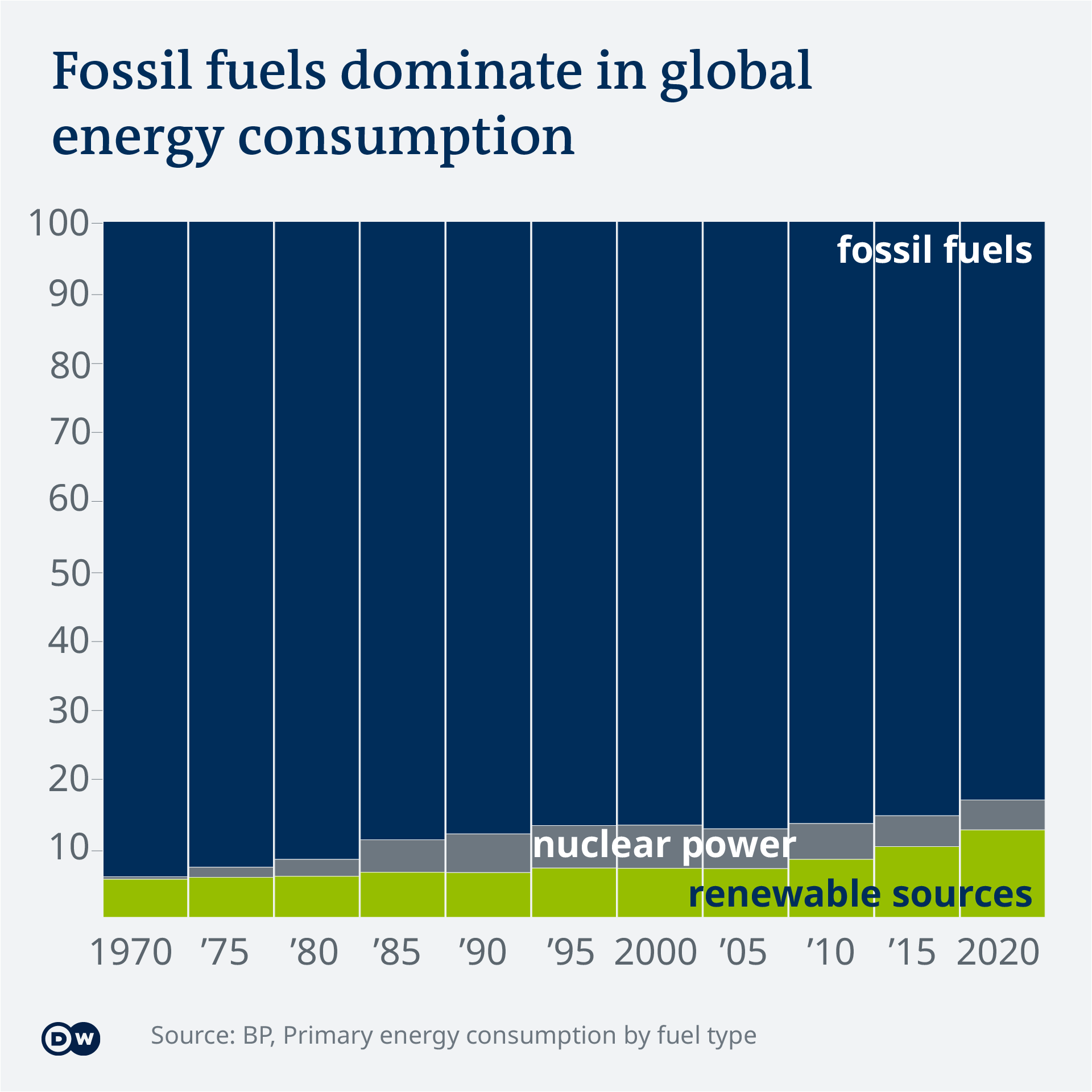

According to British oil and gas major BP's 2021 Statistical Review of World Energy, the current regional leaders in energy consumption from renewable sources are Norway in Europe (70%), Brazil in the Americas (46%), New Zealand in the Asia & Pacific region (37%), Morocco in Africa (8%) and Israel in the Middle East (5%).

Meanwhile, countries like Saudi Arabia, Algeria, Trinidad and Tobago, and Turkmenistan still rely on fossil fuels for more than 99% of their energy. At 93%, Poland consumes the highest share of fossil fuel in Europe.

However, the hot spots for coal-fired power plants are located elsewhere. Of the 6,593 operational sites, China is home to 2,990, followed by India (855) and the US (498). Their top three positions are untouched by the fact that they have collectively mothballed, retired and cancelled 3,700 coal-fired plants since 2000, according to the Global Energy Monitor.
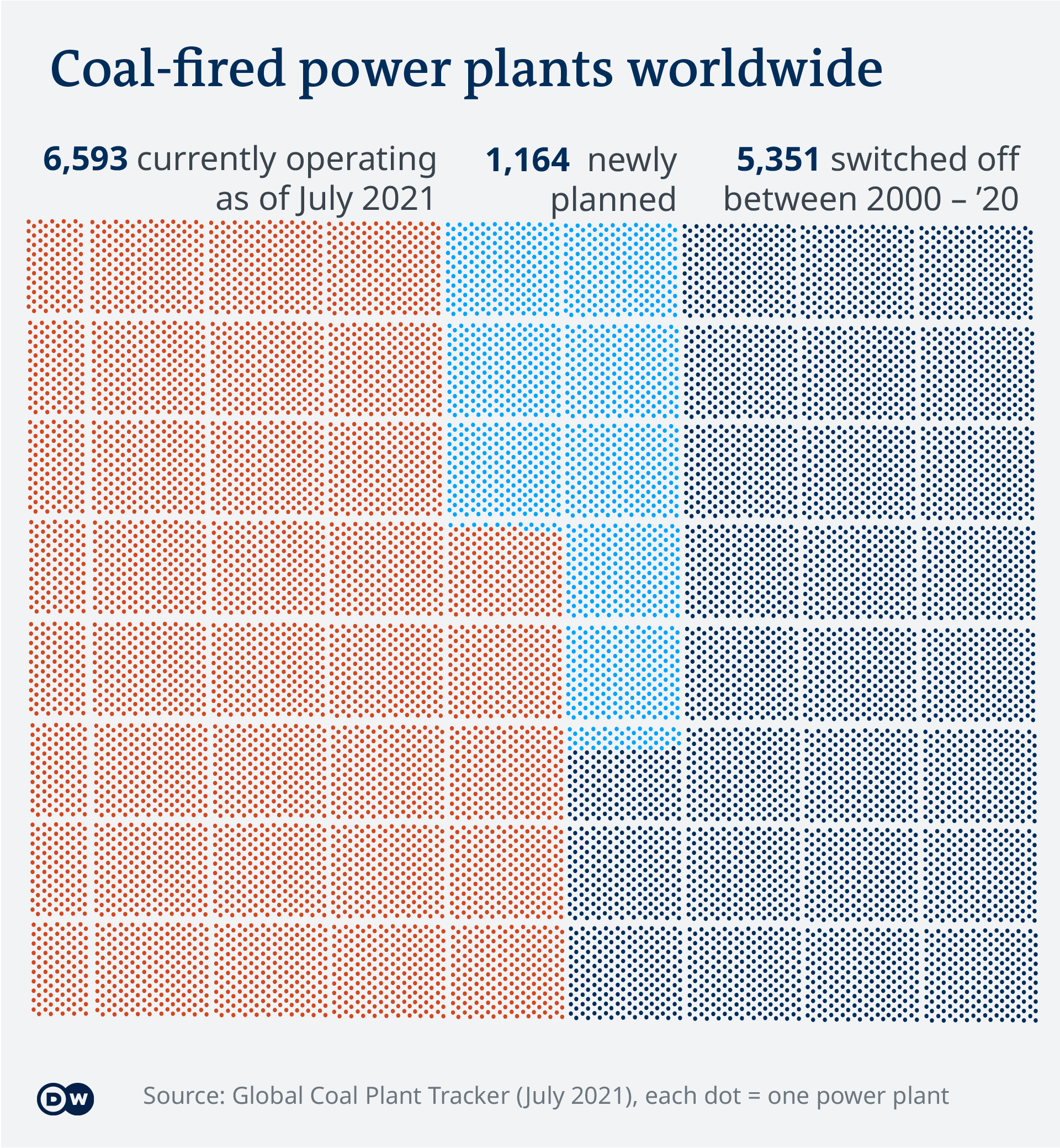

To uphold the Paris Agreement, the world needs to withdraw from coal fast. According to the Berlin-based think tank Climate Analytics, it would require an 80% reduction of 2020 levels — around 9,300 terawatt-hours — to 1,700 TWh before the end of the decade.
#2 Where is the energy for heating and electricity coming from?

The overall energy consumption outlined above is divided into three sectors: energy used for transport, electricity and heating.

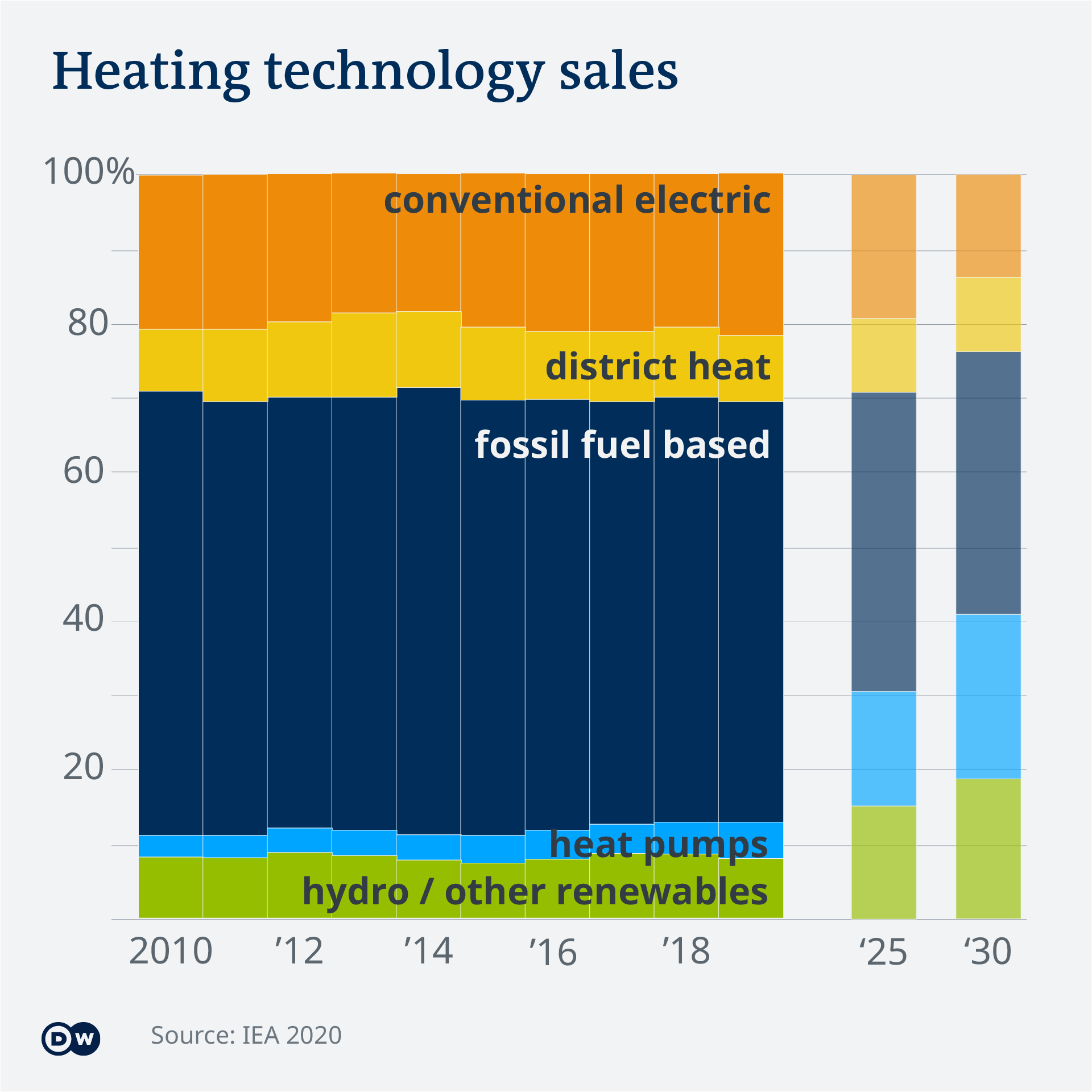
Heat is the largest energy end use, according to an analysis by Paris-based intergovernmental organization, the International Energy Agency (IEA). "Providing heating for homes, industry and other applications accounts for around half of total energy consumption."

Currently, about 10% of heat is produced from renewable sources and the IEA projects this share will double by 2030.

In shared rental apartment buildings, choosing the energy source used for heating is not always an option, but consumers generally have a choice when it comes to sourcing electricity.

Countries in the Middle East source the smallest share of their electricity from renewables (3%). Other regions like Africa (22%) and particularly South America (66%) fare much better — especially considering that all three regions produce similar amounts of energy.
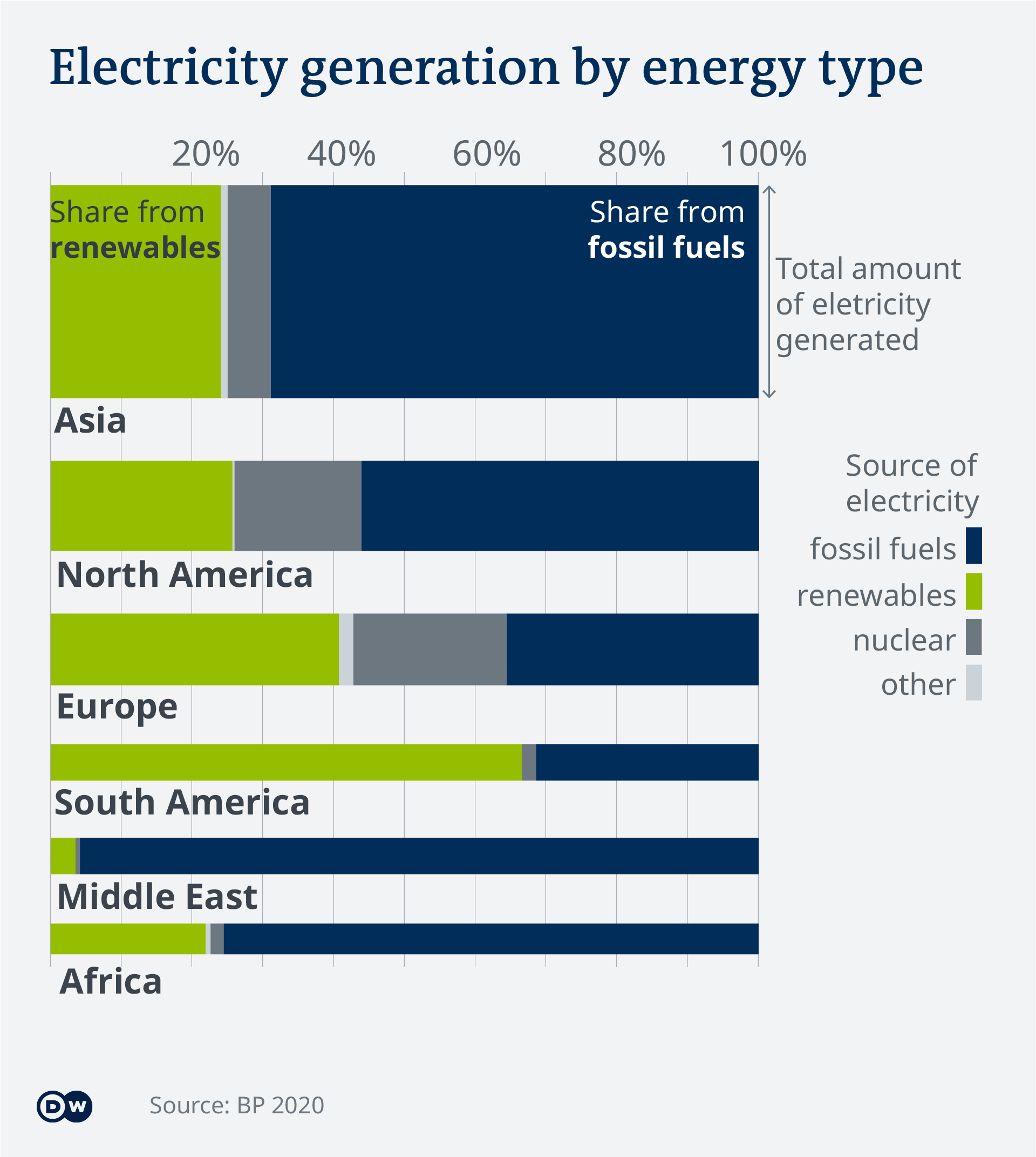

Electricity generation is also relevant to the transition of the transportation sector to a carbon-neutral future. Electric vehicles would not be climate friendly if the energy used to charge them was generated using fossil fuels.
#3 How is the transport sector changing?

Progress is slow. While overall car sales are declining, the vast majority of those sold are still combustion engine models. Of the 66 million cars sold in 2020, just 4.3% (almost three million vehicles) were electric.
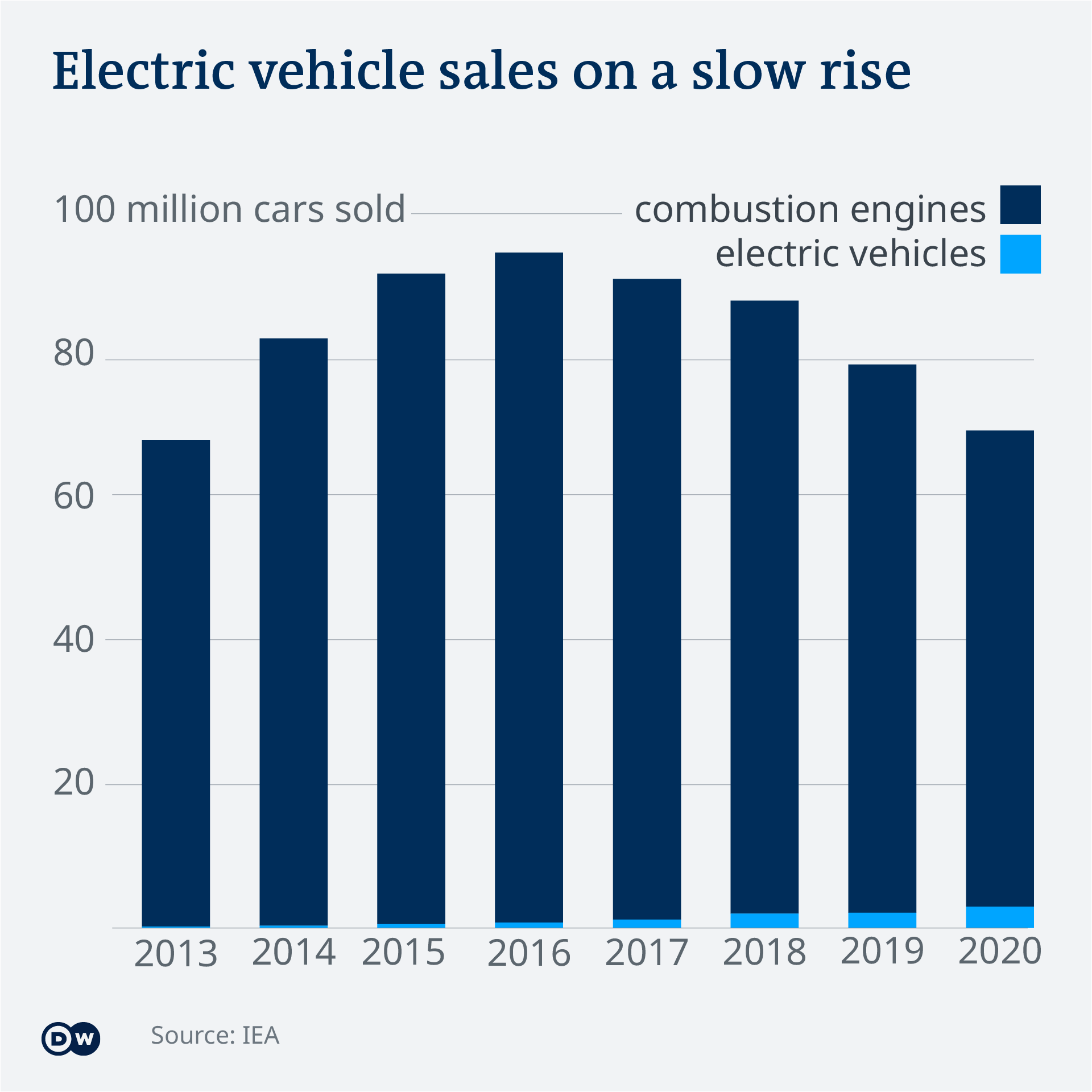

For other means of polluting transportation, such as aviation — which accounts for 2.5% of global CO2 emissions alone — no noteworthy alternatives exist yet. That said, Airbus has said it is planning to develop a zero-emission aircraft for commercial travel by 2035.
#4 How well are we protecting ecosystems?

In short: not well enough. While there have been various forest expansion efforts around the world over the past few decades — peaking between 2000 and 2010, with 10 million new hectares (24.7 million acres) per year — deforestation has occurred at a faster rate.
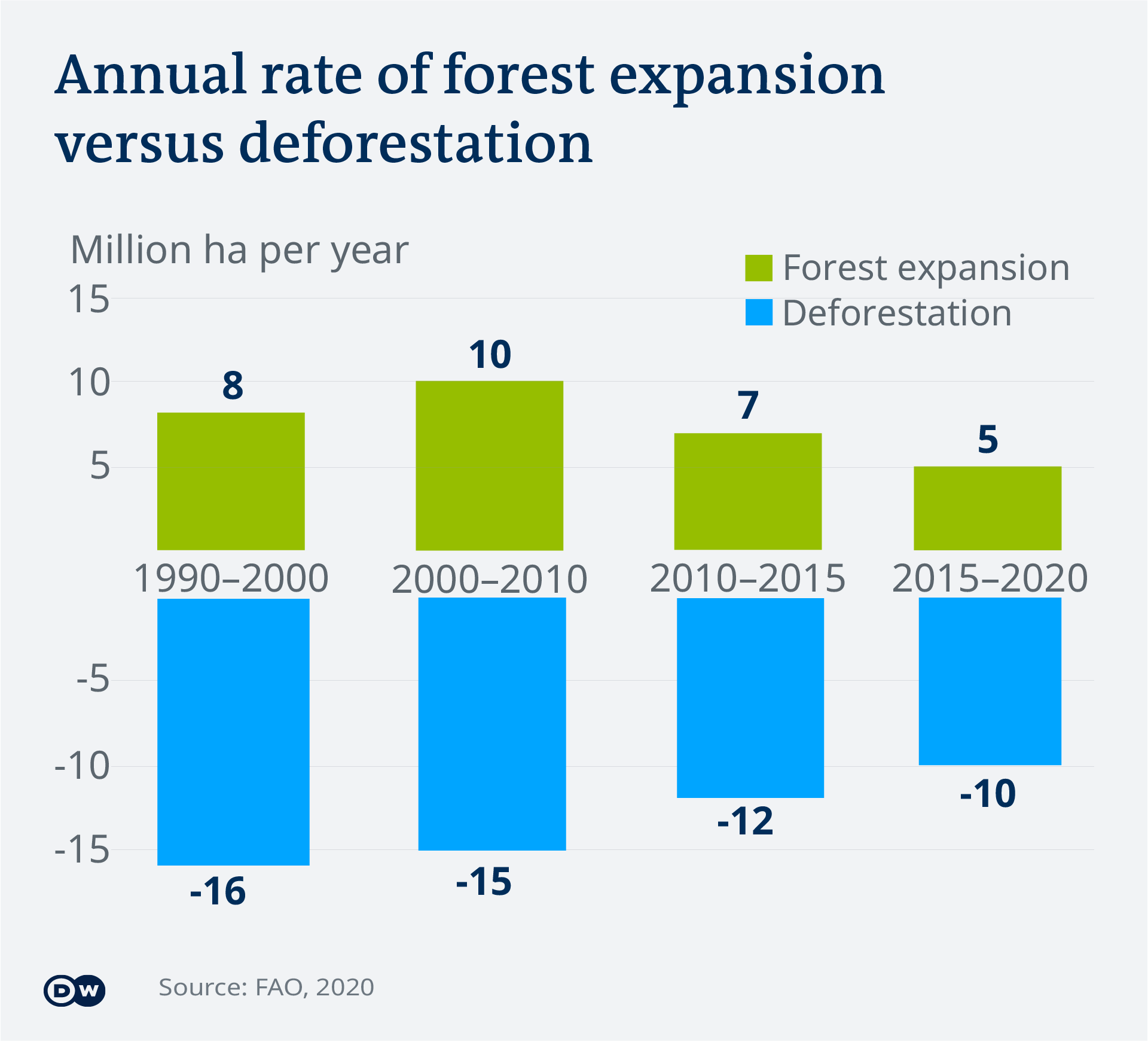

The net change in forest area over the past number of decades shows how current efforts to plant new trees in South America and Africa fall far short of making up for those felled.
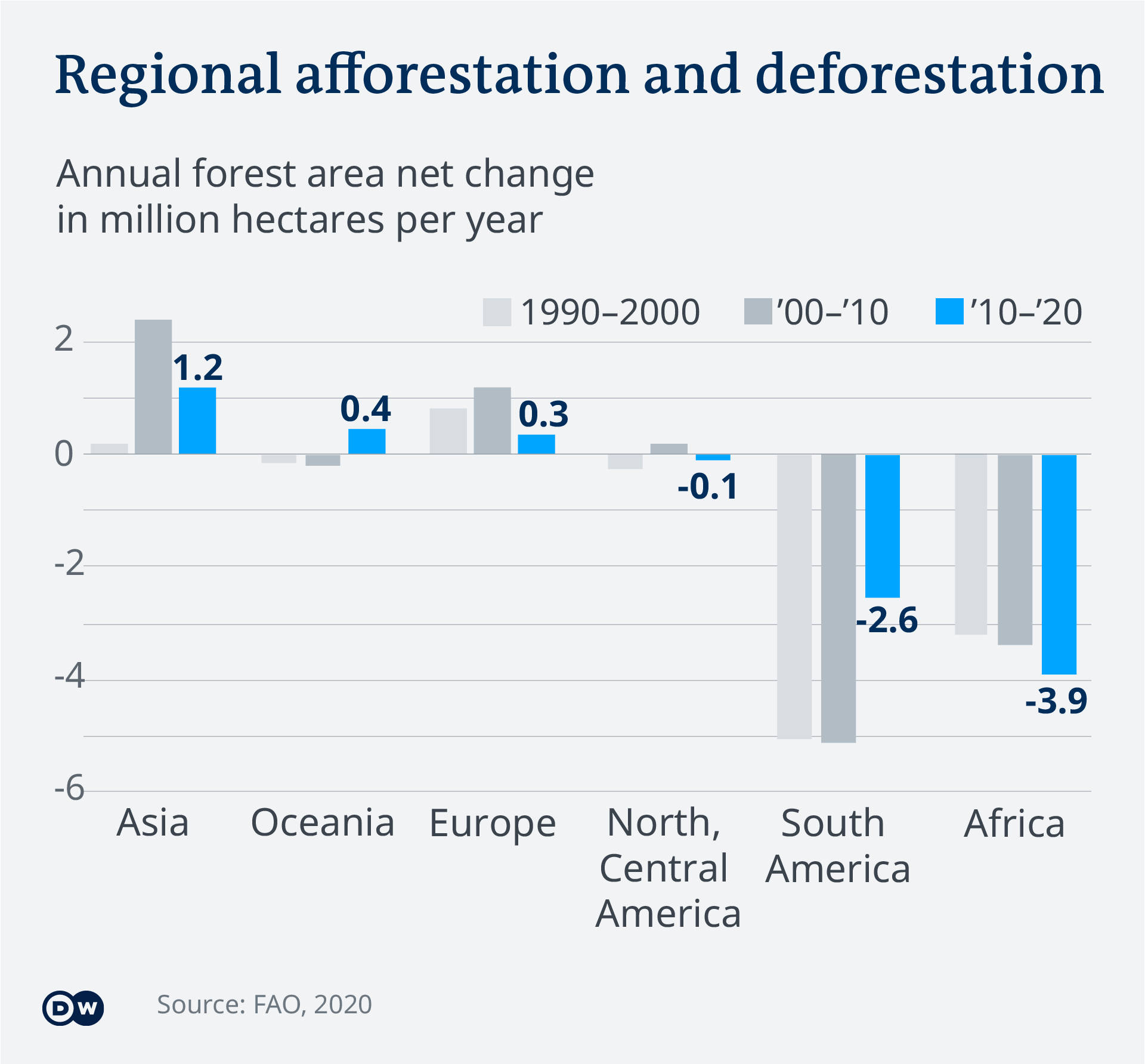

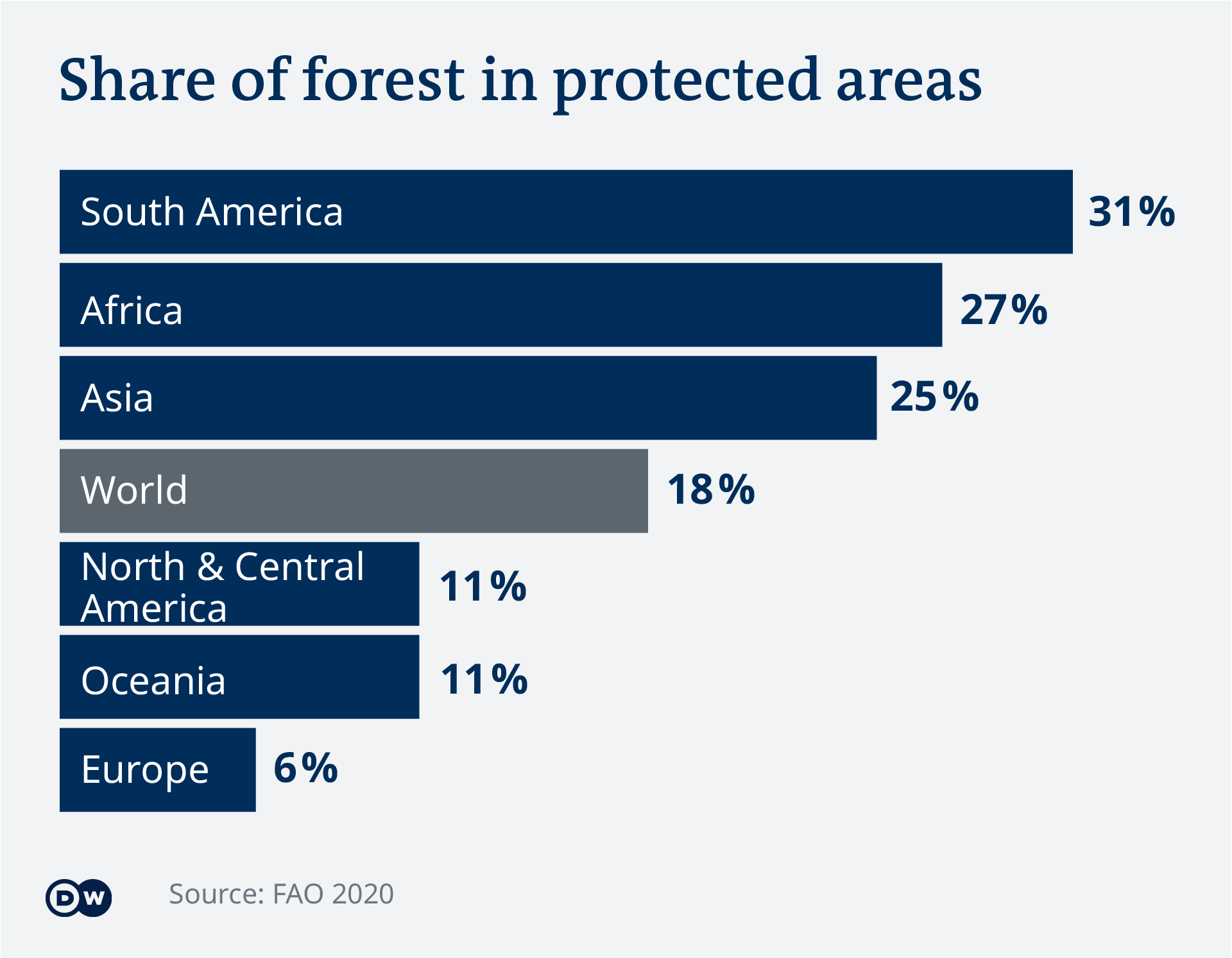
This is particularly noteworthy since both regions have a leading share in the area of forests within protected areas — calling into question how effective protective areas really are.

#5 How has investment in renewables evolved?

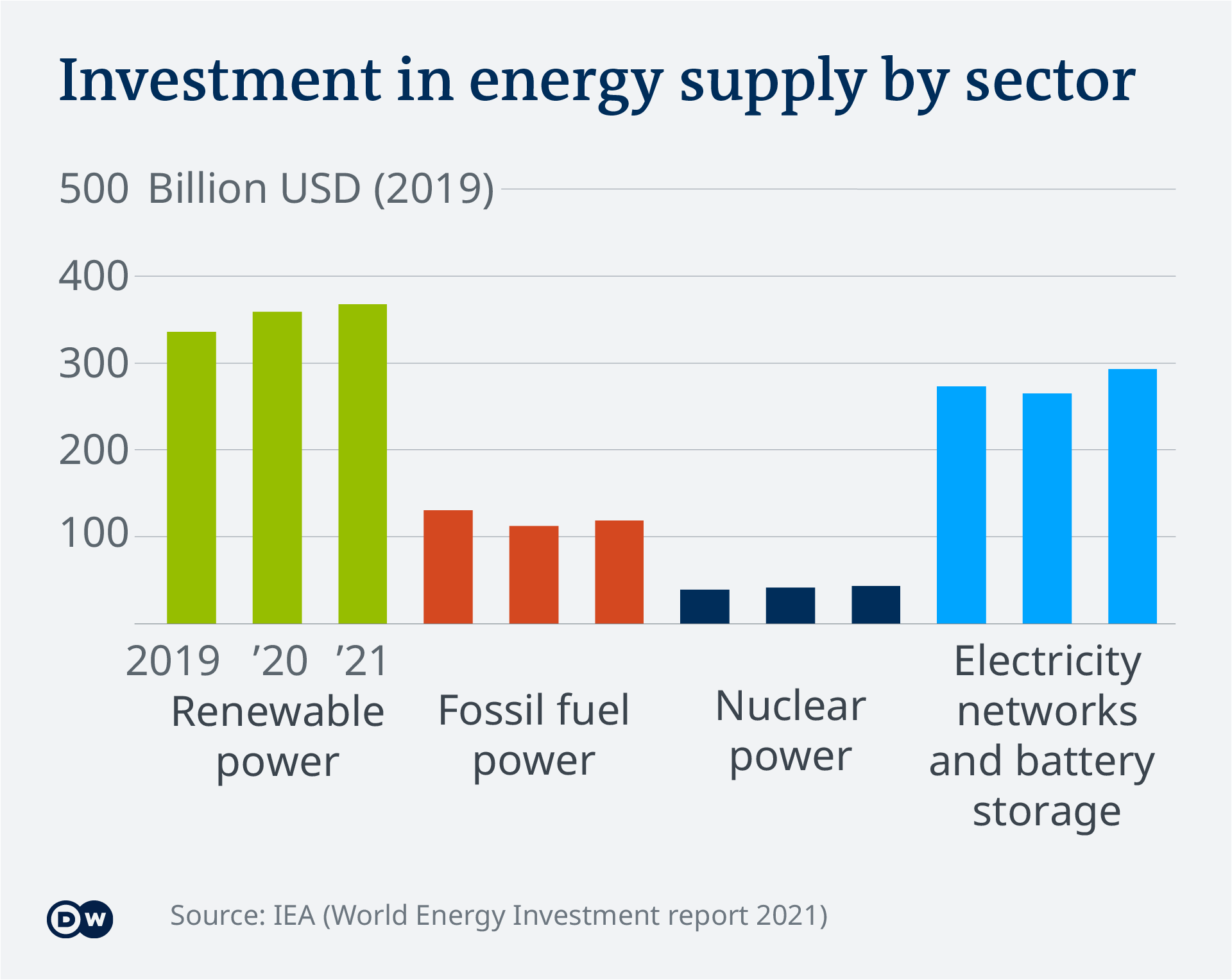
Renewables are on an upward trajectory. According to the International Energy Agency, they have attracted more investment than fossil fuels or nuclear in recent years.


DW RECOMMENDS
Climate Change Performance Index: Scandinavians top of the class

CANADA AN EMABARRASSMENT;#61

Climate protection in some countries is improving. 

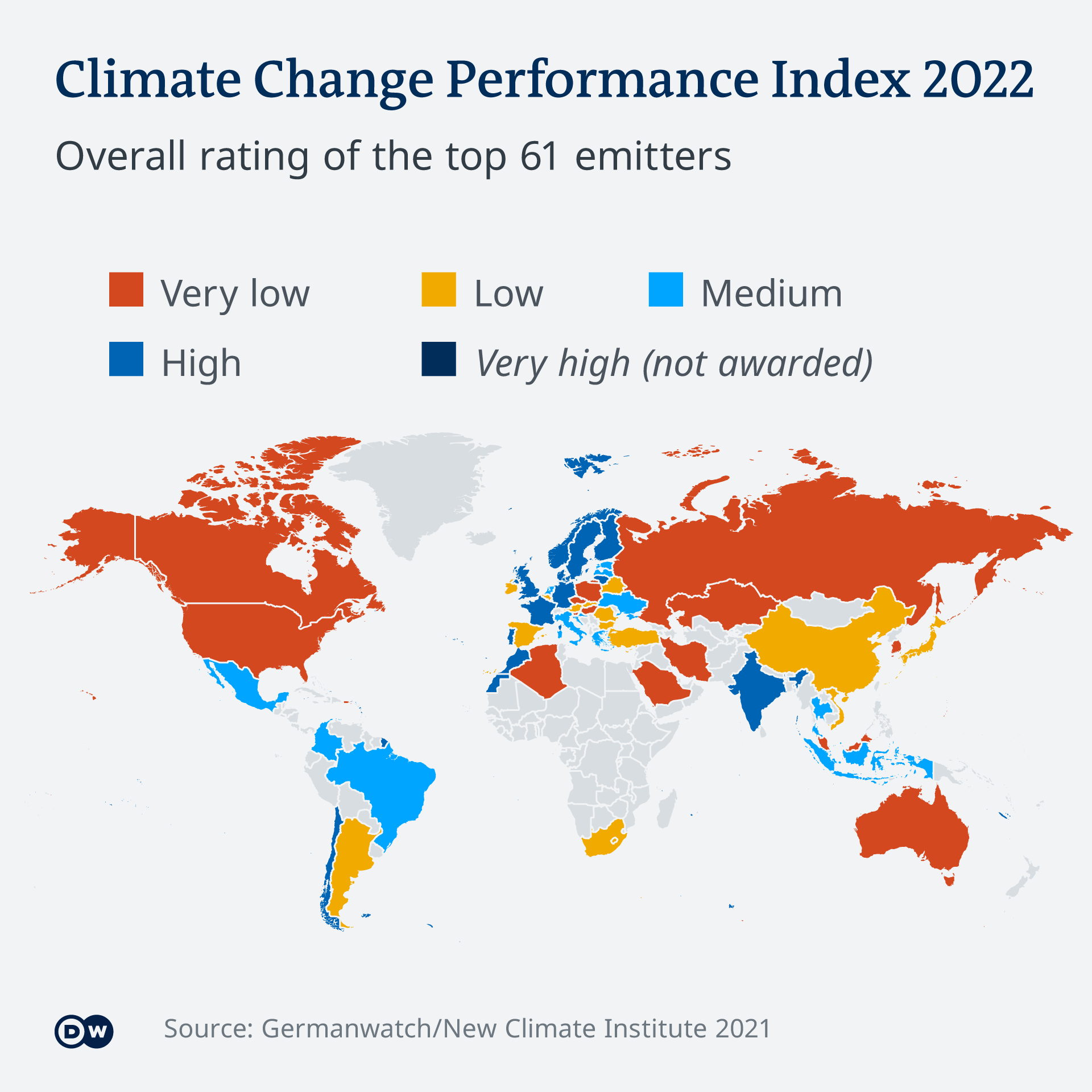
But the world's 61 biggest emitters are failing to take action needed to stick to 1.5 degrees Celcius warming, according to the latest Climate Change Performance Index.

Renewables are intrinsic to reaching climate goals

Developments in renewable energy expansion, climate policy and a coal phase-out offer reasons to hope, but the pace of transformation is still worryingly slow and far behind what's required to stop runaway global heating, according to this year's Climate Change Performance Index.

The top three spots on the index remained empty again this year as not a single country is on a pathway to keeping warming below 1.5 degrees Celsius (2.7 Fahrenheit) — the Paris Agreement threshold for warming — according to an assessment of 60 countries plus the EU, who are collectively responsible for 90% of global CO2 emissions.


German-based NGO Germanwatch and the NewClimate Institute, which supports countries to design, evaluate and implement sustainable energy policies, publish the index yearly as a way to compare countries' climate performance using common criteria. Scientists score nations based on CO2 emissions, the percentage of renewables in the energy mix, the pace of clean expansion, and what lawmakers are doing to implement climate change policy.
Scandinavia, the UK and Morocco ahead of the curve

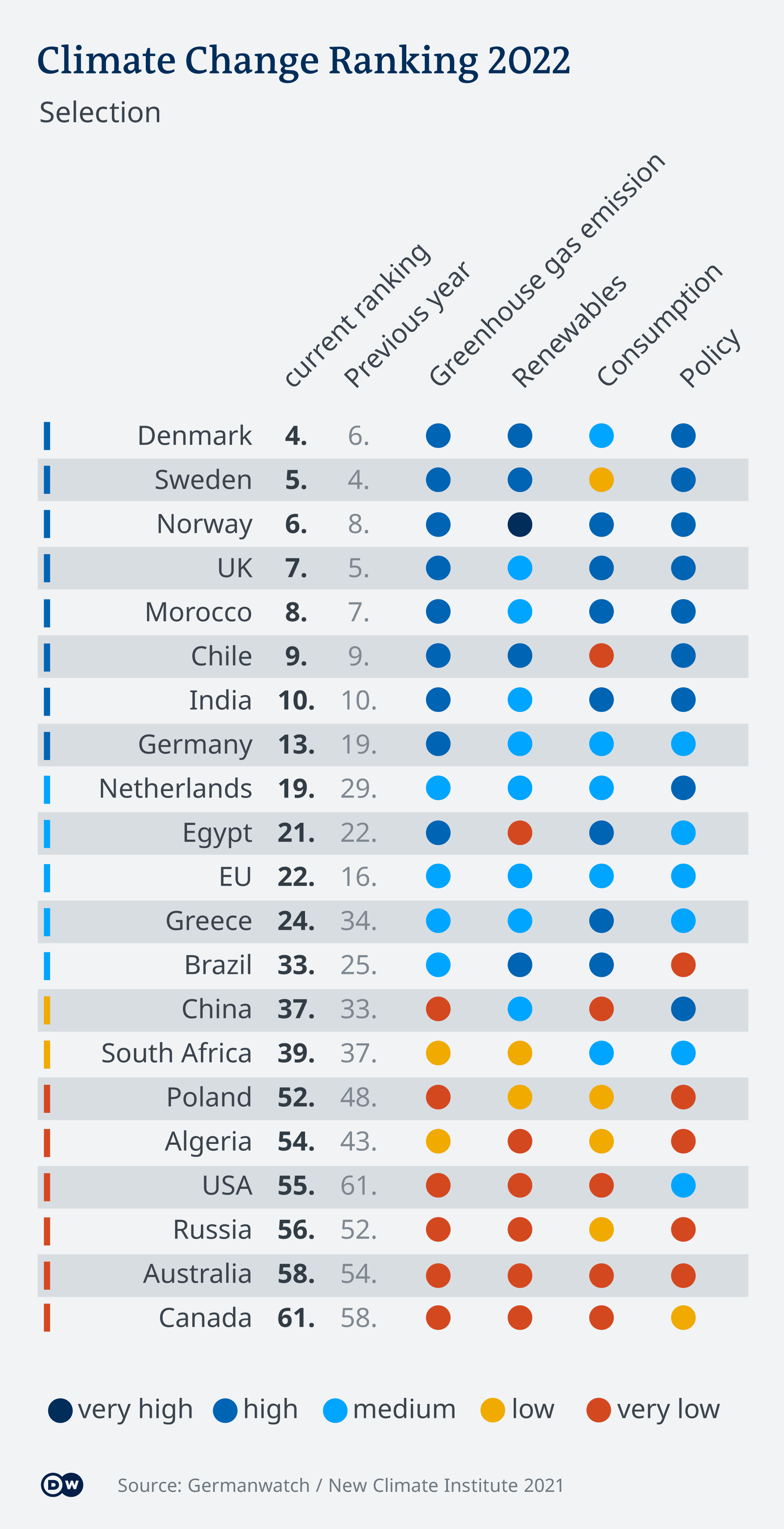
Norway scored the first-ever "very high" in any of the index categories for its progress in renewable energy. And 15 countries were awarded "high" in the overall ratings table that takes in all four categories — that's up from 14 states last year.

Denmark, Sweden and Norway were top of the class, placing fourth, fifth and sixth respectively thanks to the strides made in green energy expansion and climate policy. Scandinavia is a role model for ambitious climate protection, according to the report.


"We're at the beginning of a decade that will mainly be about implementing the climate targets that have been set," said Niklas Höhne of the Cologne-based NewClimate Institute and one of the report's authors. "Denmark, Sweden and Norway, like Great Britain and Morocco, are doing much better than the rest of the world.
Germany moves up to spot 13

France, Luxembourg and Germany have moved into the "green zone" on the index's rating table thanks to improvements in their performance. Europe's economic powerhouse, Germany, had been languishing mid-table since 2013 but has bounced back up the ranks to place 13.

Still, index co-author Jan Burck from Germanwatch warns that it's too early to celebrate as the rating also includes the rather fuzzy climate policy category. The country has set itself ambitious goals but "politics hasn't provided a sufficient answer on how to reach those climate targets."

High per capita emissions and the long-stalled expansion of renewable energy are Germany's main stumbling blocks.

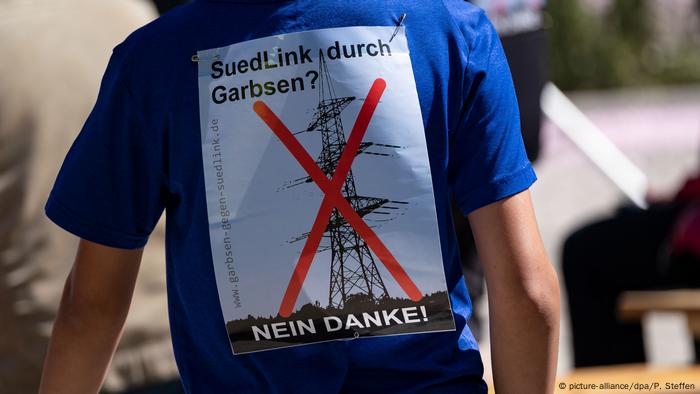
Protest against new powerlines: Germany lags behind in the expansion of renewable energy

"We need a 100-day plan under the new German government right at the beginning of its term and then serious progress across all sectors," said Thea Uhlich from Germanwatch, who co-authored the index. That, she added, includes phasing out coal by 2030, a turbo-charged expansion of green energy sources and emissions cuts in the transport sector.
COP26: Speedier coal phase-out raises hopes

The EU taken as one is at the upper end of the mid-table rankings when it comes to climate performance. But some member states, namely Bulgaria, Hungary, Poland, Romania and the Czech Republic, are performing poorly.

Announcements coming out of the COP26 climate conference in Glasgow, Scotland, are raising hopes that could change though, Germanwatch's Jan Burck told DW. Several countries have said they plan to phase out coal within the next 15 years and that is not reflected in the current index.

"Most interestingly, many Eastern European countries that are extremely dependent on coal, including Poland, have signed onto this agreement. And South Africa is coordinating with some Western states like Germany to phase out coal more quickly with their support," Burck said.

Dirty power: Poland's Belchatow coal-fired power plant is one of the biggest in Europe

Under the new plans, these countries could move up the index ranking next year. Right now, South Africa is considered "low" and Poland "very low."

Russia and Australia are trailing behind the US and Algeria at the bottom of the table in the "red" zone. Only South Korea, Taiwan, Canada, Iran, Saudi Arabia and Kazakhstan perform worse.
China weak, small boost for the USA

The world's biggest emitter China is designated "low" and has slipped four places to 37. High emissions and poor energy efficiency are the biggest problems for the People's Republic. But one area in which it is doing well is renewable energy expansion. At 23rd on the index, it's ahead of Germany.

The first year of Joe Biden's presidency has had some positive impacts on the world's second-largest emitter, the USA. It climbed up from last place to 55 but still has a long way to go. The country scored "very low" in greenhouse gas emissions, renewable energy expansion, and energy use.

It was an improved climate policy and the country's new 2030 climate targets that gave the US a bump, said NewClimate Institute's Niklas Höhne.

"We have to see in the coming years whether Biden's policies actually bear fruit," Höhne said.

China is ahead of Germany when it comes to the expansion of green energy sources
Could India slip down the rankings?

There are fears that India is at a turning point for the worse. Currently listed as "good" and in tenth place, the country has benefited from relatively low per capita emissions. But these are on the rise and only strong climate targets coupled with ambitious implementation will prevent it crashing down the index rankings, according to the authors.

Still, the country's Prime Minister Narendra Modi announced a revised climate protection plan for 2030 during the World Leaders Summit at the COP26.

"If these new goals are backed up with sector targets and well implemented, India would be well on its way," the index authors wrote.

This article was translated from German


'We're pioneers': Barca's La Masia finally opens its doors to women

PAU BARRENA / AFP / Getty

Barcelona, Nov 9, 2021 (AFP) - When Claudia Riumallo Pineda wakes up, it does not take her long to know where she is.

From her bedroom window she can see the Johan Cruyff Stadium inside Barcelona's Ciutat Esportiva training ground, where she dreams of one day playing for the women's first team.

She is on the right track. The 18-year-old is one of nine trailblazers who this season became the first female players to enrol at La Masia, Barca's famed football academy and proving ground for the likes of Lionel Messi, Andres Iniesta and Xavi Hernandez.

Since its opening in 1979 as an old house next to Camp Nou, La Masia has never had female residents.

But the women's team has been knocking on the door for a long time, with Barcelona Femeni winning the Champions League, Liga Femenina and Copa de la Reina last season.

"This year they have given us La Masia, which is a gift," says Claudia, who for years had to travel an hour by car from her town of Girona just to be able to train with girls.

After playing for local rivals Espanyol, she now represents Barca B and in the afternoons studies chemistry at university.

Shaken by financial crisis and the unexpected departure of Messi, most of the good news around the club these days comes from the women's team.

As well as last season's treble, Barca's captain, Alexia Putellas, was chosen as UEFA's best player of the year and is now also nominated, along with four teammates, for the Women's Ballon d'Or.

"It's a huge responsibility because we are the pioneers but it's also nice to know that you are one of the first women to go to La Masia," says Laura Coronado, an 18-year-old goalkeeper.

Coronado's photo, like that of the 105 others at La Masia spread across the club's five professional sports, now hangs in the reception of the more modern complex that took over from the original in 2011.

Gavi, the latest gem of the men's team, arrived when he was eleven years old and continues to live there. The 19-year-old Ansu Fati is also a former resident.

"The good thing we have at this club is the mirror is very clear," explains Markel Zubizarreta, sporting director of Barcelona Femeni. "We just have to look at the men's side to see what we have to aim for."

From strength to strength

In the corridor heading towards the games room is another reminder: a mural on the wall in tribute to the game between Levante and Barca on November 25, 2012.

It was another win that contributed to Barca winning the title that year but also a milestone for La Masia, after Barcelona had 11 homegrown players on the pitch, not to mention the coach, the late Tito Vilanova.

At that time it was difficult to imagine how the female team could find breathing space at a club where the men's team was so dominant - but the women's game continues to go from strength to strength.

In 2020, there were 77,400 licensed female players in Spain, 7.2 percent of all the federated footballers, according to statistics from the Ministry of Sports.

It is still a small figure, but a clear improvement from 2011, when there were only 36,200, 4.3 percent of the total.

"There are many things that are still missing, such as professionalisation in the league," says Coronado.

"We know the salaries are not going to be equal, but we would like to be able to live more comfortably from football, and that's what we're fighting for."

Spain's Ministry for Sport approved the professionalisation of La Liga Femenina in June but negotiations to see it through are proving complicated.

For all

Like many of her generation, Barca defender Jana Fernandez started out playing with boys.

At six years old, she convinced her parents to let her join her local team and, now 19, she has already won the treble. But the road has not been easy.

"I try to remind the girls who are at La Masia now to take advantage as much as possible because I would have loved to be here," explains Fernandez, who combines professional football with a career in advertising.

Women's sport has taken a big leap in recent years, but there is still work to do.

"We want to fight to get more and more for those playing now," says Fernandez. "And for those that are still to come."

Elisabeth Pähtz: Germany's first female grandmaster

Elisabeth Pähtz has become the first female German chess player in history to rise to the rank of full grandmaster. While it is a significant achievement, she is already eying an even loftier goal.


Elisabeth Pähtz has achieved something no other German woman has done


Elisabeth Pähtz spoke of the "tournament of my life" after beating Kazakhstan's Bibisara Assaubayeva in the final round of the World Championship qualifier in the Latvian capital Riga on the weekend. With that victory, the 36-year-old native of the eastern city of Erfurt became the first German woman to achieve the rank of grandmaster.

Her achieving what is so far the highlight of her career is, to a certain extent, a logical consequence of her origins. As the daughter of Thomas Pähtz, himself a grandmaster and one of the best chess players in the former East Germany, Elisabeth Pähtz was essentially born into the game.

"Without my father, I wouldn't be a chess player today," says the 36-year-old, who now lives in Berlin. "My father, who has trained me continuously since I was five, is instrumental in my current successes."


Thomas Pähtz Sr. gave up his own chess career for his children

In order to make chess careers possible for Elisabeth and her brother Thomas, their father Thomas Pähtz gave up his own career in the mid-1990s and devoted himself exclusively to promoting young talent. Thomas Jr. won the German Junior Championship in 2001, but subsequently chose a different career path and currently works as a physics professor in China. Elisabeth stuck with chess and rapidly improved.


Career and confrontation


Pähtz was considered a chess prodigy from early on. In 1994, at the age of nine, she won her first German championship title in the youth category. In 1999, she became German champion in the adult cate
gory for the first time, making her the youngest female chess champion in history.


A 16-year-old Elisabeth Pähtz faces off against boxer Wladimir Klitschko in 2001

After that, there was no looking back. She became a women's grandmaster (less prestigious than the full grandmaster status she achieved this past weekend) in 2001, won the World Championship title in the under-18 class in 2002 and became junior world champion in 2005 at the age of 20. In rapid chess, one of her strengths, she won the European Championship in 2018. In German women's chess, she is the undisputed No. 1.

Pähtz used her prominence to repeatedly push for better promotion of women in chess, making enemies along the way. She even temporarily quit the national team in 2019, complaining about the lack of status of that women enjoy in the German Chess Federation (DSB).

"Since 2012, I have won seven individual and two team gold medals for my country. Unfortunately, I don't have the impression that this will change anything in terms of the basic attitude towards women's chess in the federation," she said at the time.
Breaking through in a male-dominated domain


The rise to the rank of grandmaster should give Pähtz an unprecedented boost in popularity, but women still have a long way to go in the quest for equality in what remains very much a male domain. Still, things are changing.

Apart from the performances of the best women's players in the world, the"Netflix" series "The Queens Gambit," which sparked a global chess boom during the COVID-19 pandemic, has also helped. The series traces the path of fictional chess prodigy Beth Harmon, who makes it all the way to a duel with the male world champion, in what was then the Soviet Union.


Now retired, Hungary's Judit Polgar made it to No. 8 in the world in 2004

Hungary's Judit Polgar, the most successful female chess player in history and the only woman to date to crack the top 10 of the world chess rankings, sees the series as a "fantastic boost" and believes that the proportion of women in chess could increase as a result. The online platform "chess.com" credits the series with contributing to an almost fourfold increase in registrations in November 2020 compared to the previous month, while the share of women increased by around 15 percent over the same period.


Elisabeth Pähtz reaching the status of grandmaster will do nothing to hurt this trend. But even though the 36-year-old has always championed the cause of women in chess, her next goal is of an individual ambition. Her dream is to make it into the top 10 in the women's world chess rankings.

This article was translated from German
With Promise It Is ‘Committed to Repatriation,’ Smithsonian’s National Museum of African Art Takes Its Benin Bronzes Off View

The Washington, D.C. institution is researching dozens of works in its collection as it starts the process of returning them to Nigeria.


Taylor Dafoe, November 5, 2021

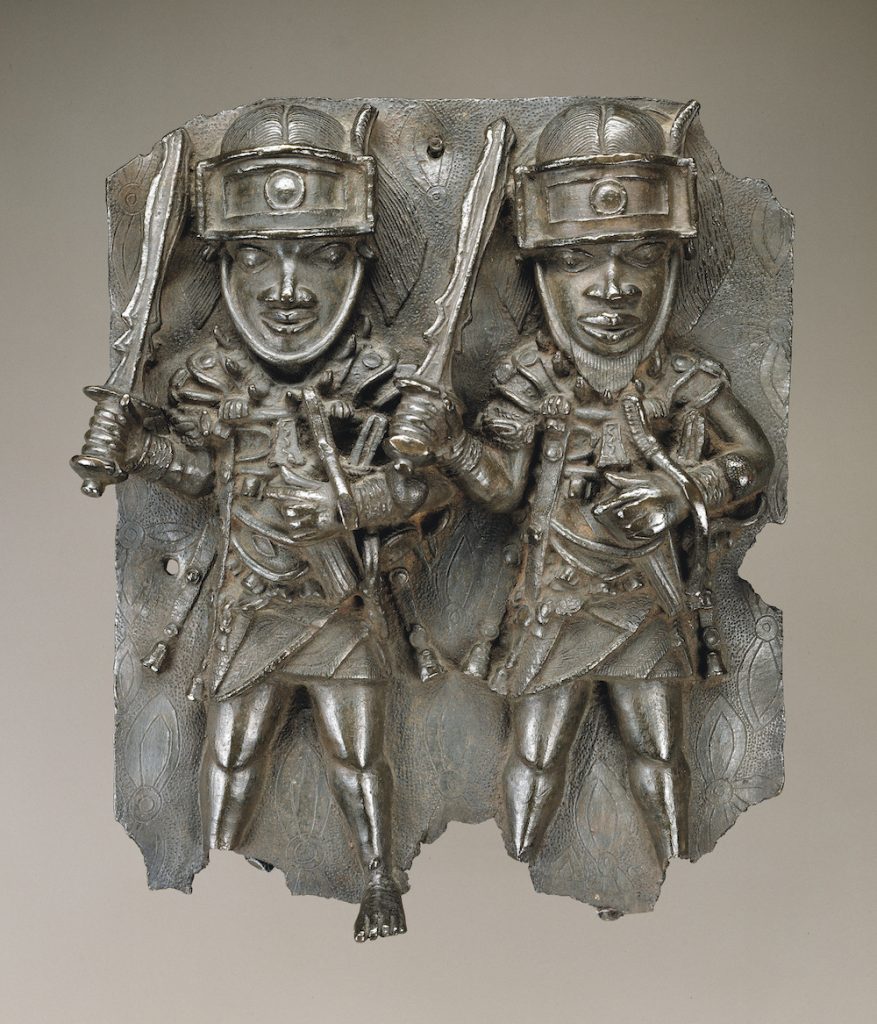
A Benin plaque from the mid-16th to 17th centuries. 
Courtesy of the National Museum of African Art.

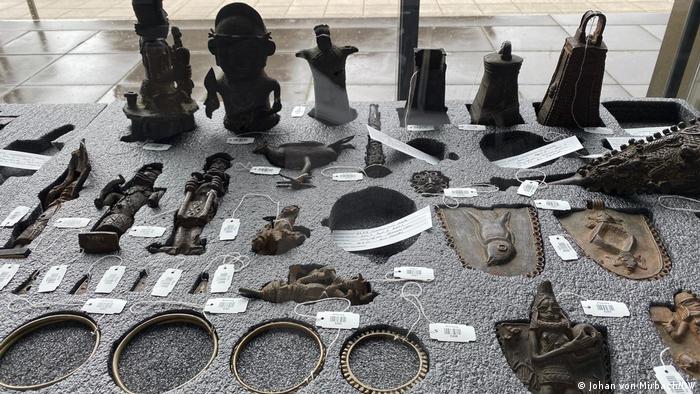
In a sign of changing priorities, the Smithsonian Institution’s National Museum of African Art (NMAFA) in Washington, D.C., has removed 10 Benin bronzes from public view as it looks into returning the objects to Nigeria.

The decision came directly from the museum’s newly-hired director, Ngaire Blankenberg, late last month—just 11 days after she moved to Washington, D.C. for the post. The bronzes taken down from display are among 16 in the NMAFA collection confirmed to have been taken by British soldiers in an infamous raid of Benin’s royal palace in 1897.

Now, in the glass case where the bronzes were previously on view, there is a sign explaining why they were removed.

“We are currently in discussion with Nigeria’s National Commission for Museums and Monuments about the future of this collection,” it reads. “The museum is proactively examining the circumstances and power dynamics that led to these artworks being in our collection, as well as our collecting practices to ascertain and implement the steps we need to take to ensure the museum is a trusted, welcoming place for all.”


A Benin plaque from the mid-16th to 17th centuries. Courtesy of the National Museum of African Art.

However, that doesn’t necessarily mean that restitution is imminent. A spokesperson for the Smithsonian clarified that while the museum “is committed to repatriation”, the process—which would require the museum to research the provenance of the objects in question, have them appraised by outside experts, and negotiate a return—has only just begun.

“These Benin Bronzes are high-value objects and deaccessioning them will require approval from the Smithsonian Secretary and the Smithsonian’s board of regents,” the representative said. “When the process is complete, the Smithsonian will consider returning artifacts to their original home if requested.”


“That does not mean we are not committed to fixing this,” Blankenberg added in an email to Artnet News, “but rather that we need to make sure we have a thoughtful and effective process so that doing the right thing is an institutional, not individual practice.”

“It is very important for us at NMAFA that the Benin Bronze process be seen within a much wider context and strategy,” she continued. “Our process of trust-building with African and African diasporic peoples starts with decolonization—proactively evaluating the impact of unequal power relations in our sector, looking carefully and in many instances changing how we hire, document, conserve, interpret, program—and yes it may also include repatriation.”

A Benin plaque from the mid-16th to 17th
centuries. Courtesy of the National Museum of African Art.

This May, following Germany’s landmark announcement that it would begin to restitute Benin bronzes as soon as 2022, Artnet reported that the NMAFA had no plans to return its collection of works from Benin.

“The museum has had a strong relationship with Oba and members of the royal court of Benin over the years,” NMAFA deputy director Christine Kreamer said at the time. “They are aware of the objects in our collection and appreciate that we continue to tell the story about how the kingdom’s treasures were looted from the palace in 1897.” A representative added that the museum had “not received a request for repatriation of objects.”

In recent years, the Benin bronzes have emerged as a central symbol in the larger debate about the restitution of cultural heritage obtained during periods of colonization. An estimated 3,000 bronzes taken from Benin are currently dispersed among more than 160 museums around the world.

But those numbers are slowly starting to decrease as various institutions and governing bodies have either returned objects to Africa or pledged to do so soon.

Last month, for instance, the University of Aberdeen and Jesus College at the University of Cambridge became the first two U.K. institutions to officially restitute bronzes, while in June, the Metropolitan Museum of Art in New York announced its own plans to return a pair of Benin plaques.

Follow Artnet News on Facebook:

Africa's lost heritage and Europe's restitution policies

France is returning artworks acquired in colonial times to Benin. Germany is also open to restitutions. How are other European countries addressing the issue?


FRANCE RETURNS COLONIAL LOOTED ART TO BENIN
A special exhibition in Paris
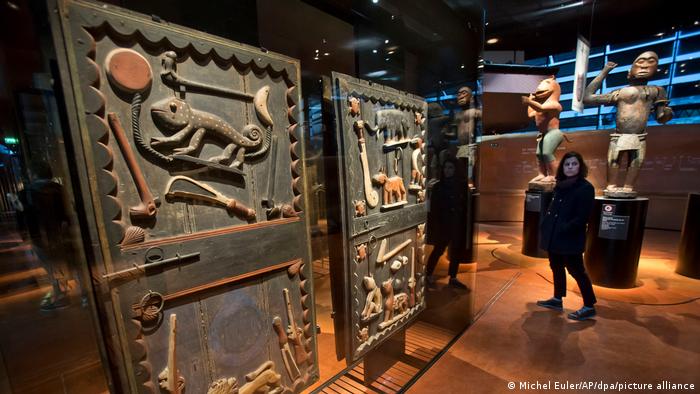
Nearly 130 years after they were added to France's collection, the artworks are now being returned to Benin, in West Africa. Before their restitution, the works from the former Kingdom of Dahomey (located within present-day Benin) were on display in a special exhibition in Paris from October 26-31.
123456789


They are works of art of great symbolic value — intricately carved thrones, richly decorated doors and impressive statues.

Each of the statues, for example, is a symbolic representation of a monarch of the former kingdom of Dahomey: King Glele as a lion-man or King Behanzin, the last to rule over the kingdom before French colonization, as half-human, half-shark.


26 works are being returned to Benin

In a symbolic act, France is now returning these objects to Benin in West Africa, where the former kingdom of Dahomey was located. It is the first significant return by France to its former colony since it gained its independence in 1960.

"It's a historic moment for both countries," art historian and entrepreneur Marie-Cecile Zinsou told DW. Zinsou is president of the Zinsou Foundation, which promotes contemporary art in Africa and leads cultural and educational initiatives. In 2014 she also opened the first museum for contemporary art in Benin.

She has been closely following the current restitution process. "I am very proud, as a citizen of both France and Benin, to witness an intelligent dialogue that has long been unbalanced."

Changing mindsets throughout Europe


The European museum landscape is now being reshaped, but it has been an arduous process to get Europe to accept even discussing the issue in the first place.

Like Benin, many African states have been fighting for more than a century for the return of their artifacts stolen during colonial times.

The most prominent examples are the pieces known as the Benin Bronzes, from today's Nigeria.

Germany's Prussian Cultural Heritage Foundation retains the second largest collection of these priceless bronzes, which were stolen in 1897 by British soldiers from the royal palace in Benin City, in the north of what is now Nigeria.

At the beginning of the year, Germany agreed to return important pieces from its collection to Nigeria in 2022.


The works known as the Benin Bronzes are actually artifacts made of brass and ivory

The Netherlands is also willing to return items acquired through inequitable conditions.

At the beginning of the year, Belgium returned some important artworks taken during the colonial era, transferring ownership rights from Tervuren's Royal Museum for Central Africa to the Democratic Republic of the Congo.

"The situation in Europe and Africa is developing very quickly," notes art historian Zinsou.

In addition to restitution, she points out another notable development: the targeted reconstruction of collections in the countries of origin: "In Kinshasa, they are reflecting on what they have in their national collection, how they show their history and what is missing. And if there are missing pieces that have been identified in European collections, then they recreate them, by asking for information on these pieces," says Zinsou.


Marie-Cecile Zinsou is the daughter of Lionel Zinsou, former Prime Minister of Benin

Similar projects are taking place in Gabon, she adds — a demonstration of new approaches being developed, as Zinsou explains: "It's not about, 'Give us everything back or we will wage war against you!' That's not what it's about at all. We are not into replaying history; we are engaging in the future."

For Bonaventure Ndikung, who will become the director of Berlin'sHaus der Kulturen der Welt (House of the World's Cultures) in 2023, the future needs to begin with reconciliation, and that requires apologies. "This is being done now and more will be done," says the Cameroonian art curator, referring to the current debates on restitution between Africa and Europe. "But these are just the first steps, we need to keep going."
Africa's lost heritage

Experts estimate that 80-90% of Africa's cultural heritage can be found in European museums, or rather in their storage. Only a fraction of their massive collections has ever been exhibited.

At the beginning of the 20th century in Europe, there was a trend of establishing so-called ethnological museums, not only in metropolises such as London, Paris and Berlin, but also in smaller cities such as the Linde Museum in Stuttgart.

There was a strong competition between ethnological museums to create the most impressive collections of artifacts. Adventurers, scientists, and missionaries all contributed to bringing pieces to Europe.
UK's guarded watch on colonial artifacts

Colonial officers also simply took items away from local populations. One well-documented case is of a drum known as the Ngadji, a sacred and revered object for the Pokomo tribe in Kenya. Despite their demands for restitution, it is still in the British Museum.

The London museum also houses the world's largest collection of Benin Bronzes. Nigeria has long been demanding the return of the artifacts, with a renewed official request placed in October 2021.

The British Museum's reply to DW's interview request came in the form of a short written statement: "The Museum understands and recognizes the significance of the issues surrounding the return of objects [...].We believe the strength of the British Museum collection resides in its breadth and depth, allowing millions of visitors an understanding of the cultures of the world and how they interconnect over time — whether through trade, migration, conquest, or peaceful exchange."
New museum spaces needed in Africa

British art historian John Picton, who worked for both the British Museum and the state museum commission in Nigeria, mentions one issue that has been repeatedly cited as a reason to retain the pieces, and that is "the lack of any facilities to actually properly house this material," he told DW. "I'm afraid I do take the view that simply to send it back with no concern for proper storage, security, conservation, climate control and what not, is simply irresponsible."

The new Edo Museum of West African Art is being built in Benin City, Nigeria, but it is far too small to be able to exhibit all the bronzes there, says Picton. He suggests that only the bronzes that are in the British Museum's storage should be returned, so that art from sub-Saharan Africa can still be seen in Great Britain.


French President Macron next to the 19th-century Throne of King Ghezo, which now returns to Benin

A new museum is also being built in Abomey, the former royal city of today's Benin — for the artworks that are being returned from France.

People there are hoping that more returns will follow this first symbolic restitution by the former colonial power. Indeed, French President Emmanuel Macron has set up new laws requiring his country to return items that were unfairly acquired during the colonial era.

Nadir Djennad and Stefan Dege contributed to this article with interviews.

This article was translated from German.

Taika Waititi to adapt 'The Incal' comics for big screen


Issued on: 08/11/2021 - 


New Zealander Taika Waititi -- who directed Marvel superhero hit "Thor: Ragnarok" -- will direct and co-write a movie based on "The Incal" Michael Tran AFP/File


Los Angeles (AFP) – Taika Waititi will direct the first big-screen adaptation of best-selling and highly influential sci-fi comic book series "The Incal."

The New Zealander -- who directed Marvel superhero hit "Thor: Ragnarok" and won an Oscar for his "Jojo Rabbit" screenplay -- will also co-write the movie, said publisher Humanoids Associates.

Waititi said he was "stunned to be given the opportunity" to bring the creation of cult Franco-Chilean comics writer Alejandro Jodorowsky and French artist Moebius to life.

"The Incal" has sold millions of copies around the world since its debut in the late 1970s, and is one of the highest-selling sci-fi graphic novels in history.

A sprawling space opera, it follows bumbling intergalactic private eye John Difool as he finds a mystical artifact which is coveted by powerful factions across the galaxy.

He is compelled to save the universe, while undertaking a spiritual journey that takes in questions such as the meaning of existence.

Jodorowsky -- a filmmaker in his own right -- famously tried to make a highly ambitious movie version of "Dune" in the 1970s, but ended up using elements of that failed project to write "The Incal" soon after.

"The films and graphic novels of Alejandro Jodorowsky have influenced me and so many others for so long," Waititi said in a statement.

The movie is Humanoids Associates' "first of many forays into film production," the French publisher said in a press release, and comes as comic-book adaptations continue to dominate Hollywood and the global box office.


Alejandro Jodorowsky famously tried to make a highly ambitious movie version of "Dune" in the 1970s, but ended up using elements of that failed project to write "The Incal" soon after JOEL SAGET AFP/File

Waititi is also directing the eagerly awaited Marvel sequel "Thor: Love and Thunder," due out in June, starring Natalie Portman, Chris Hemsworth, Matt Damon and Christian Bale.

"When Humanoids' CEO Fabrice Giger introduced me to Taika Waititi's work, it became obvious to me that he was the one," said Jodorowsky, 92, in the statement.

"I fully trust Taika's creativity to give 'The Incal' a stunning take, intimate and at the same time of cosmic proportions."


'Nimblewill Nomad,' 83, is oldest to hike Appalachian Trail

PORTLAND, Maine (AP) — An 83-year-old from Alabama started walking when he retired more than a quarter-century ago — and never stopped.
© Provided by The Canadian Press

M.J. “Sunny” Eberhart strode into the record books Sunday as the oldest hiker to complete the Appalachian Trail.

Eberhart, known by the trail name Nimblewill Nomad, acknowledged that despite having tens of thousands of miles under his belt, the trail was tough going at his age, leading to quite a few spills on slippery rocks.

“I’ve a got a couple of skid marks on me, but I’m OK,” he said in a recent interview. “You’ve got to have an incredible resolve to do this.”

He hiked the trail out of order, in sections, to take advantage of optimal weather, and had already completed northern sections including Maine’s Mount Katahdin. He completed his final section in western Massachusetts, in the town of Dalton, in the same year in which a 5-year-old became among the youngest to complete the feat.

Joining Eberhart for the finish was the former record holder, Dale “Greybeard” Sanders, who lives outside Memphis, Tennessee. He completed the hike at age 82 in 2017. He’s not sad to see the record fall.

“My dear friend Nimblewill is taking my record away from me, and I’m happy for him. Records are made to be broken,” Sanders said.

Sanders confirmed the completion of the feat as Eberhart was toasted with Champagne at a friend’s house.

Jordan Bowman, of the Appalachian Trail Conservancy in Harpers Ferry, West Virginia, confirmed that Eberhart is the oldest to finish the trail, surpassing Sanders.

Eberhart began his wanderlust in earnest after retiring as an optometrist in Florida in 1993.

The man with flowing locks and an impressive beard actually hiked farther than most who traverse the 2,193-mile (3,530-kilometer) trail that runs between Georgia's Springer Mountain and Maine’s Katahdin. He started his hike in February at his home in Flagg Mountain, Alabama, adding hundreds of extra miles to the route.

The journey represented a modest distance, relatively speaking, for a guy who trekked 4,400 miles (7,080 kilometers) from the Florida Keys to northern Quebec, an adventure he chronicled in a book, “Ten Million Steps.” He later hiked from Newfoundland to Florida, an even greater distance. He also walked from Chicago to California on Route 66.

He said he was feeling his age on this hike. His reflexes aren’t what they once were, so he tried to limit himself to eight hours of hiking a day.

But he still got banged up.

On a recent day in New Hampshire, he took a tumble and bloodied his elbow. A hiking companion asked if he wanted to take a break.

Eberhart retorted, “Do you think if I complain about it it will go away?” before picking himself and pressing onward, said Odie Norman, of Huntsville, Alabama, who hiked 100 miles with Nimblewill.

Eberhart’s age puts him at the opposite extreme from a pair of young hikers who completed the trail during the pandemic.

A 4-year-old, Juniper Netteburg, finished her journey with her missionary parents last year, and a 5-year-old, Harvey Sutton, from Lynchburg, Virginia, completed the trail with his parents in August.

Eberhart actually met Sutton, known as Little Man, on the trail. The youngster “impressed the dickens out of me,” Eberhart said.

Eberhart hasn’t lost his desire to keep moving or to seek the sense of calm that he finds on the trail in the company of the tight-knit and diverse hiking community.

His first major hike coincided with a search for peace after lugging emotional and mental baggage that involved a divorce and losing the respect of his children, he said. He eventually found his peace, and forgiveness.

“You can seek peace. That doesn’t mean that you’re going to find it. I persevered to the point that the good Lord looked down on me and said you’re forgiven, you can be at peace,” he said recently during a break near the Maine-New Hampshire border.

“It’s a profound blessing. It’s as simple as that,” he said.

With the hike over, Eberhart will return to his home at Flagg Mountain, the southernmost mountain topping 1,000 feet in the Appalachians, where he serves as caretaker of a fire tower and cabins built by the Civilian Conservation Corps.

Norman, who publishes “The Hiker Yearbook," said Eberhart probably won't hang up his boots anytime soon.

“He said, ‘You know they’re calling this my final hike.’ Then he laughed," Norman said. "I don’t think it’s going to be his last hike. I just don’t think he knows what’s he's going to hike next.”

___

Associated Press photojournalist Robert F. Bukaty contributed to this report.

David Sharp, The Associated Press


A fungus that uses chemicals to trick male flies into mating with infected dead females

A fungus that uses chemicals to trick male flies into mating with infected dead females
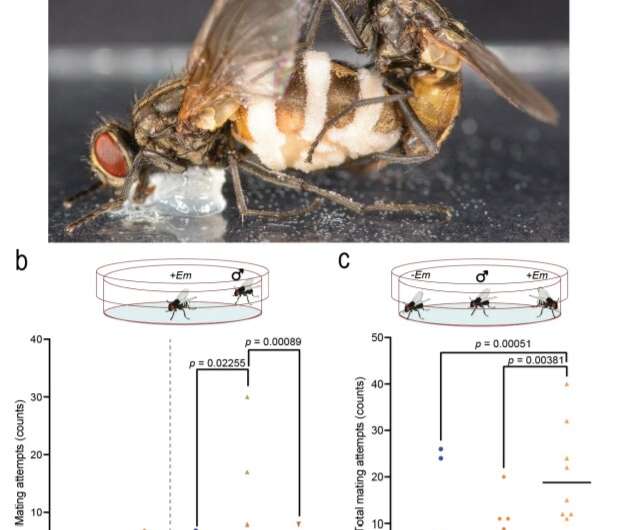
Fig. 1| Male house fly mating attempts towards E. muscae cadavers. a, Healthy male 
house fly attempting to mate with E. muscae sporulating cadaver. Fungal growth is seen
 as white bands (conidiophores with conidia) extruding from the abdomen of the dead
 female. The actively discharged conidia are covering large parts of the wings and body
 of the female cadaver and also create a halo of conidia around the cadaver
(Photo: Filippo Castelucci). b, Male mating attempts towards uninfected freeze-killed
 (-Em) or infected (+Em) E. muscae-killed cadavers in early (3-8 hours post death)
 and late (26-28 hours post death) sporulation stages (n = 15 per treatment).
 c, Total mating attempts by a male towards either cadaver when given a choice
 between two female cadavers that both were either uninfected (-Em, –Em), 
one uninfected and one infected in early sporulation stage (-Em, +Em), or one 
uninfected and one infected in late sporulation stage (-Em, +Em) (n = 9-19 per treatment).
 Credit: DOI: 10.1101/2021.10.21.465334

A combined team of researchers from the University of Copenhagen and the Swedish University of Agricultural Sciences reports that a certain fungus uses chemicals to trick male flies into mating with infected dead females. They have written a paper describing their findings and have posted it on the bioXiv preprint server.

Prior research has shown that some types of fungus can give insect victims what has become known as  disease, in which a victim's nervous system is infected and the unwilling creature begins climbing to the highest vantage point possible. Once there, the wings are spread wide and the victim begins spewing spores. In this new effort, the researchers have found a fungus that takes summit disease one step further by having its  also emit chemicals that sexually attract males.

In studying the fungus Entomophthora muscae, the researchers found that it was capable of infecting other insects, primarily house flies, with summit disease. Airborne spores land on a female victim and penetrate her skin. Soon, they invade her entire body, including her nervous system and brain. Chemicals produced by the spores incite the female to begin climbing until she reaches the highest possible point, such as a leaf on a tree. Then, she opens her wings and dies. Meanwhile, the fungus covers her body with little spore-filled cannons. At some point, a male happens by, and when he touches her body, the cannons fire, filling the air with , ready to infect others in the vicinity.

In their lab, the researchers captured a host of infected and non-infected flies. Males were given a choice of mating with either an infected or non-infected female, and more often than not, chose the one that was infected. This suggested that the  was doing something to make the infected female more attractive to the male even though she was dead. In studying the dead females, the researchers found instances of unusual volatile compounds, including some chemicals called sesquiterpenes, which are not normally associated with house flies but have been found to sexually attract many types of insects, including house flies.Fungus uses zombie female beetles to infect males

More information: Andreas Naundrup et al, A pathogenic fungus uses volatiles to entice male flies into fatal matings with infected female cadavers, bioRxiv (2021). DOI: 10.1101/2021.10.21.465334

© 2021 Science X Network


Ancient Penis Worms Invented the “Hermit Crab” Lifestyle 500 Million Years Ago

Penis Worm Eximipriapulus

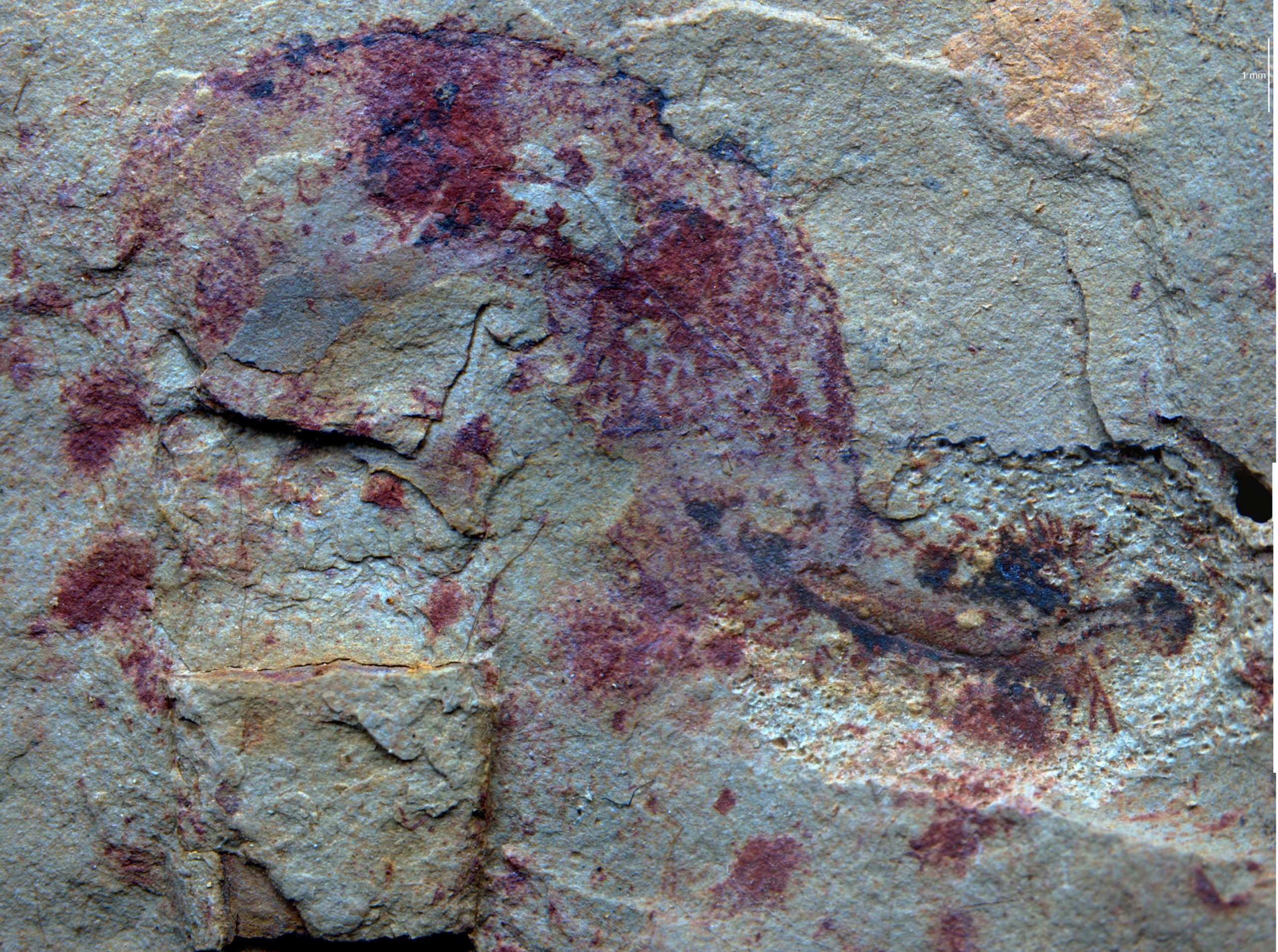
The penis worm Eximipriapulus inhabiting a hyolith shell. Credit: Prof Zhang Xiguang, Yunnan University

A new study by researchers from Durham University and Yunnan University reveals that penis worms (Priapulida) invented the ‘hermit’ lifestyle, some 500 million years ago, at the rise of the earliest animal ecosystems in the Cambrian period.

Hermit crabs are well known for employing snail shells as shelters against predators, but researchers have now found that penis worms invented the ‘hermit’ lifestyle hundreds of million years before hermit crabs first evolved.

Researchers studied collections of the Guanshan fossil deposits – famous because they preserve soft tissue (such as the bodies of worms) alongside the shelly material that makes up the conventional fossil record.

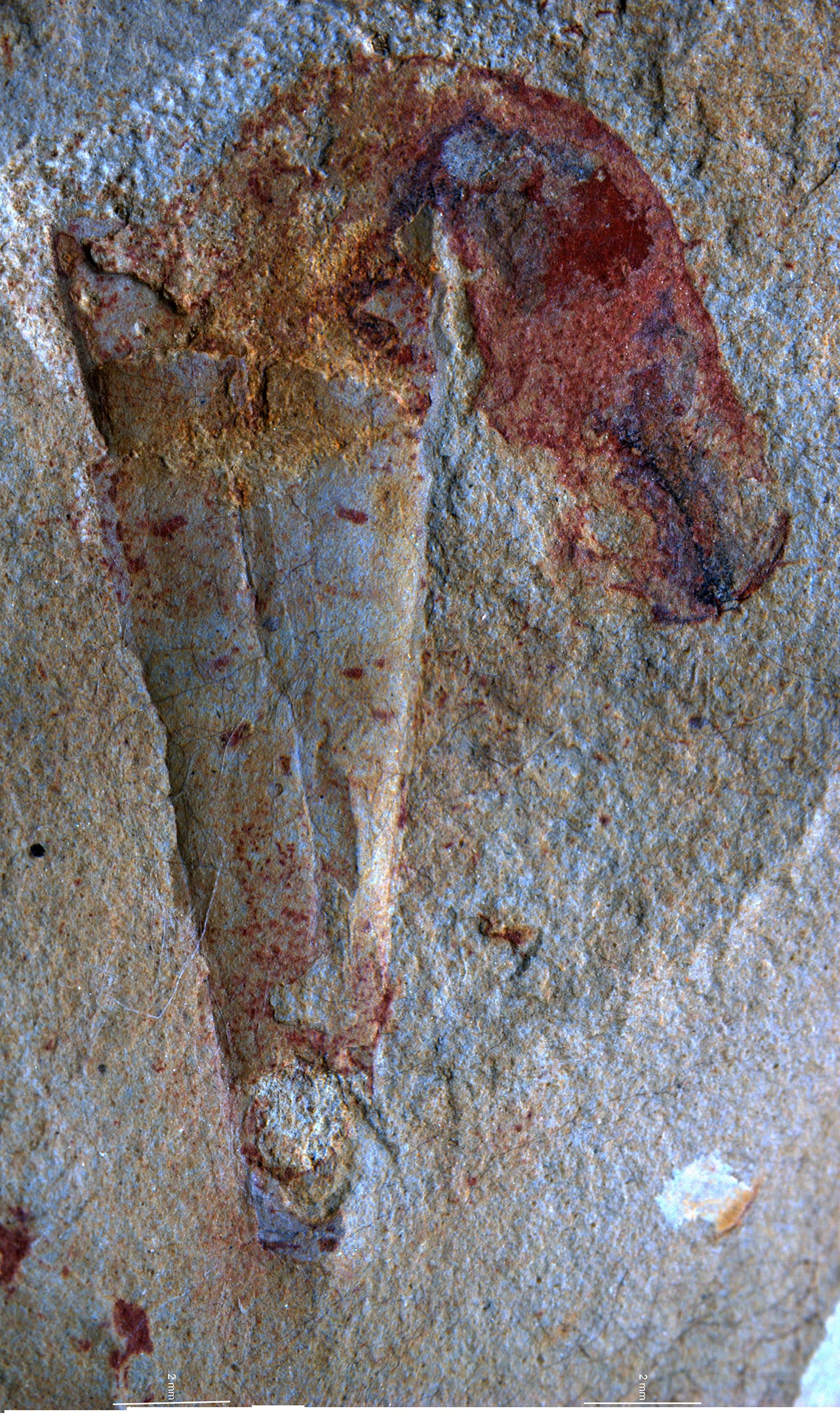
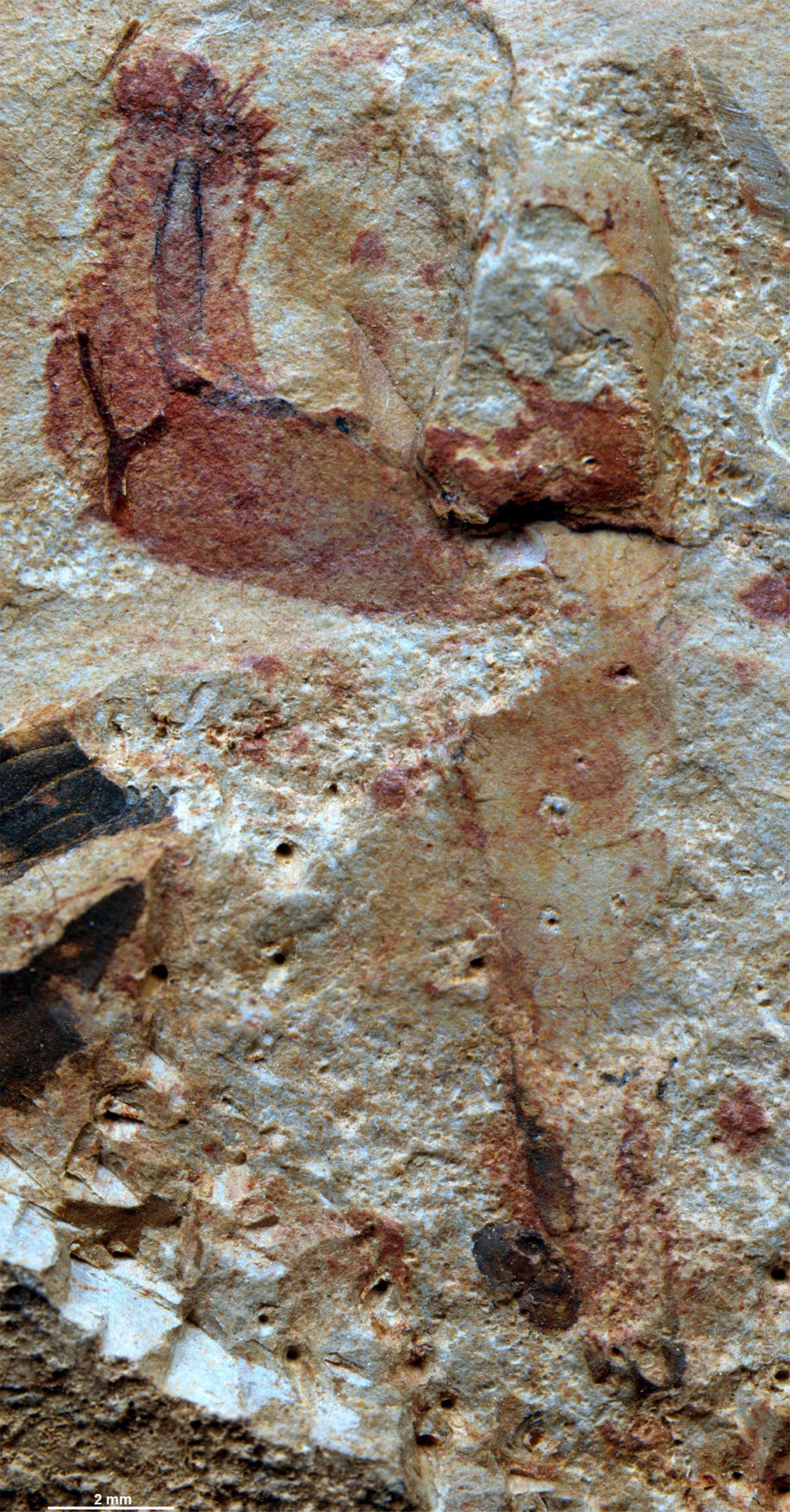
Four specimens of the penis worm Eximipriapulus were found inside conical shells of hyoliths, a long-extinct fossil group.

“The worms are always sitting snugly within these same types of shells, in the same position and orientation,” explains Dr. Martin Smith, co-author of the study.

The researchers established that Cambrian predators were plentiful and aggressive, forcing the penis worms to take permanent shelter in empty shells.

Dr. Smith expands: “The only explanation that made sense was that these shells were their homes – something that came as a real surprise. Not long before these organisms existed, there was nothing alive more complex than seaweeds or jellyfish: so it’s mind-boggling that we start to see the complex and dangerous ecologies usually associated with much younger geological periods so soon after the first complex animals arrive on the scene.”

Penis Worm Fossil 3

Credit: Prof Zhang Xiguang, Yunnan University

The research indicates the key role of predators in shaping ecology and behavior in the very early stages of animal evolution.

The study findings will be published in the journal Current Biology.

A “hermiting” lifestyle has never been documented or observed in living or fossil penis worms; nor has it been directly observed in any organism living earlier than the ‘Mesozoic Marine Revolution’ in the age of dinosaurs.

The fact that it evolved independently in the immediate aftermath of the “Cambrian explosion,” which marked the rapid rise of modern animal body plans, highlights the remarkable speed and flexibility of the evolutionary process.

Reference: “A ‘hermit’ shell-dwelling lifestyle in a Cambrian priapulan worm” by Xiao-yu Yang, Martin R. Smith, Jie Yang, Wei Li, Qing-hao Guo, Chun-li Li, Yu Wang and Xi-guang Zhang, 8 November 2021, Current Biology.
DOI: 10.1016/j.cub.2021.10.003

We Asked a NASA Scientist: What Are Lagrange Points? [Video]

Earth-Sun System Lagrange Points

Lagrange Points of the Earth-Sun system (not drawn to scale). Credit: NOAA

What are Lagrange points? They are places around a planet’s orbit where the gravitational pull of the planet and the Sun and the motion of the orbit combine to create an equilibrium — requiring very little energy to stay in orbit.

NASA’s Lucy mission will visit Jupiter’s Lagrange points where the Trojan asteroids have been gravitationally trapped for billions of years, holding clues to the formation of our solar system. NASA scientist Dr. Adriana Ocampo has more.

Lagrange points are named after the Italian astronomer and mathematician who first proposed them. These are places in our solar system where the gravitational pull of any two planetary bodies, as well as the motion of their orbit, combine to create an equilibrium. It takes very little energy to orbit these positions.

Objects that are sent to these locations in space either tend to stay there naturally or can be kept there with minimal energy because the forces are in balance.

NASA’s taking advantage of those Lagrange Points to send two new extraordinary missions. The James Webb Space Telescope will orbit the Sun at Earth’s Lagrange Point number two, allowing the telescope to stay in line with Earth as it moves around the Sun and retain that orbit using very little fuel.

NASA’s Lucy mission will study the pristine Trojan asteroids, the remnants of our solar system that have been gravitationally trapped around Jupiter’s Lagrange point number four and Lagrange Point number five for over four and a half billion years.

So, what are Lagrange points? They are places in our solar system where objects can orbit the Sun at the same speed as a planet staying in the same place relative to both of them.