Tuesday, March 28, 2023

ZIONIST TERRORIST GETS HIS OWN MILITIA

To okay overhaul delay, Ben Gvir gets promise for ‘national guard’ under his control

Deal cut after national security minister reportedly threatened to quit coalition over decision to halt judicial legislation; critics slam move as handing Ben Gvir private militia

PALESTINIANS BEWARE!

Netanyahu, however, did not make any reference to such a deal in his speech 

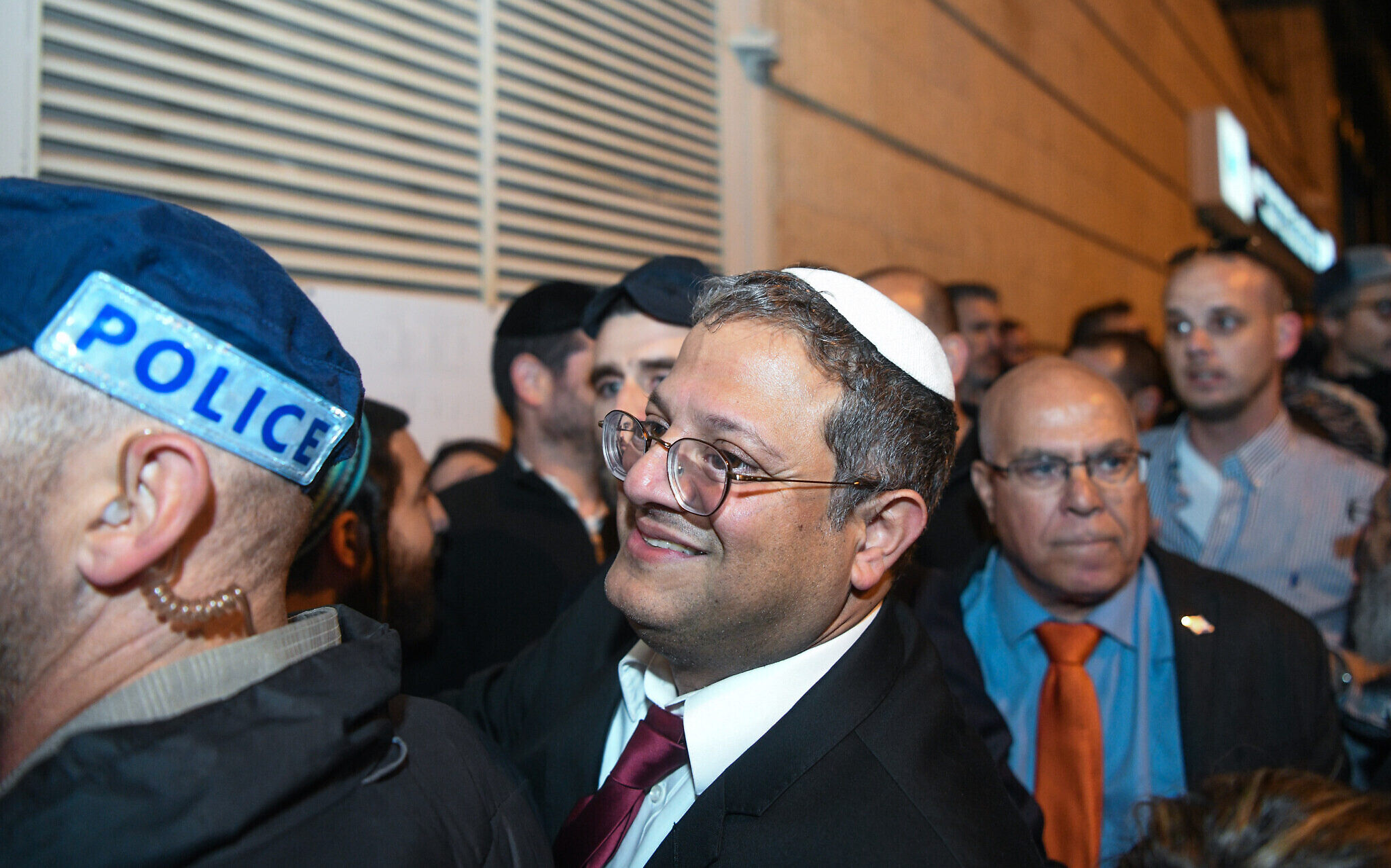
National Security Minister Itamar Ben Gvir attends a rally in support of the government's planned judicial overhaul, in Jerusalem on March 27, 2023. (Erik Marmor/Flash90)

National Security Minister Itamar Ben Gvir announced Monday that he had agreed to back Prime Minister Benjamin Netanyahu’s call for a pause on judicial overhaul legislation in exchange for a promise to create his long-sought “national guard.”

Ben Gvir circulated a letter to media outlets dated Monday and signed by Netanyahu, in which the prime minister vowed to raise the issue of forming such a body within the National Security Ministry in the upcoming cabinet meeting this Sunday.

The announcement came after Ben Gvir reportedly threatened to quit the government, endangering the coalition, if Netanyahu moved ahead with a plan to halt the judicial overhaul legislation.

Netanyahu, however, did not make any reference to such a deal in his speech Monday evening, when he announced a halt to the legislation until the Knesset returns from its Passover recess.

“The reform will pass. The national guard will be established. The budget that I demanded for the National Security Ministry will pass in full,” Ben Gvir tweeted on Monday evening. “Nobody will scare us. Nobody will succeed in changing the decision of the people.”

Labor MK Gilad Kariv criticized Netanyahu’s promise to Ben Gvir, tweeting: “The national guard must be under the police, rather than under the control of [far-right group] Lehava and the rest of the Kahanists” — a reference to followers of extremist anti-Arab rabbi Meir Kahane.
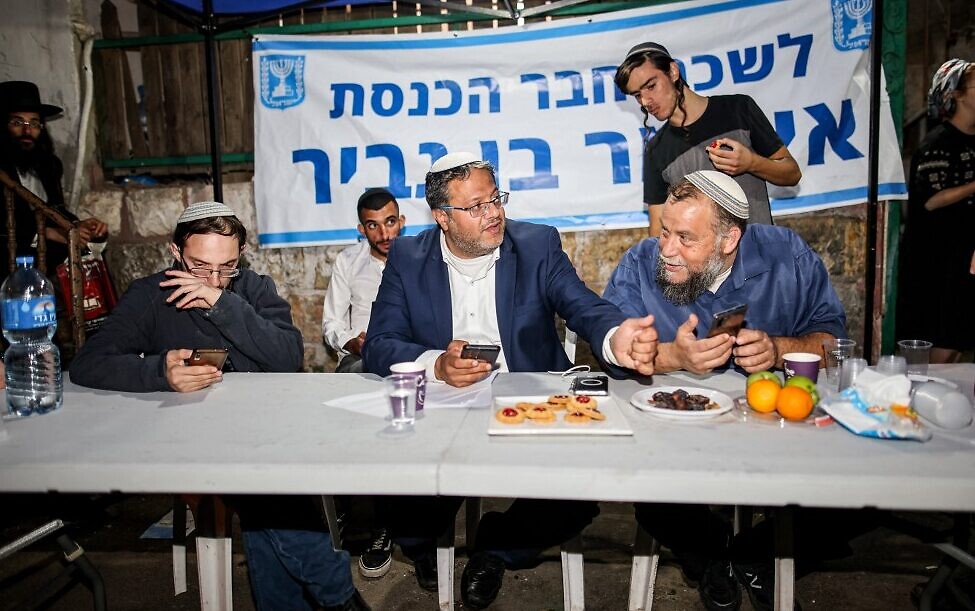
File: MK Itamar Ben Gvir seen with head of the racist Lehava organization Bentzi Gopstein in a protest tent amid high tensions in the East Jerusalem neighborhood of Sheikh Jarrah on May 6, 2021. (Olivier Fitoussi/Flash90)

Kariv urged the Shin Bet security service to publicly oppose forming a “Ben Gvir law-approved militia.”

Former Israel Police chief Moshe Karadi said Ben Gvir would be forming “a private militia for his political needs” and would “recruit the Hilltop Youth” settler extremists to its ranks. “He’s dismantling Israeli democracy.” Karadi called legislation to this effect “dangerous and a distinct characteristic of turning Israel into a dictatorship.”

He said it was unthinkable to establish a force that would report directly to the minister. “You cannot have an operational force that doesn’t report to the police commissioner,” he said.

Yesh Atid MK Ram Ben-Barak mocked Ben Gvir for publicizing the letter, since it proves that “he doesn’t trust [Netanyahu’s] word… It’s incredible that there are people who still believe Bibi [Netanyahu].”

Hadash-Ta’al chairman Ayman Odeh tweeted that “in the right-wing government, criminals appoint judges and terrorists run a private army. Every democrat must fight against this insanity at any price!”

Ben Gvir has long called for the creation of a so-called national guard under his direct control.

He has said that he seeks to establish a volunteer national guard that would be deployed in times of ethnic unrest, such as the May 2021 Jewish-Arab race riots that took place in some Israeli cities, against a background of war with the Hamas terror group in the Gaza Strip.

Last month, he confirmed to The Times of Israel that he still plans to incorporate the entirety of the Border Police into a new national guard, as part of a push to boost the policing power of an understaffed force, although it was unclear how the move would accomplish that goal.

The Border Police is formally a part of the police and ultimately reports to the police commissioner, although parts of it fall under the military’s operational command.
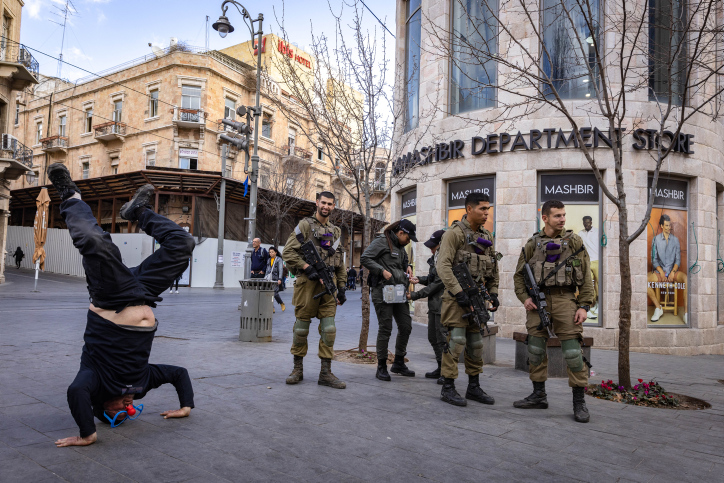
Illustrative: Border Police officers patrol in Jerusalem on January 23, 2023. (Olivier Fitoussi/Flash90)

Ben Gvir in January presented a framework for the national guard, which had some similar characteristics to an arrangement proposed by his predecessor, former public security minister Omer Barlev, and then-prime minister Naftali Bennett. However, the earlier plan saw the Border Police operating alongside the national guard, rather than as part of it.

Barlev and Bennett approved a plan to create an “Israeli guard,” composed of active-duty and reserve officers and volunteers trained by Border Police professionals. Since the announcement last June, the idea has struggled to find purchase.

Ben Gvir in January said that the national guard would fall under Police Commissioner Kobi Shabtai’s command, rather than under his direct authority, as proposed in Otzma Yehudit’s December coalition agreement.

However, Ben Gvir is currently pushing for contentious legislation to make the police commissioner formally subordinate to the national security minister.

Why Netanyahu paused the march of tyranny and nobody who loves Israel can rejoice yet

Had he not fired Gallant, the PM would right now be enacting his key autocratic edict. His overreach merely compelled a timeout, unless Herzog can somehow find a path to salvation


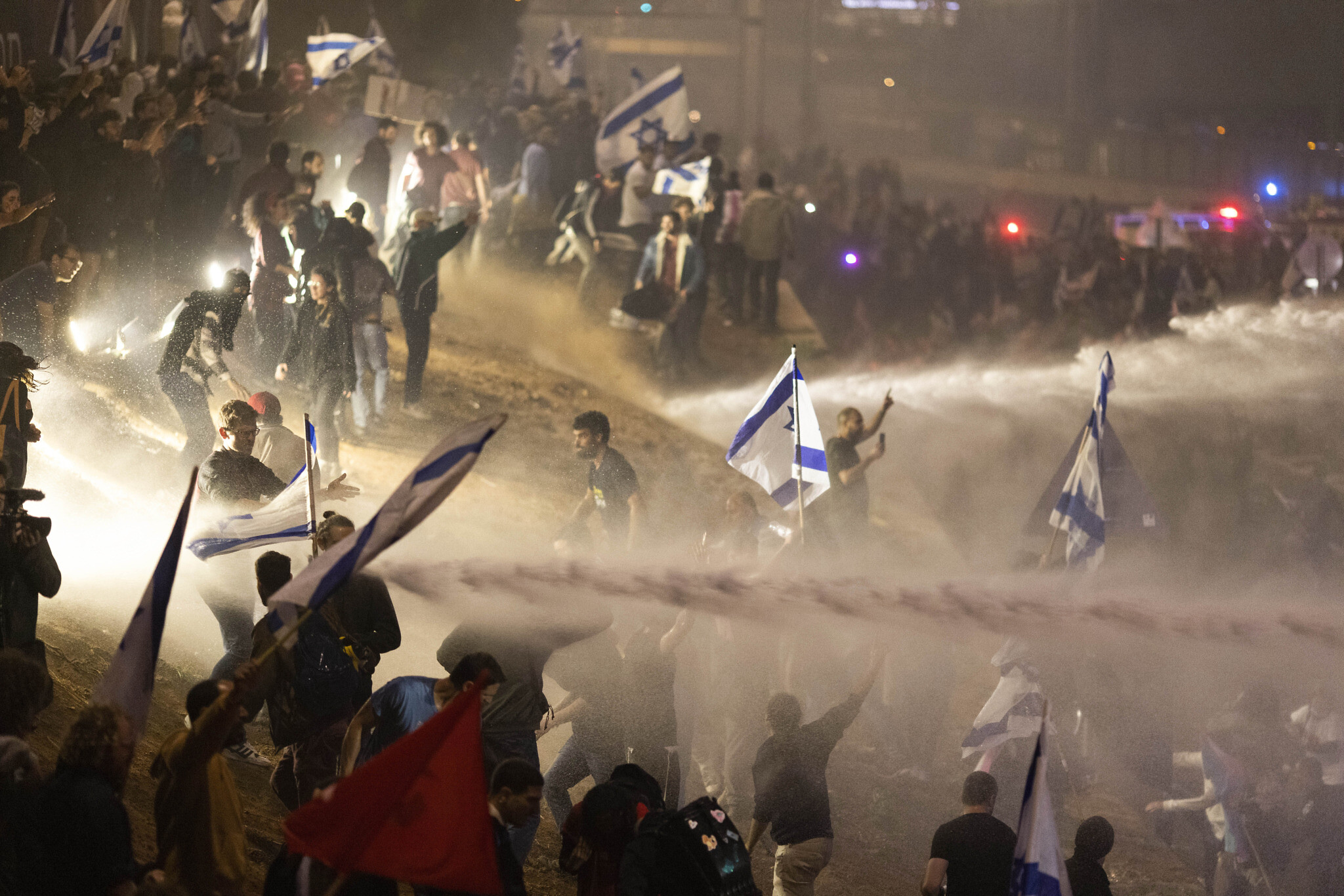
Police use a water cannon to disperse demonstrators blocking a highway during a protest against plans 
by Prime Minister Benjamin Netanyahu's government to overhaul the judicial system, in Tel Aviv, Israel, 
Monday, March 27, 2023. (AP Photo/Oren Ziv)

When Prime Minister Benjamin Netanyahu told his key coalition allies on Monday morning that he saw no alternative other than to pause their legislative blitz neutering Israel’s judiciary, the far-right Otzma Yehudit leader Itamar Ben Gvir was reportedly the most bitterly opposed.

“We are letting the anarchists win,” protested Ben Gvir (using the coalition leaders’ favored term for the defenders of our democracy), according to an unconfirmed account of the conversation reported by Channel 12 news.

“We’re not letting them win,” Religious Zionism party chief Bezalel Smotrich is said to have retorted. “We’ll only halt the legislation for a few months.”

At which point the justice minister, Yariv Levin, reportedly summed up: “You’re all correct, but we need to be smart. We’ll pass the legislation later on, but not now. We have people in Likud who are opposed; I’m not sure that we’d have 61 [votes in the 120-seat Knesset]. The people want reform, and they will get it, but we also have to look at what’s going on outside [with the anti-overhaul protests, etc.]; it can’t be ignored.”

The exchange helps underline why, when Netanyahu told the nation on Monday evening that he was halting the legislation’s progress for a few weeks, his declared readiness to do so “out of national responsibility, out of a desire to prevent a rift in the nation,” was instantly dismissed as empty rhetoric by the leaders of the mass protests, and opposition leader Yair Lapid warned that Netanyahu might be up to his old tricks.

After all, Levin had vowed repeatedly, during the three months since he unveiled plans to give near-absolute power to the coalition and leave Israelis’ most basic rights unprotected, that his “reforms” would not be halted “even for a minute,” and reportedly threatened to resign should the march to enactment be interrupted.

Prime Minister Benjamin Netanyahu (left) and Justice Minister Yariv Levin in the Knesset in Jerusalem on March 6, 2023. (Yonatan Sindel/Flash90)

Furthermore, the prime minister had insisted as recently as Thursday that, while no disagreement should be allowed to “endanger our joint future,” a central element of his de-democratization assault, the law that gives the coalition control over the appointment of judges, would be approved by the Knesset this week, as planned, in its current form.

What, then, prompted Netanyahu to magnanimously announce the temporary shelving of that law and the others in the pipeline on Monday evening, and Levin to back him in the coalition meeting earlier in the day?

The simple fact, as the justice minister reportedly acknowledged, that despite heading a 64-strong coalition in the 120-member Knesset, they were no longer certain that they had the votes for an absolute majority — not technically required to pass the judicial selection law, for which a simple majority would suffice, but a major asset in defending the democracy-shattering legislation before a still-functional and independent High Court.

What had changed since last Thursday was that Netanyahu had fired his defense minister, Yoav Gallant, for having the temerity to privately and then publicly warn that the national divide over the coalition’s bid to change the way Israel is governed was prompting deepening dissent in the ranks of the military, to the point where it constituted a “clear, immediate, and tangible threat to the security of the state.”

The dismissal of the defense minister on Sunday night, in turn, triggered a spontaneous national uprising, angry demonstrations that raged for hours among a growing swath of the citizenry who saw, in Gallant’s brutal termination, further evidence that Netanyahu continues to place personal and political interests above the core needs of the state.

And those protests, in turn, finally prompted a handful of Likud politicians to publicly raise concerns — not, heaven forbid, about the content of the Netanyahu-Levin legislation, but about the way it was being steamrollered through parliament, with a speed and brutality that, opinion polls have indicated, was gradually alienating ever more of the public.

With the support of the likes of Nir Barkat, Yuli Edelstein, David Bitan, Eli Dallal and Danny Danon no longer guaranteed, and Gallant himself most unlikely to vote with the coalition, Levin was compelled to point out that “I’m not sure we’d have 61.”

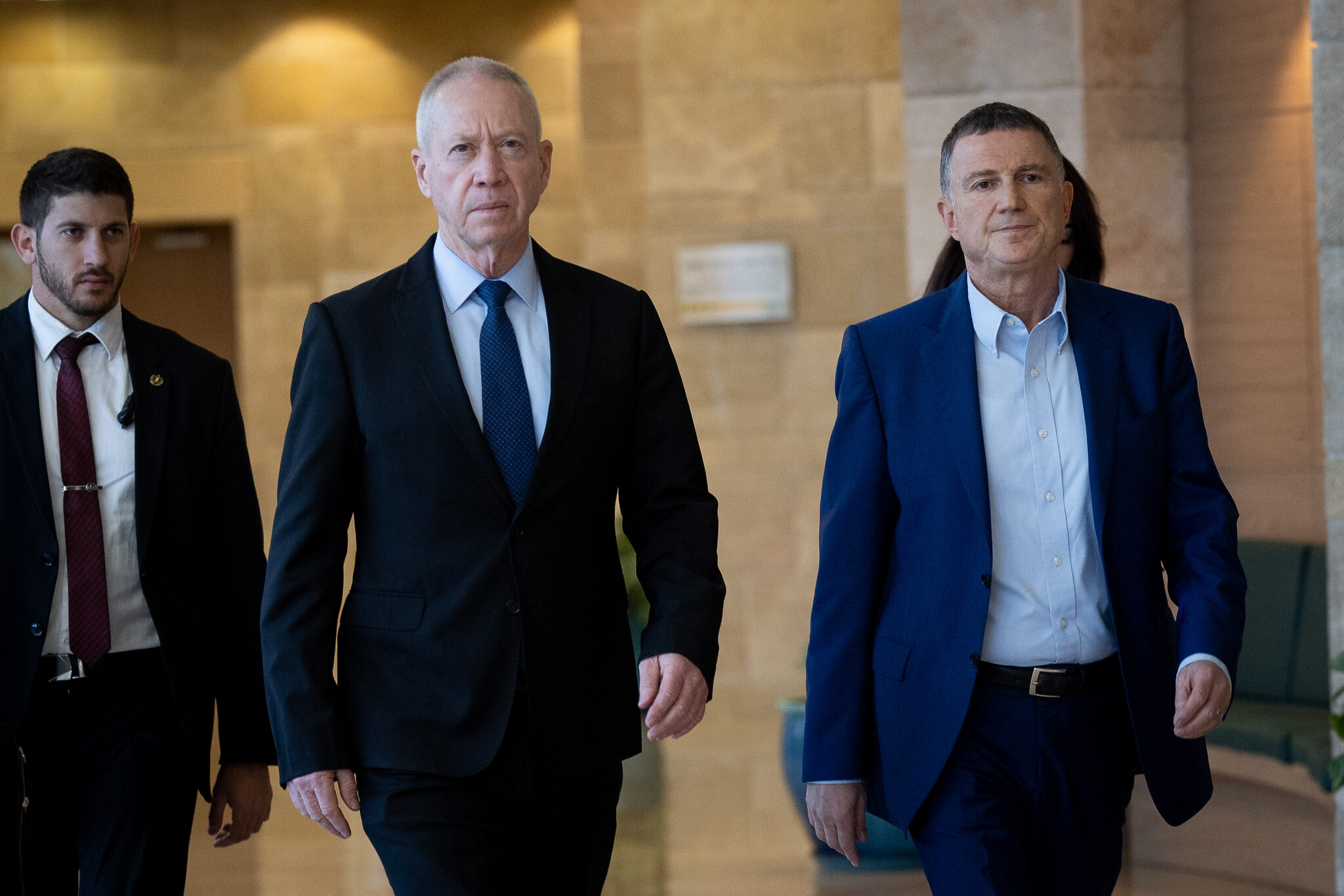
Defense Minister Yoav Gallant (left) and MK Yuli Edelstein arrive for a meeting of the Defense and Foreign Affairs Committee, in the Knesset on March 27, 2023. (Yonatan Sindel/Flash90 )

‘One way or another’

Does all this mean that Netanyahu’s promise to halt the legislation and engage in dialogue is merely a case of him playing for time — ostensibly heeding the concerns of the electorate while allowing public anger to subside and herding his Likud colleagues back into line, ready to revive the self-same legislation just a few weeks from now?

That is indeed almost certainly the plan. His gambit also confuses the public and thus likely weakens the mass protests against de-democratization. It yields the added bonus that Netanyahu has deepened the friction in the opposition camp between the relatively statesmanlike if wary Benny Gantz, who welcomed Netanyahu’s speech, and the warier-still Lapid. And it immediately separates — not ideologically but practically — the anti-Netanyahu political leadership, which will now engage with the prime minister’s representatives in a dialogue brokered by President Isaac Herzog, from the protest organizers, who have unsurprisingly concluded that the prime minister is still intent on enacting his “dictatorship laws” and who will only stand down if the current legislation is scrapped.

Don’t forget, Netanyahu, in his speech, made clear that work on the legislation would resume after the Passover break, that the overhaul would end up passing “one way or another,” and that the “lost balance” between the branches of government would be restored. “We will not give up on the path for which we were elected,” he vowed.

The march of tyranny was merely taking what Netanyahu described as “a timeout.”

Nonetheless, the prime minister’s spectacularly intemperate firing of Gallant prompted not only an outpouring of public rage but also nationwide strike action on Monday. Overseen by the Histadrut labor federation, this entailed dozens of canceled flights at Ben Gurion Airport, the shuttering of some local councils, and the closures of shops, restaurants, malls, banks, universities and more. The Histadrut called off the strike action as soon as Netanyahu had finished speaking, but it has now shown its potency, and would likely be ready to order repeat action if needed.

And Netanyahu has also now found himself dragged back into contact with Herzog, would-be judicial peacemaker in chief, whose alternate package of reform proposals the coalition summarily rejected just two weeks ago.

Herzog’s challenge

The president has, to put it mildly, an uphill battle as he now resumes his negotiating efforts, and the stakes could not be higher.

The elements of this national crisis remain as problematic as ever. Netanyahu and his allies want to shackle the justices in order to advance a radical, discriminatory, and in some cases, racist and theocratic political agenda, at odds with Israel’s democratic and tolerant Jewish foundational principles. They won a decisive election in November and enjoy fervent and wide support.

Supporters of Prime Minister Benjamin Netanyahu’s judicial overhaul plan rally near the Knesset in Jerusalem, Monday, March 27, 2023. (AP Photo/Oren Ziv)

But half the country didn’t vote for them, and some of their own voters are deeply unhappy that they did. If the surveys are to be believed, the coalition is hemorrhaging support, which can only reinforce its desire to marginalize the judiciary and maximize its hold on power.

On Monday morning, the coalition-controlled Constitution, Law and Justice Committee approved the legislation that gives the government control of judicial appointments, precisely as Levin had planned and Netanyahu had promised. On Tuesday morning, the draconian edict was formally filed for its second and third (final) readings in the Knesset plenum, which can now take place at any moment.

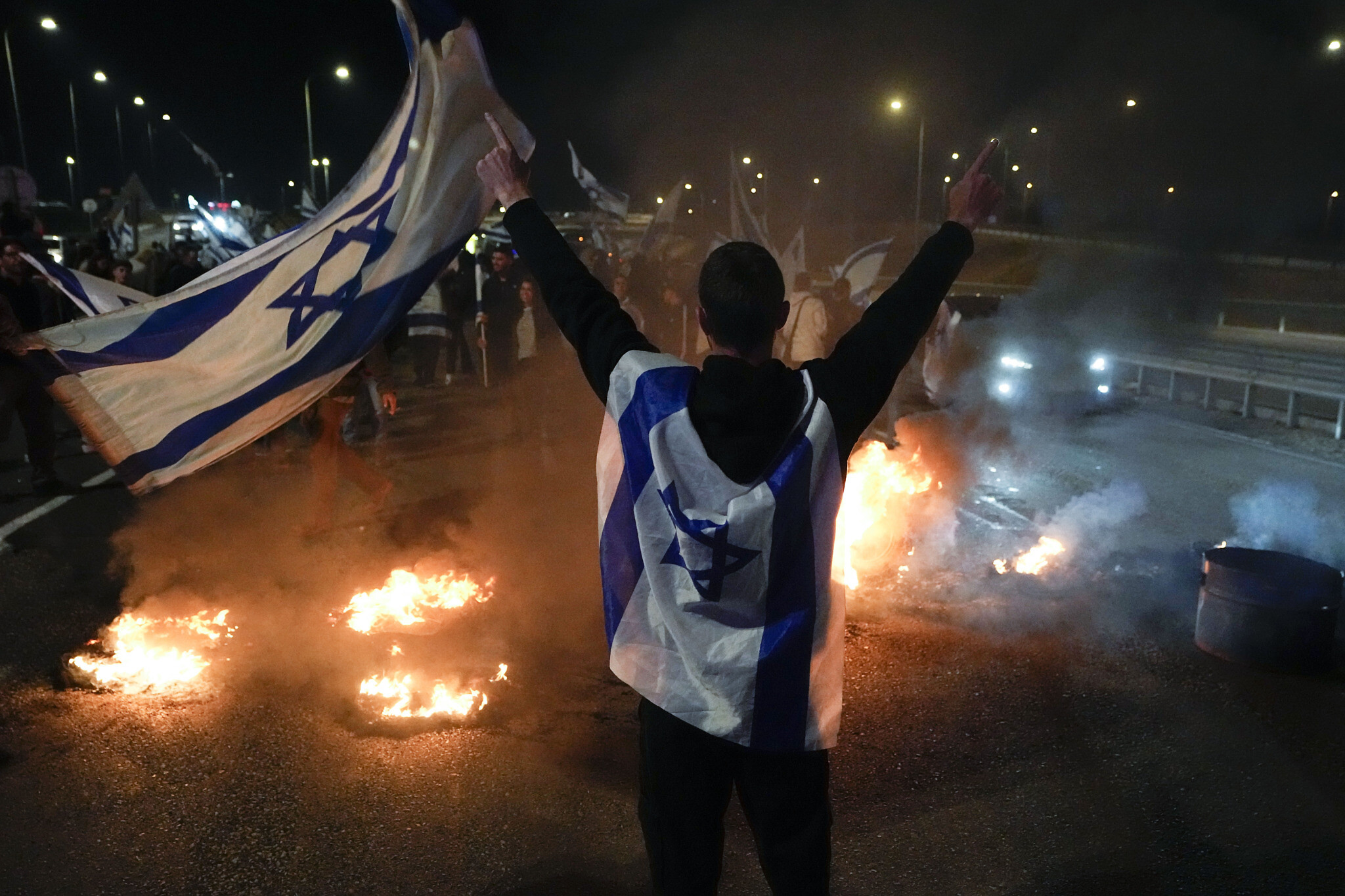
Anti-government protesters burn tires near Beit Yanai, Israel, Monday, March 27, 2023. (AP Photo/Ariel Schalit)

Had he not fired his defense minister, the prime minister would right now be enacting into law the centerpiece of his judicial takeover. Instead, that peremptory tactical overreach, by a would-be despot who preposterously invoked King Solomon as his role model on Monday night, means he and his cronies will have to wait.

The fear is that it won’t be for long. “We need to be smart,” as Yariv Levin said. “We’ll pass the legislation later on.”

ISRAEL

Over 100k at Knesset as PM delays planned speech; right organizes counter-protest

Netanyahu, expected to announce halt to overhaul, urges demonstrators on both sides to avoid violence; Lapid tells protesters: ‘No government will take our rights’

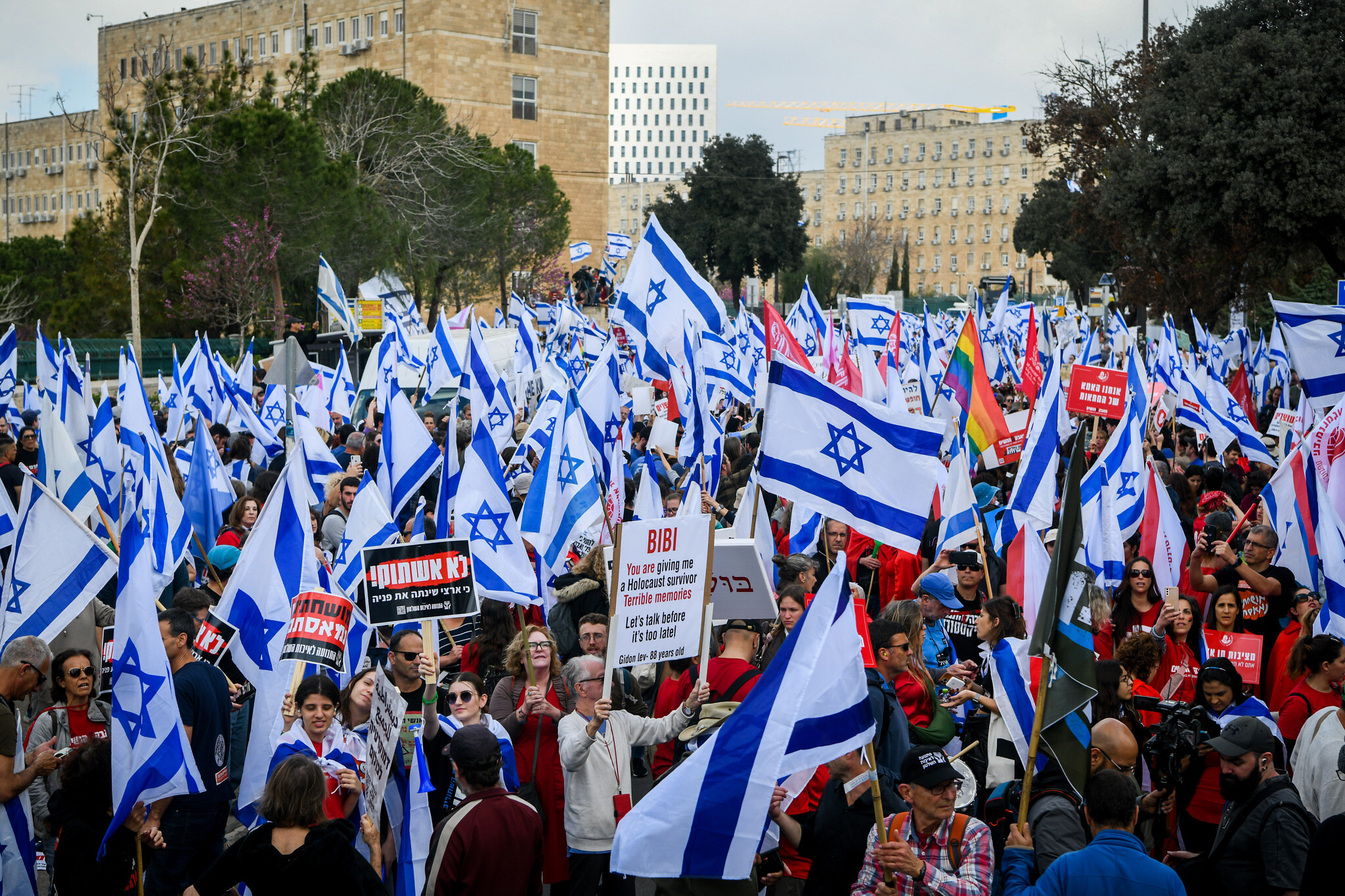
Israelis protest outside the Knesset against the government's planned judicial overhaul, in Jerusalem, March 27, 2023. (Arie Leib Abrams/Flash90)

Masses rallied across Israel on Monday ahead of an expected announcement by Prime Minister Benjamin Netanyahu that he was halting judicial overhaul legislation in the face of skyrocketing opposition.

In Jerusalem, some 100,000 people protested outside the Knesset, as right-wingers organized a counter-protest which drew a few thousand people. In Tel Aviv, a group of demonstrators ran onto the Ayalon Highway, temporarily blocking traffic at Hashalom Interchange. Protests were also held in Haifa and Beersheba.

Police chief Kobi Shabtai arrived to the site of the protests outside the Knesset Monday afternoon, taking a tour of police activity at the site alongside Jerusalem District Commander Danny Levy.

Separately, a group of protesters briefly shut down the entrance to Jerusalem near the Chord Bridge junction. Police said that three demonstrators were arrested when they cleared the road.

As the nation waited for Netanyahu’s address, the premier offered a brief statement in which he called on “protesters in Jerusalem, from the right and left, to act responsibly and without violence.”

The prime minister had originally been expected to speak in the morning, but his address was delayed again and again as he huddled with coalition leaders, amid reported threats by Otzma Yehudit leader Itamar Ben Gvir to quit, and as Religious Zionism chief Bezalel Smotrich called on the right to show up in droves for the pro-overhaul rally. Justice Minister Yariv Levin, after fighting tooth and nail in recent weeks against a halt to the legislation he led, said it was now up to Netanyahu to decide how to proceed.

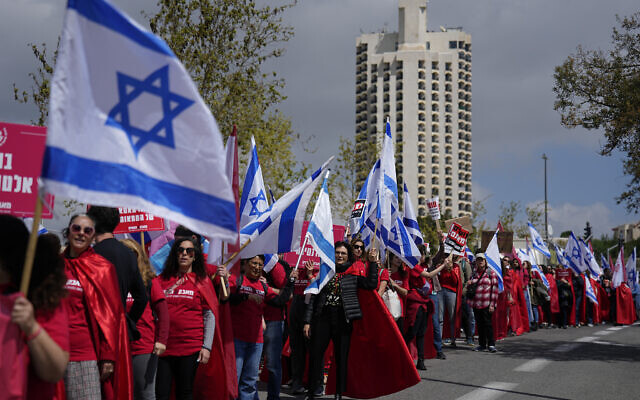
Israelis protest against Prime Minister Benjamin Netanyahu’s judicial overhaul plan outside the parliament in Jerusalem, March 27, 2023. (AP Photo/Ariel Schalit)

The fresh rallies came after Netanyahu fired Defense Minister Yoav Gallant Sunday evening for publicly calling to pause the shakeup, a move that led to major overnight protests throughout the country and particularly in Tel Aviv, followed by declarations by the Histadrut labor federation and others of a general strike.

Amid the burgeoning unrest, a Knesset committee approved for its final plenum readings a highly contentious bill that would give the coalition broad control over the selection of judges and the Supreme Court chief — even as the premier appeared poised to mothball it.

Opposition leader Yair Lapid told demonstrators outside the Knesset that “no government gave us our rights and no government will take our rights.”

“There is one thing that the extremists in the government didn’t take into account: You,” he told the gathered demonstrators. “We won’t shut up and we won’t rest until the State of Israel has a constitution.”

Lapid said: “If they want us to live here together, they need to respect our values.” And likening protesters’ democratic values to a religious lifestyle and pro-settlement priorities, he added: “What’s holy to us is not less important than what’s important to them.”

Opposition leader Yair Lapid addresses a protest against the government’s planned judicial overhaul outside the Knesset in Jerusalem, March 27, 2023. (Erik Marmor/Flash90)

Outside the Knesset, a former army colonel lay the blame for the current societal upheaval squarely on Netanyahu.

“This started with some cigars and now we’re defending democracy,” Ofer Burin said, in reference to one of the charges against Netanyahu in his ongoing trial — of illegally receiving gifts from wealthy business tycoons in return for regulatory actions benefiting them.

“That’s the situation. It’s all because of Netanyahu, it’s like [Finance Minister Bezalel] Smotrich said, he’s a ‘lying son of a liar.’ That’s his legacy. The Likud party needs to set him aside and then we can talk. You can’t talk with someone you don’t trust,” said Burin, who lives in Herzliya.

“My parents made aliyah from Argentina. I am happy they are in their graves so they don’t have to see what’s happening here now, and I am here to make sure we don’t end up with a dictatorship like they had in Argentina for seven years.”

A group of physicians and other medical professionals also took part in the protest while wearing red or purple T-shirts with logos identifying them as doctors and mental health professionals.

Nadav, a psychiatrist at a Netanya hospital, said he attended the protest outside the Knesset in order to defend democracy for the sake of the Israeli healthcare system.

“In non-democratic states, the public healthcare system does not work as it does in Israel. Basic rights like the equality of patients’ access to care could be hurt,” he said. “I treat people with addictions and from the margins of society. They could lose their protections.”

Hadar Rozenman said she came to the Knesset from Tel Aviv to “fight for democracy and stop this crazy legislation,” which she said threatened the foundations of the country.

Hadar Rozenman attends a protest against the government’s judicial overhaul outside the Knesset in Jerusalem, March 27, 2023. (Jeremy Sharon/Times of Israel)

“We can already see this happening with all these personal laws which are for Netanyahu’s benefit. That’s what dictators do,” she continued, referring to a bill to allow Netanyahu to keep large cash gifts to fund legal bills for his criminal trials, and a bill to allow Shas leader Aryeh Deri to return to the cabinet after the High Court banned him from ministerial office in January due to his prior criminal convictions.

Rozenman rejected labeling the protest movement as left-wing, pointing out that many in the protest movement are from the right, and stating that she had voted for Likud until 2019.

“We can have legal reform but you don’t do a reform… in a couple of months in order to get someone appointed minister again after they were convicted of crimes, or to pass the ‘legal gifts’ law,” said Rozenman.

Meanwhile, a number of coalition lawmakers — including from Netanyahu’s Likud party — urged supporters of the government and its judicial revamp effort to attend the pro-overhaul demonstration in the evening near the Knesset.

The rally, which appeared to draw around 2,000 people as of early evening, was dubbed an “emergency” event, due to Netanyahu’s expected announcement of a legislative pause or halt.

“The elections won’t be stolen from us,” declared a poster for the rally, reflecting proponents’ sentiment that the overhaul’s opponents, through mass protests and threats to stop volunteering for reserve military service, had managed to overturn the right’s victory in the November election.

“We must not give up on the people’s choice,” it added.

Supporters of the government’s planned judicial overhaul rally in Jerusalem, March 27, 2023. (Carrie Keller-Lynn/Times of Israel)

The protest was held between Sacher Park and the Supreme Court, near the Knesset. Organizers of the pro-coalition rally arranged shuttles to Jerusalem from across the country, including from numerous settlements.

Many chanted “the people want judicial reform,” while some also shouted: “Where were you in Gush Katif,” recalling Israel’s settlement bloc in Gaza before the 2005 Disengagement.

Some who arrived at the pro-government protest heckled those attending the anti-overhaul rally, including some young men who shouted: “You’re whores, what kind of equality of rights are you talking about, leftist whores!”

Others sought to reason with each other, debating the points of the legislation.

“You need to remember diversity is the answer to everything,” one supporter of judicial change said to an anti-overhaul demonstrator, arguing in favor of the coalition’s push to diversify the High Court, which critics say will politicize it.

“We keep electing right-wing, but getting left-wing decisions,” he added, echoing a common refrain on the right.

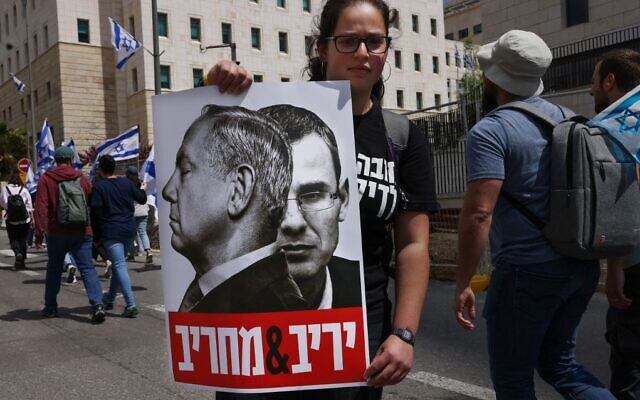
A protester hold up a placard bearing portraits of Prime Minister Benjamin Netanyahu and Justice Minister Yariv Levin during a demonstration outside the Knesset in Jerusalem on March 27, 2023. (Hazem Bader/AFP)

La Familia, a group of ultra-nationalist soccer fans who back Jerusalem’s Beitar FC, announced it would attend the protest outside the Knesset. “Until now we have stayed quiet,” said La Familia, which has a history of violence during its activities.

Expecting clashes between the two major rallies, police announced additional officers would be deployed to the area.

The latest anti-overhaul demonstrations were part of an unprecedented nationwide “week of paralysis” aimed at upending daily life in the country, which protest leaders declared last week.

Weekly mass protests have been held for nearly three months against the planned legislation, which critics say will politicize the court, remove key checks on governmental power and cause grievous harm to Israel’s democratic character. Proponents of the measures say they will rein in a judiciary that they argue has overstepped its bounds.

Renee Ghert-Zand contributed to this report.