Wednesday, January 31, 2024


PolyU develops high-efficiency carbon dioxide electroreduction system for reducing carbon footprint and progressing carbon neutrality goals


Peer-Reviewed Publication

THE HONG KONG POLYTECHNIC UNIVERSITY

PolyU develops high-efficiency carbon dioxide electroreduction system for reducing carbon footprint and progressing carbon neutrality goals 

IMAGE: 

THE SYSTEM DEVELOPED BY PROF. LAU AND HIS TEAM CAN ACCELERATE THE DEVELOPMENT OF CO2 ELECTROCATALYSIS TECHNOLOGY, POTENTIALLY REVOLUTIONISING MODERN FOSSIL FUEL ENERGY SYSTEMS.

view more 

CREDIT: © 2024 RESEARCH AND INNOVATION OFFICE, THE HONG KONG POLYTECHNIC UNIVERSITY. ALL RIGHTS RESERVED.


Global warming continues to pose a threat to human society and the ecological systems, and carbon dioxide accounts for the largest proportion of the greenhouse gases that dominate climate warming. To combat climate change and move towards the goal of carbon neutrality, researchers from The Hong Kong Polytechnic University (PolyU) have developed a durable, highly selective and energy-efficient carbon dioxide (CO2) electroreduction system that can convert CO2 into ethylene for industrial purposes to provide an effective solution for reducing CO2 emissions. This research was recently published in Nature Energy and won a Gold Medal at the 48th International Exhibition of Inventions Geneva in Switzerland.

Ethylene (C2H4) is one of the most in-demand chemicals globally and is mainly used in the manufacture of polymers such as polyethylene, which, in turn, can be used to make plastics and chemical fibres commonly used in daily life. However, it is still mostly obtained from petrochemical sources and the production process involves the creation of a very significant carbon footprint.

Led by Prof. Daniel LAU, Chair Professor of Nanomaterials and Head of the Department of Applied Physics, the research team adopted the method of electrocatalytic CO2 reduction - using green electricity to convert carbon dioxide into ethylene, providing a more environmentally friendly alternative and stable ethylene production. The research team is working to promote this emerging technology to bring it closer to mass production, closing the carbon loop and ultimately achieving carbon neutrality.

Prof. Lau’s innovation is to dispense with the alkali-metal electrolyte and use pure water as a metal-free anolyte to prevent carbonate formation and salt deposition. The research team denotes their design the APMA system, where A stands for anion-exchange membrane (AEM), P represents the proton-exchange membrane (PEM), and MA indicates the resulting membrane assembly.

When an alkali-metal-free cell stack containing the APMA and a copper electrocatalyst was constructed, it produced ethylene with a high specificity of 50%. It was also able to operate for over 1,000 hours at an industrial-level current of 10A – a very significant increase in lifespan over existing systems, meaning the system can be easily expanded to an industrial scale.

Further tests showed that the formation of carbonates and salts was suppressed, while there was no loss of CO2 or electrolyte. This is crucial, as previous cells using bipolar membranes instead of APMA suffered from electrolyte loss due to the diffusion of alkali-metal ions from the anolyte. The formation of hydrogen in competition with ethylene, another problem affecting earlier systems that used acidic cathode environments, was also minimised.

Another key feature of the process is the specialised electrocatalyst. Copper is used to catalyse a wide range of reactions across the chemical industry. However, the specific catalyst used by the research team took advantage of some distinctive features. The millions of nano-scale copper spheres had richly textured surfaces, with steps, stacking faults and grain boundaries. These “defects” – relative to an ideal metal structure – provided a favourable environment for the reaction to proceed.

Prof. Lau said, “We will work on further improvements to enhance the product selectivity and seek for collaboration opportunities with the industry. It is clear that this APMA cell design underpins a transition to green production of ethylene and other valuable chemicals and can contribute to reducing carbon emissions and achieving the goal of carbon neutrality.”

This innovative PolyU project was a collaboration with researchers from the University of Oxford, the National Synchrotron Radiation Research Centre of Taiwan and Jiangsu University.

a,b, The FEs towards ECO2R products under a range of applied potentials under 1 M KOH (a) and 1 M H3PO4 containing 3 M KI as the catholyte and 1 M H3PO4 as the anolyte (b), respectively. c,d, The partial current densities of C2H4 under a range of applied potentials under 1 M KOH (c) and 1 M H3PO4 containing 3 M KI as the catholyte and 1 M H3PO4 as the anolyte (d), respectively. Values are means, and error bars indicate the s.d. (n = 3 replicates).

a, A schematic of the APMA-MEA system architecture for ECO2R. b, The resistance of the system at different reaction temperatures. c, The FEs of gas products and corresponding cell voltages of the system at a total current density of 300 mA cm2 for different reaction temperatures. d, The anodic gas product analysis of the pure-H2O-fed APMA system at 60 °C with a total current density of 300 mA cm2. Ti fibre felt sputtered with Pt (Pt/Ti) was used as the anode electrode, and the flow rate of the CO2 inlet was 30 sccm. e, In situ Raman spectra of ECO2R on SS-Cu in 0.1 M KOH, pure H2O and bare electrode after ~20 min. f, The mass spectra of ECO2R using H218O as the anolyte in the APMA system. g, The total overpotential of all the reactions at different reaction temperatures. Values are means, and error bars indicate the s.d. (n = 3 replicates), except for g, where the values are means and the error bars indicate the effect of the AEM’s pH on the overpotential (setting the pH of the AEM in the range of 8–14).

a, The FEs towards ECO2R products under a range of applied current densities, and the corresponding cell voltages without iR compensation. b, The FEs towards ECO2R products under a range of applied cell voltages without iR compensation, and the corresponding total current density. c,d, Comparisons of the FEs (c) and partial current densities (d) towards C2H4 in the pure-H2O-fed APMA-MEA and AEM-MEA systems with 1 M KOH as the anolyte. e, A schematic of the APMA-MEA cell stack containing six APMA-MEA cells for the ECO2R reaction. f, The system stability performance of ECO2R to C2H4 on SS-Cu in a pure-H2O-fed APMA-MEA cell stack containing six APMA-MEA cells at a constant current of 10 A. Each cathode electrode area was 30 cm2, and the reaction temperature was 60 °C. Pt/Ti was used as the anode electrode, and the flow rate of the CO2 inlet was 30 sccm for the single cell or cell stack. AEM and PEM membranes were used as the electrogenerated OH and H+/H3O+ ion exchange membranes, respectively. Values are means, and error bars indicate the s.d. (n = 3 replicates).

CREDIT

© 2024 Research and Innovation Office, The Hong Kong Polytechnic University. All Rights Reserved.


SPACE

The hottest catalog of the year: the most comprehensive list of slow-building solar flares yet


Peer-Reviewed Publication

UNIVERSITY OF CALIFORNIA - SAN DIEGO

sun with solar flares 

IMAGE: 

THIS IMAGE, TAKEN ON AUG. 5, 2023, SHOWS A BLEND OF EXTREME ULTRAVIOLET LIGHT THAT HIGHLIGHTS THE INTENSELY HOT MATERIAL IN FLARES AND WHICH IS COLORIZED IN RED AND ORANGE.

view more 

CREDIT: (CR: NASA/GSFC/SDO)


Solar flares occur when magnetic energy builds up in the Sun’s atmosphere and is released as electromagnetic radiation. Lasting anywhere from a few minutes to a few hours, flares usually reach temperatures around 10 million degrees Kelvin. Because of their intense electromagnetic energy, solar flares can cause disruptions in radio communications, Earth-orbiting satellites and even result in blackouts.

Although flares have been classified based on the amount of energy they emit at their peak, there has not been significant study into differentiating flares based on the speed of energy build-up since slow-building flares were first discovered in the 1980s. In a new paper in Solar Physics, a team, led by UC San Diego astrophysics graduate student Aravind Bharathi Valluvan, has shown that there is a significant amount of slower-type flares worthy of further investigation.

The width-to-decay ratio of a flare is the time it takes to reach maximum intensity to the time it takes to dissipate its energy. Most commonly, flares spend more time dissipating than rising. In a 5-minute flare, it may take 1 minute to rise and 4 minutes to dissipate for a ratio of 1:4. In slow-building flares, that ratio may be 1:1, with 2.5 minutes to rise and 2.5 minutes to dissipate.

Valluvan was a student at the Indian Institute of Technology Bombay (IITB) when this work was conducted. Exploiting the increased capabilities of the Chandrayaan-2 solar orbiter, IITB researchers used the first three years of observed data to catalog nearly 1400 slow-rising flares — a dramatic increase over the roughly 100 that had been previously observed over the past four decades. 

It was thought that solar flares were like the snap of a whip — quickly injecting energy before slowly dissipating. Now seeing slow-building flares in such high quantities may change that thinking.

“There is thrilling work to be done here,” stated Valluvan who now works in UC San Diego Professor of Astronomy and Astrophysics Steven Boggs’ group. “We’ve identified two different types of flares, but there may be more. And where do the processes differ? What makes them rise and fall at different rates? This is something we need to understand.”

Lopsided galaxies shed light on the speed of dark matter


Peer-Reviewed Publication

ESTONIAN RESEARCH COUNCIL

Dynamical friction illustration 

IMAGE: 

DYNAMICAL FRICTION. THE PANELS DEPICT SPARSE AREAS OF THE UNIVERSE WITH DARK COLOUR AND DENSE AREAS WITH LIGHT COLOUR. THE UPPER PANELS SHOW THE DENSITY AROUND A GALAXY IF THE GALAXY'S GRAVITY BENDS (LEFT) OR DOES NOT BEND (RIGHT) THE TRAJECTORIES OF DARK MATTER PARTICLES. THE LOWER PANEL SHOWS THE DIFFERENCE BETWEEN THEM, OR HOW THE GALAXY AFFECTS THE DISTRIBUTION OF DARK MATTER. THE ARROWS REPRESENT THE ACCELERATION CAUSED BY THE OVERDENSITY BEHIND THE GALAXY, FROM WHICH THE FRICTION ON THE CENTRE OF THE GALAXY IS DEDUCTED. SINCE THE ARROWS HAVE DIFFERENT DIRECTIONS AND STRENGTHS IN DIFFERENT AREAS, THE TIDAL FORCES ARE ABLE TO CHANGE THE SHAPE OF A GALAXY.

view more 

CREDIT: RAIN KIPPER


So how can the speed of dark matter be measured? The prerequisite is to find a galaxy in the universe that moves relative to dark matter. Since everything in the universe is in motion and there is a great deal of dark matter, it is not difficult to find such galaxies.

Heavy objects, like galaxies, attract all types of matter, whether it is dark matter or visible matter that we encounter on a daily basis. As dark matter moves past a galaxy, the galaxy begins to pull the dark matter particles towards it. However, the change of speed direction of the particles takes time. Before their trajectory curves towards the galaxy, they already manage to pass the galaxy.

Thus, dark matter particles do not enter the galaxy, but instead move behind the galaxy (see video). Behind the galaxy, therefore, the density of matter increases, and this leads to a slowdown of the galaxy – a phenomenon called dynamical friction. The strength of dynamical friction, in turn, depends on how quickly dark matter particles pass the galaxy, that is, how long the galaxy has time to change the trajectory of the dark matter particles. When particles pass slowly, the density of matter increases closer to the galaxy, causing it to slow down more.

The green dot represents a galaxy, and the upper panels show the movement of dark matter particles past the galaxy (if a galaxy exists in the corresponding panel). The lower panels show the shape of all the trajectories, demonstrating that the gravity field of a galaxy affects the particles of matter, creating an overdensity behind the galaxy. Overdensity again slows down the galaxy and distorts its shape.

Let us assume that the galaxy causing the dynamical friction is not tiny, but large. In this case, the overdensity behind it generates friction of different strengths at different points in the galaxy, as seen in Figure 1. The difference in friction makes the shape of the galaxy more lopsided. We experience a similar change in shape on Earth as tidal cycles – high tides and low tides caused by the gravity of the moon.
It is irrelevant how big the dark matter particles eventually turn out to be – their orbit still curves behind the galaxy. The method might not produce accurate results if the particles were comparable in size to the galaxies themselves. However, these dark matter models are already excluded.

Finding the lopsided galaxies themselves is not difficult, because they make up about 30 percent of all galaxies in outer space. Of course, a lot depends on how far to look in the outer parts of a galaxy and what level of lopsidedness deems a galaxy lopsided.

Also, the lopsided shape of a galaxy may not be caused only by dynamical friction. There are a number of other reasons for that. For example, galaxies that were formed after the collision of several galaxies may be asymmetric. In this case, however, we should be able to detect somewhere inside the galaxy the nucleus of another galaxy or a larger stellar halo. Galactic lopsidedness can also be caused by a constant inflow of gas. In such situations, the shape of the galaxy will take a few billion years to recover.

Thus, to measure the velocities of dark matter, we need a lopsided galaxy that is as isolated from other galaxies as possible. In this case, it is more certain that nothing has happened to it other than the passage of dark matter.

In this research, we have figured out how to precisely calculate the forces that affect galaxies in tidal cycles. The next stage is to find galaxies sufficiently lopsided in the universe to study the velocity of dark matter relative to the galaxies.

Cosmology is an important test polygon of theoretical physics. Calculating the speed of dark matter can be important for testing new dark matter models and lifting the veil of secrecy over the nature of dark matter.

Dynamical friction video [VIDEO] |


Comfort isn’t only a feeling, it’s a study


Peer-Reviewed Publication

TSINGHUA UNIVERSITY PRESS

Multi-dimensional correlation model between human and environment 

IMAGE: 

THE ENVIRONMENT PLAYS A ROLE IN PHYSIOLOGICAL REGULATION, SUBJECTIVE PERCEPTION, AND COGNITIVE FUNCTION WHICH CAN DETERMINE HOW A HUMAN INTERACTS AND REACTS TO THEIR ENVIRONMENT

view more 

CREDIT: ZHIWEI LIAN, SHANGHAI JIAO TONG UNIVERSITY


A lot of factors go into an individual’s comfort, and it’s more than just how one feels about the temperature


The thermal environment refers to the physical surroundings as it pertains to the heat exchange of an individual and its environment. Naturally, the thermal environment also relates to comfort, or more specifically, thermal comfort. This type of comfort is an important metric to measure an individual’s feelings as it relates to their environment and can be directly associated with health, efficiency, comfort, and energy consumption. However, how these subjective values are measured is not necessarily the most effective or accurate. Here, researchers reassess how thermal comfort and thermal sensation play into an individual’s health and well-being, both physiologically and on a cognitive level.


Researchers published their findings in Building Simulation on 19 January 2024.


The predominant metric of classifying thermal comfort is called “Thermal Sensation” in which a seven-level scale and the specific question in a questionnaire are utilized. The scale’s seven levels are as follows: cold, cool, slightly cool, neutral, slightly warm, warm, and hot. The individual is also asked what their general thermal sensation is. The issue with this question, and the scale, is that it fails to ask or acknowledge the comfort, satisfaction, and acceptability of that thermal sensation.


“In laboratory studies, the focus is often on the impact of specific factors while neglecting the comprehensive effects of the overall environment on the human body and limiting some regulatory behaviors,” said Zhiwei Lian, author and researcher of the study. Even the most recognized model when it comes to thermal comfort, the predicted mean vote (PMV) model, showed only 34% accuracy when compared to real environments as opposed to laboratory settings.


Therefore, researchers thought it appropriate to ask themselves some follow-up questions to further elucidate thermal sensation and thermal comfort to the individual’s overall well-being. For example, questions that need to be answered include whether the thermally neutral state genuinely aligns with the highest probability of comfort, satisfaction, and acceptability, and if individuals experience these same emotions simply by being in the same state of thermal sensation.


To answer these questions, the thermal comfort evaluation system needs a bit of an overhaul. Firstly, addressing the appropriate metrics based on the design goal for a given environment rather than solely on thermal neutrality or sensation might provide a more accurate method of evaluating the thermal environment. Secondly, a unified questionnaire based on psychological research can be an invaluable tool. This means a survey that can stand up against translation into a variety of languages without losing the subtle, but important, differences in meaning. Finally, besides thermal sensation model, more accurate prediction models for other thermal perception would need to be developed, which should take into consideration the comprehensive interaction of various factors of the overall environment and an individual’s needs.


We know that there are many nuances in the way humans interface with their environment and how the environment can affect an individual’s ability to function, from both a physiological and cognitive standpoint. Once a better model is put into place, individuals might be able to see more personalized comfort in their environment.


“The ultimate goal may vary in different environments, such as seeking comfort in residential

settings, pursuing efficiency in work or study environments, and aiming for sleep quality in sleep environments,” said Lian. The fluidity in goals is key in advancing the study of thermal environment, comfort and sensation.


As the study points out, the thermal environment is closely intertwined with comfort, health, efficiency, and building energy consumption. With economic development, technological progress, we now have the capability to pursue a more comfortable, satisfactory, and healthy environment. However, blindly using thermal sensation or thermal neutrality to evaluate the environment or HVAC systems hinders the realization of this pursuit. The future of assessing thermal comfort and sensation should consider these factors for more accurate and impactful data.


Zhiwei Lian of the Shanghai Jiao Tong University contributed to this research.


About Building Simulation

An International Journal publishes original, high quality, peer-reviewed research papers and review articles dealing with modeling and simulation of buildings including their systems. The goal is to promote the field of building science and technology to such a level that modeling will eventually be used in every aspect of building construction as a routine instead of an exception. Of particular interest are papers that reflect recent developments and applications of modeling tools and their impact on advances of building science and technology.


About SciOpen 

SciOpen is a professional open access resource for discovery of scientific and technical content published by the Tsinghua University Press and its publishing partners, providing the scholarly publishing community with innovative technology and market-leading capabilities. SciOpen provides end-to-end services across manuscript submission, peer review, content hosting, analytics, and identity management and expert advice to ensure each journal’s development by offering a range of options across all functions as Journal Layout, Production Services, Editorial Services, Marketing and Promotions, Online Functionality, etc. By digitalizing the publishing process, SciOpen widens the reach, deepens the impact, and accelerates the exchange of ideas.

Why are so many robots white?

The Conversation
January 30, 2024 

Robot (Jiuguang Wang/Flickr, CC BY-SA)

Problems of racial and gender bias in artificial intelligence algorithms and the data used to train large language models like ChatGPT have drawn the attention of researchers and generated headlines. But these problems also arise in social robots, which have physical bodies modeled on nonthreatening versions of humans or animals and are designed to interact with people.

The aim of the subfield of social robotics called socially assistive robotics is to interact with ever more diverse groups of people. Its practitioners’ noble intention is “to create machines that will best help people help themselves,” writes one of its pioneers, Maja Matarić. The robots are already being used to help people on the autism spectrum, children with special needs and stroke patients who need physical rehabilitation.

But these robots do not look like people or interact with people in ways that reflect even basic aspects of society’s diversity. As a sociologist who studies human-robot interaction, I believe that this problem is only going to get worse. Rates of diagnoses for autism in children of color are now higher than for white kids in the U.S. Many of these children could end up interacting with white robots.

So, to adapt the famous Twitter hashtag around the Oscars in 2015, why #robotssowhite?


Why robots tend to be white


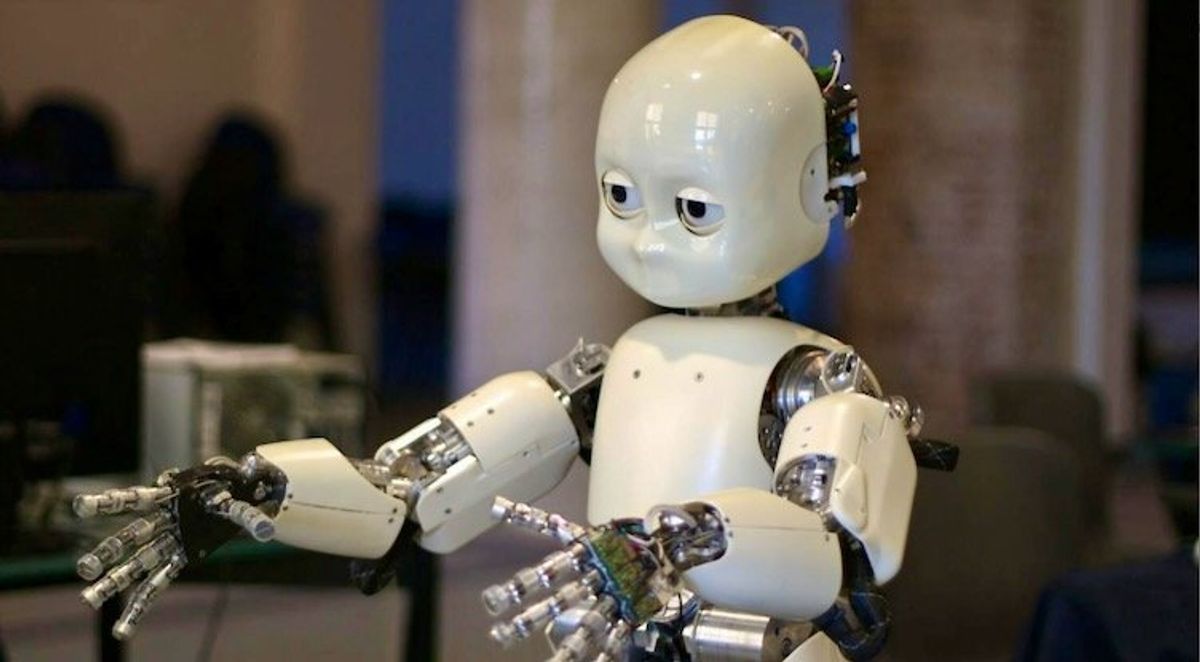
Given the diversity of people they will be exposed to, why does Kaspar, designed to interact with children with autism, have rubber skin that resembles a white person’s? Why are Nao, Pepper and iCub, robots used in schools and museums, clad with shiny, white plastic? In The Whiteness of AI, technology ethicist Stephen Cave and science communication researcher Kanta Dihal discuss racial bias in AI and robotics and note the preponderance of stock images online of robots with reflective white surfaces.

What is going on here?


One issue is what robots are already out there. Most robots are not developed from scratch but purchased by engineering labs for projects, adapted with custom software, and sometimes integrated with other technologies such as robot hands or skin. Robotics teams are therefore constrained by design choices that the original developers made (Aldebaran for Pepper, Italian Institute of Technology for iCub). These design choices tend to follow the clinical, clean look with shiny white plastic, similar to other technology products like the original iPod.


Kaspar is a robot designed to interact with children with autism.


In a paper I presented at the 2023 American Sociological Association meeting, I call this “the poverty of the engineered imaginary.”

How society imagines robots

In anthropologist Lucy Suchman’s classic book on human-machine interaction, which was updated with chapters on robotics, she discusses a “cultural imaginary” of what robots are supposed to look like. A cultural imaginary is what is shared through representations in texts, images and films, and which collectively shapes people’s attitudes and perceptions. For robots, the cultural imaginary is derived from science fiction.

This cultural imaginary can be contrasted with the more practical concerns of how computer science and engineering teams view robot bodies, what Neda Atanasoski and Kalindi Vora call the “engineered imaginary.” This is a hotly contested area in feminist science studies, with, for example, Jennifer Rhee’s “The Robotic Imaginary” and Atanasoski and Vora’s “Surrogate Humanity” critical of the gendered and racial assumptions that lead people to design service robots – designed to carry out mundane tasks – as female.

The cultural imaginary that enshrines robots as white, and in fact usually female, stretches back to European antiquity, along with an explosion of novels and films at the height of industrial modernity. From the first mention of the word “android” in Auguste Villiers de l’Isle-Adam’s 1886 novel “The Future Eve,” the introduction of the word “robot” in Karel Čapek’s 1920 play “Rossum’s Universal Robots,” and the sexualized robot Maria in the 1925 novel “Metropolis” by Thea von Harbou – the basis of her husband Fritz Lang’s famous 1927 film of the same name – fictional robots were quick to be feminized and made servile.

Perhaps the prototype for this cultural imaginary lies in ancient Rome. A poem in Ovid’s “Metamorphoses” (8 C.E.) describes a statue of Galatea “of snow-white ivory” that its creator Pygmalion falls in love with. Pygmalion prays to Aphrodite that Galatea come to life, and his wish is granted. There are numerous literary, poetic and film adaptations of the story, including one of the first special effects in cinema in Méliès’ 1898 film. Paintings that depict this moment, for example by Raoux (1717), Regnault (1786), and Burne-Jones (1868-70 and 1878), accentuate the whiteness of Galatea’s flesh.


The painting Pygmalion and Galatea by Jean-Léon Gérôme depicts an ancient Roman tale of a statue brought to life. Peter Roan/Flickr, CC BY-NC

Interdisciplinary route to diversity and inclusion

What can be done to counter this cultural legacy? After all, all human-machine interaction should be designed with diversity and inclusion in mind, according to engineers Tahira Reid and James Gibert. But outside of Japan’s ethnically Japanese-looking robots, robots designed to be nonwhite are rare. And Japan’s robots tend to follow the subservient female gender stereotype.

The solution is not simply to encase machines in brown or black plastic. The problem goes deeper. The Bina48 “custom character robot” modeled on the head and shoulders of a millionaire’s African American wife, Bina Aspen, is notable, but its speech and interactions are limited. A series of conversations between Bina48 and the African American artist Stephanie Dinkins is the basis of a video installation.

The absurdity of talking about racism with a disembodied animated head becomes apparent in one such conversation – it literally has no personal experience to speak of, yet its AI-powered answers refer to an unnamed person’s experience of racism growing up. These are implanted memories, like the “memories” of the replicant androids in the “Blade Runner” movies.

Social science methods can help produce a more inclusive “engineered imaginary,” as I discussed at Edinburgh’s Being Human festival in November 2022. For example, working with Guy Hoffman, a roboticist from Cornell, and Caroline Yan Zheng, then a Ph.D. design student from Royal College of Art, we invited contributions for a publication titled Critical Perspectives on Affective Embodied Interaction.

One of the persistent threads in that collaboration and other work is just how much people’s bodies communicate to others through gesture and expression, as well as vocalization, and how this differs between cultures. In which case, making robots’ appearance reflect the diversity of people who benefit from their presence is one thing, but what about diversifying forms of interaction? Along with making robots less universally white and female, social scientists, interaction designers and engineers can work together to produce more cross-cultural sensitivity in gestures and touch, for example.

Such work promises to make human-robot interaction less scary and uncanny, especially for people who need assistance from the new breeds of socially assistive robots.

Mark Paterson, Professor of Sociology, University of Pittsburgh

This article is republished from The Conversation under a Creative Commons license. Read the original article.


AI-powered app can detect poison ivy


Peer-Reviewed Publication

UNIVERSITY OF FLORIDA

Poison Ivy app 

IMAGE: 

A SCREENSHOT OF NEWLY DEVELOPED POISON IVY APP

view more 

CREDIT: NATHAN BOYD, UF/IFAS


Poison ivy ranks among the most medically problematic plants. Up to 50 million people worldwide suffer annually from rashes caused by contact with the plant, a climbing, woody vine native to the United States, Canada, Mexico, Bermuda, the Western Bahamas and several areas in Asia.

It’s found on farms, in woods, landscapes, fields, hiking trails and other open spaces. So, if you go to those places, you’re susceptible to irritation caused by poison ivy, which can lead to reactions that require medical attention. Worse, most people don’t know poison ivy when they see it.

To find poison ivy before it finds you, University of Florida scientists published a new study in which they use artificial intelligence to confirm that an app can identify poison ivy.

Nathan Boyd, a professor of horticultural sciences at the UF/IFAS Gulf Coast Research and Education Center near Tampa, led the research. Renato Herrig, a post-doctoral researcher in Boyd’s lab, designed the app.

“We were the first to do this, and it was designed as a tool for hikers or others working outdoors,” Boyd said. “The app uses a camera to identify in real-time if poison ivy is present and provides you with a measure of certainty for the detection. It also functions even if you don’t have connectivity to the internet.”

The next step is to make the app commercially available, and there’s no timetable for that yet, Boyd said.

For the study, researchers collected thousands of images of poison ivy from five locations: Alderman’s Ford Conservation Park and Hillsborough River State Park, both in Florida; Eufala National Wildlife Refuge  in Alabama; York River State Park in Virgina and Fall Creek Falls State Park in Tennessee.

They labeled images, and in each image, scientists put boxes around the leaves and stems of the plant. The boxed images were critical because poison ivy has a unique leaf arrangement and shape. Scientists use those characteristics to identify the plant.

They then ran the images through AI programs and taught a computer to recognize which plants are poison ivy. They also included images of plants that are not poison ivy or plants that look like poison ivy to be certain the computer learns to distinguish them. 

“We believe that by integrating an object-detection algorithm, public health and plant science, our research can encourage and support further investigations to understand poison ivy distribution and minimize health concerns,” Boyd said. In their future work UF/IFAS researchers hope to expand the use of the app to identify more noxious plants.


Poison Ivy 

CREDIT

UF/IFAS