It’s possible that I shall make an ass of myself. But in that case one can always get out of it with a little dialectic. I have, of course, so worded my proposition as to be right either way (K.Marx, Letter to F.Engels on the Indian Mutiny)
Wednesday, January 29, 2025
Almonty enters molybdenum offtake deal with SpaceX contractor SeAH
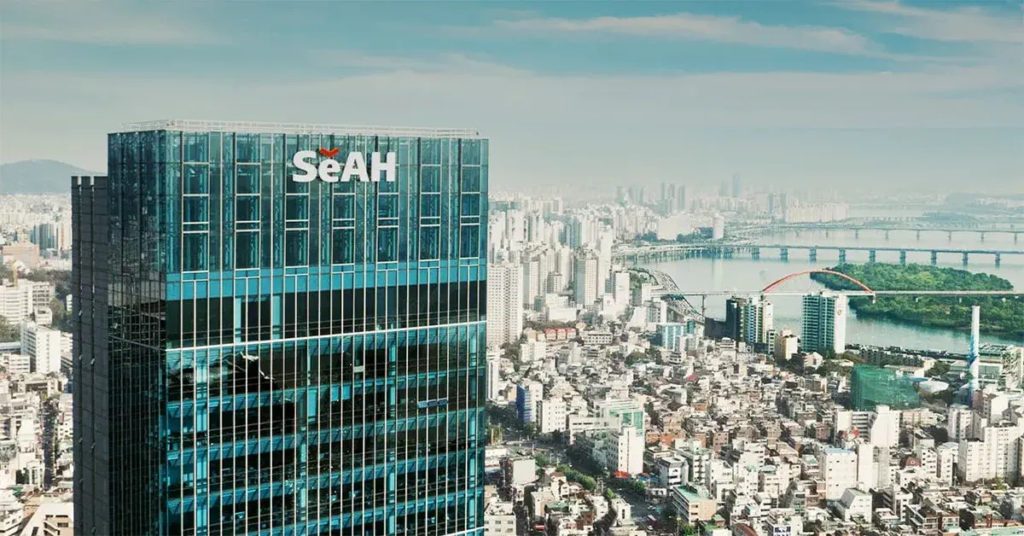
SeAH is the largest processor of molybdenum products in South Korea. Credit: Almonty Industries
Almonty Industries (TSX, ASX: AII), a global producer of tungsten concentrates, has entered an exclusive offtake agreement with SeAH M&S, the largest processor of molybdenum products in South Korea.
Under the agreement, SeAH will purchase all material produced at Almonty’s Sangdong molybdenum project in Korea, which is targeting production by the end of 2026 with an anticipated mine life of 60 years. At full capacity, it is expected to produce approximately 5,600 tonnes of molybdenum annually.
The project is in close proximity to the tungsten project (also named Sangdong) being developed by Almonty. The tungsten project is said to host one of the largest resources in the world, and the site of what was once the leading global tungsten producer for 40 years, accounting for over half of the world’s supply.
The location of the two projects, according to Almonty, will allow for significant synergies that enhance logistical efficiency, reduce costs, and leverage shared infrastructure and expertise.
SeAH — owner of the second-largest molybdenum oxide smelter in the world — is currently building a $110 million metals and fabrication facility in Temple, Texas, that is slated to provide fabricated metal products to Elon Musks’ Space Exploration Technologies, as well as to the US defense and civilian aerospace sectors.
SeAH — owner of the second-largest molybdenum oxide smelter in the world — is currently building a $110 million metals and fabrication facility in Temple, Texas
The offtake includes a hard floor price of $19.00/lb. (prior to the deduction of treatment charges), which Almonty believes would ensure financial stability and a predictable revenue base as it advances the Sangdong project. The current price of molybdenum is approximately $22.00/lb.
Almonty also notes that South Korea has large metals and shipbuilding industries that are currently almost entirely dependent on imported molybdenum, with China being the largest single source of the metal.
By supplying material from the Sangdong mine to SeAH, South Korea’s domestic supply chain will be strengthened with reduced dependence on foreign imports and local manufacturers should greatly benefit, the Toronto-based miner said.
“We are thrilled to partner with SeAH M&S, a highly respected leader in the Korean market,” Almonty CEO Lewis Black said in a press release on Wednesday, adding that the agreement “reflects strong confidence in Almonty’s ability to deliver high-quality resources.”
“The floor price provides a stable foundation and access to low-rate domestic construction lending as we advance our moly project, while keeping the material in South Korea strengthens local supply chains and supports domestic industry,” Black said.
Almonty Industries shot up to a new 52-week high of C$1.29 on the offtake agreement announcement. By 1:45 p.m. ET, it traded at C$1.25 for a 13.6% intraday gain and a C$331.8 million ($230m) market capitalization.
WORD OF THE DAY
USA Rare Earth produces dysprosium oxide at Texas Round Top mine
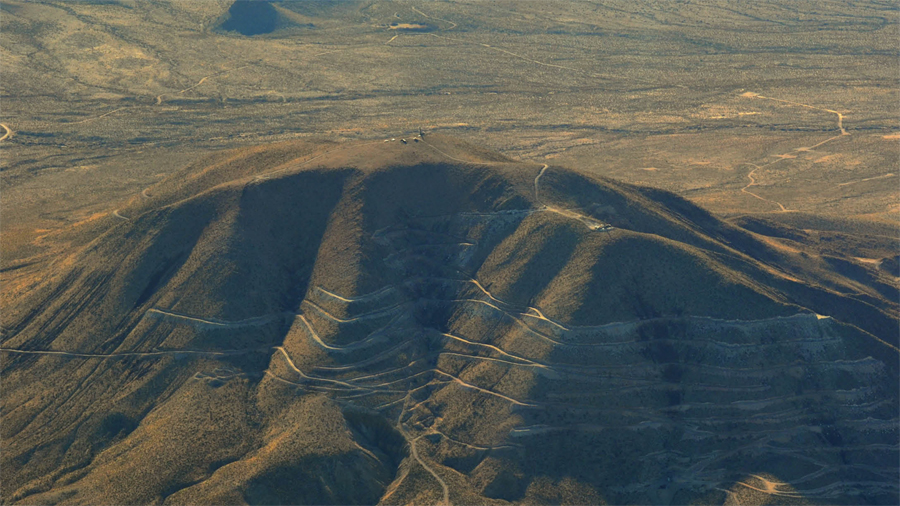
Round Top rare earths project is located outside El Paso, Texas. Image from USA Rare Earth.
USA Rare Earth said on Tuesday it has successfully produced a sample of dysprosium oxide (Dy₂O₃) with a purity of 99.1%. The company said this marks a breakthrough in domestic rare earth production.
The dysprosium oxide sample was produced using ore from the Round Top deposit in Texas. The ore was processed through USA Rare Earth’s proprietary extraction and purification technology, developed at its Wheat Ridge, Colorado research facility.
Verified by a third-party ISO 17025 certified lab, this sample demonstrates USA Rare Earth’s ability to extract and process high-purity rare earth oxides from its Texas Round Top deposit, the company said.
The only active rare earths mine in the US is Mountain Pass in California owned by MP Materials, which produces rare earths concentrate as well as separated and refined rare earths, including praseodymium-neodymium (NdPr) oxide, cerium and lanthanum.
The production of dysprosium oxide is significant due to its critical role in advanced technologies that rely on the unique properties of heavy rare earth elements, USA Rare Earth said. Dysprosium is a key component in technologies such as semiconductors, as well as in many neodymium (NdFeB) rare earth magnets.
NdFeB magnets are essential for high-efficiency electric vehicle motors, wind turbine generators, and advanced defense systems, including missile guidance and control systems, among other technologies.
The $14 billion-a-year rare earth magnet market is more than 60% controlled by China.
“In addition to dysprosium oxide, our team has now produced a variety of rare earth elements, including terbium and the light rare earth element neodymium, among others,” CEO Joshua Ballard said in a news release.
“We’re excited about the progress we’ve made in bringing this processing capability back home to the United States,” he added.
Vale CEO meets Brazil’s Lula, touts ‘convergence’ with government agenda
Vale Chief Financial Officer Gustavo Pimenta. (Image courtesy of Vale.)
Brazilian miner Vale’s CEO held his first official meeting with President Luiz Inacio Lula da Silva on Tuesday, the company said, where he highlighted that there was “enormous convergence” between its projects and the country’s development agenda.
Vale chief executive Gustavo Pimenta has been seeking to improve the mining group’s relationship with the government since he took over the job in October replacing Eduardo Bartolomeo.
The company has been criticized by Lula and cabinet members in the past. Lula’s mining minister last year complained about a lack of investment in Brazil and delays to a repair deal over a 2015 dam collapse, which was ultimately sealed in October.
In the meeting with Lula, Pimenta “discussed Vale projects that contribute to boosting Brazil to a global leadership position in the energy transition and decarbonization agenda,” the miner said in a statement late on Tuesday.
“Gustavo Pimenta highlighted his optimism about the company’s future and the certainty that there is enormous convergence between Vale’s strategic projects and Brazil’s development agenda,” the statement said.
A source familiar with the hour-long meeting said Lula told Pimenta that Vale and the government needed to work together, noting that there had been some “noise” in the past but there was no reason for it to happen again.
Vale was privatized in the 1990s. One of its main shareholders includes a pension fund operated by state-run lender Banco do Brasil.
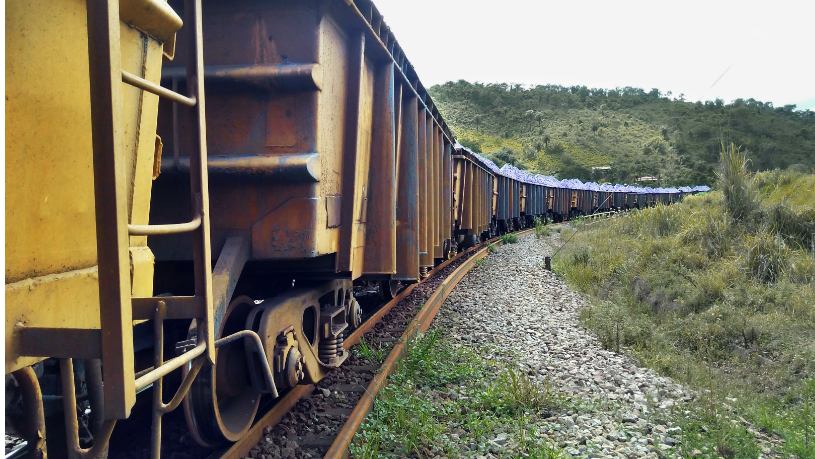
Vale ore-loaded train taken from Itabira Minas Gerais, Brazil. Stock image.
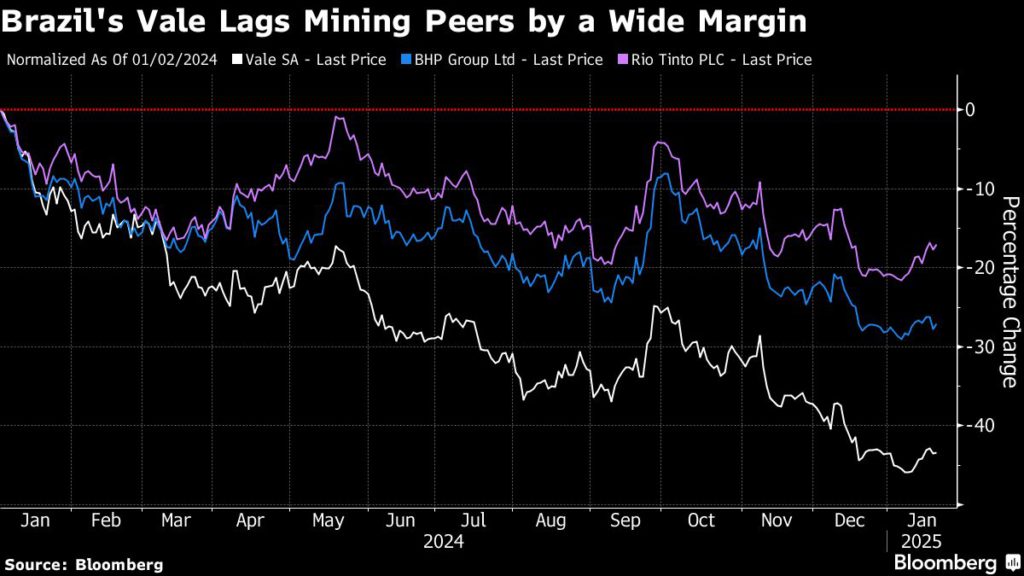
A weaker China economy and battered iron ore prices have helped drive down Vale SA’s stock, making investors wary of uncertainties plaguing one of the world’s top suppliers of the steelmaking ingredient.
A persistent crisis in China’s property sector and its impacts on iron ore — a metal that accounts for roughly 80% of Vale’s revenue — have led investors to trim allocations in the Brazilian company in the past year. That has sent Vale shares to their lowest level since 2020, erasing more than 100 billion reais ($17 billion) in market value in 2024.
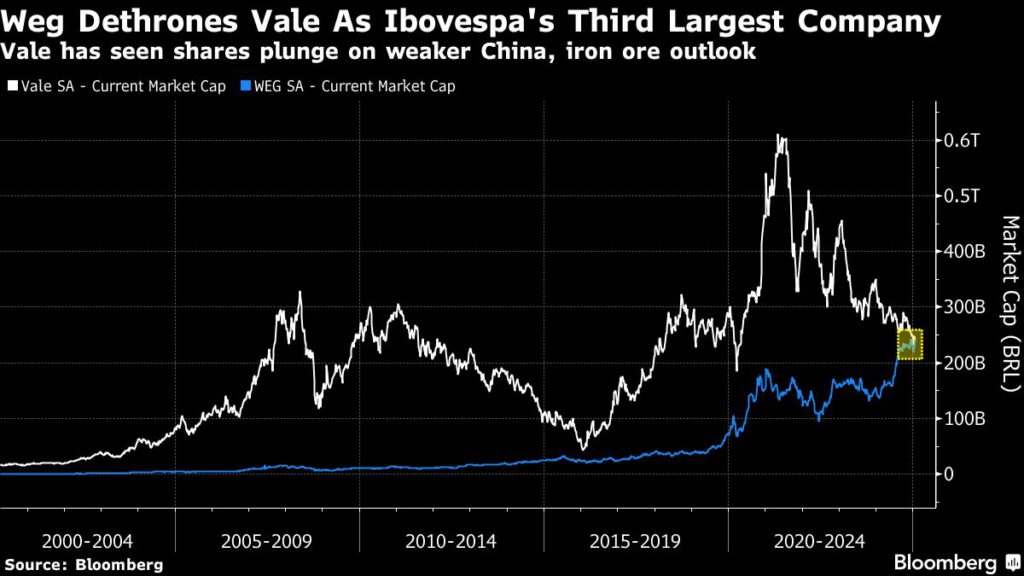
The decline has continued this year, causing the Rio de Janeiro-based miner to lose its rank as Brazil’s third-largest publicly traded company.
“There seems to be a bit of fear that you might buy Vale, but then China gets worse and you lose money,” said Florian Bartunek, chief investment officer and co-founder of Constellation Asset Management.
Vale’s downturn continues even after resolving many issues that soured investor sentiment, including a messy succession battle that ultimately saw finance head Gustavo Pimenta land the chief executive officer role. Vale also reached a settlement for a deadly mining disaster in 2015 and renegotiated a deal with the government for rail access to its key mines last year, ending two other overhangs.
“Unfortunately, now that the company has gotten things fixed, everybody’s worried about China again,” said Josh Rubin, a portfolio manager at Thornburg Investment Management.
About half of Vale’s revenue comes from China. The company shipped 185.5 million metric tons of iron ore to the Asian nation in 2023, almost 60% of Vale’s annual output.
China’s slowing economy has hurt real estate and construction, curbing demand for iron ore just when big miners are boosting global supplies. The price of the steelmaking ingredient fell more than 25% last year, ending December at around $100 a metric ton.
At that price, Vale’s dividend and share buybacks could halve to $2.1 billion this year and operating cashflow would shrink to the lowest since 2016, according to Bloomberg Intelligence.
Iron ore prices bounced back a bit in January on expectations of more stimulus from Beijing, but China is shifting its focus to greener, high-technology growth and consumption — shrinking steel’s importance to its economy.
“Vale’s cash generation scenario is a little worse than its peers,” Humberto Meireles, a portfolio manager at Brazilian hedge fund Vinland Capital, said, adding that there’s uncertainty “about how effective the Chinese government will be in reactivating domestic demand.”
American depository receipts of Vale traded at about 4.6 times estimated earnings, compared with a ratio of 11 times for BHP Group Ltd. and 9.1 times for Rio Tinto Ltd. Both peers have a more diversified portfolio, with the weakening iron ore demand outlook prompting them to push hard into copper and lithium.
Vale shares fell as much as 0.9% in Sao Paulo Monday.
Vale is shifting strategy under its new CEO, selling different iron ore grades to appeal to more customers and developing projects in countries such as Saudi Arabia to diversify. The metals producer also seeks to boost copper and nickel production in Canada, Brazil and Indonesia.
The company last Thursday lost its position as Brazil’s third-largest publicly listed company by market value to Weg SA, a global manufacturer of electrical and industrial equipment. Weg’s stock has jumped 72% in the past 12 months, while Vale shares have plunged by 24%.
Vale declined to comment.
Shareholders aren’t signaling confidence in Vale’s stock rebounding anytime soon. Shares have extended last year’s decline, falling 2.3% since the start of January. Earlier in the month, billionaire Rubens Ometto’s conglomerate Cosan SA unloaded a 4.1% stake in Vale at a loss — the value of its investment fell 34% since the firm bought the stock in 2022.
Brazil’s own issues have also weighed on Vale. The country’s currency and equity markets lagged all major peers in 2024, with the real slumping the most since the pandemic on fiscal concerns, and the benchmark Ibovespa stock index falling 10%.
Still, some see a buying opportunity: JPMorgan Chase & Co. analyst Rodolfo Angele reiterated a positive view for Vale in a Jan. 17 note, noting the company is generating solid free cash flow and is well positioned for a weaker Brazilian currency.
“This great disconnect is an opportunity for investors,” he wrote.
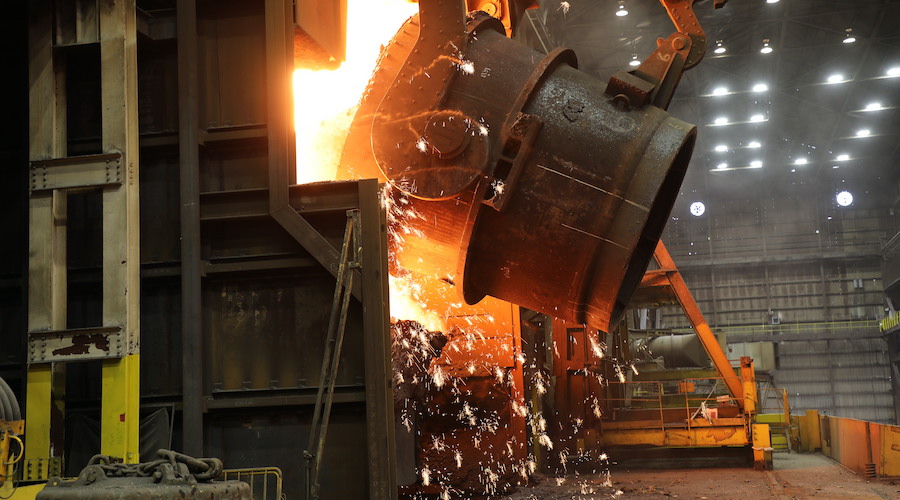
Steelmaking process at US Steel plant. (Image by US Steel.)
Activist investor Ancora has nominated nine candidates to US Steel’s board of directors, as it looks to oust company CEO David Burritt and push the American steelmaker to back out of a $14.9 billion merger deal with Japan’s Nippon Steel.
The activist investor, which owns a 0.18% stake in the company, on Monday proposed to replace top boss Burritt with Alan Kestenbaum, former CEO of Canada’s Stelco that was acquired by Cleveland-Cliffs in a $2.8 billion deal last year.
Cliffs in 2023 had proposed to acquire US Steel, but the Pittsburgh steelmaker raised concerns about antitrust issues, while it accepted a higher offer from Nippon Steel soon after.
“We are…concerned about the motivations behind these nominations, given Ancora’s and Alan Kestenbaum’s recent dealings with failed bidder Cleveland-Cliffs,” US Steel said in a statement on Monday.
Ancora has nominated nine candidates to US Steel’s board, which has a total of 12 members.
Reuters reported earlier this month that Cleveland-Cliffs was partnering with Nucor for a new all-cash bid for US Steel after former US President Joe Biden blocked Nippon Steel’s bid on national security grounds and delayed an order for Nippon to abandon its pursuit of US Steel until June.
US Steel and Nippon have sued the Biden administration and want a federal appeals court to overturn his decision, so they can secure a national security review.
Nippon remains interested in working with the Donald Trump administration to try to seal the takeover, vice chairman Takahiro Mori had said in an opinion piece in the Wall Street Journal earlier this month.
Ancora said on Monday it was not interested in the sale of US Steel to another party, including Cleveland-Cliffs and instead wants to pursue $565 million in breakup fee from Nippon Steel.
Shares of US Steel were down 1.6% in premarket trading.
(By Aishwarya Jain; Editing by Mrigank Dhaniwala, Varun H K and Shinjini Ganguli)
Energy Fuels and Navajo Nation sign uranium ore transport agreement
Miner Energy Fuels said on Wednesday it has signed an agreement for uranium ore transport and abandoned mine cleanup with Navajo Nation.
The agreement resolves the five-year-long debate in southeast Utah over a pile of radioactive material parked in Estonia, allowing it to be processed at a mill located near a Native American reservation.
The deal with the indigenous tribe will govern the transport of uranium ore along federal and state highways crossing the Navajo Nation.
The uranium miner also said that ore transport from its Pinyon Plain mine in northern Arizona to the company’s White Mesa mill in southern Utah is now expected to resume in February.
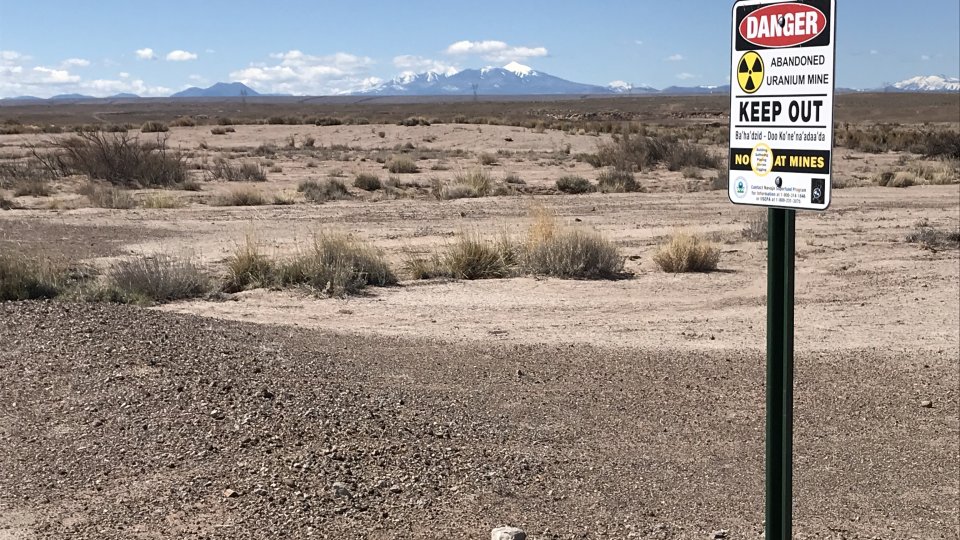
Energy Fuels has committed to accepting and transporting up to 10,000 tons of uranium-bearing cleanup materials from abandoned uranium mines within the Navajo Nation.
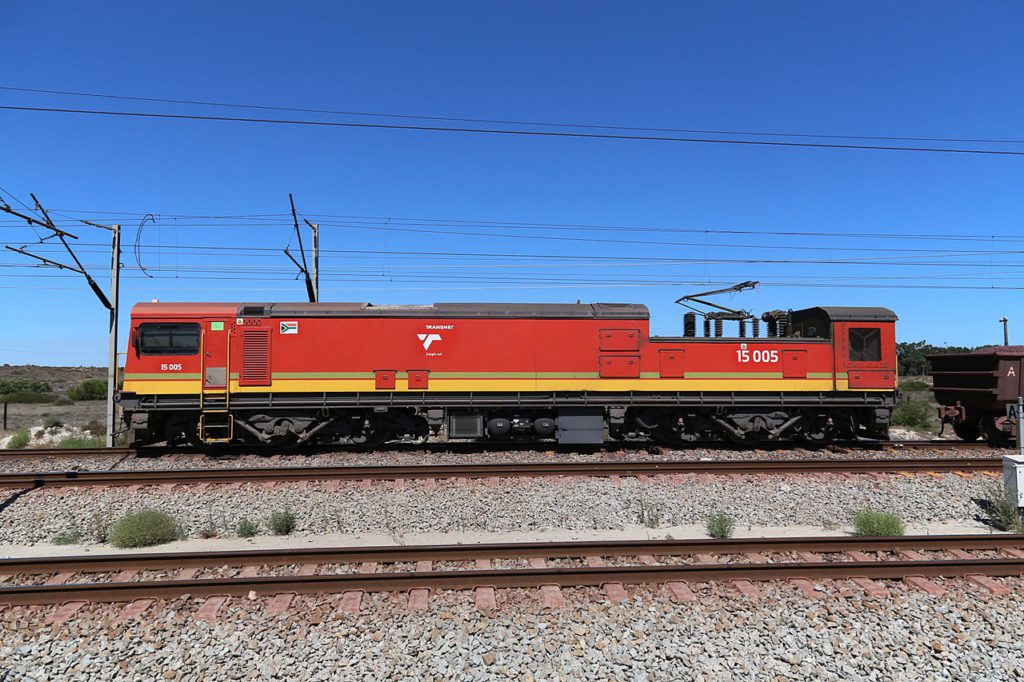
Transnet locomotive for the Sishen-Saldanha line. Credit: Wikimedia Commons
South African coal and iron ore exporters aim to sign agreements with state-owned logistics company Transnet SOC Ltd. next month that could pave the way for them to spend billions of rand to help fix crucial rail lines and boost shipments.
Organizations representing firms including Glencore Plc and a unit of Anglo American Plc are negotiating the terms of the pacts with Transnet, said Ian Bird, head of transport and logistics for B4SA, a business group that’s partnering with the government to revive South Africa’s sub-standard transport and energy infrastructure and operations.
The collapse of freight-rail lines due to poor maintenance and theft of equipment saw coal exports plunge to a 30-year low of 48 million tons in 2023 while iron ore railings slumped to the lowest in a decade. While coal railings improved to 52.1 million tons last year, the first increase since 2017, that was well short of a 60-million-ton target. It also equated to just over half of total rail capacity of 91 million tons.
The government has agreed to allow private operators to run trains on the lines from about April to boost export income.
“We are now at a point where something has to be done,” Bird said in an interview. The state of the lines has an “impact on both Transnet Freight Rail and third-party operators,” he said.
The parties haven’t publicly disclosed the likely terms of the agreements, which should facilitate an infusion of private capital and expertise. Transnet, in a response to Bloomberg queries, put the cost of repairing the coal line over three years, at about 12.9 billion rand ($700 million) and the iron ore line at about 9 billion rand.
Repairing all Transnet’s tracks, including those used to transport containers and manganese, would requite 64.5 billion rand over five years, Transnet said last year.
“The conclusion of the agreements with the customers is on track,” Transnet said. “The investment is required to get these lines back up to a standard at which we can move more volumes.”
Companies export iron ore from the Saldanha port on South Africa’s west coast, while they ship most coal from Richards Bay on the eastern seaboard. Alongside gold, platinum group metals and cars, the two commodities are among South Africa’s biggest exports.
The Ore Users Forum, which counts Anglo’s Kumba Iron Ore Ltd. and Assmang Ltd. among its members, declined to comment. Richards Bay Coal Terminal Ltd., the privately owned coal-export port whose shareholders include Glencore, Thungela Resources Ltd. and Exxaro Resources Ltd., also didn’t comment.
The aim is to restore the lines “to near-enough maximum operational capacity,” Bird said. “It’s now a case of where the money will come from.”
He expects the Treasury to provide some clarity on funding for Transnet, which is deeply indebted, in next month’s national budget. Projected revenue the company earns from third parties will be lower than forecast because tariffs were roughly halved after negotiation, Bird added.
Independent entities have completed technical assessments of the work needed on the coal and iron ore lines, and they will carry out further studies on the other routes.
Transnet’s own attempts to boost its volumes are stalling. Below target
At the meeting between representatives from the government, state companies, B4SA and President Cyril Ramaphosa last week, Transnet said it disclosed that total freight-rail volumes for the year to March 31 were up 5.3% from a year earlier, but about 7 million tons below target. The annual objective is 170 million tons. Derailment, theft and vandalism are to blame, it said.
The goal for the 2025-26 financial year is 193 million tons and for 2029-30 it is 250 million tons, about a fifth of which would be due to private operators and investment, a document drawn up for the meeting by the Government Business Partnership, which includes B4SA, showed. The business group confirmed the authenticity of the document.
Processing of containers at Transnet’s ports will also miss a target of 4.4 million 20-foot equivalent units this financial year, with a throughput of 4.2 million containers compared with the previous year’s 4.1 million tons, the presentation showed and Transnet confirmed. The company has set the 2029-30 aim after private intervention at 5.4 million units, the presentation shows.
The rollout of new electricity-generation capacity and transmission lines last year was also 48% and 28% below target respectively, charts in the the presentation reveal.
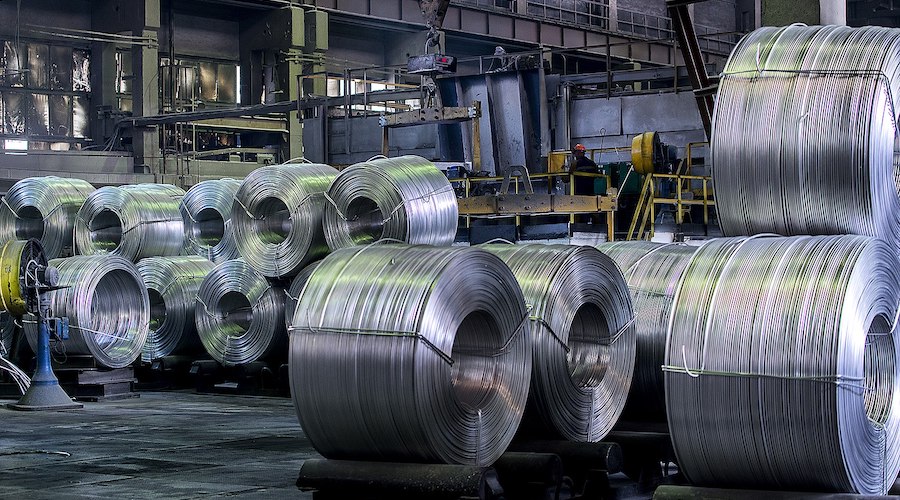
The European Union is proposing a phased ban on imports of Russian aluminum as part of a broad sanctions package ahead of the third anniversary of the Kremlin’s invasion of Ukraine, according to people familiar with the matter.
The package — which has been circulated among member states this week — also proposes sanctions that would cut more banks off from the SWIFT banking system, and actions targeting more than 70 dark-fleet vessels involved in shipping Russian oil, the people said.
The sanctions package would allow European buyers to import 275,000 metric tons of the Russian metal under a quota system for a one-year period, before a full ban comes into effect, according to a document seen by Bloomberg. The import volume quotas would be managed by member states and the EU’s executive arm, the document says. The plans will require backing from all member states, and could change before they’re formally proposed to members, the people, who spoke on condition of anonymity, said.
The EU imported about 320,000 tons of unwrought aluminum from Russia in the first 11 months of 2024, accounting for 6% of total imports, according to UN Comtrade data. Meanwhile, shipments to China have risen sharply.
There have been calls for the EU to ban Russian aluminum ever since the invasion of Ukraine, and Russia’s shipments to the bloc have fallen steadily as manufacturers have sought out alternative suppliers. But some buyers and member states have resisted such measures up to now, on the grounds that some key products will be hard to replace in full.
It’s not a given that the EU will agree on the package, which would be the 16th against Russia. Hungary has been increasingly resistant to additional penalties on Moscow.
The EU struggled to complete a routine six-month renewal of its Russia sanctions regime this week, with Budapest lifting its block on the step only days before the expiration date.
But pressure to enact tougher measures on Russia’s metals sector has grown in recent months. The US and the UK imposed a ban on trading Russian metals on the London Metal Exchange last year, in a move that initially sparked wild price swings on the exchange and accelerated a reordering of global trade flows.
The EU had previously weighed adding LNG to the proposals but that’s not in the current proposals and is very likely to be addressed through a roadmap to phase out the commodity, Bloomberg previously reported.
Elsewhere, the EU is proposing to prohibit the temporary storage of Russian oil inside the bloc, extend restrictions on Russian aircraft and Russian-controlled ones, as well as ban transactions with an extensive list of Russian ports and airports that are used for transferring weapons and banned parts needed to make them. That proposal includes exemptions for transfers relating to energy and emergencies.
Other proposals include restrictions on three Russian-controlled banks abroad as well as entities outside the country that use Moscow’s SWIFT-equivalent system for Transfer of Financial Messages (SPFS)
The bloc is also proposing restrictions on more software, hardware and other technologies used in weapons systems as well as dozens of companies, including many firms in China, Turkey and other countries that have helped Moscow get around the EU’s measures.
Separately, the EU also this week proposed imposing tariffs on the remaining agricultural products coming from Russia and Belarus that aren’t already facing duties, as well as some nitrogen-based fertilizers.
(By Ewa Krukowska, Alberto Nardelli and Mark Burton)
Barrick, Mali to start new negotiations.
Reuters | January 27, 2025 | Loulo-Gounkoto complex in Mali. (Image courtesy of Barrick Gold).
Mali’s government and Barrick Gold will start a new round of negotiations on Tuesday to resolve a deepening dispute over the alleged nonpayment of taxes by the Canadian miner and the seizure of its gold stocks by authorities in the country, two sources familiar with the matter told Reuters.
Barrick, the world’s second-largest gold miner by production, has temporarily suspended its mining operations in Mali after the government seized close to 3 metric tons of gold, worth $250 million from the company’s Loulo-Gounkoto complex.
The issues at stake in the new round of negotiations are Mali’s demanding $199 million, Barrick’s agreeing to the new mining code and the release of the seized gold, according to people aware of the development who did not wish to be quoted as they are not authorized to speak about the issue.
Shares of Barrick closed at C$23, down by 0.2% at the Toronto Stock Exchange on Monday.
Barrick declined to comment and the Mali government did not respond to requests for comment by Reuters.
Governments in Mali, Burkina Faso and Niger — all led by juntas — are all seeking to renegotiate new terms with gold miners to gain a bigger share of mining revenue at a time when gold prices have hit record highs.
The dispute between Mali and Barrick is over the country’s new mining code that came into effect in 2023. The mining code gives the state a bigger share of mining revenues and removes tax exemptions for mining companies.
Mali had previously demanded about $500 million in unpaid taxes from Barrick, sources told Reuters. Mali has also issued an arrest warrant against Mark Bristow, CEO of Barrick Gold.
Barrick denies any wrongdoing.
Jefferies analysts have estimated that suspending production at the mine could cut Barrick’s earnings before interest, taxes and amortization by 11% in 2025.
(By Divya Rajagopal and Portia Crowe; Editing by Sandra Maler)
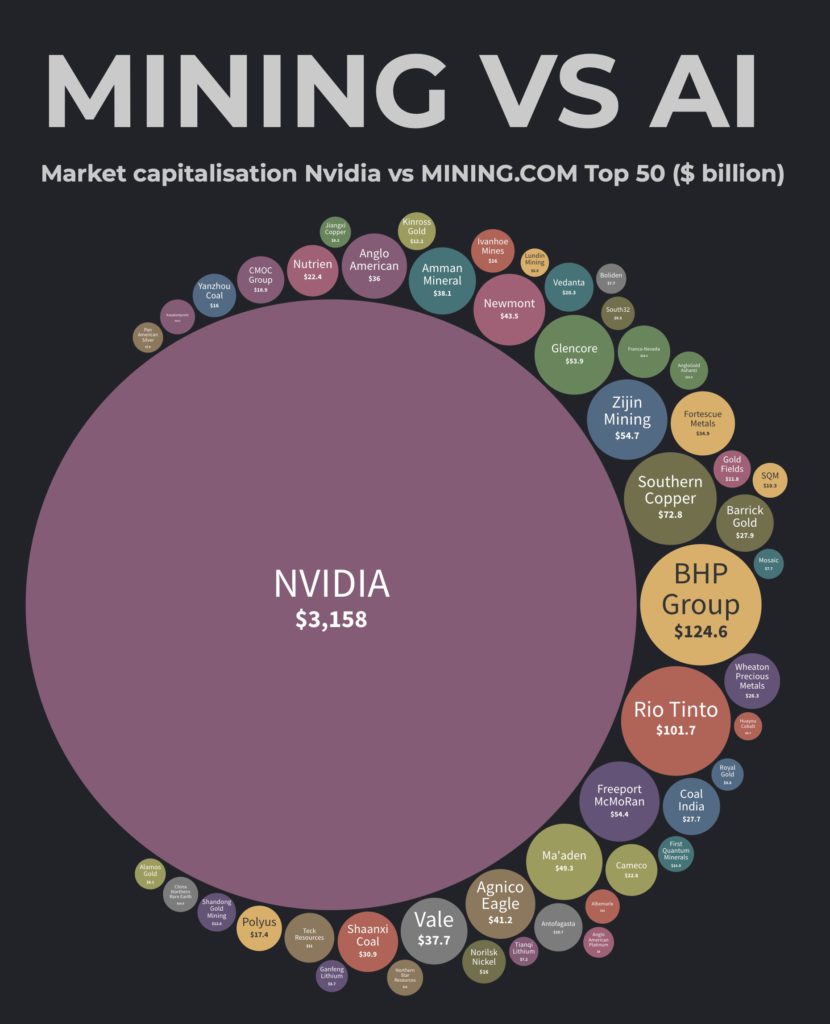
The cheap and cheerful Chinese DeepSeek AI model wiped a trillion dollars off the Nasdaq index on Monday with tech industry darling Nvidia responsible for the bulk of the losses.
Nvidia was down $600 billion in market cap at one point. While it seemed that this week would let out some air from the AI and Nvidia bubble, on Tuesday the chipmaker had clawed back half of Monday’s losses. US AI champions do not appear to be in deepsh**t after all.
Even after the fallback, investors who bought Nvidia a year ago can still toast to 111% gains. Those who saw the AI boom coming three years ago are enjoying 465% returns. The stock’s value is now comfortably back up to over $3 trillion.
In contrast, at the end of 2024, the MINING.COM TOP 50 ranking of the world’s most valuable miners had a combined market capitalization of $1.28 trillion, down $126 billion for the year after a dismal final quarter.
The Top 50 is now trading $480 billion below the peak hit in the second quarter of 2022, and so far in 2025 the biggest mining stocks, with the exception of a handful of gold counters, have moved sideways or retreated further.
It’s not the first time these pages have lamented the gulf between how investors appraise the industrial economy and any stock with even a whiff of the latest tech trend.
A treemap of just one AI stock surrounded by mining companies looks like a solar system (as one reader commented on a previous iteration). Never mind comparing miners to the mag-7.
There are plenty of mining industry narratives that fit into AI or whatever the next trend is – humanoid robots most likely. Uranium for one, dragged down by the Deepseek debacle because supposedly fewer small modular reactors will now be needed to power data centres.
But once again mining participates more on the downside of technological breakthroughs. When metals and minerals are swept up in the excitement it usually last for a half-cycle. For painful evidence of that just look at electric vehicles and where battery metals are now trading.
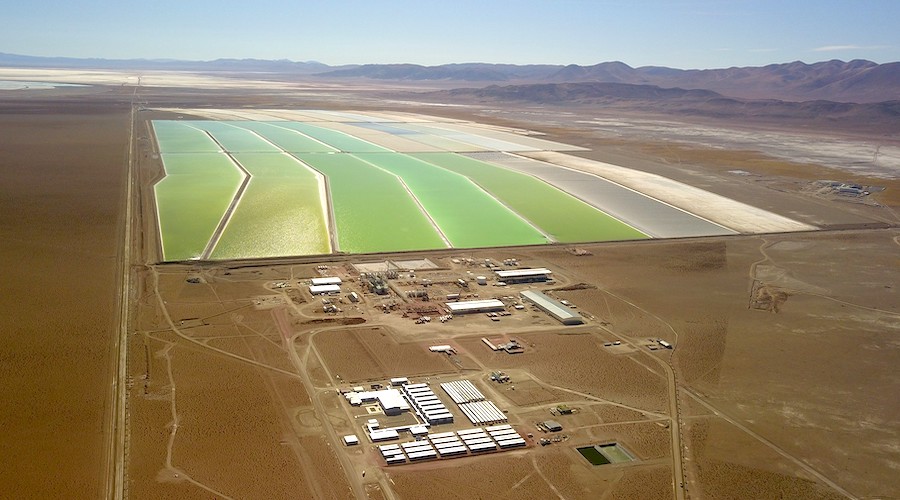
Ganfeng Lithium has a 46.7% stake in the Caucharí-Olaroz lithium brine project in Argentina. (Image courtesy of Lithium Americas.)
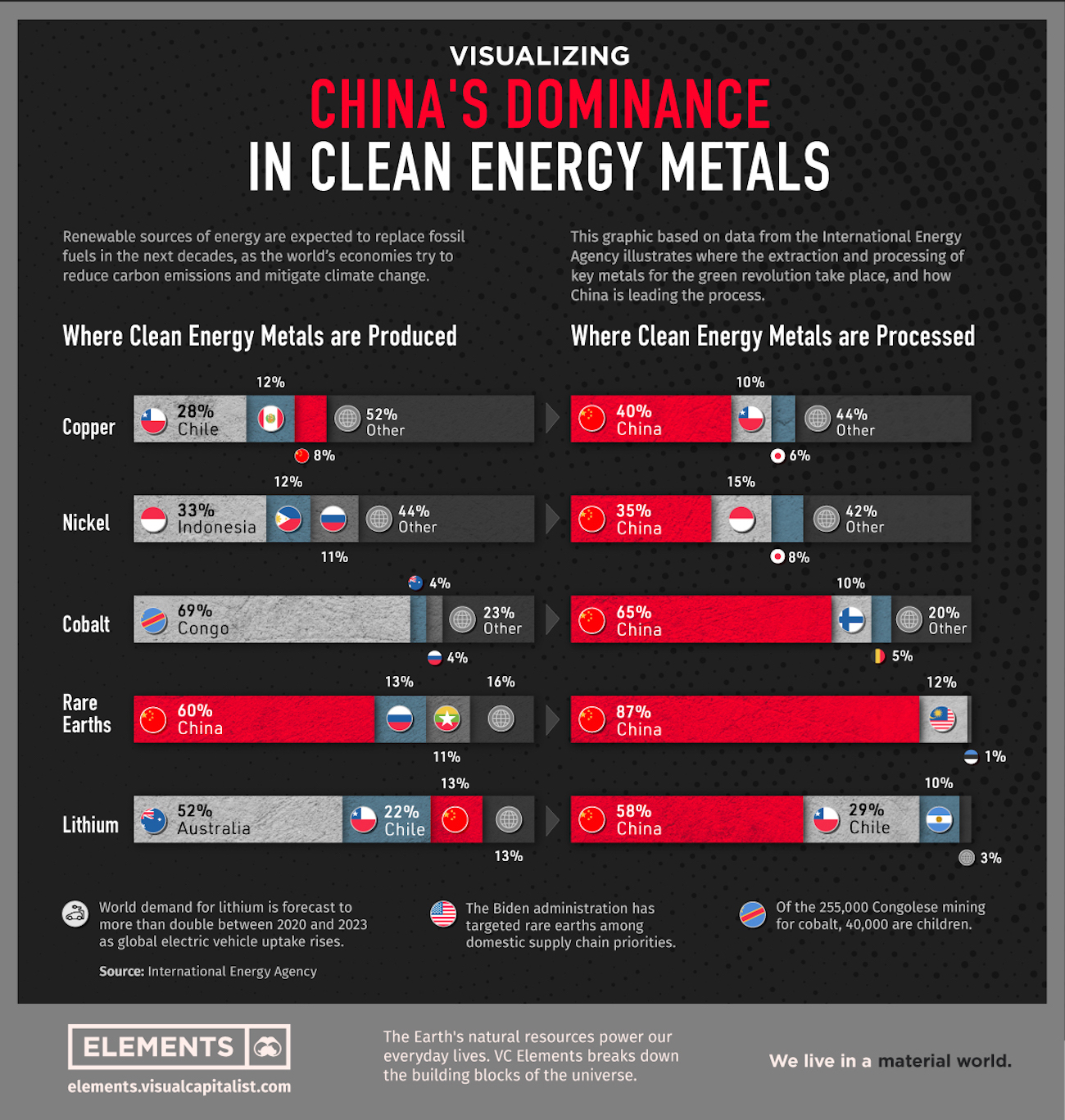
China has systematically extended its control over critical minerals essential for the global energy transition and net-zero emissions, using a network of at least 26 state-backed financial institutions over the past two decades, a new report shows.
The database, compiled by AidData at the College of William & Mary in the United States, reveals how Beijing has leveraged an intricate web of financial mechanisms to dominate the global supply chain for critical minerals. These minerals — including copper, cobalt, nickel, lithium and rare earth elements — are vital for emerging technologies such as electric vehicle batteries and solar panels. Between 2000 and 2021, Chinese financial institutions provided nearly $57 billion in loans to 19 low- and middle-income countries, the report shows. A parallel study title Power Playbook: Beijing’s Bid to Secure Overseas Transition Minerals, outlines 93 loan commitments and one grant involving 86 financiers — a mix of Chinese and non-Chinese entities — to 59 recipients.
Both studies underscore how China has deployed its vast foreign exchange reserves to secure long-term control over strategic mineral deposits in resource-rich nations. Key examples include copper and cobalt from the Democratic Republic of Congo and Peru, nickel from Indonesia, and lithium from Argentina.
Over 75% of these investments were structured to ensure Chinese ownership stakes, primarily through joint ventures (JVs) and special purpose vehicles (SPVs). These arrangements grant Chinese entities significant influence over the extraction and processing of these resources.
The report also highlights a key distinction between China’s mineral financing strategy and its flagship Belt and Road Initiative (BRI), President Xi Jinping’s global infrastructure program.
Unlike BRI loans, which are typically issued by a select group of Chinese development banks, transition mineral financing involves a broader network of lenders. These include state-owned commercial banks like the Industrial and Commercial Bank of China, Bank of China, and Citic. Intricate financing web
The report shows that mineral lending often relies on serial loans rather than one-off arrangements, signalling a deeper, long-term commitment to securing upstream resources. According to AidData, almost 25% of loans in the mineral sector were backed by Chinese guarantors — a sharp contrast to the estimated 4% guarantee rate for general BRI projects.
The findings align with several recent reports, including a recent article on the subject by The Economist revealing that, in 2023, Chinese companies invested roughly $16 billion in foreign mines. This was the highest figure in a decade, up from less than $5 billion the year before.
The report raises concerns about the implications for host countries. In two-thirds of cases, JVs and SPVs excluded significant government ownership, reducing financial liabilities for these nations but also limiting their access to future financial returns from mineral extraction.
AidData’s findings bring into focus Beijing’s methodical strategy to secure access to critical minerals while other nations risk falling behind.
With these strategies now under scrutiny, the report calls attention to the broader geopolitical implications of Beijing’s dominance. It also raises pressing questions for developing nations about how to balance the economic benefits of Chinese investment with the need to retain sovereignty over their natural resources.





.jpg)