Friday, April 11, 2025

BLOWBACK

Trump Tariffs Fuel China's Electric Vehicle Expansion in Central Asia


  • Chinese electric vehicles are becoming increasingly popular in Central Asia due to lower prices, government incentives such as tax breaks, and the establishment of local production facilities.

  • Global trade dynamics, including US tariffs and sanctions on Russia, have accelerated the shift towards Chinese cars in Central Asia, with countries like Kyrgyzstan becoming key re-exporters.

  • Central Asian nations are actively investing in EV infrastructure and setting ambitious targets for electric vehicle adoption, reflecting a broader trend of closer economic and political integration with China.

Even before Chinese electric cars became a mainstay of the bustling streets of Tajikistan's capital, Tolib Raufov knew they would offer an upside to taxi drivers like him.

He bought his first Chinese electric vehicle (EV) three years ago for the equivalent of $30,000, he says, and resold it last year. With that money, he was able to buy a model from BYD –- China's leading EV maker that recently overtook Tesla in total sales –- for only $21,000. Raufov says the affordable price, strong local resale value, and savings from no longer needing to buy gas have left him with better margins than ever as a taxi driver.

"I have no regrets after buying a Chinese electric car," he told RFE/RL. "It's never been this profitable for me to drive a taxi in Dushanbe."

Raufov's experiences provide an up-close look at one of the most visible ways that China's growing economic influence in the region is reshaping Tajikistan and the other countries of Central Asia -– Kazakhstan, Kyrgyzstan, Uzbekistan, and Turkmenistan.

While he and other taxi drivers embrace the Chinese imports for their affordability, Central Asian governments are opening the door with tax breaks, a green infrastructure expansion, and new factories for local production.

The result, say analysts and local car importers who spoke to RFE/RL, is not only a revision of Central Asia's transportation landscape but an acceleration of the economic and political trends already integrating the region more closely with neighboring China.

The trend puts Central Asia at odds with some Western countries, most notably the United States and the European Union, which have imposed tariffs to curb Chinese EV imports in recent years. This could grow even more against the backdrop of US President Donald Trump's global tariffs and escalating trade war with Beijing as Chinese state-backed firms look to the region to substitute US imports and reroute exports.

"The Trump administration's tariffs are likely to further stimulate China's EV exports to Central Asia and may push Beijing to expand local production in the region," Yunis Sharifli, a nonresident fellow at the China Global South Project, told RFE/RL. "This would help meet domestic demand, support reexport strategies, and diminish the competitive space for Western players in Central Asia's EV market."

How Chinese Cars Took Over Central Asia

China's leading position in Central Asia's vehicle market is the result of years of strategy and opportunity.

"The main reason for China's growth in the EV and car industry has been the rise in demand in Central Asia," Temur Umarov, a fellow at the Carnegie Russia Eurasia Center in Berlin, told RFE/RL. "Consumers want what Chinese brands are offering."

Beijing's major investment push into the region came over the last decade through its Belt and Road Initiative (BRI) -– a multibillion dollar infrastructure strategy championed by Chinese leader Xi Jinping –- as China looked to build new trade routes and more easily procure Central Asia's hydrocarbons, critical minerals, and other valuable resources.

But more recently, China has established itself as a leading trade partner and top foreign investor, which has corresponded with Chinese companies expanding their footprint and playing a larger role across the region's economies.

Tajikistan has also rolled out an array of incentives for EVs from neighboring China, including tax breaks and rebates for consumers, a decade-long tax exemption for EV imports, and building charging stations across the country.

The mayor of Dushanbe also passed legislation in September to transition the city's taxis to EVs and the government has set a target for 30 percent of the country's cars to be fully electric by 2030.

Rustam, a car importer in Dushanbe who asked that his last name not be used in order to speak to RFE/RL, says the networks with China deepened first because of the COVID-19 pandemic in 2020 and then again with Moscow's all-out war with Ukraine in 2022.

While some importers are large enterprises, others like Rustam are individual businessmen who drive and resell the cars across borders.

Rustam says he used to bring in cars from Europe, sometimes making journeys as far afield as Lithuania. But with supply chains disrupted during lockdowns and Chinese companies selling their cars at lower prices when China's strict regulations were lifted, the import networks turned east.

He says that shift deepened again with sanctions placed on Russia, whose economy is interlinked with Tajikistan's, and left car imports from Europe less profitable.

"The Chinese produce high-quality cars now," Rustam said. "Even if sanctions are lifted, the situation in our market will not change."

'A Lightning Pace Of Development'

In the case of EVs, Central Asia is both a growing market and production hub for Chinese brands.

Turkmenistan, the most reclusive country in Central Asia, has also begun to import Chinese EVs, albeit at a much slower pace than its neighbors.

As part of a broader strategy to roll out more green technologies, the government has imported Chinese EVs made by JAC Motors as part of a program for electric city taxis and built accompanying charging stations.

Elsewhere across the region, the market inroads have increased at an accelerating pace.

As the global market for EVs hit a record high of 11 million cars sold in 2024 -– in large part driven by sales inside China -- Kazakhstan saw a 36-fold rise in the sale of Chinese EVs that same year.

Astana is looking to develop its own EV industry with the support of Chinese production, and the Kazakh government has already passed a law establishing a road map to build more charging stations and improve its power grids by 2029.

Non-EV cars from China have also made inroads in Kazakhstan. A local plant will go into operation this year to assemble models made by the Chinese carmakers Chery, Haval, Tank, and Changan.

Oksana Chernonozhkina, editor in chief of the online car magazine Test-drive.kz, says Chinese car brands, not only those making EVs, have taken the Kazakh market by storm as they've quickly caught up with, and in some cases surpassed, their competitors from Europe, the United States, and elsewhere in Asia.

"It's been a lightning pace of development. They lured top designers and engineers for their brands, and this is bearing fruit," Chernonozhkina told RFE/RL.

Aleksei Aleksiev, editor in chief of the Kazakh auto industry publication Behind The Wheel, says Chinese companies currently account for five of the best-selling brands in Kazakhstan, with Korean and Japanese cars also holding top spots.

"We've seen European brands lose a lot of market share since the pandemic," Aleksiev told RFE/RL. "Chinese companies offer good prices, the latest technology, and most importantly, they offer a five- to seven-year warranty. Most European brands offer only three [years]."

In Uzbekistan, President Shavkat Mirziyoyev attended the opening of a BYD factory in Jizzakh in 2024. The plant has already created 1,200 jobs and aims to grow production from 50,000 per year to 500,000. China's Xiaou Group is also building another EV plant in the country as part of a $1.5 billion investment.

Tashkent signed an agreement with China's Henan Suda company to establish 50,000 charging stations by 2033 and boosted sales for the cars by making EV imports exempt from certain taxes, customs duties, and other fees. These state policies have also provided financial incentives for local entrepreneurs to build their own charging stations and cut the cost of buying an EV for Uzbek consumers.

Consequently, EV sales have increased tenfold since the first policies were enacted in 2019 and have continued to grow. According to Uzbek customs data, 2024 marked the first time in the country that more EVs and hybrids were imported than gas-powered cars.

The transition to EVs in Uzbekistan is also bringing economic benefits for those who make the switch. Kahramon, a 53-year-old from Tashkent who recently bought a BYD e2, says his savings are adding up. He no longer has to pay for oil changes and his monthly fuel costs have dropped from $300 for his old gas car to $10 to charge his new EV.

"This car isn't made for going long distances and charging times are not quick," he told RFE/RL. "But it is ideal for urban driving in the country."

From Reexport To Domestic Growth

Kyrgyzstan, meanwhile, has become the leading reexporter of Chinese cars, not only EVs, to Russia among all of Central Asia.

In 2023, Kyrgyzstan imported $651 million worth of Chinese hybrid cars. In 2024, 7,541 EVs, valued at $219.8 million, were brought into the country.

However, this growth of imports hasn't only been only for the domestic market.

Western sanctions placed on Russia following its invasion of Ukraine cut off large imports of Western and Japanese cars, and Chinese-made automobiles –- EVs as well as hybrid and traditional engines –- have filled the void in part thanks to Kyrgyz entrepreneurs.

Daniyar Salyakaev, a car importer who runs a well-known blog in Kyrgyzstan about cars, says that Kyrgyz businessmen took advantage of Russian demand and the Central Asian country's liberal customs procedures to resell cars from their large neighbor in the east to Russia in the north.

"Sanctions were an opportunity and local entrepreneurs moved quickly to seize it thanks to their links with both Russia and China and our country's geography," he told RFE/RL.

Almost 150,000 cars from China have been officially imported to Kyrgyzstan over the past three years. Officially, only a tenth of them were reexported to Russia, but this figure is believed to be much higher.

But while the flood of imports has been directed mostly toward Russia, it is also increasingly common to see Chinese cars on the roads in Kyrgyzstan.

The same combination of affordability and rising quality has led to more Kyrgyz turning to Chinese cars. Some Chinese companies are also expanding to the country, with construction beginning in 2024 on a $115 million EV and commercial truck plant near Bishkek in collaboration with China's Hubei Zhuoyue Group.

Salyakaev says that Russian customs changes have made the reexport of Chinese cars to the country from Kyrgyzstan less profitable, but the experience has left structures and relationships in place that will carry over as the local market for Chinese vehicles grows.

"While Kyrgyzstan was becoming a hub where cars went to the Russian market, a certain infrastructure was built here with professional networks and services to import cars from China," he said. "That looks set to stay."

By RFE/RL 


Unconventional Resources Fuel China's Energy Growth

  • China's "Big Three" National Oil Companies are actively increasing domestic oil and gas production through intensive exploration, unconventional resource development, and advanced technologies.

  • Despite increased domestic production, China remains heavily reliant on foreign oil and gas imports, driving the NOCs to balance domestic and overseas resources.

  • As China shifts towards a greener energy mix, the NOCs are integrating renewable energy initiatives and carbon capture technologies into their operations to achieve sustainable development.

In a world where geopolitics and energy security are increasingly intertwined, China's national oil companies have emerged as pivotal actors in securing the nation’s energy future while shaping global energy dynamics. Through bold investments, innovative technologies, and a relentless drive to both secure and diversify their energy sources, China’s ‘Big Three’ NOCs — China National Petroleum Corporation (CNPC), China Petroleum & Chemical Corporation (Sinopec), and China National Offshore Oil Corporation (CNOOC) — are proving that the future of energy lies not only in securing existing resources but in transforming how energy is produced, consumed, and integrated into the energy system.

At the heart of China’s energy strategy lies its ambitious, seven-year (2019-2025) domestic oil and gas production campaign launched by the National Energy Administration in response to growing energy security concerns. The results have been promising: since the campaign’s inception China has reversed a domestic production decline and increased output by approximately 480,000 barrels per day. However, the country's dependency on foreign oil remains high, with imports filling more than 70% of Chinese demand.

In the gas sector, China has achieved significant domestic production growth, with an annual increase of more than 10 billion cubic meters since the campaign began. Nevertheless, the nation's foreign gas dependency had risen to 45% as of 2024 and is expected to continue growing, reaching 50% by 2050. The security of China's oil and gas supply remains a pressing concern for policymakers.

China’s Big Three NOCs are at the forefront of the country’s energy agenda. These companies, each with a particular focus, form the backbone of China’s energy security strategy.

Xinlei Zhu, Partner & Country Manager, China

China’s Big Three NOCs are at the forefront of the country’s energy agenda. These companies, each with a particular focus, form the backbone of China’s energy security strategy. They are integrated conglomerates with distinct strategic focuses, with CNPC concentrating on land upstream exploration and production, Sinopec on downstream refinery and petrochemicals, and CNOOC on global offshore oil and gas development.

In response to China's high oil and gas import dependency, these NOCs have intensified their domestic exploration and production activities. Annual domestic E&P capital investment has increased by about 20% since the start of the seven-year campaign in 2019, and the Big Three have achieved notable success in driving up domestic production through three key strategies.

Firstly, they have expanded E&P activities to access previously hard-to-reach resources, both onshore and offshore. CNPC's deepest-ever well — in the Tarim Oil Field, with a vertical depth of over 10,000 meters — has paved the way for further ultra-deep resource development in the region. CNOOC's recent discoveries in the South China Sea have also demonstrated the company's capabilities in exploring for and producing oil and gas in ultra-deep waters.

Secondly, the Big Three have focused on developing unconventional resources, including shale and tight oil and gas, coal bed methane, and extra-heavy oil. Their total unconventional production has increased by an average of 7.2% annually during the 7-year campaign and today accounts for approximately 31.5% of their domestic production.

Lastly, the Big Three have successfully utilized advanced enhanced oil recovery (EOR) technologies to arrest production declines in mature assets. CNPC's Daqing Oil Field, one of China's oldest, has been in production for 65 years and production water cut has reached 80-90%. However, CNPC managed to maintain production above 6 million barrels per day for the past decade, thanks to the implementation of advanced EOR solutions.

In addition to domestic E&P efforts, the NOCs recognize the importance of balancing domestic and overseas resources to ensure China's energy security. They have actively participated in global upstream mergers and acquisitions, increasing their asset positions in Latin America and Africa. Overseas production has accounted for more than 30% of their total production over the past decade.

As China transitions towards a greener energy mix, the Big Three view the green transition as an opportunity rather than a challenge. Leveraging the country's global leadership in renewables, they are coupling their traditional oil and gas businesses with new-energy initiatives to achieve a balance between energy supply security and low-carbon development.

CNPC, for instance, is focusing on carbon capture, utilization, and storage (CCUS) as one of its main green transition focuses. The company is also developing its geothermal and hydrogen energy industrial chains. In its downstream retail business, CNPC is promoting the layout of integrated energy stations combining oil, gas, hydrogen, electricity, and non-energy services to achieve energy diversification and sustainable development.

Sinopec, on the other hand, is prioritizing green hydrogen production from renewable power and CO? electrochemical technologies. The company has vigorously expanded its electric vehicle charging and LNG refueling networks, with charging volumes and LNG sales showing significant year-on-year growth.

CNOOC, drawing on its offshore energy development and technical capabilities, is focusing on offshore wind power and marine energy. The company has achieved breakthroughs in direct seawater electrolysis for hydrogen production, with the world's first megawatt-scale seawater electrolysis hydrogen generation system successfully entering trial operation.

In conclusion, China's NOCs are playing a crucial role in the country's energy security agenda, with a focus on domestic E&P, unconventional resources, and advanced EOR technologies. As China transitions towards a greener energy mix, the Big Three are leveraging their strengths to balance energy supply security with low-carbon development, presenting new opportunities for growth and development in the energy sector.

By Xinlei Zhu, Partner & Country Manager, China at Rystad Energy

Google AI Tools to Optimize Connections to Biggest U.S. Grid

Google announced on Thursday an agreement with PJM Interconnection, the largest grid operator in North America, to deploy a new set of AI tools and models to manage and optimize interconnecting power generation to the PJM electric grid.

Google, Alphabet-incubated moonshot Tapestry, and PJM are collaborating for the intelligent management of connection queues to the PJM electrical grid, which spans the District of Columbia and 13 states across much of the industrial Mid-Atlantic and Midwest.

This is Google’s biggest step yet to use AI for building a stronger, more resilient electricity system, the company said in a statement.

The Google-developed technology is set to help PJM connect energy sources to its grid much faster. The ultimate goal is making electricity more reliable and affordable for the 67 million people PJM serves.

The multi-year joint initiative aims to drive key improvements in the PJM region by bringing more energy capacity onto the grid faster, driving efficiency and affordability, and integrating diverse energy sources, Google said.

“Innovation will be critical to meeting the demands on the future grid, and we’re leveraging some of the world’s best capabilities with these cutting-edge tools to further reduce completion times for New Service Requests,” said Aftab Khan, PJM’s Executive Vice President – Operations, Planning & Security.

“PJM is committed to bringing new generation onto the system as quickly and reliably as possible.”

Amanda Peterson Corio, Head of Data Center Energy for Google, commented,

“We see the opportunity to help secure America’s electricity needs with the many resources seeking to provide energy to the grid, and believe this work with PJM is a great catalyst for innovation across the United States.”

On the other hand, AI advancements have raised utilities’ estimates of electricity demand in the areas they serve. U.S. power utilities have announced billions of U.S. dollars in capital plans for the next few years and are getting a lot of requests from Big Tech for new power capacity in certain areas.

By Charles Kennedy for Oilprice.com


Saudi Oil Exports to China Will Surge in May

Crude oil exports from Saudi Arabia to China are expected to increase substantially next month, thanks to the sizable price cut by the Saudis, Reuters reported today, citing unnamed sources.

Volume allocations to Chinese refiners reveal that Saudi exports in May will rise to 48 million barrels from the 35.5 million barrels scheduled for delivery this month. Saudi Arabia cut the official selling prices for its oil sharply ahead of a production boost set for next month. The sharpest cut was made for the price of oil sold in Asia, with flagship Arab Light set to be $2.30 per barrel cheaper in May, at a premium of $1.20 per barrel over the Dubai/Oman benchmark.

This is the deepest price cut in over two years, Reuters reported earlier in the week. The move comes amid the oil price rout that followed President Trump’s announcement of a flurry of tariffs on all trade partners, notably China, which is the world’s largest oil importer. China retaliated promptly with its own tariffs on all U.S. imports, including oil and gas, adding pressure to prices.

Saudi Arabia is the second-largest oil supplier to China after Russia. Meanwhile, China’s imports from Iran increased substantially in March as importers sought to stock up ahead of a possible further tightening of U.S. sanctions on Tehran. According to data from Kpler, Iranian crude accounted for 13% of China’s total imports of crude last month. In absolute terms, Iranian imports rose to 1.37 million barrels daily, up from 747,000 barrels daily in February.

On the other hand, U.S. crude oil exports to the world’s largest importer have shriveled and are about to stop altogether. So far this year, American crude oil has accounted for only about 1% of the imports of China, the world’s top crude importer. But the tariff war that U.S. President Donald Trump launched against China in early February dissuaded the remaining Chinese buyers from buying U.S. crude oil.

By Irina Slav for Oilprice.com


Sinopec and Aramco Expand Saudi JV with Petrochemical Mega-Project

In a major move to boost petrochemical output and capture a greater share of global markets, China Petroleum and Chemical Corp (Sinopec) and Saudi Aramco have signed a Venture Framework Agreement to expand their joint venture in Saudi Arabia.

The agreement, announced Wednesday, will see the two energy giants move forward with engineering studies for a fully integrated petrochemical complex at the Yanbu Aramco Sinopec Refining Company (Yasref), which is 62.5% owned by Aramco and 37.5% by Sinopec.

The planned project will feature a large-scale mixed feed steam cracker with a capacity of 1.8 million metric tons per year, alongside a 1.5 million ton-per-year aromatics complex. These additions will be integrated into Yasref’s existing facilities, maximizing operational synergies and value creation.

“The agreement further deepens and elevates our strategic partnership with Sinopec,” said Aramco President and CEO Amin H. Nasser. “The expansion project solidifies our commitment to product innovation and diversification.”

The deal comes as global petrochemical markets face a structural shortage in high-end chemical products, a gap that China’s producers are looking to fill. Chinese petrochemical companies have increased investments in innovation and high-value materials, aiming to shift away from commodity products toward more specialized offerings.

According to Pang Guanglian, deputy secretary of the China Petroleum and Chemical Industry Federation, China’s petrochemical sector already holds 45% of global sales and is rapidly moving toward a majority share. He added that despite trade frictions and global uncertainties, international demand for Chinese petrochemical products remains robust.

Driven by strong domestic supply chains and a push for cleaner technologies, Chinese state-owned firms—including Sinopec, CNPC, and CNOOC—are expanding globally. The industry is also working to reduce emissions by optimizing processes, increasing renewable energy use, and shifting toward sustainable raw materials such as biomass.

The expansion of Yasref marks another step in Aramco’s strategy to strengthen its downstream portfolio while positioning Saudi Arabia as a global leader in integrated energy and chemicals.

Oilprice.com


Phillips 66 Pushes Back Against Elliott’s Breakup Plan

Phillips 66 (NYSE: PSX) has filed its definitive proxy statement ahead of its May 21 Annual Meeting and issued a strongly worded letter urging shareholders to support its current board nominees and reject activist hedge fund Elliott Management’s proposals, which the company says are based on flawed assumptions and would undermine long-term shareholder value.

The move escalates a high-stakes proxy battle between the downstream giant and Elliott, which is pushing for sweeping structural changes, including a potential breakup of Phillips 66’s integrated business. In its letter, Phillips 66 defended its ongoing transformation strategy under CEO Mark Lashier, touting a series of bold actions already delivering returns and positioned for further upside.

Strategic Progress vs. Short-Term Disruption

Since Lashier took the helm in July 2022, Phillips 66 has returned $13.6 billion to shareholders, doubled its midstream EBITDA from 2021 levels, and committed to reducing controllable costs across its refining operations. The company also highlighted strategic divestitures totaling $3.5 billion and the planned closure of its Los Angeles refinery, part of its efforts to optimize its portfolio.

In its midstream segment, Phillips 66 said it has already achieved $500 million in annual run-rate synergies from its DCP Midstream integration—well above its initial $300 million target—and expects adjusted EBITDA in the segment to grow from $3.7 billion in 2024 to $4.5 billion by 2027.

Meanwhile, the refining business has reduced adjusted controllable costs per barrel by 15% since 2022, targeting further cuts by 2027. The company also pointed to operational excellence, including outperforming the industry on utilization rates for eight consecutive quarters and reaching a record clean product yield of 87% in 2024.

On the chemicals front, the Chevron Phillips Chemical (CPChem) joint venture continues to position itself as a low-cost global leader, with capacity expansions in the U.S. Gulf Coast and Qatar on track for 2026.

Rejecting Elliott’s Playbook

Phillips 66’s board took direct aim at Elliott’s call for a rapid corporate breakup, arguing the hedge fund’s thesis is built on “inflated and unrealistic assumptions.” Specifically, the company said Elliott’s spin-off and sale analyses ignore material risks, including significant tax liabilities, ongoing dis-synergies, and market timing concerns in a volatile commodity environment.

Elliott’s proposal also assumes a $50 billion sale of the midstream business—an outcome Phillips 66 called highly unlikely, noting the improbability of finding buyers willing to pay full synergy value and the risk of up to $10 billion in tax leakage.

While acknowledging past engagement with Elliott and openness to shareholder input, Phillips 66 emphasized its responsibility to protect long-term value for all shareholders rather than prioritize the short-term gains of one.

Proxy Fight and Shareholder Vote

The company is calling on investors to vote only for its director nominees on the WHITE proxy card and reject what it describes as Elliott’s “aggressive short-term agenda.”

Citing a 67% total shareholder return since Lashier became CEO—outpacing peers at 42%—Phillips 66 framed the upcoming vote as a choice between continued transformation under experienced leadership and a potentially disruptive overhaul at the hands of activists.

With more than $43 billion returned to shareholders since its 2012 spin-off from ConocoPhillips and a 15% dividend CAGR, Phillips 66 underscored its long-standing commitment to capital discipline and value creation through industry cycles.

Oilprice.com


Shell Starts Production at Dover Field in Gulf of Mexico

Shell Offshore Inc., a subsidiary of Shell plc, has commenced production at the Dover field in the Gulf of Mexico, a key milestone that reinforces the company’s leadership in deepwater oil and gas development.

Discovered in 2018, the Dover field is located in Mississippi Canyon, approximately 170 miles southeast of New Orleans, at a water depth of 7,500 feet. Shell holds a 100% working interest in the project, underlining its confidence in the asset’s long-term value.

The development features up to two production wells tied back to Shell’s Appomattox production hub via a 17.5-mile subsea flowline and riser. This marks the second such connection to Appomattox, one of Shell’s premier deepwater assets in the region.

The Dover tieback is expected to reach a peak production of 20,000 barrels of oil equivalent per day. By leveraging existing infrastructure, Shell reduces capital costs and environmental impact, in line with its broader strategy to deliver high-margin, lower-carbon barrels.

“This project exemplifies our deepwater strategy—boosting output from established hubs while keeping emissions in check,” said Colette Hirstius, EVP of Shell’s Gulf of Mexico operations.

The Gulf remains a key region in Shell’s global portfolio, known for its relatively low carbon intensity. Dover’s startup supports Shell’s long-term ambition of net-zero emissions by 2050, while also bolstering U.S. energy supply.

Shell noted that the modular development design at Dover allows flexibility for future expansion, while advanced digital systems and subsea technologies ensure operational safety, efficiency, and minimal downtime.

With the launch of Dover, Shell continues to drive forward its deepwater growth agenda, reinforcing its role as a major player in both U.S. energy security and the global transition to more sustainable fuel sources.

Oilprice.com


European Rearmament Efforts Focus on Air Defense Systems


By RFE/RL staff - Apr 10, 2025

Two former senior US military commanders have warned that Europe’s aerial defense is not prepared for the scale of the threat from Russia, citing vulnerabilities in sensor density and drone defense capabilities.

Russia’s daily bombardment of Ukraine, involving an average of 24.3 missiles and drones, has demonstrated the critical importance of robust air defense systems and exposed gaps in Europe’s current setup.

While NATO has overlapping fields of fire and layered defenses, experts emphasize the need to thicken the network, improve probability of kill, and address the growing threat of drone attacks to effectively deter and counter potential aggression.


Two former senior US military commanders have said Europe's aerial shield is not prepared to meet the scale of the threat from Russia, while the head of the US Navy's air and missile defense task force has told RFE/RL that intercepting incoming fire is "always a cat-and-mouse chase."

The comments come as European countries begin a massive rearmament program, agreed last month, with air defenses top of the shopping list.

"You see what has happened in big cities in Ukraine. This also would happen in some of the big cities of Europe," Philip Breedlove, former NATO supreme commander in Europe, told RFE/RL.

"If you're sitting out there thinking you're under some magic bubble like in the TV programs, that's not a good place to be," he added.

Russia's daily bombardment of Ukraine has graphically illustrated the importance of air defense.

According to an analysis in February by the Center for Strategic and International Studies (CSIS) in Washington, Russia has launched a daily average of 24.3 missiles and drones at Ukraine since the beginning of their full-scale invasion in 2022. This is more than 25,000 in total.

The results have been power shutdowns, wrecked infrastructure, and mass civilian casualties. Russia has used a variety of missiles, from drones to modified Soviet-era glide bombs to cruise missiles. Likewise, there are varied forms of defense.

Commodore Mike Dwan, commander of US Navy Task Force 64, told RFE/RL that NATO's "overlapping fields of fire" provided a full range of cover.

Dwan is based with the Sixth Fleet in Naples, Italy, but was speaking from the US antiballistic missile facility in Redzikowo on Poland's Baltic coast. His command brings together this base, a similar one in Deveselu, Romania, and a flotilla of US destroyers operating out of Spain.

They use a system called Aegis to target ballistic missiles.

"We do so in the upper atmosphere, above 100 kilometers. All of those intercepts...are happening in space," Dwan said.

The system was successfully used twice last year against Iranian medium-range ballistic missiles targeting Israel. "We put into place the capability, the kill chain, that very much is like what we have here for a threat coming into NATO."

The system relies on a network of sensors, but this, says Breedlove, is also its weakness.

"There was this false feeling for a while that, OK, we got Deveselu, we got Poland, we got these two beautifully provided American capabilities, but, you know, these movies where you see these command centers and every missile fired is engaged -- it's fiction," he said.


Probability Of Kill


In a subject area rich with jargon, Breedlove referred to POK -- Probability Of Kill. This would range from 95 percent in areas with high sensor density to just 30 percent in other areas. Europe needs to "thicken the network," Breedlove said.

He would not be drawn on where.

"The nations absolutely know where they are. We've brought them into the missile simulation centers and shown them how this works."

At Redzikowo, there are three launchers each with eight missiles. Could its capacity be overwhelmed?

"It could very well" be overwhelmed, Dwan said.

"Here in Poland, we have our pre-planned responses for prioritized coverage, so does Romania and our destroyer systems at sea…. There's always a cat-and-mouse chase of how many are being fired and how many are we able to shoot down."

But Dwan stressed the importance of deterrence. If Aegis is unable to intercept a missile, it would be for another layer, such as a Patriot battery, to deal with.

"Layered defenses" would mean "any potential adversary really has to think not just twice, but maybe three or four times," before attacking.

Russia's Drone Threat

Breedlove said another key NATO vulnerability is defense against drones, an area in which Russia now has more experience.

"We have this pernicious amount of drone capability attacking [Ukraine] and the air defenses of America, much less Europe, are not prepared for this kind of warfare, the sheer numbers," he said.

"The enemy is now on steroids."

Ben Hodges, formerly head of the US Army in Europe, had a similar assessment when he spoke to RFE/RL last month.

"You know, we've never, ever had enough air defense to cover everything…. You prioritize what must be protected," he said. "There is no such thing as a total shield."

Hodges said NATO military planners would take the "typical day" data of Russian attacks in Ukraine "and apply it against the ports of Bremerhaven or Gdansk or Klaipeda in Lithuania, for example, and figure out, do we have enough air and missile defense? I'm not sure we do."

Germany spearheaded the European Sky Shield Initiative (ESSI) in 2022, after the beginning of Russia's full-scale invasion of Ukraine. Bringing together 24 European countries, it aims to enable joint procurement of air and missile defense systems and encourage interoperability.

But some countries, such as France, Spain, and Italy, have not joined. France has criticized it for including non-European systems (such as Patriots) and components.

Air Power


Hodges said that NATO fighter jets offset some of Europe's weaknesses.

"Our air forces are a critical part of this. I think probably the growing amount of air power that we have, particularly with Finland and Sweden…will give us capabilities that Ukrainians currently don't have to counter Russian air and missile attacks."

Hodges added that air power was also a key US contribution to air defense. But Europe's efforts to boost its defenses come amid uncertainty over the ongoing US commitment to its security. So how would Europe fare without a US role?

"The biggest gap would be US Air Force, early warning, intelligence…and then the US contribution at NATO's air command at Ramstein."

Dwan's command is also clearly a key capability.

The ESSI envisages the use of Arrow-3 systems that can also intercept ballistic missiles. But this will take time, and these are also not produced in Europe, having been developed by Israel and the United States.

By RFE/RL


ECOCIDE

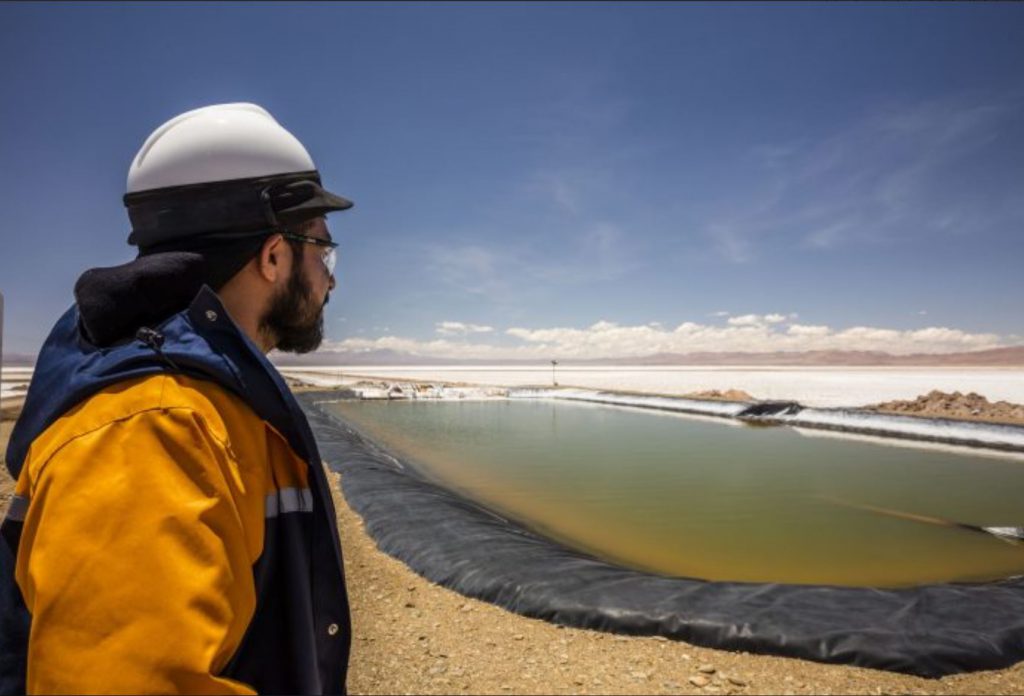
Argentina aims to boost lithium production by 75% in 2025, sees no risk from trade war

Salar de Olaroz. Image from Orocobre, now Arcadium Lithium.

Argentina, the world’s fifth-largest lithium producer, expects to produce 130,800 tonnes of lithium carbonate equivalent (LCE) in 2025, a 75% increase from 2024, the Argentine Chamber of Mining Companies (CAEM) said Tuesday.

The boost in production is expected to mostly come from new operations in Salta and expansions in Catamarca and Jujuy, the northern provinces with the largest lithium operations, according Alejandra Cardona, executive director of CAEM.

Argentina has six active lithium operations, four of which recorded production of 74,600 tons of LCE in 2024, 62% higher than in 2023, according to Cardona. South America has the world’s largest identified resource of lithium, spread between Bolivia, Argentina and Chile and is a key metal in electrical vehicles, batteries and the energy transition.

“The higher volumes (in 2024) are due to the expansion of operations at Salar de Olaroz, the Fenix mine, and the ramp-up carried out by Cauchari Olaroz,” Cardona said, adding that production also began at the Sal de Oro operation that opened in October 2024.

In a presentation by CAEM and the International Lithium Association (ILiA) in Buenos Aires, industry leaders said the Argentine mining industry will not be seriously affected by US President Donald Trump’s tariff measures

Jorge Mora, ILiA’s representative in South America, said he does not expect a drop in consumption.

“The largest consumer of lithium is China, and the largest number of cars are produced in China, and the largest consumption of cars is in China. So, that’s outside of Trump,” Mora told Reuters, praising Argentina’s economic direction under libertarian President Javier Milei, who promoted tax benefits to attract investment.

Roberto Cacciola, president of CAEM, told Reuters that he doesn’t think Argentina will be “badly affected” by the trade war and it could potentially open up new markets for Argentina.

“The negative effects could be linked to a temporary drop in oil prices, a lower value of exports, and some difficulties for the aluminum and steel sectors,” Cacciola said, adding that in terms of energy, agriculture and mining Argentina “could face some shocks, but I don’t see any major consequences.”

(By Lucila Sigal and Alexander Villegas; Edited by Walter Bianchi and Alistair Bell)

GEMOLOGY

Petra Diamonds delays Cullinan Mine tender amid US tariff uncertainty


By Reuters
April 9, 2025


A model displays a Rare Fancy Vivid Blue Diamond during an auction preview at Sotheby's in Geneva May 6, 2009. The diamond was found in 2008 in the historic Cullinan mine in South Africa. REUTERS/Denis Balibouse/File Photo


April 9 (Reuters) - Petra Diamonds (PDL.L), opens new tab, which has the world's third-largest resource of diamonds, said on Wednesday it had delayed the sale of gems from its Cullinan Mine in South Africa until there was greater clarity around the impact of U.S. tariffs.
The company, as part of its periodic tenders, had already sold diamonds from its Finsch mine, also in South Africa, and its Williamson mine in Tanzania before U.S. President Donald Trump unleashed a barrage of tariffs last week.

WHY IT'S IMPORTANT
These tariffs, applicable on U.S. imports ranging from dental floss to diamonds, have left companies globally scrambling to rethink their business and sparked concerns of a trade war that would stunt economic growth.
South Africa is one of the biggest exporters of diamonds to the United States, along with India.

CONTEXT
Petra, already struggling with widening losses due to prolonged weakness in the diamond market, is in the midst of a restructuring plan.
Moreover, the iconic Cullinan mine, from where the largest ever gem-quality diamond was recovered 120 years ago, has been producing fewer high-quality diamonds recently.
Advertisement · Scroll to continue

That has added to Petra's woes when it enters the market to sell diamonds via tenders, which are timed around specific calendar events and to fit with other regional diamond sales.

KEY QUOTE(S)
"The U.S. tariffs announcement late last week has resulted in considerable diamond market uncertainty," the diamond miner said.
BY THE NUMBERS
Petra sold 176,000 carats in gems from its Finsch and Williamson mines for a total of $18 million in its fifth tender this year, a 9% jump in average price from the fourth tender.
That was despite withdrawing about 200,000 carats of Cullinan material from the latest tender.
However, it has made $103 million in sales overall from the first five tenders this year, a 25% drop from the $138 million it made in the first five tenders last year.

MARKET REACTION
Petra's shares fell 6.1% to 26.3 pence in early trading.

Reporting by Yamini Kalia in Bengaluru; Editing by Savio D'Souza