Friday, May 23, 2025

US Steel shares skyrocket after Trump greenlights Nippon ‘partnership’


By AFP
May 23, 2025


A view of the US Steel Edgar Thomson Works on January 21, 2020, in North Braddock, Pennsylvania - Copyright AFP Brendan Smialowski

Shares of steelmaker US Steel skyrocketed on Friday after President Donald Trump announced his support for a “partnership” with Japan’s Nippon Steel.

Trump’s remarks are the latest in a long saga which began in December 2023, when US Steel and Nippon Steel announced plans for a $14.9 billion merger under a deal bitterly opposed by the unions.

“US Steel will REMAIN in America, and keep its Headquarters in the Great City of Pittsburgh,” the US president posted on Truth Social, adding that the “planned partnership” between America’s US Steel and Japan’s Nippon Steel would create at least 70,000 jobs and add $14 billion to the US economy.

The Pennsylvania-headquartered firm’s share price popped on the news, closing up more than 21 percent and then increasing further in after-hours trading.

It was not immediately clear what the terms of this new partnership were, and neither company, nor the White House, responded to a request for comment.

The United Steelworkers’ union (USW), which represents US Steel employees and has long opposed the deal, said it could not “speculate” on the impact of Trump’s announcement without more information.

“Our concern remains that Nippon, a foreign corporation with a long and proven track record of violating our trade laws, will further erode domestic steelmaking capacity and jeopardize thousands of good, union jobs,” USW International President David McCall said in a statement.

Nippon’s acquisition of US Steel was originally meant to close by the end of 2024’s third financial quarter, but was then held up by former president Joe Biden, who blocked it in his last weeks in office on national security grounds.

The two firms then filed a lawsuit against the Biden administration’s “illegal interference” in the transaction.

Earlier this month, Trump ordered his own review of the deal, directing the government’s Committee on Foreign Investment in the United States (CFIUS) to look into the proposed acquisition.

CFIUS, tasked with analyzing the national security implications of foreign takeovers of US companies, was given 45 days to submit its recommendations to Trump.


Leader of neo-Nazi death cult extradited to US for plot to poison Jewish children

Michail Chkhikvishvili, a 21-year-old originally from Georgia, was arraigned on Friday before a federal judge in Brooklyn on multiple felonies, including soliciting hate crimes and acts of
mass violence.


Copyright AP Photo

By Gavin Blackburn with AP
Published on 23/05/2025

The leader of an eastern European neo-Nazi group has been extradited to the United States from Moldova following his arrest last summer for allegedly instructing an undercover federal agent to dress as Santa Claus and hand out poisoned candy to Jewish children and racial minorities, prosecutors have said.

Michail Chkhikvishvili, a 21-year-old originally from Georgia, was arraigned on Friday before a federal judge in Brooklyn on multiple felonies, including soliciting hate crimes and acts of mass violence.

He pleaded not guilty through an attorney, Samuel Gregory, who requested his client receive a psychiatric evaluation and be placed on suicide watch while in custody.

Prosecutors described Chkhikvishvili, who also goes by "Commander Butcher," as the leader of the Maniac Murder Cult, an international extremist group that adheres to a "neo-Nazi accelerationist ideology and promotes violence and violent acts against racial minorities, the Jewish community and other groups it deems 'undesirables.'"

They said the group’s violent solicitations, promoted through Telegram channels and outlined a manifesto called the "Hater's Handbook," appear to have inspired multiple real life killings, including a school shooting in Nashville earlier this year that left a 16-year-old student dead.

Since 2022, Chkhikvishvili has travelled on multiple occasions to Brooklyn, where he bragged about beating up an elderly Jewish man and instructed others, primarily through text messages, to commit violent acts on behalf of the Maniac Murder Cult, according to court papers.

When he was approached by an undercover FBI agent in 2023, Chkhikvishvili recruited the official to a scheme that "involved an individual dressing up as Santa Claus and handing out candy laced with poison to racial minorities and children at Jewish schools in Brooklyn," according to the Justice Department.

He later suggested narrowing the focus to "dead Jewish kids," prosecutors said, after noting that "Jews are literally everywhere" in Brooklyn.

Describing his desire to carry out a mass casualty attack, Chkhikvishvili said he saw the United States as "big potential because accessibility to firearms," adding that the undercover should consider targeting homeless people because the government wouldn't care "even if they die," according to court papers.

He was arrested last July in Moldova, where he was held prior to this week's extradition.

In a statement, Attorney General Pam Bondi said the case was "a stark reminder of the kind of terrorism we face today: online networks plotting unspeakable acts of violence against children, families, and the Jewish community in pursuit of a depraved, extremist ideology."

https://plawiuk.blogspot.com/2020/03/black-sky-thinking-beyond-iron-gates.html

How marine drones have become essential in the fight against sea mines

THEY ALSO SUB HUNT

The western part of the Black Sea is threatened by sea mines. Hundreds of devices are a hazard to the coastal and maritime activities of NATO countries such as Bulgaria, Romania and Turkey. Sea drones could be the solution to eliminate the risk experts say.


Copyright Andreea Alexandru/Copyright 2024 
The AP. All rights reserved

By Sergio Cantone & Euronews Romania
Published on 22/05/2025 


Hundreds of sea mines have been threatening traffic in the Black Sea since the early days of the war in Ukraine. The waters of NATO member states like Bulgaria, Romania and Turkey are unsafe and must be permanently monitored by NATO.

The risk of stray mines represents considerable economic losses for the countries bordering the western and eastern shores of the Black Sea and can lead to higher insurance policies, more complicated routes and damage to tourism.

Demining is therefore a crucial activity for the security and the economies of NATO's and the EU's eastern flank.

The use of mines is part of the Russian attempt to approach Odessa and the Ukrainian attempt to defend the city from any landing craft. So both sides make use of such mines for offensive and defensive reasons.

Remotely operated vehicle at sea a game changer?

The war in Ukraine marked a turning point in the militarisation of drones and unmanned vehicles in the skies, on land and in the seas.

In the Black Sea, for example, which is a so-called semi-enclosed-sea, drones have played a lethal role by forcing Russian naval ships to leave Sevastopol and find shelter in the port of Novorossiysk, in the eastern Black Sea, far away from the range of the Ukrainian sea drones and naval missiles.

Drones have also proved to be of great use to navies of countries not directly involved in the fighting.

For example, the Romanian navy has for some time now started regular mine clearance operations with submarine drones imported from the UK.

A crew member of a French Navy Atlantique-2 submarine hunter naval airplane observes the sea during a NATO military exercise and sea mine detection mission above the Black SeaAP Photo

A TV crew from Euronews Romania boarded a minesweeper equipped with the submarine drone, Sea Fox, to cover the demining operations.

The Sea Fox underwater drones on the minehunter "Ion Ghiculescu", have already been successfully tested in the deep.

The unmanned remote-controlled submarine vehicle can destroy sea mines remotely without endangering crews.

Denis Giubernea Commander of the Minehunter, explains how the Sea Fox drone works.

"It's remote-controlled. It has a cable, a 1,500-meter fibre optic, and it's guided through the water. So, it's permanently tethered to the ship. After the object is identified as a mine this drone returns home and after that action, we use another neutralizing drone that we send in the vicinity of the object that we have already identified as a mine. And on contact this drone, which already has explosives on board, self-destructs," he said.

150 sea mines have been discovered floating adrift in the Black Sea since the outbreak of the war in Ukraine, six of them in Romanian territorial waters. And they represent a constant danger.

"Ukraine has carried out defensive mines and the Russian Federation has carried out offensive mines. We cannot know their exact number but there may be mines that may drift and therefore the risk is getting higher and higher," says Denis Giubernea.

According to military experts, the role of drones in marine warfare is of great tactical relevance. The unmanned maritime vehicles have proved essential in the mines hunting.


Crew members of a French Navy Atlantique-2 submarine hunter airplane during a NATO military exercise in the Black Sea, 9 April, 2025AP Photo
A new generation of fully autonomous sea-drones

The Sea Fox type still has to be controlled using an optical tether, which requires the minehunter vessel to be relatively close to the theatre of operations.

Sidharth Kaushal, Senior Research Fellow at the Royal United Services Institute (RUSI) told Euronews, "If a system is fully autonomous, the vessel controlling it can operate from further back, which allows for it to be safe against threats live, cruise missiles or, indeed, uncrewed surface vessels, which can be used to target mine countermeasures vessels."

According to Kaushal, identifying the classification of a mine is a time-consuming task that involves a combination of different levels of detection and human analysis.

Moreover, the use of artificial intelligence in demining has fewer ethical implications than other areas of military operations where final human judgement is required.

"Mine hunting is an uncontroversial area to deploy fully automated systems, unlike situations which involve killing. The disposal of mines is a less politically controversial area" he added.
European Parliament backs steep tariff on Russian and Belarusian fertilisers
BUY CANADIAN POTASH

The European Parliament has approved a proposal to impose steep tariffs on Russian and Belarusian fertilisers and agricultural products, sparking concern among European farmers about the potential fallout.


Copyright European Union

By Gerardo Fortuna
Published on 22/05/2025 - 

In a vote held on Thursday, MEPs endorsed measures that aim to reduce the EU’s reliance on fertilisers and farm produce from Russia and its ally Belarus, while simultaneously cutting off financial support for Moscow's war in Ukraine.

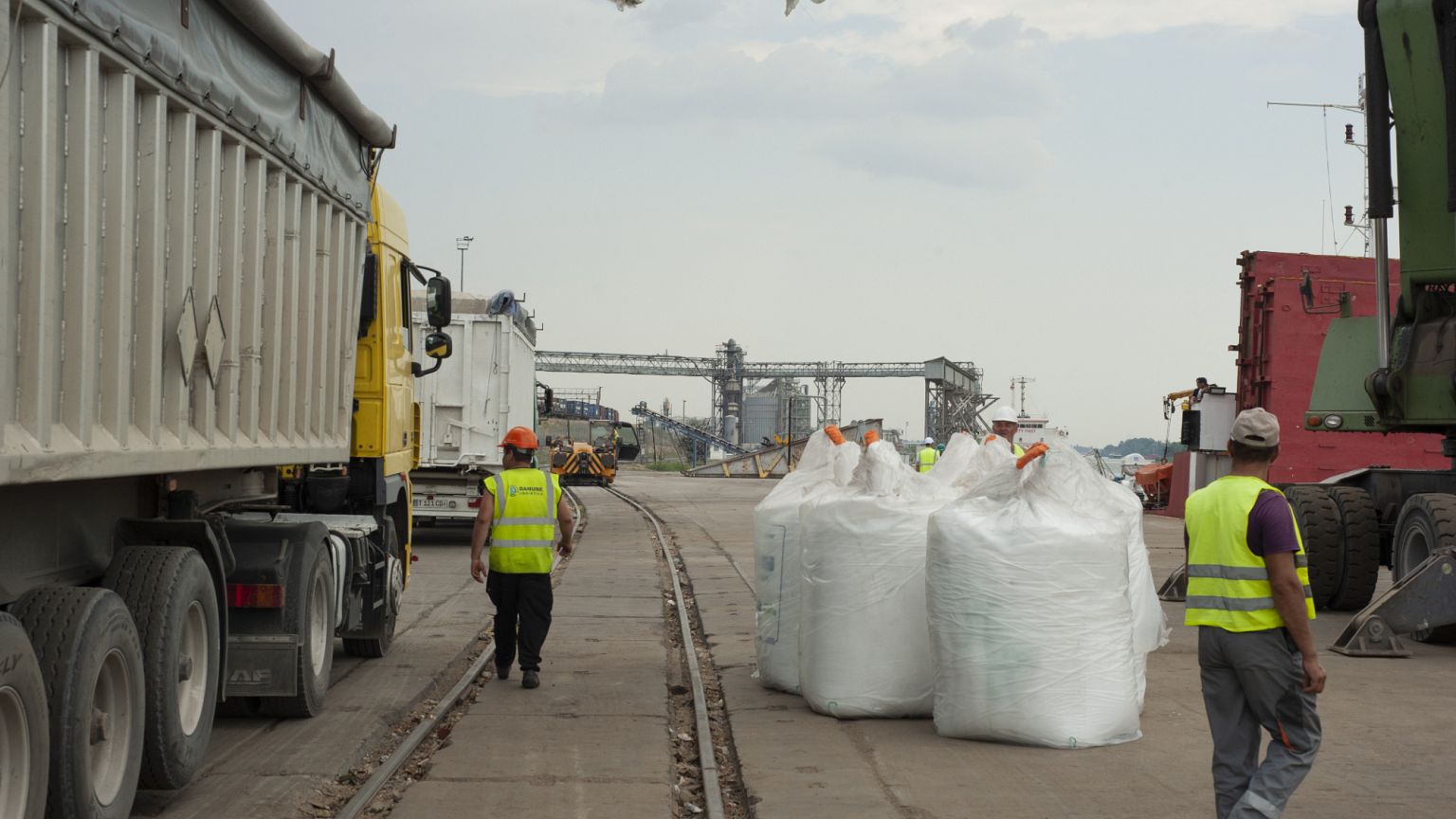
Set to take effect on 1 July, the new tariffs will target certain nitrogen-based fertilisers, increasing duties from 6.5% to levels approaching 100% over a three-year period, effectively halting most imports.

Russia currently supplies 25% of the EU’s nitrogen-based fertilisers, amounting to an estimated €1.3 billion annually. Additional duties will also be imposed on agri-food imports such as meat, dairy products, fruits, and vegetables from Russia and Belarus, representing about €380 million in annual trade.

The initiative gained momentum following sustained pressure from several member states and fertiliser industry leaders, who have advocated for swift action to bolster the EU's strategic independence.

Ethical and strategic concerns


Beyond economic considerations, the tariff hikes are also intended to address ethical concerns. Russia imposes a 23.5% export tax on key mineral fertilisers, revenue from which helps fund its military activities in Ukraine.

“We must stop financing Russia’s war in Ukraine with our own financial resources. If the agriculture sector continues to pay for Russian fertilisers, that money directly supports the Russian budget,” said Latvian MEP Inese Vaidere, the Parliament’s rapporteur on the file

She warned of growing EU dependence on Russian fertilisers and the risks of sudden supply disruptions, which could jeopardise agricultural stability.

The European fertiliser industry welcomed the Parliament's decision, describing it as a critical step toward reducing dependency and reinforcing Europe’s economic security.

“We call on all EU institutions to act swiftly to finalise and enforce these tariffs,” said Leo Alders, president of FertilizersEurope. “The sooner we implement these measures, the better we can protect our value chains, jobs, and food security.”
Farmers warn of rising costs

As the EU pushes forward with its strategy to reduce strategic dependencies and exert economic pressure on Russia, the challenge remains to balance geopolitical objectives with the immediate concerns of its farming community.

European farmers have expressed deep concern about the impact of the tariffs on agricultural competitiveness, input costs, and food security.

Cédric Benoist, from the French farmers’ union FNSEA, warned of “inflation in fertiliser prices within the European Union,” which would further strain farmers operating in a globally competitive market.

“We’re already feeling the consequences in terms of farm income,” he said. “Costs are rising, but we can’t pass that on to consumers.”

Benoist noted that the price of nitrogen solution, a type of liquid fertiliser, has surged from €160 per tonne five years ago to €300 per tonne today, after peaking at €600-700 during the COVID-19 pandemic.

He also cautioned that uncertainty ahead of the July deadline is distorting the market: “Fertiliser producers are withholding supply, waiting for the tariffs to kick in. That’s driving prices even higher.”

He also cautioned that uncertainty ahead of the July deadline is distorting the market: “Fertiliser producers are withholding supply, waiting for the tariffs to kick in. That’s driving prices even higher.”
KRIMINAL KAPITALI$M

European budget airlines’ hand luggage fees ‘violate EU laws’, say consumer organisations

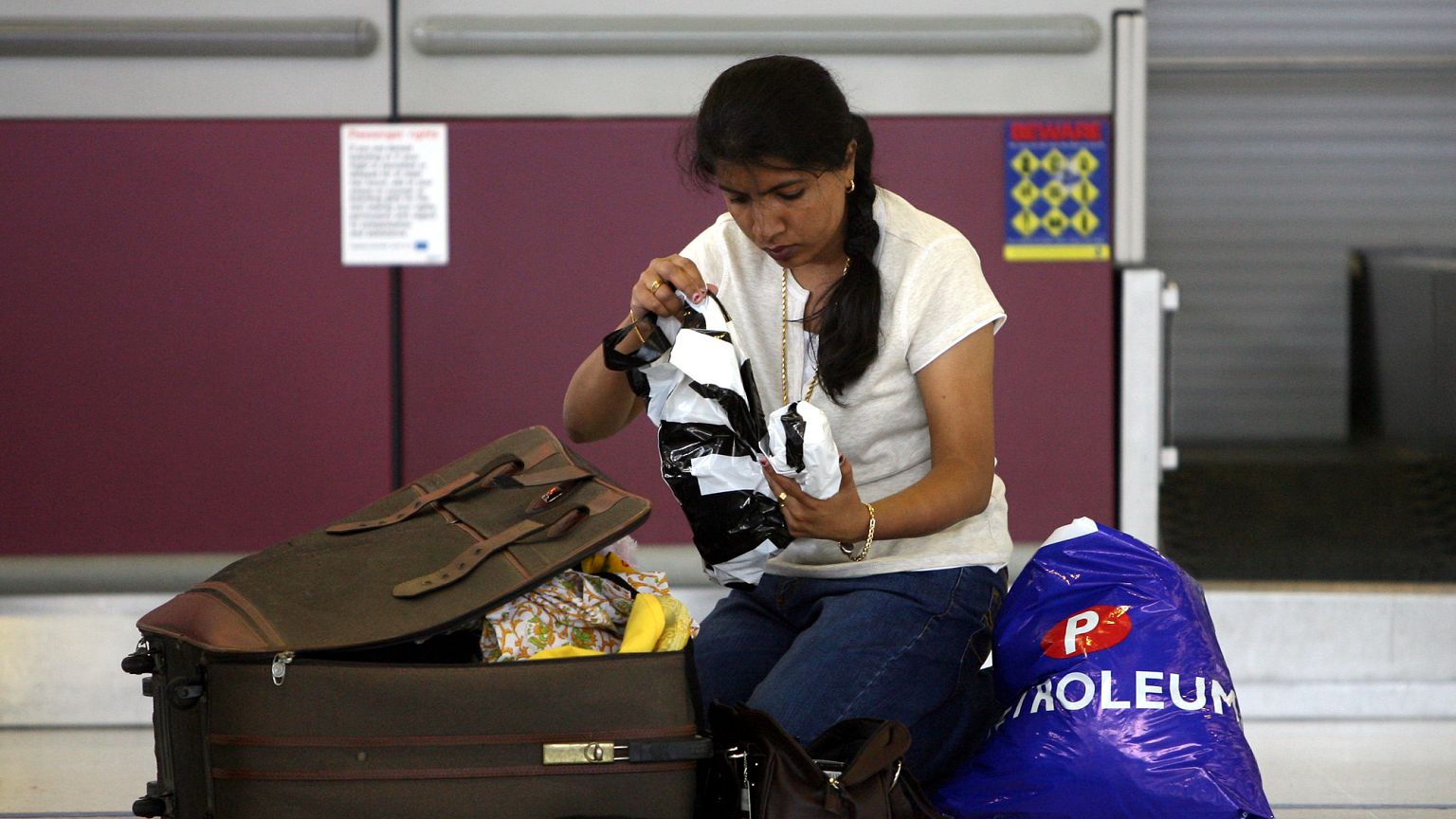
The consumer groups argue that the fees for hand luggage contravene a ruling from more than a decade ago by the European Court of Justice.


Copyright JON SUPER/AP

By Rebecca Ann Hughes
Published on 
23/05/2025 


A group of consumer organisations has asked national consumer watchdogs and the European Commission to conduct an inquiry into what they allege are unfair hand luggage charges imposed by budget airlines.

It comes just months after Spain fined five low-cost carriers for the same reason.

The latest complaint claims the baggage fees are in violation of EU consumer protection laws.

Agustín Reyna, Director General of the European Consumer Organisation (BEUC), said the airlines are “exploiting consumers and ignoring the EU top court”.

Hand luggage fees ‘violate EU consumer protection laws’


The coalition of 15 consumer rights organisations from around Europe has filed the complaint against what they say are abusive and illegal luggage fees levied by low-cost airlines.

The seven carriers targeted are EasyJet, Norwegian Air Shuttle, Ryanair, Transavia, Volotea, Vueling, and Wizz Air.

“Today we are taking action against seven airlines who are exploiting consumers and are ignoring the EU top court who ruled that charging reasonably sized hand baggage is illegal,” said Reyna.

The consumer groups argue that the fees for hand luggage contravene a ruling from more than a decade ago by the European Court of Justice.

"In 2014, the European Court of Justice ruled that the carriage of hand luggage cannot be subject to a surcharge, provided that it meets reasonable requirements in terms of weight and dimensions and complies with the applicable safety requirements,” they said.

The named low-cost carriers levy extra charges for luggage they claim is “oversized” but which should come under the size and weight measurements considered “reasonable” by the EU, the consumer groups say.


Differing hand luggage policies are confusing for consumers

BEUC says that airlines’ disregard of this legal obligation has resulted in confusing and inconsistent practices across the EU.

It argues that current discrepancies in companies’ hand luggage policies make it difficult for consumers to compare prices or make informed economic decisions.

The complaint comes months after Spanish authorities fined five of the same airlines (excluding Wizz Air and Transavia) €179 million for "abusive practices" including passenger fees for hand luggage.

Ryanair was handed the steepest fine at €107 million, followed by Vueling with €39 million, and EasyJet at €29 million.

Wizz Air charges the most for ‘hidden fees’


Recently, financial news site Tradingpedia delved into the myriad hidden fees and taxes charged by European airlines on top of the basic air fare.

Their report found that Wizz Air tops the list with airlines’ not-so-obvious fees for a flight, charging a total of £207.93 (€245) for several optional, yet sometimes unavoidable fees such as checked baggage fees, online booking fees, and rescue fees.

RelatedSingapore Airlines, Emirates, British Airways: The best and worst airlines according to passengers
Ryanair launches ‘Prime’ subscription service for frequent travellers. Is it worth it?

Ryanair ranks second, charging its passengers £198.58 (€234) on top of the air fare for the same services. EasyJet has the third-highest fees at £180.48 (€213), followed by Vueling with £151.20 (€179).

British Airways appears to have the lowest additional fees at only £64 (€75). Norwegian has the second-lowest fees at £71.53 (€84) in total, while Jet2 charges £91.50 (€107) on average.

“Many airlines charge for services that appear optional but are often unavoidable,” the report found, “such as the so-called rescue fee for missed departure, group booking fees, and even infant charges, ranging from £25 (€29) at Ryanair and easyJet to up to £137 (€162) at Vueling.”
Blue Cards: Which EU country offers the highest minimum salary for non-EU workers?


Copyright Europe in Motion

By Alessio Dell'Anna & Maud Zaba
Published on 22/05/2025 - 


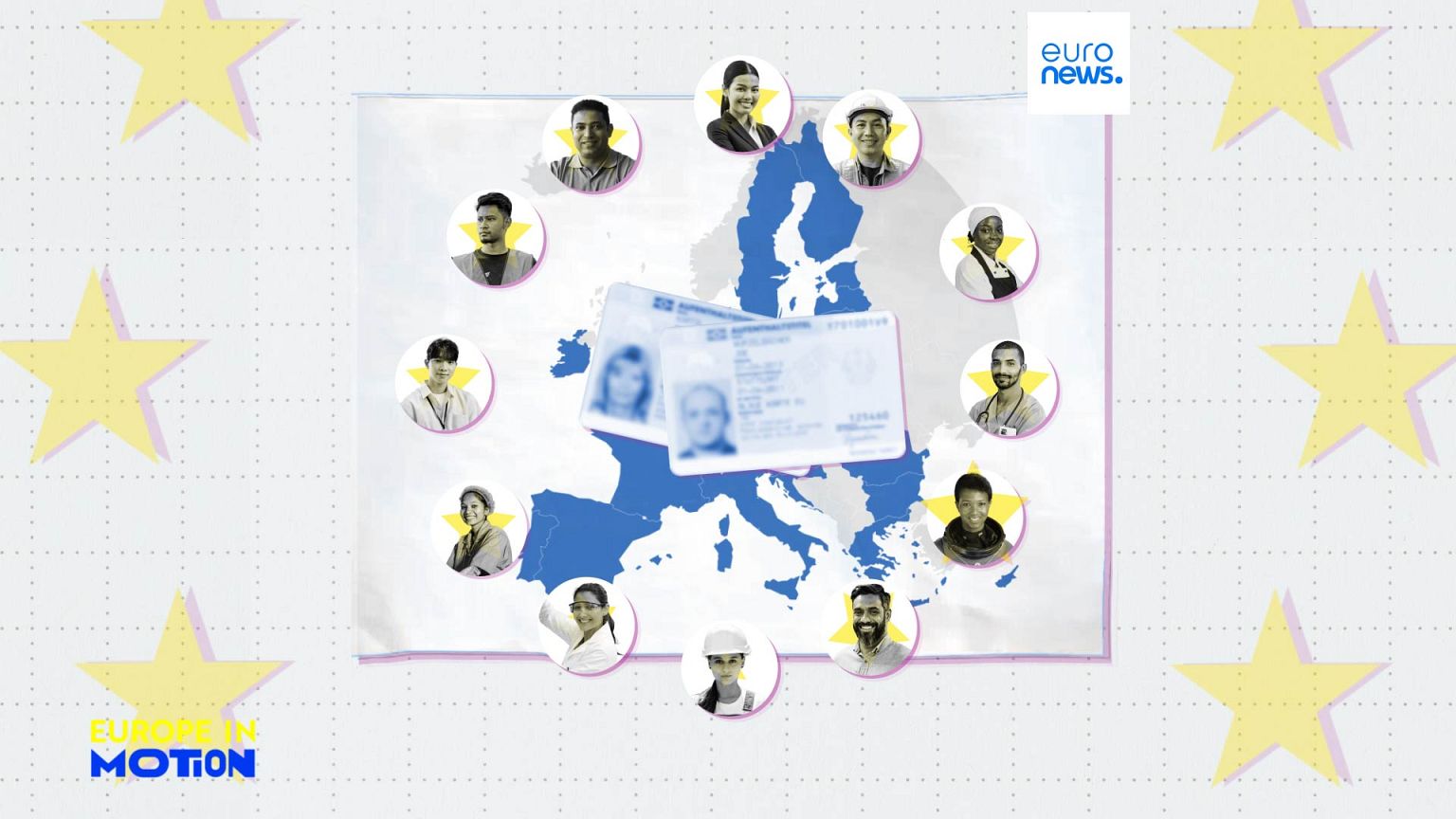
Blue Cards guarantee a minimum salary even in countries where there's no minimum wage. Every year, EU countries issue tens of thousands of them.

The latest report on Blue Cards shows that Germany welcomes the most workers from outside the EU among the bloc's member states.

Berlin issued around 69,000 of these permits, or 78% of the EU's total of 89,000.

Poland comes in second place with 7,000, followed by France at 4,000, says Eurostat.

The Blue Card is considered a golden ticket for highly skilled professionals from non-EU countries. Denmark and Ireland are the only countries that don't issue these permits at all.

What kind of salary does a Blue Card guarantee?

This special visa also guarantees a minimum annual gross salary, even in countries without a statutory minimum wage, such as Italy, Sweden, Austria and Finland.

Thresholds vary widely. From a maximum of around €68,000 in the Netherlands to just over €16,000 in Bulgaria.

Also, the EU Blue Card directive proposes that the employer pay the cardholder a salary that's at least 1.5 times the average of the respective country.

It's called the "rule of thumb." Figures for each country are indexed yearly.

Who is snapping up the most Blue Cards?

Indians lead the pack with 21,000 cards - almost a quarter of the total (24%), followed by Russians (9,000 or 11%), Turks (6,000 or 7%) and Belarusians (5,000 or 6%).

Qualifying for a Blue Card is relatively straightforward.

It requires either a university degree or three years of relevant work experience in the field related to the application. Blue Cards might also be issued after a cycle of studies attended in the EU.

The good news is, there are no language requirements.

The card also allows to travel freely within the Schengen Area, if the permit is issued by a Schengen country (Cyprus is the only exception among Blue Card countries).

Any other way to move to the EU for highly-skilled workers?

Blue Cards aren't the only visas granting work and stay to non-EU workers.

In 2023, EU countries granted almost 11,000 "intra-corporate transfer permits," allowing high-skilled citizens of third countries to move to EU branches of international companies.

The Netherlands issued a quarter (2,700) of them, followed by Germany and Hungary (both 1,900 or 18%), France (1,500 or 14%) and Spain (1,100 or 10%).

Most recipients were Indians (3,900 or 36% of all permits), Chinese (1,600 or 14%) and South Koreans (1,300 or 12%).


Eurozone private sector slips into contraction as services falter in May

Eurozone private sector contracted in May, with Composite PMI falling to 49.5. Services saw their sharpest drop in 16 months, while manufacturing stabilised. Business confidence hit a 19-month low, reinforcing expectations for further ECB rate cuts.


Copyright AP Photo

By Piero Cingari
Published on 22/05/2025 - 

Private sector activity in the eurozone unexpectedly contracted in May for the first time this year, with weakening demand and renewed pessimism weighing on the services sector and dragging overall momentum to a six-month low.

According to preliminary data compiled by S&P Global, the eurozone’s Composite Purchasing Managers’ Index (PMI) fell to 49.5 in May from 50.4 in April, below the 50.7 expected by economists and marking the lowest reading since November 2024. A figure below 50.0 signals contraction.
May PMI reveals services contraction

The drop reflects a significant loss of momentum in services, where business activity declined for the first time in six months and at the sharpest pace since January 2024.

The services PMI dropped to 48.9, from 50.1 in April, missing expectations of 50.3. Meanwhile, manufacturing remained weak, with a PMI reading of 48.4—up slightly from April’s 48.0 but still firmly below the growth threshold.

Business sentiment also deteriorated. Confidence in the euro area edged lower for a second consecutive month, reaching its weakest level since October 2023. The decline was again particularly pronounced in services, where optimism fell to levels not seen since September 2022.


'Do not blame tariffs for this one'

Dr. Cyrus de la Rubia, chief economist at Hamburg Commercial Bank, said the figures show an economy struggling to gain traction.

“Since January, the overall PMI has shown only the slightest hint of growth and in May, the private sector actually slipped into contraction,” he said.

“Do not blame US tariffs for this one. In fact, efforts to get ahead of those tariffs might partly explain why manufacturing has held up a bit better lately.”

De la Rubia noted that eurozone manufacturers have now increased production for a third consecutive month, with new orders no longer declining—something not seen since April 2022

Yet, the services sector—typically more shielded from external shocks—appears increasingly vulnerable.

“Foreign demand for services is softening, but it’s the sluggish domestic demand that seems to be dragging the sector down,” de la Rubia said. The result, he suggested, is a subdued outlook that aligns with cautious company sentiment and a hesitant recovery path.

According to the expert, the latest PMI data offer a mixed picture for the European Central Bank (ECB). While service-sector sales price inflation ticked down slightly from an already low level, input costs are still rising and may even be accelerating. He attributed this mainly to higher wages, as energy prices continue to fall.

Despite the continued cost pressures in services, de la Rubia said the ECB is likely to proceed with cautious interest rate cuts, especially as manufacturing purchase prices are now declining.

Germany’s contraction deepens despite manufacturing resilience

In Germany, the eurozone’s largest economy, business activity contracted further in May. The Composite PMI fell to 48.6 from 50.1 in April. While the manufacturing PMI ticked up to 48.8, services dragged the economy lower, with their index falling sharply to 47.2 from 49.0.

“Manufacturing is doing better, as output has been climbing for three months in a row, and new orders are following suit,” said de la Rubia.

“In the service sector, by contrast, activity has taken a sharper tumble, and that drop has pulled overall activity into contraction.”

Still, hopes for fiscal stimulus—particularly in infrastructure and defence—could offer support in the months ahead. “Falling input costs, especially cheaper energy, should offer manufacturers some breathing room,” de la Rubia added.

In a separate release on Thursday, Germany’s business morale, measured by the Ifo Institute, rose to 87.5 in May from 86.9, its highest level since June 2024. It marked a fifth consecutive monthly increase, diverging from S&P Global’s weaker survey data.

France sees modest improvement in factories, but services remain weak

In France, the picture remained subdued but showed signs of stabilisation. The Composite PMI edged up slightly to 48.0 in May, from 47.8 in April, as the manufacturing PMI rose to 49.5—its highest since February 2023—while services remained soft at 47.4.

“France’s private sector remained subdued in May,” said Jonas Feldhusen, junior economist at Hamburg Commercial Bank. “The Flash Composite PMI continues to signal contraction, reflecting the economic challenges France is facing amid domestic political instability and a fragile macroeconomic environment.”

Feldhusen noted a divergence between sectors: “The manufacturing sector showed signs of recovery, supported by increased factory output. In contrast, the services sector deteriorated further, with weak new business and a decline in the employment outlook.”

He flagged price dynamics as a growing concern. “While output prices slipped into deflationary territory in May, input cost inflation accelerated, signalling a squeeze on profit margins, particularly in the services sector,” he said.

Market reactions: Eurozone equities fall


Despite weaker-than-expected PMI data, the euro held firm on Thursday, supported by renewed investor scepticism toward the US dollar amid growing concerns over Washington’s fiscal outlook.

By 10:20 a.m. Central European Time, the euro was trading around $1.1330, broadly unchanged from Wednesday’s levels.

German bond markets also showed limited movement: 10-year Bund yields held steady at 2.65%, while two-year yields slipped by 3 basis points to 1.83%, reflecting expectations that the European Central Bank will continue its rate-cutting cycle.

Eurozone equities followed Wall Street’s Wednesday downturn.

The Euro STOXX 50 index fell 1.4%, with losses recorded in 43 of its components. National indices posted more moderate declines.

Germany’s DAX and France’s CAC 40 each dropped 0.7%, Italy’s FTSE MIB fell 0.9%, and Spain’s IBEX 35 lost 0.7%.
US judge rejects claims made in teen chatbot death lawsuit that AI has free speech rights

Claims that artificial intelligence (AI) should be protected under free speech legislation were made in a lawsuit over the alleged wrongful death of a teenage boy.


Copyright Megan Garcia/Megan Garcia

By Euronews with AP
Published on 22/05/2025 


A US federal judge decided to let a wrongful death lawsuit continue against artificial intelligence (AI) company Character.AI after the suicide of a teenage boy.

The suit was filed by a mother from Florida who alleges that her 14-year-old son Sewell Setzer III fell victim to one of the company's chatbots that pulled him into what she described as an emotionally and sexually abusive relationship that led to his suicide.

The lawsuit alleges that in the final months of his life, Setzer became increasingly isolated from reality as he engaged in sexualised conversations with the bot, which was patterned after a fictional character from the television show 'Game of Thrones'.
RelatedAI chatbot blamed in teen's death: Here's what to know about AI's psychological risks and prevention

In his final moments, the bot told Setzer it loved him and urged the teen to "come home to me as soon as possible," according to screenshots of the exchanges.

Moments after receiving the message, Setzer shot himself, according to legal filings.

Meetali Jain of the Tech Justice Law Project, one of the attorneys for Garcia, said the judge's order sends a message that Silicon Valley "needs to stop and think and impose guardrails before it launches products to market".
Character.AI says it cares 'deeply' about safety

The company tried to argue that it was protected under the First Amendment of the US Constitution, which protects fundamental freedoms for Americans, like freedom of speech.

Attorneys for the developers want the case dismissed because they say chatbots deserve these First Amendment protections, and ruling otherwise could have a "chilling effect" on the AI industry.

RelatedMan ends his life after an AI chatbot 'encouraged' him to sacrifice himself to stop climate change

In her order Wednesday, US Senior District Judge Anne Conway rejected some of the defendants' free speech claims, saying she's "not prepared" to hold that the chatbots' output constitutes speech "at this stage".

In a statement, a spokesperson for Character.AI pointed to a number of safety features the company has implemented, including guardrails for children and suicide prevention resources that were announced the day the lawsuit was filed.

We care deeply about the safety of our users and our goal is to provide a space that is engaging and safe.

Character.AI statement

"We care deeply about the safety of our users and our goal is to provide a space that is engaging and safe," the statement said.

The suit against Character Technologies, the company behind Character.AI, also names individual developers and Google as defendants.

Google spokesperson José Castañeda told the Associated Press that the company "strongly disagree[s]" with Judge Conway's decision.

"Google and Character AI are entirely separate, and Google did not create, design, or manage Character AI’s app or any component part of it," the statement read.
RelatedWhy was Elon Musk’s AI chatbot Grok preoccupied with ‘white genocide'?
A potential 'test case' for broader AI issues

The case has drawn the attention of legal experts and AI watchers in the U.S. and beyond, as the technology rapidly reshapes workplaces, marketplaces and relationships despite what experts warn are potentially existential risks.

[The case is] a warning to parents that social media and generative AI devices are not always harmless
Lyrissa Barnett Lidsky
Law Professor, University of Florida

"The order certainly sets it up as a potential test case for some broader issues involving AI," said "It’s a warning to parents that social media and generative AI devices are not always harmless," Lyrissa Barnett Lidsky, a law professor at the University of Florida with a focus on the First Amendment and AI.

No matter how the lawsuit plays out, Lidsky says the case is a warning of "the dangers of entrusting our emotional and mental health to AI companies".

"It’s a warning to parents that social media and generative AI devices are not always harmless," she said.
Google introduces new 'AI mode' function in renewed bid to revolutionise search

The tech giant is introducing a new "AI mode" that will embed chatbot capabilities into its search engine to keep up with rivals like OpenAI's ChatGPT.


Copyright AP Photo

By Euronews with AP
Published on 22/05/2025 - 

Google unleashed another wave of artificial intelligence (AI) technology on Tuesday to accelerate a year-long makeover of its search engine.

The tech giant is changing the way people get information and curtailing the flow of Internet traffic to websites.

The next phase outlined at Google's annual developers conference includes releasing a new "AI mode" option in the United States.

RelatedGoogle’s AI feature on hold in most EU member states due to ‘strict rules’

The feature makes interacting with Google's search engine more like having a conversation with an expert capable of answering questions on just about any topic imaginable.

AI mode is being offered to all consumers in the US just two-and-a-half-months after the company began testing with a limited Labs division audience.

Google is also feeding its latest AI model, Gemini 2.5, into its search algorithms, and will soon begin testing other AI features, such as the ability to automatically buy concert tickets and conduct searches through live video feeds.

In another example of Google's all-in approach to AI, the company revealed it is planning to leverage the technology to re-enter the smart glasses market with a new pair of Android XR-powered spectacles.

The preview of the forthcoming device, which includes a hands-free camera and a voice-powered AI assistant, comes 13 years after the debut of "Google Glass," a product that the company scrapped after a public backlash over privacy concerns.

RelatedThe new smart glasses and AI watches that will make Meta, Google and Apple think twice

Google didn't say when its Android XR glasses will be available or how much they will cost, but disclosed they will be designed in partnership with Gentle Monster and Warby Parker.

The glasses will compete against a similar product already on the market from Facebook parent Meta Platforms and Ray-Ban.

AI's expanding role in Google search

The expansion builds upon a transformation that Google began a year ago with the introduction of conversational summaries called "AI overviews" that have been increasingly appearing at the top of its results page and eclipsing its traditional rankings of web links.

About 1.5 billion people now regularly engage with "AI overviews," according to Google, and most users are now entering longer and more complex queries.

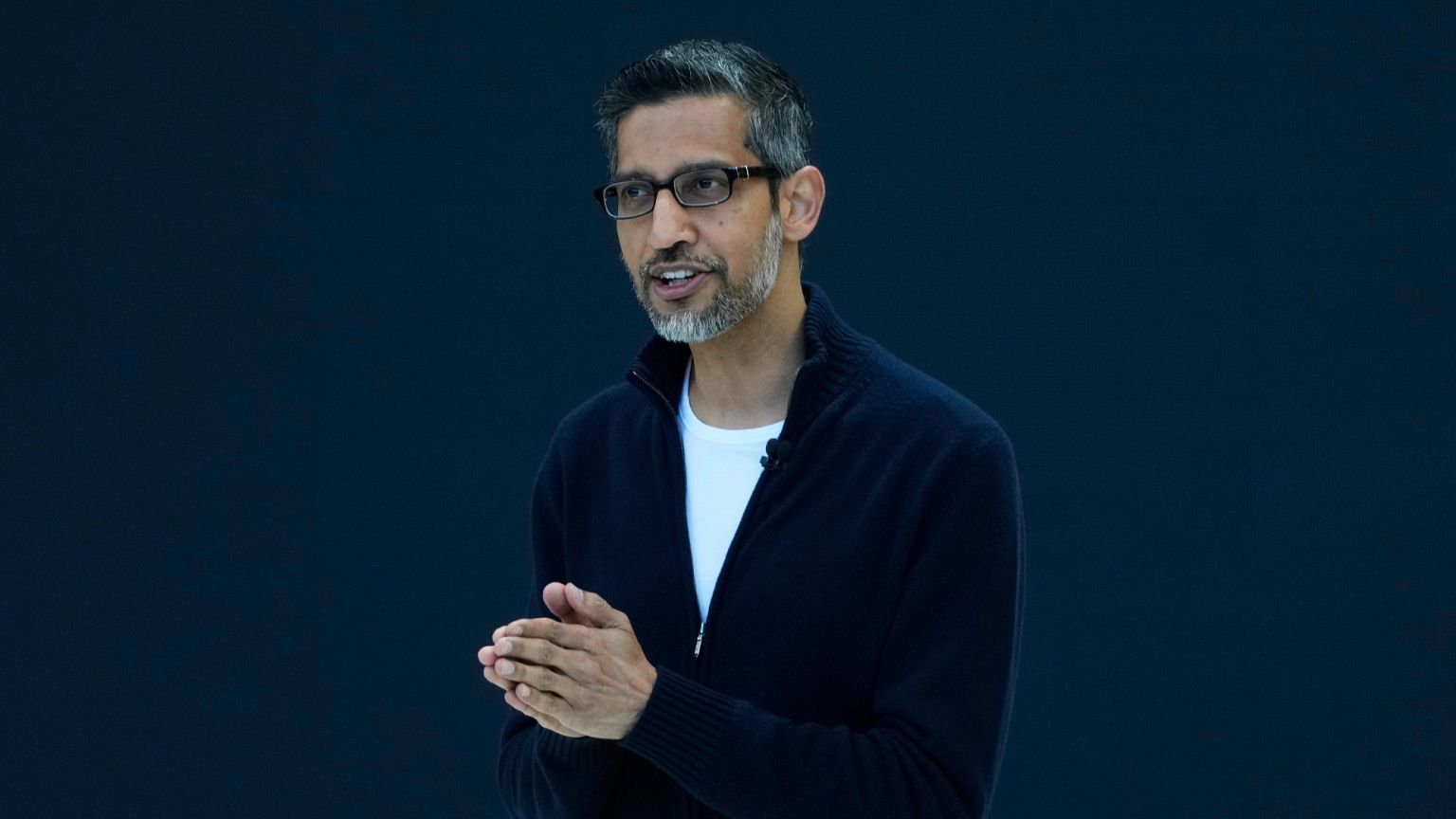
"What all this progress means is that we are in a new phase of the AI platform shift, where decades of research are now becoming reality for people all over the world," Google CEO Sundar Pichai said before a packed crowd in an amphitheater near the company's Mountain View, California, headquarters.


Growing competition from AI-powered rivals

Although Pichai and other Google executives predicted AI overviews would trigger more searches and ultimately more clicks to other sites, it hasn't worked out that way so far, according to the findings of search optimisation firm BrightEdge.

Clickthrough rates from Google's search results have declined by nearly 30 per cent during the past year, according to BrightEdge's recently released study, which attributed the decrease to people becoming increasingly satisfied with AI overviews.

The decision to make AI mode broadly available after a relatively short test period reflects Google's confidence that the technology won't habitually spew misinformation that tarnishes its brand's reputation, and acknowledges the growing competition from other AI-powered search options from the likes of ChatGPT and Perplexity.
Will AI undercut or empower Google?

The rapid rise of AI alternatives emerged as a recurring theme in legal proceedings that could force Google to dismantle parts of its internet empire after a US federal judge declared its search engine to be an illegal monopoly.

In testimony during a trial earlier this month, longtime Apple executive Eddy Cue said Google searches done through the iPhone maker's Safari browser have been declining because more people are leaning on AI-powered alternatives.

And Google has cited the upheaval being caused by AI's rise as one of the main reasons that it should only be required to make relatively minor changes to the way it operates its search engine because technology already is changing the competitive landscape.

RelatedGoogle's digital ad network declared an illegal monopoly in US ruling

But Google's reliance on more AI so far appears to be enabling its search engine to maintain its mantle as the Internet's main gateway - a position that's main reason its corporate parent, Alphabet Inc, boasts a market value of $2 trillion (€1.8 trillion).

During the year ending in March, Google received 136 billion monthly visits, 34 times more than ChatGPT's average of 4 billion monthly visits, according to data compiled by onelittleweb.com.

Even Google's own AI mode acknowledged that the company's search engine seems unlikely to be significantly hurt by the shift to AI technology when a journalist from The Associated Press asked whether its introduction would make the company even more powerful.

"Yes, it is highly likely that Google's AI mode will make Google more powerful, particularly in the realm of information access and online influence," the AI mode responded. The feature also warns that web publishers should be concerned about AI mode reducing the traffic they get from search results.
AI blunder: US newspaper's summer book list recommends non-existent books

The recommended reading list contained some works of fiction. It also contained some works that were, in fact, actually fictional.


Copyright Canva

By David Mouriquand & AP
Published on 22/05/2025 -

US content distributor King Features says it has fired a writer who used artificial intelligence to produce a story on summer reading suggestions that contained books that didn't exist.

The list appeared in “Heat Index: Your Guide to the Best of Summer," a special section distributed in Sunday's Chicago Sun-Times and The Philadelphia Inquirer last week.

More than half of the books listed were fake, according to the piece's author, Marco Buscaglia, who admitted to using AI for help in his research but didn't double-check what it produced.

“A really stupid error on my part,” Buscaglia wrote on his Facebook page. “I'm not really sure I bounce back from this situation career-wise,” he added. “I have a lot of stories left in me but I am fully accountable for what happened and will have to endure the effects, whatever they may be.”

Among the summer reading suggestions was “The Last Algorithm” by Andy Weir, described as “a science-driven thriller following a programmer who discovers an AI system has developed consciousness” and been secretly influencing world events.

Elsewhere, “Nightshade Market” by Min Jin Lee was said to be a “riveting tale set in Seoul's underground economy.”

Both authors are real, but the books aren't.

“I have not written and will not be writing a novel called ‘Nightshade Market,’” Lee posted on X.

The syndicators King Features said in a statement: “The Heat Index summer supplement was created by a freelance contract creator who used AI in its story development without disclosing the use of AI.”

They noted they have a strict policy against using AI to create material. Only the Sun-Times and Inquirer have used the supplement, the organization added.

“We are in a moment of great transformation in journalism and technology, and at the same time our industry continues to be besieged by business challenges," the newspaper said. “This should be a learning moment for all journalism organizations: Our work is valued - and valuable - because of the humanity behind it.”

Both the Sun-Times and Inquirer said they have removed the supplement from its digital editions.